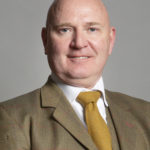
Tag: Neale Hanvey

  • Neale Hanvey – 2023 Speech on Scottish Self-Determination

    Neale Hanvey – 2023 Speech on Scottish Self-Determination

    The speech made by Neale Hanvey, the SNP MP for Kirkcaldy and Cowdenbeath, in the House of Commons on 1 February 2023.

    I beg to move,

    That leave be given to bring in a Bill to amend the Scotland Act 1998 to transfer to the power to legislate for a Scottish independence referendum to the Scottish Parliament; to provide that that power may only be exercised where the Scottish public has demonstrated its support for the holding of such a referendum; to provide that no such referendum may be held sooner than seven years after the previous such referendum; and for connected purposes.

    The question of whether the ancient nation of Scotland should be an independent country once more continues to be the subject of much debate, indicating that the matter is far from settled. Of course, it is entirely proper for any country to review such matters. Scotland will only become independent as and when the majority of the people of Scotland choose that path, yet that requires a democratic mechanism that is constitutional and satisfies international legal precedent. The Bill seeks to standardise and codify such a requirement in line with the motion passed by this House that endorsed the principles of the 1989 claim of right, which acknowledged the sovereign right of the Scottish people to determine the form of government best suited to their needs.

    The Bill is explicit on the necessary conditions to bring that mechanism into play: first, that the power to legislate for a referendum requires a democratic mandate from the Scottish public. Since 2014, that criterion has been met in successive general elections to the Scottish Parliament, most recently in 2021, when a majority of MSPs were elected on a manifesto commitment to deliver an independence referendum. In addition, a majority of the votes cast on the d’Hondt regional list were won by parties that support independence—the SNP, the Scottish Green party and the Alba party. Secondly, the Bill states that no such referendum may be held sooner than seven years after any previous such referendum. In terms of established UK precedent, that would bring Scotland into line with the provisions for a border poll in Northern Ireland regarding the constitutional future of the island of Ireland. As Robert McCorquodale, professor of international law and human rights, sets out, that would be in keeping with the UK’s international legal obligations, applicable to all states, including to peoples within states worldwide, to seek to exercise their right to self-determination.

    It is necessary to put the Bill into its political and historical context. In 1707, a majority of Scottish parliamentarians may have been persuaded, but the people were never consulted. The Acts of Union 1707 between England and Scotland created the kingdom of Great Britain, establishing a single political entity yet preserving the territorial, legal and institutional integrity of each partner country. The UK’s constitution is not codified in a single document, so the question of whether the Acts of Union can unilaterally be dissolved by one party is not clear. However, the accepted position hitherto is that the Union is a voluntary association of equal partners and Scotland has an unquestioned right of self-determination. That is a right underpinned by Scots common law which rests not on the Magna Carta, but on the claim of right which continues to assert that it is the people who are sovereign in Scotland.

    The Scotland Act of 1998 established the Scottish Parliament, which has the power to legislate on agreed devolved matters within Scotland, while the UK Parliament retains legislative competency on matters reserved to Westminster. It is generally understood that for a country to gain independence a legal process, such as a vote in a referendum, is required. Such a process was established in 2012 through the Edinburgh agreement which was signed by First Minister Alex Salmond and Prime Minister David Cameron. The Edinburgh agreement established a clear process whereby a Scottish general election that returned a Government with a mandate for an independence referendum would enable that Government to petition for authority under section 30 of the Scotland Act to respect the democratic force of that vote in a referendum. While respect for that established process has since been affirmed by the UK Government, in absence of any legal constitutional consensus the matter of Scottish independence has reached a political impasse to the detriment of Scotland’s democratic process.

    The Bill seeks to remedy that by setting out the process by which the democratic wishes of the people of Scotland can be respected and enacted. This would preserve their inalienable human rights as a distinct people of the ancient nation of Scotland in accordance with the constitutional tradition of Scotland, the UN charter and extant international law.

    Scotland’s distinct constitutional tradition is best expressed by Lord Cooper, in the case of MacCormick v. Lord Advocate:

    “The principle of the unlimited sovereignty of Parliament is a distinctively English principle which has no counterpart in Scottish constitutional law.”

    In the pleadings of the hon. and learned Member for Edinburgh South West (Joanna Cherry) in her prorogation case to the UK Supreme Court, it was noted that the 1707 parliamentary Union between England and Scotland may have created a new state, but it did not create one nation.

    The UK Government enthusiastically claim that they seek to preserve democracy the world over, yet they have moved to block Scotland’s consistently expressed democratic aspirations at each and every turn. Surely it is now time to move to eliminate accusations and counter-accusations of brinkmanship and set out a clear pathway consistent with the precedent across these islands where constitutional friction exists.

    Can Government Members imagine the circumstances where, having entered the common market and ratified every subsequent treaty leading to the European Union, the EU Parliament moved to block or interfere with their Brexit vote, or set a limit on when and if such a vote should be held? The notion is ludicrous, because democracy is not a single event, but an evolving and continuous process. That is how civilised people behave and how fundamental rights of freedom of thought and expression are peacefully demonstrated.

    As a member of the EU, the UK Government possessed and exercised a veto, yet they claimed their sovereignty was impeded by membership. Scotland has no such equivalent mechanism available to our people and remains subject to the wiles of our larger neighbour, as exemplified by Brexit. How does that constitute access to meaningful political process, as claimed in the recent UK Supreme Court judgment?

    Prime Minister Winston Churchill’s signing of the 1941 Atlantic charter brought into being the principle of self-determination of peoples, as now enshrined in the United Nations charter. Margaret Thatcher in her memoirs said of Scotland:

    “As a nation, they have an undoubted right to national self-determination”.

    John Major, when Prime Minister, said of Scotland that

    “no nation could be held irrevocably in a Union against its will”.

    None of these senior Conservative politicians sought to constrain the democratic right to self-determination.

    In the aftermath of the 2014 referendum, the all-party Smith Commission agreement was signed by all of Scotland’s main political parties and it stated:

    “It is agreed that nothing in this report prevents Scotland becoming an independent country in the future should the people of Scotland so choose.”

    The effect of this Bill should be uncontroversial for every Member. It merely establishes in law an equivalent mechanism to the principle, already conceded by the UK Government in relation to a border poll in Northern Ireland, that no such referendum may be held sooner than seven years after any previously mandated referendum.

    In 1889 in this place, the equality of UK partner countries was asserted by one William Ewart Gladstone MP, saying

    “I am to suppose a case in which Scotland unanimously, or by a clearly preponderating voice, were to make the demand on the United Parliament to be treated, not only on the same principle, but in the same manner as Ireland, I could not deny the title of Scotland to urge such a claim.” —[Official Report, 9 April 1889; Vol. 335, c. 101-102.]

    That begs the question: why would the UK Government deny democracy to Scotland but not to Northern Ireland? Could the clue lie in the words of former Prime Minister John Major from 1993’s Downing Street declaration that the UK has

    “no selfish strategic or economic interest in Northern Ireland”?

    In the case of Scotland, the opposite is true. With unconstrained access to our vast resources, energy is transmitted south to millions at no cost.

    The decision on Scotland’s future ultimately and rightly must rest in the hands of the people of Scotland. In the constitutional tradition of popular sovereignty in our great country, it is the people who remain sovereign. This Bill is neutral in its effect. It favours neither one side nor the other, but seeks to codify the Scottish people’s right to choose their own constitutional future. To return to 1889, Dr Gavin Clark, MP for Caithness, said on the matter:

    “Everybody, even old Tories on the other side, must admit that some change is necessary. Then what is the remedy to be?”—[Official Report, 9 April 1889; Vol. 335, c. 71.]

    If democracy matters at all, every Member in this House should support the remedy contained in this Bill regardless of their view on Scottish independence. I commend it to the House.

    Question put and agreed to.

    Ordered,

    That Neale Hanvey, Kenny MacAskill, Joanna Cherry, Angus Brendan MacNeil, Douglas Chapman and Margaret Ferrier present the Bill.

    Neale Hanvey accordingly presented the Bill.

    Bill read the First time; to be read a Second time on Friday 24 March, and to be printed (Bill 241).

    UK Infrastructure Bank Bill [Lords] (Programme) (No.2)

    Ordered,

    That the Order of 1 November 2022 (UK Infrastructure Bank Bill: Programme) be varied as follows:

    (1) Paragraphs (4) and (5) of the Order shall be omitted.

    (2) Proceedings on Consideration shall (so far as not previously concluded) be brought to a conclusion three hours before the moment of interruption on the day on which those proceedings are commenced.

    (3) Proceedings on Third Reading shall (so far as not previously concluded) be brought to a conclusion two hours before the moment of interruption on that day.—(Scott Mann.)

  • Neale Hanvey – 2023 Parliamentary Question to Prime Minister on Health Strikes

    Neale Hanvey – 2023 Parliamentary Question to Prime Minister on Health Strikes

    The parliamentary question asked by Neale Hanvey, the Alba MP for Kirkcaldy and Cowdenbeath, in the House of Commons on 18 January 2023.

    Neale Hanvey (Kirkcaldy and Cowdenbeath) (Alba)

    A Transport Secretary implying NHS workers are deliberately putting people in danger, a Health Secretary pitting dedicated nurses against vulnerable patients—does the Prime Minister really expect the public to believe that the very people who have dedicated their lives to saving life and limb are so reckless? Is it not the case that this Government have pushed them to their absolute limit and they have no other option but to strike?

    The Prime Minister

    We have enormous respect and gratitude for all our public sector workers, especially those in the NHS. That is why we have backed them with not just record funding, but record investment in more doctors and nurses, with 15,000 more doctors, 30,000 more nurses and more lifesaving equipment that will help them to do their jobs. We continue to want to engage constructively in dialogue with them.

  • Neale Hanvey – 2022 Parliamentary Question on Energy Costs

    Neale Hanvey – 2022 Parliamentary Question on Energy Costs

    The parliamentary question asked by Neale Hanvey, the Alba MP for Kirkcaldy and Cowdenbeath, in the House of Commons on 20 December 2022.

    Neale Hanvey (Kirkcaldy and Cowdenbeath) (Alba)

    Whether his Department plans to take further fiscal steps to support (a) households, (b) local authorities, (c) charities and (d) businesses with energy costs.

    The Chancellor of the Exchequer (Jeremy Hunt)

    Merry Christmas to you and your staff, Mr Speaker; as your fourth Chancellor of the year, I sincerely hope that I am here this time next year to wish you merry Christmas as well.

    The Government are very conscious that these are tough times for businesses as well as families. That is why in the autumn statement I announced, among many other measures, a package of business rates support worth £13.6 billion over the next five years, including a 75% relief for retail, hospitality and leisure properties. That will help thousands of businesses in Scotland.

    Neale Hanvey

    A very merry Christmas to you and yours, Mr Speaker, and a happy new year to boot.

    My constituency of Kirkcaldy and Cowdenbeath plays host to energy giants Shell and ExxonMobil; Seagreen and Berwick Bank wind farms, which supply 2.8 million homes in England with energy, are just off our coastline. In such a land of energy plenty, it is perverse that so many people live in poverty and that businesses struggle to survive. Kirkcaldy ice arena is the oldest rink in the United Kingdom and home to the Fife Flyers ice hockey team. It survived world war two, fire, the financial crash and covid, but in energy-rich Scotland it is struggling to pay its unavoidable energy costs. What targeted support is the Chancellor going to make available for energy-dependent companies such as the rink? Will he meet me to discuss how best to tackle the problem?

    Jeremy Hunt

    We have announced a package of support for businesses this winter worth nearly £20 billion; it will help businesses throughout the United Kingdom, including in Scotland. It includes special measures for energy-intensive industries. We will shortly announce plans that will take effect from next April.

  • Neale Hanvey – 2022 Speech on the Online Safety Bill

    Neale Hanvey – 2022 Speech on the Online Safety Bill

    The speech made by Neale Hanvey, the Alba MP for Kirkcaldy and Cowdenbeath, in the House of Commons on 5 December 2022.

    I approach my contribution from the perspective of the general principle, the thread that runs through all the amendments on the paper today on safety, reform of speech, illegal content and so on. That thread is how we deal with the harm landscape and the real-world impact of issues such as cyber-bullying, revenge porn, predatory grooming, self-harm or indeed suicide forums.

    There is a serious risk to children and young people, particularly women and girls, on which there has been no debate allowed: the promulgation of gender ideology pushed by Mermaids and other so-called charities, which has created a toxic online environment that silences genuine professional concern, amplifies unquestioned affirmation and brands professional therapeutic concern, such as that of James Esses, a therapist and co-founder of Thoughtful Therapists, as transphobic. That approach, a non-therapeutic and affirmative model, has been promoted and fostered online.

    The reality is that adolescent dysphoria is a completely normal thing. It can be a response to disruption from adverse childhood experiences or trauma, it can be a feature of autism or personality disorders or it can be a response to the persistence of misogynistic social attitudes. Dysphoria can present and manifest in many different ways, not just gender. If someone’s gender dysphoria persists even after therapeutic support, I am first in the queue to defend that person and ensure their wishes are respected and protected, but it is an absolute falsity to give young people information that suggests there is a quick-fix solution.

    It is not normal to resolve dysphoria with irreversible so-called puberty blockers and cross-sex hormones, or with radical, irreversible, mutilating surgery. Gender ideology is being reinforced everywhere online and, indeed, in our public services and education system, but it is anything but progressive. It attempts to stuff dysphoric or gender non-conforming young people into antiquated, regressive boxes of what a woman is and what a man is, and it takes no account of the fact that it is fine to be a butch or feminine lesbian, a femboy or a boy next door, an old duffer like me, an elite gay sportsman or woman, or anything in between.

    Transitioning will be right for some, but accelerating young people into an affirmative model is absolutely reckless. What do those who perpetuate this myth want to achieve? What is in it for them? Those are fundamental questions that we have to ask. The reality is that the affirmative model is the true conversion therapy—trans-ing away the gay and nullifying same-sex attraction.

    I urge all right hon. and hon. Members to watch the four-part documentary “Dysphoric” on YouTube. It is so powerful and shows the growing number of young people who have been transitioned rapidly into those services, and the pain, torment and regret that they have experienced through the irreversible effects of their surgery and treatments. The de-transitioners are bearing the impacts. There is no follow-up to such services, and those people are just left to get on with it. Quite often, their friends in the trans community completely abandon them when they detransition.

    I pay particular tribute to Sinead Watson and Ritchie Herron, who are both de-transitioners, for their courage and absolutely incredible resilience in dealing with this issue online and shining a light on this outrage. I also pay tribute to the LGB Alliance, For Women Scotland, and Sex Matters, which have done a huge amount of work to bring this matter to the fore.

    Mermaids—the organisation—continues to deny that there is any harm, co-morbidities or serious iatrogenic impacts from hormone treatment or radical surgery. That is a lie; it is not true. Mermaids has promoted the illegal availability of online medicines that do lasting, irreversible damage to young people.

    I pay tribute to the Government for the Cass review, which is beginning to shine a light on the matter. I welcome the interim report, but we as legislators must make a connection between what is happening online, how it is policed in society and the message that is given out there. We must link harm to online forums and organisations, as well as to frontline services.

    I point out with real regret that I came across a document being distributed through King’s College Hospital NHS Foundation Trust from an organisation called CliniQ, which runs an NHS clinic for the trans community. The document has lots of important safety and health advice, but it normalises self-harm as sexual

    “Play that involves blood, cutting and piercing.”

    It advises that trans-identifying females can go in

    “stealth if it is possible for them”

    to private gay clubs, and gives examples of how to obtain sex by deception. It is unacceptable that such information is provided on NHS grounds.

    Speaking out about this in Scotland has been a very painful experience for many of us. We have faced doxing, threats, harassment and vilification. In 2019, I raised my concerns about safeguarding with my colleagues in Government. A paper I wrote had this simple message: women are not being listened to in the gender recognition reform debate. I approached the then Cabinet Secretary for Social Security and Older People, Shirley-Anne Somerville, whose brief included equality. She was someone I had known for years and considered a friend; she knew my professional background, my family and, of course, my children. She told me she that she shared my concerns—she has children of her own—but she instructed me to be silent. She personally threatened and attempted to bully friends of mine, insisting that they abandon me. I pay great tribute to Danny Stone and the Antisemitism Policy Trust for their support in guiding me through what was an incredibly difficult period of my life. I also pay tribute to the hon. Member for Brigg and Goole (Andrew Percy).

    I can see that you are anxious for me close, Madam Deputy Speaker, so I will—[Interruption.] I will chance my arm a bit further, then.

    I am not on my pity pot here; this is not about me. It is happening all over Scotland. Women in work are being forced out of employment. If Governments north and south of the border are to tackle online harms, we must follow through with responsible legislation. Only last week, the First Minister of Scotland, who denied any validity to the concerns I raised in 2019, eventually admitted they were true. But her response must be to halt her premature and misguided legislation, which is without any protection for the trans community, women or girls. We must make the connection from online harms all the way through to meaningful legislation at every stage.

  • Neale Hanvey – 2022 Speech on an Independence Referendum for Scotland

    Neale Hanvey – 2022 Speech on an Independence Referendum for Scotland

    The speech made by Neale Hanvey, the Alba MP for Kirkcaldy and Cowdenbeath, in Westminster Hall, the House of Commons on 30 November 2022.

    I beg to move,

    That this House has considered Government policy on a further independence referendum for Scotland.

    Today is St Andrew’s day, and on this national day there is a particular significance and imperative. Last week, the UK Supreme Court told the Scottish Government that they could not exercise their democratic mandate to hold an independence referendum. But there was something else in that judgment—something that simply cannot be tolerated. There was the suggestion that, somehow, Scotland as a nation does not possess a right to self-determination. In suggesting that, the London Supreme Court overturned what has been the accepted legal, historic and political position that the UK is a voluntary Union.

    Scotland’s separate constitutional tradition is perhaps best summed up in the view expressed by Lord Cooper, in the case of MacCormick v. Lord Advocate,

    “The principle of the unlimited sovereignty of Parliament is a distinctively English principle, which has no counterpart in Scottish constitutional law.”

    The Supreme Court seems to have repudiated that. Last week’s judgment rendered the UK a state of glaring contradiction. There are contradictions in our shared history, and contradictions of equality, politics, and representation.

    The UK enthusiastically claims it seeks to preserve democracy the world over, yet moves to block Scotland at each and every turn. Can the Minister imagine the circumstances where, having entered the common market and ratified every subsequent treaty—leading to the European Union—the EU Parliament moved to block his party’s Brexit vote, or set a limit on when and if such a vote could be heard? The notion is, of course, ludicrous, because democracy is not a single event but an evolving and continuous process. That is how civilised people behave, and how freedom of thought and expression are peacefully demonstrated. Those are the foundations of inalienable human rights.

    I will consider the contradictions, concluding with a commentary of the Supreme Court’s judgment. We are often told in this place that Scotland must be proud of our shared history as part of the most successful political union ever. I will test that narrative and ask the Minister to consider our shared history through a Scottish prism.

    Before the Union, the English Alien Act 1705 threatened economic sanctions if Scotland did not settle the royal succession, or negotiate for a political union. The treaty was met with vociferous opposition both inside and outside Scotland’s parliamentary chamber but, given threats and enticements, a majority of Scottish parliamentarians were persuaded. The people were never consulted.

    It so often goes that this is all ancient history and irrelevant to a modern Scotland in a respectful union of equals. Last week’s judgment challenged that previously understood narrative. What of that modern Scotland? In my lifetime, the political complexion of Westminster rule has rarely reflected the polity of Scotland. We have endured repeated Tory Governments that Scotland did not vote for, or Labour Administrations that took us into illegal wars that we wanted no part of.

    Socioeconomic policies have destroyed our communities, exploited our resources and worked against the utility of the people of Scotland, contrary to the Articles of Union. The pursuit of such social and economic policies has driven a stake through the heart of once proud communities. As noted in the pleadings of the hon. and learned Member for Edinburgh South West (Joanna Cherry), in her prorogation case to the UK Supreme Court, the 1707 parliamentary Union between England and Scotland may have created a new state but it did not create one nation.

    Scotland was an independent nation for millennia before its coerced incorporation. It remains a distinct and internationally recognised people and country. No clearer is that evidenced than by the much earlier and continuing Union of the Crowns, where our shared monarch does not accede to a single throne of Britain, but takes the separate crowns of the realms of Scotland and England.

    As a member of the EU, the UK possessed and exercised a veto, yet claimed its sovereignty was impeded by membership. Scotland has no such mechanism in this place, and is always subject to the wiles of the policy of its larger neighbour, exemplified by Brexit. How does that constitute access to meaningful political process, as claimed by the UK Supreme Court judgment?

    In signing the Atlantic charter of 1941, wartime Prime Minister and hero of the Conservative party, Winston Churchill, brought into being the principle of self-determination of peoples, as now set out in the United Nations charter, in article 1(2), article 73 and article 76. Margaret Thatcher in her memoirs said of Scotland:

    “As a nation, they have an undoubted right to national self-determination.”

    John Major, when Prime Minister, said of Scotland:

    “No nation could be held irrevocably in a Union against its will.”

    Angus Brendan MacNeil (Na h-Eileanan an Iar) (SNP)

    The hon. Gentleman is making a fantastic speech. He started by raising the point about the Supreme Court and self-determination. I found paragraph 88 of the judgment particularly interesting:

    “The people in question are entitled to a right to external self-determination because they have been denied the ability to exert internally their right to self-determination.”

    The judgment did exactly that; it did limit that right. The reason the judgment did not give the referendum was because, if it happened—even if it had limited legal effect—as it says in paragraph 81, it

    “would possess the authority, in a constitution and political culture founded upon democracy”—

    and that is all over western Europe. Ultimately, the concession has been made by the Supreme Court that the ballot box rules supreme. Indeed, the ballot box made the Supreme Court because the Supreme Court is a creature of the UK Government, which in turn was made at the ballot box.

    Neale Hanvey

    I thank the hon. Gentleman for that intervention. I will consider the blurred boundaries of legal and political, as I move through my speech. In 1989, this place reaffirmed and acknowledged the sovereign right of the Scottish people to determine the form of government best suited to their needs. In May 1997, in an exchange with the right hon. Alex Salmond during the passage of the Bill that became the Referendums (Scotland and Wales) Act 1997, the late Donald Dewar responded that he should be the last to challenge the sovereignty of the people, accepting the right of the Scottish people to a choice, including independence, should that be their wish. None of these senior politicians ever placed a limit on or sought to constrain that democratic right to self-determination. Indeed, in the wake of the 2014 referendum, the Smith commission agreement was signed by all of Scotland’s main political parties and it stated:

    “It is agreed that nothing in this report prevents Scotland becoming an independent country in the future should the people of Scotland so choose.”

    Of course, the Good Friday agreement sets out a reasoned and internationally considered timescale of every seven years to consider constitutional change. A political generation of seven years is not unreasonable, but Scotland is now a year beyond and no further forward. It is therefore imperative; if there is a consented, legal and democratic route by which the people of Ireland —north and south—can choose their own constitutional future in a border poll every seven years, what is the consented, legal and democratic route by which the people of Scotland’s sovereign right to determine their own constitutional future can be respected? That is a right underpinned by Scots law, which rests on the claim of right that asserts that it is the people who are sovereign.

    The Supreme Court’s rejection of the argument that Scotland has the right to self-determination in international law was described last week as “problematic”—very problematic—by Michael Keating, emeritus professor of politics at the University of Aberdeen. He states:

    “The way is now open for the UK Government to say that there is no time or way for Scotland to exercise its acknowledged right of self-determination”.

    He has quite rightly pointed out that in invoking the Canadian court’s ruling on Quebec, the UK Supreme Court failed to mention or consider a further aspect of that Canadian judgment—namely, that if Québec or any other province did vote for independence by a clear majority on a clear question, the Government of Canada would be bound to negotiate. That aspect of the Canadian court’s ruling is significant and in essence reflects a situation where legality meets politics.

    Angus Brendan MacNeil

    The hon. Gentleman is making a great speech, and I am grateful to him for giving way again. The Holyrood Standing Orders perhaps possess a way, and the Supreme Court has, unwittingly perhaps, opened up every election from now on for people to speak at the ballot box. Under rule 11.10 of the Standing Orders for Holyrood, “Selection of the First Minister”, paragraph 5 mentions what happens when there is one candidate, paragraph 7 when there are two candidates, and paragraph 8 when there are more than two candidates. That, with a combination of no-confidence votes, surely leaves the way open, if it was chosen, for Scotland to determine its own future—if Holyrood decides to do that.

    Neale Hanvey

    The hon. Gentleman will probably not like my answer, but that is a matter for the Scottish Government to consider.

    In addition to the point that I was making about political reality, Professor Keating goes on to argue that not going beyond the letter of the law to look at broader constitutional issues

    “risks undermining the conventions and understandings on which”

    the UK’s “largely unwritten constitution depends.” Those are wise reflections that both the UK Government and the UK Supreme Court would do well to consider.

    With regard to Kosovo, the UK has stated, in its submission to the International Court of Justice:

    “The United Kingdom considers that the Declaration of Independence of Kosovo was not incompatible with international law. It was not made in haste or in a political vacuum. Rather, it flowed from the failure of the two sides, and of the international community, after long and sustained effort, to secure any other framework”.

    Further, the UK

    “considers that developments since 17 February 2008 have crystallised Kosovo independence and cured any deficiency that might initially have existed. As the 1776 Declaration of Independence of the United States”—

    David Duguid (Banff and Buchan) (Con)

    I want to ask a question of clarification on the comparison to Kosovo. Is the hon. Gentleman really comparing the situation that Scotland finds itself in within the United Kingdom with Kosovo in the literally war-torn former Yugoslavia?

    Neale Hanvey

    I am referring to the petitioners’ arguments, the Supreme Court’s response and the UK Government’s judgment on the Kosovan situation. I am pursuing a line that was submitted by the petitioner and responded to by the UK Supreme Court.

    As the 1776 declaration of independence of the United States of America—a declaration of independence that the United Kingdom opposed at the time—illustrates, many states emerge to independence in what, at the time, were controversial circumstances. That does not vitiate their subsequent emergence into full statehood.

    These developments are succinctly crystallised by Robert McCorquodale, a professor of international law and human rights who has himself appeared as an advocate before the International Court of Justice and the UK Supreme Court. The dissolution of the USSR and its influence on the development of the right to self-determination has been examined, and Robert McCorquodale states, “Lithuania’s declaration of independence had substantial impacts on the understanding and application of the right to self-determination. The right to self-determination, which is a human right acknowledged by all states, changed from being limited to people with traditional colonial territories to applying to all states, including to peoples within states. This development has profound effects today, such as enabling people in all states worldwide to seek to exercise their right to self-determination.”

    That directly challenges a key assertion of the UK Supreme Court, which led it to conclude that the Scottish Government could not independently consult the Scottish people about independence and that it was in the gift of Westminster. Yet a public petition entitled, “The Treaty of Union 1707 is no longer fit for purpose and Dissolve The Union”, was submitted to this place in 2019 and was rejected by this place for the following reason:

    “We can’t accept your petition because this would be a decision of the people of Scotland and not the UK Government or Parliament.”

    On that, I wholly agree. For all the reasons given above, the UK Supreme Court’s position cannot stand unchallenged, particularly on our national day.

    Today I invite others to sign the declaration of St Andrew’s day, published in my name as early-day motion 633, which asserts the following:

    “we the people, elected members and civic organisations of Scotland assert that our nation has the right of self-determination to freely determine our political status and to freely pursue our economic, social and cultural development, mindful of the Scottish constitutional tradition of the sovereignty of the people, we will democratically challenge any authority or government which seeks to deny us that right.”

    On Wednesday 23 November 2022, it became clear that the wrong case had been argued at the wrong time and in the wrong court. Just as Westminster and the United Kingdom’s Supreme Court are part of the British state apparatus, so too is the Scottish Parliament, but if Scotland’s Parliament is denied agency over the future of its people, where stands democracy for the Scottish people?

    In Scots law, there is no sovereignty higher than that of our people, and here today I have asserted that right into the record. Neither Scotland’s claim of right nor the aspirations of the Scottish people to be a normal, outward-looking, independent nation are the sole purview of any one political party or any individual party leader. We now learn, the UK’s Secretary of State intends to act as a territorial viceroy, banning the Scottish civil service from advancing the democratic will of the Scottish people. Well, I give him fair warning: the independence movement extends far beyond the Scottish civil service. If anything, such an undemocratic move will simply galvanise and liberate the movement by decoupling our ambition from the daily trials of government. We are the nation of the Enlightenment, and our movement possesses minds with more ambition and vision than any Government or civil service that is subject to diktats from London.

    At the start of my contribution, I said that this was an issue of contradictions. Let me say today, on St Andrew’s day, that there is no contradiction in Scotland. Scotland is a proud and ancient nation that goes back millennia, and no one but the people of Scotland shall impede, limit or restrict our right to self-determination. It is precisely a week since the Supreme Court gave its judgment on the right of the Scottish Parliament to hold a referendum on Scottish independence. Let me be clear: Charles Stewart Parnell said about another nation that was once a part of the United Kingdom:

    “No man has a right to fix a boundary of the march of a nation…no man”—

    no court, no Government—has the right to say to another country

    “thus far…and no further.”

  • Neale Hanvey – 2020 Maiden Speech in the House of Commons

    Below is the text of the maiden speech made by Neale Hanvey, the Independent MP for Kirkcaldy and Cowdenbeath, in the House of Commons on 27 January 2020.

    Thank you, Madam Deputy Speaker, for the opportunity to make my first speech, in this important debate. I would like to pay tribute to the hon. Member for Ashfield (Lee Anderson), who had quite a lot of good lines. I do not think I am going to match his humour, sadly. I would also like to pay tribute to the hon. Member for Darlington (Peter Gibson) for making his maiden speech tonight.

    Being elected here to represent the communities that I grew up in is an extraordinary and humbling honour. To do so today in the presence of my partner Lino and our children makes it especially memorable. The honour of representing my constituency carries with it a significant responsibility to be my constituents’ voice and advocate on matters both here and at home, and to endeavour to serve the best interests of every constituent.

    As a new Scot and a pragmatist, I am a product of this Union. Born in Northern Ireland and raised in the east of Scotland, I forged my professional career for the most part here in the heart of London. My apologies to hon. and right hon. Members from Wales: I landed in Cardiff airport once for refuelling, and I am not sure that counts, but hopefully I will remedy that as soon as possible.

    If, to go by the Prime Minister’s repeated assertions, this is the most successful political union in the world, why have I and so many others never felt that to be true? Could this be an example of the iniquity that my predecessor, Lesley Laird, rightly focused on in her maiden speech, as she began her service to the constituency, from May 2017 until December of last year? Indeed, she lamented that the arguments for economic equity and social justice had been a theme not just of hers, but also of her predecessor, Roger Mullin. On this matter they have no quarrel with me.

    From the coalmining communities of Benarty and Kelty, through to our largest conurbation, the Lang Toun of Kirkcaldy, and the picturesque coastal towns and villages stretching from Dalgety Bay to Dysart, the constituency I serve is bursting with ambition. That potential has been damaged by the ravages of Thatcherism and restricted in many respects by the limitations placed upon my constituency—and, indeed, Scotland as a whole—by politicians in this place who have not won an election in Scotland since 1955. All these communities have a proud history of hard work and great intellect and a strong sense of community. That sense of community has somehow withstood the imposition of political and economic policies that neglect, ignore, dismiss and sometimes extinguish the hopes, aspirations and potential of so many. While some Members of this Parliament may jeer at, dismiss and deny the potential of Scotland, I will not tire of giving voice to those aspirations and the hope of a better, independent future that works for all of Scotland.​

    As the UK turns in on itself, wrapped in the false promises of a Brexit that Scotland did not vote for, this Government have shaken the magic money tree to give cash-strapped public services some of the funding that they have been denied over 10 long years of neglect. This brings me to the subject of the debate and my reflections on it. While I readily agree that the proposed funding in the Bill is preferable to ruinous austerity economics, we must never forget that that was initiated by those on the Government Benches, aided by the Liberal Democrats and eased into being by the abstention of many members of the Labour Opposition.

    If the English NHS is the patient, then this Bill is a fig leaf, treating the symptoms and not the cause of the English NHS’s woes. The cause is, of course, pernicious and has proven deadly for many—Tory economic and social policy—but the Government must know that. Why else would they refuse to publish their own impact assessment on universal credit and the two-child cap? What are they afraid of—the truth? In Scotland, many of us on these Benches have been working on a remedy for some time, but this Government are withholding consent and, at the same time, they ignore the refusal of consent to this damaging folly from the devolved Parliaments. We must take our Brexit medicine regardless.

    In 2014, the people of Scotland voted for a status quo that no longer exists. They were promised equal status, respect and greater autonomy. That vow lies shattered, as does Scotland’s trust in this place. If Scotland is not equal, if it is not respected and if it is not listened to, are we to assume that we are hostages in our nation, forever prone to the wiles of our larger neighbour? Well, let me say this: that is neither right nor, indeed, honourable. The health of a nation cannot be improved using honorific titles in this place. It requires right, and right honourable deeds, not words. If this is the most successful union in the history of the world, why is it that we need to measure deprivation, poverty and homelessness? Whether I support this EVEL policy or not, I am denied a vote, despite the consequences for Scotland.

    In closing, I will—like my predecessors—turn to the words of one Adam Smith fae Kirkcaldy, in the hope that this will be the final time they need to be said in this place:

    “No society can surely be flourishing and happy, of which the far greater part of the members are poor and miserable.”

    The Government should publish the impact assessments. Thank you, Madam Deputy Speaker.