Tag: Ministry of Defence

  • PRESS RELEASE : Navy Missile System used to destroy Red Sea drones to be upgraded [January 2024]

    PRESS RELEASE : Navy Missile System used to destroy Red Sea drones to be upgraded [January 2024]

    The press release issued by the Ministry of Defence on 21 January 2024.

    Cutting-edge Royal Navy missiles – recently used to shoot down multiple hostile drones in the Red Sea – will receive significant enhancements through an upgrade programme supporting hundreds of UK jobs.

    Crucial to defend sailors, surface fleet and air threats, the Sea Viper Air Defence system will be upgraded with updated missiles featuring a new warhead and software update that will enable it to defeat ballistic missile threats. The system will protect the UK’s Carrier Strike group and can track, target and destroy a variety of air threats over 70 miles away.

    Worth £405 million, the contracts will make Sea Viper the most capable naval air defence system ever developed for the Royal Navy, investing in vital capability used in recent weeks to protect one of the world’s busiest shipping lanes from multiple drone attacks.

    The missile upgrades comprise three contracts awarded to MBDA UK, including two to significantly enhance the Sea Viper capability on board Type 45 warships, and a third to cover enhanced in-service support and availability of the system for the next five years.

    By further investing in our world-leading defence industry, the contracts will also support the Prime Minister’s priority to grow the economy by sustaining 350 UK jobs, including highly skilled technology roles in Stevenage, Cowes, Bristol & Bolton.

    The work will include employees from MBDA across the UK, France and Italy working alongside colleagues from BAE Systems.

    Defence Secretary Grant Shapps said:

    As the situation in the Middle East worsens, it is vital that we adapt to keep the UK, our allies and partners safe. Sea Viper has been at the forefront of this, being the Navy’s weapon of choice in the first shooting down of an aerial threat in more than 30 years.

    Our strong and enduring relationship with British industry has ensured we can deploy the latest technological capabilities wherever they are required while supporting hundreds of jobs across the country and bolstering UK prosperity.

    The Royal Navy’s Type 45 destroyers are among the most advanced in the fleet and carry out a range of activity, including defence from air attack, counter-piracy operations and providing humanitarian aid.

    Defence Secretary Grant Shapps this week visited HMS Diamond in the Red Sea, where it recently used Sea Viper missiles to shoot down multiple attack drones, as part of the US-led international taskforce Operation Prosperity Guardian.

    Alongside HMS Diamond, the taskforce currently includes three US destroyers, and a French warship is also in the region. All are currently operating in the Southern Red Sea with the multinational partnership focusing on protecting freedom of navigation, international trade and human life by countering illicit non-state actors in international waters.

    Rear Admiral Anthony Rimington, Director Force Generation said:

    A cutting-edge weapon system, Sea Viper continues to provide the Royal Navy with impressive lethality. Sea Viper Evolution further enhances this capability against the more complex and evolving threats and strengthens our cooperation and interoperability with key partners.

    The Sea Viper enhancements aim to deliver Ballistic Missile Defence Capability to counter more complex threats, while providing an opportunity for further upgrades and increased capability to be taken forward into future systems.

    The initial stage of the contract will upgrade the Royal Navy’s existing Aster 30 missiles to Aster 30 Block 1, which will enable defence against anti-ship ballistic missile threats, and will see modifications to the fleet’s Multi-Function Radar (Sampson), Command and Control system and Combat Management System.

    The subsequent stage of the Sea Viper evolution will evaluate the introduction of the new Aster 30 Block 1NT missile. Currently under development with France and Italy, it features a new seeker that would even further enhance the ballistic missile defence capabilities of the UK’s Type 45 destroyers.

    Vice Admiral Paul Marshall, Director General Ships at Defence Equipment and Support (DE&S), the procurement arm of the UK MOD, said:

    In a rapidly changing defence environment, I’m proud to see our teams work collaboratively with industry colleagues to support highly-skilled jobs and ensure those operating the UK Type 45 fleet have the edge over their adversaries now and in the future.

    Chris Allam, Managing Director of MBDA UK, said:

    These contracts will make Sea Viper the most capable naval air defence system ever developed for the Royal Navy in our 60-year history as the Navy’s primary air defence system supplier.

    They will also see the UK further enhance the co-operation with France and Italy through MBDA by joining the Aster 30 Block 1 programme, giving the UK the ability to defeat anti-ship ballistic missiles.

    The enhancements to the fleet of Type 45 destroyers are expected to reach full operational capability by Autumn 2032.
  • PRESS RELEASE : Advanced future military laser achieves UK first [January 2024]

    PRESS RELEASE : Advanced future military laser achieves UK first [January 2024]

    The press release issued by the Ministry of Defence on 19 January 2024.

    A military laser which could boost the UK Armed Forces with greater accuracy while reducing the reliance on high-cost ammunition has reached its next milestone.

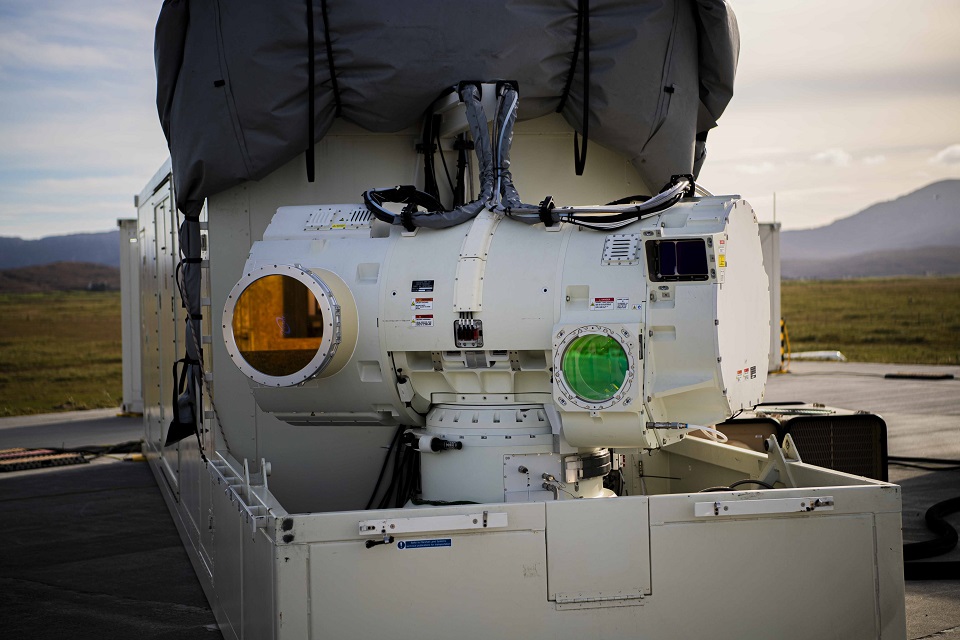
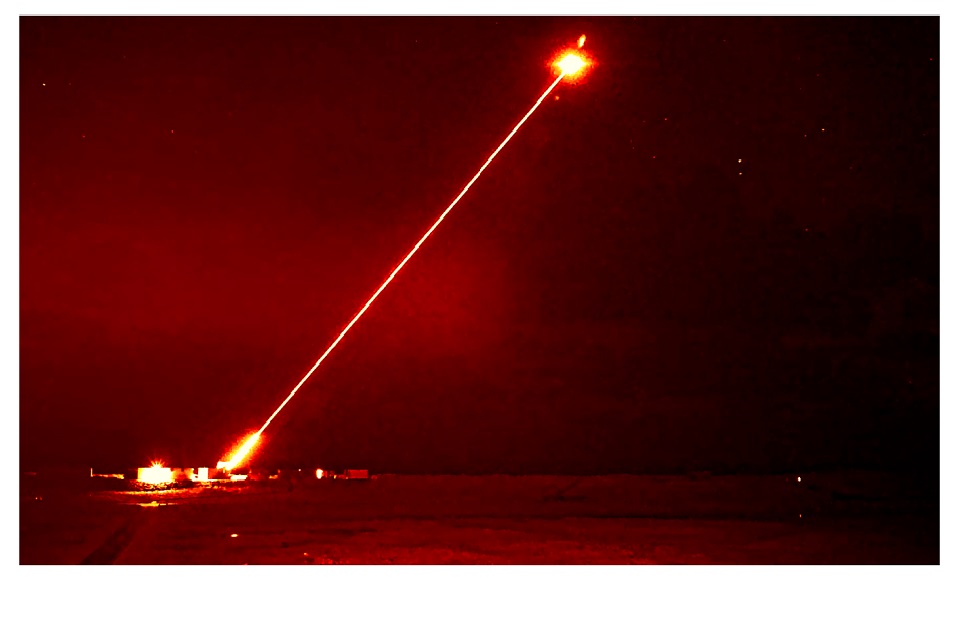
    During a trial at the MOD’s Hebrides Range, the DragonFire laser directed energy weapon (LDEW) system achieved the UK’s first high-power firing of a laser weapon against aerial targets. The range of DragonFire is classified, but it is a line-of-sight weapon and can engage with any visible target.

    • First high-power firing of a laser weapon against aerial targets
    • Laser boasts pinpoint accuracy and low long-term costs
    • Partnership with industry making positive progress for UK Armed Forces

    DragonFire exploits UK technology to be able to deliver a high power laser over long ranges. The precision required is equivalent to hitting a £1 coin from a kilometre away.

    Laser-directed energy weapons can engage targets at the speed of light, and use an intense beam of light to cut through the target, leading to structural failure or more impactful results if the warhead is targeted.

    Firing it for 10 seconds is the cost equivalent of using a regular heater for just an hour. Therefore, it has the potential to be a long-term low-cost alternative to certain tasks missiles currently carry out. The cost of operating the laser is typically less than £10 per shot.

    DragonFire is led by the Defence Science and Technology Laboratory (Dstl), on behalf of the UK MOD, working with its industry partners MBDA, Leonardo and QinetiQ.

    This milestone demonstrated the ability to engage aerial targets at relevant ranges and is a major step in bringing this technology into service. Both the Army and Royal Navy are considering using this technology as part of their future Air Defence capabilities.

    Defence Secretary, Grant Shapp said:

    This type of cutting-edge weaponry has the potential to revolutionise the battlespace by reducing the reliance on expensive ammunition, while also lowering the risk of collateral damage.

    Investments with industry partners in advanced technologies like DragonFire are crucial in a highly contested world, helping us maintain the battle-winning edge and keep the nation safe.

    The latest milestone builds on a series of highly successful trials, including the first static high-power laser firing of a sovereign UK capability and demonstration of the DragonFire system’s ability to track moving air and sea targets with very high accuracy at range.

    Building on this research, the MOD recently announced its intention to fund a multi-million-pound programme to transition the technology from the research environment to the battlefield.

    The latest trial was sponsored by the MOD’s Defence Science and Technology (DST) organisation and Strategic Programmes and enabled by many other agencies across government, ensuring all regulatory and safety approval requirements were satisfied.

    Dstl’s Chief Executive, Dr Paul Hollinshead said:

    These trials have seen us take a huge step forward in realising the potential opportunities and understanding the threats posed by directed energy weapons.

    With our decades of knowledge, skills, and operational experience, Dstl’s expertise is critical to helping the armed forces prepare for the future.

    The DragonFire weapon system is the result of a £100 million joint investment by the Ministry of Defence and industry. Together, the companies involved are supporting highly-skilled UK jobs in new cutting-edge technologies that are delivering a significant step-change in the UK’s capability in LDEW systems.

    In 2017 the MOD’s Chief Scientific Advisor’s Research Programme awarded a £30 million contract to the DragonFire consortium to demonstrate the potential of LDEWs.

    Dr Nick Joad, DST said:

    This is a really innovative application of science and engineering and is the fruit of sustained investment and effort. DragonFire uses cutting-edge science and technology and delivers much greater performance than other systems of a similar class. DragonFire provides a step-change in our ability to deal with high-performance and low-cost threats.

    UK defence is continuing to invest in these game-changing technologies and is advancing the plans which will ultimately bring them into service.

    Shimon Fhima, Director Strategic Programmes for the MOD said:

    The DragonFire trials at the Hebrides demonstrated that our world-leading technology can track and engage high-end effects at range. In a world of evolving threats we know that our focus must be on getting capability to the warfighter and we will look to accelerate this next phase of activity.

    LDEW research and technology is delivered in partnership and is a cost-effective way of meeting the needs of the MOD while maintaining UK industry’s technology and skills base.

    UK defence is continuing to invest in these game-changing technologies and is advancing the plans which will ultimately bring them into service

    Find out more about Dstl’s weapons science and technology capability and how to work with us.

  • PRESS RELEASE : Digital defence transformation boosted by £150 million UK contract [January 2024]

    PRESS RELEASE : Digital defence transformation boosted by £150 million UK contract [January 2024]

    The press release issued by the Ministry of Defence on 17 January 2024.

    Digital services across Defence will be transformed in a £150 million contract awarded to UK-based technology services provider, Computacenter.

    • UK-based technology services provider Computacenter awarded four-year contract.
    • Contract expected to reduce current costs by around 64% (£84m).
    • Covering over 220,000 devices in use by MOD personnel worldwide.

    Digital services across Defence will be transformed in a £150 million contract awarded to UK-based technology services provider, Computacenter.

    The four-year contract will support tens of thousands of laptops and desktop computers used by MOD personnel worldwide, from head office to the front line, as well as creating additional jobs at Computacenter’s Hatfield and Nottingham sites.

    Reducing operating costs by around £84 million, the new services will provide a high-quality, secure and sustainable service to defence personnel, enabling defence to more rapidly respond to changing needs and market conditions.

    The contract represents a wider MOD move away from large, aggregated contracts to smaller, more measurable contracts that will improve organisational flexibility.

    Defence Digital’s improvement programme is a priority for the MOD, and we are investing over £4 billion annually in our digital transformation, to streamline the MOD’s processes and increase our operational capability.

    Minister for Defence Procurement, James Cartlidge, said:

    Delivering on our digital transformation will ensure high-quality, rapidly accessible global data, which is a critical component of our fighting power. Bolstered technology can strengthen our deterrence, our resilience, and our national prosperity.

    The service will improve performance standards and speed of access across 220,000 devices including laptops, desktops, peripherals and software applications.

    MOD Chief Information Officer, Charles Forte, said:

    This new relationship is a significant component in our ongoing progress to bring new business into the team and ensures we are modernising and innovating in support of our internal customers to deliver greater value for money.

  • PRESS RELEASE : Air strikes against Houthi military targets in Yemen [January 2024]

    PRESS RELEASE : Air strikes against Houthi military targets in Yemen [January 2024]

    The press release issued by the Ministry of Defence on 12 January 2024.

    On 11 January, Royal Air Force aircraft joined coalition forces in striking a number of facilities used by the Houthi rebel faction in Yemen to attack shipping in the southern Red Sea.

    The Royal Navy destroyer HMS Diamond has already been active alongside US and French warships in defending vital international shipping lanes against Houthi drones and missiles. Given the persistence of the Houthis in threatening merchant ships, several of which have already suffered damage, and the deliberate targeting of HMS Diamond and US Navy vessels on 9 January, coalition forces identified key facilities involved in these attacks, and agreed to conduct a carefully coordinated strike to reduce the Houthis’ capability to violate international law in this manner.

    Four RAF Typhoon FGR4s, supported by a Voyager air refuelling tanker therefore used Paveway IV guided bombs to conduct precision strikes on two of these Houthi facilities. One was a site at Bani in north-western Yemen used to launch reconnaissance and attack drones. A number of buildings involved in drone operations were targeted by our aircraft.

    The other location struck by our aircraft was the airfield at Abbs. Intelligence has shown that it has been used to launch both cruise missiles and drones over the Red Sea. Several key targets at the airfield were identified and prosecuted by our aircraft.

    In planning the strikes, particular care was taken to minimise any risks to civilians, and any such risks were mitigated further by the decision to conduct the strikes during the night. The detailed results of the strikes are being assessed, but early indications are that the Houthis’ ability to threaten merchant shipping has taken a blow, and our commitment to protecting the sea-lanes, through which some 15% of the world’s shipping passes and which is vital to the global economy, has been amply demonstrated.

  • PRESS RELEASE : North-west plays critical role in Ukraine’s fight for freedom [January 2024]

    PRESS RELEASE : North-west plays critical role in Ukraine’s fight for freedom [January 2024]

    The press release issued by the Ministry of Defence on 11 January 2024.

    UK defence in the north-west of England benefits from £2.5 billion each year, supporting 16,000 jobs.

    • UK defence supports 16,000 north-west jobs and spends £2.5 billion in the region annually.
    • Defence Secretary visits UK primes based in north-west – MBDA in Bolton and BAE Systems at Warton.
    • Defence Secretary thanks local workforce for their role in backing Ukraine and keeping the UK safe.

    UK defence in the north-west of England benefits from £2.5 billion each year, supporting 16,000 jobs – including to make crucial weaponry for Ukraine to defend itself against Russia’s illegal invasion.

    Today, Defence Secretary, Grant Shapps, visited some of these facilities across the north-west where key components are made for a selection of the UK’s most lethal weaponry, such as Storm-Shadow and Brimstone, that has been gifted to Ukraine.

    Since the start of Russia’s illegal invasion, the UK has stood shoulder to shoulder with Ukraine, donating weaponry, ammunition and supporting training efforts for their armed forces.

    The Defence Secretary also praised those working at the facilities for their support in keeping the UK safe and backing Ukraine.

    Defence Secretary Grant Shapps said:

    People remain at the heart of UK defence and today I had the privilege to meet staff who play such a crucial role in ensuring our nation’s security and supporting Ukraine’s fight for freedom.

    We will continue to invest in defence and skills across the north-west, supporting jobs and communities across the region.

    With 22,000 BAE Systems jobs in the north-west alone, 57% of the company’s total UK-based workforce, BAE Systems is an example of how the British defence industry is strengthening the economy and providing opportunity in the region.  The MOD will continue to invest in the region, currently spending more than £2.5 billion a year to support the defence industry.

    Visiting MBDA in Bolton – a facility that manufactures some of the most critical elements of the game-changing Storm-Shadow, ASRAAM and Brimstone missiles – and BAE Systems in Warton – where work for the future fighter jet under the Global Combat Air Programme is underway, the Defence Secretary met with the local workforce, thanking them for their crucial work.

    Beyond the conflict in Ukraine, MBDA-manufactured Sea Viper missiles are also playing a critical role in upholding security in the Red Sea, through the international taskforce Operation Prosperity Guardian. Mounted on the Royal Navy’s Type 45 Destroyers, the Sea Viper missile represents one of the most accurate and long-ranging missile systems in service.

    Chris Allam, Managing Director of MBDA UK said:

    We are very proud of our 90-year history of defence manufacturing in the north-west in support of the MOD and key British allies.

    To support the growing workforce of over 1,100 at our Bolton site we are undertaking a multi-million-pound investment that will double our manufacturing footprint and we are continuing to recruit in order to support the MoD in their critical role.

    Simon Barnes, Group Managing Director, BAE Systems’ Air sector, said:

    We have a long and proud history in the north-west; supporting thousands of high-quality jobs both directly and indirectly in the region, across our supply chain and through our partnerships with businesses and academia.

    We’re continuing to invest in people, new technologies and our facilities in the region to support the defence of the nation and our allies for decades to come.

  • PRESS RELEASE : UK plans to deploy Spearhead Carrier Strike Group to Indian Ocean Region in 2025 [January 2024]

    PRESS RELEASE : UK plans to deploy Spearhead Carrier Strike Group to Indian Ocean Region in 2025 [January 2024]

    The press release issued by the Ministry of Defence on 10 January 2024.

    The UK and India have today vowed to continue strengthening ties during the first visit of an Indian Defence Minister to the UK in more than 20 years.

    • Plans to send UK’s high-readiness Littoral Response Group to Indian ocean region in 2024 and the Carrier Strike Group in 2025 for joint training. Both will visit and operate with Indian forces.
    • Deployment of the UK’s most advanced naval capabilities mark a decisive step in bolstering UK-India security ties.
    • Partnership stepped up as Indian Defence Minister makes his first visit to the UK.

    The UK and India have today [Wednesday 10 January] vowed to continue strengthening ties during the first visit of an Indian Defence Minister to the UK in more than 20 years.

    In a move that signals the growing importance of the strategic relationship between the UK and India, Defence Secretary Grant Shapps welcomed the Honourable Raksha Mantri Shri Rajnath Singh to the UK to agree unprecedented levels of UK-India defence cooperation.

    The Defence Secretary announced the UK’s plans to send its Littoral Response Group to Indian Ocean Region later this year, with plans for the Carrier Strike Group to visit in 2025. Both will operate and train with Indian forces.

    The two nations also discussed future cooperation in defence from joint exercises to knowledge sharing and instructor exchanges. These steps build on the comprehensive strategic partnership envisaged in the 2030 India-UK roadmap, announced in 2021.

    In the coming years, the UK and India will also embark on more complex exercises between their respective militaries, building up to a landmark joint exercise to be conducted before the end of 2030, supporting shared goals of protecting critical trade routes and upholding the international rules-based system.

    Defence Secretary, Grant Shapps, said:

    There is absolutely no question that the world is becoming increasingly contested, so it’s vital that we continue to build on our strategic relationships with key partners like India. Together we share the same security challenges and are steadfast on our commitment to maintaining a free and prosperous Indo-Pacific.

    It is clear that this relationship is going from strength-to-strength, but we must continue to work hand-in-hand to uphold global security in light of threats and challenges that seek to destabilise and damage us.

    Collaboration with industry is also key in the strategic defence partnership between the UK and India, with the two nations working together on electric propulsion systems that will power our future fleets and cooperating on the development of complex weapons.

    Building on the existing strategic partnership, during the visit the UK and India also confirmed several new joint initiatives. These include:

    • Launching Defence Partnership-India – a bespoke office designed to further defence collaboration between the two countries.
    • A commitment to several instructor exchanges between our world-leading Officer Training Colleges and specialist schools, alongside signing of a Youth Exchange MOU to solidify the already strong relationship between our cadet organisations.
    • Signing a Letter of Arrangement that will enable further emphasis to be placed on research and development between our two nations, focused on next-generation capabilities.
    • Solidifying an agreement on logistics exchange, allowing for the provision of logistic support, supplies and services between the United Kingdom and Indian Armed Forces, for joint training, joint exercises, authorised port visits and Humanitarian Assistance and Disaster Relief (HADR) operations.
  • PRESS RELEASE : The Military Division of the New Years Honours 2024 [December 2023]

    PRESS RELEASE : The Military Division of the New Years Honours 2024 [December 2023]

    The press release issued by the Ministry of Defence on 29 December 2023.

    Armed Forces personnel and Defence Civil Servants have been granted state honours by His Majesty The King in the annual New Year Honours list.

    His Majesty The King has recognised over 180 service personnel and civil servants in the 2024 New Year Honours list for their outstanding acts of service to protect national security. From delivering His Majesty’s Coronation, to facilitating some of the most complex equipment programmes, the honours list praises the outstanding achievements of personnel across Defence.

    The recognition follows praise from the Prime Minister who has spoken about the valiant work of our Armed Forces, including in the Middle East and in Estonia as part of our unshakeable commitment to NATO.

    The full list of Defence personnel named in the 2024 New Years Honours list is available here.

    State honours have also been awarded to senior members of the Armed Forces, for their work including force integration, service on operations and driving organisational change to ensure Defence is ready to leverage the most cutting-edge technologies.

    Welcoming the New Years Honours, Defence Secretary Grant Shapps said:

    I want to congratulate all our Defence personnel who have been named in this year’s New Year Honours.

    As the world becomes more dangerous and Defence’s global commitments have increased, you have all risen to the challenge through your selflessness, resilience, and ingenuity.

    You showcase the very best our nation has to offer, and it is only right that your exceptional acts of service have been recognised.

  • PRESS RELEASE : New Year Honours 2024 for defence personnel [December 2023]

    PRESS RELEASE : New Year Honours 2024 for defence personnel [December 2023]

    The press release issued by the Ministry of Defence on 29 December 2023.

    Armed Forces personnel and Defence civilians have been granted state honours by His Majesty The King in the annual New Year Honours list.

    Royal Navy Awards

    Promotions in and appointments to the military division of the most honourable order of the Bath

    As Knight Commander

    • Lieutenant General Robert Andrew MAGOWAN, CB, CBE

    As Companions

    • Rear Admiral Andrew BETTON, OBE
    • Rear Admiral James David MORLEY

    Promotions in and appointments to the military division of the most excellent order of the British Empire

    As Commander

    • Commodore Stephen David ROBERTS

    As Officers

    • Commander Trefor Morgan FOX
    • Commander Christopher Robert HOLLINGWORTH
    • Colonel Andrew Glenn David LOCK
    • Commander Lucy Jane OTTLEY
    • Commander Ian Hayden RICHARDSON
    • Commander Jamie Duncan WELLS
    • Captain Allan Thomas YOUP

    As Members

    • Commander Steven ANDREWS
    • Lieutenant Commander Ross Donald BALFOUR
    • Leading Seaman (Diver) Rory Edward CARTWRIGHT-TAYLOR
    • Warrant Officer 1 James Adrian CUTHBERT
    • Warrant Officer 1 Engineering Technician (Communication and Information Systems) Steven GILBERTSON
    • Commander Martin John HOWARD
    • Lieutenant Commander Alexander Rowan MARSH
    • Commander Paul O’DOOLEY, Royal Naval Reserve
    • Chief Petty Officer Engineering Technician (Marine Engineering) Michael John STEPHENS
    • Lieutenant Sam David THOMPSON
    • Commander Roger Simon WYNESS

    King’s Volunteer Reserves Medal

    • Warrant Officer 2 Michael RUDALL, Royal Marines Reserve

    Army Awards

    Promotions in and appointments to the military division of the most honourable order of the Bath

    As Dame Commander

    • Lieutenant General Sharon Patricia Moffat NESMITH

    As Companions

    • Major General Kevin Mark COPSEY
    • Major General John Robert MEAD

    Promotions in and appointments to the military division of the most excellent order of the British Empire

    As Commanders

    • Brigadier Vivienne Wendy BUCK
    • Major General Julian Nicholas Edward BUCZACKI
    • Brigadier Matthew Timothy CANSDALE, MBE
    • Major General Darren Howard CROOK
    • Colonel Lucy Margaret GILES
    • Colonel Michael Robert SMITH

    As Officers

    • Lieutenant Colonel Nicholas Paul ANDREW, Royal Regiment of Artillery
    • Lieutenant Colonel Tracy-Louise APPLEYARD, Royal Army Medical Corps
    • Colonel Edward Hugh James CARTER
    • Colonel Nigel Offley CREWE-READ, MBE
    • Lieutenant Colonel Ewan Christian Noble HARRIS, The Royal Welsh
    • Lieutenant Colonel Timothy Matthew HOLMES, Corps of Royal Electrical and Mechanical Engineers
    • Colonel Matthew Gordon Timothy LEWIS
    • Lieutenant Colonel (now Acting Colonel) John Andrew LYONS, Royal Corps of Signals
    • Lieutenant Colonel Craig David POPE, Royal Army Medical Corps
    • Colonel Thomas WOOLLEY
    • Colonel Nicholas George Charles YARDLEY

    As Members

    • Major John Edward BAILEFF, Royal Regiment of Artillery
    • Major Allan Paul BEARD, Intelligence Corps
    • Lieutenant Colonel John George BRADBURY, Corps of Royal Electrical and Mechanical Engineers, Army Reserve
    • Major (now Acting Lieutenant Colonel) Keith Michael Timothy BROOKS, VR, Royal Regiment of Artillery, Army Reserve
    • Captain Barry Lee BYRON, VR, General Service Corps, Army Reserve
    • Captain Giles Alexander Leighton CLARKE, The Royal Logistic Corps
    • Major Lisa Jane CLARKE, Adjutant General’s Corps (Staff and Personnel Support Branch)
    • Major James Philip DOTT, The Parachute Regiment
    • Major Brian James DUPREE, Royal Army Physical Training Corps, Army Reserve
    • Major Robert George FELLOWS, The Rifles
    • Major Toby Christian FOSTER, The Rifles
    • Lieutenant Colonel Christopher Simon GARRARD, Corps of Royal Engineers
    • Major Alex Jonathon GLYNN, Royal Regiment of Artillery
    • Major Jason Arthur Evan GROVES, The Royal Welsh
    • Major Kamal GURUNG, The Queen’s Gurkha Signals
    • Major Alexander Roy HAMILTON, VR, Corps of Royal Engineers, Army Reserve
    • Major Peter Anthony HARRISON, VR, The Royal Logistic Corps, Army Reserve
    • Major Steven Ross Duncan MAGUIRE, The Royal Irish Regiment
    • Bombardier (now Acting Sergeant) Alicia Rhiannon MARTIN, Royal Regiment of Artillery
    • Major Neil Alexander McCLELLAND, Scots Guards
    • Major Christopher James Patrick MURPHY, The Blues and Royals (Royal Horse Guards and 1st Dragoons
    • Corporal Tonderai NDLELA, Adjutant General’s Corps (Staff and Personnel Support Branch)
    • Lieutenant Colonel Christopher David NEWTON, Royal Regiment of Artillery
    • Private Ernest Chinazor OKENYI, The Royal Logistic Corps
    • Major Stacy Leanne OLIVER, Royal Army Medical Corps
    • Captain Pierre Andrew OZANNE, The Princess of Wales’s Royal Regiment/The Ranger Regiment
    • Sergeant Daniel Adam POWDERHAM-BISSELL, Intelligence Corps
    • Lieutenant Colonel Daniel Sambrooke PROCTOR, Corps of Royal Electrical and Mechanical Engineers
    • Staff Sergeant Matthew Francis ROBINSON, Corps of Royal Engineers, Army Reserve
    • Major Charles Karu SINGLETON, The Princess of Wales’s Royal Regiment
    • Staff Sergeant Charlotte Louise SPENCE, Royal Army Physical Training Corps
    • Major Jonathan Grant STUDWELL, Intelligence Corps
    • Major Thomas Daniel SWEENEY, Army Air Corps
    • Sergeant Edward William SWINDELL, VR, Corps of Royal Engineers, Army Reserve
    • Major Francesca Louise SYKES, Royal Regiment of Artillery
    • Lieutenant Colonel Andrew James TEETON, Corps of Royal Engineers
    • Major (now Acting Lieutenant Colonel) James VINEY, Corps of Royal Engineers
    • Captain (now Acting Major) David Edward WILLIAMS, Corps of Royal Electrical and Mechanical Engineers

    Royal Red Cross

    As an Ordinary Associate of the Royal Red Cross, Second Class

    • Staff Sergeant Natalie Dawn DAVIES, Queen Alexandra’s Royal Army Nursing Corps
    • Major Adam Gordon HUGHES, Queen Alexandra’s Royal Army Nursing Corps
    • Major Jennifer Elizabeth JACKSON, TD, VR, Queen Alexandra’s Royal Army Nursing Corps, Army Reserve

    King’s Volunteer Reserves Medal

    • Captain Carl GOYMER, VR, General List, Army Reserve
    • Major Adrian Thomas HUNT, DL, VR, Corps of Royal Electrical and Mechanical Engineers, Army Reserve
    • Warrant Officer Class 1 Shane Julian MARRIOTT, VR, Army Air Corps, Army Reserve
    • Warrant Officer Class 2 Denis McKEE, VR, The Royal Irish Regiment, Army Reserve
    • Major Dawn Marie SAUNDERS, VR, Royal Corps of Signals, Army Reserve

    Royal Air Force Awards

    Promotions in and appointments to the military division of the most honourable order of the Bath

    As Companions

    • Air Vice-Marshal Nigel James COLMAN, OBE
    • Air Marshal Ian David GALE, MBE

    Promotions in and appointments to the military division of the most excellent order of the British Empire

    As Commanders

    • Air Commodore Catherine Clare COTON
    • Air Commodore Jonathan MORETON
    • Air Commodore Gerard Alan OPIE

    As Officers

    • Wing Commander Erica Jane FERGUSON
    • Wing Commander Matthew Elfed LEWIS
    • Wing Commander Stephen MCCLEERY
    • Wing Commander Alison MORTON
    • Air Commodore Patrick James SHEA-SIMONDS
    • Group Captain Paul Andrew WEAVER SMITH
    • Wing Commander Christopher Andrew WRIGHT, MBE

    As Members

    • Master Aircrew Oliver Martin DEWEY
    • Sergeant (now Acting Flight Sergeant) George Joseph DOWNEY
    • Wing Commander Sam HALEY
    • Squadron Leader James Duncan HEMINGFIELD
    • Sergeant Martin John HENDERSON
    • Squadron Leader Sharon INGLE
    • Flight Sergeant (now Acting Warrant Officer) Stewart Marcus JACKSON
    • Flight Sergeant Philip KIPLING
    • Squadron Leader Kevin Charles William MARCH
    • Squadron Leader Christopher Scott MIDDLETON
    • Squadron Leader Mark SHIPLEY
    • Warrant Officer Garry John STANTON
    • Flying Officer (now Acting Wing Commander) Robert Charles TIMOTHY

    King’s Volunteer Reserves Medal

    • Warrant Officer Michael Antony KENNEDY
    • Squadron Leader Jill PRITCHARD
    • Sergeant Joyce Mitchell SOUTAR
    • Warrant Officer Stephen David THOMPSON

    Civilians in Defence

    Civilians in defence have also been granted state honours by His Majesty The King either for their work in the MOD or in other aspects of Defence. These are listed in the New Year Honours page by the Cabinet Office.

  • PRESS RELEASE : The UK bolsters Ukraine’s air defence after Putin’s latest air strikes [December 2023]

    PRESS RELEASE : The UK bolsters Ukraine’s air defence after Putin’s latest air strikes [December 2023]

    The press release issued by the Ministry of Defence on 29 December 2023.

    Defence Secretary announces that hundreds of British-made air defence missiles are being shipped to Ukraine to protect civilians and infrastructure from drones and bombing.

    Delivery of a new package of sophisticated air defence missiles for Ukraine has commenced, rounding off a landmark year for the UK’s support for Ukraine – having been the first country to provide modern Western tanks, as well as long-range precision strike capability. The delivery comes as Russia continues its assault on Ukraine, with hundreds of drones and missiles believed to have been launched overnight on cities including Kyiv, Lviv and Odesa.

    The package of around 200 air defence missiles will re-supply UK-developed air defence systems provided to Ukraine in late 2022, topping up Ukraine’s crucial air defence capability to protect their citizens, front line, and critical national infrastructure from Russian bombing and one-way attack drones.

    The new package of support comes amid the most significant year for the UK’s military aid to Ukraine so far. Following announcements by the Prime Minister at the start of the year, the UK has now supplied a squadron of battle-ready Challenger 2 tanks, three batteries of self-propelled AS90 guns, hundreds of armoured and protected vehicles, as well as long-range precision strike capability in the form of Storm Shadow cruise missiles and long-range attack drones.

    Defence Secretary, Grant Shapps said:

    Putin’s latest wave of murderous airstrikes are a desperate and futile attempt to regain momentum after the catastrophic loss of hundreds of thousands of conscripts and ahead of the humiliation of his three-day war entering a third calendar year.

    We continue to stand by Ukraine’s defence, which is why today we are sending hundreds of air defence missiles to restock British gifted air defence systems capable of striking down Russian drones and missiles with incredible accuracy.

    Putin is testing Ukraine’s defences and the West’s resolve, hoping that he can clutch victory from the jaws of defeat. But he is wrong. Ukraine’s degradation of the Russian Black Sea fleet has proven it is still in this fight to win. And today’s air defence package sends an undeniable message, in the face of Russian barbarity that the UK remains absolutely committed to supporting Ukraine.

    Now is the time for the free world to come together and redouble our efforts to get Ukraine what they need to win.

    These air defence missiles (Advanced Short Range Air-to-Air Missiles – ASRAAM) are manufactured in the UK by defence contractor MBDA and are designed to be launched from aircraft including the UK’s Typhoon and F-35 fighter jets. In summer 2022, a joint MoD-MBDA team developed air defence systems to fire ASRAAM from the ground for the first time. Within four months of initiating the surface launched ASRAAM project, these air defence systems were developed, manufactured, trialled and Ukrainian crews trained on their usage, on UK soil, before being transferred into Ukrainian hands.

    The surface launched ASRAAM project has demonstrated the best of British engineering ingenuity and the agility of MOD and British industry to rapidly deliver very effective yet low-cost solutions to the frontline to meet urgent requirements. The systems have proven highly effective – with a successful hit rate reported as high as 90% against some Russian air targets. Ukrainian operators have become adapt at their usage and have asked for more missiles to protect their country.

    Further to the thousands of rounds of ammunition and anti-tank missiles provided to Ukraine by the UK, November marked 30,000 recruits having passed through Operation Interflex – the programme of training delivered to Ukrainian recruits on UK soil.

    Including specialised training delivered by the UK to the Armed Forces of Ukraine, such as training of Ukrainian marines, explosive ordnance disposal experts, and combat air pilots, the UK has now trained more than 53,000 Ukrainians since Putin first ordered the invasion of Crimea in 2014. The Defence Secretary previously announced an ambition to train an additional 10,000 recruits in the first half of 2024.

    UK military support to Ukraine has seen a total commitment of £4.6bn, with the £2.3bn set aside for FY23/24 covering up until the end of the financial year. The Prime Minister has expressed his intent to continue support for Ukraine in 2024.

  • PRESS RELEASE : UK takes lead of NATO Rapid Response Force [December 2023]

    PRESS RELEASE : UK takes lead of NATO Rapid Response Force [December 2023]

    The press release issued by the Ministry of Defence on 28 December 2023.

    UK forces are taking lead of NATO’s rapid response force on 1 January 2024, placing thousands of soldiers on standby and ready to deploy within days.

    NATO’s Very High Readiness Joint Task Force (VJTF) was created after Russia’s illegal annexation of Crimea in 2014 and deployed for the first time for the collective defence of the Alliance after Russia’s full-fledged invasion of Ukraine in 2022.

    Taking leadership of the VJTF will see the UK provide the majority of forces in the task force. The United Kingdom’s Allied Rapid Reaction Corps will serve as the land component command.

    The leadership position is rotated annually among NATO members, and the UK now takes over from Germany, which led the force in 2023. The UK previously led the task force in 2017.

    Defence Secretary Grant Shapps said:

    The UK is at the heart of NATO. By heading up NATO’s Very High Readiness Joint Task Force in 2024, we are taking another leading position in the Alliance, sending a clear message that Britain is stepping up to our global defence commitments as NATO enters its 75th year.

    The UK’s Armed Forces stand ready, at a moment’s notice, to defend our Allies and protect the British national interest.

    The world is a more dangerous and contested place than it has been for decades and we need NATO more than ever. The UK and its allies are committed to supporting NATO and what it stands for.

    The VJTF is the highest-readiness element of NATO’s larger Response Force (NRF), which also includes air, maritime and special operations forces. In 2024, VJTF land forces will comprise some 6,000 troops, with the UK’s 7th Light Mechanised Brigade Combat Team – the ‘Desert Rats’ – at its core.

    This is the same force that led the response during the activation of NATO’s Strategic Reserve Force in Kosovo last year. The brigade consists of a light cavalry regiment, and four light-mechanised infantry battalions with enabling artillery, engineering, logistics, and medical regiments. Major units include the Royal Scots Dragoon Guards, the 4th battalion The Royal Regiment of Scotland, and the 2nd battalion the Royal Anglian Regiment.

    The MOD’s 2023 Integrated Review Refresh was clear that NATO will remain the cornerstone of UK defence and security. The UK remains committed to offering the full spectrum of defence capabilities to the Alliance, and the past year has underlined the continued importance of the Alliance’s role in deterrence and defence.

    Our existing commitments to NATO include UK leadership of the enhanced Forward Presence (eFP) mission in Estonia, with a brigade of troops held at high readiness in the UK to reinforce Estonia and the wider Baltic at a time of crisis.

    Around 1,000 UK troops are persistently deployed to Estonia as part of the eFP mission – known as Operation Cabrit. This year, over 1,500 UK troops participated in Exercise Spring Storm in Estonia, the first time the UK conducted a brigade-sized deployment as part of Op Cabrit.

    The UK also provides a Reconnaissance Squadron to a US-led NATO battlegroup in Poland, as well as a Ground-Based Air Defence system (Sky Sabre) to help protect Polish airspace.

    In 2024, nine NATO Allies – UK, Spain, Poland, Hungary, Turkey, Latvia, North Macedonia, Romania and Albania – will contribute to the NATO Response Force. The Alliance will transition the NATO Response Force into the new Allied Reaction Force in mid-2024.