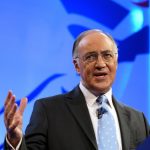
Tag: Michael Howard

  • Michael Howard – 2003 Response to the Queen’s Speech in the House of Commons

    Michael Howard – 2003 Response to the Queen’s Speech in the House of Commons

    The response made by Michael Howard, the Leader of the Opposition, in the House of Commons on 26 November 2003.

    I begin by paying tribute to Paul Daisley. He came to this House with a formidable reputation as a reforming council leader.

    Tragically, his election to Parliament was overshadowed by the diagnosis of his cancer. Obviously in pain, but with an equally obvious pride in his constituency, many remember the courage he showed when he delivered his maiden speech some eight months later. I am sure Hon Members in all corners of the House will join me in expressing the hope that his spirit will live on after him through the work of the Paul Daisley Trust.

    And his spirit lives on in another way too. Paul campaigned vigorously for his predecessor, Ken Livingstone, to be readmitted to the Labour Party. It looks as though he’s going to have the last laugh.

    On all sides of the House, Mr Speaker, we will miss Paul Daisley.

    I warmly congratulate the proposer and seconder of the loyal address.

    The Hon Gentleman the Member for Dumbarton spoke with passion. He always does.

    Like the Prime Minister, he long had a passionate and principled devotion to the cause of unilateral nuclear disarmament – despite the fact that both Faslane and Coulport employ hundreds of people in his constituency.

    Indeed, the Hon Gentleman’s constituency is undoubtedly one of the places in the world where even the Prime Minister could find weapons of mass destruction.

    The Hon Member serves as the highly respected Chairman of the Treasury Select Committee, where he has a fearsome reputation.

    When he recently asked the Governor of the Bank of England the same question nine times, he was compared to Jeremy Paxman. Let me assure the Hon Gentleman. Nine questions are easy. Try fourteen, and then you really could move to Newsnight.

    I am sure I speak for the whole House when I congratulate the Hon Member on his speech today.

    The Hon Member for Gloucester spoke with the eloquence we have come to expect of him.

    He must have been very surprised to be asked to second the motion today. For earlier this year, he voted against the war.

    The website diary of the Hon Member gives a fascinating account of his private meeting with the Prime Minister just hours before the crucial vote. It is full of startling political insights.

    ‘The Prime Minister’, he said, `had obviously had a long and hard day’.

    `His shirt, usually impeccably pressed, looked slightly creased’.

    But `his eyes were bright, focussed and full of conviction’.

    `Parmjit’, he said, `we are where we are’. The Prime Minister was clearly at his most persuasive.

    `It’s a far from ideal position, I know, but I need your support’.

    `A far from ideal position’. I don’t remember that phrase creeping into the Prime Minister’s speech in the House that day. Could he possibly have been saying one thing in public, and another in private? Surely not.

    I hope all this hasn’t killed off the political prospects of the HM for Gloucester. For, on the basis of today’s performance, he has a great career ahead of him.

    I also want to congratulate the English rugby team on their outstanding achievement in Australia. It is a great shame that the Sports Minister wasn’t there to see it.

    There are different accounts of the Minister’s reaction when he was told to come back early. The Secretary of State said that was always planned. But the Minister’s Spokesman, when asked how he really felt, said `I can’t tell you. It’s before the watershed’. The Prime Minister was reported as being profoundly unimpressed by the Minister’s reaction. Indeed, a source close to the Prime Minister said of the Minister `I think he may regret it’. It may not be very long before the Sports Minister is proposing the Loyal Address.

    Before I examine the Gracious Speech in detail there are certain matters that do not fall directly within the remit of the Government’s programme.

    Today the people of Northern Ireland go to the polls to elect a new Assembly. On these benches we support the Government in its efforts to re-establish devolution in the Province and we hope that there will be a constructive and stable outcome to today’s elections.

    In Iraq too the Government is engaged in a commendable endeavour to replace tyranny and terror with peaceful democracy. The Prime Minister has shown political courage in standing shoulder to shoulder with our allies in America and elsewhere and we support him.

    We must also remember, in everything we say and do, that many British servicemen and women are demonstrating physical courage every day in Iraq. Their job is a dangerous one and I am sure I speak for the whole House when I express my gratitude to them. In that context I pay tribute to the two Members of this House whose duty as members of the reserve forces has taken them to Iraq: my Hon Friend the Member for Westbury, who has happily returned safely to rejoin us, and my Hon Friend the Member for New Forest West who continues to serve our country in Nasiriyah.

    Many of us have constituents who have suffered the tragic loss of close family members in Iraq, and we owe it to them to ensure that their loved ones did not die in vain. The House will also wish to pay tribute to the three British citizens, including the Consul General, who died in the bombings in Istanbul, and to the many others who so tragically lost their lives there.

    On these benches we welcome a number of the measures contained in the Gracious Speech. We regard them as constructive and will support their passage.

    We are pleased to see the Government turn its attention to child protection and domestic violence.

    We will study the draft Disabilities Bill, when it is published, and hope that it will live up to the billing which the Minister for Disabled People has given it.

    And we support the principle of a Civil Contingencies Bill. Those recent terrorist atrocities in Turkey and elsewhere require us to do everything possible to protect British citizens and interests.

    The Civil Partnerships Bill aims to address some genuine grievances that are acknowledged on all sides of the House. I believe we all have a duty to recognise and respect the fact that people in our society choose to live their lives in many different ways. I also accept that there are a range of sincerely held opinions on how the law should reflect this. Members on this side of the House will have a free vote, and I hope that will also be the position on the Government side.

    But while we welcome some of the individual proposals in the Gracious Speech, the overall reaction to it – even, I suspect, on the benches opposite – will be one of disappointment.

    And that sums up the general feeling of disillusionment which has built up over the last six and a half years.

    This Government was elected with great promise and a sweeping mandate. It had the world at its feet and a vast Parliamentary army ready to carry forward whatever measures it proposed.

    And what has happened? In the words of Paul Daniels: `Not a lot’.

    We are, after all, about to embark on the seventh Parliamentary session since the RHG became Prime Minister. He’s been in office longer than Attlee. And what has he got to show for it?

    During that time we have had seven education Acts. They promised in 1998 to cut truancy by a third. What’s happened? Truancy has gone up 15 per cent overall and 25 per cent in secondary schools. What hope is there for our future if so many of our young people don’t even go to school at all?

    We have had five transport Acts. Yet we have more congestion, and twice as many trains run late as before.

    We have had 18 Acts from the Health Department. None of them will be of any comfort to the million people languishing on waiting lists.

    And we have had no fewer than 30 pieces of legislation from the Home Office.

    But crime is up by 800,000, gun crime has doubled, and we have the
    highest level of violent crime ever.

    Are the major Bills in this year’s Speech likely to be any different?

    The Asylum Bill, the third Immigration and Asylum Bill, is merely the latest chapter in the sorry story of incompetence and irresponsibility that has marked the Government’s attempts to deal with this problem.

    Almost five years ago, the then Home Secretary said he was legislating to `provide the United Kingdom with a modern, flexible and streamlined [asylum] system’.

    Whatever happened to that?

    They have wasted the last six and a half years reversing the measures brought in by the previous Government – and then reintroducing them!

    But this time they’ve gone further than any civilised government should go. Earlier this week we read in our newspapers that the Government proposes to use the children of asylum seekers as pawns to cover up their failure to get a grip on their asylum chaos.

    Children of asylum seekers are to be taken into care in order to force their parents to leave the country.

    The Prime Minister and the Home Secretary should be ashamed of themselves.

    We shall oppose any legislative provision that seeks to give effect to this despicable provision.

    And I have no doubt that when we do so we shall be joined in the lobbies by the many Honourable Members on the Government benches who, unlike the Prime Minister and the Home Secretary, still retain their self-respect.

    What about pensions? The Pensions Bill will do nothing to tackle the main causes of the pension crisis. Without reform of the State Pension and a reversal of the spread of means testing, the pension crisis will continue to get worse. Without new incentives to save, pension provision will continue to shrink.

    What of the pledge in the 1997 Labour Manifesto to `make the House of Lords more democratic’? Well, we now know exactly what the Prime Minister means by democracy. `One flatmate one vote’.

    And while we’re talking about Manifestos, what happened to the pledge in 2001 – just two years ago?

    ‘We will not introduce ‘top-up’ fees’, it said. And there was more. The Manifesto boasted that Labour had `legislated to prevent them’.

    Perhaps the Prime Minister could tell us what exactly happened there.

    Was it a misprint? Was it meant to say `we will legislate to introduce them’?

    Or did the Prime Minister simply miss that line?

    Was it perhaps sneaked in by the Chancellor at the last minute?

    Is that why the RHG the Member for Hartlepool has been brought in to oversee the Manifesto? To keep an eye on any last minute changes from the Chancellor?

    Isn’t it extraordinary. It doesn’t matter how many times the RHG is sacked from the Cabinet and forced to leave Downing Street by the front door, the Prime Minister will always find a way of smuggling him in through the back door.

    Today there was no mention of the phrase top-up fees in the Queen’s Speech. It is the tax that dare not speak its name.

    Mr Speaker, Government plans for regional assemblies will take the number of referendums held by this Government to 37. But there is also a Bill in this Queen’s Speech about a referendum they dare not hold. And that is the draft Bill for a referendum on the Euro.

    There is one thing surely on which we can all agree. No one believes that the Government will call a Euro referendum before the next general election. So why on earth are we wasting any time on it?

    On regional assemblies we are being given referenda we don’t want. On the euro we are being given a referendum that won’t be called. But on the new Constitution for Europe – a measure of the utmost significance – we are being given no referendum at all.

    No-one could say that the late Hugo Young was a Eurosceptic. Indeed the Prime Minister recently paid a handsome and well-deserved tribute to him. But the Prime Minister would do well to listen carefully to the wise words Mr Young wrote in July when he said:
    “..this change in the shape of the EU is indeed constitutional, does mark something pretty big, and merits the thumbprint of the nation to endorse it.”

    There is now total confusion at the heart of his government. The Prime Minister said that the Euro Constitution is good for Britain. The Chancellor has said it’s bad for Britain. The Prime Minister has told us that the Constitution is essential for enlargement. The Foreign Secretary has now said that it isn’t.

    That is why the Prime Minister won’t hold a referendum. That is why he won’t even try to persuade the British people that this Constitution is either good or essential. He cannot even persuade the Chancellor of the Exchequer or the Foreign Secretary. No wonder he won’t allow the country a say.

    After all, it’s not as though the Government is against consultation.

    This evening the Prime Minister will be launching what is pretentiously described as a `conversation with the nation’.

    It won’t come as much of a surprise to the nation to learn that this conversation will be rather one-sided.

    On Sunday the Leader of the House was asked by Jeremy Vine what would happen if, in this conversation, the people said they didn’t want top up fees.

    He replied:

    `Well indeed but er…’

    `Well the point I’m making is that top-up fees are an issue which are current now, today, this year, in this coming year, in the coming couple of years’.

    So that’s clear then.

    But what’s this conversation with the nation about?

    Again the Leader of the House was crystal clear.

    `Because’, he said, `in the context of a long term future… that is, that was what the Prime Minister was talking about and not in respect of you know, the need for reform’.

    We all know the real conversation that the Prime Minister needs to have. He needs to have a conversation with his next door neighbour. The current situation makes you wonder who’s the leader and who’s being led. Real Prime Ministers lead their Chancellors. He follows his.

    And what is the Prime Minister’s response? He can’t get his way on policy; he can’t get his way on strategy: all he can do is deny his Chancellor a seat on the National Executive.

    The Prime Minister may strut his stuff on the world stage but when it comes to domestic policy, never in recent history has a Prime Minister been so weak, so feeble, so utterly unable to do what he wants. And all this with a huge majority in this House. How utterly humiliating for him – and how very damaging for our country.

    “Outmanoeuvred” by a “politically obsessed Chancellor” – not my words Mr Speaker, but those of the RHM for Hartlepool, probably the world’s leading authority on his ten-year feud.

    Is it any wonder that this Government has given up on delivery?

    You don’t have to take my word for it.

    We have it on no less an authority than the Trade and Industry Secretary. She has admitted – and these are her words –`when we talked about delivery, that may have been something of a mistake’.

    `We are not in government’, she said, `in order to show that we can be more competent than the Conservative Party was’.

    She knows – as we all do – that Labour promised far too much and has delivered far too little.

    They know they can’t deliver. They know they are incompetent. They know they have failed.

    And this Gracious Speech will do nothing to remedy that.

    We could be doing so much better. After all, we are the world’s fourth largest economy. We are a nation of hard working, energetic and enterprising people. We have great potential. But this Government, which promised so much, has let our country down.

    In the absence of real reform, its only answer is higher tax. When that fails, it can only turn to higher taxes still. They approach every problem with an open wallet and an empty mind. They are taxing and spending and failing.

    After six and a half years, this is a Prime Minister who has lost his grip and a Government which has lost its way.

    They are running out of steam and they know it.

    We need better schools – but this Government gives us top-up fees. We need safer streets – but this Government just abolishes the Lord Chancellor. We need improved hospitals – but this Government gives us legislation on the euro.

    This Prime Minister and his Government are simply unequal to the task.

    They have run out of ideas.

    They have run out of money.

    And they are running out of time.

    All they have to offer is open wallets and empty minds.

    This Queen’s Speech should have included a programme that delivers real power to patients, to parents and to front line professionals. It should have included a programme that gives value for taxpayers’ money and security for the national interest.

    But that programme will only be put in place by a different government.

    A government that boosts the economy rather than chains it. That implements serious reform of our public services. A government that gives real power to people.

    That government is the next Conservative Government. The sooner it comes the better life will be for the people of our country.”
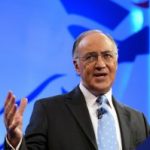
  • Michael Howard – 2004 Speech at Policy Exchange on the British Dream

    Michael Howard – 2004 Speech at Policy Exchange on the British Dream

    The speech made by Michael Howard, the then Leader of the Opposition, on 9 February 2004.

    Thank you for inviting me to speak to you today.

    Policy Exchange is one of the bright new stars in the think tank universe. Its success, under the dynamic leadership of Nicholas Boles and Francis Maude, demonstrates that the centre-right is once again at the forefront of public debate, generating the ideas which will determine the direction of future policy.

    When I applied to university in the late Fifties, I wrote an essay called “Why I am an Angry Young Man”. I saw Britain as a country too stratified, too hidebound, where people tended to be judged on their background, not on their worth. I saw a country teeming with the most energetic, talented, compassionate and decent people; and it seemed to me that too few of them were able to make the best of their lives.

    In lots of ways society has been transformed since then. Yet many of those constraints still remain. And today there are new constraints and frustrations. Too many are disenchanted with politics and government. Too many are cheated of the decent education that is essential for people to make the best of their lives. Too many are cheated of the first class healthcare that they deserve. Why? Because we have a State that does too much, that interferes too much, that is too unaccountable. A State that has grown so much that it diminishes the people it is meant to serve.

    When I look at our amazing country, the more wonder I feel at what it could be. I see a people just as talented, just as energetic as we always were, with all the same virtues we always had, with a richer culture thanks to the greater diversity that Britain now boasts, and I’m filled with a passion to see us do better. I see so many missed opportunities.

    I wrote my essay forty-five years ago.

    Thirty-four days ago I published a statement setting out my beliefs.

    My principles and convictions have remained the same throughout.

    Today the contrast between what government does and the way people live their lives could not be more stark. Think what has happened over just the last few years. People have more and more control over more and more aspects of their lives. They make more and more sophisticated decisions every day of their lives. Cheap flights enable more of us to go abroad more often; almost everyone now has a mobile phone and soon, no doubt, will have a video phone. More and more people have multi-channel television and access to the internet. Many businesses are organised in completely different ways. Change happens at incredible speed.

    This revolution in business, communication, travel and leisure has not been matched by a similar revolution in government. Government – and I think to a certain extent politicians of all persuasions – have sat on the sidelines and have failed to learn lessons from what is happening in the real world.

    In the 1980s, the country had a clear path to follow. We were the sick man of Europe. Our economy was on its knees. Radical reform was required. So, taxes were reduced, many industries were returned to the private sphere and the trade unions were brought under control.

    But there were many areas of life that needed radical reform and did not get it.

    Take healthcare. The NHS is one of the biggest employers in the world. But it was established at a time when people thought you needed big organisations to deal with big problems.

    By the time we got to the 1980s that mindset had changed but there were too many powerful obstacles that stood in the way of radical reform. Opponents of change assiduously propagated two myths. First, that no country had better health care. And secondly that there was nothing wrong with the system that just a little bit more money would not solve.

    But now we have seen those myths blown out of the water. The current Government has spent a huge amount more of people’s taxes on the NHS: they have set hundreds of targets and bench marks. But we still lag behind many of our neighbours.

    So the reason this speech is relevant today is because this approach has been tried, it has been given time to work and it has failed. Public sector productivity has not increased. The public’s expectations, raised by the rhetoric of politicians, have not been realised. There is now a fundamental imbalance between what voters want and what government is able to deliver.

    That’s what I meant on 2nd January this year when I said that the people should be big and the state should be small.

    The growth of government has not led to any growth in affection towards government. Quite the opposite.

    Extravagant promises about what government can achieve have not been honoured. Not through bad faith on the part of politicians. But simply because central government action cannot deliver the improvements, the growth in control over their own lives, that people rightly desire.

    Because government has failed to make the improvements it promised, cynicism has grown – towards not just the Government but all politicians. Political promises are now treated like a salesman’s patter – pious words not to be taken at face value. People think public service failures are inevitable – the consequence of politicians not knowing how to improve things. And they believe failure is like the weather – something they are powerless to improve, unless they emigrate.

    The answer to this cynicism is not the replacement of one set of managers with another (though that would be a start). It is the transfer of power from politicians back to people – the handing of control over to citizens and the professionals who serve them.

    Any government I lead will be guided by the principle that people should be given more control over policing in their local areas, the health care they receive, the schools their children are educated in and the way they get around.

    It will mean more control for people, as individuals and families. So you’re in charge, and you can follow your dream wherever it takes you. It means government should let people grow and be wary of taking control away from people.

    I grew up in Llanelli, a small town in South Wales. Neither of my parents had been born in this country. They started with no advantages except the abilities they were born with and a readiness to work hard and make the most of those abilities.

    They ran a small clothes shop. They started it from nothing. Too often, people talk about the economy in abstract terms. But in reality, it’s nothing more complicated than the collective efforts of individual people. Businesses are run by people like my parents. They start them, grow them and nurture them for many different reasons. To make a living, of course. But also for the satisfaction of creating something, of leaving a mark, of making a difference.

    People who start businesses are big people, every single one of them. Their enterprise and their readiness to take risks are the engine of our progress. We need them to succeed.

    Their dream is a dream shared by millions. All those childhood ambitions, all those conversations with friends, all those secret thoughts about the sure fire business idea. Millions of people, countless ideas, boundless possibilities. Imagine if more of them made it. Imagine if more of those who made it, made it bigger and better – growing from small businesses, to medium sized businesses to large businesses. Imagine how much wealthier, more fulfilled people could be. Imagine how much wealthier in every way our country would be.

    So why doesn’t it happen more often? What stands in our way? Is it that we have lost our creative edge, our energy, our dynamism? Hardly. We are still one of the most creative nations on earth. These small islands have had a totally disproportionate impact on the worlds of commerce, music, literature, science, fashion, sport and culture.

    No. There is no lack of drive, no want of ambition, no dearth of talent or creativity. What holds too many people back, is the one thing that’s supposed to help them grow: the State. In attempting to try and solve problems, government creates new ones. All too often government is the cause of our problems not the solution to them.

    I genuinely believe that politicians – almost all of us – start out with the best of intentions. We all think we’re helping when we pass that new law, impose that new regulation, levy that new charge, fee or tax.

    But these good intentions often make people’s lives worse because they take power away from families and individuals. So it’s the consequences, not the intentions, that really matter. And I will tell you today, in all honesty and as starkly as I am able to, that the size and scope of government in this country – and the means of its financing by the people through taxation – is quite simply too big.

    Government officials may have the time to produce tortuously-worded, lengthy regulations. But people who work in businesses have to read them, understand them, implement them. The consequence is wasted effort and higher costs.

    This is not an abstract point or the tired mantra of the free market. It’s real life for millions of people. Only recently, I went to see a small firm that had just been instructed to fit emergency lighting at a cost of many thousands of pounds. That cost had a real effect – they had to lay someone off. Yet the year before, at a previous inspection, no such requirement had been made. In the intervening twelve months, nothing had changed. There had been no accidents and no change in working practices to justify the new requirement. No new machines had been installed.

    I mentioned this when I spoke at the end of last year to the CBI’s annual conference. That provoked a letter from Andrew Smith, the Secretary of State for Work and Pensions. He was extremely concerned to hear about this. Do you know why? I was wrong to blame the Health and Safety Executive for this new burden on a small business. Apparently … I should have blamed the Fire Service.

    Wouldn’t it be better if we had a government that scrapped regulations instead of scrapping over who was to blame?

    The Government I hope to lead will indeed set about the task of getting rid of unnecessary burdens. We want the total regulatory burden imposed by government to fall each year. We want sunset clauses in new regulations. We want proper scrutiny of any new proposed regulations. We want to lighten the load on small businesses.

    This frustration with the constraints of an over-regulated society is not by any means confined to the business community. They are, of course, particularly important because they create the wealth on which we all depend. But the same principle applies to everyone.

    When I was a boy my parents told me “It does not matter what you do when you grow up as long as you do it to the best of your ability”. We should be a country which helps everyone to do what they do to the best of their ability, to make the most of their talent and their aptitude.

    I want every family to have the opportunities that my family had, and better opportunities still. That means creating the conditions for a strong economy and then removing the barriers that hold people back. That’s it. Not initiatives, strategies, targets, commissions, but the energy and enterprise of our people.

    Why do Labour and Liberal Democrat politicians think that spending taxpayers’ money is the solution to every problem? When taxes rise too high, they start to bring people low. There is a moral reason for government to take less from people in taxation. If people are highly taxed, they come to believe that their obligations to society and to one another are discharged just by handing money over to government.

    Over a long period, that is corrosive. I want Britain to be a country where people, families and communities take more responsibility for one another.

    Low taxes give people the opportunity to make their own decisions: decisions to save, to give, to spend, to keep more for their families and their children. People grow in confidence, and grow morally, when the state gives them the opportunity to do so.

    So these are the reasons why I want to see lower taxes, less government bureaucracy, less waste, and a simpler, more transparent tax system.

    I have asked David James, who had to be called in by the Government to help salvage the fiasco of the Dome, to investigate how we can cut government waste across the board. We call it Yard 10 Economics, after the now infamous yard in the Dome where £80 million worth of equipment lay in unopened boxes because it couldn’t be used.

    Oliver Letwin recently outlined our commitment to a simpler tax structure through long-term methodical reform. Tomorrow, we will announce a significant measure which will curtail the rise in government bureaucracy and waste. Next week Oliver will set out our medium-term approach to government spending.

    These measures will make the State smaller. But to feel bigger, people want to feel more in control of their own lives.

    Very few people want to lead a solitary life – to be alone. We come together in different groups of various kinds. Most of what we do every day is done together – with friends, with colleagues, at work, in our free time, as part of communities of every kind.

    The family remains the most immediate and important group within which people share responsibility for one another’s well-being. But families are changing. Not all conform to the traditional pattern. I continue to believe that the conventional marriage and family is the best environment within which to bring up children. But many couples now choose not to marry. And more and more same sex couples want to take on the shared responsibilities of a committed relationship.

    It is in all our interests to encourage the voluntary acceptance of such shared responsibilities – but in some instances the State actively discourages it. That should change, and I will support the Government’s Civil Partnerships Bill that makes some important reforms, on a free vote in the House of Commons.

    But it is important to be clear about this. Civil partnership differs from marriage. Marriage is a separate and special relationship which we should continue to celebrate and sustain. To recognise civil partnerships is not, in any way, to denigrate or downgrade marriage. It is to recognise and respect the fact that many people want to live their lives in different ways. And it is not the job of the State to put barriers in their way.

    The frenetic pace of modern life also makes people concerned about the balance between work and the rest of their lives. These responsibilities often compete with each other. They are difficult to juggle. The pressure on time is huge, often squeezing out the chance to see the wider family or to contribute fully to the life around you.

    The way we work is changing. More and more companies are introducing home-working or part-time work. The 9-5 office, an invention of the early twentieth century, is now far from universal.

    Business is adapting to this changing environment, but government is still getting in the way. We must remove the obstacles for families – to finding the best childcare, to getting access to the best schools, to creating the best working environment. Very often it is the State, through misguided regulation, that puts these obstacles in people’s way.

    I will make sure that the next Conservative Government will do all it can to help families achieve the work-life balance that is best for them. I have asked David Willetts and Caroline Spelman to review the current framework for providing childcare, which we believe has led to a narrowing of the options available to parents.

    For many of the best people in Britain, their dream is to become a doctor, a nurse or a teacher and dedicate themselves to healing the sick and educating the young. Every day, they go beyond the call of duty to perform extraordinary feats, far beyond what any politician could ever achieve.

    But many of them feel small, because the big State interferes so much in the way that they work. The burden of regulations and form filling, of initiatives and targets and task forces make it impossible for them to do their job well. It is not only the general public who fall victim to an interfering state. So do its own employees.

    The way our schools and hospitals are run has not kept up with the way that the rest of Britain works today. They remain poor relations not because of lack of funding but because of the lack of real reform. The people who work in them are dedicated and committed. But they work in a system which hinders and hampers them when it should be doing all it can to help.

    Parents want the best education for their children because they know that education opens the door to much greater opportunities.

    When I was a teenager, I went along to an election meeting in the town in Wales where I grew up. It was addressed by the town’s MP, a great man of his day, the Deputy Leader of the Labour Party. I asked him why the Labour Party was proposing to abolish grammar schools – including Llanelli Grammar School, where I was then a pupil. He said that they weren’t going to abolish grammar schools. They were going to make all schools grammar schools. Which perhaps goes to show that political spin has a very long history.

    You may possibly have noticed: that hasn’t happened. There has, indeed, been a rush to uniformity and a levelling down from excellence. We must reverse that trend. We need an education system that is rigorous, that suits every child’s talents, that helps people to achieve their best.

    The best schools, whether state or private, selective or comprehensive, offer the things which every parent has the right to expect for every child – discipline and the pursuit of excellence.

    No-one can learn – and few can teach – in an atmosphere where shouting, loutishness and actual or threatened violence prevail. In many schools a disruptive minority have been allowed to hold back the majority who are eager to progress. So our first priority will be to restore to teachers unambiguous control over the classroom. Heads must have the final say over expulsions. Schools should be allowed to offer legally-enforceable, tough home-school contracts, giving teachers the clear right to impose discipline.

    The pursuit of excellence in all its forms – academic, vocational, sporting, musical, charitable – should be the aim of every part of our education system. Few can excel at everything, but no-one should be condemned to an expectation of mediocrity or underperformance across the board. Schools should be free to specialise. Mixed ability teaching should be the exception, not the norm, in classroom teaching. Literacy and numeracy should be bedrock skills for all, and exams made more rigorous – never again must we hear from employers that even some school-leavers with A-grades in GCSE Maths have functional innumeracy.

    By giving parents the ability to exercise control over their children’s education, and by making it easier for popular and successful schools to expand – even to take over neighbouring schools – we will give opportunities to thousands of children. The opportunity to find out what it is that they can do best and develop the talent to realise their dreams.

    The values of the NHS – the chance to offer high quality care, free at the point of use and irrespective of the ability to pay – are enduring. But the way in which those values are delivered must change and do so at a much faster rate than this Government intends, if it is to respond to modern demands. The NHS is too impersonal, too inflexible, too centralised, too bureaucratic. These shortcomings can’t be changed without a new approach, a new philosophy.

    For all the chipping at the edges of monopoly, the State still controls healthcare in Britain. Our vision is that this control should pass to patients. They must have the opportunity to choose where and when they are treated.

    The benefits of control are not only for individuals, but for the whole NHS.

    Doctors and nurses, managers and lab scientists – all those who work in the NHS – believe in caring for patients. They want to respond to the needs and preferences of patients. But they can’t – because interfering ministers, bureaucracy, central directives, targets, plans, quangos and waste rob them of resources. They deprive them of the freedom to deliver the quality of care they want to offer. Too often, we have first-class medicine trapped in a second-rate system.

    This has to change. The reason I came back into frontline politics two years ago was because I became so angry about the decline of health care in my own constituency. Why should any of us put up with a system in which our families, our friends, my constituents, die from illnesses which would not kill them if they came from countries not very far away from us?

    So we will bring reform. We will be open-minded and learn from the systems that work so well on the continent. We will give control to patients. Under a Conservative government everyone will be free to choose where they want to have an operation within the NHS. If an elderly frail woman wants to have an operation in a hospital that is near where her son lives, she will be allowed to. If an informed patient wants their operation in a hospital which they think is better than their local one, they will be allowed to. If someone wants to go to a hospital with shorter waiting times, they will be able to. We will begin to implement the system necessary to make this work from the moment we come into office.

    The last time the Conservatives were in government, the country faced very different problems than those of today. In 1979 we were being drowned by a flood of high taxation, militant trade unionism and rampant inflation. We spent the 1980s fighting to reverse these tides. It was not easy. It meant taking tough decisions. But we stuck to our principles and delivered.

    When I was working as a barrister, I had to advise a man who had lost his job. He had refused to go on a march organised by his union against Edward Heath’s Industrial Relations Act. He had been fined by his union, and he had refused to pay the fine. The union kicked him out, and because of the closed shop he was sacked. Our law gave him no redress.

    That made me very angry. I became convinced that the closed shop should be abolished. It was a monstrous restriction on people’s rights. So I argued for the end of the closed shop, but because I wasn’t an MP there was little I could do. In 1983 I became an MP, and devoted much of my maiden speech to this question. But because I was not a minister there was little I could do. In 1990 I became Employment Secretary and I was finally able to abolish the closed shop. Even under a Conservative Government, it had taken eleven years to abolish completely one of the most iniquitous restrictions on freedom in recent times.

    Today we face new challenges. As the country’s economy has strengthened and stabilised, the failings of our public services have become clear. It will not be easy. The journey will be hard. But our principles will be our compass. As I said last October “power to people” – the people who use and run our services, not politicians and central government.

    At the heart of my approach is a fundamental belief in fair play. No one should be over-powerful. Not trade unions. Not corporations. Not the Government. Not the European Union. Wherever I see bullying by the over-mighty, I will oppose it, and stand up for people’s rights and freedoms.

    Britain’s history shows that when you give people the opportunity to succeed few of them choose to pursue a ruthlessly selfish path. Most of them want to put something back, to help extend the opportunity that worked so well for them to others. Think of some of Britain’s largest benefactors and you find some of our most successful entrepreneurs – Sainsburys, Westons, Wolfsons and Clores.

    One of the worst ways in which people are denied control over their own lives is through discrimination. I loathe it. Every one should be given the same opportunities that I was given – those who are born in Britain and those who settle here as immigrants. Discrimination against people because of their origins, their colour, their beliefs or their sexuality must become a thing of the past.

    Britain is a free country and should be free for all. A genuinely free Britain is one where people respect one another for what they do, not for what they are.

    I passionately believe that we are put on this earth to make the most of whatever talents and abilities we have – to fulfil our potential, to make the best of our lives.

    My belief in small government is not some academic exercise. Only when the State is small will people be big. It is a means to an end, and that end is opportunity, giving people power to control and run their lives as they see fit.

    Government often runs as if it were on a treadmill. It just carries on going and never questioning its direction.

    That era is coming to an end. Government must be much more responsive, much more clear-sighted and have a much more defined role.

    This is the framework for the visions and the policies that we will put before the British people at the next election. After I left university I spent a year in America. I admire many aspects of American life. In America, they talk about the American Dream. They talk about the ability of someone born in a log cabin to make it to the White House. As it happens, in America this is the exception, not the rule.

    In Britain it actually does happen. There are countless examples of people from humble beginnings who make it to the top: who live the British Dream. So we should talk about it. We should embrace it. We should celebrate it. I want everyone to live the British Dream.

    My family and I owe a huge debt to this country. I owe this country everything I have and everything I am. I have now been given a great responsibility by my Party. I shall do my utmost to discharge it to the very best of my ability.

    That means convincing the British people that there is a better way. A better way that gives them back control. A better way which makes it easier for them to fulfil their potential. A better way to make the most of their lives.

    Today, I hope that we have set about creating the framework for the vision and policies that we will put before the British people at the next election.

    The opportunity for every one to live bigger lives.

    Thank you.

  • Michael Howard – 2004 Speech on a New Deal for Europe

    Michael Howard – 2004 Speech on a New Deal for Europe

    The speech made by Michael Howard, the then Leader of the Opposition, at the Konrad Adenauer Stiftung in Berlin on 12 February 2004.

    Mr Chairman, ladies and gentlemen, I am enormously grateful for your warm words of welcome and for giving me this opportunity to speak to you here this evening.

    The Conservative Party and the German CDU in partnership with the CSU share many political values and I appreciate the strong relationship that continues to exist between our parties.

    It is no accident that I should be giving this speech in Berlin, a city which encapsulates so much of Europe’s recent history. There is no better place in which to set out a new vision for Europe’s future.

    My first visit to Berlin was in the summer of 1963. I was there on 26th June. I was one of the half million people who thronged in front of the Rathaus Schoneberg to hear President Kennedy give his famous address. The whole world remembers his words: ‘Ich bin ein Berliner’ – I am a Berliner; I am at one with the people of Berlin.

    To all those who believe in democracy, in freedom, in hope for mankind, President Kennedy had a simple message: ‘Lass’sie nach Berlin kommen’. Let them come to Berlin. It was an iconic moment, echoed almost a quarter of a century later when President Reagan stood in this city and called across the divide ‘General Secretary Gorbachev…if you seek peace…if you seek liberalisation: come here to this gate! Mr. Gorbachev, open this gate! Mr. Gorbachev, tear down this wall’.

    Throughout those years, West Berlin was a beacon at the frontier of the battle for freedom. Those Presidential visits were inspirational. They represented defiant idealism in the face of a brutal reality.

    Today, the people of Berlin are one. The West’s vision and determination unified a city, a country and a continent. So I come to Berlin once again – to the capital of a country which has been one of the great success stories of the post-war era – aware of history but looking to the future, aware of the battle for freedom that took place here, and determined that freedom should flourish in Europe.

    I am here in a new century, in a city that is the gateway between the east and west of Europe, at the heart of this great continent. We are on the point of welcoming ten nations as new members of the European Union. The entry of these countries, large and small, from Poland to Malta, which my Party has always welcomed, will profoundly change the nature of the European Union. And the European Union has a profound responsibility. For if it stands for anything, it is for the healing of our continent.

    Different National Perspectives on the European Union

    Britain and Germany are two great nations with their own histories and their own perspectives.

    Germany has wanted to achieve closer and in some cases irreversible integration thanks to her specific experiences in two world wars. Konrad Adenauer, whom we honour in this foundation, understood that the European process could be of great service to Germany. As a result, he made this country strong in Europe, valued as a trading partner and trusted as an ally. I understand why his European policy, which helped to establish Germany’s place in the community of nations, is admired in Germany today.

    We in Britain came through the war with our national institutions strong. When we seek to preserve those institutions, we are defending a constitutional settlement that has survived great stresses and strains and which continues to work well and be understood by people in Britain.

    Britain has always been a global trading nation. We have historic connections with our Commonwealth partners and with the United States. Look, for example, at where our international telephone calls go at Christmas and New Year: to North America, to the Caribbean, to the Indian subcontinent, to Australia and New Zealand.

    This is not just a sentimental point. It is also a hard commercial truth. More of our trade is with non-EU members than is the case for any other member state. We have more overseas investments in non-European markets than any other member state. We are unique in the EU in having a global financial centre.

    But Britain and Germany are not the only countries that approach European integration from a perspective shaped by their history. Every European country does. I do not always agree with your Foreign Minister, Joschka Fischer. Nor I suspect, do you. But he was recently quoted in one of our newspapers as saying: ‘All the countries … have different traditions, different political disputes at home, complicated parliaments, complicated majorities … Language and history matter in Europe and we have to understand these different histories and difficulties’. He makes an important point.

    The Eastern European accession countries have thrown off the yoke of Soviet domination. They, along with other new member states, have rediscovered their own national identities and the freedom to determine their own destiny. As a result they may well be wary of giving up too much of that hard-won independence.

    Different histories, different institutions and different traditions.

    To undermine these institutions and ways of life, whether they have developed uninterrupted over hundreds of years or only recently re-emerged, and which are seen as legitimate by their people, would be an act of folly. Most people in the nations of Europe do not feel the same affinity or identity with EU bodies that they do with their own national institutions. People who identify themselves as Europeans rather than as citizens of their own country still remain a very small minority in every member state of the European Union.

    Most people simply do not feel European in the same sense that they might feel American or German – or British.

    There is no European public opinion; no European national identity. In the absence of a European demos, we are left with unadorned kratos: the power of a system that commands respect through force of law, not public affection.

    A Competitive Europe

    Yet the European Union has achieved a great deal. Together we have created a single market of 380 million people. People now have the right to work, study or retire in any other EU member state. We have also achieved some of the best environmental standards in the world. These are things of which we can all be proud.

    But there are dangers too. The communications revolution means that individuals now have a global reach and a global outlook. International institutions, whether they are businesses or charities, have abandoned the head office culture. Today, they create multi-centred organisations with power devolved to local and national centres.

    In this world, competition is fiercer than it has ever been before. The pace of change is faster than it’s ever been before. Those who respond most quickly and effectively to these changes will win the prizes. So flexibility is at an enormous premium.

    In this new environment we need a flexible Europe which puts global competitiveness at its heart. It would be idle to pretend that we have it. We now have to compete against China, India and the Asian economies. We cannot afford to be complacent.

    When I was Employment Secretary in the early 1990s I had to negotiate over the Working Time Directive. I had a meeting with one of my European counterparts, and pointed out to him that this new regulation would harm our competitiveness. His reply was chilling. ‘If we all do it’ – by which he meant the countries of the EU – ‘It won’t make any difference’.

    I hope we have all moved on since then. The EU was designed to free up our markets so that we could compete globally. But the weight and burden of the directives and laws it has introduced has had almost exactly the opposite effect – damming the flood of enterprise that should be sweeping across our continent.

    I was struck by the recent remarks of Gerrit Zalm, the Dutch Minister of Finance, who pointed out that ‘over 50% of the administrative burden on businesses in the Netherlands has a direct European origin. On a European scale these costs must be enormous. European legislation tends to be very detailed in its prescriptions and in its information demands. It also tends to grow rapidly. The decision makers involved, including the politicians in the Parliament and the Council, should realise the pressure they put on the economic potential’.

    These are fine words and I agree with them. But reform is simply not happening. The nation states of the European Union are still bedevilled by rules, regulation and red tape, which significantly impede our ability to compete. That is why our economies are not as dynamic as that of the United States. That is why productivity per person is almost 20% higher in the United States than it is in the European Union, and output per hour is 15% higher. That is why over the last decade employment in the United States grew almost twice as fast as in the European Union. If we had the same record as the United States in creating jobs, 28 million more people would be in work in the European Union today.

    We must build a Europe that is flexible. There is huge scope for improvement. This means that we must be honest about the work that the European Union should and should not do.

    The Conservative Vision for Europe

    Europe needs to go in a new direction. I say this as leader of a Party, the British Conservative Party, that has been at the forefront of Britain’s engagement with Europe. It was a Conservative government which first applied for membership in the early 1960s. It was a Conservative government which took us into the European Economic Community in 1973. It was a Labour government which threatened to withdraw from Europe and held a referendum on that issue in 1975. It was the Labour Party which stood on a manifesto of withdrawal from the European Community in 1983, a manifesto on which Tony Blair was first elected to Parliament. Three years later, in 1986, it was Margaret Thatcher who was one of the leading forces behind the Single European Act which established the single European market. Which is perhaps why the former European Commissioner Jacques Delors was recently moved to remark that ‘I have nothing to complain about with Mrs. Thatcher…she is a figure who counts in Britain’s and Europe’s history’.

    So let me, too, speak frankly. I am determined that Britain shall remain a positive and influential member of the European Union. But British policy towards the EU has often led to worse rather than better relations between States. Faced with a new EU initiative, our traditional response has often been to oppose it, to vote against it, to lose the vote, then sulkily to adopt it while blaming everyone else. You are understandably sick of constant British vetoes. And shall I tell you something? So am I.

    Many fears about the way in which the European Union is developing, on both sides of the Channel, stem from the fact that it is seen as a one-way street to closer integration to which all must subscribe. This is a perception which must be changed if Europe is to retain public confidence.

    Of course there are basic requirements which all member states must accept. Foremost among these are the four freedoms of the single market; free movement of goods, services, people and capital. But a single market does not require a single social or industrial policy, far less a common taxation policy. Allowing countries to pursue their own policies in these areas will encourage the spread of competitiveness across Europe. Forcing common standards upon them will mean that Europe as a whole falls further and further behind as each member state tries to put its own costs onto its neighbours.

    A Flexible Europe

    A flexible approach raises the important question of how to decide which areas should be applied to every member state, and which should be optional. In my view, every member state should be allowed to administer for itself those policies which do not directly and significantly affect the domestic affairs of other member states. So, matters such tariffs and cross-border pollution could be left to Brussels. But in areas which serve their own national interest, individual member states would be able to decide whether to retain wholly national control or whether to co-operate with others. The nations of Europe should come together as a series of overlapping circles: different combinations of member states should be able to pool their responsibilities in different areas of their own choosing.

    I first spoke about the need for Europe to adopt a more flexible approach a decade ago. For me this is not a new concept.

    And nor is it the revolutionary approach that many commentators might consider it to be. Historically, there have always been moments when Europe has been prepared to be flexible. This, after all, has been the case with NATO since its inception, where France signed up for membership but refused to submit her armed forces to separate NATO command and control. It is the case with the Euro. It remains the case with the 1990 Schengen Agreement. It was the case with the Protocol on Social Policy, negotiated at Maastricht, the so-called Social Chapter.

    A New Deal for Europe

    So the precedent is clearly established. And it can be developed. So far, everyone has had to move forward together, with individual countries negotiating specific opt-outs. This has caused tremendous tension. But since 1998, there has been a procedure within the Treaties which could be used to allow some member states to go ahead with further integration in a specific area, without involving every other member state. It is, as you know, called enhanced co-operation. It means that, instead of individual member states having fraught negotiations to opt-out of a new initiative, those that support it can simply decide to opt-in.

    This would allow those countries who want to integrate further to do so. But others would not be compelled to join them. It suits the integrationists. It suits the non-integrationists. Let’s use it.

    It would enable us to strike a new deal on Europe. Those member states which wish to integrate more closely would be free to do so. It would not be necessary for them to drag Britain and quite possibly some other member states kicking and screaming in their wake. We would say to our partners: ‘We don’t want to stop you doing what you want to do, as long as you don’t make us do what we don’t want to do’. In that way we would be able to break free from the institutionalised tug of war which has so often characterised relations between the Member States of the European Union in the past.

    It would no longer be necessary to impose on the European Union a rigid straitjacket of uniformity from Finland to Greece, from Portugal to Poland. We would be able to create a structure in which Europe’s member states would have room to breathe.

    I am not talking about a two-speed Europe. That implies that we are all agreed on the destination and differ only about the speed of the journey. I don’t want to reach the destination that some of our partners may aspire to. But I don’t want to block their aspirations.

    My policy is simple. Live and let live. Flourish and let flourish. That is a modern and mature approach.

    In my view it would create an imaginative structure for the European Union which could well be seen as a model by countries in other parts of the world which wish to co-operate more closely with each other without sacrificing their essential national sovereignty. That flexible approach, variable geometry, would ensure that we create a ‘made to measure’ Europe in which the institutional arrangements comfortably fit national interests, not an ‘off the peg’ Europe, ill-fitting and splitting at the seams.

    Britain’s Influence in Europe

    There are some who say that this would mean a loss of influence on the part of those countries which choose not to integrate more closely. But influence is not an end in itself – it is a means to an end.

    Britain, for example, does not need a seat at the table when decisions on the Euro are being made. And our economy has not been adversely affected by staying out. The decision to keep our own currency does not mean that we oppose the establishment of the Euro, or secretly hope for its failure. On the contrary, the euro-zone accounts for a significant amount of our trade: we depend on the prosperity of our European partners. So we wish them, and the Euro, well. But I thank M. Delors for acknowledging, in the same interview that I quoted earlier, ‘Since we have not succeeded in maximising the economic advantages of the euro, one can understand the British…saying “things are just fine as they are. Staying out of the Euro has not stopped us prospering”.’

    For a long time, on both sides of the Channel, commentators expected that Britain would eventually have to join the single currency. They simply could not envisage a situation where the United Kingdom diverged permanently from the rest of the EU. But it is now widely accepted that the status quo is sustainable. Our absence does not seem to be causing any ill effects within the euro-zone. We see, in short, a major European policy from which Britain, along with Sweden and Denmark, has amicably stood aside. This is something which seems to cause some people anguish. I see it as a source of satisfaction all round.

    Britain is the second largest economy in Europe. It is also the strongest military power in Europe. So we should not have any fears about our influence. Influence depends much more on what you can bring to the table than on any particular institutional structure.

    National Powers

    The kind of approach I am suggesting should also enable adjustments to be made to the acquis communautaire. Where it is clear that policies can be more effectively implemented on a national basis the European Union should be prepared to recognise this. Proposals to achieve national control in such circumstances should be treated on their merits and not automatically rejected as an affront to the European ideal.

    In 1996, when I was Britain’s Home Secretary, my country tabled a proposal to re-assert national control cover over civil defence and emergencies: that is, over how Governments respond to disasters like floods and fires. I could see no reason why we needed to have common policies on volcanic eruptions – something hardly likely to be relevant to Britain. It struck me as absurd that these matters should be dealt with by a European Secretariat funded by the European taxpayer. British negotiators were therefore instructed to press for the removal of the provisions relating to civil defence and emergencies from Title II of the Treaty.

    But my fellow European interior ministers took a different view. Interestingly, none of them argued that there was some compelling European interest in how we should respond to burst dams. Rather, their concern seemed to be that any diminution of Brussels’ role would be a betrayal of the European ideal.

    There should be no need today to maintain that attitude. Just as it would be dogmatic to refuse to co-operate with our European neighbours in areas where we have clear common interests, so is it equally dogmatic to insist that the EU should administer policies which can perfectly well be left to national governments.

    Specific Areas of Concern

    Within this new framework, what would be my priorities for reform?

    From a British perspective, the Common Fisheries Policy has been a failure: it has led simultaneously to the dwindling of fish stocks and the near-destruction of the British fishing industry. Its quota system encourages the dumping of dead catches over the side of boats. Its rules have turned good men into liars.

    There is no reason why fishing grounds could not be administered at national level. Not only does this happen in the rest of the world, where many countries have pursued successful conservation policies; it has also happened within the EU itself, where large portions of European waters were never incorporated into the Common Fisheries Policy.

    That which no one owns, no one will care for. The first step towards regenerating fisheries as a renewable resource is to establish the concept of ownership. That is why an incoming Conservative Government will immediately negotiate to restore national control over British fishing grounds, out to 200 miles or the median line as allowed under maritime law, with sensible bilateral deals and recognition of the historic rights of other nations.

    I am also keen to see individual member states take more control over their overseas aid budgets. Britain has one of the most effective overseas aid and development programmes, where almost all of the aid reaches the people it is intended to help and is used effectively. Very few people could make the same claims about the EU programme, despite Commissioner Patten’s heroic efforts at reform. As someone who is genuinely concerned with the need to give British taxpayers value for money, and to alleviate global poverty, I see a compelling case for increasing national control over overseas aid and development.

    Other Areas of Reform

    There are many other areas where reform is needed. I shall resist the temptation this evening to give you a long list of examples. But radical reform of the Common Agriculture Policy is especially urgent.

    It is no exaggeration to say that this policy has been disastrous for many of the poorest countries in the world. It has led to the over-production of food in Europe and the dumping of cheap food in Third World countries, harming their indigenous industry. Enlargement has made the need for reform more urgent. Over 40 per cent of the EU’s budget – 40 billion euros – is still spent supporting this policy, and that is likely to increase with the advent of the accession states, unless there is urgent reform.

    The European Constitution

    In short the European Union should stop trying to do everything and concentrate on doing fewer things more effectively. It should give the member states the chance to develop their own European approach that suits their national traditions, within the framework of the EU.

    It is on this basis that British Conservatives oppose the proposed constitution. We disagree with many of its contents, of course, but we also oppose the idea of having an EU constitution. There is a world of difference between an association of nation states bound together by treaty, and a single entity, whether you call it a state or not, with its own legal personality, deriving its authority from its own constitution.

    If this constitution were accepted in anything like the proposed form, the EU would gain many of the attributes and trappings of statehood: its own president, its own foreign minister, its own legal system. For the first time, the supremacy of EU law would derive not from Acts of national Parliaments but from a supra-national constitution. That is a profound and radical change.

    It is quite dishonourable to pretend that this is all a tidying-up exercise. What is proposed is perhaps the biggest change in Britain’s constitutional arrangements since the Seventeenth Century.

    I do not believe it is right to make a change of such magnitude without specifically consulting the people on whose behalf we purport to govern. Parliament does not own our liberties. It is meant to safeguard them. It should not diminish those liberties without an explicit mandate from the British people.

    So let me make it clear. I believe any proposal for a new constitution must be put to the British people in a referendum.

    Europe and America

    Our continent has always had close links with America. She has stood by us in two world wars and beyond. For all of us, she has been the difference between living a life of freedom or living a life under tyranny. It is a very long way from this city of Berlin to the Atlantic seaboard of the United States. But from the late 1940s onwards President Truman and his successors disregarded that distance. They declared that a threat to Berlin’s security was a threat to America’s security. They all gave steadfast support to NATO. They were all honorary Berliners.

    It is vital that Europe and America continue to remain close. Germany’s role in this is critical. Most of the greatest challenges the world faces can best be overcome by Europeans and Americans working together. But if each of those challenges becomes a cockpit for transatlantic rivalry, an opportunity for one to score points off the other, the outlook is very gloomy. The challenges will be much more difficult to resolve. We must not allow friction to become fracture. So we must manage our differences so that they do the least possible damage to a crucial relationship and we should draw back from initiatives that will risk exacerbating these difficulties.

    For example, I have grave reservations about Europe’s plans to undertake a new defence initiative which involves duplicating the planning and command structures of NATO. I strongly support greater co-operation between European countries on defence. But it should take place within the framework of NATO. NATO should remain the cornerstone of our defence. And Europe should not seek to create a defence structure as an alternative to NATO or as a counterweight to the United States.

    After a year in which the death knell of the transatlantic relationship has been sounded on both sides of the Atlantic, I hope that both Britain and Germany will play their part in repairing and renewing the relationship. Undermining NATO is not the best way to achieve that.

    A Europe for the 21st Century

    It took more than a quarter of a century after Kennedy spoke for the Berlin Wall to come down. It was dismantled brick by brick by the people it had divided. Its fall united a city, a nation and a continent.

    Now, some fifteen years later, ten new countries will be joining the EU, many of whom never expected to experience freedom in our time. Their accession to the Union is a matter for celebration.

    Now we are in a new century. And I can do no better than to quote my predecessor Iain Duncan Smith. This is what he said in Prague last year. ‘The Union’s founders built a solid foundation. They built structures that served their time well. But some of those structures are no longer right for today’s Europe or today’s world. The children and grandchildren of those who shaped post-war Europe now want to stand on the shoulders of their forefathers to advance a vision of their own.’

    We have today a unique opportunity. An opportunity to recast Europe in the image of the 21st century. To build a Europe that is truly free, one based on co-operation and not on coercion. One that serves each and every citizen in this great continent of ours, from whatever background and from whatever nation. I hope we can work together to make the most of that opportunity. History will not forgive us if we squander it.

  • Michael Howard – 2004 Speech to the Conservative Councillors’ Association Annual Conference

    Michael Howard – 2004 Speech to the Conservative Councillors’ Association Annual Conference

    The speech made by Michael Howard, the then Leader of the Opposition, on 9 February 2004.

    I want to start with congratulations, congratulations to all of you whose hard work and dedication have made us once again the largest party in local government. We have almost 8,000 councillors and we run 137 councils in Britain.

    These gains we made last May in the local elections owed a great deal to the leadership of Iain Duncan Smith and I take this opportunity to pay tribute to him today.

    But the credit goes to you as well, for keeping the Conservative flag flying, for making a reality of our belief that sensible Conservative policies cost you less, and for laying the foundations for our victory at the next election.

    When we win the next General Election, as I believe we can, we will never forget that it was your hard work that helped to put us there.

    Across the country, there is concern about the high levels of council tax. Since 1997 council tax has soared by 60 per cent in cash terms. Every year the average council tax increase has been almost triple what it was when we were in power. This year alone, council tax rose by almost 13 per cent – its highest ever one-off increase.

    The average council tax on Band D properties has now reached four figures – at more than £1100.

    Labour thought they could use the council tax as another stealth tax. They slipped through the back door of the council tax what they dared not pass through the front door of income tax.

    But the trouble is that people have noticed. When pensioners start to march, you know you’re in trouble.

    Labour has made the council tax shoulder a burden it was never meant to carry. They have disfigured it. Increases in national insurance and the raid on pension funds have both hit councils directly.

    Labour has piled on regulation after regulation, responsibility after responsibility, burden after burden without giving local councils the funding to do the job.

    Councils are forced to contend with rampant public sector inflation, a startling increase in litigation, additional responsibilities such as the new Licensing Act, and an ever more complex funding formula. More than half last year’s increases are caused by national pay and price inflation.

    Something has had to give, and it turns out to be the council taxpayer.

    Labour’s reaction to this home grown crisis has been one of panic and intimidation. Ministers are now threatening to cap councils the length and breadth of the country. In fact they are threatening to cap more councils in one year than the last Conservative Government capped in 18 years. When it comes to localism Labour’s actions speak far louder then their words.

    Who was it who said he was “wholly opposed to the capping of a council’s budget. It is an abuse of central power, it demeans democracy, it undermines the right of local people to decide what services they are ready and willing to pay for”?

    Those aren’t my words. They were the words of Jack Straw when Labour were in opposition. But then we know all too well that Labour say one thing and do another.

    When Labour are faced with a problem their immediate solution is to create more politicians and another expensive layer of bureaucracy.

    Across our nation, there are areas with strong regional identities. People are proud to call themselves Yorkshiremen or Cornishmen. But a Yorkshireman or a Cornishman is proud of his county, not some soulless region drawn up by Whitehall. We salute that. And we do not believe a strong regional identity is boosted by creating another tier of government.

    Labour’s plans for regional assemblies are unnecessary, expensive and out of date. At a time when more and more people are crying out for power for themselves. Labour is planning to make government even more remote.

    The regional assemblies will have vague and undefined powers and a license to meddle in the affairs of local areas. They will take crucial decisions that are much better taken at the local level. Who are they trying to fool when they say that regional assemblies, the abolition of counties, and yet another wholesale upheaval of local government would mean the devolution of power.

    People want more policemen, not more politicians; more nurses, not more political nursemaids; more teachers, not more tiers of bureaucracy.

    Of course, the Liberal Democrats fully support Labour’s plans for regional assemblies – with bells on. As well as being another layer of Government, their Regional Assemblies would be able to levy a regional income tax.

    This would come on top of their plans to replace the council tax with a Local Income Tax. It was launched with great fanfare at the local elections last year – although a briefing note left behind at their conference gave the game away.

    It said “You might be asked about the rate of local income tax…we don’t want to be drawn extensively into this!”

    Well, if the Liberal Democrats can’t or won’t answer your questions, perhaps I can.

    A local income tax would hit many more people much harder than the council tax.

    Students, currently exempt from council tax, would have their holiday earnings subject to a local income tax.

    Young people, in their first jobs but still living at home, would have their earnings subject to a local income tax.

    A young couple where both are working would both have their earnings subject to a local income tax – making them more than a £1000 a year worse off.

    Pensioners who have saved all their lives to give themselves an income in retirement would have their retirement earnings subject to a local income tax.

    Businesses would have to administer the tax – having to adjust their payroll to take account of employees who lived in different areas from each other.

    More people would avoid tax. Currently, the council tax is the most efficiently collected tax of all.

    The Liberal Democrats’ local income tax is a pickpocket’s charter, unfair, unnecessary and undemocratic.

    I know how frustrating it is to campaign against the Liberal Democrats. They claim credit for any success, and distance themselves from any failure.

    They won’t tell the public what their policies mean – so we must.

    Every one in this hall today must spread the word about the Liberal Democrat Tax.

    I recognise that there is an urgent need to find the right way forward for local government.

    People want local services locally delivered.

    Local government has come to a fork in the road. Either it is to become simply a delivery arm for central Government, or it is to be given back real powers to deliver services and raise money.

    Labour has sucked the lifeblood out of local discretion. Of all the world’s major economies, the UK government exerts the highest degree of control over local government.

    Labour’s so-called “new localism” is simply a set of new plans, new legislation, new guidance, new financial controls and bidding systems and new inspectorates. Local government inspectors now receive £1 billion a year in taxpayers’ money. The proportion of a council’s grant which is ring-fenced by central government has more than doubled since 1997. And much of the rest is hedged around with restrictions, conditions and limitations.

    Labour is addicted to targets and regulation. It simply cannot let go.

    There’s a questionnaire that’s been developed by a well known clinic. It’s designed to help people face up to their addictions. So here are some helpful questions to find out just how bad the Government’s habit really is.

    – Do you use regulation to help cope with your problems?

    – Is regulation affecting your reputation?

    – Have you lost friends since you started regulating?

    – Have you ever tried to quit or cut back regulating?

    – Do you need to regulate more than you used to in order to get the effect you want?

    Sadly I think we all know the answer.

    This huge bureaucratic burden wastes money and saps at the very heart of public service, weakening motivation and innovation. Good nurses, care workers and teachers are leaving their jobs because of the weigh of regulation and control.

    A Conservative Government will reverse this tide.

    We will halt the flood of tax and regulation which is drowning local government.

    We remain committed to abolishing the Comprehensive Performance Assessment scheme, the Best Value scheme and a substantial number of the statutory plans.

    Local government in this country used to be the engine of innovation. Councils had the power to both succeed and fail. Nearly all the public services we now take for granted were invented locally. Water, sewerage, gas, education, a safety net for the poor – all of these services for local people were pioneered by enterprising local corporations whose leaders were great men of their times and who brought real improvement to life in their cities and communities.

    We want to start the journey back to what local government used to be. We announced our review of local government finance at last year’s party conference. We will be announcing the results shortly. Our plans will be rooted in the principles of freedom, responsibility and independence. In our belief in local democracy. In our desire to bring about stability and avoid costly upheaval to local government. And in recognising the need to lighten the load of the council taxpayer.

    Together we want to deliver a winning formula to help you carry on delivering the best services for local people.

    I want to see a more balanced relationship between local and central government.

    Most people go into local government to represent their local communities. Councillors do an important job, for little or no money.

    It is time to give you back the respect you deserve for the hard work that you do.

    We have important local elections in June. And then, in all probability, there will be just 12 months until the general election.

    I did not take this job to be a caretaker or to reduce the Government’s majority. I took it to win. Not for my sake. Not for our party’s sake. Not even for the sake of the people in this room. But for the country’s sake.

    This week we saw just how urgent it is for us to win the next election when it became clear that the prime minister cannot even be bothered to ask the most basic questions about a matter as vital as our going to war.

    Tony Blair’s casual approach runs through every action of his government.

    It is a Government that is taxing and spending and failing.

    It is a Government that has lost the trust of the British people.

    It is a Government that breaks its promises to the British people.

    It is a Government that is incapable of delivering real reform.

    Tony Blair may talk about giving power back to people. But the truth is he cannot deliver. He can’t deliver because his Party won’t let him deliver; because the trade unions won’t let him deliver; and because his Chancellor won’t let him deliver.

    Sixty tax rises and no real improvements in our public services. Hospital waiting lists are still near the million mark. Truancy rates in our schools are still far too high. Crime is rising, particularly violent crime.

    It is a Government which is wasting huge sums of our money. I have asked David James to look at how to root out Government waste. You may remember him. He was the man the Government called in to sort out the Dome. In a backroom of the Dome, a place called Yard 10, he found £80 million of unused equipment.

    We believe that the Government has a Yard 10, and we are going to find it.

    We are going to look hard at the level of tax in this country. Only last month, at the Chancellor’s own enterprise summit, the chief executive of Tesco commented that “the level of taxes seems to be forever rising. The water is now above our waist. National insurance, corporate, property and employment taxes are now over 50% of our profits…What saps our strength are high taxes, excessive regulations, inflexible working practices, and the gold plating of EU directives”.

    Well, we have heard that cry and we are going to listen to it.

    Oliver Letwin, the Shadow Chancellor, has already set out the problems created by an over-complex and opaque tax system. Very soon, he will set out his strategy for dealing with the inexorable rise in Government spending.

    But our major focus in Government will be making our schools and hospitals as good as possible. I make no apology for that.

    The next Conservative Government will deliver the public services that people want. The reason I came back into front-line politics because I was genuinely shocked, from my own experience in my own constituency, about the decline in our public services.

    I want to win the next election to put that right. To give the people who use our public services – the parents and the patients – control.

    To allow them to choose where to send their children to school or when and where to have their operation.

    To see more policemen on the beat instead of behind a speed gun.

    To let people keep more of what they earn to spend on themselves and their families.

    To see Britain do better.

    We all know that the Conservative party is in good heart. Thanks to all of you here today we are back in business. You have shown that Conservative government at local level across Britain can make people’s lives better. That’s not theory, that’s reality.

    Now it is up to those of us in Parliament to show the people of Britain that a Conservative government can do the same at the national level.

    Labour have failed the people of Britain. Above all, they have the lost their trust.

    I genuinely believe that the Conservative party can bring to government a new approach to Government.

    A government that is honest.

    A government that is competent.

    And most important of all, a government that trusts the people. That is our mission. With your help I know we can achieve it.

  • Michael Howard – 2004 Speech to Forum on Trade Justice in the Developing World

    Michael Howard – 2004 Speech to Forum on Trade Justice in the Developing World

    The speech made by Michael Howard, the then leader of the Opposition, on 1 March 2004.

    “I’m delighted to be here today at the Trade Justice Forum hosted by the Conservative Party.

    The subject we are addressing this morning is of absolutely critical importance: because our success or failure will help determine prosperity, peace and democracy right across the globe.

    I’m delighted to welcome you all, and in particular Harriet Lamb from the Fairtrade Foundation, Jeremy Lefroy from Equity for Africa, and Bob Geldof.

    The Global Challenge

    All of us in this room share common objectives. We want to play our part in the alleviation of global poverty. And we want to help developing countries grow and prosper.

    With a world facing dangerous political, ethnic and religious divides; and in a world where regional conflicts can have and do have such terrible consequences; the need to narrow the economic divide across the globe becomes ever more compelling.

    None of us should ever forget that we share bonds of common humanity with all who share our planet. We should never pretend that we can insulate ourselves from the deprivation of others. We have a duty to help.

    Future generations will look back and judge our generation on how hard we tried, and how far we succeeded, in meeting these challenges; by how far we did so in a practical way; and, above all, by how far we did so in a long-term and sustainable way.

    Globalisation

    At the heart of my remarks today are the benefits which can come from globalisation. These are the benefits which can come in particular to poorer countries as companies look across the world at new markets and new opportunities. They are the benefits which come from the ease, speed and cheapness of electronic communication and the internet. And they are the benefits which come as countries and organisations agree to conform to international standards, rules and practices.

    There are numerous examples of countries that have prospered by abandoning inward-looking policies and adopting outward-looking policies.

    The most recent dramatic examples are India and China, which have averaged 4% and 8% real per capita growth respectively over the past decade or so. As a result, the World Bank estimates that the proportion of people living on less than $1 per day in China has fallen from 33% of the population in 1990 to 16% in 2000, and in India from 42% in 1994/5 to 35% in 2001.

    This is a huge and almost certainly unprecedented reduction in poverty affecting the lives of millions of people. We should celebrate it.

    Free Markets

    Free markets deliver the greatest benefit. I passionately believe that countries that adopt the market economy are the ones that will ultimately prosper.

    Look at the most successful economies across the world. They are living proof that free markets are the most effective means of wealth creation and wealth distribution. And no surprise that these are the countries where people enjoy high living standards, not just in personal disposable income but also in education and healthcare.

    Free markets and free trade generate the wealth that helps lift people out of poverty.

    Look at countries such as Mexico, Vietnam and Uganda. Over the 1980s and 1990s these countries doubled the ratio of their exports to GDP, and in the 1990s their growth rates averaged 5%. By contrast countries such as Myanmar, Ukraine and Pakistan saw the ratio of their exports to GDP fall during the 1980s and 1990s, and GDP per capita fell on average by 1% a year in the 1990s (D Dollar & A Kraay, Globalisation, Growth and Poverty, World Bank 2002).

    Opening Up Markets

    But for this to happen, the rich countries must open up their markets. That is an essential part of the long-term solution.

    It is appalling that the West should close its markets to so many of the world’s poor. It is even worse that it should target its tariffs primarily to exclude agricultural products.

    And the result? For every dollar that western countries give to poor countries, those countries lose two dollars through barriers to their exports to the developed world. So, for the developing countries, it’s one step forward and two steps back. This is hardly the right way to help our fellow human beings – more than a billion – who have to struggle to survive on less than a dollar a day.[1]

    Instead, we need to work together to open our markets to the developing world. It is a terrible indictment of our progress in this area that the poorest countries’ share of world trade has dropped by almost a half in the last twenty years.[2] But is it any wonder when those countries which advocate free trade don’t always live up to their rhetoric.

    For example, in 2001, the United States imposed tariffs to protect its domestic steel industry, which have only recently been removed. In 2002, the US and Japan spent $90 billion and $56 billion respectively supporting their domestic agriculture.[3] Indeed subsidies to farmers in rich countries total $300 billion a year, more than the combined income of the whole of sub-Saharan Africa[4]. Cotton is crucial to certain West African countries – Benin, Burkino Faso, Chad, Mali and Togo – and almost the only commodity they can export. But the US and China provide huge subsidies to their domestic producers – subsidies which stimulate artificial production, reduce world prices and lower the incomes of small cotton producers in these countries.

    The richer countries should act in accordance with what they know to be true: free trade spreads prosperity. Protectionism does not.

    Democracy and the rule of law in the developing world

    We should also encourage the development of property rights, the rule of law and democracy. These are not only of direct benefit to the citizens of those countries. Crucially, they create the stability essential for more trade and more investment – a virtuous circle.

    As the economist Hernando de Soto so vividly puts it:

    “Imagine a country where the law that governs property rights is so deficient that nobody can easily identify who owns what, addresses cannot be systematically verified, and people cannot be made to pay their debts. Consider not being able to use your own house or business to guarantee credit. Imagine a property system where you can’t divide your ownership in a business into shares that investors can buy, or where descriptions of assets are not standardized. Welcome to life in the developing world, home to five-sixths of the world’s population.”[5]

    President Clinton referred to de Soto’s work a few years ago in his Dimbleby lecture, when he stressed the importance of the rule of law and said: “Poor people in the world already have five trillion dollars in assets in their homes and businesses but they’re worthless to them except to live in and use, because they can’t be collateral for loans. Why? Because they’re outside the legal systems in their country”.[6]

    Good governance, buttressed by the rule of law, provide the order and stability essential if others are to have the confidence to trade with and invest in these countries. The lower risk, the greater the confidence. The greater the confidence, the greater the trade and investment flows. That is the way to create prosperity and spread prosperity.

    An Advocacy Fund

    Part of the mechanics of the process of actually getting something done to help the developing world is the regular round of world trade negotiations – although the collapse of the Cancun talks were a disaster for the developing world.

    I have for some time now been calling for the establishment of an Advocacy Fund for developing nations. With the World Trade Organisation, we have a rules-based system governing world trade in which trade disputes are not decided simply on the basis of which countries have the biggest muscle power. But, so far, poor countries have not been able to take full advantage of this system because they lack the necessary expertise.

    A practical solution to this problem would be for the rich countries of the world to set up and pay for an advocacy fund which would pay for the necessary expertise to help poor countries realise the enormous potential of the new trade regime.

    An Advocacy Fund would help solve the well-known problem, namely the ability of the developed world to out-gun its opponents in trade talks with an army of lawyers, economists and accountants. And an Advocacy Fund would help to provide much more of a level-playing field.

    Overseas Aid

    But although trade is of paramount importance, aid is key too. As is well-known I supported the announcement in November 2002 by Gordon Brown of the establishment of the International Finance Facility. The establishment of the IFF explicitly recognised the changed context in which aid policy is developing, namely that the reduction of poverty lies ultimately, as I have said, on the growth of free trade and the reduction of protectionism.

    The joint paper by the Treasury and the Department for International Development on the IFF in January 2003 makes that clear: aid, it says, “must be an investment for success based on clear, country-owned poverty reduction strategies, building on the foundations of stability, trade and investment”. In other words, aid is a two-way process, where countries that are putting in place institutions and mechanisms to provide long-term internal stability will be the ones that benefit most from aid.

    I believe that Britain has one of the most effective overseas aid and development programmes in the world, where almost all of the aid reaches the people it is intended to help and is used effectively. It has been made more effective by the decision of the UK government in 2001 to untie aid from export promotion. The World Bank has clearly shown that tied aid is 25% less effective than untied aid, in that tied aid restricts the freedom of choice of recipient countries, and more countries should follow the UK’s example.

    Make no mistake, a future Conservative government would be committed to Britain’s overseas aid programme. Well-directed, bilateral government aid has to remain a significant component of our aid strategy.

    Making more effective use of money currently spent on a multilateral basis will also be important.

    As someone who is genuinely concerned with the need to give British taxpayers value for money, and to alleviate global poverty, I find very persuasive the case for increasing national control over overseas aid and development, particularly that currently managed by the European Union.

    We shall also seek ways of encouraging the increased involvement of NGOs, and of charitable and private giving, in the setting and implementing aid policies. As Brian Griffiths notes in his recent pamphlet on global poverty, the private and voluntary sectors have hitherto been marginal in the way in which aid finance is spent, yet in certain countries they have played a vital role in establishing schools and hospitals. One of the key criticisms of foreign aid is that it is used to strengthen the power of corrupt governments. One of the best ways round this problem is to strengthen the role of NGOs and the private and voluntary sectors in the delivery of aid.

    Having said that, I also agree with Brian Griffiths that the culture of the aid community is still too closed. The work and audits of governments and development banks should be published and open to scrutiny.

    It is also important that we target aid at the countries that need it most. Less than half of the EU’s aid budget goes to poor countries. Much of it, for political reasons, goes to “middle income” countries, who should, in my view, be a lower priority than the least developed countries. When we look at our own aid policy, it is vital that we also target aid at poor countries.

    Conclusion

    I want to conclude my remarks this morning by thanking all the organisations represented here for the tremendous work that you do by maintaining the pressure and momentum for change. In turn, I want to assure you that we in the Conservative Party will play our part in working for reform – in removing tariff barriers; in encouraging democracy, good governance and the rule of law; and in effective management of overseas aid budgets.

    The challenge is immense. But the rewards would also be immense, for our world and for the world of future generations. It is a cause in which I passionately believe and I salute you for your efforts in trying to turn all our concerns into real and significant progress.

  • Michael Howard – 2004 Speech to the AA Awards Dinner about a Car Being a Necessity

    Michael Howard – 2004 Speech to the AA Awards Dinner about a Car Being a Necessity

    The speech made by Michael Howard, the then Leader of the Opposition, on 25 February 2004.

    You won’t be surprised to learn that I think the Government is failing to deliver in all sorts of areas. And that includes transport.

    When politicians talk about transport, what they normally mean is trains and buses. It’s vital that we get policies in these areas right, as Britain needs a first-class public transport system. The Government is taking more and more control, tying up the railways in red tape.

    For example, any progress on the vital West Coast modernisation project has to be agreed by Virgin, Network Rail, the Strategic Rail Authority, the Office of the Rail Regulator, the Department for Transport, the Treasury, and Number 10. No wonder there’s no time left for anyone to run the trains on time.

    But despite the importance of our railways and buses, politicians have to recognise the fact that most of our journeys – almost 90% – are made by car. So I want to rise to the challenge that Brian Shaw has set me, to make motorists feel like customers, not like victims.

    The car is at the heart of our transport system and it needs a Government that supports it rather than persecutes it. There’s no point being anti-car. We should all be pro-travel. A properly balanced transport policy would support every kind of transport so that people can get about in the way that suits them best.

    A Conservative Government would be the intelligent friend of the motorist. I don’t think the car is evil. I don’t even think it is a necessary evil. I think it is a necessity, which for many people remains a pleasure.

    Over the years, the car has become safer, more efficient and less polluting. We should celebrate that. The car enhances the quality of all our lives. It means that we can visit friends or relatives, go shopping, enjoy the countryside. The car gives independence and control to millions of people, and I want to keep spreading that independence and control.

    The stereotype of the driver – male and middle aged – has long since disappeared. The fastest-growing groups of car users include the elderly and the disabled. For these groups in particular the car represents a huge advancement of their quality of life.

    And of course, the growth in car use over the last few decades reflects the welcome change in our society, with far more women choosing to work and be financially independent. Far more women now own cars and they are vital to them in their busy lives. The car is a necessity, not a luxury.

    So Government should do all it can to make driving an enjoyable experience. There isn’t a public transport system in the world that could replace it. It was absurd for John Prescott to claim, when he became transport minister in 1997, that he would have failed as Transport Minister if he did not reduce the number of journeys by car. If he had succeeded, it would have meant a significant diminution in the quality of people’s lives. As it is the number of car journeys has increased by 7 per cent since 1997.

    Nothing sums up better the Government’s wrong-headed approach to the car than the whole issue of speed cameras. They are the classic example of a Government determined to intrude to an astonishing degree into people’s everyday lives. They epitomise big Government. And they are yet another example of a Labour stealth tax.

    We agree with both the AA and Sir John Stevens, the Head of the Metropolitan Police, who said last week that he doesn’t “approve of the use of speed cameras as moneymaking devices. The proper use for them is as a measure to lower the accident rate” . A survey run by the AA Trust has helped identify our most dangerous roads. Can it be right that there are a third more cameras on our safest roads than on our most dangerous roads? This is the sort of nonsense that we will put right.

    Let me tell you that under a Conservative Government there would not be a single speed camera in place just to raise money. If a camera is not contributing to road safety, it will be taken down.

    We are also looking at other important areas. We have suggested a review of speed limits, raising the maximum on motorways to 80 miles per hour while reducing the maximum on our most dangerous roads.

    In the coming months we will be producing more policies covering road safety, tackling the problem of our most dangerous drivers, helping the emergency services with their use of the roads, and the many other key practical issues that face us. We’ll be working closely with the AA to make sure we get them right.

    Our approach to transport policy is based on three key principles:

    Governments should give people a genuine choice about the mode of transport they choose.

    Long-term transport success will come from steady and predictable investment policies, not from incessant political interference.

    The necessary investment levels will require private sector money, and that is as important for roads as it is for railways and buses.

    So I welcome Brian’s remarks about how the structures of government have failed our transport system. When he tells me to study the waste and poor performance in the way roads are funded and delivered, I can tell him that we’re already doing that. We’re going to learn from other countries, in all parts of the world, who often seem able to produce the world-class transport infrastructure that we in Britain have a right to expect for ourselves.

    And when he says that his remarks should not be seen as a bid for higher public spending I can tell him that I am very grateful indeed. It means I won’t get told off by Oliver Letwin, the Shadow Chancellor.

    The Conservatives are committed to giving Britain the best transport system possible. I want to thank the AA, and everyone here, for all the hard work that you do in making sure that we have access to your experience and expertise.

    I have had the most wonderful evening. Thank you for inviting me and letting me tell you something about what the Conservatives would do if we were elected.

    The policies I have set out are not some academic exercise. They are the means to an end. And the end is to make people’s lives bigger, by making government and its power to meddle smaller.

    To make people’s lives easier.

    To make people’s lives better.

    That’s our objective and we are determined to do everything we can to achieve it.

  • Michael Howard – 2004 Speech to the North East Business Awards in Sedgefield

    Michael Howard – 2004 Speech to the North East Business Awards in Sedgefield

    The speech made by Michael Howard, the then Leader of the Opposition, at the North East Business Awards held in Sedgefield on 20 May 2004.

    Steve, thank you for that kind introduction.

    I am very flattered to be asked to speak to you here tonight.

    These business awards are among the most prestigious in the country. I want to take this opportunity to congratulate Steve Brown, The Journal and The Evening Gazette for organising such a spectacular event.

    May I also take this opportunity to congratulate Durham County Cricket Club for producing the great wicket taker Steve Harmeson, Middlesbrough, for winning the Carling Cup, Sunderland for coming so close to promotion, the Newcastle Falcons for winning the Powergen cup and Newcastle United for winning a place in the UEFA cup – and as a Liverpool fan I’m bound to add that it is the UEFA cup and not the Champions League.

    I am very proud to be standing here before all of you, and not just because of your sporting success.

    I’m proud to be here to celebrate your business success as well.

    Proud and full of admiration.

    Admiration because it’s the people in this room who create the jobs in this part of the country; the people in this room who generate the wealth that pays for our public services; and the people in this room who open up the opportunities that make the North East such a vibrant place to do business.

    Tonight I’m in Tony Blair’s constituency.

    That’s a great honour.

    The Prime Minister is coming to this hotel at the weekend and the security is already tight.

    I was lucky to get in.

    After he hears what I have to say, I may be even luckier to get out.

    Before coming here, I read a speech Tony Blair gave at the Teesside awards in 1996, before he became Prime Minister.

    He told the audience that night that what had happened in the North East in the thirteen years since he had become a Member of Parliament in 1983 was “one of the unspoken miracles of economic development, really anywhere in Europe”.

    He went on to say that the North East “has been regenerated to a degree that I think, certainly, those twelve or thirteen years ago, when I first became a Member of Parliament for Sedgefield, [I] would have found it difficult to believe”.

    It’s good to see that some times politicians are prepared to give credit where it’s due.

    The North East faced huge problems in the 1970s and early 1980s. It had relied too much on heavy industries that had failed to remain competitive. And not enough had been done to prepare for the challenges of the global economy.

    But thanks to the efforts of the people of the North East, including many of you in this room tonight, the North East did perform an economic miracle. From the domination of the local economy by coal, ship building and engineering, we now have a more diverse economy, with successful world-class companies in financial services, software development, chemicals and genetics, as well as a huge range of other businesses.

    The Conservative government of the day helped significantly not only by giving direct regional assistance, but by lowering taxes, curbing the power of the trade unions and making Britain as a whole much more competitive.

    That Government helped establish the framework which allowed people here to seize new opportunities. In a sense, that is the role of politicians. We have long moved on from the idea that we can pick winners or micro-manage every last dot and comma. What we do best is to set the right overall conditions and then, as far as possible, get out of the way and let you get on with it.

    The North East has a dynamic economic and cultural heritage. It’s a place which has seen the birth of countless inventions from the humble matchstick to Stephenson’s Rocket. An area from where Captain Cook sailed to discover Australia and from where Newcastle’s Jonny Wilkinson flew to defeat them.

    At the beginning of the twenty-first century, the North East has fresh challenges ahead. We cannot, in a global economy in the twenty-first century, afford to be complacent. And it is up to us, the politicians, to ensure that we put in place the right policies and the right framework to help you compete.

    Let me, then, tonight, tell you the approach a Conservative government would take if we win the next election.

    First, the economy.

    Tony Blair praised the achievements of the last Conservative government here in the North East. So let me return the compliment to him – and his Chancellor Gordon Brown – for the decision to give the Bank of England independence. It was a necessary further step to provide macro-economic stability for the British economy and it has certainly proved its worth.

    Nevertheless, while I do believe that is a significant achievement, I also believe that that success has to some extent concealed the damage that is being done by over-taxing and over-regulating the British economy.

    Over the last few months, as part of a concerted campaign to listen to and hear the views of business, I have talked to all the major business organisations such as the British Chambers of Commerce, the Institute of Directors and the CBI, and I have talked to business groups in Birmingham, Manchester, Leeds, Bristol, Edinburgh, Glasgow and many other of the country’s major cities.

    Over and over again, I’ve received one message loud and clear.

    The job of running a business in Britain is getting tougher – much, much tougher.

    I know that this is a message you want to get through to Tony Blair. Sadly, at the end of last year, North East business leaders were excluded from Labour’s Big Conversation with the Prime Minister.

    But The Journal carried your message, which is echoed by your colleagues all over the country: the Federation of Small Business wanted to tackle him on “the increasing burden of red tape on small businesses and the spiralling numbers of attacks on shopkeepers”. The CBI wanted to tackle him on “over-regulation, heavy taxation and all things which are gradually eroding our position in the market place”.

    I share those concerns.

    The burden of regulation on business is, in my view, approaching crisis point. It is eroding the ability of business in the North East to compete. The costs involved can mean the difference between winning an order and losing it.

    Labour are now bringing in 15 new regulations every single working day – 50 per cent more than when we were in office. The British Chambers of Commerce say that regulation has so far cost £30 billion and is a “millstone” round the necks of British business.

    Taxes on business are a cost on your business as well – a very big cost. The tax burden on business has grown substantially in the last seven years. It is estimated that the cumulative amount of additional tax paid by business since Labour came in amounts to some £54 billion.

    And most independent commentators now predict that taxes are likely to rise again if Labour win a third election. That’s the view, among others, of the IMF, the Institute for Fiscal Studies and the ITEM Club.

    We’ve done our own calculations on how much Labour’s Third Term Tax Rises would cost. To cover the black hole in the Government’s borrowing they will have to bring in tax rises equivalent to £900 a year for somebody on average earnings.

    That will make our economy even less competitive. We have already slipped eleven places in the world competitiveness league, from fourth to fifteenth, since Labour came to office. We cannot afford to fall further.

    There is another concern. In just over five years, the number of public sector jobs has risen by more than 500,000. Yet last year, jobs in the private sector fell – by 130,000. In manufacturing, as Larry Elliot pointed out in The Guardian this week, more than 750,000 jobs have been lost under Gordon Brown. Under Kenneth Clarke, 200,000 jobs were created in the sector.

    This mismatch is unsustainable. How can we possibly continue to afford a public sector which is growing, when the private sector, which pays for it, is shrinking?

    So what is the Conservative solution? It’s all very well to criticise. But what would we actually do that is different?

    Let me tell you. We have a three-fold approach. We need to reduce regulation. We need to get a grip on public spending. We need to cut back on waste.

    First, regulation. On day one a Conservative Government will freeze civil service recruitment, which is currently running at 511 new officials a week. That alone will mean fewer officials to dream up regulations. But that is only the start.

    We will ensure that the total regulatory burden imposed by government falls each year. We will introduce sunset clauses in new regulation. And like America, we will exempt small firms from a whole raft of regulation.

    A Conservative government will ensure that, over the medium term, while public spending will continue to grow, it will grow less quickly than the economy as a whole. That is the only way to avoid Labour’s Third Term Tax Rises and over time to reduce the burden of taxation.

    Low tax economies are the most successful economies. They create more jobs, they attract more investment and they generate the resources to pay for the public services we all use.

    Third, we will cut back on waste. We’ve appointed David James, the trouble shooter brought in by the Government to sort out the Dome, to highlight where the Government is wasting money – and how the Conservatives can cut it out. He is supported by 45 advisers from the world of business, who are giving their time and expertise to help us tackle this problem. He’s already identified £20 billion worth of waste, and he’s only looked at three Government departments so far!

    If you’ve got examples of pointless red tape or extravagant Government waste, please get in touch. I’d very much like to hear from you – just write to me at the House of Commons.

    Of course, not all the burdens on business I have talked about come from Britain. The single most expensive regulation for British business in the last few years has been the Working Time Directive. According to some calculations, it has cost business more than £10 billion – so far. Even the French government now acknowledges it has been a brake on their economy.

    More than 40% of new regulations start in Brussels. Regulations such as the chemicals directive which could harm so many businesses in Teesside.

    Be in no doubt – if Europe were to adopt the proposed European Constitution that burden will go on rising.

    The Constitution, for example, incorporates the Charter of Fundamental Rights. The rights under the Charter are loosely drafted. They include the right to strike, the right to so-called social protection, and the right for workers to have information and consultation within business.

    It will be up to the European Court exactly what these rights mean in practice. And if past experience is anything to go by, they will lead to yet more burdens on business – burdens British politicians would be powerless to stop.

    The European Union has achieved a great deal. Together we have created a single market of 450 million people. We have brought into the European family eight countries that just two decades ago lived under the yoke of Soviet oppression.

    But that should not blind us to the fact that the EU is failing to face up to the realities of the twenty first century.

    If the Constitution is passed, it will mean business as usual for Europe – greater centralisation, more regulation and less flexibility. It is the exact opposite of what Europe really needs. Far from solving problems it will create yet more.

    Conservatives have an alternative vision for Europe – a positive vision. It’s one we’re promoting in the run up to the European elections on June 10th, and I am delighted that two of our candidates for the North East, Jeremy Middleton and Martin Callanan, who is already serving you as an MEP, are here with us tonight.

    Just like Newcastle United and Middlesbrough, I am delighted to be in Europe.

    Just like Newcastle and Boro, the Conservatives want Britain to do the best we can in Europe. We want Europe’s member states to have room to breathe. If some countries want to integrate more closely then that is fine – as long as they do not force countries who do not want to, to follow them. Our policy is simple. Live and let live. That is a modern and mature approach – one which will allow Europe to succeed in the twenty first century.

    Just as we don’t think a European Constitution is the answer to Europe’s problems, we don’t think a North East Assembly is the solution to the region’s difficulties.

    Some of the leading voices for North East business, such as the CBI’s Steve Rankin and the Chamber of Commerce’s George Cowcher, are somewhat sceptical as well, and that The Journal to date remains to be completely convinced.

    They are right to be sceptical. When any Government comes calling with an idea for a new political quango, you should run a mile. You should certainly treat their cost estimates like that of the proverbial builder’s. Whatever they say it will cost, double it, treble it, quadruple it. That’s what’s happened with every other Assembly introduced by Labour.

    The fact is that a North East Assembly would have no additional money and no new powers. It would be an expensive talking shop for 25 politicians. And it would remove decision-making further away from the people who matter.

    Council tax has already risen enormously here in the North East. In Sedgefield, you have the highest council tax in the country. In fact, Tony Blair pays a higher council tax on his Band D property in Labour-controlled Sedgefield than he does on his Band H property – 10 Downing Street – in Conservative-controlled Westminster.

    You are paying enough in the North East for local government. You don’t need to pay even more for a North East Assembly.

    Many of you, like me, may have spent time in America. A love of enterprise is at the centre of American society and I admire many aspects of American life.

    In America, they talk about the American Dream. They talk about the ability of someone born in a log cabin to make it to the White House. As it happens, in America this is the exception, not the rule.

    In Britain it actually does happen. There are countless examples of people from humble beginnings who make it to the top: who live the British Dream.

    In Darlington, a self-taught engine-wright named George Stephenson came to call on an energetic quaker financier called Edward Pease one day in 1821 and persuaded him to use locomotives, not horses, on the Stockton to Darlington railway. The rest is history, and Stephenson went from a poor cottage in Wylam with a clay floor and no plaster to achieve great wealth and fame.

    More recently of course, Sir John Hall made himself a fortune and used it to help his team back into the top flight of English football.

    I have no doubt that there are many in this room on their way to great achievements of their own.

    So we should talk about the British Dream. We should embrace it. We should celebrate it. I want everyone to live the British Dream.

    The North East is full of talented and creative people. We could and should be doing so much better.

    We need a government that does less, but does it better.

    That provides a framework in which people can do the best for themselves and their families.

    That allows them to keep more of the money they work so hard to earn.

    And that does not constantly interfere and regulate and get in the way.

    That is the challenge we set ourselves.

    It is a challenge I shall strive to meet.

    And I shall never lose sight of the hugely important part you play in helping us to achieve these goals, by ensuring that our economy thrives.

    You are absolutely vital.

    No government I lead will ever forget that.

    So tonight I look forward to seeing some fantastic companies winning awards and to seeing the presentations that celebrate your achievements.

    Tonight is your night, and I am very grateful that you have asked me to be with you on this great occasion.

    Thank you.

  • Michael Howard – 2022 Comments Calling for Resignation of Boris Johnson

    Michael Howard – 2022 Comments Calling for Resignation of Boris Johnson

    The comments made by Michael Howard, the former leader of the Conservative Party, on BBC’s World at One programme on 24 June 2022.

    The party and more importantly the country would be better off under new leadership. Members of the cabinet should very carefully consider their positions.

  • Michael Howard – 1985 Statement on Merger of Scottish and Newcastle Breweries and Matthew Brown

    Michael Howard – 1985 Statement on Merger of Scottish and Newcastle Breweries and Matthew Brown

    The statement made by Michael Howard, the then Parliamentary Under-Secretary of State for Trade and Industry, in the House of Commons 13 November 1985.

    With permission, Mr. Speaker, I should like to make a statement on the report of the Monopolies and Mergers Commission on Scottish and Newcastle Breweries and Matthew Brown which was published on 12 November. The Commission has concluded that, while the merger could not be expected materially to benefit the public interest, there are not sufficient grounds for concluding that the proposed merger may be expected to operate against the public interest. In the absence of an adverse public interest finding by the Commission, my right hon. and learned Friend the Secretary of State has no powers under the Fair Trading Act 1973 to intervene to prevent that merger, or to impose any conditions on it.

    Following press reports at the end of last week, it has been suggested that there may have been a leak of confidential information in advance of the report’s publication. An investigation is under way to establish whether there has been a leak.

    My attention has been drawn to the existence of a letter from my right hon. Friend the Secretary of State for Scotland, about which he has written to the hon. Member for Blackburn (Mr. Straw). That, together with all other material which may be relevant, will be considered in the context of the investigation.

    Mr. John Smith (Monklands, East)

    Is the Minister aware that this is an extremely serious matter because it reflects on the capacity of the Government and agencies responsible to them to hold commercially confidential information until the appropriate time for a public announcement? In those circumstances should not the Secretary of State for Trade and Industry who is responsible for the whole Department have come to the House to make the statement, instead of a relatively recently appointed junior Minister?

    Is the Minister aware that it is a little more serious than information “perhaps” having been leaked? It is well known that on 8 November, some days before the public announcement was made, newspapers carried stories predicting, not what the result of the Commission might be, but the result in terms which showed clearly that they knew the contents of the report, particularly the recommendation to which reference has been made.

    Is the Minister further aware that there was a significant movement of shares, whereby the shares of the company in question moved from 478p to 520p—an increase of 42p—on the information being made available fairly widely through the press? As a result of that, is it not clear that an investigation in considerable depth should be held—I welcome the fact that an investigation is being undertaken—with a full disclosure of what it reveals? Will the Minister guarantee that that will be done?

    Furthermore, should not the Government consider whether Ministers and officials, whether of Departments or agencies responsible to them, fully understand the important rules which exist about commercial confidentiality, and should they not take urgent steps to ensure that if those rules are understood, they are also enforced? It is disgraceful that a Government are unable to hold commercially confidential information as they are expected to. If they cannot do so, they are breaching an important trust to the British people.

    Mr. Howard

    It is of course a serious matter, and a serious investigation will take place. Of course that investigation will be in depth, as the right hon. and learned Gentleman suggests. All the matters to which he has referred will be carefully and fully investigated in that inquiry. It has not, however, been the practice of this or previous Governments to publish reports of internal inquiries and I therefore cannot give him the guarantee of publication which he requests.

    Mr. D. N. Campbell-Savours (Workington)

    Is not the most remarkable aspect of this affair the letter which the Minister sent to me yesterday in which he said:

    “Although Matthew Brown have no present intention of closing the Carlisle and Workington breweries, the jobs there could not be regarded as totally secure in the longer term even if Matthew Brown were to remain independent.”

    Is the Minister aware that that is simply not true? I have correspondence in my possession from Matthew Brown giving me almost indefinite assurances about the future of the brewery in my constituency.

    Since Matthew Brown made £7 million profit last year, until the takeover was approved by the Monopolies and Mergers Commission, the brewery at Workington was as safe as the Bank of England and the hundreds of jobs directly and indirectly dependent on that industry were absolutely secure.

    Is it not clear that the Minister himself has given the green light to Scottish and Newcastle to close my brewery? He is encouraging Scottish and Newcastle to take that decision. Should he not resign because he has acted irresponsibly?

    Finally, may we have an assurance from the Secretary of State for Scotland who leaked—and it was his leak which led to speculation on the Stock Exchange and the rise of 50p in the price of these shares, whereby City slickers have lined their pockets? It is for him, too, to resign. He has offended the House, he has undermined the Monopolies and Mergers Commission and he has done a disservice to the company Matthew Brown which has made an honourable contribution historically to my constituency.

    Mr. David Maclean (Penrith and the Border)

    Mr. Speaker, on a more reasonable note may I ask my hon. and learned Friend—

    Mr. Campbell-Savours

    Answer.

    Mr. Speaker

    I must say to the hon. Gentleman that the question was a bit long so I was taken in myself. I apologise and call the Minister to answer.

    Mr. Howard

    In the letter which I wrote to the hon. Member for Workington, I did not express any personal views, but I recited the conclusions reached by the Monopolies and Mergers Commission. That report has been published and is available for all to see. I invite those who wish to test the hon. Gentleman’s wild allegations to refer to that report.

    Mr. Maclean

    May I say in all reasonableness that many of my constituents believe that the conclusions by the Monopolies and Mergers Commission are at variance with the evidence presented to it? In view of the inquiry that my hon. and learned Friend announced today, does he agree that it is better to put the whole matter on ice and to have a fresh submission to the Monopolies and Mergers Commission?

    Mr. Howard

    No, Sir. The commission’s report is available and I do not wish to make any further comment on it.

    Mr. Jack Straw (Blackburn)

    Will the Minister explain why he skated so gingerly over the letter which the Secretary of State for Scotland wrote to a member of the public in Leyland, Lancashire, last Friday, four days before the publication of the report, in which he disclosed the contents of the Commission’s report and the Government’s decision upon it? I do not impugn the integrity or the honour of the Secretary of State, but does not the fact that he sent that letter disclose a degree of incompetence and carelessness within the Scottish Office and the Department of Trade and Industry which is unacceptable when handling market-sensitive information?

    May I press the Minister on the nature of the investigation and its publication? There have been few examples of market-sensitive information being leaked, but when that has happened it has sometimes led to a full tribunal. Therefore, the precedents for the widest possible inquiry, including into share profiteering, are very good. I urge the hon. and learned Gentleman to ensure that the investigation is wide and that its results are published.

    Mr. Howard

    The letter to which the hon. Gentleman referred will be considered in the investigation. It will be a thorough one, and as wide as is necessary to discover the facts. Unlike the hon. Member for Blackburn (Mr. Straw), I would not wish today to prejudge or anticipate the results of that inquiry.

    Mr. Ron Lewis (Carlisle)

    Is the Minister aware that there is very strong opposition in Cumbria, among all the political groups, to the decision to allow a takeover? Cumbria’s unemployment problem is grim, and despite everything that the Minister has said today we expect that in less than two years the breweries will be closed. Will he stand on the sidelines and act as Pontius Pilate, or will he do something about it?

    Mr. Howard

    All those matters were drawn to the attention of the commission, which is an independent body. As I said at the outset, my right hon. and learned Friend the Secretary of State for Trade and Industry has no power to intervene to prevent a proposed merger under the Act in the light of the conclusion of the commission in its report.

    Mr. Nicholas Winterton (Macclesfield)

    While I warmly welcome the internal inquiry that will look into the unfortunate leak, may I support the request made by my hon. Friend the Member for Penrith and the Border (Mr. Maclean), bearing in mind the mass speculation from which many people—nothing to do with the brewery, but the city slickers described, quite rightly, by the hon. Member for Workington (Mr. Campbell-Savours)—have made a great deal of money?

    Will my hon. and learned Friend consider setting aside the conclusion in the report of the Monopolies and Mergers Commission, and ask it to consider the matter again? Will he bear in mind the fact that many Conservative Members are deeply unhappy about and strongly opposed to a decision that will undoubtedly wipe out an important private brewery in the north-west of England?

    Mr. Howard

    I recognise the unhappiness to which my hon. Friend referred. However, the legislation pursuant to which the commission operates has been in existence for some considerable time, under Government of all political complexions. In this instance, it has been operated in the usual scrupulous manner, with all the procedures being properly followed. The Secretary of State has no power to intervene, for the reasons that I have given.

    Mr. Robert Maclennan (Caithness and Sutherland)

    Does the Minister recognise that, now that the finger of suspicion has been pointed at a Cabinet Minister, a number of public authorities and civil servants, it would be wholly inappropriate merely to conduct an internal inquiry, however wide-ranging? Is it not now necessary to ensure that a completely objective inquiry is conducted, by someone outside the public service?

    Mr. Howard

    No, I do not accept for one moment that a thorough internal investigation will not be objective. It will identify and ascertain all relevant facts relating to the matter.

    Mr. Ivan Lawrence (Burton)

    Is my hon. and learned Friend aware that there is widespread concern that smaller breweries are being swallowed by larger breweries, a process which may not be in the public interest?

    If the Government do not have powers to overrule the decision of the Monopolies and Mergers Commission, will my hon. and learned Friend seriously consider taking powers to give the Government of the day some right to take action if, in the political of social interest, it is thought necessary to do so?

    Mr. Howard

    I do not think that it would be wise to consider that aspect of the matter in the light of one case. However, it is my right hon. and learned Friend’s intention to review competition policy generally next year. These matters will be taken into account in the context of that review.

    Mr. Dennis Skinner (Bolsover)

    Is the Minister aware that the mass of the public will view this matter as one where a Minister has managed to tip off certain favoured people with information to which the remainder of the population is not privy? [HON. MEMBERS: “Disgraceful.”] As a result, will not many people make a financial killing? The Minister then comes to the Dispatch Box and blithely says that, instead of a proper public inquiry, the matter will be dealt with either by self-regulation or an internal inquiry.

    I put it to the Minister that, if someone in a betting shop had managed to land a big coup on the basis of backing a string of winners after they had passed the post, that would be a matter for the Attorney-General, the fraud squad and all the rest. Why does that not apply also to people in the City?

    Mr. Howard

    The investigation into the facts of the matter will be thorough. I have nothing to add to what I have already said.

    Mr. Piers Merchant (Newcastle upon Tyne, Central)

    Is my hon. and learned Friend aware that, despite the views of some hon. Members, there are areas in which the findings of the Monopolies and Mergers Commission will be welcome? They include Newcastle, where people have wide experience of the Scottish and Newcastle operation and are aware that its reputation and expertise will enable it to run Matthew Brown efficiently and effectively.

    Mr. Howard

    I note what my hon. Friend said. No doubt many representations to that effect were put before the commission.

    Mr. John Ryman (Blyth Valley)

    I wonder whether I could ask the Minister to give a sensible reply to my question? Although it is true that the Secretary of State cannot interfere with the recommendation of the Monopolies and Mergers Commission, does the hon. and learned Gentleman agree that the Secretary of State is under no obligation to accept that recommendation? He can accept or reject it.

    Mr. Howard

    No, the hon. Gentleman has not accurately summarised the effect of the legislation or the powers of my right hon. and learned Friend. Where the commission concludes that a merger is not likely to be against the public interest, my right hon. and learned Friend has no power under the Act to prevent it from taking place.

  • Michael Howard – 2005 Speech on Controlling the UK Borders

    Michael Howard – 2005 Speech on Controlling the UK Borders

    The speech made by Michael Howard, the then Leader of the Conservative Party, in London on 29 March 2005.

    Fair play matters. I believe in a Britain where government upholds the rules – not turns a blind eye when they are bent and abused. And let’s be quite clear. Our immigration system is being abused – and with it Britain’s generosity.

    Firm border controls are essential if we are to:

    – Limit immigration;

    – Fight crime; and

    – Protect Britain from terrorism.

    In 1997 Mr Blair promised that he would deliver “firm control over immigration”. That was all talk. Mr Blair has totally failed to secure Britain’s borders.

    At the week-end it was revealed that Mr Blair’s Government is now operating a DIY deportation policy. Immigration officials allow people with fake or suspect ID to enter Britain for 48 hours – instructing them to return later for questioning or deportation.

    Does anyone seriously imagine that someone with the clear intent to inflict harm or terror in Britain would turn up?

    It’s hard to imagine a laxer system.

    We face a real terrorist threat in Britain today – a threat to our safety, to our way of life, and to our liberties. But we have absolutely no idea who is coming into or leaving our country. There are a quarter of a million failed asylum seekers living in our country today. No one knows who they are or where they are. To defeat the terrorist threat we need action not talk – action to secure our borders.

    Action to secure our borders will also help in the fight against crime. As Stephen Lander, head of the new Serious Organised Crime Agency, has said:

    “We are not winning. Drugs or people smuggling … some we are holding our own just but we are clearly not rowing back the problems … nobody would claim we are on top of these problems – any of these problems at all”.

    Illegal immigrants are extremely vulnerable to exploitation. To get here many have to undertake long and dangerous journeys at the hands of unscrupulous people smugglers. Once in Britain they are often forced to work long hours in terrible conditions, for less than the minimum wage.

    A Conservative Government will take action to limit and control immigration and secure Britain’s borders.

    Parliament will set an annual limit on the number of people that can settle in Britain – just like they do in Australia.

    We will introduce a points system to control work permits so that priority is given to those whose skills Britain needs.

    So today we are announcing a new British Border Control Police.

    We will have one face at the border.

    One police force.

    With one chief constable.

    With just one job: securing Britain’s borders.

    The clearest line of accountability in any organisation is to a single individual: a person who sits behind a desk with a sign that says “I’m responsible – the buck stops here”.

    Britain is an island nation.

    We can control our borders.

    But it will only happen if we have a government with the determination to act.

    People will face a clear choice at the next election: between controlled and limited immigration with the Conservatives or unlimited, uncontrolled immigration under Mr Blair and the Liberal Democrats.