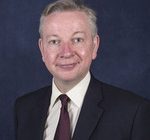
Tag: Michael Gove

  • Michael Gove – 2022 Statement on Local Government Financing

    Michael Gove – 2022 Statement on Local Government Financing

    The statement made by Michael Gove, the Secretary of State for Levelling Up, in the House of Commons on 7 February 2022.

    Today, I am laying before the House “The Local Government Finance Report (England) 2022 to 2023” and “The Referendums Relating to Council Tax Increases (Principles) (England) Report 2022/23”, which together form the local government finance settlement for local authorities across England for 2022-23.

    Having considered representations made by stakeholders across the country on the provisional settlement announced on 16 December, I am pleased to put before the House a settlement that focuses on stability and certainty. Indeed, no council will see a reduction in core spending power in cash terms for 2022-23 compared to 2021-22. The consultation received 148 representations from organisations, individuals and businesses, which have been diligently considered before finalising the settlement.

    The settlement I have announced today:

    Makes available an additional £3.7 billion for councils, an increase in funding for councils of over 4.5% in real terms for 2022-23. It will ensure councils have the resources they need to continue delivering key services for their communities. Overall, this means up to £54.1 billion of funding will be available for core services;

    Provides a new, one-off grant to support all services delivered by councils worth £822 million;

    Makes available over £1 billion of additional funding specifically for social care; and

    Protects hard-working taxpayers from unfair hikes in rates, with a 2% core threshold and additional flexibilities for certain authorities, including 1% for councils responsible for adult social care services.

    2022/23 Services grant

    Over the spending review period, local government will have access to around £1.6 billion in additional grant per year for the next three years. This includes funding for supporting families and cyber resilience, which will be distributed outside of this settlement.

    I intend to proceed with the creation of a one-off 2022-23 services grant worth £822 million, distributed using the existing settlement funding assessment. This funding will be excluded from any proposed baseline for transitional support in future years.

    Adults and children’s social care

    I recognise that social care, for most councils, continues to be a key priority and therefore an area that incurs increased and sustained cost pressures. This Government remain committed to supporting local government in providing a good quality of care to the most vulnerable.

    This is why I intend to make available an additional £1 billion for social care in 2022-23. This includes putting £636 million more into the social care grant, which includes funding for equalisation against the 1% adult social care precept. The Government are committed to allocating funding in line with our assessment of where relative need is, and that is exactly what equalisation does. We are also providing a £63 million inflationary uplift to the improved Better Care Fund, which supports integrated working with the NHS.

    This, alongside deferred adult social care precept flexibilities of up to 3% from last year’s settlement, forms a package of additional resource, specifically for social care, potentially worth over £1 billion.

    On top of this funding, £162 million in adult social care reform funding will be allocated in 2022-23 to support local authorities as they prepare their markets for adult social care reform and to help move towards paying a fairer cost of care.

    Council tax

    This Government recognise the importance of high-quality local services and believe in empowering local decision makers to shape thriving communities. This includes ensuring they have the flexibility to generate their own income through council tax, while protecting residents from excessive increases.

    This settlement means: a core council tax referendum principle of up to 2%; an adult social care precept of 1% for all authorities responsible for ASC; a principle of up to 2% or £5 for shire district councils, whichever is higher; a referendum principle of £10 for police and crime commissioners; and a £5 referendum principle for the eight lowest-charging fire and rescue authorities. This settlement proposes no other council tax referendum principles for mayoral combined authorities or town and parish councils.

    The Mayor of London has requested flexibility to levy an additional £20 on band D to the Greater London Authority precept to provide extra funding for Transport for London. The Government have expressed ongoing concern about the management of TfL by this Mayor, and it is disappointing that London taxpayers are having to foot the bill for the GLA’s poor governance and decision making. While the Government will not oppose this request, any decision to increase the precept is solely one for the Mayor, who should take into account the pressures that Londoners are currently facing on living costs and his decision to raise council tax by 9.5% last year.

    The Government’s manifesto commits to continuing to protect local taxpayers from excessive council tax increases, and it is for the House of Commons to set an annual threshold at which a council tax referendum is triggered. This is an additional local democratic check and balance to avoid a repeat of what was seen under the last Labour Government when council tax more than doubled.

    This package of referendum principles strikes a fair balance. The council tax referendum provisions are not a cap, and nor do they force councils to set taxes at the threshold level.

    Councillors, mayors, police and crime commissioners, and local councils will rightly want to consider the financial needs of local residents at this challenging point in time, alongside the public’s support for action on keeping our streets safe and providing key services.

    Last week, the Government also confirmed a £150 non-repayable council tax rebate to households in England in bands A to D to help with rising costs. The rebate to bills will be made directly by local authorities to households from April. Local authorities will also have a share of the £144 million discretionary funding that can be used to target additional support at those most in need. Local authorities are best placed to do this, which is why the Government have given this flexibility.

    Stability of funding

    This is a settlement that is designed to provide stability to the sector by rolling over much of last year’s settlement. This includes:

    Increasing the revenue support grant in line with inflation, which means an increase of £70 million;

    Rolling over the current approach to the new homes bonus, worth £556 million;

    Rolling over the current approach to the rural services grant, worth £85 million;

    Maintaining the lower tier services grant, at £111 million, with an updated funding floor; and

    Continuing with the 100% retention authorities in the five devolution deal areas and 67% for Greater London overall.

    Looking ahead, the Government are committed to ensuring that funding allocations for councils are based on an up-to-date assessment of their needs and resources. My officials and I will work closely with local partners and take stock of the challenges and opportunities they face before consulting on any potential funding reform.

    Finally, in recognition of the unique circumstances facing the Isle of Wight Council and its physical separation from the mainland, we are providing an additional £1 million for 2022-23.

    Conclusion

    This settlement is one that makes available an additional £3.7 billion to councils. In total, core spending power is expected to rise from £50.4 billion in 2021-22 to up to £54.1 billion in 2022-23, which will enable local government to continue providing key services to their local residents.

    Councils are the frontline of public services within local communities and are the first port of call for so many people, from delivering critical social care services at every stage of people’s lives, to making sure we have efficient and effective waste services in place. This Government recognise the vital role they play in our society. This is a settlement that recognises that role.
  • Michael Gove – 2022 Comments on Funding Support for Councils

    Michael Gove – 2022 Comments on Funding Support for Councils

    The comments made by Michael Gove, the Secretary of State for Levelling Up, on 8 February 2022.

    Levelling up can only succeed if our local partners have the powers and resources they need to help transform their communities.

    Today’s £54.1 billion settlement represents a real terms increase of more than 4.5% from last year and will make sure councils can improve local services, protect vulnerable people and build back better from the pandemic.

  • Michael Gove – 2022 Comments on the Islands Forum

    Michael Gove – 2022 Comments on the Islands Forum

    The comments made by Michael Gove, the Secretary of State for Levelling Up, on 3 February 2022.

    Talent is equally spread across the United Kingdom, but opportunity is not. Our island communities face shared challenges and I want us to work together to overcome them, as we work to unite and level up the whole UK.

    A number of island communities have already benefited from the Levelling Up Fund and Community Renewal Funds. Creating a new Islands Forum takes our commitment one step further and provides a new opportunity for island communities to work together to help their communities prosper.

  • Michael Gove – 2022 Comments on the 2022 Levelling Up White Paper

    Michael Gove – 2022 Comments on the 2022 Levelling Up White Paper

    The comments made by Michael Gove, the Secretary of State for Levelling Up, on 2 February 2022.

    The United Kingdom is an unparalleled success story. We have one of the world’s biggest and most dynamic economies. Ours is the world’s most spoken language. We have produced more Nobel Prize winners than any country other than America.

    But not everyone shares equally in the UK’s success. For decades, too many communities have been overlooked and undervalued. As some areas have flourished, others have been left in a cycle of decline. The UK has been like a jet firing on only one engine.

    Levelling Up and this White Paper is about ending this historic injustice and calling time on the postcode lottery.

    This will not be an easy task, and it won’t happen overnight, but our 12 new national levelling up missions will drive real change in towns and cities across the UK, so that where you live will no longer determine how far you can go.

  • Michael Gove – 2022 Statement on Building Safety

    Michael Gove – 2022 Statement on Building Safety

    The statement made by Michael Gove, the Secretary of State for Housing, in the House of Commons on 10 January 2022.

    With permission, Mr Speaker, I would like to update the House on building safety. Before I do so, I can confirm that I have asked the permanent secretary in my Department to conduct a leak inquiry. It was a matter of considerable regret to me that details of the statement that I am about to make were shared with the media before they were shared with Members of this House, and indeed with those most affected.

    It is worth pausing at the start of any statement to reflect on why building safety is an issue of concern to all of us in this House today. It took the tragedy at Grenfell Tower on 14 June 2017, as a result of which 72 innocent men, women and children lost their lives, to put building safety properly on the political agenda. Families were living in a building that was literally a death trap because of failures of enforcement and compliance in our building safety regime. This Government must take their share of responsibility for those failures.

    Over four years on from that terrible tragedy, it is clear that the building safety system remains broken. The problems that we have to fix have been identified by many across this House, from all parties. I would like at this point to register my appreciation of the work that the late Jack Dromey did on this issue. He was shadow Housing Minister for three years and he did a great deal, both as a trade unionist and as the Member of Parliament for Birmingham, Erdington, to bring to light the plight of those affected by this crisis.

    As we know, there are still a small number of high-rise buildings with dangerous and unsafe cladding that have to be fixed. We know that those who manufacture dangerous products and develop dangerous buildings have faced inadequate accountability so far, and shown insufficient contrition. We also need to ensure that we take a proportionate approach in building assessments overall. There are too many buildings today that are declared unsafe, and there are too many who have been seeking to profit from the current crisis.

    Most importantly, leaseholders are shouldering a desperately unfair burden. They are blameless, and it is morally wrong that they should be the ones asked to pay the price. I am clear about who should pay the price for remedying failures. It should be the industries that profited, as they caused the problem, and those who have continued to profit, as they make it worse.

    Mr Speaker, we will take action on all of these fronts. To ensure that every remaining high-rise dangerous building has the necessary cladding remediation to make it safe, we will open up the next phase of the building safety fund early this year and focus relentlessly on making sure it is risk driven and delivered more quickly.

    We will also ensure that those who profited, and continue to profit, from the sale of unsafe buildings and construction products must take full responsibility for their actions and pay to put things right. Those who knowingly put lives at risk should be held to account for their crimes, and those who are seeking to profit from the crisis by making it worse should be stopped from doing so.

    Today, I am putting them on notice. To those who mis-sold dangerous products, such as cladding or insulation, to those who cut corners to save cash as they developed or refurbished people’s homes, and to those who sought to profiteer from the consequences of the Grenfell tragedy: we are coming for you. I have established a dedicated team in my Department to expose and pursue those responsible. We will begin by reviewing Government schemes and programmes to ensure that, in accordance with due process, there are commercial consequences for any company that is responsible for this crisis and refusing to help to fix it.

    In line with this, just before Christmas, I instructed Homes England to suspend Rydon Homes, which is closely connected to the company that refurbished the Grenfell Tower, from its participation in the Help to Buy scheme, with immediate effect. I also welcome the decision by the Mercedes Formula 1 team and Toto Wolff to discontinue sponsorship from Kingspan, the cladding firm, with immediate effect. The voices of the families of the bereaved and the survivors of the Grenfell Tower were heard, but this is only the start of the action that must be taken.

    We must also restore common sense to the assessment of building safety overall. The Government are clear—we must find ways for there to be fewer unnecessary surveys. Medium-rise buildings are safe, unless there is clear evidence to the contrary. There must be far greater use of sensible mitigations, such as sprinklers and fire alarms, in place of unnecessary and costly remediation work.

    To achieve that, today I am withdrawing the Government’s consolidated advice note. It has been wrongly interpreted and has driven a cautious approach to building safety in buildings that are safe that goes beyond what we consider necessary. We are supporting new, proportionate guidance for assessors, developed by the British Standards Institution, which will be published this week.

    Secondly, we will press ahead with the building safety fund, adapting it so that it is consistent with our proportionate approach. We will now set a higher expectation that developers must fix their own buildings, and we will give leaseholders more information at every stage of the process.

    Thirdly, before Easter, we will be implementing our scheme to indemnify building assessors conducting external wall assessments, giving them the confidence to exercise their balanced professional judgment. We will audit those assessments to ensure that expensive remediation is being advised only where it is necessary to remove a threat to life.

    I will be working closely with lenders over the coming months to improve market confidence, and I have asked my colleague Lord Greenhalgh to work with insurers on new industry-led approaches that bring down the premiums facing leaseholders.

    Further, we will take the power to review the governance of the Royal Institution of Chartered Surveyors, to ensure that it is equipped properly to support a solution to this challenge. Those in the industry who refuse to work with us in good faith to take a more proportionate approach should be clear that our determination is to fix the problem for all those caught up in this crisis.

    Finally, we must relieve the burden that has been unfairly placed on leaseholders. I want to pay tribute to all those across the House who have campaigned so passionately on this subject. They know the injustice of asking leaseholders, often young people who have saved hard and made sacrifices to take their first steps on the housing ladder, to pay money they do not have to fix a problem they did not cause, all while the firms who made a profit on those developments sit on their hands. We will take action to end the scandal and protect leaseholders. We will scrap the proposal for loans and long-term debt for medium-rise leaseholders.

    I can confirm to the House today that no leaseholder living in a building above 11 metres will ever face any costs for fixing dangerous cladding and, working with Members of both Houses, we will pursue statutory protection for leaseholders and nothing will be off the table. As part of that, we will introduce immediate amendments to the Building Safety Bill to extend the right of leaseholders to challenge those who cause defects in premises for up to 30 years retrospectively.

    We will also take further action immediately: we will provide an additional £27 million to fund more fire alarms, so we can end the dreadful misuse of waking watches; we will change grant funding guidance so that shared owners affected by the crisis can more easily sub-let their properties, and encourage lenders and landlords to approve sub-letting arrangements; and in the period before long-term arrangements are put in place, I will work with colleagues across Government to make sure that leaseholders are protected from forfeiture and eviction because of historic costs. Innocent leaseholders must not shoulder the burden.

    We have already committed £5.1 billion of taxpayers’ funding from the Government, but we should not now look to the taxpayer for more funding. We should not ask hard-working taxpayers to pay more taxes to get developers and cladding companies making vast profits off the hook. We will make industry pay to fix all of the remaining problems and help to cover the range of costs facing leaseholders. Those who manufactured combustible cladding and insulation, many of whom have made vast profits even at the height of the pandemic, must pay now instead of leaseholders.

    We have made a start through the residential property developer tax and the building safety levy, both announced last February, but will now go further. I will today write to developers to convene a meeting in the next few weeks, and I will report back to the House before Easter. We will give them the chance to do the right thing. I hope that they will take it. I can confirm to the House today that if they do not, we will impose a solution on them, if necessary, in law.

    Finally, we must never be in this position again, so we are putting the recommendations of the Hackitt review on building safety in law and we will shortly commence the Fire Safety Act 2021. We are also today publishing new collaborative procurement guidance on removing the incentives for industry to cut corners and to help stop the prioritisation of cost over value. We will legislate to deliver broader reforms to the leasehold system, and also bring forward measures to fulfil commitments made in the social housing White Paper. When parliamentary time allows, we will have legislation on social housing regulation so that social housing tenants cannot be ignored as those in the Grenfell community were for many years.

    Four and a half years on from the tragedy of Grenfell, it is long past time that we fix the crisis. Through the measures that I have set out today, we will seek redress for past wrongs and secure funds from developers and construction product manufacturers, and we will protect leaseholders today and fix the system for the future.

  • Boris Johnson – 2016 Speech on Leaving EU Creating More Money for NHS

    Boris Johnson – 2016 Speech on Leaving EU Creating More Money for NHS

    The speech made by Boris Johnson, Gisela Stuart and Boris Johnson on 3 June 2016.

    A STRONGER NHS AND MORE MONEY FOR THOSE IN NEED – WHY LEAVING THE EU HELPS PROTECT WORKING PEOPLE

    Our NHS is a precious asset. No other European country gives its citizens the guarantee of free healthcare, there when people need it, irrespective of ability to pay.

    The NHS is a great British institution and its core values – of solidarity, fairness and inclusivity – need to be protected and defended. The wealthy can always buy themselves top quality care and jump the queue for treatment. Working people don’t have that option. Working people need an NHS which is strong and well-funded to give them security at every stage in their lives.

    As our population grows, and as we all live for longer, so the pressures on the NHS are set to grow. We believe that one of the best ways to protect, and to strengthen, the NHS, for the people of this country is to use some money we currently spend on EU membership to invest in improving healthcare.

    The NHS leadership has said it needs an additional £30 billion each year by 2020 to meet future pressures. Eight billion pounds will come from spending increases, and £22 billion will need to come from efficiency savings. The Government rightly committed at the last election to meet that £8 billion target.

    But we don’t underestimate how difficult it will be to make the £22 billion worth of efficiency savings. Again, we are sure ministers, managers, doctors, nurses and everyone in the Health Service will do everything they can. However, trusted health experts such as the Nuffield Trust, the Health Foundation and the King’s Fund have all stressed how difficult it will be to achieve the planned net efficiency savings of 2% each year.

    This level of savings is far above what the NHS has achieved historically. And the demand for NHS services is only set to grow. NHS Improvement, the NHS regulator, has identified rising demand as one of the principal challenges for the NHS’s future funding.

    If we vote to leave the EU on 23 June, we will be able to do something about one of the main causes of higher demand – uncontrolled and unlimited migration from the EU into the UK.

    In 2015, 270,000 people came to the UK from Europe, a population movement equivalent to all the inhabitants of a city the size of Newcastle arriving in our country. Net migration was 184,000, a population increase equivalent to adding a city the size of Oxford to the UK population. Year after year, similar numbers arrive.

    On top of this, between 2005 and 2014, there were 475,000 live births to mothers who were EU citizens. This is the equivalent of adding a city the size of Manchester to the UK population. The cost of maternity services alone to these families is likely to exceed £1.3 billion.

    As we have set out before, it is government policy for five new countries to join the EU: Albania, Macedonia, Montenegro, Serbia and Turkey. We are paying billions to these countries to help them join. The EU is already opening visa-free travel to Turkey. That would create a borderless travel zone from the frontiers of Syria and Iraq to the English Channel. The EU’s plans for future growth will lead to demands being placed on the NHS far beyond what its funding can cope with.

    We have set out our plan to change the immigration system after we vote to leave. We will end the ‘free movement’ of people from the EU and take back control. We will introduce a points-based system under which migrants will be admitted to the UK on the basis of their skills, not their passport.

    But even after we take back control of our migration policy, the NHS will still face funding pressures. Restoring control over our borders is a necessary step, but there is more we should do to guarantee quality care for working people.

    We need to ensure the NHS has as much money as possible and after we vote to leave we will have the means to do so without damaging public finances.

    After we Vote Leave on 23 June, the Government should use some of the billions saved from leaving the EU to give at least a £100 million per week cash transfusion to the NHS.

    This money will be over and above the commitment that the Prime Minister rightly made at the last election to an £8 billion real terms increase.

    How can we pay for this additional spending? From the money we save from leaving the EU.

    The UK’s gross budget contribution is currently over £19 billion or £350 million per week. According to Treasury estimates, this will increase to nearly £400 million per week by 2020.

    We get some cash back through a negotiated rebate and some other money we hand over to the EU is spent here in the UK on areas like farm subsidies.

    But the rebate is not a fixed benefit anchored in the treaties. It is there only by the consent of other EU nations, it has to be negotiated, it has already been reduced, and if we vote to stay it can, and will, be whittled away.

    If we Vote Leave, we take back control of the whole sum. We will no longer be dependent on other countries to protect the money we get back in our rebate. And we will continue to support farming, science, universities and poorer areas of the UK with the money they currently receive from the EU.

    That would mean we would then be able to spend all of our net EU contribution of £10.6 billion on our priorities like the NHS and cutting VAT on fuel.

    Other money will also be liberated to spend on public services in the event of a vote to leave.

    We have already set out plans to amend the European Communities Act 1972 immediately after the referendum to stop multinationals using EU law to claim tax refunds in the UK. This will save taxpayers between £7 billion and £43 billion by 2021.

    It is wrong that big businesses have been using the European Court to starve public services of money they could never have recovered under English law.

    If we leave the EU we could also restore our system of taxation of offshore companies which was set aside by the European Court. The European Court’s judgment has cost UK taxpayers an estimated £840 million each year.

    We can also scrap the EU’s foolish rules on how Whitehall runs procurement processes which add billions to costs every year. The European Commission’s own conservative figures suggest that procurement rules cost at least £1.7 billion each year and delay projects by years.

    There are billions of savings that Government will be able to make after we vote leave and escape the control of the rogue European Court.

    A vote to leave is a vote for a fairer Britain. You only have to look at who funds the IN campaign to realise this: the undeserving rich, the investment banks that crashed the world economy in 2008 and who bankrupted the people of Greece, and the multinational corporations who spend millions on lobbying the corrupt Brussels system.

    This is the choice on 23 June.

    A Vote to Remain means that we keep handing over control of £350 million of our money to the EU every week. A Vote to Remain means we cannot control immigration. A Vote to Remain means greater pressure on the NHS, school places and housing.

    If we Vote Leave, we can take back control of our borders and our money. By 2020, we can give the NHS a £100 million per week cash injection, and we can ensure that the wealthy interests that have rigged the EU rules in their favour at last pay their fair share.

    That is why we believe a Vote to Leave is the right choice for social justice, safer for public services, jobs, and families and better for the next generation.

  • Michael Gove – 2016 Speech on Why UK Should Leave European Union

    Michael Gove – 2016 Speech on Why UK Should Leave European Union

    The speech made by Michael Gove on 8 June 2016.

    I want to thank Dominic for the masterly way in which he has laid out the security risks of staying in an unreformed European Union. With the precision of a great lawyer and the clarity of a truly gifted minister he has made an unarguable case.

    Of course our security rests on the robustness of our borders, the rigour of our surveillance and intelligence systems and the ability of the police and other agencies to take all the necessary steps to keep us safe.

    These are vital policy and operational questions. As Dominic has shown, we currently lack the control we need to maximise our resilience against a range of new threats.

    I want to touch on one other area where we need to feel a greater degree of confidence if we are to safeguard our society in the future. The question of values. Liberal, democratic, values.

    OUR VALUES UNDER CHALLENGE

    If we consider the threats we face today they are – in their origin – ideological. Conflict in the nineteenth and early twentieth centuries was driven primarily by competition between empires and nation states whereas conflict today is driven increasingly by competition between ideologies.

    The terror threat from ISIS, Boko Haram, Al Qaeda and their brothers in Hamas and Hizbollah springs from Islamist fundamentalism. Vladimir Putin’s Russia is driven by an anti-liberal, anti-democratic ideology rooted in an imagined Russian past and revived by figures like Alexander Dugin who see their country providing an alternative to the post-Christian and decadent West.

    If we are to safeguard our country, and indeed our allies, in this world of new dangers then we need not just the right tools, policies and institutions, the right policing, data-gathering and security forces, we also need to be resolute in our support for the right values.

    The United Kingdom has played a distinguished global role in the past as an upholder and defender of liberal democratic values – all the while doing so as an independent democratic nation state.

    Whether it was suppressing the slave trade, or supporting liberal nationalist movements against static autocratic European empires, in the first half of the nineteenth century or seeking to defend the rights of small nations and the principle of self-determination in the twentieth century, the United Kingdom has been clear about its values. And the clearer and more confident we’ve been about our values, the better we’ve been able to defend those values.

    A belief in parliamentary democracy, in the accountability of the powerful to the people, in the settling of laws, taxes and rules by elected representatives, in the independence and objectivity of the judiciary, and in vigorous free speech and open debate – these beliefs have characterised this country for centuries. And it’s by standing firm by those values that we have been able to be a global champion for freedom, working with our allies, for many generations.

    Liberal and democratic values are, of course, very far from being a British possession alone. Ludwig Erhard and Karl Popper, Theodore Herzl and David Ben-Gurion, Alexis de Tocqueville and Raymond Aron, Hernando de Soto and Aung San Suu Kyi are all great liberals and democrats who embody the best in shared humanist values.

    NATION STATES AS VESSELS FOR OUR VALUES – AND HOW THE EU UNDERMINES THEM

    But while these values have universal application they are, history tells us, best upheld and defended by nation states.

    That is one of the central reasons why this debate on our membership of the European Union matters so much.

    If power is to be held accountable it needs a democratic culture and a common electorate to hold it to account. That means a nation state.

    And if a nation state is to be sustainable it needs to know its borders and enjoy a sense of shared allegiance.

    Despite the idealism which attended its birth, the EU is not democratic. The people who guide its destiny – the Five Presidents of Europe – have never been directly elected to their current offices, are in no way democratically accountable, indeed their identities are scarcely known to most of Europe’s citizens. Even one of my most intelligent – and most pro-European Union – friends the editor of the Financial Times Lionel Barber – when questioned last week couldn’t name all five.

    The EU is indeed actually designed purposely to frustrate democracy. Its institutions exist to transfer power away from accountable parliaments in liberal nation states to the supra-national level.

    Of no institution is this more true than the European Court of Justice. The ECJ is, as Dominic pointed out, a court with an activist agenda to advance integration and erode national sovereignty.

    It has been given a hugely powerful tool to advance its agenda in the Charter of Fundamental Rights, which came into force in 2009 and which goes much, much further than the post-war European Convention on Human Rights.

    We believed we had an opt-out from the operation of the Charter nailed down at the time of the Lisbon Treaty.

    But the ECJ — against which there is no right of appeal — has now made it clear this so-called opt-out was nothing of the kind.

    The Luxembourg judges simply disregard it when making rulings based on the Charter, for example on applying the 1951 UN Convention on Asylum and Refugees.

    The Luxembourg Court’s willingness to set aside agreements between nation states is not just troubling in itself as evidence of how an elitist institution at the heart of the EU seeks to override democratic principles, it should also give us warning that agreements made in good faith – like the renegotiation we secured in February – can also be overridden in future.

    If the Court believes an agreement between states runs counter to its own interpretation of the Treaties then the Court will insist on its will being done. As Denmark found when agreements made in the aftermath of its rejection of the Maastricht Treaty were overridden by the Court.

    It’s not just the Court which is prepared to set aside agreements and rip up acts which stand in the way of its integrationist agenda. When the euro ran into, inevitable, difficulties the EU set aside its own rules to provide bailouts for Greece.

    Article 125 of the EU Treaty could not be clearer when it states ‘the Union shall not be liable for, or assume the commitments of, central governments, regional, local or other public authorities, other bodies governed by public law, or public undertakings of any Member State.’

    Yet that clear legal declaration was ignored when it got in the way of keeping the eurozone going. The EU has shown it is willing to cast aside solemn agreements and trample over the rule of law if integration is threatened.

    The high-handedness and undemocratic nature of EU institutions, the ongoing failure of the euro and the economic misery it has brought have all contributed to a weakening of liberal and democratic forces across Europe.

    Extremist and populist forces have grown in strength. A far-right party in Austria has come within an ace of the Presidency, an openly anti-semitic party is the second force in Hungarian politics, Marine Le Pen is in pole position for the French Presidency. The growth in fringe parties has made it much more difficult to form stable governments in EU states such as Spain and Ireland and has brought Nazis into the Greek Parliament. Our ability to present a united front across the West in defence of liberalism and democracy is currently vitiated and undermined by the operation of the EU and its institutions.

    Being more muscular in our liberalism and more insistent on democracy

    The weakening of nation states in Europe has not been accompanied, however, by any upsurge of faith, confidence or loyalty towards EU institutions. Quite the opposite. They command no popular affection, inspire no popular admiration, enjoy no popular enthusiasm.

    And because nation states are less able to assert and embody liberal and democratic values, while EU institutions lack liberal and democratic legitimacy, the forces of liberalism and democracy have been weakened just when they need to be asserted more vigorously than ever.

    Our Prime Minister has been right, and brave, in arguing forcefully that we need to take on the poisonous narrative peddled by Islamist extremists.

    But in order to counter Islamist extremists as effectively as possible we need not just to challenge their beliefs but assert confidence in our own.

    That means strengthening national parliaments, not weakening them, upholding the rule of law not abrogating it and, above all, expressing confidence in nation states and the democratic accountability they bring. The more confident and optimistic we are about the United Kingdom, its traditions, values and potential the better equipped we are to counter enemies of liberalism and democracy.

    And there are particular times when the assertion of our liberalism needs to be especially muscular.

    Nowhere more so than when the essential freedom – freedom of speech – is threatened.

    Which brings me to the case of Turkey.

    That country’s democratic development has been put into reverse under President Erdogan.

    The country which achieved so much under the secular nationalism of Ataturk and his successors is now moving backwards under Erdogan and his Islamist rule.

    The NGO Freedom House has found that freedom of expression is being ‘undermined by provisions in the penal code, the criminal procedure code, and the harsh, broadly worded anti-terrorism law’.

    Journalists who seek to expose corruption have been arrested and efforts to investigate Turkish relationships with fighters in Syria have been thwarted.

    Erdogan’s assault on free speech doesn’t stop at his own borders.

    Erdogan demanded – and won – Angela Merkel’s agreement to the prosecution of the German comedian Jan Böhmermann for producing a lewd poem about him.

    We and the European Union should be protesting in the clearest and loudest possible manner at this erosion of fundamental democratic freedoms.

    But instead we and the European Union are making concession after concession to Erdogan.

    Let’s look at the facts.

    Fact One. It is official British Government policy for Turkey to join the EU, restated by Ministers time and again.

    Fact Two. It is official EU policy for Turkey to become a member. Indeed the Commission has announced the pace of accession will be accelerated.

    Fact Three. Turkey has threatened to end cooperation in stopping mass migration unless the deal for visa-free travel to Europe is implemented in full.

    Fact Four. This visa-free zone which stretches from Turkey’s border with Syria, Iraq and Iran to the English channel is anticipated to start this year once this referendum is out of the way. Sir Richard Dearlove, former chief of MI6, has warned that this is like ‘storing gasoline next to the fire we are trying to put out’.

    Fact Five. The British Government is spending nearly £2 billion to help five countries join the EU including Albania, Serbia, and Turkey.

    Fact Six. It is official British Government policy not to have a referendum on new countries joining. As As things stand, the British people won’t be given a vote in the future on Turkish accession. We were not offered a referendum when Bulgaria, Romania or 17 other states joined. Your only chance to have a say on this is on 23 June.

    With the terrorism threat we face only growing, it is hard to see how it could possibly be in our security interests to open visa free travel to 77 million Turkish citizens and create a border-free zone from Iraq, Iran and Syria to the English Channel.

    It is even harder to see how such a course is wise when extremists everywhere will see that the West is opening its borders to appease an Islamist Government.

    We have a chance on June 23rd to signal with our votes that we want to follow a different course. That we believe in democracy, that we have confidence in our country and its values, that we want the EU at last to get the jolt it needs to change, that we want fundamental liberties upheld, we want to take control of our destiny and we want to stand resolute for freedom. I hope the people for this country take that opportunity, and that stand, and Vote to leave and take back control.

  • Michael Gove – 2014 Comments on Expansion of Free Schools

    Michael Gove – 2014 Comments on Expansion of Free Schools

    The comments made by Michael Gove, the then Secretary of State for Education, on 19 June 2014.

    Free schools are giving thousands of children from ordinary backgrounds the kind of education previously reserved for the rich and the lucky.

    Thanks to our free school programme, many more parents now have a new school in their neighbourhood offering high standards and tough discipline. Free schools put teachers – not bureaucrats and politicians – in the driving seat, as they are the ones who know their pupils best.

    As part of our long-term economic plan, we are determined to deliver the best schools and skills for our young people, and free schools are achieving exactly that.

  • Michael Gove – 2014 Comments on New School Food Menus

    Michael Gove – 2014 Comments on New School Food Menus

    The comments made by Michael Gove, the then Secretary of State for Education, on 17 June 2014.

    These new food standards will ensure all children are able to eat healthy, nutritious meals at school.

    We now have a clear and concise set of food standards which are easier for cooks to follow and less expensive to enforce. Crucially we have achieved this without any compromise on quality or nutrition.

    There has been a great deal of progress in providing healthy school meals in recent years and these new standards will help deliver further improvements.

  • Michael Gove – 2014 Statement on Schools in Birmingham

    Michael Gove – 2014 Statement on Schools in Birmingham

    The statement made by Michael Gove, the then Secretary of State for Education, in the House of Commons on 9 June 2014.

    With your permission, Mr Speaker, I should like to make a statement on schools in Birmingham.

    Keeping our children safe – and ensuring our schools prepare them for life in modern Britain – could not be more important – it is my central mission.

    Allegations made in what has become known as the Trojan Horse letter suggested children were not being kept safe in Birmingham schools.

    Ofsted and Education Funding Agency have investigated those allegations. Their reports, and other relevant documents, have today been placed in the Library of the House. Let me set out their findings and my actions.

    Ofsted states that “headteachers reported… an organised campaign to target.. schools…in order to alter their character and ethos,” with “a culture of fear and intimidation”.

    Headteachers who had “a record of raising standards” reported they had been “marginalised or forced out of their jobs”.

    One school leader was so frightened about speaking to the authorities that a meeting had to be arranged in a supermarket car park.

    Ofsted concluded governors “are trying to impose and promote a narrow faith-based ideology in what are non-faith schools”, specifically by narrowing the curriculum, manipulating staff appointments and using school funds inappropriately. Overall, Ofsted inspected 21 schools. Three were good or outstanding.

    Twelve schools were found to require improvement.

    The remaining 6 are inadequate and are in special measures.

    Let me explain why.

    At one secular primary school, terms such as “white prostitute” unsuitable for primary children’s ears, were used in Friday assemblies run exclusively by Muslim staff.

    The school organised visits to Saudi Arabia open only to Muslim pupils.

    Senior leaders told inspectors that a madrassah had been established and been paid for from the school’s budget.

    Ofsted concluded the school was “not adequately ensuring that pupils have opportunities to learn about faith in a way that promotes tolerance and harmony between different cultures”.

    At one secular secondary school, staff told officials the call to prayer was broadcast over the playground using loudspeakers.

    Officials observed lessons had been narrowed to comply with conservative Islamic teachings – in biology, students were told “evolution is not what we believe”.

    The school invited the preacher Sheikh Shady al-Suleiman to speak despite the fact that he is reported to have said:

    Give victory to Muslims in Afghanistan… Give victory to all the Mujahideen all over the world. Oh Allah, prepare us for the jihad.

    Ofsted concluded that “governors have failed to ensure that safeguarding requirements and other statutory duties are met”.

    At another secular secondary school inspectors described “a state of crisis” with governors reportedly using school funds to pay private investigators to read the emails of senior leaders, Ofsted found a lack of action to protect students from extremism.

    At a third secular secondary school, Ofsted found students are “vulnerable to the risk of marginalisation from wider British society and the associated risks which could include radicalisation”.

    And at a secular primary Ofsted found, that “pupils have limited knowledge of religious beliefs other than Islam”, and “subjects such as art and music have been removed – at the insistence of the governing body”.

    Inspectors concluded that the school “does not adequately prepare students for life in modern Britain”.

    Ofsted also reports failures on the part of Birmingham City Council.

    They found that the council did not deal adequately with repeated complaints from headteachers. School leaders expressed “very little confidence” in the local authority and Ofsted concluded that Birmingham has not exercised adequate judgement. Indeed the chair of one of the schools found to be inadequate, Tahir Alam, was in a business relationship with the former Lead Member for Children and Young People.

    Mr Speaker, these findings demand a robust, but also a considered, response.

    It is important that no one allows concern about these findings to become a pretext for criticism of Islam itself, a great faith which brings spiritual nourishment to millions and daily inspires countless acts of generosity.

    The overwhelming majority of British Muslim parents want their children to grow up in schools that open doors rather than close minds.

    It is on their behalf that we have to act.

    There are, of course, questions about whether warning signs have been missed.

    There are certainly questions for Birmingham Council, Ofsted and the Department for Education.

    I have today asked Birmingham Council to review their history on this issue, and the Chief Inspector has advised me that he will be considering the lessons learnt for Ofsted.

    I am also concerned that the DfE may not have acted when it should. I am asking the Permanent Secretary to investigate how my department dealt with warnings both since the formation of this government in 2010 and before.

    We all must acknowledge there has been a failure in the past to do everything possible to tackle non-violent extremism.

    But let me be clear, no government and no Home Secretary has done more to tackle extremism.

    In the Prime Minister’s Munich speech of 2011;

    In the Home Secretary’s own review of the Prevent Framework;

    And in the conclusions of the government’s Extremism Task Force last year.

    This government has made clear that we need to deal with the dangers posed by extremism well before it becomes violent.

    And since 2010 the DfE has increased its capacity to deal with extremism. We set up Whitehall’s first ever unit to counter extremism in public services with help from former intelligence and security professionals. That unit has developed since 2010 and we will continue to strengthen it.

    Ofsted now train inspectors to understand and counter extremist Islamist ideology. And inspections of schools at risk, like those in Birmingham, are carried out by the most senior inspectors – overseen by Sir Michael Wilshaw himself.

    But there is – of course more to do – and today’s reports make action urgent.

    First, we need to take action in the schools found inadequate.

    Academies will receive letters saying I am minded to terminate funding agreements.

    Local authority schools are having governors replaced.

    We have already spoken to successful academy providers who are ready to act as sponsors.

    We need to strengthen our inspection regime even further.

    The requirement to give notice of inspections clearly makes it more difficult to identify and detect danger signs.

    Sir Michael Wilshaw and I have argued in the past that no-notice inspections can help identify when pupils are at risk.

    I have asked him to consider the practicalities of moving to a situation where all schools know they may receive an unannounced inspection.

    I will also work with Sir Michael Wilshaw to ensure, as he recommends, that we can provide greater public assurance that all schools in a locality discharge their full statutory responsibilities and we will consider how Ofsted can better enforce the existing requirement that all schools teach a broad and balanced curriculum.

    I have talked today to the leader of Birmingham Council and requested that it sets out an action plan to tackle extremism and keep children safe.

    We already require independent schools, academies and free schools to respect British values.

    Now we will consult on new rules that will strengthen this standard further, so that all schools actively promote British values.

    And I will ask Ofsted to enforce an equivalent standard on maintained schools through changes to the Ofsted framework.

    Several of the governors whose activities have been investigated by Ofsted have also been active in the Association of Muslim Schools UK – which has statutory responsibilities in relation to state Muslim faith schools.

    So we have asked AMSUK to satisfy us that they are doing enough to protect children from extremism and we will take appropriate steps if their guarantees are insufficiently robust.

    I have also spoken to the National College for Teaching and Leadership and we will further strengthen the rules so that from now on it is explicit that a teacher inviting an extremist speaker into a school can be banned from the profession.

    I will, of course, report in July on progress in all the areas I have announced as well as publishing the findings of the report of Peter Clarke, who is investigating the background behind many of the broader allegations in the Trojan Horse letter.

    The steps we are taking today are those we consider necessary to protect our children from extremism – and protect our nation’s traditions of tolerance and liberty.

    Mr Speaker, the conclusions of the reports today are clear.

    Things that should not have happened in our schools were allowed to happen.

    Our children were exposed to things they should not have been exposed to.

    As Education Secretary, I am taking decisive action to make sure those children are protected.

    Schools that are proven to have failed will be taken over, put under new leadership and taken in a fresh new direction.

    Any school could now be subject to rigorous, on the spot inspections – with no advance warning and no opportunities to conceal failure.

    And we will put the promotion of British values at the heart of what every school has to deliver for children.

    What we have found was unacceptable. And we will put it right.

    I commend this statement to the House.