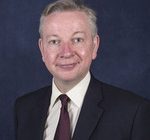
Tag: Michael Gove

  • Michael Gove – 2020 Statement on End of EU Transition Period

    Michael Gove – 2020 Statement on End of EU Transition Period

    The text of the statement made by Michael Gove, the Chancellor of the Duchy of Lancaster, in the House of Commons on 13 July 2020.

    With permission, Mr Speaker, I would like to make a statement on our preparations for the end of the transition period.

    Before I do, may I place on record my thanks—and, I am sure, those of the whole House—for the 20 years of service that Dave Prentis, the general secretary of Unison, has given? Mr Prentis announced today that he will be standing down at the end of this year. He has been an exemplary trade union leader. We have all been reminded during the covid pandemic of how much we depend on the public sector workers he speaks up for. I would like to extend my best wishes to him on his retirement.

    On 31 January this year, the United Kingdom left the European Union, and last month we confirmed to our European Union partners that there would be no extension of the transition period beyond 31 December. My counterpart as co-chair of the Joint Committee confirmed that this marked “a definite conclusion” to the matter, and the deadline for extension has now passed. As a consequence, from 1 January 2021 we will embark on the next chapter in our history as a fully independent United Kingdom. With control of our economy, we can continue to put in place the right measures for covid recovery. With control over the money that we send to Brussels, we can spend it on our priorities—investing in the NHS, spreading opportunity more equally across the UK, and strengthening our Union. We are also able to build a trading relationship with our neighbours in Europe that serves all our interests, while also developing new economic partnerships across the world, including opportunities for new and better trade deals with the US, Japan, New Zealand, Australia and many other nations.

    The deal the Prime Minister struck last year, which the country backed in the general election, means that we can look forward with confidence to the end of the transition period on 31 December, but of course there is still work to do to prepare. Regardless of the outcome of negotiations with the EU over our future relationship, whether or not we have a Canada-style deal or an Australian model, we will be leaving the single market and the customs union. This will herald changes, and significant opportunities, for which we all need to prepare—Government, business and individual citizens.

    So I am announcing today two significant new initiatives that will bring financial support, further clarity, and reassurance for business and citizens. We are launching a major new public information campaign to make sure that everyone has the facts they need about the actions that we all need to take in order to be ready. We are also releasing for the first time an operating model for the border that will benefit importers and exporters, and provide information to hauliers, shippers, freight companies and our customs intermediaries. This comprehensive guidance covers every processing system used across all Government Departments and has been developed after extensive consultation with industry partners, operators and, of course, the devolved Administrations. Together with the additional £705 million package of funding for border infrastructure, extra jobs and better technology, this will help to ensure that our new borders will be ready when the UK takes back control on January. It will assist the smooth movement of goods, and it will also help us to lay the foundations for the world’s most effective border by 2025, making our country more secure and our citizens safer.

    Turning to the detail of these initiatives, the public information campaign—“The UK’s new start: let’s get going”—will run in the four home nations and internationally, encouraging us all to play our part in preparing for change. The campaign will be supplemented by the deployment of experts in the field, giving one-to-one support to businesses and their supply chains to ensure that they have made arrangements that will help to keep their operations running efficiently.

    From January 2021, in order to fulfil the import process, traders will need to have a GB economic operators registration and identification, or EORI, number before moving their goods. They will need to have the commodity codes of their goods, which will be needed to make a customs declaration and, of course, to calculate duties on an import. They will need to know the customs values of their goods, the rules of which are based on the World Trade Organisation valuation agreement. They will also need to have considered whether they are able to use, and would benefit from using, any of the available simplifications or facilitations, including deferring customs declarations for standard goods. Traders who choose not to defer their customs declarations will also need to ensure that they have considered how they will make those declarations to Her Majesty’s Revenue and Customs systems, and, of course, whether or not they will use an intermediary. From January 2021, traders who are exporting goods to the EU will need to make export declarations and ensure that they have the right certificates and licences required for entry. While there is still work to do, substantial progress has been made to ensure that we all fulfil our promise to the British people and take back control.

    The freedom to control our own borders brings many benefits. Our plans mean that we can introduce a migration policy that ensures that we are open to the world’s best talent, and my right hon. Friend the Home Secretary has set out further details of that today. A new, points-based immigration system will ensure that we can attract the scientists, innovators and entrepreneurs who can power future economic growth. It will also help us to ensure that our NHS attracts the very best professionals from around the world to our hospitals. The new technology that we are introducing will allow us to monitor with far greater precision exactly who and what is coming into and out of our country, enabling us to deal more effectively with organised crime and other threats.

    Control of our borders also means that we can choose the right trade and commercial policies for this country. The border operating model that we have published today provides clarity about the end-to-end journey of goods on the move between Great Britain and the EU, including information about controlled goods and the new Government systems that will support future trade. I place on record the Government’s gratitude to the border sector for the practical knowledge, enthusiasm and expertise it has brought to the development of the operating model, which is the result of extensive consultation and collaboration.

    It is important to note that, as the document makes clear, the border operating model does not cover matters relating specifically to the Northern Ireland protocol. I reassure the House that guidance specific to Northern Ireland will be published in the coming weeks and on an ongoing basis throughout the transition period.

    With autonomy comes the freedom to be practical and pragmatic in implementation, which is why, in the light of coronavirus and to give business and industry more time to adjust, we announced last month that border controls would be introduced in three stages up to 1 July 2021. In the first phase, from January 2021, traders importing standard goods will need to prepare for basic customs requirements. Full customs declarations will be needed for controlled and excise goods—such as alcohol and tobacco products—but people importing standard goods will have up to six months to make their declaration and to pay tariffs. Traders moving goods using the common transit convention will need to follow all the transit procedures.

    In the second phase, from April 2021, we will require all products of animal origin, regulated plants and plant products to have pre-notification and the relevant health documentation. Any physical checks will continue to be conducted at the point of destination.

    In the third and final phase, from July 2021, traders moving all goods will have to make full customs declarations at the point of importation and, of course, pay relevant tariffs. Checks for animals, plants and their products will take place at border control posts in Great Britain.

    When we announced our approach to controls last month, we also confirmed that we would be building new border facilities in Great Britain to carry out the required checks, as well as providing targeted support to ports to build new infrastructure. The £705 million funding injection that we announced yesterday is on top of an already announced £84 million grant to ensure sufficient capacity in the customs intermediary sector. That money will be used to do just that: to prepare our border infrastructure for all the changes by improving and developing IT systems, recruiting more personnel and building new border posts.

    The actions that we are taking today are an important step towards readiness for the new opportunities that Brexit can bring. It is time for our new start—time for us to embrace a new global destiny—and therefore I commend the statement to the House.

  • Michael Gove – 2020 Comments on £705 Million Cost of Securing UK/EU Border

    Michael Gove – 2020 Comments on £705 Million Cost of Securing UK/EU Border

    The comments made by Michael Gove, the Chancellor of the Duchy of Lancaster, on 12 July 2020.

    We are taking back control of our borders, and leaving the single market and the customs union at the end of this year bringing both changes and significant opportunities for which we all need to prepare. That is why we are announcing this major package of investment today.

    With or without further agreement with the EU, this £705 million will ensure that the necessary infrastructure, tech and border personnel are in place so that our traders and the border industry are able to manage the changes and seize the opportunities as we lay the foundations for the world’s most effective and secure border.

  • Michael Gove – 2020 Article on the UK’s Future Outside of the EU

    Michael Gove – 2020 Article on the UK’s Future Outside of the EU

    The text of the article written by Michael Gove, the Chancellor of the Duchy of Lancaster and Minister for the Cabinet Office, on 12 July 2020.

    Leaving the European Union is, I’ve often argued, a bit like moving house. Instead of being lodgers under someone else’s roof we are choosing a new place in the world where we’re in control. Four years after we made the decision to leave the EU, the reasons for moving are stronger than ever. Taking back control of our economy means we can put in place the right measures for our Covid recovery.

    Taking back control of the money we send to Brussels means we can spend it on our priorities: investing in the NHS, spreading opportunity more equally across the UK and strengthening our Union. We can build a trading relationship with our European neighbours that serves all our interests and develop new economic partnerships across the world.

    The deal the Prime Minister struck last year, and which the country backed in the general election, ensured we left the EU in January and means we can look forward with confidence to the end of the transition period on December 31. But, just like a house move, we need to make sure all the practical arrangements for our new future are in place.

    Everyone has their part to play, starting with the government.

    That’s why on Sunday we’re investing £705 million to make sure our borders are ready for full independence. We’re investing in new infrastructure, more jobs and better technology to help goods move smoothly, make our country more secure and our citizens safer. The money will ensure that Great Britain’s new borders will be ready when the UK takes back control on January 1 2021, and will also lay the foundations for us to build the world’s most effective border by 2025.

    Modernising our border means we can introduce a migration policy that ensures we’re open to the world’s best talent. A new points-based immigration system will ensure we can attract the scientists, innovators and entrepreneurs who can power future economic growth. It will also help us ensure our NHS has the very best professionals from across the world working in our hospitals. And the new technology we’re introducing will allow us to monitor with far greater precision exactly who, and what, is coming in and out of the country, enabling us to deal more effectively with organised crime and other security threats.

    Alongside the investment we are making in infrastructure we’re also launching a major new public information campaign, “The UK’s new start: let’s get going” to give everyone the facts we need to be ready for January 1 2021. Whether you’re the managing director of a multinational conglomerate or a family business; a UK citizen resident in the EU or planning to work abroad, the new campaign will clearly set out the steps that will help this big change go as smoothly as possible.

    A straightforward checker tool at gov.uk/transition will quickly identify the specific steps any business or individual needs to take to be ready, and will allow companies and citizens to sign up for bespoke updates. Taking these steps will equip everyone for this new chapter in our country’s story.

    Helping businesses adjust to life outside the EU Customs Union will enable them to more easily access the new opportunities being an independent trading nation will bring, such as those presented by trade deals with the Japan, Australia, New Zealand and other growing Pacific economies as well as deeper ties with North America and the developing world.

    We’re negotiating hard, of course, to get the best possible trading relationship with our neighbours in the EU but we won’t back down on the essential principles the country voted for when we chose to leave. We won’t accept control of our laws by the EU or allow our new-found independence to be compromised. Whatever the nature of our trading relationship with the EU we’ll be outside the single market and the customs union – and that means the preparations for new export arrangements and new border processes will be needed whatever the negotiations bring.

    These have been challenging times for our country, but, as the Chancellor reminded us this week, government can help lay the foundations for recovery and future growth. That’s what we’re doing this week as we prepare for our new life fully outside the EU. We’re building the border that allows us to take back control. Let’s get going.

  • Michael Gove – 2020 Comments on Face Masks

    Michael Gove – 2020 Comments on Face Masks

    The comments made by Michael Gove, the Cabinet Office Minister, on BBC’s Andrew Marr Show on 12 July 2020.

    I don’t think [face masks] will be mandatory, but I would encourage people to wear a face mask when they’re inside and in an environment where they might be mixing with others and where the ventilation may not be as good as it might. So, I think that it is basic good manners, courtesy, consideration, to wear a face mask if you, for example, are in a shop. But, I trust peoples’ good sense, and the Government does look at all times at the emerging evidence and, if necessary,  then tough measures will be taken. On the whole, my view is that it’s always better to trust peoples’ common sense and to give them a clear sense of what is wise and that individuals and businesses are responding well to that.

  • Michael Gove – 2020 Statement on UK-EU Future Relationship Negotiations

    Michael Gove – 2020 Statement on UK-EU Future Relationship Negotiations

    Below is the text of the statement made by Michael Gove, the Chancellor of the Duchy of Lancaster, in the House of Commons on 7 July 2020.

    The Government have made a commitment to update Parliament on the progress of our future relationship negotiations with the EU. This statement provides an update on the intensified talks process as agreed at the high level meeting between the Prime Minister and the three presidents on the EU side on 15 June. The timetable for this process was published on 12 June as an addendum to the terms of reference on the UK-EU future relationship negotiations.

    Intensified talks took place in Brussels between 29 June and 2 July in a restricted format and led by the UK chief negotiator David Frost. The talks covered: trade in goods; trade in services and investment and other issues; fisheries; horizontal arrangements and governance; level playing field for open and fair competition; criminal law and judicial co-operation; mobility, social security, thematic co-operation; energy and transport; and participation in Union programmes.

    These talks were comprehensive and useful. However, they have underlined the significant differences that still remain between us on a number of important issues. Further discussions will take place later this week in London. The UK remains committed to working hard to find an early understanding on the principles underlying an agreement out of the intensified talks process during July, as agreed at the high level meeting on 15 June.

  • Michael Gove – 2020 Statement on Historic Records Transfer

    Michael Gove – 2020 Statement on Historic Records Transfer

    Below is the text of the statement made by Michael Gove, the Chancellor of the Duchy of Lancaster, in the House of Commons on 6 July 2020.

    The Constitutional Reform and Governance Act 2010 amended the Public Records Act 1958 and introduced a 20-year rule for the transfer of historic government records to the National Archives. This replaced the 30-year rule in force since 1967. The Act made provision to phase in this change over 10 years, beginning in 2013. The transitional arrangements require the Cabinet Office to transfer records of 1997 and 1998 by the end of this year. The Cabinet Office’s historic records include those of the Prime Minister’s Office. This statement provides an update on the impact of covid-19 on our work in this area.

    Since 2015, the Cabinet Office has made two transfers a year, in July and December. The July opening is discretionary and reflects the Cabinet Office’s commitment to opening as much as possible as early as possible.

    Measures to contain covid-19 have inevitably had an impact on work in this area. It will not, therefore, be possible to transfer records in July this year. Whilst work has continued as normal in many areas across the Department, archival work requires physical access to hard copy files to complete the review and preparation of documents for transfer.

    In addition, the National Archives building in Kew closed to the public and staff on 17 March 2020 and at present is unable to facilitate the transfer of new records.

    I remain fully committed to meeting our obligations under public records legislation. The Department is undertaking an assessment of the wider impact of the covid-19 restrictions on work in this area. We will work with the National Archives and the advisory council on national records and archives and will provide a further update to the House in due course.

  • Michael Gove – 2020 Statement on the UK-EU Negotiations

    Michael Gove – 2020 Statement on the UK-EU Negotiations

    Below is the text of the statement made by Michael Gove, the Chancellor of the Duchy of Lancaster and Minister for the Cabinet Office, in the House of Commons on 16 June 2020.

    With permission, Madam Deputy Speaker, I would like to make a statement on the Government’s negotiations on our future relationship with the European Union.

    Yesterday the Prime Minister met the President of the European Council, Charles Michel, the President of the European Commission, Ursula von der Leyen, and the President of the European Parliament, David Sassoli, via video conference. The purpose of this high-level meeting, as the political declaration puts it, was to take stock of progress on the negotiations and to agree actions to move forward. All parties agreed that now was the moment to accelerate the pace of these negotiations—in the Prime Minister’s words, to

    “put a tiger in the tank”.

    The three Presidents welcomed the Prime Minister’s call for greater pace, focus and flexibility in the negotiations, and the tempo of the talks process has now been escalated.

    I am pleased to say that both sides pledged yesterday, in a joint statement that was made public immediately afterwards, that they would intensify the talks in July and, if possible, seek to find an early understanding on the principles underlying any agreement. Our respective chief negotiators and their teams will therefore intensify talks from the end of this month, starting on 29 June. I also welcome the Commission President’s statement yesterday that the EU is available 24/7, and we will be too. Meetings will take place every week in July, with a keen focus on finding an early understanding on the principles that will underpin a broad agreement. As the Prime Minister said yesterday, the faster we can do this, the better. We are looking to get things done in July. We do not want to see this process going on into the autumn and then the winter. We all need certainty, and that is what we are aiming to provide.

    Yesterday’s high-level meeting followed the second meeting of the withdrawal agreement Joint Committee, which took place on Friday 12 June, again via video conference. I am grateful to the Vice-President of the European Commission, Maroš Šefčovič, for the very constructive way in which progress was made under his chairmanship. In that meeting, I set out our plans to implement the protocol on Ireland and Northern Ireland, and updated the EU on our ongoing work to protect the rights of EU citizens in the UK. This is a priority for the UK Government. I also sought assurance, for our part, that the EU intended to meet its obligations under the withdrawal agreement around the protection of the rights of our nationals currently living in the EU. We have concerns in this area, and we will continue to press the EU to ensure that our citizens’ rights are properly protected.

    If we are to make the progress that we all want to see in our negotiations on the future relationship, we all need to be both clear-eyed and constructive. Our EU partners agreed yesterday that during the four full negotiating rounds completed to date, we have all gained greater clarity and understanding of our respective positions. Discussions have been productive and legal texts have been exchanged, even as both sides have had to deal with uniquely difficult challenges posed by the coronavirus pandemic.​

    But as my right hon. Friend the Paymaster General advised the House last week, following the fourth round of negotiations it is still the case that there has been insufficient movement on the most difficult areas where differences of principle remain. We are committed, in line with the political declaration, to securing a comprehensive free trade agreement with the EU built on the precedents of the agreements that the EU has reached with other sovereign states such as Canada, Japan and South Korea—and we are ready to be flexible about how we secure an FTA that works for both sides. The UK, however, has been clear throughout that the new relationship we seek with the EU must fully reflect our regained sovereignty, independence and autonomy. We did not vote in June 2016 to leave the EU but still to be run by the EU. We cannot agree to a deal that gives the EU Court of Justice a role in our future relationship, we cannot accept restrictions on our legislative and economic freedom—unprecedented in any other free trade agreement—and we cannot agree to the EU’s demand that we stick to the status quo on its access to British fishing waters.

    There must be movement, and the clock is ticking. The transition period ends on 31 December. That was a manifesto pledge on which the Government were elected, and it was the instruction from the electorate in the 2016 referendum: to leave the single market and the customs union and to grant the opportunities of full and economic and political independence. Four years on from the referendum result, no one can argue that this is a rushed or precipitate step. It is delivering at last on democracy. We will manage the adjustment required at the end of the transition period in a flexible and pragmatic way to minimise any challenges and to maximise all opportunities, but the call from Opposition politicians to extend the transition period is not in the national interest.

    Staying under the EU’s control after this December would mean paying money into EU budgets that we could spend on our NHS, accepting new laws over which we would have no say—laws shaped in the interests of others—and being prevented from taking the actions that we need to supercharge our economic recovery. That would clearly not be in our national interest. There is no intrinsic reason why a deal cannot be concluded in good time. As Roberto Azevêdo, the director general of the World Trade Organisation, confirmed at the weekend, a deal between the UK and the EU can be reached in a timely way if the political will is there.

    The UK’s political will is there. Our position is reasonable, based on precedent, and we still have the time to bring a deal home. That is why the Prime Minister has led the drive to accelerate these talks, to reach agreement, and to ensure that next January, we leave the regulatory reach of the EU and embrace the new opportunities that our independence will bring. I commend the statement to the House.

  • Michael Gove – 2020 Statement on the Withdrawal Agreement

    Michael Gove – 2020 Statement on the Withdrawal Agreement

    Below is the text of the statement made by Michael Gove, the Chancellor of the Duchy of Lancaster and Minister for the Cabinet Office, in the House of Commons on 15 June 2020.

    The second meeting of the withdrawal agreement Joint Committee took place by video conference on 12 June 2020. It was co-chaired by the Chancellor of the Duchy of Lancaster and Minister for the Cabinet Office, the right hon. Member for Surrey Heath (Michael Gove), and Vice President of the European Commission, Maroš Šefčovič.

    The Committee was updated on progress of the specialised committees and withdrawal agreement implementation. The Committee adopted one decision on correcting errors and omissions in the withdrawal agreement relating to financial provisions and citizens’ rights.

    The UK emphasised its decision not to extend the transition period.

    The UK also announced that it would introduce new border controls on imports coming into Great Britain from the EU in three stages up until 1 July 2021. The UK stated that it was taking a flexible and pragmatic approach that will give industry extra time to be ready for the new procedures, recognising the impact of covid-19 on businesses’ ability to prepare.

  • Michael Gove – 2020 Statement on the UK’s Future Relationship with the EU

    Michael Gove – 2020 Statement on the UK’s Future Relationship with the EU

    Below is the text of the statement made by Michael Gove, the Chancellor of the Duchy of Lancaster and Minister for the Cabinet Office, in the House of Commons on 8 June 2020.

    The Government have made a commitment to update Parliament on the progress of our future relationship negotiations with the EU. This statement provides an update on the fourth round of negotiations.

    Negotiators from the UK and the EU held discussions through video conferencing on 2-5 June 2020 for the fourth round of negotiations on the UK-EU future relationship. This round was shorter than usual owing to a Belgian public holiday. There was no opening plenary, but there were substantive discussions on many issues, and the week closed with a plenary on 5 June chaired by the UK’s Chief Negotiator, David Frost, and by the European Commission’s Chief Negotiator, Michel Barnier.

    Discussions covered all work streams including:

    Trade in Goods—Market access, trade remedies, customs and SPS.

    Trade in services—International maritime transport services, temporary entry for business purposes, professional qualifications, small and medium-sized enterprises, geographical indications (GIs).

    Fisheries—Objectives of the agreement, consultation and co-operation procedures, access and scope, and quota sharing.​

    Transport—Aviation governance.

    Energy—Civil nuclear, gas and electricity trading, climate change and carbon pricing.

    Mobility and social security co-ordination – Social security co-ordination arrangements.

    Law Enforcement and Criminal Justice—Human rights, extradition, the exchange of passenger name records (PNR) information, and Europol.

    Thematic co-operation – A possible security of information agreement, asylum and illegal migration including unaccompanied asylum-seeking children.

    Participation in union programmes—Discussions on the potential terms for UK participation in the following programmes Horizon Europe, Euratom, R and D, Copernicus and Erasmus+, and discussions on potential co-operation on the European geostationary navigation overlay service and EU space surveillance and tracking programmes.

    “Level playing field”—In particular, labour and environmental standards, and trade and sustainable development.

    Horizontal issues—Governance arrangements, territorial scope.

    Discussions were constructive and positive in tone, but there was no movement on the most difficult areas where differences of principle are at their most acute—notably fisheries, governance arrangements, and the so-called “level playing field”. Chief negotiators are discussing the arrangements for the next rounds of negotiation and for the high level meeting required by the political declaration to take place in June.

  • Michael Gove – 2020 Statement on EU Negotiations

    Michael Gove – 2020 Statement on EU Negotiations

    Below is the text of the statement made by Michael Gove, the Chancellor of the Duchy of Lancaster and Minister for the Cabinet Office, in the House of Commons on 4 June 2020.

    I beg to move,

    That this House, having regard to the constitutional and legal functions enshrined in the European Union (Withdrawal) Act 2018 and the European Union (Withdrawal Agreement) Act 2020, urges the Government to conduct its negotiations with the European Union with the fullest possible transparency to facilitate essential parliamentary scrutiny; also urges the Government to make regular progress reports on the negotiations, including on stakeholder contributions to the consultation on The Future Relationship with the EU: the UK’s Approach to Negotiations, and to address the issues identified by the European Scrutiny Committee in its Fifth Report of Session 2019–21, HC 333, as matters of vital national interest.

    I am delighted to be opening this important debate. In particular, I would like to thank my hon. Friend the Member for Stone (Sir William Cash). I am sure the House will be aware that, having first been elected in 1984, he has been a distinguished campaigner on a number of issues, including improving the UK’s role in overseas development. Above all, he will be remembered for his commitment to restoring the sovereignty of this House. For more than 35 years he has served on the European Scrutiny Committee, which he now chairs. Having served on it for a brief period when I was a Back Bencher in the 2005 to 2010 Parliament, I can say that his attention to detail, his commitment to this House and his service to the country are things that all of us should recognise and applaud.

    The motion we are considering today asks the Government to do three things: to negotiate transparently in order to ease the way for essential parliamentary scrutiny of the Executive; to provide regular reports on the progress of the negotiations; and to address the issues raised specifically by the European Scrutiny Committee about the impact of legislation being passed at European Union level while we are in the transition period, not fully part of the EU but of course subject to its acquis.

    With respect to the transparency of our negotiations, it is the case that a Command Paper was published earlier this year outlining the approach that the UK Government would take towards the negotiations. I made an oral statement in this House to outline our approach. Since that time, the UK Government have outlined their approach in detail by the publication of draft texts covering not just our future economic partnership but areas such as fisheries and security. The publication of those draft texts has also been accompanied by my appearance alongside David Frost, the Prime Minister’s sherpa and EU negotiator, in front of the Select Committee of the right hon. Member for Leeds Central (Hilary Benn) on the future relationship with the European Union on three occasions, in front of the House of Lords Select Committee covering European affairs on ​two occasions and, of course, in front of the Public Administration and Constitutional Affairs Committee on one occasion as well.

    Hilary Benn (Leeds Central) (Lab)

    The document to which the right hon. Gentleman has just referred makes it clear that the Government want an agreement that involves no tariffs, but in the interests of transparency, will he explain to the House why the Government are prepared to contemplate tariffs being imposed from 1 January next year, when he will know that the president of the National Farmers Union has described that prospect as catastrophic for the industry, and that only this week the chief operating officer of Nissan has warned that the Sunderland plant would not be sustainable if tariffs on car exports transpire?

    Michael Gove

    The right hon Gentleman is right; it is our intention. Indeed, it is a commitment in the political declaration that accompanies the withdrawal agreement that both sides will work towards ensuring that we have a zero-tariff, zero-quota approach. One of the problems we face is that the European Union is placing an unprecedented demand on the United Kingdom, which is that in order to secure that zero-tariff, zero-quota approach, we accept a suite of commitments—the so-called level playing field commitments—that would place obligations on the UK Government and our institutions to follow EU law in a way that no other sovereign nation would and in a way that no other free trade agreement requires. That takes us to the heart of the UK’s approach.

    In all these appearances and opportunities in which the House has allowed me, on behalf of the Government, to explain our approach, we have taken a consistent line, and that is in keeping with the political declaration. We want a free trade agreement with the European Union, and the free trade agreement that we seek is built on precedent. There is nothing novel, outrageous or excessive about our requests, and the free trade agreement that we seek is, as I say, one that builds on precedents from Canada, Japan and South Korea and agreements that other sovereign nations have entered into with the EU.

    The challenge that we face, however, is that the European Union argues that, because of the size of our market and our geographical proximity, we should be subject to rules of the club that we have left, which they impose on no other sovereign nation. At the same time, the EU insists that in the hugely important area of fisheries, it should continue to have access on terms that are similar, if not identical, to the common fisheries policy, which so many people in this country recognise as having worked against the interests of our coastal communities and of marine conservation.

    It is on that basis that the fourth round of negotiations is currently being conducted. David Frost, our negotiator, is negotiating hard today, and I am sure that Michel Barnier will update us with his perspective on these negotiations tomorrow. We will also be laying a written ministerial statement next week and, of course, should the House require any further updates on the progress of the negotiations, I would be delighted to give them.

    Sammy Wilson (East Antrim) (DUP)

    Does the Chancellor of the Duchy of Lancaster also accept that another impediment is Michel Barnier’s insistence that the EU’s draconian interpretation of the provisions of the withdrawal ​agreement and the Northern Ireland protocol should be implemented? Does he agree that the Government cannot and must not give in to those demands?

    Michael Gove

    I am grateful to the right hon. Gentleman for making that point. The protocol is part of the withdrawal agreement, but it makes it clear that Northern Ireland is part of the UK customs territory. Also, in the Command Paper that we published recently—which was broadly welcomed, albeit with caveats by political parties, businesses and citizens across Northern Ireland—we made it clear that we would not impose additional physical customs infrastructure and that we would do everything we could to ensure that the Good Friday agreement was upheld in its essentials, and that means that the citizens and the businesses of Northern Ireland should continue to enjoy unfettered access to the rest of the United Kingdom’s internal market, its customs territory and its nation overall.

    In these negotiations, there will inevitably be commentary, in the form of shots fired from outside and attempts by some who do not have an interest in us reaching an agreement, to suggest that an agreement is impossible, and certainly impossible within the time allowed. However, there is ample time for us to reach an agreement. The detailed work that has been undertaken by both sides should not be set aside or diminished. All that is required is political will, imagination and flexibility, and I believe that with the advent of the German presidency of the European Union on 1 July, we will see the leadership required to guarantee that we secure the agreement that we need.

    Jacob Young (Redcar) (Con)

    I thank my right hon. Friend for everything he has just said. What is his response to Michel Barnier’s letter to Opposition party leaders on 25 May, encouraging them to extend the transition period beyond 31 December? Would that be a betrayal of our voters and the recent general election?

    Michael Gove

    Yes, I think it would be a mistake. Different people have sincere views on this matter. For example, the Welsh Assembly Government—Labour—want an extension; the Mayor of London—Labour—wants an extension. The position of the Labour leader is not clear on this matter, but perhaps the hon. Member for Sheffield Central (Paul Blomfield) will enlighten us. The Scottish National party is clear in its view that there should be an extension, and the Democrat Unionist party is clear that there should not be. Every party in the House has a clear position—either for or against an extension—apart from the Labour party, although that point might be elucidated.

    The reason I think we should not have an extension is that if we did, we would end up paying the EU more money, which we could spend on our own NHS. We would have to pay for continued membership. We would not know how much that would be; we know only that it would more than we currently pay on an annual basis. We would also be subject to rules shaped at European level, although we would have no say, and that would constrain our capacity to respond not just to the coronavirus crisis, but to other coming economic challenges. During that period, the decisions made by the EU27 will be, entirely legitimately, in their interests, and not necessarily in ours. That is why an extension would be unwise and run counter to the clearly expressed view of the British ​people when they elected my right hon. Friend the Member for Uxbridge and South Ruislip (Boris Johnson) as Prime Minister, on a manifesto that clearly spelled out that we will leave the European Union’s transition period at the end of this year.

    Before I sit down and allow other Members to make their points, I am conscious that the explanatory memorandums that some Departments have provided to the Committee chaired by my hon. Friend the Member for Stone (Sir William Cash) have not always been as diligent and detailed as they should have been in ensuring that the European Scrutiny Committee can do its valued work. I assure my hon. Friend that I and the Paymaster General have spoken to all Departments to ensure that the Committee’s work can continue. It is vital, particularly during a period when we are not represented at European level, that any new addition to the acquis is scrutinised effectively by the House, and that the House has a chance to determine what response we make.

    I look forward to contributions from across the House, and in particular I thank all 23 Select Committees that joined the European Scrutiny Committee in putting forward propositions for the Government to take account of during the course of the negotiations. I am grateful to Members from across the House for the continued and constructive engagement in helping us to secure a good deal.