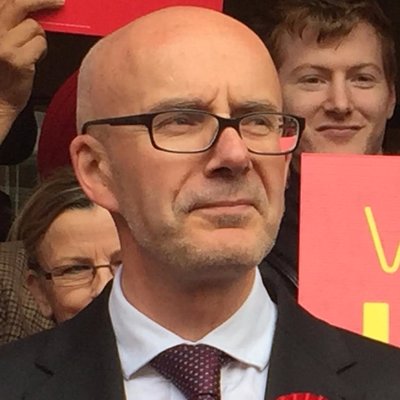
Below is the text of the speech made by Matt Western, the Labour MP for Warwick and Leamington, in the House of Commons on 27 March 2018.
We are all agreed: the UK has a housing crisis. No matter which party is speaking, there is universal recognition of the desperate need to urgently increase the supply of housing. So there is no debate, then, is there? The global financial crash had a catastrophic impact on the house building industry in this country. Given that much of the credit crunch was down to bad debts, particularly those resulting from bad lending in the US domestic housing market, this was perhaps to be expected. In just two years, the number of homes built crashed by 30%, and with this the supply of housing just dried up. That economic shock forced the then Labour Government to drive for affordable house building as part of an economic stimulus programme to help the country through the deep recession.
By 2009, the foundations for a new era of affordable house building were laid, with a £4 billion annual affordable housing programme, backing for councils to receive grant funding and build new council housing, full localisation of council housing finance agreed with the Treasury to boost building still further, and a programme of progressively higher standards agreed with industry to make all new build homes zero carbon by 2016. It was a comprehensive programme.
Since the change of Government in 2010, public policy has been perceived as at best indifferent and at worst hostile to affordable housing. One of the first decisions made by Conservative Ministers after the 2010 election was to cut back new housing investment by more than 60%. As a result, the number of new Government-backed homes for social rent started each year has plummeted from almost 40,000 homes to fewer than 1,000 last year. The number of new low-cost ownership homes being built has halved. The plans that Labour left to get councils building 10,000 homes a year were undermined, dashing any hopes of councils being able to build at scale again.
At the same time as the number of new homes being built has fallen, there has been a huge loss of existing social homes. In 2012, right-to-buy discounts were hiked to a massive £100,000.
Jack Lopresti (Filton and Bradley Stoke) (Con) On a point of information, is the hon. Gentleman aware that since 2010 more than three times as many council houses have been delivered than in the previous 13 years —the golden era of Labour government that he talks about?
Matt Western Yes, the figures do show that, but if one drills down into the number, one will find that they were provided by Labour authorities, and that is despite the borrowing cap that has been placed on them. Without that cap, to which I shall refer, far greater supply would be available.
Despite a promise that there would be one-for-one replacements, in some areas only one in five homes sold under the right to buy has been replaced. A new kind of publicly funded housing was introduced. Ministers branded it “affordable rent”, with rent set at up to 80% of the market price and thereby directly linked to often unaffordable private market rents.
Siobhain McDonagh (Mitcham and Morden) (Lab) I feel sure that my hon. Friend is likely to come to this point, but does he agree that the term “affordable rent” is an offence to the English language, because affordable clearly does not mean affordable if it is 80% of market rent?
Matt Western I thank my hon. Friend for her informed intervention. My very next sentence was going to address that point. If something is already expensive, making it 80% of expensive is still expensive. That is where we find ourselves.
Mark Tami (Alyn and Deeside) (Lab) My hon. Friend mentioned right to buy. Some of the right-to-buy houses that were originally bought by their renters have now been sold on, often to landlords. Some of those properties are not in the best of care and on many estates they are the ones that really stick out, often because rogue landlords are not looking after them.
Matt Western I thank my hon. Friend for his timely intervention. He is of course absolutely correct. One issue we have had over recent decades is that so much of this property has fallen into the hands of landlords and others, the investment has not been made, and they are now charging extortionate rents. Had it been left to local authority provision, those renting would be able to afford the properties more readily.
Organisations that bid for Government grants were told to re-let homes for low-cost social rent at the new so-called “affordable rent”. It is now estimated that 150,000 homes for social rent have been lost in the past five years. More recently, the Government proposed to add to the sell-off by extending the right to buy to housing association tenants, funded by an extraordinary forced sell-off of council housing to the highest bidder.
Matt Rodda (Reading East) (Lab) I associate myself with my hon. Friend’s points and the genuine and deep concern that he shows for the needs of tenants throughout the country, many of whom are struggling with high housing costs, as indeed they are in my constituency. Does he agree that it was an outrageous mistake and serious error by the Conservative Government to stop many local authorities from building council houses when they had fully costed schemes that were ready to go and, indeed, shovel-ready? Reading had a plan for 1,000 new council houses, but unfortunately it was stopped by George Osborne in 2015.
Matt Western My hon. Friend is, of course, absolutely correct. There is a suppression of building low-cost rental properties by local authorities. Those local authorities know that there is a need, and we must allow them to have that responsibility. Preventing them from supplying that housing has had a huge social and economic cost in our communities.
Siobhain McDonagh Does my hon. Friend also agree that preventing councils from building housing means that it is unlikely that the Government will achieve their target of building 300,000 homes a year? The last time those figures were reached was in 1969 when both councils and housing associations were building, as was the private sector.
Matt Western I thank my hon. Friend once again. Not only is she very well informed, but she is very experienced in this matter. She is absolutely right. The high levels of housing that we have needed over the decades have been delivered by a mix of providers. The crucial element that is now missing is the housing that is provided by local authorities. In its absence, we will never achieve the objective that has been set by the current Government. If we look through the decades, we can see how, in the post-war periods of the ‘20s and then the ‘50s and ‘60s, the local authorities were allowed to ensure a good supply of housing, which they recognised was needed because of the constraints in the private sector.
It is worth looking at this matter in the round. Over the past 10 years, the overall supply of new homes has seen an under-delivery of at least 80,000 to 100,000 homes a year. The result is that the UK faces a desperate shortage of at least 1 million homes. The Royal Institution of Chartered Surveyors now forecasts that we will reach a shortage of 1.8 million low-cost rental properties—that is just low-cost rental properties—by 2022.
All areas of the UK need housing, both public and private, but there is particular and desperate need for low-cost housing for rent. In my constituency there are more than 2,400 people on the housing waiting list. Homes are being built, but not enough are under construction to satisfy this social need. Once again, it is the wrong mix of housing that is being delivered. So, what is the answer? Of course, opinions vary, and the solutions presented before the electorate in last year’s election showed clear blue water between the main parties.
Recognising the critical importance of the housing shortage in its 2017 manifesto, Labour committed to the creation of a new department for housing. Importantly, on house building, we promised at least 1 million new homes over the next Parliament, which, as we now know, can be a very short time, and a new target of 250,000 new homes a year being built by 2022. Of those, at least 100,000 per year, or 40% minimum, would be genuinely affordable homes to rent and buy per year, including the biggest council house building programme in more than 30 years. If I am honest, I would personally like to see a lot more.
Subsequently, at the autumn party conferences, much time and debate were given over to this challenge, and the Prime Minister announced that she was committed to delivering 300.000 new homes. Specifically, she stated that £2 billion would be committed to helping the delivery of affordable housing, but, of course, that equates to just 25,000 properties. Clearly, housing is rising up the political agenda, and it is now one of the biggest domestic issues that we face.
My contention is that we now face a social crisis that is without precedent in the past 50 years. We have thousands of families without their own homes, waiting desperately for accommodation. We have record numbers of people rough sleeping. In my constituency of Warwick and Leamington, we have the highest number in terms of people per 1,000 of the population in the whole of the west midlands. Over the decades, the overall supply of housing has not delivered. Now must be the time to change that.
I am convinced that council housing was, is and will be the answer to our housing crisis. The Government need to release local authorities from the bounds of their borrowing cap and allow them to use their pension funds to invest in their communities. The use of public land holds the key to unlocking the potential to deliver this. Simply selling public land to the highest bidder will not solve anything. Land is the fundamental denominator in the cost equation of UK housing, and the planning process surrounding it needs urgent, radical reform.
Building more council housing solves at least two key problems: first, the lack of genuinely affordable housing for those who cannot afford market rents; and secondly, the chronic under-supply of housing that is the root cause of our housing crisis. As I said, there is a lack of genuinely affordable housing, with historically high waiting lists of 1.16 million households nationally. The easiest way to help those in need is to provide council housing. If we fail to do this, the result will be increasing homelessness, which we have witnessed more than doubling nationally since 2010. Another, less frequently made, argument is that building more council housing is the key to boosting overall supply, thereby addressing the root cause of the UK’s housing crisis.
The Government’s own target is to build 300,000 new homes each year, but the number of additional homes delivered in 2016-17 was 217,000, falling well short of their target. Although last year was the first year since the financial crisis in which over 200,000 homes were added—and I do applaud that—it was not enough, and the wrong mix of homes is being built. It is now stated that 300,000 houses would just about keep up with demand. Even if the Government hit this target, it is unlikely to bring down house prices and rents significantly. Also, in order to deliver those 300,000 houses, we need all providers to be supplying into the process.
History provides important lessons. It is no coincidence that house building rates reached their post-war peak during the 1950s and ’60s, when successive Governments were committed both to private sector and public sector house building. At the time, housing was plentiful and house prices stayed low, so that many on low to average incomes could afford to rent or buy their own homes. The success of the ’50s and ’60s shows that prioritising council housing need not be a partisan issue. Harold Macmillan, the Conservative Housing Minister from 1951 to 1954, initiated some of the greatest council house building programmes in order to meet his target of building 300,000 homes a year. During those Macmillan years, local authority housing made up 87%, 84%, 77% and 69% of completed dwellings per year respectively. This compares with just 1% in each of the past four years under this Government—or about 20% each year if we include housing associations as well as councils. Importantly, as I have illustrated elsewhere—I want to give credit where it is due—post-war Conservatives recognised that the public sector must build the homes that the private sector will not build during a housing crisis, which is where we find ourselves.
So why will this Government not do that? I would like to believe that it is not simply ideology that says that the state is bad while the private sector is good and will solve all our problems, because this crisis is holding back our country socially and—I cannot stress this enough—economically. I believe that there is a duty on one-nation Conservatives to come forward and urge the Government to commit to a mass council house building programme if they are serious about solving our housing crisis. In this light, I have recently relaunched, with my hon. Friend the Member for Stroud (Dr Drew), the parliamentary campaign for council housing. I invite all MPs to get involved with this cross-party initiative that aims to see more council houses being built.
Central Government policy currently acts as a disincentive for councils to build more council homes: first, because, there is next to no funding from central Government for the provision of council housing; and secondly, because there has been just £5.9 billion gross investment in social housing in 2015-16 compared with £10 billion in 2009-10, and the vast majority of this will be directed to housing associations.
This compares with the £22 billion forecast to be spent on housing benefit in the 2017-18 financial year, which is a direct result of not building the housing we need. Is that not ironic? Surely the Government would rather not line the pockets of landlords in the private sector, but prefer to invest long term in the council housing that we need. Is that not pragmatic? The additional £2 billion investment announced by the Prime Minister at the conference was welcome, but it will only provide a few thousand homes by 2021, including the affordable homes that can be anything up to 80% of the market rent. The money is not ring-fenced for genuinely affordable social rents.
As I said earlier, the borrowing cap stifles a council’s ability to build where councils can currently only borrow up to a certain amount to invest in council housing. I welcome the announcement in the Budget that the Government will raise the cap by a total of £1 billion for areas under high affordability pressures, but more needs to be done. If the Government accept that the cap stifles building, why will they not lift it entirely for all areas, as has been done in Scotland?
Matt Rodda Does my hon. Friend agree that there is a considerable need for greater house building in high-cost areas, and that there is actually a lot of available land in many of those areas? There certainly is in Reading. In our case, it is brownfield land from our light industrial past, and I assume that that may also be the case in Warwick and Leamington. Does he agree that urgent Government action is needed to free up that land in order to support the local economy in those areas and to support local public services? There is a particular pressure on local schools and the NHS in my constituency, as people move to lower-cost areas. Will he endorse my points?
Matt Western I thank my hon. Friend for his informed and relevant intervention. He is of course absolutely right that this essentially leads to what may be described as social cleansing. We may actually be creating ghettoes of particular types of community, when we should be striving for sustainable, balanced communities for our economic and social good. I totally endorse my hon. Friend’s points.
It is estimated that lifting the cap would allow £7 billion to be injected over five years, providing an additional 60,000 council homes. Even the Treasury Committee, chaired by the right hon. Member for Loughborough (Nicky Morgan), has called for this and stated:
“raising the cap would have no material impact on the national debt, but could result in a substantial increase in the supply of housing.”
The Local Government Association agrees. In my view, we should lift the cap entirely and take borrowing to invest in council housing off the country’s balance sheet, as is standard in other European countries. Why not?
Returning to the use of land and its availability, there is clearly much land available, but it is questionable in terms of its efficient use. As my hon. Friend the Member for Reading East just alluded to, there is land—including public sector and brownfield land—but it is all about the planning process and how that land is brought into the equation in order to deliver affordable housing. The current planning policy framework makes it prohibitively expensive for this to happen. The whole process needs radical reform.
Councils are currently incentivised to sell off the overpriced land that they own to highest bidder, rather than to use it for the common good. This needs to be reconsidered urgently. I am calling for us to recognise this national crisis in housing by legislating for all unused local authority and public sector land to be used exclusively for council housing. That is the nature of the crisis we face.
The inflated land prices across the country are preventing local authorities from being able to assemble the land to build on. Land is currently priced at its potential future development value, rather than at its existing use value, as is done in other countries. This pushes up the cost of undeveloped land that would be suitable for housing development, making investment in council housing more expensive. Bizarrely, it also rewards landowners for housing and infrastructure developments to which they do not contribute.
The homelessness charity Shelter has argued that a few small reforms to the Land Compensation Act 1961 and associated legislation on compulsory purchase orders would enable local authorities to purchase land at a fair market value—one that reflects both the current value of the land and reasonable compensation, and allows for the delivery of high-quality, affordable developments. This is not rocket science; it is not complicated. That is what they do in other countries in Europe and elsewhere. It is just about changing the planning approach so that it favours the local authorities.
Mike Amesbury (Weaver Vale) (Lab) Does my hon. Friend agree that the current section 106 arrangements and the community investment levy have failed to deliver affordable housing for our local communities?
Matt Western My hon. Friend is absolutely correct, as ever. This needs radical reform. The section 106 moneys are understood by few, and the provision of those moneys for housing is not being realised. This goes back to my point about how the planning process and the planning policy framework need urgently to be addressed.
Councils currently retain only one third of receipts from homes sold through right to buy, while the rest goes to Treasury coffers. Why should that be? Surely it should be in the gift of the local authorities. They are ones that are adding the value to this process, not the Treasury and not the developer. That means that council housing is lost and never replaced, with 40% of that stock now in the hands of private landlords who, in some cases, are charging up to 50% more rent than is being charged for comparable local authority-owned housing.
It also acts as a disincentive for councils to build. Why risk building new council homes when they could be bought three years later, and two thirds of the receipts will then go to the Treasury? Right to buy in its current form must be scrapped, or at the very least radically reformed, if we want to build the new homes we need. At the very least, councils must be allowed to retain 100% of the receipts from the homes that they lose.
We urgently need to change the language around housing in this country. For 40 years, the sector has become dominated by talk of assets and investment, rather than provision for people’s essential needs for security, refuge and living. Housing also meets the needs of our society more widely and determines the communities in which we live. Housing is so simple, so fundamental and so basic. It provides a sense of place and connectedness in our communities. What is rarely discussed is the vital importance of low-rent council and social housing to the UK economy and how that has been ignored by recent Governments. High rents contribute to pressure on household budgets, lead to lower savings and lower consumption and may lead to poorer health.
The time has come to address this failing and the urgent need to restore much needed balance to the UK housing sector by allowing local authorities to build council housing on a scale not seen since the 1970s. That would mean 120,000 new council homes being delivered per year across the UK. Council housing was and is the answer to our housing crisis—I have absolutely no doubt about that. It is about time the Government recognised that and got on with the job of building it.
Dr David Drew (Stroud) (Lab/Co-op) I am delighted to make a short contribution, which I am sure the Minister will be pleased to hear. I congratulate my close colleague on this issue, my hon. Friend the Member for Warwick and Leamington (Matt Western), on securing the debate. What he said was well worth listening to. I wish to make a couple of observations that relate largely to my locality of Stroud. I come to help the Minister, not in any way to criticise, because we have to recognise that this is not about party politics. It is about the fact that we need to deal with the housing problem, and we need to deal with it now.
I am making this plea following a letter that was sent by my local authority, Stroud District Council, on my behalf and that of the hon. Member for The Cotswolds (Sir Geoffrey Clifton-Brown). He does not necessarily sign up to everything in the letter, but we felt it was important to send it to the Department so that it understands some of the issues we are facing. This is about the way in which the housing revenue account is now, bizarrely, almost acting against the very thing the Government want, which is to build more houses and make sure that they are fit for the people who desperately need rented accommodation.
The letter makes two pleas: first, as my hon. Friend the Member for Warwick and Leamington has said, to adjust or possibly remove the current borrowing cap so that Stroud District Council can undertake further prudential borrowing consistent with its 30-year business plan; and, secondly, to enable the council to use 100% of its right to buy capital receipts to build those new council homes. Stroud District Council is not unique, but it is unusual in that it now owns its own stock. We bid £98 million for the self-financing regime that the Government kindly made available, so this is a question of the council wanting to use its own resources in the most appropriate ways.
Stroud District Council has had a five-year capital programme to build some 236 council homes, which for a small area such as Stroud is a not insignificant commitment and contribution. That has not in any way crowded out the private sector, but has been in addition to it. These homes are of a high standard, and they are taking people out of fuel poverty, while lifetime arrangements mean that these quality homes are ones that people want to live in. It is a myth that people end up in council housing because they have no alternatives. These are very much sought-after homes, and ones that we want to see alongside other forms of affordable homes.
Local business is very supportive, and it has highlighted the need for housing to be given a very high priority for the simple reason that that is how people can live and work in the Stroud district. We estimate locally that we need 425 new units per annum, which, at the moment, is in effect all the units being provided. However, of the 430 new homes built in 2015-16—the last year for which we have figures—only 120, or 28%, were affordable, which is well below our level of need. This is a question of our not meeting the current demand.
There are 2,525 households on the housing register, with about 440 new lettings of social and affordable housing each year. Rent levels in the private sector are increasing much more quickly than we want, which leads people to look for alternatives to the private sector—one of those alternatives is council housing—and that is particularly true of younger people. In Stroud, the average wage to house price ratio is now 1:10, which is above the national average of 1:8. That means fewer people are becoming owner-occupiers, which is another reason why they are looking for alternative rented accommodation.
Dare I say it, but the private rented sector in Stroud is not necessarily good, which again drives people to look at ways in which social housing, particularly council housing, can provide an answer. There are elements we always want to provide, such as extra care. That needs to be mentioned, because this is not just about younger people or younger families, but about providing a social care element. It is only really the council that can do so, because it recognises that it must supply such support. We have also had a 30% increase during the past year in homelessness applications, which is another driver.
One thing for the Minister to address is the local housing allowance. In a previous debate, I argued that the simple fact that Stroud is included with Gloucester and the Forest of Dean causes us problems. We are an area with higher rents, which means that, because the local housing allowance is based on an average, people paying rent have to make good the difference between what they are allowed and what the benefit system permits them.
I appeal to the Government to work with us to allow us to carry on with our council housing programme. The local plan allocates over 5,000 homes, but sadly too few are coming forward. If the local authority could play a bigger part we would be able to bring forward those homes and ensure we deal with the housing shortage, which I am sure Members on all sides of the House agree is real and pertinent. We need a range of housing, including council housing. This is a cross-party agreement. We are a hung council. The local Conservatives support the programme and were instrumental in it, and they have been willing to stay with it over a long period of time. We need help to either remove or relax the housing revenue account, so we can get back on with the programme.
Sadly, the cap means it is likely that we will have to pay back to the Government £1 million in unapplied right-to-buy receipts for 2016-17. The Minister looks a bit curious, but that is the reality. If we do not have the ability to match fund, we pay back the money from receipts. I do not expect the Minister to say he has a magic solution, but perhaps he could look at that to ensure we do not have such anomalies in the system which mean that the very people who want to build are being prevented from doing so. The 1% rent reduction makes matters worse, because of its impact on the flexibility that councils need for their business plans—in our case, a 30-year business plan. Overall, that has a negative impact of some £10 million, which is a huge influence on the number of houses—we reckon 100—that we want to build but have not been able to.
I hope the Minister has listened. I do not expect him to come up with all the answers, but we will work with him. We are a good authority. We want to overcome the problems of the lack of affordable housing, particularly council housing. I hope he has heard us and will be able to say that the Government are at least willing to contemplate looking at the borrowing requirement and how right to buy affects authorities like Stroud.