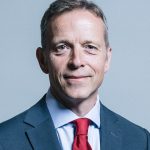
Tag: Matt Rodda

  • Matt Rodda – 2024 Speech on Planning, the Green Belt and Rural Affairs

    Matt Rodda – 2024 Speech on Planning, the Green Belt and Rural Affairs

    The speech made by Matt Rodda, the Labour MP for Reading Central, in the House of Commons on 19 July 2024.

    I am grateful for the opportunity to speak in the debate. Let me first thank my constituents for returning me to this place; I am representing many of them for the first time.

    I wish to speak in support of the King’s Speech, and to raise a number of points about issues that are important to my constituents and to many others across the country. The King’s Speech set out nothing less than a programme for national renewal, presenting a chance for us to change our country for the better for the benefit of all its people, including my constituents in Reading. I want to draw on a series of examples to show just how important these measures actually are.>

    I will start with the important area of infrastructure, including the need for data centres, onshore wind and new electricity connectivity. All are absolutely essential if we are to get our economy growing again after 14 years of very low growth and, indeed, austerity. Building new homes is vital for tackling the housing crisis, and I speak from great experience. Residents in Reading are under severe pressure because of the high cost of purchasing a house in the home counties, the very high cost of renting and the growing population. Thousands of local families are struggling to get on the housing ladder; they are struggling both to buy and to find good-quality rental properties.

    Action to build on greyfield sites and put brownfield sites first is essential in trying to tackle this huge problem, and I will give a short example from my experience as a local councillor. One of the hardest things that I ever had to do as a councillor was to try to help families who had been moved out following no-fault evictions. It was absolutely and utterly heartbreaking to see families with both parents in work struggling to find a new place to live after being moved out by a landlord, which is the sort of issue that measures in the King’s Speech will tackle. It is absolutely essential that we take this matter forward and deal with these really pressing social problems, which affect people across our country and which are dreadful for so many families, particularly in many of the towns and cities represented on the Government Benches.

    I would like to draw out a number of other measures that are important to my residents and others across the country, particularly the Government’s commitment to legislate on knife crime. I have experienced appalling cases in my area, including the dreadful murder of a 13-year-old boy. I can only say that my heart goes out to any family affected by this appalling crime. The measures announced to tackle the problem through much tougher action on knives, and to provide better support for teenagers, are absolutely essential, and I hope they will be welcomed by Members of all parties.

    I would also like to make a point in support of GB Energy. The Government are absolutely right to look at a new way to increase investment in green energy. We face an unprecedented crisis in the form of the climate emergency, and we must take action. It is simply vital that we move forward on this matter.

    Rail renationalisation will make a huge difference to thousands of the residents I represent and, indeed, to people across the country. I echo many Members’ support for rail and public transport, which plays a very important role in connecting people across this country.

    Finally, I thoroughly endorse and encourage the Government’s action to promote football regulation, which is long overdue. Some good work was carried out under the previous Government, and it is important that this continues. I hope that the legislation will support and help many clubs across the country that are struggling with enormous challenges, including my team, Reading football club. I look forward to hearing more on this issue later.

    I am conscious of the time. I congratulate the many new Members who have spoken so eloquently today, and I thank you for the opportunity to speak, Mr Chope.

  • Matt Rodda – 2023 Speech on Removing VAT from Sunscreen Products

    Matt Rodda – 2023 Speech on Removing VAT from Sunscreen Products

    The speech made by Matt Rodda, the Labour MP for Reading East, in Westminster Hall, the House of Commons on 9 February 2023.

    It is a pleasure to serve under your chairmanship, Mr Sharma. I congratulate the hon. Member for East Dunbartonshire (Amy Callaghan) on her excellent work in securing this debate and on her powerful speech. I also commend colleagues from all parties in the House for their speeches.

    I want to make three brief points, first about the obvious importance of sun protection, secondly about the context of the cost of living crisis, and thirdly about the importance of investment in public health.

    First, on sun protection, we have heard a persuasive argument today about the importance of protecting ourselves from skin cancer. Quite clearly, it is a threat that can be managed and that we can protect ourselves from, and the hon. Member is absolutely right to point that out. However, those 2,000 preventable deaths surely prompts a question for the Government: what is the state of their current public health work on this important matter? I hope that the Minister will be able to answer that in detail when she responds.

    I also urge colleagues from all parties in the House to consider the context for families—who will perhaps have started thinking at this time about booking a summer holiday, or going away for a weekend or to the seaside at Easter—because we are living through the most serious and sustained cost of living crisis for 40 years. When families go to purchase everyday goods, they will see cost increases of around 20% for those goods in the supermarket, and there is a real issue with additional items possibly not being bought as a result. We need to understand that that is a huge risk. There have been many reports in the media of families paring back other products and services because they are under such severe pressure. I hope the Minister will consider that context and see the obvious additional importance of wise public health advice and any measures that are deemed necessary.

    When we consider the cost of the summer as a whole for families, particularly those with two or even three children, which involves buying hats, sunglasses, loose-fitting clothing—as we heard earlier—and sunscreen, there are quite obviously considerable extra costs for the many families who are thinking about a summer holiday, either in the UK or abroad. Obviously, sunscreen is part of that cost, so the point that the hon. Member for East Dunbartonshire made about the cost of sunscreen is an important one.

    Finally, I turn to the need for more investment in public health. It is noticeable that in this country we have a very strong tradition of public information campaigns, which have actually been very successful over the years. Some of us will remember campaigns such as Clunk Click, or other campaigns to try to prevent smoking or many other health risks. What are the Government prepared to do to try to prevent the risk of melanoma, perhaps through better advice, through the media and by directing Government information in a more effective way?

    There is also a wider point about working with the health service and other public health professionals. It is a tragedy that since 2010, and certainly for the period immediately before the pandemic, there was a cut in Government spending on public health. In my opinion that is a tragedy, and sadly many important health priorities were allowed to drift in that time, including action to tackle smoking, and there may well be other important measures that were not supported, possibly including the battle against melanoma.

    I am conscious of time, so to conclude, this is an important health issue, and the hon. Member for East Dunbartonshire has made an interesting point. This debate is also timely, given that this is the time of year when many families are booking holidays and considering what to do in the summer, and at Easter and in other holiday periods approaching in the spring. I look forward to hearing the Minister’s response, and I hope she will address a number of the points made today.

  • Matt Rodda – 2023 Speech on Raising the State Pension Age to 68

    Matt Rodda – 2023 Speech on Raising the State Pension Age to 68

    The speech made by Matt Rodda, the Labour MP for Reading East, in the House of Commons on 1 February 2023.

    Pensions are an incredibly important issue. People who have worked hard and contributed all their lives deserve a decent pension in retirement. The state pension has been a crucial part of all our lives in this country for a very long time. I thank the Backbench Business Committee for securing today’s debate, and the hon. Member for Amber Valley (Nigel Mills) and Members across the House for their contributions.

    I am sorry to say that there has been a certain amount of unhelpful briefing in the media about a possible change to Government policy on state pension age. I urge the Government to stop that, and to raise issues in this House rather than in the media. If Ministers are serious, they should discuss the future of pensions policy with the public and the pensions industry in a proper public consultation. The current speculation fuelled by off-the-record briefings is hugely unsettling for people who are saving for a pension and trying to plan for their future. Ministers should remember that families and pensioners are living through an unprecedented cost of living crisis and facing huge pressures on household budgets. The last thing that people need is further stress and uncertainty.

    We are living in challenging times, with inflation rates that the country has not seen for more 40 years. To make matters worse, as the IMF reported earlier this week, the UK faces the worst economic outlook of any major economy. After 12 years of economic mismanagement by the current Government, we are stuck in a period of persistently low growth and, unfortunately, persistently high inflation. As a direct result of that mismanagement, the Government are now trying to cut public spending. They have reduced spending on the state pension before by failing to increase pensions in line with inflation until April this year. That means that pensions have failed to keep up with the huge rise in the cost of food and fuel that has hit pensioners in the last six months.

    Independent research by the Pensions and Lifetime Savings Association using data from Loughborough University showed the scale of the Government’s failure. It showed that the basic state pension has now fallen below the cost of living. The PLSA put the basic cost of living for a single pensioner at £12,800, more than £2,000 above the basic state pension, which will be £10,600 in the financial year 2023-24.

    The Government’s mismanagement of the economy and their desperate attempts to cut public spending form the backdrop to today’s debate. This is made even worse by Ministers’ disregard for pensioners, the House and the public. The Government’s pattern of behaviour is in stark contrast to the way in which Governments have conducted themselves in the past. As I mentioned earlier, there has been a long-standing convention that pensions policy is based on evidence and agreed by consensus. For example, when the evidence showed that life expectancy was increasing, there was a discussion about the impact on the state pension age, and it was agreed that it should be gradually increased. The UK already has one of the higher state pension ages among OECD countries.

    Following extensive consultation about the impact of increased life expectancy in the 2000s, the Government established the Pensions Commission to look into the issue. As a result, and after a great deal of discussion, it was agreed that the state pension age should be raised. The Pensions Act 2007 provided for it to be increased from 65 to 68 in stages over the period between 2024 and 2046. I should stress that those increases were agreed at a time of steady rises in life expectancy. The current situation is somewhat different, to say the least. As we heard earlier, there is clear evidence of a stalling of the increase in life expectancy. Data from the Office for National Statistics on healthy life expectancy between 2018 and 2020 shows a downward trend in most regions of the UK, and the situation for some pensioners seems to be even worse, with a fall in life expectancy among some groups since 2010. We have heard several examples of that today, and there are others.

    There is also clear and, in my view, deeply troubling evidence of local disparities, with gaps of about 10 years between the average life expectancy of some people—often those living in better-off areas—and that of their neighbours living in less well-off areas comparatively nearby. The full impact of the pandemic on long-term health is unclear, and there seem to be a growing number of older people of working age who are suffering from serious health conditions. That evidence needs to be considered carefully.

    I appreciate that time is limited. Let me end by saying that the Government are letting down both pensioners and people saving for pensions. They have broken with the long-standing convention that pensions policy is developed on the basis of evidence, through consultation and discussion. I hope the Minister will address these issues in her speech. I know that she does prefer to consult, even if some of her colleagues do not always follow that approach.

  • Matt Rodda – 2022 Speech on the State Pension

    Matt Rodda – 2022 Speech on the State Pension

    The speech made by Matt Rodda, the Labour MP for Reading East, in Westminster Hall, the House of Commons, on 12 December 2022.

    It is a pleasure to serve under your chairmanship, Sir Robert. I thank my hon. Friend the Member for Battersea (Marsha De Cordova) for her work on this important issue. I also thank other hon. Members who have spoken in the debate. Above all, I want to thank the hundreds of thousands of people from across the country who signed the petition that led to this debate. Constituents have expressed their concern for older people, so it is right that we consider this matter today.

    Pensioners face the worst cost of living crisis for over 40 years. The cost of food and fuel is up, and the cost of living as a whole is going up. Yet, at the same time, support for pensioners is failing to keep up with the severe pressure on older people. Those who have worked hard and contributed all their lives deserve to receive a decent state pension in retirement. The official Opposition support the triple lock and have repeatedly called for the state pension to rise in line with it during the last two years, but the Government’s approach has fallen well short of what is expected by pensioners and the country as a whole.

    I will set out the scale of the cost of living crisis and then address the Government’s failure in this regard. It is clear that this crisis is the worst squeeze on the incomes of families and pensioners since the 1970s. Sadly, inflation has hit over 10%—something unheard of in living memory. The situation facing people on low and fixed incomes is particularly difficult. Pensioners and others on modest incomes spend more of their disposable income on food and fuel, the prices of which have increased to a far greater extent than those of other goods. The prices of staples such as bread, cereals, tea, meat, dairy produce and eggs have all risen rapidly, and some have increased by far more than the headline rate of 10%. As is well known, the same is true of energy. Not only has the price of gas risen dramatically, but so has the price of electricity and heating oil. In the meantime the Government have dithered and delayed, and put off addressing these important issues.

    I turn to the Government’s poor record and to the lack of—indeed, the delays to—support for poor pensioners. Despite raising the state pension in line with the triple lock being a manifesto pledge, Ministers repeatedly failed to meet that commitment. Last year the Government said that earnings appeared to have grown by a larger amount, because the return to work after furlough created the impression that earnings had increased by 8%. They used that as an excuse for disapplying the triple lock, preventing pensioners from getting the rise in the state pension that they clearly deserved. We repeatedly challenged the Government, but they simply would not listen to our concerns.

    To make matters worse, this year Ministers refused for months to commit to increasing the state pension in line with inflation. Campaigners repeatedly pressed them on the issue, and the official Opposition raised the matter in Parliament a number of times. As a result of the Government’s dither and delay, pensioners were left wondering what would happen to them at a time when they were facing a very difficult winter. After months of delay, and considerable pressure and stress for older people, Ministers eventually confirmed at the autumn statement that the state pension would rise in line with inflation. Those failures and persistent delays let pensioners down badly, so I hope the Minister will find time to apologise for them when she replies.

    The Government have failed pensioners on a number of other matters relating to the state pension—for example, pension credit and some of the problems relating to the energy price guarantee. I want to raise those related issues, because both policies should be offering far more help than they do at present.

    Pension credit tops up the incomes of some of the most vulnerable pensioners, who receive a particularly modest income. However, about 1 million pensioners who are entitled to the benefit are not claiming it. Will the Minister explain why the Government are still failing on this matter? What more can be done to ensure that pensioners claim pension credit to raise their incomes, as they deserve?

    Although help is now available with heating costs, there are gaps in the scheme—not least that it will be scaled back next year. In the meantime, payments for some pensioners in rented accommodation are still not being passed on by landlords. Concerns have been raised in my constituency, and I am sure Members across the House have experienced the same issue. I hope the Minister will respond to that point.

    Time is pressing, but I want once again to thank the members of the public who signed the petition, as well as my hon. Friend the Member for Battersea, who spoke so eloquently, and other Members from across the House. I look forward to the Minister’s reply.

  • Matt Rodda – 2022 Speech on the Child Support Bill

    Matt Rodda – 2022 Speech on the Child Support Bill

    The speech made by Matt Rodda, the Labour MP for Reading East, in the House of Commons on 9 December 2022.

    We wholeheartedly support the principle that non-resident parents should pay child maintenance, and that there should be enforcement when absent parents fail to pay. I thank the hon. Member for Stroud (Siobhan Baillie) for her work on the Bill and, indeed, for her wider work on this complicated and important matter.

    Too many absent parents fail to pay child maintenance, often leaving children and families in desperate need and emotional distress, which, as we heard earlier, can have very serious consequences for them. I pay tribute to those families who are suffering as a result of terrible backlogs and delays, and the whole House is deeply concerned about them. Many Members have tried to help constituents facing these dreadful problems, and will have responded through their casework. I also want to put on record my support for the work of charities such as Gingerbread that support parents, and to thank the Child Maintenance Service for its efforts in this important area. It continues to chase non-payment despite a series of difficult challenges, to which I shall refer later in my speech.

    Turning to the substance of the Bill, as I said at the outset, we completely support the principle that non-resident parents should meet their responsibilities for child maintenance, and where they fail to do so the state must step in to enforce payment. The CMS manages over 500,000 arrangements for child support, affecting 750,000 children. Maintenance payments are very important in reducing child poverty, as the hon. Member for Newbury (Laura Farris) mentioned, and it has been estimated that as many as one in five single-parent families on benefits are lifted out of poverty by receiving child maintenance payments; that is an important point for us to consider. Not only do we support the principle, therefore, but we recognise that the enforcement of child maintenance obligations needs to be improved.

    Enforcement action was affected by the pandemic. CMS staff were redeployed to manage the surge in universal credit claims, and the courts were closed. The number of liability orders in process fell from 6,900 in March 2020 to 2,400 in September 2020. That was a considerable drop, but since 2020 there has been only a partial recovery, and the most recent figures, for June 2022, are not only far lower than before the pandemic at 4,200, but are lower than in June 2021 by over 1,000 cases. The CMS therefore clearly faces some serious issues. The number of enforcement agency referrals now in process is less than half the number before the pandemic. The system for ensuring that child maintenance is paid needs to be efficient and fair, and we must address these points and discuss them thoroughly in this House.

    Although I understand the principles behind the Bill, I therefore have some questions. As I understand it, the purpose of the Bill is to make changes to powers introduced in the Child Maintenance and Other Payments Act 2008, but it seems that some of the powers—those that allow the Secretary of State or Department to make an order without having to go to the courts—have not been used by the Government. I realise this is a detailed point, but I ask the Minister to address it in her reply and to reassure me on it.

    The Bill makes provision for the Secretary of State to issue regulations governing appeals, and the powers granted are wide-ranging. For example, the Secretary of State will be able to make

    “provision with respect to the period within which a right of appeal under the regulations may be exercised”

    and

    “provision with respect to the powers of the court to which the appeal under the regulations lies.”

    This wording seems to give the Secretary of State a great deal of power to limit the grounds on which appeals can be made and the opportunity to appeal. Why are these powers being sought?

    Time is limited today, so I will conclude. We whole-heartedly support the principle that non-resident parents should pay child maintenance and that there should be enforcement for absent parents who fail to pay. I again take this opportunity to thank the hon. Member for Stroud for her excellent work on this; she has a great deal of expertise and the House and country is benefiting from it. I also pay tribute to parents and families affected by this terrible problem, as well as charities and campaigners, and to CMS staff working on those parents’ behalf. I hope the Minister will address my questions; they are somewhat technical, however, and I would be happy for her to write to me with further detail on them.

  • Matt Rodda – 2022 Speech on the Online Safety Bill

    Matt Rodda – 2022 Speech on the Online Safety Bill

    The speech made by Matt Rodda, the Labour MP for Reading East, in the House of Commons on 5 December 2022.

    I am grateful to have the opportunity to speak in this debate. I commend the right hon. Member for Basingstoke (Dame Maria Miller) on her work in this important area. I would like to focus my remarks on legal but harmful content and its relationship to knife crime, and to mention a very harrowing and difficult constituency case of mine. As we have heard, legal but harmful content can have a truly dreadful effect. I pay tribute to the families of the children who have been lost, who have attended the debate, a number of whom are still in the Public Gallery.

    Madam Deputy Speaker (Dame Rosie Winterton)

    Just to be clear, the hon. Gentleman’s speech must relate to the amendments before us today.

    Matt Rodda

    Thank you, Madam Deputy Speaker. A boy called Olly Stephens in my constituency was just 13 years old when he was stabbed and brutally murdered in an attack linked to online bullying. He died, sadly, very near his home. His parents had little idea of the social media activity in his life. It is impossible to imagine what they have been through. Our hearts go out to them.

    Harmful but legal content had a terrible effect on the attack on Olly. The two boys who attacked and stabbed him had been sharing enormous numbers of pictures and videos of knives, repeatedly, over a long period of time. There were often videos of teenagers playing with knives, waving them or holding them. They circulated them on 11 different social media platforms over a long period of time. None of those platforms took any action to take the content down. We all need to learn more about such cases to fully understand the impact of legal but harmful content. Even at this late stage, I hope that the Government will think again about the changes they have made to the Bill and include this area again in the Bill.

    There is a second aspect of this very difficult case that I want to mention: the fact that Olly’s murder was discussed on social media and was planned to some extent beforehand. The wider issues here underline the need for far greater regulation and moderation of social media, in particular teenagers’ use of these powerful sites. I am finding it difficult to talk about some of these matters, but I hope that the Government will take my points on board and address the issue of legal but harmful content, and that the Minister will think again about these important matters. Perhaps we will have an opportunity to discuss it in the Bill’s later stages.

  • Matt Rodda – 2022 Speech on the State Pension Triple Lock

    Matt Rodda – 2022 Speech on the State Pension Triple Lock

    The speech made by Matt Rodda, the Labour MP for Reading East, in the House of Commons on 8 November 2022.

    I am pleased to close this important debate for the Opposition. As my right hon. Friend the Member for Leicester South (Jonathan Ashworth) said, it is about a simple and very important question: will the Government honour their manifesto pledge to millions of pensioners—13 million, many of whom have no income other than the state pension? As we have heard, the Government failed to raise the state pension in line with the triple lock last year and, to make matters worse, pensioners face in effect a £900 cut to their income if the triple lock is ignored this year.

    The state pension matters enormously and, so far, the Government have failed to give pensioners the reassurance that they deserve. As my right hon. Friend said, this should not be a controversial question; it should simply be something that the whole House can agree with, yet that request for simplicity, clarity and reassurance at a difficult time has been met with a lack of understanding. I hope that the Minister in responding will think again, treat pensioners with more respect and reassure them that the Government will stick with the triple lock. The uncertainty of the last few weeks has put pensioners under terrible stress. That should never have happened. The Government should now reassure pensioners. As food and fuel bills soar, the very least that Ministers can do is give the simple answer that they will keep the triple lock in this difficult situation.

    The debate has been an important opportunity for Members from across the House to remind Ministers of their duty to pensioners. Powerful arguments have been made for openness and clarity. We have heard that, at a very difficult time, pensioners and others on fixed incomes are under real pressure. The hon. Member for Kilmarnock and Loudoun (Alan Brown) reminded the House that pensioners face a desperate situation with bills rising and called for clarity. The hon. Member for Torbay (Kevin Foster), who is in his place, stressed his support for the triple lock and the importance of the state pension to many of his constituents. He also called on the Government to do much more to encourage pensioners to claim pension credit.

    The Chair of the Select Committee, my right hon. Friend the Member for East Ham (Sir Stephen Timms), made some excellent points, including that the Government, sadly, made a series of serious blunders in September. There has already been a big fall in the value of state pensions and the Government gave an assurance that pensions would be uprated. That was a manifesto commitment. He also gave us historical context, going back as far as the 1970s. Pensions have been uprated over a long period. Further, he went on to make the telling point that there is a social contract between people in work, the Government and pensioners.

    Other Members made excellent points. The hon. Member for South West Hertfordshire (Mr Mohindra) called for the triple lock to be retained. My hon. Friend the Member for Liverpool, Wavertree (Paula Barker) made a powerful speech in which she talked about the importance of protecting the most vulnerable and the Government’s duty to do that on behalf of society as a whole.

    There was a huge number of other contributions, which I cannot refer to in great detail. However, in summary, my hon. Friend the Member for Birmingham, Erdington (Mrs Hamilton) made an excellent speech, the hon. Member for Rother Valley (Alexander Stafford) spoke, and my hon. Friend the Member for Wakefield (Simon Lightwood) also spoke powerfully. The hon. Members for South Cambridgeshire (Anthony Browne), for Wantage (David Johnston), for Guildford (Angela Richardson), for Broadland (Jerome Mayhew), for North East Fife (Wendy Chamberlain) and for Heywood and Middleton (Chris Clarkson) spoke, as did my hon. Friends the Members for Easington (Grahame Morris), for Stockton North (Alex Cunningham) for Gower (Tonia Antoniazzi) and a number of others.

    My hon. Friend the Member for Barnsley East (Stephanie Peacock) made a fascinating and important point about the miners’ pension fund and the need for the Government not to take money out of it. The hon. Member for Gloucester (Richard Graham) spoke, as did my hon. Friend the Member for Newport West (Ruth Jones). The hon. Member for Arfon (Hywel Williams) made an important point about ASW, the issues with the Pension Protection Fund and those pension funds that got into difficulty before the PPF was set up. My hon. Friend the Member for Birmingham, Hall Green (Tahir Ali) made some powerful points as well, as did my hon. Friend the Member for Wirral West (Margaret Greenwood), who pointed out the pressure on pensioners from the cost of living crisis.

    My hon. Friend the Member for Blackburn (Kate Hollern) made some powerful points, as did my hon. Friend the Member for Warrington North (Charlotte Nichols), who talked about pensioner poverty rising, affecting half a million people. Finally, my hon. Friend the Member for Enfield North (Feryal Clark) spoke eloquently about the need for security at this time.

    Time is pressing. Today’s debate has been full and frank, and I hope Ministers will now respond with the honesty and transparency that pensioners deserve. As my hon. Friends and Members from across the House have said, this is a very important issue. The Government made a manifesto pledge and, last year, Ministers broke that pledge. Pensioners across the country are now facing unprecedented levels of inflation, particularly in food and fuel. Given that, it is vital that Ministers keep the triple lock and that they reassure pensioners of their intentions before the financial statement at the end of this month. Quite simply, pensioners have waited for too long, suffered too much uncertainty and put up with far too much stress for the Government to do anything less.

    It is, as hon. Members have mentioned, the first duty of Government to protect the most vulnerable. I hope the Minister will now offer clarity and reassurance for millions of people across the country.

  • Matt Rodda – 2022 Speech on the Government’s “Plan for Growth”

    Matt Rodda – 2022 Speech on the Government’s “Plan for Growth”

    The speech made by Matt Rodda, the Labour MP for Reading East, in the House of Commons on 19 October 2022.

    It is a pleasure to follow my hon. Friend the Member for Swansea West (Geraint Davies). I speak in support of the points made by the shadow Chancellor and a number of hon. Members from across the House. I will cover three brief points in the time available: reflect on the seriousness of the crisis of the past few weeks, which is unprecedented; consider the serious effects on families and pensioners across the country; and consider the pressing and serious problems facing businesses, whether large or small.

    To put the last few weeks into some sort of context, this truly is a crisis made in Downing Street and one that is absolutely dreadful for the country on so many levels. I am utterly staggered that a Prime Minister and Chancellor could have taken those steps, and I cannot understand why they made such serious mistakes.

    The unfunded, reckless tax cuts, leading to significant increases in mortgage costs and other business costs, are absolutely dreadful for the whole country. My feelings after these weeks, and at certain points during the journey that we have been on—the zig-zag of U-turns and mismanagement—is one of disbelief. I am sick and tired of waking up to the “Today” programme telling me of some dramatic change in Government policy leading to awful effects on the country. I am also fed up with the evening news reporting on the latest rumours and difficulties facing the Government. I would like to see a period of stability, as I think we all would. Certainly, our businesses would, and families and pensioners would.

    Moreover, this deeply saddens me, because the Government’s inept mismanagement has deeply damaged the country’s long-held reputation. It is dreadful that the then Chancellor was at the IMF in Washington at the very time when senior figures in the organisation were criticising British policy. We had the completely unprecedented experience of the US President commenting on UK economic policy and mismanagement by the Government, and the former Governor of the Bank of England criticising Government policy.

    I wish to move on from all that but, in the time I have, I will draw Members’ attention to the very real effects on working people who will now be paying the cost of this very serious crisis for months and years to come. I want to explain some of the work I have been doing in my constituency, which covers Reading and Woodley, and the visits I have made to local centres to see the effects for myself and to see quite how awful it has been.

    I am lucky to represent a relatively prosperous area in south-east England, but we have serious poverty which is being made dramatically worse. We have a large number of families and pensioners who are struggling and who are very concerned about mortgage and rental costs. I visited the Weller Centre in the last few days, which is a wonderful community centre in Caversham in my constituency. Amazing work is being done there to support people on so many different levels by a charity. It was worrying to see how many people are now having to rely on food banks. That has been a constant for some time, but it is getting much, much worse. In addition, to make things worse still, fewer supplies are now being donated because of the pressures on the retailers and households who have generously donated. As a result, the community fridge at the centre is not as full as it was. The boxes of fruit, vegetables, other produce and dry goods are not as full as they were and there are real impacts on people in desperate need. The centre is trying to provide cheap, hot food to pensioners—often things like baked potatoes and basic food—to help them to make ends meet. It also offers a warm bank.

    All that is to be commended, but that scale of support would not be needed were it not for the Government’s mismanagement. In Reading and Woodley town centres, and in other local centres across the constituency, we can see very clearly the effects of the Government’s mismanagement. Other colleagues have mentioned them, too. There are empty shops and business units because of the effects of that mismanagement. My area is a regional hub for business and shopping in the central belt of southern England, so it is disturbing to see that level of empty property.

    I strongly suspect that many small businesses—I have had businesses contact me—are having real worries about their energy bills. They are also concerned about the rising price of borrowing and other business costs. They are putting off vital investment and other vital decisions because of the Government’s mismanagement, and that has a real effect on employment and business growth across the country. It shows the scale of the Government’s mistakes.

    I found some solace—it is a salutary warning to Ministers—in the fact that business leaders are increasingly looking to the Labour party for leadership and to what I hope will be an incoming Labour Government in the not-too-distant future. I thought it particularly interesting that the CEO of Tesco praised Labour’s economic plan. In fact, I think he said that only Labour had an economic plan to take us out of current difficulties.

    To conclude, we have seen today that the Government have made serious mistakes that working people will be paying for, for months and years to come. There needs to be a completely new approach. We need, ultimately, a new Government to take things forward for this country.

  • Matt Rodda – 2022 Tribute to HM Queen Elizabeth II

    Matt Rodda – 2022 Tribute to HM Queen Elizabeth II

    The tribute made by Matt Rodda, the Labour MP for Reading East, in the House of Commons on 10 September 2022.

    It is an honour to speak today, and to pay tribute to Her late Majesty Queen Elizabeth II personally and on behalf of my constituents in Reading East. Queen Elizabeth was our longest serving and arguably greatest ever monarch. She was deeply loved and admired, and we all feel a profound sense of personal sadness and a great loss at this difficult time. Like many of us, I am still trying to take in the events of the last few days. We all knew that this day would come, but part of us somehow felt that the Queen would always be there, because she had been there throughout our lives. She was truly a constant for all of us in a rapidly changing world. Her reign covered a period of unprecedented social and technological change, yet she also linked the modern world to the wartime generation.

    The Queen’s life was defined by service. As a young woman, during the war, she made a solemn vow to serve her people as long as she lived.

    She kept that promise over more than 70 years as our Queen, during a lifetime dedicated to our country and to the Commonwealth. She led by example in good times and in bad, through her kindness, humility, quiet determination and her dry sense of humour. Her Majesty was both our head of state and the head of the Commonwealth, but we also felt a deep personal connection to her, one which is difficult to put into words. She was a mother, a grandmother and a great-grandmother, and we sometimes felt that she was like a grandmother to all of us in this country and in the Commonwealth.

    Locally, there is a deep and abiding love and respect for the late Queen across our community. She visited several times during her long reign, including opening the new Reading station in 2014. I can vividly remember the sheer joy and enthusiasm of children, families and older people at a local platinum jubilee street party that I attended—people of all backgrounds, all faiths and none, celebrating their Queen. It was a more than fitting tribute to Her late Majesty and the Elizabethan age.

    May the Queen rest in peace. God save the King.

  • Matt Rodda – 2021 Speech on the Integrated Rail Plan

    Matt Rodda – 2021 Speech on the Integrated Rail Plan

    The speech made by Matt Rodda, the Labour MP for Reading East, in the House of Commons on 8 December 2021.

    It is a pleasure to speak in this important debate. I start by offering my wholehearted support to the shadow Transport Secretary, who has made an excellent contribution this afternoon, as have many other hon. Members across the House.

    I feel deeply sorry for many communities across the midlands and the north of England, because they have clearly been badly let down by the Government. I know the rail Minister is a decent, hardworking Minister, and I am sure even he is disappointed with this rather thin offering—the way Nottinghamshire has been let down, the way the north-west of England has been let down, the way Bradford and Sheffield have been let down. They have all been badly let down by the Government, I am afraid, and indeed colleagues in London are about to be severely let down with the looming crisis in Transport for London, where the Government are clearly unable to do the decent thing and provide the right level of support to vital transport infrastructure in the capital.

    All those things bode very badly for our country at a time when we need more investment and more economic growth. High-speed rail is clearly a driver of significant economic growth and regeneration for major cities and smaller towns, such as my Reading constituency, and offers huge advantages to communities across the country.

    I draw the Minister’s attention to a number of points in my own area. In particular, I call for greater Government focus on electrification of the Great Western line to the west of Reading; at present the electric line stops at Newbury, which is clearly not far enough to the west. Indeed, the far south-west is not served by adequate rail infrastructure at this time. The electric line also stops in Cardiff, Wales, and Welsh colleagues have mentioned the serious flaws with that lack of investment in their country.

    In addition, the north-south line that connects the south coast of England with the midlands and ultimately Manchester should be a priority for electrification. It is currently a narrow rail corridor with only one line going north and one going south. There are real issues there, but electrification offers greater efficiency, lighter rolling stock, much faster speeds on the railway and a more efficient railway all round. It requires more up-front investment, but it pays back great dividends in future. Many colleagues from Coventry and other midlands cities have mentioned that to me.

    I realise time is limited, but I also draw the Minister’s attention to a number of other issues, particularly Reading Green Park station in the neighbouring seat of Reading West, which also serves my constituents who commute to work in the science park at Green Park on the west of Reading. We also need investment in other stations across Berkshire. I draw his attention to the need for the Western Rail Link, another crucial piece of rail infrastructure in the Thames valley that offers wider benefits to people from across the country. I appreciate that he is interested in the project, and I urge him to speak to local councils, myself and other MPs such as the shadow rail Minister on that point.