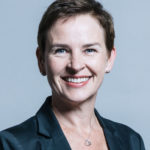
Tag: Mary Creagh

  • Mary Creagh – 2014 Parliamentary Question to the Department for Transport

    Mary Creagh – 2014 Parliamentary Question to the Department for Transport

    The below Parliamentary question was asked by Mary Creagh on 2014-06-05.

    To ask the Secretary of State for Transport, if he will publish a breakdown by firm of expenditure by his Department on (a) consultants and (b) consultancy firms in each of the last four years.

    Stephen Hammond

    Information requested will be deposited in the library and provides the spend details per financial year for the period 2010 to 2014.

  • Mary Creagh – 2014 Parliamentary Question to the Home Office

    Mary Creagh – 2014 Parliamentary Question to the Home Office

    The below Parliamentary question was asked by Mary Creagh on 2014-03-24.

    To ask the Secretary of State for the Home Department, how many unaccompanied asylum-seeking children there were in the UK in each of the last 10 years.

    James Brokenshire

    Figures for Unaccompanied Asylum Seeking Children (UASCs) placed in Local Authority care are not available from published statistics.

    In 2012 and 2013 there were 1,125 and 1,174 applications received from UASCs, excluding dependants.

    Figures on a comparable basis are not available for previous years.

    The Home Office publishes statistics on asylum applications from UASCs in tables as_08 and as_08_q (Asylum data tables Volume 2) of the release Immigration Statistics available from: https://www.gov.uk/government/publications/immigration-statistics-october-to-december-2013

    This release is available from the Library of the House.

  • Mary Creagh – 2014 Parliamentary Question to the Home Office

    Mary Creagh – 2014 Parliamentary Question to the Home Office

    The below Parliamentary question was asked by Mary Creagh on 2014-03-24.

    To ask the Secretary of State for the Home Department, how many unaccompanied asylum-seeking children were placed in local authority care in each of the last 10 years.

    James Brokenshire

    Figures for Unaccompanied Asylum Seeking Children (UASCs) placed in Local Authority care are not available from published statistics.

    In 2012 and 2013 there were 1,125 and 1,174 applications received from UASCs, excluding dependants.

    Figures on a comparable basis are not available for previous years.

    The Home Office publishes statistics on asylum applications from UASCs in tables as_08 and as_08_q (Asylum data tables Volume 2) of the release Immigration Statistics available from:

    https://www.gov.uk/government/publications/immigration-statistics-october-to-december-2013

    This release is available from the Library of the House.

  • Mary Creagh – 2014 Parliamentary Question to the Department for Transport

    Mary Creagh – 2014 Parliamentary Question to the Department for Transport

    The below Parliamentary question was asked by Mary Creagh on 2014-03-24.

    To ask the Secretary of State for Transport, what discussions he has had with train operating companies and rolling stock companies on the availability of rolling stock to train operating companies during the periods of franchise extension.

    Stephen Hammond

    The Department for Transport regularly meets with the rolling stock companies to discuss the rolling stock market, including upcoming competitions and direct awards. In the development of each directly awarded franchise the Department has extensive discussions with the operator to discuss rolling stock issues, including maintenance, potential upgrades and the overall availability of stock during the period of the franchise, to ensure that appropriate levels of passenger service can be provided within the period.

    Ministers regularly meet with train operating companies and rolling stock companies to discuss a wide range of issues, including the rolling stock market. The Department expects train operators and rolling stock companies ultimately to resolve any issues with regard to the availability of rolling stock for the period of their franchise, or any extension thereof.

  • Mary Creagh – 2014 Parliamentary Question to the Department for Transport

    Mary Creagh – 2014 Parliamentary Question to the Department for Transport

    The below Parliamentary question was asked by Mary Creagh on 2014-03-24.

    To ask the Secretary of State for Transport, pursuant to the Answer of 20 March 2014, Official Report, column 692W, on rural bus services, to which projects the £300 million funding for major bus projects has been allocated; and how much has been allocated to each.

    Stephen Hammond

    The table below sets out the schemes in the Department’s Local Authority Major Scheme Programme which are entirely bus based or which include elements related to bus improvements.

    Scheme Name and Status

    Local Authority

    Total Cost

    DfT Contribution

    Complete

    £m

    £m

    Mansfield Public Transport Interchange

    Nottinghamshire

    8.8

    7.2

    Rochdale Interchange

    Rochdale

    11.5

    7.0

    Weston Package Phase 1

    N. Somerset

    13.4

    9.3

    Fully Approved / Under Construction

    Portsmouth Tipner Interchange

    Portsmouth

    28.2

    19.5

    Access York Phase 1

    City of York

    22.7

    15.3

    Loughborough Town Centre Imp

    Leicestershire

    19.7

    14.8

    Ipswich Transport Fit for 21st Century

    Suffolk

    21.6

    18.3

    Worcester Integrated Transport

    Worcestershire

    19.7

    14.2

    Bath Transportation Package

    Bath & NE Somerset

    26.9

    11.0

    Manchester Cross City Bus

    Manchester

    43.2

    32.5

    S Yorkshire Bus Rapid Transit North

    S Yorkshire

    28.2

    15.8

    Pennine Reach (Blackburn)

    Blackburn w Darwen

    39.8

    31.9

    Programme Entry / Support Confirmed

    Bristol BRT Ashton Vale to Temple Meads

    Bristol

    46.7

    34.5

    South Bristol Link

    N. Somerset

    42.6

    27.6

    Bristol BRT North Fringe to Hengrove

    S. Gloucestershire

    92.9

    51.1

    Hucknall Town Centre Imp

    Nottinghamshire

    12.3

    8.5

    Elmbridge Transport

    Gloucestershire

    18.7

    14.1

  • Mary Creagh – 2014 Parliamentary Question to the Home Office

    Mary Creagh – 2014 Parliamentary Question to the Home Office

    The below Parliamentary question was asked by Mary Creagh on 2014-04-01.

    To ask the Secretary of State for the Home Department, how many drivers who received driving convictions undertook (a) one, (b ) two, (c) three and (d) four or more speed awareness courses in (i) 2010 to 2014 and (ii) 2005 to 2009.

    Karen Bradley

    This information is not held centrally. A motorist is prohibited from taking
    more than one speed awareness course under the national scheme within a 3 years
    period from the date of the offence.

  • Mary Creagh – 2014 Parliamentary Question to the Home Office

    Mary Creagh – 2014 Parliamentary Question to the Home Office

    The below Parliamentary question was asked by Mary Creagh on 2014-04-01.

    To ask the Secretary of State for the Home Department, how many drivers who received driving convictions during the two year probationary licence period undertook (a) one, (b) two, (c) three and (d) four or more speed awareness courses in (i) 2010 to 2014 and (ii) 2005 to 2009.

    Karen Bradley

    This information is not held centrally. A motorist is prohibited from taking
    more than one speed awareness course under the national scheme within a 3 years
    period from the date of the offence.

  • Mary Creagh – 2012 Comments on Woodlands

    Mary Creagh – 2012 Comments on Woodlands

    The comments made by Mary Creagh, the then Shadow Environment Secretary, on 11 January 2012.

    This new report [Our Forests report into woodlands and the environment] is a welcome addition to the debate about the future of our forests. Our woodlands are a precious reflection of our national heritage, and will play a pivotal role in the green economy and our low carbon future.

    The forest sell-off debacle demonstrated just how out of touch the Tory-led Government is with anyone who cares about the environment. Labour has already called on Ministers to listen to public concern and drop their remaining plans to sell 15% of England’s forests.

  • Mary Creagh – 2015 Speech on Syrian Air Strikes

    Below is the text of the speech made by Mary Creagh in the House of Commons on 2 December 2015.

    It is a pleasure to follow the hon. Member for Cleethorpes (Martin Vickers), although I disagree with the position he takes. I pay tribute to the hon. and gallant Member for Tonbridge and Malling (Tom Tugendhat), my hon. and gallant Friend the Member for Barnsley Central (Dan Jarvis) and the hon. and gallant Member for Plymouth, Moor View (Johnny Mercer) for their thoughtful speeches, and also to my right hon. Friends the Members for Wolverhampton South East (Mr McFadden), for Kingston upon Hull West and Hessle (Alan Johnson) and for Derby South (Margaret Beckett), with whom I agree entirely.

    This is one of the most important decisions an MP can make, and it is not one I have taken lightly. As a Labour MP, I believe we have to choose and shape Britain’s place in the world if we are to create a world in which power, wealth and opportunity are in the hands of the many, not the few. ISIL poses a clear threat to Britain. Thirty British holidaymakers were murdered on the beach in Tunisia in July, and we know that seven ISIL-related terror attacks against British people have been stopped in the past year. Paris could have happened in London.

    There is no hope of negotiating with ISIL. We must stop the flow of fighters, finance and arms to its headquarters in Raqqa. We need military action to stop it murdering Syrians and Iraqis, and to disrupt its propaganda machine, which poisons the minds of our young people and leads them to commit appalling acts at home and abroad. For the past 14 months, UK forces have carried out airstrikes against ISIL in Iraq, with no civilian casualties, so for me it makes no sense to turn back our planes at the Syrian border and allow ISIL to regroup in Syria.

    In September, as Labour’s shadow International Development Secretary, I visited Lebanon, where 1.5 million Syrian refugees have sought sanctuary. One in four people in Lebanon is a Syrian refugee. The Department for International Development has made a huge contribution to the aid effort there, opening up Lebanese schools to Syrian children so that they can continue their education and have some form of normality after witnessing the horrors of that war.

    I met Iman, a 65-year-old grandmother from Aleppo, who was imprisoned by President Assad for two weeks when she bravely returned from Lebanon to Syria, after her son was killed, to rescue her five orphaned grandchildren. She lives in a shack made of breeze blocks in the port city of Sidon. Hadia told me how her husband, a Red Cross volunteer, was killed in Syria, and how her four older children are still trapped in Homs. She did not want to go to Germany under a resettlement programme, because she could not take her elderly mother with her and did not want to leave her alone to die in a camp. I met Ahmed from Raqqa and 10-year-old girls working in the fields as agricultural labourers—their childhoods stolen from them—after ISIL had taken over their town, although that is still better than staying in Raqqa and being enslaved there.

    There is a massive humanitarian crisis in Syria: 250,000 people have been killed, there are 4.7 million refugees outside the country and 6 million have been internally displaced.

    George Kerevan:

    Will the hon. Lady give way?

    Mary Creagh:

    I will not. I want other Members to have the chance to speak, as we have all been waiting to do.

    The UK has given aid to Jordan and Syria, but aid is not the answer to the problems of Syria. Peace is the answer, and we need a fresh diplomatic effort to bring peace to that country. The Vienna talks offer real hope of that, with Russia, Saudi Arabia and Iran all around the table for the first time.

    We voted against action in 2013, after the sarin gas attacks—a vote I regret and now believe to be wrong. We now have the largest refugee crisis since world war two. The war in Syria has no end and no laws, and ISIL is expanding its caliphate there. We have had no strategy for Syria, and now we have no easy choices. We need a ceasefire, a political settlement and a path to democratic elections, which is why I shall support the Government tonight.

  • Mary Creagh – 2012 Speech to Labour Party Conference

    Below is the text of the speech made by Mary Creagh, the Shadow Secretary of State for the Environment, Rural Affairs and Food, to the Labour Party conference on 1st October 2012.

    Conference, in 2010 no-one knew what a foodbank was.

    Well we do now.

    I have spent the last nine months visiting foodbanks, where people collect and distribute food to families who cannot afford to feed themselves.

    In 2012.

    In Britain.

    In Norwich, organiser Grant Habershon told me how demand at his foodbank had risen by 50 per cent compared to last year as more parents struggled to feed their children during the school holidays.

    In Bradford, I packed a food parcel for a mum who skipped meals so her children could eat –dry toast with no jam.

    In Harlow, in Skelmersdale, Halesowen, Dorset, the story was the same.

    Cuts to lunch clubs, breakfast clubs, changes to tax credits and housing benefit are all forcing proud parents to rely on charity.

    I saw the daily struggle of families to put a hot meal on the table.

    And I learned about the work of churches, and charities like the Trussell Trust, FoodCycle and Fareshare.

    The Trussell Trust will feed 200,000 people this year.

    FareShare feeds 36,000 people a day through their network of 700 charities.

    We are the seventh richest nation in the world yet we face an epidemic of hidden hunger, particularly in children.

    Working families relying on charity for a daily meal.

    But there is more than enough food to go round. Food is not the problem. The problem is a Tory-led Government making the wrong political and economic choices.

    A Government so out of touch that their farming minister didn’t even know the price of a pint of milk.

    A cost of living crisis.

    But what is the cost of hunger?

    Hunger costs millions in poorer educational results for children too hungry to concentrate in class.

    Hunger costs millions in lost productivity.

    This is the poverty trap. This is the real cost of hunger.

    Last year, Conference, I asked you to join ‘Back the Apple’, our campaign to save the Agricultural Wages Board, to protect the pay and conditions of rural workers in England and Wales.

    I am pleased to say that, despite the Tories and Liberal Democrats, voting to abolish the AWB, thanks to our campaign alongside Labour MPs, Unite the Union and the Welsh Assembly Government, the Government has not managed to get rid of it.

    Today, 1 October, what may be the last Agricultural Wages Order comes into force. Today over one hundred and fifty two thousand farmworkers, fruit pickers, food packers will get a pay rise – thanks to you.

    Next year, if the Tories have their way, they won’t.

    But I will be working with my Shadow team to expose how out of touch the Tories and Lib Dems are with rural areas.

    I want to thank my fantastic shadow Ministers Huw Irranca-Davies, Gavin Shuker, Tom Harris, in the Commons; Jim Knight and our very own dairy farmer John Grantchester in the Lords; our whip Susan Elan Jones; team PPS Chris Evans; and Fiona O’Donnell and Heidi Alexander who have now left the team.

    And what have the Tories been doing in rural areas?

    Youth unemployment rose faster in rural areas than in cities in the first two years of this Government.

    Decimated rural bus services.

    Delayed the roll out of universal broadband.

    Making it harder to start and grow a business in the countryside.

    So what can Labour do to tackle this cost of living crisis and create green jobs?

    We have focussed on three big areas.

    First, people are struggling to pay their water bills.

    Bad debt adds £15 a year to everyone’s bill.

    We want water companies to cut that bad debt by taking tough action on those who won’t pay in order to help those who can’t pay.

    A Labour Government would force all water companies to offer social tariffs to help those most in need. But this Government wants to leave it to water companies to decide for themselves.

    Second, we want the food industry to create the new green jobs that Britain needs.

    The food industry is our largest manufacturing sector. It turns over £76 billion a year, with export earnings worth £12 billion pounds.

    Big numbers, big opportunities.

    The world will need to feed an extra billion people by 2025.

    We need food security here at home and to export more to a world hungry for Great British food.

    We want a fair deal on food.

    That means a fair price for the milk that dairy farmers produce and a Groceries Code Adjudicator with real teeth.

    Labour have been working alongside the Consumer Association for clearer pricing in supermarkets to ensure special offers really do offer a good deal.

    Third, our strategy for new green jobs means we’ve got to stop talking about waste and start talking about natural resources.

    Businesses need a secure supply of raw materials. They are struggling to source those materials in the UK as we export so much of our waste.

    When we export waste, we export jobs. If we keep it here we keep those jobs in the UK.

    We will raise our recycling targets and give waste processors the certainty they need to invest in new facilities and create new green jobs.

    And in a world where food prices are rising and people are going hungry we think it is wrong that edible food goes to landfill.

    We can create low carbon jobs collecting that food and getting it to people who need it.

    But this Government just doesn’t have a plan.

    Conference, families need a Labour Government that is on their side.

    But even in opposition we can do our bit.

    This Saturday, 6 October, I will be standing outside a supermarket in Wakefield with the whole Labour team asking people to donate one food item to FareShare’s Million Meal appeal.

    You can join us by going to fareshare.org.uk. The twitter hashtag is #MealAppeal.

    Across the country, hundreds of Labour MPs, councillors and party members will be doing the same.

    Sign up to stand up at fareshare.org.uk.

    We may not make the rules in government but we can still make the change we need on the ground.

    Conference, Labour has changed.

    Let’s show people we are the change the country needs.