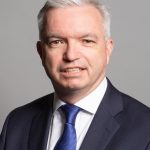
Tag: Mark Menzies

  • Mark Menzies – 2014 Parliamentary Question to the Department for Culture Media and Sport

    Mark Menzies – 2014 Parliamentary Question to the Department for Culture Media and Sport

    The below Parliamentary question was asked by Mark Menzies on 2014-06-25.

    To ask the Secretary of State for Culture, Media and Sport, what steps he is taking to promote golfing holidays in the (a) North West and (b) UK.

    Mrs Helen Grant

    Golfing holidays in both the North West and the rest of the UK are promoted by VisitEngland and VisitBritain. Liverpool is using £62,500 from VisitEngland’s Growing Tourism Locally programme, funded through the Regional Growth fund, to promote ‘England’s Golf Coast’ in the golfing press, using the staging of the Open Championship at Royal Liverpool to encourage visits to the region. VisitBritain’s consumer website highlights golf courses across the whole of the UK including the Golf Coast, which also features in their Sport is GREAT pillar guide. In advance of the Ryder Cup in Gleneagles, VisitBritain has organised familiarisation trips taking American and European journalists to the course. Previous experience tells us that hosting the Ryder Cup is worth tens of millions of pounds to the UK and to the local economy.

  • Mark Menzies – 2014 Parliamentary Question to the Department of Health

    Mark Menzies – 2014 Parliamentary Question to the Department of Health

    The below Parliamentary question was asked by Mark Menzies on 2014-06-25.

    To ask the Secretary of State for Health, if he will make available additional funding to improve care for people with dementia.

    Norman Lamb

    Improving dementia care is a priority for the Government, and the Prime Minister. On the 28 February, my Rt. hon. Friend the Secretary of State for Health announced his ambition for improving dementia care and support for people with dementia, their family and carers.

    NHS England has identified around £90 million annually that is available nationally to the National Health Service to support timely diagnosis of dementia and to ensure that by 2015, two-thirds of people with dementia have a diagnosis and receive appropriate support following diagnosis.

    The Department has committed to double funding for research for dementia by 2015.

    The Department has also provided major funding to improve dementia care for the following:

    – Dementia Friends programme, £2.4 million funded by Cabinet Office and the Department;

    – Commissioning for Quality and Innovation (CQUIN) £54 million in April 2012 and £108 million in April 2013;

    – Dementia Friendly Environments Capital Fund £50 million, October 2012;

    – Dementia Awareness Campaign £3.2 million, September 2012;

    – Dementia Workforce Development Fund for Social Care Staff (administered by Skills for Care) £2.4 million July 2012. In addition to this we have funded further Workforce Projects to the value of £1,640,000 since 2012-13 (£540,000 in 2012-13, £700,000 in 2013-14 and £400,000 planned for 2014-15);

    – Breakthrough Innovation Challenge Prize £1 million announced, June 2012; and

    – Social Services support to Memory Services £10 million, September 2011.

  • Mark Menzies – 2014 Parliamentary Question to the Department for Communities and Local Government

    Mark Menzies – 2014 Parliamentary Question to the Department for Communities and Local Government

    The below Parliamentary question was asked by Mark Menzies on 2014-04-09.

    To ask the Secretary of State for Communities and Local Government, what steps he is taking to ensure that the wishes of the local people and decisions of the local council are given priority in appeal decisions by the Planning Inspectorate.

    Nick Boles

    Planning is a quasi-judicial process; it is a long-standing feature of the planning system that there is a right of appeal, just as there are with other local quasi-judicial decisions such as on licensing applications, gambling applications or parking fines.

    The Localism Act 2011 has strengthened the role of Local Plans and abolished the last Administration’s top-down Regional Strategies. Our streamlined National Planning Policy Framework strongly encourages areas to get up-to-date Local Plans in place, and we have been actively supporting councils in doing so. Local Plans now set the framework in which decisions on particular applications are taken, whether locally or at appeal, unless material considerations indicate otherwise.

    Once adopted a neighbourhood plan will also become part of the area’s statutory development plan – an example of this Government’s localist agenda. Both local and neighbourhood plans are founded on thorough community involvement and are subject to public examination and consultation. Almost 1,000 communities have applied for a neighbourhood planning area to be designated, with 850 areas now designated.

    Planning inspectors will take full account of all the evidence that is before them, including representations made by local residents and other interested parties. Each representation should be considered on their merits, paying careful regard to the relevant policy and material planning considerations.

    Since the National Planning Policy Framework was introduced, the number of appeals received has fallen as has the number allowed. The quality of local decisions also remains high – 99 per cent of decisions are made locally with only approximately 1 per cent of planning applications overturned on appeal. Housing starts and housing construction are also up, as are permissions for new homes. This means there is more local decision-making, and our reforms are supporting badly-needed new homes within a locally-led planning system.

  • Mark Menzies – 2014 Parliamentary Question to the Department for Business, Innovation and Skills

    Mark Menzies – 2014 Parliamentary Question to the Department for Business, Innovation and Skills

    The below Parliamentary question was asked by Mark Menzies on 2014-04-25.

    To ask the Secretary of State for Business, Innovation and Skills, what steps his Department is taking to increase the number of higher apprenticeships in Lancashire.

    Matthew Hancock

    Higher apprenticeship starts in Lancashire Local Education Authority have increased from 40 in the 2009/10 academic year to 370 in 2012/13.

    The Budget announced £20 million over 2014-15 and 2015-16 for new support for employer investment in apprenticeships in England up to postgraduate level, which will provide apprentices with the technical skills that employers need. This will complement the £80 million funding over 2014-15 and 2015-16 for 20,000 more higher apprenticeships announced in the autumn statement – more than doubling current volumes.

  • Mark Menzies – 2014 Parliamentary Question to the Department for Communities and Local Government

    Mark Menzies – 2014 Parliamentary Question to the Department for Communities and Local Government

    The below Parliamentary question was asked by Mark Menzies on 2014-04-25.

    To ask the Secretary of State for Communities and Local Government, what steps he is taking to help local shops in (a) England and (b) Lancashire with the cost of business rates.

    Brandon Lewis

    At the Autumn Statement we announced a £1 billion package of business rates support to help shops and local firms. This included a £1,000 discount for two years for smaller shops, pubs and restaurants. Based on local authority reports of the amount of relief awarded, we estimate that 272,300 properties will benefit in England, including 7,740 in Lancashire.

    The support package also included a 50 per cent discount for businesses taking on long-term empty shops, the doubling of small business rate relief for another year, a 2% cap on RPI increases for 2014-2015, allowing businesses to spread their business rates payments over 12 months, and allowing ratepayers that take on a second property to keep their small business rate relief for an extra year.

    The Localism Act has also made it easier for small firms to claim small business rate relief.

  • Mark Menzies – 2014 Parliamentary Question to the Department for Culture Media and Sport

    Mark Menzies – 2014 Parliamentary Question to the Department for Culture Media and Sport

    The below Parliamentary question was asked by Mark Menzies on 2014-04-25.

    To ask the Secretary of State for Culture, Media and Sport, what steps his Department is taking to improve mobile internet connectivity in rural areas.

    Mr Edward Vaizey

    One of the licences granted in the 2013 4G auction contains a demanding indoor coverage obligation. The owner of this licence, Telefonica O2 UK, is obliged to provide indoor coverage for 4G mobile services to at least 98 per cent of the UK population (and to at least 95 per cent of the population of England, Northern Ireland, Scotland and Wales respectively) by the end of 2017. Ofcom expects that this level of indoor coverage will result in approximately 99 per cent outdoor coverage. As a result of the competitive UK telecoms market, all four of the UK mobile network operators have publicly committed to provide this level of coverage by the end of 2015.

    There is also likely to be further improvement in 2G and 3G coverage as a result of increasing roll out of combined 2G/3G/4G equipment by the industry.

    However, sometimes it is not commercially viable for operators to install and operate base stations and associated infrastructure in areas of very low population. On 3 October 2011, the Government announced the Mobile Infrastructure Project (MIP) with up to £150 million funding to extend mobile phone coverage to remote and rural area across the country that currently receive no coverage from any network. The scheme sees Government provide the capital funding for Arqiva as contractors to build the new infrastructure. The four mobile network operators (EE, Telefonica, Three and Vodafone) will provide coverage from the sites and cover operating costs for the twenty year life of the project. The project is currently underway and is expected to deliver by 2015. It is focussed primarily on improving voice coverage but is also likely to improve data coverage. Details of this work can be found on the GOV.UK website: https://www.gov.uk/government/policies/making-it-easier-for-the-communications-and-telecoms-industries-to-grow-while-protecting-the-interests-of-citizens/supporting-pages/improving-mobile-coverage

    Ofcom has also published a plan to improve mobile coverage: http://consumers.ofcom.org.uk/2013/11/five-point-plan-to-improving-mobile-coverage/

  • Mark Menzies – 2020 Speech on the Trade Bill

    Mark Menzies – 2020 Speech on the Trade Bill

    Below is the text of the speech made by Mark Menzies, the Conservative MP for Fylde, in the House of Commons on 20 May 2020.

    It is my great privilege to follow my friend and Chair of the International Trade Committee in this incredibly important debate. The Leader of the House said earlier that these proceedings sometimes appear stilted and scripted when done remotely. It is my challenge over the next five minutes to prove him wrong.

    In my part of Lancashire, international trade is critical for jobs and prosperity. I am host to fabulous, world-class companies, such as BAE Systems and Westinghouse, the nuclear fuels manufacturer, and smaller companies such as Tangerine Holdings. The Bill is very much about the whole nature of international trade—getting that right and building a framework that will stand the test of time—and that is one reason I support its Second Reading today.

    It is also my privilege to serve as one of the Government’s trade envoys. Indeed, the Secretary of State, in her opening remarks, referred to Chile as an example of one of the 48 countries with which a continuity agreement has been put in place. I would say to her that some of my other countries, through the Andean trade continuity agreements, such as Peru and Colombia, also have arrangements to ensure a smooth transition when the UK eventually leaves the EU at the end of this year.

    T hat has not happened by chance. Those agreements are in place because of the dedication and hard work of people in the Department, not just in London, but especially in post. I take this opportunity to pay tribute to the men and women, many of whom are nationals of the countries they represent, who work tirelessly and understand the nature of their countries in a way that is sometimes difficult to comprehend from London. Their dedication and hard work have got us to where we are today. That sometimes gets missed.

    We also have to recognise that the Trade Bill is only part of the picture. Measures such as the many double taxation agreements—there is one in place with one of my countries, Colombia—are really important to ensuring a smooth transition and the financial flows that will come from trade. The Government have been working very hard on that in the last couple of years, but there is still more work to be done in other key markets across the globe.

    There has been much fixation in recent years on trade deals, but they are only part of the picture; much of this is about a smooth transition from the EU arrangements to what comes next. If we are unable in this House to demonstrate to our key countries and partners across the globe that we can pass a piece of legislation, why on earth should we be asking our officials and trade envoys to make representations to senators and presidents to get agreements in place so that when we leave we can have that smooth transition? I therefore urge the House to get behind the Bill and to give it a Second Reading unamended.

    I would like to take this opportunity, however, to challenge the Government on how we plan to use some of the data-collection powers in the Bill. For example, I would like to see some of the data sharing in HMRC to be used to reshape and rescope bodies such as UK Export Finance, because in all of my key markets we only ever reach a tiny percentage of the credit facilities that we say are available. Given that London is the global capital ​of fancy credit mechanisms, I urge the Minister—it is great to see him in his rightful place—to use some of the expertise in the City and to challenge whether UK Export Finance needs to be given the opportunity to evolve in order to take advantage of some of the real opportunities that are out there.

    Madam Deputy Speaker, I have followed your example and set a timer, so in my closing seconds let me just say that free trade is important, not just as a sign of national prestige, but because it creates jobs and generates the wealth to pay for public services at home and, more importantly, abroad. At a time of rising unemployment, my goodness, we need free trade more than ever, so I will be supporting this Bill in its passage through Parliament.