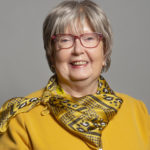
Tag: Marion Fellows

  • Marion Fellows – 2016 Parliamentary Question to the Home Office

    Marion Fellows – 2016 Parliamentary Question to the Home Office

    The below Parliamentary question was asked by Marion Fellows on 2016-09-15.

    To ask the Secretary of State for the Home Department, how many applications by Syrian nationals for UK visitor visas have been (a) received and (b) granted in each annual quarter for the last three years.

    Mr Robert Goodwill

    The latest quarterly Home Office immigration statistics on entry clearance visas are published in ‘Immigration Statistics, April – June 2016’, available from the Home Office website at: https://www.gov.uk/government/collections/migration-statistics

  • Marion Fellows – 2015 Parliamentary Question to the Department for Business, Innovation and Skills

    Marion Fellows – 2015 Parliamentary Question to the Department for Business, Innovation and Skills

    The below Parliamentary question was asked by Marion Fellows on 2015-11-04.

    To ask the Secretary of State for Business, Innovation and Skills, what steps he is taking to encourage prompt payment to small businesses.

    Anna Soubry

    We will establish a Small Business Commissioner to help small businesses deal with late payment disputes. We are also introducing new payment reporting requirements for large companies that will allow public scrutiny of payment performance

    I was pleased to see Tesco has cut its payment terms to 14 days for suppliers with total sales to Tesco worth less than £100,000 a year.

  • Marion Fellows – 2016 Parliamentary Question to the HM Treasury

    Marion Fellows – 2016 Parliamentary Question to the HM Treasury

    The below Parliamentary question was asked by Marion Fellows on 2016-01-13.

    To ask Mr Chancellor of the Exchequer, if he will take fiscal steps to support exports by SMEs.

    Mr David Gauke

    The government has provided significant support to first time exporters, many of whom are Small and Medium Enterprises.

    A significant package was announced at Autumn Statement 2014, and funding for this initiative was continued at Spending Review 2015.

  • Marion Fellows – 2016 Parliamentary Question to the Department for Work and Pensions

    Marion Fellows – 2016 Parliamentary Question to the Department for Work and Pensions

    The below Parliamentary question was asked by Marion Fellows on 2016-01-26.

    To ask the Secretary of State for Work and Pensions, what support his Department has made available to women born in the 1950s who are affected by recent changes in the age at which they become eligible for the state pension.

    Mr Shailesh Vara

    Working age benefits are available for those who have not yet reached State Pension age. A concession of £1.1bn was made, and 81% of those affected will see a delay of one year or less; and for the rest, the delay will be no more than 18 months. There are no plans for further transitional arrangements.

  • Marion Fellows – 2016 Parliamentary Question to the Department for Work and Pensions

    Marion Fellows – 2016 Parliamentary Question to the Department for Work and Pensions

    The below Parliamentary question was asked by Marion Fellows on 2016-04-25.

    To ask the Secretary of State for Work and Pensions, what mechanisms his Department has put in place for redress and backdated payments to the parent with care in the event that it is found that the non-resident parent (a) provided false information about their income and (b) failed to inform the relevant body of an increase in their income under (i) the Child Support Agency scheme and (ii) the Child Maintenance Service scheme; and what the timescales are for such redress or payments.

    Priti Patel

    All three statutory maintenance schemes allow the Secretary of State to revise any maintenance liability decision found to be incorrect as a result of misrepresentation by either parent. There is no timescale within which the misrepresentation must be discovered, before a revision may be completed.

    Under the 2012 scheme, in the first instance maintenance is assessed using historic income information from HMRC. Annual reviews are carried out using HMRC income data and liabilities are adjusted accordingly. Over the lifetime of a case changes to income should therefore be reflected appropriately.

    Where an individual is assessed on current income, they are obliged to inform the Child Maintenance Service of any increase to their income of 25% or over. If they fail to do so and the Child Maintenance Service subsequently becomes aware of an increase in their income, the Secretary of State may still calculate a new assessment, taking effect at the point the income increased.

    Any arrears that result from such “retrospective” action will nonetheless be due and CMS will take enforcement action if the Paying Parent does not arrange to pay them themselves. The CMS has a comprehensive range of enforcement actions at its disposal, to help ensure that parents fulfil their obligations.

    All maintenance liability decisions carry an underlying right of appeal to an independent Tribunal.

  • Marion Fellows – 2022 Speech on Eye Health

    Marion Fellows – 2022 Speech on Eye Health

    The speech made by Marion Fellows, the SNP MP for Motherwell and Wishaw, in Westminster Hall, the House of Commons, on 15 December 2022.

    It is a pleasure to serve under your chairmanship, Mr Sharma. I thank the hon. Member for Strangford (Jim Shannon) for the nice things he said about me and congratulate him on securing this important debate. He is right: people would have been present if it had been possible, but weather, transport and other emergencies intervened.

    Eye problems can affect anyone at any age. It is important that people get their eyes tested regularly. In Scotland, we feel that that should be by having a free NHS-funded eye examination. It is easy for us to neglect our eyes, because often they do not hurt when there is a problem. Having our eyes examined regularly can help to detect early signs of sight-threating conditions and other serious health conditions such as diabetes, cardiovascular disease and high blood pressure, in addition to the conditions that the hon. Member for Strangford told us about a moment ago.

    In Scotland, community optometrists are the first contact point for any eye problems. They can diagnose and treat a number of conditions without the patient requiring an appointment with their GP or an ophthalmologist. An increasing number of community optometrists are registered independent prescribers and can issue patients with an NHS prescription to treat their eye problem.

    The Scottish Government intend to expand further the range of eye care services delivered in the community by investing in a shared electronic patient record and in accredited practitioner training. That will include the management of stable glaucoma and treated ocular hypertension patients, and a national low vision service for visually impaired people. The Minister should probably have a look at that.

    The Scottish Government also have a national ophthalmology workstream on hospital eye services, which sets out how they manage the delivery of hospital eye care services to provide timely care for patients. Patients with ophthalmic conditions are often vulnerable and must be supported by a responsive health service. Their care should primarily be safe and timely.

    In Scotland, the Government are committed to improving services for sensory impaired people through their See Hear strategy. Adults and children with a sensory impairment should expect seamless provision of assessment, care and support, and the same access to employment, education, leisure, healthcare and social care as anyone else. In 2017, NHS Education for Scotland carried out an independent review of low vision service provision across Scotland.

    In contrast to England and Wales, the Scottish Government provide free, universal, NHS-funded eye examinations, which is really important, especially given the cost of living. Universal access to healthcare is one of the Scottish Government’s key priorities, which is why free eye examinations for all were introduced in Scotland in 2006. Anyone, from any background, is able to access free eye care to help reduce the risk of sight loss. That includes all people in Scotland who are UK resident, refugees, asylum seekers and some eligible overseas visitors. Appointments are available every two years, and people are able to attend an optometrist for an NHS-funded examination of any eye problem that arises between times, including emergencies.

    I was a beneficiary of that system. My eye started to fail and I found it very difficult to carry on my work, especially here in Westminster Hall, when I could not read the screens properly unless I was sitting very close to them. I went to my local optometrist. She checked my eyes and discovered cataracts, and immediately put me on a path for treatment, which really helped. When the same thing happened in my other eye, I was able to go back between appointments and say, “Look, I think there’s a problem. Can you help?” Again, I was put on a treatment path. I now have two artificial lenses—one in each eye, as my late father would have said. I have really benefited from that system, as have many people in Scotland.

    If someone is unable to travel unaccompanied because of a physical or mental illness or disability, they can arrange to have a home visit quite easily. In fact, I walk from my house to my son’s house every week, and there are posters on railings across the roundabout that I have to go by, telling people that they can have that service. That is hugely important because, often, it is as people get older and more vulnerable—I put myself in that category some days—that they benefit from free eye care.

    Those on benefits such as employment and support allowance, jobseeker’s allowance, pension credit, universal credit, working tax credit or child tax credit, and children under 16 years old, are entitled to help with the cost of glasses or contact lenses, and the repair or replacement of glasses or contact lenses, in the form of an NHS optical voucher.

    In Scotland, before a child starts primary school, they will be offered a vision screening appointment as part of the See4School programme. That helps children begin school with the best possible vision and helps provide for any long-term visual problems. My daughter only discovered she had eye issues when she was learning to play a musical instrument and could not read the music from where she had to stand. If she had been screened earlier, it is possible that she would not have needed glasses for her whole life, as she does now.

    In Scotland, we believe that socioeconomic inequalities drive health inequalities. That is why the Scottish Government are acting to mitigate the impact of austerity and reduce inequality. Where we have public health issues, Scottish Government public health efforts are complemented by wide-ranging cross-Government action. That is where Scotland benefits from being a small country. It is much easier to work in partnership and get cross-governmental things done.

    We know that the worst health outcomes are driven to a significant extent by deprivation. That is why the Scottish Government are committed to addressing the underlying causes of health inequalities and to ending poverty; increasing access to fair employment, education and training; and improving our physical and social environments. That whole-systems approach and cross-Government action is needed to improve equity for Scotland’s people and communities. I believe that is true right across the four nations of the United Kingdom. That will be achieved by focusing efforts on the determinants of health inequalities and working more effectively in partnership. Reducing poverty and inequality sits at the heart of the SNP Scottish Government’s investment across all portfolios, and is a key driver of their development of a wellbeing economy that will have the needs of each individual at its core. The wellbeing economy is now becoming a recognised way of improving not just health, but everything around health and the lives of a nation’s people.

    We believe that prescription charges are a tax on ill health and a barrier to better health for many. Charging for prescriptions would mean that many people with chronic conditions, or even those receiving treatment for cancer, could be liable. The Scottish Government continue to demonstrate their commitment to the provision of free healthcare advice and treatment when needed, with the introduction of the NHS Pharmacy First service, which is available in all community pharmacies to everyone registered with a GP or ordinarily resident in Scotland.

    The Scottish Government are keen to support people to make healthier lifestyle choices that help take care of their eyes. I do not think many people realise that giving up smoking helps, because smokers are much more likely to develop age-related macular degeneration— the most common cause of sight loss in the UK—and cataracts than non-smokers. Given that smoking is more prevalent in the most deprived communities, the Scottish Government have set specific targets for cessation services focused on those communities. They provide £9.1 million a year to health boards to fund smoking cessation services targeted at achieving successful 12-week quits for 1.5% of the adult population in the most deprived areas. Through all of that, the Scottish Government will ensure a “done by communities, for communities” approach, making sure that lived experience is central to their work.

    The Scottish Government are also keen that people drink within the recommended limits, because heavy alcohol consumption may increase the risk of developing early age-related macular degeneration. The alcohol framework sets out the priorities for preventing alcohol-related harm. We consulted on potential restrictions on alcohol advertising and promotion in 2022 to protect children and young people. The Scottish Government have twice run their “count 14” campaign work to raise awareness of the UK chief medical officer’s lower-risk drinking guidelines of 14 units per week. It was run for four weeks in March 2019 and over six weeks in January to March 2020. They are exploring the evidence around managed alcohol programmes and are delighted to be able to contribute to the running of the model being piloted in Glasgow by Simon Community Scotland and its evaluation. Of course, making alcohol more expensive in Scotland, especially the kinds of drinks that young people in particular used to drink, has also helped. In the end, it will help their eye health as well.

    Will the Minister look at what we are doing in Scotland? I am sure he has a very good idea. It is really important. Will he tell us what he hopes will happen in England?

    In conclusion, it is really important that there is a blueprint, as the hon. Member for Strangford said. In Scotland we do things differently, but we want everyone to benefit from our experiences and to have the same chance of good eye health. Will the Minister support a national eye health strategy? As has previously been mentioned, the hon. Member for Battersea (Marsha De Cordova) cannot be here today, but she recently introduced the National Eye Health Strategy Bill. Will the Minister support the Bill on Second Reading on Friday 3 March? Everyone here wants the best for people in their communities. The best way forward—and I would say this—is to look at the Scottish example and put aside the barriers that prevent people from having their eyes tested regularly.

  • Marion Fellows – 2022 Speech on Dormant Assets Funding and Community Wealth Funds

    Marion Fellows – 2022 Speech on Dormant Assets Funding and Community Wealth Funds

    The speech made by Marion Fellows, the SNP MP for Motherwell and Wishaw, in Westminster Hall, the House of Commons, on 6 December 2022.

    It is a pleasure to serve under your chairmanship, Ms Harris. I thank the hon. Member for Stoke-on-Trent Central (Jo Gideon) for securing this important debate.

    Since people nowadays are more likely to have multiple bank accounts than they were 20 years ago, the issue of dormant assets is likely to continue to grow, as having multiple accounts will generally make keeping track of assets much more difficult. It is vital that banks and others in the financial services sector make a concerted effort to reunite account holders with their funds before freezing their accounts and classifying them as dormant. It is particularly important for vulnerable and elderly customers, who may have greater difficulty in regularly accessing their accounts due to increasing bank closures and an increased reliance on online banking.

    Recently, HSBC announced closures of 100 branches, with Age Scotland’s head of policy noting that it was hugely disappointing. It joins a long line of banks leaving high streets at a rate of knots, with the result that many customers and communities cannot access the valuable face-to-face services they rely on. About 400,000 over-60s in Scotland do not use the internet, so without a branch they are left out in the cold as digital banking is not an option for them.

    It is really important that banks reunite dormant accounts with their holders where possible. Most of the dormant HSBC accounts that were frozen belonged to customers aged over 65, and many had the power of attorney attached. That meant that those people were at real risk of losing money. More than half of dormant funds belonged to customers who had active accounts with HSBC, so it would have been easy for the bank to reunite them with their money.

    Although banks have to make a concerted effort, the dormant assets scheme benefits people because it is used locally. It is a really good thing. The Scottish Government use dormant assets funding to improve young people’s physical and mental wellbeing by supporting them to learn new skills and enter employment through the Young Start programme. In Scotland, more than £67 million of dormant assets funding has been allocated to the Young Start programme, which has made more than 950 grants of up to £100,000 to voluntary and community organisations—[Interruption.] I do apologise— I am having a mare of a day. The cold has got into my very soul and I am really not doing awfully well.

    Angus Women’s Aid is one of 20 groups that shared £1.4 million from the Young Start fund. It was given £100,000, which meant that it could continue to work across Angus delivering and developing a young expert group for young people affected by domestic violence. That sort of work really matters. It built those young people’s confidence and self-esteem. During the pandemic, the funding also covered tablets and internet access so the young expert group was able to meet virtually. Someone from the group said that the whole thing would have fallen apart without that sort of valuable work.

    The Scottish Government have adopted the internationally recognised community wealth building approach to economic development as a key practical means by which they can achieve their wellbeing economy objectives. Community wealth building presents important opportunities for voluntary organisations to play a greater role in local supply chains and strengthen local economies, which benefits communities.

    The third sector should not be a replacement for UK Government action. Charities and non-governmental organisations across the UK are under significant pressure from trying to plug the gap caused by UK Government inaction in the face of the ongoing Tory cost of living crisis. They carry out important work across communities in Scotland and the rest of the UK, but they should not be expected to plug the gap.

    Charities that would benefit from community wealth funds are facing increasing cost pressures as a result of the ongoing cost of living crisis. The cost of living crisis also means that charities will not get the funding that they normally rely on. The pressure on charities has been exacerbated by the UK Government’s decision to delay the replacement to EU funding through the UK shared prosperity fund by a year. It is important that we look after our most vulnerable during the cost of living crisis. If the dormant asset scheme can help do that, it is to be welcomed. I look forward to hearing what the Minister has to say.

  • Marion Fellows – 2022 Speech on Scottish Independence and the Scottish Economy

    Marion Fellows – 2022 Speech on Scottish Independence and the Scottish Economy

    The speech made by Marion Fellows, the SNP for Motherwell and Wishaw, in the House of Commons on 2 November 2022.

    I have sat here for most of the afternoon and listened carefully to all the speeches. I am going to do something slightly different, but I want to make it clear at the start that I am committed to Scottish independence. Anyone who has voted for me three times since 2015 knows that. I have always been returned to this place to represent the people of Motherwell and Wishaw, and I understand that not everyone in Motherwell and Wishaw wants independence, but I also understand that the Scottish Government have a mandate from the last Scottish election, and overall the SNP as a party has a mandate from Scotland to further the cause of independence. We all look forward very much to conducting a referendum next year.

    The economic damage this Government have caused since the mini-Budget on 23 September is, as the motion says, truly regrettable. The pound has nosedived, mortgage rates have risen and there is rising inflation. I can remember hard, hard times—I remember Harold Wilson telling me that the pound in my pocket would not be worth any less on devaluation; I brought up a family during the ’80s—but I have never known a time like this.

    I think that is partly due to my role as disability spokesperson for my party, because as part of my role I meet disability organisations regularly. I will use the example of one particular organisation that helps families with disabled children and children with long-term illnesses, the Family Fund. When I met the organisation earlier this week—or was it the end of last week? Time moves so strangely here—I was shocked, horrified and deeply moved by what I was listening to.

    I am grateful to the Family Fund for the statistics I am using, which are taken from its report, “The Cost of Caring”, based on its research and published only on 7 October this year. Some 64% of parents with caring responsibilities spend between 35 and 100 hours a week caring for their children—only 50% of them are in work—so they are getting benefits.

    Increasing household costs make those families’ lives more difficult: on top of pandemic lockdowns and shielding, families have to spend more on energy and the choices they must make are even starker than those of the general population. More than half of parents or carers report skipping or cutting the size of meals; four in five families raising a disabled child or young person are in debt, with debt levels rising for two in five families, and more than 40%,

    “report they can’t afford to keep their accommodation warm—an increase of 13% since last December”.

    On average, families raising a disabled child live on £17,000 a year and spend 60 hours a week caring for their disabled child, with one third of families caring for more than 100 hours a week.

    Family Fund’s report highlights the now unsustainable strain on families raising disabled and seriously ill children and young people, as they try to cover sky-high costs on top of severely reduced incomes due to intense caring responsibilities, the three-times higher costs of looking after a disabled child and critical levels of debt. I could quote Family Fund’s chief executive, Cheryl Ward, and people might wonder what that has to do with independence, but we cannot afford to be tied to a system that treats the most vulnerable people in our society in this way. Members will note that one of the statistics I used was from last year—it was not even to do with the so-called mini-Budget.

    The harrowing tales and statistics we have heard from the Family Fund are not isolated; other disability organisations I have met in recent months, such as the Disability Benefits Consortium and Muscular Dystrophy UK, have drawn attention to the deteriorating situation that many of the most vulnerable face in the UK. Across the board, these organisations are calling for benefits to be uprated in line with inflation—that will not even take them back to where they were—and additional, targeted support for those with disabilities, whose essential energy needs are much more extensive.

    Recently on the BBC, Yvette Clements said that parents are having to consider putting their disabled children into care due to rising energy bills. Can anyone in this Chamber tell me that that is acceptable? Families of disabled children are facing crippling debt. Some might say, “What does that matter?” but I believe—as I know fellow SNP Members do—that a society can be measured by how it treats its most vulnerable. In the vision of chaos that the current iteration of the UK Government perpetuate, the most vulnerable are treated with contempt. Those with disabilities and caring responsibilities face uncertainty, deprivation and attacks on their human dignity.

    I want to talk about a family with two young autistic boys who live in West Sussex. One of the boys has attention deficit hyperactivity disorder, while the other suffered brain damage at birth and is doubly incontinent. The family have to do frequent food shops tailored to the children’s specific sensory needs and allergies, which has resulted in their bills almost tripling. The mother of these poor boys originally trained as a special educational needs teacher, but she cannot work, as she is a full-time carer for one of her sons, and she testifies that the cost of living crisis has impacted on the family in a huge way. Families of disabled children face crippling debt just to provide the care needed for their children, who will otherwise suffer and see their conditions worsen.

    In Scotland we seek to do things differently. We offer carers additional support through the carer’s allowance supplement, which increases their carer’s allowance by 13%—carer’s allowance has gone up by £3 in 10 years. We also have young carer grant. The Scottish Government are in the process of delivering the overarching changes needed to replace carer’s allowance with Scottish carer’s assistance, which will provide greater support, loosening the needlessly rigid criteria that carers must meet and increasing support in the areas of social care, employability and education.

    I also note that child winter payments started in Scotland today, and they are of course administered by Social Security Scotland, which aims to deliver social security with dignity, fairness and respect at its core. At present, less than 15% of such social security benefits are devolved to Scotland, and our ability to create a society built on dignity, fairness and respect is severely impacted by a Westminster system built on cronyism, chaos and inequality.

    Like my party and lots of people in Scotland, I feel that an independent Scotland is the only way we can take control of our future and create a more equal society for all, upholding the rights of our most vulnerable citizens. In each of the many iterations of the current Government—and there have been quite a number—those with the least have suffered the most as a result of policy choices. Following years of austerity, which have brought public services to their knees, caused 300,000 excess deaths and run the NHS into the ground, we are now hearing calls for further austerity. On top of the real-terms cuts to wages and benefits, and with inflation at a 40-year high, this sustained attack on society’s most vulnerable does not appear to have an end goal in sight.

    My right hon. Friend the Member for Skye, Badenoch and Strathspey—[Hon. Members: “Ross, Skye and Lochaber.”] I am so sorry; I have got carried away with the emotion of what I am saying. My right hon. Friend the Member for Ross, Skye and Lochaber (Ian Blackford) asked the Prime Minister today to guarantee uprating benefits in line with inflation, but we did not get an answer. The families that I am talking about are depending on that to protect their children.

    I now feel that an independent Scotland is a necessity. It is not just something we think we would like; it is absolutely necessary to protect Scottish citizens from even more devastating policies from the Tory Government. I add my voice to the calls on this Government immediately to reinstate the bankers’ bonus cap, increase benefits in line with inflation, and protect the pensions triple lock. Scotland cannot afford to be part of the failing UK state. We must be independent for economic stability and for the best future for all our citizens born in Scotland or not, and—I add this for the benefit of my granddaughters and my grandson—for those yet to be born.

  • Marion Fellows – 2015 Parliamentary Question to the Home Office

    Marion Fellows – 2015 Parliamentary Question to the Home Office

    The below Parliamentary question was asked by Marion Fellows on 2015-09-17.

    To ask the Secretary of State for the Home Department, if she will review the Government’s target of reducing net migration to the tens of thousands.

    James Brokenshire

    The Government has no current plans to do so.

  • Marion Fellows – 2022 Speech on the Carer’s Leave Bill

    Marion Fellows – 2022 Speech on the Carer’s Leave Bill

    The speech made by Marion Fellows, the SNP MP for Motherwell and Wishaw, in the House of Commons on 21 October 2022.

    I congratulate the hon. Member for North East Fife (Wendy Chamberlain) on her success in the ballot and bringing forward this really important Bill. I commend her for mentioning Carer Positive, the Scottish Government’s scheme of which I have been a member for many years.

    I may almost need to declare an interest as I was a carer for my late husband. I know that I was in such a fortunate position in being able to do that without any fear of having to ask for time off. I thank hon. Members across the House who supported me during that difficult time. It was a privilege to help care for him, but it was also much, much easier for me than it would be for any normal member of the public. That is why the Bill is so important.

    I acknowledge the work carried out previously by the hon. Member for Stoke-on-Trent South (Jack Brereton). My hon. Friend the Member for Ayr, Carrick and Cumnock (Allan Dorans) unfortunately could not be here, but I am glad to hear that he has asked to be a member of the Bill Committee if everything goes smoothly today. However, I am not just here in his place as the SNP spokesperson on disabilities.

    Where people have disabilities, their carers in particular work really hard and are fully deserving of a hand from the Government. So many organisations do good work. In particular, I commend Carers UK. I went to one of its drop-in sessions in this place having intended just to pop in and out, but I stayed for an hour and a half simply hearing about the first-hand experiences of carers, both in and outwith work. The Bill deals with people who are in work so that, by right, they will get leave to do important, necessary things such as shopping and hospital appointments and all the things that the hon. Member for North East Fife mentioned.

    It does not reflect well on our society if we expect carers to care all the time and get no help from the state. It is really important that we acknowledge and help them. As people have said, not all heroes wear capes, and that is really true of folk who are working and doing unpaid care. Many people are helped by organisations such as North Lanarkshire Carers Together, which is based in the same office building as me in Motherwell. I am sure that it would highly appreciate the Bill progressing.

    Evidence suggests that about 5 million people across the UK are providing unpaid care by looking after an elderly or disabled family member, relative or friend. Nearly half of them are also in work. As was mentioned in the previous debate, we have an ageing population in the UK, so we can expect that the number of carers to rise substantially.

    It can be a real struggle to balance work and care. Many carers say that they are tired, stressed and struggling to manage their own physical and mental health. They urgently need more support to ensure that they can remain in work. The successful passage of the Bill would be a major step forward in recognising the enormous contribution that unpaid carers make to the care, health and wellbeing of individuals, families and communities across the country.

    When we think of carers, we tend to think of people looking after elderly relatives or parents, and sometimes of someone looking after a family member or friend. In reality, the person requiring care could be someone with an almost unimaginable range of circumstances, including adults and children of all ages. It is really important that we provide people with support so that they can do that caring.

    It may seem strange to say, but carers leave could also have significant benefits for employers through lower recruitment and retention costs, better staff planning and better engagement. It will help to keep many more skilled people, the majority of them women, in work and contributing to our economy. The hon. Member for North East Fife mentioned the number of people who have to leave employment because they cannot do the necessary juggling.

    Carers leave could also improve workforce health and wellbeing outcomes, which is important for everyone. It is still the case that most, but not all, carers are women. If women are in work, they can be role models to other women. These role models disappear if women have to leave work because of caring responsibilities. It is good when the Government and society recognise what people are doing. Although this is a small measure, it is important recognition.

    We owe a debt of gratitude to carers who voluntarily do so much to care for others in our society, and we as a Parliament must do what we can to support them. My absent hon. Friend the Member for Ayr, Carrick and Cumnock, my party and I support this Bill, and we hope that this Government, and future Governments, will continue to recognise the value and contribution of unpaid carers and introduce legislation to ensure at least one week’s paid leave—ideally paid by the Government at a set rate in order to compensate employers—with a pledge to move to two weeks, or 10 days, of paid leave, and a longer period of up to six months’ unpaid leave.

    I hope the Bill will proceed with Government support, and I thank the hon. Member for North East Fife for introducing it.