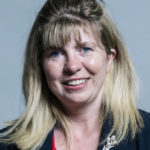
Tag: Maria Caulfield

  • Maria Caulfield – 2023 Speech on World Down Syndrome Day

    Maria Caulfield – 2023 Speech on World Down Syndrome Day

    The speech made by Maria Caulfield, the Parliamentary Under-Secretary of State for Health and Social Care, in the House of Commons on 23 March 2023.

    I thank my right hon. Friend the Member for North Somerset (Dr Fox) for securing the debate and for all his hard work over the years campaigning and supporting people with Down syndrome. I, too, attended the reception on the Terrace earlier this week. I met lots of people from around the country, some with Down syndrome, but with campaigners, supporters, friends and family. In particular, I pay tribute to the National Down Syndrome Policy Group and its founders, Ken and Rachael Ross, who are in the Public Gallery.

    I had the pleasure of meeting the advisory team this morning in No. 10, where we held a roundtable with young people with Down syndrome. They certainly put my feet to the fire with their questions and the progress they want to see. They have joined us this afternoon, too. Florence, Harshi, Ed, Max, Fionn, Tommy, Charlotte, James, Heidi and Rula asked extremely difficult questions, and I have promised to update them on progress. That just shows the strength of feeling and the range of support from people around the country.

    Selaine Saxby (North Devon) (Con)

    As we celebrate World Down Syndrome Day and the achievement of those who suffer with Down syndrome, will the Minister join me in congratulating my constituent Jade Kingdom, who is now a Guinness world record holder as the first person with Down syndrome to complete a sprint triathlon. She overcame her health conditions to achieve this and raised £30,000 for the North Devon Hospice.

    Maria Caulfield

    That is a fantastic achievement, and I congratulate Jade on her amazing ability. I wish I could do something similar.

    Tuesday marked the 12th World Down Syndrome Day. My right hon. Friend the Member for North Somerset was not able to join us on the day because he was at the UN in New York to showcase the work done in this Parliament. Many countries are now looking to us as they try to do something similar. He has not only changed the lives of people with Down syndrome in this country; he is making a difference globally, too.

    As part of the World Down Syndrome Day celebrations, I am wearing my different socks to showcase the three strands of chromosome 21, which apparently look like socks and are the cause of Down syndrome. The socks highlight Down syndrome and the amazing contribution that the incredible people with Down syndrome make to our communities and society.

    The hon. Member for Glasgow South West (Chris Stephens) spoke about his constituent Danielle, her son Steven and the very real issues of diagnostic overshadowing. My hon. Friend the Member for Stoke-on-Trent Central (Jo Gideon) spoke about her uncle Donald and how difficult it was for her family. She also spoke about what life was like in the past for people with Down syndrome.

    My hon. Friend the Member for Ashfield (Lee Anderson) spoke about Jossie, who I am sure has a wonderful future ahead of her. My hon. Friend the Member for Southend West (Anna Firth) spoke about David Stanley and the Music Man team, who cheer us up with their wonderful performances.

    My hon. Friend the Member for Hendon (Dr Offord) spoke about the dancing ability of his constituent Michael. He also spoke about Liam. I am a “Coronation Street” fan, and Liam is not currently at Roy’s Rolls, but I look forward to his next episodes because he has a good sense of humour.

    It is important to celebrate people with Down syndrome and to recognise the barriers they face. It was wonderful to see the actor James Martin win an Oscar for his brilliant performance, but we must not forget why we are here today.

    The Down Syndrome Act became law in April 2022, and I will now update the House on its progress. My right hon. Friend the Member for North Somerset and the Education Secretary, my right hon. Friend the Member for Chichester (Gillian Keegan), ensured the passage of the Act. We all have a responsibility to make sure it is not the end of the story by implementing the Act and getting the guidance out.

    At Downing Street this morning, the young people asked when we will see those changes. We will deliver guidance for professionals working in health, social care, education and housing, to try to bring together support for people with Down syndrome. The guidance will set out tangible, practical steps that organisations should take to meet the needs of people with Down syndrome. It will raise awareness of the specific needs of people with Down syndrome, and it will bring them together with the relevant authorities to make support more easily accessible.

    We launched our national call for evidence in July 2022, in the spirit of “With Us Not For Us,” and we heard from hundreds of people across the country. We had more than 1,000 responses on the needs and asks of the various communities. I thank everyone who responded or participated in the focus groups. It is thanks to them that we received so much evidence, which officials are now going through to analyse the data. We will shortly provide a summary of the key findings.

    It is essential that people’s lived experience informs the development of the guidance, and that people with Down syndrome are involved at every stage. We will shortly set up a working group to oversee the development of the guidance. Once drafted, the guidance will be subject to further public consultation to make sure we have it absolutely right.

    My right hon. Friend the Member for North Somerset asked some practical questions about the guidance, and we recognise that the issues and the services supporting people with Down syndrome sometimes overlap with the issues and the services supporting other people with learning disabilities and learning difficulties, which we need to consider. But I am absolutely clear that this guidance is about people with Down syndrome, because we want to help as many people as possible, to make it feasible for relevant authorities to implement this guidance in practice and to ensure that there will be oversight of it in Parliament.

    We are committed to considering the inclusion of employment and other public services through the call for evidence. We heard that best practice in supporting employment and benefits services is also going to be included in the guidance. We know that employment can have a significant benefit in terms of living independently and participating fully. That is why it is so important that the Minister for Disabled People, Health and Work, my hon. Friend the Member for Corby (Tom Pursglove), has sat through this afternoon’s debate. He was also at the reception earlier in the week, along with the Education Secretary. This is a cross-Government approach, and we cannot act just with one Department on its own. That shows that the full strength of the Government is behind these changes. We will also be looking at transport and leisure facilities, and removing some of the barriers to enable people with Down syndrome to be able to fully participate in the activities that they want to do. We will be working with other Departments to consider how to best incorporate those areas into the guidance.

    To ensure that the guidance is implemented in practice, every integrated care board will be required to have a named lead for Down syndrome. As my right hon. Friend the Member for North Somerset said, we want there to be a clear person accountable. The named lead will be responsible for ensuring that the Down Syndrome Act is implemented in practice. NHS England is currently developing its statutory guidance for ICBs, including for the Down syndrome lead role. Having a named lead for Down syndrome will help to ensure that the specific needs of people with Down syndrome are considered when services are designed and commissioned. One speaker this afternoon said that that would open the floodgates for change, but we absolutely need change to happen, so I do not necessarily have a problem with that. My right hon. Friend also touched on the school census. I wish to reassure him that although we have missed the deadline for 2023-24, we are looking at 2024-25 for this. We will be discussing that with the Education Secretary, because we recognise the importance of the school census and gathering that information.

    I thank everyone who has taken part in the debate. It has been a consensual debate and it shows Parliament at its best when we work together to deal with these challenges. I pay tribute to the families, carers, organisations and professionals who work tirelessly on behalf of people with Down syndrome, but I pay a particular tribute to those with Down syndrome themselves. It is indeed “With Us Not For Us”—I absolutely get that message. That is why we are here today. I also want to pay tribute to the officials at the Department of Health and Social Care—David Nuttall and his team—who have got that message loudly too and are working with the community to make sure that the Act and the guidance address their needs. Next year, I am sure that we will update the House further on the progress that has been made.

    Dr Fox

    With the leave of the House, may I thank all colleagues who have taken part in this debate? As the Minister just said, this is the House at its best, which almost certainly means, sadly, the media coverage at its least. As they say, “If you want a secret kept, say it in Parliament, outside Prime Minister’s questions.”

    A couple of points are worth reiterating. There are those concerned about people with similar conditions to Down syndrome being left aside, but I do not believe that to be true, because of the measures that were considered and the commitments given in Committee by the Government. Although, again, it is worth pointing out that people with Down syndrome share a number of characteristics with other groups, they are, none the less, a discrete population. I wish the hon. Member for Glasgow South West (Chris Stephens) well in his attempts to get Down syndrome included in the Scottish Government legislation, because there is a problem of genuinely unintended consequences. Leaving it out could result in legislative overshadowing and we may unintentionally leave the Down syndrome groups isolated in their legal rights.

    One thing that has come out loud and clear from this debate is the need for professional education, whether in health, education or social care. I worry about not only diagnostic overshadowing but social overshadowing, whereby the need for people to live, earn and be independent is hidden by a stigma, which is still all too prevalent and needs to be removed. We in the UK have taken a great lead on this issue, as was reflected at the United Nations on Tuesday. We should relish this challenge as a country. We talk about global Britain in a whole range of areas, including diplomacy and security, but should not one of the great challenges for global Britain be our setting an example on social care that the rest of the world wants to follow? That would be something to achieve.

    Question put and agreed to.

    Resolved,

    That this House has considered World Down Syndrome Day.

  • Maria Caulfield – 2023 Speech on International Women’s Day

    Maria Caulfield – 2023 Speech on International Women’s Day

    The speech made by Maria Caulfield, the Minister for Women, in the House of Commons on 9 March 2023.

    May I thank right hon. and hon. Members for their contributions this afternoon? I particularly thank my right hon. Friend the Member for Basingstoke (Dame Maria Miller) for securing this debate and for her work every day of the year on championing women’s rights. I thank all hon. Members who have spoken so passionately today about the issues on which they are campaigning on behalf of women up and down the country.

    As my right hon. Friend pointed out, many women who have gone before us have led the way to our being here today. The hon. Member for Erith and Thamesmead (Abena Oppong-Asare) mentioned Baroness Boothroyd, but there have also been women such as Margaret Thatcher, the first female Prime Minister, who broke that glass ceiling. Unlike the shadow Minister, the hon. Member for Oxford East (Anneliese Dodds), I am not afraid to compliment and pay tribute to female Members on the other side of the House. A personal heroine for me was Mo Mowlam. The hon. Member for Bristol South (Karin Smyth) spoke about how women have been erased from photos and others have often taken the credit for their hard work; Mo Mowlam was instrumental in delivering peace for Northern Ireland, but she is very often forgotten when we talk about issues around the Northern Ireland protocol. However, she is very much remembered for the work that she did.

    My right hon. Friend the Member for Chelmsford (Vicky Ford) said that there is a special place in heaven for men who stand up for women. Today I want to remember Sir David Amess, who usually spoke in these debates; I think particularly of his work on endometriosis. I am sure that he would be very pleased to see his successor, my hon. Friend the Member for Southend West (Anna Firth), taking part in this debate. It has also been great to see my hon. Friend the Member for Worthing West (Sir Peter Bottomley) spending most of the afternoon in this Chamber to listen to women speak about the issues that we face. We are very lucky to have such a Father of the House who respects female Members.

    On International Women’s Day yesterday, I was particularly pleased that so many Departments were able to showcase the work that has been done and make announcements on tackling the issues that women face, many of which have been raised today. The Foreign, Commonwealth and Development Office launched its first international women and girls strategy yesterday, which highlights the work being done globally to tackle threats to gender equality across the world. From climate change and crisis to conflicts and coronavirus, those threats disproportionately affect many women in certain countries; hon. Members have spoken particularly about Iran and Afghanistan today. Significant work is going on to support women across the world.

    I want to touch in particular on the issues facing the women of Ukraine. I had the great pleasure and honour of meeting the First Lady, Mrs Zelenska, this year. While of course planes, weapons and resources are important, her plea to us in this place was to make people aware of how rape is being used as a weapon of war against women in Ukraine—there are young girls, women, older women and elderly women who are being raped as part of the war against Ukraine.

    I am pleased that the UK has cemented its position as a leading global actor standing up for women who are under attack. We know the scale and severity of gender-based violence at times of conflict and insecurity. I am proud that the UK is recognised internationally for the preventing sexual violence in conflict initiative, committing £60 million to preventing and responding to conflict-related sexual violence since 2012. Last November the UK hosted the PSVI international conference in London, with more than 1,000 delegates, and secured new political declarations with 53 countries and 40 national communities. That is incredible work.

    However, this debate has mainly focused on the domestic issue of the gender-based violence that women and girls are experiencing up and down the country. We heard a very moving speech from the hon. Member for Birmingham, Yardley (Jess Phillips), who highlighted the sheer scale of the women who have been murdered in the past year. The right hon. Member for Kingston upon Hull North (Dame Diana Johnson) described the terrible, tragic case of Libby Squire, and the hon. Member for Livingston (Hannah Bardell) told us Wendy’s story about her daughter Aimee. Members cannot have failed to be moved by that.

    Of course we are doing great work in improving the experience of women. We have announced the awarding of grants to rape crisis centres in England and Wales to set up a national telephone support line, open 24/7, which was launched on 7 December, and we are providing £27 million to recruit more independent sexual and domestic violence advisers. Despite all that, however, there is clearly a significant problem. Violence against women and girls was included in the women’s health strategy because it is not just a criminal issue or a justice issue. I was pleased to see both my right hon. Friend the Member for Charnwood (Edward Argar), the Minister for Victims and Sentencing, and the Under-Secretary of State for the Home Department, my hon. Friend the Member for Derbyshire Dales (Miss Dines), in the Chamber earlier to hear about this staggering problem.

    Sarah Owen (Luton North) (Lab)

    I have listened intently to the debate, and it is an honour to be able serve alongside such fantastic female representatives on both sides of the House. The Minister is talking about eradicating sexual and domestic violence from society. Does she agree that we should not be rewarding, in any way, any perpetrators of that sort of abuse and violence?

    Maria Caulfield

    I absolutely agree. As I have said, that is why we included violence against women and girls in the women’s health strategy, and as we approach the first anniversary of the strategy, I am keen for us to move towards making that our priority for the second year, working across Government. I am happy to work across parties as well, because this is such an important issue. Despite all the strategies, plans and—let us be fair—significant funding, we are still not making progress in the areas in which we want to make it. We have been presented with many images, but I was particularly struck by what was said by the hon. Member for Brent Central (Dawn Butler) about the way in which language is used to describe both female victims and their perpetrators, which suggests that an offence of that kind can be justified—that it simply happened, that it was a mistake, and that it was not all that significant. That has to change, which means changing the culture as well as creating the infrastructure to support it. I am keen for us to make progress on that in the next 12 months.

    Jackie Doyle-Price (Thurrock) (Con)

    I am very interested by what my hon. Friend has just said. She referred earlier to putting violence against women and girls at the heart of the health strategy. If we are serious about increasing the rate of convictions for rape and sexual violence, and indeed domestic violence, we should bear in mind that women report being treated like pieces of evidence. What we need is wraparound therapeutic support for victims, so they are not re-traumatised every time they try to obtain justice. Will that be a large part of what my hon. Friend is doing?

    Maria Caulfield

    Absolutely. We do need to look at how we support women, and that includes female MPs. I am thinking of Rosie Cooper, who simply left the House of Commons because of what she had experienced. She has gone on record as saying that she did not feel safe continuing.

    Wera Hobhouse

    Will the Minister give way?

    Maria Caulfield

    I do not have a huge amount of time, but I will give way a couple more times.

    Wera Hobhouse

    I will be very quick. The police are saying that they need to move away from viewing the victim as a credible witness, and move on to the perpetrator. Too often, the perpetrator gets away while the police are investigating the victim.

    Maria Caulfield

    I entirely agree. This is about changing culture as much as about changing the structure of services: we have seen plenty of evidence of that. Let me also pay tribute to the hon. Lady for her private Member’s Bill, which will tackle sexual harassment in the workplace. She has done tremendous work on the Bill, and we hope that it will make swift progress in the other place.

    Vicky Ford

    The issue of spiking has, unfortunately, been coming up in my constituency. If the perpetrators are to be caught, it is important for victims to come forward quickly and provide physical evidence, such as a urine sample, within 24 hours. I wonder whether there is more that my hon. Friend could do, using her own voice, to get that message out to victims.

    Maria Caulfield

    Yes, absolutely. That is why we need a cross-Government approach. We need to work with the Home Office and the Ministry of Justice team so that we have a united voice.

    Abena Oppong-Asare

    Will the Minister give way?

    Maria Caulfield

    I will give way one more time.

    Abena Oppong-Asare

    I appreciate the Minister’s generosity. I just want to put on record the work that Sistah Space has done—particularly in relation to Valerie’s law—for victims of abuse, especially black victims. The Minister’s predecessor started to do some work with me and with Sistah Space before the change of Government. Will she please continue that work?

    Maria Caulfield

    I shall be happy to do that, and we can certainly arrange to meet following this debate.

    The shadow Minister was slightly dismissive of the groundbreaking Online Safety Bill. However, my right hon. Friend the Member for Chelmsford has reported that the UN special rapporteur on violence against women and girls has described it as world- leading. Many other countries are following our progress, and, indeed, may adopt similar legislation. The Bill will tackle criminal activity online. It will protect children from harmful and inappropriate content, and it aims to stop the rise of online misogyny. Several Members have mentioned the importance of that.

    Let me say something about business. The UK is now successfully including gender provision in all the free trade agreements that we have made since leaving the EU. Our trade agreements with Australia and New Zealand, for instance, contain dedicated trade and gender equality chapters. That too is groundbreaking work. As for our domestic business focus, our taskforce on women-led high- growth enterprise was established last summer. I want to pay tribute to my hon. Friend the Member for Meon Valley (Mrs Drummond) for her work in the all-party parliamentary group on women and work, not just her work in pushing science, technology, engineering and maths for women, but the high-growth sector work she is doing. If we deliver more women with ambition, we will improve growth in our economy and also improve the outcome for those women as they thrive in the workplace.

    We know that childcare is an issue. That is why we have spent more than £3.5 billion over the last three years on early education entitlement, and have increased the funding for local authorities to £160 million this year, £180 million next year and £170 million thereafter, to allow them to increase their payments to local childcare providers. I recognise the challenges and the cost that childcare imposes on families, but I also know how difficult it is for the providers to sustain their business model.

    Turning briefly to women’s health, I am proud that in the past year we have published the first women’s health strategy for England. The hon. Member for Vauxhall (Florence Eshalomi) mentioned that in particular, and I am very keen that we make progress in that space, especially on maternity disparities. We have appointed Dame Lesley Regan as the first women’s health ambassador to lead that work. We announced yesterday that we are investing £25 million to roll out women’s health hubs across the country, providing a one-stop shop for women’s healthcare needs.

    We will also level up IVF access to same-sex couples and across the board, ensuring consistent provision across the country, which does not currently exist. The HRT prepayment certificate will be launched from 1 April, cutting the cost of HRT by hundreds of pounds. We also aim to announce our pregnancy loss certificate later this summer, so that babies born before 24 weeks can be registered—an important issue for those parents who have lost babies. The major conditions strategy will look at long-term conditions such as heart disease, musculoskeletal conditions and dementia, the leading cause of death in women, which for too long have been ignored.

    Finally, I want to touch on girls’ education, which it is a top priority for us in both our international commitment—we want 12 years of quality education for every girl, which is the best way to get girls and women out of poverty—and our domestic commitments. The Prime Minister in his first speech set out his ambition to ensure that all school pupils in England study some form of maths to the age of 18. My hon. Friend the Member for Thurrock (Jackie Doyle-Price) raised the issue of teaching materials in schools; the Prime Minister yesterday committed to a review of those and we will look forward to what that shows.

    We need to get more women and girls into science, because, as my right hon. Friend the Member for Basingstoke said, despite getting more girls into STEM A-levels and on to undergraduate courses, we only see women making up 29.4% of the STEM workforce. That is why we are running our STEM Returners pilot; there are 75,000 people, mainly women, with experience and qualifications in STEM who are not working in the sector and who we want to see return to practice.

    I hope that that showcases some of the work we are doing across the board. There are many challenges—we do not deny or shirk that fact—but we are making significant progress. In particular, domestically, on violence against women and girls, I hope that this time next year we will have a better story to tell.

    Dame Maria Miller

    I say an enormous thank you to everybody who has taken part in the debate. This debate always demonstrates how much agreement there is across the House; I always see more heads nodding on the Opposition side and the Government side in this debate than in any other. My final comment, therefore, is, “Let us not allow party politics to get too involved in some of these issues.” They are not about party politics; they are about changing the culture of our country, to make sure that women have the same opportunities and the same barriers as men—not different ones, but not bigger ones. The more we can keep the politics out of this, the more progress we make in that culture change. I think the vast majority of this debate has demonstrated how much agreement there is. I applaud that, and thank colleagues for taking that approach.

  • Maria Caulfield – 2023 Statement on Indemnity for the Liverpool Community Health Independent Investigation

    Maria Caulfield – 2023 Statement on Indemnity for the Liverpool Community Health Independent Investigation

    The statement made by Maria Caulfield, the Parliamentary Under-Secretary of State for Health and Social Care, in the House of Commons on 9 February 2023.

    It is normal practice, when a Government Department proposes to undertake a contingent liability in excess of £300,000 for which there is no specific statutory authority, for the Minister concerned to present a departmental minute to Parliament giving particulars of the liability created and explaining the circumstances; and to refrain from incurring the liability until 14 parliamentary sitting days after the issue of the minute, except in cases of special urgency.

    I have today laid a departmental minute proposing the provision by NHS England of an indemnity that is necessary in respect of an NHSE non-statutory independent investigation into patient safety incidents and deaths at the former Liverpool Community Health NHS Trust.

    This investigation follows an independent review chaired by Dr Bill Kirkup CBE into widespread failings by Liverpool Community Health NHS Trust. The review report, published on 8 February 2018, found that there were significant failings in the trust from November 2010 to December 2014.

    It is important that these failings are investigated and that lessons are learnt to improve services. In response to the serious patient safety incidents described in the report, the Secretary of State for Health and Social Care commissioned Dr Kirkup to conduct an independent investigation into patient safety incidents at the trust. The investigation’s terms of reference cover patient safety incidents that occurred in the same period as the initial independent review addressed—namely, November 2010 to December 2014. The investigation was originally intended to submit its report at the end of 2021, but a number of factors have come together to delay its work, including challenges related to information governance and electronic document management. We now expect the investigation to have reported by spring 2024 at the latest.

    NHSE is able to obtain indemnity cover from NHS Resolution through the liabilities to third parties scheme—LTPS. The scheme applies to any liability that a member of the scheme owes to any third party in respect of loss, damage or injury arising out of an act or omission in the course of the carrying out of any relevant function of that member which is a qualifying liability.

    The NHS resolution indemnity will cover any sums—including any legal or other associated costs—that members of the investigation team are liable to pay in relation to legal action brought against them by a third party in respect of liabilities arising from any act done, or omission made, honestly and in good faith, when carrying out activities for the purposes of the investigation. The indemnity will apply to any work carried out in accordance with the investigation’s terms of reference from the commencement of the investigation to its completion in 2024. The indemnity will cover the contingent liability of any legal action up to and following the publication of the investigation report.

    The liability of the scheme for any proceedings brought against the member by virtue of section 13 of the Data Protection Act 1998, or any subsequent updating or replacement legislation (the “data protection legislation”), for all compensation payable to any claimant or any number of claimants in respect of or arising out of any one event or series of events consequent on or attributable to one source or original cause shall not exceed £50,000. Further, the maximum sum payable for such cases in any one membership year shall not exceed £500,000.

    However, in view of the substantial fines that it is possible for the Information Commissioner’s Office to impose in the unlikely event of a data breach, NHSE considers it prudent for the £50,000 cover available under the NHS Resolution LTPS scheme to be “topped up” with a specific NHSE indemnity to £500,000. If the liability is called, provision for any payment will be sought through the normal supply procedure.

    The Treasury has approved the proposal in principle. If, during the period of 14 parliamentary sitting days, beginning on the date on which this minute was laid before Parliament, a member signifies an objection, by giving notice of a parliamentary question or by otherwise raising the matter in Parliament, final approval to proceed with incurring the liability will be withheld pending an examination of the objection.

  • Maria Caulfield – 2015 Parliamentary Question to the Department for Education

    Maria Caulfield – 2015 Parliamentary Question to the Department for Education

    The below Parliamentary question was asked by Maria Caulfield on 2015-12-01.

    To ask the Secretary of State for Education, which schools in Lewes constituency receive pupil premium funding.

    Mr Sam Gyimah

    Details of the schools in Lewes constituency which are receiving pupil premium funding in 2015-16 are published at https://www.gov.uk/government/uploads/system/uploads/attachment_data/file/439865/Pupil_premium_final_allocations_2015_to_2016_by_school_in_England.ods.

  • Maria Caulfield – 2016 Parliamentary Question to the Foreign and Commonwealth Office

    Maria Caulfield – 2016 Parliamentary Question to the Foreign and Commonwealth Office

    The below Parliamentary question was asked by Maria Caulfield on 2016-02-23.

    To ask the Secretary of State for Foreign and Commonwealth Affairs, what discussions his Department has had with the government of Israel concerning recent anti-Christian vandalism at the Dormition Abbey.

    Mr Tobias Ellwood

    While we have not had any discussions with the Israeli authorities over this specific incident, we understand that the Israeli police have arrested two Israeli teenagers for the attack. This attack was widely condemned by Palestinian and Israeli leaders. Our Embassy in Tel Aviv is in regular contact with representatives of Churches on a range of issues, including to discuss concern about attacks on places of worship.

  • Maria Caulfield – 2016 Parliamentary Question to the Department for Environment, Food and Rural Affairs

    Maria Caulfield – 2016 Parliamentary Question to the Department for Environment, Food and Rural Affairs

    The below Parliamentary question was asked by Maria Caulfield on 2016-09-02.

    To ask the Secretary of State for Environment, Food and Rural Affairs, what steps the Government is taking to reduce the incidence of illegal dog fighting.

    George Eustice

    Under the Animal Welfare Act 2006 animal fights, including dog fights, are prohibited. Offences include publicising a fight, providing information about an animal fight and betting on an animal fight. The maximum penalty for such offences is six months’ imprisonment, an unlimited fine or both. In addition, under section 1 of the Dangerous Dogs Act 1991 four types of dog have been prohibited that are have been identified either as being bred for fighting or that share the characteristics of dogs bred for fighting. The maximum penalty for possession of an illegal type dog is six months’ imprisonment, an unlimited fine or both. Separately the independent Sentencing Council have recently consulted on changes to their guidelines to magistrates’ courts for a range of offences including animal cruelty offences. The Sentencing Council stated in June that in relation to animal cruelty, the Council wants to ensure that the most serious cases lead to prison sentences, and that these sentences are of an appropriate length.

    The Government has also worked with the Pet Advertising Advisory Group (PAAG), a grouping of welfare charities and pet industry interests, who have been lobbying operators of internet sites to adopt minimum standards for the advertising of pet animals.

  • Maria Caulfield – 2015 Parliamentary Question to the Department for Education

    Maria Caulfield – 2015 Parliamentary Question to the Department for Education

    The below Parliamentary question was asked by Maria Caulfield on 2015-12-10.

    To ask the Secretary of State for Education, what comparative assessment her Department has made of the ethnic diversity among pupils of Catholic schools and non-Catholic schools.

    Edward Timpson

    All schools are subject to the Equality Act 2010 and must comply with the requirements of the Schools Admission Code. The legislation is already available within the Equality Act 2010 and the Admission Code, which ensures schools meet their statutory requirements ensuring that a diverse ethnic group of pupils attend both Catholic and non-Catholic schools.

    The department does not conduct comparative assessments of ethnicity diversity among pupils of Catholic schools and non-Catholic schools.

  • Maria Caulfield – 2016 Parliamentary Question to the Women and Equalities

    Maria Caulfield – 2016 Parliamentary Question to the Women and Equalities

    The below Parliamentary question was asked by Maria Caulfield on 2016-02-23.

    To ask the Minister for Women and Equalities, if she will take steps to ensure that there is equality of educational achievement between girls and boys in schools.

    Nick Gibb

    Evidence shows that girls outperform boys on average at the end of primary and secondary school. The attainment of boys has been improving in primary school: in 2015, 77% of boys achieved the expected standard in reading, writing and mathematics at the end of key stage 2, compared to 71% in 2012. Nonetheless, more remains to be done to raise levels of achievement amongst boys at all key stages.

    While girls have higher attainment, they are still less likely than boys to pursue further study beyond the end of secondary school in subjects such as mathematics and physics – although the number of girls entered for A levels in these particular subjects has risen by 13 percent and 16 percent respectively since 2010.

    In addressing these issues, we have placed high expectations at the heart of our school system through our new curriculum and reformed exams – and our new accountability system will reward those schools that encourage every child, boys and girls alike, to achieve their best. We are committed to delivering educational excellence everywhere so that every child, regardless of gender or background, can reach their potential.

  • Maria Caulfield – 2016 Parliamentary Question to the Department for Transport

    Maria Caulfield – 2016 Parliamentary Question to the Department for Transport

    The below Parliamentary question was asked by Maria Caulfield on 2016-09-12.

    To ask the Secretary of State for Transport, what long-term investment plans the Government has to improve the Brighton Main Line.

    Paul Maynard

    Network Rail is currently developing proposals for potential upgrades of the Brighton Main Line, following the conclusions of the Sussex Route Study, and the London South Coast Rail Corridor Study, both of which highlighted significant capacity and performance constraints. Government will fund Network Rail to develop proposals as necessary.

  • Maria Caulfield – 2015 Parliamentary Question to the Department for Education

    Maria Caulfield – 2015 Parliamentary Question to the Department for Education

    The below Parliamentary question was asked by Maria Caulfield on 2015-12-10.

    To ask the Secretary of State for Education, what assessment her Department has made of the effectiveness of Catholic schools in supporting the integration of minority communities in (a) their student body and (b) the wider community.

    Edward Timpson

    The department does not conduct assessments on how effective Catholic schools are in supporting the integration of minority communities in their student body and the wider community.

    All state-funded schools are required to teach a broad and balanced curriculum, actively promote fundamental British values and have due regard to the need to eliminate discrimination, advance equality of opportunity and foster good relations between peoples of different backgrounds and faiths. Pupils are taught about diverse national, regional, religious and ethnic identities in the UK and the need for mutual respect and understanding. Ofsted’s inspection framework includes a focus on pupils’ spiritual, moral, social and cultural development. Under the Equality Act 2010 Faith schools are not allowed to treat pupils less favourably in any other way because of their religion or belief, or lack of belief. Under the Public Equality Duty, faith schools must also have due regard to the need to eliminate discrimination, promote equality of opportunity, and foster good relations between different groups.