Tag: Maiden Speech

  • Chi Onwurah – 2010 Maiden Speech in the House of Commons

    Chi Onwurah – 2010 Maiden Speech in the House of Commons

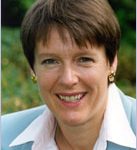
    The maiden speech made by Chi Onwurah, the Labour MP for Newcastle upon Tyne Central, in the House of Commons on 8 June 2010.

    Thank you, Mr Deputy Speaker, for giving me the honour to follow so many excellent maiden speeches.

    I would like to start by paying tribute to my predecessor. To be able to say on the doorsteps of Newcastle upon Tyne Central that I was the new Jim Cousins was a huge asset. Perhaps one in five constituents knew him personally, and had a tale to tell about how he had helped them. As a constituency MP, he could not be bettered. He was also a champion of Newcastle and the north-east, and his long service on the Treasury Committee was of great benefit to his country and his city. His role in saving Northern Rock will be long remembered.

    In the boundary review, Newcastle Central gained the wards of Elswick and Benwell and Scotswood from the old Tyne Bridge constituency. I want to thank David Clelland for his dedication to his constituents in those historic areas of my city.

    The Romans chose Newcastle as the lowest bridging point of the Tyne, and later built Hadrian’s wall, which runs through the constituency. In the centuries that followed, we guarded England from the attacks of Scottish raiders. How times change! But as a port, we were ever open for trade. Newcastle played a huge part in the major industries—wool, salt, shipbuilding, coal and engineering. We were at the leading edge of the first industrial revolution.

    If history is merely the story of great men, I need mention only some of Newcastle’s favoured sons to prove our place: Earl Grey, who has found such favour on the Government Benches; Armstrong, the great industrialist and founder of Newcastle university; and my own hero and fellow engineer, Stephenson, who built the railways.

    But I believe that it is the contribution of those whose names are not recorded that it is most important to remember. It was the unnamed, ordinary men and women of Newcastle who built the ships that enabled this small island to wield global influence. My own grandfather worked in the shipyards of the Tyne. The men and women of Newcastle built the trade union and Labour movements, to which we owe so many of our working and voting rights. They built the co-operative and the Fairtrade movements, which combined the best of international idealism and local realism. Closer to home, they fought to protect the unique environment that is the heart, or rather the lung, of Newcastle.

    Newcastle’s town moor is justly famous—a vast expanse of open moorland, kept in common and grazed by herds of cows. In London, cows in the centre of the city are considered installation art. In Newcastle, our councillors debate the future of our city within spitting distance of cowpats, an arrangement that I recommend to the House as ensuring a grass-roots sense of perspective.

    With this history and community, it is no wonder that I felt a huge sense of privilege growing up in Newcastle. Yes, we were a one-parent family on a poor working-class estate, North Kenton, but good local schools, great public services, great housing and the health service meant that I could fulfil my ambition of becoming an engineer. But just as I was deciding to enter engineering, the country was deciding to leave it behind. We were going to become a service economy. I believe in a strong service sector, but time has shown that an exclusive focus on services left our country weaker. Certainly, I had to spend much of my career abroad. Still, I saw first hand the devastation brought about by the loss of the great northern industries of mining, shipbuilding and steel—whole communities robbed of a purpose. Let us be clear, that loss was not just a north-east loss; it was the country’s loss. Although we remain the sixth largest manufacturing economy in the world, building and making things is no longer a part of our culture. That has to change.

    I know that I should not touch upon controversial subjects, which is why I am so glad that what I am going to say is entirely uncontroversial. During the election, all parties were in agreement that the economy needs to be rebalanced in favour of manufacturing. Newcastle, with our great universities, specialising in medicine, design and engineering, our industrial heritage and strategic assets, has an essential role to play. We can help the UK to meet two of the great challenges that face us—securing sustainable energy resources and supporting an ageing population. These sectors need to be part of the new economy. We need to build up our science and manufacturing base and foster the spirit of innovation that led George Stephenson to invent the steam engine and make his fortune.

    I know from my own experience that building a business takes vision, courage, blood, sweat and tears. But manufacturing is particularly difficult. It needs long-term investment. I recently visited BAE Systems and Metalspinners, two engineering firms in my constituency. I saw 60-tonne pressing and cutting machines that cost millions of pounds and are expected to last for decades. We must continue to help these companies invest. They need a strong public sector. They need apprenticeships, good transport links, a strong regional development agency and tax allowances for manufacturing and innovation.

    We are a small country and it is no longer our ships that set the boundaries of the world. But even as a small country, we can set the direction of the new industrial revolution if we equip ourselves to grasp those opportunities, and I will fight to make sure that the Government do just that. My career in Parliament will be dedicated to ensuring that Newcastle upon Tyne Central is an economically and culturally vibrant contributor to the UK and the world.

  • Mike Crockart – 2010 Maiden Speech in the House of Commons

    Mike Crockart – 2010 Maiden Speech in the House of Commons

    The maiden speech made by Mike Crockart, the then Liberal Democrat MP for Edinburgh West, in the House of Commons on 8 June 2010.

    Thank you, Mr Deputy Speaker, for giving me the opportunity to make my maiden speech. I want to pay tribute to the hon. Member for Wycombe (Steve Baker) for his considerable knowledge of the banking industry. I cannot wait to hear more about that in future debates. It is slightly difficult for me to follow the hon. Member for Edinburgh South (Ian Murray)—we are starting to become slightly Edinburgh-centric, with the hon. Member for Edinburgh East (Sheila Gilmore) hopefully still to make a contribution this evening—because I can no longer mention the Edinburgh Evening News. The journalist mentioned by the hon. Member for Edinburgh South wrote the same paragraph for me.

    My predecessor, John Barrett, is taking a well-deserved rest after more than quarter of a century of public service, having represented the many people of Edinburgh West on community councils, city councils and, latterly, as its MP for nine years. He was a local business man and entrepreneur. In that spirit, he sold this job to me as being the best in the world. It has certainly been the most exciting in the first four weeks—even more exciting than my first few weeks as a green probationer in Lothian and Borders police.

    In his time, John met many interesting people, including the Queen and Dolly Parton. I will let the House into a secret—it was the photograph of Dolly Parton that hung on the wall in the office. The seat has a well-established Liberal history, and I join a select but growing group, including my hon. Friends the Members for Orkney and Shetland (Mr Carmichael) and for Caithness, Sutherland and Easter Ross (John Thurso) by being a third—or perhaps even more—generation Liberal MP. We are joined, too, by my hon. Friend the Member for St Austell and Newquay (Stephen Gilbert). That Lib Dem legacy is established through the quality of service given to our constituents, in my case in Edinburgh West, and an absolute commitment to them.

    I have deliberately chosen this debate on economic affairs in which to make my first contribution. My constituency is immensely diverse, taking in areas of great affluence as well as areas of great poverty. Historic villages such as Corstorphine, Davidsons Mains and Cramond are now subsumed in the Edinburgh sprawl, as well as modern housing estates such as Muirhouse. Residential Barnton as well as rural Ratho and Kirkliston. The constituency is a key player in the powerhouse that is the Edinburgh economy, boasting within its boundaries some of Scotland’s most iconic and important brands and businesses, which have brought prosperity to Edinburgh and, indeed, to Scotland. Some of them, however, have been at the centre of the catastrophic events of the past two years and that has resulted in many thousands of people losing their jobs in Scotland.

    There are many, many community groups in Edinburgh West, from those conducting community litter picks in South Queensferry or on Cramond beach to those fighting to protect the integrity and boundaries of Corstorphine hill. The Carrickvale community centre provides services to older and young constituents, and the Gylemuir Community Association does a similar job. Thousands of people are actively improving their communities all over Edinburgh West.

    I am in the middle of the summer gala season—for the benefit of the English in the Chamber, I should explain that is a fête. On Saturday, along with thousands of others, accompanied, surprisingly for Scotland, by the sun, I attend the Corstophine fair—the largest community-run event in Edinburgh, and perhaps in Scotland. In it was a programme bursting with entertainment, kids’ activities and community displays, as well as the usual stalls to give people a chance to meet those behind the many community groups across the constituency. At the end of that, I officiated at the tug-of-war event, where two teams battled it out for victory. There was much name calling, shouting and huge efforts in blood, sweat and ultimately tears before both teams claimed a moral victory, at the very least. It reminded me a great deal of the past four weeks on this side of the House.

    Edinburgh West is also a centre for many varied Scottish, British and internationally renowned companies. I have already found that across the business sector too, there is unity and solidarity in the adversity that we face, and I am immensely lucky that in these difficult times, Edinburgh West has a shared aim and a sense of team spirit. So as we rightly place more emphasis on industries such as biotechnology and the engineering of exciting new marine energy solutions, we should not forget two other priority industry sectors in Scotland, which have contributed significantly to the success of the Scottish and UK economies in the past decade. I refer to tourism and the financial services, two sectors in which my constituency has flourished.

    Edinburgh airport, the gateway from mainland Europe not only for Edinburgh but for Scotland more generally, has 320 flights a day and 20,000 passengers, and those numbers are climbing. It is opening up new routes all the time—for example, to Marrakesh and many others announced in February. This is to be commended, as the more direct routes we have, the less wasteful travel we have through the London hubs of Heathrow and Gatwick. Add to this the potential for a much-needed high speed rail link with London, and we will see a continuing healthy picture for Scottish tourism and business, boosted by the year-round reputation of Edinburgh as a festival city.

    I must not forget Edinburgh zoo when talking about tourism. In his maiden speech my predecessor joked about representing more penguins than any other Member in the House, and I am proud to say that that is still the case, but I can now add to that list of animals and say that I am the only MP in the UK to represent koalas. Should present plans come to fruition, I hope to be standing here in five years’ time as the only person representing pandas.

    The financial services sector is a major sector in Edinburgh West, employing many people, but I shall move on as time is defeating me. Understandably, many of those working in the financial services sector and banking in particular fear the banking reform that must surely come. They should be reassured that the aim of that reform is to make their jobs more secure, not less. I will work closely with my right hon. Friend the Secretary of State for Business, Innovation and Skills to ensure that that happens.

  • Gavin Williamson – 2010 Maiden Speech in the House of Commons

    Gavin Williamson – 2010 Maiden Speech in the House of Commons

    The maiden speech made by Gavin Williamson, the Conservative MP for South Staffordshire, in the House of Commons on 8 June 2010.

    It is a great honour to be called and to follow so many fantastic maiden speeches: when the bar is set so high, it is often easier to duck under it. It is a great honour to serve South Staffordshire. It is traditional for hon. Members to pay tribute to their predecessors, and that is easier for some than it is for others.

    It is easy for me to pay tribute not only to my predecessors for previous constituencies, such as Cannock and Brierley Hill—for example, Sir Fergus Montgomery and Jennie Lee, who were great parliamentarians—but to my immediate predecessor, Sir Patrick Cormack, a great parliamentarian whom we all greatly admire. Sir Patrick believed in and fought passionately for his constituency and constituents, but he also believed passionately in this House—in its traditions and its importance in our national life. He also believed in the importance of a strong House of Commons in holding the Government to account and ensuring good government. Those principles were close to Sir Patrick’s heart and will be close to mine.

    Over the weeks following my selection, Sir Patrick and I became good and close friends. We enjoyed spending a great amount of time campaigning together, and although our styles were sometimes a little different, that made it all the more enjoyable. I remember campaigning in the former mining village of Great Wyrley, where many constituents rushed up to Sir Patrick to wish him well in his retirement and thank him for the work he had done for them. They shook his hand and said, “Mr McCormack, Mr McCormack.” After about the 10th person had done so, I said to Sir Patrick, “Don’t you ever correct them?” He said, “Dear boy, after 40 years, it hardly seems worth bothering, don’t you think?” It is an honour to step into Sir Patrick’s very large shoes, but I hope that, over the years, I will gain some of his panache and style, which graced this Chamber, and that I will be an asset not only to the people of South Staffordshire but to this House.

    South Staffordshire is one of those constituencies about which so many people say, “Where is it? Which town is in it?” People probably travel through it many times when they go up the M6 or up the west coast main line. It is a beautiful constituency that does not have a single major town, but is built up around many small, and some large, villages scattered across the South Staffordshire countryside. Many of those villages were born out of the industrial revolution and coal mining traditions, and have settled in some of the most beautiful, pretty and gentle English countryside that one can imagine.

    The people are straight talkers, which, as a Yorkshireman, is comforting to know. As a straight talker myself, it is nice to have it blunt from others. South Staffordshire is a beautiful constituency that is criss-crossed by many canals and beautiful fields. However, it has its problems and issues. In South Staffordshire, compared with the national average, twice as many people work in manufacturing. That is important to me, because I have worked in manufacturing since I left university. I think it is fair to say that I am one of the few potters who sit in the House today. It is that experience of manufacturing that I hope to bring to the House, because far too often Governments of all colours have believed that we can build a strong, stable and vibrant economy on the twin pillars of financial services and coffee-shop economics. I have a great deal of respect for anyone who works in coffee shops and I even grudgingly admit that we might need bankers, but we cannot have a vibrant British economy without a strong and vibrant manufacturing sector.

    Far too often, young people who go into manufacturing or engineering are seen as taking a second-class career, whereas we reward and sing the praises of people who go into accountancy, the law or public relations. We do not sing enough the praises of our designers, engineers and manufacturers. We need to change that ethos and have a similar one to that of Germany or Japan. We will have a truly vibrant economy only when we recreate the Victorian spirit of ingenuity and inventiveness that made Britain such a vibrant country, as I am sure it will be again.

    I truly welcome the Prime Minister’s comments about the importance of manufacturing and I hope that the Treasury team listen well to his comments and do not spend all their time listening to bankers. They should also listen to manufacturers, because we often have a lot more common sense than bankers. I hope I can play my part in representing South Staffordshire and the people of a beautiful and lovely constituency, and that I can ensure their voices are heard loud and clear in this Chamber.

  • Bernadette Devlin – 1969 Maiden Speech in the House of Commons

    Bernadette Devlin – 1969 Maiden Speech in the House of Commons

    The maiden speech made by Bernadette Devlin, the then Unity MP for Mid Ulster, in the House of Commons on 22 April 1969.

    I understand that in making my maiden speech on the day of my arrival in Parliament and in making it on a controversial issue I flaunt the unwritten traditions of the House, but I think that the situation of my people merits the flaunting of such traditions.

    I remind the hon. Member for Londonderry (Mr. Chichester-Clark) that I, too, was in the Bogside area on the night that he was there. As the hon. Gentleman rightly said, there never was born an Englishman who understands the Irish people. Thus a man who is alien to the ordinary working Irish people cannot understand them, and I therefore respectfully suggest that the hon. Gentleman has no understanding of my people, because Catholics and Protestants are the ordinary people, the oppressed people from whom I come and whom I represent. I stand here as the youngest woman in Parliament, in the same tradition as the first woman ever to be elected to this Parliament, Constance Markievicz, who was elected on behalf of the Irish people.

    This debate comes much too late for the people of Ireland, since it concerns itself particularly with the action in Derry last weekend. I will do my best to dwell on the action in Derry last weekend. However, it is impossible to consider the activity of one weekend in a city such as Derry without considering the reasons why these things happen.

    The hon. Member for Londonderry said that he stood in Bogside. I wonder whether he could name the streets through which he walked in the Bogside so that we might establish just how well acquainted he became with the area. I had never hoped to see the day when I might agree with someone who represents the bigoted and sectarian Unionist Party, which uses a deliberate policy of dividing the people in order to keep the ruling minority in power and to keep the oppressed people of Ulster oppressed. I never thought that I should see the day when I should agree with any phrase uttered by the representative of such a party, but the hon. Gentleman summed up the situation “to a t”. He referred to stark, human misery. That is what I saw in Bogside. It has not been there just for one night. It has been there for 50 years—and that same stark human misery is to be found in the Protestant Fountain area, which the hon. Gentleman would claim to represent.

    These are the people the hon. Gentleman would claim do want to join society. Because they are equally poverty-stricken they are equally excluded from the society which the Unionist Party represents—the society of landlords who, by ancient charter of Charles II, still hold the rights of the ordinary people of Northern Ireland over such things as fishing and as paying the most ridiculous and exorbitant rents, although families have lived for generations on their land. But this is the ruling minority of landlords who, for generations, have claimed to represent one section of the people and, in order to maintain their claim, divide the people into two sections and stand up in this House and say that there are those who do not wish to join the society.

    The people in my country who do not wish to join the society which is represented by the hon. Member for Londonderry are by far the majority. There is no place in society for us, the ordinary “peasants” of Northern Ireland. There is no place for us in the society of landlords because we are the “have-nots” and they are the “haves”.

    We came to the situation in Derry when the people had had enough. Since 5th October, it has been the unashamed and deliberate policy of the Unionist Government to try to force an image on the civil rights movement that it was nothing more than a Catholic uprising. The people in the movement have struggled desperately to overcome that image, but it is impossible when the ruling minority are the Government and control not only political matters but the so-called impartial forces of law and order. It is impossible then for us to state quite fairly where we stand.

    How can we say that we are a nonsectarian movement and are for the rights of both Catholics and Protestants when, clearly, we are beaten into the Catholic areas? Never have we been beaten into the Protestant areas. When the students marched from Belfast to Derry, there was a predominant number of Protestants. The number of non-Catholics was greater than the number of Catholics. Nevertheless, we were still beaten into the Catholic area because it was in the interests of the minority and the Unionist Party to establish that we were nothing more than a Catholic uprising—just as it is in the interest of the hon. Member for Londonderry to come up with all this tripe about the I.R.A.

    I assure the hon. Member that his was quite an interesting interpretation of the facts, but I should like to put an equally interesting interpretation. There is a fine gentleman known among ordinary Irish people as the Squire of Ahoghill. He happens to be the Prime Minister, Captain Terence O’Neill. He is the “white liberal” of Northern Ireland. He is the man who went on television and said to his people, “There are a lot of nasty people going around and if you are not careful you will all end up in the I.R.A. What kind of Ulster do you want? Come with me and I will give you an Ulster you can be proud to live in”.

    Captain O’Neill listed a number of reforms which came nowhere near satisfying the needs of the people. Had he even had the courage of his convictions—had he even convictions—to carry out the so-called reforms he promised, we might have got somewhere. But none of his so-called reforms was carried out. He suggested a points system for the allocation of houses until such time that the Tory Party could see its way to introducing a crash housing programme. He suggested that a points system should be introduced, but he did nothing to force the majority of Unionist-controlled councils to introduce it. He thought that his suggestion would be quite sufficient to make everyone doff their caps, touch their forelocks and say, “Yes, Captain O’Neill. We will introduce it.” But the local councils of Northern Ireland do not work like that.

    We come to the question of what can be done about incidents like that in Derry at the weekend. Captain O’Neill has thought of a bright idea—that tomorrow we shall be given one man, one vote. Does he think that, from 5th October until today, events have not driven it into the minds of the people that there are two ideals which are incompatible—the ideal of social justice and the ideal and existence of the Unionist Party? Both cannot exist in the same society. This has been proved time and again throughout Northern Ireland by the actions of the Unionist Party.

    In the General Election, Captain O’Neill had the big idea of dividing and conquering. Captain O’Neill, the “liberal” Unionist, said, “Do not vote for Protestant Unionists because they are nasty Fascist people”. When the election was over, he had no qualms about taking the number of so-called “Fascist” Unionist votes and the “liberal” Unionist votes together, adding them up and saying, “Look how many people voted Unionist”.

    We, the people of Ulster, are no longer to be fooled, because there are always those of us who can see no difference between the Paisleyite faction and the O’Neill faction, except that the unfortunate Paisleyite faction do not have hyphenated surnames. So we are faced with the situation that Captain O’Neill may, in the morning, say, “You now have one man, one vote”. What will it mean to the people? Why do the people ask for one man, one vote, with each vote of equal value to the next?

    The Unionist policy has always been to divide the people who are dependent upon them. The question of voting is tied up mainly with the question of housing, and this is something which the House has failed to understand. The people of Northern Ireland want votes not for the sake of voting but for the sake of being able to exercise democratic rights over the controlling powers of their own areas. The present system operates in such a way that Unionist-controlled councils and even Nationalist-controlled councils discriminate against those in their areas who are in the minority. The policy of segregated housing is to be clearly seen in the smallest villages of Ulster. The people of Ulster want the right to vote and for each vote to be of equal value so that, when it comes to the question of building more houses, we do not have the situation which we already have in Derry and in Dungannon.

    In Dungannon, the Catholic ward already has too many houses in it. There is no room to build any more in that ward. It would appear logical that houses should be built, therefore, in what is traditionally known as the Protestant ward or, euphemistically, the “Nationalist” or “Unionist” ward, where there is space. But this would give rise to the nasty situation of building new houses in the Unionist or Protestant ward and thus letting in a lot of Fenians who might outvote the others.

    I wish to make it clear that in an area such as Omagh the same corruption is carried on because Protestants need houses and the only place for them is in a Catholic area. The one point that these two forms of activity have in common is that whether they are green or orange, both are Tory. The people of Northern Ireland have been forced into this situation.

    I was in the Bogside on the same evening as the hon. Member for Londonderry. I assure you, Mr. Speaker—and I make no apology for the fact—that I was not strutting around with my hands behind my back examining the area and saying “tut-tut” every time a policeman had his head scratched. I was going around building barricades because I knew that it was not safe for the police to come in.

    I saw with my own eyes 1,000 policemen come in military formation into an oppressed, and socially and economically depressed area—in formation of six abreast, joining up to form 12 abreast like wild Indians, screaming their heads off to terrorise the inhabitants of that area so that they could beat them off the streets and into their houses.

    I also accept that policemen are human and that if someone throws a stone at a man and injures him, whether he be in uniform or out of uniform, if he is human he is likely to lift another stone and, either in self-defence or in sheer anger, to hurl it back. Therefore when people on either side lose control, this kind of fighting breaks out.

    An unfortunate policeman with whom I came into contact did not know who was in charge in a particular area. I wanted to get children out of the area and I asked the policeman who was in charge. He said, “I don’t know who is running this lot.” I well understand this kind of situation at individual level, but when a police force are acting under orders—presumably from the top, and the top invariably is the Unionist Party—and form themselves into military formation with the deliberate intention of terrorising the inhabitants of an area, I can have no sympathy for them as a body. So I organised the civilians in that area to make sure that they wasted not one solitary stone in anger. [Laughter.]

    Hon. Members may find this amusing and in the comfortable surroundings of this honourable House it may seem amusing, but at two o’clock in the morning on the Bogside there was something horrifying about the fact that someone such as I, who believes in non-violence, had to settle for the least violent method, which was to build barricades and to say to the police, “We can threaten you.”

    The hon. Member for Londonderry said that the situation has got out of hand under the “so-called civil rights people”. The one thing which saved Derry from possibly going up in flames was the fact that they had John Hume, Member of Parliament for Foyle, Eamonn McCann, and Ivan Cooper, Member of Parliament for Mid-Derry, there. They went to the Bogside and said, “Fair enough; the police have occupied your area, not in the interests of law and order but for revenge, not by the police themselves but because the Unionist Party have lost a few square yards of Derry and people have put up a sign on the wall saying ‘Free Derry’”. The Unionist Party was wounded because nothing can be morally or spiritually free under a Unionist Government. They were determined that there should be no second Free Derry. That is why the police invaded that area. The people had the confidence of those living in that area to cause a mass evacuation and to leave it to the police alone, and then to say, “We are marching back in and you have two hours to get out”. The police got out.

    The situation with which we are faced in Northern Ireland is one in which I feel I can no longer say to the people “Don’t worry about it. Westminster is looking after you”. Westminster cannot condone the existence of this situation. It has on its benches Members of that party who by deliberate policy keep down the ordinary people. The fact that I sit on the Labour benches and am likely to make myself unpopular with everyone on these benches—[HON. MEMBERS: “No.”] Any Socialist Government worth its guts would have got rid of them long ago.

    There is no denying that the problem and the reason for this situation in Northern Ireland is social and economic, because the people of Northern Ireland are being oppressed not only by a Tory Government, a misruling Tory Government and an absolutely corrupt, bigoted and self-interested Tory Government, but by a Tory Government of whom even the Tories in this House ought to be ashamed and from which they should dissociate themselves.

    Therefore I ask that in the interests of the ordinary people there should be no tinkering with the kind of capitalist methods used by both the Northern Ireland Unionist Party and Mr. Jack Lynch’s Fianna Fail Party. It was with no amusement but with a great deal of horror that I heard the somewhat peculiar statement by the right hon. Member for Belper (Mr. George Brown) about an O’Neill-Lynch United Party. This brings home to me that hon. Members of this House do not understand what is going on. Of all the possible solutions of our problem the least popular would be an agreement between the two arch-Tories of Ireland.

    I should like in conclusion to take a brief look at the future. This is where the question of British troops arises. The question before this House, in view of the apathy, neglect and lack of understanding which this House has shown to these people in Ulster which it claims to represent, is how in the shortest space it can make up for 50 years of neglect, apathy and lack of understanding. Short of producing miracles such as factories overnight in Derry and homes overnight in practically every area in the North of Ireland, what can we do? If British troops are sent in I should not like to be either the mother or sister of an unfortunate soldier stationed there. The hon. Member for Antrim, North (Mr. Henry Clark) may talk till Domesday about “Our boys in khaki”, but it has to be recognised that the one point in common among Ulstermen is that they are not very fond of Englishmen who tell them what to do.

    Possibly the most extreme solution, since there can be no justice while there is a Unionist Party, because while there is a Unionist Party they will by their gerrymandering control Northern Ireland and be the Government of Northern Ireland, is to consider the possibility of abolishing Stormont and ruling from Westminster. Then we should have the ironical situation in which the people who once shouted “Home rule is Rome rule” were screaming their heads off for home rule, so dare anyone take Stormont away? They would have to ship every Government Member out of the country for his own safety—because only the “rank” defends, such as the Prime Minister and the Minister of Agriculture.

    Another solution which the Government may decide to adopt is to do nothing but serve notice on the Unionist Government that they will impose economic sanctions on them if true reforms are not carried out. The interesting point is that the Unionist Government cannot carry out reforms. If they introduce the human rights Bill and outlaw sectarianism and discrimination, what will the party which is based on, and survives on, discrimination do? By introducing the human rights Bill, it signs its own death warrant. Therefore, the Government can impose economic sanctions but the Unionist Party will not yield. I assure you, Mr. Speaker, that one cannot impose economic sanctions on the dead.


  • Kwasi Kwarteng – 2010 Maiden Speech in the House of Commons

    Kwasi Kwarteng – 2010 Maiden Speech in the House of Commons

    The maiden speech made by Kwasi Kwarteng, the Conservative MP for Spelthorne, on 8 June 2010.

    It is a great honour to be called to deliver my maiden speech. First of all, I want to give a hearty thanks to David Wilshire who, amidst difficulties and press distortions, managed to keep up his work as a fine constituency MP. Very often, people would open the door to me and say, “Ah, so you’re the new David Wilshire,” and I would reply, “Well, sort of, but I want to continue his traditions of service and commitment to the constituency.”

    People always ask me, “Where is Spelthorne?” A friend of mine said he did not realise it was a constituency; instead he thought someone called David Spelthorne was the MP for Wilshire. It is, however, a well-known constituency, and Spelthorne is a very old name, too. It comes from an old English word of which we have a remnant in the word “spelling”. It means speaking, and the “thorne” part of the word “Spelthorne’” referred to a thorn tree on Ashford common where people used to gather and speak. That is where the name comes from, and it also appears in the Domesday Book as the southern hundred of the old county of Middlesex.

    Middlesex had a long and illustrious history, which my predecessor was very keen to stress-much to the annoyance of my Surrey colleagues. Middlesex did have an existence, however, and it had a reputation in this House, because in the old days it had proper elections. Charles James Fox was elected, and thousands of people were involved, whereas in nearby rotten boroughs there might be only half a dozen people. Famously, John Wilkes was elected in Middlesex, and was a distinguished Member of this House. He was described as the “ugliest man in England” but, like many politicians, he was not afraid of boasting and celebrating his own talents and he said that he had such charm that he could “talk away his face” in “half an hour”. Hon. Members can imagine my surprise at the fact that we were given only seven minutes to speak in the House today.

    In the limited time available to me, I wish to make some points about the subject of today’s debate. Spelthorne is a seat in the south-east that relies almost exclusively on infrastructure and economic expansion, and in that context self-starting business men are very important. A gentleman from Shepperton, in my constituency, who has been in the breakage business for 30 years said to me, “Kwasi, it is very difficult. I am getting strangled by red tape and bureaucracy.” A Government quango, whose name I shall not mention, had been bombarding him with forms that he had to fill in, so he had been spending all his time filling in forms and none of his time attending to the business. My thought was that it was precisely those small business people who will drive us out of recession and into recovery.

    I have to say-even though this is a maiden speech, I will be controversial-that to hear Labour Members in many of these debates is to be in never-never land; they have not once accepted any blame for what happened and they seem to think that we can just sail on as before. In many of their eloquent speeches it appears that they have forgotten that wealth creation is the most important element in getting us out of this recession. I heard the right hon. Member for Oldham West and Royton (Mr Meacher), who I believe has been in the House for 40 years, say that he was going to tax those in The Sunday Times rich list. Of course, one of the results of their being rich is that they can leave the country in about half an hour, so if he were to go down that route, a lot of them would leave and he would not bring in any more money to the Exchequer.

    One of the right hon. Gentleman’s remarks reminded me of the story of the man who, when leaving a gentlemen’s club-it might have been the Carlton Club-in 1970 gave the footman sixpence. The footman looked at him and said, “That is only sixpence”, to which he replied, “Ah, it is sixpence to you, but it is a pound to me.” That was because income tax was at 95 or 97%. We cannot go down the road that the right hon. Gentleman suggests, and the Conservatives have stressed again and again that the only way to get out of this difficulty is to try to let business grow.

    I was surprised to hear the hon. Member for Edinburgh South (Ian Murray) refer to the Scottish enlightenment. He will recall that one of its most prominent figures was Adam Smith, rather than the previous Prime Minister, who did not take an enlightened Scottish approach. Adam Smith made it very clear in “The Wealth of Nations”, a book that many hon. Members will know, how societies grow rich and how they can become very poor. I am sorry to say that the past 13 years have been an exercise that Adam Smith and the university of Edinburgh would probably have awarded a flat D grade for performance-perhaps he would have awarded a B grade for effort, who knows?

    I am pleased at this juncture to refer to the compelling speech made by the hon. Member for Newcastle upon Tyne Central (Chi Onwurah), in which she mentioned George Stephenson. There was some controversy as to whether he came from Newcastle upon Tyne Central or from Chesterfield, but I shall not comment on that as that is a matter for Labour Members. What she did say was that he made a fortune through industry, enterprise and innovation, and those are exactly the kind of things that this coalition Government will look to promote in the months and years ahead.

    To sum up, I should say that the truest words said in this debate were uttered by someone making a maiden speech, my hon. Friend the Member for Loughborough (Nicky Morgan), who said that the private sector is the “backbone of our economy”. In my few weeks in the House, I have not heard any truer words uttered in it. That is something that we have to be absolutely focused on, in terms of getting out of the recession. I hate to say this, but I find it staggering that Labour Members have not had the good grace to come to the House to apologise and to show some recognition of the very real problems that we face and the solutions that we need to get out of this situation. I thank the House for giving me such a good and warm reception to my maiden speech.

  • Shaista Gohir – Maiden Speech in the House of Lords (Baroness Gohir)

    Shaista Gohir – Maiden Speech in the House of Lords (Baroness Gohir)

    The maiden speech made by Shaista Gohir, Baroness Gohir, in the House of Lords on 10 October 2022.

    My Lords, it is a huge honour and privilege to be among you. I thank noble Lords for their warm welcome across the Benches, whether they have found me wandering the corridors or sat next to them, and for the warm welcome that I have received today. I want to particularly thank the noble and learned Lord, Lord Judge, the noble Baroness, Lady Watkins, and the many members of staff who have supported me in so many different ways. I also appreciate the words of wisdom and advice that have been offered to me so far. I am listening and I am learning: thank you.

    Let me introduce myself to noble Lords who do not know me. I am the CEO and one of the founding members of Muslim Women’s Network UK, a national charity based in Birmingham. We operate a national helpline and counselling service, conduct research—most recently on maternity experiences—and conduct awareness-raising campaigns. We also have a national membership. The late Baroness Afshar was also one of our founding members. I was really excited to tell her that I was going to be following in her footsteps and joining her on the Cross Benches, but I did not get to share my good news with her because, just a few days before the public announcement of my appointment, she sadly passed away. However, I will be continuing her fight for gender justice and women’s equality.

    As a women’s rights campaigner, I also work with many women’s organisations on many different issues. So I will be concentrating on women’s lived experiences, whether of the criminal justice system, the education system or the health service, or in employment. I will also be focusing on the economic impact on women of laws and policies. I will do all that I can to advance the rights of all women and girls and advocate for a fairer society.

    However, society will be fairer only if more money goes into the pockets of women, because money is power—the power to increase life chances. However, over the last decade or so we have consistently seen more money, and hence more power, go into the pockets of predominantly wealthy men. In real terms, money has been taken out of the pockets of the poor, especially women. According to analysis by the Women’s Budget Group, the spending cuts on public services and freezes to social security over the last 10 years or so have hit women the hardest because they are most likely to use public services, work in the public sector and depend on social security for a bigger portion of their income.

    Public spending may have gone up briefly during the pandemic, but a return to the pattern of cutting public spending while cutting taxes will continue to benefit men because women earn less and are more likely to work part time. Research by the Women’s Budget Group along with the Runnymede Trust shows that cutting spending and taxes at the same time hits women in every income group harder than men, hits the poorest hardest and hits minority-ethnic women, disabled women and lone parents hardest of all. That means women will struggle to pay for food, energy bills, rent and mortgages. Children will go to school and to bed hungry and they will be cold. Because children cannot keep warm, they will get sick. Families will become homeless.

    If that situation is not bad enough, part-time workers have been told that if they do not increase their hours, their benefits will be cut. But many women work part time because they have caring responsibilities. They are looking after children, the sick, the disabled and the elderly. Women are not sitting idly by; they are working, but it is unpaid work that is not valued.

    If we want to see a fairer society, Budgets must reduce inequalities and not exacerbate them. I look forward to seeing one day—I hope not too far in the future—an intersectional and feminist approach to the Budget. The empowerment of women will be crucial if Britain is to recover from the current economic challenges. I will therefore be returning to these issues again and again. I know there are many allies in the House, and I look forward to working with noble Lords across the Benches on many different issues, including the ones that I have mentioned today.

  • David Shaw – 1987 Maiden Speech in the House of Commons

    David Shaw – 1987 Maiden Speech in the House of Commons

    The maiden speech made by David Shaw, the then Conservative MP for Dover, in the House of Commons on 1 July 1987.

    Thank you, Mr. Speaker, for fitting me in before the winding up speeches. I hope at some future date to be able to take some more time on issues affecting my constituency. Tonight, I should like to start by paying homage and thanks to my predecessor, Peter Rees, who has so kindly looked after me in these past seven months and who also looked after the constituency for some 17 years. Peter was well known and, I believe, well liked in the House of Commons. He was also well known and well liked in the constituency. Over the years, I have been to many constituencies, but I am afraid that I cannot say of a great many that the constituency Member commanded such a liking as was commanded by Peter. Peter certainly achieved much, and that was illustrated in the recognition and recommendations from those for whom he worked. I should also like to commend Peter Rees’s longstanding work for the port of Dover. On many occasions he took an interest in and lobbied to improve the communications to the port.

    I should like to feel that I shall remain the Member for Dover for as long as did the Member at the turn of the century, George Wyndham, who held the seat for some 24 years. It would also be nice to be returned four times unopposed as he was.

    Dover intends to develop greatly the tourist industry within its area. Dover is one of the most beautiful constituencies in the country. It contains three castles. One can see the castle at Dover as one arrives across the English Channel or as one arrives at Dover from the land. It is a beautiful castle and it has defended the nation for some 2,000 years. Indeed, it is reputed that Julius Caesar had to land some miles away because he was thrown off by the castle’s defences.

    Defence is terribly important to Dover. The Royal Irish Rangers have been stationed in Dover for some three and a half years — their history goes back 300 years. The Royal Marines are stationed in Deal. For many years, previous Members have helped to keep them in the area. We are proud to play our part in the defence of the nation. We are proud that, in the 13th century, Dover was described by Matthew Paris as the “key of England”.

    There is much within the constituency that is attractive. The countryside is beautiful. Agriculture prospers within the countryside, but there is also other industry, such as coal mining, that is extremely important to the constituency.

    The port of Dover is the dominant industry and it employs, directly and indirectly, 10,000 people. It will be for those 10,000 people that I shall express my concern when, later in the course of the session, I hope to be called to speak in the Channel tunnel debate. The port of Dover has successfully expanded during the past few years of the Conservative Government as economic growth has resulted in more passengers going abroad and more freight being exported. The port of Dover looks forward to the next four years of economic growth under this Government.

    I should also like to pay tribute to two other companies in the area, Dover Engineering Works and the Avo Electrical Company, not only because they are world beaters, but also because the management had the sense, under this Government, to apply to buy out the companies. They are now mainly owned locally as a result of management buy-outs, and that is what the new capitalism is all about. That is what has given the managements the opportunity to expand their businesses.

    Another company within the area is the Buckland paper mill, which makes Conqueror paper of the type that is used in the House of Commons. That company is especially interesting because it has given share options to all of its staff—not just the managers, but also those on the shop floor and the secretaries of the typing pool. They know what wealth creation is about — they have seen and received the benefits of wealth creation.

    In the last few moments of my speech I should like to deal with the Gracious Speech and the relevance of wealth creation to that speech. I was somewhat saddened and depressed by some of the comments that were made in earlier speeches. I am sad because wealth creation has been knocked and attacked. The policy of attacking wealth creation does not exist in most other Parliaments of the world today. Even in the Soviet Union, the debate has moved on, and I hope that it will not be long before it moves on in this Parliament as well.

    I heard attacks on speculators, but it seems to me that the only speculators in stocks and shares who deserve to be attacked nowadays are councils like the 20 Labour councils that invested in the News on Sunday. That was one of the fastest bankruptcies that the country has ever seen. Ratepayers’ money was lost, and when trade unions invested in the paper their members’ money was lost, too.

    When I was a councillor, I and my colleagues knew that the only way that we could control expenditure was by common sense, because we knew that the expenditure control systems were inadequate. Both Labour and Conservative Governments had tried to control local authority expenditure, but it had not proved possible in the 1970s or the 1980s. I commend the community charge to the House as an advance in controlling local government expenditure.

    I also reject the attacks on the stock exchange and share ownership that were made in earlier speeches. Nearly 20 million people in this country now own shares. That is a wonderful statistic, and I hope to see it expand considerably in years to come. Attacks on share ownership are an attack on pension funds, and hence an attack on the coal miners in my constituency, who own part of the largest pension fund in the country. I am pleased for the coal miners who own shares, and I hope to see them own more.

    Let me now return to the subject of the winding-up speeches, education. It is vitally important to the young of this country, but we have failed in some key areas. We have failed in terms of interesting and involving parents in how their children are educated, and in terms of interesting and involving business men more in that subject. Consequently, I was not surprised when one teacher told me the other day that when he had asked his class how many of them would run their own businesses in later years not one member of the class put up his hand. Yet by the law of averages in this country, where one person in seven is self-employed, at least three or four pupils should have done so. I believe that that is because the education system has not had enough business men involved in it. It has not enjoyed enough parental interest, or enough of an opportunity to develop children in the way that they need to be developed.

    Thank you, Mr. Speaker, for allowing me to speak in such a brief session before the winding-up speeches. I wish to support the motion on the Gracious Speech.

  • Caroline Spelman – 1997 Maiden Speech in the House of Commons

    Caroline Spelman – 1997 Maiden Speech in the House of Commons

    The maiden speech made by Caroline Spelman, the then Conservative MP for Meriden, on 19 June 1997.

    I am grateful for the opportunity to make my maiden speech. I thank the House in advance for listening, given the foreshortened length of the debate. The House will appreciate that I pay tribute to my predecessor, Iain Mills, with a note of sadness. He was much respected in Meriden as a good constituency Member. He worked hard for those in need, especially in Chelmsley Wood in the north of the constituency, where he helped to secure a local Benefits Agency office. The sad circumstances of Iain’s death must be a challenge to us all not to let a colleague down and to try harder to help colleagues facing problems or ill health. The House will want to reassure his widow that Iain’s tragedy will strengthen our resolve to care for each other in the years ahead.

    I wanted to speak in the debate on agriculture because of the acute pressures on the countryside in my constituency, especially the Meriden gap, a narrow corridor of green belt only six miles wide at its narrowest point between Coventry and Birmingham. As a newcomer to the area, selected only 11 weeks before the general election, I was struck by the fragile character of this rural area. Meriden, as the name implies, lies at the very centre of England and boasts excellent communications. With Birmingham international airport, the west coast main line and the midlands motorway network passing through, one can reach London, Bristol, Manchester, Paris or Amsterdam in an hour and a half—except on a bad day, in which case one would be jolly lucky to get to Wolverhampton in that time.

    Meriden has conceded some of its best countryside to the prestigious national exhibition centre, a beneficiary of those good communications. That illustrates the willingness of my constituents to move with the times and be well connected, to welcome the facilities of modern business and transportation. However, that comes at a price. One can still find idyllic green country lanes in the villages of Barston, Berkswell and Hampton in Arden, but rising over the brow of the hill one is soon reminded of the proximity of the cities by the sound of traffic and the glow of lights.

    What happens to the Meriden countryside will depend on the future shape of the common agricultural policy. The beef crisis has placed an exceptional strain on small family farms devoted to dairy and beef farming. Uncertainty has probably been the greatest strain. As we have heard that the incidence of BSE has fallen from 1,000 cases a week to 100 and that there is a prospect of eradicating the disease by 2001, a timetable for lifting the ban must now be possible. Meriden’s small farms are small by British standards, but they are far from small in European terms. It is the Meriden-sized farms that may fall through the gap between very small farms, which are supported to prevent the desertification of the countryside as in rural Greece or Portugal, and the large farms typical of the Beauce in the Paris basin, which could probably survive with no support at all. I hope that the Minister agrees that any move towards modulation would be counter-productive to efforts to reform the CAP into a more market-oriented policy. It would disadvantage British farmers and could result in Meriden’s farms going under concrete for ever.

    Meriden’s farmers will also struggle to compete if the support system for the CAP is not overhauled before the enlargement of the European Union. Anyone who has visited the vast collectivised farms of eastern Europe will realise the competitive advantage that they would enjoy, with their economies of scale and low wage costs. Unless the CAP is reformed into its separate economic and social aspects, it will collapse under the strain of supporting huge east European farms with unrealistic subsidies. I urge the new Government to fight hard to prevent British farmers from being disadvantaged by CAP reform and to watch out for the national aids that are often used by European countries to offset the impact of reform but distort agricultural markets.

    Only a small percentage of my constituents are farmers, but the land that they tend, and the environment that it offers, is what attracts many more people to quit the city and raise their families in a relatively healthy, safe and harmonious environment. Those who choose to live in the leafy suburbs of Knowle and Dorridge have weighed up the benefits of dwelling poised between town and country. All too often, I am shown new developments where once stood bluebell woods and open fields. Residents are right to protest at the loss of the rural amenity for which they originally moved to the area. This is where the values of middle England are nurtured: honesty, fairness and mutual respect. To undermine this fragile framework, in which young people are brought up and the elderly retire with security and pleasure, would be a step backwards from the rural legacy that made England a green and pleasant land.

  • David Willetts – 1992 Maiden Speech in the House of Commons

    David Willetts – 1992 Maiden Speech in the House of Commons

    The maiden speech made in the House of Commons by David Willetts, the then Conservative MP for Havant, on 9 July 1992.

    I am most grateful to you, Mr. Deputy Speaker, for allowing me to catch your eye and so make my maiden speech. I follow the conspicuous and eloquent maiden speech of my hon. Friend the Member for High Peak (Mr. Hendry). Mine is very much a valley after his great heights.
    I have the honour of succeeding Sir Ian Lloyd, who was the Member for Havant for 25 years. He was a most assiduous and well-respected constituency Member and he was ably assisted by his wife Frances who made a particular contribution to the local work of the National Society for the Prevention of Cruelty to Children.

    Ian was a most distinguished parliamentarian. He was never cramped by day-to-day political argument but always took the long view. In his maiden speech in 1965, he reminded the House of an ancestor of his who successfully introduced a measure in 1693 to denationalise the mines—one of the preconditions for our industrial revolution. It is particularly apt, therefore, that we will be able to celebrate the 300th anniversary of that measure by setting the mines free once more.

    Perhaps Ian’s influence was strongest in science and technology. It is one of those ironies of political life that, within a few months of his taking his retirement, two measures for which he fought long and hard have finally been implemented. On 1 May, we saw created the Office of Science and Technology, falling within the responsibilities of my right hon. Friend the Chancellor of the Duchy of Lancaster. Ian had also fought for the creation of the Parliamentary Office of Science and Technology. For a while, it was financed entirely through private sponsorship, but again, only a few weeks ago, the House of Commons Commission finally voted public funds to support that office. I hope that both measures can be regarded as our tribute to Sir Ian Lloyd on his retirement.

    Before the House adjourns, I should like to raise several matters that are of concern to my constituents. Havant stands literally at a crossroads and has done so since Roman times. It stands where the A3 from Portsmouth to London intersects the A27 coastal road. A new A27 was recently constructed. It was intended to bring relief to the area, but sadly it has blighted the lives of many people in Warblington and Emsworth. Its deeply ridged concrete surface produces the notorious A27 roar. When the road was opened, the Department of Transport described the surface as “experimental”. It is an experiment which has failed. We in Havant are fighting a battle for bitumen. My hon. Friend the Member for Chichester (Mr. Nelson) and I look forward to meeting our hon. Friend the Minister for Roads and Traffic next week, when we will argue forcefully for resurfacing the A27.

    Hon. Members have often referred in their maiden speeches to the sense of community in their constituencies. Havant has its sense of community, too—but perhaps that sounds a trifle worthy or even dull. I assure the House that it is not like that at all. The other week, I had the honour of taking part in the Havant annual town parade, and was preceded by giant Sooty and Sweep puppets, an array of teenage mutant ninja turtles and the south coast’s finest Norman Wisdom impersonator. It was a most enjoyable event.

    The borough of Havant comprises several distinct communities, and few issues arouse as much emotion as proposals to build on the remaining green land that survives between them. The last thing that we want Havant to become is one long anonymous urban agglomeration. Each part of the constituency, from Hartplain to Emsworth, values its own identity. Waterlooville, for example, is the place where British soldiers camped before embarking to defeat the forces of Napoleonic centralism at Waterloo, that famous battlefield 100 miles south-east of Maastricht. Napoleon, of course, had a notoriously limited grasp of the important idea of subsidiarity—it extended only as far as making his brother King of Spain.

    Emsworth used to be famous for its oysters, until a most unfortunate incident at a banquet nearly 100 years ago, when civil dignitaries, local grandees and councillors became extremely ill on eating Emsworth oysters, and I am afraid that some died. I am sure that hon. Members will agree that that is no way to treat local councillors.

    There are also the people of Hayling Island, who have taken the sensible precaution of preserving their distinct identity by arranging to be an island. It has rich agricultural land and a very fine beach—one of the 16 in the country to have been awarded the coveted blue flag. It was a Hayling islander who first had the idea of putting a mast on a surfboard, and thus windsurfing was created. I am pleased to say that Hayling remains one of the world centres for that sport.

    The names of some parts of my constituency may ring a faint bell with hon. Members who have read their P. G. Wodehouse—Lord Emsworth, Lady Warblington, even the Duchess of Havant. P. G. Wodehouse lived in the area for a time, and parts of it are now immortalised as the titles of upper-class eccentrics in his novels. But my constituents are very far from being characters in a P. G. Wodehouse novel, because, above all, what we do in Havant is make things. We have a concentration of world-class manufacturing firms. We are therefore particularly concerned about the state of the economy.

    There is no disguising the recession. Our firms in Havant are going through a difficult time, just like many firms around the country. It is no good gloating over the recession and taking a snapshot of the economy when it is at the bottom of an economic cycle. Instead, we have to compare the full economic cycle—the upswing and the downswing—with the previous economic cycle. That way, we can take a step back and measure the changes in the underlying performance of the economy. We find that a lot has changed for the better in the 1980s. During the full cycle from 1981 until now, the British economy has had an average growth rate of more than 2 per cent. a year. That compares with the previous economic cycle from 1975 until 1981, when we had an average growth rate of a little more than 1 per cent. per year. It is a measure of the conspicuous improvement in the underlying performance of our industry, and I see in Havant the practical evidence that lies behind those statistics.

    IBM has a large factory in Havant. Its output has trebled in the past few years. Only the other week, an IBM manager was telling me how his Havant plant could compete with its rival IBM plant in Germany and outperform IBM’s Japanese point in both quality and cost control. I asked him how that was achieved and he said that it was because of our more flexible employment legislation. We are now beginning to gain back from the far east the technological lead in computer disc drives which was lost 10 or 20 years ago.

    The other day, another Havant firm was floated on the stock exchange—Kenwood. It was created by Mr. Ken Wood, although he was not, as far as I know, a chef. That firm had languished in a large conglomerate, but, after a management buy-out a few years ago, its performance has been transformed. Kenwood’s sales have been booming and it is now beating competition from France and Germany. There are many other such firms, such as De la Rue systems, Apollo fire detectors and Colt ventilation systems. They are all at the sharp end of British industry and they are exporting much of their output. The dynamism of such firms lies behind the transformation of our trade performance, with our share of world trade increasing in the past three years, having stablished during the 1980s, after years—decades—of decline.

    Several of our exporters in Havant have criticised the performance of the Dutch firm that has taken over some of the short-term insurance responsibilities of the Export Credits Guarantee Department. I have written to my hon. Friend the Minister for Trade about their concerns. Other firms still feel that they do not yet have completely open access to the European market and that we in Britain are more serious about free trade than some other member states of the EC. I therefore welcome the fact that the Government have made completion of the internal market one of their priorities for the United Kingdom’s presidency of the European Community.

    Havant is a young constituency, so we are very interested in the standards of our schools. Many were built during the 1960s and, sadly, are in need of repair or even complete rebuilding. We are worried that educational planners are so preoccupied with the decline in the number of secondary school pupils that they have lost sight of the baby boom and the increase in the number of very young children. We now have nearly 4 million under-fives, compared with a little more than 3 million in the early 1980s.

    In 1998 there will be about 15 per cent. more primary school pupils than in 1984. Therefore, we need to be wary of closing infant and junior schools precisely when we can see an increase in the number of young infants who will soon join them. I shall fight to ensure that changes to our schools proposed by Hampshire county council take account of these trends and the clear wishes of parents and teachers.

    Some people ask me why my constituency, which contains Leigh Park, one of the largest council estates in Britain, returns such a substantial Conservative majority. That is the old snobbish assumption that Conservatism is just for the upper crust. One of the best aspects of the count in Havant on 9 April was when the ballot boxes from Leigh Park were opened and we saw the voting papers pouring out, so many with a cross for the Conservatives. It was evidence that the modern Conservative party understands the aspirations of the people on the council estates as well the people on the Bovis estates.

    They are people who have bought their council house thanks to Conservative policies. They are people who work in private firms and know that the success of those firms, their jobs and their prosperity depend on a healthy private sector. They are people who care about standards in their schools. They are people who try to bring up their children decently and have no truck with the sociological defences of the criminal. They are people who want more choice in health and education, who want to keep a greater share of their pay packets to spend in the way that they know best. The modern Conservative party speaks for them. I am proud to represent them.

  • Tom Tugendhat – 2015 Maiden Speech in the House of Commons

    Tom Tugendhat – 2015 Maiden Speech in the House of Commons

    The maiden speech made by Tom Tugendhat, the Conservative MP for Tonbridge and Malling, in the House of Commons on 11 June 2015.

    Thank you, Madam Deputy Speaker, for calling me to speak in this important debate. I praise the hon. Member for East Lothian (George Kerevan), whose tour de force demonstrated the strength of speaking skills in the northern part of our nation. I am grateful to be called to speak today, because the financing of Europe is a matter in which I must declare an interest. As the husband of a French wife, I know all about foreign powers deciding on British finances.

    It is an honour to represent the people of Tonbridge, Edenbridge and Malling in this wonderful House. Our beautiful towns and villages prove that England is today enjoying a bountiful summer. The fruits of our fields are enjoyed nationwide and I hope that this summer you, Madam Deputy Speaker, will be among the many who relish the Mereworth strawberries when you go to Wimbledon. I could give you a tour of my wonderful constituency based on the pubs, but for brevity I shall stick to the numerous towns and villages.

    In the west, Edenbridge is a wonderful market town that once made cricket balls—indeed, the balls that Lord Cowdrey of Tonbridge smacked out of the ground to the delight of Kent and England fans. Chiddingstone is home to one of the finest ales in our nation, Larkins, which will, I hope, one day be on tap here. A little further on is Wolf Hall or, as it is known on the maps, Penshurst. Sadly, these wonderful communities are not entirely tranquil. As I reminded my right hon. Friend the Secretary State for Transport this morning, Gatwick’s low flights are blighting our days.

    A little to the east, our largest town, Tonbridge, is home to some of the finest schools in our country. I declare an interest again, as a governor of Hillview School, which is committed to the arts, to drama, to design and to fashion and through that enriches the lives of many young people. West Malling’s High Street shows that commerce and community can combine. The award-winning florists and shoe shops are indeed a delight to all. East Malling is more famous abroad than at home, as its agricultural research has introduced new varieties to farmers around the world, while at Hadlow College those innovations are translated into reality by the teaching of a new generation.

    Our community is not cut off from modernity, but communications too often hamper rather than improve lives. Borough Green, for example, is shaken by heavy traffic while many across our area suffer from poor trains and failing phone signals. The response of my right hon. Friend the Secretary of State for Culture, Media and Sport and of the Rail Minister, the Under-Secretary of State for Transport, my hon. Friend the Member for Devizes (Claire Perry), has been exemplary, and I look forward to seeing both issues improved with their welcome support.

    I am not the first to campaign on these matters. The right hon. Sir John Stanley did so before most people can remember and, indeed, before I was born. In his maiden speech, he tested Hansard with the names of some of our wonderfully yclept villages: Wrotham, pronounced “Routem”; Trottiscliffe, pronounced “Trozlee”; and Ightham, pronounced “Item”. As I say them, I know that I am testing Hansard again 40 years later.

    The House knows Sir John’s formidable legacy. His close links with the councils he served alongside and his dedication to every part of the constituency have left an integrated approach and exemplary work ethic that I am determined to maintain. Furthermore, his dedication to our country saw him serve as Minister for housing, for Northern Ireland and for the armed forces. That connection to the armed forces is very strong in Tonbridge and I am proud to join the line of representatives that our town has sent to this House still holding a commission in her Majesty’s armed forces. Sir John continued that tradition of service and his personal courage was clear both from the ministerial offices he held during the darkest days of the troubles and, perhaps most dramatically, as Parliamentary Private Secretary to Baroness Thatcher. That really took courage. I wish Sir John and Lady Stanley well. They deserve our utmost praise and gratitude.

    My time in this House is, to be honest, unlikely to match the length of Sir John’s, so I shall briefly outline my reasons for seeking a voice in the heart of our democratic Union. The first is the law. As St Thomas More, a former occupant of your seat, Madam Deputy Speaker, once put it:

    “I would uphold the law if for no other reason but to protect myself”.

    Though my learned father invariably displayed the judgment of Solomon, I learnt clearly that the rule of law is not the same as the rule of lawyers. Those are not just words of filial rebellion but a call for the sovereignty of the people—the fundamental principle of British governance reasserted many times since Magna Carta 800 years ago—that finds expression in this House, the court of Parliament, and not through the Queen’s courts nor Strasbourg’s.

    My second reason for seeking a voice is dementia. That silent time bomb is affecting the whole community, both directly and as carers, and that in turn calls for community response. That is why I am working with the whole community to help Tonbridge, Edenbridge and West Malling to become dementia-friendly towns that can offer the support we need across west Kent.

    Finally, I come to the armed forces. Having served in combat in Afghanistan and Iraq and latterly as military assistant to the Chief of the Defence Staff, I know that numerical totems are for accountants, not soldiers. It is capability that matters and that is measured in assets and readiness. As we face an uncertain future in a world in which Russia threatens our allies in the east and Islamic-inspired violent extremism is redrawing the maps of the middle east, we must not only have the ships, the soldiers and the aircraft but must be certain that they are ready. Only by demonstrating our readiness on exercises and operations can we reassure our friends and deter our enemies. Deterrence is about much more than the nuclear boats that are the British people’s ultimate guarantee of sovereignty. It is about the morale and training of our soldiers, sailors, airmen and marines. Like a fiat currency, defence relies on confidence in our ability and only truly works when no one dares test it.

    As we continue our debate on financing the European Union, I pay tribute to my right hon. Friend the Prime Minister—the only Prime Minister to have lowered the budget. I am also grateful and humbled to be the voice of my community in this Chamber. I will speak for the thousands who supported me and for the thousands who did not. I pledge to serve them all and the interests of our United Kingdom to the best of my ability, as long as the people of Tonbridge, Edenbridge and Malling will grant me that privilege.