Tag: Luke Pollard

  • Luke Pollard – 2022 Speech on the Situation in Ukraine

    Luke Pollard – 2022 Speech on the Situation in Ukraine

    The speech made by Luke Pollard, the Shadow Defence Minister, in the House of Commons on 14 November 2022.

    Before I make my remarks, I would like to pay tribute to our armed forces and veterans who came together on Remembrance Day yesterday. I was on Plymouth Hoe yesterday morning, but wherever we were we saw a nation pause, thank those who served and remember those who did not come back and those who were forever changed by war and conflict.

    We are now on day 264 of Vladimir Putin’s criminal invasion of Ukraine, and with each day it becomes clearer that he is failing in this misguided war. Putin has not achieved his objectives: indeed, he has strengthened the western alliance, and with each of his decisions he further strengthens our resolve.

    The Ukrainian liberation of Kherson, a region Russia had illegally occupied for more than eight months, is a testament to the skill, bravery and fortitude of the Ukrainian military and is a significant blow to the Kremlin. The Ukrainian advance comes only weeks after a ceremony in Moscow in which Putin announced the “forever” annexation of Kherson along with the Russian-occupied areas of Donetsk, Luhansk and Zaporizhzhia.

    Russia’s retreat from Kherson is a significant moment in the war, and the withdrawal shines a light on how badly the invasion is going for Putin. He has already forcibly enlisted more than 200,000 new recruits into the Russian army, and with around 100,000 Russian soldiers having been killed or wounded since the war began in February, the casualty rate of poorly trained, poorly equipped troops with low morale remains catastrophic. Body bags and burnt-out tanks are all Putin can offer his people.

    As the Ukrainians continue to show incredible resilience in defending their homeland, we must continue to do all we can to support Ukraine both now and in the months ahead. The Minister will know that we on this side of the House fully support the help the Government are providing to our friends in Ukraine, and I want to put on record our thanks to the United Kingdom’s armed forces not only for their work supporting Ukraine and co-ordinating supplies of military aid and humanitarian support, but for reinforcing our allies on NATO’s eastern flank and training Ukrainian troops here in Britain through Operation Interflex.

    On Britain’s military help to Ukraine, the Government have had, and will continue to have, our fullest support. We welcome last week’s announcement on the provision of further surface to air missiles to Ukrainian forces and welcome the announcement of support to protect and upgrade Ukraine’s civilian infrastructure, but given the parameters of the support we want to provide I wish to press the Minister gently but seriously on some of the uncertainties in that. The UK must support Ukraine for the long term, and I believe that there is cross-party support on that, but that means that we must move beyond the ad hoc announcements made by Ministers about donating weapons to being clear about a long-term strategy for military, economic and diplomatic assistance through 2023 and beyond.

    Sarah Champion (Rotherham) (Lab)

    And humanitarian.

    Luke Pollard

    And humanitarian support. In August, the Government announced that the UK and its allies would begin to establish a plan of action to support Ukraine into 2023, but we still have not seen one. Will the Minister say where it is and why there is a delay in producing the plan? We are running out of 2022—will the report and strategy be ready by the end of the year? What state is it in now, and is it a costed plan or just a set of ambitions? We ask those questions not to put the Minister on the hook or in a bad place but to press him, because we want to see the support gotten right, and scrutiny and clarity for the United Kingdom will help our allies to ensure that they are equally as robust in supporting Ukraine.

    Even before the Russian tanks rolled into Ukraine, Labour had been making the case for an updated integrated review. The Defence Secretary previously argued against that, but now argues for it, which is a welcome U-turn from the Government. I know that the Minister has had a similar change of heart, and that is also welcome. However, the Government have given little signal as to what will be in the integrated review refresh and how it will be updated. I would be grateful if the Minister also set out what he believes needs to be updated in the integrated review. Does the review have clear terms of reference that can be scrutinised? Will he tell us which cuts to the armed forces he now wants to reverse and whether further Army cuts will be halted?

    At the last Defence questions, my hon. Friend the Member for Barnsley Central (Dan Jarvis) asked a fair question about why the Government are pressing ahead with cuts to our armed forces before the integrated review reports. What happens if the integrated review says that we should have kept the capabilities and equipment that the Ministry of Defence is scrambling to scrap now?

    It is no secret that next-generation light anti-tank weapons have been vital to the defence of Ukraine, but the Secretary of State has yet to adequately explain whether a new contract to replenish UK NLAW stockpiles has been signed, and with whom. NLAW production will require old production lines to be rebuilt and restarted. If an order was placed today, how long would it be before a new NLAW rolled off the production line? Would it really be two years away? If that is true, that delay is dangerous and one that the UK can ill afford.

    I turn to a technical but serious area that has not been addressed: dual-use technology, which is civilian technology that can have a military application. Last month, the United States imposed a set of new sanctions on Russia targeting a network accused of procuring military and dual-use technologies from US manufacturers and illegally supplying them to the Russian war machine. The Royal United Services Institute, the UK defence think-tank, confirmed in August that UK components are appearing in Russian weaponry. That can include oscillators and standard crystals. No UK-produced equipment should end up in the hands of Putin and his generals, but it is especially difficult to be sure of that when it comes to dual-use equipment. The House has already passed sanctions on such equipment, but the concern is that western electronics and technologies are still reaching Russian weapon manufacturers. That will be concerning to colleagues, so we need clarity that British firms are not, in good faith, making materials or contributing to the supply chain of western manufacturers whose end products could end up killing Ukrainian civilians.

    What steps are the Government taking to identify dual-use technologies that could be used by Putin? What steps is the Minister taking to stop those technologies from getting into the hands of Russia or its agents? Does he feel that the current dual-use technology sanctions are sufficient? What steps can he take, working with our allies, to monitor and shut off possible purchasing routes for Russia of western dual-use equipment like gyroscopes, wi-fi technology, ceramic chips, resistors and semiconductors? This is a complex area, and I realise that I have put the Minister on the spot, with his colleague, the Under-Secretary of State for Foreign, Commonwealth and Development Affairs, the hon. Member for Aldershot (Leo Docherty), replying to the debate, so if he cannot set that out, I would be grateful if he put a letter in the House of Commons Library. It is a difficult area but one that we must ensure that we are getting right.

    Since the war began, Russian troops have been committing atrocities against Ukrainian civilians. Just as in Bucha, Izium and Mariupol, there is now evidence of Russian war crimes in the Kherson region. We will not know for some time how many civilians the Russians have butchered, but we must be unrelenting in our pursuit of those war criminals until each and every one of them has stood trial for their crimes.

    As Ukrainians face the arrival of winter, it is becoming increasingly clear that Putin’s strategy is to target civilian infrastructure, including energy and water plants. The Minister set out some support that the UK Government are providing, but what additional missile defence is the UK providing to its allies to protect Ukrainian infrastructure from missile attacks by Russia? What plans does he have to deal with the potential for an additional flow of cold and hungry refugees this winter? The effect of Russian bombardment of civilian infrastructure is already degrading Ukraine’s ability to provide clean water and power to all of its population, and that will drive a further humanitarian crisis.

    I turn to how we can afford the defence of the UK and our allies in Ukraine. The Government’s disastrous mini-Budget cost £30 billion—the equivalent of 60% of the UK’s current defence budget, which could have been better spent on hospitals, teachers and the cost of living crisis. That sheer amount of money—abused by the Government—is the cost of 23 brand-new Type 26 frigates. The MOD is the only Government Department in the current spending round with a real-terms revenue cut each year. New figures from the Institute for Fiscal Studies show that, adjusted for inflation, that is a £2.7 billion real-terms cut to defence spending. At the Defence Committee, the Secretary of State for Defence said that with additional defence inflation, he has £8 billion of additional costs on his budget. If we are to continue to provide support to Ukraine and ensure that we can afford an enhanced forward presence for our NATO allies and our other NATO commitments, we need certainty that funding will be available as required for our armed forces.

    I have been re-reading the rather good “Shifting the goalposts?” Defence Committee report, which shows that Labour Governments have always spent more on our nation’s defence than Conservative Governments. Does the commitment to raise defence spending to 3% of GDP by 2030 still exist? Can the Minister see a point where Government defence spending will fall below the NATO 2% of GDP target? Given the Minister’s and Secretary of State’s previous comments on defence spending, can the Minister say whether he and the Secretary of State will still be in their places if Defence funding is cut in the Chancellor’s autumn statement on Thursday?

    Catherine McKinnell

    On defence spending—I do not believe that this has yet come up in the debate—Putin is clearly using propaganda as a serious weapon in this battle, and it is one that we all have an interest in countering. It would be helpful if the Minister, in summing up, could give some reassurance that the UK is committed to the counter-disinformation unit and working in collaboration with the Foreign, Commonwealth and Development Office to ensure that we play our part so that this propaganda does not win in Ukraine or elsewhere?

    Luke Pollard

    I thank my hon. Friend for her intervention. She is right. Putin has invested heavily in disinformation technologies and resources to spread misinformation and disinformation in social media news feeds right across the world, including here in the United Kingdom. That investment was not made on a whim. It was made against a clear strategy, with the wish being to divide, split and misinform western populations and use our democracy against us. To protect our democracy and our allies, we must be absolutely determined to tackle disinformation, misinformation and those dark cyber-activities online. We are talking about not just state-sponsored hacking and cyber-attacks—that is one end of the spectrum—but all our constituents seeing things on their Facebook news feeds that are deliberately deployed and shared to try to split and degrade public opinion and create the impression that the United Kingdom’s support for our friends in Ukraine is somehow coming from a dark place, when it is not. That means further action to strengthen our work on social media. It means looking at where Russia is investing in disinformation and how we can strengthen our civil society against that in future. I hope the Minister and his colleagues, for instance those looking after the Online Safety Bill, will take that seriously, too. It is not just military grade activity we need to look at; it is everything through to how each of us uses our social media.

    To conclude, let there be no doubt that Labour Members share the Government’s resolve to support Ukraine for as long as is necessary to defeat Putin. As the Ukrainian countryside turns to mud and then freezes over, we are about to enter an incredibly difficult winter, as military doctrine normally suggests, with frontlines frozen and civilian populations suffering further. The Ukrainians are showing incredible resolve in standing up to Russia, but they cannot do it without continued western support. How we use the winter months to prepare for the expected spring offensives—ensuring our supply lines, commitment, resolve and technologies are available to our friends in Ukraine—will be crucial in keeping the pressure firmly on the Kremlin and ensuring that Ukraine wins.

  • Luke Pollard – 2022 Question on the Safety of LGBTQ+ Football Fans at the Qatar World Cup

    Luke Pollard – 2022 Question on the Safety of LGBTQ+ Football Fans at the Qatar World Cup

    The question asked by Luke Pollard, the Labour MP for Plymouth Sutton and Devonport, in the House of Commons on 8 November 2022.

    What assessment his Department has made of the safety of LGBTQ+ football fans attending the World cup in Qatar.

    The Parliamentary Under-Secretary of State for Foreign, Commonwealth and Development Affairs (David Rutley)

    Ministers and senior officials have raised the concerns of LGBT+ visitors with Qatari authorities at all levels, and will continue to engage on this issue ahead of, and during, the World cup. Qatar has repeatedly committed that everybody is welcome to the tournament, and we will continue to encourage equal treatment and the respect of individual rights, and to identify what action the Qatari authorities are taking to match their commitment.

    Luke Pollard

    I declare an interest as a massive gay. As an England-supporting homosexual, it is not safe for someone like me to watch the World cup in Qatar. Because of the human rights abuses of migrant workers and of Qatar’s LGBT population, I personally do not think Qatar should ever have been awarded a major sporting competition. Will the Minister back the home nations captains in wearing a rainbow armband when they play at the World cup? Will he also apologise for the Foreign Secretary’s remark that LGBT fans should somehow show compromise, because it is never acceptable for a Government Minister to force LGBT people back into the closet?

    David Rutley

    I respect the hon. Gentleman’s comments. He and I have worked together on many issues in the past, and I understand his campaign on this issue. Our priority is, of course, the safety of all British nationals who travel to the World cup. The UK prioritises the issue of LGBT+ rights internationally, and we continue to engage with the Qatari authorities on this issue. Many sportsmen and women use their platforms to do important work across a range of issues, which is their personal choice. The UK Government stand by our values, and our team stands by the values of our home nations.

  • Luke Pollard – 2022 Speech on Religious Education in Modern Britain

    Luke Pollard – 2022 Speech on Religious Education in Modern Britain

    The speech made by Luke Pollard, the Labour MP for Plymouth Sutton and Devonport, in Westminster Hall on 1 November 2022.

    It is good to see you in the Chair, Dame Maria. I thank the hon. Member for Cleethorpes (Martin Vickers) for introducing the debate so well and for clearly setting out his asks, which are shared cross-party.

    I declare an interest as the proud son of a theologian. My mum taught me from an early age the importance of not just understanding difference but celebrating it. That is at the heart of the utility of religious education—the teaching of religions in modern Britain. If a cause can unite a fabulously camp lefty MP such as me and Government Members, I have to say to the Minister—it is good to see him back—that it is a cause worth listening to, because it unites the entire stretch of parliamentary debate.

    RE is often valued for its contribution to values education—the teaching of values, which are the foundational building blocks of our society. Our diverse society provides an opportunity for students to examine values from a variety of religious and secular points of view. That is at the heart of what teaching religious education can provide as an output. Although the west is increasingly secular, it is worth saying that we are an outlier globally. The vast majority of people on our planet lead a religious life in some way, and we are setting our children up to fail if we do not teach them the value of understanding different societies, so that they can draw on the benefits of that diversity in their own lives and in a way that benefits our culture as a whole.

    British culture would not be where it is today if it were not for religion. Regardless of whether someone is religious or not, understanding our culture, philosophy and politics matters, and that will be so much harder unless we equip our young people from an early age with an understanding of religion, the different values within religion, the tensions between religions and the fact that, at the heart of every major world faith, is a similar principle: to love each other and to do good to one another. However it is formed, in whatever book it is written, and however people worship, it is the same human principle of looking after one another.

    Religious education matters, and it should matter to more of us more often today. Teaching a child to engage in the differences in the sensitive area of religion equips them with the skills of critical thought and listening to others and with the attitudes of empathy and discernment, expressed with courtesy. Those words matter because that is the type of person I want to see leaving our school system: someone who has strongly held, thoughtful views of their own, but who can also listen to someone else, even if they disagree, and who can challenge their own views and help inform others.

    Like dance, modern languages and drama, RE is an endangered species in our school curriculum; it is being squeezed out by an attempt to focus on a smaller number of subjects. That is not to say that the subjects the Government have focused on in recent years are not worthy of focus—maths and English are important for everyone—but our education system should deliver well-rounded young people to the world. Without an understanding of RE, there is a hole in their education.

    RE is vital to being not only a good global citizen but a good British citizen, which is what we should seek to create. That is why this debate is about not just faith but politics. At the next general election, I would like every major political party to include a simple line in their manifesto stating that RE should be taught more in schools. Parties should say, “We recognise the value of this. We think there is importance in studying it.” We should therefore focus on how we train our teachers and ensure they are equipped with the deep knowledge to interrogate and communicate faith and share experiences with others. That is why the asks of the hon. Member for Cleethorpes were so powerful.

    The good folks at NATRE have done a great job in sharing briefing materials with Members—I am sure we will hear that a few times. In particular, I pay tribute to Katie Freeman, a brilliant young RE teacher from Plymouth, whom many hon. Members will have met. The way she expressed to me her calls for a national plan for RE made it human. It is not just a document to sit on a Department for Education shelf; it is a way of motivating RE teachers to see their own value and of saying to them, “What you teach our young people matters.” It is a way of saying that weak or invisible teaching should be challenged, whether by Ofsted, governing bodies, headteachers, parent governors or children themselves, with a focus on what has happened.

    Over the past five years, more and more teachers have come into our school system with zero hours of teaching in RE, so they lack a deep knowledge of religious education. Teacher training lasts five years, and 20% of teachers reported no RE training, and a further 20% reported less than three hours’ training. That is wholly insufficient if teachers are to understand the fabulous diversity of faith on our planet, let alone how to communicate it to our young people.

    I support the call for the Government to look again at reintroducing initial teacher training bursaries for RE. If we are to value RE in our school system, we must value the teaching of it and, therefore, the training of teachers in it. As mentioned, having a national standard for religious education to challenge Ofsted is really important.

    Worship is not religious education, but it is what many people come to this debate through. They are concerned that the values they were taught have somehow deteriorated or been eroded or removed. However, the same value that we come to the debate with should encourage us to ensure that every child has an understanding of the diversity of faith, the diversity of values and, importantly, the similarity of values. When hate is on the rise, we have a choice about what we do about it. We need to arrest the immediacy of rising hate—the hate crimes against people based on their religion, background or sexuality—but we do so best when we root out the causes of that hate. That is not just with a counter-terrorism strategy or increased policing; it is with education.

    I wish the Minister the best of luck in his role. I encourage him to look at how religious education can be not just a hallmark of the Department for Education’s approach to our young people, but part of our overall strategy to address rising hate in our society by working across Government to celebrate diversity and equip all our young people not just to understand the world they are going into but to thrive in it and benefit from the diversity in our communities and across our planet.

  • Luke Pollard – 2022 Speech on Royal Navy Conduct Towards Women

    Luke Pollard – 2022 Speech on Royal Navy Conduct Towards Women

    The speech made by Luke Pollard, the Shadow Defence Minister, in the House of Commons on 31 October 2022.

    I welcome the new Minister to his position. Those who serve in our armed forces should expect the highest standards of professionalism and personal conduct, which must be supported and reinforced by the Government. As the son of a Royal Navy submariner, I know that the Submarine Service is on the frontline of our national defence. Every submariner must be confident that the people they serve alongside in the Royal Navy have their back. These claims of abuse are extremely serious and must be thoroughly investigated, and those responsible must be held accountable.

    These reports lift the lid on a culture of abuse and cover-up in our armed forces. In far too many cases, victims are unable to raise their experiences within the chain of command. Women account for 11% of our forces personnel but, between 2019 and last year, 81% of victims of sexual assault in the military were women, and almost half of them were at the start of their military career. Behind these statistics are hundreds of women who have been let down. This cannot be allowed to continue. Victims of sexual abuse serving in our armed forces must have confidence in the processes that allow them to report their experiences, and they must know that robust action will be taken.

    I suggest that the Minister reads the Defence Committee’s report before coming back to the House to tell us how he will implement all of it. Will he make the investigation he has just announced a public investigation so we can see what action is needed? Can he explain why the Government continue to resist Labour’s proposal that the most serious cases, including murder, manslaughter and rape, should be tried in civilian courts instead of military courts? What progress has been made on the RAF’s review of allegations of sexual assault, which was announced in August? Will those findings be made public?

    Our armed forces are the very best in the world, and they deserve the very best, too. The Government must step up and protect those who protect us.

    Dr Murrison

    I am grateful to the hon. Gentleman for his points. I agree with him about external scrutiny. That is why the investigation that has been set up, which will report soon, to which I referred, will include an individual from outside Defence, who is currently being selected for his or her independence, probity and integrity, who will be alongside that investigation. I do not know where this is going to go. I suspect it is going to be complicated and may take a while. I want it to report quickly, but I do not want to put a time limit on it necessarily.

    However, it is going to report “soon”—that wonderful, plastic term. It will have within it an independent individual—the hon. Gentleman will understand that that is a divergence from the norm—because I am absolutely clear that there needs to be oversight of this that is outside the process. He will know full well that these investigations are conducted properly always—I have been involved with a number myself—but there has to be the appearance also of their being transparent. I hope that that will give him some reassurance.

    The hon. Gentleman refers to the Henriques report, most of which of course was accepted. He may also be aware of the joint protocol that will be drawn up for the very serious offences that he cites between the civilian and the service prosecuting authorities. I hope that that goes some way to addressing that outstanding concern that I know he has.

    A parallel strand of work is being set up by the commander of the submarine flotilla to look into conduct and culture. That will be headed by Colonel Tony de Reya from the Royal Marines. That will report, I hope, by the end of the year. It is separate from the investigation on the specific that I have cited in my opening remarks, but, obviously, it will touch on much of the same material. I look forward to returning to the House to discuss that once Ministers have had a chance to examine its findings and conclusions.

  • Luke Pollard – 2022 Speech on the Situation in Ukraine

    Luke Pollard – 2022 Speech on the Situation in Ukraine

    The speech made by Luke Pollard, the Labour’s Defence Spokesperson, in the House of Commons on 20 October 2022.

    I thank the Secretary of State for advance sight of his statement. At a time of much Government chaos, I also thank him for his calmness and professionalism in the job.

    The incident with the RAF Rivet Joint surveillance aircraft that the Defence Secretary described is serious. He outlines that the correct steps have been taken, the malfunction has been confirmed and the incident has now been resolved. It is welcome that RAF flights have restarted and that there has been a clear recognition from Russia that the aircraft was flying in international airspace. The RAF has this House’s full support; we are grateful to it, to other UK forces and to our NATO allies for their work protecting the alliance and protecting freedom. The incident is a serious reminder of the importance of avoiding escalation and miscalculation while continuing with the UK’s united support for Ukraine.

    Almost eight months on from Russia’s criminal invasion of Ukraine, I pay tribute to the remarkable and continuing Ukrainian resolve in the face of Russian aggression. Putin has made a huge strategic miscalculation in invading Ukraine, which has resulted in Russian forces suffering heavy losses: the MOD estimates 25,000 Russian dead, tens of thousands injured, tens of thousands who have deserted and more than 4,000 armoured and protected vehicles destroyed.

    At a time when Ukrainians have shown incredible resilience in defending their homeland, Britain must honour their bravery by remaining unwavering in our support for Ukraine. I am grateful that the Defence Secretary has set out the UK’s continued support under Operation Interflex for training Ukrainian forces; we thank UK members of the armed forces for their work. I would also be grateful if he confirmed when the promised action plan for continuing UK support for Ukraine will be published, outlining the type and quantity of military, economic and diplomatic support that Ukraine will receive. Putin needs to be in no doubt that our resolve will continue; whether the Defence Secretary’s party or mine is in charge, that will not change.

    I think it is time the Defence Secretary made a statement about the planned drawback of troops from Estonia and about how that decision can be properly scrutinised. I would also be grateful if he set out whether orders have been placed for the replacement next-generation light anti-tank weapon missiles and when our stockpiles will be replenished.

    There has been a concerning increase in Iranian drone activity. I would be grateful if the Secretary of State set out what additional support can be provided by the UK and our allies to ensure that the Shahed 136 and Mohajer 6 drones from Iran can be properly intercepted and defeated to protect Ukrainian infrastructure.

    In his speech last night, the Chief of the Defence Staff, Admiral Sir Tony Radakin, threw into doubt the planned rise in defence spending to 3% of GDP, referring to it as a “potential increase”. I would be grateful if the Defence Secretary spelled out the Government’s position on defence spending and whether the increase is confirmed or—as Admiral Sir Tony Radakin says—only potential.

    The Opposition’s support for Ukraine is unwavering. The Defence Secretary knows that he has Labour’s full support in the provision of military aid to our friends in Ukraine. Putin must fail in his aggression. As we enter an incredibly difficult period of the war, with cold weather drawing in, we must make sure that we support not only our friends fighting in Ukraine, but those civilians who are there fighting on its behalf. I would be grateful if the Defence Secretary set out what support the UK can offer to civilian infrastructure. The protection of energy sources is particularly important, not only for Ukrainian industry but for the Ukrainian people.

    Mr Wallace

    I am grateful to the shadow Minister for his questions. To assure the House, I did not choose to make my statement when my counterpart on the Opposition Front Bench, the right hon. Member for Wentworth and Dearne (John Healey), was not here; I spoke to him at length yesterday. I also assure the House that although there are some things that are of the highest sensitivity and cannot be said in public or in this House, I continue to engage with the party leaders on the most sensitive areas to ensure that they are fully apprised throughout this process.

    Calibration is incredibly important to me. We are dealing with a President and with Russian forces who, as we have seen from the Rivet Joint incident, are not beyond making the wrong calculation or deciding that the rules do not apply to them. That is why I ask those constituents who are fearful that this report could lead somewhere to have faith that all of us in this Chamber are working on a detailed response to ensure that we walk what is sometimes a tightrope.

    On Rivet Joint, as I said, we have made sure that the flight path is pre-declared, so that it is no surprise to the Russians and is logged in the normal manner. Indeed, I informed the Russians that they would be escorted, so there were no surprises.

    The shadow Minister asked about the action plan; I think he was referring to the broader Government action plan, including foreign aid and support. I concur that the foreign aid package and helping Ukraine’s economy to survive, stand on its feet and go from strength to strength are as important as an effective military response. I will press my colleagues in other Departments to ensure that we get the shadow Minister details of the time and date, but it is a fundamental plank for Ukraine. Some of what I discussed when I was in the United States was in that area.

    On the second battlegroup deployed in Estonia, hon. Members will remember that after the invasion a number of countries deployed what we called enhanced forward presence groups in Bulgaria, in Romania and around Europe. There was some talk about deployment in Hungary, but that did not materialise. Germany stepped up in Lithuania, and so did we in Estonia. The second battlegroup was always going to come back; our fixed position in Estonia is effectively a battlegroup that we vary in size and capability. To recognise the changed threat, we will keep our guided multiple launch rocket system, our longer-range deep fires and indeed our air defence capabilities, which are not always an accompaniment to that battlegroup. We have effectively beefed up the existing battlegroup, but we need to bring back the next battlegroup, which has been extended for another six months. I thank the men and women of the armed forces whose time out there has been extended. That battle- group will come back.

    We should not forget that we also have a squadron of tanks in Poland, more forces, a company—a sort of small battlegroup—in Bulgaria, part of a US strike brigade, and we are now exploring having more Royal Engineers in Poland to assist with training Ukrainians and with things like combat engineers. That is why the battlegroup came back. I engage with my Estonian counterparts, whom I met only last week; indeed, I met them the week before in Poland to talk them through this, and they were given prior notification. We are very keen to continue to work strongly with them.

    We have given an extra commitment on Estonia to have a brigade headquarters and a brigadier. In the same way, the German plan in Lithuania is to allocate a brigade for fast response to deploy, and that is one of the ways we seek to go. We are also helping Estonia to develop its own divisional headquarters, hand in hand, but we always keep things under review. We are all waiting for the NATO regional plans that will set out in detail how our forces should be deployed across Europe as part of a bigger comprehensive plan. It is really important for us all to be guided by that.

    The Ukrainians are having success in shooting down a number of the Iranian drones, but it is a question of sheer scale. Members will not have missed the similarity with V1 rockets. I urge the Iranian Government to understand that supplying Russia so that it can indiscriminately kill civilians, including women, children and babies in prams, is surely not an activity with which Iran wants to be associated. I urge them to desist as soon as possible. We are not at all convinced by the Iranian Government’s denials that they are not supplying the drones.

    We will use some of the funding that I have mentioned to invest in other novel capabilities that we can find to deploy. In the meantime, we are continuing, and will step up, our supply of low-velocity missiles to Ukraine to work with the Stormer system and ensure that we can help with detection or electronic warfare schemes. Obviously the Ukrainian conflict has flushed out counter-drone technologies that we all need. Members will recall the Gatwick airport scenario. Everyone came up with magic solutions, but, if memory serves, when we tested them almost none of them did what it said on the tin. However, we are helping rapidly, and the best of innovation is being used to help the Ukrainians.

    When I was in Washington, it was made very clear from No. 10 that the commitment on 3% of GDP by 2030 would stand. I should be interested to know whether the Labour party will match that important commitment. If Labour Members are getting ready for government, as they seem to think they are, these are the questions that they will need to answer for the British public and the British armed forces as they lay out their timetable and their plan. They will have at least two years in which to do it, so I am not too worried—[Interruption.] It is when I am guessing the election will be, but that is definitely above my pay grade.

    As for how we can get the Ukrainians through the winter, we are all working internationally to see what we can do. The European Union has announced a fund, and we will ensure that we do what we can to help Ukraine with critical infrastructure and energy.

  • Luke Pollard – 2022 Comments on Government Whips During Fracking Vote

    Luke Pollard – 2022 Comments on Government Whips During Fracking Vote

    The comments made by Luke Pollard, the Labour MP for Plymouth Sutton and Devonport, on Twitter on 19 October 2022.

    Hard to describe the scenes outside the Government voting lobby on the fracking vote. Cabinet members being shouted at, Tory MPs shaking their heads in disbelief, people asking “is this a confidence vote or not”. What a mess.

    We need a general election.

  • Luke Pollard – 2022 Speech on Nuclear Weapons and Vladimir Putin

    Luke Pollard – 2022 Speech on Nuclear Weapons and Vladimir Putin

    The speech made by Luke Pollard, the Labour MP for Plymouth Sutton and Devonport, in the House of Commons on 11 October 2022.

    I welcome the new Minister to his place. It is because Ukraine is winning that Putin’s behaviour is becoming so volatile. The sham referenda, the irresponsible nuclear sabre-rattling, the missile attacks on civilians—these are the hallmarks of a tyrant on the ropes and a tyrant who is losing.

    Labour stands with our friends in Ukraine. With our unshakeable commitment to NATO, the Minister knows that he has our full support for the actions the Government are taking to help Ukraine win. Yesterday’s missile attacks on civilians are a significant escalation. The NATO Secretary-General was right to describe the attacks as “horrific and indiscriminate”.

    Ministers have Labour’s full support in countering Putin’s aggression. In that spirit, I ask the Minister when he will set out a long-term strategy of support for Ukraine, so that we can make sure that Putin’s war ends in failure. Can he confirm that the NLAW—next generation light anti-tank weapon—replacement orders have finally been placed? When does he expect to replenish our depleted weapons stockpiles? What assessment has he made of the worrying statements by Lukashenko and the continued presence of Russian troops and armour in Belarus?

    I would be grateful if the Minister addressed the concerning media reports of the withdrawal of almost 700 British troops currently deployed to our NATO ally Estonia, without any planned replacement. That risks sending the wrong message at the wrong time, and it has worried our international allies. We cannot walk away until the job is done. With that in mind, will he reassure the House that he will not withdraw any further UK troops from our allies, and that the UK will meet our NATO commitments?

    Finally, as more bodies are unearthed at the sites of war crimes, we remember them and we remember those killed yesterday in Putin’s criminal missile strikes. Does the Minister agree that the best justice for those killed is victory for Ukraine, a free and sovereign nation, and war crime tribunals for those responsible?

    Alec Shelbrooke

    I am grateful to the hon. Gentleman for his kind comments and I look forward to working across the Dispatch Boxes on these vital issues.

    On the hon. Gentleman’s comments about the horrific war crimes we have seen unfold every time there is a Russian retreat, I think that every decent human being is appalled. I am proud that the UK Government are funding the International Criminal Court, and we will do everything we can to support Ukraine in bringing the perpetrators of these horrific crimes to justice.

    I hope the hon. Gentleman will forgive me if I come back to him with a written answer on the postures from Lukashenko.

    On Estonia, the overall capability of our commitment there is far more important than the number of troops alone. We have committed to strengthening that capability over the forthcoming years. I was in Estonia, and indeed Latvia and Lithuania, in my previous role in the NATO Parliamentary Assembly. I have seen at first hand the work that takes place there. All our NATO allies can be reassured that we are committed to making sure that the NATO frontline is secure. We work with colleagues and there will be variation in how that is done.

    With regard to support, the hon. Gentleman will have noticed that my right hon. Friend the Secretary of State for Defence has set up the international support fund. This country contributed £250 million to that, and I believe the total figure is now above €400 million. That is in place to help support Ukraine as this war moves forward and the conflict carries on, so that it can use that money not only in the conflict but to rebuild and, of course, ensure it has the ammunition supplies and things it needs.

    With regard to NLAW and our weapons supply, we are working with industrial supply chains and are confident that we will have the ability to defend ourselves and to give support, but we do not comment on operational capability beyond that.

  • Luke Pollard – 2022 Speech on Ukraine

    Luke Pollard – 2022 Speech on Ukraine

    The speech made by Luke Pollard, the Labour MP for Plymouth Sutton and Devonport, in the House of Commons on 22 September 2022.

    I start by welcoming the wonderful news of the release of British prisoners of war overnight. It is welcome that they are returning home, but we recognise the pain and hurt of all the families involved, because not everyone is returning safely.

    I also welcome the Minister’s new job in the Cabinet. Before the last reshuffle, the shadow Front Bench team said to the Front Bench team that we were hoping that he and the Defence Secretary would stay in their positions, and they have. I also welcome the new Minister, the Under-Secretary of State for Defence, the hon. Member for Wrexham (Sarah Atherton), to her place.

    Seven months on from Russia’s criminal invasion of Ukraine, we have reached a new and critical phase of the ongoing conflict. We should all be inspired by the remarkable resilience of the people of Ukraine, who have refused to bow to Russia’s oppression. I recognise the extraordinary Ukrainian counter-offensives that have taken place in recent weeks, which the Minister set out in such detail.

    Our argument has never been with the Russian people but with the dictator in the Kremlin. Overnight, we have seen brave Russian civilians stand up to the authoritarian state that curbs their freedom, restricts their voice and keeps the people in poverty while the oligarchs count their yachts and villas. Today, possibly thousands of Russian civilians are in jail, arrested simply for exercising their human right to protest. As we have stood with the Ukrainian people against aggression, I make special mention in the House of the courage of those protesters.

    The horrors of war that we have seen in the newly liberated areas remind us of the atrocities and the pain that many Ukrainians have suffered in the past weeks. I join the Minister in setting out a clear determination that those responsible must be prosecuted and brought to justice for the hideous war crimes that we are seeing unfolding.

    Dr Murrison

    It is welcome news that a load of generals and colonels have been sanctioned and placed in The Hague’s waiting room, as it were, but does the hon. Gentleman agree that we need to go much further down the food chain than that? Each and every one of the individuals involved in those atrocities needs to have their card marked. They have dishonoured the profession of bearing arms and need to be dealt with sooner or later.

    Luke Pollard

    I agree with the right hon. Gentleman. Anyone who perpetrates war crimes against civilians must know that, in the 21st century, they will be prosecuted and followed in the pursuit of justice from the day they commit that atrocity to the day they die. We must not leave any space, justification or excuse for war crimes— at all, anywhere, ever. That is a message that will be sent from hon. Members on both sides of the House to those people, regardless of rank, who have persecuted civilians and committed war crimes against them.

    Alicia Kearns

    One of my grave concerns is the prosecution of sexual violence in conflict. The issue is that, often, we cannot get the evidence, because by the time the prosecution has come—once the shame has been allowed to pass and there has been discussion—it is too late to collect that evidence. I would welcome the hon. Gentleman’s thoughts on a special tribunal formed to collect evidence and prosecute sexual crimes to ensure that, in all conflicts, evidence is collected at the start to ensure prosecutions at a later stage.

    Luke Pollard

    I am grateful for that intervention. The shadow Minister for Foreign and Commonwealth Affairs and International Development, my hon. Friend the Member for Cardiff South and Penarth (Stephen Doughty), and I were in Kosovo only a few months ago, where we witnessed the effects of the horrible sexual violence that was used as a weapon of war. The determination of the international community then was that it would never be repeated, but it has been in conflicts ever since. We need to make sure that not only is the evidence collected, but the victims are given the support that they will need, in many cases, for the rest of their lives. As we made it clear that killing civilians will not be countenanced, so we make it clear that using rape and sexual assault as a weapon of war will not be countenanced. We will come after those people as well.

    Bob Seely

    In the Syrian war, the Russians and their Syrian allies targeted hospitals as primary targets. Does the hon. Member agree it is regrettable that at the time we did not say and do more and that the international community did not say and do more to hold responsible those senior army officers who were responsible for the deliberate targeting of hospitals, which is one of the most basic breaches of the Geneva conventions?

    Luke Pollard

    I am grateful for the hon. Member’s intervention, and I do tend to agree with him. As a country, we need to take stock of the freedom that Putin has been given over many years—not just in Syria or parts of the countries bordering his country, but in Crimea—because the tactics the Russians are using in Ukraine now have been perfected over many years and the space the international community has given him to do that has encouraged the use of many of those tactics. We need to look carefully at how we stand up for such individuals in the future, but we will do that by standing firmly with the people of Ukraine at this time. I will make some progress before I give way again.

    It is clear that Vladimir Putin is a bully. His partial mobilisation announcements along with his sham referendums to illegally annex large swathes of Ukraine are shameless. They are a cynical attempt to justify a war that has gone badly wrong for Russia. We should view partial mobilisation as weakness—an attempt to hide the fact that, so far, Russian strategy has failed, weapons have failed, command and control has failed, and none of Russia’s war objectives has been met. Putin’s latest miscalculation will lead to more Russian families losing their sons, more Ukrainians being killed and more suffering. The mobilised forces sent to Ukraine will be on the receiving end of high-end western weaponry, and a determined and morally just Ukrainian military defending every inch of its country. In these circumstances, with the poorly equipped Russian conscripts facing cold weather, it is perhaps not surprising that we are seeing so many reports of desertion and troops being unwilling to fight. That means Putin will, I regret, resort to more and more fear to try to achieve his objectives.

    Richard Graham (Gloucester) (Con)

    I think the cross-party support we are hearing today for Ukraine and for the victims of murder and sexual violence sends a very powerful message. Does the hon. Member agree that the next challenge, even though it feels early to be thinking this yet, is to be preparing to win the peace? Quite often in the past, when we have left military successes—Iraq would be the outstanding example—we have not laid strong foundations to win the peace. Does he agree that we could use our soft power and places such as Wilton Park to hold conferences with the Ukrainians about what sort of democracy and peace we can help them create after this is all over.

    Luke Pollard

    I thank the hon. Gentleman for his intervention, and I agree with him that our commitment to the people of Ukraine has to be long term—ensuring not only that they win and Putin fails, but that they can rebuild a nation that is proudly sovereign, proudly independent, safe and secure, and able to stand tall on the international stage, which is precisely what Vladimir Putin would fear the most. That is what our commitment must be, and I share the hon. Gentleman’s view that that commitment and determination is cross-party—from every single party in this place.

    The actions and rhetoric we are seeing from Vladimir Putin are not new, sadly. I agree with the Minister when he says that Putin’s words on the use of nuclear weapons is sabre rattling, and it is a weakness of his argument that he is resorting to it. These are the actions of a desperate man clinging to power at the helm of a pariah state. His threats should not only be condemned by every party in our Parliament, as they are, but by every country—every peace-loving country—on this planet. His actions show how desperate he is, how weak he is and how much he has miscalculated, and those actions show that he must fail.

    We must not downplay the seriousness of the situation. People at home and abroad, having heard those words, are understandably worried about the gravity of the threats that have been made by Russia. In this House, however, we must be careful not to fan the flames of Putin’s information war of fake news. I think I speak for everyone in this place when I say that now is not the time for the UK to weaken or dilute our resolve for Ukraine, but to remember that at heart Putin is a bully and the only way of standing up to a bully is by making sure that we do so firmly and determinedly, and that such a commitment is long lasting.

    Chris Bryant (Rhondda) (Lab)

    I completely agree with what my hon. Friend is saying about Ukraine now, but we could have been saying it back in 2014. One problem is that we did not take this issue seriously enough in 2014, because that emboldened Putin and now we see what we see. I worry that sometimes we focus exclusively on things that Putin says about nuclear weapons, and not enough on the warfare in which he has already engaged with this country through cyber, targeting many Members of the House and the political establishment. Do we need to do far more to ensure that we are protecting ourselves?

    Luke Pollard

    I agree with my hon. Friend. His has been a siren voice that has been warning this House and the public about Putin’s actions for a great many years, and we must ensure that those lessons are learned. Putin has been telling the international community what he wants to do for many years, and he has been engaging in economic warfare, cyber-warfare, disinformation and political interference for many years. We need to strengthen all our fronts if we are to deter that type of behaviour, not only from Russia but from other states that wish to do us harm in the future.

    Alex Sobel (Leeds North West) (Lab/Co-op)

    To follow on from the point made by my hon. Friend the Member for Rhondda (Chris Bryant), my hon. Friend the Member for Plymouth, Sutton and Devonport (Luke Pollard) was with me in Kosovo a couple of months ago where we heard about a Russian disinformation, misinformation, and hacking centre that employs thousands of personnel in Serbia. Do we also need to take this fight to third countries that are facilitating Russian misinformation, disinformation and hacking, including in Ukraine, the Balkans, the Baltic states and around the world?

    Luke Pollard

    My hon. Friend is right. The cyber-campaigns against the west and against freedom and democracy are not contained only to bot factories in St Petersburg; they are deliberately being deployed around the world through, in many cases attempts of deniable cyber-warfare. We know that is coming, and we must ensure that we strengthen our own defences—political, military, economic and cyber—against that. At this very moment there are probably enormous numbers of posts on social media feeds across Britain that are seeking to spread misinformation. We must be alive to the reasons why they are there, to why Russia is investing in that capability, to what effect they are seeking to create in our society, and we must counter that. That is a job not only for ourselves, but we must also support our allies in doing so.

    We need a long-term joined-up strategy. We know that despite Putin’s strategic miscalculation, Russian aggression will continue. The Government have had Labour’s full backing to provide military support to Ukrainian troops, and they will continue to have that. We welcome the new Prime Minister’s confirmation that this year’s military funding for Ukraine will, as a minimum, be matched over the next year. However, we now need to set out a clear strategy for what military, economic and diplomatic support for Ukraine will be. In summer the Government said that they would set out a roadmap for that, and I would be grateful if, when he responds to the debate, the Minister said when he expects that to be published.

    Christine Jardine (Edinburgh West) (LD)

    Does the hon. Gentleman agree that one important aspect of that is that a great many other eastern European countries and former Soviet states along the Russian border have been carefully watching what happens in Ukraine with some trepidation? It is as important to have a long-term strategy for Ukraine as it is to reassure those countries of NATO’s commitment to their future.

    Luke Pollard

    I agree with the hon. Lady. Our commitment to our allies in eastern Europe must be concrete and long-term, and we must also consider the tactics and strategies used by Russia in Ukraine to update how we plan to defend and deter any aggression. We have seen with the development of pinpoint accuracy artillery fire and loitering munitions that some of the tactics we once thought we would deploy may need to be updated to ensure that we can deter any threat and, if a threat moves to actual military conflict, that we can win in those circumstances. I am grateful for the hon. Lady’s intervention.

    The strategy that I hope the Minister will outline should set up long-term, politically broad support for Ukraine in the future, because only a long-term strategy will reassure the Ukrainians, and also the British people, that we will stand unwaveringly with their country. It will also send a clear, unmistakable message to the Kremlin that Britain will continue to stand with Ukraine and our NATO allies for as long as it takes to see off Russian aggression, not just in Ukraine, but in the Baltic states, in Bosnia and Kosovo, in the Mediterranean and the middle east, in the north Atlantic and the high north, and on social media as well.

    That means that we need to look at the Prime Minister’s announcement in updating the integrated review. The Prime Minister’s commitment to match the funding for military assistance to Ukraine next year is welcome, but we are yet to see the action plan that will give us the detail. We need to see that in the context of the UK’s wider defence arrangements. A few weeks ago, the Leader of the Opposition and the shadow Defence Secretary visited the British Army’s outstanding training program for Ukrainian forces, meeting the brave Ukrainian troops who are by now on the frontline, fighting in the Donbas, having been armed with British skill on that training program. This is a vital training program for the Ukrainians, which should be expanded and extended throughout next year and beyond, if the Ukrainians need it, and should also include cold weather training.

    This week the Prime Minister also confirmed that the Government will update the integrated review of foreign and defence policy in response to the ongoing situation in Ukraine. I welcome this U-turn, which is good news. While Labour has been arguing for months for the need to update our defence plans, 20 of our NATO allies have already rebooted their defence plans and their spending since the invasion of Ukraine started in February. The decision that has now been taken should have been based on national security, not the Conservative leadership contest, but it is a welcome U-turn. Labour is ready to contribute and happy to support the Government in making sure that the next integrated review corrects the mistakes of the current one. However, if we want to pursue the persistent global engagement that was so present in the last integrated review, we must not cut 10,000 troops from our Army, and should look again at scrapping Hercules military transport planes, the plans to cut 10% of the reserves and our failure to have a war-fighting division able to be contributed to NATO until 2030.

    An updated integrated review must also make British industry and our peacetime defence procurement systems a major priority. We cannot support Ukraine in the long term or ensure our own UK security when, on day 211 of this conflict, the MOD has still not proved capable of signing the contract to produce replacement stocks for the highly valued NLAW—next generation light anti-tank weapon—missiles that the Ukrainians are using to defend against the Russians. I would be grateful if, in summing up, the Minister set out when the Government expect that contract to be signed and when those missiles will be delivered, because depleting our stockpile is not a good strategic answer.

    Wayne David

    I very much agree with my hon. Friend. Does he also agree that it is essential that, at this crucial time especially, the Government do not make snide remarks about our European partners? It is very important to have the maximum unity in opposing what Russia is doing in Ukraine.

    Luke Pollard

    Rebuilding our European relations is a key part of making any integrated foreign policy review work. Those of us on the Opposition Benches can say very clearly that our friends across the channel are our friends. They are not our foes—there is not a question mark about it—and we stand with them in the face of Russian aggression. This is not a political game to be played. When the Kremlin can find division between the allies of the west, it will exploit it. We must stand firmly with our allies against this.

    It would be remiss of me not to mention the armed forces’ incredible contribution on display last week during the late Queen’s state funeral. As a Plymouth MP, I am especially proud of the contribution of forces based across the south-west of England. I would like to put on record Labour’s thanks for the armed forces’ steadfast dedication to our country. They really have shown the best of Britain, and we are incredibly grateful for the part they played and continue to play in supporting Ukraine against Russian oppression. It was an honour to meet today, on a cross-party basis, some of the pallbearers who carried the Queen’s coffin.

    Finally, on the Labour Benches, we are taught, as part of the trade union movement, that unity is strength—that we stand together and we are not divided. I say to the Minister that this is now a cross-party sentiment in this place, because it is the strength of Westminster when the party that I represent, the party now in government and every other party stand together in the face of such aggression, and we will continue to do so until Ukraine is free.
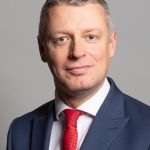
  • Luke Pollard – 2022 Tribute to HM Queen Elizabeth II

    Luke Pollard – 2022 Tribute to HM Queen Elizabeth II

    The tribute made by Luke Pollard, the Labour MP for Plymouth Sutton and Devonport, in the House of Commons on 10 September 2022.

    I rise to speak on behalf of people in Plymouth to express our condolences to the royal family on the death of the Queen. I have dated a lot of queens in my time, but I have only ever met the Queen once, shortly after being elected in 2018. It was a wet day at Plymouth train station, and I was doubly excited. First, as a train nerd, I was going to get a sight of the royal train. We do not get regal rolling stock in Devon very often, so I was excited about that. Secondly, it was a chance to see a true icon of our age, a leader like no other—the Queen. She toddled off the train, meeting the dignitaries and looking resplendent in a pink outfit and a pink hat. I looked down at my tie, which was bright pink as well, and thought to myself, “Queens really do wear pink.” When she got to me, she said, “Why aren’t you in Parliament?” I thought, “Oh dear, I’d better get this right.” I said. “Well, the Whips let me off.” She said, “I would hope they did, too.” She gave me a little smile, and I thought, “That was all okay.” That was the spirit of the Queen—meeting so many people and putting them at ease.

    The Queen was in Plymouth that day to decommission HMS Ocean before it sailed to Brazil. As the head of our armed forces, she visited Plymouth and Devonport dockyard on number of occasions. She was very much part of our military command structure, our Royal Navy and our Royal Marines. She first visited in 1942, at the age of just 16, visiting the dockyards with her father, King George VI. Four years later, she visited again as a sea ranger to see the battleship HMS Duke of York.

    The Queen’s visits to our city parallel our recovery, from the ashes of the Plymouth Blitz to the renewal and evolution of our military tactics with the Royal Navy and the Royal Marines, the rebuilding of Plymouth city centre and the opening of the civic centre in 1962. In 1988, as we marked the 400th anniversary of the Spanish armada, she opened the sundial in Plymouth city centre, giving our teenagers somewhere to meet their mates in town in the almost 40 years since.

    The Queen leaves an incredible legacy. As a daughter, wife and mother to Royal Navy officers, her links to the Royal Navy, and to Devonport in particular, are plentiful. They include not just when she presents the Navy with new colours, as she did in 2003, but her many visits to express sorrow for the members of our armed forces family we lost in action. Often those were visits without fanfare, and conversations with real heart.

    For my generation, the Queen was the grandma to the nation, a towering figure of female leadership. For a lifetime of devotion, selfless public service and duty, we say thank you. Long live the King.

  • Luke Pollard – 2022 Speech on Ofwat

    Luke Pollard – 2022 Speech on Ofwat

    The speech made by Luke Pollard, the Labour MP for Plymouth, Sutton and Devonport, in the House of Commons on 9 June 2022.

    It is a pleasure to follow so many people who are passionate when it comes to talking about water. As someone who worked for South West Water a very long time ago, I say that we need more people who are passionate about water, but we need more people who are passionate not just about sewage but the other aspects of water today. Many of those present have heard me rant about sewage for quite some time from both the Front Bench and Back Benches, and I will come on to that, but first, as we correctly focus on sewage, I want to talk about some of the other issues in the Ofwat strategic policy statement that I do not want this debate to neglect.

    Water matters: every drop matters, but every drop is carbon-intensive, and we must not forget that every drop we use—every drop we waste—has been pumped and purified and treated at enormous cost, not just financial but also environmental. Water companies are tightly regulated, and what goes in their business plans is what they will be doing in the next price review period. It is therefore important that the SPS guidance is not only strict, clear and ambitious but accountable so that we can see where progress has been made and put pressure on Ofwat and the water companies to up their game if they are missing those targets.

    The SPS that the Minister has released has many of the right words. I have a lot of time for the Minister not only because she is a fellow south-west MP—that automatically gets her some bonus points in my mind—but because she has fought hard on it. I must say that good progress has been made. I just want to ensure that the words in the SPS have teeth and that Ofwat has the powers to ensure that they are not just good words in a document and that we will see the transformative change that we need.

    I want to talk about four areas. First, there is the absence of a strategy in the SPS to decarbonise our water industry. I would like us to have a clearer sense of what that looks like. Secondly, we need to strengthen the nature restoration part of the proposals in the SPS. I have seen in previous price review negotiations how many innovative nature-based solutions—the upstream thinking—have been squeezed out in those negotiations, especially for those companies who did not get their price review approved the first time round. We need to ensure that nature-based schemes are protected, encouraged and grown rather than squeezed out.

    Thirdly, I agree with the Chair of the Select Committee, the right hon. Member for Ludlow (Philip Dunne), that we need a new approach to water sector regulation. I have some proposals to pitch to the Minister. Finally, I will echo concerns from across the House on sewage. It is simply unacceptable in 2022 that water companies routinely discharge tonnes and tonnes of sewage into our water courses, our rivers and our seas. It is not just about human effluent; we must equally be concerned about plastic pollution and the chemicals contained in that.

    As a south-west MP, and I think the only MP in the Chamber whose water company is South West Water, I have a specific question for the Minister. We are in a cost of living crisis, but South West Water has had the highest water bills in the country since privatisation because that part of the water industry was privatised with 3% of the population and 30% of England’s coastline. That meant that 3% of the population were paying for the coastal clean-up of nearly a third of our country. The dowry given to South West Water did not pay for it, so south-west bill payers have been paying through the nose for a long time to have a cleaner environment—which we do value. The high water bills in the west country have been recognised by the Government, and that is why they provide a £50 contribution to bills in two £25 payments. However, I understand from proposals published at the last general election that the £50 payment will end during this Parliament. Will the Minister confirm whether that is still the plan? As we face a huge cost of living crisis, can we focus not only on energy bills—gas and electricity—important as they may be, but recognise how high water bills, especially in a region that has the highest water bills in the country and some of the lowest wages, are a significant accelerator of that?

    Liz Twist

    Has my hon. Friend considered the proposals for a social tariff to address some of those problems?

    Luke Pollard

    I am grateful to my hon. Friend for raising social tariffs. We need the proper legislative framework and nationwide approach for which I think she has been arguing for some time. We must look at how social tariff versions vary between water companies, which affects people who move between different water companies. We must also ensure that water poverty is properly understood as a key part of the cost of living crisis. Far too frequently, I find that this type of poverty, which belongs to DEFRA, is separated in Government thinking and leadership from those types that belong to the Department for Work and Pensions or the Department for Business, Energy and Industrial Strategy. We need to ensure that the Government look at this area holistically across all Departments and do not allow a silo-based approach. There is merit in what she suggests, and I would like to see further action on it.

    One of those points which, joined up, could make a big difference is on housing retrofit. The Government’s record on housing retrofit is appalling—I think on both sides of the House we need Ministers to consistently go further—but when BEIS proposed measures to insulate homes, they related only to energy and gas reduction, not reducing water usage. Every single drop of water is expensive environmentally and financially, so that is very important. I would like the next iteration of housing retrofit policy proposed by Government to include water with the gas and electricity measures.

    On decarbonisation, the SPS misses a trick. It could have gone further by insisting that water is genuinely decarbonised, rather than relying on an incredibly large amount of offset to hit the 2030 net zero target. I would like the 2030 target to be more commonly adopted, but simply buying offset and loading the cost on to bill payers does not actually deliver the carbon reduction we need. I want every water company to be an energy company, using its land to install solar, onshore wind and other types of energy to reduce the energy intensity and carbon intensity of its own operations. That should have been in the SPS and it should be in business plans, but it seems to have fallen between those. Indeed, the language on pushing or challenging water companies to, as the SPS suggests, invest more in decarbonising the sector could be a bit tighter. I would like to see in the proposals what it actually means in practice.

    The proposal to halve leakage by 2050 is welcome, but the problem is that 2050 is a very long time away. I would like to see how much leakage reduction will be in the next price review period and how it can be accountable to others. The target of 110 litres a day is not enough. I would like to see us aim at 100 litres a day. Water companies around the country are achieving that, but we do not have enough water to go slow and we need to achieve that.

    Nature restoration needs to go further. I want the policies in the SPS to integrate with the policies proposed for environmental land management and farm management. At the moment, they do not seem to have joined up in the way we need them to. If we are to have the bolder change we need, we need a greater level of joined-up thinking on that issue.

    The Environment Agency has been raised by colleagues on the Government Benches. I am not a fan of the Environment Agency. I would like to see it go further. In the middle of an environmental crisis as we are, all too frequently it is too passive, too pastel shade. I would like to see it being a bit more “Grrr”—good luck, Hansard, in writing that one down.

    Daisy Cooper

    I have had huge frustrations with the Environment Agency in my constituency of St Albans, but I was very alarmed to receive an email from it not too long ago explaining that cuts to its budget meant that it would not be responding to a number of urgent reports from residents about various environmental issues. Is the hon. Gentleman concerned about that as well?

    Luke Pollard

    I am indeed, and I thank the hon. Lady for that intervention. We need to ensure that powers go with responsibilities and that funding, which is not there, follows. I am very mindful of the time limit you suggested, Mr Deputy Speaker.

    On sewage, we need stronger, bolder measures. What customers can expect in the next price review period needs to be clearer. I would like that commitment on the bills that are sent to consumers. What is the priority? What is the transparency, so people can look into that? Without a clear timetable and a priority list for closures, I am afraid that we are not going to see the urgency we really need.

    Finally, as a keen wild swimmer—I wear my wetsuit with pride when I go swimming in Plymouth Sound—we need more action on bathing water quality. Devil’s Point and Firestone Bay is a brilliant area of swim water in Plymouth, but it is not currently recognised as an official bathing water. At this very moment, there are beach volunteers on Devil’s Point and Firestone Bay recording how many swimmers, kayakers, paddle boarders and dog walkers we have on the beach and in the sea. That is a part of our campaign to have the water designated as official bathing water, meaning that there is water testing throughout the year, but especially in the key summer period, with the results published. That will give us a sense of what is in the water. I suspect we will have excellent bathing water, but when we have high levels of rain and raw sewage comes down the River Plym and the River Tamar, we will be able to understand what is in it. Is it human or is it agricultural? Then we can target raw sewage outlets for closure. That is the type of proactive measure I would like to see right around the country. That is why I want the SPS to go a little bit further. It is a good start, but I think there is more in there.