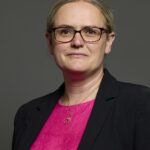
Tag: Lizzi Collinge

  • Lizzi Collinge – 2025 Speech on Access to NHS Dentistry

    Lizzi Collinge – 2025 Speech on Access to NHS Dentistry

    The speech made by Lizzi Collinge, the Labour MP for Morecambe and Lunesdale, in the House of Commons on 22 May 2025.

    NHS dentistry has been a recurring theme for me both before the election and since, as I know is true for most colleagues, which is why this Labour Government have made it a priority. However, we are starting from a very difficult place.

    Let me set out just how bad the situation is in Morecambe and Lunesdale. Last year, I knocked on the door of a man in Morecambe who had lost most of his teeth because he did not have access to dental care. Just yesterday, a constituent wrote to me asking me to speak in this debate. She and her husband travel more than 80 miles four times a year just to see their NHS dentist. They are retired and cannot afford to go private, and, like many older people, they need regular and more complex care. We do not have to look far to see the root of the problem—so to speak. Dentists have been telling us for years that the NHS dental contract is not fit for purpose. The contract creates perverse incentives. Dentists are discouraged from treating the patients who need them the most. I appreciate that this is partly because in the ’90s and early ’00s, the contract incentivised the over-treating of patients, but now the pendulum has swung back too far the other way, and we have to find a balanced approach.

    Dental decay is one of the leading causes of hospital admissions in children. In 2023, over 30,000 children ended up in hospital needing their teeth removed.

    Paulette Hamilton (Birmingham Erdington) (Lab)

    The Government have an historic commitment to prevention. Birmingham Erdington is one of the youngest constituencies in the country. Does my hon. Friend agree that we must continue to build on supervised brushing and targeted fluoride applications in early years settings to protect the youngsters?

    Lizzi Collinge

    My hon. Friend is absolutely right. Prevention is always better than cure. When I sat on Lancashire county council’s health scrutiny committee, we took evidence that showed that things such as supervised brushing and help with fluoride were some of the most cost-effective interventions, and they could prevent the horror of 30,000 children going into hospital for preventable tooth removal.

    Dental health has become a stark marker of inequality. Without ongoing care and access to that preventive care, children in less well-off families are more likely to suffer worsening dental problems.

    The contract was a major problem. It locked in those perverse incentives, but the situation was then worsened by over a decade of neglect of all areas of public health under the previous Government. Too many families do not go to the dentist until it is too late and it is very expensive, so we need those preventive measures that my hon. Friend the Member for Birmingham Erdington spoke about and we need access to NHS dentists. We know that if people are not able to go to the dentist, it means they turn up at A&E, but they are sent away with painkillers and antibiotics, and that does not fulfil their needs.

    I am pleased that our Government are taking this issue seriously. I am pleased that we recognise the scale of the problem, and I am pleased that we are taking action not only on NHS dentistry, but on preventive care. We owe it to families in Morecambe and Lunesdale and across the country to fix this broken system. We need a dental contract that actually works, fair funding for local services and access to care that is available when people need it.

  • Lizzi Collinge – 2024 Speech on the Terminally Ill Adults (End of Life) Bill

    Lizzi Collinge – 2024 Speech on the Terminally Ill Adults (End of Life) Bill

    The speech made by Lizzi Collinge, the Labour MP for Morecambe and Lunesdale, in the House of Commons on 29 November 2024.

    I thank Members on both sides of the House for the care and consideration that they have given to this debate. If the Bill is given a Second Reading today, there will be further lengthy scrutiny, but I want to address what I think is a bit of a misconception about it, namely the ideas that patients taking the decision to die and doctors assessing capacity, coercion and consent are somehow new. We have heard the word “Rubicon”. There seems to be an idea that this is a completely new sort of decision, and that this is something unusual and outlying in medical practice. I want to challenge that, because, actually, patients, doctors and indeed High Court judges are already making life-and-death decisions every day. As my hon. Friend the Member for Bury St Edmunds and Stowmarket (Peter Prinsley) said, in this case we are actually talking about death-or-death decisions.

    Let us take the example of withdrawal of treatment. One of my close family members who would not be covered by the Bill’s eligibility criteria starved herself to death through withdrawal of treatment. She had been unwell for many decades with a condition that would have eventually killed her. At one point she became unable to swallow. For many years she had relied on artificial nutrition, and when the type of artificial nutrition she needed changed to a more invasive process, she said, “Enough’s enough.” As a mentally competent adult under the current law, she was able to take that decision. People are already legally able to die early through withdrawal of treatment. I emphasise that she would not have been eligible under the criteria of the Bill, and I have no idea what she would have chosen if she had had a choice, but the fact remains that her capacity was assessed by a doctor and she was allowed under the current law to die early.

    The BMA has told us that it regularly assesses for capacity, coercion and consent in, for example, abortion care and—as in the example of my relative—dying through withdrawal of treatment. The Bill and the safeguards it would put in place would give a stronger framework of protection than the existing law.

    Under the Bill, two doctors would have to test for capacity, coercion and consent. That would have to be reviewed by a High Court judge and pauses for reflection are built into the process. If it does get to the point of an assisted death, the patient themselves must administer the approved substance.

    Let us be clear about who the Bill is for. The eligibility criteria are extremely narrow—some have argued that they are too narrow. The Bill is for mentally competent adults who are nearing the end of their lives. They are dying, and they are dying soon.

    Many people with a terminal illness will have a perfectly ordinary death managed perfectly well by palliative care. But we have heard in recent weeks—over many years, in fact—about the people who do need the Bill: the people for whom even the best palliative care simply does not work; those for whom merely the option of an assisted death gives them peace and comfort and a chance to enjoy the rest of their lives without fearing the manner of their death. With the safeguards contained in the Bill, who are we to deny them that peace? Who are we to decide what they must bear as they die?

    We have the power through a robust legislative process to prevent human suffering. Good palliative care and assisted dying are not at odds. They are not in conflict. They both aim for the same thing: a good death, surrounded by people you love, with minimal pain and without fear. Today, we can vote for that in the sure knowledge that if the Bill passes its Second Reading, it will undergo further intense scrutiny to ensure that it is a good law that works as it is intended to do. This is the start of a legislative process, not the end. I urge colleagues across the House to vote yes.