Tag: Liz Saville Roberts

  • Liz Saville Roberts – 2015 Parliamentary Question to the Cabinet Office

    Liz Saville Roberts – 2015 Parliamentary Question to the Cabinet Office

    The below Parliamentary question was asked by Liz Saville Roberts on 2015-10-20.

    To ask the Minister for the Cabinet Office, when his Department will make available the first draft of the Cabinet Office’s Welsh Language Scheme as required by the Welsh Language Act 1993.

    Matthew Hancock

    The Welsh Language Act does not require government departments to prepare Welsh Language Schemes.

    The Government Digital Service works closely with the Wales Office to ensure that that the Welsh language content on GOV.UK is underpinned by high quality user research that provides a simpler, clearer and faster service for users. It also gives government departments and other organisations which publish material on GOV.UK the ability to publish Welsh-language content in line with the requirements of their individual Welsh Language Schemes.

  • Liz Saville Roberts – 2015 Parliamentary Question to the Ministry of Defence

    Liz Saville Roberts – 2015 Parliamentary Question to the Ministry of Defence

    The below Parliamentary question was asked by Liz Saville Roberts on 2015-10-20.

    To ask the Secretary of State for Defence, what steps have been taken by Air Command in response to the UK Airprox Board’s recommendation that flying procedures be reviewed in the Machynlleth loop following a near-miss incident involving five aircraft on 27 August 2015.

    Penny Mordaunt

    I believe the hon. Member is referring to an incident that took place on 27 August 2014, in response to which the UK Airprox Board assessed no risk of collision existed.

    Following the UK Airprox Board’s recommendation, a review of entry and exit procedures has been completed. No changes have been made as the RAF considered that changing the procedures would adversely affect flight safety. However, the UK Military Low Flying Handbook was updated to highlight to military aircrews that they should exercise caution when entering and exiting the Machynlleth Loop.

  • Liz Saville Roberts – 2022 Tribute to HM Queen Elizabeth II

    Liz Saville Roberts – 2022 Tribute to HM Queen Elizabeth II

    The tribute made by Liz Saville Roberts, the Plaid Cymru MP for Dwyfor Meirionnydd, in the House of Commons on 9 September 2022.

    On behalf of Plaid Cymru, I offer my sincerest sympathies and condolences to Her late Majesty the Queen’s children and her extended family as they come to terms with their grief. Queen Elizabeth II was a constant presence throughout all of our lives. She stood as a figure of stability in a world changing at a rapid and sometimes frightening pace. The loss of the continuity that Her late Majesty embodied is a source of sorrow and anxiety for people across the world.

    Up to her final days she conducted her duties with an extraordinary dedication that has been an inspiration for so many of us. Her values of duty, service, reconciliation and forgiveness are held dear by the people of Wales. In Wales, we respect people who embody that sense of dedication to society and to public service; those who put their public duty first. Her late Majesty the Queen personified that duty for so many people for so many years.

    Her late Majesty had a canny ability to put people at ease in the midst of Palace formality. Three years ago, I was fortunate to be appointed to the Privy Council. I remember being nervous and intimidated by the protocols and rules that govern interactions with the royal family. Your mind, as it would, tots up an infinite checklist of everything that could possibly go wrong.

    What struck me was something she said: “You may well be worrying that you’ll do something wrong, or in the wrong order. Don’t worry. Whatever could possibly go wrong, I’ve seen it all before. There’s nothing that you could do that would shock me now.” Even among all the pomp and ceremony, there was that characteristic warmth and courtesy to the Queen.

    Her Majesty was a magnificent role model for older women across the world. Historically, of course, older women have disappeared from public life. The Queen was a constant visible figure throughout the 70 years of her reign. From historic buildings and charities to football, she always showed an interest in Wales. People of all walks of Welsh life have been touched by her keen interest in and constant support for Welsh organisations. She attended every official opening of the Senedd and showed due respect for Wales’s nationhood and our growing democracy.

    The Queen was patron to organisations as diverse as the Royal Welsh Agricultural Society, the Football Association of Wales, the Cardiff Royal Infirmary and the Welsh Pony and Cob Society. Her love of horses, from thoroughbreds to native ponies, shone through. We can see it in those sparkling smiles. Everyone in public life knows that they have a public smile, but the photos with the horses show her real smile.

    We now see one era drawing to a close and a new one at its very beginning. For now we will say, “Diolch yn fawr iawn.” “Thank you very much, your Majesty.” Cwsg mewn hedd. May she rest in peace. Bendith Duw ar y Brenin. God’s blessing on the King.


  • Liz Saville Roberts – 2022 Speech on Energy Price Capping

    Liz Saville Roberts – 2022 Speech on Energy Price Capping

    The speech made by Liz Saville Roberts, the Plaid Cymru MP for Dwyfor Meirionnydd, in the House of Commons on 8 September 2022.

    Diolch yn fawr, Ddirprwy Lefarydd. Hoffwn ddanfon dymuniadau gorau i’w Mawrhydu’r Frenhines. I, too, would like to send my best wishes to Her Majesty the Queen.

    Today’s announcement shows beyond doubt whose side the new Prime Minister is on. She is prepared to force taxpayers to carry the burden of borrowing billions of pounds to subsidise the shareholders of energy companies that are profiting from Putin’s war. It is shocking that she cannot even tell us how much that burden will cost today. I urge her to think again. Make energy companies pay their fair share. The global energy norm of energy profit taxation is 70%. Norway stands at 78%. Why does the population of the UK have to suffer the combined yokes of higher taxes, worse public services and falling real wages while private profit is protected under her premiership?

    We should use that money to return the energy price cap to the pre-April level of £1,277 a year and extend that cap to small businesses and charities. People are struggling now. Even at current prices, 180,000 households in Wales are forced to struggle even to afford items such as heating, food and toiletries. Bills of £2,500 are unaffordable for many, many people.

    Anything short of £1,277 as a cap will fail to meet the scale of the crisis that we face. It will require the Prime Minister’s Government—this is important—to introduce additional packages of support for vulnerable households, including doubling the £650 cost of living payment and revising the eligibility criteria to include those on disability benefits who are currently excluded from support. That will cost us more in future if we do not deal with what is genuinely facing us. Instead of pursuing fantasy economics of rampant deregulation and tax cuts for the rich, the Prime Minister must also prioritise a reduction in energy demand and investment in low-carbon sources. That is the only way to bring down energy bills in the medium and long term.

    Let me be clear and simple. It is time to unchain Wales’s renewable and low-carbon energy potential by vastly improving our grid capacity; bringing forward small modular reactors at Trawsfynydd in my constituency, Wylfa and other places; empowering the Welsh Government to deliver large-scale, transformative infrastructure projects, such as tidal lagoons; devolving management of the Crown Estate to Wales; and enabling community energy schemes to realise their full potential by selling their power directly to local customers. For us in Wales, it is clear that, in the long term, to fix this crisis for good, we must place our energy system and its huge potential in the hands of the people of Wales, for the benefit of the people of Wales.


  • Liz Saville Roberts – 2022 Speech on Achieving Economic Growth

    Liz Saville Roberts – 2022 Speech on Achieving Economic Growth

    The speech made by Liz Saville Roberts, the Plaid Cymru MP for Dwyfor Meironnydd, in the House of Commons on 18 May 2022.

    It is an honour to follow the hon. Member for Rugby (Mark Pawsey) and his broad critique of the Queen’s Speech.

    Today’s inflation figures add to mounting evidence of UK stagflation. The Conservatives’ record is of 12 years of failure to create an economy that delivers wellbeing for people across the United Kingdom—let us remember that they have been responsible for the economy for 12 years. From the banking crisis to the present day, the Conservative party has sought out every opportunity to impose austerity and to bring about a hard Brexit of its own making. Those have combined to aggravate the UK’s cost of living crisis. Yes, there have been other causes, which have been beyond our control, and possibly beyond any Government’s control, but these are ideological choices that will go down in history as Tory creations. Out of ideas other than to centralise powers that they do not possess and blame what they do not know, the Conservatives sit on their hands as the economy for which they are responsible fails to work for households and businesses across the UK.

    The Levelling-up and Regeneration Bill does nothing to correct past mistakes or deliver for the future. The Welsh Government have stated that this Government’s post-Brexit funding arrangement for Wales falls short by £772 million of structural funds alone for the period 2021 to 2025. That is not only

    “an assault on Welsh devolution”—

    not my words, but the words of Labour’s Minister for Economy—but a broken election promise. More broadly, sources including Bloomberg illustrate a failure to maintain current standards, let alone deliver any improvement, across most of the UK and especially across Wales.

    That is not what was promised on page 15 of the 2019 Welsh Conservatives manifesto, which said that

    “no part of the UK loses out from the withdrawal of EU funding”.

    It is certainly not what was promised on page 29, which said that

    “Wales will not lose any powers or funding as a result of our exit from the EU.”

    Three years into this Parliament and six years on from Brexit, this Government cannot articulate or deliver any clear benefits to Wales. We need an honest funding settlement, devolved engagement and a focus on delivery rather than glossy announcements.

    Other elements of the Queen’s Speech also give pause for thought. Rather than correcting Wales’s underfunding of more than £5 billion from HS2, it gives us—wait for it—Great British Railways. Rather than working with Transport for Wales, our publicly owned transport body, it seems that Westminster’s solution to historical underfunding is to override our solution while not correcting the underlying problems that need fixing. Put bluntly, this Government’s approach to a difficult problem is to stick a Union Jack on it and sing a song of praise to past glories. Nostalgia does not an economy make.

    Plaid Cymru drove the creation of the Development Bank of Wales, yet its future, and how the new UK infrastructure bank will work with rather than over the devolved institutions, is unclear. We do not know how what we are operating for ourselves to improve the economy of Wales will align with what is being done in Westminster. That is not good government.

    Alison Thewliss

    The right hon. Lady makes an excellent point. The Scottish National Investment Bank is already up and running, but there is nothing from the Government on how that will interact with their plans either.

    Liz Saville Roberts

    Exactly. The lack of clarity and working together does not help anybody’s economy.

    This Queen’s Speech does nothing for the basics of the Welsh economy or to address the ongoing cost of living crisis. I reiterate Plaid Cymru’s call for an emergency Budget and measures including a windfall tax, increased energy bill support and the expansion of the rural fuel duty relief scheme for Wales.

    Net zero is obviously in the Queen’s Speech but, alas, missed opportunities include the devolution of the Crown Estate and the establishment of a Welsh national energy company to support local renewable generation and fix grid capacity—measures, by the way, that Plaid Cymru has agreed with Labour in Wales through our co-operation agreement. It is good to see politicians working together in the common interest of all the people in all our communities, rather than in conflict. I ask the Government to address the shortage of grid capacity somehow, because without further grid capacity in many areas of Wales we cannot grow our own renewable supplies and make the best of that opportunity.

    Westminster’s refusal to countenance legitimate devolved proposals to boost our economy scorns our democratic voice. It emphasises how, until we have full powers over our future, we will always be treated as second best, simultaneously mocked for seeking handouts and told to be contented with handouts.

    I hope the Chancellor will address the immediate crisis with an emergency Budget, or whatever he chooses to call it, including measures such as a reformed SME tax relief in Wales to boost productivity as a first step. I also hope the UK Government’s vaunted Great British Nuclear will work with and learn from Wales’s existing Cwmni Egino, which is already at work to develop the nuclear licensed site of Trawsfynydd.

    Where there is a problem, it seems the UK Government’s answer is to cobble together a UK-branded institution to wallpaper over the self-perpetuating vortex effect of research funding, public investment and targeted tax relief that keeps the south-east of England within the pale of economic privilege and the rest of England’s regions, Northern Ireland and the nations of Scotland and Wales, as always, beyond it.


  • Liz Saville Roberts – 2022 Speech on Referring Boris Johnson to the Committee of Privileges

    Liz Saville Roberts – 2022 Speech on Referring Boris Johnson to the Committee of Privileges

    The speech made by Liz Saville Roberts, the Plaid Cymru MP for Dwyfor Meirionnydd, in the House of Commons on 21 April 2022.

    Before I start my main points, I want to mention a couple of things that I have been listening to. First, many of us on this side were aware that the Government were trying to kick the issue down the road with their abandoned amendment. We are two weeks away from the local elections, and their action begs the question of whether desperation to ensure that the way their MPs voted was not on the record was their motivator.

    Secondly, the Government’s approach is that they live in hope that the public’s memory is ruled by the news cycle and that the public interest will move on. I believe that they are fundamentally wrong in that assumption. Everybody who made a personal sacrifice during covid will remember their loss, pain and grief for the rest of their lives. It is engraved on our hearts. We are not going to forget. The Government may kick this down the road, but they are wrong if they assume that their safety is tied up with the news cycle. The Prime Minister’s behaviour will not be forgotten.

    Today we have a chance to correct the record, to reinstate credibility in our system and hold Conservative Members—and, indeed, all of us—to account, not only for their or our misdeeds but for our preparedness on occasion to defend the indefensible. Today is a chance for all Members, of all parties, to do the right thing, and our names should be on record when we want to do the right thing.

    Public trust in our democratic system is plummeting as we careen from one scandal to another, and the very reputation of our democracy, ourselves and the function that we are honoured with here is seemingly at stake.

    Some 73% of the British public are in favour of a Bill that would criminalise politicians who willingly lie to the British public. Plaid Cymru has been calling for stronger measures to ban politicians from lying in their public role, not just in the past few months, but for 15 years.

    We all know that we live in an age of public disenchantment. From that same poll, conducted by Compassion in Politics, we learnt that 47% of people have lost trust in UK politicians during the past 12 months. If we look back at the momentous events over the period, from the fall of Kabul to the pandemic to the Russian invasion of Ukraine and the cost of living crisis, what other conclusion can we draw than that we have failed in our duty to uphold the public’s trust?

    That sense of failure is not just a rhetorical gambit, a professional nicety or an optional extra for us here. From anti-vaxxers to the Putin regime, when we fail to confront mistruths, we create a truth vacuum in which division takes hold. When any “truth” is as good as any other, division along political lines comes to matter more than agreement on the common ground of facts. That matters.

    We work in an institution where we cannot call out the lies of another Member, regardless of their position of responsibility—lies that are broadcast around the country, recorded for posterity and therefore impressed on the memories of millions of people. We have no way of addressing that effectively.

    Although I defer to the Speaker’s judgment in this matter, partygate has demonstrated conclusively that our self-regulating system is no longer fit for purpose. The ministerial code has been proven not worth the paper it was written on. Gentlemen’s honourable agreements depend on the existence of honour. We must do better. If we cannot do better, because we make a mockery of the public’s concerns by shrugging our shoulders and accepting that it is merely part and parcel of modern politics, we must be compelled to do better.

    We as legislators must legislate to uphold our good names, and, by extension, the good name and efficacy of democracy itself. A first step would be a Bill; a second would be rebuilding our political model, much as Wales and our Co-operation Agreement has done, so that politics is built around what we share, rather than that which divides us. Honesty is the most important currency in politics. We have to restore it before we here are responsible in part for bankrupting our society.

  • Liz Saville Roberts – 2021 Speech on HRH The Duke of Edinburgh

    Liz Saville Roberts – 2021 Speech on HRH The Duke of Edinburgh

    The speech made by Liz Saville Roberts, the Plaid Cymru MP for Dwyfor Meirionnydd, in the House of Commons on 12 April 2021.

    I wish to speak on behalf of Plaid Cymru in Westminster and to express my party’s condolences to Queen Elizabeth and her family at the death of Prince Philip, and to share their sadness following the death of a husband, a father, a grandfather and a great-grandfather. Sorrow at the close of such constancy and stability resonates across families, communities and nations during this time of great loss, and there are many people in Wales who would desire that I convey their sorrow and sympathy today.

    Among the Duke of Edinburgh’s titles was Earl of Merioneth, which is now inherited by his eldest son. The Queen wears a wedding band made of gold from the Clogau St David’s mine above Bontddu, near Dolgellau in Meirionnydd. Prince Philip was stationed as an instructor of naval ratings at HMS Glendower, near Pwllheli, during the second world war. The navy camp became one of Billy Butlin’s holiday camps after the war, which the Duke and the Queen toured in an open-top Land Rover during a later visit.

    I, too, would particularly like to mention the Duke of Edinburgh’s contribution to the promotion of outdoor education for young people, and how he was influenced by the pioneering educator Kurt Hahn, initially during the Prince’s own schooling at Gordonstoun in Scotland and then with the establishment of the first Outward Bound centre in Aberdovey, Meirionnydd in 1941. This led in turn to the principles that continue to underpin the Duke of Edinburgh’s Award and that have enriched the lives of millions of young people. The four pillars of these principles are physical fitness, craftsmanship, self-reliance and compassion, and they are reflected in Wales’s educational initiatives, from the international baccalaureate at Atlantic College to the principles that inform the nation’s public curriculum.

    To close, I would like to say in Welsh: “Pob cydymdeimlad â’r teulu brenhinol yn eu galar, ac â phob teulu sy’n galaru am anwyliaid eleni. Boed iddyn nhw oll huno mewn perffaith hedd.” [Translation: Condolences to the royal family for their loss and to all those who are grieving for loved ones this year. May they all rest in peace.]

  • Joint Statement from Opposition Leaders on Behaviour of Dominic Cummings

    Joint Statement from Opposition Leaders on Behaviour of Dominic Cummings

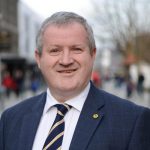
    The below letter was issued jointly by Ian Blackford from the SNP (pictured above), Sir Ed Davey from the Liberal Democrats, Liz Saville Roberts from Plaid Cymru, Colum Eastwood from the Social Democratic and Labour Party, Caroline Lucas from the Green Party and Stephen Farry from the Alliance Party, on 26 May 2020.

    It is now a matter of record that Mr Dominic Cummings broke multiple lockdown rules.

    He is yet to express any apology or contrition for these actions. There cannot be one rule for those involved in formulating public health advice and another for the rest of us.

    This is an issue that transcends politics. It has united people of every party and political persuasion, who believe strongly that it is now your responsibility as Prime Minister to return clarity and trust in public health messaging.

    We are clear that this can now only be achieved by removing Dominic Cummings from his post without further delay.

  • Liz Saville Roberts – 2019 Speech in Commons Following General Election

    Below is the text of the speech made by Liz Saville Roberts, the Plaid Cymru MP for Dwyfor Meirionnydd, in the House of Commons on 17 December 2019.

    Diolch yn fawr, Mr Darpar-Lefarydd, a llongyfarchiadau i chi yn eich parchus, arswydus swydd newydd. Thank you, Mr Speaker-Elect, and congratulations to you on your respected, sublime new role. I and many people here were present on 22 March 2017, and there is no doubt in my mind that the leadership and care that you showed us on that day have inevitably given us the faith to return you with pleasure today. Of course, we sympathise with all the victims of terrorist attacks in the intervening time.

    Let me take the opportunity to call on you, Mr Speaker-Elect, to work with the Llywydd in our Senedd in Wales, the Presiding Officer in the Scottish Parliament and the Speaker of the Northern Ireland Assembly in the spirit of equality and mutual respect. I call on you also to continue to develop the principles of equality, including equality of voice and equality of opportunity, much of which was upheld in the Speaker’s intern scheme, an excellent scheme that has brought people into this place who would not otherwise have had the opportunity.

    I close by saying that all Members here were returned in exactly the same way: by their—our—constituents. Those constituents all stand equal, regardless of whether their MP is a member of the Government or the Opposition; of a large party or a small party; or, indeed, the single representative here. All those constituents are equal and they deserve respect. I have every confidence, Mr Speaker-Elect, that you will ensure that their representatives here will have that equality of voice so that they can best represent their constituents.