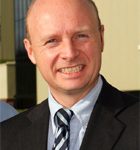
Tag: Liam Byrne

  • Liam Byrne – 2014 Parliamentary Question to the Department for Education

    Liam Byrne – 2014 Parliamentary Question to the Department for Education

    The below Parliamentary question was asked by Liam Byrne on 2014-06-16.

    To ask the Secretary of State for Education, what steps he has taken to increase the proportion of girls taking separate science at GCSE.

    Elizabeth Truss

    The number of girls taking separate science GCSEs increased between 2010 and 2013 from 53,000 to 74,800 (41%) in biology, from 51,400 to 73,600 (43%) in chemistry and from 50,700 to 73,200 (44%) in physics. Girls now make up approximately 49% of all those taking each of the separate sciences, compared to approximately 45% in 2010.

    The Government is committed to increasing take-up of separate science GCSEs, including increasing the proportion of girls as part of its commitment to improve overall take up of STEM subjects at A level and beyond.

    The “Your Life” Campaign, launched in May 2014, brings together business, educators, civil society and government to show how science and mathematics leads to exciting, successful careers. This will include a publicity campaign aimed at 14-16 year olds, which will aim to change the way they think about science-based subjects from boring, specialist and niche to empowering, exciting, enabling and for everyone.

    We are funding the Triple Science Support Programme to provide intensive support to schools with either no take-up or relatively low take-up of all three separate science GCSEs, and more general support to all other schools. We are also funding the Stimulating Physics Network to increase progression to physics A level, especially of girls. Much of the work the network does focuses on improving engagement and interest of pupils in physics at GCSE.

    Excellent teaching is vital and we are offering bursaries worth up to £20,000 and teacher training scholarships worth £25,000 to recruit more specialist science teachers. We are also funding up to 50 local science learning partnerships to provide CPD for existing science teachers.

    The Department for Business Innovation and Skills funds the STEM Ambassadors programme, a nationwide network of over 27,000 volunteers from industry and academia, 40% of whom are women, who work with schools across the UK to raise awareness of the range of careers that STEM qualifications can offer.

  • Liam Byrne – 2014 Parliamentary Question to the Department for Business, Innovation and Skills

    Liam Byrne – 2014 Parliamentary Question to the Department for Business, Innovation and Skills

    The below Parliamentary question was asked by Liam Byrne on 2014-03-31.

    To ask the Secretary of State for Business, Innovation and Skills, at what stage in the sell-off process student loans will be defined as currently subject to a sale for the purposes of revaluing impairments.

    Mr David Willetts

    Student loans are classified as Loans and Receivables and are carried in the Department’s Annual Report and Accounts at amortised cost in accordance with International Accounting Standards (IAS 39). Student loans are reviewed annually at the balance sheet date for any objective evidence of impairment, and the value is adjusted as necessary. This is not impacted by the sale process. In accordance with the standard, the classification of student loans will not change following initial recognition. Any gain or loss on disposal will be reported in the annual accounts following sale completion.

  • Liam Byrne – 2014 Parliamentary Question to the Department for Education

    Liam Byrne – 2014 Parliamentary Question to the Department for Education

    The below Parliamentary question was asked by Liam Byrne on 2014-06-04.

    To ask the Secretary of State for Education, what reports on the management, financial conduct and teaching standards at the Park View Education Trust he has requested since the school became an academy.

    Mr Edward Timpson

    The allegations made in relation to Park View Educational Trust in Birmingham are very serious and are being investigated. My Rt hon. Friend, the Secretary of State for Education, made a statement to the House on 9 June 2014 on the allegations.

  • Liam Byrne – 2014 Parliamentary Question to the Department for Business, Innovation and Skills

    Liam Byrne – 2014 Parliamentary Question to the Department for Business, Innovation and Skills

    The below Parliamentary question was asked by Liam Byrne on 2014-06-16.

    To ask the Secretary of State for Business, Innovation and Skills, what progress his Department has made on increasing the number of women in engineering roles.

    Mr David Willetts

    BIS funds or supports a range of activities aimed at increasing the number of women in science and engineering roles. 55% of National Science and Engineering Competition prize winners were girls, as was the UK Young Engineer of the Year 2014.

    BIS also funds STEMNET to run the STEM Ambassadors programme: a nationwide network of over 28,000 volunteers who visit schools to inspire young people, act as role models and bring STEM career opportunities to life. 40% of STEM Ambassadors are women. 91% of UK state secondary schools accessed STEM Ambassadors between 1 April 2013 and 31 March 2014.

    BIS is also part of the ‘Your Life’ campaign that is designed to boost participation in science, technology, engineering and maths at school and beyond. Over 180 leading businesses and institutions have pledged to do more to highlight the career opportunities open to those studying STEM subjects, committing to create over 2000 new entry level positions including apprenticeships, graduate jobs or paid work experience posts.

    As one of our pledges under the Your Life campaign, on 12 June 2014, my Hon. Friend the Minister of State for Skills and Enterprise (Matthew Hancock) announced £30 million funding to increase the supply of engineers, to encourage more women into the sector and to address engineering skills shortages in smaller companies. The fund will enable engineering companies to establish training programmes to develop future engineers and boost the number of women in the profession. £10 million of the fund will be directed to a call to ‘Developing Women Engineers’ and £10 million to a call to ‘Improving Engineering Careers’.

  • Liam Byrne – 2014 Parliamentary Question to the Department for Business, Innovation and Skills

    Liam Byrne – 2014 Parliamentary Question to the Department for Business, Innovation and Skills

    The below Parliamentary question was asked by Liam Byrne on 2014-03-31.

    To ask the Secretary of State for Business, Innovation and Skills, what his Department’s current target impairment for student loans is; how such a level was decided on; when this target was introduced; and what change there has been in this target since its introduction.

    Mr David Willetts

    This Department does not set a target for impairment of student loans. Our reforms were designed to put higher education on a sustainable footing. Universities are now well-funded and this is driving up the quality of the student experience and helping to stimulate economic growth, while keeping access to higher education free at the point of entry.

  • Liam Byrne – 2014 Parliamentary Question to the Department for Education

    Liam Byrne – 2014 Parliamentary Question to the Department for Education

    The below Parliamentary question was asked by Liam Byrne on 2014-06-04.

    To ask the Secretary of State for Education, when (a) he and (b) officials in his Department first heard about allegations of misconduct at the Park View Educational Trust.

    Mr Edward Timpson

    The allegations made in relation to Park View Educational Trust in Birmingham are very serious and are being investigated. My Rt hon. Friend, the Secretary of State for Education, made a statement to the House on 9 June 2014 on the allegations.

  • Liam Byrne – 2014 Parliamentary Question to the Department for Business, Innovation and Skills

    Liam Byrne – 2014 Parliamentary Question to the Department for Business, Innovation and Skills

    The below Parliamentary question was asked by Liam Byrne on 2014-06-16.

    To ask the Secretary of State for Business, Innovation and Skills, what assessment he has made of the effect of levels of public expenditure on science on UK economic productivity figures.

    Mr David Willetts

    A number of academic studies find a positive link between research and development (R&D) investment and economic growth. Much of the relevant evidence was set out in a recent report for BIS "Insights from international benchmarking of the UK science and innovation system[1]" and the 2014 BIS Innovation Report[2].

    A further recent UK report estimated that public investment in science yields a social rate of return of around 20%, through its impact on private sector productivity[3]. This means that for every £1 spent by Government on R&D, private sector output rises by 20 pence per year in perpetuity. This effect could be larger where additional public spending on R&D attracts additional private R&D spending. The same report and other studies have shown that there is a "crowding-in" effect of public investment on R&D. The effect is greater in industries that conduct significant R&D or collaborate with universities.

    [1]https://www.gov.uk/government/publications/science-and-innovation-system-international-benchmarking

    [2]https://www.gov.uk/government/publications/innovation-report-2014-innovation-research-and-growth

    [3]http://sciencecampaign.org.uk/UKScienceBase.pdf

  • Liam Byrne – 2022 Speech on a Strategy for International Development

    Liam Byrne – 2022 Speech on a Strategy for International Development

    The speech made by Liam Byrne, the Labour MP for Birmingham Hodge Hill, in the House of Commons on 6 July 2022.

    Let me declare my interest, at the outset of this debate, as the chair of the international parliamentary network on the World Bank and the International Monetary Fund. I congratulate the Chair of the Select Committee, my hon. Friend the Member for Rotherham (Sarah Champion), on bringing this debate to the House. Her timing, as ever, is impeccable. All of us here in this Chamber are watching the disintegration of the Government in real time, so in a way this debate is important because it is taking place at a hyphen moment between an Administration that are biting the dust and the construction of the new Administration that will no doubt take shape over the days and weeks to come. Like everyone who has spoken in this debate, I very much hope that the new Administration will look hard at the arguments we have made today and seek to reverse the appalling policy, the appalling cut and the appalling breach of trust represented by the slash in our aid budget.

    I want to supply three thoughts for today’s debate. The first is that at the heart of it is the simple truth that when the world needed us to step up, we stepped back. We stepped away from our obligations, we stepped away from our duties and we stepped away from our promises. Those promises were enshrined when we signed up to SDG2 and made a commitment to end hunger. Not only has breaking our promise to help to supply the finance for that destroyed trust in our country around the world, but people will die this year as a result of that broken promise.

    Many people here today have said that that decision could not have come at a worse time. The right hon. Member for Sutton Coldfield (Mr Mitchell) was among those who made that point, and he is absolutely right. We now have a crisis of food, fragility and finance that means that 200 million people around the world are facing a food emergency. We know that 60% of workers are still not earning what they did before the covid crisis, but we now have millions of people living almost in famine conditions and 200 million people who will face famine later this year unless things change. Things will change over the course of this year, but they will change for the worse.

    Just a week or two ago, I was with the Foreign Affairs Committee in New York and we were privileged to see the NATO Secretary-General. He is fighting tooth and nail for the deal to try to get tens of millions of tonnes of grain out of Ukraine and Russia and, crucially, tens of millions of tonnes of fertiliser out of Russia. If we fail in that task, the spike in food prices that we have seen over the last year will get worse. Even more seriously, if we do not get the fertiliser out in the next few months, we will jeopardise not just the wheat harvest for next year but the rice harvest for next year. We will begin to see up to 1 billion people face a food crisis if we do not make progress on that deal. People were already in a bad position because of covid, and they are in a bad position because of inflation, but it has now deteriorated substantially because of the crisis in Ukraine.

    Governments around the world are out of headroom on taking the fiscal measures needed to alleviate this coming crisis. More and more developing countries now denominate their debt in dollars rather than domestic currency, which means they are super-exposed to rising interest rates in the United States. Average interest rates on lower-income debt are up by about 77 basis points this year, and we now know that something like 12 countries around the world are already on the brink of debt distress. We already see unrest in some countries in Africa, and we see the consequences of the debt crisis in Sri Lanka. Things will become far worse this year unless we get our act together.

    Of course, the problem is most acute in countries that are fragile and where there is violence. Frankly, countries and agencies such as Russia and the Wagner Group are already perpetrating barbaric human rights abuses in Mali, Libya, Syria and another 18 countries around the world. This crisis of food fragility and finance will not sort itself out, which is precisely why this is such an appalling time for the Government to make their aid cut.

    My second point is a particular interest of mine, which is that the Government’s negligence is all the worse because they are not using the new tools they have been given. Last year, under Kristalina Georgieva’s leadership of the International Monetary Fund, the global community took the collective decision to mint $650 billion-worth of special drawing rights. Overwhelmingly because of the quota system, those special drawing rights go to richer countries like us. In fact, the special drawing rights coming to G7 countries total about $196 billion, which is about a third of the special drawing rights that have been issued.

    Where are those special drawing rights? Where is the deployment of that resource to tackle this crisis of food fragility and finance? Right now, those SDRs are gathering dust in the vaults of central banks and treasuries around the world. They are just sitting there. We have failed to mobilise that resource in the way we promised when we signed off on the commitment to issue the special drawing rights in the first place.

    The UK is a big shareholder that helped to found the International Monetary Fund, so we have been given £19 billion of special drawing rights. We have made commitments to share back about 20%. Why is 20% the magic number? We have just been given £19 billion. This is a slightly technical issue, but our SDRs go into something called the exchange equalisation account, which was set up in 1979 and underpins currency stability in this country. It has been restocked with £74 billion over the last 10 years to a level that the Treasury deems to be capital adequate, about £154 billion or $185 billion in total.

    We have restocked the exchange equalisation account and then, from left field, comes another £19 billion that we did not forecast and that we do not need because we have already restocked the account. Why have we suddenly decided to share just 20% of it? There is no logic for that percentage.

    The Government have so much grip on this topic that, when I asked the Foreign Secretary at last week’s Foreign Affairs Committee how much had actually come in through the special drawing rights, she did not know. She literally did not know that Her Majesty’s Government had just been handed £19 billion, which is twice the aid budget. I then prosecuted the argument and asked, “What is your target for sharing? How much are we supposed to share back?” She answered, “I don’t know.” I asked the Prime Minister the same question this week, and he did not know either. They could perhaps be forgiven if the numbers were not so big and if the crisis were not so serious, but this is absolutely crazy. We have a global crisis and the Government are simply not in control. They do not have a grip on sharing back and rechannelling some of the biggest assets and resources available to us.

    The point about multilateralism, which my right hon. Friend the Member for Leeds Central (Hilary Benn) and my hon. Friend the Member for Rotherham (Sarah Champion) mentioned, is fundamental. Last week’s G7 communiqué made a very clear statement that G7 leaders want to step up the mobilisation of $100 billion, but the truth is that, of the G7 countries, we have made a commitment, Japan has made a commitment and the French have made a commitment. Congress has blocked the President of the United States sharing $21 billion, and we do not yet have information from the IMF on the others—I checked yesterday. So we are miles away from mobilising the $100 billion that was promised at the G7, and people are going to starve this year unless we get a grip. So my call on the Government today is to give us a good explanation for why we should not be sharing three quarters of the special drawing rights we have been given; why we are not leading a global effort to get to that $100 billion target; and why we are not insisting on more flexibility, such as giving the SDRs to multilateral development banks, such as the African Development Bank, which could be making such an impact on the ground. We need to be saying to the IMF that countries do not need to participate in a conditionality programme with the IMF in order to receive some of this money. I discussed that with the Secretary-General of the UN and we both agree on it. We are not going to lead the mobilisation of this effort if the politicians in charge at the helm are, frankly, in such a shambolic state. So my message to the Minister and the new Administration is: please get a grip of this enormous new resource that we have been given.

    My final point is, in part, inspired by what my neighbour the right hon. Member for Sutton Coldfield (Mr Mitchell) said about China. For some years now, we have been having a debate in this country and among our allies about the influence of China and this vexed, significant issue of debt diplomacy. If we look at the countries that did not support the UN resolution on Russia, we see that, on average, they owe five times more debt to China than the countries that supported the resolution. As for whether that is a coincidence, you be the judge. The point is that the debt in many of these countries is about to fall over and the G20 common framework process, which we have held up as the great saviour of debt sustainability, has been so successful that precisely zero countries have engaged in it. So it ain’t working and we need a different approach. We could be restructuring developing country debt using IMF and World Bank resources. The World Bank has just committed $170 billion to an emergency programme that we could be using to restructure the debt of vulnerable countries around the world—right now we are simply not doing that. If we do not want to live in a world where China is the lender of last resort to countries around the world, let us use the Bretton Woods institutions that we set up in 1944 to avoid that dilemma.

    In the midst of a big war, in 1941, the Atlantic charter was signed, and its story is extraordinary. Our Prime Minister at the time, Mr Churchill, was on the other side of the Atlantic with President Roosevelt and the draft of the charter was sent to Downing Street. Clement Attlee was in the Chair and he convened the Cabinet at two o’clock in the morning in order to review the draft and make one vital change. He added article 5, which said that one of our war aims would be that the victors would

    “desire to bring about the fullest collaboration between all nations in the economic field with the object of securing, for all, improved labor standards, economic advancement, and social security”.

    Three years later, at Bretton Woods, President Roosevelt, welcomed delegates from 44 countries from around the world with these words:

    “the economic health of every country is a proper matter of concern to all its neighbors, near and distant.”

    As we begin to think about what the new world looks like, those are wise words to guide us.

  • Liam Byrne – 2021 Speech on Foreign Aid Cuts

    Liam Byrne – 2021 Speech on Foreign Aid Cuts

    The comments made by Liam Byrne, the Labour MP for Birmingham Hodge Hill, in the House of Commons on 13 July 2021.

    That was a great speech and it is a pleasure to follow it.

    The House does not need a former Chief Secretary to the Treasury to lay out how today’s motion is a con job, but I shall explain it anyway. The Red Book published at the most recent Budget shows that public sector net debt will not fall until 2024 at the earliest, but there is no way that a Chancellor or Chief Secretary would ever make a judgment about whether it was falling sustainably on one year alone, which means that this cut is now forecast to stretch way into the next Parliament. Yet the sums we are talking about are just 0.14% of the national debt stock. This comes at a time when we are putting up defence spending by £24 billion yet cutting aid spending by £4 billion. We are boasting about our soft power superpower status and then slashing into the budget that delivers that soft power. A country’s values are judged by its budget, and this aid cut tells us everything we need to know about this Government’s priorities.

    The second point is that this aid cut will cost lives and it will cost livelihoods. The Prime Minister sailed into the G7 very proud of his declaration that he wanted to jab the world and make sure that, by the end of next year, the world would be safe from covid. However, by the end of the G7, the IMF said that we were about $23 billion short of what we needed for a global vaccination programme. This aid cut will not help that; it will hurt that effort to jab the world.

    Moreover, we have a significant problem now getting the world back on its feet after this pandemic. The IMF thinks that we need about $200 billion extra in spending to protect the world against covid and $250 billion of extra investment—climate-friendly investment—to help safeguard the recovery. How will this aid cut help with that great global project that we must attend to in the years ahead? It will not; it will damage the world’s efforts to get there and it will damage our efforts to help persuade others to get to that big target.

    It is 36 years to the day since we celebrated Live Aid, an example of how we in this country set out to lead the world to help the world’s poorest. On this day of all days the Government are set to surrender that leadership. We cannot have a rules-based order if we have a Prime Minister who continues to shred the rules. This is a renegade act by a renegade Government and I will be voting against the motion tonight.

  • Liam Byrne – 2021 Speech on Holocaust Memorial Day

    Liam Byrne – 2021 Speech on Holocaust Memorial Day

    The speech made by Liam Byrne, the Labour MP for Birmingham Hodge Hill, in the House of Commons on 28 January 2021.

    Let me add my thanks to everybody who has helped to sponsor and organise this debate. I, too, pay tribute to the Holocaust Educational Trust and the Holocaust Memorial Day Trust for helping to ensure that the debate is so well organised and so well informed. Seventy-six years on, we still do not look out on a world where we have banished genocide. We cannot yet look out on a world where we have banished antisemitism. Until that moment comes, we need debates like this to remember with contrition and humility, as well as determination, how much further we still have to go.

    I want to offer two lessons today that I have reflected on in the run-up to this important day. One is a lesson not from Britain but from Denmark: it is the story of the Danish resistance. Those of us have been to Yad Vashem will know that in the Avenue of the Righteous there is only one memorial to an entire national movement, and that is the memorial to the Danish resistance. This movement came together in 1940 after Hitler invaded Denmark. Together, it organised the extraordinary evacuation of 7,200 Jews, along with 700 of their relatives, in October 1943 after Hitler had given the order to arrest the Jews, with extermination in mind.

    This was an exercise in good people coming together—people like Sven Teisen, a member of the Danish resistance, who lost his life in the course of 1943, and Oliver Sandberg, who gave over their house next to the Øresund, over which Jews were ferried to safety in Sweden. Sven Teisen was the uncle that I never knew. Oliver Sandberg was his cousin. They were among thousands of ordinary Danes who came together inspired by one simple idea: that ordinary people can make a difference in standing up to hate.

    I am so grateful that our schools are now teaching this lesson to our children. They are schools like Rockwood Academy in Alum Rock my constituency. This is a gold standard Holocaust Educational Trust school that has brought alive the testimony of Mady Gerrard. It has named its new building after Mady, and its lights now shine up like a light in the darkness to help light up the January skies here in Birmingham. I want our region to become a region of sanctuary for refugees in the years to come.

    I want us to listen to the lessons of Sofia Darr, the headteacher, who I heard from this morning. She said that she has just seen the most extraordinary emotional journey of her children. She wants us to reflect on how we help them to connect at a human level, and on how we recognise their pledges by bringing them together and putting them on a national stage, giving our young people, through their leadership, the chance to genuinely spark a movement for change against hate.