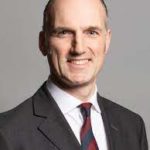
Tag: Leo Docherty

  • Leo Docherty – 2023 Statement on the UK-lraq Relationship on 20th Anniversary of Iraq Conflict

    Leo Docherty – 2023 Statement on the UK-lraq Relationship on 20th Anniversary of Iraq Conflict

    The statement made by Leo Docherty, the Parliamentary Under-Secretary of State for Foreign, Commonwealth and Development Affairs, in the House of Commons on 16 March 2023.

    My noble Friend the Minister for the Middle East, North Africa, South Asia and the United Nations, Lord Ahmad) has made the following written ministerial statement:

    20 March 2023 marks the 20th anniversary of the beginning of the conflict in Iraq. This anniversary is an opportunity to remember the service and sacrifice of all those who served in the conflict. At this time, we pay particular regard to those service personnel, British, allied and Iraqi, as well as civilians who died or were wounded in the conflict in Iraq. It is also a time to reflect upon the conflict and Parliament’s role in it, and to restate the UK’s enduring commitment to support the development of a stable, prosperous and democratic future for all Iraqi people.

    All of us will undoubtedly have in mind today the 179 British and allied personnel who lost their lives in the conflict. I pay tribute to them and to their bravery, and my sympathy goes out to their families for their loss. Their sacrifice and determination to make the world safer for all of us will never be forgotten. Next week Ministers from HM Government will attend commemorative events across the UK, remembering all those who served in the conflict and particularly those who gave the most. Today we have in our thoughts those service personnel that died, and those who were wounded or injured as a result of the conflict. We also remember and give thanks to all personnel of the UK armed forces who served in Iraq, and their families, who provided vital support at home whilst their loved ones were deployed.

    We also have in mind the many Iraqi citizens who were killed during the conflict or who have died since in military operations, bombings, acts of terrorism or through sickness and disease. There is no doubt that the people of Iraq have faced enormous and grave challenges over the last 20 years.

    As part of our remembrance, we must ensure we continue to implement the hard won and costly lessons. The UK Government have learned much from the Chilcot inquiry and continue to draw upon it as we improve national security decision making and implementation. The purpose of the inquiry was to examine the United Kingdom’s involvement in the conflict in Iraq, including the way decisions were made and actions taken, to establish as accurately and reliably as possible what happened, and to identify lessons to be learned. The FCDO continues to institutionalise the Chilcot lessons learned across policy, operations and strategy so that staff are equipped to support decision making and implementation in complex contexts.

    We should also look forward. Today, the UK and Iraq share a close and enduring partnership, working together to address shared global challenges. Through the global coalition against Daesh, NATO Mission Iraq and our long-term bilateral initiatives, we remain committed to Iraq in its fight to defeat Daesh and to enjoy peace and stability. We are working with the Government of Iraq to support economic reform, energy transition, human rights and freedom of religion and belief, and to mitigate the effects of climate change. These joint efforts to unlock Iraq’s immense potential, as represented by its young population, characterise the relationship in 2023.

    I saw this for myself during my visit to Iraq at the end of February. There has been significant progress since 2003 but we are committed to supporting further progress and strengthening our partnership with Iraq. The UK remains committed to preserving the unity, sovereignty and territorial integrity of Iraq. We stand shoulder-to-shoulder with the Government and people of Iraq to safeguard stability and deliver prosperity.

  • Leo Docherty – 2023 Statement on Saudi Arabia’s Execution of Hussein Abo al-Kheir

    Leo Docherty – 2023 Statement on Saudi Arabia’s Execution of Hussein Abo al-Kheir

    The statement made by Leo Docherty, the Foreign Office Minister, in the House of Commons on 16 March 2023.

    Saudi Arabia, of course, remains a Foreign, Commonwealth and Development Office human rights priority country, in part because of the continued use of the death penalty. It is long-standing UK policy to oppose the death penalty in all circumstances, in all countries, as a matter of principle. The Saudi Government are well aware of the UK’s opposition to the use of the death penalty. The UK Government have consistently raised the issue of the death penalty, including the case of Jordanian national Mr Hussein Abo al-Kheir, with the Saudi authorities. The Minister for the middle east and north Africa and for human rights, Lord Ahmad of Wimbledon, has actively raised concerns about the death penalty and the specific case of Mr al-Kheir with the Saudi authorities on multiple occasions, including doing so with the president of the Saudi Human Rights Commission in December 2022 and when he visited the kingdom in February 2023. Lord Ahmad also raised the case with the Saudi ambassador to the UK, including in November 2022 and in January of this year.

    On learning about the imminency of the execution, which took place on Saturday 11 March, Lord Ahmad again spoke to the president of the Saudi HRC, the Saudi vice-Foreign Minister and the Saudi ambassador. Saudi Arabia is committed to an ambitious programme of economic and social reform, through “Vision 2030”, which has already delivered significant change, including increased freedoms and economic opportunity for women. However, the human rights situation is likely to remain a key issue in our engagement for the foreseeable future. We will continue to discuss human rights and the death penalty, including individual cases of concern, with the Saudi authorities.

  • Leo Docherty – 2023 Speech at the Pledging Conference on the Humanitarian Crisis in Yemen

    Leo Docherty – 2023 Speech at the Pledging Conference on the Humanitarian Crisis in Yemen

    The speech made by Leo Docherty, the Minister for Europe, on 27 February 2023.

    Friends and colleagues,

    As we have heard, the humanitarian situation in Yemen is dire.

    Millions of people continue to suffer the consequences of years of conflict,

    And this suffering is made worse by the deteriorating economy, and damaged public services.

    I would like to thank the UN, Switzerland, and Sweden for hosting this conference, and all of those generously pledging today.

    Your contributions will save lives and alleviate suffering, and the United Kingdom will continue to play its part. This includes resolving the immediate threats posed by the Safer oil tanker. We have a chance to get Safer done if donors and the UN are bold and brave in the next few months.

    We have provided more than one billion pounds in aid to Yemen since the start of the conflict.

    Over the next financial year, the UK hopes to match last year’s budget and will pledge up to 88 million pounds.

    This will feed at least 100,000 Yemeni people every month,

    provide lifesaving health care and nutrition services through 400 health care facilities,

    and treat 22,000 severely malnourished children this year.

    In addition to funding, we must also ensure that aid is delivered as effectively as possible.

    The recommendations from the 2022 Inter-Agency Humanitarian Evaluation must be implemented to improve the quality of the response.

    But humanitarian teams working on the ground are facing increasing challenges right now.

    Bureaucratic restrictions are hampering aid delivery,

    And mahram, requiring women to be accompanied by a male guardian, is preventing female aid workers from working. Without them, the response cannot meet the needs of women and girls.

    It is vital that the authorities authorise independent assessments and monitoring to ensure aid goes where it is needed most.

    We must also listen to the voices and views of ordinary people in Yemen.

    This will enable the international response to be accountable to the people we are trying to help.

    A return to full-scale conflict has been avoided in Yemen, which is indeed good news.

    Now, is the time to build a better future for the Yemeni people.

    Parties to the conflict must seize this opportunity for peace, which is the only way to end this humanitarian crisis for good.

  • Leo Docherty – 2023 Speech at the UN Conference on Disarmament

    Leo Docherty – 2023 Speech at the UN Conference on Disarmament

    The speech made by Leo Docherty, the Minister for Europe, in Geneva on 27 February 2023.

    Every member state of this Conference has the responsibility to work towards a more peaceful and stable world, through disarmament. For the vast majority represented here, that is indeed our shared objective.

    But all too often, we see some States doing the opposite.

    It is over a year since Russia launched their illegal invasion of Ukraine.

    It is an unprovoked, premeditated and barbaric attack against a sovereign democratic state.

    And an egregious violation of international law and the UN Charter.

    We continue to see mounting evidence of horrific acts committed by Russia’s forces against civilians.

    The UK and our allies will continue to support the Ukrainian government in the face of this assault on their existence.

    Russia’s announcement last week that it has suspended participation in the New START treaty further shows their willingness to undermine strategic stability.

    We continue to urge Russia to immediately return to full compliance of the Treaty and engage constructively with the USA on this matter.

    We will continue to explore every diplomatic avenue to uphold international law, and strengthen our collective disarmament architecture.

    In addition to major nuclear armed states willing to flout international norms of behaviour, we collectively face a range of challenges.

    We face continuing proliferation concerns about the activities of the Democratic People’s Republic of Korea and Iran.

    We are concerned with DPRK’s continued escalation of its nuclear and ballistic missile programmes. We condemn these tests which are in clear breach of United Nations Security Council Resolutions.

    We face Assad’s willingness to use chemical weapons.

    And emerging threats posed by new and disruptive technologies.

    To overcome these we must refresh our thinking, and redouble our commitment to build on the foundations of our common disarmament and non-proliferation institutions.

    The Nuclear Non-Proliferation Treaty – or NPT – remains the cornerstone of international nuclear security. And the only pragmatic route to a world without nuclear weapons in our current security environment.

    The UK remains firmly committed to the NPT, and to fulfilling our obligations under all three pillars of the Treaty.

    We remain committed to the long-term goal of a world without nuclear weapons.

    And firmly believe the best way to achieve this is through gradual multilateral disarmament, negotiated within the framework of the NPT, including in this Conference.

    Collectively we have the ability to create a safer and more stable world, where countries with nuclear weapons feel able to relinquish them.

    However, the deteriorating security environment means we must remain realistic about what can be achieved in the short term.

    The UK is focused on preparing the ground for what can pragmatically be achieved over the next NPT review cycle and beyond.

    We are working with other States on the verification and irreversibility challenges, which will need to be addressed as part of final disarmament.

    We will continue to play a leading role on transparency, within the limits placed by our non-proliferation obligations and our overarching national security concerns.

    We will continue to develop concrete initiatives on reducing the risk of the use of nuclear weapons.

    And we will continue to press for the entry into force of the Comprehensive Test Ban Treaty.

    And the beginning of negotiations, in this Conference, on a Fissile Material Cut-off Treaty – the logical next step along the road to a world without nuclear weapons.

    Mr President,

    We only have to look to President Putin’s assault against Ukraine…

    and Assad’s on his own people…

    and the lives blighted by the illicit trade in small arms and lights weapons across the world…

    to realise that the use of conventional and chemical weapons remains a present, real and urgent threat.

    The diversion and misuse of conventional weapons – particularly small arms and light weapons – costs hundreds of thousands of lives every year…

    destroys security and sustainable development…

    and fuels conflict, crime and terrorism.

    The effective control of conventional weapons and ammunition should therefore be a goal that unites us all.

    The United Kingdom was proud to sign up to the Political Declaration on Explosive Weapons in Populated Areas in Dublin in November. I warmly commend the Government of Ireland for its leadership in this endeavour. As Putin’s missiles rained down on Ukrainian homes and civilian infrastructure, the Declaration is a powerful commitment to strengthening the protection of civilians in urban warfare under International Humanitarian Law.

    The UK will continue to play a leading role in tackling the scourge of landmines, cluster munitions and other explosive remnants of war, including as a result of the conflict in Ukraine.

    We must also do more work together to counter IEDs, and prevent non-State actors and violent extremists from obtaining the components to make them.

    The United Kingdom condemns Syria’s use of chemical weapons in Douma and in multiple other attacks.

    It is time for the disarmament community to move from severe condemnation to severe consequences, for those that use them.

    The UK will continue to work for a world free from chemical and biological weapons, and we urge all states to play a constructive part in this process.

    As the Biological Weapons Convention nears its 50th year in force, the UK will strive to make the most of the process we all agreed at last year’s Review Conference to bolster our implementation of this Convention. It represents a once-in-a-generation opportunity to meet the evolving threats from biological weapons in the 21st century. We must seize it and endow the Convention with the scientific and technical advice it needs, and explore ways in which new technologies can help assure compliance with its obligations.

    Mr President,

    Just as the threats we face in the nuclear, biological, chemical and conventional domains have evolved, so it is in outer space.

    We are pleased to see progress in the Open-Ended Working Group on reducing space threats through norms, rules and principles of responsible behaviours.

    All of our societies and economies rely on a cooperative approach to the use of technologies in space.

    So we encourage all states to engage constructively and work towards a consensus report, that can inform next steps in the UN General Assembly.

    This Conference also has a vital role to play in negotiating agreements on preventing an arms race in outer space, whether legally binding or otherwise.

    To conclude, Mr President.

    The UK is firmly committed to playing a full role in advancing the international disarmament agenda.

    And we are grateful for the cooperation of all partners who approach these thorny issues constructively, and with integrity.

    Let me point out that many of those partners are not members of this Conference, and are being barred from taking up their rightful seats as observers by the Russian delegation. We deplore this obstructionism, and call for all UN Member States to be allowed to participate in the work of this Conference as has long been our practice.

    The challenges facing our collective work are monumental.

    We must take a constructive and open-minded approach to finding new solutions to old problems.

    But we must also stand by the frameworks and agreements that we have so painstakingly built.

    And hold all states accountable to agreed norms and standards, and the commitments they have made.

    Thank you.

  • Leo Docherty – 2023 Statement on the UK Visit of Governor of Xinjiang

    Leo Docherty – 2023 Statement on the UK Visit of Governor of Xinjiang

    The statement made by Leo Docherty, the Parliamentary Under-Secretary of State for Foreign, Commonwealth and Development Affairs, in the House of Commons on 9 February 2023.

    We understand from the Chinese embassy that the governor of Xinjiang may visit the UK next week. To be very clear, he has not been invited by the UK Government or the Foreign, Commonwealth and Development Office, and we have no confirmation that he will, in fact, travel. Our expectation is that he will travel on a diplomatic passport, and therefore he has not yet been granted a visa. If he does visit, I assure this House that under no circumstances will he be dignified with a ministerial meeting.

    China’s actions in Xinjiang are abhorrent and we will not legitimise them in any way. However, robust engagement to challenge human rights violations and to stand up for the rights of the oppressed is at the core of the UK’s diplomatic work around the world. We must be prepared to use diplomatic channels to achieve that end, hence officials would be prepared to offer him a meeting. In line with that principle, there is only one reason why such a meeting would take place—to make absolutely clear the UK’s abhorrence of the treatment of the Uyghur people and to say that we will not relent from exposing the horrors to which they are subject. That point needs to be set out clearly to China. It is only right that people responsible for human rights violations are confronted on these issues.

    The UK has played a leading role in international efforts to hold China to account on Xinjiang. In 2019, we became the first country to step up to lead a joint statement on China’s actions in Xinjiang at the UN. Since that first statement, which was supported by 23 countries, we have worked tirelessly through our global diplomatic network to broaden the caucus of countries speaking out. Our leadership has sustained pressure on China to change its behaviour and consistently increase the number of countries speaking out. Most recently, our diplomatic effort helped to secure the support of a record 50 countries for a statement on Xinjiang at the UN third committee in October.

    We have imposed sanctions on four individuals and one entity in Xinjiang, and have introduced robust measures to tackle forced labour in supply chains. We have consistently raised our concerns at the highest level in Beijing. Let me be absolutely clear that we will continue to emphasise at all levels that the world is watching what China’s authorities say and do in Xinjiang. They cannot hide their abuses. The UK and our allies will not turn away.

  • Leo Docherty – 2022 Speech on the International Day for the Elimination of Violence Against Women

    Leo Docherty – 2022 Speech on the International Day for the Elimination of Violence Against Women

    The speech made by Leo Docherty, the Parliamentary Under-Secretary of State for Foreign, Commonwealth and Development Affairs, in Westminster Hall, the House of Commons on 1 December 2022.

    I am glad to be able to respond to this powerful and forthright debate. I am grateful to the hon. Member for Bristol South (Karin Smyth) and my hon. Friend the Member for Thurrock (Jackie Doyle-Price) for calling the debate and leading off. I should say that this subject sits in the portfolio of the Minister of State, Foreign, Commonwealth and Development Office, my right hon. Friend the Member for Sutton Coldfield (Mr Mitchell), but I am pleased to be here in his place. I am grateful for Members’ contributions, and I will try to cover them all and give some assurance about the Government’s policy.

    The hon. Member for Bristol South laid out in quite stark terms the landscape of inequality and risk that women and girls face with regard to gender-based violence. She kicked off with remarks about Qatar and put the subject in the context of Ukraine, but she also focused on her constituency and Bristol. That was quite an alarming picture. She made very good points about the need for specialist rape courts, for particularly well-qualified individuals to be working in our police forces, and for a data-driven response to that challenge. I commit to her that I shall gently ask one of my fellow Ministers, perhaps from the Ministry of Justice or the Home Department, to write to her with an update on how we are getting on in relation to specific expertise in dealing with rape cases in our courts system. I was very grateful that she raised that.

    My hon. Friend the Member for Thurrock was frank in her very stark assessment of how poorly we are doing when it comes to the statistical feedback. She laid down a very forthright and welcome challenge to the Government, and she drew attention to the very bad experience of our own colleagues in conducting their lives as female MPs. She mentioned the very dignified and powerful speech delivered to us and all colleagues by Madam Zelenska on Monday and put that in the context of our efforts in Ukraine.

    I am glad that my hon. Friend commended our PSVI conference, but she also reflected that we need to keep our own house in order, and we accept that challenge. Our policy should not be just words, and she made the case for proper therapeutic care in the NHS and proper protections for rape victims in prisons. Again, I will ask my colleague in the Ministry of Justice to write to her with an update about the situation regarding proper protections in prisons. I will also ask, from the NHS side, for an update on the therapeutic care pathway for rape victims. I will be very pleased to do that.

    My friend the hon. Member for Strangford (Jim Shannon) spoke movingly about the international context with regard to victims of gender-based violence and about kidnap in Nigeria and the Yazidis in Iraq. Of course, we are keenly aware of the ravages of Islamic State in Nigeria. We raise that on a very frequent basis with the Government of Nigeria, and we will continue to do so. I thank the hon. Gentleman for raising those cases here today.

    My right hon. Friend the Member for Romsey and Southampton North (Caroline Nokes) referred very forthrightly and movingly to the Killed Women organisation. I am grateful to her for raising that. I was glad that she commended the Domestic Abuse Act 2021, but she quite rightly said that we must get our own house in order, and the Government certainly accept that challenge.

    The hon. Member for Warrington North (Charlotte Nichols) made a very valid point about the confidentiality of counselling notes in the handling of rape cases, which is by necessity extremely sensitive. I will ask my colleague in the Ministry of Justice to write with an update on our policy with regard to confidentiality in the handling of counselling notes, because the hon. Lady made it very clear that that is a key component of successful prosecution of these cases. She put it in a very well rounded way when she said that violence against women and girls cannot be ended by the victims. I thought that that was a very good way of seeing it, and she made a good point. We all join her in calling for holistic change.

    My hon. Friend the Member for Totnes (Anthony Mangnall) gave us some interesting reflections about the genesis of the PSVI conference and programme. We are grateful for his long-standing involvement in that and his keen advocacy of it still, some 10 years later. I agree with him that it was an achievement of true statecraft, and it continues to be. I think that those who visited the conference on Monday saw the energy, resource and priority that the Government afford this work, but of course that will only be as good as our ability to maintain the momentum, commitment and political priority. Of course, it is a priority, and that can be seen in our international development strategy.

    My hon. Friend asked me how much resource was going to the Ukraine fund specifically. I can tell him that it is £10 million, and that will be routed through Ukrainian organisations on the ground. They will be best placed to afford that assistance to our Ukrainian allies, who are heroically resisting outrageous Russian aggression.

    The hon. Member for Putney (Fleur Anderson) also reflected on the PSVI conference. She made some quite critical remarks. I accept those in the spirit in which they were intended. I should confirm to her that our bilateral violence against women and girls spend is £27.6 million annually, and it remains a major priority. That is why we have another commitment, of £12.5 million, over the next three years. It is front and centre in our development strategy, as is only right.

    My hon. Friend the Member for Redditch (Rachel Maclean) challenged the Home Office to update her on spiking laws. That is a very serious issue, and I commit to asking my colleague in the Home Department for an update. We all recognise those sorts of cases in our own constituencies, and I am pleased to take action on that.

    I was most grateful to my right hon. Friend the Member for Chelmsford (Vicky Ford) for reflecting on the Bunny Walks initiative in her constituency, which is a powerful example of community action. She also made a commendable point about the PSVI conference: there can be no peace without justice. She spoke movingly about the valuable time she spent in Africa, and I was pleased that she referred to her visit to Ethiopia in October. I think that all colleagues will commend and thank her for her energy while in her ministerial role, and for her continued interest in these issues from the Back Benches. We are most grateful for her continued advocacy.

    Caroline Nokes

    I join the Minister in his comments about my right hon. Friend the Member for Chelmsford (Vicky Ford), but I will not let him gloss over what she said about women’s right to reproductive health, which is a crucial part of preventing violence against women and girls. Will he join me in reaffirming the Government’s position on women’s right to access abortion, and in regretting the fact that, in some countries, abortion is still not available when it should be?

    Leo Docherty

    I am very happy to join my right hon. Friend in those remarks. We are of one view, and I am very grateful for her intervention.

    My hon. Friend the Member for Bury North (James Daly) made a strident and powerful speech, based on intimate personal experience in his own constituency, about the low prosecution rate in rape cases. I will ask my colleague in the Ministry of Justice to write with an update on that. My hon. Friend painted a picture, based on intimate personal knowledge, of a derisory state of affairs. I will seek an update for him.

    I am grateful for the powerful contribution of the Labour Front-Bench spokesperson, the hon. Member for West Ham (Ms Brown). I join her in calling out the shocking impact of gender-based violence on women and girls, and I am grateful to her for bringing to the attention of colleagues the powerful testimony of survivors in Ethiopia. She asked, validly, why there were no Ethiopian survivors at the conference on Monday. We will take that home. She rightly pointed out some other lessons that we should learn from the conference about the handling of the experiences of survivors. I can confirm that they are being learned in advance of the next conference. She spoke about empowering women around the world. I assure her that gender-based violence will remain a core priority of the Government, and that we will seek to reflect that in our sanctions policy.

    We were delighted that, subsequent to the conference, 54 states endorsed the political declaration, which sends a powerful sign of international resolve. We thought that that was important. That is backed up by our new three-year strategy and £12.5 million of new funding. More than £5 million will go to the Global Survivors Fund, founded by Dr Mukwege and Nadia Murad. We are putting our money where our mouth is. This work has resource and significant political energy. I again thank colleagues for their contributions to today’s powerful debate.

  • Leo Docherty – 2022 Speech Made to the Moldova Support Platform

    Leo Docherty – 2022 Speech Made to the Moldova Support Platform

    The speech made by Leo Docherty, the Parliamentary Under Secretary of State at the Foreign Office, in Paris on 21 November 2022.

    Thank you to the co-chairs for bringing us together again – in particular, our host, Foreign Minister Colonna and also to Minister Baerbock and Foreign Minister Aurescu. Thank you Deputy Prime Minister Popescu.

    I am very pleased to represent the United Kingdom today at this third Moldova Support Platform conference.

    As we witness unrelenting Russian aggression in Ukraine, and its devastating impact on the people of Ukraine, we also see the harrowing consequences it is having beyond Ukraine’s borders, in particular on Moldova. The resilience and solidarity demonstrated by the people of Moldova, under President Sandu’s leadership, are truly inspiring. For the UK, it is an irrefutable duty to join with our allies and partners in helping Moldova to overcome some of the worst impacts of Russia’s war. As winter arrives, we must continue to demonstrate our unity in standing with Moldova, its democratically-elected government and its people, and their right to choose their own future.

    In October I was honoured to visit Moldova. I saw and heard for myself how this small country with a big heart had welcomed hundreds of thousands of Ukrainian refugees, many of whom continue to be supported by the Moldovan people and their government. President Sandu, Foreign Minister Popescu and their colleagues explained the difficulties their country was facing, including energy insecurity caused by Russia’s deliberate disruption of the gas supply, soaring inflation and security threats, vividly illustrated by Russian missiles violating Moldovan air space with utter disregard for civilians and their safety.

    Your Excellencies, ladies and gentlemen, since the launch of this process in April, the UK has been pleased to co-chair, with Romania, the anti-corruption working group. Our coordination with the Moldovan Ministry of Justice and other key agencies in Moldova has been exceptionally valuable. We will present the working group’s latest report, focused on concrete results, this afternoon.

    I am pleased to report that the UK’s own contribution to anti-corruption and transparency work – an additional £12m over three years – is taking shape, providing support where it is needed the most and complementing the efforts of the Moldovan government and our partners.

    We also seek to assist Moldova in other sectors, including direct support for its humanitarian efforts. Our humanitarian contribution this year – including £29.45 million regionally and £10.8 million directly to Moldova – is helping crisis-affected refugees and their Moldovan host families, and has helped ease the pressure on the Moldovan government.

    Under the auspices of NATO’s Tailored Support Package we are delivering support that includes the NATO-sponsored Professional Development Programme, English Language Training, Strategic Communications and Military Engineering along with providing a range of training courses. Our other programmes are tailored to support Moldova in its hour of need, by helping increase energy efficiency, and by working alongside partners to support reforms and capacity-building that will help build Moldovan resilience.

    At his meeting with Foreign Minister Popescu in London a few weeks ago, the British Foreign Secretary James Cleverly reiterated the UK’s commitment to stand by Moldova. We will continue to take every opportunity we see to reinforce our support.

    We must clearly show that we are resolute and united in resisting Russian aggression and its efforts to defeat democracy.

    Finally, Your Excellencies, ladies and gentlemen, through the Moldova Support Platform and other fora, we will continue to play our part in a collective and coordinated response, both to bring about concrete short-term support and to identify long-term solutions to ensure Moldova’s stability and promote greater European integration. The people of Moldova deserve no less.

  • Leo Docherty – 2022 Speech on Sri Lanka

    Leo Docherty – 2022 Speech on Sri Lanka

    The speech made by Leo Docherty, the Parliamentary Under-Secretary of State for Foreign, Commonwealth and Development Affairs, in the House of Commons on 9 November 2022.

    I am pleased to respond to this debate and I thank my hon. Friend the Member for Carshalton and Wallington (Elliot Colburn) for leading it. I also thank the hon. Member for Richmond Park (Sarah Olney), the right hon. Member for East Ham (Sir Stephen Timms) and my right hon. Friend the Member for Chipping Barnet (Theresa Villiers) for securing it. We have heard a number of moving contributions, reflecting the deep humanitarian and economic crisis afflicting Sri Lanka, and I am grateful for those contributions. We heard from the hon. Member for Mitcham and Morden (Siobhain McDonagh), the right hon. Member for Kingston and Surbiton (Ed Davey), the hon. Members for Richmond Park, for Ealing North (James Murray), for Leicester East (Claudia Webbe) and for Strangford (Jim Shannon), and the Opposition spokespersons, the hon. Members for Dundee West (Chris Law) and for Hornsey and Wood Green (Catherine West). I should say that the Minister of State, Foreign, Commonwealth and Development Office, my right hon. Friend the Member for Berwick-upon-Tweed (Anne-Marie Trevelyan) is now the lead Minister on our relations with Sri Lanka, but I am pleased to respond to this debate on her behalf, and I will briefly reflect on the activities of Lord Ahmad, who, until now, has held that brief.

    The UK and Sri Lanka have had a long shared history. Many UK citizens and parliamentarians have close ties with that country; we have heard Members speak movingly of their experiences in Sri Lanka. The relationship really does matter to the UK, and it has been extremely difficult for us all to witness Sri Lanka’s recent economic decline. It is an economic crisis made worse by dreadful and long-term mismanagement, the economic fallout from the terrible 2019 Easter Sunday attacks, the covid pandemic and Russia’s illegal invasion of Ukraine.

    As for what the British Government is doing about this, we believe that a stable and inclusive political settlement is an essential foundation for economic recovery and growth in the long term in Sri Lanka. Lord Ahmad of Wimbledon made that point to Sri Lankan President Wickremesinghe in July and to Sri Lankan Prime Minister Gunawardena in August, urging progress both on human rights and accountability, and on economic reform.

    The UK is providing economic support through a number of institutions, including the IMF, the World Bank, the United Nations, the Asian Development Bank and the Paris Club. As has been mentioned, we welcome the initial September staff-level agreement with the IMF for a four-year support programme of some $3 billion. Although this agreement represents a positive milestone for Sri Lanka, continued negotiations are needed to achieve final programme approval and a route to restore macroeconomic stability and debt sustainability.

    Some hon. Members have proposed conditionalities on IMF assistance. Within its governance structure, the IMF only has the ability to impose conditionality linked to economic policy, not political or human rights-linked conditionality. But of course we want human rights progress to advance in tandem with economic progress, and we will use other mechanisms to hold the Sri Lankans to account and progress human rights in that regard.

    Theresa Villiers

    May I emphasise that, if these international bodies are allowed to impose conditions in relation to economic matters, they should be imposing conditions in relation to military spending, cronyism and corruption? Those are reasonable asks of any bail-out.

    Leo Docherty

    I note my right hon. Friend’s comments, but we seek to interlink conditionality with our approach in multilateral forums with regard to human rights. Essentially, we are using the UN to push forward human rights.

    In addition to our economic support through institutions, the UK Government have also provided humanitarian assistance. We announced £3 million of humanitarian support in September. This will be delivered through the Red Cross and the United Nations partners as part of our ongoing humanitarian response. It is, of course, important that humanitarian assistance reaches those who need it most, wherever they are in the country, and that is something that we want to see. The UK is also the largest donor to the United Nations central emergency response fund, contributing more than £1.7 billion since its inception in 2006. The fund has already provided $5 million to Sri Lanka.

    I wish to address the question raised by the right hon. Member for Kingston and Surbiton (Ed Davey) about conditionality with regard to trade discussions. On the generalised scheme of trade preferences, the EU scheme to which he referred will be replaced by our new developing countries trading scheme early next year. Under this new scheme of preferences, the UK will retain the power to suspend a country on the grounds of human rights violations. I take his point and am pleased to confirm that, under our new arrangements, we will have that capacity in the future.

    Ed Davey

    I thank the Minister for giving way. I am not sure whether he has read the House, on both sides, or the motion today. It is a question not of whether the Government have the capacity to do something but of whether they are going to use that capacity to send the message that this House wants to send. We are not prepared to put up any longer with the way the Sri Lankan Government are treating many of their citizens, not least those from the Tamil community.

    Leo Docherty

    I note the right hon. Gentleman’s intervention and am grateful for it. I hope that I have offered him reassurance by noting that we do have that capacity. I will not make pronouncements from the Dispatch Box today about our plans, but it is reassuring to Members to know that we maintain that freedom of movement in terms of our future trading relationship with Sri Lanka.

    Let me turn explicitly to the human rights situation. The comprehensive report issued by the Office of the High Commissioner for Human Rights, which has been mentioned today, highlighted a number of profound concerns. There continues to be a lack of progress on basic human rights and post-conflict accountability. The report also highlights economic crimes and the link to a lack of accountability, and the need to ensure that the most vulnerable continue to receive support. Minority communities continue to face discrimination and harassment by state authorities. In the north and the east of the country, where Tamils and Muslims are in the majority, schemes that emphasise Buddhist hegemony continue to aggravate tensions. For two years, provincial council elections have been delayed under the promise of electoral reform, denying a voice for local and minority groups.

    Protest leaders have been arbitrarily or unlawfully arrested and the state of emergency powers have been extensively used. The Government of Sri Lanka have made numerous commitments to the international community to address this situation. They have promised to repeal the Prevention of Terrorism Act 1978 and implement legislation that is compliant with international human rights standards. The Government have also promised to implement a proper accountability mechanism to establish truth, reconciliation and justice. We will continue to call on Sri Lanka to make progress on human rights and accountability. We will continue to work with international partners to hold the Government of Sri Lanka to their promises. We have supported efforts to promote human rights and peace and reconciliation in Sri Lanka for many years.

    In October, we worked with partners in the UN to agree the new resolution on Sri Lanka—resolution 51/L1—which has been mentioned many times today, to extend the mandate to report on the realities on the ground and to preserve and protect evidence of past human rights violations and abuses for future accountability processes.

    This international framework ensures that Sri Lanka remains on the international human rights agenda, and we believe that this diplomatic approach is the best way to encourage progress. However, we recognise that sincere and sustainable progress on human rights and accountability must be led by the people of Sri Lanka. Over the past three years we have spent more than £10 million from our conflict, stability and security fund to support peacebuilding, social cohesion and gender equality, as well as to strengthen democratic institutions. Lord Ahmad of Wimbledon met Sri Lankan Foreign Minister Ali Sabry in September to urge progress and to renew our offer to work with Sri Lanka.

    A number of right hon. and hon. Members have mentioned sanctions. The Government would not speculate from the Dispatch Box on possible designations, since that would reduce their impact, but we keep all evidence and potential listings under close review.

    To conclude, the people of Sri Lanka are experiencing an unprecedented economic crisis and they continue to face violations of human rights and barriers to justice. In response to the economic situation, the UK Government have provided direct humanitarian assistance and financial support through multilateral institutions, and we continue to pursue options for debt relief through all of this; ensuring that the poorest and most vulnerable continue to receive support at this time is critical.

    We will continue to support the Sri Lankan people in their pursuit of justice and accountability and of progress on human rights, including at the UN Human Rights Council. Sri Lanka is an important and valued friend of the United Kingdom, and this Government will do all we can to help the Sri Lankan people to achieve the prosperous and peaceful future they deserve.

  • Leo Docherty – 2022 Statement on NATO Parliamentary Assembly Members

    Leo Docherty – 2022 Statement on NATO Parliamentary Assembly Members

    The statement made by Leo Docherty, the Parliamentary Under-Secretary of State for the Foreign and Commonwealth Office, in the House of Commons on 8 November 2022.

    My right hon. Friend the Member for Aldridge Brownhills (Wendy Morton) has replaced my hon. Friend the Member for Wolverhampton South West (Stuart Anderson) as a member of the United Kingdom delegation to the NATO Parliamentary Assembly.

    My hon. Friend the Member for Colne Valley (Jason McCartney) has replaced my hon. Friend the Member for Wealden (Nusrat Ghani) as a member of the United Kingdom delegation to the NATO Parliamentary Assembly.

    My hon. Friend the Member for Bracknell (James Sunderland) has replaced my hon. Friend the Member for Beckenham (Bob Stewart) as a member of the United Kingdom delegation to the NATO Parliamentary Assembly.

    The right hon. Member for Walsall South (Valerie Vaz) has replaced the hon. Member for Erith and Thamesmead (Abena Oppong-Asare) as a member of the United Kingdom delegation to the NATO Parliamentary Assembly.

  • Leo Docherty – 2022 Speech on Global Food Security

    Leo Docherty – 2022 Speech on Global Food Security

    The speech made by Leo Docherty, the Minister for Europe, in the House of Commons on 26 October 2022.

    It is a pleasure to serve under your chairmanship, Mr Pritchard. I am standing in at short notice after my right hon. Friend the Member for Chelmsford (Vicky Ford) left her position. I wish to put on the record our gratitude for everything that she did so magnificently in the Department in recent months in her role as the Minister for Development. Her work was much admired throughout the House and her recent visit to Ethiopia showed the compassion with which she conducted her duties and the extent of her contribution. I put on the record our thanks to her.

    In the same spirit, I congratulate the incoming Minister for Development, my right hon. Friend the Member for Sutton Coldfield (Mr Mitchell). He will need no introduction on this issue; he has long-standing and deep expertise. I am sure he will fulfil the role with alacrity and that he will be available for Westminster Hall debates in the near future.

    I congratulate the hon. Member for Birmingham, Erdington (Mrs Hamilton) on her first Westminster Hall debate. She gave a passionate speech full of information and I am grateful for the issues and questions she raised. She set the issue of food security in the global context very effectively, and mentioned the fact that food insecurity is a function not of food shortage but of a lack of access to food; I agree wholeheartedly. It is with great regret that we see food being weaponised as a political means of achieving certain outcomes around the world—indeed, we are seeing that in mainland Europe right now.

    The hon. Member mentioned the fact that we have a global cost of living crisis; I will make some remarks about our contribution to the World Food Programme in that respect. She rightly pointed out that women and children are disproportionately affected by food insecurity, and I assure her that that is why empowering women and girls is one of the main pillars of our international development strategy. We are in agreement on that issue. She also made some remarks about climate finance, which I will cover presently.

    I thank all hon. Members for their contributions, not least the Labour spokesperson, the hon. Member for Birmingham, Edgbaston (Preet Kaur Gill); the hon. Member for Rutherglen and Hamilton West (Margaret Ferrier), who is no longer in her place but talked about the importance of small farmers; and the hon. Member for Strangford (Jim Shannon), who talked about the importance of domestic food production and the magnificent production of fish and beef in his constituency, which is an extremely important contributor to UK domestic production. The hon. Member for Glasgow North (Patrick Grady) talked about the importance of sustainable agriculture and small farmers, which was a very relevant set of remarks, and the hon. Member for Coventry North West (Taiwo Owatemi) mentioned the climate impact of food security, which is something we are serious about and which I will cover presently.

    The hon. Member for Stirling (Alyn Smith) made clear the connection between geopolitics and agriculture and brought to bear his deep experience in the European Parliament, which was welcome. He referred to the IDC report; he will have seen the Government response, which is cogent and lays out the fact that the Government are doing a great deal. He should be reassured that there is coherence across Government about bringing development to bear throughout everything we do, and that it is linked into the integrated review in terms of our being aware of climate change and food security as a function of geopolitics, but I welcome his remarks.

    The world faces an unprecedented food and nutrition crisis. Conflict, climate change and the lasting impacts of covid have had a devastating impact on local and global food systems and the people who rely on them. On top of that, we have the insecurity coming out of Putin’s outrageous invasion of Ukraine and the extent to which he has sought to weaponise the flow of grain, principally, but also other foodstuffs from Europe’s breadbasket. We are keenly aware that up to 345 million people face acute food insecurity. Close to 50 million people are one step away from famine and, across the regions of most concern, some 9 million children are suffering from severe malnutrition. Our focus is on meeting humanitarian need, keeping food moving and working to future-proof global food systems. We are working to resolve conflict and address its root causes.

    I gently say to the hon. Member for Birmingham, Edgbaston that we have been constrained in our official development assistance budget, given the reduction to 0.5%, but we should be proud that it is still north of £11 billion annually. It is not a decimation: development is still a very important part of our political output through the Foreign Office, so we should be upbeat about what we can achieve given—and despite—our budgetary constraints. Helping those in acute humanitarian need is a top priority. We are taking life-saving action. Our support to the World Food Programme is helping it to reach 150 million people in urgent need of food and nutrition assistance this year. We plan to provide £156 million of bilateral humanitarian assistance to east Africa this year, helping millions of people to access essential services and supplies, including food, water, shelter and healthcare.

    Of course, the UK is combining aid with diplomacy, using our political influence to bring others to the table and deliver a greater impact. At September’s United Nations General Assembly we co-hosted an event with the head of humanitarian affairs at the UN, Martin Griffiths, the head of the United States Agency for International Development, Samantha Power, and the Governments of Italy and Qatar, to raise the level of alarm around the humanitarian crisis in the horn of Africa.

    Furthermore, we have been one of the first to respond to the terrible flooding that has affected more than 33 million people in Pakistan. Alongside the amazing response from the British public to the Disasters Emergency Committee’s appeal, we have provided supplies, shelter and essential water and sanitation assistance to help to prevent water-borne diseases. Colleagues have been hugely impressed with Lord Ahmad’s leadership on that in the Department.

    When it comes to multilateral finance, international co-operation is paramount in addressing food insecurity. With the UK’s support, the multilateral development banks are stepping up their assistance. Of course, we remain one of the largest shareholders—indeed, we are joint fifth—at the World Bank. The bank has announced $36 billion-worth of support alongside a further $9 billion from other multilateral development banks.

    When it comes to Ukrainian grain, it is clear that Russia’s invasion of Ukraine has been extremely harmful. We have pushed hard for the Black sea grain initiative and are very grateful for the leadership and co-ordination provided by the Turkish Government, which has helped to stabilise food supplies by increasing the flow of grain out of Ukraine. Since 1 August, more than 8 million tonnes of food has been exported from Ukraine’s Black sea ports and, importantly, more than 60% of the wheat exported has gone to low and middle-income countries. That is despite what Putin’s regime might say in its propaganda. It is vital that Russia does not block the deal’s extension when the initial 120-day period expires on 19 November. We are working really hard through our diplomatic channels to ensure that that does not happen, because the grain must keep flowing.

    Several Members mentioned climate change and sustainable agriculture, which is absolutely critical. Feeding the world must work hand in hand with tackling climate change, biodiversity loss and biological threats. I can confirm that our international development strategy reaffirmed our commitment to doubling our international climate finance to £11.6 billion between 2021-22 and 2025-26. At least £3 billion of that will be invested in solutions to protect and restore nature, and we aim to ensure a balanced split between mitigation and adaptation finance. We are putting our money where our mouth is. We think that is important because, as has been discussed in this debate, if the climate is protected to allow small farmers to continue production, that tackles the root cause of these sorts of issues.

    Furthermore, under our COP26 presidency we helped to bring agriculture and food systems to the centre of climate discussions at that forum. We launched the agriculture breakthrough agenda, which will help to accelerate the transition to sustainable agriculture. At the World Bank annual meetings, we bought partners together for our policy dialogue, to learn about and collaborate on policies that work for people, climate and nature, such as the repurposing of harmful subsidies.

    For example, Vietnam is training farmers in the Mekong delta in sustainable rice production, cutting the use of water resources by 40% and reducing fertiliser use while increasing farmers’ incomes. Similarly, Sierra Leone is planting trees on degraded lands to reduce the impact of climate change and to protect farmers from flooding. I am sure Members will be pleased to hear that in Malawi, Nepal, Rwanda and Ethiopia, our commercial agriculture for smallholders and agribusiness programme is helping farmers to adopt climate-smart technologies and improve fertiliser use.

    On science, technology and innovation, our investment in science and research has been important to the Foreign Office’s work. Our support enables bodies such as CIGR—the International Commission of Agricultural and Biosystems Engineering, which is the world’s leading agricultural science and innovation organisation—to release new climate-resilient wheat varieties, which help millions of farmers to increase the resilience of their crops to drought and disease. Last year alone, our investments resulted in the release of 59 climate-resistant and nutritious new bio-fortified crop varieties, feeding more than 27 million people.

    Jim Shannon

    I thank the Minister for his comprehensive response to the debate. I and other Members have talked about the partnership between the agrifood sector and universities, and how that advances the technological opportunities that result. Does he recognise that those contributions and those partnerships in universities across all of this great United Kingdom of Great Britain and Northern Ireland really point the way forward to finding a new way to feed the world?

    Leo Docherty

    I agree entirely; that co-operation is extremely important. That kind of research and co-operation has shown that the efficiency of things such as photosynthesis in food crops can boost yields by more than 20%. That is critical to drive up yield, improve the efficiency of land use and, of course, feed the world, so we are in agreement. We need such technological transformation to expand global food supplies in a sustainable way without expanding land use or damaging the environment.

    I conclude by thanking all hon. Members for their thoughtful contributions. We acknowledge the fact that feeding the world in the face of such huge challenges demands the attention of us all, and the entire effort of the Government is focused on that. I am grateful for the contributions from all parties. We will continue our extremely important work.