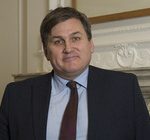
Tag: Kit Malthouse

  • Kit Malthouse – 2024 Speech on the Terminally Ill Adults (End of Life) Bill

    Kit Malthouse – 2024 Speech on the Terminally Ill Adults (End of Life) Bill

    The speech made by Kit Malthouse, the Conservative MP for North West Hampshire, in the House of Commons on 29 November 2024.

    When I was a child, my parents shielded me from death. Centuries of art, literature and religion taught me that death was something noble or even slightly romantic. When I became an adult, I learnt pretty quickly that that was not the case. For far too many, it is anything but and certainly not noble. The deathbed for far too many is a place of misery, torture and degradation, a reign of blood and vomit and tears. I see no compassion and beauty in that, only profound human suffering. In 10 years of campaigning on this issue, I have spent many, many hours with dying and bereaved people, which has, time and again, reinforced my view.

    I am a co-sponsor of the Bill and I am the co-chair of the all-party parliamentary group for choice at the end of life. I could give a speech to promote the Bill, but my hon. Friend—and I do call her a friend—the Member for Spen Valley (Kim Leadbeater) has done that remarkably well. In my speech I want to address some of the common issues that have been raised, and that will no doubt be raised during the debate, with which I struggle.

    First, we will no doubt hear an awful lot about the overseas experience. I am married to a Canadian, and I can tell the House that they love their children just as much as we do. The idea that the Canadians, Australians, New Zealanders, Spanish and Austrians care little for their relatives, or indeed for the wider society in which they live, is frankly offensive. We should not pretend that somehow we are special or different. They have thought as profoundly on these issues as we have over the past 10 years. We can learn from them, and design a system for our own sensibilities and culture, as they have done. They all have different laws on abortion, some of which we would not pass in this House, but that does not mean we should not have abortion laws here. We are a 1,000-year-old democracy, and we should be able to design legislation that deals with this issue for ourselves.

    The second issue that has been raised with which I have struggled regards the impact on the NHS and on judges. People are already dying; they are already in the national health service and entitled to care. Even if we think there will be an impact, are people seriously telling me that my death, my agony, is too much for the NHS to have time for, or too much hassle? It is even claimed that such matters would overload the judges—that I should drown in my own faecal vomit because it is too much hassle for the judges to deal with. We send things from this House to the NHS and to judges all the time. Is anyone suggesting that we should not create the new offence of spiking, which has come through this week, because judges are overworked? Of course not. They will cope as they have done with all sorts of things that we have sent from this House over the years, and we should not countenance the idea that some logistical problem will get in the way of our giving a good death to our fellow citizens.

    I also want to address directly those Members who are considering voting against the Bill, to ensure that they are clear in their minds that a vote against the Bill is not a passive act. There are two states of being on offer today. I have to break some news to Members: whatever happens to the Bill today, people with a terminal illness will still take their lives. If the Bill falls today, we will be consigning those people to taking their lives in brutal, violent ways, as they are at the moment, and will see increasing numbers of our fellow citizens making the trip to Switzerland if they can afford it. We know that between 600 and 700 people a year are killing themselves in violent ways—shooting themselves, throwing themselves in front of trains, taking overdoses in lonely, horrible circumstances. As I said, many are going to Switzerland, but more than that are lying in hospital—I guarantee that there will be somebody over the river in St Thomas’ hospital now who is refusing treatment and starving themselves to death because they cannot face what is in front of them.

    Sam Rushworth (Bishop Auckland) (Lab)

    Does the right hon. Gentleman agree that we had a choice today? We have come here to debate assisted dying, but we could have come here to build cross-party consensus on how finally, once and for all, to fix palliative care in this country. We could have come to look at a funding consensus, as that does need to be cross-party. I agree with his point that voting no is also a choice, but what follows from that should be a cross-party consensus on how we fix palliative care.

    Kit Malthouse

    I agree with the hon. Gentleman, and what a surprise it is that the conversation about palliative care has started. We were not having that conversation before this Bill came forward. The evidence from the Health and Care Committee, published only in February this year, shows that palliative care and assisted dying go hand in hand.

    Mr Perkins rose—

    Kit Malthouse

    I will not give way.

    Improvements also go hand in hand; medics from across the world told us that the two things are complementary. In Australia I discussed this issue with a palliative care doctor who was against the introduction of assisted dying when they were contemplating it. She now finds it an invaluable tool, and she embraces it as something that her patients want and need. My concern is that if the Bill is turned down, as it was in 2015, the conversation about palliative care will wither, as it has done for the past 10 years.

    I want to share a story that has particularly affected me. Mark Crampton was a former police chief inspector who was suffering from chronic obstructive pulmonary disease. His COPD became too much for him, so he informed his family that he was going to take his own life. He took his oxygen tank and mask and late one night went out and sat on a railway embankment. He wanted a death that was instant and quick, and that he could rely on. He waited until 2 in the morning—heartbreakingly, he had worked out when the last train was going, so he would minimise disruption to the public—and then took his life in lonely circumstances in the middle of the night. By not passing the Bill, we would deny to Mark supervision, conversation, access to doctors, periods of reflection, advice. Even if he had been through all that and decided it was still too much, the Bill would give him a much better end than he actually achieved. Members should be clear, as I say, that whatever happens to the Bill, terminal people will still take their lives.

    I have to say to the hon. Member for Brent West (Barry Gardiner), who says that hundreds of people dying in agony every year is a price worth paying for the good of society, that I find that an appalling prospect. A society that looks away from these people —like those in the Public Gallery who are living in terrible fear of what will face them, or who have watched their families die in fear—and says that that is okay for the good of the whole is a terrible, terrible prospect. We have a duty to assist them, as other countries around the world have done, and to find a way to make them comfortable in the end.

    Mr James Cleverly (Braintree) (Con)

    Will my right hon. Friend give way?

    Kit Malthouse

    I will not.

    Finally, I want to talk briefly about rights. We hear a lot about rights in this debate—quite rightly. We hear about the rights and fears of the disabled community, who are specifically excluded from the Bill; we hear a lot about the rights and fears of the elderly, who are also specifically excluded from the Bill; we are even hearing about the rights of doctors, who are allowed to conscientiously object to participating in this process, if they wish. When are we going to have the conversation about the rights of the dying? Where do we put them in the ranking of rights, as they face their end? When do we grant them the autonomy and choice for which so many of them have campaigned over the years? Surely, as they come towards the end of their life, their rights have to be at the forefront of our mind. The last, best gift we can give them is control over the disease that is destroying them.

    If we do not pass the Bill today, we are cornering all those people; we are trapping them, with the law, in their disease, and consigning them to an end of torture and degradation that they do not wish to go through. As I said before, we are a 1,000-year old democracy. It is not beyond us to design legislation that will give those people what they want, while protecting those whom we feel need to be protected. Like my right hon. Friend the Member for Sutton Coldfield (Mr Mitchell), I want this choice for my constituents, but profoundly I want it for myself and for the people in the Public Gallery who have worked so hard over the past decade to get us to change our minds.

    I ask Members please to be clear that whatever happens today, terminal people will still take their own lives—all we are deciding today is how.

  • Kit Malthouse – 2015 Parliamentary Question to the Home Office

    Kit Malthouse – 2015 Parliamentary Question to the Home Office

    The below Parliamentary question was asked by Kit Malthouse on 2015-11-24.

    To ask the Secretary of State for the Home Department, how many UK police forces have a dedicated unit dealing with the prosecution and identification of (a) sexual offences against children and (b) other online offences; and which UK police forces also hold specialist expertise in child protection and safeguarding.

    Karen Bradley

    Tackling child sexual abuse including online child sexual exploitation is a top priority for this Government. We have prioritised child sexual abuse as a national threat in the Strategic Policing Requirement, setting a clear expectation on police forces to safeguard children, collaborate across force boundaries, share intelligence and share best practice.

    The College of Policing and the National Policing lead have set the requirement on all forces to train all new and existing police staff including police officers, detectives and specialist investigators to respond to child sexual abuse.

    We are committed to supporting the police to tackle these horrendous crimes. We have made £1.7 million available to fund Operation Hydrant, which co-ordinates the handling of multiple non-recent child sexual abuse investigations specifically concerning institutions or persons of public prominence, and up to £1.5 million to support a new network of regional co-ordinators and analysts to oversee the implementation of the National Policing Plan for tackling child sexual exploitation.

    The Government will also continue to invest in law enforcement capabilities at the national, regional and local levels to ensure they have the capacity to deal with the increasing volume and sophistication of cyber-dependant crime and cyber-enabled fraud, including support for the Regional Organised Crime Units, who have a dedicated Cyber Crime Unit each. As the Chancellor also announced last week, spending on the UK’s cyber security programmes will be almost doubled over the next five years, with £1.9 billion funding.

  • Kit Malthouse – 2016 Parliamentary Question to the HM Treasury

    Kit Malthouse – 2016 Parliamentary Question to the HM Treasury

    The below Parliamentary question was asked by Kit Malthouse on 2016-01-14.

    To ask Mr Chancellor of the Exchequer, how much HM Revenue and Customs has paid out in supplements following late payment of VAT returns in (a) 2015-16 and (b) each of the previous 10 years; and what steps his Department is taking to reduce that amount.

    Mr David Gauke

    HM Revenue and Customs (HMRC) does not routinely publish this information.

    The Government recognises the importance to businesses of receiving VAT repayments as quickly as possible. HMRC also has a duty to ensure that incorrect or fraudulent repayments are identified and prevented. All repayment claims are subject to automated risk analysis on receipt and 94% are processed for immediate payment. Of the remainder, 50% are approved for payment within 5 days. Repayment Supplement is designed to compensate customers where HMRC fails to make a repayment within 30 days. In 2014-15, HMRC paid Repayment Supplement in 0.3% of all cases.

    In the first half of 2015-16, HMRC carried out an extensive review of its repayment process with a view to minimising delays in cases where repayments are not authorised automatically. Following the review, new processes have been introduced and HMRC expects to reduce the incidence of Repayment Supplement as a result.

  • Kit Malthouse – 2016 Parliamentary Question to the Department for Business, Innovation and Skills

    Kit Malthouse – 2016 Parliamentary Question to the Department for Business, Innovation and Skills

    The below Parliamentary question was asked by Kit Malthouse on 2016-01-26.

    To ask the Secretary of State for Business, Innovation and Skills, what steps he is taking to maintain the UK’s position as a market for investment by global pharmaceutical companies.

    George Freeman

    This Government is committed to maintaining and building on the UK’s position as a leader in the global market for investment in health and life sciences – the UK is the number one destination for life science FDI in Europe, and pharmaceutical exports grew 23% in the first three quarters of 2015. Through the Life Sciences Strategy we are working across Government to improve the UK’s competitiveness to stimulate investment, including by protecting the ring-fenced science budget in real terms and increasing funding in real terms to the Catapults which play a key role in commercialising innovation.

  • Kit Malthouse – 2016 Parliamentary Question to the Department for Business, Innovation and Skills

    Kit Malthouse – 2016 Parliamentary Question to the Department for Business, Innovation and Skills

    The below Parliamentary question was asked by Kit Malthouse on 2016-01-26.

    To ask the Secretary of State for Business, Innovation and Skills, if he will make an assessment of the link between government support for UK Life Sciences and pharmaceutical research and development investment in the UK.

    George Freeman

    Our latest estimates show that collective Government support through the Life Science Strategy has stimulated more than £6 billion in new investment by the life sciences industry linked to more than 17,000 new sector jobs. Underpinning this success is the UK’s world class science base and an increasingly strong and informed relationship between our universities and wider life sciences community, which is a key attractor for investment by domestic and overseas companies. Through the Accelerated Access Review the government is making this country a world leading place to design, develop and deploy medical innovations, stimulating investment and creating a stronger NHS.

  • Kit Malthouse – 2016 Parliamentary Question to the Department for Business, Innovation and Skills

    Kit Malthouse – 2016 Parliamentary Question to the Department for Business, Innovation and Skills

    The below Parliamentary question was asked by Kit Malthouse on 2016-01-26.

    To ask the Secretary of State for Business, Innovation and Skills, what steps his Department is taking to support the life sciences industry.

    George Freeman

    This Government recognises that health and life sciences industries are a key source of future growth and is committed through the Life Sciences Strategy to providing a supportive wider business environment in which these industries can flourish, so that the UK can be the best place in the world to develop and launch innovative medicines, technologies and diagnostics. Priorities include: simplifying the adoption of transformative products within the NHS through the Accelerated Access Review; supporting new and growing markets and disruptive technologies – such as digital health and genomics; and working across Government to improve the UK’s competitiveness to stimulate investment and drive export growth. Our latest estimates show collective Government support since the Life Science Strategy launched has stimulated more than £6bn in new investment by the life science industry linked to more than 17,000 new sector jobs.

  • Kit Malthouse – 2016 Parliamentary Question to the HM Treasury

    Kit Malthouse – 2016 Parliamentary Question to the HM Treasury

    The below Parliamentary question was asked by Kit Malthouse on 2016-01-27.

    To ask Mr Chancellor of the Exchequer, pursuant to the Answer of 26 January 2016 to Question 22515, if he will estimate the amount paid out in supplements following the late payment of VAT returns in (a) 2015-16 and (b) each of the previous 10 years.

    Mr David Gauke

    The following table shows HM Revenue and Customs’ (HMRC) estimates of the total amount of Repayment Supplement it has paid on VAT repayments. The estimates draw on management information that is available from 2010-11 onwards.

    .

    Date

    Total VAT repayment supplement

    2015-16 (to 31.12.15)

    £9.0m

    2014-15

    £14.2m

    2013-14

    £15.0m

    2012-13

    £10.9m*

    2011-12

    £11.8m*

    2010-11

    £6.7m*

    * In order to provide a more meaningful time series of data, totals for 10-11, 11-12 and 12-13 include estimated amounts from within total payments of £12.1m that relate to accounting periods in these years but were not paid until 2015, following discovery of a systems error.

    In 2014-15, HMRC paid Repayment Supplement in 0.3% of all cases.

    In the first half of 2015-16, HMRC carried out an extensive review of its repayment process with a view to minimising delays in cases where repayments are not authorised automatically. Following the review, new processes have been introduced and HMRC expects to reduce the incidence of Repayment Supplement as a result.

  • Kit Malthouse – 2022 Statement on Examinations in 2023

    Kit Malthouse – 2022 Statement on Examinations in 2023

    The statement made by Kit Malthouse, the Secretary of State for Education, in the House of Commons on 11 October 2022.

    The Department of Education welcomed the successful return of summer exams and other formal assessments in 2022. Alongside Ofqual, we put in place a package of support to recognise disruption faced by the 2022 exam cohort while being clear of our intention to return to exams as normal in 2023.

    In May, the Department and Ofqual confirmed that for exams and formal assessments in 2022-23 there would be usual arrangements for non-exam assessment and there would be full subject content coverage for all subjects.

    On 29 September, the Department and Ofqual confirmed exams will largely return to well-established, pre-pandemic arrangements in summer 2023. In making these decisions, the Department considers the level of disruption experienced by the 2023 cohort over the course of their qualifications has not been as significant as that experienced by those who received qualifications in 2022 as they will have had more time to cover their curriculum, practise assessments, and access education recovery programmes and interventions. There have been no national school closures in the 2023 cohort’s GCSE/A-level teaching years, which are designed as two-year courses. The 2023 cohort had less overall absence, including all covid absences, in their year 10 autumn term than the 2022 cohort did. Furthermore, the Department believes it is important to return to pre-pandemic arrangements to build confidence in the credibility and validity of qualifications.

    In that context, the Department confirms that advance information will not be provided for any exams taken in summer 2023. However, acknowledging students may still have experienced a level of disruption due to the pandemic, the Department has decided that formulae and equation sheets for GCSE mathematics, physics and combined sciences exams should be provided in summer 2023, as was the case for exams in 2022. As most students take at least one of these subjects at GCSE, this will provide broad support for all GCSE students. We have asked Ofqual to put this into place and they have launched a consultation on this.

    On grading, Ofqual have confirmed the position they set out in September 2021, to return to pre-pandemic grading in 2023.

    Looking back over the past three years, the Department and Ofqual are keen to build resilience in the exam system and learn lessons from the alternative arrangements that have been put in place. Jointly with Ofqual, we have launched a consultation that seeks views on how centres should gather and retain evidence from students so that it can be used both to support students’ revision and exam preparedness and could be used as a basis to determine students’ grades in the unlikely event that formal exams and assessments do not go ahead as planned. It invites views on whether the guidance proposed will minimise the burden on centres and students, and if it will support centres in providing the best possible preparation for students for their exams.

  • Kit Malthouse – 2022 Statement on the Cost of Living

    Kit Malthouse – 2022 Statement on the Cost of Living

    The statement made by Kit Malthouse, the Chancellor of the Duchy of Lancaster, on 31 August 2022.

    My chief priority has been to make sure that we are prepared for the significant challenges we expect to face this autumn and winter, and I have held regular meetings to make sure departments maintain pace and grip on this essential work now, and in the coming months, as this will be a marathon not a sprint.

    The cost of living, driven in part by higher energy prices, is biting for individuals, families and businesses, and the NHS is already under pressure – and that’s ahead of the flu season. These risks have potentially severe impacts, stacking up on the most vulnerable people in society, and it is vital that we develop robust plans urgently to mitigate their impact and come up with solutions.

    I’ve tasked departments with identifying the key operational decisions that should be taken without delay across priority risks such as health, energy, cost of living, supply chain disruption, labour market shortages, and industrial action, that have the potential to compound together. They will also map out the key moments over the next 18 months where specific groups of society may be significantly impacted, including the clinically vulnerable, socially and economically deprived, the elderly, the young, and the disabled, and produce further options so that decisions can be made quickly once a new administration is in place.

  • Kit Malthouse – 2022 Comments on the Infected Blood Scandal

    Kit Malthouse – 2022 Comments on the Infected Blood Scandal

    The comments made by Kit Malthouse, the Chancellor of the Duchy of Lancaster, on 17 August 2022.

    Those affected by the infected blood scandal have suffered terribly over many years and that heart-breaking and unimaginable pain has been compounded by the financial uncertainty many have faced.

    These interim payments will start the process of securing that certainty. My priority is to get the money to those people as quickly as possible.

    I am grateful to Sir Brian Langstaff for the work he has done to date on the inquiry, and Sir Robert Francis, for his work on compensation. Of course, no amount of money will compensate for the turmoil victims and their loved ones have faced, but I hope these payments help to show that we are on their side and will do everything in our power to support them.