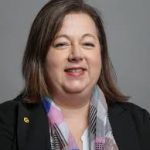
Tag: Kirsten Oswald

  • Kirsten Oswald – 2023 Speech on International Women’s Day

    Kirsten Oswald – 2023 Speech on International Women’s Day

    The speech made by Kirsten Oswald, the SNP MP for East Renfrewshire, in the House of Commons on 9 March 2023.

    I am very grateful to follow the hon. Member for Erith and Thamesmead (Abena Oppong-Asare), with whom I always enjoy working. She is always worth listening to.

    I also want to reflect on the speech made by the right hon. Member for Basingstoke (Dame Maria Miller) at the beginning of the debate. I was not sure how I was going to begin my contribution because, to be honest, I am a bit scunnered—probably more than a bit—but she set a positive example so, before I get on to my scunner, I will follow on from what she said and reflect on the fact that women across the House can and do work together positively. Although I have significant political differences with her, with women on the Labour Benches and with others, I am really grateful for the focus that all these strong, powerful women have on issues to do with women. I put on the record my great appreciation for colleagues cross party and for the work they do.

    I note the exceptional speech given by my hon. Friend the Member for Livingston (Hannah Bardell). It was a powerful contribution. She talked about her constituent and her lovely mum. It has been nice to hear the reflections of others about their mums, too. Again, that is something we can all agree on.

    I think we all want to be very clear in our appreciation for what the hon. Member for Birmingham, Yardley (Jess Phillips) does. It really matters. I am sure it is very difficult, but these women matter and the difficulty their families are facing should never happen. It should never be experienced by any family. We need to reflect on that and on the headlines, as others have commented, that follow these tragic incidents about “family men” and so on. The hon. Member for Brent Central (Dawn Butler) made some very powerful comments in that regard.

    Hannah Bardell

    My hon. Friend speaks of the families of the women whose names the hon. Member for Birmingham, Yardley (Jess Phillips) read out. I have just had the pleasure of spending some time with them, and what was palpable was not just the tragedy they have experienced, but their resilience. Does she share my view that they should never have had to face this and, as we have heard across the House today, we need to do so much more to ensure there are no lists of dead women to read out?

    Kirsten Oswald

    I am very grateful to my hon. Friend for what she says. I cannot add to that. What she describes is a reality and we have a responsibility to ensure that we do everything we can. The reality is not great. Too many families know all too well the gaping holes that are left because of male violence against women, so we will keep talking. We have a responsibility to do that. As the hon. Member for Vauxhall (Florence Eshalomi) said, we need to use our privileged platform here as parliamentarians to raise this issue time and again.

    The right hon. Member for Basingstoke spoke powerfully about the value and importance of women in public life, and the consequent improvements they bring. An increase in the number of women in public life ties together to bring women’s situations more broadly into a better place. She is 100% correct in what she says. We have many more women in public life now and I very much welcome that, but I also reflect that, certainly in the time since I was first elected in 2015, public life has become increasingly polarised. There are challenges over and above those that we would have identified in 2015.

    The hon. Member for Erith and Thamesmead (Abena Oppong-Asare) was correct to be concerned about the damage that influencers such as Andrew Tate inflict on wider society. Obviously, that has a profound effect on women. We also heard that culture wars, which we hear too much about, are not without an impact on women—that is absolutely right. All those who engage in that kind of behaviour should be ashamed of themselves, because they do down and cause detriment not only to women but to everyone in our society.

    Last year I was struck by hearing Members express those kinds of concerns—they were fed up and worn down by the toxic climate that they were working in. The hon. Member for Bath (Wera Hobhouse) reflected that it is increasing. Can we, in good conscience, not point that out? I do not think so. We should call it out for what it is: damaging our democracy and women. Can we, in good conscience, ask young women to come forward into what is often a toxic soup of threats, abuse and misinformation? I ask myself that. However, perhaps there is a bit more of the glass half full about me after all. I think that we can and we do ask young women to do that—I think of the strong and powerful young women I know, who will always stand up for women’s rights and equality.

    My reflection on equality is that if someone is coming after my rights as a woman, it is clear that the rights of every other group will be next on the agenda. I am aware that I perhaps sound a bit crabbit, as I would be described at home. Perhaps I am an increasingly crabbit middle-aged feminist, but I am happy to point out that my rights as a woman and my feminism are not at all imperilled—in fact, they are more than likely strengthened —by my making sure that I stand up for the rights of other groups.

    I am grateful that hon. Members have reflected on the situation of women across the world whose rights are imperilled. We need to be clear that rights are not carved in stone forever, as we have seen tellingly in the US. We have seen grave and terrible situations for women in Afghanistan and Iran, and they need not only our solidarity but our practical support and assistance. That is our job. We need to take practical steps and stand with them. Uyghur Muslim women are forced into sterilisations and labour camps. Women across the world are in difficult situations, and I include women in small boats.

    Closer to home, there are policies that cause detriment to women. I was pleased to hear the right hon. Member for Norwich North (Chloe Smith) and the hon. Member for Meon Valley (Mrs Drummond) speak about the future of work and supporting women in work. We need to do that, but the reality is that there is a 15% pay gap, and warm words will not deal with that. It will take concerted action, and the strong WASPI women who I spoke to yesterday know that there is a problem. The situation is not fair for them as older women, and nor will it be for younger women. It will take decades for that issue to correct itself, if it ever does. We need to accept that reality.

    I am always happy to talk at length about the positive policy in Scotland, as hon. Members will be aware. It is important that much of that policy focuses on gender and women. I would like to focus on one particular woman, as she stands down as the first female First Minister of Scotland and the first woman to lead the Scottish National party. I pay tribute to Nicola Sturgeon, a politician who has inspired me greatly and influenced many others. Many women and girls will be interested and engaged in politics and public life because of her consistent and solid support for women’s rights and making lives better.

    I will close by mentioning some other women who inspire me, because we need to finish on a positive note. East Renfrewshire councillors Caroline Bamforth, Angela Convery and Annette Ireland day and daily work hard to make lives better for women. They champion women and girls in all they do, and I am very proud to have them as my colleagues.

    Laura Young is a young influencer who is campaigning hard on environmental issues, including to get rid of disposable vapes, which cause problems for both the environment and young people. For her pains, she too is involved in the horrible, toxic morass of online abuse. Shame on all the people who deal with her like that. She is a young woman making a difference to the world, and she does not have to do that. Women such as her will continue to make a difference. None of the online abuse will make a difference—she is going nowhere.

    Rahima Mahmut is a Uyghur human rights activist who, despite the challenges she faces, stands up day and daily for the rights of Uyghur women. Hon. Members will not have heard of Rena McGuire, but they will all be the better for knowing her. Rena is a woman from Barrhead whose community activism spans decades. She has made every effort at every point to make life better for women in her community. Although we have many challenges and we should not minimise them, there is a space for us to appreciate the sterling and tireless work of women such as Rena, who make all our lives better.

  • Kirsten Oswald – 2023 Comments on the Resignation Announcement of Nicola Sturgeon

    Kirsten Oswald – 2023 Comments on the Resignation Announcement of Nicola Sturgeon

    The comments made by Kirsten Oswald, the SNP MP for East Renfrewshire, on Twitter on 15 February 2023.

    Nicola Sturgeon has been an outstanding leader for our country. We’ve been so fortunate to have someone with her talents at the helm. I am so sorry she is standing down.

  • Kirsten  Oswald – 2015 Parliamentary Question to the Ministry of Defence

    Kirsten Oswald – 2015 Parliamentary Question to the Ministry of Defence

    The below Parliamentary question was asked by Kirsten Oswald on 2015-11-13.

    To ask the Secretary of State for Defence, when the armed forces compensation scheme tariffs were last reviewed; and if he will make a statement.

    Mark Lancaster

    In 2009 Lord Boyce was asked to review the Armed Forces Compensation Scheme (AFCS), including its associated tariffs, to ensure that the Scheme was fit for purpose. Lord Boyce made his recommendations in February 2010, and as a result the Ministry of Defence tripled the maximum lump sum award for mental illness from £48,875 to £140,000 in order to accurately reflect the impact of the most serious mental health conditions. While Lord Boyce was clear in his report that a further fundamental review of the AFCS should not be required, we recognise that it is appropriate to review our policies and associated tariffs on a regular basis.

    In addition to the AFCS lump sum, the most seriously injured receive a tax-free Guaranteed Income Payment for life. This is uplifted annually by the Consumer Price Index.

    An Independent Medical Expert Group (IMEG) was also established in 2010 to advise on appropriate levels of compensation for several specific injuries and illnesses, including mental health. The IMEG has looked at how best to compensate for mental health problems and they keep this under review.

  • Kirsten  Oswald – 2015 Parliamentary Question to the Department for Transport

    Kirsten Oswald – 2015 Parliamentary Question to the Department for Transport

    The below Parliamentary question was asked by Kirsten Oswald on 2015-12-08.

    To ask the Secretary of State for Transport, if he will make an assessment of the potential merits of introducing web-enabled out-of-hours transfer of vehicle ownership and payment of vehicle excise duty by new vehicle owners.

    Andrew Jones

    Vehicle keepers are already able to license their vehicle and pay vehicle excise duty online, 24 hours a day, seven days a week.

    The online notification of a change of vehicle keeper service is an innovative new facility that was launched in 2015 as an alternative to postal services. This service is currently available between 8am and 6pm as the systems that support it rely on real-time validation of the registered keeper’s details against the Driver and Vehicle Licensing Agency (DVLA)’s vehicle register. The legacy IT services that support the vehicle register are only available during these hours, due to the system requirements to update the record daily. There are no current plans to extend the hours that this service is available.

  • Kirsten  Oswald – 2016 Parliamentary Question to the Ministry of Defence

    Kirsten Oswald – 2016 Parliamentary Question to the Ministry of Defence

    The below Parliamentary question was asked by Kirsten Oswald on 2016-02-01.

    To ask the Secretary of State for Defence, what risk assessment his Department has made of the effect of issues with the power system of the Type 45 Destroyer on its crew (a) when in combat and (b) otherwise; and what steps he has taken to minimise any risk before work remediating those issues takes place.

    Mr Philip Dunne

    As part of the extensive training programmes undertaken by the Royal Navy, risk assessments and mitigating actions are developed against a wide range of scenarios. Such training ranges from those required under the International Convention for Safety of Life at Sea through to combat effectiveness.

    In the interests of National Security I am not prepared to release information related to specific risk assessments of our operational Units as to do so would allow deductions to be made as to their operational capability and effectiveness.

  • Kirsten  Oswald – 2016 Parliamentary Question to the Ministry of Defence

    Kirsten Oswald – 2016 Parliamentary Question to the Ministry of Defence

    The below Parliamentary question was asked by Kirsten Oswald on 2016-03-23.

    To ask the Secretary of State for Defence, how many members of the armed forces have been employed specialising in the repair and maintenance of survival equipment in the RAF in the last twenty years; and how many former such staff have (a) received a medical discharge and (b) submitted a claim for compensation on the grounds of occupational related ill-health.

    Mark Lancaster

    The information requested is not held centrally and could be provided only at disproportionate cost. Information is available from 1 April 2006 to 1 February 2016, and is given below.

    Of the 1,027 personnel identified as being employed in the repair and maintenance of survival equipment in the RAF, around 40 were medically discharged from Service. Around 60 registered an injury/illness claim for a disablement pension under the War Pension Scheme (WPS). Around 100 registered an injury/illness claim under the Armed Forces Compensation Scheme (AFCS). Fewer than five made a legal claim for compensation.

    Figures are rounded to the nearest 10, numbers ending in 5 have been rounded to the nearest 20 to prevent systematic bias. This is because there is a duty under the Data Protection Act 1998 to protect individuals from being identified by the release of information.

    The War Pension Scheme provides no-fault compensation for all ex-Service personnel where illness, injury or death is caused by Service from the start of the First World War up until 5 April 2005. This was replaced by the Armed Forces Compensation Scheme on 6 April 2005. Please note that these statistics relate to illness and injury; it is not possible to determine which claims are related to occupational ill-health without accessing the individuals’ medical files. An award under the AFCS or WPS may be made for a variety of reasons and not necessarily directly related to the role of a Survival Equipment Fitter.

  • Kirsten  Oswald – 2016 Parliamentary Question to the Department for Business, Innovation and Skills

    Kirsten Oswald – 2016 Parliamentary Question to the Department for Business, Innovation and Skills

    The below Parliamentary question was asked by Kirsten Oswald on 2016-04-26.

    To ask the Secretary of State for Business, Innovation and Skills, how many organisations receive funding from the science budget to conduct research into the use of proton therapy for cancers.

    Joseph Johnson

    Research into cancer involving proton therapy and laser treatment falls within the remit of the Research Councils.

    I have asked the Chair of the Research Councils UK Strategic Executive to write to the hon. Member and I will place a copy of the letter in the Libraries of the House.

  • Kirsten  Oswald – 2016 Parliamentary Question to the Ministry of Defence

    Kirsten Oswald – 2016 Parliamentary Question to the Ministry of Defence

    The below Parliamentary question was asked by Kirsten Oswald on 2016-04-25.

    To ask the Secretary of State for Defence, what assessment he has made of the potential merits of using drones to detect mines and improvised explosive devices.

    Penny Mordaunt

    The merits of the use of drones to detect mines and improvised explosive devices have been recognised by the UK’s Armed Forces and there are a number of ongoing research projects which seek to refine possible techniques.

    While a number of technical challenges remain in integrating more complex detectors and sensors onto Unmanned Aircraft Systems (UAS), there is potential for a UAS to be procured in future which could be used to detect mines and improvised explosive devices.

  • Kirsten  Oswald – 2016 Parliamentary Question to the Ministry of Defence

    Kirsten Oswald – 2016 Parliamentary Question to the Ministry of Defence

    The below Parliamentary question was asked by Kirsten Oswald on 2016-04-27.

    To ask the Secretary of State for Defence, what assessment he has made of the implication for his policies on a future nuclear deterrent of the development of the Boeing Echo Voyager and other new drone technology.

    Mr Philip Dunne

    We dedicate considerable resources to assessing these emerging capabilities. Despite potential advancements in technology the detection of submarines will remain extremely difficult. It would not be appropriate to go into specific detail of the steps taken to mitigate against these threats but we assess that our current and future submarine fleet remains safe and secure.

  • Kirsten  Oswald – 2016 Parliamentary Question to the Ministry of Defence

    Kirsten Oswald – 2016 Parliamentary Question to the Ministry of Defence

    The below Parliamentary question was asked by Kirsten Oswald on 2016-06-10.

    To ask the Secretary of State for Defence, what account he took of the pattern of complaints relating to terms and conditions made through the service complaints procedures in reforming the pay structure for the armed forces.

    Mark Lancaster

    The new Pay 16 structure was specifically established in response to Service personnel criticisms of the old pay model. The Ministry of Defence (MOD) has developed the new pay model as a simpler, more transparent system which provides Service personnel with greater pay predictability. It addresses some of the concerns about the previous pay model reported by personnel through both the Service Complaints system and the Armed Forces Continuous Attitude Survey (AFCAS) and in feedback from the Armed Forces Pay Review Body (AFPRB). I fully expect these changes to be positive for morale overall.

    Many personnel will experience an increase in pay as a result of the new pay model, and no one will take a cut in core pay on implementation. We have taken steps to ensure that personnel are aware of the range and nature of the pay reforms that began on 1 April 2016 and comprehensive internal communications activity has been undertaken to explain the changes. This included Departmental guidance to help personnel understand their new pay statement and any changes. Personnel, including those under pay protection, continue to remain eligible for any Government-approved pay award. Pay protection has been put in place to ensure that no one will take a pay cut on implementation of Pay 16 and this arrangement will exist for at least the first three years to ensure that no one is disadvantaged.

    The new pay model is not designed as a cost saving exercise, but is a rebalancing of pay to make more efficient and effective use of the Armed Forces pay bill; the AFPRB will continue to recommend pay rates for all personnel. As we go forward the Service Complaints Process and AFCAS will be primary sources which inform our assessment of the benefits realised through the pay reforms.