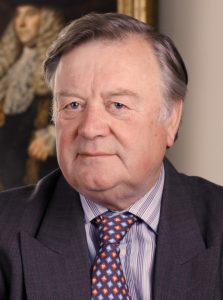
Tag: Ken Clarke

  • Ken Clarke – 2020 Comments on Priti Patel Bullying Allegations

    Ken Clarke – 2020 Comments on Priti Patel Bullying Allegations

    The comments made by Ken Clarke, the former Chancellor of the Exchequer, on Times Radio on 21 November 2020.

    It was assumed before that if an investigation was taken this far and if anyone was found to have broken the ministerial code, I don’t think anyone would have doubted the minister, to use the old phrase, would have to consider his or her position.

  • Ken Clarke – 1974 Speech on Caravan Residents

    Ken Clarke – 1974 Speech on Caravan Residents

    Below is the text of the speech made by Ken Clarke, the then Conservative MP for Rushcliffe, in the House of Commons on 19 March 1974.

    It is my pleasure first to congratulate the hon. Member for Manchester, Ardwick (Mr. Kaufman) on his appointment as Under-Secretary of State for the Environment, and to welcome him in making what I understand will be his first speech from the Treasury bench.

    I am delighted to be able to tell the hon. Gentleman that the subject to which I am drawing his attention, and to which I hope he will apply his skill and judgment, is an extremely suitable matter for a Minister who might have a comparatively short tenure of office. It is one where a considerable and worthwhile improvement could be made.

    The problems of mobile home and caravan dwellers concern a number of hon. Members, as is borne out by the numbers who have spoken to me about it since they saw that I was lucky enough to have secured this Adjournment debate, and by the attendance in the House now, which is startlingly large for an Adjournment debate.

    Mobile homes and caravans are becoming an increasingly popular form of residence, particularly at a time of rising house prices. There are all over the country, in many constituencies, large sites with mobile home dwellers in them. A high proportion of those living there are the elderly or young couples, who increasingly find them an attractive way of having a reasonable home in the countryside at a much more modest price than they would pay elsewhere.

    Sometimes the idea of caravan or mobile home living conjures up the vision of scruffy estates of caravans which are an eyesore. There are such sites, but the vast majority, certainly the ones that concern me most, are good, well-run sites.

    The mobile homes are in reality not mobile at all. In most cases the wheels have not moved for many years. The ​ caravans are on brick-built footings, and are in every respect bungalows, usually well cared for by their occupants. They are normally pleasant developments in pleasant parts of the countryside, such as those at Radcliffe-on-Trent, Shelford and Gamston in my constituency.

    They may look like dwellings, and they are bought by people who might otherwise buy themselves a bungalow in the country or a small house. But the position of the occupiers, who buy the caravan but rent from a site operator the site on which it stands, is by no means the same as that of occupiers of any other dwellings or any other form of accommodation.

    In an Adjournment debate it would be out of order for me to recommend changes in the law. The hon. Member for Derby, North (Mr. Whitehead) had a private Member’s Bill which fell at the General Election.

    The background against which the Minister must consider the problems is that the Landlord and Tenant Acts and their consequences have not applied to occupiers of caravans vis-à-vis their sites. The Rent Acts security of tenure provisions and restrictions on rent increases do not apply. Therefore, the latest surprise for residents of caravans is that the rent freeze declared by the incoming Government has no effect. I understand, upon the ground rents of caravan dwellers. They now find themselves subject to demands for increased rent. It comes as a startling discovery to many residents when they go into occupation to find that the protection which successive Governments thought it right to give those who rent or even buy their own homes does not apply to them because theirs are mobile homes.

    There are other problems which residents tend to discover when they have lived in the caravan sites for some time. Unfortunately, one reason why they discover after some time that their position is somewhat unusual compared with that of other home dwellers is that often no written contract or document worth giving the name to is exchanged between the site owner and his tenants when they take up the tenancy of their caravans. When the new purchaser of the caravan moves in, important things about his security of tenure—the terms on which he can live ​ there, the contractual period in between demands for rent increases, liability for maintenance, liability for acts of negligence, rights of access for those providing services or even for visitors—are left undefined and tend to be sorted out when disputes arise between the site owner and the residents.

    It is clearly undesirable that so many matters remain undefined. This gives rise to constant disputes in some cases. In the worst cases—I emphasise only in the worst cases—irresponsible or even almost dishonest site owners exploit this lack of a clear definition of the relationship between the owner and his caravan dwellers, and considerable harassment and abuse of the position of the tenants takes place. I should like to believe that it is the desire —I am sure that it is—of both those who live in the homes and the best site owners to try to improve the situation.

    During the tenure of the Conservative Government the Department of the Environment, under the previous Minister, lent its good offices to further discussion between the National Federation of Site Operators on the one hand and the Mobile Home Residents’ Association on the other. At first the discussions between those bodies representing substantial numbers of owners and tenants made slow and sticky progress. Therefore, I would very much welcome any indication from the Minister tonight whether any real progress has now been made in terms of producing a recommended contract to be exchanged between site owners and caravan-dwelling tenants. I should also like to see normal methods of contact between owners and tenants on well-administered caravan sites to get rid of these constant complaints.

    There is another point that has emerged from the discussions. I hope that the Minister can deal with it for it is a bad abuse and is a serious problem affecting caravan owners. I refer to the difficulty that faces an owner when seeking to resell his caravan and obtaining an improved capital gain when selling it. Almost all caravan owners assume that when they sell their mobile homes they will be able to take advantage of the rising property market—and certainly this was the situation in the past—to make a profit to go towards investment in a further home. However, I regret to say that in the vast majority of cases ​ this does not happen to caravan owners. The caravan owner finds that he has acquired the right to sell the caravan, but the site on which it stands remains at the disposal of the site owner. In practice it is useless to try to sell the caravan without the site on which it stands. In theory one can sell the caravan and somebody will tow it away, but since many mobile homes have to be put on the back of a lorry the process of moving is very expensive.

    Furthermore, it is difficult to find a site on which a casual owner may move his own caravan. When this happens heavy fees are charged, and at the moment it is almost impossible to find sites.

    Mr. Jerry Wiggin (Weston-super-Mare)

    Does my hon. Friend not agree that one difficulty is that the site owner with a vacant site insists on a new caravan being purchased, so that in such a case the usury is double?

    Mr. Clarke

    Yes, I agree with my hon. Friend. The position is, as I was seeking to explain, that when a caravan tenant comes to sell his caravan, he finds that he cannot sell it to a purchaser whom he has approached, say, through a newspaper advertisement because the site owner will not allow the ownership of the site to be passed on to any casual purchaser, or indeed to any purchaser at all. The site owner makes it clear to the caravan owner that if he sells the caravan to the first-corner, the caravan will have to be removed. This enables the site owner to insist that the caravan is sold to the site owner. In many cases the site owner insists on a sale at a marked down value, and this amounts almost to a forced sale.

    Mr. David Mudd (Falmouth and Cam-borne)

    I must declare an interest as parliamentary adviser to the National Federation of Site Operators. I hope that my hon. Friend will accept that the Federation deprecates the practice outlined by my hon. Friend. This matter is covered by a code of conduct that is binding on federation members. The federation hopes to introduce that code of conduct as mutually acceptable to its members, and it is hoped that it will lead to an end to this disgusting practice.

    Mr. Clarke

    I am delighted to hear my hon. Friend, in the capacity which he has described to the House, refer to this ​ as a “disgusting practice”. I hope that his federation will take steps to ensure that it does not admit any members who indulge in that sort of activity. My experience is that the vast majority of caravan site owners follow this practice. I have had experience of situations in which the site owners have insisted on knocked-down values for caravans. The fact is that the market price of caravans has been such that caravans are bought in at a reduced price by the site owner and then sold by him at a considerable profit to an incoming purchaser—a purchaser who comes in quite unaware of the fact that there are restrictions on resale. It has tempted far too many site owners in recent years.

    It must be a major item in the profitability of some sites that the capital value of the caravans on the site will accrue to the site owner rather than to the unfortunate owner-occupiers of them. The result is that many caravan owners, especially more elderly people, find it almost impossible to leave a site because the knock-down value of their caravans is not sufficient for them to acquire properties elsewhere.

    This is all legal, of course. I do not suggest that there is anything illegal about it. However, it is what might colloquially be termed a fiddle, and it is an abuse of the relationship between site owners and caravan dwellers.

    I accept that any increase in the value of a caravan on a site is partly an increase in the site value, in much the same way as the increase in values of houses is in part an increase in land values. Perhaps a 10 per cent. share of the profit on the re-sale of a caravan going to the site owner is defensible as being almost legitimate, but I do not think that anything beyond that is legitimate or defensible.

    I hope that the Minister will deal with the practice that I have described and that he will shed some light on the progress of the discussions taking place between the two bodies concerned in dealing with this practice.

    Some time ago I asked my right hon. and learned Friend the Member for Surrey, East (Sir G. Howe), who was then the Minister for Trade and Consumer Affairs, to draw the attention of the Director-General of Fair Trading ​ to this practice. It seemed to me that the Fair Trading Act might provide some opportunity for this practice to be examined. In a letter to me dated 1st August 1973, my right hon. and learned Friend told me that he could neither predict the attitude of the Director-General nor anticipate what action he would recommend but that his attention would be drawn to the problems which my hon. Friend the Member for Gloucester (Mrs. Oppenheim) and I had raised with him.

    Although I know it is not the departmental responsibility of the Under-Secretary of State for the Environment, I hope that he will be able to tell us how the Department of Trade is getting along and whether the Director-General of Fair Trading has yet come to any conclusion about whether his powers are wide enough to stamp out this unfair and illegitimate practice.

  • Ken Clarke – 1974 Speech on Foreign Affairs

    Below is the text of the speech made by Ken Clarke, the then Conservative MP for Rushcliffe, in the House of Commons on 19 March 1974.

    I begin by welcoming you, Mr. Deputy Speaker, to the Chair. In doing so I shall be careful to avoid incurring your wrath by speaking at too great a length in my first speech before you. I am only sorry that lack of time will prevent my commenting on the number of spectacular maiden speeches which I have heard in this debate. I should like to say one particular word about the hon. Member for Beeston (Mr. Lester) who now represents a considerable number of my former constituents. Having heard his first contribution to the House I am delighted to know that those constituents will be so well represented by him in the coming years.

    I wish to take this debate away from the international geographical ramblings indulged in by the hon. Member for Sheffield, Heeley (Mr. Hooley), back again to the proposed renegotiation of the terms of our entry into Europe, which was dealt with by the Foreign Secretary. I was considerably reassured by the way in which the right hon. Gentleman put this singularly puzzling part of the Labour Party’s programme now that it has formed a minority Government.

    Nothing that the right hon. Gentleman said could have given much joy to anyone who still had any illusion that this country would leave the European Community at some stage. He assured us that the renegotiations would not be any kind of confrontation. It was clear that they would be conducted through the machinery of the Council of Ministers and within the set-up of the EEC as this Parliament legislated that the country should join it. I hope that, given the tenor of what he said, my party and the Opposition, who outnumber the Labour Party, will respond in kind and will not obstruct reasonable discussions with the Europeans if there is some prospect of a worthwhile advantage to our population coming from them.

    The Opposition believe that we negotiated entirely acceptable terms, and ​ we remain glad to have put them to Parliament and to have recommended them to the country. However, if in discussions with our fellow members this new Government are able to produce changes in the balance of interests between the member countries I am sure that no one will want to try to prevent progress being made which will be to the advantage of our population.

    Since we joined the Community the process of negotiation on issue after issue has been going on all the time, and in my view the Opposition should lend their weight to the Government’s advocacy of British interests where they put them forward legitimately in the negotiations.

    That is not the issue between the two sides of the House, of course. The issue that I feared might arise between my party and the Government was the idea that renegotiation would be some selfish or chauvinistic attempt to turn absolutely everything in the EEC to our short-term, narrow financial advantage. There are those Government supporters who would like to go through the details of Community policy extracting advantage from every single one of them in cash terms, in the mistaken belief that Britain has to be a net gainer on every head of European policy before the idea is at all acceptable. That is a strange method of bargaining for mutual advantage between any association of States, and it would be a strange foreign policy. But clearly that is not a policy which will be pursued by this Government. If it becomes the policy pursued by them under pressure from their backbenchers we shall have to take a sterner attitude.

    Having heard the Foreign Secretary shed a little more light on what he intends to negotiate about, it was interesting to hear that the terms of entry, which originally were what the renegotiation was to be about, were not to feature very large. Most of the terms on which this country entered the EEC have been overtaken by events.

    The sugar agreement remains an important element, and it was one about which we experienced difficulty when we entered the EEC. However, the details of the sugar debate at the time that we joined have now been overtaken by higher world prices outside the Commonwealth agreement. Again, the ​ terms for New Zealand seem to have faded, because they have not created any great practical problems. However, the Community’s agricultural policy, which was one of the basic items in our negotiations to enter, remains an important matter, and in April the new Minister of Agriculture and Fisheries faces a tough agenda, which would have been faced by his predecessor had my party won the election.

    For the immediate short-term future, the Foreign Secretary emphasised that he will try to stop domestic prices going up, and he reassured the British housewife in those terms. However, he knows quite well that the only risk of that arising in terms of any commodity, out of the April discussions, is in beef. If he intends to try to keep down the price of beef in the April negotiations I hope that he will take steps to guarantee beef production over the coming year or two as well.

    The only other term of entry to which the Foreign Secretary intends to bring attention is our contribution to the Community. That certainly can be discussed. The method of self-financing of the Community is coming into question in the Community itself, but it is one matter which obviously will have to be taken up by the new Government.

    The levy on imported foodstuffs will be an irregular source of finance to the EEC and it is looking of doubtful value. On the question of the 1 per cent. VAT, I am sure that the Government have every chance of negotiating zero VAT on foodstuffs and the like. That point was carried with the assistance of the Conservative delegation to the European Parliament only recently.

    The Government will find that all these matters are already on the agenda. If they wish to call it “renegotiation”, I trust that they will get on with the serious business of discussing all the other matters which Europe is evolving and which it is in our interests to get on with.

    Some regional policy clearly must come forward quickly. I hope that the Government will do better than we did. I am not criticising former Ministers for the delay, but there has been disappointment that no new regional policy has come forward.

    The democratic institutions must be reviewed and strengthened. Even if the Labour Government carry on with the almost laughable business of not sending representatives to the European Parliament, I hope that they will back up the efforts made by Conservative Members to increase the European Parliament’s budgetary and other powers in the Community.

    I turn now to the question of economic and monetary union. Half the EEC’s currencies are floating, and the snake is long since dead and forgotten. Some form of economic and monetary union is a logical successor to any free trading area if there is to be genuine free competition within that area. I am sure that any renegotiation will be welcomed.

    I could go on through all the matters that the Government have to “renegotiate” if they wish. For example, there is the matter of agreement with the 45 associated States. Progress needs to be made in strengthening the aid policy in the EEC.

    The social fund should be developed. This country is doing quite well out of the social fund, but I hope that that will be “renegotiated”.

    Our common bargaining position on GATT has to be looked at. I look forward to the Secretary of State for Trade contributing to the evolution of a common bargaining position for the European Commission in the GATT negotiations.
    The Foreign Secretary should take part in the regular meetings of Foreign Ministers. What he said about our position vis-à-vis the Americans and Europe and our relations with the Arab States are matters on which he will clearly make an extremely valuable contribution to the evolution of European foreign policy.

    All these matters are on the agenda and were being actively discussed in the institutions of the European Community before the election. What is being called “renegotiation” is merely carrying on the process of the previous Government, but paying lip service to one part of the Labour Party.

    The Government cannot, without prolonging a major political crisis, start negotiating on the matter of sovereignty to the extreme that many opponents of the EEC would wish. They cannot get round ​ the direct application of legislation once enacted by the Council of Ministers. They cannot throw out the entire common agricultural policy. They cannot abandon the principle of Community preference. These matters amount to complete withdrawal from the Community. I trust that this minority Government will not attempt to put them on the agenda.

    I have spoken in terms of “renegotiation”, but I am reluctant to allow this jargon to dominate the European debate in this country because it is not understood and is not what the country thinks we are talking about. The difficulty underlying the European debate is that the whole country is still split on the principles of entry, that the House is split on the principles of entry, and that the Labour Party is split on the principles of entry.

    Renegotiation is a comforting formula which was devised to take the heat from this political problem at a time when there are those who still want us to withdraw from the Community. The formula devised originally, that the Labour Party wanted entry into the EEC in principle but not on Tory terms, has not been believed by anybody.

    Is the Secretary of State for Trade urging British membership in principle only if the terms can be put right? Is the right hon. Member for Fulham (Mr. Stewart) suddenly against the terms negotiated by the Conservative Government which he endorsed at the time by voting in favour of entry? Did Enoch Powell lend his support to the Labour Party in the election because he thought that some of the terms for renegotiation were what the public were demanding?

    The issue was whether we should join. That has been settled by Parliament. I trust that the Government will not use the charade of renegotiating to reopen this issue. I am delighted to see from his style that the Foreign Secretary intends to play for time and to allow these things to be conducted in a reasonable and civilised manner.

    At the end of this strange process, which is really only a political formula devised for the needs of the moment, the results will be put to the British people, presumably in a referendum. The referendum has an unhappy history in our recent ​ Political past. The Prime Minister refused to contemplate it in principle at the 1970 election. Even when the European Communities Bill was going through the House a referendum was rejected by the Labour Party. The right hon. Member for Bristol, South-East (Mr. Benn)—now Secretary of State for Industry—however, kept it going and finally pressed upon his right hon. Friends the need to go for a referendum, with the result that the present Home Secretary resigned on that issue and has, as far as I know, never supported it.

    Even then there was this division, and there is still genuine constitutional doubt about a referendum over the issue of whether or not we joined. How can there be a referendum on renegotiation once we have joined? We are not entirely clear what is being renegotiated, what question will be put to the British public, how it will be put and what the Government will say about it. I do not believe a referendum will ever take place. The Prime Minister said in the debate on the Queen’s Speech that there would “almost certainly” be a referendum. We all know and the Labour Party knows better than we do what “almost certainly” means in the politics of the Prime Minister. It is very little guide to his future actions. At the end of these renegotiations I trust that the Foreign Secretary with his great skill will be able to persuade his party that all the worst Tory blemishes will be removed and the whole thing can then perhaps be made to work in an acceptable Socialist way if we carry on as we are. If he fails to do so and if a fraudulent question is put to the public about a supposed process of renegotiation, I hope that the House will reject such a clear affront to its constitutional position and our political tradition once again as it did in the last Parliament.

    I trust that once the Government have got over the difficulty of saddling themselves with this strange election commitment they will get down to a sensible European policy aimed at producing a decent level of unity among the members. Even I, as a keen pro-marketeer, recognise the present problems of the lack of unity in Europe, the lack of a proper relationship with the United States, the difficulties of establishing a relationship with the Arabs, and general problems of payments deficits which will arise because ​ of higher oil prices. All these need a sensible European policy from the Government, which I hope they can soon find their way back to pursuing.

  • Kenneth Clarke – 2019 Speech on the European Union Withdrawal Act

    Below is the text of the speech made by Kenneth Clarke, the Conservative MP for Rushcliffe, in the House of Commons on 19 October 2019.

    I hoped I would never be driven, in these long debates on Brexit, finally to deciding what my opinion is on the choice between a no deal and a bad deal. I regret to say that when my right hon. Friend the previous Prime Minister put forward the proposition before, I had considerable doubts about her belief that no deal was better than a bad deal. Those doubts have increased, because what we have before us now is undoubtedly a bad deal. I think it is a very bad deal. It is wholly inferior to the deal that was negotiated by my right hon. Friend the former Prime Minister, for which I, too, voted three times, like the hon. Member for Hove (Peter Kyle). We cannot be accused of taking part in this debate seeking to block Brexit and repudiate the wishes of the British public, and all the rubbish that the more fanatic Brexiteers and their followers frequently hail at us. But now the choice is very real.

    This is a very bad deal, for reasons that I will not dilate on, but others have. I actually have considerable sympathy with the Members from Northern Ireland: the independent Unionist, with whom I almost always agree, and the Democratic Unionists. This is a most peculiar constitutional position that they are being put in as Members of the United Kingdom. I would very much rather that we did not have this situation of a border down the Irish sea, because there is absolutely no doubt that there is quite a clear customs and regulatory border being envisaged down the Irish sea.

    It has to be said that the effect is to save the all-Irish economy from the near calamity that a total no deal would have resulted in. I have no idea how anybody would have operated a no-deal situation across the border, and I thought these weird propositions of a customs border somewhere in Northern Ireland but not on the border had little or no chance of working. Although the Irish at least have the economic consolation that they will sail on through the transition period as they are now, I am extremely worried that the purpose of going to negotiate this convoluted arrangement over Ireland was so that the economy of Britain could be taken out of the customs union and the single market straightaway. If that holds after the transition period, I think it will have the most damaging effects on our economic future, for all the reasons that other people have given in the earlier and lengthy speeches we have heard.

    Therefore, it is all to be played for in the transition period. I actually do not believe that a good free trade agreement, a good agreement on security and fighting international crime, and agreements on the licensing of medicines and the possible arrangements with the European Medicines Agency—all the things spelled out—are likely to be achieved by the end of next year. The Canada deal, which a lot of Brexiteers like to hold up as a model, took about nine years to put in place, and I wish that we were prepared to contemplate a more realistic timescale.

    Meanwhile, the votes today, and the process of the next week or two, must get us through the necessary steps to put in place a withdrawal agreement, so that we ​have a transition period in which to hold full negotiations about our ultimate destination. All my votes in this House have been to ensure that the calamity of leaving with no deal on 31 October, or whenever, was never allowed to happen. For that reason, we should support this deal, but I cannot understand the Government’s resistance to saying that we should legislate before we abandon the protection of the Benn Act and decide that we do not need an extension.

    The Government say that we can take for granted the details and getting the votes, but none of us are sure whether there is a majority for this Government and the present deal at all. If the Government can maintain a majority throughout all the legislation I shall be very reassured, but I would like to wait to see that they can.

  • Ken Clarke – 2019 Speech on Brexit

    Below is the text of the speech made by Ken Clarke, the Conservative MP for Rushcliffe, in the House of Commons on 19 October 2019.

    The Prime Minister began his statement, for which I am grateful, by saying how rare it has been for Members of this House ever to support federalism and a united states of Europe, and I entirely agree. Federalism and a belief in a European superstate are as rare in this country as they are, nowadays, in every one of the other 27 member states.

    Does the Prime Minister accept that, for the past 50 years, the vast majority of the Conservative party and all four Conservative Prime Ministers in whose Governments I served believed that membership of the European Union gave us a stronger voice in the world politically, as one of the three leading members of the European Union, and gave us access to a free trade market that enabled us to build a strong and competitive economy? Will he reassure me—as I assure him that I will vote for his deal once we have given legislative effect to it—that, when he goes on to negotiate the eventual long-term arrangements, he will seek a solution in which we have the same completely open access across the channel and across the Irish border to trade and investment with the European Union as we have now, in both directions, even if we have to sacrifice the political benefits we have hitherto enjoyed from membership of the Union?

  • Ken Clarke – 1986 Statement on the Inner Cities

    Below is the text of the statement made by Ken Clarke, the then Paymaster General and Minister for Employment, in the House of Commons on 6 February 1986.

    With permission, Mr. Speaker, I should like to make a statement on Government help to people living in inner city areas.

    We are all only too well aware that people who live in many inner areas of our cities suffer from a wide range of long standing problems. The Government have increased the amount of central Government money spent on employment and training programmes, urban regeneration and industrial assistance in these areas. We have taken a number of measures, including setting up last year city action teams to co-ordinate and target Government effort in the seven inner city partnership areas.

    In order to complement and build on that existing work, we have now decided to try out a new approach to the task by intensifying and bringing together the efforts of Government Departments, local government, the private sector and the local community in eight small inner city areas.

    This initiative is a further step to improve the targeting and enhance the benefit to local people of the money channelled through existing central Government programmes. They include the employment and training programmes of the MSC, the Department of Trade and Industry’s programme of regional and industrial assistance, the Department of the Environment’s urban programme, and the Home Office programmes of black business support and grants to support staffing of services to ethnic minority populations.

    Within the chosen areas we shall try out new approaches, particularly on training provision, and employment or self-employment opportunities for local residents. That will be tackled through projects and activities of wider but direct benefit to the residents of the areas concerned and their environment. We shall seek to stimulate enterprise and provide a stronger base for the local economy. We shall give special attention to the problems of young people from ethnic minorities where they are particularly disadvantaged.

    To test our approach we have selected eight areas which are diverse in their character but whose residents all share problems of deprivation and lack of opportunities. They are not necessarily the eight most deprived areas in our cities, but the people who live in them need more employment opportunities, support for their local business economy, and a better physical environment. We shall introduce our new initiatives in Notting Hill and north Peckham in London, the Chapeltown area of Leeds, north central Middlesbrough, the Highfields area of Leicester, Moss Side in Manchester, St. Paul’s in Bristol and Handsworth in Birmingham.

    We shall be establishing small task forces in each of those areas. They will work with the local authorities and local community and voluntary organisations. They will quickly seek to attract private sector participation.
    We shall seek early discussions with the local authorities concerned about the details of this initiative. We hope to persuade the local authorities to join us and use their own programmes alongside our own in a concentrated and targeted effort to improve work prospects and the quality of life in those areas.

    Large sums are already available to the chosen areas under existing Government programmes, but, in order to help the initiative get off the ground, the Government will be supplementing the sums with £8 million of additional money of which £3 million will be found from within my Department’s existing provision and £5 million will be found from the reserve.

    The initiative will be led by a team of Ministers drawn from the Departments of Employment, Education and Science, Trade and Industry, Environment and the Home Office. My right hon. and noble Friend the Secretary of State for Employment will have overall responsibility for the co-ordination of the initiative. I shall have responsibility for its day-to-day management and supervision with the support of a small central unit. This inner cities initiative will complement and not replace existing Government programmes.

    I hope that the House will welcome a bold experiment in concentrating all available efforts and resources in a joint way on the improvement of job expectations and the quality of life of the residents of those small inner city areas.

  • Kenneth Clarke – 2019 Speech on Brexit and Parliament

    Below is the text of the speech made by Kenneth Clarke, the Conservative MP for Rushcliffe, in the House of Commons on 12 June 2019.

    Mr Speaker, I am sorry that I surprised you. I am not sure that I wrote in beforehand, but I shall endeavour to be brief. I intend to be brief because there are not many complicated issues here.

    The first issue to which I want to respond is the procedural point that the Secretary of State wisely tried to retreat into, citing a few constitutional experts saying how outrageous it is for the House of Commons to try to take control of the Order Paper. Indeed, that very rarely happens but, with great respect to much more distinguished experts than me, such as Vernon Bogdanor, we have already demonstrated once that procedures already exist, which can be used—as they were by the right hon. Member for Normanton, Pontefract and Castleford (Yvette Cooper)—in very exceptional circumstances, for the House as a whole to take command of a day’s business. Of course, the reason it did not happen for many years is that most Governments have had a comfortable majority on every conceivable subject, so there was not the faintest prospect of their losing control of the Order Paper and nobody challenged them. However, we are in exceptional times and the precedent we have already created is a perfectly valuable one.

    Sir William Cash

    Will my right hon. and learned Friend give way?​

    Mr Clarke

    I will when I have finished my first point.

    This cannot bring down the Government. Of course, if the Government are defeated, it will be open to someone to bring a motion of confidence tomorrow. However, at present, the Government would carry a motion of confidence, so all we are doing—the majority of the House, if we do—is insisting that we want to bring some clarity to the present debate, and I would say some sanity. We want to give some reassurance to people in business up and down the country who are very worried, and take the opportunity again to rule out the idea of leaving with no deal. We certainly want to rule out the idea of proroguing Parliament indefinitely, so that the Prime Minister of the day can run a semi-presidential system for a bit and put in place what he or she wants, without any parliamentary majority.

    This is not a great threat to the constitutional foundations of the country. This does not actually threaten the future stability of Governments. and I am sure that, if we were in opposition, we would be supporting it without the slightest demur.

    Sir William Cash

    Will my right hon. and learned Friend give way?

    Mr Clarke

    I will give way, but I am about to finish the procedural point.

    In fact, when we were in opposition, David Cameron asked me to chair a committee to advise him on a lot of constitutional issues—with Sir George Young and Andrew Tyrie, who have now moved on to the upper House, and others—and to make recommendations. We actually advocated, and David Cameron in opposition accepted, that we should give the House more control over the business of the House. We started, eventually, this business of the Backbench Business Committee determining the business of the House for a day.

    In office, we took a slightly different perspective. I am afraid that was then reduced to the Backbench Business Committee producing harmless motions and the Government never voting on them, with only one-line Whips. In my opinion, one day, there might be a Government and a Parliament so adventurous as to contemplate giving more control to the House as a whole over its own business. However, this Parliament seems to prefer to get steadily weaker, rather than stronger, and I do not think that day has yet dawned. At this stage, as that is all I am going to say on the procedural point, I will give way.

    Sir William Cash

    On that procedural point, the reality is that Standing Order No. 14 gives precedence to Government business for very good reasons. It is in accordance with our constitutional conventions and the Standing Orders that Government have a majority and that, in those circumstances—[Interruption.] They do. With the confidence and supply agreement with the DUP, we have a Government and that is the point. We have a Prime Minister. This motion does no more than open the door to the possibility that, by some permutation or other, there may be some argument about a prorogation or, indeed, about no deal. But that is not what this motion is about; it is an open-door policy—nothing more or less.​

    Mr Clarke

    Governments pursue policies for which they have a parliamentary majority. I am going to be brief, so I shall not widen what I think is the very important broader constitutional procedural field.

    It is now argued by many people that this Parliament has no powers, really, except when it is passing legislation, and I think that that is what is contemplated here. Unless a statute is passed to change the law, the Government can regard motions in Parliament as a mere expression of opinion. I regard that as nonsense, I regard it as dangerous nonsense, and the sooner it is shot down the better. It has emerged in the last two or three years precisely because Parliament is fragmented: both parties are shattered on several policies, so people are trying again to get round the problems.

    Parties form a Government when they can command a majority in a vote of confidence. They can then only pursue policies for which they have a majority in the House of Commons, and continue to have a majority in the House of Commons. It is preposterous to start reinterpreting our unwritten constitution on the basis that no one ever intended that the Government should have to abandon a policy on which it is defeated in the House of Commons. That is complete nonsense. The worst thing to do—because one of the candidates at least fears that she would be defeated if she pursued her policy—is to send Parliament away and have no Parliament at all. I think that I have already made clear, in an intervention, my views on the prorogation point. I think that the sooner the House makes this clear, takes a day to make it clear and to make it illegal to contemplate doing that—and gives Parliament a role to stop it—the better.

    Leaving with no deal has, as I recall, been ruled out with increasing majorities on the three occasions on which we have voted on it. With this mad debate going on in the country at the moment, it is obviously high time Parliament reasserted the fundamental basis of what is going on—that there is no majority in the House for no deal. Apart from those who defend the desirability of leaving with no deal, which no one has done in today’s debate so far, I cannot see why people are going to such lengths to resist that.

    The Government’s policy, for which my right hon. Friend the Secretary of State speaks, is to oppose leaving with no deal. I agree with him that we can say to the Opposition, “Well, we had a deal and you would not let it go through.” I supported the Prime Minister’s latest attempt to surround that deal with suggestions that I think should have been supported by Opposition Members who agree with my hon. Friends and me on a soft Brexit. I have an eccentric view that they would have been supported.

    We have all constantly been attending plotting meetings. I have attended meetings at which Labour Members were agreeing to vote for the Second Reading of that Bill. What we were plotting was what amendments we would pass to put in improvements and safeguards. That could have prospered, but I am afraid that the Prime Minister preferred to do all her dealings, all the way through, with the members of the European Research Group. She always made concessions to them and eventually they told her that she had to go, so she said she was resigning. So we are now in this position.

    I personally believe—it may be an eccentric belief—that the Prime Minister could have secured a majority for the deal as she had finally modified it, in an attempt to ​get cross-party support. It is obvious that the deal that we all need will only be achieved by any Prime Minister when we face up to the need for cross-party support to get around the party divisions. Both parties must accept that a minority will rebel against any deal that comes forward, but we could probably get a majority of the House to vote down the Labour left and the Tory right and actually pass something that is in the national interest. That, I think, is the main objective that really lies behind today’s debate. To listen to all these arguments about why, for pedantic procedural and textual reasons, we should reject it is, I am afraid, to take—not for the first time—a rather bizarre perspective on the huge and historic events in which we are involved. The House really has to take some control.

    My final point is this. It might even improve the quality of the leadership debate that is going on in my party—and it needs to be improved—if we forced some reality into the exchanges between the extremely distinguished candidates who are vying for the privilege of being the next Prime Minister.

  • Kenneth Clarke – 2019 Speech on Brexit

    Below is the text of the speech made by Ken Clarke, the Conservative MP for Rushcliffe, in the House of Commons on 27 March 2019.

    join those who have congratulated my right hon. Friend the Member for West Dorset (Sir Oliver Letwin) on giving us this opportunity. At last we are seeing, as we go along, that the House is moving into a mood where it is going to be possible to end the catastrophic shambles of the last six months. We are beginning to talk about actually being able to take decisions founded on some sort of cross-party consensus and some search for a majority that can be sustained through the difficult and long negotiations that will be required to reach agreement on our final relations with the European Union. It seems to me that it is up to the House to respond to that properly and deal with this procedure, with a willingness to compromise with one another and move towards some eventual binding recommendation to the Government about the way in which things should be conducted in future. I shall certainly approach this in that way.​

    My right hon. Friend has also helped the Government, although they are bitterly resistant to what he has done, raising absurd constitutional arguments, which are complete fiction and which they could have remedied easily if they had put down their own proposals for having indicative votes, as they told us that they were going to two days ago. This hair-splitting thing about it being the Government who should table business motions, and not Back Benchers, is a completely piffling irrelevance. He has actually helped them considerably: I have never seen the right-wing members of the European Research Group more apparently panicked by the way the House as a whole is moving. They are demonstrably in a minority, their dreams of a no-deal departure are fading, and despite their frequent meetings with the Prime Minister and their gliding into Chequers at the weekend, they are beginning to peel off one by one, having first rebuffed it.

    I congratulate those who put this process together and those Ministers who resigned to get this pressure going and bring us nearer to reality, and I will turn now to the substance of how I am going to vote. As I have said, I will vote not for my first preference—I will when it occurs—but for that which I can live with. Unfortunately, I think we are doomed to leave the European Union within the next two or three years. My duty now is to exercise my own judgment as to what is in the national interest, will minimise the damaging consequences and will perhaps save some of the better features for future generations.

    As I have said before, the obvious compromise is, unfortunately, to give up the political European Union and leave the political institution and remain in the common market, as the public still call it—the customs union and the single market—thereby avoiding problems at the borders and for business, ensuring the smooth running of trade, and so on.

    Angus Brendan MacNeil rose—

    Mr Clarke

    I am sorry, but I cannot give way. I would like to—I have been collaborating with the hon. Gentleman—but I must take notice of time.

    Under such a compromise, we would continue to enjoy the economic advantages of being in the biggest and most prosperous international free trade area in the world and begin to reconcile the 52% with the 48%. Most sensible members of the public, however passionate their views, be they remain or leave, could see the sense in coming together around such a compromise. It was the main Eurosceptic demand 20 years ago: leave the EU but not the common market. If we solved that, we could begin to repair the dreadful political mood in the country.

    I will vote for revoke whenever it appears, because that is my personal preference, but that is self-indulgence, and I will support—[Laughter.] If we get a majority, I will be delighted.

    Angus Brendan MacNeil rose—

    Mr Clarke

    I will not give way to my fellow collaborator on revoking.

    I will support common market 2.0 and anything that resembles it, though I will not dwell on it further, as I have already dealt with it. I come then to my motion (J). ​As I have already indicated, it is not my first preference—the two I have already named are my preferences—but it is tabled to maximise support in the House so that we can move on Monday towards our really taking control and actually putting the Government, though they do not accept it, in a much stronger position than they are today when it comes to the future negotiations.

    Motion (J) advocates a customs union only—a permanent customs union, I point out to the hon. Member for Leicester West (Liz Kendall), who intervened earlier on this point—and would keep the minimum needed for frictionless trade and an open border in Ireland. We would also need some understanding or moves on regulatory convergence, but that does not need to be dealt with at this stage. If we start with the premise that we will be permanently in a customs union, it would bring greater clarity to the next stage—the really important stage—of the negotiations. I think that every other EU member state would be ready to accede to that, and it would improve the climate of the negotiations.

    The motion is designed to appeal in particular to Labour Members who are demanding it and to my more cautious right hon. and hon. Friends in the Conservative party. Those who have hang-ups about rule-making and use medieval language about vassal states and all the rest of it are talking about the single market. Motion (J) does not include the single market. The customs union guarantees a reasonably frictionless relationship and the possibility of completely open trade in the future, and leaves all the other things to be decided in the negotiations.

    Greg Hands

    Will my right hon. and learned Friend give way?

    Mr Clarke

    No, I will not.

    That is the basis on which I tabled motion (J), and I commend it to the House. Members may prefer a different motion; I shall vote for several. I think that we should all vote for as many of the motions as we can, and then we will see which is the strongest. We will not be dismissed by the more fervent members of the Government saying that they have all been defeated, and none of them secured an individual majority. On Monday, we could move on to how we sift them out.

    Above all, for Labour Members this will, I hope, pave the way for allowing the withdrawal agreement to go through, because their main argument is not about the contents of the withdrawal agreement but about the “blind Brexit” that worries them so much. Even in motion (J)—if we cannot get a stronger one—there is not a blind Brexit any more. Labour Members could at least abstain, so that we could secure the withdrawal agreement and then move on to what really matters—the serious long-term negotiations on the big issues, which we shall have to handle much better than we are doing now.

    My last word is this. If we fail, and if we are faced in a fortnight’s time with no deal, I think the feeling in the House is so strongly against that outcome that we must all vote to revoke at that stage. A great many members of the public will probably think that we have got ourselves into such a mess that it might have been sensible to do that anyway. We should stop now, sort out what we are doing, and perhaps start again if the House is still enthusiastic about leaving. However, I ​hope we can avoid that conclusion by demonstrating that Parliament is capable of orderly debate, reasonable conclusions, and contributing to the better governance of this country as part of this process—including, I hope, my motion (J).

  • Ken Clarke – 2019 Speech on Brexit

    Below is the text of the speech made by Ken Clarke, the Conservative MP for Rushcliffe and the Father of the House of Commons, on 29 January 2019.

    None of us taking part in this debate is in any doubt that we are actually discussing an almost unique political crisis—one of a kind that has not happened for very many years. The crisis takes two forms: one is that we are trying to break a political deadlock over exactly what changes we will make to the great bulk of our political, security, intelligence, crime-fighting, trade and investment, and environmental relationships with the rest of the world, having turned away from the ones that we have put together over the past 47 years; the second is that we are also facing a constitutional crisis over the credibility of Government and Parliament in their ability to resolve these matters.

    I rather agree with what the right hon. Member for Birkenhead (Frank Field) said. I enjoy as much as any veteran parliamentarian the rowdiness of the House of Commons; it is a way of testing the arguments. However, we should also be aware that, at the moment, the public are looking on our political system with something rather near to contempt, as it seems to them that neither the Government nor the political parties, parliamentarians and politicians in general seem able to resolve a question that was first raised by a referendum. Referendums are designed by those who support them to bypass parliamentary decision making, parliamentary majorities and political parties deciding things. We really do need to settle down, and, perhaps if the Government get their way, we can do that in the next few weeks. We have fewer than 60 days to decide how we will come to conclusions about the way forward.

    I want to concentrate on just a few issues. I have put forward most of my views on these amendments in the many debates that we have had already, and many other people want to speak. I suspect that a high proportion of this House can guess which way I will vote on the amendments that Mr Speaker has chosen. Probably far too many of them have had to listen to my arguments. To take some encouragement from this debate—

    Frank Field

    Will the right hon. and learned Gentleman give way?

    Mr Clarke

    I will in a second. I wish to take up this question of the relationship between Parliament and Government, because I took some encouragement from my right hon. Friend the Prime Minister, who did seem to accept that the Government should give opportunities to the House to debate things that each Member regards as key matters of policy. Under our constitution, the Government have to pay regard to the views expressed by this House.​

    Frank Field

    I am very grateful to the right hon. and learned Gentleman for giving way. He and I tabled an amendment that was not called. It was to give this House the chance to vote on the various options. The Prime Minister, when she was speaking, talked of taking other amendments away and working on them with the hope of bringing them back to act upon. Might I, through this intervention, ask him to push on his own side that she does precisely that with our amendment?

    Mr Clarke

    Well, unless I take too long, I hope to touch on the arguments behind the right hon. Gentleman’s excellent amendment, because that is one of the things that we should do in one way or another over the next few weeks.

    Angus Brendan MacNeil (Na h-Eileanan an Iar) (SNP) rose—

    Mr Clarke

    Let me just deal with this question and then I will give way to the hon. Gentleman if his point is relevant.

    The question is, what is the role of this House vis-à-vis the Government and what are our procedures? I must admit that, in the past month or two, I have listened to what I, as a fairly experienced Member here now, have regarded as the most extraordinary nonsense about sweeping away centuries of tradition and distorting our procedures because people have objected to the Speaker selecting amendments where they think they might not be on the winning side. There is a rather fundamental, underlying problem here. This Government did not start this, but Brexit brought it to its head. I think that it started with the Blair Government, because Tony Blair, with the greatest respect, never could quite understand why he had to submit to Parliament so often. He started timetabling all our business and so on, but that is now water under the bridge. I say with respect that, mistakenly, this Government began by saying that they were going to invoke the royal prerogative, and, as it was a treaty, they felt that Parliament would not be involved in invoking article 50 or any of the consequences because the monarch would act solely on the advice of her Prime Minister, trying to take us back several hundred years. That was swept away. Then we had to have defeats inflicted on the Government last summer in order to get a meaningful vote on the outcome of any negotiations. This has gone on all the way through the process. Today’s debate and the votes that we are having tonight are only taking place because the Government actually resisted the whole idea of coming back here with any alternative to the deal that they were telling us was done and fixed and the only way of going forward. That has worried me all the way through.

    Now, I did take the Prime Minister today to be taking a totally different approach, and I hope that she will confirm that. It does now seem that, whatever course we decide on today, things are going to come back to this House. No deal of any kind is going to be ratified until we have had a vote in this House, approving whatever we are presented with. One problem is that we have not yet produced a consensus or a majority for any option, but if this House expresses a clear wish about the nature of the deal that it wants to see negotiated, the Government will consider—indeed, I believe that under our constitution, they are bound to follow—the wishes of the House of ​Commons, because British Governments have never been able to pursue these matters without the consent and support of a majority of the House of Commons.

    Angus Brendan MacNeil

    The right hon. and learned Gentleman said that the House must test the various options. Will he “join the (q)”, as it were? Amendment (q) aims to revoke article 50. Is that one of the ideas that he thinks should be tested in this House—even for nothing other than that the people of Scotland would at least know the folly of sticking with Westminster, which is taking them out of Europe against their will?

    Mr Clarke

    I do not wish to revoke article 50 for the same reasons as the hon. Gentleman, although I do share some of his views. If I was trying to exercise unfettered autocratic power in the government of the country, I would of course still believe that the best interests of the United Kingdom lie in remaining a member of the European Union. I do not share enthusiasm, however, for what the hon. Gentleman wants. After the pleasure of the first referendum and all that it has caused, he now thinks that we will automatically resolve things by having a second referendum, which could be even more chaotic in its effects than that the one we have had.

    As I have said, the Government of the day have got to give this House a far bigger role, which therefore means a much bigger responsibility on this House to create the intraparty, cross-party majority that is the only majority of any kind that might be available here for any sensible way forward.

    Anna Soubry (Broxtowe) (Con)

    Will my right hon. Friend give way?

    Mr Clarke

    Let me just finish my point. I will give way in a minute.

    I heard all the stuff when the Clerks were invoked—the advice of the Clerks to the Government to resist this approach. Of course it is true that the law can only be changed by legislation. That is a perfectly straightforward legal point. But in our constitution, in my opinion, the Government are accountable politically to the non-legislative votes of Parliament. It is utterly absurd to say that Opposition Supply days and amendments to motions of the kind we are addressing today are just the resolutions of a debating society that have no effect upon the conduct of daily government. If we concede that point in the middle of this shambles of Brexit, with all the other things we have to resolve, we will have done great harm to future generations because it is difficult to see how the concept of parliamentary sovereignty will survive such an extraordinary definition.

    Mr Mark Harper (Forest of Dean) (Con)

    May I humbly suggest that the Prime Minister is actually following the will of Parliament, because she is remembering that, two years ago, two thirds of MPs in this Parliament voted to trigger article 50, which leads to the unconditional leaving of the European Union on 29 March? That was the instruction that she was given by Parliament that she is trying to deliver, and our duty is to assist her.​

    Mr Clarke

    With the greatest respect to my right hon. Friend, I think that my approach throughout the last two years has demonstrated that I am prepared to be pragmatic in response to these things. I did not regard myself as bound by a referendum. In the British constitution, referendums are advisory—they are described as such in official pronunciations—but politically most Members of this House bound themselves to obeying the result. That was brought home to me in a parliamentary way, consistent with what I have just been saying, by the massive majority of votes cast for invoking article 50. I opposed the invocation of article 50, but since that time I accept—I have to accept—that this House has willed that we are leaving the European Union.

    With respect to my right hon. Friend, I do not concur that we agreed to leave unconditionally, whatever the circumstances, at a then arbitrary date two years ahead. We then wasted at least the first 18 months of the time, because nobody here had really thought through in any detailed way exactly what we were now going to seek as an alternative to our membership of the European Union, to safeguard our political and economic relationships with the world in the future. And we still have not decided that. It looks as though I am going to be remarkably brief by my own standards, but that is probably only in contrast with the frequently interrupted Front-Bench speeches, to which I have mercifully been only mildly, and perfectly pleasantly, exposed.

    Where does this leave me, given that I believe I have a duty to make my mind up on the votes that we are going to have today? I am one of those who voted for withdrawal on the withdrawal agreement. That was the first time in my life that I have ever cast any kind of vote contemplating Britain leaving the European project and the European Union. I thought that the agreement was perfectly harmless and perfectly obvious, and could have been negotiated years before, with citizenship rights, legally owed debts that we are obviously going to honour and an arrangement that protected the Irish border—the treaty commitment to a permanently open border.

    The independent hon. Member for North Down (Lady Hermon) is the only Irish Member we have who agrees with the majority of the Irish population, who would prefer to remain. Like me, I think that she accepts the reality, but I know that she thinks the backstop is an important defence of the interests of Ireland with an open border. It is quite absurd to reopen that question. I am glad to say that the Prime Minister is still very firmly committed to a permanent open border, and I congratulate her on that. She is not going to break our solemn treaty commitments and set back our relationship with the Republic of Ireland for another generation. I realise that the Prime Minister has been driven to this by the attitudes of quite a number of Government Members, but I personally cannot see what the vague alternative to a perfectly harmless backstop that we are now going to explore is; nor do I see what the outcome is going to be. Our partners—or previous partners—in the European Union cannot understand quite what we are arguing for either, so we move from having a deal to not having a deal.

    Let me just say what I will vote for. I am not going to go through it amendment by amendment, because Members are waiting to move those amendments. I shall vote for anything that avoids leaving with no deal on 29 March. It is perfectly obvious that we are in a state of such ​chaos that we are not remotely going to answer these questions in the 60-odd—fewer than 60—days before then. We need more time. The Prime Minister says that there are only two alternatives: the deal we have got, which she is now wanting to alter and go back and reopen; or no deal on 29 March. That is not true. A further option—and my guess is that the other members of the European Union would be only too ready to hear it opened up as a possibility—is that we extend article 50 to give us time to actually reach some consensus. I think that it would create quite some time, and there are problems over the European Parliament and so on. I have always said that we can revoke it, while making it clear to the angry majority in the House of Commons that they can invoke it again, with their majorities, once we are in a position to settle these outstanding issues, which, as we sit here at the moment, we are nowhere near to resolving, and we are right at the end of the timetable. The alternative to no deal is to stay in the Union for as long as it takes to get near to a deal that we are likely all to be able to agree on and that the majority of us think is in the national interest.

    Sir Oliver Letwin (West Dorset) (Con)

    I think that my right hon. and learned Friend will therefore be joining me in the Lobby in support of what is known as the Cooper amendment. Does he agree that in changing Standing Orders, the House of Commons, if it has a majority to do so, is doing something that the House of Commons has done since Standing Orders were created, and did before the Government took control of the Order Paper in 1906?

    Mr Clarke

    Absolutely. We will not debate the constitutional history, but people are trying to invoke the strictest interpretation of Standing Orders going back to attempts in the late 19th century to stop the Irish nationalists filibustering, which brought the whole thing grinding to a halt. Now we are saying that as this Parliament has the temerity to have a range of views, some of which are not acceptable to the Government, Standing Orders should be invoked against us to discipline us. Anyway, I will not go back to that, but I agree with my right hon. Friend.

    The other thing that I shall vote for is another thing that supports the Prime Minister’s stated ambition for the long-term future of the country: open borders and free trade between ourselves and our markets in the EU, as demanded by our business leaders, our trade union leaders, and, I think, most people who have the economic wellbeing of future generations at heart. I think the only known way in the world in which we can do that is to stay in a customs union, and also to have sufficient regulatory alignment to eliminate the need for border barriers. I do not mind if some of my right hon. and hon. Friends prefer to call the customs union a “customs arrangement” or if they care to call the single market “regulatory alignment”. I do not feel any great distress at their use of gentler language to describe these things. Nevertheless, something very near to that is required to deliver our economic and political ambitions.

    It is also the obvious and only way to protect the permanent open border in Ireland. We do not need to invent this ridiculous Irish backstop if the whole United Kingdom is going into a situation where it has an open border with the whole of the European Union in any event. The Irish backstop was only invented to appease ​those people who envisaged the rest of the British Isles suddenly deciding to leave with no deal before we had finished the negotiations in Europe. Well, let us forget that. Let us make it our aim—it will not be easy but it is perfectly possible—to negotiate, probably successfully, with the other 27 an open trading economic and investment relationship through the single market and the customs union.

    Lady Hermon

    I am very grateful to the Father of the House for allowing me to intervene. I just want to say ever so gently that in his very nice tribute to the hon. Member for North Down, I think he might have accidentally referred to the lady as an Irish Member of this House. No, I am very much a British Member of this House. However, he is absolutely right that I feel passionate about protecting the Belfast agreement—the Good Friday agreement—and the peace that it has delivered in the past 20 years across Northern Ireland and across the whole of the United Kingdom. The backstop was there to protect that peace, and I am very sorry that the Prime Minister has moved away from that today.

    Mr Clarke

    I apologise to the hon. Lady, but I must explain to her that I refer to her and her colleagues as Irish Members of Parliament in the same way that I would refer to myself as an English Member of Parliament, or perhaps to a colleague as a Welsh or Scottish Member of Parliament. [Hon. Members: “Northern Irish.”] She is Northern Irish. I can assure her that not only do I agree entirely with the views she just expressed about what we are seeking here, but I am as keen a Unionist as she is, and I do not wish to see the break-up of the present United Kingdom. I think that she and I are in total agreement.

    The other thing I would support, which arises in the context of one of the amendments we are talking about, is that the Government obviously should no longer resist this House having indicative votes. It is absurd that we have been trying to get a debate and a vote on some of the more obvious things for months now, and as time goes on, the Government are still trying to make it difficult to have a vote on them. When we have the votes, no doubt the Government and the Opposition will start imposing three-line Whips on everybody to take a narrow focus, trying to take us all back towards the failed withdrawal agreement or the rather confused Labour party policy and ensuring that we shoot down every other sensible proposition. There are quite a lot of sensible propositions flying around the House that are superior to the policy of the Government so far and certainly superior to the policy of the Leader of the Opposition. Indicative votes enable us in the time available—to shorten delay further—to give an expression of will and an instruction to the Government about the nature of the long-term arrangements that we want.

    To go back to where I started, the circumstances at the moment mean that we have to strive to restore confidence in our political system, our political institutions and, above all, this House of Commons and ensure that an outcome of that kind emerges, because if this shambles goes on much longer, I hate to think where populism and extremism will take us next in British democracy.

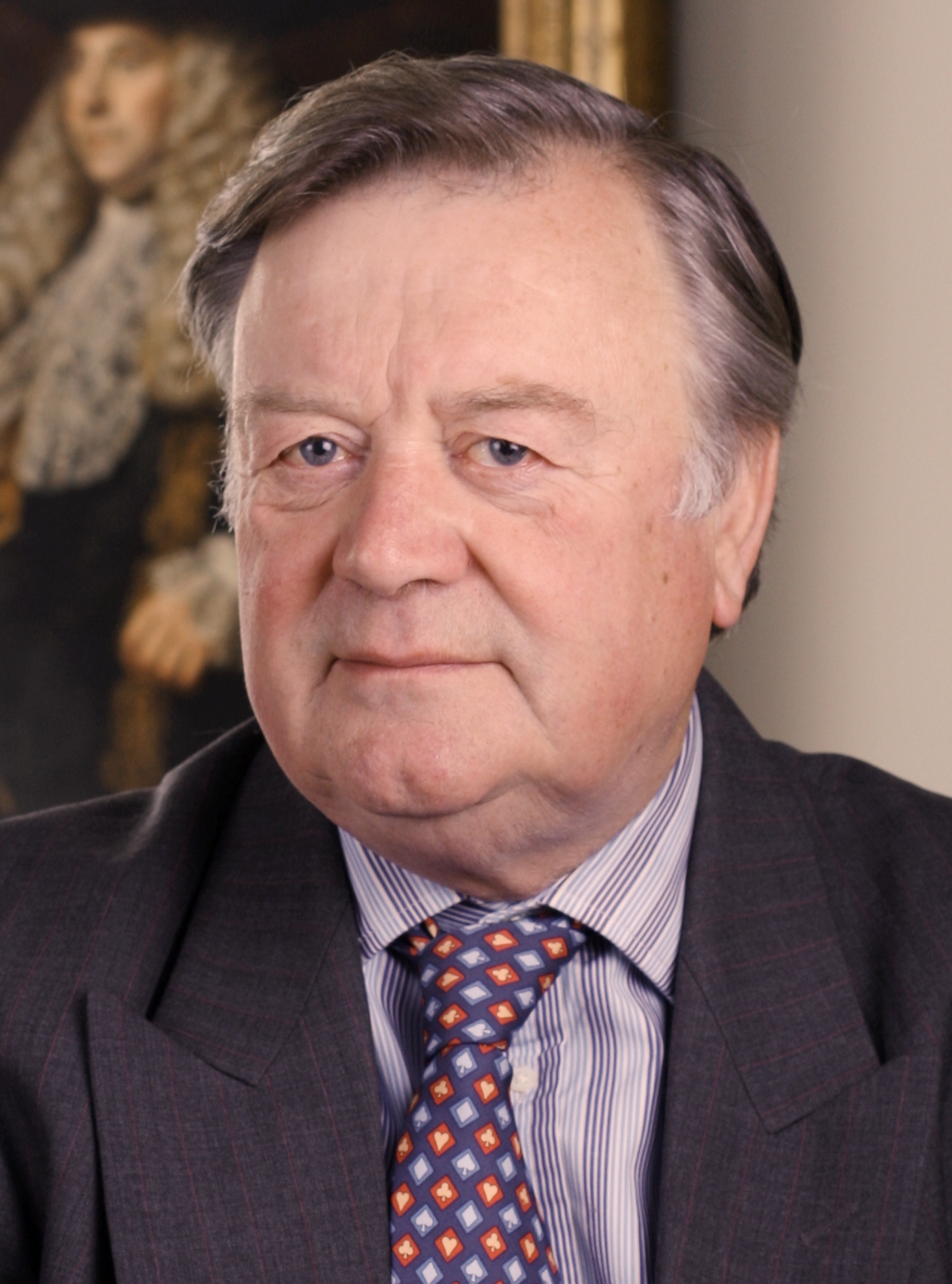
  • Kenneth Clarke – 2019 Comments on Brexit

    Below are the comments made by Kenneth Clarke, the Father of the House and the Conservative MP for Rushcliffe, in the House of Commons on 21 January 2019.

    As a supporter of the withdrawal agreement last week, I welcome the Prime Minister’s acceptance of the need for change in the light of the result and her reassurance that she will not compromise on a permanently open border in Northern Ireland, and that therefore any discussions that she has with the hard right wing on the Irish backstop will not compromise the commitment to a permanently open border.

    Will the Prime Minister also consider reaching out to those remainers who are not yet convinced of her agreement by at least relaxing—if she cannot do a U-turn—her normal rejection of a customs union? I do not see outside powers lining up to do trade agreements to compensate us for leaving Europe. Will she also consider relaxing her resistance to regulatory alignment with Europe? Regulatory alignment is not inconsistent with some tightening up, at least, of free movement of labour. I urge her to be flexible on every front, because there was a large majority against the proposal last week. There are probably more remainers who voted against her than there are Brexiteers, and she needs to reach out to those remainers.