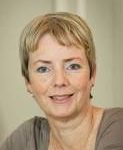
Tag: Karin Smyth

  • Karin Smyth – 2024 Speech on Health Services in Rural Areas

    Karin Smyth – 2024 Speech on Health Services in Rural Areas

    The speech made by Karin Smyth, the Minister of State at the Department of Health and Social Care, in the House of Commons on 17 July 2024.

    It is a privilege to be the first Minister of this new Labour Government to respond to an Adjournment debate. I am grateful to the hon. Member for Caithness, Sutherland and Easter Ross (Jamie Stone) for raising this important matter and, indeed, for his kind words.

    I hope we can begin this Parliament as we mean to go on, by being candid about the formidable challenges that the NHS faces. As my right hon. Friend the Secretary of State said on his first day in the job, the NHS is broken, and it will be the task of this Government to build a new NHS for the future. That means the NHS in our rural and coastal areas no less than the NHS in our towns and cities. I agree with the hon. Member for Strangford (Jim Shannon) on that point.

    Facing these hard truths does not take away from the heroic efforts of the people working in health and care, who have done their utmost in incredibly difficult circumstances. We all owe them, on behalf of our constituents, a debt of unending gratitude.

    Instead, we want to focus our attention on what needs to be done, including early action to improve access to primary care, dentistry and dental health services in particular. We await the conclusions of a thorough investigation undertaken by the distinguished surgeon Lord Darzi to properly understand the scale of the problem. The Government will then begin work on an ambitious programme of action—a 10-year plan to put the NHS back on its feet. It is a privilege to be part of a Labour Government who are committed to fixing the NHS and making it fit for the future.

    As the hon. Member for Caithness, Sutherland and Easter Ross said, the Department’s responsibility stretches only to the NHS in England. Healthcare is devolved in Scotland, Wales and Northern Ireland, and it will continue to be so.

    I congratulate the hon. Gentleman on being first out of the traps to secure this debate on behalf of his constituents. As a committed advocate for his constituents in one of the most rural parts of Scotland, he has a deep understanding of matters affecting rural communities, as we have heard this evening. He also has a deep understanding of care, about which I have often heard him speak in this Chamber. It is good to see him back again doing just that.

    I cannot speak in detail about the NHS in Scotland, of course, but I can speak about many of the common issues affecting access to care that are relevant to rural constituencies in England, Scotland, Northern Ireland and Wales. I know how rural the hon. Gentleman’s constituency is, and I know the particular challenges that creates in accessing GPs, dentists and emergency care, and in accessing women’s health and maternity services—an issue he has been passionately raising for so long. Maternity services are a problem across the United Kingdom, but I accept the examples he outlined.

    Few places in England are as remote as the hon. Gentleman’s constituency, but I am very aware of similar issues affecting more rural areas near my Bristol South constituency. We have heard from the hon. Members for Glastonbury and Somerton (Sarah Dyke) and for St Ives (Andrew George) about morale and the difficulties we face in the south-west.

    I hope that, in the years ahead, we can share and learn from one another across all of our borders. In many rural areas, the challenge of improving access to services is compounded by travel times and by the recruitment and retention of staff. We must recognise the importance of designing services that reflect an area’s particular circumstances, which is a growing challenge. As the chief medical officer has pointed out in his reports, people are moving out of towns and cities to coastal, semi-rural and rural areas as they age. At the time that people are most likely to need care, they are increasingly living in the places where it is most difficult to provide that care.

    In England, integrated care systems will have a key role to play in designing services that meet the needs of local people. To do this, they will need to work with clinicians and local communities at place or neighbourhood level. We know that excellent primary care is an essential foundation for improving access, tackling the root causes of poor health and tackling problems early so that people remain in better health for longer, and hopefully do not need to access secondary and tertiary care at the same level. That is why Labour has pledged, as part of our health mission, to train thousands more GPs and bring back the family doctor, and that applies to all the nations.

    We are also doing more to use the transformative power of technology. There is enormous potential in ideas such as virtual wards, which allow care to be delivered in people’s own homes. Such models of care can have disproportionate benefit in areas where rurality is a barrier to care.

    Equally, we are committed to seeing the NHS app reach its full potential under the new Government. We understand that some people will need support to use that technology and we are aware of the challenges of rural broadband, but we are committed to making the benefits accessible to all.

    Andrew George

    The Minister has committed the new Labour Government to address those issues, but will she specifically address the matter of the two coroners’ reports into avoidable excess deaths as a result of very long waits for emergency services in Cornwall? They were never addressed by the previous Conservative Government. The reports were about not just the hours spent waiting—sometimes elderly, frail people were on the floors for 10 or more hours—but the fact that sometimes 20 or more ambulances greeted patients when they arrived at the emergency department. Two coroners’ reports were sent to the then Secretary of State, but there was never an adequate response. I very much hope the new Labour Government will review the failings of the previous Government and address those very serious concerns, which affect many other rural areas.

    Karin Smyth

    I am aware of the issues facing the south-west and, when in Opposition, I spoke in the local media about some of the ambulance challenges. I am not aware of those reports, but if the hon. Gentleman writes to me with the details, I will happily look into the issue and get back to him.

    We also recognise the additional cost of providing services in rural areas, for example in travel and staff time. That is why the funding formula used by NHS England to allocate funds to integrated care boards includes an element to better reflect needs in some rural, coastal and remote areas.

    The NHS faces significant challenges. It needs fundamental reform. The Prime Minister is personally committed to resetting the UK Government’s relationship with devolved Governments in Scotland, Wales and Northern Ireland. I echo the Prime Minister’s words today about our commitment to rural constituencies across the entire country and I hope we can work with hon. Members from across the House, including the hon. Member for Caithness, Sutherland and Easter Ross.

    Jim Shannon

    I welcome the Minister’s clear commitment to England, Scotland, Wales and Northern Ireland—and particularly to Northern Ireland. Let me declare an interest: I am a member of the Ulster Farmers Union. I know that the Ulster Farmers Union back home, in conjunction with the NFU here, has been trying to work with the health service and with all those with responsibility in this area on the issue of suicides. Farmers mostly work on their own and suffer from anxiety and depression. They face pressures from finance and pressures from the bureaucracy that exists in farming. I know the Minister is compassionate and understanding—I mean that honestly. When it comes to addressing that issue, does she think that it must be done in conjunction with the farmers unions? Trying to work together to make things better must be a step in the right direction.

    Karin Smyth

    As ever, the hon. Gentleman makes a valid point. I shall certainly ask my colleagues in the Department for Environment, Food and Rural Affairs about that. His point is extremely well made. I know his constituency in Northern Ireland very well. Let me say that we are very committed to working with hon. Members across the House to share ideas. The hon. Member for Caithness, Sutherland and Easter Ross has put forward more ideas about how that can happen. I do not promise to implement all of those things, but I will certainly look at them. We want to work very closely across all jurisdictions so that we can make progress for all our constituents to improve the health outcomes across the four nations of the United Kingdom.

  • Karin Smyth – 2023 Speech on International Women’s Day

    Karin Smyth – 2023 Speech on International Women’s Day

    The speech made by Karin Smyth, the Labour MP for Bristol South, in the House of Commons on 9 March 2023.

    International Women’s Day is a time to celebrate, and there is much to celebrate about being a woman in 2023. I always think at this time of my friends, many now spread across the country and some across the world, who I have spent time with in the past. They are now too busy with children, grandchildren, older parents and their own jobs to get together, but I know that they are always there for me, I know they are really proud of me being here, and I know that I would never have made it here without them.

    This weekend, I am looking forward to joining Bristol Women’s Voice for a fantastic programme of events, in particular discussing social care and the role it could play in the Bristol economy if only it was run better. It will be chaired by my friend Diane Bunyan, who was Bristol’s first female Labour leader of the council only about 20 years ago. Many women have been at the forefront of Bristol’s long, radical history. I think of Dorothy Hodgkin, who was chancellor of the University of Bristol, Elizabeth Blackwell, who was the first woman to qualify as a medical doctor, the trade union activist Jessie Stephen and Mary Carpenter and Hannah More, who were involved in social programmes. Lady Apsley was Bristol’s first woman Member of Parliament. She was a Conservative who, after the death of her husband in 1943, won the seat. Three out of four of Bristol’s MPs are women. We allowed one man to take one of the positions, and I pay tribute to my hon. Friends the Members for Bristol West (Thangam Debbonaire) and for Bristol East (Kerry McCarthy), who are supportive colleagues.

    The reality is that, like the rest of the country, we are nowhere near economic or political parity. Often we hear about the challenges, and I will move between the challenges and the opportunities. We remember that some good historic achievements have been made recently, whether that is the Lionesses’ incredible success last summer, the next generation of young women and girls getting into sport, or Kamala Harris being the first female vice-president in US history. We await the first woman US president.

    Women are redefining culture with historic firsts in film, television, comedy and sport. Taylor Swift became the first woman to win a Grammy for best music video with sole directing credit, and films and shows are demonstrating the varied and multiple lives that women can lead, including “Am I Being Unreasonable?”, which was filmed in my constituency of Bristol South. Labour has led the way in women’s equality since 1923, when Margaret Bondfield became the first female Cabinet Minister. It is important that we celebrate the centenary of that accomplishment and the legacy that Margaret left for all women who have followed in her footsteps.

    I am appalled by the pictures, even in 2023, of international summits and events in the UK full of men with very little female representation. If we think about the women leading political movements—as we have heard again today, we think particularly of those women in Iran, and in Afghanistan and Ukraine, too—women have always been at the vanguard of social change. However, quickly, as that change starts to happen, we become relegated to a back room—often back to the home—and are rarely represented in those photographs or at those summits.

    This week, I was proud to chair a session of the British-Irish Parliamentary Assembly, which we held in Stormont on the 25th anniversary of the Good Friday/Belfast agreement. I was able to chair a session with some of the founding members of the Northern Ireland Women’s Coalition. Kate Fearon, Bronagh Hinds, Dr Avila Kilmurray and Jane Morrice were amazing activists well before the GFA, and they remain so today, many using that experience across the world. Women need to be represented in all aspects of politics, wherever and whenever. We are fed up with doing that service role and then not appearing in those photographs and leadership positions.

    As chair of the women’s parliamentary Labour party, which makes up more than 50% of Labour MPs, I am proud to see the successes that Labour Governments have made in promoting equality, from introducing the Equality Act 2010 to championing all-women shortlists to increase female representation. Labour is the party of women and for women. I gently say to the hon. Member for Southend West (Anna Firth), who spoke about how lucky we are to be here and able to speak, that luck has had absolutely nothing to do with it. I take her point about recognising that privilege, but none of it has been luck; it has all been power that we have taken, and it always has to be underpinned by legislation, and I am afraid it is only Labour in government that has enacted that legislation.

    Dame Maria Miller

    The hon. Lady is rightly talking up her party’s role in all these issues, and I would expect her to do nothing less, but surely she would agree that this Government have done an enormous amount—more than any other—on the issues of domestic abuse and domestic violence and making women safer online, and I do not think she can simply ignore that. These are the issues of today, and this Government are tackling them.

    Karin Smyth

    I am not ignoring it, and I pay tribute particularly to the right hon. Member for Maidenhead (Mrs May) for the work she led in government, but we need to continue to use legislation to underpin, and it should be good legislation. I am not sure that in this week of all weeks we can be proud of what this Government have done. If we think about the trafficked women who are coming forward, that is deeply problematic, and it would be good if we could all work together to help those women.

    People outside might not know this, but even on a very busy Monday, Tuesday or Wednesday in Portcullis House and so on, this place is overwhelmingly male. Although some great strides have been made in all these professions, we see that with journalists, lobbyists and even with the third sector people who come to see us. I think the environmental movement is overwhelmingly dominated by men. The camera people and the staff in most places are generally male. I had a message as we were sitting here today from my hon. Friend the Member for Wirral South (Alison McGovern) pointing out that yesterday at Prime Minister’s questions, all four leaders are of course male, but there were two questions from men for every one from a woman. That is the stark reality. As others have said, this place still remains 30% women.

    We are celebrating how far we have come, but we recognise that more needs to be done. It is 52 years since that first women’s refuge was set up in Chiswick, and the issue of domestic abuse and violence, as we have heard again today, is still all too prevalent. Marital rape was only made illegal in the early 2000s, and the Office for National Statistics estimates that 1.6 million women experience domestic abuse in England and Wales in any given year. We know that, faced with the cost of living crisis and severe lack of funding, the number of refuge spaces in England is falling desperately short. Why, when this issue is affecting so many, is so little progress being made?

    We need to work harder on this issue, and talking last week with those women from the Northern Ireland Women’s Coalition was certainly instructive. They were clear that they could only come forward, and that women in any conflict situation can only come forward, if there is an ecosystem of support that they can use, both statutory and non-statutory, operating behind the scenes, and that is sadly missing in many places today. We need to help fund those refuges, and they need to be places of safety for women to seek refuge.

    We recognise the resilience and strength from women today, and we are so proud to be able to voice, on behalf of all those women, what they bring to us in our constituencies. To close, it is often our friendships with one another that prove to be our biggest strength. Outwith the fact that we disagree across the House, as is necessary, we are strong political women and we work together. It is a pleasure to be a part of this debate today, and when I look around the Chamber and up to the Gallery, I see the bonds of friendship that are made between colleagues who share the desire to make life better for women. Parliament will be safe in our hands.

  • Karin Smyth – 2015 Parliamentary Question to the Home Office

    Karin Smyth – 2015 Parliamentary Question to the Home Office

    The below Parliamentary question was asked by Karin Smyth on 2015-10-28.

    To ask the Secretary of State for the Home Department, how many people resident in Bristol South constituency were deported in each year from 2005 to 2014.

    James Brokenshire

    The information requested is set out in the table below:

    Year

    Total

    2006

    14

    2007

    13

    2008

    20

    2009

    14

    2010

    16

    2011

    30

    2012

    10

    2013

    15

    2014

    10

    Total

    142

    Caveats

    Bristol South constituency postcodes taken from the ONS Postcode Directory (ONSPD) (Office for National Statistics)

    Data is based on the last recorded address on CID at the time of departure, incorrect/incomplete postcodes will not have been matched

    Removal figures uses Management Information based on the Historical Removal report.

    Figures provided from 2006 onwards as earlier data is not captured due to the unreliability of CID data at that time.

    The figures quoted have been derived from management information and are therefore provisional and subject to change. This information has not been quality assured under National Statistics protocols.

  • Karin Smyth – 2015 Parliamentary Question to the Department for International Development

    Karin Smyth – 2015 Parliamentary Question to the Department for International Development

    The below Parliamentary question was asked by Karin Smyth on 2015-12-10.

    To ask the Secretary of State for International Development, if she will make it her policy to continue to invest in the Global Fund to Fight AIDS, Tuberculosis and Malaria.

    Mr Nick Hurd

    The UK is currently reviewing all core contributions through the Multilateral Aid Review. We are committed to remaining a world leader in tackling global diseases like HIV/AIDS, tuberculosis and malaria. We will continue to invest in the Global Fund, which has saved 17 million lives.

  • Karin Smyth – 2016 Parliamentary Question to the Department of Health

    Karin Smyth – 2016 Parliamentary Question to the Department of Health

    The below Parliamentary question was asked by Karin Smyth on 2016-09-02.

    To ask the Secretary of State for Health, what steps he is taking to increase GP recruitment in South Bristol.

    David Mowat

    The Government has committed to increasing the primary and community care workforce by 10,000 by 2020, including an additional 5,000 doctors in general practice.

    NHS England advises it has invested £10million to kick start a range of initiatives to expand the general practitioner (GP) workforce, set out in a joint action plan developed with Health Education England (HEE), Royal College of General Practiioners and British Medical Association. Achievements to date include , a new national induction and refreshers scheme was launched in 2015.

    Further measures to boost the general practice workforce are set out in the General Practice Forward View, published by NHS England on 21 April 2016.

    HEE’s confirms it is working to maintain a high fill rate of Bristol’s programme for Postgraduate Training pre Certificate of Completion of Training and to continue to produce high calibre GPs leaving the Bristol Programme upon completion of their training. HEE advises it is doing this by:-

    ― Continuing to offer high quality training placements throughout the Bristol region;

    ― Promoting new initiatives such as the Global Health Programme and Leadership and Excellence Extensions of Training opportunities; and,

    ― Maintaining existing Scholarship programme for trainees in their final year to gain extended skills in primary care.

  • Karin Smyth – 2015 Parliamentary Question to the Home Office

    Karin Smyth – 2015 Parliamentary Question to the Home Office

    The below Parliamentary question was asked by Karin Smyth on 2015-10-28.

    To ask the Secretary of State for the Home Department, how many refugees the Government plans to resettle in the Bristol City Council area.

    James Brokenshire

    Resettlement under the government schemes is voluntary on the part of local authorities. We are grateful to those who take on this role and will continue to work in partnership with them.

    We do not disclose the details of where refugees are resettled upon their arrival in the UK under the Government resettlement schemes as this may undermine the privacy and recovery of this vulnerable group of people.

  • Karin Smyth – 2015 Parliamentary Question to the Department of Health

    Karin Smyth – 2015 Parliamentary Question to the Department of Health

    The below Parliamentary question was asked by Karin Smyth on 2015-12-14.

    To ask the Secretary of State for Health, if he will place in the Library a copy of the communication between Ministers and officials in his Department about NHS England’s decision to change the amount of NHS performance data published the Winter Daily Situation Reports for 2015-16.

    Jane Ellison

    In line with previous requests of this nature, copies of communications on this issue are not proposed to be placed in the Library, as all communications from officials were for the purpose of providing advice to ministers for their consideration and deliberation. Releasing this information would be likely to inhibit the continued free and frank exchange of views for the purposes of deliberation.

    Based on clinical advice from the NHS England National Medical Director Sir Bruce Keogh, the Secretary of State agreed with the recommendation to standardise reporting arrangements. The recommendation came from Sir Bruce Keogh’s review of waiting time standards published in June 2015. The overall approach was agreed in September by the respective chief executives of NHS England, TDA and Monitor with the Secretary of State for Health.

  • Karin Smyth – 2016 Parliamentary Question to the Department for Education

    Karin Smyth – 2016 Parliamentary Question to the Department for Education

    The below Parliamentary question was asked by Karin Smyth on 2016-09-02.

    To ask the Secretary of State for Education, what steps she is taking to ensure incentives and support packages meet the needs of small businesses in order to increase their ability to take on apprentices.

    Robert Halfon

    We want to continue to support small employers to take on younger apprentices and so propose that employers with fewer than 50 people working for them will be able to train 16 to 18 year old apprentices at no cost.

    We propose to extend this to small employers who take on a 19 to 24 year old apprentice who was formerly in care or has a Local Authority Education, Health and Care plan. The government will pay 100% of the apprenticeship training costs for these individuals. Further funding detail and provisional funding rates were published in August.

    Since April, employers have not been required to pay employer National Insurance contributions for almost all apprentices aged under 25 up to the Upper Secondary Threshold (£827 per week in 2016-17).

    This change makes the business case for apprenticeships even stronger, reducing the cost of employing a young apprentice by over £500 a year on a salary of £12,000, and over £1,000 a year on a salary of £16,000.

  • Karin Smyth – 2015 Parliamentary Question to the Home Office

    Karin Smyth – 2015 Parliamentary Question to the Home Office

    The below Parliamentary question was asked by Karin Smyth on 2015-10-28.

    To ask the Secretary of State for the Home Department, how many asylum seekers the Government plans to resettle in the Bristol City Council area.

    James Brokenshire

    Under the Immigration and Asylum act 1999, asylum seekers who need accommodation are housed in communities across the UK according to an agreed ratio, based on various regional factors. This is reviewed regularly. Within each region, UKVI has established working arrangements with local authorities in order to consider dispersal patterns and numbers. This includes consulting key corporate partners in the local area in order to assess regularly the impact of dispersal policy on a particular community.

    The COMPASS contract requires providers to liaise and consult with local authorities to ensure that accommodation provided to asylum seekers does not adversely affect local authority developments or community plans. Providers must also take into account the cultural compatibility of the environment; capacity of local health, education and other support services; concentration of accommodation of service users within particular areas; and the assessment of social tension risks.

    Following the expansion of the Government’s vulnerable person resettlement scheme, we have established a cross-Government committee to oversee the resettlement of vulnerable refugees and we are working closely with them and local authorities about future resettlement.

  • Karin Smyth – 2015 Parliamentary Question to the Department of Health

    Karin Smyth – 2015 Parliamentary Question to the Department of Health

    The below Parliamentary question was asked by Karin Smyth on 2015-12-14.

    To ask the Secretary of State for Health, who he was accompanied by at a cost to the public purse on each of his official overseas trips since his appointment.

    Jane Ellison

    My Rt. hon. Friend the Secretary of State is generally accompanied by an official from the Department and/or a member of staff from his private office when he is travelling on official business.