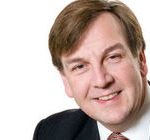
Tag: John Whittingdale

  • John Whittingdale – 2025 Parliamentary Question on Use of AI in the Creative Industries

    John Whittingdale – 2025 Parliamentary Question on Use of AI in the Creative Industries

    The parliamentary question asked by John Whittingdale, the Conservative MP for Maldon, in the House of Commons on 3 April 2025.

    Sir John Whittingdale (Maldon) (Con)

    What discussions she has had with representatives of the creative industries on the use of AI.

    The Secretary of State for Culture, Media and Sport (Lisa Nandy)

    Our creative industries lead the world. This is the top priority for them, and I am clear that if it matters to them, it matters to us, and we are determined to get it right. Since I was appointed, I have discussed this with representatives across music, publishing, film, TV, fashion and gaming. The Secretary of State for Science, Innovation and Technology and I will shortly convene further roundtables to work with industry across artificial intelligence and the creative industries to strike the right balance and to grip this issue.

    Sir John Whittingdale

    The Secretary of State will be aware of suggestions that the Government may offer concessions around AI regulation in a deal to reduce US tariffs. Will she assure the creative and news media sectors that any negotiations will not include an offer to weaken our copyright framework, which would be opposed by creative industries both in the UK and in the US?

    Lisa Nandy

    Our creatives are second to none in the world, as I just said, and our copyright framework is an essential part of their success. We have been clear that if it does not work for creatives, it does not work for us and we will not do it. On negotiations with the United States, the Prime Minister has been clear that this is the start of the process, but we will always work in the national interest, and we are considering all steps as we look to the future.

  • John Whittingdale – 2023 Speech at Connected Britain 2023

    John Whittingdale – 2023 Speech at Connected Britain 2023

    The speech made by John Whittingdale, the Minister for Digital Infrastructure, in London on 20 September 2023.

    Good afternoon and thank you to Connected Britain for inviting me to speak and for convening an event that is more interesting and important than ever.

    I’m delighted to be here in the Docklands today – there are few better places to celebrate the things which keep us connected.

    Because for centuries, it was the Docklands around us that brought Britain to the world – and the world to Britain, bringing growth, prosperity and opportunity for millions.

    Today, connectivity matters just as much – the economy of the future won’t be powered by sail or coal, boat or barge – it will be powered by digital infrastructure.

    Because it is only with connectivity that we can deliver on our ambition to build the most innovative economy in the world.

    Embedding innovation in our economy must deliver real benefits for each and every British person. For that very reason, this government is on a mission to ensure that communities and businesses up and down the country have the secure, reliable and high-quality connectivity they need.

    That connectivity is, and will continue to be, an engine of economic growth – creating jobs, and delivering the kind of bold new discoveries which will put the UK right at the cutting edge of science and technology.

    Our plan to make that mission a success is clear, comprehensive, and unapologetically ambitious.

    First and foremost, we remain relentlessly focused on working with the telecoms industry to drive the deployment of fixed and wireless broadband, to deliver the connectivity which British people need today.

    But even as we do that, we’re looking ahead to tomorrow, by investing in the technologies that will transform the telecoms industry and the global economy.

    And finally, we’re ensuring at every stage that our telecoms networks are secure and resilient.

    So I want to take today as an opportunity to talk through this 3-step plan for success, and what it means for you.

    Extending fixed and wireless coverage

    Driving the deployment of fixed and wireless broadband is a centrepiece of the government’s work.

    We have set an ambitious goal to ensure future proof and resilient gigabit broadband to 85% of the UK by 2025 and to over 99% by 2030 and we continue to make progress towards meeting this ambition. Working in partnership with industry and Ofcom, our policies have helped us collectively increase gigabit broadband to 77% up from just 6% in 2018, largely driven by competition.

    We remain firmly committed to wholesale competition in the broadband market being the best strategy to meet our strategic objectives.

    And so we continue to establish an environment which encourages competition and investment by removing practical barriers to deployment and reducing regulatory barriers to investment and innovation where necessary.

    The Product Security and Telecommunications Infrastructure Act, passed last year, sets out a number of measures that will make a real difference in the pace at which apparatus can be installed, upgraded and shared.

    A number of the provisions have already come into play and we are firmly committed to implementing all provisions in the Act before the end of 2024.

    We are funding a further trial of a more flexible permitting system for street works in England, giving fixed line operators more freedom when installing fibre in the ground. Launching in early 2024, these new ‘flexi-permits’ could significantly accelerate broadband rollout.

    Through the government’s Geospatial Commission, we are also working with asset owners, to build a digital map of the pipes and cables beneath our feet.

    The National Underground Asset Register is revolutionising the way we install, maintain, operate and repair our buried infrastructure and will deliver at least £350 million per year of economic growth, whilst also improving worker safety.

    The emerging service has been launched in parts of England with plans to extend it to the rest of England this autumn, and to Northern Ireland in spring. If you’re not yet taking part – I’d urge you to join others like CityFibre, Virgin Media O2, COLT, Gigaclear and Nynet by getting involved as soon as possible.

    We continue to deliver on our mission to bring fast and reliable connectivity to hard-to-reach places across the UK. Under the £5 billion Project Gigabit, we already have 39 procurements and contracts underway, making over £2 billion of funding available to improve broadband connections for up to 1.1 million premises.

    In addition, our voucher scheme has already benefited communities across the country; with the help of our partners, we recently passed a major milestone: 100,000 vouchers have now been used to fund gigabit broadband connections for people in rural places from the Scottish Highlands to the Jurassic Coast.

    We are trialling satellite connectivity and other innovative technologies to provide faster and reliable connectivity to the most remote areas of the UK.

    Earlier this year the government announced an £8 million fund to provide capital grants to further promote new satellite connectivity to the most remote 35,000 premises.

    On the deployment of mobile connectivity – through the Shared Rural Network, the government and industry are jointly investing over £1 billion to increase 4G mobile coverage to 95% of the UK’s landmass by the end of the programme, up from 93% today and 91% when the SRN deal was signed back in March 2020.

    We also want to ensure that all parts of the UK benefit from 5G. Basic non-standalone 5G has been made available to outside 85% of premises.

    But this is only the start of the UK’s 5G future. Widespread adoption of 5G could see up to £159 billion in productivity benefits by 2035.

    We recognise that the deployment of basic, non-standalone 5G, will not be enough to unlock these benefits.

    Our Wireless Infrastructure Strategy, published in April this year, announced an ambition – backed by the industry – to deliver high-quality, standalone 5G to all populated areas by 2030.

    But we recognise that operators will continue to face challenges when investing in 5G. Through the Strategy, we have set out how we will improve the investment climate for 5G by reducing costs, increasing revenues, and making sure that regulation is not a barrier to innovation.

    To support this, we have asked Ofcom to review its approach to setting spectrum licence fees to ensure they continue to promote the efficient use of spectrum and support a strong investment environment. We are also working closely with Ofcom as it updates the net neutrality guidelines to provide clear and up to date guidance for industry.

    We will also continue with our work through the Barrier Busting Task Force to tackle the barriers preventing the fast, efficient and cost-effective deployment of gigabit-capable and 5G networks.

    Supporting rural communities and businesses to access high quality connectivity is a [personal] priority for both myself and the Secretary of State.

    Our 10 point plan for rural connectivity restated our commitment to ensuring that rural economies benefit from the opportunities that come with better connectivity.

    To support this plan, is the appointment of Simon Fell MP as Rural Connectivity Champion. I know Simon has already met many of you here today. He will report to DSIT and Defra Secretaries of State next year on how government can continue to support rural communities to access and adopt advanced wireless connectivity.

    Earlier this year, we launched our 5G Innovation Regions programme, which will invest up to £40 million to help local and regional authorities realise the benefits of 5G and advanced wireless connectivity. Each 5G Innovation Region will develop a framework to stimulate the adoption of 5G-enabled technologies and services. I am looking forward to announcing the successful regions later in the autumn.

    Accelerating 5G adoption will be key to unlocking additional growth and productivity gains.

    I am pleased to say that today we are announcing the winners of our Smart Infrastructure Pilots Programme. The winning local authorities are Cambridgeshire County Council, Oxfordshire County Council, North Ayrshire Council, Westminster City Council Tees Valley Combined Authority, and the Royal Borough of Kingston upon Thames.

    The 6 winning pilots authorities will share £1.3 million of funding to procure and test smart multi-purpose street columns for wireless coverage and other uses, such as electric vehicle charging and environmental monitoring. – We are thoroughly looking forward to seeing how the successful local authorities can make a difference.

    Looking ahead, we know that upgrades are a critical element of modernising our telecoms networks. We are working closely with Ofcom and the industry to ensure consumers and sectors are protected and prepared for the Public Switched Telephone Network switch off and the sunsetting of 2G and 3G mobile services.

    Connectivity is essential for full participation in society and we know that the recent rise in the cost of living has been difficult for many households across the country.

    I want to recognise the great work of the industry in ensuring that households, including low income families are able to get and stay online. There are now 27 providers of social tariffs and government continues to work in partnership with Ofcom and industry to support those who are struggling to pay.

    Connectivity for the future

    As well as delivering connectivity today we are also looking ahead to focus on the opportunities that telecoms will bring to the UK tomorrow.

    The government has identified future telecoms as one of the 5 critical technologies that will underpin the transformation of modern British society and our economy.

    The next generation of telecoms, including 6G, should see a huge leap in digital transformation. From the expansion of satellite communications to provide near universal coverage and reducing the rural connectivity divide – to the use of drones in networks to provide energy efficient and flexible deployment.

    We will build our existing strengths in foundational research and early-stage innovation to ensure that new discoveries benefit the British public and put us at the heart of the global telecoms market, delivering our ambition to be a science and tech superpower.

    Earlier this year, we announced our plans to initially invest up to £100 million to support innovators and ensure the UK is a pioneer in future telecoms and 6G research and development. We expect competitions to launch in early October and welcome the robust enthusiasm from the sector to-date! I’m excited to see the pioneering work the winners will be working on over the next few years.

    We also continue to ensure the UK has a leading voice on the global stage and the opportunity to work closely with international partners to shape the rules and standards that govern global telecoms networks.

    We are already delivering on our 6G strategy, most recently at the International Telecommunication Union (ITU) in June, by ensuring that national priorities such as coverage, sustainability, security and interoperability are recognised internationally as a minimum expectation for 6G.

    And at the heart of all of this work to ensure advanced connectivity is the effective management of Spectrum which we set out in our Spectrum Statement earlier this year which sets out our plans to ensure that spectrum supports growth while protecting critical services and that we will also continue to advocate for the UK at key international fora, including this year’s World Radio Congress.

    A key element of this work is to develop and enhance spectrum sharing in the UK. Ofcom’s 2019 spectrum sharing framework was a ground-breaking step, but industry let us know that more can be done to improve the framework and help us to get more out of this finite resource. We’re working closely with Ofcom on options for spectrum sandboxes and we’re looking forward to the introduction of automation across shared spectrum bands early next year.

    Security and resilience

    As connectivity becomes more central to our lives and to the economy, so does the importance of secure and resilient digital infrastructure.

    I am pleased that, thanks to new laws, we now have one of the strongest telecoms security regimes in the world. We have introduced a robust new telecoms security framework, through the Telecommunications Security Act and subsequent regulations. The Act placed new obligations on telecoms operators and also created new national security powers, which we have used to issue directions to telecoms operators to control their use of Huawei’s goods and services within the UK’s telecoms networks.

    As technologies grow and evolve, we are firmly committed to protecting our networks, shielding our critical national infrastructure and understanding how we should ensure new telecoms networks are designed, built and managed securely.

    Following the government’s decision to remove Huawei from UK 5G networks and the need to mitigate the risks of long-term consolidation in the telecoms equipment market, our 5G Supply Chain Diversification Strategy sets out a plan to ensure the UK has a healthy and competitive telecoms supply chain market.

    The strategy is backed by the £250 million Open Networks R&D Fund which will accelerate the adoption of OpenRAN technology, allowing more suppliers to provide equipment and help diversify the market.

    I was delighted to announce last week 19 new projects which will be recipients of funding through the Open Networks R&D Fund. These projects were successful in applying for the Open Network Ecosystem (ONE) competition. With £88 million of funding, the ONE projects will help boost the technical capabilities of the UK’s open telecoms ecosystem. The UK will see trials of new mobile tech designed to increase the resilience of the UK mobile network.

    To further strengthen our network resilience, we have set an ambition, jointly with the mobile operators, for 35% traffic to be carried over OpenRAN by 2030.

    We are strengthening our collaboration with international partners to shape and stimulate the global market, putting the UK at the forefront of the global debate.

    I was pleased to open the UK’s first International Telecoms Conference in June, where we announced a new Memorandum of Understanding to deepen our cooperation with Australia. We are also working closely with partners in industry and academia to help ensure the standards shaping our networks are fit for purpose and enable the open and interoperable technologies that we need.

    So as the government creates the right policy framework for digital connectivity across the UK, we need to work together to use this as a springboard to drive investment, adoption and innovation, to really level up and boost our economy across the union.

    We can only build an economy that delivers for communities across the country together.

    With this 3-step plan, I am confident that we will.

    Thank you.

  • John Whittingdale – 2022 Speech on BBC Local Radio

    John Whittingdale – 2022 Speech on BBC Local Radio

    The speech made by John Whittingdale, the Conservative MP for Maldon, in the House of Commons on 8 December 2022.

    I congratulate my right hon. Friend the Member for Hemel Hempstead (Sir Mike Penning) on obtaining this debate. It is also a pleasure to follow the right hon. Member for Hayes and Harlington (John McDonnell). I do not often agree with what he says but, apart from a couple of sentences, I agreed with practically every word.

    The BBC spends something like £4.1 billion each year on public service content, of which £477 million—just over 10%—is spent on radio. A quarter of that, or around 3% of the BBC’s total spend, is spent on local radio, yet what BBC local radio provides is hugely valued by a very large number of listeners. It is an essential and widely trusted local information service.

    I have listened to and appeared on BBC Essex over many years. The station’s presenters, including Dave Monk, Sadie Nine and Sonia Watson, are familiar friends to many of my constituents. People share their living room with them, and their news reports are trusted. That was particularly the case during the covid pandemic, when all the surveys showed that people relied on and trusted information from local media more than information from almost any other source.

    But it is not just about news. BBC local radio does a tremendous amount of community events to support voluntary organisations. Just a few weeks ago, I presented a Make a Difference award to one of my constituents in Essex who had been recognised by BBC Essex for her remarkable, life-saving bravery.

    The BBC’s mission is to be distinctive, and one of its public purposes is to serve the diverse communities of all the UK’s nations and regions. BBC local radio does both. The requirement to be distinctive is something BBC local radio meets better than a lot of the rest of the BBC. Nobody else does what BBC local radio does. There are plenty of very good local radio stations—I have Heart Essex, Radio Essex and community stations such as Caroline Community Radio in my constituency—but they are predominantly music-based. They do not pretend to provide the kind of very localised talk-based content that only BBC local radio provides.

    I accept that this year’s licence fee settlement is difficult for the BBC, but £159 represents a lot of money for households, particularly with the rising cost of living, so it was the right decision to freeze the licence fee. That has put pressure on the BBC, but local radio is a tiny proportion of its expenditure, and the BBC tells us that it is not cutting the amount of money it spends but is redirecting it, so £19 million has been taken away from radio and put into online news.

    I spoke to Rhodri Talfan Davies, the BBC’s director of nations, about why the BBC made that decision, and he told me it was because people no longer listen to the radio to get their news and because people, particularly young people, are increasingly going online, and the BBC somehow has a duty to follow them. I think that is profoundly mistaken for two reasons. First, there is still a significant audience for radio, particularly among the elderly population, who often cannot get out. They rely on the radio.

    Richard Foord (Tiverton and Honiton) (LD)

    I recognise what the right hon. Gentleman says about elderly constituents who depend on local radio. Angela Kalwaites does a fantastic show on BBC Radio Devon covering stories from the county’s faith communities. Some of my constituents who listen to her show are frail and elderly and can no longer get themselves to their local church or chapel. They tune in to her programme to get that connection with local people. Does the right hon. Gentleman agree that this move would hit some of our eldest constituents hardest?

    Sir John Whittingdale

    I agree. Many of our elderly constituents rely on radio and are less familiar with online. They will not necessarily go on to the BBC News website or a commercial website. They enjoy the fact they can listen to local news content from people they know well. As my right hon. Friend the Member for Hemel Hempstead and the right hon. Member for Hayes and Harlington have both said, this is now going to stop for a lot of the country at 2 pm. We are lucky in Essex, as it is going to continue until 6 pm on weekdays, but after that we will become part of a regional network, with a show that covers Essex, Cambridgeshire, Suffolk, Norfolk, Northamptonshire and Three Counties Radio, which means another three counties, as it says on the tin. So that makes eight counties. Eight counties is not local radio. This will result in a significant reduction in the amount of local content, at times when people want still to be able to access that.

    Secondly, instead of providing for local radio, the BBC is going to increase its spend on local online news content, yet that area is already well supplied. Local news publishers more and more are providing online content. Existing print-based newspapers have websites and there are now many online-only publishers, such as Nub News, which I referred to in the questions this morning. They are operating in a challenging and competitive environment, and are under tremendous economic pressure. They already see the BBC, which provides content for nothing, as a major competitor. The latest Ofcom survey showed that, when people want to go online to access news content, 62% go to the BBC website, 34% go to Google and 10% go to any local newspaper site. So already local commercial providers feel that the BBC is a threat and that is why Frances Cairncross said in her report that the BBC needs

    “to think more carefully about how its news provision can act as a complement to, rather than a substitute for”

    private news provision. Yet this, the area where the BBC is going to invest more, is bound to have an even greater competitive impact on commercial news providers. So I hope that Ofcom, which has a duty to look at the impact of the BBC’s activities, will examine that. I hope it will also look at the operating licences for BBC local radio and, if necessary, strengthen them to make sure that they continue to provide genuine local content, not local content across eight counties.

    If the BBC wants to support local news provision, there is an easy way in which it can do so. When I was Secretary of State, I played a small part in the creation of the Local Democracy Reporting Service, where the BBC pays for local journalists who are employed by local news providers to collect and distribute local news content across all the local news providers. That scheme has been a huge success. It is welcomed right across all the local newspapers. The BBC acknowledges that it is a great success. So, if the BBC wants to put more money into local news provision, it should do it by increasing its support for the Local Democracy Reporting Service, which works with local newspapers, rather than by increasing the amount of money it spends competing with local newspapers.

    It is not for us here or for the Government to tell the BBC how to spend its money, but the message that will go out this afternoon is that the BBC has got this wrong and it needs to think again.

  • John Whittingdale – 2022 Speech on the Avian Influenza Outbreak

    John Whittingdale – 2022 Speech on the Avian Influenza Outbreak

    The speech made by Sir John Whittingdale, the Conservative MP for Maldon, in Westminster Hall, the House of Commons, on 30 November 2022.

    I beg to move,

    That this House has considered the avian influenza outbreak.

    It is a pleasure to serve under your chairmanship, Sir George, and I am grateful for the opportunity to debate avian influenza, which is an incredibly important issue. Avian influenza is not a new phenomenon—the industry and wild birds have been affected by it for a long time—but the current outbreak is by far the worst on record. Since the beginning of October, 136 cases of H5N1 have been identified, with millions of birds dying or being culled. The outbreak is affecting every part of the country, but particularly East Anglia. In my constituency of Maldon we have already had three cases in the past few weeks.

    The disease spreads rapidly, possibly because the mutated virus that is affecting the population has an increased ability to replicate, and is extending to infect a broader range of species. That issue is not specific to this country, but global. In America, a record outbreak has led to more than 49 million birds in 46 states either being culled or dying since the beginning of the year. Across Europe, the disease has been found in 37 countries, with about 48 million birds being culled. Every country across the globe is affected, including even penguins in South Africa.

    An epidemic on such a scale is a disaster for wildlife and agriculture. The Royal Society for the Protection of Birds reports that 65 species of wild bird have tested positive, with tens of thousands of birds dying every day. For a number of species, there is what the RSPB describes as a population impact, and guillemots, kittiwakes and Svalbard barnacle geese are all dying in such numbers that those species are being put at risk in this country.

    However, the disease is not only affecting wild birds; it is having a dramatic effect on the poultry industry—a major industry worth £2 billion to our economy. It employs more than 34,000 people and provides about half the meat consumed in Britain. The industry has already had to cope with serious challenges: the seasonal labour shortage, which came about immediately after we left the EU and remains a challenge, as the Minister is aware, and, following that, covid. Just as the industry was beginning to recover from those blows, along came avian influenza. It now faces an existential threat.

    We need a clear plan. The Government have rightly identified biosecurity as crucial in trying to stop the spread of the disease, and I welcome the move that has required mandatory housing of birds since the beginning of November, but the spread is extremely rapid, and a single wild bird can infect thousands in a short time. It is right that we have established protection zones around areas where the disease has been identified, and there are more measures that we can take, particularly around the collection and disposal of the carcases of wild birds—one infected wild bird can massively affect a flock in a short time. We probably need to improve oversight of those backyard businesses involving a small number of chickens that supply eggs for families or perhaps for neighbours. They are equally at risk and the disease is equally likely to spread from them. Those businesses need to be more visible to regulators.

    We have to accept that, although biosecurity is tremendously important, it will not stop the spread of this disease. The Government have instituted a policy of culling, which has already led to the death of thousands, if not millions, of birds. In the case of the very biggest producers, the entire flock in a shed will be culled if the disease is identified there, but at least they will have some remaining birds in other sheds, and of course compensation will help if there needs to be a cull.

    However, smaller producers can lose their entire flock overnight, and the compensation available is totally inadequate. Under the Animal Health Act 1981, compensation is payable following culling, but it was passed at a time when there was a relatively low pathogenic strain that did not kill all the birds in a very short time. That has now changed: birds die extremely rapidly, which means that smaller producers can lose almost their entire flock without being eligible for compensation.

    In my constituency, I have KellyBronze Turkeys—arguably the finest turkey producer in the country, as vouched for by Jamie Oliver, Nigella Lawson and so on. In one flock, it had 10,000 birds. It identified the disease on a Thursday evening, informed the Animal and Plant Health Agency, which said that it would send vets round, but by the time the vets arrived on Monday morning 9,850 of the 10,000 birds were dead. It was likely therefore to get compensation for the 150 remaining. That is the situation facing poultry farmers right across the country.

    The answer is that compensation needs to be payable from the moment of the identification of the disease or notification. The change that has taken place is welcome, but it will not make a great deal of difference: 48 hours post confirmation is simply not enough. We need compensation to be paid on the same basis as it is paid for four-legged species. I understand that that requires an amendment to the law, but it is absolutely essential if we are to preserve the poultry industry in this country.

    In the longer term, the answer is likely to be vaccination. At the moment, there is not an effective vaccination, but we need to work on that as rapidly as possible. We saw what could be done during the covid epidemic. We need to identify an effective vaccine, and we need to talk to our international partners to ensure that trade restrictions are lifted. This disease is affecting every country, and the answer is likely to be the same in every country. It is notable that the head of virology at the APHA, who previously was not in favour of vaccines, is now saying that we have to establish an effective vaccine rapidly.

    We are in the run-up to Christmas—a time when millions of families will want to eat turkey or goose. This year, we are already seeing dramatic shortages of turkeys, and geese are almost impossible to find. The situation next year is likely to be even more serious, because unless the Government give farmers some confidence, who will invest in a turkey flock for Christmas production when they could lose the entire thing due to an outbreak of disease and have no compensation payable?

    We have just emerged from the covid crisis; this is the equivalent of the covid crisis for birds. Biosecurity is important to stop its spread, but ultimately will not be successful. Vaccination is probably the key, and in the meantime the Government need to step in to support the businesses affected. Those things happened under covid. They now need to happen again if we are to have a viable poultry industry in this country.

  • John Whittingdale – 2022 Question on Government Funding for the BBC World Service

    John Whittingdale – 2022 Question on Government Funding for the BBC World Service

    The question made by Sir John Whittingdale, the Conservative MP for Maldon, in the House of Commons on 8 November 2022.

    What funding his Department provides to the BBC World Service.

    The Parliamentary Under-Secretary of State for Foreign, Commonwealth and Development Affairs (David Rutley)

    The Foreign, Commonwealth and Development Office is providing the BBC World Service with a flat cash three-year settlement of £94.4 million annually. Since 2016, the FCDO has provided over £468 million to the World Service via the World2020 programme, funding 12 language services and enhancements to BBC Arabic, Russian and English.

    Sir John Whittingdale

    Does my hon. Friend agree that the BBC World Service plays an ever more important role in countering disinformation, particularly from Russia and elsewhere? Will he therefore look to increase the amount of support that his Department gives to the World Service, and does he share my concern that the BBC is proposing to reduce funding by £28 million with the loss of 10 radio services?

    David Rutley

    I recognise my right hon. Friend’s long-standing interest in this issue. The FCDO greatly values the World Service’s role in countering disinformation, particularly President Putin’s harmful narratives, and it has provided an additional £1.44 million this year to support this work on top of our annual £94 million funding. The changes reflect the BBC’s ambition to become a digital-first organisation and, as a result, audiences will still retain access to all 42 language services.

  • John Whittingdale – 2014 Parliamentary Question to the Department for Business, Innovation and Skills

    John Whittingdale – 2014 Parliamentary Question to the Department for Business, Innovation and Skills

    The below Parliamentary question was asked by John Whittingdale on 2014-04-10.

    To ask the Secretary of State for Business, Innovation and Skills, what representations he has received about the implications of the proposed EU Package Travel Directive on insolvency protection for consumers; and if he will make a statement.

    Jenny Willott

    BIS officials are in regular contact with a variety of organisations which have a particular interest in the implications of the proposed Directive, including the elements covering insolvency protection for consumers. Those organisations are among the 42 which responded to this Department’s Call for Evidence on the Proposal for a New Directive on Package Travel and Assisted Travel Arrangements. Responses commenting on the insolvency protection proposals were received from a wide range of organisations, representing the interests of the travel trade, consumers, tourism, and legal firms.

  • John Whittingdale – 2022 Comments on Rishi Sunak Becoming Prime Minister

    John Whittingdale – 2022 Comments on Rishi Sunak Becoming Prime Minister

    The comments made by John Whittingdale, the Conservative MP for Maldon, on Twitter on 24 October 2022.

    We need strong and experienced leadership to tackle unprecedented challenges at home and abroad. I will be supporting Rishi Sunak as our next Prime Minister.

  • John Whittingdale – 2022 Tribute to HM Queen Elizabeth II

    John Whittingdale – 2022 Tribute to HM Queen Elizabeth II

    The tribute made by John Whittingdale, the Conservative MP for Maldon, in the House of Commons on 10 September 2022.

    It is a privilege to join hon. Members in paying tribute to Her late Majesty, not just on my own behalf, but on behalf of all the people of the Maldon constituency. Many fine tributes have been given yesterday and today, and many hon. Members have spoken of Her late Majesty’s dedication, commitment, remarkable sense of duty, and lifetime of service, which was always performed with dignity, compassion and kindness. I echo all those sentiments.

    It has been an extraordinary week, starting with the appointment of a new Prime Minister and ending with the accession of a new sovereign. I congratulate my right hon. Friend the Prime Minister and I am sure she will be grateful that her first audience with the monarch was with Her late Majesty Queen Elizabeth. I am sure that His Majesty King Charles will continue to provide advice and counsel, but my right hon. Friend must be sad that she will not benefit from the extraordinary wisdom and experience that Her late Majesty shared in advising 15 successive Prime Ministers.

    Before entering the House, I worked for one of those Prime Ministers, Margaret Thatcher. She used to fix in her diary—the only immutable engagement in 11 years—the weekly audience with Her Majesty. I suspect that there were, occasionally, some quite robust discussions—she never spoke of what was said—but I know that she immensely valued the experience of Her late Majesty and was hugely honoured when Her late Majesty attended her 70th birthday party.

    A number of hon. Members have spoken about how they are asked in primary schools whether they have met the Queen, and I have had exactly the same experience, but I have also been struck on international visits when many parliamentarians from across the world have spoken of their admiration of the Queen and have envied the fact that we have benefited from having her as our sovereign. We have seen that in the global tributes, with Union Jacks and the red, white and blue across America and Brazil; the extraordinary display on Sydney opera house yesterday; and the words of the President of France—a country that has not always had great relations with the British monarch—who said:

    “To you, she was your Queen. To us, she was the Queen.”

    Like many right hon. Members, I benefited from meeting the Queen as a member of the Privy Council, and I had the good fortune to accompany her to the Cenotaph on one occasion, which is one of the roles of what was then the Secretary of State for Culture, Media and Sport. It was her two visits to Maldon, however, that my constituents will always value. The first visit was in 1971 to mark the 800th anniversary of the award of the charter to Maldon by Henry II. I was privileged to take part in the second visit in 2010, when the Queen visited Maldon Salt before walking down the high street to have lunch in the town hall. On that day, it seemed that the whole town turned out to celebrate her visit. Today, the whole town, indeed the whole of my constituency, is once again united in mourning the passage of Her late Majesty and in pledging allegiance to King Charles III.

  • John Whittingdale – 2002 Speech on the Manufacturing Sector

    John Whittingdale – 2002 Speech on the Manufacturing Sector

    The speech made by John Whittingdale on 1 May 2002.

    Having had the opportunity to tour some of the exhibition this morning, my first and immediate reaction was to say that clearly reports of the demise of manufacturing in the UK are premature. I therefore want to congratulate the MTTA on putting together such a fantastic showcase for your industry. With over 400 companies exhibiting products and technologies, many of which are as advanced as anything available in the world, you have provided a perfect riposte to those who would write off the manufacturing sector in this country.

    Given your importance to the economic health of our nation, I share your surprise – although perhaps not your disappointment – that a Government Minister was not willing to come to Birmingham to be with you. I can only conclude that perhaps he got wind of what you, Mr President, were going to say. However, as the principal Opposition Spokesman for Trade and Industry, I stand permanently ready to step into the Minister’s shoes. I should therefore like to thank you for this opportunity to come to your conference and to respond to your comments on behalf of the Conservative Party.

    Like you, I have many criticisms of this Government when it comes to manufacturing industry. But perhaps I can begin by saying something with which everyone in this room will agree as, we are told, do Ministers. Manufacturing matters. A successful manufacturing sector is essential for a healthy thriving economy. You above all need little reminding of the crucial importance to the UK economy of manufacturing industry: it is responsible for nearly two thirds of our exports, over a quarter of our output and 15 per cent of our jobs.

    The problems afflicting manufacturing therefore pose a challenge for all those concerned about the future prosperity of our nation. Some of these are not new: The competition from countries with labour costs far below our own. The decline in the attraction of industry as a career among those leaving our schools. And the difficulties of an uncompetitive exchange rate.

    Nor I acknowledge did the drop in employment in manufacturing and the fall in its contribution to our national income start with the election of this Government. But there is no doubt that the last couple of years have been exceptionally painful for those in your industry. And it has not been helped by the fact that while you have been mired in recession, the rest of the economy has continued to grow.

    For a long time, the Government gave the impression that it did not care about manufacturing, that as long as unemployment stayed down and living standards stayed up, there was no need to give special attention to any particular sector that was in trouble.

    However, at the end of last year, that changed. The Secretary of State for Trade and Industry in belated recognition of the importance of your success held a manufacturing summit here in Birmingham. It was attended by some 50 delegates including 5 Ministers, 12 trade unionists and just 7 businessmen occupied full time in the actual running of manufacturing companies.

    The outcome was the announcement of £20 million of government money divided between an extension of the Industry Forum and an expansion of the Partnership Fund. The first is essentially a talking shop while the Partnership Fund seeks to bring employers and employees together to solve particular business problems. Among the successes trumpeted on the DTI web-site for the first round of the Partnership at Work Fund is the establishment of an Employee forum at Pizza Express for which the project co-ordinator is a waiter on secondment. I have no wish to knock what I am sure is a worthy project but I think manufacturing industry was entitled to expect a little more.

    Shortly after the summit in January of this year, the Secretary of State for Trade and Industry gave a speech in which she once again stressed the importance of manufacturing. This time she said that the decline in output had been exaggerated because of a flaw in the statistics and that the solution to your problems lies in membership of the Euro. It will not surprise you to learn that I do not agree.

    Of course, British manufacturers find it difficult to be competitive when the Euro has fallen through the floor. But no one would want to lock us into the present exchange rate for all time. And if the Government do wish to enter at a lower exchange rate, they have given no indication of how they intend to bring that about.

    Yet the tragedy is that if the Government really did want to help manufacturing industry, there are several concrete steps that they could take straight away. First of all, they could stop the relentless flow of regulations, which spew from Brussels and from Whitehall.

    Of course, I recognise that all Governments regulate and all Oppositions criticise them for doing so. But this Government has taken the art of regulating to new heights. £15 billion added to business costs since this Government came to power according to the British Chambers of Commerce. Last year, a record 4,642 new regulations: one every 26 minutes. By the Government’s own admission, businessmen had to spend 617,000 hours last year completing information requests from the Office of National Statistics alone. And of the forms sent out, nearly half a million went to firms in the manufacturing sector.

    Every businessman I meet, every business gathering I speak to, the message is the same: that the burden of regulation is rapidly becoming unbearable and that the flow has got to stop. That was one of the messages in your budget submission. Another was the need to reduce the tax burden. Sadly in neither case did the Chancellor appear to listen.

    Even before the Budget, the CBI had pointed out that the cumulative extra tax burden on British business under this Government stood at £29 billion. That adds to your costs and reduces your competitiveness. But of all the extra business taxes that this Government has introduced: the Utilities tax, the petrol tax, the aggregates tax, the tax on pension funds, one stands out for the scale of the damage that it has done to your ability to compete in the world.

    If the Chancellor had tried to come up with a tax designed to hit manufacturing industry hardest, he would have found it difficult to have done better than the Climate Change Levy. Across the engineering sector, it has raised operating costs by just under £90 million. And yet it is likely to have a negligible impact in terms of reducing carbon emissions.

    That is why at the last election, my Party was pledged to abolish it. Sadly we were not given the chance to do so. But we remain convinced that there are far more effective ways of achieving a reduction in greenhouse gas emissions which do not destroy the competitiveness of our industry at the same time.

    Of course, Ministers have repeatedly argued that the effect of the Climate Change Levy is neutral, that it is balanced by a 0.3 per cent cut in employers’ National Insurance contributions. It was not convincing even before the Budget. After the Budget, even that figleaf has been ripped away.

    Listening to the Budget, for fifty minutes you must have been happy. Tax credits for R & D, cuts in corporation tax for small firms, increased spending on education, law and order and the NHS. Then in the last ten minutes, business got clobbered with a tax increase of nearly £4 billion. And what is more a tax on jobs, that will hit every employer, no matter whether they are large or small, profitable or loss-making. Having specifically asked for a cut in employers’ NIC in your budget submission, you have instead have been given a direct increase in your costbase. You have every right to be angry.

    It is perhaps in recognition of that anger that we learn that the Government is shortly to announce a new initiative: the appointment of a Minister for Manufacturing. It is we are told to be Alan Johnson, one of seven junior Ministers in the DTI. In my view, they should all be Ministers for Manufacturing. But until the DTI can make its voice heard against the Treasury, it will do little good.

    After a long and brutal recession, there are at last signs of an upturn in manufacturing in the UK. But if it is to be sustained, it needs to be nurtured by Government not snuffed out. Much of the rhetoric of Ministers I applaud, but it is time it was matched by their actions. It is a criticism which, if I am given the chance, you will not be able to make of me.

  • John Whittingdale – 2022 Speech on Channel 4 Privatisation

    John Whittingdale – 2022 Speech on Channel 4 Privatisation

    The speech made by John Whittingdale, the Conservative MP for Maldon, in the House of Commons on 14 June 2022.

    There is a lot in the Opposition motion with which I agree, particularly its drawing attention to the success of our creative industries and our broadcasting sector and to the benefits that Channel 4 has brought, but it is because I want to see the continuation of Channel 4’s contribution to the creative sector that I believe the Government’s policy is right and will ensure that Channel 4 can continue to thrive.

    As has been pointed out, Channel 4 was created by Margaret Thatcher’s Government. There were two principal objectives. The first was to cater for minority audiences that were not being properly provided for at that time. The second was to act as a catalyst to what was then a barely visible independent production sector. Since that time, the landscape has changed dramatically. If we look at the range of choice now available to viewers, we see huge numbers of channels providing a wide and diverse range of content. We also see the spend by those channels. A lot of them are not British, but they are spending money in Britain. Just to give one example, Apple TV recently came to my constituency of Maldon to make “The Essex Serpent”, which I thoroughly recommend to those who have not yet seen it. Minority audiences are now being catered for, but of course Channel 4 should continue with that remit and continue to meet it.

    The independent sector has absolutely taken off since Channel 4 was created and is now making programmes that are enjoyed right across the world. However, it is true, as one or two hon. Members have pointed out, that the spend of Channel 4 has declined. I want to cite quickly the latest Oliver & Ohlbaum UK TV production survey for PACT—the Producers Alliance for Cinema and Television—which is the independent production sector. In 2020, spending on independent producers was £508 million by the BBC, £356 million by ITV, £210 million by Channel 4 and £223 million by the others, including Sky and some of the streamers.

    Just in case people say, “Ah, but Channel 4 continues to support the small indies”, I point out that 40% of the BBC’s spend is on independent production companies with a turnover of less £10 million, compared with 27% of ITV’s, 11% of Channel 5’s and just 10% of Channel 4’s. Yes, Channel 4 does make a contribution, but the independent production sector is actually now so successful that it no longer necessarily needs the support it was previously given. Indeed, I think there is a case for tweaking the remit so that Channel 4 is perhaps returned to its original purpose of focusing on growing companies, not just on commissioning from production companies that are already hugely successful.

    The reason why it is right to look at the future of Channel 4 now is that the original model set up, as a commissioner and publisher-broadcaster wholly dependent on advertising, is going to come under increasing strain. Yes, Channel 4 did well last year in that it survived the pandemic. It did so because it cut the programme budget by £140 million and its drop in revenue was not quite as big. As a result, it made a larger profit, but it did so only by slashing the programme budget. That was a sensible thing to do, but it should not be interpreted as Channel 4 thriving and not being under huge pressure.

    We know that that pressure is going to increase. Advertising is steadily migrating online. Digital advertising is becoming overwhelmingly the major spend by the advertising industry. As the Secretary of State pointed out, those that want to spend on TV advertising have ITV, Channel 4, Channel 5 and Sky to go to at the moment, but the streaming services are also going to open up to advertising. Netflix is talking about taking advertising and Disney is talking about taking advertising, so the competition for advertising is going to get ever greater and the diversion of revenue to digital media is also going to continue.

    Channel 4’s revenues are going to come under increasing strain at the same time as the cost of production is rising steadily and there is a shortage of skills. As has been pointed out, there are potential benefits from privatisation, and the hon. Member for Cardiff West (Kevin Brennan) referred to the difficulties that might be encountered in the House of Lords. To quote the last House of Lords report on Channel 4:

    “The potential benefits of privatisation to C4C’s sustainability are increased access to investment in programming, content partnerships and technology through access to capital. This would enable C4C to diversify its revenues, enhance its sustainability and be more ambitious internationally.”

    I could not have put it better myself.

    I want to counter those who suggest that this somehow a vendetta against Channel 4 because some people may not like some programmes. I completely reject that. I remain a fan of Channel 4 News, even though it annoys me intensely on occasions. It is important that we have plurality in our news provision, and Channel 4 News is a professional news provider. This is not just about raising money for the Treasury. The reason behind privatisation is that the Conservative Government whose predecessor created Channel 4 want Channel 4 to go on succeeding, but under the present change in the landscape, it needs a different funding model and the access to capital that the private sector can provide.