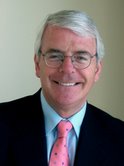
Tag: John Major

  • John Major – 1990 Speech to the Young Deaf Achievers Awards

    johnmajor

    Below is the text of the speech made by John Major, the then Prime Minister, at the Cafe Royal in London on the 12 December 1990.

    Ladies and Gentlemen:

    Chairman, thank you very much indeed. I must let you into a secret that not many people are aware of – indeed, if they were, I suppose in a curious way it would not be a secret! But we do have in the House of Commons something of a trade union of former Ministers for the Disabled. It is a very discreet, very select, rather enjoyable trade union but in that trade union the Father of the Chapel, irrespective of anything to do with politics, is undoubtedly Jack Ashley and it is a very great privilege for me to follow him today and to thank him publicly for the extraordinary amount of work he has done not just for people who are disabled through deafness but for people who are disabled in a whole range of ways. He has done more in my judgement [Applause].  Well there you are, I need not say it because you know, so it does not need saying!

    Jack was kind enough to say that minutes were precious and to thank me for coming. If I may say so, I think perhaps I should thank him for inviting me because the reason I was keen to come today is because there are many of us here who are very fortunate in that we have to face no disability in the normal journey through life that all of us have; but those who do need a very special courage to face that – not just the courage to meet the challenges, but the ordinary everyday courage to actually decide to take on those challenges in the first place, perhaps to go to a workplace or a university or to enter into a sport or to enter into the normal social contact that most people accept, anticipate and enjoy with no difficulty whatsoever.

    Faced with a disability, whether it be deafness or perhaps some other disability or perhaps a myriad series of disabilities which alas is so often the case, it does take a very remarkable kind of personal courage to enter into that commitment into society and the young people that I had the privilege of meeting just before lunch today were people who have not only had the courage to enter into society in that particular fashion but have achieved very remarkable things as a result of having done so and for me, it is a very great privilege today to have had the opportunity of meeting them. A privilege but not a surprise, for having been Minister for the Disabled, albeit for the all too short time of just a year, I learned during that period across a whole range of disability, with what enormous courage so many people in this country face hurdles that many of us cannot imagine and perhaps would not be able to cope with if we were able to imagine them. For we ought not to pretend, as we see these young people receiving their well-deserved awards in a few moments, that what they have achieved has been easy or comfortable or without some difficulties, for it has not been and indeed, in many ways it simply could not have been.

    Many of us might think what today’s finalists have done was almost impossible but I think if you do think that, that shows the failure of our imagination and not theirs, for the young people who receive these awards did realise what could be done, put themselves to do it and have succeeded in my judgement in rather spectacular fashion.

    One of the reasons I regard this as an important occasion is to touch upon something that Iain Vallance said. In many ways, these young people offer a very considerable beacon of hope to other people who are disabled as to what they can achieve in their own lives and they have precisely the same right to achieve what they can in their lives that everybody else has and we have an obligation to assist them to do it, whether or not they be disabled, and to ensure that they can get the maximum possible out of their lives provided that they will put into it – as those we meet today and hundreds of thousands of others do – the effort and courage that is necessary to deal with the difficulties they often face.

    I hope that those people who perhaps still have in their minds some form of prejudice or difficulty because somebody has one form of disability will realise that one form of disability does not disable people from the normal functions of life, the normal responsibilities of life, the normal duties of life and the normal pleasures that the rest of us are able to enjoy.

    If there is one thing that has been happening remarkably in the last twenty years or so, but which still has further in my judgement to go, it is to open up the opportunities for people who are disabled that those who are not disabled have over the years come to take for granted and I hope that that is something we will all be able to take a part in doing in the years ahead.

    The people who are disabled know from their own experience the will power that is necessary to achieve what they have achieved and I think in terms of will power and courage, if there are two attributes that the young people you will meet shortly have demonstrated to a very remarkable extent it is those. I hope that we will continue to encourage them and many others to achieve precisely the same things in the future.

    I would, if I may, therefore like to thank most warmly both [indistinct] and Iain Vallance and British Telecom for sponsoring this event, for the enormous amount that they have done, are doing and I very much hope will continue to do in the future and perhaps I should also mention just as an example, the contribution that British Telecom has made to the Royal National Institute for the Deaf telephone exchange for the deaf, which it has been jointly funding with the Government. This does allow deaf people to telephone, hearing people by providing an operator with whom deaf people can communicate through text; the operator then passes on their message. British Telecom announced a grant of 4 million pounds this year to allow this service to continue and I would like publicly to express my thanks to Iain Vallance for that very generous and … [Applause].

    I think, if I may presume to speak upon behalf of the award winners today and perhaps also a little wider on behalf of disabled people – people who have disabilities I might more accurately say – elsewhere in the community, there are, I think, some people whom they would wish to thank and whom I might thank on their behalf and that is their parents and friends who will have encouraged them and helped them throughout the vast majority – in the case of their parents, throughout all their lives – to deal with their disabilities and to make the most of their opportunities. On behalf of disabled people, I would like to extend those thanks most warmly for I think they are thanks well deserved by those who offer so much to people who have been treated so harshly in so many instances.

    I think, if I may say so, Chairman, that the principal purpose of today’s meeting is to honour those young people who have won in a very in a very remarkable fashion these awards which are so difficult to obtain and so I will say no more except to say that in a few moments I hope you will give a very warm welcome indeed to a number of very remarkable young people who have achieved what few could have achieved and which all of us may look at with a certain degree of pride that young people in our country can do such things despite the handicaps that they face.[Applause].

  • John Major – 1995 Speech to Northern Ireland Mayors and Councillors

    johnmajor

    Below is the text of the speech made by John Major, the then Prime Minister, on 23 January 1995.

    I’m very glad you could all be here. I tend to spend most of my time concentrating on the political process in Northern Ireland, and I believe we are making progress. But the nuts and bolts of how we help the peace work on the ground is equally important. It is up to the politicians to make the peace. But it is up to the people to make the peace work. So I am really looking forward to your ideas.

    Economic progress will be essential. The prospect of peace of already boosting the local economy. I was struck by the sea change in attitudes when I visited Belfast last month. We have seen the sales rise in Belfast’s shopping malls by up to 90%, a CBI survey rating confidence in the Northern Ireland economy at the highest level since 1987, unemployment down and the number of jobs up. So a spectacular recovery is already underway. But Northern Ireland needs more investment, more prosperity and more jobs if the peace that we seek is to be successfully underpinned.

    That was why we held the Investment Conference in Belfast last month. This generated a tremendous response. It reflected the new mood of hope on the ground. This will bring more jobs to the Province. And it will change the way people look at Northern Ireland.

    Today, Northern Ireland is an exciting investment opportunity. Many of those at the Conference saw that potential. Already, I understand that nearly 20 possible new projects are now being explored. But in the end the prosperity of Northern Ireland depends on the people of Northern Ireland. And that is why I am so hopeful.

    As leaders of the District Councils, you have a major role both in local economic development and in helping to heal community division. You can help create the climate in which peace can take root. And if you succeed, we shall all look back on this time as an historic turning point.

    I see this meeting as the start of a process of close consultation. All the Northern Ireland team are here today to listen to what you say and then carry it forward.

    One of the issues we must discuss is how to deploy the welcome package of extra EU help. It won’t be possible to please everyone. But we want your views before we discuss with the European Commission how to allocate these funds. We aim to make the best use of them.

    But you also want greater resources to promote local economic development. So let me announce today two initiatives which I hope will help:

    – I know that District Councils would like to spend more of the District rate on local economic development. I have therefore decided that the Government will introduce legislation soon to double the present provision from 2p in the £ to 4p in the £.

    – Second, we shall increase the resource elements in your General Grant by £2 million from a total of £17.8 million to just under £20 million. This will help you exploit this unique opportunity to use your district rate for economic redevelopment.

    We have also allocated a further £5 million to the Community Regeneration and Special Programme (CRISP). This will enable a further 25 projects in disadvantaged towns and villages over the next three years.

    I mentioned earlier the crucial role of the District Councils in developing community relations. Because I see you as uniquely placed to promote this, I have decided to extend the District Councils Community Relations Programme for a further three year period up to March 1998.

    Before calling on the first speaker, let me say a word about something which is not on our agenda today – the Joint Framework Document.

    There has been a great deal of speculation about it, which can unsettle people.

    So let me stress four points:

    – First, the document has only one purpose, which is to help the political Parties themselves to find an agreed way forward in the talks process. It will indicate one set of ideas, drawing on the talks of the past four years, on how a settlement might be found which would gain the necessary wide support across the community. But, as we have repeatedly said, there will be no question of the two Governments imposing a blueprint on the Parties. These will be proposals for negotiation.

    – Second, our proposals are not yet completed. I want to complete them as soon as possible, so that we can then publish them. The people of Northern Ireland will then be able to judge for themselves all the suggestions – including our parallel suggestions for new arrangements within Northern Ireland. They will be able to comment on them to us and to the political Parties.

    – Third, when the proposals are published, you will find no provision for the British and Irish Governments to exercise joint authority over the affairs of Northern Ireland. That has never been our intention, and that will not be our proposal.

    – Fourth, the need for consent remains paramount. And agreed outcome will finally be put to the people of Northern Ireland in a referendum. The voice of the people will decide these matters.

    I am taking this opportunity to reassure anyone who has been concerned at partial interpretations of what many be in a very full and careful set of proposals. I cannot yet say when they will be completed. But when they are, I hope that people will read them with equal care before forming their own opinions.

    Let me now return to the business of this meeting.

    We have three agenda items, one in two parts:

    – economic growth

    – urban and regional regeneration

    – finance

    We have four speakers, who will give a brief introduction to each item. I shall then call for short interventions from others, so that we can gather in as many ideas and opinions as possible.

  • John Major – 1990 Autumn Statement

    johnmajor

    Below is the text of the Autumn Statement speech made by John Major, the then Chancellor of the Exchequer, to the House of Commons on 8 November 1990. 

    The Chancellor of the Exchequer (Mr. John Major) With permission, Mr. Speaker, I should like to make a statement.

    The Cabinet agreed the Government’s expenditure plans this morning. I am, therefore, now able to inform the House of the public expenditure outturn for this year; the plans for the next three years; our proposals for national insurance contributions in 1991–92; and the forecast of economic prospects for 1991 required by the Industry Act 1975.

    As usual, the main public expenditure figures, together with the full text of the economic forecast, will be available from the Vote Office as soon as I sit down. The printed “Autumn Statement” will be published next Tuesday.

    In this survey we have had to take some tough decisions in the interests of the economy and the new plans represent a very tight settlement. But it is a settlement which is fully consistent with the Government’s commitments and channels extra resources to the areas where the need is greatest. For this, and other reasons, I should like to pay tribute to my right hon. Friend the Chief Secretary for the skill and persistence with which he has brought the survey to a successful conclusion.

    Since 1984–85, while the economy has grown by nearly 20 per cent., total public spending has risen scarcely at all in real terms. As a result, the ratio of public expenditure to national income has fallen by more than seven percentage points, the largest sustained fall for 40 years. Moreover, in the past three years large budget surpluses have enabled us to repay debt totalling £26 billion.

    Mr. Dennis Skinner (Bolsover) Not any more.

    Mr. Major We shall add to that this year.

    The main objective of economic policy at present must be to bring inflation down, but, as we do so, the short-term prospect is bound to be one of weak activity. [Interruption.] In the past, during similar periods the ratio of public spending to national income has risen strongly. On this occasion it will not.

    Planned public expenditure in the current fiscal year is now expected to be £180.6 billion, rather less than 1 per cent. above the planning total set a year ago. A large part of this extra spending is due to an increase in the financing requirements of the nationalised industries, to a surge of common agricultural policy spending on agricultural market support and to expenditure on the Gulf crisis.

    Notwithstanding this cash overrun, public expenditure remains under tight control. Inflation has been higher than forecast, but it has not been allowed to feed through fully into expenditure. As a result, the ratio of spending to national income in the current year is likely to be slightly lower than projected at the time of the Budget – virtually unchanged from the 1989–90 level.

    The decisions on public expenditure for the next three years have been taken against a more difficult world and domestic economic background than for some time. Activity at home and abroad has begun to weaken and some countries such as Canada and the United States are expected to grow very slowly indeed over the coming year. The outlook has also been complicated by events in the Gulf, with the rise in oil prices and the uncertainty that they have produced. Against that background, our new plans are designed to protect the most vulnerable groups in society against the effects of higher inflation [Interruption.] I repeat, to protect the most vulnerable groups in society and to maintain longer-term policies to improve the working of the economy.

    Mr. Robert N. Wareing (Liverpool, West Derby) rose–

    Mr. Major I shall of course give way to the hon. Gentleman when we come to questions a little later.

    But, beyond that, this is not the year for making substantial additions to plans in other areas. The priority must be to honour existing commitments, within a total for public spending that is affordable and fiscally prudent. For 1991–92, the new planning total has been set at £200 billion, a little under £8 billion more than the previously published figure. The planning totals in the following two years are £215 billion and £226 billion respectively.

    In recognition of the economic uncertainties and the risks arising from the Gulf crisis, these totals include higher reserves than last year’s plans: £3½ billion in the first year; £7 billion in the second year; and £10½ billion in the third. I believe that these increases are prudent. Our plans also incorporate an estimate of privatisation proceeds at £5½ billion a year that is in line with the average outturn in recent years.

    After taking account of inflation, the level of spending next year will be rather less than implied by last year’s plans: that is, the cash additions to the planning total do not fully compensate for the higher level of prices now expected for 1991–92. This restraint is necessary, but it means that many of my colleagues have had to drop or postpone proposals that they would otherwise have regarded as desirable.

    Nevertheless, within this total there are substantial extra resources in three main areas: health, social security and central Government support for local authority services. These additions to plans total some £7½ billion in 1991–92. It has also been possible to make improvements to other key areas including education, public transport, and the environment.

    We have also been able to make savings elsewhere, including defence. I can assure the House categorically that financial constraints will not hinder in any way the United Kingdom’s military contribution to resolving the Gulf crisis. However, the “Options for Change” announced by my right hon. Friend the Secretary of State for Defence on 25 July will produce increasing savings in the defence budget. Over the next three years the new plans provide for a real reduction in defence spending of about 6 per cent., and further reductions should be achieved in later years as my right hon. Friend’s proposals are fully implemented. For the first time in the period since World War 2, we are now able safely to plan on a defence budget that is significantly less than one tenth of all Government expenditure and falling.

    In certain other areas, we have been able to accommodate increases in expenditure by finding offsetting savings. For example, on the trade and industry and employment programmes we have made selective increases while keeping broadly to existing plans overall, and within the Home Office programme, lower prison population forecasts have enabled us to reduce the prison building programme, while considerable resources have been made available for the refurbishment of existing prisons, including Strangeways.

    In July, the Government announced extra support for local authority current spending which will add around £2½ billion to previous plans. Current spending by local authorities has substantially outstripped central Government spending over recent years. This year local authorities in England budgeted for increases of over 5 per cent. in real terms before capping. This has led to community charges which in many authorities are far higher than expected or justified.

    The additional support that we are providing for next year should enable local authorities to finance local services without sharp increases in their charges. My right hon. Friend the Secretary of State for the Environment has already announced that, if required, the Government will make vigorous use of their powers to cap high-spending authorities. I re-emphasise that.

    Nearly £3 billion has been added to the social security plans for next year. This mainly reflects the upratings already announced by my right hon. Friend the Secretary of State for Social Security which maintain in full the real value of benefits paid to 10 million pensioners and 11 million people on income-related benefits. The additions also reflect the substantial extra cost of community charge benefit which will help about one in four charge payers. My right hon. Friend was also able to announce selective increases for poorer pensioners, people in residential and nursing homes and families. These improvements will be financed within the social security programme by savings from restructuring the statutory sick pay scheme, as announced by my right hon. Friend on 24 October.

    As in previous years, the Government have also made very substantial extra provision for health. Between this year and next, spending on the national health service in the United Kingdom will rise by £3 billion, so that the real resources over and above inflation that are available for spending on health will increase by a further 5 per cent. The total real increase in health service spending since 1979 will now be nearly 50 per cent. This has enabled the NHS to employ some 8,000 more hospital doctors and dentists, and over 50,000 more nurses and, of course, to provide for more sophisticated health care than ever before. As a result, more than 1½ million more in-patient and day cases are now treated every year. In the largest sustained programme of hospital building ever seen, nearly 500 major capital schemes have been completed since 1979. The plans that I am announcing ensure that the next three years will see further improvements in services.

    Extra finance is also being provided for public transport. London Transport and British Rail have large long-term investment programmes which will enable them to extend and to upgrade the London underground and to prepare for the opening of the channel tunnel. Between them, they will spend some £¾ billion on safety alone in the next three years. The new plans also consolidate the substantial extra provision for roads that was announced last year and include measures to relieve congestion in London. Investment in public transport in the next three years will be double the level of the past three years.

    Central Government spending on education will be increased by more than £500 million next year, largely to finance the record number of students in higher education. One in five of the 18 to 19 age group will be in higher education, compared with one in eight only a decade ago. The number of higher education qualifications gained, as a proportion of the relevant age group, is higher in the United Kingdom than in Germany, France, Italy and almost every other European country.

    Following the publication of the White Paper on the environment, the new plans provide significant extra resources for environmental research and in support of environmental bodies such as the National Rivers Authority and the Countryside Commission. There is extra provision also for the Government’s programme of action on rooflessness.

    Throughout the past decade, we have sustained a high level of capital spending in the public sector. In total, it will approach £30 billion in the current year. Leaving aside defence, our new plans include an extra £1½ billion a year for investment by central Government and nationalised industries. There is also extra support for local authorities’ capital spending on schools, housing and local transport.

    Taking capital and current together, real growth in total public spending over the three survey years will be less than 2 per cent. a year – well within the trend growth of the economy. As I have said, this is a tight settlement and it means that the ratio of public spending to national income should remain stable at its present level for the next two years. Thereafter, as activity strengthens and inflation remains in check, the downward trend will be resumed.

    I now turn to national insurance contributions. As usual, the review this autumn has taken account of advice from the Government Actuary on the income and expenditure of the national insurance fund, and of the statement on benefits that was made by my right hon. Friend the Secretary of State for Social Security on 24 October.

    The lower earnings limit at which contributions begin will go up next April to £52 a week, in line with the single person’s basic pension, while the upper earnings limit will rise to £390 a week. The upper limits for the reduced employers’ rates will also be increased.

    In addition to those changes, there will be reductions in the contribution rates paid by employers. As my right hon. Friend explained in the House on 24 October, the restructuring of statutory sick pay will add modestly to employers’ costs from next April. It is right that the Exchequer should share these costs. Therefore, the main employers’ contribution rate will fall next April from 10.45 per cent. to 10.4 per cent. and each of the lower rates will be cut by 0.4 per cent. This relief through contributions will limit the impact of the statutory sick pay adjustments on employers of lower-paid workers in particular. The necessary legislation will be laid before the House. The contribution rates paid by employees and the class 4 rates paid by the self-employed will remain unchanged.

    I am publishing today the economic forecast required by the Industry Act 1975, the first since we became members of the exchange rate mechanism. I must emphasise at the outset that the Gulf crisis and its effect on world oil markets make the future unusually difficult to predict. The United Kingdom, along with other countries, has already seen some of the adverse impact on consumer price inflation. The oil price rise is likely also to contribute to the general slowdown in the world economy that was already under way before the Gulf crisis.

    For the Industry Act forecast I am following the practice of international institutions such as the International Monetary Fund and assuming some fall in oil prices from recent levels to around $25 a barrel by the end of 1991. But I must reiterate that the situation in the oil market remains very volatile.

    Despite these uncertainties, however, it is now clear that the tight United Kingdom policy stance of the past two years is bringing about an easing of domestic inflationary pressures. This will make possible both a sharp fall in retail prices index inflation next year and a strengthening of output.

    So far this year, the public sector debt repayment has been running below both last year’s outturn and our expectations at Budget time. Local authority borrowing was particularly high earlier this year as some authorities experienced delays in collecting non-domestic rates and the community charge. Public corporations’ finances have been adversely affected by the slowdown in economic activity and central Government spending has also been higher. Nevertheless, despite this, I still expect a significant debt repayment in the year as a whole of £3 billion. This amounts to ½ per cent. of GDP and represents a strong fiscal stance at this stage of the economic cycle.

    Mr. Skinner What was the right hon. Gentleman’s forecast?

    Mr. Major For the benefit of the hon. Member for Bolsover (Mr. Skinner), we have a stronger fiscal position than Germany, France, the United States and every other member of the Group of Seven, with the solitary exception of Japan.

    Thus our public finances remain strong. Given our membership of the exchange rate mechanism and the counter-inflationary strategy that we are pursuing, it is essential that they remain strong. As I made clear to the House last month, the Government remain committed to the medium-term objective of a balanced budget. That is why we have continued our firm restraint of public expenditure in the current year.

    Turning to demand and output, it is clear that growth has now slowed down sharply. GDP is forecast to grow by 1 per cent. this year. This figure is the same as the forecast I made at the time of the Budget, but the path has been slightly different, and I expect output in the second half of the year to be down on the higher than expected and projected level in the first half.

    This period of weak activity should last until early next year, after which I expect growth to resume; GDP is expected to grow by over 2 per cent. in 1991, though year-on-year growth is forecast to be only ½ per cent.

    Unemployment has been rising since the spring and may continue to rise in the months immediately ahead, but job prospects will improve with a resumption of growth, the more so if employers keep tight control of costs, including pay rises.

    Within domestic demand, growth of consumer spending has now slowed markedly from over 7 per cent. two years ago to under 3 per cent. in the first half of this year. The signs are that it will fall further over the year ahead as consumers continue to adjust to lower growth of real incomes, following the high borrowing of recent years.

    Business investment rose by an unprecedented 45 per cent. in the three years to 1989, taking investment to an historically high level as a share of GDP. It may have fallen slightly in 1990 and is expected to fall a little further next year. A modest downturn from such a high level is unsurprising; indeed, it would be extraordinary if it did not occur at this stage in the cycle. It will still leave investment over 50 per cent. higher in real terms than in 1979.

    The current account has now begun to improve markedly. With low growth of domestic demand, import volumes have shown virtually no growth over the past year and import prices have been falling in recent months as a result of the firm exchange rate. Export growth, on the other hand, has remained strong over the past year so that the United Kingdom’s share of world trade in manufactures has risen for the second year running. The deficit on visible trade has followed a welcome trend and has virtually halved since the middle of 1989. This progress has been partly offset by poor figures for invisibles in recent quarters, although in the past these have, more often than not, been revised up later – at times, substantially.

    I now expect that the current account deficit in 1990 will remain close to the forecast I made at the time of the Budget – at just over £15 billion. With domestic demand and import growth likely to stay low, I expect a considerably improved performance next year, with the deficit falling to £11 billion despite some slowdown in export growth as world trade decelerates. As a proportion of gross domestic product the deficit is expected to fall from 3¾ per cent. last year to 1¾ per cent. in 1991 – a sharp improvement.

    I am now certain that inflationary pressures have been brought firmly under control. The monetary indicators show this clearly. The growth of MO has fallen every month since April and is now considerably within its target range, while growth of the wider measure, M4, and lending have fallen sharply to 14½ per cent. and 15½ per cent. respectively. With demand and output slowing markedly over the past two years, it is clear that inflation will come down next year. The fall in the headline figure will be very sharp as the effects of the past mortgage rate rises, of the high initial level of the community charge and of recent petrol price increases cease to influence the inflation rate by the end of next year. From a peak at the current level of about 11 per cent., I expect RPI inflation to fall to around 5½ per cent. in the fourth quarter of next year.

    In summary, the plans that I have announced today honour our existing commitments and provide additional resources for key areas – notably for the health service, for pensioners and for investment. They are within an overall total we can afford and they avoid the sharp upturn in the share of expenditure in national output which has occurred at similar stages in previous economic cycles. They are, therefore, consistent with the tight fiscal and monetary policies that will lead to a falling trade deficit and to a sharp reduction in inflation. They are, in my judgment, the right policies for building on the economic achievements of the past decade and I commend them to the House.

  • John Major – 1995 Speech to Scottish Conservative Conference

    johnmajor

    Below is the text of John Major’s speech to the Scottish Conservative and Unionist Association Annual Conference at the Royal Concert Hall in Glasgow on Friday 12th May 1995.

    Let me turn first to those Conservative councillors who lost their seats in Scotland last month and in England and Wales last week.

    From my time as a councillor, I know how bitter defeat feels. I know the disappointment when a good local record is swept aside by national politics.

    So let me say to them: you served local people ably and well. You served local democracy well. Your defeats were none of your doing. And I am proud of what you achieved.

    There are two things we can do after such a defeat. We can grumble and be disillusioned.

    Or we can fight back.

    We can work to make sure that the councils our opponents won this spring come back to us at the first opportunity.

    So we will keep an eagle eye on them.

    We shall set up a “Council Watch” to see how they keep their promises. To see how they spend your money. To see how they put your council tax up.

    We must put disappointment aside. Go out into local communities. Work. Work. Work. Begin now to prepare for the next elections. And when they come we will take back those councils, each and every one of them.

    Politics is in a strange mood at the moment.

    Curiously this is partly because we have won the battle of ideas and forced Labour to deny some of their ancient prejudices.

    We’ve won the battle for an enterprise economy.

    For individual choice. For consumer power.

    We’ve defeated the old socialist ideas of state control and public ownership.

    Of course, Labour still hanker for them in private. But in public they’ve been forced to claim that they disown all the values they once believed in.

    All gone. The Socialist cupboard, we are told, is bare after the most comprehensive philosophical wipe out in British political history.

    Well, I am a bit suspicious about that. Some changes, yes.

    But if Labour could shed so easily the values they held for so long, how deep is their commitment to values they’ve lifted from us likely to be?

    I’ll tell you. As deep as electoral convenience needs it to be. Labour know that the electorate wants Tory values. So they have an extraordinary election cry.

    “We were wrong all the time. The Conservatives were right. But trust us to behave ourselves in future. Oh, and by the way, please don’t ask us about policies.”

    We’re very generous hearted, we British, We always forgive sinners who repent and Labour is benefiting from that at the moment. But we’re also discriminating and I think people will ask “if they were wrong before, why should we believe they’ll be right in future?”

    It’s a good question – and we’ll go on asking it.

    The extraordinary thing about our Party is that, after 16 years in government, it is still fizzing with ideas.

    In this week alone we have announced measures to:

    cut electricity bills

    make our Post Office more competitive

    and crack down on drugs

    And before, the Commons rises for the summer we will:

    publish a Housing While Paper

    launch a major new national volunteering programme

    invite the first private Sector bids to run British Rail services

    announce a fares policy to help commuters

    publish a second Competitiveness White Paper

    consult widely on ID Cards

    and announce a bold expansion of nursery education.

    We already have a range of ideas which will keep us moving forward for years.

    But it is right for us now to discuss with you, the bedrock of our Party, what you want to see in the next Manifesto.

    A Manifesto grown from our grassroots, as we build the next phase of Conservatism.

    I came from the grassroots of the Party.

    I know the wealth of talent and experience our supporters have to offer.

    So I will be the first leader in our Party’s history to give every member in every constituency an historic opportunity.

    An invitation to help shape the policies of the future.

    I have already set up Policy Groups on more than 30 policy areas, chaired by senior Ministers, and including representatives of all parts of the Party. Their first reports will reach me by the end of June.

    Now it is right to unveil the next stage of this unprecedented exercise in consultation.

    From this summer to next spring there will be a series of discussions across the party and across the country.

    Each discussion will be around the Five Themes set out last month:

    how to secure economic prosperity

    how to improve further opportunity and choice for everyone

    how to improve decent, commonsense values in law and order

    how to deliver first-class public services

    And how to build pride in the nation.

    These discussions will be detailed and genuine. They will take place on an agenda which will be shaped by the work of the relevant Policy Groups.

    I want Conservatives up and down the country to take part in this.

    CPC groups – as ever – will form the core of policy discussion at constituency level. But we intend to involve as many party members as possible.

    These discussions will be followed by Conferences here in Scotland, Wales and across England, where we can bring these ideas together.

    The developing agenda – not detailed Manifesto points – will begin to be unveiled at next year’s Central Council Meeting in Harrogate.

    I will play an active role in leading this process, together with all my colleagues.

    The Conservative Party has always listened to the people.

    That is why we were the first party to support the Right to Buy.

    The first to introduce Trade Union democracy. The first to give parents the right to know about their children’s schools.

    So we will begin this massive consultation exercise within our party, and then will broaden it to engage and enthuse the public as a whole.

    So I am going to go out and about. To meet you, to talk to you and to listen to you.

    To build a People’s Policy to bridge the gap between the doorsteps of Britain and the Corridors of Power.

    I’m going to share with you the hopes I have for this country of ours. The problems we face. The opportunities we have. I’m going to talk about the long-term as well as the short-term.

    And when we’ve reached a policy conclusion, I’m going to ask the nation for a majority sufficient to put it into operation.

    I believe that the commonsense of Conservatives up and down the land is the best guarantee that we will enter the 21st century with the right policies for our nation’s future.

    Let me turn to two or three of the five themes. First, policies to spread economic prosperity and security.

    People feel secure when:

    their jobs are secure

    their living standards grow steadily year after year

    and they can be confident that their children will have a better future. I know of no-one who doesn’t want that.

    But it doesn’t happen by magic.

    If we’re really determined to build security and prosperity for all – as I am – then we must continue to build an enterprise economy. And to get that we must take the tough decisions to create it.

    Sometimes they’ll be unpopular. Because it means resisting the clamour of every interest group for higher spending.

    It means clamping down on inflation, however loud the protests. And it means cutting state borrowing, whatever the moans.

    We’ve been doing that. And it is the right thing to do – and to do what is right, however, difficult, is not a bad creed for politics.

    And, as a result, we can now look forward to the best and most prolonged period of economic recovery for decades.

    This is no ordinary recovery. What we may be seeing – provided we can carry it fully through – is the reawakening of Britain as a growing economic power.

    And before our critics scoff let me give them some examples.

    When we came to office, Scotland was the home of dying industries, poor productivity and mass trade union power. Frankly, it was an economic mess.

    Today Scotland is in the forefront of new technologies. Scotland makes more than a third of all the personal computers manufactured across Europe and over half of all Europe’s cash machines.

    Scotland is attracting inward investment from companies in Germany, Japan, the United States and across the globe.

    They are attracted here by the enterprise culture built by the Tories, the corporate tax structures, designed by the Tories, and our lack of the Social Chapter insisted on by the Tories.

    Since 1980 Scotland has seen self-employment increase by two-thirds.

    For the first time in decades, the United Kingdom is increasing its market share of exports.

    And we are now paying our way in the world.

    For years we looked enviously at the industrial competitiveness of Japan. So we attracted their investment. Now Japanese companies based in Britain are exporting their products from here back to Japan.

    And now, just think about this. Today, when you put visible and invisible trade together, the UK is in surplus with Japan.

    How many of us ever thought we would see that happen again? That transformation is remarkable.

    And it’s been achieved by implementing the Conservative agenda of reducing burdens on business. Cutting back the power of shop stewards.

    Getting Whitehall off the backs of our companies. Lowering corporate taxes. Resisting unnecessary regulations from Brussels.

    And above all, by setting free the talent and skill of individuals right across this country. No serious observer can doubt these changes.

    And yet the country had better be warned: every aspect of this transformation would be reversed in one term of Labour government.

    We were told that by changing Clause IV Labour showed they were reformed: they no longer believed in nationalisation. At last, they were a modern party.

    But what have they spent the last fourteen days doing?

    Pledging themselves to reverse rail privatisation – even though it will produce lower rail fares.

    Promising to end compulsory competitive tendering – even though it has saved council taxpayers hundreds of millions of pounds.

    Threatening new controls on privatised companies – even though their increased efficiency has produced a much better deal for consumers.

    And trying to block the privatisation of the nuclear industry – even though it will cut electricity bills right across the country.

    What this shows is that there is still a yawning credibility gap between what Labour says and what Labour does.

    Do real Labour honestly worry about the profitability of our companies at ward meetings in Govan and Monklands?

    Do they agonise about the “insecurities” of the middle classes in Constituency Labour Parties in Tayside?

    Do delegates at Labour Conferences rack their brains to propose new policies to help private enterprise?

    Of course not. You only have to ask the questions to know the answer.

    If they were really serious they’d stop supporting the Social Chapter.

    They’d drop their ideas to force employers to recognise trade unions.

    They’d abandon their commitment to a minimum wage.

    They won’t, of course. Because their commitment to the market is skin-deep. Were they to be in government, their Party would resurrect the calls for Socialism.

    Daily our warnings are being proved right.

    We always said the minimum wage would be damaging to jobs. And this week has proved it

    First the CBI made it clear that they believe that any minimum wage would destroy jobs, drive away investment and cripple our companies.

    And now we learn of a huge row within the Shadow Cabinet.

    John Prescott attacked Gordon Brown’s figures on the minimum wage.

    Gordon Brown attacked John Prescott. So in the end, decisive New Labour could only agree not to publish a figure at all.

    Let me help them out of their dilemma. A minimum wage would cost hundreds of thousands of jobs and hurt most those who are most vulnerable.

    And that is why we believe it is wrong.

    This little cameo creeping out from behind the mask shows how utterly unfit for office Labour still are.

    They have ideas aplenty on how to make companies less competitive but none on how to help them win.

    That is why, next time as last time, the economy will be an area where we will win – and win well.

    I want to say a word or two about crime.

    We’ve always stood for decent commonsense values and for strong law and order.

    We’ve always stood by the police.

    Our first thought has always been for the victim.

    And we’ve always believed in tough action against crime, And we’ve backed up our views with votes in the House of Commons.

    The battle against crime is constant. It’s never easy. It has to be fought consistently over years.

    Tougher penalties. New crime prevention measures. More powers for the police. That’s what we have been doing.

    The statistics show that crime in Scotland is falling. Good – but not good enough.

    So we have introduced measures which will have a significant effect on the fight against criminality.

    We are introducing a national DNA database to harness the advances of science against the criminal.

    This may prove to be the biggest breakthrough in the detection of crime since the invention of fingerprinting.

    From now on, those who break the law had better know that the best techniques of modern technology will be used to track them down.

    Just one drop of blood or tissue or hair at a crime scene could be enough to identify and catch a criminal.

    We have set up a national fingerprint register.

    And in the next few weeks a national database of criminal records will go live to provide a valuable new weapon against convicted and persistent criminals.

    From now on, if someone is arrested in Glasgow the police will be able to know immediately whether they have also been committing crimes in London.

    And our new Criminal Justice Bill in Scotland will give the courts and the police a wider range of powers than ever before to catch, charge and convict criminals.

    All these changes are designed to make our country safer and put more thugs behind bars.

    But we have fought this battle alone without Opposition support. Where have Labour been as we have waged this war?

    When we strengthened police powers to stop and search criminals, were Labour tough on criminals? No, they voted against.

    When we gave the police new powers to deal with riots, were Labour tough on rioters? No, they voted against.

    When we ensured that all prisoners serve at least half their sentences in prison, were Labour tough on prisoners? No, they voted against.

    And when we passed laws to fight terrorists who bomb and maim the innocent, were Labour tough on terrorists?

    Hazard a guess.

    No, they voted against.

    But most revealing of all, how did Mr Blair describe Michael Howard’s 27 measures to fight crime?

    Measures to crack down on young offenders. Measures to tackle bail bandits. Measures to stop professional crooks running rings round the courts. Measures called for by the police for years.

    Mr Blair called them “gimmicks”. Gimmicks.

    Well, I don’t call them gimmicks.

    The view I take of crime is quite straightforward. We are engaged in a war against the criminal.

    In that cause we should put the rights of the public first and the rights of criminals second.

    Most people are perfectly able to distinguish right from wrong.

    If people break the law, they should not be excused.

    They should not be pampered.

    They should be punished.

    That is what that people of this country expect. That is what this Party expects.

    That is what I believe.

    And that is what our policies will deliver.

    Let me just say a few words about policy on Europe. Britain’s future depends on us getting that right.

    The European Community gives our companies the biggest home market in the world.

    It has brought peace to countries which had fought for centuries.

    And it can increase the influence and prosperity of all the countries within it. It has many virtues.

    So I want Europe to succeed.

    But not at any price.

    And not at the expense of the nation-state.

    I am keen to co-operate with our European partners. But I will not deliver Britain to a federalist future.

    At Maastricht I negotiated long and hard for two key opt-outs against total opposition from our partners.

    Both were vital for our national interests. I secured them.

    I removed Britain from the Social Chapter – making this country a haven for foreign investment, and giving our companies a crucial edge over their competitors.

    And I reserved for us the absolute right to take our own decision, in our own time, about whether we join a single currency or whether we stand aside.

    There has been some speculation in recent days about what will happen to those opt-outs at the next Inter-Governmental Conference.

    So let me tell you.

    Those opt-outs will stay. They are permanent.

    And they are not negotiable.

    In any discussion about Europe’s future, I will always consider Britain’s interests before I decide,

    That is what this country expects. And that is what this party will deliver. Pride in the Nation is a phrase with a particular meaning here in Scotland.

    We have a deep instinct as Conservatives. We care passionately about the nations of the United Kingdom. Our feelings are emotional as well as intellectual.

    There is no other political party in the world whose history is so deeply bound up with the identity of one particular country.

    You couldn’t translate the Conservative and Unionist Party to any other country. Yet for 300 years, it has given voice to the people of a United Kingdom.

    I am proud of our Party. Of its history. Of its record. It has built Britain’s influence in the world.

    It has defended our institutions and our freedoms from threats without and within.

    It has worked unceasingly to spread decent values of democracy and push back the darkness of totalitarianism.

    In a rough, tough world, Britain has a high profile – at the UN, in the G7, in NATO and in Europe.

    We have real influence as we approach the 21st century.

    So it would be a disaster if we of all nations imploded into nationalist divisions of our own.

    Labour’s devolution policy is a shambles. With one speech last year, I forced a U-turn on regional assemblies in England. Since then, Ian Lang and I have asked a series of simple but important questions of Labour’s leaders about their ideas.

    Questions like how much would it cost? They don’t know. What would happen to the Scottish Office? Difficult one, that. And what is their answer to the West Lothian Question?

    Mr Blair said that “The answer to the West Lothian Question is the answer that we’ve always given”.

    Unfortunately for him, they’ve never given an answer.

    In that at least it’s consistent with the rest of Labour’s Scottish policy. There are lots of questions, but rather fewer answers.

    Labour’s approach to devolution is as elusive as the Loch Ness Monster but a good deal more dangerous.

    Nessie brings jobs to Scotland. Devolution would drive them away.

    So, why do Labour support devolution? It’s a good question.

    Not because they really care about the constitution of Scotland. If they did care, they would have found answers to these basic questions.

    Not because they think it make Scotland more prosperous, They are tartan taxers. They accept that it would put Scottish taxes up – and they know that the Scottish business community think it would drive away investment.

    No, the simple reason why Labour support devolution is just to lure votes away from the Scottish Nationalists.

    Yes, they are ready to play with the very survival of our United Kingdom for party political advantage.

    It is the most cynical policy of modern times.

    There could be no clearer demonstration of the difference between parties which talk about convictions and values –and those who live them.

    I scorn such cynicism. And I will never take any lectures from people such as these on the importance of principle in politics.

    And what of the Scottish Nationalists themselves?

    At least they have thought their policy through. It would be profoundly bad for Scotland but it is thought through.

    They admit that if you fiddle with the powers of the United Kingdom Parliament you will ultimately destroy the unity of the United Kingdom itself.

    The SNP aren’t Tartan heroes. They should be seen for what they are.

    They are socialists. They are unilateralists. And they are politically extreme.

    Their message is a contradiction of all Scotland really stands for. A denial of its historic role. Inward looking and introverted.

    They thrive on negative resentment, the culture of criticism. They kick traditional institutions just to feel good. It’s a dangerous game to play.

    The SNP’s approach boils down to one phrase. Socialism in one country.

    It has never worked. It can never work. And our task is to make sure that it is never tried.

    Scotland would pay a high price for independence.

    Taxes here would soar and soar again.

    Independence would be an unpriced menu.

    But I do not rest my opposition to independence solely on that.

    For Scottish independence would hurt not only Scotland, but the rest of the United Kingdom as well.

    All of us – Scots, English, Welsh and Northern Irish – would find ourselves citizens of a lesser county, with a smaller voice in the world, and with less chance to influence our future.

    So we are and will remain the Conservative and Unionist Party. We believe in the Union and in Scotland’s place in it.

    I believe the Union is in the lifeblood of our party and our nation. It’s our duty to stand up and defend it. We won’t shirk that duty.

    So long as I have heart and voice I will defend the Union against all who would weaken it.

    In the interests of all our country some causes are bigger than the transitory rancour of politics. And this is one.

    Those who would seek to marginalise Scotland must be defeated. And with the help of those in this hall they will be.

  • John Major – 1995 Speech in Belfast

    johnmajor

    Below is the text of John Major’s speech in Belfast on Wednesday 3rd May 1995.

    Thank you very much for that introduction. I look forward in a few minutes to hearing what you have to say about tax, and no doubt roads, and no doubt a whole range of other matters. And may I say what a delight it will be to discuss the same sort of economic matters in Northern Ireland that I would discuss in every other part of the United Kingdom as well, and the sooner I can come here and discuss just that, the better it will be for Northern Ireland and the better it will be for everyone else.

    But we have not quite reached that happy state yet and what I want to do this morning is to talk for a while about where we are on the road towards a durable peace. A great deal of attention, especially outside Northern Ireland, has been focused on a rather narrow definition of the peace process on the exploratory talks with Sinn Fein and with the Loyalist Paramilitaries. Of course they are important, but progress in Northern Ireland runs much wider and much more deeply than that, its seeds were sown long ago and people in all walks of life are contributing. You and your fellow businessmen are contributing. Those who have long worked for fair employment and against sectarianism are discrimination are contributing. The churches, the community workers, groups fighting courageously against intimidation and violence. And the police, not just in protecting the population with the army’s help, but extending crime prevention and community policing. And of course those democratic politicians who, throughout the troubles, have stood against violence and exclusively for constitutional methods.

    That common determination to move forward is, I believe, the surest guarantee that Northern Ireland will have a better future. Our task, everyone’s task, is now to create a rolling tide for peace that no-one can withstand. I want to see the people of Northern Ireland confident in themselves, confident in their economy and confident that the political system can produce a lasting agreement. And I think the signs of progress are beginning to show. Unemployment here is now at its lowest point for 13 years. Employment, the number of people in jobs, is at an all time high. Tourism is growing dramatically, there will be 20 percent more visitors this year spending an extra 200 million pounds, and there are going to be new hotels to house them.

    And since the Belfast Investment Conference there have already been 20 possible new investment projects. In the last week Seagate have announced a large expansion creating 300 jobs in Londonderry; Dairy Young [phoentic] is bringing 500 jobs to a new investment in Craigavon; and Mivan [phoentic] of Antrim have announced double profits. I hope we are going to hear further success stories at the Washington Investment Conference later on this month.

    So I believe that your growth challenge, an important initiative is an initiative that is catching that rolling tide for peace that I referred to. It comes at a time when Northern Ireland exports are growing even faster than those of the United Kingdom as a whole, and the United Kingdom as a whole is leading the field in exports across the whole of the European Union.

    Peace is boosting business confidence, just as growing prosperity itself reinforces peace. So I think the moment is right for business, in partnership with government, to accelerate growth. And we need to make sure that this peace I speak of extends right across the community, that it meets the challenges of a new situation. This morning I had the opportunity of discussing some of those challenges with church leaders, with trade union leaders, and with representatives of Families Against Intimidation and Terrorism. And later on this afternoon I will be seeing how the RUC are responding to the challenges that they face.

    And one challenge of course is to deal with paramilitary criminality, with extortion rackets, with intimidation and with a vicious phenomenon of what are called punishment beatings. Since the ceasefire there has been an unwelcome increase in vicious paramilitary assaults, the mis-named punishment beatings. I met, as I said a moment ago, Families Against Intimidation and Terror this morning and they told me that they had counted 97 assaults since 1 September, at least one of which led to a young man’s death, a young man not yet 17 who killed himself as a result of what are euphemistically called punishment beatings.

    They told me of other things as well. Another 16 year old boy whose legs were smashed on both sides with iron bars for 10 minutes while he lay on the ground with a paramilitary foot on his body, holding him in place while he was beaten. The family is forced out of Northern Ireland for speaking out against terrorism. And I met a mother who, like other grieving relatives here, cannot be at peace in her mind because the paramilitaries murdered her son 17 years ago and they have still not told here where that body lies so that she can give her son a decent Christian burial.

    That is not politics. That is barbaric criminality. And everyone in the community should help the police and the courts to combat it, and no-one who aspires to democratic politics in any way should defend or in any way tolerate such unspeakable activities. I hope that the people of Northern Ireland, whenever they have any knowledge of any incident like that, any group that seeks to exclude someone from part of Northern Ireland, that takes upon itself punishment of some sort that they have no proper legal authority to take upon themselves, I hope anyone with any information of that sort will have the courage to take that information to the police so it can be properly dealt with, properly investigated, the perpetrators arrested, tried and if found guilty suitably punished properly in accordance with law.

    It is a difficult job, policing in Northern Ireland. I have a great admiration for what the RUC have achieved. They are already responding to the challenge of civilian policing throughout all of the community. But it does need the help of the community, not wilful obstruction of the crime prevention campaigns or intimidation of new recruits, the whole community needs to be involved to help develop policing for a Northern Ireland at peace and to break down decades of suspicion and distrust.

    Over the years the RUC has withstood the most intense assault and it has made many sacrifices in the cause of impartiality, courage and professionalism. As it is increasingly freed from the threat of terrorism, I believe it can serve the whole community as never before. The men and women of the RUC have seen Northern Ireland through the past 25 years, they have defended democracy, they have defended the rule of law, they deserve our support and they will get it and we will stand by them.

    Let me mention also the trade union leaders whom I met this morning and who play an important part in your lives as businessmen. They too have played a remarkable role often where passions burn most strongly in bringing all sides together. They have helped rid shop floors of destructive sectarianism, they have shown that people in Northern Ireland can and do work together in the workplace to the benefit of everyone and Northern Ireland as a whole. And for doing so they deserve their share of the credit for Northern Ireland’s success.

    Let me now for a few moments just turn to the political process. Paddy Mayhew and his colleagues will shortly begin a further round of talks with the parties. Those talks have one overriding objective – to move towards agreement on the widest possible basis on a stable and harmonious future for Northern Ireland. Such an agreement has always eluded us, it will not come quickly or easily now. But without question, we have a better chance of achieving it than we have ever had before.

    In the two framework documents we identified the issues that need to be addressed. There has been a wide debate about those issues, different views have been expressed, sometimes with more passion than accuracy. Hard questions have been asked. We now want to have a constructive discussion with the political parties on the way forward, about the issues in the two documents and about their own ideas as well on a political settlement. And encouragingly some meetings have already taken place between the political parties themselves.

    Mr Vice-Chairman, I am in doubt that with your support and with the support of the overwhelming majority in Northern Ireland which seeks a stable and just future, there is a basis for a lasting settlement, a settlement which the parties can honourably agree and the people will be prepared to support in a referendum. This is a process with a single track. Sinn Fein, through their own actions, have left themselves further back than others, but they can advance down that track and we wish to see them do so. We want all parties in Northern Ireland to be full participants in a democratic, political and exclusively peaceful process.

    And that is one of the main purposes of the exploratory dialogue with the Loyalists and Sinn Fein. When Michael Ancram joins the dialogue with Sinn Fein next week it will be an historic moment. It will also be an historic opportunity because we want to explore how Sinn Fein and the Provisionals can best demonstrate their exclusive commitment to peaceful methods by putting away violence and by putting away the instruments of violence. They know what is required of them. We and the Irish government spelt this out in the Downing Street declaration and have done so on many subsequent occasions. There will be no tricks and no traps, just the opportunity offered by the Downing Street declaration to Sinn Fein to join in the political process on the same basis as other parties with a democratic mandate, the basis of exclusively peaceful methods and a commitment to abide by the democratic process, the basis of a level playing field on which no-one threatens violence or intimidation.

    When we began many people did not see the Downing Street declaration a a realistic basis for a ceasefire. They were wrong. Some now argue that it is not realistic to expect the paramilitaries to dispense with their arsenals. They too are wrong. It is neither realistic, nor acceptable, as we come to the end of the 20th century, for parties in our democracy to front private armies. And this is why I have said, and the Taoiseach has said, and President Clinton has said the decommissioning of arms is so important. And that is why we and the Irish government have worked on a joint plan for decommissioning.

    I can put it no better than the recent Irish Times editorial which said, and I quote: “Sinn Fein can be under no illusion that the question of IRA arms must be resolved before it can be an equal partner in political talks”. That is the end of the quote. To sit at the same table, Sinn Fein must gain the confidence of the other parties, by making a commitment to progressive disarmament and by beginning a verifiable process of decommissioning.

    Over the months the government and the security forces have responded in innumerable and imaginative ways to the new opportunities of the ceasefire. The people of Northern Ireland have responded themselves to those opportunities. It is now time for the paramilitary organisations and their political representatives to pay heed to what the people of Northern Ireland are seeking and are saying and to respond to that.

    I have no doubt that it is realistic to expect them to take these essential steps and we shall help them to do so in every way that we can. I spoke earlier of confidence. In the Downing Street declaration we offered a fair deal for everyone who embraced peace, and you can be confident, and they can be confident, that we shall stand by that pledge.

    You yourselves are helping-to generate confidence through your growth initiative. Every week, every month, has helped to build more confidence in that rolling peace process. The tide is carrying Northern Ireland away from violence and towards an enduring peace. With growing and visible economic success, an unshakeable political resolution, a much better future for Northern Ireland is at hand.

    There is a new atmosphere out there in Northern Ireland, a willingness to think afresh. People here, people I have spoken to today, people who have suffered terribly from violence over the years, they want to take down barriers and make peace irreversible, to make the price for going back to violence unbearable for those people who might seek to go back to violence.

    After 8 months of ceasefire people can see no cause, no reason and no sense in the illegal arsenals which still impede progress. Neither can I. An opportunity to remove them, an opportunity to come fully into the democratic process is there, it is there for everyone with courage and vision to take that opportunity.

    I believe that the time has come to put those weapons aside forever and to invest only in peace. That is the chance that is at hand, that is the chance that I hope everyone will take.

    We for our part will do our best to bring those talks satisfactorily and honourably to a conclusion that will lead to a permanent peace in Northern Ireland. The opportunity is there. If we have to be patient, we will be patient. If we have to be bold, we will be bold. But we see that chance of peace and we don’t wish to see it lost. My hope is that everybody will see that peace and that chance in precisely the same way and we may be able to carry it through to fruition.

    I come back frequently to Northern Ireland. Every time I return I am refreshed in my view of the opportunities that exist here. I know in listening to what you have to say in a few minutes I shall find that view reaffirmed yet again and I am delighted to have had the opportunity to express it this morning.

  • John Major – 1995 Speech at the Britain in the World Conference

    johnmajor

    Below is the text of John Major’s speech at the “Britain in the World” conference, held in London on Wednesday 29th March 1995.

    Ladies and Gentlemen, good morning. When I heard Jim was here chairing the conference I tore up my speech and prepared 32 interruptions.

    The motto to this conference today perhaps is best epitomised by a leading British Ambassador, now retired, who kept what became a very famous plaque in the middle of his desk, and in capital letters it bore a single word upon it: “THINK” – not I think a bad motto. And these days when Ministers and officials, pre-occupied perhaps obsessively sometimes with the immediate issues of the day, find themselves constantly under pressure to react, and react immediately, perhaps thinking long-term thinking may be thought to be an optional extra, but in truth it is not, it is essential.

    And thinking of course, thinking widely, perhaps quite outside the normal drift of thinking, is precisely what today’s conference is about. In its 75 distinguished years Chatham House has done a very great deal of useful thinking about foreign policy and in doing so it has provoked a great deal of thought amongst others, and I warmly congratulate it for that.

    I congratulate also both Chatham House and Douglas Hurd in bringing together on this occasion industrialists, bankers, politicians, public servants, academics, journalists, non-governmental experts and specialists in a range of different fields. Britain’s place in the world, in a different way perhaps, is of concern to all of us present today and everyone else in the country.

    And I am delighted also that later on today the conference will hear of how the United Kingdom looks from the outside from two very eminent speakers, Dr Kissinger and Dr Joffe, and I am delighted to see them both here today.

    Mr Chairman, this conference might equally have been entitled Britain in the Wider World, because over recent years the domestic debate in Britain has perhaps too often focused, and too narrowly focused, simply upon the internal workings of the European Union. And of course they are vitally important to our interests in this country, but so too are the United Kingdom’s interests and responsibilities in the other four continents and the oceans between, to which the other half, and at the moment a growing half, of our international trade goes.

    So I think it is right to widen the focus today, to ask whether this medium size country of ours of 55 million people really needs a global foreign policy, and if so, how we should operate it over the next quarter of a century or so. And I think the timing is right to look at that as well because there is a sense in which one historical period has ended and another is just beginning. It is surprisingly 70 years ago since Winston Churchill said: “What a terrible century the 20th Century has been”. Well a terrible 20th Century, savagely deformed by totalitarianism, by fascism, by World War and by Cold War, but marked also by astonishing technological progress, and yet it has ended sooner and more suddenly than anyone could have foreseen. And it is not merely, I believe, that the world is changing faster than ever before, it is at least as much that the rate of that change is accelerating. Events happen on a speed and on a scale which risks running beyond the control of governments and of international institutions.

    Let me give you but one graphic example in the 24 hour global money market. Ten years ago daily currency flows were of the order of 300 billion dollars. Now, thanks to computerisation and space-age communications, 1 trillion dollars can cross the exchanges in a single day. So 10 years ago central bank intervention could be decisive. I suspect that can no longer be the case and a different approach is needed.

    And change of a different sort has affected international politics and security. Today’s world is less predictable and perhaps more volatile than at any time in the past half century. The old known threats to stability, huge though they were say during the Korean war, the Berlin Blockage and the Cuban Missile crisis, they have changed, they have been changed, supplanted by new, often unknown and diverse risks. For example, international terrorism, some of it state-sponsored, must be high on the agenda of all responsible governments and so is the need to deny the most destructive modern technology to extremist regimes.

    I would like this morning to divide my remarks really into two parts. And first, as a backdrop to your discussions today, I would like to describe in outline the British government’s broad approach to the world. And then I would like to pose some questions to you, questions about how we should respond to the challenges and the opportunities that lie ahead.

    I suspect, looking at this audience, that I scarcely need to remind them of Dean Acheson’s famous dictum in the ’60s, that Britain had lost an empire and not found a role. It hurt, it hurt at the time because Dean Acheson was uncomfortably close to the truth when he said it, and that is why we hated him for saying it.

    But that was 33 years ago. Britain has found her role in Europe and around the world and has developed it more successfully than many people in this country appreciate. We have operated in that time as a leading member of NATO and the European Union, a Permanent Member of the United Nations Security Council, part of the Group of Seven Economic Summit countries, and of course as a founder member of the Commonwealth. The UK now has troops deployed or stationed in over 40 countries around the world in a wider variety of roles than ever before. The end of the Cold War may have led us to reduce the size of our Armed Forces, but not their quality which we believe remains the equal of any in the world, and nor their importance to this country for which the Armed Forces remain an outstanding national asset.

    We have begun I think more than ever before to realise the power of our language and of our culture. We have built up a remarkable portfolio of investments overseas. Per head the United Kingdom’s direct investment is higher than that of the United States, of Japan, of France or of Germany. Our global investments are said to be worth around 300 billion dollars and only Japan and the United States can exceed that sum. And that very naturally gives this country a very lively interest in what happens practically anywhere across the globe.

    I will not attempt this morning a full inventory of our national interests, but let me try and define some of the main characteristics of the United Kingdom in the world.

    First, this is a nation state, a nation state in what I firmly believe will continue to be a world of nation states for the foreseeable future. We are attached to our independence, to our sovereignty and also to our national peculiarities. But there are numerous interests that we necessarily share with others. We work particularly closely with our partners in the European Union which remains essential to our prosperity and to our security. The world may no longer be divided into rigid blocks, and nations must act more closely together than ever before to deal with the global, economic and security problems that we all must face.

    And second, it follows inevitably from what I have just said that we have at the moment a global foreign policy. Prescriptions for areas of concentration and inner and outer circles were floated in the 1960s and they were done then on a pessimistic analysis of the future outlook for Britain. We did not follow them at that time and I think the politicians of the day were right not to follow them for events have shown that that is the case.

    Thirdly, no less than in past centuries, the United Kingdom remains a trading nation, but in a world where invisibles are now as important as visible trade, and one quarter of our GDP comes from external trade. Export success, investment success, have both helped our current account to go down dramatically last year from nearly 12 billion to more or less zero and we now have a current account surplus with Japan, a point perhaps not generally recognised in every part of the country.

    Promoting trade is an important part of our activities, an important part of my own business abroad whenever I travel. The Indo-British Partnership which I launched in India has helped the surge in trade. Visits to other parts of the world that I have made and that other senior Ministers have made have so often taken with them large parties of British businessmen interested in trading with the countries abroad, investing in countries abroad and attracting investment from those countries into the United Kingdom.

    Those of you who are here today who are businessmen will have noticed, I believe should have noticed, a cultural change in British diplomacy abroad. Carlton Brown has left the Foreign Office and the Foreign Office now devotes far more of its overseas resources to commercial work than to any other front-line activity, and rightly so. And that has made a significant difference to the way in which British commercial interests can be represented overseas.

    And fourthly, the United Kingdom remains one of the world’s leading free market democracies. We actively promote democratic values and liberal economics in our foreign policy, not simply to proselytise but because in our view they are the best guarantors of peace and of stability.

    And fifth, we have stopped taking for granted the English language, British science, education, training and broadcasting, we realise precisely what assets they are and what can be done with them both at home and abroad. Through immense good fortune the United Kingdom originated the world’s most valuable piece of intellectual property – its main international and business language – and we are now marketing it more aggressively than ever before.

    Let me add one more characteristic. The United Kingdom is a conservative country, with a small ‘c’. We have enjoyed enviable stability over centuries and we cherish our institutions – Monarchy, parliamentary government, a rigidly impartial Civil Service, professional Armed Forces, an independent judiciary and churches operating within religious tolerance. It has become fashionable in some circles, some cynical quarters, to snipe at those institutions. I believe that is a destructive tendency, but it will pass because those institutions remain the bedrock of this nation and the bedrock of Britain’s place in the world and they will outlast superficial criticism.

    But the essential conservatism of the British, and I am not making a party political point here, it spans the political divide, should not be mis-read in any sense. We are rightly averse to revolutions but we are not afraid of change or of risk. And indeed I would go further. I think that our willingness to take intelligent risks, to act sometimes quickly and independently and to give a political lead, underpins Britain’s standing in the world. It explains why, despite nature’s inevitable limits on our size and resources, the UK is one of the five Permanent Members of the Security Council and has the world’s sixth largest economy. It is not a quality that we should permit to be submerged, it brings value not only to this country but to the international community as a whole. And let me perhaps put some flesh on that assertion, some illustrations from current policy.

    One revolution we did back, and backed sometime before it became fashionable to do so, was Gorbachev’s revolution in Russia. We did not hesitate to support the reformers when they came under attack, both under Gorbachev and under Yeltsin, and we have no intention of changing direction now. It may take a generation, perhaps longer, before Russia has a full range of effective democratic institutions, more time still before its people enjoy the standard of living we take for granted here, but we shall continue to take the long view for I believe that is the wise view to take with the changes taking place in Russia.

    There will inevitably be set-backs. Chechnya I believe is one such example. The Russians there faced an unenviable problem. But the response of Russian military commanders was wrong and it was brutal, as many Russians to their credit will acknowledge. The fighting there must be brought to an end, international conventions and norms of behaviour must be respected. We should not pull our punches at all over Chechnya, but that huge error does not toll the knell of economic and political reform in Russia, it remains in our interest in this country and in the West to encourage reform in Russia and to develop further cooperation in foreign policy. And that is why I stand by my decision to recognise our common sacrifice in the World War II by going to Moscow in May, as I promised President Yeltsin last September. And it is also why I continue to support Russian participation in the Halifax Summit later this year.

    We have taken a similarly long-term view of China. No longer these days is China a sleeping giant. We have welcomed China’s advance on the world scene, we would like to bring China into economic partnership and political dialogue. But at the same time we have not minced our words about human rights and their abuse in China. We are fulfilling our vital responsibilities to Hong Kong. That approach has not been free of risk but I believe it has earned respect and we will continue with it.

    PRIME MINISTER:

    When Yugoslavia erupted, the United Kingdom didn’t hang back. we sent in an emergency aid programme which remains the lynchpin of the international humanitarian effort. We convened the international conference in London against I may say a very unpromising background indeed and got a diplomatic process moving. The UK was amongst the first to deploy troops to UNPROFOR in Bosnia and our large contingent has performed outstandingly there. I am in no doubt whatever that the suffering in Bosnia would have been far worse without the steps that we took and that the war would almost certainly have spread perhaps southwards, perhaps wider to a full-scale Balkan conflict.

    That Bosnian problem is still with us and may I fear be with us for some years to come. In the past few days, fighting flared up again in Tusla, in Kravnik, even though the cease-fire has yet another month to run and if there is all-out war in Bosnia, UNPROFOR’s position could become untenable but sooner or later the Bosnian parties will need to find a negotiated outcome and there will be no clear-cut military solution and the sooner that is recognised the better. But however hard the task, it is in Britain’s interest, working with Europe and the Contact Group, to edge the parties towards a settlement.

    Two weeks ago, I visited Israel, Palestine and Jordan. It is an area fraught with political risk but the United Kingdom has huge interests and a longstanding affection for the Middle East. I was the first G7 Head of Government to visit Chairman Arafat in Gaza and I went because we have an interest in supporting the peace process. Yasser Arafat asked me on that occasion if the European Union would coordinate international monitoring of the Palestinian elections and the Israeli government, when I spoke to them, supported this request. I hope that the European Union will now agree to take on that task and thereby to engage more directly than ever before in the attempt to build peace in the Middle East.

    We have had to take risks over Iraq. We took losses in the Gulf War and broke new ground promoting safe havens for the Kurds. When Saddam threatened Kuwait again last year, we responded very rapidly and in force. Now, Saddam Hussein is trying to blackmail the Security Council by causing his people to suffer. The world must not give in to such tactics, Saddam must comply with the United Nations obligations and must never again be permitted to threaten Iraq’s neighbours but we must also help the Iraqi people, themselves innocent, who are as much his victims as anyone else and we must do that by standing robustly against Saddam’s wanton abuse of human rights and declining any compromise or accommodation with him whatever his blandishments and of course by trying to get aid through to those who are today suffering. Britain is therefore launching a new proposal in the Security Council to allow Iraq to sell oil and thereby import food and medicines. We wish to see an end to malnutrition and deaths from curable diseases. Saddam must show whether he has any concern for his people and I hope he will take up the offer that now lies before him.

    Neither, Chairman, has our commitment to the Kurds of northern Iraq diminished. I understand Turkish concerns about PKK terrorism but Turkey itself should remain within the rule of law. We look to Turkey to withdraw its forces as soon as possible and to avoid harm to non-combatants and to relief efforts.

    South Africa, like Russia, is at the beginning of a long-term transition without a guaranteed outcome. It would have been wrong for the United Kingdom to hold back and wait and see what happened so we are doing all that we can to help this remarkable transition we see daily in South Africa move towards success. I believe the United Kingdom can be a tremendous power for good in South Africa provided we don’t shy away from taking risks and there could be no better demonstration of this than last week’s outstandingly successful state visit by the Queen in which the Foreign Secretary took part.

    Finally perhaps Ireland. For the past four years, we have worked more closely than ever before in our history with the Republic of Ireland and we have done so to promote peace in Northern Ireland. In doing this, the British and Irish Governments had to overcome historic tensions and entrenched positions. It hasn’t been an easy process for either of us and many more difficulties remain to be surmounted but a lasting settlement will only come about if all concerned are prepared to risk a new approach.

    That, Mr. Chairman, is the sort of country I believe us to be and that I wish us to remain, perhaps a little less cautious and a lot more hard-headed than many people may believe.

    Now let me take the opportunity of speaking first at this Conference by throwing some of the difficult questions at you that governments will have to grapple with within the next quarter of a century and we perhaps may benefit from your advice today.

    How should the United Kingdom respond to future challenges and opportunities? If the last quarter of a century is anything to go by, the world in 2020 will be a very different place from the one we meet in today. By then, the Asian tigers, once aid recipients bearing a Third World label, should be prosperous players in the economic first division. How is that going to change the balance of political power around the world?

    Will China realise her huge potential and if so, to what effect? Will Latin America have consolidated democracy and taken off economically? Will South Africa have helped to generate an upturn not just in her own country but perhaps in all Africa south of the Sahara? What will be the consequences of the serious and mounting instability in North Africa? And in Europe we will, I hope, have embedded the new democracies of central and eastern Europe within an enlarged European Union but will we also have developed a close and harmonious relationship with the large states further to the east, with Russia and with Ukraine? How can we be sure of avoiding, as we must, a new dividing line down the centre of our European continent? Another question of some importance: to what extent will the United States still be engaged as an active partner in European security?

    Technology has made a huge change to the way in which the world operates. Instant television reporting can move public opinion in an instant, easy air travel brings people together more frequently at all levels, telecommunications and computerisation have revolutionised the work of overseas outposts, heads of government these days can pick up the telephone and speak to forty or fifty other heads of government whom they personally know and have met in a way that their predecessors could never have imagined and how will the march of technology affect us over the next generation?

    This is by no means an inclusive list but these are some of the variables in long-term thinking that are necessary for the present generation of politicians and businessmen and diplomatists to consider. Of course, we are often overwhelmed by short-term problems but how refreshing it will be to see some of these longer-term problems examined, considered and debated so that the public mood may be taken and the public wisdom gauged.

    What policies should we now be shaping to equip the United Kingdom for change to take advantage of the new opportunities, to be ahead of the curve as events move on and what is going to happen to the institutions of which we are a part?

    Let me here identify some of the key issues, turning first to the United Nations. The United Kingdom has supported the United Nations from its birth and played a leading role in it. Recently, we have been a leader of continuing efforts to reform the United Nations and make it more cost-effective and arguably – some would say unarguably – the need for a powerful, compelling United Nations has never been greater. The world is certainly replete with both man-made and with natural disasters and yet as we say that we see something else at the same time: the United Nations is in a profound financial crisis which is set to deepen; despite American arrears of $1.5 billion, the Congress has voted to reduce the United States contribution. Does the financial crisis present an opportunity for us to press for really effective reforms in the United Nations and if so, in what direction?

    Second, that crucial transatlantic relationship. Britain has a vast range of shared interests with the United States which I shall be discussing next week with President Clinton. We have traditionally favoured both a strong Europe and a strong relationship with North America. How can we help promote ties between the two heartlands of democracy now that we are no longer bonded together by shared fears over the Cold War? We have seen the first stirrings of a debate in Britain and in Europe about a new transatlantic community, it is a worthy aspiration but how should it be developed?

    Third, the United Kingdom and Germany have led the drive to extend western Europe’s security and prosperity to the east, to bring the countries of central Europe into the European Union and by forming closer ties with Russia and with Ukraine and this will require a huge political and economic effort over many years; it will require us to take the domestic strain of opening the markets of western Europe and of investing more in the east. Is this an attainable goal? Is western Europe simply strong enough to undertake that job?

    Fourthly, is our diplomacy adapting fast enough to new international problems?

    Some of the most acute threats to our interests and to our way of life are not posed by dictators, not posed by traditional conflicts but by terrorism and by crime, by the narcotics trade, by extremism in the name of religion, by diminishing natural resources and by environmental pollution. Do these problems receive a high enough priority? What new approaches to these problems should we now be developing?

    Fifth, how do we play our proper part in tackling world poverty? Official development aid can point to some successes, for example in South Asia, but it is trade, investment, education and entrepreneurship which have fuelled the more spectacular development of South East Asia. Hundreds of millions of people in sub-Saharan Africa have seen little improvement in their living standard despite huge flows of official aid over many years. How can we promote investment and entrepreneurship there? Is there still a rationale for official aid, tackling emergencies, promoting reform and spreading know-how? We have in the United Kingdom a tightly-administered aid agency in the ODA, it delivers both value for money and I believe credit to this country but increasingly the British bilateral aid budget is being swallowed up by our contributions to the multilateral programmes of the European Union so looking into the next century, what kind of aid programme should we maintain?

    Without pre-empting the many questions already on the agenda, let me just raise one final point. I am a firm believer in the Commonwealth. It is more of a family than an institution and it brings us together with nearly one-third of the world’s nations. Sometimes we make good use of its assets as in the Trinidad Terms initiative or the Harare initiative on good government but if we don’t keep using it, then I believe we will lose it. The Commonwealth needs a focus, it needs a raison d’etre; what should it be as we look at the years ahead?

    Mr. Chairman, as the opening speaker, I have had a luxury perhaps denied to others, a luxury of raising questions and inviting you to debate and perhaps supply some of the answers but I hope in some way I may have done a little more than that. I believe that this Conference is about building on success. The United Kingdom, as an island with a trading and a seafaring tradition, has always looked outwards. I am sure that we should continue to look outwards. We cannot afford a “Little Englander” mentality and frankly, I see little danger of that but I do think we will have to work even harder in the future to maintain the United Kingdom’s influence and a healthy competitive position.

    I hope that the outcome of today’s Conference will help to guide our way in the years ahead, I hope it will inject fresh thinking into our external strategy, I hope it will assess our strengths and our assets critically but fairly and suggest how they can be best applied to the greatest benefit. If this gathering of nearly 700 people with such wide experience at home and abroad can do that, as I believe it can, then Chatham House in the Institute’s 75th year will have made yet another invaluable contribution to national policy and for that we may all be grateful.

  • John Major – 1995 Speech to the Conservative Local Government Conference

    johnmajor

    Below is the text of John Major’s speech to the 1995 Local Government Conference, held at the International Maritime Organisation at 4, Albert Embankment in London. The speech was made on Saturday 4th March 1995.

    Everyone in this room believes in service. Many of you have a long record of service in local government. In recent years that has been against a difficult political and economic background. But that is now changing.

    We are now into a comprehensive economic recovery. It hasn’t been easy. It’s involved difficult and often unpopular decisions that have had a backlash for you in local government. I know how unfair that is. But the decisions we made were necessary and now we need to capitalise on them. To make sure that it is widespread and that it improves the security and livelihood of people as well as the health of industry and commerce.

    I was given the wise advice that politics is about people when I entered local government. I learned in local government that too many people have too little self-esteem. There is a poverty of ambition.

    Yet local government can help with many of the causes of that: education, housing, social services. So local government matters. It matters in the delivery of the services and in creating the choices and opportunities that people deserve. And it is not an accident that these are found more often in areas with a long tradition of Conservative local government.

    When I am with Conservatives in local government, I know I’m with people who share the values and instincts that brought me into our Party. You and I joined the Party for the same reason.

    It spoke a language people can understand. Not the language of protest, of rights, of obligations by others – but the language of opportunity and hope and service.

    Our party has beliefs but, like the British people, we’re not ideological. We’re not defined by grand theories handed down from on high. We’ll never have a Clause IV to abolish. We grow from shared values and experience. We speak to people about their aspirations and their futures. We are not little Englanders nor are we blind nationalists. But we do share a deep love of country. We want it to do better. We care about its traditions and its future. We are a commonsense party, pragmatic when necessary and we find answers in practical action.

    Always remember, we are different from other Parties. We see people first and foremost as individuals not as part of a group. To us, they’re people, not a block vote. We don’t set one part of society against another with the politics of envy. We don’t trade politically on social divisions. We don’t pigeonhole and categorise on the basis of class, colour, gender or creed. Our Party is open to everyone. And it always must be.

    When times have been difficult, as they have, we are wise to remember our virtues and our strengths because they are what set our Party apart.

    Economy

    Let me now turn to the fact that should be central to public debate at present – but isn’t. The fact that we are now well into the broadest based, most secure economic recovery we have seen for generations.

    I know that for many people, this recovery isn’t apparent. It would be much more evident if it were led by house price rises and consumer spending. But we know where that leads. We are better with what we have: a long-term recovery led by investment and exports.

    All around the world people can see how well the British economy is doing. Only here in Britain is that not recognised. That matters. It matters politically. It matters economically too. Because confidence is a key ingredient in taking advantage of our recovery.

    You can help us and yourselves by taking this message out onto the doorsteps. When people ask about the feel good factor invite them to look at the lengthening job columns in your local paper, point to the falling dole queues, to the local businesses that have won new export orders.

    To the fact that employment in manufacturing is growing for the first time in generations. To the fact that we are beating the performance of the best economies in Europe. These things matter to local government because your spending and your services depend upon the growth of the British economy.

    And herein lies one of the ironies of government. We need growth to pay for services. But to make sure we have that growth we must hold down spending to what we can afford.

    That is why this year’s spending round was tough. The local government settlement is tight. It had to be. This means choosing the right priorities. Let me illustrate the point.

    Is it really more important to expand top management in town halls or to put money into services? You know the answer. But an extra £500 million has gone into top management over recent years.

    Is it really defensible that in some authorities, employees take twice as much sick leave as in others? Of course not. But it happens.

    Is it really the right priority that for every three teachers in the classroom, there are two others in the education service who are not teaching?

    And why in times of stringency, is it always the front line teachers that we are told will be cut back?

    The responsible local government position is to say: yes, it’s a tough settlement so we’ll pick our priorities and our teachers are among the first of them. That’s the way local government acts best in the interests of local communities.

    Of course setting the right priorities is difficult. But that plays to our strengths. Many Conservative councillors bring to local government invaluable experience in business. You know what it’s like in the market place. You know how intense are the competitive pressures out there. Local government cannot be divorced from the real world.

    Regional Assemblies

    Nor should it be too divorced from its electorate. The virtue of most local government is its closeness to the electorate. But that link with people would be gravely weakened if local government were to lose many of its services to the new regional assemblies that the Labour Party would like to inflict on us.

    Frankly, the last thing our communities need now is Labour’s plans to put you under the control of regional government. Another whole tier of government would make Britain the most over-governed country in Europe.

    And why are they doing it?

    Because they’ve promised a Parliament in Scotland and an Assembly in Wales and they don’t want an English backlash.

    And why have they offered these?

    Because they’re running scared of the Nationalists. And why are they running scared of the Nationalists? Because they need to win a large majority of seats in Scotland and Wales to win a General Election at Westminster.

    So there you have it.

    Because of their partisan political interests at Westminster Labour are prepared to inflict a whole new higher tier of Regional Government, at unknown cost, with a huge increase in bureaucracy and weaken the powers of genuine local government.

    And “once regional government is up and running the demand for more services will be unstoppable.”

    Don’t take my word for it – that’s a straight quote from Labour’s policy document.

    And at whose expense will that be? It will be at your expense. Let me tell you why. According to dear old Frank Dobson, Labour’s policy would ‘probably’ – note that – suggest that a few responsibilities for delivering services should be transferred from local government to regional assemblies. So, these new Assembly’s won’t just take devolved powers from Westminster – they will inevitably suck up powers from the present system of local government. A new principle – devolution upwards.

    Which few responsibilities are they going to take? Well, we don’t really know. Planning? Transport? Education? These are all functions local government now has. Is Frank Dobson suggesting that Labour is likely – wholly or partly – to suck them up into regional assemblies? He seems to be. And, of course, the appetite of these assemblies will grow with the feeding.

    I wonder how many Labour candidates for the local elections realise that Labour wish to disembowel the Councils they’re standing for.

    And these regional authorities will also have an appetite for spending. They’ll spend. You’ll precept. So they’ll get the money and you’ll get the pleasure of sending out the Bills.

    Or will you? Because who do you think said this:

    “You could not conceivably establish elected regional assemblies as well as having a tier of shire counties and districts underneath that”.

    Jack Straw said that. Does that mean that they’ll suck up all your powers? We don’t know. That’s the latest revisionism. So presumably it’s official Labour policy. Probably. But what does it mean? Are you to be abolished? Heaven alone knows.

    Now, you’ll have noticed that what poor old Frank Dobson has been saying is quite different from what Jack Straw said.

    But if they can’t agree on what these assemblies will do, surely they can say where they’ll be established. Well you’d be disappointed. They have – and I quote – ‘no fixed views’.

    It’s not as if they can plead ignorance of local government. Frank Dobson has plenty of experience. He was Leader of Camden Council, among the most inefficient and expensive in the land. The Council, not Frank. Well, maybe Frank too. In any event, I think he was the Leader. He would say he was ‘probably’ the Leader.

    So there we have it. I have never known such a total shambles as Labour’s plans for Regional Parliaments and Assemblies. They are a complete mess. Farcical, amateurish, ill-thought out and contradictory. The plain fact is instead of rambling around the country addressing carefully selected audiences on Clause IV, a dinosaur that has been dead for years, the Labour leader should be explaining this nonsense to Local Councils. 16 years in opposition and they’re still making policy on the hoof. They have lots and lots of options. No one can say their local government policy is in a straitjacket. But perhaps the person who wrote it should be.

    Call me old fashioned, but when I was a councillor in Lambeth the people who emptied the bins were called dustmen. And it was an honourable calling. Then the politically correct decided dustmen had to be called refuse collection operatives. Now I understand Labour authorities call them environmental hygienists. Well, I suggest we give our environmental hygienists a copy of Labour’s plans and tell them to pass it to honest, down to earth dustmen and they’ll know exactly what to do with it.

    What nonsense their plans are. We don’t need yet another tier of councils, more politicians, more bureaucrats, more directives, more frustration and more costs. They want councils that:

    deliver low council taxes;

    put the frontline first;

    play a role in making our streets safe;

    back local business.

    There’s a clear choice here, First, lower council taxes. If you want to pay over £75 more, vote for your Liberal candidate. If you want to pay about £150 more, vote for your Labour candidate. But if you want to spend more of your money on your groceries, your clothes, your holiday, your family, then vote Conservative.

    But, paying less doesn’t mean getting less – if you give priority to frontline services. Conservative councils work for higher standards in the classroom. Labour Sheffield doubles its leisure budget and cuts its funds for education.

    And Wigan spends £1/4 million of its education budget on vintage traction engines, including the splendidly named Lively Lady. Frankly, I’d sooner money went on lively pupils.

    Conservative councils give priority to better homes. Labour Sheffield admits it takes twice the national average time to prepare properties for new tenants.

    Conservative councils give priority to fire services. Labour Dudley apparently thought it more important to send its councillors to Delhi to see how the Indian Fire Brigade works.

    And good Councils, too, are involved in the fight against crime. They have a pivotal responsibility in making our streets safe. The best way to fight crime is to make sure it doesn’t happen in the first place. It is not just a matter of leaving everything to the police. Better street lighting, more closed circuit cameras in streets and shopping malls – the electronic bobby on the beat. Intelligent use of the planning laws. And it also means backing the active citizen. In many ways local authorities can play a role which makes streets safe for the law abiding and dangerous for the criminal. You, as leaders of our communities, need to give the message loud and clear. We are all on the same side in the fight against crime.

    We must always be the party that backs local business. You know that it is the factories that create the local jobs, it is the shopkeepers who create the bustle, vitality and character of our town centres. But how often, as councillors, do you hear of over-zealous officials imposing petty restraints which make life difficult for business and drive shops from the centres of our towns? It is you, as Conservative councillors, who can exercise the restraining arm. With your help, you can help local business prosper and create jobs.

    Peroration

    Conservative councils stand for commonsense, not politically-correct nonsense. Stories about the antics of Labour councils pandering to political correctness well might be funny. But, it’s not so funny if it’s your money going down the Swanee.

    I have a great trust in the commonsense of the British people. I don’t believe they’ll be taken in by clever-dick sound bites. They want a rational explanation of the great issues. They want to know what is at stake. We’ve got to get out and tell them. Now more than ever we must go on the attack and end the easy ride that Labour and the Liberals have had.

    A General once said: ‘Wars are not won by evacuations’.

    They are won by winning the battle of ideas.

    By offering the best services at the lowest cost

    By taking our case, undiluted, out to the doorsteps.

    It’s an old fashioned concept. It’s hard work. But it’s the right thing to do and I believe it will bring you the success you deserve.

  • John Major – 1995 Speech to the Conservative Way Forward Dinner

    johnmajor

    Below is the text of John Major’s speech to the Conservative Way Forward Dinner on 3rd February 1995.

    When you first invited me to address this dinner some six months ago, I was delighted to accept.

    Your very name begs questions we are wise to address: I’d like to set out some thoughts tonight on the way forward on the economy, on Europe and on Northern Ireland. But before I turn to these, let me touch on the wider question.

    There’s often the tendency to search for a new Holy Grail – a single big idea to enthuse the mind and attract the millions.

    In truth, one idea – however big – won’t do.

    The world changes continually – faster today than ever before – and we must catch and mould that change. That is why I have put in train Policy Groups not only to provide the widest possible review of the right policies for the next Election, but for the new Millennium as well.

    These groups will look at Britain’s role in the world, and the opportunities that lie ahead.

    This will be wide-ranging. And I would certainly welcome contributions from Conservative Way Forward.

    Of course, some will say “We’ve won 4 successive General Elections. Why change?” The answer is we won 4 successive General Elections because we changed. We changed the way governments fought inflation, fought union power, reduced punitive levels of personal taxation and increased our prestige in the world.

    These changes played to our natural instincts. They also reflected what people wanted – articulated what people felt. They put the country first and they increased choice, opportunity and freedom. Now and always, that is always the right way forward for the Conservative Party.

    We are different from other political parties. We are not interested in the nanny state. We’re not interested in managing a graceful decline for our country. We have faith in Britain and in the talents of the British people. We believe Britain’s influence can grow. We plan to make it grow. And we have a lineage and maturity unmatched by any other British political party.

    Our broad objectives are simply stated. First, to build a more powerful economy without which all our other ambitions fail. Second, to lift our national ambitions, and exercise our influence both in Europe and the wider world.

    Over recent years, national morale has been bruised. The recession hurt. It was longer and deeper than anyone expected. But the point is, we’re through it. It’s over. Its time for Britain to be more confident. To reassert our merchant venturing spirit. To be more outward looking and assertive. And we’re right to be so because we’ve come out of our difficulties in better economic shape than anyone imagined.

    That hasn’t happened by magic, by chance. It’s happened because we’ve taken economic decisions to build long-term success, not short-term popularity. We ignored siren voices with quack remedies; those who said don’t worry about the deficit, it’ll go away; go soft on inflation, it won’t rise. We said no.

    And because we did we are now on track to deliver stable growth and low inflation for the long-term. The prospects are good. The pessimists are being confounded. They said

    manufacturing was dead. It’s expanding.

    The trade gap would widen. It’s narrowing.

    Inflation would take off. It hasn’t.

    Unemployment would reach 5 million. It’s half that and falling.

    The pundits have recast the old phrase “no news is good news”. Now it seems to be “good news is no news”. Well, let me offer an alternative news summary.

    Last year we had growth of 4 per cent. More than anyone else in Europe. That 4 per cent growth went into investment and exports. It packaged the feel-good factor and has cut unemployment by 500,000 over the past two years.

    Exports are booming. Month after month new records are set.

    Not many years ago our motor industry was a basket case. Now we are set to be a net exporter of motorcars.

    A few years ago the British steel industry was at death’s door. Now it is one of our top ten exporters.

    A few years ago the British motorbike industry was ridden off the road. Now British companies are exporting high value motorcycles to the Japanese.

    The fact is British industry is hugely competitive. It’s penetrating markets more deeply than ever before and it is doing so while its markets are still coming out of recession. As they grow, so should our exports.

    Let me just offer one final thought for our alternative news summary. It illustrates our changing circumstances very vividly. When you put visible and invisible trade together, the United Kingdom is now in surplus with Japan.

    All this is important because economic success not only creates jobs, but yields taxes to enable us both to meet our social ambitions and diminish the impact of tax.

    It means as the economy grows, we can return to our tax cutting agenda.

    The policies of the other parties are to put taxes up. The Liberal Democrats have kindly pointed that out by costing Labour’s programme and calculating it would put 5p on the standard rate of tax. The fact is; as Labour head for 30p, I tell you this: we’re still heading for 20p.

    Let me turn now to Europe.

    Europe is important. It is important for our security, and for our industry. Economic well being is at the heart of our European policy. The European market is half of our trade. It is the main reason why companies in Japan, Korea, the United States choose to invest in the UK. It’s one reason why the City remains the world’s leading financial centre.

    So Europe’s future matters to us. To our livelihood. To our living standards. To our jobs. We should debate it. And we have an obligation to shape it and make it congenial to us. The basis of our approach is the framework I set out at Leiden. Let me hammer home some of the points.

    We must have an intelligent, informed and commonsense debate about what is best for the United Kingdom and for the prosperity of Europe as a whole. I believe we are developing a policy that will command the support of the broad mass of the British people.

    It is high time we de-mystified next year’s Intergovernmental Conference. We want it to succeed. We should strip away the speculation and the scare stories and look at the realities.

    I know many people fear the IGC is going to take a leap towards a centralised, high-spend, interventionist Europe.

    But it isn’t. It is not what the people of Europe want. It is not what their economies need. And it is not what a growing number of Europe’s leaders expect. And it is not what Douglas Hurd and I will accept.

    Popular opinion across Europe can’t be ignored.

    Ambitious schemes for centralism simply will not get through. Britain for one will not accept them. Nor will electorates across Europe, where in many countries a referendum would have to be held.

    What we will aim for is a more flexible European Union. That is the only way forward which makes sense as Europe enlarges.

    A Europe of 15, possibly 20 around the turn of the century and more than 25 beyond that, cannot be the same as a Europe of 6. Talk of fast track and slow track misses the point. We do not all have to do the same things at the same time in the same way and we shall resist pressure to do so. Unless Europe is flexible it will simply grind to a halt.

    In the negotiations, a balance will have to be found between competing interests. I’ve set out recently some areas where our position is firm. Ken Clarke made the point again yesterday. We cannot accept that sterling should be part of a single currency in ‘96 or ‘97. We don’t believe anyone could sensibly want to go ahead then but, if they do, we wouldn’t be with them. Nor can we accept a prejudgement – one way or the other – about some unknown time in the future. The right for our Parliament to take the decision it wants when it wants is undoubted.

    That lies in the future. To say “yes” now or “no” now is to operate on hunch not facts. No one knows what future economic circumstances will be. I will tell you my fear: unless economic conditions were right, a single currency would tear the European Union apart. And, by the right economic conditions, the Government does not only mean the Maastricht criteria – they are a necessary but not a sufficient condition to justify a single currency. Ken Clarke will go into further detail on this next week. The plain fact is that the powerful forces of free markets will massively determine these events. And they cannot accurately be foreseen now.

    Nor will we agree to a more prescriptive, centralist Europe, or removal of the nation states veto. The Cabinet are clear about that and our European partners know our views. Moreover, although they may only mutter it sotto voce, a number of our partners agree with us on these points.

    But to categorise this position as though it was our only view on Europe, and therefore – to use the buzz words –“sceptical” or “negative” or “anti” European is just plain wrong. We have our own vision of Europe and we are going to set it out and fight for it just as does every other nation in Europe.

    We will have a detailed menu of positive changes to improve Europe; to make it more responsive to the needs and concerns of its peoples; to make it more effective and more efficient; to make sure it works to our advantage.

    For example, the Single European Market is of huge importance to Britain. We were pioneers in creating it. We have to make sure that its rules are kept.

    We need also to improve the common European contribution to NATO and Malcolm Rifkind and Douglas Hurd have worked long and hard on our plans to do so.

    In this area, Britain must lead Europe and we are well placed to do so. For the Community itself, we need fewer laws but better laws; and we need those laws properly enforced right across the Union. For example, we are rightly concerned about fraud. We know it takes place in nation states. So we need a better mechanism to stop it. Clearly the UK cannot stop fraud in another EU country, so we need a cross-European mechanism to do so. We will need to provide those powers and Michael Howard’s proposals will help achieve this.

    We need recognition that those who make the largest contribution and have the largest populations should have a larger say. So voting weight and patterns need to be considered.

    We need to re-examine and review the institutions of the European Union.

    To re-inforce the democratic authority of the Council of Ministers as the voice of the nation states.

    To make the role of the European Parliament more relevant. To ensure it exercises effective scrutiny of the Commission’s work. And we need also to involve national parliaments more in the legislative process.

    We need fewer Commissioners and a more efficient, cost-conscious Commission. We need to continue to reduce the burden on business and to oppose unnecessary intervention and regulation.

    This list is simply illustrative of the matters we must consider as we approach the IGC.

    One thing above all rules my approach to Europe. Not impractical, elitist opinion, pro or anti. Not dogma or emotion. But a hard-headed view of what is best for this country and for Europe.

    I know there are plenty of things wrong with Europe that we must change. But there are also plenty of opportunities in Europe that we must take.

    We would not help our national interest by turning away or simply trying to obstruct. We help our national interest by changing what is wrong and convincing people of our case. We have a good case. One that suits this country. One that will improve Europe for all its participants. We should not shrink from putting that case and we will not.

    Next year’s Conference will give us an opportunity to do so and we should approach it in that spirit.

    From Europe, let me return to the UK.

    This has been a difficult week for Northern Ireland.

    People have been unsettled. Rumours and fears have swirled around that could damage the prospects of peace.

    I’ve never promised that the present initiatives would lead to a permanent peace.

    I hope they will.

    I pray they will.

    But I’ve never promised.

    These negotiations are difficult and delicate. We’re seeking to overcome generations of mistrust and put in place a better future.

    In preparing a Framework Document, we’re doing what the parties asked us to do. Proposing ideas to help the political talks. And that is what they are – ideas. There’s not a prescription that is going to be imposed.

    I believe it would be a tragedy if this process failed – and a double tragedy if it failed on the back of a misconception. So let me deal with some of the points that worry people.

    Are we going to remove British citizenship from those who cherish it?

    This is inconceivable.

    The people of Northern Ireland are British.

    But they also have long had a right – if they so choose – to citizenship of the Republic.

    We have no intention of changing this.

    The birthright of Northern Ireland’s people, from either tradition, is not an issue.

    Is it true, as The Times said, that a North/South body will “make policy” towards the European Union?

    This is nonsense.

    The European Union deals with all sorts of people right across the United Kingdom. It is helping in Northern Ireland.

    But making policy is a wholly different matter. The Government of the United Kingdom represents Northern Ireland at all levels in Europe. We shall continue to do so. There’s no question of surrendering control of European policy to any other body – in Northern Ireland or elsewhere.

    But what about this plan for the British and Irish Governments to intervene jointly in Northern Ireland? For some over-arching mechanism?

    Let me put it very simply. There will be no joint sovereignty, no joint authority between London and Dublin, and no joint intervention by the British and Irish Governments. I cannot be clearer than that.

    If problems arose, and I naturally hope they wouldn’t, it would be the United Kingdom Government’s responsibility to deal with them – and ours alone. That is our role, and our responsibility.

    Are the people of Northern Ireland going to be on a slippery slope?

    Of course not. The consent principle is our foundation stone.

    The parties must consent to any outcome. And when they have done so the people must consent in a referendum.

    Am I going to be a “persuader” for a united Ireland?

    The answer emphatically is – No.

    Some time ago, I said about Scotland that “no nation can be held within a Union against its will”.

    Equally, the people of Northern Ireland cannot and will not be forced out of the Union against their will.

    They have a constitutional guarantee.

    For my part, I cherish the United Kingdom, and Northern Ireland’s part in it.

    So I take the view it is not for the Government to tell the people of Northern Ireland what their future should be. It is for the people of Northern Ireland to decide that future for themselves.

    To all of these concerns, there is one fundamental answer.

    The sole purpose of the Framework Document will be to help the parties reach agreement. There will be no outcome to these talks unless the parties agree. And the outcome will not be implemented unless the people of Northern Ireland vote for it.

    That is why I repeat that they have nothing to fear.

    Let me also mention the exploratory talks with Sinn Fein and the Loyalist representatives.

    This is an unprecedented dialogue with an unprecedented backcloth.

    In the past 5 months, two murders have tarnished the peace.

    But during the “ceasefire” of 20 years ago, there were around 150 violent deaths.

    A different climate is being established.

    Our assurances have been critical to the dialogue.

    We said that there had been no secret deals to favour one side over the other.

    We promised a level and open playing field – for all who would live by peaceful, democratic rules.

    And on this basis, talks are taking place.

    What matters is that everyone should be ready to talk about all these issues, however difficult.

    Then we can make progress.

    I have no illusions about the task.

    But we shall not concede to the fear of failure.

    For what is the alternative?

    As Archbishop Robin Eames said yesterday:

    “I cannot see an alternative to a political process, an alternative to patient groping on the way forward. The price of failure is to return to where we have come from, to constant human cost in lives and everything else.”

    There is no more to be said.

    At the next election the stakes will be high. There are differences between we Conservatives and the opposition on the economy, on Europe, on the constitution, on health, on education. Right the way across the present Government agenda.

    No one should fear that there is not a distinctive choice to be made.

    The next election will determine whether our world-beating industries stay competitive or sink under a morass of rules from Whitehall and Brussels.

    It will determine whether the state will take ever more money out of the pockets of the people, or whether we will get back to the natural Tory principle of reducing taxes as fast as possible.

    It will determine whether we continue to be a self-determining nation state or not.

    In the 1990s we can build on the great achievements which we have made since 1979 – or we can throw it all away, giving power to the very people who resisted each and every one of the changes that have revolutionised the lives of Britain’s people.

    This fight matters as much as any we have conducted before. These are the policies I believe in. These are the policies I am going to fight for and with which I believe we’ll win.

  • John Major – 1995 Speech to Northern Ireland Mayors and Councils

    johnmajor

    Below is the text of John Major’s speech made at a meeting with Northern Ireland Mayors and Councillors on 23rd January 1995.

    I’m very glad you could all be here. I tend to spend most of my time concentrating on the political process in Northern Ireland, and I believe we are making progress. But the nuts and bolts of how we help the peace work on the ground is equally important. It is up to the politicians to make the peace. But it is up to the people to make the peace work. So I am really looking forward to your ideas.

    Economic progress will be essential. The prospect of peace of already boosting the local economy. I was struck by the sea change in attitudes when I visited Belfast last month. We have seen the sales rise in Belfast’s shopping malls by up to 90%, a CBI survey rating confidence in the Northern Ireland economy at the highest level since 1987, unemployment down and the number of jobs up. So a spectacular recovery is already underway. But Northern Ireland needs more investment, more prosperity and more jobs if the peace that we seek is to be successfully underpinned.

    That was why we held the Investment Conference in Belfast last month. This generated a tremendous response. It reflected the new mood of hope on the ground. This will bring more jobs to the Province. And it will change the way people look at Northern Ireland.

    Today, Northern Ireland is an exciting investment opportunity. Many of those at the Conference saw that potential. Already, I understand that nearly 20 possible new projects are now being explored. But in the end the prosperity of Northern Ireland depends on the people of Northern Ireland. And that is why I am so hopeful.

    As leaders of the District Councils, you have a major role both in local economic development and in helping to heal community division. You can help create the climate in which peace can take root. And if you succeed, we shall all look back on this time as an historic turning point.

    I see this meeting as the start of a process of close consultation. All the Northern Ireland team are here today to listen to what you say and then carry it forward.

    One of the issues we must discuss is how to deploy the welcome package of extra EU help. It won’t be possible to please everyone. But we want your views before we discuss with the European Commission how to allocate these funds. We aim to make the best use of them.

    But you also want greater resources to promote local economic development. So let me announce today two initiatives which I hope will help:

    I know that District Councils would like to spend more of the District rate on local economic development. I have therefore decided that the Government will introduce legislation soon to double the present provision from 2p in the £ to 4p in the £.

    Second, we shall increase the resource elements in your General Grant by £2 million from a total of £17.8 million to just under £20 million. This will help you exploit this unique opportunity to use your district rate for economic redevelopment.

    We have also allocated a further £5 million to the Community Regeneration and Special Programme (CRISP). This will enable a further 25 projects in disadvantaged towns and villages over the next three years.

    I mentioned earlier the crucial role of the District Councils in developing community relations. Because I see you as uniquely placed to promote this, I have decided to extend the District Councils Community Relations Programme for a further three year period up to March 1998.

    Before calling on the first speaker, let me say a word about something which is not on our agenda today – the Joint Framework Document.

    There has been a great deal of speculation about it, which can unsettle people.

    So let me stress four points:

    First, the document has only one purpose, which is to help the political Parties themselves to find an agreed way forward in the talks process. It will indicate one set of ideas, drawing on the talks of the past four years, on how a settlement might be found which would gain the necessary wide support across the community. But, as we have repeatedly said, there will be no question of the two Governments imposing a blueprint on the Parties. These will be proposals for negotiation.

    Second, our proposals are not yet completed. I want to complete them as soon as possible, so that we can then publish them. The people of Northern Ireland will then be able to judge for themselves all the suggestions – including our parallel suggestions for new arrangements within Northern Ireland. They will be able to comment on them to us and to the political Parties.

    Third, when the proposals are published, you will find no provision for the British and Irish Governments to exercise joint authority over the affairs of Northern Ireland. That has never been our intention, and that will not be our proposal.

    Fourth, the need for consent remains paramount. And agreed outcome will finally be put to the people of Northern Ireland in a referendum. The voice of the people will decide these matters.

    I am taking this opportunity to reassure anyone who has been concerned at partial interpretations of what many be in a very full and careful set of proposals. I cannot yet say when they will be completed. But when they are, I hope that people will read them with equal care before forming their own opinions.

    Let me now return to the business of this meeting.

    We have three agenda items, one in two parts:

    economic growth

    urban and regional regeneration

    finance

    We have four speakers, who will give a brief introduction to each item. I shall then call for short interventions from others, so that we can gather in as many ideas and opinions as possible.

  • John Major – 1990 Speech at QEII Conference Centre

    johnmajor

    Below is the text Mr Major’s speech given by the Prime Minister at the presentation meeting of the new leader. The speech was given at the Queen Elizabeth II Conference Centre at Westminster, Tuesday 4th December 1990.

    Mr Chairman, when I joined the Conservative Party 30 years ago, I scarcely imagined this moment. That it has happened is a tribute above all to our Party and to the changes we have seen in the last decade.

    We owe so much of that to the will and determination of one woman. And I am glad beyond measure that she is here today so that we can tell her so.

    Margaret Thatcher has been a remarkable Prime Minister. There can be no doubt that history will record her as one of the great figures of our century – in Britain, and far beyond. The principles she fought for are right. They are shared by millions of people in this country. And we will build on them in the future.

    There was one simple precondition for those triumphant years.

    It is that we won three successive elections. Of course we did so partly because we were led by Margaret Thatcher. Partly because we touched the public instinct. And partly because you have made the Conservative Party the most formidable electoral fighting force in modern politics.

    But there was one other ingredient. We won those elections because we were united – in our principles, in our actions, and in a common cause.

    Margaret Thatcher knows that success for our Party depends on unity. That is why in her last speech in the Commons as Prime Minister – an unforgettable occasion for those of us who were there – she urged us all to work for a fourth election victory. So the message for the whole Party from the Branches to the Constituencies, from the backbenches to the Cabinet Room is this: there must be no backbiting, no recriminations, no post-mortems. There is too much at stake. We have an election to win.

    If there are any who doubt that judgement, let them ask themselves this question – what do the Labour Party want –and need? They want – and need – us to fight one another. So we must never forget that we have only one fight – and that fight is with them.

    Mr Chairman, people ask what I stand for.

    Let me tell you.

    First and foremost, I loathe inflation. To me inflation is not an abstract concept. It means the destruction of competitiveness for industry and commerce. It brings the destruction of peace of mind for people who see prices rising beyond their capacity to pay. It is economically destructive and socially divisive.

    So the centre piece of our policy must be an intolerance of inflation and a determination to beat it.

    Mr Chairman, what are our hopes?

    Again, let me tell you mine.

    It is to build a truly open society.

    Open because we believe that every man and woman should be able to go as far as their talent, ambition and effort take them. There should be no artificial barrier of background, religion or race. A society of opportunity where people can better themselves and their families by their own efforts. A Britain that puts people in control of their own lives, to exercise their own choices in their own time, in their own way.

    And yes, amidst the inevitable competitive thrust of life, it should be a compassionate society. Genuinely compassionate – because some people do need a special helping hand to help them enjoy a full life of choice and independence. And we should never forget that small changes in the lives of private people are every bit as important to them as dramatic changes in the lives of public people. And a classless society: not in the grey sense of drab uniformity – but in the sense that we remove the artificial barriers to choice and achievement.

    We should not underestimate what has already been achieved.

    But there is still more to be done.

    For there are still too many corners of Britain in which the effects of our Conservative reforms are yet to be felt.

    It is for this reason that I want the 1990s to become a Decade of Opportunity.

    Let there be no doubt that in spreading opportunity we must continue to encourage wealth creation.

    Continue to keep taxes low on families and on business.

    And continue to reduce regulation and promote enterprise.

    And, of course, we must continue to enlarge the private sector wherever we can. But where services do remain in public hands we will not hesitate to apply private sector skills to ensure that they are more efficient and deliver the high quality that people deserve and demand.

    When I came into the Party we had set ourselves the goal of a property-owning democracy.

    We wanted people to own their own homes.

    Now two thirds of families do.

    In the 1980s we worked for the capital owning democracy – more building society accounts, more shares, more personal pensions.

    And millions of families have gained from the actions we took.

    Now in the 1990s we must work to extend savings further.

    For two reasons: one economic and one social.

    The economic reason is that as a nation we will need those savings in the 1990s to finance the investment necessary to keep our companies competitive.

    And I don’t want those savings to be imported; I want those savings to be British.

    The social reason is that we want more people to have savings behind them. Because money set aside gives them and their families a greater sense of security and a wider freedom of choice.

    Those who talk of the selfish society misjudge a country in which more time is volunteered and more money is given in help to others than anywhere in Europe.

    For what do you see if you go to a local charity, the Citizens Advice Bureau, or the Red Cross?

    Half your constituency executive: that’s what you see!

    The challenge to us now is to remain the radical Party.

    Spreading the privileges once available to the few so they can be enjoyed by the many.

    We are committed to schools where all children have a quality education. We have brought in open enrolment, given financial control to the schools, encouraged more involvement by parents, and introduced a national curriculum. Now we want to ensure that the best people are attracted into the teaching profession and that teachers command respect for the job they do.

    We offer no sudden solutions or miracle cures.

    But where we find that things are not quite right, we will listen, and we will make the changes that are necessary.

    And that is precisely why we have put in hand a further review of the Community Charge.

    The Government that never reviewed policies, never made any.

    Mr Chairman, in this country 32 million people are under the age of 40.

    If we are to build for them we must look to the kind of world we would like to see in 25 years time and begin building it.

    The European Community remains central to our place in Europe and the wider world.

    The Channel Tunnel, connected this last week re-emphasises yet again that we are part of Europe.

    I believe it is in our national self-interest to help build and shape the European Community as it evolves.

    We must be in there, arguing, persuading and, yes, fighting for our interests and our vision of Europe.

    Just like our partners.

    But being a good European does not mean accepting every proposal from the Community.

    The more committed we are to our role in Europe, the more we must ensure that the Community is constructed on the principles we care about: liberalism in economics, democracy in politics, evolution in constitutional questions, and cooperation in foreign policy.

    So we will set out to work with our Community partners in building such a Europe. And do so with enthusiasm.

    But we will not be deterred either from saying what we believe to be wrong – or pressing what we believe to be right –by the cry that we are insufficiently European.

    Politely but firmly we shall say what we think.

    And our partners will respect us for it.

    Mr Chairman, there is one dark cloud that hangs over us.

    In recent months we have seen the invasion and systematic destruction of Kuwait.

    And now the United Nations Security Council has taken a momentous decision. It authorises use of all necessary means – and that includes force – if Iraq does not withdraw by the middle of January.

    No-one should doubt our objective.

    We want to see a peaceful solution in the Gulf.

    That is our preferred outcome.

    So we fully support President Bush when he says that he is prepared to travel the extra mile to achieve such a solution.

    So are we.

    But there can be no question of negotiations, concessions, partial solutions or linkage to other issues.

    The whole international community has made it clear that Iraq has to withdraw from Kuwait totally and unconditionally.

    The legitimate government has to be restored.

    And of course, all the hostages have to be released and sent home to their families – where they belong.

    If Saddam Hussein does that, he need have no fear of attack. It is in his hands.

    But for the international community, a vital principle is at stake. It is not only the restoration of the rightful government of Kuwait, important though that is. It is that if we want a safe world in future, Iraq’s aggression must be reversed.

    Mr Chairman, everyone’s political belief stems from his personal experience.

    My Conservatism comes from what I saw, what I felt and what I did, as well as what I read.

    It shaped what I want to do.

    To me, Conservatism is not a creed. It is essentially the common sense view of life from a tolerant perspective. And let me give you two cast-iron pledges today. As long as I am privileged to lead our Party it will never become an exclusive club.

    Conservatism will remain a word for economic progress, social mobility and for the individual dignity that is the natural right of every citizen. Ours must be a Conservatism which touches every instinct and enters every home.

    It will never be a word for “nothing left to do”.