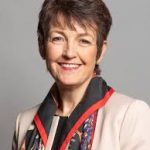
Tag: Jo Churchill

  • Jo Churchill – 2021 Speech on Covid Security at UK Borders

    Jo Churchill – 2021 Speech on Covid Security at UK Borders

    The speech made by Jo Churchill, the Parliamentary Under-Secretary of State for Health and Social Care, in the House of Commons on 1 February 2021.

    I welcome today’s debate on a matter that is rightly of huge public interest. As the hon. Member for Torfaen (Nick Thomas-Symonds) said, we have had a challenging time, but I know that everybody across the House will be cheered by the news of the vaccines, and the number rolled out over the weekend—nearly 1 million, at 931,204—is quite staggering. As of today, over 9.2 million people have now received the jab, and every elderly care home resident in England has been offered the vaccine. The roll-out will accelerate in the coming months, and with the combined news that the UK today has secured another 40 million extra doses of the Valneva vaccine, in addition to the 60 million we already had on order—taking our national total to over 400 million vaccine doses—we know that, with each jab, we have clearly moved that step closer to the more normal life that people crave. It is our strong vaccine portfolio that offers great hope not only to the people of this country, but across the world, because unless we are all safe, no one is safe.

    As hon. Members recognise, however, the challenges posed by covid-19 are still here today and we must continue to make the difficult decisions to protect the whole population. There is no question but that new variants pose new threats—threats that we must overcome to protect the progress of the vaccine programme and, of course, to protect the sacrifices that everybody has been making for many months now. It has meant that we have had to take tough action at our borders, which we have done. Earlier in the pandemic, border restrictions were about stopping the onward transmission of infections from countries with higher infection rates, but the new variants from abroad pose a different and new set of risks, and we do not yet have a full picture of those risks.

    Of particular concern is a risk of having a variant that escapes the vaccine. We have a high degree of confidence in the vaccines, and confidence that the vaccine will work against the variant that was first identified in the UK, but we have also begun studies on the variants that were first identified in South Africa and Brazil in four laboratories. We will continue to work with our scientists and the UK vaccines taskforce to understand how quickly a new vaccine could be rolled out if needed.

    We have also launched our new variant assessment platform, working in partnership with the World Health Organisation, which offers genomic expertise— something we lead in—to help other countries across the world, because, as I have said, we are only safe when everyone is safe. Much of what the hon. Member for Torfaen suggested sounded a little like he wanted to shut down against the entire world. Only a few months back, he, the hon. Members for Oldham West and Royton (Jim McMahon) and for Wigan (Lisa Nandy) and the right hon. and learned Member for Holborn and St Pancras (Keir Starmer) asked us when we were going to lessen quarantine. We have to have a flexible programme, where we build a response.

    Nick Thomas-Symonds

    I am very grateful to the hon. Lady for giving way on that point, because it is absolutely right that I mentioned the blunt tool of a 14-day quarantine back in June last year. That was because the Government did not have their own test, trace and isolate system up and running to avoid the blunt tool of a 14-day quarantine. The point was about the failure of the Government, not the inconsistency of the Opposition’s position.

    Jo Churchill

    As with all science, we are learning more but, as we do, we must continue to do all we can to protect this country.

    It is right that new border restrictions are tougher. On 18 January, the UK temporarily closed all travel corridors and added a requirement for anyone coming to this country to have proof of a negative covid test taken in the 72 hours prior to departure. All travellers have had to complete a passenger locator form, which must be checked before they board and then self-isolate on arrival for 10 days. Our stay-at-home regulations are clear: it is illegal to leave home to travel abroad for leisure purposes. Going on holiday is not a valid reason for travel.

    We have also banned all direct travel from over 30 countries where there is a risk of known variants, including southern Africa, South America and Portugal. This is a ban on entry for all arrivals, except British, Irish and third country nationals with resident rights in the UK, who have been in the travel ban countries in the past 10 days. But as the Prime Minister said on 27 January, we must not be afraid to go further if necessary, and on the 27th, my right hon. Friend the Home Secretary outlined the further steps that we have been compelled to take, and I will lay them out.

    With regard to those entering the UK, first, the police have stepped up checks and are carrying out more physical checks at addresses to make sure that people are self-isolating. Secondly, we are continuing to refuse entry to non-UK residents from the countries already subject to the UK travel ban. Thirdly, we are introducing a new managed isolation process in hotels for those who cannot be refused entry, including those arriving home from countries where we have already imposed international travel bans. They will be required to isolate for 10 days, with very few exceptions and only where strictly necessary.

    With regard to those travelling out of the UK, first, we have increased our enforcement of the existing rules, because people should be staying at home unless they have a valid reason to leave. We will introduce a requirement for people to declare their reason to travel, which will be checked by carriers prior to departure and again at the border. Secondly, we are increasing police presence at airports and ports, and those without a valid reason for travel will be turned around and sent home or face a fine. Thirdly, this week we are again reviewing the list of exemptions from isolation so that only the most important and exceptional reasons are included. I am clear that our approach must be firm but flexible, and not the one-size-fits-all approach advocated by the hon. Member for Torfaen.

    Yvette Cooper (Normanton, Pontefract and Castleford) (Lab)

    The Minister referred to police checks. The data published last week showed that, when the police are doing these very minimal checks at the moment, if they find that nobody is home—so clearly nobody is self-isolating at that address—they take no further enforcement action at all. Does she not think that is crazy?

    Jo Churchill

    And that is why we are working as quickly as possible across Government and using everything at our disposal to ensure that we have an efficient method of ensuring that people are doing what the vast majority are doing. We not only have the police stepping up; we also have the isolation assurance service. The number of people sampled per day for calls is 1,500 out of those who arrive. We make a total of 3,000 IAS calls a day and send another 10,000 texts. These are repeated contacts with individuals, and it is a considerably different picture now from the one that may have been the case back in the middle of last summer. As I say, we have started, and this is a flexible, firm approach that can be stepped up and down.

    The hon. Member for Torfaen spoke about a blanket ban across all countries and for all things, but actually, with regard to making sure we are safe, it must be firm and flexible so that we can ensure not only that we keep ourselves safe in this country but, as the pandemic takes its course, that we can respond appropriately. This blanket ban from all countries that he is talking about—

    Jim McMahon (Oldham West and Royton) (Lab/Co-op)

    It’s not a ban; it’s a quarantine.

    Jo Churchill

    I apologise—the hon. Member for Torfaen is talking about a blanket quarantine from all countries. He mentioned an exemption for hauliers. What about other exemptions? What about elite sport, or medical emergencies, or the plethora of other issues, particularly around security, which I know he is extremely exercised about? He also knows, as I do, that there are specific minute details that this blanket ban—

    Nick Thomas-Symonds

    Of course we would need exceptions, but surely the Minister must agree that the starting point has to be a comprehensive position, and that that is what will secure our borders.

    Jo Churchill

    No, the right point is to work as quickly as possible across all the different Government Departments that are involved to ensure that we have the correct policy so that we are doing the appropriate thing, rather than having a blanket ban and then repeatedly coming back and saying, “What about this. What about that?” We need to ensure that we have an appropriate system that has been reviewed and thoroughly looked at by all the different Departments involved—the Home Office, the Department of Health and Social Care, the Department for Transport, the Cabinet Office and others—so that everybody has made sure that there are no gaps in the system.

    This is not just about what the Government are doing; it about what we are all doing. In so many ways, our efforts begin not at the border but at home, with the actions we take to stay at home. The hon. Gentleman spoke of how we can protect the NHS in order to save lives, and in that respect every one of us plays a vital role in driving the rates of the virus down and denying it the opportunity to mutate and give rise to new variants.

    As we take the necessary steps at the border, we recognise the challenges they present to industry. We continue to support our air transport sector, including airlines, airports and related services, and by the end of April the sector will have received some £3 billion of support through the covid corporate finance scheme and the job retention scheme. I am sure the Under-Secretary of State for Transport, my hon. Friend the Member for Witney (Robert Courts) will talk more about this, but last Friday we launched our airport and ground operations support scheme, which will support eligible businesses through this difficult time, with airports and ground handlers in England eligible to receive up to £8 million each. That will help them to continue to prepare for a future when international travel is ready to take off again, because we must have a system that fits our playing our part in the world.

    It sounds to me that by working out a policy that expects quarantine from everyone, far from looking at ourselves and far from being outward looking, Labour is proposing that we close our doors. That cannot be right if we are all going to walk together and beat this virus. I want to reflect that the Government and indeed the whole country take pride in our being global Britain, a place with a history and culture of being open, outward looking and supportive. Even as we are compelled to take tougher steps at our borders, that spirit lives on, through our leading role in COVAX, boosting global access to covid-19 vaccines; through our new variant assessment platform, bringing British expertise to the world; and through that vast, powerful network of medical and scientific communities collaborating on a worldwide scale so that we can overcome this global challenge. The hon. Member for Torfaen and I agree that medical science can bring so much to helping people in this country .We have spoken about it before, but actually the challenge is bigger now and if we are to meet that challenge, we must remain open and outward looking, while having a proportionate and measured approach to ensuring that the right restrictions are in place for people quarantining.

    Finally, even though the perilous situation we face today means we must put so much of our international travel on hold, there is no brake on our ambition to help the world become safer or to do what is our first duty: to safeguard public health, protect the NHS and keep people safe here at home.

  • Jo Churchill – 2021 Statement on Medicinal Cannabis from The Netherlands

    Jo Churchill – 2021 Statement on Medicinal Cannabis from The Netherlands

    The statement made by Jo Churchill, the Parliamentary Under-Secretary of State for Health and Social Care, in the House of Commons on 26 January 2021.

    I would like to update the House on progress made by the Department of Health and Social Care towards ensuring patients can continue to access Bedrocan cannabis oils from the Netherlands.

    The UK has left the EU, and the transition period after Brexit came to an end on 31 December 2020. From 1 January 2021, prescriptions issued in the UK can no longer be lawfully dispensed in an EU member state.

    Dutch law does not permit the export of finished Bedrocan oils from the Netherlands. Prior to 31 December, Bedrocan oils were supplied in the Netherlands against UK prescriptions through the proxy of a specialist importer. This was allowed while UK prescriptions were recognised in the Netherlands.

    Bedrocan cannabis flowers produced in the Netherlands, and other unlicensed cannabis-based medicines imported from other countries, can continue to be supplied to the UK.

    The Government have worked quickly with the Dutch Ministry of Health, Welfare and Sport to resolve the issue. I am delighted to announce that the Dutch Government has agreed to the continued access to the medicine for existing UK patients until 1 July 2021.

    This news will bring enormous relief to the families who depend on these medicines and I am hugely grateful to the Dutch Government for working with us closely and quickly on this.

    The Department has communicated this to patient groups, clinicians and the supply chain to ensure immediate action is taken to resume supply of these products and that no patient faces a break in their treatment.

    The Department are also working in earnest to rapidly explore options for a more permanent solution for supply of these products, and will engage patient representatives and the supply chain.

  • Jo Churchill – 2020 Comments on the Relaunch of the Health and Wellbeing Alliance

    Jo Churchill – 2020 Comments on the Relaunch of the Health and Wellbeing Alliance

    The comments made by Jo Churchill, the Minister for Prevention, Public Health and Primary Care, on 24 August 2020.

    The Health and Wellbeing Alliance is an excellent way to ensure a range of voices are heard and reflected in government policy. Over the last 3 years members have made an enormous contribution to a number of important policy developments.

    This relaunch is a fantastic opportunity to ensure that we not only continue to hear from the most underrepresented voices, but also allows us a refresh, so that important health messages reach those they affect the most.

  • Jo Churchill – 2020 Comments on Review of Babies’ and Children’s Health

    Jo Churchill – 2020 Comments on Review of Babies’ and Children’s Health

    Text of the comments made by Jo Churchill, the Health Minister, on 15 July 2020.

    Most babies are born healthy and enjoy a safe and nurturing childhood. We know the first 1,000 days of a child’s life is critical, providing a solid foundation as children for growth and development throughout their lives.

    However, some do not have the same advantages. We want to remove barriers so that all babies and young children are supported and nurtured to be ready for school and ready for life.

    This review will help ensure every child has an opportunity to thrive, regardless of their background and achieve their potential. We look forward to receiving Andrea Leadsom MP’s recommendations.

  • Jo Churchill – 2020 Statement on Public Health

    Jo Churchill – 2020 Statement on Public Health

    Below is the text of the statement made by Jo Churchill, the Parliamentary Under-Secretary of State for Health and Social Care, in the House of Commons on 15 June 2020.

    I beg to move,

    That the Health Protection (Coronavirus, Restrictions) (England) (Amendment) (No. 3) Regulations 2020 (S.I, 2020, No. 558), dated 31 May 2020, a copy of which was laid before the House on 1 June, be approved.

    The amending regulations we are discussing today were made by the Secretary of State on 31 May and were laid before the House on 1 June. I must note that the regulations were amended again, on 12 June, with changes coming into effect between 13 June and today. Hon. Members have previously raised concerns about that sequencing, which I would like to address directly.

    Mr William Wragg (Hazel Grove) (Con)

    I thank my hon. Friend for giving way at this early point. I can inform you, Madam Deputy Speaker, that I do not intend to inflict a speech on the House later and will be withdrawing from our proceedings. May I just ask the Minister briefly why the Government have chosen to use the urgent procedure with regard to the regulations?

    Jo Churchill

    I thank my hon. Friend for that. If he will allow me to go through what I wanted to say, I hope it will be clear why we have used that procedure.

    The rapid and frequent amendments to the regulations have been critical to ensuring that the Government can respond to the threat from the pandemic and its impact. The use of the emergency procedure has enabled us to respond quickly, begin a cautious return to normality and reopen the economy as soon as possible. I recognise that there may be frustrations that we have had to run parliamentary process in parallel during these unprecedented times, but I believe that we have demonstrated the advantages of our flexible constitution. I wish to make it clear that these are extraordinary times and measures, and we are definitely not setting a precedent for how the Government engage with Parliament on other matters and in more usual times. I am very grateful to all hon. Members for their patience and continued support during these difficult times.

    Mr Mark Harper (Forest of Dean) (Con)

    May I just pick the Minister up on the point made by my hon. Friend the Member for Hazel Grove (Mr Wragg)? The thrust of the amendment No. 4 regulations—I accept, if you will give me a little latitude, Madam Deputy Speaker, that they are not the ones that we are debating, but I think the Minister referred to them in her remarks—was announced on Tuesday or Wednesday last week. I do not see what would have prevented a draft of those regulations being laid for debate on Thursday, so that the House could have taken a decision on them before they came into force. Would that not have been better, particularly because they are legally quite complicated in how family support structures are translated into law? That would have been better for our legislative process.

    Jo Churchill

    I thank my right hon. Friend for those remarks. I will certainly take that back and feed it in, because I know that he is not alone in feeling that we could improve the time sequencing slightly, in order ​that we get to a place where these matters are debated fully. I reiterate, however, that these are unprecedented times, and being able to debate complex differences between the timings needs to be thought about.

    Mr Wragg rose—

    Jo Churchill

    If my hon. Friend will forgive me, I am going to make a little progress and then I will of course take another intervention.

    All over the world we are seeing the devastating impact of this disease. It has already radically altered our way of life, and it has, very sadly, taken loved ones away. That is why the Government put in place social distancing measures to slow the spread of the virus and protect our NHS, in order to save lives, and they have been successful. Despite the tragic loss of life, the UK has slowed the spread of coronavirus. Our health system was not overwhelmed and it retained sufficient hospital beds, ventilators and NHS capacity. I am extremely grateful to the public for their continued compliance with these measures, which have been instrumental in us reaching this point.

    Now we must begin to recover and slowly rebuild our way of life. The Government’s objective is to return to our way of life as soon as possible, restarting our economy in a safe and measured way that continues to protect lives and support the NHS. On 11 May, the Prime Minister made a statement to the House outlining the Government’s road map for easing restrictions. We have entered phase 2. This involves gradually replacing the current social distancing restrictions with smarter measures that have the largest effect on controlling the epidemic but the lowest health, economic and social cost.

    Mr Wragg

    I am extremely grateful to my hon. Friend the Minister, to whom I pay full tribute for her incredibly hard work, for indulging me with this intervention. Would it not be possible for the Government to at least lay a written statement on their reasoning as to why some measures have been relaxed and others have not?

    Jo Churchill

    If my hon. Friend will indulge me as I go through my opening speech, I will address that in my concluding remarks. There is transparency in relation to the SAGE minutes, which are readily available and give a clear example of why decisions are being made and the scientific basis for them.

    We are very aware of the burdens that these regulations have placed on society and on individuals. The 1 June amendments play a significant role in reducing the restrictions and lifting some of that strain. It is necessary for the Government to respond quickly to the reduced rate of transmission and to protect individual rights. At all times the regulations in place must be proportionate and necessary. Following on from the small change made to the 13 May amendments, which were debated by a Committee of this House on 10 June, these amendments go a step further. We recognise the toll placed on individuals and families unable to meet loved ones, and have amended the regulations to allow for groups of six to meet outdoors. We hope that these amendments will relieve that burden to some extent.​

    I will now outline the changes made on 1 June, which include allowing increased social contact outdoors, in either public or private space, for groups of up to six people from different households; enabling elite athletes to train and compete in previously closed facilities; opening some non-essential retail while expressly providing for businesses that remain closed; ensuring that venues such as community centres can open for education and childcare services; and ensuring that those required to self-isolate on arrival in the UK can stay in hotels. We have also amended the maximum review period to 28 days. This longer review period ensures that we will be able to fully take into account the impact of any previous amendments before making further changes.

    Sir Charles Walker (Broxbourne) (Con)

    I have looked at the regulations. Am I right in thinking that people are still prevented from staying over at a friend’s house or a partner’s house, or has that been amended as well?

    Jo Churchill

    It is my belief that they can stay over if they are within the guidelines of the social bubble—that is, if they are a single person. There are several distinct areas and I am happy to discuss them with my hon. Friend, or to write to him to clarify them. They are clearly laid out in the regulation of what is or is not applicable.

    The Government continue to work on the process of gently easing restrictions as it is safe to do so, in line with the ambition set out in the road map. Working alongside scientists and experts, we must act swiftly to respond to current infection levels and our assessment of the five tests that have been set out previously. I am sure that we all support the aim to protect and restore livelihoods by only keeping in place restrictions that are proportionate and necessary. We of course remain ready to reimpose restrictions if the need emerges in the future, although we all hope that that will not be the case.

    Mr Harper

    I am grateful to my hon. Friend for giving way. In asking her a question, may I respond to my hon. Friend the Member for Broxbourne (Sir Charles Walker)? The reason for the confusion goes back to the point that I just made. My hon. Friend asked about what has been called the “bubbling” of households, the putting of households together, which was announced at one of the press conferences last week. It has been turned into legislation, which was laid before this House on Friday, but we are not yet debating it. So we are debating one set of amendments, but a new set has already come into force and the reason for the confusion is that we are not yet debating it. I think that rather proves my point that we should really have debated that legislation in advance of it coming into force. I hope that my hon. Friend’s confusion, and he is not a man easily confused, demonstrates the point about why that is important.

    Sir Charles Walker

    I thank my hon. Friend.

    Jo Churchill

    I thank my right hon. Friend the Member for Forest of Dean (Mr Harper) for the clarity with which he put that.

    I have already noted that further amendments were made on 12 June and have now come into force. Those will be debated by this House in due course. I am ​grateful to all parliamentarians for their continued engagement in this process, and for their continued scrutiny, which is rightly and importantly exercised for each set of amendments.