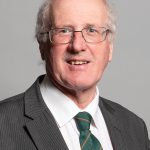
Tag: Jim Shannon

  • Jim Shannon – 2015 Parliamentary Question to the Department of Health

    Jim Shannon – 2015 Parliamentary Question to the Department of Health

    The below Parliamentary question was asked by Jim Shannon on 2015-10-12.

    To ask the Secretary of State for Health, what estimate he has made of the number of people who have had cataract operations due to exposure to sunlight in each of the last five years.

    Alistair Burt

    It is not possible to identify the number of people who have developed a cataract as a result of exposure to sunlight.

  • Jim Shannon – 2015 Parliamentary Question to the Home Office

    Jim Shannon – 2015 Parliamentary Question to the Home Office

    The below Parliamentary question was asked by Jim Shannon on 2015-10-12.

    To ask the Secretary of State for the Home Department, on how many occasions (a) illegal and (b) fake alcohol have been found by police in each of the last five years.

    Mike Penning

    The Home Office does not hold data centrally on the number of occasions when illegal and fake alcohol have been found by the police.

  • Jim Shannon – 2015 Parliamentary Question to the Department for International Development

    Jim Shannon – 2015 Parliamentary Question to the Department for International Development

    The below Parliamentary question was asked by Jim Shannon on 2015-10-12.

    To ask the Secretary of State for International Development, what recent discussions the Government has had with the Afghan government on relieving poverty in Afghanistan.

    Mr Desmond Swayne

    The UK government played a leading role in the Senior Officials Meeting in Kabul in September 2015 at which a new Mutual Accountability Framework for development and poverty reduction was agreed between the Afghan government and the international community. Several UK Government Ministers have had conversations with their Afghan counterparts recently to discuss issues of mutual interest including poverty reduction.

    The UK also holds quarterly development cooperation meetings with the Afghan government to discuss its bilateral aid programme, as well as regular thematic discussions with Afghan ministers and officials.

  • Jim Shannon – 2015 Parliamentary Question to the Department for Work and Pensions

    Jim Shannon – 2015 Parliamentary Question to the Department for Work and Pensions

    The below Parliamentary question was asked by Jim Shannon on 2015-10-12.

    To ask the Secretary of State for Work and Pensions, pursuant to the Answer of 16 July 2015 to Question 7643, what estimate he has made of the number of single earner married couples where the earner is a basic rate taxpayer in each parliamentary constituency.

    Priti Patel

    The information requested is not available.

  • Jim Shannon – 2022 Speech on Religious Education in Modern Britain

    Jim Shannon – 2022 Speech on Religious Education in Modern Britain

    The speech made by Jim Shannon, the DUP MP for Strangford, in Westminster Hall on 1 November 2022.

    It is a pleasure to serve under your chairmanship. Dame Maria. I too thank the hon. Member for Cleethorpes (Martin Vickers) for setting the scene so well and for giving us a chance to participate. It is good to see the Minister is his place, and I look forward to hearing his comments, as well as those of the shadow Minister.

    This debate could include many conflicting opinions, yet I trust we can all come from a place where we respect the ideal of faith. Although we may treasure our individual faiths, there is undoubtedly a place for all in the diverse United Kingdom of Great Britain and Northern Ireland. I know that the ideal of religious education differs from region to region. I bring the Northern Ireland perspective to these debates, as I always do, and that is somewhat different yet again. The importance of religious and theological teaching could not be more prominent today, given the expansion of belief and the ever-changing faiths we all have.

    It is great to be here today to discuss the importance of religion in schools, both primary and secondary. According to the Council for the Curriculum, Examinations and Assessment, religious education in Northern Ireland is a compulsory part of the school curriculum. As I am sure all hon. Members are aware, Northern Ireland is no stranger to different and diverse religious beliefs and the impact they can have on modern society. For young people to be able to understand our changing world, they must be able to interpret different religious issues.

    The Department for Education and the four main Churches in Northern Ireland define the religious studies curriculum, allowing for the teaching of the revelation of God, the Christian church and morality from both Protestant and Roman Catholic perspectives. That is as it should be, because the personal relationship someone has with the Lord Jesus is what is important, not their denomination or the church they go to.

    Seven out of 10 people—73%—surveyed across the United Kingdom—agreed that the role of religious education in schools is to provide pupils with opportunities to learn about other people, beliefs and cultures. A further 65% stated that the subject also allows young people to evaluate their own political beliefs. That is why the hon. Member for Cleethorpes referred to political beliefs with a religious viewpoint.

    I understand that some young people nowadays have become disillusioned with religion, but it is crucial that they have a basic understanding of how religion plays a part in modern society and indeed in modern Britain. Parents are allowed to withdraw their children from some or all aspects of the teaching of religious education, but I always encourage them not to do that, regardless of what they may think of that religion. Having strong faith oneself is one thing, but being able to understand and respect other people’s faith starts from a young age—as early as P4 teaching in Northern Ireland.

    The High Court in Northern Ireland ruled that exclusively Christian religious education and worship was discriminatory. However, we must ensure that this ruling, and the calls for it to be considered UK-wide, do not diminish the place of the larger practised religions, such as Christianity, in religious education, but rather allow learning about other faiths equally. I have the utmost belief in Christ as my saviour, but that does not mean that the faiths of Judaism, Sikhism or Islam are of no interest to me.

    I can recall the 1960s and 1970s, when I was at secondary college. Our religious education teacher asked the class whether we wanted to know about other religions, and the answer from us all was that yes, we did. Our teacher then introduced us over a period of time to other religions. In the closed society we were in, we perhaps did not have any knowledge of other religions. That teaching gave us an opportunity to understand these things at an early stage. Through another teacher in a different subject I had the chance to understand Irish history. As a proud Unionist, it did not do me any harm to understand Irish history—understanding it a wee bit better never made me less of a Unionist. It does not harm anyone to understand things from another perspective, but it does let people develop a wider understanding and respect for others, which is what I try to do in my life.

    We live in an ever-changing world; nowadays people can believe and be practically anything. In my eyes, one thing that does not change is the importance of religion—not just my own belief in Christianity, but everyone else’s beliefs as well. As chair of the APPGs for international freedom of religion or belief, and for Pakistani minorities, I know that the study of religious education allows us a chance to learn about religions without feeling the socialisation or pressure of today’s society.

    As always, there was not a thing that the hon. Member for Congleton (Fiona Bruce) said that I do not agree with. She touched on the Uyghurs, the Falun Gong in China, the Baha’i in Iran, the Yazidis in Iraq and the Rohingya Muslims. In Nigeria, which we visited in May and June, we ascertained just how bad the persecution of Christians was, but it is getting worse—there is less understanding. That is so frustrating, because the people we talked to told us they were trying to bring things together, but the reality is that that is not happening.

    Fiona Bruce

    Does the hon. Gentleman agree that it is not too lofty a thing to say that helping our young people understand how important it is to respect the freedom of religion or belief of others of different faiths and beliefs contributes towards nothing less than global peace? So many atrocities across the world start small and locally and then grow. If we can develop a generation in this country that has respect, and we can promote that across the world, we will be able to stop local friction developing so that people can learn how to live together peaceably. We will then see a better world for the next generation.

    Jim Shannon

    I wholeheartedly agree with the hon. Lady. That is something we should all strive to make happen. I am reminded of the Hindus in Pakistan and the Ahmadi Muslims in India as examples of people across the world with a different religious viewpoint who are terribly persecuted, both physically and mentally.

    My youngest staff member chose to drop religious education at GCSE in order to focus on mathematics, as that was what she wanted to do. She has since said on numerous occasions that she does not feel informed about what people believe and why they choose to believe it. She says it was great to pursue mathematics, but in a way it is a pity that she did not get that understanding at an earlier age.

    While I appreciate that education is devolved and our curriculum guidelines differ slightly, the principle that religion is important remains the same. I call on the Education Secretary—we are pushing at an open door—and respective regional Ministers to ensure that the teaching of religion in modern Britain remains in our schools to help to tackle religious discrimination and promote respect for others with a different religion or faith. It is difficult to see a path forwards if we do not know where we have come from. For me, the teachings of Christ, which tell a child that they are loved and chosen, that there is a plan for lives and that they are not alone, are imperative. When social media tells them that the opposite is true, we need the calming influence of religious education in schools.

    I am far from perfect—I am probably the most imperfect person in this room—but I believe that the creator, God, has a job that he has set only me to do. Oh, that more of our young people across this great nation would understand their unique, divinely appointed role and that, no matter what the world may say to them, they are special and worthy. I believe that RE plays an important part in understanding that. It is as essential a skill as home economics or technology. When we talk about the important things for future vocations, we should note that religious education in schools is a calming influence and gives us a better understanding of those around us. The hon. Member for Cleethorpes referred to a Scripture text, and I will finish by quoting Jeremiah 29:11, which says:

    “‘For I know the plans I have for you,’ declares the Lord, ‘plans…to give you hope and a future.’”

    Who does not need that?

  • Jim Shannon – 2015 Parliamentary Question to the Attorney General

    Jim Shannon – 2015 Parliamentary Question to the Attorney General

    The below Parliamentary question was asked by Jim Shannon on 2015-02-10.

    To ask the Attorney General, what assessment he has made of the application of the EU Charter of Fundamental Rights, Article 3, Part 2 and the Convention on Human Rights and Biomedicine to interventions aimed at modifying the genome of the recipient’s descendants.

    Jeremy Wright

    By convention whether or not I have given advice or conducted legal assessments, is not disclosed outside of Government.

  • Jim Shannon – 2014 Parliamentary Question to the Department of Health

    Jim Shannon – 2014 Parliamentary Question to the Department of Health

    The below Parliamentary question was asked by Jim Shannon on 2014-07-15.

    To ask the Secretary of State for Health, what discussions he has had with the British Medical Association and cancer groups on studies of the potential effects of aspirin on cancer.

    Jane Ellison

    We know that research carried out so far shows that taking a low dose of aspirin daily may lower the risk of getting cancer and it may lower the risk of some cancers spreading to other parts of the body. However, aspirin can cause serious side effects such as internal bleeding and we have to be certain that the benefits of taking aspirin outweigh the risks.

    The third annual report of Improving Outcomes: A Strategy for Cancer, published in December 2013 reported that an international consensus statement on the use of aspirin in the general population has been developed by experts around the world, but is awaiting publication. Once the international consensus statement is published, we will assess what this means for policy in England, such as when the benefits might be outweighed by the disadvantages (particularly, the increased risk of gastric bleeds) and how best to manage the use of aspirin for prevention and treatment of cancer.

    Cancer Research UK advises that anyone thinking of taking aspirin to reduce the risk of getting cancer should talk to their doctor first.

  • Jim Shannon – 2015 Parliamentary Question to the Department for Business, Innovation and Skills

    Jim Shannon – 2015 Parliamentary Question to the Department for Business, Innovation and Skills

    The below Parliamentary question was asked by Jim Shannon on 2015-02-10.

    To ask the Secretary of State for Business, Innovation and Skills, what steps his Department has taken to enforce prompt payments to small and medium-sized enterprises by large companies.

    Matthew Hancock

    The Government is taking forward a suite of measures to tackle prompt payment.

    Through the Small Business, Enterprise and Employment Bill, currently before Parliament, we will introduce measures to improve transparency on payment practices and policies. Increased transparency, through a tough and transparent new reporting requirement on the UK’s largest companies, will help take significant steps to addressing the current imbalance in economic power between small and large contracting parties. Our consultation on draft secondary regulations to underpin these measures closed on 2 February. We will publish a summary of responses shortly.

    The Government is currently seeking views on how to best give representative bodies wider powers to be able to challenge grossly unfair payment practices on behalf of members. The discussion paper is available online and is open until 9 March.

    The Government is also working to strengthen the impact of the Prompt Payment Code. We are currently considering proposals, including introducing a maximum payment term for Code signatories, more rigorous monitoring of signatory behaviour, and the enforcement of tougher sanctions on bad payers. We will announce our proposals in Spring.

    These measures will drive forward a shift in payment culture that will make it unacceptable for large companies in positions of extreme bargaining imbalances to exploit smaller suppliers.

  • Jim Shannon – 2014 Parliamentary Question to the Department of Health

    Jim Shannon – 2014 Parliamentary Question to the Department of Health

    The below Parliamentary question was asked by Jim Shannon on 2014-07-15.

    To ask the Secretary of State for Health, if he will make it his policy that the operation to remove fibroids by MR Guided Focused Ultrasound Surgery (MRgFUS) be available on the NHS.

    Jane Ellison

    Clinical commissioning groups (CCGs) are responsible for determining clinical commissioning policy (including the availability of, or eligibility for, NHS funded treatment) on fibroid treatments. Local CCGs decide on how to best use funding allocated to them, underpinned by clinical insight and knowledge of local healthcare needs.

    The Department is aware that in November 2011, the National Institute for Health and Care Excellence (NICE) published Interventional Procedures Guidance [IPG413]: Magnetic resonance image-guided transcutaneous focused ultrasound for uterine fibroids.

    The Department expects CCGs to consider any relevant NICE guidance as they design services to meet the needs of patients.

  • Jim Shannon – 2014 Parliamentary Question to the Department for Business, Innovation and Skills

    Jim Shannon – 2014 Parliamentary Question to the Department for Business, Innovation and Skills

    The below Parliamentary question was asked by Jim Shannon on 2014-06-24.

    To ask the Secretary of State for Business, Innovation and Skills, if he will take steps to encourage universities in the UK to enter into partnerships and twinning arrangements with the British University in Egypt.

    Mr David Willetts

    I am keen that UK universities broaden their engagement with their Egyptian counterparts in recognition of the country’s growing research strengths. The newly created UK – Egypt Newton – Mosharafa Fund presents a real opportunity to take UK – Egypt institutional engagement to another level, by investing £20 million over five years in a bilateral partnership focussed on science, research, innovation and education.

    The British University Egypt will be eligible to apply for calls once the fund is launched.