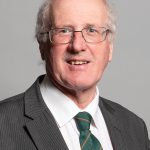
Tag: Jim Shannon

  • Jim Shannon – 2022 Speech on Burning Trees for Energy Generation

    Jim Shannon – 2022 Speech on Burning Trees for Energy Generation

    The speech made by Jim Shannon, the DUP MP for Strangford, in the House of Commons on 6 December 2022.

    I thank the hon. Member for North Devon (Selaine Saxby) for setting the scene so well. I welcome the debate on the potential issues of burning trees. The hon. Member for Hastings and Rye (Sally-Ann Hart) took a balanced approach to the debate, and I support what she said.

    We have to look at the issues from both sides. There are some out there, including many constituents of mine, who use log burners and wood as their primary source of heat. I have an obligation as their Member of Parliament to support those people living in rural areas. On the other hand, there are those who use gas and oil for their primary form of heat but also have log burners purely for the effect. We must have that discussion, as it ultimately impacts on our future and the environment.

    Today, I tabled early-day motion 668 on National Tree Week. I am sure that Members who have gathered for the debate will be eager to add their names to it. Let me pose a question. If a farmer or someone like that has a wood burner, and a tree falls over in a storm, do they let it lie? No, they do not; I would not, anyway. I would make sure that it was used, and used in the wood burners of my constituents.

    I have often said before that as a farmer—I declare an interest—I am very aware of the importance of our environment and our local agriculture. Indeed, I planted some trees, probably about 20 years ago, on a rocky patch of land subject to flooding. It was not incredibly productive agriculturally, so I planted 3,500 trees. Many farmers do that, as they have been more inclined to understand the benefits it creates.

    As I stated earlier, some people use log burners solely to heat their homes, and allowances must be made for that. It might not be the most sustainable way of heating one’s home, but for some elderly people and those who live in rural communities, it is simply all they have known. Who of us in this room cannot be encouraged by the warmth of a real fire, from wood or coal? Let us be honest. If someone cannot see the benefit of it, there is something seriously wrong. That is all I am going to say.

    Many shops in my constituency still sell logs; there is a major demand for them. Other households will also use a log burner to heat up their main room in the evenings, as opposed to turning the heating on to heat the whole house. There is a practicality to the process that we must be very aware of.

    We have seen the benefits that planting trees brings to our nation. Trees help to purify the air, lower air temperature, sustain wildlife and improve soil quality. Some would argue that going to all of the bother of planting thousands of trees just to cut them down and burn them is a waste of resources, but we have made many commitments to COP26 and COP27 and it is about doing whatever we can to ensure that energy is provided in a sustainable way.

    The Woodland Trust, which I have a good working relationship with, has been in contact with me. It made me aware of the damaging effect that biomass energy—the energy that we get from plants and animals—has on our environment, which the hon. Member for North Devon mentioned in her introduction. It stated that its view on forest bioenergy is that, given its often ignored high emissions intensity, its combustion is likely to increase overall carbon emissions, despite the real policy to reduce them by 2050.

    I am coming to the end, Mr Gray, but I want briefly to mention that nuclear energy has also become a greater part of the conversation around energy sustainability in recent years. When we hear about nuclear, we often think of Chernobyl and the devastations that it can cause, but we must also think of figures such as the fact that state nuclear energy provided 52% of America’s carbon-free electricity in 2020, making it the largest domestic source of clean energy. We should not write off and ignore nuclear power.

    To conclude, this will very much be an ongoing conversation. I respect and understand the benefits of growing trees and using alternative sources, but we must also allow consideration to be given to those who do use logs and log burners as their primary source of heating. We cannot ignore them.

  • Jim Shannon – 2022 Parliamentary Question on the Government’s 10-Year Cancer Plan

    Jim Shannon – 2022 Parliamentary Question on the Government’s 10-Year Cancer Plan

    The parliamentary question asked by Jim Shannon, the DUP MP for Strangford, in the House of Commons on 6 December 2022.

    Jim Shannon (Strangford) (DUP)

    When his Department will publish the 10-year cancer plan.

    The Parliamentary Under-Secretary of State for Health and Social Care (Maria Caulfield)

    Earlier this year, we held a successful call for evidence on a new cancer plan, which received 5,000 responses. We are now considering those responses and how we can best support the diagnosis and treatment of cancer patients. I will be in a position to update the House shortly.

    Jim Shannon

    I thank the Minister for her response, but it has been five months since July, when the 10-year cancer plan was due to be published, and 10 months since February, when the war on cancer was announced. While the Government have delayed, cancer patients have faced unacceptable waiting times for diagnosis and treatment. Performance over the past five months has been the worst on record against the target of a 62-day wait between the GP referral for suspected cancer and the first treatment. I ask the Minister respectfully: does she agree that we in this House and the people of this country now need a long-term, ambitious plan to reduce waits and ensure that cancer patients in this country have the best outcomes possible? Will she set out a timeline—not just say “shortly”—for delivering such a plan?

    Maria Caulfield

    As the hon. Gentleman knows, I cannot comment on what is happening in Northern Ireland, because health is a devolved matter. I can only update him on what is happening in England. We are not waiting for a cancer plan to start on the backlogs: that is why this Government are investing £8 billion over three years to clear the elective backlog. We are seeing record numbers of patients. Cancer treatments continued throughout the pandemic, but we are seeing a higher number coming through than usual. Despite the increase of more than 129% in patients getting urgent GP referrals since September 2019, 91% of patients in England are receiving their treatment within 31 days of the decision to treat, compared with just 87% of patients in Northern Ireland in June. We are very committed to reducing cancer waiting times. I suggest that the hon. Gentleman may wish to speak to the Minister in Northern Ireland as well.

    Maggie Throup (Erewash) (Con)

    Diagnostic activity, whether in vivo or in vitro, forms part of more than 85% of clinical pathways. Will my hon. Friend confirm that it will receive due recognition in the 10-year cancer strategy?

    Maria Caulfield

    May I thank my hon. Friend for all her hard work during her time as a Health Minister? We are going through the responses to the call for evidence right now; as I have indicated, we will update the House shortly. I will very much take her points on board.

  • Jim Shannon – 2022 Speech on the Online Safety Bill

    Jim Shannon – 2022 Speech on the Online Safety Bill

    The speech made by Jim Shannon, the DUP MP for Strangford, in the House of Commons on 5 December 2022.

    It is a pleasure to speak in the debate. I thank Members who have spoken thus far for their comments. I commend the right hon. Member for Chelmsford (Vicky Ford) for what she referred to in relation to eating disorders. At this time, we are very aware of that pertinent issue: the impact that social media has—the social pressure and the peer pressure—on those who feel they are too fat when they are not, or that they are carrying weight when they are not. That is part of what the Bill tries to address. I thank the Minister for his very constructive comments—he is always constructive—and for laying out where we are. Some of us perhaps have concerns that the Bill does not go far enough. I know I am one of them and maybe Minister, you might be of the same mind yourself—

    Madam Deputy Speaker (Dame Rosie Winterton)

    Order.

    Jim Shannon

    The Minister might be of the same mind himself.

    Through speaking in these debates, my office has seen an increase in correspondence from parents who are thankful that these difficult issues are being talked about. The world is changing and progressing, and if we are going to live in a world where we want to protect our children and our grandchildren—I have six grandchildren —and all other grandchildren who are involved in social media, the least we can do is make sure they are safe.

    I commend the hon. Member for Batley and Spen (Kim Leadbeater) and others, including the hon. Member for Watford (Dean Russell), who have spoken about Zach’s law. We are all greatly impressed that we have that in the Bill through constructive lobbying. New clause 28, which the hon. Member for Rotherham (Sarah Champion) referred to, relates to advocacy for young people. That is an interesting idea, but I feel that advocacy should be for the parents first and not necessarily young people.

    Ahead of the debate, I was in contact with the Royal College of Psychiatrists. It published a report entitled “Technology use and the mental health of children and young people”—new clause 16 is related to that—which was an overview of research into the use of screen time and social media by children and young teenagers. It has been concluded that excessive use of phones and social media by a young person is detrimental to their development and mental health—as we all know and as Members have spoken about—and furthermore that online abuse and bullying has become more prevalent because of that. The right hon. Member for Witham (Priti Patel) referred to those who are susceptible to online harm. We meet them every day, and parents tell me that our concerns are real.

    A recent report by NHS Digital found that one in eight 11 to 16-year-olds reported that they had been bullied online. When parents contact me, they say that bulling online is a key issue for them, and the statistics come from those who choose to be honest and talk about it. Although the Government’s role is to create a Bill that enables protection for our children, there is also an incredible role for schools, which can address bullying. My hon. Friend the Member for Upper Bann (Carla Lockhart) and I talked about some of the young people we know at school who have been bullied online. Schools have stepped in and stopped that, encouraging and protecting children, and they can play that role as well.

    We have all read of the story of Molly Russell, who was only 14 years old when she took her life. Nobody in this House or outside it could not have been moved by her story. Her father stated that he strongly believed that the images, videos and information that she was able to access through Instagram played a crucial part in her life being cut short. The Bill must complete its passage and focus on strengthening protections online for children. Ultimately, the responsibility is on large social media companies to ensure that harmful information is removed, but the Bill puts the onus on us to hold social media firms to account and to ensure that they do so.

    Harmful and dangerous content for children comes in many forms—namely, online abuse and exposure to self-harm and suicidal images. In addition, any inappropriate or sexual content has the potential to put children and young people at severe risk. The Bill is set to put provisions in place to protect victims in the sharing of nude or intimate photos. That is increasingly important for young people, who are potentially being groomed online and do not understand the full extent of what they are doing and the risks that come with that. Amendments have been tabled to ensure that, should such cases of photo sharing go to court, provisions are in place to ensure complete anonymity for the victims—for example, through video links in court, and so on.

    I commend the right hon. Member for Basingstoke (Dame Maria Miller), who is not in her place, for her hard work in bringing forward new clause 48. Northern Ireland, along with England and Wales, will benefit from new clause 53, and I welcome the ability to hand down sentences of between six months and potentially five years.

    Almost a quarter of girls who have taken a naked image have had their image sent to someone else online without their permission. Girls face very distinct and increased risks on social media, with more than four in five online grooming crimes targeting girls, and 97% of child abuse material featuring the sexual abuse of girls—wow, we really need to do something to protect our children and to give parents hope. There needs to be increased emphasis and focus on making children’s use of the internet safer by design. Once established, all platforms and services need to have the capacity and capability to respond to emerging patterns of sexual abuse, which often stem from photo sharing.

    The Minister referred to terrorism and how terrorism can be promoted online. I intervened on him to mention the glorification of IRA terrorism and how that encourages further acts of terrorism and people who are susceptible to be involved. I am quite encouraged by the Minister’s response, and I think that we need to take a significant step. Some in Northern Ireland, for instance, try to rewrite history and use the glorification of terrorism for that purpose. We would like to see strengthening of measures to ensure that those involved in those acts across Northern Ireland are controlled.

    In conclusion, there are many aspects of the Bill that I can speak in support of in relation to the benefits of securing digital protections for those on social media. This is, of course, about protecting not just children, but all of us from the dangers of social media. I have chosen to speak on these issues as they are often raised by constituents. There are serious matters regarding the glorification and encouragement of self-harm that the Bill needs to address. We have heard stories tonight that are difficult to listen to, because they are true stories from people we know, and we have heard horror stories about intimate photo sharing online. I hope that action on those issues, along with the many others that the Government are addressing, will be embedded in the Bill with the intent to finally ensure that we have regulations and protection for all people, especially our children—I think of my children and grandchildren, and like everybody else, my constituents.

  • Jim Shannon – 2022 Speech on the International Day for the Elimination of Violence Against Women

    Jim Shannon – 2022 Speech on the International Day for the Elimination of Violence Against Women

    The speech made by Jim Shannon, the DUP MP for Strangford, in the House of Commons on 1 December 2022.

    I congratulate the hon. Members for Bristol South (Karin Smyth) and for Thurrock (Jackie Doyle-Price) on securing the debate. I am very glad to say that the hon. Member for Paisley and Renfrewshire North (Gavin Newlands), who is the spokesperson for the Scots Nats, and I never miss any of these debates. As men, we are very glad to be here.

    I welcome the news that earlier this week the UK hosted the preventing sexual violence in conflict initiative summit. The hon. Member for Congleton (Fiona Bruce) asked a question on this very issue at Prime Minister’s questions this week. At business questions today, I asked the Leader of the House a question along these lines. The Government have had the summit and they have shown, through the answers that the Prime Minister and the Leader of the House gave, that there is a commitment on this issue.

    It is important that the UK works towards recognising sexual violence in conflict as a line that is not to be crossed, with serious repercussions for the perpetrators of such an awful crime and the violation of a woman or child’s dignity. There are numerous factors that might put a woman at greater risk of violence, but there is one that I will focus on specifically; others will touch on other subjects. The factor I will focus on is women belonging to faith groups who face persecution on the grounds of their faith and the violence that goes along with that.

    Margaret Ferrier

    Sometimes a woman’s decision to wear a headscarf or modest clothing is described as oppression, but there are many women who say that their decision to display their faith in that way is not oppressing; they find it empowering. Does the hon. Member agree that respecting the choices that women make in expressing their faith is an important aspect of society empowering women and girls?

    Jim Shannon

    I certainly do; as always, the hon. Lady brings an aspect to the debate that truly helps to illustrate things.

    Persecutors target men, women and children in different ways and to different extents. Women invariably face a greater breadth of persecution, owing to the compounding factors of their faith and their sex, which unfortunately makes them an easy target for those who want to take advantage. It is probably no surprise that the targeting of women is strategic and malicious. Women are the ones who give birth to the next generation and bring up families. It is a great tragedy that their life-giving nature is violated by extremists and those with evil intent, as they take away their life of freedom and peace.

    A report by Open Doors on the persecution of Christian women and girls explains that in countries impacted by conflict in central and west Africa—Nigeria, the Central African Republic and the Democratic Republic of the Congo being key examples—women and girls are at high risk of abduction. The report states:

    “Once taken, they are then forced to marry militants and bear children, who are used to boost the ranks of militant groups”.

    Such “forced marriage” is rape by another name. Horrifically, the bodies of women and girls offer an extra dimension of conflict for extremists and perpetrators of violence to wreak their destruction and their dehumanising actions.

    One example of such gender-based persecution is Leah Sharibu, who was kidnapped along with 110 other students from her school back in 2018. The Islamic State of west Africa refused to release Leah when she did not renounce her Christian faith. Leah is still waiting for release. When some of us were in Nigeria in May, we asked about her and we were hopeful that something was going to happen, but it does not seem that anything has happened. I hope that the Minister can give us some indication of what is happening. Leah has been forcibly married and raped since the age of 14. She now has two children born of that forced marriage, with little hope of being able to pass on the Christian faith that she believes in to her own children.

    Regrettably, Leah’s case is just one of thousands of such cases. How is it that eight years after Daesh launched a genocidal campaign against the Yazidis, with 2,763 Yazidi women and children still missing, nobody seems to be interested in this issue? I am not being critical of the Minister or the Government, but can we be given some indication about what is happening to those Yazidi women? It seems that they are off the radar for nearly everybody who I can think of.

    My hope is that the Government ensure that any funding given to support women and girls around the world targets women and girls who face vulnerabilities due to their faith, with the Foreign, Commonwealth and Development Office recognising faith as a factor in such vulnerability. Defending women and girls should encompass all aspects of the UK Government’s overseas engagements. Therefore, the Department for International Trade should seriously consider any reports of gender-specific religious persecution as it negotiates trade deals and before it signs any new trade agreements. Our Government should take care about the human rights records of countries with which they trade. Turning a blind eye to the treatment of women in a country we benefit from is not something that I wish to hear about. I want to hear about how we are moving forward progressively and positively for women and girls.

    Finally—I am conscious of the time, Ms Elliott—increased efforts must be made to help women and girls who suffer violence and endure persecution because of their faith to reach safety. I will give another example: I am saddened that Pakistani Christian girl Maira Shahbaz is still in hiding after escaping her Muslim abductor in Pakistan. She is still waiting for the Home Office to grant her asylum claim. It is unbelievable. The facts are obvious; the evidence is there. The Right Rev. Philip Mounstephen, the Bishop of Truro, has said:

    “Tragic cases like that of Maira Shahbaz are a test case for the UK Government’s commitment to put freedom and religion front and centre in its foreign policy.”

    My comments today are a new call for the Government to do just that and make freedom of religion or belief a reality for everyone across the world.

  • Jim Shannon – 2022 Speech on World AIDS Day

    Jim Shannon – 2022 Speech on World AIDS Day

    The speech made by Jim Shannon, the DUP MP for Strangford, in the House of Commons on 1 December 2022.

    It is a pleasure to speak in this debate, and to follow the right hon. Member for Romsey and Southampton North (Caroline Nokes). She and I seem on many occasions to be on the same side in debates in the Chamber and in Westminster Hall. I commend her on her work to promote the values, aspirations and concerns of women in this House, this country, and the world.

    I also commend the hon. Member for Brighton, Kemptown (Lloyd Russell-Moyle) on setting the scene so well. I do not think that I have ever missed a debate on HIV/AIDS in the Chamber or Westminster Hall, and I came along to contribute, and to support him. I commend him, as I said in my intervention; he has been a shining light to many who suffer from AIDS across the whole United Kingdom of Great Britain and Northern Ireland, and he has contributed in an exceptional way today. Well done to him.

    As the hon. Gentleman said, the global theme for this World AIDS day is “Equalise”. I thought to myself, “That is exactly what we should try to do.” We should not only make sure that everyone in this great United Kingdom has access to PrEP, which he referred to, but ensure the same access to medication and treatment across the world. He outlined that point very well, and I fully support it. Let us replicate what we do here across the world.

    On World AIDS Day, UNAIDS asks that we take four actions. The first is to increase the availability, quality and sustainability of services for HIV treatment, testing and prevention, so that everyone is well served. The second is to reform laws, policies and practices in order to tackle the stigma and exclusion faced by people living with HIV and by key and marginalised populations, so that everyone is shown respect and is welcome. The hon. Gentleman addressed that very well. The third action is to ensure the sharing of technology, so that communities in the global south and the north have equal access to the best HIV science. Lastly, communities should be able to make use of and adapt the “Equalise” message to highlight particular inequalities that they face, and should be able to press for the action needed to address those inequalities.

    STOPAIDS got in contact with my office before the debate. It informed me that the UK, which has provided some £15 million a year to UNAIDS for the last five years, has cut its funding by more than 80% to just £2.5 million this year. I concur with the hon. Member for Brighton, Kemptown that that is a worry, and I think that concern will be expressed by others in the Chamber, too. Even though the Minister does not have direct responsibility for the issue, perhaps he will speak about that. The cut jeopardises work that supports some of the most marginalised. The Government and our Ministers should uplift that funding, even if just slightly, to ensure that charitable organisations are fully funded to do their work.

    I want to outline what we are doing in Northern Ireland through the Public Health Agency, which I mentioned in an intervention on the hon. Member for Brighton, Kemptown. I want to mention its achievements, even though there may have been a slight increase in the number of those with HIV; the issue is how we combat that. I think that what it has done is excellent. Its 2022 annual surveillance report on sexually transmitted infections, which is based on data from ’21, showed that there were 76 newly diagnosed cases of HIV in Northern Ireland in 2021. That is a 12% increase from 68 diagnoses in 2020, but—this is the key—more HIV testing was being done. Almost 80,000 HIV tests were carried out in Northern Ireland in ’21, which is a 21% increase on the approximately 66,000 done in 2020. The PHA said:

    “We are making great progress towards eliminating HIV transmission by 2030. Frequent HIV testing, the offer of PrEP to those most at risk of HIV, together with prompt treatment among those diagnosed, remains key to achieving this.”

    So there is more testing, more contact, and fewer people getting AIDS. That is an example of what we are doing in Northern Ireland, and I commend the PHA for doing that so very well.

    In 2019 in Northern Ireland, 40% of those newly diagnosed with HIV were gay and bisexual men. In comparison, 52% of cases involved heterosexual contact. There is a stereotype and an assumption that all people with HIV or AIDS are gay or bisexual, but the stats clearly dispute that. As the right hon. Member for Romsey and Southampton North said—this applies to Northern Ireland as well—there must be greater awareness that not only gay men get AIDS. It has impacted the lives of many women, too. Unfortunately, many of the people represented by those 52% of cases in Northern Ireland are ladies. The right hon. Lady outlined the point exceptionally well. It is good that we have it on record that the disease needs to be tackled head-on, always. The HIV strategy must reflect the fact that more heterosexual people get HIV than gay or bisexual people. A new strategy is clearly needed—one that takes on board the figures, and helps us to understand the issues even better.

    In Newtonards in my constituency, the Elim church, which is very active, has had an incredible strategy for Swaziland in southern Africa. It has helped to build hospitals, health clinics, schools and other buildings, which has provided jobs. It has also actively helped to address the AIDS epidemic in Swaziland. Those things need to be done proactively and positively. I commend the Elim church and mission in Newtownards as an example of what can be done where there is the will and understanding, not through their own efforts alone but working collectively with others to reduce the number of people in Swaziland who have AIDS.

    There are many orphans in Swaziland whose parents died due to AIDS, and some of them were born with AIDS through no fault of their own, and the Elim church and mission actively works with them. They come to my constituency every year as part of the church’s missionary work, and I have never failed to be moved by their singing and joy. They are receiving treatment and medication, too.

    Northern Ireland has only one HIV charity, Positive Life, which I commend for how well it does for us in Northern Ireland. Positive Life attends the Democratic Unionist party conference every year, and I make it my business to thank the charity every year for its tremendous work to promote a positive future for people living with or affected by HIV in Northern Ireland. It provides free rapid testing for those who are concerned that they might have HIV, and it offers support along the way. We are all indebted to Positive Life in Northern Ireland, and to all the other charities that play an invaluable role in battling HIV and making the stereotypes and stigma a thing of the past.

    The Public Health Agency has a clear strategy for those in Northern Ireland who have AIDS, whether through transfusions, activities or whatever it may be. I am pleased to say that the positivity not only in Northern Ireland but elsewhere encourages me and gives me great hope. The hon. Member for Brighton, Kemptown is an example of that positivity, for which I commend him. I also commend the Minister in anticipation of his answers, which I hope are along the lines we expect.

  • Jim Shannon – 2022 Speech on the Domestic Homicide Sentencing Review

    Jim Shannon – 2022 Speech on the Domestic Homicide Sentencing Review

    The speech made by Jim Shannon, the DUP MP for Strangford, in Westminster Hall, the House of Commons on 30 November 2022.

    I thank the hon. Member for Redditch (Rachel Maclean) for setting the scene so well. I spoke to her outside in Westminster Hall—it was freezing out there; it is slightly warmer in here, thank goodness. She deserves to be commended for bringing this matter to the House.

    I mentioned to the hon. Lady that I want to give some figures for Northern Ireland to underline where we are. To be fair, Northern Ireland is not the responsibility of the Minister, because this is a devolved matter, but I want to give those figures to illustrate why I fully support what the hon. Member for Redditch is putting forward today.

    The hon. Lady has spoken up on numerous occasions; she has done good work and made sterling comments in support of victims of domestic abuse and, ultimately, the voiceless. In Westminster Hall and in the Chamber, more often than not we speak for the voiceless—those who do not have a voice and who do not have anybody to ask questions on their behalf. The hon. Lady set that scene very well.

    We also speak for those who, sadly, have been taken too soon due to domestic homicide. I speak today to raise awareness of the issue and for those in Northern Ireland who have fought tirelessly for greater sentencing reviews. It is great to be here in Westminster Hall for them.

    Recent Home Office statistics show that 61% of victims of domestic homicide had a vulnerability. The hon. Lady referred to a lady who was dependent on her partner, who abused her in every possible way, to the extent that her confidence was low and she did not have the freedom she deserved, and then she was brutally injured by her partner. Some 34% of those victims had mental health issues, while 28% had alcohol problems and 23% used illicit drugs. Most of that was down not to their addiction but to their dependence on their evil partner, who subjected them to that lifestyle and, ultimately, to their death. Despite those figures, there is absolutely no reason why somebody should be subjected to their own death at the hands of a domestic partner.

    It was revealed in February 2022 that Northern Ireland has, per head of population, the joint highest rate in Europe of women killed as a result of domestic violence. I was horrified to hear those figures. I have already told the hon. Lady about some of the figures that we have back home. Over the recent period of covid—and, indeed, before that—the worrying trend of abuse against partners was at a level incomparable with anywhere else in the United Kingdom. We remain the only part of the UK that does not have a law criminalising the use of coercive control of a partner. Back home, the Northern Ireland Assembly has decreed that it will look at this matter.

    Following that news, I am pleased to make Members aware that on 10 November 2022—just two weeks ago, or thereabouts—the Northern Ireland Department of Justice concluded its review of domestic homicide. Independent reviews of homicides include a range of representatives from numerous agencies across Northern Ireland, including Women’s Aid, which I have worked with on numerous occasions and which has information on some absolutely worrying trends; the health and social care trusts; the Police Service of Northern Ireland, which tells me that domestic abuse issues are involved in a large number of cases that it deals with, not just in my constituency but across Northern Ireland; the Probation Board for Northern Ireland; and the Department of Health’s strategic planning and performance group, formerly the Health and Social Care Board.

    Over the past few years, as I told the hon. Lady before we came into Westminster Hall, there have been occasions on which the sentence given for murdering or injuring someone has not equated to the crime. I want things to be improved. We have asked the Public Prosecution Service to review those cases. It is important that the law of the land gives the right sentence for the crime.

    Since the start of the pandemic, 12 women have been killed in their homes. Similarly, instances of domestic abuse have increased and continue to increase in Northern Ireland. These figures cover a short period of time and are shocking for a population of 1.9 million, but they underline why today’s debate is so important. The latest PSNI figures show that it received reports of almost 2,000 domestic abuse incidents between 14 December 2021 and January 2022—in other words, during a six-week period. Those figures are worrying. That illustrates why this debate is important and why the sentencing review must take place, and it is why I am here to support the hon. Lady in her request for that. Domestic violence and homicide accounts for some 20% of all crime in Northern Ireland, which is completely unacceptable. None of us here could ever contemplate just how bad it is.

    Domestic homicide sentencing reviews are to learn, to improve services and to support the families who are living with domestic abuse. Northern Ireland’s latest domestic homicide plan confirms the horrifying truth that domestic violence and homicide is getting worse. Is it because of covid? Is it because of stress? Nothing whatsoever justifies an attack on a partner, especially on a lady. I am an old-fashioned person, and I will always speak up for someone who is unable to speak for themselves. That is why this debate is important to me.

    These cases are a complete tragedy. Each one is preventable with the correct support and encouragement to victims to speak up and notice the signs. Sentencing reviews will strengthen the link between review learning, policymaking for domestic homicide sentencing, and practice. There is hope that that will result in changes that prevent future deaths of loved ones who are subject to domestic abuse.

    We live in a very troubled society. The reality is that domestic violence is a common occurrence. I know that it features heavily in my constituency workload back home. Domestic violence that is not dealt with in the first instance has the potential to turn deadly, which is why the hon. Lady has brought the debate forward.

    We must ensure that sentencing reviews for domestic homicide are treated with the most intense sentencing rulings, as they are murder. That is necessary both for prevention and to ensure that sentencing reflects just how bad the crime is. Regardless of the situation or the circumstances, no individual deserves to die at the hands of someone else so violently. I have seen that with horror in Northern Ireland. I know that is not the Minister’s responsibility, but I wanted to add it into the equation in support of the hon. Member for Redditch. I very much look forward to the Minister’s reply.

    I will, obviously, share this debate with the Justice Department back home and the Minister, Naomi Long, to let her know what is happening here so that we can try to move forward after the report that we have just done on domestic homicide reviews, and do something equally vital. The volume of abuse and homicide contributes to a deteriorating picture of our criminal system, and we must do more.

  • Jim Shannon – 2022 Speech on the Avian Influenza Outbreak

    Jim Shannon – 2022 Speech on the Avian Influenza Outbreak

    The speech made by Jim Shannon, the DUP MP for Strangford, in Westminster Hall, the House of Commons on 30 November 2022.

    It is a pleasure to speak in the debate, and I thank the hon. Member for Westmorland and Lonsdale (Tim Farron) for his important comments. As always, he has a real grasp of the situation.

    We have seen increasing numbers of outbreaks of avian flu in my constituency of Strangford and across Northern Ireland, which is now a zone where no movement of any poultry of any sort is allowed to take place. We started with a smaller response with restrictions in certain areas, but it now applies everywhere across the whole of the Province. It is crucial to the safety of animals, plants and individuals that the signs of avian flu, and the correct way to prevent its further spread, are known. It is great to be here to address that today.

    Some six weeks ago, we had the first indication of avian flu in my constituency in Ballywalter, where there is a fairly large pheasant shoot and 6,000 birds were put down. In one fell swoop, all those birds got avian flu, and the shoot has been closed and will be closed next season. I should say that I thank the right hon. Member for Maldon (Sir John Whittingdale) for securing the debate. On the east coast of Strangford lough, just across from the Wildfowl & Wetlands Trust at Castle Espie, wildfowl and swans were found dead at Mount Stewart. Some of the wildfowlers who shoot there tell me that they have found dead geese, ducks and other smaller birds, which indicates the deadliness of avian flu in my constituency. The Northern Ireland Department of Agriculture, Environment and Rural Affairs took significant steps to try to prevent the disease, but unfortunately it was unsuccessful, and all those things have happened across my constituency and, now, across Northern Ireland as a whole.

    As a farmer myself, I am aware of transmission and can understand how crucial preventive steps are to stop potential spread to poultry or even humans. The mandatory avian housing order, which I mentioned earlier, was introduced on the 25th of this month and came into force on Monday. All bird owners are to keep their birds inside and completely separate from wild birds, to try to contain the outbreak of avian flu. Swift action was taken to avoid a repeat of what happened in 2021, when Northern Ireland witnessed its worst ever outbreak of avian flu, which resulted in the cull of 80,000 birds and potential damage to our £450 million poultry industry.

    I declare an interest as chair of the all-party parliamentary group on eggs, pigs and poultry, which is a wonderful APPG to chair; if you start your morning with a bit of bacon and an egg—I always start my day with an egg—that is the one to be on. I go to work on two eggs in the morning, which I think was an advertising slogan back in the ’60s and ’70s—that ages me.

    The British Egg Industry Council asked me to mention two things this morning. The first relates to compensation, which was mentioned by the hon. Members for Torbay (Kevin Foster) and for Westmorland and Lonsdale. The present compensation system does not give the industry what it needs. The British Egg Industry Council said in its correspondence:

    “With this particular H5N1 HPAI virus causing high levels of mortality in a short space of time, any delay in culling and assessment for compensation can result in little or no compensation being paid to an affected farm.”

    The council has some fears about that, and I am quite happy to share the letter with the Minister. The second thing the British Egg Industry Council asked me to mention is the avian influenza vaccination. It says:

    “Over the last few months, vaccination against AI has been a subject of significant discussion within the poultry industry.”

    The Minister will know that, because he knows this subject well. The council continues:

    “The current strain of H5N1 HPAI appears to have spread globally and there is increasing interest in AI vaccination both in the UK and also among a number of our trading partners.”

    I will pass the letter on to the Minister’s Parliamentary Private Secretary, but those are the two requests we have from the sector.

    I am conscious of the time, so I will push on. I want to say a couple of things for people—not farmers, but those who go out walking in local parks and near ponds, of which we have plenty round about where we are. The authorities have stated that people must not, on any occasion, feed the swans and ducks. The hon. Member for Torbay referred to zoos, which are also of great concern. There must be greater awareness among members of the public that if they see a dead or injured bird when they are out and about, under no circumstances should they handle it. If is important that dogs are kept under control, on a lead. That is the message from DAERA, DEFRA and the Royal Society for the Prevention of Cruelty to Animals.

    Steps can be taken to ensure that the disease does not spread further, including the use of protective equipment such as eye protection, avoiding touching your mouth, nose and eyes, and washing hands with soap and water after touching birds. I am sure we are all comfortable with that, as the pandemic has taught us well, but this time we do it for the protection of wildlife and our poultry industry. That is what we are here for, and that is why we are very pleased to see the Minister in his place. I thank him and look forward to his comments later.

  • Jim Shannon – 2015 Parliamentary Question to the Department of Health

    Jim Shannon – 2015 Parliamentary Question to the Department of Health

    The below Parliamentary question was asked by Jim Shannon on 2015-10-19.

    To ask the Secretary of State for Health, by when he plans for new drug treatments for sepsis and Acute Respiratory Disease Syndrome to be available on the NHS.

    George Freeman

    The National Institute for Health and Care Excellence (NICE) is currently developing a clinical guideline on the recognition, diagnosis and management of severe sepsis. The guideline will consider the full range of treatment options for sepsis. NICE currently plans to publish this guidance in July 2016.

    There are no plans for NICE to develop technology appraisal guidance on the use of new drug treatments for sepsis or acute respiratory distress syndrome (ARDS).

    NHS England has advised that there have been many trials of new treatments for ARDS but no consistent benefit has been found in any of these.

    In the absence of NICE guidance, funding decisions for individual treatments should be made by the relevant National Health Service commissioner, based on an assessment of the available evidence. Commissioners are also required to have processes in place for the consideration of exceptional funding requests.

  • Jim Shannon – 2015 Parliamentary Question to the Department of Health

    Jim Shannon – 2015 Parliamentary Question to the Department of Health

    The below Parliamentary question was asked by Jim Shannon on 2015-10-27.

    To ask the Secretary of State for Health, how many people have received atrial fibrillation in the last five years.

    Jane Ellison

    This information is not collected centrally.

  • Jim Shannon – 2015 Parliamentary Question to the Department of Health

    Jim Shannon – 2015 Parliamentary Question to the Department of Health

    The below Parliamentary question was asked by Jim Shannon on 2015-10-27.

    To ask the Secretary of State for Health, how many people have been diagnosed with Castleman disease in each of the last five years.

    George Freeman

    Information on the number of diagnoses of Castleman disease is not held centrally.