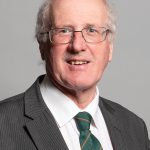
Tag: Jim Shannon

  • Jim Shannon – 2022 Speech on Asylum Seeker Employment and the Cost of Living

    Jim Shannon – 2022 Speech on Asylum Seeker Employment and the Cost of Living

    The speech made by Jim Shannon, the DUP MP for Strangford, in Westminster Hall, the House of Commons, on 14 December 2022.

    It is an absolute pleasure to speak in this debate on a subject that is very close to my heart. I am pleased to follow the hon. Member for Westmorland and Lonsdale (Tim Farron), who captured the exact reasons why we are here. It is because we believe there is a good case to be made, and I am going to make my case for my constituency, as he did for his.

    All of the hon. Gentleman’s speech captured my attention, but the one particular point that I took out of it was the fact that many asylum seekers may have a connection with the United Kingdom of Great Britain and Northern Ireland. They are well aware of what the country that they may see as their mother nation has to offer them. The hon. Gentleman captured the emotion of the occasion very well, as well as the importance of the case we are trying to put forward. It is because of issues relating to human rights and freedom of religious belief that many asylum seekers have fled from where they came from, whether that is Afghanistan, Syria or Ukraine, as is topical at this moment in time and very fresh and real in our memories.

    I want to put forward the case for Strangford. I am going to name some of the firms in my constituency that have offered jobs. Their offers are on the record and I have made those companies’ names available to Ministers. I do not understand why people who are here have not been offered those jobs when they are available, but I will speak more on that in a minute.

    The rise in the cost of living is having a severe impact on many across the United Kingdom. People in full-time employment with possible savings are still struggling to make ends meet. I say this respectfully to Government: I believe that there must be some element of compassion for those who are awaiting asylum decisions and living on incredibly low amounts of money. I have always had the belief that we must help those who do not have the capacity to help themselves. We are fortunate and privileged to be Members of Parliament. Our job is to speak up for those who do not have anyone to speak for them. We may never meet them, but that does not mean we will speak up for them any less. Each and every Member who has spoken so far in this debate has reiterated that point. I know that the shadow Ministers who will follow will also confirm the stance that we all share on this matter.

    There are currently 97,717 people in the UK seeking asylum, often waiting well over six months for a decision—a sixfold increase from five years ago. Numerous concerns have been raised about the amount of money allocated to those awaiting asylum decisions just to survive. I challenge anybody in this place to survive on that amount of money.

    The hon. Member for Rutherglen and Hamilton West (Margaret Ferrier) referred to Lift the Ban, which is a really good project. It focuses attention on this issue, and I have some questions for the Minister. The Lift the Ban campaign has given Northern Ireland businesses and others across the United Kingdom a real insight into the benefits that would come with allowing asylum seekers to work. One asylum seeker living in a hotel in Belfast stated, “Now, the asylum seeker receives just £8 a week—that is not enough.” He said, “An asylum seeker living in shared accommodation receives £37 a week—that is also not enough and, even worse, not fair.” I do not believe that it is fair, either. I am no more compassionate than anybody else in this Chamber, but I understand fairly well what everyone is trying to say. Relying on that amount of money per week to cover essentials such as food, clothing and travel has never been easy for people seeking asylum, especially given the financial turmoil that we have all faced in the last couple of months and will face in the months to come.

    I greatly respect the Minister and we have been friends for some time, but has she seen the Lift the Ban campaign? If not, I respectfully ask her to take note of it and to look at the options and solutions that it has put forward to try to address this issue. Will the Minister adopt and promote the proposals espoused by the campaign?

    With consumer prices rising by 11% since last year, there have been increasing calls from the Lift the Ban campaign and others to encourage the Government to allow asylum seekers out of inactivity and let them partake in some employment. It is probably no secret that I am a bit of a workaholic; I like to be busy. I suspect that other MPs like to be busy, too. Can you imagine sitting in a hotel or shared accommodation for seven days a week and only being able to go out for a wee stroll? Your mind does not function—I say that very respectfully—your body does not function, and you become depressed. Indeed, the hon. Member for Westmorland and Lonsdale referred to asylum seekers being prescribed medication for depression.

    We should allow those who are skilled and, more importantly, willing to work to get into employment and find some part-time or full-time work that requires little official training. I do not say that in a demeaning way; I say it because it would mean that asylum seekers could step into a job tomorrow, which would allow them to earn a little extra cash and make their daily lives easier. I have companies in my constituency of Strangford that are looking for workers, and I have conveyed that to Ministers on numerous occasions. Syrians, Afghans and Ukrainians in the asylum system have skills and there are job vacancies, so why not help them by giving them the opportunity to find employment? It would also give them some dignity and lift their confidence. Families would know that their breadwinner was out there earning for them, and it would keep families together—I am very conscious of that.

    Carol Monaghan

    As usual, the hon. Gentleman is giving a well-considered speech. Does he agree that it is the most natural thing in the world for human beings to have purpose and meaning in their day? Going out and earning a living gives them that purpose. Without that, asylum seekers are vulnerable to exploitation from those who would take advantage of the very vulnerable in our society.

    Jim Shannon

    The hon. Lady is absolutely right and I could not put it any better, because that is exactly how I feel. We should give them dignity and a purpose in life—I genuinely do not think that is too much to ask. That is why this debate is so important.

    I will give another indication of the jobs that are available. The owner of a bar in Belfast revealed that they were crying out for staff. As we come up to Christmas, there are literally hundreds of jobs that could be taken advantage of in the hospitality industry in particular. Again, I just do not understand why those jobs are not being offered to people. If they cannot fill the jobs from the society we live in—whatever the reasons may be—there are plenty of people in hotels not too far away who would love that opportunity. There are people from Afghanistan sitting in a hotel in Bangor, which is a city in North Down. They have been there for over 15 months. My goodness. I am going to challenge everybody in this room: would anyone like to be sitting like that in a hotel? Bangor is nice, by the way, but that is not the point. It is not in my constituency, but I say that with honesty. Could anyone’s mind take that? Could anyone physically take that? I do not think so.

    Carol Monaghan

    On the hotel issue, this is portrayed as some sort of luxury. Can anyone imagine being in a hotel room? I stay in hotels here in London. It is bad enough doing two or three nights a week, but imagine that being your only place, with no cooking facilities, no place for the children to sleep, no separation of family members and no privacy. It would be hell.

    Jim Shannon

    I agree with the hon. Lady. I am not sure it would be hell. As a Christian, I think hell is a place you never want to be and worse than anything in this world.

    Carol Monaghan

    It would not be pleasant.

    Jim Shannon

    I understand the hon. Lady’s point. I did not say that to be judgmental, by the way. I just wanted to make that point.

    Although I appreciate and respect the Government decisions on not permitting asylum seekers to work, I believe that schemes could be put in place by our Government—my Government—to allow them to get back to society. They want to get back to society. They want to do something. They want to be purposeful with their lives here in our country. For example, they could take part in community service and assistance by means of cleaning streets or doing local gardening—for those who just want to be physically active. It does not mean the job is demeaning. It is important. It helps us out.

    I want to mention two companies. Willowbrook Foods has a number of jobs and I met the chief executive officer, John McCann. He told me to tell Government that he has jobs available. He has been trying to fill those jobs within our own constituency but has not been able to do so, so there are jobs and opportunities. The CEO of Mash Direct is Martin Hamilton. I heard the same thing from him. I think Willowbrook Foods employs about 260 to 270 people, and Mash Direct employs about 230 to 240. They have jobs available and they have specifically said that they want to help the Afghans, the Ukrainians and the Syrians get the jobs and make their lives better. I believe this allows for an improvement of local standards and improvement in the mental and physical health of asylum seekers. It would give them a way to give back to our community and a chance to make some money in order to get the essential items that they need and want.

    Amid the cost of living crisis, the Government are taking steps to assist all aspects of our society. I ask that that includes those awaiting asylum decisions. To be asked to live on as little as £8 a week is shocking. Yes, accommodation and essential bills, such as for heating and electricity, are covered, but many of these families have young children. What about their schooling? What about the help for young children? They are just wee children, who look to their mum and dad for support, succour and help. But, at the end of the day, they also need to have active minds and bodies. Is that too much to ask? Some even have babies who require nappies, formula and baby food, which come at extortionate prices. In the last month I have become a grandfather again—it is the sixth time around. Rachael and Luke tell me that the price of baby stuff—they already have a child so they can compare it—is getting extortionate.

    I strongly encourage and urge Government to consider the introduction of schemes, such as Lift the Ban and others, to ensure that asylum seekers have the possibility of earning some money for themselves while serving and working in our local communities, as well as dignity, understanding and opportunity. It is due time that Government understood that asylum seekers have abilities and skills and there are jobs available right now that they can do. To my mind, to give asylum seekers jobs is a win-win.

  • Jim Shannon – 2022 Speech on Aortic Dissection

    Jim Shannon – 2022 Speech on Aortic Dissection

    The speech made by Jim Shannon, the DUP MP for Strangford, in Westminster Hall, the House of Commons, on 13 December 2022.

    First, I commend the hon. Member for Mid Derbyshire (Mrs Latham). It is never easy coming to Westminster Hall to lead a debate; it is even harder to come and tell a personal story—one that is so heartbreaking for the hon. Lady. She has made us more aware of the condition. We sympathise greatly with her on the loss of her son Ben. We support her and what she asks for.

    No parent should have to go through the horror of losing a child. I have the greatest respect for the hon. Lady for coming here today and talking about it, which is often the hardest thing to do. As my party’s spokesperson on health, it is great to be here to support wholeheartedly her call for better patient pathways and more funding for aortic dissections. She set out a really good case and has asked for a number of things. I endorse what she has asked for and will give some factual background to the debate.

    Aortic dissection kills over 2,000 people a year. The UK statistics are clear: three to four people per 100,000 are diagnosed with aortic dissection each year. It typically presents with abrupt onset chest, back or abdominal pain that is severe in its intensity, or is described as ripping or tearing, particularly in the patient with a high-risk condition such as Marfan syndrome or a family history of aortic disease.

    The hon. Lady was right to refer to diagnosis. We often refer to diagnosis in these debates, and she has asked for work on that. The Chair of the Health and Social Care Committee, the hon. Member for Winchester (Steve Brine), has taken her thoughts on board, and I know that next year, or whenever the inquiry is done, when the hon. Lady makes her contribution, we can expect a fairly good response from him. He will never be found wanting in that regard. It is good to have him here to hear the story.

    By improving diagnosis of aortic dissection in terms of familial connection, we can improve patient pathways to get better treatment and easier maintenance of the disease. Aortic Dissection Awareness UK & Ireland is the national patient charity for aortic dissection in the UK. It was founded by a small group of people who were diagnosed with aortic dissection in 2016. The charity provides vital information and support for patients and families affected by the condition, which the hon. Lady outlined so well, including the families who are left to deal with what happens. The charity works with healthcare providers to improve diagnosis and treatment and reduce healthcare inequalities. It partners with researchers to bring forward new insights that will improve future care for aortic dissection patients. In addition, the Aortic Dissection Charitable Trust research advisory group has been actively promoting research in the field of aortic dissection, aiming to save lives and improve the quality of life for those suffering from the condition now and in the future.

    The hon. Lady asked very clearly for more to be done. The Minister and all of us were listening intently to her contribution. It would be very hard for anyone in this House not to respond in a positive fashion to her requests. More needs to be done across the whole of the United Kingdom of Great Britain and Northern Ireland, especially in co-operation with the devolved nations. This is something we should all work together on. We can always exchange ideas in these debates. The hon. Lady and I have both participated in debates in the past 24 hours. There was an Adjournment debate last night and a debate this morning at 11 am—the Minister has been kept extremely busy. We always have a helpful response from her and I look forward to something similar this afternoon. We owe a duty of care to the hon. Member for Mid Derbyshire, and I am sure the Minister will respond in a positive fashion.

    We also need to produce a research strategy that is developed and implemented as a support network for all. The Royal College of Emergency Medicine has made the diagnosis of acute aortic syndrome and dissection one of its top 10 priorities, and we must do the same across the whole of the United Kingdom of Great Britain and Northern Ireland. I encourage the Minister to engage with her counterparts in Northern Ireland and other devolved Administrations to ensure that we approach this in collaboration, with all of us asking for the same thing and all working together to achieve the same goal and ensure the correct patient pathways and sustainable funding for aortic dissections.

    Again, I commend the hon. Member for Mid Derbyshire; I think we were all particularly moved by her contribution. This debate would be suitably concluded with the support that the Minister can give us. I very much look forward to hearing from the two shadow Ministers: the hon. Member for Coatbridge, Chryston and Bellshill (Steven Bonnar) and the hon. Member for Enfield North (Feryal Clark).

  • Jim Shannon – 2022 Speech on Business Rates and Levelling Up

    Jim Shannon – 2022 Speech on Business Rates and Levelling Up

    The speech made by Jim Shannon, the DUP MP for Strangford, in Westminster Hall, the House of Commons, on 13 December 2022.

    It is a pleasure to speak in the debate, Mr Mundell; I thank the hon. Member for Waveney (Peter Aldous) for setting the scene so very well. He and I, and others in the debate today, often join forces to support our communities. His and my communities are similar in their culture and geographical stance, and we share an interest in fishing issues. It is always a pleasure to come along and support the hon. Gentleman. It is also a real pleasure to follow the hon. Member for Torbay (Kevin Foster), good friend that he is. He is back on the Back Benches now, but when we were on the Back Benches before, I used to follow him and he me. To be honest, normally, I follow everybody else—but it was a real pleasure to hear his contribution. I am also pleased to see the Financial Secretary to the Treasury in her place; I know she always generously tries to respond to our requests and I look forward to her contribution.

    I think we are all on the same page on this one. I very much support the two hon. Gentlemen who have just spoken and what they are trying to achieve. I hope to be able to achieve that as well. I am pleased to see the shadow Minister, the hon. Member for Ealing North (James Murray), in his place. We are a bit sparse in numbers on this side of the Chamber, but I know that the hon. Gentleman’s contribution will make up for that.

    Like many others, I am and was excited about the Government’s levelling-up agenda. I looked at the money for Northern Ireland and imagined how many improvements could be made with that funding. Like the hon. Members who have spoken and who will speak afterwards, I have been concerned that the levelling-up programme seems to gloss over the needs of coastal communities. The hon. Members for Waveney and for Torbay outlined their requests on behalf of their communities. I have not read the speech of the hon. Member for St Ives (Derek Thomas), who will follow, but he will probably endorse what we are saying as well. The hon. Member for Waveney gave his presentation of the subject at the start of the debate. It has been incredible to hear all of them.

    As a quick aside, I should say that as I travelled up the beautiful peninsular roads in my Strangford constituency to the airport on Monday, in cool, crisp air, my thoughts were not only on the condition of the roads and their iciness, but on the knowledge that the road verges were getting smaller and smaller each year, giving less space for slippage and increasing the danger of those winding coastal roads. That is part of the reason why I have advocated for levelling-up funds to address coastal erosion concerns. We can have all the wonderful attractions we like, but if villages and roads slide into Strangford Lough, those attractions will mean nothing for those places.

    Moving on, I want to highlight the concerns of small businesses. I always give a Northern Ireland perspective in these debates. I believe that it adds to the value of this great United Kingdom of Great Britain and Northern Ireland that we can all come together from four regions to debate these issues and thereby engender support for all businesses in the regions, just as I support my colleagues here in the mainland.

    In March 2022, most of the businesses in Northern Ireland—some 89%, or 70,510—were microbusinesses with fewer than 10 employees. Just over 2%, or 1,640 businesses, had 50 or more employees. Almost half of businesses in Northern Ireland—45% or 35,415 businesses—had a turnover of less than £100,000, while 10%, or 8,220, had a turnover in excess of £1 million. When the Government talk about percentages, I presume they are thinking in terms of thousands of pounds, yet the cost for many of these businesses is hundreds of pounds, which could cover the cost of, for example, pens, biros and pencils for their office. Yet, for a small business, these perpetual small increases can be the death knell. When the debate came forward, I was pleased to support it and add a Northern Ireland perspective.

    In Northern Ireland, our small businesses pay 30% more for the delivery of products. That is, in part, to do with the Northern Ireland Protocol Bill, but also the movement of goods. They seek to absorb some of the cost, and this finds their profit margin down to 15% to cover all overheads. With respect, the pressure on businesses in Northern Ireland is more acute than it is for those on the mainland. When rates are put up by a few per cent, it can mean business owners working for less than the minimum wage. There is probably more pressure today than there has been for a long time, so again this debate is relevant to my constituents and businesses in Strangford.

    Another struggling demographic is pubs. I support what both the hon. Members for Waveney and for Torbay said and will give my own perspective. Pubs pay more in business rates per pound of turnover than any other business. Both hon. Members referred to the hospitality sector, and that is a sector we are concerned about. I know we always come asking for things, but it is the nature of life that we seek to illustrate in these debates where our constituents are coming from. What help can the hospitality trade be given? I know the Government have helped in many cases, so this is not a criticism—I am not in the job of criticising; I am in the job of trying to find solutions, as others are.

    The business rates bill for the sector accounts for 2.5% of total business rates paid, despite only representing 0.5% of total rateable turnover—an overpayment of £570 million. When the hon. Member for Waveney introduced the debate, he clearly suggested that the rates for the hospitality sector, including pubs and restaurants, need to be substantially reviewed, because the overpayment does not reflect a fairness in the system. It is time to look at that.

    The draft ratings list for 2023 to 2026 shows pubs’ rateable values falling on average by 17%, which will start to address the overpayment, but there is still a long way to go, and we should look to the immediate concern. The extension of, and increase in, the hospitality business rates relief for 2022-23 was therefore extremely welcome. I always think we should give credit where credit is due. The Government have made some substantial moves, and it is important that we recognise that. The freezing of the multiplier and the abolition of the downward transition on relief were also welcome.

    However, the decision not to bring forward—this is one of my requests for the Minister—the online sales tax to offset the cost of pub rates and provide for a fundamentally fairer business tax regime for the digital age was disappointing. I ask the Minister to see whether that request could be looked at. It is important because it is one of the solutions. In these debates, the hon. Member for Waveney always sets out how we can do things better, and that is incredibly helpful. The current business rates system remains unbalanced. I join the British Beer and Pub Association in urging the Government to bring forward meaningful reforms that level the playing field.

    I will use a pun, which I think the hon. Members for Waveney and for Torbay, who spoke before, and the hon. Member for St Ives, who will follow, will perhaps appreciate, as they all come from coastal constituencies. Levelling up only works if the rising tide raises all ships and does not leave the essential but smaller craft marooned behind the yachts that are already away. It is about bringing the other ones on board—the smaller businesses, who are under incredible pressure. I ask again for greater consideration on those issues. I know the Minister will do all she can to try to address that.

  • Jim Shannon – 2022 Speech on the Australia and New Zealand Trade Bill

    Jim Shannon – 2022 Speech on the Australia and New Zealand Trade Bill

    The speech made by Jim Shannon, the DUP MP for Strangford, in the House of Commons on 12 December 2022.

    I was not expecting to be called at this point, Mr Deputy Speaker. I was just removing a mint from my mouth.

    Lloyd Russell-Moyle

    Did you think I was going to go on for longer?

    Jim Shannon

    Yes, I would expect the hon. Gentleman to do that—but what a pleasure it is to follow the hon. Gentleman, who brings knowledge to these debates and, probably, to every debate. Let me also to say how pleased I am to be able to throw some of my thoughts and those of my party into this debate.

    As a proud Brexiteer—that is no secret—I am pleased to see the opportunities that can and will come from Brexit, and we in Northern Ireland hope that we too will benefit from them. We await the Government’s endorsement of the Northern Ireland Protocol Bill, which will give us the same opportunities as everyone else, but that is for a future debate rather than this one.

    The potential of the Australian and New Zealand trade agreements is exciting for me and many others. The agricultural and fishing sectors are vital for my constituency, so my request to the Minister will be to provide the support to enable our agricultural sector to be protected. We in Northern Ireland are fortunate, in that we export food and drink products worth some £5.4 billion, and we export some 65% of that produce to the EU and across the world. We are already the epitome of what the Government are trying to achieve through this deal, and we are doing that right across the whole world. Lakeland Dairies is a good example. It is already moving to sell its produce in the far east, the middle east, Africa, south America and the USA, so it is very much to the fore. We also have Mash Direct, a buoyant company that is seeking markets overseas, and Willowbrook Foods and Rich Sauces, which likewise have farmers who feed into them. So we have a strong agri-sector in my constituency. The Minister knows that already; I am not telling him anything he does not know. He is always very astute and does his research so he will know what I am referring to, but I seek that wee bit of reassurance that my agri-sector in Strangford will be in a position to have those protections, and that we can be part of that export push that the Government clearly want to bring about.

    The Bill is the outworking of the groundwork to enable us to begin to reach the trading successes that are so needed for all our countries. It is clear that we must make changes to our domestic procurement law, as the hon. Member for Brighton, Kemptown (Lloyd Russell-Moyle) said, in order to implement the public procurement chapters of each agreement. Further, the Bill will enable the UK Government and the devolved authorities to make the regulations to implement the changes in domestic procurement law required to implement the UK free trade agreements with Australia and New Zealand. It will also change domestic law to reflect any specific amendments that may come from the Northern Ireland Assembly and other bodies that are required under the agreement with Australia, and apply those provisions to suppliers from the UK and other countries. I should probably have declared an interest at the beginning, Mr Deputy Speaker. I am a member of the Ulster Farmers Union, and I am also a farmer. I live in an area outside Greyabbey where almost all my neighbours are milk farmers and dairymen, and they want to see the potential to sell their products further afield through their company, Lakeland Dairies.

    In an intervention on the shadow Minister, I talked about the need for reassurance that the regional Administrations would not be ignored if their viewpoints were in conflict with the central Administration here in Westminster, although hopefully that will not happen. Can the Minister tell me how the process can be handled in such a way that the protection we in Northern Ireland are seeking to achieve can be one that the Government can respond to in a positive fashion? I genuinely understand that the Government are trying to do that, but I just need to see that in Hansard, if he does not mind, to give reassurance to the farmers back home.

    I was also pleased to see a specific role for the devolved Administrations to be a part of this process. If the Government could only sort out the Northern Ireland Protocol Bill as a priority, perhaps Northern Ireland could be a part of this trade deal in totality. As things stand, our farmers would be precluded from state aid help that would allow them to compete with New Zealand sheep farmers. I understand that this is a debate for another day, but it would be helpful if the Minister could give us some reassurance on that. There is no doubt among Unionists as a whole that the Northern Ireland Protocol Bill should be the No. 1 priority for this House, and I am disappointed to see in today’s press that the Prime Minister is putting it on the back burner and perhaps not bringing it before the House of Lords until February or March of next year. We need to have a strong focus on the Northern Ireland Protocol Bill.

    People in Northern Ireland receive no Government aid towards their heating bills—that is not sorted either. We cannot help people to heat their homes and stay alive if we do not do it centrally from Westminster. We must stop playing with the health of our elderly and vulnerable. If we have not addressed the concerns of the agriculture sector in Northern Ireland, I can understand why other things have not been addressed either.

    My colleagues have expressed the key concern of trading differentials in food production. My hon. Friend the Member for Upper Bann (Carla Lockhart) highlighted the issues of land being deforested for cattle production, and of systems that rely on the transporting of live animals. Will the Minister provide clarity on the protections we need?

    UK producers, including those in Northern Ireland, must not be disadvantaged or penalised for abiding by better, more costly standards. It is a privilege for us in Northern Ireland to have the best conditions, rules and regulations for the quality of our products and produce because, when we send them across the world, they can meet the conditions of any country anywhere in the world, including the EU and anywhere else.

    Such trade deals are essential as we move away from Europe, which is crumbling, and look towards alliances with global markets that are happy to live with a give-and-take mentality for our mutual benefit, rather than the one-way system whereby our needs were secondary to those of the EU as a whole.

    Northern Ireland has premium beef, cattle, pigs, poultry and sheep produce. The dairy sector in my constituency is the envy of many other parts of Northern Ireland. The cereal farmers and potato producers around Comber are among the best. Northern Ireland’s food and drink sector is worth some £5.4 billion. It is the region’s largest manufacturer, and its exports are important.

    Our farmers and producers aim for the highest targets, and they have delivered. My farmers in my Strangford constituency, and my fishermen in Portavogie in my constituency and in Ardglass and Kilkeel in South Down, and across Northern Ireland, are dedicated to traceability and are passionate about quality. That needs to be encouraged, and I think the Minister wants to encourage it. I look forward to his winding-up speech and, even at this stage, I ask for reassurance that the fears of my farming community in Strangford, and of farming communities across Northern Ireland, will not become a reality. The farmers back home want to know they are part of what the UK Government are pushing.

  • Jim Shannon – 2022 Speech on Employment and the High Street

    Jim Shannon – 2022 Speech on Employment and the High Street

    The speech made by Jim Shannon, the DUP MP for Strangford, in Westminster Hall, the House of Commons, on 7 December 2022.

    It is a pleasure, Mrs Cummins, to speak in this debate.

    I congratulate the hon. Member for Hornsey and Wood Green (Catherine West) on setting the scene so very well. We thank her for securing the debate, and thereby giving us all a chance to contribute.

    It is very nice to see the Minister—the Under-Secretary of State for Business, Energy and Industrial Strategy, the hon. Member for Thirsk and Malton (Kevin Hollinrake) —in his place. I was referred to today as a poacher turned gamekeeper. That is probably very much the case with the Minister, because he participated in and supported us in such debates when he was a Back Bencher.

    Our local high streets are the backbone of not only our economy, but our constituencies. Some local businesses on our high streets faced devastation through the covid-19 pandemic—subjected to a lack of footfall, temporary and permanent closures and, more recently, struggles with payments due to the rising cost of living. In my constituency of Strangford, there are high streets in towns such as Newtownards, Comber and Ballynahinch. Villages in my constituency also have many smaller, but unique, shops. The high street in the main town, Newtownards, thrives throughout the week, especially on Saturdays, when there is a local market. The hon. Member for Keighley (Robbie Moore) said that a shop in his constituency had been there for 60 years. Wardens—a family-owned firm that employs 55 people—has been in Newtownards for 145 years, and we have other family-owned shops that employ fewer people but still provide employment; for example, the butcher’s shop employs 65 people, although that is a massive store. We also have branded shops such as Peacocks and Argento. Comber High Street has a farmers’ market once a month, where local farmers can come together to sell produce made in the heart of Strangford’s farms and villages.

    Coronavirus obviously had an impact on employment in our local high streets. As lockdowns lifted, the footfall was unfortunately not the same. I think that has now come back to a certain degree, although rising costs and prices have had an effect. Northern Ireland’s Minister for the Economy initiated earlier this year and last year a local high street voucher scheme. It is probably unique to Northern Ireland, although I know the Minister is aware of it. Every person aged over 18 in Northern Ireland was given a £100 voucher, and the scheme contributed some £140 million to the economy.

    We also have some issues with derelict buildings, as has been the case in Court Street, just off High Street, in Newtownards, although I am pleased to say that we now have an ongoing regeneration plan. It is hoped that an area that was once housing and some smaller, unique businesses will be returned to the glory days of the past. Unfortunately, the very nature of derelict buildings brings other antisocial behaviours.

    High streets and town centres have struggled in recent years as trends have changed. The hon. Member for Keighley and others mentioned online business. A few years ago, Excel Clothing in Newtownards recognised that although it had a lovely shop front on the high street, it needed to go online. The owner did that and now half his business is online. That is a good thing.

    Young people today would rather find gifts online—order them and have them delivered—than go out and trek around the shops, whereas my wife, all her family and that generation love to go shopping; for them, it is part of the fun. I have to say that my wife Sandra does all the shopping; I just make sure the money is available!

    We can provide encouragement to ensure our high streets are looked after and made good use of, especially coming up to Christmas. Our local economies feed into the economy of the country. I know that the Minister and the shadow Minister grasp the importance of the high street for us all, and we look forward to hearing their comments. We must make more use of the amazing businesses offered to us, the core of which has to be the high streets in my constituency of Newtownards and in everybody else’s constituencies.

  • Jim Shannon – 2022 Point of Order on Temperature in the Houses of Parliament

    Jim Shannon – 2022 Point of Order on Temperature in the Houses of Parliament

    The point of order made by Jim Shannon, the DUP MP for Strangford, in Westminster Hall, the House of Commons, on 7 December 2022.

    Jim Shannon

    On a point of order, Mrs Cummins. I have spoken to the Doorkeepers about this room. It is so cold you could hang dead people in here and they would not go off. The Doorkeepers have asked the staff to do something with the heating. They say the heat is turned on. I am not sure where it is, but it is not on here. Can I ask, Mrs Cummins, that you use your power as Chair to do something about that?

    Judith Cummins (in the Chair)

    I thank the hon. Gentleman for raising that issue. I know that the Doorkeepers are busy, and I am very aware of just how cold it is in here. I am sure that that will be on the record.

  • Jim Shannon – 2022 Speech on the Sovereignty of the British Indian Ocean Territory

    Jim Shannon – 2022 Speech on the Sovereignty of the British Indian Ocean Territory

    The speech made by Jim Shannon, the DUP MP for Strangford, in Westminster Hall, the House of Commons, on 7 December 2022.

    I congratulate the hon. Member for Shrewsbury and Atcham (Daniel Kawczynski) on leading today’s debate. It is good indeed to discuss the sovereignty of the British Indian Ocean Territory. I understand the hon. Member undertook a visit to the islands back in 2020—maybe even further back—after claims that the UK’s exit from the European Union could hinder the sovereignty of the British Indian Overseas Territory. The hon. Gentleman indicated his knowledge in how he delivered his speech today.

    We have maintained and created a stable relationship with our territories abroad and must ensure that we continue that, so it is good that we can be here to do just that. How do we do it? Some hon. Members have laid out their thoughts, while others are of a slightly different point of view, but we all wish to see the same delivery when it comes to solutions, because solutions are what it is all about. I always seek justice for those who have been wronged. The hon. Member for Peterborough (Paul Bristow) spoke about that earlier on. The first thing to do when something is wrong is apologise, recognise it and try to right it, and the hon. Gentleman has set out how to do that. Hopefully the Minister will be able to give us some help.

    The UK shares an extraordinary defence facility with the US at Naval Support Facility Diego Garcia. The base is crucial to Anglo-American power in the region and extends upon the order we created throughout and after world war two. There have been discussions on handing over the sovereignty of the islands to Mauritius, undermining the legitimacy that Britain has over the islands. Many Members here today have also raised concerns, which I will reiterate, about the potential for Chinese aggression across the world, especially in the Chagos archipelago. It is important to remember that international support must be built in order to retain the legitimate sovereignty that we already have.

    In 1982, Margaret Thatcher set a precedent that the United Kingdom would do everything necessary to defend our overseas territories, especially when it came to the Falkland Islands. We have a duty to honour that same commitment, which we had to the Falklands, and also to Gibraltar, to which the hon. Member for Peterborough referred. It is important that the current Prime Minister carries on those legacies and promises to protect the sovereignty of all British territory abroad. The risks of handing sovereignty to Mauritius, with its deepening economic ties to Beijing, offer no guarantee to anyone that China will not soon have its own defence base on that very island.

    The geography of Diego Garcia is also posing a problem, given its close proximity to China. It is only a few hundred miles south of the Chinese border, and it is the UK’s only defence base situated between Iran, Russia and China. We have to be honest for our own safety in the role that we have. We simply cannot allow the base to come under Chinese control. Any insinuations that that will be discussed are very concerning. The naval base serves as a logistics and support base for naval vessels, warplanes, and special forces. I understand it is the only one of its type in that location.

    The wildlife and environment of the British Indian Ocean Territory are exceptional. The territory has the greatest marine biodiversity—

    Henry Smith

    On that point about the environment, which is critical, a couple of years ago a Japanese oil tanker ran aground just off the Mauritian coast, and the Mauritian response was appalling. There are deep concerns that the pristine marine environment that we have around the British Indian Ocean Territory could be at risk. Will the hon. Gentleman join me in calling on the Government to ensure that that is not the case?

    Jim Shannon

    The hon. Gentleman anticipated my next sentence. The territory has the greatest marine biodiversity in the UK and its overseas territories. It is unique and has some of the cleanest seas. We always hear about how the oceans are full of plastics and so on, but it has the cleanest seas and the healthiest reef systems in the world, so we must protect the environment it surrounds.

    The territory also represents a nearly untouched ocean observatory, which provides researchers across the world, from all countries, with a place like no other for scientific research. It is a unique location for scientific study, and expeditions have contributed towards the development of the territory as an observatory for undisturbed ecosystems. The UK respects that, but we have to guarantee that there will be no further threat from China in relation to marine biodiversity.

    In conclusion, China poses a threat not only to the sovereignty of the islands, but to aspects of our world, too—particularly the environment that I referred to. Although the UK holds complete legitimate sovereignty over the islands, we must encourage our other colleagues to stop the calls for sovereignty going to Mauritius. The success of the relationship has been maintained so far, and we should do what we can to prolong that for our own safety and as a base for our defence. It is time, as Margaret Thatcher said in 1982, to honour the people and citizens of these islands in the same way.

  • Jim Shannon – 2022 Speech on Government Support for Marine Renewables

    Jim Shannon – 2022 Speech on Government Support for Marine Renewables

    The speech made by Jim Shannon, the DUP MP for Strangford, in Westminster Hall, the House of Commons, on 7 December 2022.

    It is a pleasure to speak in this debate, Mr Hollobone. The hon. Member for Gloucester (Richard Graham) is right—I will give my perspective on Strangford Lough. Helping to progress that is my objective in being here.

    I thank the right hon. Member for Orkney and Shetland (Mr Carmichael) for setting the scene so very well. Like everyone else in the Chamber today, including me, he is a champion of the coastal regions. On almost every occasion in this House, he and I have supported each other, whether that is on fishing issues or marine life issues. Since my election to this House, it has been my pleasure to work alongside him and learn from him. I thank him for that.

    It is a pleasure to see the Minister in his place. I look forward to his response, which I know is always given with consideration and helpfulness. I look forward to the contributions from the two shadow Ministers for the SNP and Labour. They both have a deep interest in these matters, and they will add much to the debate.

    Margaret Ferrier

    Will the hon. Member for Strangford (Jim Shannon) give way before he starts on his amazing speech? The Narrows located between Strangford Lough and the Irish Sea make an optimal location for tidal energy research. As the hon. Gentleman knows, it has hosted a few projects in recent years. Will he speak to the benefits that projects in Strangford Lough have for his constituency and further afield?

    Jim Shannon

    The hon. Lady asks me to speak highly of Strangford Lough, and that will be done without question. I thank her for her intervention. The main issue is more than energy; it is the balance of life and the potential to provide safe, renewable energy. I speak to my mother regularly and she has always said that there are few absolutes in this world. One, pertinent for this time of year, is that “Jesus loves you, regardless of what you have done.” The other is that the sun will rise and set. Clearly, a very wise woman, for which I am so thankful.

    The first maxim, demonstrated at this time of year, offers forgiveness and unconditional love in the birth of the Lord Jesus. As for the second, I believe we have an opportunity to harness that. If the sun rises, it means that the moon orbits, and the tides are as certain as the sun rising. We can and should use that to produce energy. If we had a thought for the day, that would be mine.

    Strangford Lough was named by Viking invaders who noted the strength of the lough. That is where the “strang” came from, the Viking word for strong. They may not have been able to measure the tide as having a force of 7.5 knots on any given day, but they knew it was stronger than normal, stronger than anywhere they had been before. In 2008, a project to harness the power of Strangford Lough was started in the form of a tidal turbine. That was the world’s first commercial-scale tidal energy project.

    I am very proud that was in my constituency, and I am keen to see that project go further. I have met some of those involved from the Queen’s University marine laboratory and the Minister back home from the Department of Enterprise, Trade and Investment. I am pleased to see this Minister is his place, and I will request a meeting about that project. We are keen back home to take it further.

    I want to speak about that project and what it did, because it shows development potential that could be used for our betterment. It was commissioned in July 2008 by Marine Current Turbines, a subsidiary of British tidal energy company Siemens. The 1.2 MW project used MCT’s SeaGen turbine technology and required an investment of £12 million.

    The pilot was successful, and I cannot understand why we have not moved beyond that. Perhaps we can now, because my discussions with the Department back home and the Assembly, as well as those involved with the project, indicate that that pilot project could be financially feasible. I think some of the investors come from Canada, and there is an interest in taking it forward.

    The project involved installation of two 600 kW turbines producing 150 kW of electricity to the grid in July 2008. SeaGen generated electricity at its maximum capacity of 1.2 MW for the first time in December 2008. Another important milestone was reached in September 2012, with SeaGen producing 5 GWh of tidal power since its commissioning, which is equivalent to the annual power consumption of 1,500 households.

    I could say a lot more; I am keen to see how we can take that project and its pilot scheme forward. The project has finished at the moment, but I cannot understand why further follow-ups have not taken place, to make the most of that tide, to ensure that the harnessing of marine energy is not detrimental to the fishing industry. I have been in contact with DAERA back home on the matter.

    I make this request directly to the Minister today. If he is able to come to Strangford Lough, I am keen to take the opportunity to introduce him to people from Queen’s University marine laboratory and from the Department to see how the project can be progressed. I honestly believe it has so much potential. Obviously, we need the input of the Minister here today, but the Minister back home told me that some of the help comes from Westminster for that project, so there is governmental input here.

    I recently read that tidal power could supply up to 10% of the UK’s energy within 10 years. SeaGen could play a part in that as it was more than four times as powerful as the world’s second most powerful tidal current system at that time—the 300 kW Seaflow that was installed off Lynmouth on the north Devon coast more than five years ago. We have that potential in Strangford Lough. It would be wonderful for us if we could use that green marine energy potential back home.

    I am given to understand that, based on the Strangford Lough experience, the company plans to scale up the technology to build a 10 MW tidal power farm within the next three years. That is the kind of innovation that we in this great United Kingdom of Great Britain and Northern Ireland need to invest in and reap the benefits from. There is a delicate balance in our marine environment, but investment could see a balance being struck, with the ability to power homes, cutting down on reliance on fossil fuels from overseas and becoming self-sustaining.

    Another good thing came from the SeaGen pilot scheme. We have a large seal colony in Strangford Lough, and the tidal scheme had protection for the seals, so lots of things were learnt from the SeaGen pilot scheme from 2008 to 2012, which is something that we should really look at. Importantly, it would also reduce costs for the working poor who are on wages that simply are not good enough at this time. We have a golden opportunity to develop the tidal energy system in Strangford Lough. I believe in my heart that that is the way forward. We must find a way and find it soon. The lessons learnt in Strangford Lough can provide a good foundation. Perhaps the Minister can give us the help that we need.

  • Jim Shannon – 2022 Speech on International Human Rights Day

    Jim Shannon – 2022 Speech on International Human Rights Day

    The speech made by Jim Shannon, the DUP MP for Strangford, in Westminster Hall, the House of Commons, on 8 December 2022.

    I thank the hon. Member for Rutherglen and Hamilton West (Margaret Ferrier) for securing this important debate. I declare an interest as chair of the all-party parliamentary group for international freedom of religion or belief. The hon. Member for Congleton (Fiona Bruce) is not in her place at the moment, but I commend her on her contribution. Mine will have a similar focus. What a pleasure it is to follow the right hon. Member for Kingston upon Hull North (Dame Diana Johnson). I agree wholeheartedly with her comments. I asked a question in business questions today on Afghanistan and the very public, grotesque, violent, criminal and disturbing execution that was carried out, just yesterday. The right hon. Lady is absolutely right on that, and in highlighting the issue of women judges from Afghanistan.

    We welcome those judges to the UK. I commend them. They were at the forefront of pro-democracy efforts in Afghanistan, and were some of those most at risk from the Taliban. They have been in the UK now for more than a year and are still stuck in temporary hotel accommodation. They are professional people who will be able to make a massive contribution to society. I am quite disturbed that we have not yet moved them on. I am not sure whether that is the Minister’s direct responsibility, but I would be grateful if he would pass that issue to the right Minister for reply. These are people who have risked their lives. They are here, and we welcome them, and that is great news, but we have to give them some vision for the future and some hope that they can make a contribution in their new homeland, where they want to live. I commend the right hon. Lady on her comments; that issue was in my mind already before we came here today.

    Today, we mark International Human Rights Day. The theme this year is dignity, freedom and justice for all. All Members who have spoken have referred to that theme. Since the adoption of the universal declaration of human rights in 1948, it has served as a foundation for an expanding system of human rights protection across the globe. That is something that every country should aim for. However, the protections that human rights offer have never been under greater threat. The rise of authoritarianism, which the hon. Member for Rhondda (Chris Bryant) referred to—he is absolutely right—the global financial crisis, climate change, the covid-19 pandemic, the conflict in Ukraine, escalating attacks against minorities and restrictions in civil society have led to a sustained assault on those fundamental rights in recent years.

    For me it is clear—I have said it before, and will say it again. Human rights and freedom of religious belief walk hand in hand. They complement each other in the focus that they bring and the issues they target. When I think of Ukraine, I am minded from my chairmanship of the APPG of the 400 Baptist churches that have been destroyed across eastern Ukraine. I think of the pastors of those churches, who have gone missing, and in many cases have not been found—we do not know where they are at this time. Other people have referred to the displaced, and those pastors are some of the displaced. Their congregations were dispersed, probably to western Ukraine, but some elements are left in eastern Ukraine under Russian control. We think of them as well.

    As this year’s theme for the day is dignity, freedom and justice for all, I want to talk about a right that is often overlooked internationally but has been prioritised by this House and by this Government, and that is the fundamental right to freedom of religion or belief. That right is a cornerstone for many. Faith is deeply personal and impacts every area of a person’s life. Despite that, it is often overlooked in the greater sphere of life.

    Freedom of religion or belief was excluded from the sustainable development goals, which it should have been part of; it is seldom considered in humanitarian aid or international development. It should be, and must be, and we have asked for that in nearly every debate we have had on the subject. I hope the Minister can give us some indication of whether that would be the Government’s intention.

    Religious minorities are often disproportionately affected by the impact of climate change, poverty and terror attacks. I want to talk about Nigeria, a country where human rights and freedom of religion or belief are abused. The north-east and middle states of Nigeria have seen atrocities on a horrendous scale. It is the most populated country in all of Africa. It is potentially a powder keg for Africa. We hope that next year’s elections go well and that Nigeria can resume some sort of normality, although I am not entirely convinced that that is possible. In the north, Christians, Shi’a Muslims and members of traditional African religions have been targeted by Boko Haram and Daesh; and in the middle belt, Fulani herders have attacked primarily Christian communities. In the last 10 years, nearly 40,000 people have been killed in Nigeria. That is an incredible number. It is the population of my town of Newtownards back home, and I can just imagine what it would mean with nobody living in that town. What does it mean for other hon. Members here who can visualise what 40,000 deaths would mean in their constituency? In the last two years alone—I will cite the figure that is put about—at least 7,520 Christians have been killed in Nigeria.

    In addition to those deaths, Nigeria has more than 3 million internally displaced persons living in camps and informal settlements. In May of this year, we visited Nigeria through the APPG. The hon. Member for Argyll and Bute (Brendan O’Hara) and I were in the deputation together and we saw the situation at first hand. Some of those displaced people have been in camps for seven and a half years. It is depressing to know that they have been there for that length of time and have not moved on—they have not had the opportunity.

    There are things that perhaps Nigeria could do and the UN could do as well. Perhaps the UK could also be part of that. For example, there is some land available in Nigeria. There, these farmers—Christian farmers—could have land and cultivate it and play a physical, practical role in building a future and looking after their families. These are things that could happen.

    Religious minorities are often excluded from larger camps due to discrimination or fears of additional attacks. That leads to traumatised groups unable to access humanitarian aid and being denied access to development programmes. Much of the funding for those programmes comes from UK aid. We should have a responsibility to ensure that aid does not discriminate against Christian or Shi’a groups unable to access it through larger IDP camps.

    The figures for this situation are really disturbing. The scale of it is colossal and hard to picture, so let me share just two stories from our trip. The hon. Member for Argyll and Bute will remember these. He will remember many, because we all remember many, but I am going to give two examples, if I may, of the horror that Nigeria is for those people of ethnic and religious belief.

    In one village that was attacked, we heard a story of a young mother and her six-year-old daughter. They had tried to run away, and she was surrounded and caught by the attackers. The attackers then turned their machetes on the mother and said, “Your girl would like to suck your finger,” and proceeded to cut off her forefinger. Of course, the lady passed out through the pain and the horror, but once she came to some time later, she found that her six-year-old girl was dead beside her, with her mother’s fingers stuck in her mouth. That is the horror of Nigeria today for those of a Christian belief and those of another ethnic minority belief. In another attack, there was an elderly lady to whom the attackers said, “Oh grandma, you look cold,” and then they threw her into a burning home, where she died. This is the horrible brutality, violence and criminality of those in Nigeria.

    A few weeks ago, it was Red Wednesday and we had a photograph done. Mr Paisley, I think you were there; indeed, I know that many here were also there. I met Bishop Jude of Ondo. He visited Parliament and told the story of the attack on St Francis Xavier Catholic church in Ondo state on Pentecost this year in which terrorists killed 51 worshippers. Bishop Jude highlighted the fact that in the short term the effects of violence against Christian communities are the loss of life and the spreading of terror and displacement, and that in the medium to long term these attacks are devastating communities, who lose access to healthcare, education and jobs, all of which ultimately makes it impossible for many communities to survive.

    In 2019, the all-party group published a report that highlighted the issues, titled “Nigeria: Unfolding Genocide?” The question was important, as the report documented genocidal activities happening in the country—not just the deliberate killings of Christians and Shi’as but the vast scale of the killings, the destruction of settlements and places of worship, which forced those groups out of parts of Nigeria, and the targeting and abduction of children with the intent of transferring them out of those communities. More work is needed from the international community to fully investigate those crimes and to answer the important questions of intent, and whether it is a deliberate, systematic approach to eradicate certain communities from parts of Nigeria.

    We had opportunities to meet those in different Departments. The APPG believes that His Majesty’s Government need to put pressure on the Nigerian authorities to stop such attacks happening. They can do it. The hon. Member for Argyll and Bute and I well recall an attack that was carried out in a village in eastern Nigeria. The army camp was no more than a few hundred yards away. Those in the camp made no effort whatever to stop the killing, murder, violence and abuse of women and girls that took place, within shouting distance of them, which tells us that they could do better. We must do everything that we can to bring the perpetrators of terrorist violence and killings to account.

    Particular attention is needed to protect those who are most vulnerable to abduction, particularly women and girls. The right hon. Member for Kingston upon Hull North referred to that, and it is important that it is addressed. Provision also needs to be established to help to restore and rebuild those communities, and we need to ensure that UK aid does not indirectly discriminate against them. Aid must reach all those who need it the most. The hon. Members for Congleton and for Rhondda referred to China, which received £68.4 million in aid last year, yet is guilty of some of the worst human rights abuses in the world. I would not give it aid, and I encourage our Government not to do so. From 2016 to 2020, India received £1.9 billion in aid, yet its abuse and persecution of those in that country of the Christian or Muslim faith is outrageous. It is time that we looked at where aid goes and make countries accountable. Others referred to where aid could be better used. It could be used in countries where human rights mean something, and freedom of religious belief means something.

    Actions to prevent, protect, prosecute and restore, alongside ensuring that our foreign policy and international aid is FORB-literate, provide a model for protecting the rights of religious minorities. That is relevant to not just Nigeria but some of the worst human rights abusers across the world. We have heard about many of them. They include Afghanistan, China, Pakistan, Iran, North Korea and many others. Apart from being morally right, protecting FORB has many benefits. Countries that do so are more stable and have lower levels of corruption and higher levels of economic output. Conversely, countries that start scapegoating or attacking religious minorities are often taking their first steps to a more authoritarian Government, paving the way for broader human rights abuses against free speech, freedom of assembly and the fundamental rights of all our citizens.

    I am pleased to speak in the debate, and hope that the Minister will be able to give us some encouragement and succour on how aid can be better used. We are privileged and honoured to be Members of Parliament, but I believe, as I know others do, that we have to be a voice for the voiceless. Today, this House has been just that.

  • Jim Shannon – 2022 Speech on Dormant Assets Funding and Community Wealth Funds

    Jim Shannon – 2022 Speech on Dormant Assets Funding and Community Wealth Funds

    The speech made by Jim Shannon, the DUP MP for Strangford, in Westminster Hall, the House of Commons on 6 December 2022.

    It is a pleasure to serve under your chairship, Ms Harris. I thank the hon. Member for Stoke-on-Trent Central (Jo Gideon) for leading the debate and setting the scene so very well, and for the other contributions and those that will follow.

    I recall speaking in the Chamber on this topic in January so it is one that is close to my heart. It has been almost a full year of seeking assurances on the Dormant Assets Act 2022 extending to Northern Ireland. I am very pleased that we are able to say that it is and that we are able to use it for the purposes referred to here by hon. Members. It is really good news. I completely welcome the Act’s premise of ensuring that dormant funds find a way back to their owner, and if not restored to their owner, allocated to generate social engagement and social life in large enterprises to the benefit of the country’s people and, indeed, to the benefit of all, so it is really good news.

    I will quickly speak about Northern Ireland. The Dormant Accounts Fund NI supports the voluntary, community and social enterprise sector in Northern Ireland to be more resilient and prepared for the future by funding activity that increases capacity and sustainability. Community funds offer up to £100,000 for any one organisation that can make real changes in the local community. There are many people with ideas, ability and talent to do just that. Figures released by Social Enterprise NI show that there are almost 843 social enterprises in Northern Ireland, generating an annual turnover of approximately £980 million, and that almost 25,000 people are employed in the Northern Ireland social economy. I fully support the use of dormant funds to improve our social sectors. Sometimes, those are the organisations that struggle the most to get up and running, so it is good to encourage them and have a way of doing so.

    There have been differing comments surrounding the use of community wealth funds, by which dormant assets can be used for research and analysis regarding left-behind neighbourhoods. We all have such places in our constituencies: those left-behind neighbourhoods that need that wee bit of help. I have them in Newtownards. They are socially deprived and we hope that we can get some of the funding out to them. So far, we have done some of that.

    Some communities not only have severe socio-economic challenges, but lack social infrastructure, defined as places and spaces to meet, digital and physical connectivity and an active and engaged community. Indeed, some estates in my constituency lack all those things. Furthermore, the community wealth fund has identified 225 neighbourhoods in England with those features. Given that the Dormant Assets Act applies to the whole of the United Kingdom, can the Minister clarify whether he has had any opportunity to discuss with his counterparts in Northern Ireland how those things are going, how they are rolling out, and the success stories that are quite clearly there?

    To conclude, I acknowledge the progress and success that the Act has brought so far. I am excited about it, and am pleased to see it has been a success with community groups and enterprises. There must be further engagement between them and the Government, to ensure that opportunities and benefits are provided for all.

    Money should not be wasted; it should be available for our constituents to benefit from. The figures are massive, and the funding that could provide for social enterprise and perhaps community wealth funds in future is needed and deserved. Alongside the success stories, let us do a wee bit more. I am looking forward to hearing from the Minister; I suspect the answers will be easier here today than in the Adjournment debate last night.