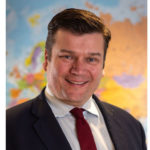
Tag: James Heappey

  • James Heappey – 2022 Statement on Ukraine

    James Heappey – 2022 Statement on Ukraine

    The statement made by James Heappey, the Minister for the Armed Forces, in the House of Commons on 25 February 2022.

    Yesterday morning saw the launching of the largest combined arms offensive operations seen in the European theatre since 1945. From land, sea and air, a massive Russian offensive commenced from forward positions in Belarus, all around Ukraine’s northern and eastern borders, from the Crimea and from ships in the Black sea. As leaders around the free world have said, this is an outrage against international law that violates Ukrainian sovereignty and brings a profound change to the security landscape of the Euro-Atlantic.

    The Ukrainian armed forces have stood their ground heroically, forcing fierce fighting around several Ukrainian cities. The Antonov-2 airfield north of Kyiv was taken by Russian airborne forces as part of the initial assault yesterday morning but was reportedly retaken by the Ukrainian forces overnight.

    As the world has now seen, the intelligence available to the British and American Governments over recent weeks has proven to be entirely accurate. That allows us to assess that the Russians have failed to achieve any of their planned objectives for the first day of combat operations. The Ukrainian armed forces claim to have shot down six fixed-wing aircraft and seven helicopters. They report that 137 Ukrainian service personnel have been killed in action as well as 57 civilians; hundreds more have been injured. The Ukrainian Government report that 450 Russian service personnel have been killed in action. As a former soldier with the vivid experience of death on the battlefield seared forever in my mind, I take no satisfaction in reporting those numbers to the House, and nor do I propose that we keep a score every day. These are the lives of innocent civilians and the lives of the bravest and best Russians and Ukrainians.

    As we gorge on the live footage of a peer-on-peer war broadcast from a European capital just two-and-a-half hours’ flying time from London, we should remember that behind those pictures is incredible fear and misery. That is why I pay tribute to those in Moscow, St Petersburg and other Russian cities who protested last night against this pointless loss of Russian life. President Putin and the kleptocrats who surround him have miscalculated badly. Young Russian men and women are needlessly losing their lives. The responsibility sits entirely with the Kremlin.

    Yesterday, British Royal Air Force Typhoon jets took part in NATO air policing from their base in RAF Akrotiri in Cyprus, from which they patrol over the Black sea and south-eastern Europe. HMS Trent is already part of a NATO standing maritime group and further Royal Navy ships are being deployed to other NATO standing groups in both the Baltic and the eastern Mediterranean. In addition to the Royal Tank Regiment battlegroup that has been in place in Estonia for the last six months, the Royal Welsh battlegroup will be arriving in Estonia earlier than planned to double up our force levels. Those doubled-up force levels will remain indefinitely and will be augmented by the headquarters of 12 Mechanised Brigade, meaning that the United Kingdom will have an armoured brigade in Estonia, reassuring one of our closest NATO allies.

    Mr Speaker, as you have heard from the Secretary of State, the Prime Minister and others in recent days, we will explore all that we can do to support the Ukrainians in the next few days. All hon. Members in this House must be clear that British and NATO troops should not—must not—play an active role in Ukraine. We must all be clear what the risks of miscalculation could be and how existential the situation could quickly become if people do miscalculate and things escalate unnecessarily.

    The Government do not feel that they can share with the House the detail of the support that the UK will provide to the Ukrainians at this sensitive point in operations. We apologise for that. We will do our best to give the House as much as we can, but hon. Members will appreciate that the detail is operationally sensitive. I hope that is acceptable to you, Mr Speaker.

    Finally, Mr Speaker, you and Front-Bench spokespeople from across the House have had briefings from Defence Intelligence. We will make sure that continues to happen, so that, on Privy Council terms, briefings can be received by those who need to have them. Colleagues were also given a briefing last night by Defence Intelligence, which I know colleagues from across the House have found useful. We intend to keep up those briefings for as long as we feel there are kinetic combat operations that warrant a daily update. Beyond that, a number of cross-party briefings have been given by the Foreign Secretary and the Defence Secretary, the next of which will take place this afternoon, when I will be joining the Foreign Secretary and a representative of the intelligence community to brief colleagues further.

  • James Heappey – 2022 Comments on Aid to Tonga

    James Heappey – 2022 Comments on Aid to Tonga

    The comments made by James Heappey, the Armed Forces Minister, on 26 January 2022.

    Responding to humanitarian crises across the globe is a core part our of Armed Forces’ daily business. The crew and company of HMS Spey have demonstrated that this week by delivering this vital aid.

    The UK is a long-standing partner of the Pacific Islands and having the ship deployed in the Indo-Pacific meant that we could be there for Tonga in their hour of need, as the Island begins to rebuild their homes and communities.

  • James Heappey – 2021 Comments on Daesh Weapons Seized in Mali

    James Heappey – 2021 Comments on Daesh Weapons Seized in Mali

    The comments made by James Heappey, the Minister for the Armed Forces, on 3 November 2021.

    These operations are yet another example of how UK peacekeepers are making a real difference to the UN mission to protect civilians in Mali.

    Disrupting armed groups and taking valuable weapons and ammunition out of the hands of terrorists makes communities safer, while our presence in the region helps the UN mission to understand and counter threats to the local population.

  • James Heappey – 2021 Comments on Help for People on St. Vincent

    James Heappey – 2021 Comments on Help for People on St. Vincent

    The comments made by James Heappey, the Armed Forces Minister, on 12 June 2021.

    Recent events on St Vincent were a tragedy, but disasters like this are precisely why we have Royal Navy assets deployed to the Caribbean – to provide vital relief and assistance to people there when needed in times of crisis.

    Our servicemen and women were able to act quickly and decisively when this request came in, delivering these essential supplies to where they needed to be within hours.

  • James Heappey – 2021 Comments on Daesh in Mali

    James Heappey – 2021 Comments on Daesh in Mali

    The comments made by James Heappey, the Minister for the Armed Forces, on 15 May 2021.

    This was the first operation of its kind by UN forces in Mali, demonstrating how UK personnel have made a significant contribution to the mission during their first six months in the country.

    Removing the weapons and disrupting the terrorist operation will make a real difference to the local community and importantly the intelligence collected will help develop our understanding and help to prevent the threat from armed groups in the future.

  • James Heappey – 2021 Comments on  F-35B Lightning jets

    James Heappey – 2021 Comments on F-35B Lightning jets

    The comments made by James Heappey, the Minister for the Armed Forces, on 3 May 2021.

    The F-35B Lightning jets will pack a potent punch against Daesh and help prevent them from regaining a foothold in Iraq.

    This is a prime example of the UK Armed Forces stepping forward with our allies to confront persistent threats around the world. It is Global Britain in action.

  • James Heappey – 2021 Comments on Getting Vaccines to Overseas Territory of Tristan da Cunha

    James Heappey – 2021 Comments on Getting Vaccines to Overseas Territory of Tristan da Cunha

    The comments made by James Heappey, the Minister for the Armed Forces, on 29 April 2021.

    This operation to transport vaccines to one of the most remote parts of the world, reaffirms our commitment to the people of our Overseas Territories.

    The Armed Forces take great pride in supporting our people, at home or abroad, whenever and wherever needed. I am immensely proud of all Royal Navy and RAF personnel involved in this mission and the role they have played in helping to deliver vaccines to the people of Tristan da Cunha safely and quickly.

  • James Heappey – 2015 Speech on Syrian Air Strikes

    Below is the text of the speech made by James Heappey in the House of Commons on 2 December 2015.

    On three occasions, I left my family and boarded a plane bound for Afghanistan or Iraq. As the plane went through the clouds, I took what could have been my final look out of the window at this country. When you do that, you cannot help wondering whether the people who have stood in this place have made the right decision, whether the nation is with you, and whether what you are going to do is worthwhile.

    Today, I rise to contribute to that decision-making process, and I can tell the House that the responsibility weighs heavily on my shoulders. However, I am certain that the motion should be supported. It clearly states that the continuation of airstrikes in Syria is just one part of the solution that is required to defeat Daesh, and to secure a peace both there and in Iraq. Bombing, diplomacy, aid, and countering radicalisation at home and abroad are not mutually exclusive. Indeed, in Iraq, Afghanistan and Libya, we have surely seen that they are utterly interdependent. Today, we must decide on whether to take military action, and I want to speak briefly about four themes in support of that action.

    First, we are being asked to join a coalition—a coalition of our closest allies and some of our most important partners in the region—and we must answer their call. Secondly, our contribution does enhance the capability of the coalition. Difficult targets present themselves only fleetingly, and prosecuting those targets requires constant air cover involving highly skilled pilots and deadly accurate munitions. Our Royal Air Force offers that. Thirdly, there is the necessity for indigenous ground manoeuvre. In Basra, my battle group was fighting an insurgency that existed almost entirely because we were there. The 70,000 Syrians and 20,000 Kurds under arms could, and should, become a cohesive and capable force, but the bombing campaign will buy the time for them to be manoeuvred into the place where we need them to be, so that we can co-ordinate their efforts in support of the airstrikes.

    It is, of course, important to note that those airstrikes degrade Daesh in the meantime. They have a military effect of their own. It is clear to me from today’s debate—this is my final point—that the House agrees on the ends that we seek to achieve, and that most of us agree on the means by which we seek to achieve them, diplomatic, humanitarian and military. The disagreement is on when, and in what order. I say from personal experience that when we are trying to buy time in a combat zone, we need to suppress the enemy. We need to keep their head down, and deny them any freedom of action. Nothing in a combat zone is perfect—the timing is never right—but we must get on with this, because we are required to do to help the Syrian people.