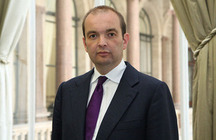
Tag: James Duddridge

  • James Duddridge – 2021 Statement on the Elections in Somalia

    James Duddridge – 2021 Statement on the Elections in Somalia

    The statement made by James Duddridge, the Minister for Africa, on 13 April 2021.

    We are dismayed by the decision of the Lower House of the Somali Parliament to extend the mandates of Mohamed Farmajo as President and of the Somali Parliament by two years. This is not a solution to the ongoing impasse on the electoral process, but instead a move that undermines the credibility of Somalia’s leadership and risks the safety and future of the Somali people.

    We have consistently opposed any initiatives leading to a parallel process, partial election or an extension of prior mandates. We urge Somalia’s leaders to refrain from any further unilateral actions that may escalate political tensions or violence. It is vital that all parties remain calm and protect Somalia’s stability and security.

    Constructive dialogue between Somali leaders is central to ensuring implementation of the 17 September agreement on the electoral model. That agreement is the only legitimate basis for elections. Now is the time for Somalia’s leaders to look beyond narrow self-interest and uphold their responsibilities to the people of Somalia. We urge Somalia’s leaders to return to talks immediately to find practical solutions and reach agreement on remaining issues, demonstrating restraint and compromise.

    In the absence of consensus leading to inclusive and credible elections being held without further delay, the international community’s relationship with Somalia’s leadership will change. The UK will work with its international partners on a common approach to re-evaluate our relationship and the nature of our assistance to Somalia.


  • James Duddridge – 2021 Statement on Presidential Elections in Uganda

    James Duddridge – 2021 Statement on Presidential Elections in Uganda

    The statement made by James Duddridge, the Minister for Africa, on 16 January 2021.

    The UK Government welcomes the relatively calm passing of the elections in Uganda and notes the re-election of H.E. Yoweri Museveni as President.

    Many in Uganda and beyond have expressed concerns about the overall political climate in the run up to the elections as well as the electoral process. It is important these concerns are raised, investigated and resolved in a peaceful, legal and constitutional manner. We ask that all parties, including the security services, but also all of Uganda’s political movements, act with restraint to ensure the peaceful resolution of disputes.

    We commend the role of the media, observers and civil society throughout the elections. The UK is concerned by the national internet shutdown, which clearly limited the transparency of the elections, and constrained the freedoms that Ugandans are entitled to.

    The UK is a steadfast advocate for Ugandan democracy and we will continue to work to achieve inclusive democratic progress that delivers for future generations. As a longstanding partner, we urge Uganda to continue to strive to meet its own international human rights commitments, including respecting the right to freedom of opinion, freedom of expression and freedom of the media.

  • James Duddridge – 2020 Comments on Violence in Ethiopia

    James Duddridge – 2020 Comments on Violence in Ethiopia

    The comments made by James Duddridge, the Minister for Africa, on 17 November 2020.

    The UK calls for immediate de-escalation and the protection of civilians following further violence in Ethiopia and attacks on Asmara, Eritrea over the weekend.

    We are working closely with humanitarian agencies to ensure that aid reaches civilians affected by the fighting.

  • James Duddridge – 2020 Statement on the Presidential Elections in Guinea

    James Duddridge – 2020 Statement on the Presidential Elections in Guinea

    The statement made by James Duddridge, the Minister of State for Africa, on 16 October 2020.

    As Guinea goes to the polls on Sunday, we urge all parties to ensure that the presidential elections are conducted in a peaceful, transparent and credible manner. The UK is a friend of Guinea. We want to support Guinea in protecting democracy and to promote good governance.

    We are concerned by the violence and loss of life in Guinea following the legislative elections and referendum in March. Recent violence has exacerbated these concerns. We urge the Guinean authorities to ensure that deaths are properly investigated.

    We call on all parties to reduce tension, engage in constructive dialogue, and refrain from violence. Doing so will ensure the people of Guinea can enjoy the benefits of a free and democratic society.

  • James Duddridge – 2020 Comments on Belarus

    James Duddridge – 2020 Comments on Belarus

    The comments made by James Duddridge, the Foreign & Commonwealth Office Minister, on 10 August 2020.

    The UK calls on the Government of Belarus to refrain from further acts of violence following the seriously flawed Presidential elections. The violence and the attempts by Belarusian authorities to suppress protests are completely unacceptable.

    There has been a lack of transparency throughout the electoral process in addition to the imprisonment of opposition candidates, journalists and peaceful protestors. We are deeply concerned that Belarus’ failure to issue a timely invitation prevented the Organisation for Security and Co-operation in Europe and the Council of Europe from observing the electoral process. It is also unacceptable that British Embassy staff and other members of the diplomatic community were obstructed from carrying out their duties as fully accredited independent election observers.

    Throughout this election campaign we have witnessed the demands of the Belarusian people for democracy, for fundamental freedoms and for the right to determine their futures in an independent, sovereign Belarus. The UK, along with our international partners, calls on the Government of Belarus to fulfil its international commitments and the aspirations of its people.

  • James Duddridge – 2016 Speech on Burundi

    jamesduddridge

    Below is the text of the speech made by James Duddridge, the Parliamentary Under-Secretary of State for Foreign and Commonwealth Affairs, in the House of Commons on 5 May 2016.

    It is indeed a pleasure to be here at a slightly earlier time than billed. Before starting on the substance of this very important debate, may I pay enormous tribute to my hon. Friend the Member for Congleton (Fiona Bruce)? For me, today marks 11 years since I entered this House; for others, it is election day. Going forward, we should name today Congleton day. Looking at the Order Paper, I can see that my hon. Friend had questions for the Department for Environment, Food and Rural Affairs and for the Church Commissioners. I cannot see on the Order Paper whether she raised anything in business questions—hopefully, at that point she had a short break before having debates on faith organisations and Burundi. It should be Congleton day from 5 May to celebrate this active and effective campaign. I look forward to receiving a copy of her local paper with that quote in next week.

    I also pay tribute to the work of my hon. Friend the Member for Stafford (Jeremy Lefroy). I thank both he and my hon. Friend for phoning me, emailing me, bending my ear in the Lobby, and providing important information from their friends and colleagues in Burundi and from others in the world who have a particular interest in Burundi.

    At the outset, I would like to say that I am answering on behalf of the whole of Her Majesty’s Government. The Under-Secretary of State for International Development, my hon. Friend the Member for Ruislip, Northwood and Pinner (Mr Hurd), and I work incredibly closely on this and all issues. We are one Government, one HMG.

    The United Kingdom is playing a leading role in trying to build a strong and coherent international response. I visited Burundi in December 2015 and have consistently urged the Burundian Government, in the strongest terms, to end the violence and engage in inclusive dialogue. We have suspended development aid, as was mentioned earlier. We have also imposed travel restrictions and frozen assets of those who have undermined democracy and fuelled conflict.

    In June 2015, the UK appointed a special envoy to the great lakes, Danae Dholakia, who is very active in delivering our messages on Burundi. In fact, I spoke to her yesterday when she was in Stockholm, working with other special envoys. Through the conflict, stability and security fund, we will be increasing our efforts on the ground. These will include deploying a Burundian co-ordinator in Bujumbura. I know that hon. Members present today, and through the Select Committee, are keen for us to do more on the ground in Bujumbura, and that message is very much understood.

    DFID offices in both Kigali and Dar es Salaam have significantly stepped up their analysis and coverage of the crisis, to ensure that they can respond to an evolving situation and increasing humanitarian need as necessary. My hon. Friend the Under-Secretary has visited the refugee camps in Tanzania, where we have consistently provided support to refugees, and in fact increased that support. When I was in Uganda, I spoke to UN non-governmental organisations and DFID, which is providing refugee support in that country, as well as looking at the political relationships across the region.

    I can assure my hon. Friend the Member for Congleton that when I was in Burundi, I met both the UN and human rights organisations in private to hear their detailed concerns, which are not dissimilar from those that hon. Members expressed. In March I addressed the UN Security Council and regional leaders of the great lakes, highlighting the need for urgent action in Burundi. When I visited Rwanda and Uganda last year, I stressed the importance of the countries in the region playing a constructive role. I also met the African Union’s peace and security commissioner, Smail Chergui, in the margins of the African Union summit in January. The African Union is continuing to lead the international response to the crisis. The British ambassadors and high commissioners across the region continue to lobby their host Governments on the importance of taking action to resolve the situation in Burundi, using all parties, be they regional or international.

    As this debate has highlighted, the situation in the country remains extremely fragile. The UN estimates that nearly 500 people have died in the past 12 months, and that 280,000 people have fled to neighbouring countries, although you will appreciate, Madam Deputy Speaker, that it is very difficult to monitor precise numbers, and actual figures may well be higher. The International Criminal Court has opened a preliminary examination of the violence committed in Burundi to date. We will continue to work with our partners, including the UN Security Council, to promote accountability through every means available.

    Burundi was rightly identified as one of the Foreign and Commonwealth Office’s 30 priority countries in our 2015 human rights report, published last month. The report makes it clear that the human rights situation in Burundi

    “poses a threat to the stability of the country and wider region”.

    We are extremely concerned about a further deterioration, which is one reason why I welcome this debate and a continued dialogue around the actions that we can take to militate against further deterioration in that conflict.

    In recent weeks, there has been an alarming increase in assassinations, with about 30 in April, compared with nine in March. There seems to be a move from indiscriminate to more targeted killings. Most recently, Brigadier General Kararuza and his wife, to whom my hon. Friend the Member for Congleton referred, were assassinated on 25 April with their family on the way to school. I thank my hon. Friend for showing me those photos, along with our hon. Friend the Member for Stafford. As harrowing as the photos are, we have a responsibility to see the reality of the atrocities in order to understand what is happening in Burundi. I condemn these killings unreservedly and call on the Government of Burundi to ensure that the perpetrators are brought to justice. I will be writing again to the Foreign Minister and, I hope, speaking to the Foreign Minister of Burundi next week to make these points yet again.

    Looking beyond the individual tragedy of each death, we are concerned that these events indicate that, far from abating, the cycle of violence fuelled by the Burundian Government is getting worse. Some of that violence is, I think, directed by the Burundian Government and some is conducted by people outwith the direct command and control of the Burundian Government. It does appear that the nightly violence that was a feature of the conflict has subsided. However, this is no cause for optimism, as more and more people have left the country, are not coming out at night or have gone into hiding.

    The Burundian Government continue to encourage a climate of fear and intimidation with abductions, disappearances and arrests still commonplace. Some of those people are taken into police custody, but many are being held by the intelligence services in secret detention facilities, without access to due process. Families fear that they will never see their disappeared loved ones again. Recently there has been a small but significant increase in reports of sexual violence—systematic multiple rape organised as a way of punishing and subduing a community.

    The UN High Commissioner for Human Rights has indicated that many detainees show signs of torture. There is an increase in torture in Burundi, over and above the initial killings. Reports suggest that torture and ill treatment are not limited to the capital, where the majority of arrests have taken place. A pattern of abuse is emerging across the country. That may be a result of a time lag in our finding out what is happening outside Bujumbura.

    The Government of Burundi claim that the security forces are only arresting those suspected of serious crimes. I do not believe that that is true, but even if it were, there is no justification for the ill treatment of prisoners, who have the right to expect the state to protect them, and certainly not to pass them on to the Imbonerakure or other third parties who may be responsible for the torture and killings.

    I know that many Members are concerned at reports that the violence is increasingly ethnic in nature, and that the spectre of ethnically driven mass violence is hovering over the conflict. Although I share those concerns—there are some indications that ethnicity is an increasing factor—we must steer clear of assuming that the whole conflict is racially motivated. The conflict was primarily political and remains so. My hon. Friend the Member for Congleton explained the history of President Nkurunziza’s attempts to cling on to power for a third term. That was the origin of the conflict. It was not primarily a Hutu-Tutsi conflict. Hutu opponents of Nkurunziza are also being targeted, and initially were targeted in larger numbers, both by the state and by the Imbonerakure, the youth militia, but there is an increasingly ethnic tone to the conflict, which makes the neighbours of Burundi deeply worried and the international community even more worried than we would otherwise have been.

    I want to see an end to the conflict and an end to the human rights abuses in Burundi. When I spoke to former Tanzanian President Benjamin Mkapa yesterday, we agreed that the only route to a lasting solution lies in an inclusive political process. I give him my full support in his role as the facilitator of the dialogue established by the East African Community. It is right that we let that dialogue take place, and Benjamin Mkapa is the right person to lead it.

    I was disappointed by the postponement of the Burundi dialogue, which was due to take place in Arusha this week. Following my conversations, however, I am encouraged by indications that talks will begin on 21 May. President Mkapa is using the intervening period to bring more people to the talks and to have more bilateral talks before the talks themselves happen.

    It is essential that all parties, including people who have taken up arms or who have now left Burundi, are part of the engagement and peace process, because a peace process without all the participants is not a proper peace process and will not lead to peace in Burundi. Everybody needs to be included, and by not engaging in an inclusive dialogue, the Government of Burundi are actively obstructing the national reconciliation process. In my phone call to the Burundian Foreign Minister next week and in my letter to him, I will call on the Government of Burundi to come together with all participants and to allow them in some way, shape or form to be in Arusha for the week of 21 May so that the talks can commence.

    It is essential that the talks are based very much on the Arusha accord, but I am flexible about the details of how they take place. Like the rest of the international community, I will follow the lead of President Mkapa when he agrees a strategy for the talks.

    We are working with our partners on the UN Security Council to agree a deployment of UN police to Burundi. The force will be tasked with monitoring the situation, promoting respect for human rights and advancing the rule of law—all with the aim of creating conditions that will allow a political dialogue to go forward.

    The UN Secretary-General has brought forward three options for the police force. The first is a protection and monitoring force with around 3,000 personnel in uniformed units. The second is a monitoring operation with over 220 officers. The third would involve more of an assessment mission, with 20 to 50 officers working with the Burundian police force to increase its capacity.

    The UK Government are trying to seek UN agreement on what should happen, but we want the UN police to work with the African Union’s deployment of 200 military and human rights observers. The monitoring mission will have to go across the whole of Burundi and have an authoritative way to report back to the UN Security Council. Once the mission is in place, there will be the opportunity to scale it up, but it is important that we get individuals on the ground as soon as possible to assist with the mission.

    The protection and monitoring option is desirable, but, to be frank, highly unlikely to get the support of the Government of Burundi or, indeed, the agreement of the UN Security Council as a whole. Although this option would be tempting for the British Government, it would take a lengthy time to recruit 3,000 French-speaking officers, and we really need them on the ground now. However, discussions are ongoing in the UN Security Council, and I am more than happy, through parliamentary questions or any other method, to keep the House updated.

    My hon. Friend the Member for Stafford has raised with me specific cases of detention and of people who have died in Burundi. I thank him for doing that, because it has been very helpful. He discreetly did not go into details of those cases, but we are working on them, and we will continue to do so. For anyone listening to the debate who knows about those cases, let me say that Her Majesty’s Government are actively pursuing them. People should find some comfort in that, although it does not immediately provide the certainty that I would like them to have.

    Let me assure Members that I am as concerned as they are about the human rights situation in Burundi. The UK Government and our international partners want to end these dreadful abuses and find a peaceful way forward. Only then will the people of Burundi be able to live freely without violence and without intimidation. As I said, I visited Burundi last December. I also visited it way back in 2006, when I met President Nkurunziza. Burundi can be a great country again. It needs our help now, but it has the help and attention of the UK Government.
  • James Duddridge – 2016 Speech in Ghana

    jamesduddridge

    Below is the text of the speech made by James Duddridge, the Parliamentary Under Secretary of State at the Foreign and Commonwealth Office, in Ghana on 4 April 2016.

    Honourable Ministers, distinguished guests,

    The Africa I came to know in Swaziland, and later living in Cote D’Ivoire and Botswana, is a dynamic place of entrepreneurs, opportunities, an aspirant middle class and a vibrant youth culture. This is the Africa the UK Government wants to engage with.

    Traditional aid programmes building health, education and sanitation services in developing countries are vital. They make a real difference to millions of people. The UK Government will continue to provide this type of support including here in Ghana. I am proud of the extraordinary work DFID do in Ghana – and the way that well over £100m the UK spends by to support Ghana’s sustainable and inclusive economic growth and development.

    But aid never made a country rich. Indeed, aid alone will not eliminate poverty in Africa. In any case, aid inflows are now in most parts of the continent less than other capital flows, foreign direct investment and, in many cases, remittances from overseas diasporas. What is really needed not though is to unleash the power of the free market.

    The British government believes that it is the private sector that will grow Africa out of poverty. Because profitable businesses pay taxes and employ people who pay taxes. Which allows governments to invest in health, in education and in infrastructure. And it means less unemployment. Moreover, a broad tax base increases government accountability. The positive effects of a thriving economy are felt throughout society.

    I believe that when we look at Africa we look at opportunity. Yes, there are risks. Yes there are difficulties. Yes there are security challenges across the continent. We are never short of people who will talk about the negatives. Or of people who treat the continent as a monolith rather than an internally diverse grouping of over 50 countries. But there are also commercial opportunities and abundant resources – not least Africa’s people, and huge economic potential in the Africa that I know and love.

    We understand that while some countries in Africa still need aid, many more need investment, expertise, and financial services – the World Bank estimates that the continent as a whole needs an extra $90bn capital investment a year for infrastructure alone. So we want to champion Africa as an investment and trade destination of choice. Jobs, growth, and poverty reduction are all instrumental in addressing the drivers of conflict – and therefore key parts of the ‘Golden Thread’, a term that our Prime Minister coined, and which we have now enshrined in the UN’s new Sustainable Development Goals.

    African markets are truly the markets of tomorrow. While the economic outlook might be dampened in the short-term by the slump in commodity prices, the medium to longer-term outlook is still promising. By 2019, rising consumer demand from the emerging African middle class could present additional demand of almost 720 billion pounds. Looking further ahead, this consumer market is only set to grow as Africa’s population doubles to 2.5 billion people by 2050.

    This is what I think about when I think of Ghana. And when I do the word that comes to mind is “partnership”. Partnership to achieve the potential that Ghana has – to drive and support sustainable and inclusive economic growth and development in Ghana. For Ghanaians. At the same time – and I don’t want to hide this – I want to see potential benefits for UK companies who want to invest in Ghana or export to Ghana. But importantly – and this is a cornerstone of UK policy – any business won by UK companies will be won openly and transparently because corruption is not just a cancer that rots a country: for UK companies it is illegal anywhere. And far from a reason not to do business with British companies it’s the reason to do business with them – because what you see is what you get and there is no murky side negotiation. This is something that His Excellency President Mahama and I discussed today. I am delighted he is attending the Prime Ministers anti-corruption summit in May and hope that it will mark a domestic and international step change in Ghana’s fight against corruption.

    Earlier today I witnessed the official handover of the Dodowa District Hospital, the first of six new district hospitals that NMS Infrastructure is building for the Government of Ghana to invigorate regional and district health care throughout Ghana. I am proud that it was delivered for the Ghanaian people by a British company, NMS, with British expertise, British exports and UK financing support – and that as well as delivering a world class medical facility it also transferred skills, experience and technology to more than 2000 Ghanaians. That is exactly the sort of partnership that should lie at the heart of our bilateral relationship and I will make it a key part of my role to ensure that happens.

    Thank you.

  • James Duddridge – 2016 Speech on Bringing Peace to Great Lakes

    jamesduddridge

    Below is the text of the speech made by James Duddridge, the Parliamentary Under Secretary of State at the Foreign and Commonwealth Office, at the UN Security Council on 21 March 2016.

    Thank you, Mr President, for convening this important and timely debate. I join others in thanking the Secretary-General for his briefing.

    Bringing peace to the Great Lakes area has been one of the most difficult challenges faced by this Council. Decades of violence and chaos have left millions dead; millions without hope or indeed a home; millions vulnerable to attack from armed groups.

    The UN Charter pledges to save successive generations from the scourge of war. In the seventy years since collectively we’ve made this pledge, nowhere has it rung more hollow than in the Great Lakes region.

    Nowhere is this more obvious today than in Burundi. When I visited the country in December of last year, I heard horrific stories of suffering and abuse. People spoke of torture, of disappearances, of extra-judicial killings, of mass graves and murders, indiscriminate raids on their homes. I met with health workers who were running out of medicine for sick children, human rights activists living in fear for their lives and traders that were helpless against the collapse of the economy that prior to the troubles was doing so well as we’ve heard earlier.

    In January, the Office of the High Commissioner of Human Rights noted that extra judicial killings were increasing despite the Government’s claim that the situation was normal. Evidence of nine mass graves, one of which contained at least one hundred bodies, was cited in the same report. Again, denied by the Burundian Government. And the violence continues today. Abductions and killings are creating a climate of fear. Just last month, Human Rights Watch presented credible evidence of the increasing and worrying use of organised sexual violence.

    The United Kingdom is committed to doing everything, everything in our power to seek a peaceful resolution to the situation in Burundi. We must not, collectively or individually, repeat the mistakes of the past. We thank the Secretary-General for his leadership and the members of this Council for their leadership and active engagement, particularly during their second joint visit to Bujumbura and Burundi earlier this year. We welcome the pledges made by the African Union and the East African Community to take decisive action to prevent human rights abuses and crimes against humanity more generally in Africa.

    We, the United Kingdom, stand ready to support the AU. We thank Uganda for their constructive participation in this mediation process. We also welcome the participation of His Excellency Benjamin Mkapa, former President of Tanzania, in these efforts and offer him our strongest support and indeed assistance.

    It is right that the international community should play its part. However, let us be clear, let us be under no misunderstanding – the primary responsibility for this crisis lies with the Burundian Government. The Burundian Government has failed in its fundamental duty to its nation, to support the security and safety of its own people. It has within its power the power to change things. Burundi has found a pathway to peace before. And it must do so again.

    President Nkurunziza must deliver on his promises to the Secretary-General and representatives of the African Union. The first step is simple. The Government must participate in a fully inclusive political dialogue with all parties. Not just those parties President Nkurunziza feels happy dealing with. All parties must be included, as peace among just a few is no peace at all.

    We have learnt time and time again elsewhere in the world that for peace to endure, communities need ways to resolve conflict peacefully. The United Kingdom believes genuinely that democratic and accountable governance is the best foundation for stability. That means a frank, lively and uncensored national debate, an active, representative civil society, and a freely operating media.

    It also means timely and democratic transitions of power to maintain lasting stability. Failure to allow that transition puts the progress across the Great Lakes at risk. We urge all countries in the region to use electoral processes to demonstrate their commitment to peace, stability and accountability. Today, this is particularly pertinent to the Republic of Congo, which held elections yesterday, following a referendum in which the national debate could sadly not be said to have been either ‘frank, lively or uncensored’.

    Looking across the border, 2016 is a critical year for the Democratic Republic of Congo. The United Kingdom is a particularly close long-term partner of the people of the Democratic Republic of Congo and we want them to enjoy stability and prosperity. We stand by UN Security Council Resolution 2211.

    DR Congo must hold elections this year, in accordance with their Constitution. With every missed milestone in their democratic journey, the Government loses credibility with the United Kingdom, and I believe with this Council. It breaks a promise not to us, but a promise to its people and this risks causing further instability in this already fragile region. We know that the process is not easy, and we are ready to help, with funding and supporting the electoral process.

    This Council has also offered its full support to the Government of DR Congo and I expect that to be repeated when MONUSCO’s mandate is renewed later this week. DR Congo must make the most of this support, and seize this opportunity to show leadership across the region.

    The United Kingdom believes in the enormous potential of the countries and the people of the Great Lakes. That is why we have maintained our strong friendships and support. But their fates are inextricably linked, so their governments must work together if this potential is to be realised. The Peace and Security Cooperation Framework signed by the countries of the region in 2013 offered a comprehensive joint approach to the region’s problems. But not enough has been done to deliver it.

    We all know that peace and security are fundamental building blocks for economic growth. Together they hold the key to unlocking the potential of the people of the region. The Great Lakes Private Investor Conference held in Kinshasa, which we’ve heard some of earlier during the debate, last month highlighted how poverty fuels conflict in the region. But it also showed that investment, economic growth and job creation can and will build peace. In recognition of that, the United Kingdom recently appointed trade envoys to Democratic Republic of Congo and Rwanda.

    Mr President, I urge leaders of the region to play their part in bringing peace, making the measures set out in the Peace and Security Cooperation Framework a reality, uniting to build long-term peace and prosperity. As they strive to do so, the people of the Great Lakes will have the full support of the United Kingdom, and, I hope, this Council.

    Mr President, obrigado [thank you].

  • James Duddridge – 2016 Speech at Chatham House

    jamesduddridge

    Below is the text of the speech made by James Duddridge, the Parliamentary Under Secretary of State at the Foreign and Commonwealth Office and Minister for Africa, at Chatham House in London on 15 March 2016.

    Good morning. Thank you Alex. I am delighted to be back at Chatham House. I have the best job, travelling to and from Africa. I am passionate about Africa and about the prosperity agenda.

    Last year I spoke to you about why Africa matters to the UK Government, and to me, personally, as a long time resident of the continent.

    Since then, as Minister for Africa, I have been lucky enough to revisit many of the African countries that are close to my heart. I have travelled across the continent, met people doing important work, and spoken at many events on the enormous economic potential and commercial opportunities that can be found right across Africa.

    It is unwise to generalise in a continent as diverse as Africa. But despite the global economic slowdown, growth across the continent has remained generally positive this year. While the IMF’s latest predictions are for a reduction in growth in sub-Saharan Africa to 3.8%, this is still above the predicted global growth rate of 3.1%. This is rather good: George Osborne would be very pleased with 3.8%. In fact, except for one small blip in the 1990s, as a region Sub-Saharan Africa has experienced consistent growth year-on-year. It is a great place for long-term investment.

    The situation is difficult for the few large oil producing economies, but experts believe that the majority of low income countries will continue to grow. Countries such as Cote D’Ivoire, where I’ll be in three weeks’ time, Mozambique and Tanzania, where I was last week, all High Level Prosperity Partners, hope to see growth of around 7% this year.

    We need action to create enabling environments that support economic growth in Africa. Action that encourages innovation, and unleashes the entrepreneurial spirit of the young. Action to meet the aspirations of the continent’s growing youth population.

    African governments have a crucial role to play, creating good governance mechanisms that encourage transparency and tackle corruption, regulatory frameworks that allow business to operate and invest responsibly, and strong and independent institutions that respect the rule of law.

    Looking ahead, the UN estimates that Africa’s population will double to 2.5 billion people by 2050 .

    The World Bank predicts that at least 600 million people will enter the job market in Africa in the next 15 years. That’s a massive opportunity.

    Huge investment is required to create jobs and improve infrastructure in order to meet the demands of a rapidly growing population. Infrastructure that facilitates trade rather than hinders it. So that it no longer takes more time for a container to cross a couple of African borders than it does for the same container to be shipped from Hong Kong to Dar es Salaam.

    Infrastructure is a pipeline for money. Airports, railways and roads are all pipelines for economic activity. This requires local knowledge and skills but also global expertise and help to get people and money moving.

    So the partnership theme of this year’s conference is highly appropriate.

    It is vital that we build partnerships between the private and public sector, working together in Africa; Working for the benefit of millions of Africans; Working to deliver the transformational change that the continent needs, to unlock growth and grow the taxation base.

    Such partnerships will be essential to help grow Africa out of poverty. So too are the partnerships between the UK and countries across Africa.

    The High Level Prosperity Partnerships forged between the UK and Angola, Cote D’Ivoire, Ghana, Mozambique and Tanzania emphasise that the UK wants to work more closely with these countries and to work with others across the continent.

    The prosperity partnerships place the private sector in the driving seat of economic transformation.

    Allowing the private sector to flourish creates jobs and generates taxes. Taxes fund vital services such as health and education. A better educated, healthier workforce will create the entrepreneurs and innovative business of tomorrow. This virtuous circle can sustain African growth and the UK is ready to play an important part.

    UK companies have skills and expertise from project design, through planning and implementation. British architects, professional services, legal firms and capital markets are among the best in the world and stand ready to support infrastructure development on the continent. And of course the City of London is the place in the world to raise capital and a repository of a great deal of wisdom on how to deliver successful partnerships between the public and private sectors.

    The UK’s extensive aid programme, part of our commitment to spending 0.7% of gross national income on overseas development, also recognises the importance of partnerships with the private sector to drive forward economic development.

    We have a new Prosperity Fund of £1.3 billion over five years with the aim of fostering economic growth. Part of this fund will be used to help Africa grow out of poverty.

    Just last week I was in Tanzania where I saw for myself how cities with weak infrastructure are crippled by events as mundane as heavy rain.

    The infrastructure deficit was clearly visible. The rapid transport system is sadly not yet up and running. There is no quick fix. I was talking to Paul Collier about urbanisation in Africa and the need for a flexible job market. Big infrastructure projects take time to implement. But it is good that the Department for International Development is supporting a Government of Tanzania programme with the World Bank to make the City of Dar Es Salaam more resilient to these extreme weather events.

    The problems of congestion and inefficiency at Dar es Salaam Port are well known.

    That is why the UK Government is helping Tanzania unlock the potential of this maritime gateway and supporting Trademark East Africa to work on the immediate congestion problems. We are supporting critical feasibility studies necessary for the Government of Tanzania to secure bigger finance through the World Bank. With greater funding, Tanzania can improve the port infrastructure and realise the regional trade benefits that will come from improved freight corridors across Tanzania.

    Of course I will continue to play my part too. Championing Africa as a place to trade and invest. Working together with business. Working with colleagues across Whitehall and in the City of London. Most importantly, working with my counterparts in Africa to support Africa’s continued economic transformation.

    This year the UK and Africa have continued to build on their enduring partnership. By working together, I firmly believe that this partnership, built on long standing political links, cultural connections and historical links, will go from strength to strength.

    Thank you.

  • James Duddridge – 2016 Speech at UK-Sierra Leone Trade and Investment Forum

    jamesduddridge

    Below is the text of the speech made by James Duddridge, the Parliamentary Under Secretary of State at the Foreign and Commonwealth Office, at Sheraton Park Lane, Piccadilly in London on 25 February 2016.

    Thank you Atam for your kind introduction. I am delighted to be here.

    I would like to thank Developing Markets Associates, and all the sponsors, for organising this important event.

    I have just had a meeting with Dr Kamara, the Minister of Foreign Affairs and International Relations. Our governments have worked closely for many years, but particularly so over the last two years to defeat the terrible scourge of Ebola. I was delighted when your country was declared free of the disease in November.

    It is right that we acknowledge the tragic impact of that devastating outbreak on Sierra Leone and its people.

    It is also right that we start to put this terrible episode behind us.

    I remember visiting Sierra Leone in 2013 and it was one of the fastest growing economies in Africa. That was only three years ago. I hope Sierra Leone will return to hyper-growth rates and a thriving business environment.

    This morning I am going to set out why the UK Government sees potential in Sierra Leone, what we believe is needed to realise that potential, and what opportunities we believe this holds for you as investors.

    I lived and worked in Africa for many years. My experience was one of energetic entrepreneurs, burgeoning businesses, a rising middle class, potential and drive in equal measure. Doing business is in Sierra Leoneans’ DNA.

    The UK Government is committed to supporting Sierra Leone’s recovery. We have pledged over £240 million over the next two years to support the President’s plans for recovery.

    This assistance is a part of a wider picture, because we are committed to promoting trade, investment and prosperity right across Africa. I am delighted that Guy Warrington will be going out as our new High Commissioner to Sierra Leone.

    We have created a new Prosperity Fund – worth £1.3 billion – to promote conditions for sustainable and inclusive growth. A significant proportion is earmarked for Africa.

    This Government is also delivering on our commitment to spend 0.7% of Gross National Income on international development, of which Sierra Leone is a beneficiary. I have been working closely with Justine Greening at the Department for International Development, who has visited Sierra Leone a number of times, and my DFID counterpart Nick Hurd.

    However, aid alone will not ensure Sierra Leone’s long term recovery. It needs investment too, and that means an improved business environment.

    The government of Sierra Leone has drafted its plan for post-Ebola recovery. It has identified priorities for recovery over the next two years: health, education, social protection, infrastructure, energy, water, and the development of the private sector. These will all be critical in getting Sierra Leone back onto the path of sustainable development.

    It is encouraging to see that the President and his Ministers recently proposed to include a new Governance pillar in the recovery plan. We support this step towards addressing some of the big challenges around procurement, payroll, and corruption.

    We are working in partnership with the government of Sierra Leone to encourage them to create the business environment that will reassure and attract investors.

    Some UK companies, such as Standard Chartered Bank are already there. They, alongside Herbert Smith Freehills and Prudential, helped Sierra Leone during the Ebola outbreak by producing the Investor Guide for Sierra Leone – a great example of the private sector coming together to help the country on its path to long-term recovery.

    My parliamentary colleague James Cleverly, MP for Braintree and a fellow Essex MP, whose mother was Sierra Leonean, was recently in Sierra Leone. I hope to do more to work with the Sierra Leonean diaspora across the country.

    It’s worth taking a moment here to recognise the country’s enviable natural advantages:

    Its rich mineral deposits.

    Its huge potential in renewable energy, in particular solar and hydro-electric – I should say here that Sierra Leone was one of the first countries on the continent to sign up to the Department for International Development’s Africa Energy Campaign which promotes access to solar powered electricity – which is now much cheaper, more accessible and reliable.

    Its strategic shipping location on the Atlantic seaboard of West Africa, with one of the largest natural harbours in the world.
    Its millions of hectares of forests and fertile agricultural land, and abundant fish stocks.

    Sierra Leone is also well placed to benefit from the huge economic growth we expect to see across the continent. Consumer demand from its emerging middle class is growing and that trend is set to continue as Africa’s population is forecast to double by 2050 [UN Population Data].

    So in conclusion I urge you to listen closely to what you hear today. Sierra Leone has put Ebola behind it. The UK Government is supporting trade and investment, reconstruction and prosperity. Doing more business provides taxation for the government. We should be proud of what we’re doing to help Sierra Leone back to double digit growth rates.

    Sierra Leone has huge potential. Its government has a plan for recovery and has identified its priority sectors. From mining and renewable energy to project management and environmental services.

    Finally, this country’s strong historic ties with Sierra Leone, our long-term friendship, together with the familiarity with English, present UK companies with a unique advantage. I urge you to seize it with both hands.

    Thank you.