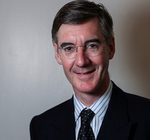
Tag: Jacob Rees-Mogg

  • Jacob Rees-Mogg – 2022 Comments on Johnson Campaign Running Out of Steam

    Jacob Rees-Mogg – 2022 Comments on Johnson Campaign Running Out of Steam

    The comments made by Jacob Rees-Mogg, the Conservative MP for North East Somerset in the Spectator on 31 October 2022.

    On the way back from Coventry, the news that Liz Truss was resigning came through. Liz is an admirable person and I supported what she wanted to do. Unfortunately, it did not work. The moment she went, the telephone started buzzing with potential candidates and slates. I wanted Boris back, as he had the mandate and his removal was a mistake. His campaign started well but then ran out of steam. This was clear by Sunday morning, when my slumbers were disturbed by the great man himself prior to the Laura Kuenssberg programme. Unlike the famous farmer, the lark is not my morning alarmer, so I was not entirely gruntled by so early a call.

  • Jacob Rees-Mogg – 2022 Comments on Prime Minister not Going to COP

    Jacob Rees-Mogg – 2022 Comments on Prime Minister not Going to COP

    The comments made by Jacob Rees-Mogg, the MP for North East Somerset, on Twitter on 28 October 2022.

    The Prime Minister is right not to go to COP. The cost of living won’t be solved in Sharm el Sheikh where each hotel room for the conference is £2,000 a night.

  • Jacob Rees-Mogg – 2022 Statement that Boris Johnson Will Run for Conservative Leadership

    Jacob Rees-Mogg – 2022 Statement that Boris Johnson Will Run for Conservative Leadership

    The comments made by Jacob Rees-Mogg, a supporter of the Boris Johnson campaign, made in an interview to the BBC’s Laura Kuenssberg on 23 October 2022.

    I have been speaking to Boris Johnson and clearly he is going to stand as there is a great deal of support for him.

  • Jacob Rees-Mogg – 2022 Statement on the Subsidy Control Regime

    Jacob Rees-Mogg – 2022 Statement on the Subsidy Control Regime

    The statement made by Jacob Rees-Mogg, the Secretary of State for Business, Energy and Industrial Strategy, in the House of Commons on 20 October 2022.

    I am announcing today, 20 October 2022, that the Government intend to bring the Subsidy Control Act fully into force on 4 January 2023.

    The Act provides the framework for a new, United Kingdom-wide subsidy control regime. This regime will enable public authorities, including devolved Administrations and local authorities, to deliver subsidies that are tailored to local needs. This Government are determined to seize the opportunities arising from Brexit. We are no longer bound by the EU’s bureaucratic and prescriptive state aid regime.

    The Subsidy Control (Subsidies and Schemes of Interest or Particular Interest) Regulations 2022, which I have laid in draft before both Houses today, will define which kinds of subsidies and schemes should be referred to the new subsidy advice unit, or SAU, within the Competition and Markets Authority. Additional scrutiny of the public authority’s assessment is sensible, given that these will typically be the types of subsidies that have the greater potential to lead to negative effects on domestic competition and investment and/or international trade and investment.

    The Government have consulted, earlier this year, on their proposed approach to subsidies and schemes of interest and of particular interest, and on the terms of the draft statutory guidance. The draft regulations that have been laid today, and the forthcoming guidance, are the fruit of careful reflection on consultation responses, the large majority of which were offered in an open and constructive spirit. I thank all respondents to both consultations.

    Further regulations will also be laid during the autumn. These will concern the Competition and Markets Authority’s information-gathering powers in support of its subsidy control functions; the information requirements that public authorities must publish on our publicly available subsidy transparency database; and the gross cash equivalent rules for valuing subsidies in a consistent and comparable way, no matter in which form they are given.

    The Government also intend that all four statutory instruments will be brought into force ready for the new regime to operate from 4 January.

    More broadly, I wish to highlight some of the other positive features of the subsidy control regime that the Act establishes, and the work my officials are doing to implement it.

    During the passage of the Act, Ministers were clear that improvements would be made to the functionality of the transparency database. Improvements have already been made, and a further programme of enhancements will be completed before the Act comes into force, to make the database even more transparent and easier for public authorities to use.

    The Government are drawing up clear statutory guidance to expand upon and explain the intention behind the provisions included in the Act, among other supplementary guides and educational aides. This will help public authorities to understand the obligations placed on them by the new legislation and design better and less distortive subsidies.

    The Government will also hold a series of in-person and online events in November to inform public authorities of the requirements under the new regime.

    The Government will make three streamlined routes for when the Subsidy Control Act fully enters into force. These are subsidy schemes that will be open to all public authorities, who can use them to give certain categories of subsidies even more quickly and easily, and without the need to assess them against the subsidy control regime’s principles.

    Next year, 2023, will mark the beginning of a new era for subsidy control in the United Kingdom. The Subsidy Control Act strikes a sensible balance between allowing public authorities greater freedom to grant subsidies for useful social and economic purposes, while protecting the interests of taxpayers by means of proportionate rules and reviews.

  • Jacob Rees-Mogg – 2022 Comments on Boris Johnson Returning as Prime Minister

    Jacob Rees-Mogg – 2022 Comments on Boris Johnson Returning as Prime Minister

    The comments made by Jacob Rees-Mogg, the Secretary of State for Business, Energy and Industrial Strategy, on Twitter on 21 October 2022.

    I’m backing Boris [Johnson]. Boris or Bust.

  • Jacob Rees-Mogg – 2022 Statement on the Energy Prices Bill

    Jacob Rees-Mogg – 2022 Statement on the Energy Prices Bill

    The statement made by Jacob Rees-Mogg, the Secretary of State for Business, Energy and Industrial Strategy, in the House of Commons on 17 October 2022.

    I beg to move, That the Bill be now read a Second time.

    I am glad that the House has agreed to the amended allocation of time motion—otherwise, I would have been in danger of filibustering my own motion. I am sure that hon. Members across the House agree with me about the urgency of this legislation. Nevertheless, I thank hon. Members for the speed with which the Bill is being considered. In particular, I thank Members of His Majesty’s official Opposition, and especially the right hon. Member for Doncaster North (Edward Miliband), for their constructive engagement.

    The world is facing a global energy crisis, which has been exacerbated by Russia’s illegal invasion of Ukraine. The soaring cost of energy means that families and businesses across the United Kingdom are facing rising energy bills this winter. On 8 September, the Prime Minister announced an unprecedented package of assistance, which will support households, businesses, charities and public sector organisations across the UK with the increasing cost of energy. This decisive action will help deal with the rising cost of energy while reducing inflation and supporting economic growth. The Bill puts the assistance announced by the Prime Minister on a secure legislative footing. The legislation is crucial to providing immediate support to people and businesses.

    The domestic scheme, the energy price guarantee that was announced, is already up and running. The Bill prioritises the legislative underpinnings of that scheme. The energy price guarantee will provide support to the end of March 2023 that will be equivalent to an annual bill of £2,500 for the typical household. The average unit price for dual-fuel customers on standard variable tariffs subject to Ofgem’s price cap paying by direct debit will be limited to 34p per kWh for electricity and 10.3p per kWh for gas, inclusive of VAT, from 1 October. It is important to emphasise that per-unit use.

    Jonathan Edwards (Carmarthen East and Dinefwr) (Ind)

    The Secretary of State will be aware that, in constituencies such as mine, a large number of homes are off the gas grid. The Government have come up with an alternative fuel payment of about £100 for those homes, but oil prices have nearly doubled. I know that changes to the whole policy have been announced by the Chancellor today, but will he commit to equivalent support for those off the gas grid?

    Mr Rees-Mogg

    I will come to that, but the intention is that the support should be equivalent to that for people on the grid.

    Alan Brown (Kilmarnock and Loudoun) (SNP)

    Talking about an average household bill of £2,500, the Prime Minister said that the measures would stop people paying £6,000 on average, but the explanatory notes to the Bill estimate that the measures will save people from bills reaching £4,200. Given that the support will end in April, what can people who, after April, will not be receiving any support expect to pay for an average household bill?

    Mr Rees-Mogg

    The Bill is setting the immediate support, which will run until April. The Government are reviewing how to ensure that support is more targeted in future, but there is no question that there will be support, and the Bill provides the powers for that. It is important to emphasise that bills will still depend on usage. That is why I am grateful for the work of my hon. Friend the Member for Hexham (Guy Opperman), who has emphasised the advantages of a prudent use of energy benefiting all users.

    Anna McMorrin (Cardiff North) (Lab)

    The Secretary of State talks about energy usage and families not having bills of more than £2,500, but bills for large families with high usage will be far, far more. How can families have certainty? If the Government will not have a communications campaign on reducing energy usage—they have said that they are against that on principle—how do we get that message across to people up and down the country?

    Mr Rees-Mogg

    What we are doing is making it clear that it will depend on usage and that the figures are average figures. The £2,500, therefore, is for an average family and, obviously, not necessarily for all families. Larger families will have particular pressures, but I am coming on to the other support that remains which will help families. The price per unit of electricity and gas is part of the package, but it is of course combined, and we recognise the difficulties that families and businesses will face with higher prices.

    Jim Shannon (Strangford) (DUP)

    I thank the Secretary of State for bringing forward the proposals he is outlining. I am very concerned for those I refer to as the working poor, and I know the Secretary of State is as well. With the cumulative money that people have to pay, the working poor, in my opinion, seem to be the ones who are losing out. Can he give us some reassurance that that will not be the case?

    Mr Rees-Mogg

    Yes, I think I can give the hon. Gentleman the assurance he is asking for. That is why the scheme is as broad as it is. The effect of the price rises we were in danger of seeing was so great that it would have affected people who were not on benefits. They would have found that they were in fuel poverty without this assistance. That is why it is so encompassing. The support is being provided at the point in the year when 60% of consumption takes place.

    The energy price guarantee comes in addition to the £400 of support provided by the energy bills support scheme for Great Britain, announced earlier this year.

    Sammy Wilson (East Antrim) (DUP) rose—

    Mr Rees-Mogg

    I see the right hon. Gentleman is about to intervene. I will just say one thing, because I am coming on to a point about Northern Ireland on the energy bills support scheme. It will be extended to Northern Ireland to provide domestic consumers with the equivalent level of support being provided to households in Great Britain. This is very much a Unionist package.

    Sammy Wilson

    First of all, I give our thanks to the Secretary of State for the diligent way he has sought to address the problems in Northern Ireland. He points out that the package is coming at the point of the year where energy consumption is at its highest. In Northern Ireland, because of the difficulties of one electricity company, it may well be that the whole scheme will be held up until it is ready to give a discount on bills. Can he give us an assurance that, since 60% of consumers are with companies that could do it tomorrow, there will be no delay in waiting for the slowest to catch up before the benefits are made available?

    Mr Rees-Mogg

    The point of the Bill is to bring in support from 1 October. It has already been done in GB for domestic users and it will be retrospective for Northern Ireland. That is what the Bill is trying to achieve.

    John Redwood (Wokingham) (Con)

    The way out of this problem is far more domestic capacity, so that there is a bigger supply in due course. That requires investment. Can my right hon. Friend reassure us that although there will be temporary subsidies, price controls and surrogate windfall taxes, sufficient incentives and signals will be sent to industry that we really do need the investment and that it will be worthwhile?

    Mr Rees-Mogg

    Yes, indeed. This is a temporary measure. The legislation runs out; there are various sunset clauses that will affect it. We need more of our own supply. Some will be renewable, and some will be oil and gas. We need to ensure that cheap energy flows in this country for the good of the economy.

    The legislation will enable the Government to provide support to consumers across the UK who are not on the main gas grid. This will benefit consumers who use alternative fuels to heat their homes, such as heating oil, as well as those who live on heat networks. Eligible households will receive a £100 payment this winter through alternative fuel payment powers, which are introduced under the Bill. The Government will be setting out the support available for non-domestic consumers on the same basis.

    The important point on the £100 payment is that it is designed with reference to changes in the price of heating oil from September 2021 to September 2022 and aims to provide support which is equivalent to that received by people who heat their homes using mains gas. I know right hon. and hon. Members are interested in how those figures have been calculated, so I will place more information in the House of Commons Library detailing the basis of our calculation.

    In addition, measures in the Bill will extend the energy bills support scheme to UK households that would otherwise miss out on the automatic £400 payment as they do not have a domestic electricity contract. That may be because they receive their energy through an intermediary with a commercial connection, or because they are otherwise off the electricity grid. The Bill will also ensure that in cases where intermediaries receive support from the schemes, they are required to pass it on to the end users as appropriate.

    For example, the legislation will provide powers so that landlords are required to pass on support to tenants. His Majesty’s Government are taking action to provide equivalent support to heat network customers. This includes measures that will ensure heat network suppliers pass on the support they receive to their customers. In addition, the Bill provides for the appointment of an alternative dispute resolution body, which will handle complaints raised by consumers against their heat network if it has not passed through the benefit.

    Let me turn to non-domestic schemes. As well as helping households, the Government are taking action to provide support to businesses, charities and public sector organisations through the energy bill relief scheme. We will provide support to non-domestic consumers as soon as possible to help businesses and other organisations with their energy bills this winter. The Bill is vital for the implementation of the scheme, which will provide a price reduction to ensure businesses are protected from excessively high bills. Initially, the price reduction will run for six months, covering energy use from 1 October. After three months, the Government will publish a review, which will consider how best to offer further support. It will focus in particular on non-domestic energy users who are most at risk to energy price increases. Additional support for those deemed eligible will begin immediately after the initial six-month support scheme.

    In addition to those unprecedented support schemes, the Bill will contain measures that will allow us to protect consumers from paying excessively high prices for low-carbon electricity. The provisions will limit the effect of soaring global gas prices by breaking the link between gas prices and lower cost renewables. This will help to ease the pressure on consumer bills in the short term, while ensuring energy firms are not unduly gaining from the energy crisis. In addition, the Bill will enable the Government to offer a contract for difference to existing generators not already covered by the Government’s contract for difference scheme. This voluntary contract would grant generators longer-term revenue certainty and safeguard consumers from further price rises.

    Taken as a whole, the Bill will ensure that families, businesses, charities, schools, hospitals, care homes and all users of energy, receive the urgent support they require owing to the rising costs of global energy prices. In addition, the legislation takes important steps to decouple the link between high gas and electricity prices, which will ensure consumers pay a fair price for their energy. I hope that Members, right hon. and hon. Members alike, will agree that this is a vital and timely piece of legislation.

    Caroline Lucas (Brighton, Pavilion) (Green)

    Will the Secretary of State give way?

    Mr Rees-Mogg

    I am within a moment of finishing, and I had better finish because time is so short.

    This is a crucial package of measures that meets the challenges posed by sky-high global energy prices and Russia’s illegal invasion of Ukraine. Without the launch of the schemes I have outlined, many individuals and businesses would be left facing growing financial turmoil in the face of increasing energy costs. Now is the time to act and the Bill delivers the support that is required. I therefore commend the Bill to the House.

  • Jacob Rees-Mogg – 2022 Comments on Government’s Emergency Statement

    Jacob Rees-Mogg – 2022 Comments on Government’s Emergency Statement

    The comments made by Jacob Rees-Mogg, the Secretary of State for Business, Energy and Industrial Strategy, on Twitter on 17 October 2022.

    Ensuring a strong UK economy means having a firm grip on public finances. I am pleased that the Chancellor has announced we will keep energy support for businesses and households in place this winter, with a view to continuing that support in a more targeted way in the future.

  • Jacob Rees-Mogg – 2022 Comments on the Dismissal of Kwasi Kwarteng

    Jacob Rees-Mogg – 2022 Comments on the Dismissal of Kwasi Kwarteng

    The comments made by Jacob Rees-Mogg, the Business Secretary, on Twitter on 14 October 2022.

    The Prime Minister has acted decisively to provide the economic stability our country needs.

    As a government, we must now get on and deliver the pro-growth reforms that will lay the foundations for our future prosperity.

  • Jacob Rees-Mogg – 2022 Comments on the New Energy Prices Bill

    Jacob Rees-Mogg – 2022 Comments on the New Energy Prices Bill

    The comments made by Jacob Rees-Mogg, the Secretary of State for Business, Energy and Industrial Strategy, on 11 October 2022.

    Businesses and consumers across the UK should pay a fair price for energy. With prices spiralling as a result of Putin’s abhorrent invasion of Ukraine, the government is taking swift and decisive action.

    We have been working with low-carbon generators to find a solution that will ensure consumers are not paying significantly more for electricity generated from renewables and nuclear.

    That is why we have stepped in today with exceptional powers that will not only ensure vital support reaches households and businesses this winter but will transform the United Kingdom into a nation that offers secure, affordable and fairly-priced home-grown energy for all.

  • Jacob Rees-Mogg – 2022 Speech to Conservative Party Conference

    Jacob Rees-Mogg – 2022 Speech to Conservative Party Conference

    The speech made by Jacob Rees-Mogg, the Business Secretary, in Birmingham on 3 October 2022.

    Well, Ladies and gentlemen. Thank you.

    Congratulations on arriving at the conference.

    In spite of the best efforts of Mick Lynch, who seemed to wish to get in the way.

    But thank you for being here, because you are the beating heart of the Conservative Party, you’re the stalwarts who do all the work for us and ensure people like me get elected.

    So, I thank you for all you do for conservatism, and supporting us so much. And you make it work, you ensure we have Conservative governments, and your getting here is proof of that.

    I must say, I think the unions need some of my little calling cards saying “I look forward to seeing you back at work soon”.

    Because actually, we have a tireless quest for productivity in this country, and we need to make sure that everyone is working efficiently, and we obviously want them to be working in their proper places of work.

    Also, thank you for giving me almost as warm a welcome as I got outside the hall.

    I think that’s rather marvellous. I happen to think that having a democracy where you can actually walk through the streets and people can exercise their right to peacefully protest, shows the strength of our society.

    And if people want to call me “Tory scum”, I don’t mind!

    And it has to be said, walking through the beautiful streets of Birmingham, turned blue once again- or turning blue once again- thanks to the great efforts of Andy Street; is a great privilege, and it’s lovely to be here, and to be here with this fantastic audience, and to be speaking to you as Business Secretary.

    I’m going to reintroduce a great tradition that Secretaries of State used to have when they came to the Conference, by introducing my brilliant ministerial team.

    So, my fellow Cabinet member Graham Stuart, Minister for Climate; Jackie Doyle-Price, who is here as Minister for Industry; Nusrat Ghani, Minister for Science and Investment Security; Dean Russell, Minister for Enterprise and Markets; and Lord Callanan, who I can’t actually see here but is nonetheless a great man, is Minister for Business, Energy and Corporate Responsibility.

    I am so lucky to be supported by what I think is the ‘A-Team’ of ministers, and you can tell that to all the other departments who only have ‘B-Teams’. So, let’s be clear that I have the ‘A-Team’ supporting me.

    It’s also quite fun to be speaking, for the first time in all the years I’ve been a Member of Parliament, from the main stage. I did once in the old days, when I was the candidate in Wrekin, get up to the main stage, but that was only for about three minutes, and I’ve got a bit longer now.

    It makes a change, I used to do the rounds of the fringes. Sometimes, I wasn’t entirely in line with what the Government was doing, and leaving the fringes to certain other Right Honourable Friends of mine, who seem to be having a jolly time.

    Instead, I am here in full support, and honoured to serve a first-class Prime Minister.

    And the Prime Minister, since she took office, has completed about a years’ Government business in a fortnight. And I’m glad to say I think the Prime Minister- and I say this as the Minister for Energy- is a genuine dynamo and is producing electric fields that are making sure things get done.

    And she knows how urgent the challenges we face are.

    Energy

    And the challenges are particularly in energy: first, affordability this winter; second, securing energy supplies; and third, what I would like to call Intelligent Net Zero.

    And how we are tackling those challenges? Rapidly is the answer.

    While the Opposition sniped, and cat-called, and did what it usually does, we got on with it.

    We worked properly, night and day. And actually, the Civil Servants in BEIS worked incredibly hard to create the Energy Price Guarantee for households and the Energy Bill Relief Scheme for businesses.

    We have ensured that the British people – families and businesses
    – will get help now, form the First of October with the energy price support that took effect on Saturday, regardless of where they live in the United Kingdom and however they get their energy.

    His Majesty’s Government has acted with speed and foresight to deliver this protection for households throughout the entire Kingdom.

    Thank you, somebody agrees with me! You’ve all been here a very long time so the fact that one person is paying attention is a great relief.

    The same is true for businesses, and we have averted genuine economic disaster by protecting businesses, charities and public services including schools and hospitals, and particularly care homes, from catastrophic rises in their energy costs.

    We did this because of Putin’s monstrous invasion of Ukraine. He seems to want to make Ivan the Terrible look like Padre Pio.

    His wicked acts forced up the price of gas to an extent that would have ruined almost every business and left virtually every family unable to afford their energy. I actually said a journalist from the Sun, the only person who could have afforded an energy bill this winter would’ve been the proprietor of the Sun, and everybody else would’ve been in penury.

    And that’s why, ladies and gentlemen, we have done what we have done, not some blunt instrument that our socialist counterparts would have used.

    But a well-designed, and effective way, of getting support to all. And a support that will decline as the energy price normalises.

    Now, you are proper conservatives, aren’t you? You are the bluest of the blue.

    And there may be some of you who think it’s not conservative to intervene in this way.

    But I would say that there was no question that we had to come to the British people’s aid. We could not let the people face this winter alone.

    This is actually what the state fundamentally is there for: to do things that people cannot do themselves.

    Some burdens are too great for individuals and families to bear and these must be borne by the nation herself – these are the burdens of security, of policing, of defence.

    This intervention is an act of defence for our people, every bit as much as making munitions or tanks.

    And our great hero, and I’m sure this man is a great hero of many of you: Adam Smith himself, the father of free marketeers, the pater familias of economic theory, put the defence of the nation above all else.

    He told that the Navigation Acts, which you’ll all recall from your O-Level history, against the Dutch.

    It’s quite interesting, you know all those things we say about ‘Dutch courage’ and so on all come from the 17th century wars we fought against the Dutch.

    But he said the Navigation Acts were “wisest of all the commercial regulations of England” because they stopped a then-hostile nation – and just for the record, we are now very friendly with the Dutch- harming Britain.

    Defence

    “Defence”, Adam Smith said, was “of much more importance than opulence”. He meant it was worth the short-term cost to defend Britain from “national animosity”.

    And as so often what was true in the 18th century is true today.

    The war may not be on our shores, but we will defend the United Kingdom against Mr Putin’s evil.

    Our decisive action will save millions of families and businesses from penury.

    And do you know what, imitation is the greatest form of flattery– we’re being imitated by our German friends who have rolled out almost a carbon copy scheme.

    So, this intervention helping families across the country from falling into debt and misery through crippling energy costs imposed on them by a tyrant in Moscow, has averted a disaster for Britain’s small businesses this winter, salvaging the livelihoods that would have been destroyed.

    So this winter, we are once again standing together with the British people.

    But there is more to do, because we have to make sure that this does not occur again.

    We must act to provide energy security, and to use our energy better.

    But the more we produce, the more affordable our scheme will become.

    Energy supply, cheap energy, is the foundation of our prosperity.

    Our reserves of coal and the pursuit of new technologies to dig it out,

    I’m going back to history; I’m not advocating going back to coal now,

    Digging it out of the ground spurred the Industrial Revolution.

    The discovery of North Sea oil and gas, combined with Mrs Thatcher’s visionary leadership, turbocharged the British economy in the 1980s.

    Now our future prosperity depends on our ability to secure affordable energy in abundance.

    High energy costs have made our industries uncompetitive and increased the cost of building roads and railways.

    They have often meant the difference between businesses choosing to invest in the UK or turning their backs.

    So the Energy Supply Taskforce, led by the esteemed Maddie McTernan, who delivered the vaccines that rescued us from the Covid pandemic, and she is moving to secure our energy supply in the coming months.

    Our aim is to secure cheap and plentiful supplies of energy, the veritable engine of economic growth.

    Now that may lead Socialist commentators to paint me as a fossil fuel junky.

    But I am neither a fossil fuel junky, nor a junky of any other variety.

    Let me reassure you. I am committed to Net Zero by 2050.

    But the green agenda does not mean an agenda of poverty. It does not contradict the growth agenda.

    We will go green in a way that makes the British people better off not worse off, drives growth instead of hindering it, and levels-up, by boosting industries in our regions instead of imposing costs that drive them to the brink of ruin.

    The faddish, Islingtonian Labour Party was happy to destroy industries like steel by imposing needless costs on their energy: this wasn’t just unfair, it was un-green, and simply forced manufacturing overseas, making us import more polluting products.

    We need intelligent greenery not religious zealotry.

    As for the socialist ideas of a nationalised energy dream:

    it will lead to nothing but shortages, rationing and intermittency.

    Ladies and Gentlemen, I’m sure you’ve heard me called the Right Honourable Member for the Eighteenth Century. But it’s not an insult to me.

    The Georgians were pioneers, innovators, inventors of the power loom and the spinning jenny, the fathers of the industrial revolution.

    Think of Jethro Tull, whose seed drill transformed agriculture – some of you thought I was talking about a pop star but actually I was talking about agricultural innovation.

    Or of Matthew Boulton of this great city, who with James Watt developed the steam engine that powered the Industrial Revolution.

    It is that same spirit of progress this government must capture.

    That is why we are moving full steam ahead with carbon capture and storage, expanding the world’s biggest windfarm at Dogger Bank, developing hydrogen and nuclear, including modular nuclear reactors.

    But perhaps the most exciting is fusion.

    Now, bear in mind, Isaac Newton believed in the Philosophers Stone and thought you could turn base metals into gold, so fusion is a great hope, a potential ace up our sleeve, but it would be silly of me to pretend it’s not difficult.

    It offers unparalleled potential for clean power production, promising a future of inexhaustible energy that could unshackle us from hydrocarbons,

    and make us truly self-sufficient and secure.

    The technological hurdles are big –

    fusion reactors must sustain a temperature 10 times hotter than our sun,

    Which whether you use Centigrade or like me use Fahrenheit is nonetheless very hot,

    the containment of which requires magnets so strong they could lift an aircraft carrier clean out of the ocean.

    We could get one of those and make Mr. Putin’s life rather difficult.

    But over decades we have established ourselves as pioneers in fusion science,

    and as a country, our capability to surmount these obstacles is unparalleled.

    I am delighted to make an announcement on the next step in that mission.

    We will build the UK’s first prototype fusion energy plant in Nottinghamshire,

    replacing the West Burton coal-fired power station with a beacon of bountiful green energy.

    This plant will be the first of its kind, built by 2040 and capable of putting energy on the grid,

    and in doing so, proving the commercial viability of fusion energy to the world.

    It will create thousands of high-skilled jobs throughout its lifetime,

    it will underpin an industry expected to be worth billions to the UK economy,

    and position the UK to design, manufacture and export the first fleet of fusion plants,

    placing us at the vanguard of a market with the potential to be worth trillions of pounds a year.

    But never fear, in the meantime, we got enough hot air from the Socialist conference to keep the turbines spinning for decades to come.

    From this year, the future of environmentalism will be about prosperity, about opportunity, not lectures.

    Now, we’ve been having a discussion about shale gas, and I know not everybody is keen on it and we have to get community support.

    Lord Deben wrote to my predecessor, saying that shale gas can provide 2 to 63 grams per kilowatt hour of carbon dioxide equivalent less, than from LNG being imported.

    This is what I mean about intelligent net zero. It’s about making decisions that reduce carbon but make us more prosperous. It doesn’t mean that everything I say will happen tomorrow,

    But it’s about having a programme that makes sure we don’t harm our industry, so we go green in a way that create, rather than destroy, prosperity.

    Cheap energy is essential to a flourishing economy, but this is only one part of our supply side reforms that go much further.

    At this conference we have announced that the definition of small and medium sized enterprises will expand from 250 employees to 500, extricating them from a host of regulatory burdens, including costly non-financial reporting requirements which are simply paper shuffling.

    Which in my case is not so much paper as parchment.

    The structural reforms we are about to deliver include the Brexit Freedoms Bill, a fantastic piece of legislation, a defining constitutional piece of legislation,

    … which is going to prize the dead hand of the EU from our statute book once and for all.

    As we review, repeal or amend the 2,400 pieces of European law on our books, any EU regulation which remains will no longer apply to these SMEs of up to 500 employees.

    And thanks to this Prime Minister, we will get it done by the end of 2023.

    This will take even more businesses out of the clutches of overbearing regulation,

    freeing the British economy still further.

    And while we’re talking about getting Britain moving, we will deal with strikes.

    We’ve got to keep Britain moving.

    In her campaign, the Prime Minister was clear that we would legislate for minimum service levels for essential services to ensure the modernisation of our economy is not held to ransom by union militancy.

    And bear in mind, Owen Jones came up to me today and had a go about the funders of the Tory Party.

    But the funders of the Tory Party don’t buy the right to have a say in the leadership. But in the socialist party they hold the leadership to ransom.

    Minimum service levels will make that reality harder, and we will be introducing that bill soon.

    And if I may use a rude word, it is a great modernisation.

    My department spends billions on research and development each year.

    And that must be a focus for value for money and turning our innovations into inventions.

    We wouldn’t have our nuclear technologies without this.

    But we need to make sure that every pound spent delivers.

    I’m delighted that Aria has such strong leadership, ensuring we can turn seed capital in R&D to real investment capital for the nation.

    Ladies and gentlemen, we know these are difficult times.

    And historic mistakes in energy policy have led us to where we are, but it’s always the Conservatives who are always best at dealing with difficult situations,

    And make us take those tough decisions that aren’t necessarily initially popular.

    This doesn’t matter whether its in nuclear, or shale, or deregulation.

    It is cheap energy and supply side reforms will provide us with economic growth – and the pressure of difficult times is forcing us in the direction we need to go.

    You, ladies and gentlemen, are so fundamental as advocates and ambassadors for that, because you are the Toriest of the Tory, and you know how the country should be governed,

    And it’s why we need your support.

    We have a nation-defining mission to complete, and I hope you will all join us in completing it.