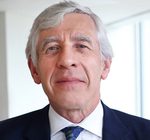
Tag: Jack Straw

  • Jack Straw – 2006 Speech on the Global Response to Terrorism

    Jack Straw – 2006 Speech on the Global Response to Terrorism

    The speech made by Jack Straw, the then Foreign Secretary, on 16 January 2006.

    May I thank the Royal United Services Institute for organising today’s conference and the government of Saudi Arabia for their sponsorship. The fact that this is a joint conference serves to highlight the global nature of the threat we face.

    I would also like to express a personal welcome to His Royal Highness Prince Saud. I have had the pleasure of working with him for nearly five years; he brings a rare combination of intellect and good humour to the diplomatic world.

    Of course, the United Kingdom shares much with Saudi Arabia; above all it is the spiritual and religious home for the UK’s near two million British citizens of the Muslim faith. Tragically, this year’s Hajj has been marked by the death of over 350 pilgrims. The Saudi authorities have been working tirelessly to help those affected by the tragedy. The UK is the only Western country to send an officially sponsored and officially funded delegation to support its Hajj pilgrims – we expect more than 25 000 British people to go on the Hajj this year. This delegation, headed by Lord Patel of Blackburn, was on the ground quickly to do all it could to help British victims of the disaster. Our thoughts and prayers are with all those affected by this horrible accident.

    In recent years, the people of Saudi Arabia have faced the horrors of terrorism repeatedly; they have done so with steadfastness and good sense. And today, the Saudi people and their government play a vital role in the global response to that terrorist threat. Their counter-terrorism achievements over the last two years have been striking – not just the disruption of Al Qaeda networks, but crucially also the winning of hearts and minds and the mobilisation of Saudi society against the extremists.

    We have much to learn from the many and skilful ways in which Saudi Arabia has – on its own initiative and in its own interests – faced down the perversion of religion which is the seedbed of terrorism. They have also used their leadership in the Muslim world to encourage others to adopt a similarly comprehensive approach. We value highly our close partnership with them. And you can actually see – not least because of the efforts of the Saudi government – a sea-change in the region. For example, something which was not widely reported here in the UK was the Euro-Med summit held in November. It issued a communiqué which included a comprehensive statement on terrorism. Whenever you have Arab and Israeli delegations in the same room there are bound to be difficulties. In the past these difficulties have stopped us getting agreement on any such statement. So agreement on this communiqué was a significant step.

    Terrorism is not new; nor is it new to Britain. In the great medieval chamber of Westminster Hall, they have just taken down the exhibition marking the 400th anniversary of the Gunpowder plot. Read the Hansard records of 1853 and you will find my predecessor as Foreign Secretary and Home Secretary, Lord Palmerston, defending the seizure of a stockpile of ‘war rockets’ from a warehouse in Southwark – allegedly intended for use against the Austro-Hungarian imperial family. And no-one in this country will forget the decades of terrorist attacks carried out by the Provisional IRA. In fact, it was from a white van parked just outside this building that the Provisional IRA launched three mortars at Downing Street. Had they been just 10 metres more accurate, they would have wiped out the entire Cabinet. It was the second time that PIRA had attempted to destroy that democratically elected government.

    I don’t, then, underestimate the threat we have faced in the past. But what we have seen develop over the last decade is of a different order of magnitude to previous domestic and international terrorism. It combines global ambition, global reach and powerful means in an unprecedented way.

    On one level, the global dimension of this modern terrorism stems from the way in which it organises and operates. It is not limited to one nationality or region. People from more than 40 countries passed through the terrorist training camps in Afghanistan before the September 11th attacks. It uses the tools of our modern, interconnected world – whether it is the internet or the international financial system – to recruit, to co-ordinate and to sustain itself. We have seen terrorists from the Middle East strike in the heart of New York, and young men born and brought up in this country go to Israel to carry out suicide attacks. The destruction which is threatened is also on a different scale from what we have seen before. On September 11th, the terrorists killed about 3000 people. But they wanted to kill the 30 000 people who worked in those buildings. And if there had been 300 000 people in the way of those planes, I have no doubt they would have killed them. Indeed many of today’s global terrorists would be only too willing to use weapons of mass destruction to maximise civilian casualties.

    But this terrorism is global in another sense too – its overarching goal is to change the world in which we live. Guy Fawkes and the 19th Century revolutionaries justified their actions by saying that they wanted to bring down specific forms of government. The Irish Republican Army said that all they wanted was for Northern Ireland to be incorporated into the Irish Republic. In contrast, the aims of today’s global terrorism go beyond such relatively narrow national or political objectives. We are seeing an attack on the international community as a whole – on our common values and on our shared future.

    Today I want to set out how our response must match the scale and breadth of this attack. On the one hand, we need to co-operate at an international and multilateral level to share evidence and intelligence, to disrupt terrorists’ networks, to cut off their sources of financing and to bring terrorists to justice.

    At the same time, we need a global effort to confront the propaganda of the terrorist, to address the sources of discontent which terrorists seek to exploit and to build a sense of common commitment to prosperity, peace and security based on freedom and the rule of law.

    These two strands reinforce one another. If we want to show people the emptiness of the terrorist rhetoric then we must be consistent when fighting terrorism – both internationally and domestically – in upholding those values and freedoms we have set out to defend. These values – the rule of law, an independent judiciary, strong parliament, freedom of speech, multilateralism, respect for human rights – are ones of which we are rightly proud. And they stand in stark contrast to the repressive and divisive alternative offered by the terrorist. They need to be – and they are – an integral part of the United Kingdom’s counter-terrorism work.

    First, then, let me turn to how international co-operation is helping us to protect ourselves from a terrorist attack, to prepare our response to any such attack, and to pursue those responsible for terrorism.

    In the past few years we have increased the bilateral co-operation between countries faced with the threat of terrorism. Key to this has been increasing and improving the sharing of intelligence. Information we have received from foreign governments has saved lives in this country. And we have shared information and expertise in return. And we are continuing to strengthen this co-operation. Before September 11th we had 12 bilateral counter-terrorism programmes. Now we have over 80.

    Among these, our counter-terrorist relationship with Saudi Arabia has gone from strength to strength, to both sides’ benefit. One symptom of this is the pace and level of visits in both directions. I am revealing no secret if I tell you that the Director general of the Security Service – who never seeks publicity for her overseas visits – has – to her horror – twice this year been lead item on the Saudi evening television news, being received by King Abdullah of Saudi Arabia. She wasn’t there to discuss the price of camels, even though she was spotted riding one! As I said, the existence of these visits shows the depth of our partnership.

    This bilateral work has been complemented by multilateral action. In the United Nations we are working to ensure the implementation of Security Council Resolution 1373 which creates legal obligations on all states to crack down on terrorists, their supporters and their sources of finance. The swift extradition from Italy to the United Kingdom of a suspect in the attempted bombings on 21 July demonstrated the effectiveness of the new European Arrest Warrant. And we are very grateful to the Italian government and authorities for implementing both the spirit as well as the letter of that warrant.

    In the coming year we want to see further progress: for example, agreement in the United Nations on a Comprehensive Convention on Terrorism and agreement to a European Evidence Warrant. In my speech at the UN General Assembly last September, I called for an international Arms Trade Treaty which, among other things, would help to keep weapons out of the hands of terrorists. And, the international community needs to continue to strengthen and uphold the international consensus against the proliferation of weapons of mass destruction.

    This is why the international community’s stand against Iran’s continued non-compliance with its Non Proliferation Treaty obligations and successive IAEA Board resolutions is so important. The onus is on Iran to act to give the international community confidence that its nuclear programme has exclusively peaceful purposes – confidence that has been sorely undermined by its history of concealment and deception. Iran’s failure to do so is the reason why last September the Board of Governors of the IAEA declared Iran to be non-compliant with those obligations. And it is the reason why we are now considering a referral of Iran to the United Nations Security Council through an emergency meeting of the IAEA Board.

    The work to disrupt terrorist activities and minimise their consequences is vital. But alongside it we have also to tackle the factors which encourage radicalisation and recruitment. We need to do this both domestically and internationally.

    So we are supporting the debate within Muslim communities in the UK and abroad and encouraging those who challenge the fallacies of the extremist message. Terrorists use a simplistic and perverse interpretation of history and Islamic theology to try to justify their actions; just as terrorists in the past have used a perverse interpretation of history and of Christian theology to justify their violence. We are not fooled that their interpretation represents the great religion of Islam. Their arguments have been clearly denounced by those who speak for the majority of Muslims. How can the killing of so many innocent civilians around the world have any such religious justification – indeed we have seen from Amman and Baghdad to Sharm El Sheikh and Riyadh that the majority of victims of these terrorists are men, women and children of the Islamic faith? And on what basis can they paint Britain, which is so vigorous in protecting and celebrating the religious freedom of the 1.6 million Muslims who live here, as a country hostile to Islam?

    When the Organisation of the Islamic Conference held its historic summit in Mecca last month, on the initiative of King Abdullah of Saudi Arabia, the leaders of the Islamic world gathered there recognised that more needs to be done to protect Islam from infiltration by extremism. They agreed a work plan to support mainstream Islamic thought and to work with local and international communities to promote a positive path for Islam in the modern world. We salute this courageous initiative, the benefits of which will be felt for decades to come.

    The terrorist propaganda has particular resonance among disaffected young Muslims suspicious of Western foreign policy. They are the most vulnerable to the conspiracy theories, distortions and lies told by the terrorists.

    It would, of course, be fatuous to suggest that distrust of ‘the West’ is entirely inexplicable or irrational. Balfour, Sykes-Picot and Suez – and much else – have left their sometimes indelible legacy. As Tony Blair has repeatedly argued, we have to right the wrongs, in Palestine and elsewhere, which are exploited so skilfully and relentlessly by the preachers of hatred and violence. And, as Condi Rice has said, we need also to acknowledge that for sixty years the United States has pursued stability at the expense of democracy in the Middle East without achieving either. They are her words – courageous sentiments with which I fully agree.

    But the more recent facts speak for themselves. In the past five years the United Kingdom has provided well over £5 billion in development assistance to countries in the Muslim world. From Darfur to Aceh, we are helping Muslim communities realise a more peaceful future. The British people and government gave generously to the victims of the tsunami and of the earthquake in Pakistan. In Israel and the Occupied Territories we are working as part of the Quartet to achieve the goal of a viable Palestinian state alongside a secure Israel. And whatever your views on the war in Iraq, a large majority of Muslims in that country are now seizing the opportunity provided by Saddam Hussein’s downfall to give their nation a free and democratic future. Much more remains to be done. We have to help the Iraqi people achieve for themselves security and stability and to defeat and drive out the men of violence.

    As someone who was in Iraq just ten days ago and has been backwards and forwards to that country, I have seen – amid the continuing violence – something remarkable happening. The small seeds of democracy have seen a fantastic flowering over the last 13 months. This time last year there was a high level of scepticism in advance of the first set of national elections – reinforced by a Sunni boycott. Those elections went ahead with a 60 per cent turnout. Then, against expectations, the constitution was drafted and put to the people on time on October 5. The Sunnis made the brave decision to participate in that referendum and in the elections in December. Those elections, I am told, had a higher turnout than we achieved here in this country for our general election. There are challenge ahead – above all security and the threat of terrorism and inter-communal violence. No-one underestimates these. But for Iraq to have met the United Nations timetable is a remarkable achievement and offers hope for the future.

    For the same reason, we offer robust and consistent support for political and socio-economic development and human rights across the Islamic world. We are doing so bilaterally – through programme funds specifically designed to foster the rule of law, economic reform and growth, democratic participation and good governance – and multilaterally through the European Union’s EuroMed partnership programme and the G8 Broader Middle East and North Africa initiative.

    We hope that all this will improve stability and security in the region. Terrorists find it more difficult to operate in countries with democratic and accountable governments. People with clear opportunities, a greater say in running their own affairs and more hope for the future, are less likely to be fooled by the terrorist propaganda.

    But this is not just a Western agenda – it is the same one which the mostly Muslim authors of the Arab Human Development Reports have advocated so powerfully and persuasively. Transparent and clean government, a free press and an independent judiciary offer the chance for the young populations of the Middle East to realise their potential. The main beneficiaries of good government are the people themselves.

    But it is an agenda which we in the West need to approach with some humility – not only because our still imperfect Western democracies took centuries to evolve, but also because the recent attacks in London show that we still have work to do in our own communities. This is why after the July 7th bombings the Government and Britain’s Muslim communities launched the Preventing Extremism Together initiative.

    I often continuously talk to representatives of British Muslims about their specific concerns and how we can root them better into society. Although we may disagree – sometimes very strongly – on aspects of foreign policy, we share an equally passionate belief that the way to resolve those differences is through dialogue and democracy, not through violence. Equally, overseas we must be prepared to engage with those groups which are ready to align themselves to political processes and peaceful means to achieve their objectives, even though we may not feel comfortable with their aims.

    But there is a further point I want to make. If we want to be seen to deliver justice and offer a stronger and better worldview than that of the terrorist, we have to be seen to stand by our values and our strengths. We have to show that when it comes to counter-terrorism we practice what we preach.

    So, I want to set this out as plainly as possible. This Government is committed absolutely to our obligations under United Kingdom and international law.

    In this context, I want to underline the enormous importance to us – in fact, the indispensability – of our alliance with the United States in the struggle against international terrorism. It is a partnership which has saved many lives of many nationalities. Condoleezza Rice set out in her statement last month the principles and values governing US policy and practice on counter-terrorism, including the rejection of torture. And when President Bush signed into law the Detainee Treatment Act on 30 December, he made clear that it codified what was already US government policy: the prohibition of the cruel, inhuman or degrading treatment of any detainee in US custody anywhere.

    Your Royal Highnesses, Ladies and Gentlemen, these days you often hear the accusation made that the scales have tipped away from human rights and towards counter-terrorism. It is a false dichotomy. There need be no zero sum equation between human rights and counter-terrorism. Counter-terrorism measures are there to help us preserve a democratic and free society. At the most basic level, measures which protect innocent civilians from an attack are supporting one of the most basic human rights of all – the right to be alive – and they protect people’s ability to enjoy fully their other rights. Equally, we respect and promote human rights not only because it is the correct thing to do but because that is one of the most effective ways to undermine the terrorists.
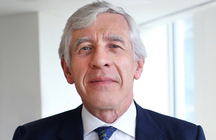
  • Jack Straw – 2006 Speech on Foreign Policy Challenges

    Jack Straw – 2006 Speech on Foreign Policy Challenges

    The speech made by Jack Straw, the then Foreign Secretary, on 17 January 2006.

    Thank you very much Stephen, and you are all very welcome indeed to this, the India Office Council Chamber. It is a room which illustrates just by itself a part of our history. This building was once four government departments, not one. Where we are now was the centre of the India Office, over in the opposite corner of the main courtyard was the Colonial Office, the Home Office stuck at the front – where they could be in the front line of the brickbats from the hoi polloi in Whitehall, and the Foreign Office comfortably round the side.

    May I particularly congratulate you, Stephen. I, like all of your parliamentary colleagues, were very sorry about the circumstances in which you became available for work, but I have to say that our loss has very much been the Foreign Policy Centre’s gain; and you are following in fine footsteps taking up where Mark Leonard left off.

    As we have heard from Stephen, tonight’s event is about launching the centre’s membership for key partners. Some of you here– the Corporation of London, GKN, Linklaters, BP and others –are already members of this organisation, and I hope that by the end of the evening others will have been persuaded.

    You don’t want too long a speech, but what I want to do is just to offer you my thoughts on some of the big foreign policy challenges in the year ahead, which I bring together as three regions and three themes.

    Three Regions

    First, three regions. One, the Middle East. It has dominated much of our international politics for decades, and it will continue to do so. But over the next year Israel and the Palestinian people are going to have to adjust to a political landscape no longer dominated by Ariel Sharon. And we have to maintain the momentum which has built up over the last two years towards a relative peace, however difficult. It is always difficult there, but the fact that the levels of killings on each side has gone down so dramatically is an indication that gradually, and by fits and starts, politics is taking over from violence. But all of us who know the region also know that you have got to keep working these accounts if we are to ensure that progress continues. Iran and Syria remain big challenges and they have to make up their mind whether they want to work with the international community, or against it. Other governments in the region have to decide whether they are serious about political and economic reform, an issue which was discussed yesterday at a very important conference on counter-terrorism which RUSI ran yesterday – not tangentially but at the heart of the debate. At the conference, the Foreign Minister for Saudi Arabia and I spoke about this in the context of counter-terrorism, because (to pick up a point that Condi Rice made recently in a very important and reflective speech), if we look at the record of the West towards the Middle East and other countries, for decades the United States – for which also read Western Europe – had placed stability as a higher priority than democracy, and it ended up by getting neither. If we are now, as we are, committed to democracy as the means by which you achieve stability, rather than the reverse, we also have to be prepared where there are democratic elections, and where they are run fairly, to accept the result. That applies domestically, it also applies abroad.

    The second region is Europe. We had a good Presidency. We opened talks on Turkish membership and we agreed a budget. And I may say we did much else besides that, including agreement on the Reach Chemicals Directive. We almost got political agreement on the Services Directive. Now that we are handing over to the Austrians, we can expect to see the United Kingdom pushing the modernisation agenda even harder. What we will be looking at is how the Union can concentrate on what it does well, and spend less time on those things which can be done better at a national level. At a meeting earlier today of a Cabinet Committee on Europe, which I chaired, it is called the Joint Ministerial Committee on Europe, Alan Johnson, the Secretary of State for Trade and Industry, was making the point that there was a great story about what we and the Commission had stopped happening, partly during our Presidency. This is our work to make a reality of better regulation. We have worked very closely with Gunther Verhoigen, the excellent Vice President of the Commission who is in charge, with the Commission, of reducing the regulatory burden in Europe. I think as a result of that 68 draft directives have been stopped in their tracks and won’t ever see the light of day. One of them (Alan Johnson couldn’t have made this up, because none of us could have made this up) was a proposal seriously going through the machine of the European Union, which would have regulated at a European level those Two for One, or Three for Two offers that you can get in Tesco or Sainsbury’s. I mean I think I probably would have been the only person in the world who would have appreciated this, because every time I go to Tesco or Sainsbury’s with my son, and I think oh well I will have one of those Three for Two offers, or Three for One offers, he says: ‘No Dad, do you actually want more than one?’ I think that explains economic theory, but aside from him everybody else thinks why don’t we just make up our own mind about it, we don’t actually need a European directive. That is one example of a great many. So I think we did pretty well, but we have got to carry on in that direction, and one of the other things we were looking at today was the Working Time Directive where we came within a whisker of getting political agreement on a satisfactory solution both to the directive and the opt-out, and also for those involved in the health field, a reverse of some European Court of Justice decisions in Simap and Jaeger.

    The third area I wanted to talk about was Asia, and particularly India and China. And it is interesting how both countries have really come up the agenda in the last few years. There are real opportunities for Britain here. For example in 2003 Chinese imports, that is into China, grew by 40%. Merrill Lynch estimates that in less than five years China itself will account for 20% of the global market in luxury goods, again an opportunity for importing and for services. Its advertising market is already worth an estimated £6.4 billion a year. But we do have to be flexible and organised if we are going to take advantage of these opportunities, and we also have to continue to encourage China and India as responsible partners on the global political stage. They will for example both be major participants in the increasingly important debate on climate change.

    Three Themes

    Now the three themes. And I move from climate change in India and China to the first of these three themes, which is energy security. Your centre, Stephen, has done a great deal of work on this, as it showed in its September report, but what happened over the New Year between Russia and Ukraine, which then had a very substantial impact on the rest of western Europe, shows how crucial it is that we develop more effective policies for ensuring energy security.

    The second theme was development, and particularly in Africa. Part of this is making sure that the international community follows through on last year’s promises on aid and debt relief. I am proud of much that this government has done, and I am particularly proud of our record on development where we have said that we would increase our aid, and we have increased both the amount of the aid and the quality. Where we say that we are going to make a pledge, we then ensure that it is paid. I have to say that we are generally the exception rather than the rule in doing what we say we are going to do. The aftermath of donor conferences is usually a rather sad affair when the actual reality of whether people are going to pay up doesn’t match the original promise. It leads to a very sour taste, particularly amongst those who thought they were going to be the recipients. So getting others in the donor community, not us, to do what they say they are going to do is important. But, as Hilary Benn has often made clear, in the end we are only going to make poverty history if we get the developing countries themselves to understand their clear responsibilities. And that means their general responsibility to good government and their particular responsibility in very difficult situations, for example in the Sudan or in both Eritrea and Ethiopia at the moment.

    The third theme is the global terrorist threat, which was indeed the theme of yesterday’s conference. This means disrupting the organisation and operation of terrorist networks, undermining their propaganda, supporting good governance and democracy, and dealing with the sources of discontent which are so skilfully exploited by the preachers of hatred and violence. And as part of that I have made a very personal commitment, which I am pleased to say got into our manifesto, which is the establishment, which will take time but I am determined it should happen, of an international arms trade treaty at the United Nations.

    Now underpinning all of these areas will be our strategic relationship with the United States and our active membership of the European Union. What I have said is in no sense the totality of our agenda, it is simply a sketch, as I say, of three key areas and of three key themes. There is a huge amount else to do.

    One of the things however that we are trying to do much more within the Foreign Office is to be explicit about our strategy and sharing the way in which that strategy is developed. So three years ago I published a strategy document for foreign policy which was drawn up in consultation with the whole of Whitehall. It wasn’t, therefore, just for the Foreign Office, it was a strategy for government as a whole. We are now going through the process of revising that strategy document and I aim to publish the revised version later in Spring.

    Everybody here, particularly corporate members, is busy, but I hope that you will be able to see organisations like Stephen’s, not least Stephen’s organisation – the Foreign Policy Centre – as a means by which your ideas can filter through into our generation of this policy. The strategy was generally welcomed, but even in the last three years things have changed. There was a big chunk in the last strategy document about energy security, but it has got to be an even bigger chunk this time and a tougher chunk this time about how we deal with the real risks that we all face. One of the most important roles of operational think tanks like the FPC is working.

    It was my late friend and colleague, Robin Cook, who helped to get this Centre going. He saw it as a bridge – in his own words as a ‘two-way think exchange’ between government and society. And the success of Britain’s foreign policy is in no small part determined by how effectively this exchange works.

    The FPC since its launch 8 years ago really has done great work, I know it continues to do it under Stephen’s leadership and I wish you well and wish the corporate members well. This new partnership should be a very great strength to the Centre, but also to the partners as well. Thank you very much indeed.

  • Jack Straw – 2006 Comments on Turkey Joining the European Union (EU)

    Jack Straw – 2006 Comments on Turkey Joining the European Union (EU)

    The comments made by Jack Straw, the then Foreign Secretary, on 25 January 2006.

    Let me begin with a confession. There are many aspects of the job of Foreign Secretary which I love. But – and I suspect that my good friend, Abdullah [Gul] might sympathise here – the daily ritual of answering huge piles of mail is not top of that list.

    However, every so often, in amongst the complaints, the bad news and the requests for the impossible, I find one letter which truly brightens my day. Such letters are always welcome; but none more so than the one which invited me to come here tonight to receive this award. Accepting that invitation was certainly one of the easier and more pleasant decisions I have had to make.

    It is indeed an immense honour to receive this award from you. And I want to thank the President of the High Advisory Council, Mustafa Koc, the Chairman of the Board, Omer Sabanci, and all the members of TUSIAD for the friendship and support which this award represents.

    Now, as I have said, I count Abdullah as a friend. We have worked together closely for many years and on many difficult tasks. It is always a pleasure to see him – and tonight is no exception. But I don’t think that there has ever been a time when I have been happier to glimpse him heading in my direction than on a cold night in Luxembourg just under four months ago.

    That night was a night to remember. But in accepting this award, I am conscious of two things. First, that the credit for getting agreement to open membership talks does not fall to any single person, group or country. And second, that we are at the beginning of a process and not at the end.

    In October, we were proud to play our role as Presidency. There were obstacles to be overcome. But with courage and flexibility we were able to do so. The political leadership shown by all sides that night was crucial. But – and this is something which I wrote to Omer Sabanci when I first accepted this award – our success was above all a reflection of Turkey’s own accomplishments over recent years; and an acknowledgement of this country’s future within Europe. In the end, we opened accession talks in October because it was in all our interests to do so – in Turkey’s interest, in the interest of the European Union as a whole, and of every other individual state.

    Economically, the European single market will be stronger by expanding to take in a country which in 2006 is projected to see an impressive GDP growth of around six per cent – more than three times the average growth in the EU-25. This is also a country which attracted foreign investment to the tune of US$ 24 billion last year – hard evidence that the private sector has firm faith in Turkey’s future.

    And there is no better reminder of the political importance of Turkey than this great city itself. For thousands of years Istanbul has been a bridge between Asia and Europe; and during that long and illustrious history it has been a centre for both the Christian and Muslim faiths.

    Turkey’s geographical position is of huge strategic importance, with such interesting neighbours such as Syria, Iraq, Iran, Armenia and Georgia, as well as EU partners Bulgaria and Greece. I applaud Turkey for the contribution it is playing in difficult dossiers like Iran Nuclear; and on Iraq where an important meeting in December held here encouraged the Sunni communities to take part in last months elections – and on the MEPP, where the Government of Turkey facilitated last years historic meeting between Israel and Pakistan. We already depend on Turkey for good cooperation against terrorism, drug trafficking and illegal migration, and increasingly for the security of energy supplies to Europe.

    Despite these mutual dependencies on Turkey, it is no secret that some people within the European Union worry about the potential impact of Turkish membership, especially on their jobs and livelihoods. European leaders have a responsibility to allay those fears and to set out to their citizens the overwhelmingly positive case – as I have above –– for Turkey, when ready, joining the Union.

    We in the United Kingdom – Government and business alike – are in absolutely no doubt that our own interests lie in ever closer partnership with this modern, European country. The United Kingdom and Turkey have enjoyed a good bilateral relationship for many years. In 2004, Prime Ministers Blair and Erdogan signed an action plan to further bolster bilateral ties. And the relationship now is closer than it’s ever been.

    Today, the United Kingdom is the second largest destination for Turkish exports, bilateral trade between our two countries stands at around US$ 10 billion per annum. There are 400 British companies in operation here. A single British company, Vodafone, is investing over US$ 4.5 billion here. Another, BP, is the largest single shareholder in the Baku-Tblisi-Ceyhan pipeline. Some of the chief executives of the largest of those British companies are here tonight: Vodafone, International Power, HSBC and Diageo. Also present is Ladbrokes, which is interested in the privatisation of the Turkish lottery.

    And, of course, it’s not just about exchanges in goods and capital. The British Council – which runs cultural and educational exchanges – has a bigger operation in Turkey than in any of the current EU-25 member states. On a very personal note, the Turkish footballer Tugay Kerimoglu has been terrific as a team member of Blackburn Rovers on the field; but he is also a great ambassador for Turkey and imperceptibly I believe the presence in our team of a player of the Muslim faith has encouraged more of my Muslim constituents to attend matches. And last year around 1.8 million British tourists came to Turkey – a year on year increase of nearly 30 per cent, in spite of July’s cowardly terrorist attacks in Kusadasi and other resorts.

    The second point I wanted to make this evening is this. On October 3rd we ended a long journey dating back to Turkey’s original association agreement with the EEC in 1963. But we also embarked on a new road which may take a decade or more and which will require continued flexibility and commitment from all sides. That process, leading to full membership, of itself draws Turkey, its people and its institutions closer to Europe.

    A settlement on Cyprus – under the good offices of the UN Secretary General and under the authority of a number of UN Security Council Resolutions – is, of course, vital.

    Before I came here, I visited Cyprus I shall be reporting back to Kofi Annan, Ursula Plassnick (EU Presidency) and Olli Rehn (EU Enlargement Commissioner). I welcome Abdullah Gul’s proposals on Cyprus set out in his speech yesterday. If I may so, Abdullah, you rightly say the current deadlock works against the interest of all. I welcome the priority the Turkish Government continues to give to the tasks of finding a lasting and just comprehensive settlement, and to your willingness to take concrete steps to improve the overall atmosphere in the region. Like Olli Rehn I believe that these proposals should be examined with care.

    Both the European Union and Turkey have responsibilities they must fulfil in regard of Cyprus: Turkey to apply the Ankara Protocol fully to all member states and to normalise relations with them as soon as possible; we to find a way of ending the isolation of the Turkish Cypriots and for them to trade with the rest of the European Union. These are separate tracks but they must both work.

    My belief is that the very process of holding accession talks – the daily, mundane business of political engagement – will help break barriers and give impetus to the resolution of this dispute; much as it was an important element in the United Kingdom and the Republic of Ireland resolving our differences over Northern Ireland. But – just as in that long-running problem – it will require bold leadership and some tough decisions.

    It’s also important, of course, that the momentum for reform and modernisation is maintained; and that the political will of Prime Minister Erdogan’s government – which is not in any doubt – is reflected in the decisions taken by those applying laws on the ground. Thankfully the case against Orhan Pamuk has now been dropped but there are a number of others ongoing, and I know that Abdullah and his colleagues are all to aware that such cases have the potential overshadow Turkey’s considerable achievements over the past few years.

    I’m aware that I’ve been speaking for quite a while. If I was receiving an award at the Oscars they would have started up the orchestra and bundled me off stage by now. So may I just finish by once again thanking all the members of TUSIAD for this Bosphorus Prize for European Understanding. In all honesty, I cannot think of an award I would rather receive.

  • Jack Straw – 2006 Davos Speech on the Middle East

    Jack Straw – 2006 Davos Speech on the Middle East

    The speech made by Jack Straw, the then Foreign Secretary, on 28 January 2006.

    In time to come historians will say of the last five years of the Middle East not that the sands had shifted but that the earth had moved: something profound and sustainable – though not irreversible – happened over that period: the number of potential nuclear weapon states in the wider Middle East reduced from four to two; there was the removal of a dictator who not only terrorised his own people but actively supported terrorism elsewhere in the region and sought wider regional domination; and there was the beginnings of democratic change in many – but by no means all – Middle Eastern states.

    Against these more positive developments there is the fact that Iran, its likely nuclear weapons ambitions, and its sickening, horrific hostility to Israel and to Jewish people have made it a much bigger problem than five years ago. There is the fragility of governance and the intensity of terrorism within Iraq. And this new power but greater potential instability from the increase in the oil price. But Iran, Iraq and the oil price are being debated thoroughly in other sessions.

    So let me in this session concentrate on one of the biggest tests of all in the Middle East, the transfer of power from elite to street – otherwise known as democracy. All the countries represented here and which are now democracies have followed different routes and time-scales in arriving at that state of grace. In countries like Iraq, the timescale is likely to be remarkably short. Many countries in the European Union have only been democracies for a decade or so: and in some, indeed many, it took violent convulsions to kick start the process. For the UK the process has been more gradual over centuries and more benign. But whatever the route, whatever the timescale, the argument was always the same: could the mob, the mass, the hoi polloi, ‘the street’ be trusted. What if, as the old communists used to say, the proletariat showed a false consciousness or simply came up with the wrong answer? Let’s be clear – I do not take that view. I’ve lived by democratic elections all my life.

    Indeed, it’s when you get the so-called wrong answer that the faith of the elite and the powerful in a democracy can really be tested. That faith is being tested here and now in the occupied territories following Hamas’s unexpected victory in Wednesday’s PLC election.

    Already there are those saying within the Palestinian Authority, in Israel and beyond: ‘We should never have listened to the US, the UK, the quartet, the European Union. The Palestinians have given the wrong answer: how much better if elections had simply been stalled yet again, having been stalled for many years in the past.’

    But I do not agree. Condoleeza Rice was correct last year when she said that the US had traditionally pursued security over democracy, but had got neither – and she is still right. Let’s look at the counterfactuals. Yes, there is a problem now in the Occupied Territories; it’s a problem for Hamas. But the ‘wrong answer’ approach leads straight back to Saddam Hussein; or as a western backed coup d’etat to overturn the results of an election, military rule and decades of insurgency and bloodshed. And the ‘wrong answer’ approach above all leads to a loss of moral leadership by the West as critics would fairly say that our subscription to democracy is only skin deep.

    Instead, what we have to do from this result is ensure that it provides a wider lesson in democracy. Democracy is – yes –about universal suffrage, free and fair elections and the respecting of results; but much more too. There are fundamental principles on which democracies absolutely depend: the first of these is that democracy and violence are incompatible; the ballot and the bullet cannot be used interchangeably – democracy by terrorism is no democracy at all, ever. The second principle is that democracy involves a bond of trust between electors and the elected – that the latter will deliver by peaceful, non-violent means. The third, in the specific context of the Middle East, is that Israel, a democracy itself, has a right to exist, and that no governing authority inside the occupied territories can deliver without dealing with Israel. I just add this parenthetically about Hamas’s victory. Many have been surprised by the result. But I suspect none more so than the Hamas leadership itself. They wanted to be the opposition – enjoy negative power and no responsibility. Now the responsibilities they have are much greater than their power – a truth for all leaders of all democracies. And any of these leaders have to be on notice to meet those responsibilities.

    As to the rest of the Middle East, within a complex reality, and with Iran moving backwards we can see an overall shift in the direction of reform and democratic institutions. In Lebanon a popular political movement was followed by that country’s first credible national elections since the civil war in May and June of last year. In Iraq, we had two sets of elections and a referendum which despite the threat of terrorism attracted higher levels of voter participation than are seen in much better established democracies. Algeria held a referendum in September on a charter for peace and reconciliation. Opinions on the charter remain divided but the participation of the Algerian people in that decision was broadly welcomed. Morocco has just published an extensive report on past human rights abuses. And Kuwait has approved suffrage for women. And while I don’t wish to underplay the problems and violence of the Presidential and Parliamentary elections last year in Egypt, it is true that they still remain the most representative in that country’s history.

    I said at the beginning that this shift of power from elite to street was profound and sustainable but not necessarily irreversible. Whether it can become thus, whether we will see what the United Nations Arab Development Report called “ a new renaissance” now depends, in my judgement, on the collection of decisions which the international community, the region and above all Hamas make.

  • Jack Straw – 2006 Speech at the United Nations General Assembly

    Jack Straw – 2006 Speech at the United Nations General Assembly

    The text of the speech made by Jack Straw, the then Foreign Secretary, on 1 February 2006.

    Let me first thank Lord Hannay for his introduction and say how delighted I was to hear he has been appointed as Chairman of the UNA. It is difficult to think of anyone more suited for the position. His skill as a diplomat and advocate is matched only by his profound knowledge of and commitment to the United Nations.

    And may I also extend a welcome to everyone here tonight – and in particular to the Secretary General of the United Nations, Kofi Annan.

    As Lord Hannay has said, tonight we are marking the 60th anniversary of the first plenary session of the United Nations General Assembly – though as you probably know, that first gathering, which the newspapers of the time affectionately referred to as “the town meeting of the world”, actually took place a little earlier in the month – January 10th to be precise.

    When that first General Assembly gathered here in Methodist Central Hall it was, I understand, rather to the annoyance of the congregation who were forced to decamp to the London Coliseum and who expressed deep disquiet at the idea of gin-swilling diplomats being allowed on the premises.

    Indeed, it wasn’t a foregone conclusion that this would be the venue. Many of the officials in the Preparatory Commission advocated holding the meeting on the other side of Parliament Square in the great medieval chamber of Westminster Hall. In the end, this building won out for the rather prosaic reasons of heating and acoustics.

    It was, though, rather an apt venue for the United Nations – an organisation committed to freedom, peace and equality. The Suffragettes met here in 1914; Mahatma Gandhi spoke here in 1931; it was in this building, in 1940, that General de Gaulle announced the foundation of the Free French movement. And throughout the war, the basement served as one of the biggest air raid shelters in London, providing safety for hundreds of people.

    The minutes of that first meeting of the United Nations are fascinating. They reverberate with a real sense of the optimism and idealism. Much of what was said still resonates today. The British Prime Minster Clement Atlee spoke eloquently of how the welfare of each nation was bound up with the welfare of the world as a whole; how, in his words, “we are truly all members one of another”. If that was true in 1946 – and it was – it is even more true in today’s interconnected world.

    There are even some early examples of the pitfalls which can befall those of us who appear at the United Nations; the British Foreign Secretary, Ernie Bevin, didn’t realise his microphone was on and the entire Security Council heard him mutter: “..the bloody Chairman has double-crossed me again”.

    There is one thing which stands out from the minutes of those early meetings. Many of the people in this room that day were veterans of the League of Nations. Aware of the tragic consequences of that organisation’s failings they were absolutely determined that the United Nations would be new and different; it must not repeat the mistakes of the past.

    So the recognition of the need to change and adapt in the face of each new challenge has always been vital to the success of the United Nations. And no-one has shown more commitment to this task than tonight’s guest of honour, Kofi Annan.

    As Secretary General, he has not been afraid to engender debate on questions which are as sensitive as they are important. For example, he has forcefully challenged the idea that states can hide behind their sovereignty to defend human rights abuse. He used his voice to urge the international community to agree upon its collective responsibility to protect vulnerable populations from the worst atrocities: genocide, war crimes and crimes against humanity. Similarly, Kofi has worked to cut through the ambiguity and equivocation which has surrounded the definition of terrorism. And in the fractious aftermath to the war in Iraq, it was he who spoke of a fork in the road and who helped to heal divisions.

    His long career in the United Nations, at the World Health Organisation and UNHCR in Geneva, at the Economic Commission for Africa in Addis Ababa, in the Secretariat in New York and on various special assignments equipped him to drive reform of the United Nations machinery itself. His important reports in 1997 and 2002 on UN reform showed how the organisation could be made much more efficient. Making good the Charter’s “We the peoples”, under his stewardship the UN is more open than ever before, with wider access for civil society and more participation by the private sector through initiatives such as the Global Compact. Last year, his report “In larger freedom” set out a vision for a United Nations better able to bring development, security and human rights for all.

    No-one – least of all Kofi – underestimates the scale of the challenges ahead both for the United Nations and for its member states. Take a quick glance at the headlines on any given day in the past week – worries over climate change, uncertainty in the Palestinian Authority, concerns over Iran’s nuclear ambitions, the complex dispute in Cyprus. If we are to meet these challenges – and many others besides – the international community will need a strong United Nations.

    At the World Summit last year we agreed a programme of reform at the United Nations that will make it a more effective organisation. We must maintain that momentum. This means ensuring that the recently created Peacebuilding Commission becomes an effective body and it means establishing a Human Rights Council which avoids the weaknesses of the existing Commission. Modernising the administration will dominate the agenda for the first half of 2006. In particular, we look forward to the Secretary General’s imminent recommendations on how we should reprioritise programme activity across the organisation.

    At the same time, we need to strengthen the international consensus in support of the non-proliferation regime and against the threat of global terrorism. There is still a lot more we must do if we are to meet the Millennium Development Goals; and in Africa progress is further threatened by ongoing conflicts such as those in Darfur and the Great Lakes and worsening situations like those on the borders of Eritrea and Ethiopia and the Ivory Coast.

    Earlier today, Kofi co-chaired – with the Afghan and British governments – the London Conference on Afghanistan. The United Nations has done great work there and has a key role in co-ordinating international support. The same is true in Iraq, where it played a vital role in the three sets of elections last year. I know the United Nations has some very legitimate security and other concerns but I hope that over the coming year we will be able to see the Iraqi people – particularly those outside Baghdad – benefiting even more from the organisation’s immense expertise and experience.

    So there is some tough work ahead – work which I am sure that Kofi will go into in much more detail.

    In this his final year of office, he can be sure of the support of the United Kingdom and of our continuing commitment to the United Nations. It is support which can be measured in the levels of our assessed and voluntary contributions to the UN budget – significantly more than any other European country and double what we were contributing a decade ago. But it can also be measured in our constructive engagement with the United Nations agenda across the board. We act as strong advocates for reform precisely because we know that the world needs a robust and effective United Nations. In the foundations which he has laid over the past nine years, Kofi Annan has given us good reason for confidence in the future.

    It is then my great pleasure and privilege to introduce the Secretary General of the United Nations.

  • Jack Straw – 2006 Comments on Election Results in Iraq

    Jack Straw – 2006 Comments on Election Results in Iraq

    The comments made by Jack Straw, the then Foreign Secretary, on 10 February 2006.

    I congratulate all those elected to the new Council of Representatives of Iraq.

    The December elections were a historic day when the Iraqi people turned out in their millions, braving the threat of violence so that they could elect a new parliament and government. Today the shape of the new parliament is clear. I look forward to the first meeting of the new Council of Representatives which we hope to see taking place as soon as possible. This is a decisive step on the road to establishing a strong democracy.

    It is now imperative that all parties accept the results and continue to play a full role in the political process. International monitors oversaw the election and have pronounced themselves content with the election process. There has been a thorough process for investigating complaints. Everyone in a democracy has to accept its result.

    It is now up to the politicians of all communities to work together to form an effective and representative government. The new government will face big decisions. All Iraqis are impatient to see a new government get down to work quickly and make progress in tackling the tough challenges ahead. The British Government and the international community will continue to support the new Iraqi Administration and the Iraqi people as a whole in their efforts to establish a strong and stable Iraq.

  • Jack Straw – 2003 Statement on Iraq

    jackstraw

    Below is the text of the statement made by Jack Straw, the then Foreign Secretary, in the House of Commons on 17 March 2003.

    With permission, Mr. Speaker, I should like to make a statement in respect of Iraq and the debate that will be held in the House tomorrow.

    As the House will be aware, in the Azores yesterday my right hon. Friend the Prime Minister, Prime Minister Aznar of Spain, President Bush of the United States and Prime Minister Barroso of Portugal called on all members of the Security Council to adopt a resolution—which would have been its 18th on Iraq—to challenge Saddam to take a strategic decision to disarm his country of his weapons of mass destruction as required by Security Council resolution 1441. Such a resolution has never been needed legally, but we have long had a preference for it politically.

    There has been intense diplomatic activity to secure that end over many months, culminating in the past 24 hours. Yesterday evening, our ambassador to the United Nations, Sir Jeremy Greenstock, consulted his fellow permanent representatives from other Security Council member states. Just this morning I spoke to my Spanish, American, Russian and Chinese counterparts.

    Despite those final efforts, I regret to say that we have reluctantly concluded that a Security Council consensus on a new resolution would not be possible. On my instructions, Sir Jeremy Greenstock made a public announcement to that effect at the United Nations at about 3.15 pm UK time today.

    What we know about the Iraqi regime’s behaviour over many years is that there is the greatest chance of their finally responding to the United Nations obligations on them if they face a united Security Council. So, over the months since resolution 1441 was unanimously adopted by the Security Council in early November, the Prime Minister and I, and our ambassador to the United Nations, have strained every nerve in search of that consensus which could finally persuade Iraq, by peaceful means, to provide the full and immediate co-operation demanded by the Security Council.

    Significantly, in all the discussions in the Security Council and outside, no one has claimed that Iraq is in full compliance with the obligations placed on it. Given that, it was my belief, up to about a week ago, that we were close to achieving the consensus that we sought on the further resolution. Sadly, one country then ensured that the Security Council could not act. President Chirac’s unequivocal announcement last Monday that France would veto a second resolution containing that or any ultimatum “whatever the circumstances” inevitably created a sense of paralysis in our negotiations. I deeply regret that France has thereby put a Security Council consensus beyond reach.

    I need to spell out that the alternative proposals submitted by France, Germany and Russia for more time and more inspections carry no ultimatum and no threat of force. They do not implement resolution 1441 but seek to rewrite it. To have adopted such proposals would have allowed Saddam to continue stringing out inspections indefinitely, and he would rightly have drawn the lesson that the Security Council was simply not prepared to enforce the ultimatum that lies at the heart of resolution 1441: in the event of non-compliance, Iraq, as operational paragraph 13 spells out, should expect “serious consequences.”

    As a result of Saddam Hussein’s persistent refusal to meet the UN’s demands, and the inability of the Security Council to adopt a further resolution, the Cabinet has decided to ask the House to support the United Kingdom’s participation in military operations, should they be necessary, with the objective of ensuring the disarmament of Iraq’s weapons of mass destruction, and thereby the maintenance of the authority of the United Nations.

    From the outset of this crisis the Government have promised that, if possible, the House would have the opportunity to debate our involvement in military action prior to the start of hostilities and on a substantive motion. The House will have that opportunity tomorrow. Copies of the motion, proposed by the Prime Minister and Cabinet colleagues, have been placed in the Vote Office.

    In addition to dealing with military action the motion states that in the event of military operations the House requires that

    “on an urgent basis, the United Kingdom should seek a new Security Council Resolution that would affirm Iraq’s territorial integrity, ensure rapid delivery of humanitarian relief, allow for the earliest possible lifting of UN sanctions, an international reconstruction programme, and the use of all oil revenues for the benefit of the Iraqi people and endorse an appropriate post-conflict administration for Iraq”.

    In addition, the resolution goes on to endorse the middle east peace process as encapsulated in the imminent publication of the road map. I understand, Mr. Speaker, that you will be specifying the time by which amendments to this motion must be received. My hon. Friend the Parliamentary Secretary, Privy Council Office will make a short business statement immediately after the proceedings on this statement.

    To inform the debate, I have circulated several documents to all right hon. and hon. Members today. These include a copy of the response from my noble and learned Friend the Attorney-General to a written question in the House of Lords in which he sets out the legal basis for the use of force against Iraq, as well as a detailed briefing paper summarising the legal background which I have sent to the Chairman of the Foreign Affairs Committee. I have also made available a note summarising Iraq’s record of non-compliance with resolution 1441. A new Command Paper comprising key recent United Nations documents, including the 173 pages of Dr Blix’s paper on “Unresolved Disarmament Issues: Iraq’s Proscribed Weapons Programmes”, which was published on 7 March in the Security Council, is now available in the Vote Office.

    The debate tomorrow will be the most important in the House for many years. Some say that Iraq can be disarmed without an ultimatum, without the threat or the use of force, but simply by more time and more inspections. That approach is defied by all our experience over 12 weary years. It cannot produce the disarmament of Iraq; it cannot rid the world of the danger of the Iraqi regime. It can only bring comfort to tyrants and emasculate the authority of the United Nations. It is for these reasons that we shall tomorrow be asking the House to endorse and support the Government’s resolution.

  • Jack Straw – 2010 Speech to Labour Party Conference

    jackstraw

    Below is the text of the speech made by Jack Straw at Labour Party conference on 28th September 2010.

    Conference, after thirty years as an adornment on the Labour front bench I’m moving up to that most honourable of places, the back benches.

    So, this will be my last conference speech from the platform and I have been promised that no one will be removed, arrested, or even offered a place on the NEC for heckling me.

    It has been a huge privilege to serve the party and the British people in the posts I have occupied. Thank you.

    My earliest experiences as a Labour front bencher coincided with the initial impact of Margaret Thatcher’s brutal economic policy.

    Unemployment was rising fast, interest rates hit 15%, and inflation was on its way t o 22%. Never had the country needed a strong and united opposition more.

    But while the people in this country were desperately looking to us for a constructive alternative, we were busily engaged in endless bouts of self defeating internal strife.

    All people saw of Labour then, was division and disunity. A divided party is one which detaches itself from the concerns of the British people. It loses their trust and allows its political opponents free rein to scorch the earth across our social landscape.

    We allowed the Thatcher-Major governments to last eighteen years. We cannot permit the Cameron-Clegg Government more than five.

    So I’m very happy that despite the scale of our defeat in May we have begun our fight back in such a united manner.

    For that we should thank, above all, Harriet Harman, for her fantastic leadership since the election. And we should also thank the five leadership candidates who fought their corners in a way which I believe has strengthened the party.

    Now that Ed has become our leader we should all back him in the difficult task of developing our response to the Government’s cuts agenda and the social and economic damage which they will cause.

    But beware that as the cuts begin to bite, and distress and anger about them rises, so too will the tendency of some people on the left to divide.

    We mould our own future. If we are to stay relevant and electable in 2015 we have to learn the lessons of our past.

    It took years of work by Neil Kinnock, John Smith, Tony Blair and Gordon Brown, to undo the damage of the 1980s and reconnect us with all the people for whom this party works, recognising a fundamental truth: that we can only help the poorest and most insecure if we are in Government.

    And we can only achieve Government by building our support not only amongst the weakest in society but crucially among, as Ed has said, the squeezed middle and amongst those who feel more secure about their incomes and their place.

    Equality is the most important idea which separates us from the Conservatives and the Liberal Democrats. We know that the countries which are healthiest, happiest and most secure are also those which offer the most equal societies.

    Equality is not uniformity. It’s not about making everything and everyone the same. It is certainly not about levelling down. It’s about recognising and celebrating that every individual is different, and entitled to an equality of rights, of dignity, of the opportunity to realise their dreams to the greatest extent.

    And equality too is about opposing private extravagance and public squalor.

    It’s because of our values of equality that Labour in Government worked tirelessly to tackle poverty, by promoting economic growth alongside a national minimum wage, tax credits and the transformation of the public’s services.

    We have to challenge the myths of Labour in power now being pedalled by the Conservatives and Mr Clegg.

    We did build more schools and hospitals; we did recruit more teachers, nurses, doctors and police officers.

    And the results were improved educational outcomes for everybody. School standards in my area alone, Blackburn with Darwen, more than doubled in a decade.

    We literally improved people’s life chances through better health care and safer streets and homes as we drove down crime. And we guaranteed individual rights regardless of race, religion, gender, sexuality, or disability.

    One of my proudest achievements was the introduction of the Human Rights Act, which came into force ten years ago this Saturday.

    It is one of the greatest steps for equality and rights – for the individual against the state – that this nation has seen in over three centuries. And we, the Labour movement, did it.

    We introduced the strongest laws against racial discrimination and for racial equality anywhere in western Europe.

    We banned religious discrimination – opposed by the Liberal Democrats. We repealed the disgraceful section 28 – introduced by the Tories. By this, and much else, we made Britain a more tolerant and a fairer place. Never forget that.

    And keep telling your friends, your work colleagues, your neighbours, because if we don’t honour and celebrate our achievements our opponents certainly won’t do it for us.

    If you think about it, crime too is an issue of equality. Indeed an issue of class.

    The less well off you are, the more likely you are to be a victim of crime.

    There’s no liberty, no opportunity, if you feel trapped in your own home or in fear on the stree ts. And that’s why we were so committed to make people safer from crime.

    During those eighteen years of Conservative Government crime doubled. The rise in crime was disproportionately concentrated in poorer areas against poorer people; out of sight and so out of mind for the Conservatives.

    And nothing changes – now they say they’re considering the abolition of ASBOs which have made such a difference to tackling anti social behaviour.

    Conference, we were the first – the only – Government since the war not just to get crime down, but by a significant amount.

    The British people welcomed the fact that crime fell. But Conservatives and Liberal Democrats don’t. They are in denial about the figures.

    They’re now talking about changing the way crime is recorded and abolishing the most reliable series of data – the British Crime Survey. They are again tempted down the Norman Tebbitt path. Norman Tebbitt, who when faced with the relentless truth of ever r ising unemployment, changed the way it was counted not once, not twice, but 18 times.

    But they’ll find it more difficult to fiddle the figures this time, because there’s something else we did – we put the Office of National Statistics on an entirely independent footing.

    Conference, our great legacy on equal rights and public safety is at risk.

    The Liberal Democrats have conspired to put the Human Rights Act under review. The Conservatives, meanwhile, are going to cut the use of DNA technology and CCTV, and restricting the ability of the police and local communities to fight the scourge of anti-social behaviour.

    And who will benefit from this madness? There’ll be greater freedom for the criminal, less liberty for the law abiding. It’s crazy.

    The Coalition Agreement represents the worst of both parties. You’ve got Conservative ministers implementing the most dangerous of the Liberals’ policies on crime, while Liberal ministers are complicit in rushing to implement savage Conservative cuts.

    Nick Clegg has said he’s released the “inner Liberal” in many Conservatives. But Mr Cameron has undoubtedly set free the “inner Tory” in Nick Clegg.

    Nowhere is that more evident than in Mr Clegg’s willingness to go along with Conservative proposals to gerrymander the boundaries. Even senior Tories have publicly admitted that they are doing this for narrow party advantage.

    Nick Clegg boasts about his party’s commitment to localism. Guess what? His Bill bans the Boundary Commission, by law, from daring to set up any local public inquiry into boundary proposals. We’ve had the best, most bi-partisan system for settling boundaries in the western world. So good, that David Cameron used it in 2003 to defend his own West Oxfordshire boundaries and vocally to challenge those who claimed that the numbers of MPs should be cut.

    But if Nick Clegg and David Cameron don’t want to listen to the public anymore, we must not ma ke the same mistake. As Ed Miliband has said, the crucial thing is that we listen and stay connected to maintain the confidence of the vast majority of the British people.

    This is not about selling out, or any of that nonsense.

    It’s about listening, listening carefully – and putting our timeless values into ways which protect and benefit people as their lives – and their circumstances – change.

    That’s what we’ve always tried to do in my great constituency of Blackburn – you know the one, with the world’s greatest football team, one of only four ever to win the Premiership.

    We’ve now got a terrific Blackburn Labour website.

    But new forms of internet communication like this can only ever be a supplement to face-to-face engagement.

    In my constituency, we hold residents’ meetings where month in, month out, the halls are full. And soap box sessions in the Town Centre. Don’t dismiss them as “old-fashioned”. They cost next to nothing.

    Above all, they work, because there is an equality of arms, of mutual respect, amongst everyone present.

    And they work in another way. In Blackburn, Labour won against all odds in 1983.

    My majority stayed up in 2005; and this year there was a swing in Labour’s favour.

    And there are plenty of other constituencies which defied the national trend, always for the same reason – because we connected with people’s aspirations and their fears.

    We didn’t talk over them or at them – we talked with them.

    I know that our new leader, Ed Miliband has the same view.

    I also know this…with the unity this conference is demonstrating, the effectiveness we’ve seen of our party in Parliament and in the country, and with the development of new policies for new times, we do have the strength and the energy to work relentlessly over the next four and a half years for that imperative for our nation – a Labour victory in 2015.

  • Jack Straw – 2009 Speech to Labour Party Conference

    jackstraw

    Below is the text of the speech made by the then Secretary of State for Justice and the Lord Chancellor, Jack Straw, to the 2009 Labour Party conference.

    Conference.

    I’m hard wired into our party. My mum joined Labour when Clem Attlee was leader.

    I delivered my first leaflet in Loughton, Essex in 1955, the month that Winston Churchill resigned.

    I’ve been a Labour student. A Labour councillor. A Labour MP for 30 years. 12 years in the Cabinet.

    I’m still delivering leaflets – and I’ve even started blogging.

    The other day Gordon brought along to Cabinet the man who invented the internet – a Brit – Sir Tim Berners-Lee. With that great gravitas in my voice which befits an alleged elder statesman, I told the Cabinet that being introduced to Sir Tim was like meeting the inventor of the wheel.

    Quick as a flash, young Ed Miliband pipes up:

    “And what was that like Jack?!”

    Brilliant.

    And Ed’s right. I’ve been around a bit.  And there’s one thing my experience tells me: You never write off Labour.

    We’ve faced tougher times before and come through.

    We don’t shirk the challenge. And we deliver.

    Go back to 1997. If I’d told people in Blackburn then that if they got a Labour government they’d see a £120m hospital, hundreds of old homes replaced by new and affordable housing, and more than twice as many youngsters getting good GCSEs, they’d have thought I’d lost the plot.

    But we’ve delivered that and much more.

    The first government since the war to oversee a fall in crime. The Conservatives doubled it. Never forget that.

    A government which has delivered what has been called a “quiet” constitutional revolution – the Human Rights Act, FoI, devolution, independent national statistics. More open government, more power where it belongs: with the people.

    Take Lords reform as well. We removed most hereditary peers in 1999.

    Now we’ve got a bill before Parliament to end the hereditary principle once and for all.

    Soon we’ll be publishing detailed legislative proposals on a new second chamber to replace the Lords. A chamber elected by the people for the people.

    Then there’s the laws to protect the rights of the weak, the powerless, of minorities. We’ve now got the best legislation in Europe on race, religion and women, and it will be better still with Harriet Harman’s Equality Bill.

    And it’s only Labour who’s ever acted in this way. Nothing from the Tories – except for just one piece of legislation. On discrimination against gay people. You know what the Tories did? They passed a law to make that discrimination worse – it was called Section 28 and it was disgusting. We repealed it.

    Our work is not done but huge progress has been made.

    Just look at what we’ve achieved this last year in my department

    Stronger protections against forced marriage.

    Tougher enforcement of employment tribunal awards.

    Opening up family courts.

    Measures to prevent house repossessions.

    Giving local communities much more say in the criminal justice system.

    For example, last December I brought in high visibility jackets for offenders on unpaid work – Community Payback.

    Since then more than two million hours have been worked on almost 7000 such schemes and increasingly it’s the local community deciding what the offenders will do.

    Conference, we have dramatically improved services available for victims.

    We have trebled the money for that great voluntary organisation Victim Support. We’ve provided victims and witnesses with much better services in court.

    We’ve appointed an independent Victims Champion, in Sara Payne. Soon there’ll be the first Victims Commissioner.

    Now we want to go further, better to bring services for victims together.

    So I can announce today that later this year we’ll be unveiling detailed proposals to create the first ever National Victims Service. In a parallel to the way in which the Probation Service is there for the end-to-end management of offenders, the new Victims Service will be there to provide one-to-one care and support for victims of crime.

    This service will take some years before it is fully operational but we are going to make a start now. I’ve had to make lots of economies in my department but I have found the money to get this going. £2m for this year, £8.5m for next.

    Working with Victim Support, we will start with those bereaved victims whose lives have been torn apart by the murder or manslaughter of a loved one.

    Over time the service will be available to everyone who has been a victim of crime – if they want more support we will be there for them.

    This is a pioneering idea. It’s what Labour is about. Supporting those who need and most deserve our help.

    I didn’t come into politics to cut services. But for sure the taxpayer should get value for money. And sometimes that means making difficult decisions.

    We are not going to shirk from them. But we’ll act with care. Treasure the things which matter the most.

    Like our key public services. In contrast, for the Tories, public service is almost a term of abuse.

    So I say this to anyone thinking of voting Tory:

    Be careful of what you wish for. Don’t take the risk.

    We’ll make savings when we have to. The Conservatives will cut because they want to.

    Entrusting the Conservative Party to reduce the public sector deficit is like asking Sweeney Todd for a quick trim.

    George Osborne is already displaying a ghoulish enthusiasm for wielding the knife.

    He can’t wait. He can’t resist. It’s in the Tories’ DNA.

    It’s why they’ve made the wrong calls on all the big decisions throughout the recession.

    And conference, believe me people are starting to wake up to the Tory danger.

    My mum, I’m pleased to say, is still going strong, aged 88. She can’t knock on doors these days, but she’s still making the case for Labour.

    The other day a friend of hers – a lifelong Conservative – called her to say that at the age of 79 she’s made a big decision. She’s not taking the risk of voting Conservative next time.

    She’s voting for Gordon Brown because she says she believes in him.

    And if we show self belief we will win next year year.

    We all believe in this party.

    What it stands for, what it’s done, what only it can do. We have the values, the record, the policies for the future. Now we’ve got to go out and fight for them in a mother and father of a battle – and win.

  • Jack Straw – 2008 Speech to Labour Party Conference

    jackstraw

    Below is the text of the speech made by the then Secretary of State for Justice, Jack Straw, at Labour Party conference on 21st September 2008.

    Conference, at the 1997 election, we promised that a Labour government would convict more criminals, fast-track the punishment of persistent young offenders; crackdown on neighbourhood disorder.

    We’ve not just met these promises but done much more besides.

    We never promised in 1997 to be the first government since the war to cut crime, and to do so by a third, to increase police numbers by 14,000, to reduce household burglary by 50% and car crime by almost 60%.

    But we’ve done them all – and more.

    And this record of delivery has been no accident, no lucky fluke.

    We’ve delivered because our values are the ones most likely to create safer communities.

    Fair rules, firm punishments. Rights, but also responsibilities. Deterrent, and reform.

    Tough on crime, and tough on the causes of crime.

    Our approach works.

    Crime denies the most fundamental of  rights. The right to feel safe; the very right to life.

    When there are high levels of crime it’s those with the least who suffer the most.

    And never forget that when someone is the victim of a crime, they are 100% victim – and no blizzard of statistics from people like me will take that away.

    Yesterday we saw the determination of those affected by knife crime as they marched through London. We stand firm with all those who know too well the devastating impact these crimes have and as Jacqui will be spelling out  later, all of us pledge that we will relentlessly keep up our efforts to tackle it.

    Labour will always put victims and their families first.

    That’s why we are transforming criminal justice from a bureaucratic system to the public’s service.

    It’s about a change of culture, of attitude, about lifting the veil which sometimes keeps justice from view: explaining more, hiding less.

    So I’ve abolished the fees which newspapers had to pay for court lists.

    And I’m going to open up the justice system through the power of the internet, with online court records so anyone can see for themselves what happened when someone appears in the dock.

    In the very sensitive area of the family courts, I think we can shed more light whilst preserving the imperative of the welfare of the child.

    And when people receive community punishments, the public must literally be able to see them working – so we are introducing high visibility jackets for all those on such sentences.

    Prisons are obviously part of this service. Since 1997, we have increased prison places by 23,000 – a third, twice the rate of the Tories, and there’ll be another 13,000 places by 2014.

    Conference, I am passionate about getting the correct balance between the rights of the accused and the rights of the victim.

    That’s why I said last year that we would change the law so that those who are brave enough to have-a-go against burglars or street robbers do not find themselves unfairly in the dock.

    Some were sceptical that it would happen, but we’ve done it.

    In 1997 we began a quiet revolution to transform services for victims and witnesses. In the autumn we’ll continue that with a new bill before parliament.

    Legal aid is one of Labour’s many great post war social reforms and it’s grown dramatically.

    Legal aid spending per head in England and Wales is the highest in the world. It’s as much as we spend on prisons.

    There are now three times as many lawyers in private practice but paid for by the taxpayer as there were three decades ago; the budget has grown faster than the health and education services.

    The challenge now is how better to spend these huge sums in the interests of the public and justice; something I want to do with the legal profession and local government.

    Conference, I am concerned about another element of legal services – “No win, no fee” arrangements.

    It’s claimed they have provided greater access to justice, but the behaviour of some lawyers in ramping up their fees in these cases is nothing short of scandalous.

    So I am going to address this and consider whether to cap more tightly the level of success fees that lawyers can charge.

    Conference, this autumn, building on the Human Rights Act, we will be publishing proposals for a Bill of Rights and Responsibilities.

    This is a further step in our programme of constitutional reform which includes giving Parliament control over war powers and treaties. And it is also achieving something that few thought possible – broad agreement across the political divide on turning the House of Lords into an elected second chamber: at long last.

    These changes are not as important as a family’s shopping bill or a community ravaged by crime.

    But they are needed. Globalisation can greatly diminish an individual’s sense of their own power to affect their and their family’s own future.

    So ensuring that citizens are better able to exercise their rights is critical to the creation of more fairness and equality.

    Fairness: it is at the heart of the Labour approach.

    I can understand why the Tories try to appropriate our language, to sugar- coat their wafer-thin agenda with the fallacy that they care about social justice.

    But we must not let them get away with it.

    What happened – or didn’t happen – between 1979 and 1997 exposes the hollowness of the protestations of today’s Tories to be the party of fairness.

    When these same people had the chance to act, to show their commitment to those things they profess today to care about, they allowed crime to double.

    They could have acted on racial hatred, they could have set up an inquiry into the death of Stephen Lawrence.

    They didn’t. We did.

    They could have introduced new laws to deal with anti-social behaviour.

    They didn’t. We did.

    Now, contrary to all the evidence, the Tories accuse us of creating a “broken Britain”. It shows how little they’ve changed.

    Running the country down when they were in power.

    And still trying to run it down now just to gain power.

    That’s the last thing we need at a time of global uncertainty.

    Conference, since ’97 Labour’s approach, Gordon’s approach, helped the country stride forward when conditions across the world were more placid.

    But what about now, when we face more turmoil internationally than for decades, more worry domestically than for many years?

    Does Britain need these values, our values now?

    Solidarity and support. Opportunity for all. Protection for those who are weakest.

    Conference, Britain needs these values, our values, more than ever before.

    And we will deliver.