Tag: Ian Blackford

  • Ian Blackford – 2020 Speech on Proceedings in Parliament

    Ian Blackford – 2020 Speech on Proceedings in Parliament

    Below is the text of the speech made by Ian Blackford, the SNP MP for Ross, Skye and Lochaber, in the House of Commons on 2 June 2020.

    It is a pleasure to be called in this debate and to follow the right hon. Member for Staffordshire Moorlands (Karen Bradley). I implore her to move her amendments this afternoon. They are important amendments. They are about the rights of all Members to participate in the process of Parliament, both in debating, speaking and holding the Government to account and, of course, in voting. The shadow Leader of the House is correct. We must remember that we are living in the middle of a pandemic. It is the responsibility we have as a Parliament, and our responsibility to all the nations we represent, to make sure all our constituents are not disenfranchised.

    I rise today in the absence of my hon. Friend the Member for Edinburgh East (Tommy Sheppard), who, because of the pandemic, cannot be here. I have to say that it is a considerable privilege to do so. The Leader of the House and I have known each other for a long time. I hold him in high esteem as a political opponent, but I have to say to him that on this matter I believe him to be wholly wrong. The decision by the UK Government to return Parliament has put parliamentarians in an impossible situation. A small number of us on the SNP Benches are here today—reluctantly—in order to ensure that the Government are held to account.

    I have to ask the question: why were we forced to come here? Why were we forced to come here today? Reference has been made to the journey I have made. I do not wish this to be about me, but I had to drive to Inverness and then get a sleeper train, because there are no flights from the highlands to London. As has been referenced, it is a 16-hour journey. I know the same is true for the right hon. Member for Orkney and Shetland (Mr Carmichael).

    Mr Carmichael

    Eighteen.

    Ian Blackford

    Eighteen hours for the right hon. Gentleman. Is the Leader of the House really suggesting that parliamentarians should spend over 30 hours a week travelling to have the privilege of representing their constituents, when over the course of the past few weeks we have had the opportunity and the ability to do our jobs of challenging the Government remotely and effectively? The shadow Leader of the House is correct. With the post bag we have had, the thousands of emails we have received, and the need and desire to be able to assist our constituents—we have had the time to do that—we are going to lose countless hours simply because the Leader of the House determines that on the basis of tradition we should be here–. Nothing to do with the circumstances we are in and the risks to our constituents in this pandemic.

    Mr Carmichael

    I am not going to spend 30 hours a week travelling. Not only is it logistically challenging, but it would be downright irresponsible for me to return to my community now. So I am down here now at the behest of the Leader of the House and I will be staying here until it is safe to go home.

    Ian Blackford

    I am grateful to the right hon. Gentleman for his intervention. The issue of safety is of paramount importance. We must go about our duties able to determine that not just all of us but our staff members and our constituents will be safe.

    The right hon. Gentleman may be making a personal choice to stay down here, but just think about that. The Leader of the House indicated that we may not go into recess towards the end of July, so it might well be that the right hon. Gentleman and others are committing themselves to being away from home—away from their families—for a prolonged period. Why? Why, when we know that the hybrid facilities, in the main, work?

    On this nonsense—and I have to say that it is nonsense—that Bill Committees have not sat, it is in the gift of the Government to bring forward a set of circumstances that will allow Bill Committees to meet. I must say to the Leader of the House that there is a responsibility on us to arrive at a consensus on these matters. This is not about the Government; this is about Parliament.

    It is fair to say that the Opposition parties, as well as a considerable number of Government Members, are strongly opposed to what the Government propose. I implore the Leader of the House on reflection to accept the amendments that have been tabled, which would allow us collectively to deal with the situation we are in and get to a set of circumstances in which Parliament can do its job. I am in the situation that very few of my Members are here today, because we did not want to expose more Members than necessary to the kinds of risks that the right hon. Member for Orkney and Shetland referred to. I pose the question again: why should we be in this situation?

    If I may say so, this is not just about Members of Parliament who have health concerns. Even if we arrived at a situation, as has been suggested, in which they could be excused or paired, anyone in that category would have been identified as having particular health circumstances. Is that right? But this is not just about Members of Parliament who have their own health concerns; it is about Members of Parliament who may have family members who are shielding. We are talking about a considerable number of Members of Parliament who risk being disadvantaged.

    Of course, in Scotland—it was the case in England as well—the public advice was to stay at home, to protect the NHS and to save lives. The Government’s official line was that if people could work from home, they should. Well, we can work from home. We should work from home, because that is the right thing to do, not just for Parliament but for our families, our colleagues and our constituents. We have asked employers to be flexible; the Commons should be too.

    MPs were working effectively. The hybrid system, though not perfect, was more efficient than the system we now have in place. The right hon. Member for Staffordshire Moorlands reflected on that. Look at the number of people who can be in the Chamber, and contrast that with those who could participate in our hybrid proceedings. The whole point about the hybrid proceedings is that Members who, for their own reasons, choose to come here can continue to do so, but those who need to, want to and should participate on a hybrid basis are not disenfranchised. Many colleagues across the House cannot come into work—Members who are shielding; Members who cannot travel—and the UK Government are willingly disenfranchising them and their constituents.

    Joanna Cherry (Edinburgh South West) (SNP)

    Does my right hon. Friend agree that if the Government get away with this today, we will be left with a situation where, although all MPs will be nominally equal, some will be more equal than others? Is not that very much a reflection of the pattern we saw last week, when the Government displayed such a cavalier attitude to that core principle of the rule of law, equal treatment before the law?

    Ian Blackford

    Absolutely. I agree with my hon. and learned Friend. I say to the Government that there are real questions that we as Opposition parties wish to put, but at the same time there is a recognition that we are in a real crisis. We are in a health crisis and we have an economic crisis on the back of that. Where appropriate, we must work together. There must be generosity of spirit from the Government in dealing with these issues.

    I have been prompted to speed up, so I will.

    Plans to shut down virtual participation in Parliament are a shambles. They are unworkable, unsustainable and are unravelling further by the day. For votes to take place, a queue of more than a kilometre would be needed through the building. Can Members imagine how the public must look upon this? We will be queuing right out of this place and we will be taking a considerable period of time.

    The Leader of the House raised the issue of how many times we might be voting, but there are times when we have multiple votes. We will be losing hours a day if we are to determine our right. [Interruption.] It is a bit ridiculous that Members on the Government Benches think that this is funny. Do they really think this is funny? This is serious. We are talking about the lives of our constituents.

    Andrew Griffith

    If this is serious, would the right hon. Gentleman like to give way?

    Ian Blackford

    No, I will not. You have lost your right to do that.

    The proposal for voting is ludicrous and a waste of our time. I am sure our constituents would wish us to use our time more effectively. The House of Lords will soon have a remote voting system in place where Members can vote via smartphone or tablet. For what reason is that the case for one Chamber but not the other?

    We know that asymptomatic carriers of covid-19 are the silent spreaders in the pandemic, and that the virus can spread on contact and lasts for hours, if not days, on hard surfaces. What efforts have been made to ensure that these Benches are cleaned between sittings? That is an important matter, because we know from evidence from Singapore that there was significant—

    Madam Deputy Speaker (Dame Eleanor Laing)

    Order. I can answer the right hon. Gentleman. Mr Speaker has taken care of that.

    Ian Blackford

    Well—[Interruption.] I can hear Members saying “Move on.” Really? I have to say that I find the attitude of some Members on the Government Benches quite deplorable. What I was going on to talk about was the situation in Singapore, where there is public evidence of people going into churches the day after other people—

    Madam Deputy Speaker (Dame Eleanor Laing)

    Order. I implore the right hon. Gentleman to talk about this Chamber, because we have little time left. There is plenty of other time for Singapore. Will he please conclude his remarks quite soon?

    Ian Blackford

    I am afraid I am going to take my time to ensure that I am putting the case of Members of the Scottish National party. The reason I mention Singapore is because people were going into church and getting covid-19 from people who had been there in the days before. These are serious matters and they deserve to be properly aired.

    The UK Parliament’s Select Committee on Procedure has called for remote voting and participation to remain an option for as long as the pandemic continues, and that should be the position we adopt. The Committee has outlined significant deficiencies in the plans and concluded that virtual participation should be allowed to continue while coronavirus restrictions are in place to allow MPs who are not able to come to Westminster, because of the continuing restrictions caused by the pandemic, to contribute to debates and represent their constituents.

    The Government’s decision to ignore the cross-party consensus to retain hybrid proceedings and to plough ahead with plans to force hundreds of MPs to physically return to Parliament was widely criticised. The Public and Commercial Services Union, which represents security, catering and support staff in Parliament, said that the part-virtual system had worked well. General secretary Mark Serwotka said that it was

    “strange why the government is in a rush to change course when a second covid spike is such a strong possibility”.

    The Electoral Reform Society branded moves for MPs to vote in Parliament “beyond a farce”.

    The Leader of the House argued that democracy would once again flourish, having been curtailed under the hybrid system. That is simply wrong. [Interruption.] I am getting a bit fed up with remarks from Conservative Members about this being “self-indulgent”. I will tell them what is self-indulgent: MPs being dragged here when we know that the hybrid system works, and MPs being disenfranchised by the Government. That is self-indulgent.

    While MPs are shielding and unable to travel to Parliament, we are experiencing a democratic deficit imposed by the UK Government. It is wholly wrong that we are in this position. I hope that we can achieve a resolution that will see us return to a hybrid Parliament that allows all our colleagues to participate in questions, statements, debates and voting from the security of their homes. We should be in a position whereby we can do our jobs and protect everyone else by staying at home and doing the right thing.

  • Joint Statement from Opposition Leaders on Behaviour of Dominic Cummings

    Joint Statement from Opposition Leaders on Behaviour of Dominic Cummings

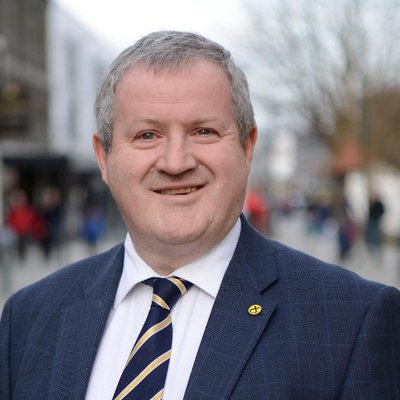
    The below letter was issued jointly by Ian Blackford from the SNP (pictured above), Sir Ed Davey from the Liberal Democrats, Liz Saville Roberts from Plaid Cymru, Colum Eastwood from the Social Democratic and Labour Party, Caroline Lucas from the Green Party and Stephen Farry from the Alliance Party, on 26 May 2020.

    It is now a matter of record that Mr Dominic Cummings broke multiple lockdown rules.

    He is yet to express any apology or contrition for these actions. There cannot be one rule for those involved in formulating public health advice and another for the rest of us.

    This is an issue that transcends politics. It has united people of every party and political persuasion, who believe strongly that it is now your responsibility as Prime Minister to return clarity and trust in public health messaging.

    We are clear that this can now only be achieved by removing Dominic Cummings from his post without further delay.

  • Ian Blackford – 2020 Speech on the Coronavirus Bill

    Ian Blackford – 2020 Speech on the Coronavirus Bill

    Below is the text of the speech made by Ian Blackford, the SNP MP for Ross, Skye and Lochaber, in the House of Commons on 23 March 2020.

    It is a pleasure to follow the right hon. Member for South West Surrey (Jeremy Hunt). I do not think he will mind my saying that I cannot think of another time when I have agreed with almost every single word he said. I hope that people listen to his wise words, which come from his experience; there was an awful lot in his speech that was sobering. The way we are conducting this debate and the collegiate style of the contributions from the Secretary of State and the shadow Secretary of State are a testament to the importance of the crisis we are all experiencing. In this national emergency, the desire shared by all our constituents is that we all work together.

    I will begin by saying something that is often repeated, but cannot be said enough. On behalf of all who sit on the Scottish National party Benches, I thank all of those who work in our NHS—our doctors, our nurses and all those in support roles around them who day after day make the choice to go into work, literally risking their own health to save the lives of others. At a time when the fragility of human life occupies the thoughts of us all, their example, their care and their limitless compassion are a source of inspiration and comfort to us all. They are nothing short of heroic. In return, they deserve all our thanks, but even more important, they need all our support. Today we would all do well to keep it in mind that the primary purpose of the emergency legislation is to help them—to help those who work in our NHS across all these islands. They need our help to slow the spread of this virus. They need our help to flatten the curve of infection. They need our help to reduce the pressure on their services.

    In passing these emergency measures, we have to be fully transparent and open. That means being honest about the uncertainty of the timeline ahead. There are few things we can say for certain, but we know we are only in the foothills of this mountainous challenge. There remains a long way to go. We have to be honest that in fighting this virus, we may only be approaching the end of the beginning. No one knows for sure when this will end, but we do know that NHS and governmental action will not be enough on its own. Everyone has a part to play. We can get through this and overcome it only if we all work together.

    On the specifics of the Bill, first, I am pleased to confirm that the Scottish Government have worked constructively with the UK Government on this legislation. It is important to say that, given the context of the last ​few years. It is no secret that there has been a virtual stand-off in other legislation, but the joint efforts and the extensive co-operation on this Bill highlight the extraordinary public health and economic challenges posed by the virus. Passing this legislation is fundamentally about protecting and saving lives. Politics cannot and will not be allowed to get in the way of that.

    The Scottish Government tabled their legislative consent motion, with advice to approve consent, in Holyrood last Thursday. The LCM will now be considered by the Finance and Constitution Committee at Holyrood on Tuesday morning, and will be debated in the chamber on Tuesday afternoon. The urgency of that timeline is, unfortunately, necessary. It is clear, and we accept, that this Bill cannot be scrutinised in the way we would normally wish. The immediacy of the pandemic, and the unprecedented challenges facing Scotland and the rest of the UK, simply does not permit that. The stark reality is that there is simply no time to lose.

    Sir Jeffrey M. Donaldson (Lagan Valley) (DUP)

    There is common cause even between Unionists and nationalists on this issue. The Northern Ireland Assembly will tomorrow give consideration to the legislative consent motion. Does the right hon. Gentleman agree that before this legislation is enacted and enforced, the Government must move swiftly to give the self-employed people whom he and I represent the reassurance they need that they will be supported?

    Ian Blackford

    I am happy to say that I completely agree. My right hon. Friend and I were in meetings with the Prime Minister last Friday morning, and there was a consensus about the economic measures that had to be taken for those who were in employment—one of the reasons being that we were fearful of the potential risks of unemployment if we did not take those measures. I commend the Government for the actions that were taken and the announcements made last Friday afternoon, but there is unfinished business for the self-employed and the unemployed. Collectively, we need to work together to do what we need to do in order to secure the incomes of those we are asking to take action to protect themselves and the rest of us over the course of the coming months. I hope that the Chancellor will be in a position to meet Opposition leaders over the course of the next few hours, and to come to the House tomorrow to tell us all what we are going to do to ensure that we protect the interests of absolutely all our citizens.

    David Linden (Glasgow East) (SNP)

    A number of Glasgow taxi drivers live in my constituency and they are self-employed. Over the weekend and last week, many have taken their cars off the road. May I say to the Government, through my right hon. Friend, that time is really running out? We need the Chancellor to come to the Chamber tomorrow to make it crystal clear that support will be given to taxi drivers and lots of other self-employed people, including those in the wedding industry. The measures that have been brought forward so far are very good, but time is literally running out for self-employed people.

    Ian Blackford

    I agree. I hope that the Minister might make some reference to this issue when she sums up later. We are respectfully saying to the Government: let us work together to ensure that we can offer the financial ​security that all our citizens need, whether we are talking about taxi drivers in Glasgow, or the people who provide bed-and-breakfast accommodation and guest houses in my constituency, whom I am asking to shut their doors. It is important that we provide the financial security that they all need.

    It is impossible to overstate the scale and seriousness of this health and economic emergency. None of us has witnessed or experienced anything like this before. It is no exaggeration to say that the covid-19 threat is the biggest challenge that we have faced since the second world war. That is the frame of mind that all of us should be in. It is for that reason—the extremity of this time—that we welcome the measures in the Bill. They are the measures that we need to fight this virus. The breadth of measures contained in this legislation reflect the enormity of the challenge across these islands. They also include bespoke provisions for Scotland to reflect our different legal system. For the public looking on today, it is crucial that we explain fully the powers that are being discussed and sought, and the reasons for them. They include additional public health measures to assist with the containment or mitigation of the spread of disease.

    Neale Hanvey (Kirkcaldy and Cowdenbeath) (Ind)

    Will the right hon. Gentleman give way?

    Ian Blackford

    Give me some time and I will. The part of the world I live in, the highlands, needs the powers in this Bill if we are to protect our population, and I know that the same goes for the constituencies of many other right hon. and hon. Members, not least the hon. Member for St Austell and Newquay (Steve Double), whom I know has been outspoken on this in the past few days.

    Let me put on the record the challenge we are facing. The Highland Council landmass is 25,656 sq km, and of course that area does not include Argyll, the Northern Isles or the Western Isles. That Highland Council area makes up 32% of the landmass of Scotland and 10.5% of the UK landmass, yet we have one acute hospital, in Inverness. For many, that hospital will be more than three hours’ drive from home. Just think about that. If a hospital in an urban area has an issue with capacity, people can often be transferred to another hospital, but we do not have that opportunity in the highlands, as we have that one hospital. I am asking everyone who is thinking about coming to the highlands to think about that threat to our NHS.

    I have been working with the NHS and talking to the police, and on the back of what we have been witnessed over the weekend I would like, with the forbearance of the House, to read out a press release from the chief executive of NHS Highland yesterday. It stated:

    “As a community we in the Highlands, Argyll and Bute are friendly, welcoming and hospitable to the thousands of visitors we get all year every year. However, we are currently in a situation that has never been experienced before and for the first time we are making a plea for you to stay away.

    We have heard that there are many people using campervans/motorhomes to make their way to the Highlands and Argyll and Bute as a way to self-isolate during this period. Please don’t.​

    National advice is quite clear that we, as a nation, need to stay at home, self-isolate and stop all non-essential travel. This includes using our area as a safe haven.

    We have asked our communities in NHS Highland to do everything they can to stay safe. This includes self-isolating, working from home (where possible), and limiting their contact with the outside world.”

    That is a very clear and a very stark message.

    Neale Hanvey

    This situation is fluid and ever-changing, and I am sure everyone is receiving multiple emails about the changes in their constituencies. My right hon. Friend makes a point about the need to self-isolate. That is an essential part of any infection-control programme, and this is a public health emergency. Constituents have contacted me today to say that their employer, Amazon, is refusing to pay members of staff who have self-isolated unless they can prove that they have had a positive covid-19 test. That is forcing people to make the choice to go into work and not self-isolate. Does he agree that that is reckless behaviour on the part of Amazon?

    Ian Blackford

    That is the height of irresponsibility, and Amazon and anybody else who would behave in that way needs to think again. Of course there are companies that are engaging in best practice. I have had a number of complaints from people in the highlands about those who have not been doing the right thing, but let me thank Highland Experience Tours, which has suspended all its activities and sent its drivers home. The hon. Member for Ilford North (Wes Streeting) mentioned Sykes Cottages, and I have to disagree with what he said, because its behaviour has been absolutely reprehensible. Let me read to Members what Sykes Cottages sent to me on Saturday. It said, “Given concerns surrounding the current outbreak, it is understandable that people want to arrange private accommodation in more remote locations to distance themselves from larger towns and cities. The latest Government advice does not prohibit travel in the UK. We are continuing to provide a service for customers.” That is a service to customers to come from the urban areas; it is deliberately creating the circumstances whereby their customers should come to self-isolate in an area where we have limited public health capabilities. That simply is not good enough.

    I am delighted to say that, under pressure, the site has now relented and is stopping new bookings in the highlands and islands over the next few weeks, but it has sent a considerable number of people up to the highlands who are there today. The site should be delivering immediate advice to all those guests that they should return home to their place of origin.

    I give the same message to those with holiday homes and second homes in the highlands: “Do not come to the highlands. Do not put additional pressure on our public services. We will welcome tourists back to the highlands once this emergency is over, but do not threaten the health of our constituents.” In my district, like in many rural areas, 35% of the population is aged over 65. We have to think about the needs of those living in such areas.

    In addition to the sites I have mentioned, Cottages.com is refusing to allow cottage owners to cancel bookings without a penalty, which is simply not good enough. As this is now in the public domain, I hope all these providers will now think about their responsibilities.​

    As I have mentioned, some providers are behaving more responsibly. HomeAway has guidance on its booking site for giving refunds to those who cancel, but I will read one last email from somebody living in the Lake district:

    “My family and I were due to take up a holiday home rental from the 28th March. We will stay away and remain in the Lake District where we live.

    However you might be interested to learn that the owner of this holiday home, let through HomeAway, is refusing (at present) to cancel my booking, refund my payment of £957 or move my reservation to next year. He maintains that Skye is an ideal place to self-isolate…and as the home is available he is refusing to refund the total of my booking fee.”

    [Interruption.] I can hear an hon. Member shout, “Shocking.” Skye, or anywhere else in the west highlands, is no place for anyone to self-isolate, and I hope this cottage owner, and others who are behaving in such a reprehensible manner, changes their ways.

    Of course, it is not just those who are providing accommodation. Everyone knows about the Harry Potter films and the attractions of the rail line from Fort William to Mallaig. The steam trains, which operate on a regular basis, are due to start on 6 April. What on earth is the Jacobite steam train company thinking? These train trips, along with every other visitor attraction in the west highlands, must close, and they must close today.

    This is my message to anyone thinking of coming to the highlands: “You will be made welcome when this is over but, for the time being, stay at home. If you are in the highlands now, please go home. The Scottish Government have already announced that ferry traffic will be prohibited for those on non-essential journeys, but you have the ability to return home today. Please do so.”

    This Bill includes badly needed powers to allow more health and social care workers to join the workforce. That includes removing barriers to allow recently retired NHS staff and social workers to return to work, as well as bringing back those on a career break and bringing in social work students to become temporary social workers. It has to be said that the number of doctors, nurses and carers already seeking to re-register to help in this emergency has been one of the most uplifting stories of this crisis. The Bill allows that process to become much easier. Its provisions also allow for the relaxation of regulatory requirements within existing legislation to ease the burden on staff who are on the frontline of our response.

    The next few weeks and months need simply to be about saving as many lives as possible. Try as we might to save these lives, unfortunately the truth is that this virus will inevitably end up with many of our people dying before their time. That terrible reality is why it is right that this legislation includes special arrangements and provisions to manage an increase in the number of deceased persons with respect and dignity.

    Finally, something my party has raised repeatedly since the early stage of this crisis is the economic interventions required to help our people though this emergency period. I note that the legislation includes provisions to support the economy, including on statutory sick pay, that are aimed at lessening the impact of covid-19 on small businesses. While we have welcomed many of the measures brought forward by the Chancellor, ​we have put it on record that more needs to be done. The self-employed and the unemployed, whom we talked about earlier, need to be considered. They are under pressure and they need to know that we have got their backs. They need the security of a guaranteed income. We now have an opportunity to overhaul and fix the universal credit system—ending the delays, uprating the level of support and scrapping the bedroom tax. If we are to fight this virus together, we must ensure that everyone is supported equally and that no one—no one—is left behind.

    The emergency and extensive powers in this legislation have rightly raised questions and concerns, many of which we have heard this afternoon. The imposition of measures that will significantly alter individual liberties deserves full and frank scrutiny, no matter the context. We know that the Bill sunsets after two years. However, there are serious concerns over the two-year period and the scrutiny of this measure. I know that aspects of the Bill and amendments to it will be discussed at later stages. I hope that the Government will look carefully at the safeguards of regular reporting, review and renewal if it is required.

    Mr David Davis

    The right hon. Gentleman is making a powerful speech. As he knows, I have an amendment in Committee to change two years to one year. I asked the Health Secretary whether we would be able to amend or delete an element of the legislation at the six-month review; otherwise, we will perhaps be faced with eight good bits of legislation and one or two bits that are doing badly, and we will be forced to vote the whole thing through, rendering it a rubber stamp. Does the right hon. Gentleman agree that either my amendment or a variant of the amendment tabled by the right hon. and learned Member for Camberwell and Peckham (Ms Harman), which would allow us to change the Act, would be a better way forward?

    Ian Blackford

    I agree with the right hon. Gentleman that that would be a very good way forward. It is important that we enact the Bill, but the House must have oversight of it in the period ahead. I commend him for his approach.

    The Scottish Government have pledged to have appropriate reporting on how and when they will use the powers in the Bill. They will embed such reporting and renewal in law. They have stressed that the creation of these additional powers does not mean we will automatically be required to use them. I hope the UK Government follow that lead and give assurances in the remaining stages this evening.

    The emergency powers and the extent of the legislation demonstrate what all of us are faced with. This is not a normal time. Unfortunately, the truth is that none of us will live normally for some time to come. As the First Minister has said, if individuals are continuing to live normally, they need to ask themselves if they are following all the scientific advice. The sheer speed of the spread of this deadly virus has shocked us all. It has naturally made us reflect on the way we live and the vulnerability to which we are all exposed. Equally, it has demonstrated our dependence on one another. We live in an ever smaller world and the major challenges we all face are the same; we can only face them together.​

    The provisions in this legislation are about saving as many lives as possible during the biggest health emergency this planet has faced in 100 years. If we do not take immediate and unprecedented actions, we will be responsible for putting people at risk. If we act fast, we know that we can save thousands of lives. It is as simple and as clear as that. Never has a more important responsibility been placed upon all of us. Saving these lives must be our sole focus.

  • Ian Blackford – 2020 Speech in Response to the Budget

    Ian Blackford – 2020 Speech in Response to the Budget

    Below is the text of the speech made by Ian Blackford, the SNP MP for Ross, Skye and Lochaber, in the House of Commons on 11 March 2020.

    Before I begin, I pass on my best wishes and those of my colleagues to the hon. Members for Mid Bedfordshire (Ms Dorries) and for York Central (Rachael Maskell)—we are thinking of them and, indeed, all those who are caught up in this terrible virus.

    The scale and seriousness of the coronavirus demand a collective response. As I said last week, this virus requires all of us to demonstrate calm and practical leadership. This is the very least the public deserve from us at a time of deep and natural worry. SNP Members are committed to that approach. That example of leadership has been clearly embodied by our First Minister of Scotland, and I welcome the close co-operation between the Scottish and UK Governments on this matter.

    The first priority in dealing with the crisis has to be about maintaining the health of all our people. The scale of the coronavirus has and will put added pressures on the NHS in Scotland and across the United Kingdom. I take this opportunity to thank all our NHS staff for everything they do, but most especially now, as they deal with the outbreak of this virus.

    I welcome the fact that the Chancellor has committed to providing additional funding, but I wonder whether he will take the opportunity to tell the House how much of that additional spending on the coronavirus will come to Scotland. I also urge him to go further—the SNP Scottish Government have ensured that frontline health spending in Scotland is £136 higher per person than it is in England. Social care funding is £130 per capita higher than it is in England. Matching Scottish per capita NHS spending would provide health services across the UK with the resources, equipment and staff that needed now during this crisis and in the longer term. It would also allow Holyrood to increase funding for NHS Scotland by over £4 billion by the end of this Parliament.

    Catherine West (Hornsey and Wood Green) (Lab)

    Will the right hon. Gentleman take an intervention?

    Ian Blackford

    I will not.

    We believe that that is the only adequate and prudent response to this unprecedented health crisis. As part of the Budget package, we also need to recognise the deep worry that people are experiencing about the impact of its consequences on their incomes, employment, rights and benefits. Just as our health response must be led by the best scientific advice, our economic response must ​be guided by the need for an appropriate fiscal stimulus that ensures that the economy is not tipped into recession. The employed and the self-employed need to be aided through the crisis. I acknowledge many of the measures taken today by the Chancellor to do just that, but more urgent and more targeted action is also required.

    In particular, urgent measures are needed to help the tourism and hospitality industry, above and beyond what has been offered today. Industry leaders are already warning of the consequences of the coronavirus, with a raft of booking cancellations and a significant drop in numbers. The SNP is advocating a package of measures, including a temporary drop in the VAT rate to 5% to help businesses to reduce their costs—[Interruption.] I can hear the Prime Minister saying, “We’ve cut interest rates,” but—[Interruption.] Business rates, rather, but the problem, Prime Minister, is that these businesses are facing a crisis not of their own making.

    Many of the businesses in my part of the world, in the highlands of Scotland, come through a fallow period over the winter. It is not just an issue of their seeing a reduction in business; in some cases, they are going to be desperately short of cash coming in through the door. Let us not forget that many of these businesses have relied on an EU workforce over the last few years. In anticipation of what is happening with the migration proposals from the Government and of the difficulty of recruiting labour, they have had to staff up. They have additional costs, but their revenues are about to fall through the floor. That is why I have written to all the major UK banks to ask them to support businesses and households through this period to make sure that working capital is extended to all businesses, and that no business—no good business in the hospitality and tourism sector—should be pushed to the wall as a consequence of what is happening.

    Chancellor, a temporary drop in VAT would allow business to weather the storm as people follow public health advice and tourist numbers drop, but let me say, on the basis of the scientific advice that we have today, that Scotland is well and truly open for business, and I encourage people to come and experience the breadth and depth of our tourism offering. VAT was reduced in Ireland and it helped to boost both employment and tourist numbers. I urge the Chancellor, in the strongest possible terms, to consider a similar policy to help our tourism and hospitality sectors to come through this crisis.

    Let me turn to the other measures in the Budget. The Chancellor has just delivered his first Budget speech—I welcome him to his position—and I give him credit for one thing: he did really well in fluently reading out Dominic Cummings’ handwriting. It is a strange irony that those who were most obsessed with taking back control from Brussels are now at the heart of the unelected, centralised elite who have grabbed control, not just in Downing Street but in the Treasury.

    Today they have produced a half-baked Budget thrown together by a bunch of Vote Leave campaigners drowning in the responsibility of government. I am talking about a group of ideologically driven campaigners—let us be charitable—so distrustful of Europe and the benefits it might have brought, economically, socially and culturally, and so caught up in their own meaningless slogans that they are blinded by the damaging reality they have caused. People are not fooled. The slogan “take back ​control” does not work when you have been in power for the last decade. We have not forgotten that the Tories have been in control and that we are all the worse for it. If the Chancellor really thinks that this Budget levels up after a decade of austerity, he must have bought himself a wonky spirit level. After delivering a decade of cruel cuts, the Tories are now offering a new decade of political and economic isolation outside the European Union.

    The Budget is a warning of what may be ahead of us and a reminder of Scotland’s need to choose a different future. It has never been more stark: Scotland’s economic interests are not served by being part of this UK union. Rather than the instability and limitations imposed by the UK, independence now offers the Scottish people the chance to build a better, more prosperous and safer future. The 2016 Brexit referendum was the moment when our political futures met a point of divergence, and we are now on the cusp of the moment of decision for Scotland’s people. The Conservatives may have delayed our democratic right, but they cannot indefinitely block the voices and votes of the Scottish people. Scotland’s future will be ours to choose, and we will very shortly make that choice. I am more confident than ever that the Scottish people will choose to be an independent, equal and European nation.

    As I have said, this is a Budget produced by a group of people who are expert in fabricating slogans but amateurs in delivering competent government. The Tories have a new slogan about levelling up funding and living standards. Let us judge them on their record. A reasonable place to start is basic income. The Office for National Statistics recently confirmed that the median income for the poorest 20% fell by 4.3% per year between 2017 and 2019. Institute for Fiscal Studies analysis shows that since 2010 the poorest 10% of households have lost an average of 11% of their income. That is £1,200 per year. For those with children the average loss was up to 20%, or £4,000. That is the cost of Tory Government to people in Scotland and the United Kingdom. That is the true Tory record: falling wages and growing hardship. While the gap between rich and poor grows, last month the ONS revealed that income inequality was as much as 2.4% higher on average than official figures had suggested over the decade since the financial crisis in 2008, and this Budget does not help by failing to implement policies that deal with growing inequality. The Tories still refuse to raise their pretend living wage to the real living wage and refuse to end the age discrimination that penalises our young people.

    Another reasonable place to judge their levelling up record is overall public spending. Let us not be fooled by some of the rhetoric in the statement today. Since 2010, aside from health spending, the Tories have cut per person spending on public services by a whopping 21%. This Budget comes nowhere near either closing or reversing that devastating legacy. By any standard, by any measure, by any objective acknowledgement of fact, this Tory Government have failed to level up for anyone anywhere. They cannot be allowed to hide from these facts, just as they cannot be allowed to hide from their legacy.

    Let us be clear: the poor becoming poorer was a Tory political choice. The Resolution Foundation has said that the fall in income for the poorest

    “has been driven by policy choices, with gains from higher employment more than wiped out by benefit cuts.”​

    Why did the Conservatives take these political choices? As ever, they were serving their own interests and the interests of those they serve. For them, it is a simple and cynical calculation. A Government who rob Peter to pay Paul can always depend on the support of Paul. As far as the Tories are concerned, everyone else can go whistle.

    I suppose we should not be surprised. This is a Budget advocated by a Prime Minister who once eulogised:

    “some measure of inequality is essential for the spirit of envy and…is, like greed, a valuable spur to economic activity.”

    Greed—a valuable spur to economic opportunity! That is the reality of the vision of the Prime Minister. That does not sound like a man determined to level up. The honeyed words and new slogans in the Budget will not change the long and bitter experience of Tory economics. People in Scotland know that they cannot believe their words, they cannot believe their promises, and they cannot believe that they will ever change—not ever.

    If this really was the great investment Budget the Chancellor heralds, he should have started by paying up the moneys the Tories have been holding back from Scotland for years. I am grateful to a Scottish Parliament Information Centre—[Interruption.] I hear the Prime Minister talking about grievance. This is not about grievance; this is about the facts of what a Conservative Government have done for the people of Scotland. The Scottish Parliament Information Centre has confirmed that Scotland would be owed about £5.8 billion if the proper Barnett consequentials were applied to the DUP Brexit bung and the additional moneys since. That is the reality. That is added, of course, to the £175 million still owed to the Scottish Police Authority and the Scottish Fire and Rescue Service—money that was stolen from our vital public services. [Interruption.] I hear the hon. Member for West Aberdeenshire and Kincardine (Andrew Bowie) saying it was against all the advice. It was the vindictiveness of his Government that took these funds from the Scottish public services. That is the reality. Let us be crystal clear: the UK Government have chosen to rob Scotland’s public services of that money, and the silence from the Scottish Conservatives—their failure to stand up for our police and firemen—is audible to all.

    The Budget also turns its back on the oil and gas sector in the north-east of Scotland. These industries face months of instability and uncertainty in the aftermath of the latest collapse of an OPEC deal to stabilise prices. The oil price has plunged, yet there was not a mention of it from the Chancellor. The impact of the global oil price slump will reverberate around the world, including hitting Scotland’s vital oil and gas sector. The oil and gas sector has generated £334 billion of net tax revenues for the UK Government since 1970. Having used the sector as a cash cow, the Treasury must support it in its time of need. The UK Government must deliver crucial support for the sector as part of a just transition to net zero emissions. Scotland still bears the scars from rapid de-industrialisation under previous Conservative Governments. That must never happen again, and it must not happen to north-east Scotland.

    The failure of the Government’s investment strategy— the Chancellor admitted it today, and we see it in the productivity record—has unfortunately failed to diminish their arrogance in trying to dictate the investment needs of the devolved Administrations. We are told that the ​Treasury is considering an intra-UK connectivity study, which sounds suspiciously like another Tory power grab on the devolved Parliaments. Chancellor, how can people be expected to have faith in a Prime Minister who cannot build a bridge between London and London, and a Scottish Secretary who thinks a bridge is a euphemism for a tunnel? Having ripped up the Sewel convention, the Tories are on a mission to level down devolution. Chancellor, your Government are neither competent enough nor trusted enough to invest in infrastructure in Scotland. Go back and think again, and allow the Scottish Parliament to use extra capital resources to provide for Scotland’s infrastructure needs. We will deliver for the people of Scotland.

    The Budget fails to attempt to fix, or even to acknowledge, the underlying fundamental problem of the economy. For the past decade, the Conservatives have presided over a crisis in productivity. Only last year, about 6,000 companies revealed that uncertainty over leaving the European Union had lowered capital spending by about 11% on average. That is what is really going on in the economy. According to the Bank of England, that has cut overall UK productivity by between 2% and 5%—a reduction in productivity created by the Conservative Government in power in Westminster. The overall perception of the UK’s productivity is not helped by the Prime Minister’s productivity levels; he downs tools and hides away whenever the going gets tough.

    Static productivity is a direct consequence of choices made during the financial crisis. There was a massive quantitative easing splurge in the wake of the crash, but there has been no real return on that investment for ordinary workers. It did do one thing, though; a Bank of England analysis of the impact of quantitative easing showed that between 2006 to 2014, the 10% least wealthy households saw a marginal increase in wealth of around £3,000. The wealthiest 10% saw a £350,000 increase. In other words, printing money for the financial services industry ended up helping only those working in the financial services industry. Improved productivity, and capital investment for wider society, never got a look-in. I challenge the Chancellor: will he commit to a review of the impact of the bonus culture in financial services and its effect on general economic activity?

    As I have said, the decade of Tory austerity and the inequality it inflicted has hit the poorest hardest. The brutal cuts have targeted children and the most disadvantaged. The benefits freeze, universal credit sanctions, disability assessments, the cruel two-child limit, the rape clause—the list of failed and punishing policies goes on and on. It is a legacy the Tories should be ashamed of, and should have the basic decency to apologise for.

    If the Chancellor is serious about looking after those who have been left behind, he can begin to prove it by committing to four things. Will he increase the monthly allowance for universal credit and end the benefit cap; increase benefits above inflation and restore their value after the four-year freeze; scrap once and for all the two-child cap on tax credits and the rape clause; and follow the lead of the Scottish Government and bring in a child payment scheme similar to theirs, which has lifted 30,000 of our children out of poverty? If the Chancellor cannot commit to those four basic measures, which would reduce poverty and bring compassion into the social security system, his words and promises of levelling up will be shown to be hollow.​

    The devastating Tory legacy on social security has especially hit pensioners, who still receive the lowest state pension in the developed world, according to the OECD. They have also been denied their full rights. I am proud that the Scottish National party, with others, has stood shoulder to shoulder with 1950s-born women since the beginning of their campaign, and we stand with them still. They deserve justice, and it is disgraceful that their plight continues to be ignored in yet another Budget.

    Another Tory attack on pensioners, and another broken promise, is of course the removal of free TV licences for the over-75s. This will hit 240,000 households in Scotland and 3 million across the United Kingdom. Chancellor, this is your Government’s responsibility, not the BBC’s. It is time to pay up. Stop punishing pensioners, and keep the free TV licence for all those over 75.

    By far the biggest budgetary and economic decision that confronts these islands—[Interruption.] We are talking about some of the poorest in our society, and women who have been denied their pensions. I say to the Prime Minister that when I knocked on doors in the election campaign, I found that a great number of elderly people were alarmed by the loss of their TV licence. That is what we get from the Conservatives, but they sit laughing and scoffing. I find it remarkable. It is okay for them; the rest of the population can go hang.

    By far the biggest budgetary and economic issue that confronts these islands remains our relationship with the European Union. We hope that the negotiations on our future relationship can be successfully concluded, but all the signs from this Tory Government are that instead of co-operation and close relationships, they are heading for divergence and deregulation. The UK Government’s negotiation mandate all but confirmed that choice. The consequences for workers’ rights, environmental protection, the shape of our economy and the nature of our society will be profound, and—this will be of little interest to this Tory Government—the impact will be felt most by those who already have the least: the vulnerable and the poor. Scotland will end up paying a heavy price for a future we did not back.

    Our Government’s modelling shows that even if the UK Government secure a basic free trade agreement, Scottish GDP would be 6.1%, or £9 billion, lower by 2030 than if we had retained full EU membership. We heard from the Chancellor about the impact of a slowing global economy, and have heard about the impact that coronavirus may have on us, yet the Government are prepared to crash our economy and put Scottish workers on the dole. Not in our name! The harsh reality is that that lost GDP—let us put it in cash terms—amounts to £1,610 per person. A no-deal Brexit—heaven help us—will raise that figure to £12.7 billion, equivalent to £2,300 per person. This Tory Government will sacrifice our economic health. Why? For an ideology––the narrow ideology of the Brexit fanboys, led by Dominic Cummings, now running the Treasury. As the trade negotiations unfold in the coming months, the numbers are worth reflecting on, because it is worth reflecting on the fact that the Westminster Government are actively choosing to make Scotland’s people poorer. It is not an accident; it is by design.​

    On top of all that, the National Audit Office—[Interruption.] I find it remarkable to watch the reaction of the Prime Minister. I challenge the Prime Minister to tell me that the figures that I have just given on the impact of a free trade deal or a no-deal Brexit are wrong. The Prime Minister knows, just as I know—just as we know—that the Scottish economy is going to be harmed by what he wants to do in these trade negotiations.

    The Prime Minister (Boris Johnson)

    The only threat the Scottish people face is the SNP!

    Ian Blackford

    I remind the Prime Minister that we have just had an election. He went into that election with the slogan “Say no to indyref2”; how did that work out? You lost more than half your MPs, Prime Minister. [Interruption.]

    Madam Deputy Speaker (Dame Eleanor Laing)

    Order. Has the House forgotten that I said that the leader of the Scottish nationalists would be heard without interruption? It seems to me, though, that most of the interruption is coming from behind him. I am protecting the right hon. Gentleman.

    Ian Blackford

    Thank you for the advice, Madam Deputy Speaker, but I was simply responding to the chuntering by the Prime Minister.

    Valerie Vaz (Walsall South) (Lab)

    He interrupted.

    Ian Blackford

    Indeed, he did interrupt.

    Despite all the money that has been spent, there is still not an ounce of clarity on the UK shared prosperity fund, which was supposed to be the great sweetener offered by the Brexiteers. There was nothing in the Budget from the Chancellor on that. There was no clarity, either, for young people in respect of their opportunities to enjoy the right to travel, work and education throughout Europe as part of the Erasmus scheme. We took those rights and benefits for granted. Around 15,000 people have been involved in the programme through nearly 500 Erasmus+ projects throughout Scotland. On Monday, Universities UK estimated that leaving Erasmus+ will cost around £243 million per year. So why do it? There was no clarity, either, for the vital research and development facilities in our world-leading universities, or on their ability to access the new multibillion-pound Horizon Europe project.

    One of the biggest costs of the hard Tory Brexit will fall on rural Scotland. We know what the Government think of rural Scotland: their own adviser revealed that farming and fishing are not “critically important” to them. Farming and fishing are not critically important to the Government. In fairness, that was not really a revelation: rural Scotland has long since been wise to the Tory attitude of contempt, and more and more of our fishing communities are seeing it unfold before their eyes. With trade talks starting and the clock now ticking, we are now less than four months away from when the Tories repeat history and sell out on all their promises to Scotland’s fishing communities. The truth is that the Government will be able to secure a free trade deal with Europe only if they let EU fleets continue to access our waters on essentially the same terms as today.​

    I would like to think that Ted Heath felt some level of responsibility when he treated the Scottish fishing sector as expendable in the 1970s. It was expendable under Ted Heath in the 1970s and it is expendable under this Prime Minister in 2020. The sad truth about the Prime Minister is that he will not even bat an eyelid as he sells out on his promise to Scottish fishing communities. He simply does not care. The same is true for our farmers and crofters. In the Agriculture Bill Committee last week, SNP amendments—[Interruption.] The Prime Minister should calm down; I really worry about his blood pressure.

    Madam Deputy Speaker (Dame Eleanor Laing)

    Order. Do not worry; if the Prime Minister needs to be calmed down, I will calm him down. He seems to be sitting quite calmly right now. I am sure that the right hon. Gentleman is coming to his peroration.

    Ian Blackford

    I am nearly there, Madam Deputy Speaker, but I care for the health of everybody, and I certainly care for the health of the Prime Minister.

    In the Agriculture Bill Committee last week, SNP amendments gave the UK Government the opportunity to ensure that food and welfare standards will not be diminished and will not be on the table in any future trade deal. It tells its own story that the Conservatives voted against all our amendments, threatening our farmers and crofters with crippling tariffs, reduced standards and costly customs bureaucracy. That has left many of them burdened with very uncertain futures. Will the Chancellor’s Government pick up the bill to compensate our farming and fishing communities if they lose revenue as a consequence of a botched Brexit?

    Let me move on to immigration. In this Budget, the Chancellor has failed to give any reassurance on one of the biggest areas of concern for Scottish businesses. From our NHS to social care, to universities, agriculture, tourism and hospitality, EU citizens play a vital part in our economy and are a core part of our communities. Unlike the Secretary of State for Scotland, we do not define these people as “cheap migrant labour”; they are our friends and our neighbours. They have come to Scotland to build a home, and under the SNP they will always be welcome. Rather than heeding concerns or engaging with tailored immigration proposals—including plans put forward by the Scottish Government for a Scottish visa system—the Tories are ploughing on regardless. It is time that this Tory Government woke up to the reality and started to listen to Scottish businesses. The Tories’ immigration plans will devastate Scotland and the United Kingdom, and the Chancellor needs to understand that a partial fig leaf to spare Scottish Tory blushes on immigration will not be enough. I urge the Chancellor, instead of blindly ploughing on, to work constructively with the devolved Administrations and our business communities on a migration system that works.

    It is genuinely concerning that this Budget falls so far short when it comes to tackling the climate emergency. It is clear that the Conservatives’ green rhetoric is merely the language of electoral convenience rather than a real priority. The Government have just sacked the president of the UN climate conference in Glasgow, and the sub-committee promised by the Prime Minister has not even met. I am glad to say that Scotland is already a world leader on tackling the climate crisis and delivering green energy. It is time for the Conservatives to get their act together.​

    The UK Government must now do their bit by ditching nuclear power and instead investing in renewables, making sure that we deliver on carbon capture and storage, and supporting the North sea sector to play its part in the transition. While they are at it, they should ditch the madness of spending £200 billion on Trident nuclear weapons that we do not need. Climate change is already threatening our world; we do not need weapons of mass destruction on the Clyde doing the same. Instead of paying lip service to climate change, the Chancellor should have set out a plan that matches Scotland’s green ambitions, matches the Government’s Paris climate agreement responsibilities, and sticks to future EU emissions standards. As Greta Thunberg has said, our house is on fire. The inaction of the Tories is the equivalent of ignoring not only the fire alarm but the flames that are swirling around our feet.

    As I move towards a conclusion, Madam Deputy Speaker—[Hon. Members: “Hooray!”] Well, I can certainly give Members some more home truths if they want them. The decisions and priorities needed to meet the challenges of the climate emergency are but one example of where Scotland has walked a very different and more progressive path than successive Westminster Governments. Last week, in the week when International Women’s Day fell, my colleague Kate Forbes, the Scottish Finance Secretary, became the first woman to present and pass a budget in our Scottish Parliament. She did that despite dealing with the unprecedented delay in today’s UK Budget and the fact that the Tories made a £13.9 billion cumulative cut to Holyrood’s budget.

    The Scottish budget was everything this UK Budget is not: ambitious, green, collaborative and compassionate, and delivering £1.8 billion of investment in low-carbon infrastructure, progressive income tax rates, free bus travel for our under-19s, record NHS spending, additional funding for Police Scotland and £800 million for 50,000 new homes. It is a budget that reflects the vision and the values of all our people. It is a budget that puts the building blocks in place for a fairer society and that makes further progress towards a new Scotland—an independent Scotland in the European Union.
  • Ian Blackford – 2020 Speech on HS2

    Ian Blackford – 2020 Speech on HS2

    Below is the text of the speech made by Ian Blackford, the SNP MP for Ross, Skye and Lochaber, in the House of Commons on 11 February 2020.

    I thank the Prime Minister for an advance copy of the statement. Let me be mindful of one reality. No number of prime ministerial vanity projects will ever heal the economic damage and the damage to connectivity that this Tory Brexit will inflict.

    In terms of the HS2 announcement, enhanced rail infrastructure is obviously welcome, despite the indecision and waste that have been synonymous with the project. We will wait and see whether the Prime Minister is capable of getting this decision through his own party and past his own chief adviser. However, if the Prime Minister is truly committed to rail connectivity across these islands, will he engage with the Scottish Government to improve rail links from Scotland to the major cities of the north of England, such as Manchester, Newcastle and beyond? Will he also explore collaboration on the extension of the borders rail line, and what resources will be provided?

    The Prime Minister may talk about his priorities of one nation; we know what nation he is talking about, and it definitely does not include the Scottish nation. Can I further ask, given his previous opposition to the Barnett formula and his party’s repeated failure to implement it fully, whether he can confirm whether all the spending he is determined to engage in will be subject to Barnett consequentials? Yes or no?

    I welcome the fact that the UK Government are following the lead of the Scottish Government, who announced a £500 million bus infrastructure programme last September. Given the Prime Minister’s previous association with buses, however, can he reassure the House that false advertisements will be banned from the new bus fleet?

    Finally, on the bridge, this is a Prime Minister who could not even build a bridge across the Thames, so he will therefore have to forgive those of us who are sceptical that he can build one over the 20-mile expanse of the North sea. Will the Prime Minister therefore provide the estimated £20 billion for this project to the Scottish Government and the Northern Ireland Executive so they can spend those moneys on their own priorities?

    The Prime Minister

    I can assure the right hon. Gentleman that we will of course collaborate with the Scottish Government on projects that will be of massive benefit for the whole of our United Kingdom. On his substantive question about Barnett consequentials, yes, of course there will be Barnett consequentials as far as the buses are concerned. As for his plan to build a bridge across the North sea, I think he needs to look at the geography of the United Kingdom again. The only obstacle standing in the way of HS2 is the crackpot SNP plans to put an economic border between England and Scotland, break up the United Kingdom and have a border at Berwick.

  • Ian Blackford – 2019 Speech on the Loyal Address

    Ian Blackford – 2019 Speech on the Loyal Address

    Below is the text of the speech made by Ian Blackford, the SNP Leader at Westminster, in the House of Commons on 19 December 2019.

    Thank you, Mr Speaker.

    There was absolutely nothing for the people of Scotland in that address from the Prime Minister, and I hope that, for those who were watching and listening back home, it was preceded by an announcement that it was not for viewers and listeners in Scotland.

    I congratulate the hon. Members for Chatham and Aylesford (Tracey Crouch) and for Walsall North (Eddie Hughes) on their addresses. I listened to all the stories about “A Christmas Carol”, but we did not hear which Conservative Front Bencher would be playing Scrooge. The hon. Member for Walsall North is a great football fan, and I thought that he would perhaps mention Aston Villa. They are not having the best of times, but I hope that he is enjoying watching John McGinn, whom we gifted to him from Hibernian last year.

    This morning, Scotland’s First Minister, Nicola Sturgeon, wrote to the Prime Minister demanding the transfer to the Scottish Government of legal powers to hold a second independence referendum under section 30 of the Scotland Act 1998. As the First Minister outlined, there has been a material change in the circumstances since the independence referendum of 2014, based on the prospect of Scotland‘s leaving the European Union against its will.​

    It is for the Prime Minister to explain to the people of Scotland why he is denying Scotland the right to choose our own future. Why did democracy stop, in the Prime Minister’s world, with the independence referendum in 2014? And may I say to the Prime Minister that it is not a good look to be playing with his phone rather than listening to the legitimate demands of the Scottish National party? [Interruption.] The Prime Minister says, “Say something more interesting.” Well, Prime Minister, this is about democracy. This is about the Scottish National party, which stood in the election on a manifesto about Scotland’s right to choose, and it is about the Conservatives, who said no to indyref2—and what happened? Well, the Conservatives lost more than half their Members of Parliament.

    Prime Minister, you got your answer from the people of Scotland. The SNP got 45% of the vote, a 20 percentage point difference from the Government. We got 80% of the Members of Parliament who sit on these Benches. Some time, some day, the Prime Minister is going to have to respect democracy. The Prime Minister cannot and will not continue to say no.

    Drew Hendry (Inverness, Nairn, Badenoch and Strathspey) (SNP)

    The Prime Minister says that looking at his phone is more interesting than hearing what Scotland needs. Does that not tell us everything about this Prime Minister and his view of Scotland?

    Ian Blackford

    Indeed it does. There is not much that can be added to that, because the image of the Prime Minister playing with his phone and not listening to the Scottish National party says it all.

    The people of Scotland did not vote for this Prime Minister. Scotland did not vote for this Conservative Government, and we certainly did not vote for the con of a Tory plan that has been set out today.

    In December 1967, my old friend Winnie Ewing proclaimed that

    “the march of time can bring anomalies between elections, so that sometimes a Government may have a majority in this House but be in a minority in the country.”—[Official Report, 6 December 1967; Vol. 755, c. 1551.]

    In Scotland, that is certainly the case. Here in this place, we face a Tory Government we have rejected, implementing a manifesto that Scotland rejected. For too many years, Scotland has been held back by successive Tory Governments we did not vote for.

    Scottish National party MPs have today set out an alternative Queen’s Speech to deliver for the people of Scotland. With a renewed and strengthened mandate, our expanded SNP team will focus on our priorities—on Scotland’s priorities: stopping Brexit and protecting Scotland’s NHS from any grubby Trump trade deal; dealing with the climate emergency; and, once and for all, putting an end to Tory austerity. Instead, the Government’s Queen’s Speech sets out another Tory programme that the people of Scotland rejected. Despite the fact that Scotland voted to remain a member of the European Union, we now face being dragged out against our will.

    We often hear about losers’ consent, but the fact is that Scotland voted to stay in the EU to maintain our rights as EU citizens. This Conservative Government do not have the consent of the people of Scotland, the Scottish Parliament or our Government to take Scotland ​out of the EU. We ask that the solemn right, claimed by the people of Scotland, to determine the form of government best suited to our needs be exercised. This House accepted that claim of right as a principle, on a motion that I moved in July 2018. It is the Scottish people who are sovereign.

    In that context, it is right for the House to respect our Scottish Parliament and last week’s election result. But of course, in the last Parliament, the Tories ignored our interests and sidelined the will of the Scottish Government, intent on bringing forward a deal that will destroy our economy and risk jobs and livelihoods. As the former EU permanent representative to the EU, Sir Ivan Rogers, said, that pledge will create

    “the biggest crisis of Brexit to date”

    in late 2020. He said that “get Brexit done” was

    “diplomatic amateurism, dressed up domestically as boldness and decisiveness.”

    From selling off our NHS to selling out Scotland’s fishing communities, the Prime Minister will inflict hardship on our communities as the cost of delivering his damaging Brexit.

    The voices of the people of Scotland are being silenced—80% of their representatives in this House are not listened to by a Tory Government showing contempt. That is why we stand up for Scotland and against cruel, punishing policies and narrow, backward-gazing politics. Instead, we are determined that Scotland’s right to choose our own future will be delivered, not simply because we in the SNP want that, but because the people of Scotland demand it. We stood on a mandate to give Scotland the right to choose its own future. I put the Prime Minister on notice that SNP Members will never stop fighting this Government for that case and for our mandate—for a fresh independence referendum—to be respected.

    Andrew Bowie (West Aberdeenshire and Kincardine) (Con) rose—

    Ian Blackford

    I see the hon. Gentleman seeking to intervene. Will he accept democracy and Scotland’s right to choose?

    Andrew Bowie

    I thank the right hon. Gentleman for giving way. Will he accept democracy and that last week, 55% of Scottish voters voted for parties that want to remain in the United Kingdom? There is no mandate for a second independence referendum in Scotland. The Scottish people are not calling for a second independence referendum. They want us to get on with the day job. Fix your own backyard before coming in here, demanding a referendum on Scottish independence. [Interruption.]

    Ian Blackford

    Well, as my hon. Friend the Member for Glasgow South (Stewart Malcolm McDonald) says, “What absolute tosh!” The hon. Member for West Aberdeenshire and Kincardine (Andrew Bowie) cannot get away from the fact that we won the election. We are here standing up as a voice for Scotland, and he lost most of his colleagues. They were rejected at the ballot box; they have been reduced to rump. The fact of the matter is that we on our side have 80% of the seats. The Government can only wish that they had such a mandate and such a majority in the rest of the UK. The reality is that no democrat can deny that we won the election. ​We demand a right to have a referendum. The Scottish Government and the Scottish Parliament have a strong record for bettering the lives of citizens across Scotland, and we know that with more powers and with independence, we can and will do so much more.

    Today, the Scottish National party has published our alternative Queen’s Speech. The people of Scotland voted to lock the Prime Minister out of Downing Street and escape Brexit. Scotland voted to choose a better future, and our plan is to deliver that better future. We want to see a national health service protection Bill to stop the NHS across the UK being at risk from a US trade deal. It would guarantee that trade deals would not undermine the founding principles of the NHS that we cherish so much. We will continue to make the case and work to ensure that Scotland’s voice is heard. Our nation has the right to choose its future. We will also deliver in Scotland a Bill to increase parental leave with an additional 12 weeks to be ring-fenced for the father in order to encourage take-up, as well as to increase statutory maternity and paternity pay.

    The SNP new green deal will build on the transition towards a greener, sustainable future. We will continue to press the UK Government to match Scotland’s net zero emissions target by 2045, putting oil and gas receipts into a net zero fund focused on measures to battle climate change and putting tackling the climate emergency front and centre of our priorities. That is what a responsible Government do.

    Unlike the Conservatives, our ambition is to end poverty, not to increase it by a failure to act or to show leadership. Poverty is not inevitable. To fight it, we will work to end the disgraceful two-child cap on tax credits and the associated rape clause. We call on the United Kingdom Government immediately to end the benefits freeze and to halt the roll-out of universal credit. We will use every device open to us in this place to make the case that we cannot allow our citizens to be dragged into debt, hardship and despair by this nasty, careless Tory Government. We want to bring forward an equal living wage Bill, meaning an increase in the living wage to at least the level of the real living wage and an end to age discrimination.

    The Scottish National party MPs reject the wholly immoral replacement of nuclear weapons at a cost of over £200 billion, and we call on other parties to follow us, to say no to Trident and to remove those weapons of mass destruction from the Clyde.

    We want to help our pensioners by ensuring that the BBC licence fee remains free for those aged over 75. We will not abandon those women born in the 1950s, and, just as we have done in previous Parliaments, we will demand that this Government deliver justice for the 3.8 million women born in the 1950s who are being denied their pension by this Conservative UK Government. We will be pressing for an NHS funding boost from the UK Government that matches the current Scottish level and for constitutional change in abolishing the House of Lords and extending the franchise to include 16 and 17-year-olds.

    This expanded SNP group is determined, and we are ready for the challenge. The Government think they can do what they want with Scotland and get away with it. That will not happen on our watch. The Tories are risking our economy and reducing opportunities for citizens.​

    The choice is clear: an outward-looking country with a vision of tolerance, inclusiveness and prosperity for all, or the offering of the Union run by a Tory party that does not care about Scotland. The Tory programme for government will push child poverty to a 60-year high and devastate our economy. The hardest of Tory Brexits risks up to 800,000 jobs in Scotland. The Tory manifesto means that day-to-day spending on public services outside health will still be almost 15% lower in real terms in 2023-24 than it was at the start of the 2010s. Austerity has hit communities hard, and it is not going away—more of the same from the Tories. Despite the climate emergency, there is nothing in the Queen’s Speech to make real progress on reducing emissions. The UK Government have already failed to match the Scottish Government’s 2045 net zero emissions target. That is just the start of it.

    Yes, the Conservatives can say that England and Wales have had their say, but what about Scotland? We had our say, and Scotland rejected this Prime Minister and rejected the Tories. Those of us who represent the people and the will of Scotland will use every avenue open to us to protect our people against this Government their shoddy plan.

    Before I close, I want to appeal to Members across the House. In the previous Parliament, Members conducted themselves in less than acceptable ways on occasion. People across these islands have recognised that, and they are fed up with it. Let us start this Parliament with respect and let the strength of our arguments win the case, rather than drag this place into the gutter.

    Finally, in setting out the SNP’s clear opposition to the Government’s Queen’s Speech and offering our alternative, I have set out to the people of Scotland the tale of two Governments, of two parties, of two futures. I started with the words of Winnie Ewing, and I want to begin closing with the words of another parliamentarian. Let me remind the House of the words of Charles Stewart Parnell, who said that

    “no man has the right to fix the boundary of a nation. No man has the right to say to his country, ‘Thus far shalt thou go and no further’”.

    Now Scotland must have the chance to choose its own future: one shackled to the Brexit destruction imposed by Westminster, or one with hope, opportunity and ambition and with an independent Scotland in the European Union.

  • Ian Blackford – 2019 Speech in Commons Following General Election

    Ian Blackford – 2019 Speech in Commons Following General Election

    Below is the text of the speech made by Ian Blackford, the SNP’s Leader at Westminster, in the House of Commons on 17 December 2019.

    May I associate myself with the remarks of the Prime Minister and the Leader of the Opposition about the absolutely dreadful attacks at Fishmongers’ Hall and London Bridge? We must all stand together against terrorism and stand up together for democracy.

    Mr Speaker-Elect, the expanded SNP Westminster group welcomes you to your new role. In the previous Parliament, I appreciated the fair and balanced approach taken by the last Speaker, and I have no doubt that you will conduct proceedings with the same vigour and transparency. These are uncertain and challenging times. The public are now looking to this place for leadership. We owe it to all those who put their trust in us to conduct debate here with respect and to treat each other with dignity.

    I give you, Mr Speaker-Elect, the best wishes from the Scottish National party, and I look forward to taking on the case for Scotland in this new Parliament with integrity and with dignity. All the very best to you, Mr Speaker-Elect.

  • Ian Blackford – 2019 Speech on Brexit

    Ian Blackford – 2019 Speech on Brexit

    Below is the text of the speech made by Ian Blackford, the SNP MP for Ross, Skye and Lochaber, in the House of Commons on 19 October 2019.

    May I join you, Mr Speaker, in thanking all the staff who have made today’s sitting possible? I also thank the Prime Minister for advance sight of his statement.

    Northern Ireland, 13: Scotland, zero—those are the number of references to Northern Ireland and to Scotland in the Prime Minister’s statement. There was not one reference to Scotland. The Prime Minister has returned from Brussels to present a deal that he knows—that we all know—is actually worse than Theresa May’s deal. It is a deal that would see Scotland shafted by this United Kingdom Government and left at an economic disadvantage, with Scotland’s views and interests totally disregarded by this Prime Minister and his Government.

    The Scottish National party could not have been clearer: we would support any mandate to approach the European Union to remain in the single market and the customs union, or simply to remain in the European Union altogether. Yet the Prime Minister has made it clear that he is not interested in meaningful discussions with the SNP or our Scottish Government. He and his cronies in No. 10 do not care about Scotland. This Tory Government have sold Scotland out, and once against they have let Scotland down.

    While, rightfully, Northern Ireland has been allowed special arrangements to remain in the single market and the customs union, the Prime Minister will not afford Scotland the same arrangements. He did not even consider giving Scotland a fair deal. Despite the fact that the Scottish people, like the people of Northern Ireland, voted overwhelmingly to remain in the European Union, this Prime Minister has never entertained the notion of giving Scotland the same arrangements that Northern Ireland gets in this deal.

    The truth is that the Prime Minister does not care about Scotland. He and his Government have treated the Scottish Government, our Scottish Parliament and the Scottish people with nothing but contempt.

    Not a single MP who cares about Scotland’s future should consider supporting the Prime Minister today. They should stand with the Scottish National party and vote this deal down. Any and all assessments of any Brexit outcome show that the United Kingdom and Scotland will be poorer, no matter how we leave the European Union. People up and down Scotland know that the Prime Minister, his Brexit fan boys and the Vote Leave campaign have ignored and shafted Scotland.

    England is getting what it voted for, Wales is getting what it voted for, and Northern Ireland is getting a special deal, yet Scotland, which democratically voted to remain, is being ignored and treated as a second-class nation by this Government. How will the Prime Minister justify himself to the people of Scotland at the general election? When he cannot, and when he fails, and when the Brexit-backing fan club from all quarters fails, will he finally respect the mandate of the Scottish people and let them have their say on our future?

  • Ian Blackford – 2019 Speech Following Prime Minister’s Update

    Below is the text of the speech made by Ian Blackford, the Leader of the SNP at Westminster, in the House of Commons on 25 September 2019.

    thank the Prime Minister for an advance copy of his statement. When I read the first paragraph, it talked about the Supreme Court verdict. It was not the Supreme Court verdict; it was the judgment of the Supreme Court. Perhaps the Prime Minister might start to show some respect for the judiciary. We are here today because the Prime Minister was utterly humiliated by the Supreme Court, by a count of 11 to zero. Members might have thought, in that diatribe that we had, that we would have some humility and that we might have been able to acknowledge that what we have had is the unlawful shutting-down of Parliament. Mr Speaker, sorry is indeed the hardest word for the Prime Minister.

    It was said by a former Prime Minister that where law ends, tyranny begins. It pains me to say it, but the fact that the Prime Minister is still standing here today shows that he does in fact believe he is above the law. Well, he is not. Thank heavens for the action that was brought in the courts in Scotland and England, and I pay tribute to my hon. and learned Friend the Member for Edinburgh South West (Joanna Cherry). Thank goodness the courts have done their job and made sure that parliamentarians are back where they should be, in this House, holding the Government to account.

    The ruling of the Supreme Court has made it absolutely crystal clear: the actions of this Government and this Prime Minister led to the unlawful prorogation of Parliament. Delivering the verdict, Lady Hale stated that prorogation was null and void. Have you no shame, Prime Minister? The Court concluded that the decision was unlawful because it had

    “the effect of frustrating or preventing, without reasonable justification, the ability of Parliament to carry out its constitutional functions”.

    The Prime Minister talks about us running off to the courts. Well, we got the courts to do what he failed to do, which was to respect parliamentary sovereignty. The Court talked of

    “frustrating or preventing, without reasonable justification, the ability of Parliament to carry out its constitutional functions”

    How devastating for a Prime Minister to have such a judgment. Where law ends, tyranny begins. Yet, the Prime Minister said he did not agree with the courts. He only agrees with his cronies in No. 10—his Brexit-obsessed fan club. He cannot pick and choose when it comes to the law; he must obey the law. That is not leadership; he quite simply is not fit for office.

    I hear the Prime Minister talking about a surrender Act. How despicable that, when he refers to Members of this House who are doing their duty to protect our constituents, he uses language such as “surrender”. That language is not suitable for the Prime Minister of any country.

    The Prime Minister’s position is no longer tenable. His failure to resign is an embarrassment. People have had enough of this shambles. We have reached a difficult and dangerous point—[Interruption.]

    Mr Speaker

    Order. The right hon. Gentleman leads the third party in this House. He has a right to be heard. He will continue his contribution and he will be heard, however long it takes. If the message has to be repeated again and again and again ad infinitum, so be it. He will be heard—end of subject.

    Ian Blackford

    I am much obliged, Mr Speaker.​

    We have reached a difficult and dangerous point, not just in relation to the Brexit crisis, but for the constitutional future of these islands and, indeed, the future of our democracy. We have a Prime Minister standing here in a Parliament that he sought to silence. People across these countries will be reading today about how the Prime Minister fought the law, but the law won. The Prime Minister, the Head of Government, is responsible for the law and responsible for governance. What an example he is to the public! Let me be clear to the Prime Minister that he should resign, but if he fails to do so, yes, the Opposition must unite to trigger a vote of no confidence to bring this chaotic Government down. By triggering a vote of no confidence, we will ensure that the Benn Act is honoured to take no deal off the table by allowing the Opposition to install an interim leader to take back control and to protect our economy from the cliff edge. The Scottish National party fully supports stopping no deal—it is our priority.

    Let me be clear to Members on these Benches: we are not powerless. Doing nothing is not an option. This is the time for leadership. Once we have removed the Prime Minister and removed the threat of no deal, the people must have their say, through a general election, as quickly as possible. We must unstick this mess and we must trust the people to make their choice. We cannot trust this Prime Minister; his time must be up. His days of lying, cheating and undermining the rule of law must be numbered—[Interruption.]

    Mr Speaker

    Order, order! Just for the avoidance of doubt, I am sure that the right hon. Gentleman will not state in this House that the Prime Minister has lied in the House. He must not do so—[Interruption.] Order, order! That is the procedural position. He did not say that, but he did refer to lying. I know that he cannot be referring to it in the context of the exchanges in this House. A nod of the head to confirm that my interpretation is correct will suffice and he can then proceed with the rest of his questioning.

    Ian Blackford indicated assent.

    Mr Speaker

    I am sure that I am correct in my surmise.

    Ian Blackford

    Thank you, Mr Speaker.

    I have one question for the Prime Minister for now. Do the right thing, and do it now. Prime Minister, end this dictatorship. Will you now resign?

  • Ian Blackford – 2019 Speech on the European Council

    Below is the text of the speech made by Ian Blackford, the Leader of the SNP in Westminster, in the House of Commons on 24 June 2019.

    May I add my congratulations on the 10th anniversary in the Chair, Mr Speaker? I gather that many are asking for 10 more years. Whatever it is, let us hope that you are with us for a considerable period to come.

    I thank the Prime Minister for advance sight of her statement and for her update. Of course we support the efforts to bring COP 26 to the UK. It is important that the EU summit extensively discussed climate change—the biggest challenge we all face.

    The Prime Minister mentioned that she raised the issue of Iran in the margins of the Council meeting. I am somewhat surprised it was not a major issue for debate at the Council meeting. We know that the situation in Iran is challenging to say the least. Diplomacy must prevail. I have just come from meeting with Richard Ratcliffe, who has spent over a week outside the Iranian embassy, now on hunger strike in protest against the wrongful imprisonment of his wife, Nazanin Zaghari-Ratcliffe, in Iran, where she is serving a five-year sentence for espionage. Mr Ratcliffe has welcomed the fact that Iran and the UK are talking and has called for a swift solution, stating:

    “We are obviously looking for a quick resolution and that’s why she went on hunger strike. It was to say enough’s enough.”

    Surely enough is enough. So may I ask the Prime Minister to consider the plight of our citizens and to move to make representations, in the time that she has left, to assist the Ratcliffes in their campaign for freedom and justice?

    The Prime Minister will also have seen the Foreign Secretary’s comments this morning on the possibility of military action. We must reduce tensions in the middle east. We will work constructively with her Government in supporting diplomatic efforts, but does she agree with Opposition Members that talk of military action at this stage in the diplomatic efforts is simply reckless?

    It is also important to recognise that the statement from the Prime Minister was notably light on the details of the UK’s exit from the European Union. One would have ​thought that, at least in the margins, that would have been the topic of some debate. Let us remind ourselves of what President Tusk said, which was that we were to use the time wisely. The Prime Minister and both candidates to be her successor have all long promised that the withdrawal agreement can be renegotiated, yet just last week President Juncker said that the EU has repeated unanimously that there will be no renegotiation of the withdrawal agreement. Donald Tusk said the withdrawal agreement is “not open for renegotiation.” Will the Prime Minister take this opportunity today to clarify, for the benefit of her Back Bencher the right hon. Member for Uxbridge and South Ruislip (Boris Johnson) that the implementation period is indeed part of the withdrawal agreement? Does the Prime Minister agree with the comments of EU leaders that the withdrawal deal is not up for renegotiation?

    Will she confirm today that she will not vote for a Tory leadership candidate supporting a no-deal exit on 31 October? Will the Government not finally accept the reality and support a people’s vote? Prime Minister, this is your legacy, your last few days in power: use them to stop the hard Brexiteers in your party who have pushed you out and who want to push us out of the European Union at any cost.