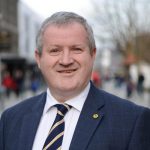
Tag: Ian Blackford

  • Ian Blackford – 2021 Speech on the Personal Conduct of Boris Johnson

    Ian Blackford – 2021 Speech on the Personal Conduct of Boris Johnson

    The speech made by Ian Blackford, the SNP MP for Ross, Skye and Lochaber, in the House of Commons on 30 November 2021.

    I beg to move,

    That this House censures the Prime Minister, the Right Honourable Member for Uxbridge and South Ruislip, for frequently violating the sixth Principle of Public Life, for seeking to undermine the recommendations of the Standards Committee on Owen Paterson, for regularly ignoring independent advice on matters such as international treaties and breaches of the Ministerial Code by his ministers, for putting forward proposals to diminish the powers of the Electoral Commission, for ignoring independent advice concerning the granting of peerages to Conservative party donors and nominations to public bodies such as Ofcom; and further calls for his ministerial salary to be reduced by £41,567 per year.

    Thank you, Madam Deputy Speaker, for your guidance to the House on conduct in this debate. I am sure you will want to join me in wishing everyone a happy St Andrew’s Day.

    Madam Deputy Speaker

    For the avoidance of doubt, happy St Andrew’s Day.

    Ian Blackford

    Happy St Andrew’s Day to you, Madam Deputy Speaker, and to all hon. and right hon. Members.

    The Scottish National party tabled this motion of censure against the Prime Minister because we believe in a very basic principle, and we believe the public do, too: those in power deserve to face consequences for their disastrous actions, and they need to be held to account.

    The charge sheet against the Prime Minister is, indeed, damning. In the past few weeks alone, he ripped up anti-lobbying rules when one of his own was found guilty, he is attempting to restrict the right to judicial review and he is seeking to undermine the independence of the Electoral Commission. But it did not start there, and it definitely does not end there.

    Since coming into office a little over two years ago, the Prime Minister has been up to his neck in scandals involving cash for honours, cash for contracts, texts for tax breaks and even cash for curtains. As the motion states, he is constantly breaking the sixth principle of public life, the duty to be truthful.

    Month after month, scandal after scandal, the charge sheet gets longer and longer, but not a single person is held to account. If the public are to have confidence in this place, that needs to change, and it needs to change today. Because unless the Prime Minister faces consequences—unless he is censured—he will not just think he has gotten away with the mess he has made over the last few months; he will think he will be able to do it over and over again. Let us be very clear: if the Prime Minister is not properly censured today, it will also be final proof that the Tories really do believe that its one rule for them and one rule for everybody else.

    I remind Conservative Members that we have all been witness to events over the past number of weeks. They might want to forget what has happened, but the public definitely have not. The Tories marched through the Lobby—

    Mr Robert Goodwill (Scarborough and Whitby) (Con) rose—

    Ian Blackford

    I will give way in due course. The Tories marched through the Lobby to undermine our parliamentary standards process, to tear up the rule books, all in order to protect a friend of the Prime Minister who was found to have broken the rules. This whole sorry episode showed this Parliament at its very worst—and, trust me, that is saying something. The Government Chief Whip and the Leader of the House are easy scapegoats, but we all know that this was orchestrated by a Prime Minister who thinks he is untouchable, who thinks he can do as he pleases. This is a Prime Minister who thinks he can change the rules at will and who believes that if the rules become inconvenient, they can simply be changed. So the question stands today: how much does it really take for Tory MPs to say enough is enough?

    How far standards have fallen is shown by the fact that the charges I have made against the Prime Minister are not even in dispute—they are all matters of public record. The Prime Minister has even admitted that in managing these scandals he personally “crashed the car into the ditch”.

    It tells us all we need to know, though, that he did not even have the decency to admit that in the House of Commons. He only felt the need to admit his mistakes and apologise to his Back Benchers in the Tory 1922 committee, and it was only because they were muttering about mutiny. I am not sure that apology counts if he only did it to try to save his own skin.

    But no matter how much the Prime Minister tries to publicly wash his hands of responsibility for his actions, the public have already cast their verdict. The Tories may be sliding in the polls, but it is as nothing compared to the hammering the Prime Minister is taking in the court of public opinion. In the last week, his approval ratings have hit an all-time low, and there is one only simple reason behind it: the public know that that the Prime Minister is at the rotten core of all these scandals.

    A natural comparison has been drawn with the Major Government in the early 1990s, but even that comparison fails to properly get to the scale of corruption that has occurred, much of it in plain sight. The difference between this Prime Minister and John Major was that Major took action to address the sleaze and corruption. This Prime Minister is at the centre of the sleaze and corruption—he is orchestrating much of it. I am afraid corruption is the only proper word—the only honest word—for what has been going on. As I said at the weekend, the Leader of the Opposition—I do wonder where Opposition Members are—is now very fond of repeating the line that when it comes to the Prime Minister

    “the joke isn’t funny anymore”.

    But in truth it was never funny, and we are all now living with the consequences of having a man like this in Downing Street.

    It is also important to reflect on just how damaging recent weeks and months have been to the public’s faith in politics. Because each and every one of these scandals erodes standards, erodes trust and ultimately erodes democracy itself.

    In the middle of the Owen Paterson scandal, the Prime Minister said:

    “I genuinely believe that the UK is not remotely a corrupt country and I genuinely think that our institutions are not corrupt.”

    The problem for the Prime Minister is that the public disagree with him: a recent Savanta ComRes poll found that 54% of those asked thought that the UK Government were corrupt. If the Prime Minister wants to know why, he has only to look in the mirror.

    In the eyes of the public this is a UK Government who have normalised sleaze and are now trying to normalise corruption. This is the Tory Government’s attempt at a new normal in which no one is held responsible, no one is held to account and no one ever—not ever—resigns. That is exactly why consequences are so important and why this censure motion matters: it can only ever become a new normal if we all put up with it. [Interruption.] This is a debate that matters to people in the United Kingdom. We can hear the behaviour and the catcalling of Government Members and it sums up the attempt to shut down democracy and our right to raise these important matters in this House.

    A new normal becomes possible only if we do not hold the Government to account and do not make them answer for their actions. I genuinely ask Government Members, if they have any interest in maintaining some dignity and decency in public life, finally to hold the Prime Minister to account and censure him for his abuse of power.

    Let me take one example of that abuse of power: the cash-for-honours scandal. Fifteen of the Tory party’s main treasurers who happened to hand over £3 million to the party were somehow given life peerages in the House of Lords, as if by magic. Twenty-two of the Tory party’s top financial backers all happen to have been given peerages since 2010. In total, this group has stuffed Tory party coffers with £54 million— [Interruption.] “Hear, hear!” That sums it up. The Conservatives see it as a virtue that if someone gives multimillion pounds to the Conservative party, they end up in the House of Lords. My goodness! What price democracy?

    Let us take Lord Cruddas, a leading donor to the Vote Leave campaign who, let us not forget, bankrolled the Prime Minister’s Conservative leadership bid. He personally gave up to £4 million in donations to the Tory party and affiliates. His reward? An ermine robe and a seat in the House of Lords. What is worse is that the Prime Minister personally overruled the House of Lords Appointments Commission that advised against his appointment. That was the very first time that the watchdog’s recommendation has ever been ignored. Three days after Lord Cruddas was introduced to the House of Lords, what happened? He handed £500,000 to Conservative central office. I will gladly give way to anyone on the Tory Benches who wants to stand up and justify that level of sleaze.

    Madam Deputy Speaker (Dame Eleanor Laing)

    Order. I hesitate to interrupt the right hon. Gentleman, but I hope he will be very careful about precisely what he says about any Member of the House of Lords because, of course, any Member of the House of Lords is also a parliamentarian. It is of course in order for the right hon. Gentleman to examine the conduct of the Member who is the subject of the motion, but that does not extend to other Members of Parliament, including those in the Lords.

    Ian Blackford

    What I am reflecting on is the behaviour of the Prime Minister that puts Members in the House of Lords, when the House of Lords Appointments Commission has ruled against their appointment. I have given the opportunity to anyone on the Tory Benches who wishes to rise to defend the actions of putting Tory donors in the Lords. It is £3 million for a peerage in the House of Lords. What a price to be able to undermine our democracy!

    Tommy Sheppard (Edinburgh East) (SNP)

    Will my right hon. Friend give way?

    Ian Blackford

    I will happily give way.

    Hon. Members

    Oh!

    Tommy Sheppard

    I thank my right hon. Friend for giving way. As no Government Member wishes to intervene on him, I wonder whether he might agree with me on this: is it not somewhat ironic that SNP Members demonstrate more probity and more respect for the rule of democracy than does the current Prime Minister, and is this not yet another compelling reason why Scotland should be an independent country, so that we can have a system of governance that is fair, democratic and transparent?

    Ian Blackford

    I thank my hon. Friend for that intervention. Of course, he is absolutely correct. We are speaking about the House of Lords. The House of Lords is the second largest parliamentary Chamber in the world. The only Chamber that is bigger is the Communist Congress. My goodness, what an advert for democracy! The fact is that these unelected Lords have a say over our democracy. The juxtaposition—the point that is made by my hon. Friend—is an important one. Today, we are discussing the behaviour of the Prime Minister and why he should be sanctioned. Yet in Scotland, just seven months ago, the people of our country were given the right to have a say in their Government. Crucially, they were given a right to have a say on the future of our country as an independent country, because the SNP made it very clear in that election that it was about a mandate for an independence referendum. Indeed, the Conservatives made it clear that a vote for the Conservatives was a vote to stop Scottish independence, and what happened?

    We are talking about democracy and respecting democracy, so let us tell the Conservatives a few harsh truths. In the four elections that we have fought in the Scottish Parliament that we have won, we have increased our vote at every election. We received just short of 48% of the popular vote at that last election. That is a higher share of the vote than any party has had in any election in the United Kingdom for the past 50 years. On the topic of respecting democracy, of respecting the people’s sovereignty, then Boris Johnson must recognise that the Scottish Parliament, where there is a majority for Scottish independence, has the right to call that referendum.

    Madam Deputy Speaker (Dame Eleanor Laing)

    Order. Will the right hon. Gentleman please refer to the Prime Minister as the Prime Minister and not by his name? If he could just re-say that last sentence, I would be so pleased.

    Ian Blackford

    The point is that the Prime Minister must respect democracy. He denies democracy when he stuffs the Lords with his Tory donor friends, but he must respect democracy when people in Scotland have voted for a Parliament that has a right to call a referendum to take us out of this toxic Union and find a way back for us as an independent country in the European Union.

    Mr Goodwill rose—

    Ian Blackford

    I will give way.

    Hon. Members

    Hooray!

    Mr Goodwill

    I thank the right hon. Gentleman for giving way. He understands, I think, that a debate tends to be a two-way thing and not just a diatribe delivered to the House.

    May I politely suggest that, if he wishes to restore confidence in this House, he could have chosen a subject for debate today that was of relevance to the people of Scotland—global warming, education, health—and not this rather lame subject, which, I suspect, is something of no consequence whatsoever to most people working very hard in Scotland.

    Ian Blackford

    Really, really. We are talking about corruption and sleaze—about a Prime Minister who forces Conservative MPs to go through the Lobby to get one of their own off a charge against parliamentary standards, and who rewards those who give money to the Tory party. That is exactly a subject of importance to the people of Scotland.

    Dawn Butler (Brent Central) (Lab)

    Not only is it an important subject; how the Prime Minister behaves is fundamental to our democracy and to how Parliament works. [Interruption.] We have a Prime Minister who comes to the House and fails to tell the truth. That is fundamental to how our democracy works, so it is more than important—it is fundamental.

    Ian Blackford

    I agree. I will come to the subject of truth and honesty later in my speech. It is noticeable that when the hon. Lady, who speaks with some authority on these matters, is trying to speak, once again the Conservatives try to shout us down. What a look that is to the people watching this debate.

    Mark Jenkinson (Workington) (Con)

    The right hon. Gentleman is being incredibly kind in giving way, particularly on this subject. I just wondered if he might take the opportunity to update us on the missing donations and the fraud investigation into the First Minister’s husband—your party’s chief executive.

    Ian Blackford rose—[Interruption.]

    Madam Deputy Speaker (Dame Eleanor Laing)

    Order. Do not shout at the right hon. Gentleman. We all have to hear his answer. While I am on my feet, I would be grateful if the hon. Member for Workington (Mark Jenkinson) would in future use the word “he” and not “you” when referring to the right hon. Gentleman.

    Ian Blackford

    Let me respectfully say to Government Members that I will give a guarantee, a promise and a commitment right here and now that all moneys raised by the Scottish National party for the purposes of fighting an independence campaign—every penny—will be spent on independence campaigning, because that is what we are about. There is a big difference in those who fund the SNP and the independence campaign, because—I will make another promise—not one single member of the SNP who gives to us willingly will end up in the House of Lords; they will be funding the SNP and the independence movement to ensure that we deliver on our promise to take Scotland out of this Union.

    There is another important point about how deeply damaging all these scandals are. Every day that the Prime Minster spends concentrating on how he will somehow avoid scrutiny is a day not doing the basics of what his job demands. It is also becoming clearer just how damaging and dangerous it is that chaotic governance now defines Downing Street. That would be bad enough in normal times, but it is totally unforgivable in the middle of a pandemic.

    In the real world, away from the shambles in No. 10, people are suffering not only from the pandemic, but from a Tory cost-of-living crisis. Inflation is running at 5%. Rising day-to-day costs and rising household bills are the main focus for families. While all the political stories on sleaze have been going on and taking up time at Downing Street, the political decision to cut universal credit has been hitting homes hardest. The shameful cut to universal credit was not just the wrong policy; it came at the worst possible time for families this winter. We are left with a UK Government who are not only up to their necks in sleaze, but hitting families at the same time. In Scotland, I am proud that we have a First Minister who understands the pressures that family finances are under, and a Government who listen and respond. I am proud that at the very same time that the Westminster Government are cutting universal credit by £20 a week, the SNP Scottish Government are raising the Scottish child payment by £20 a week.

    One of the public’s real angers about these scandals is the deep dishonesty that has been so openly on display.

    The truth and the Prime Minister have always been strangers. I say that in sadness and not in any anger. Let me just take a few examples. On 4 March 2020, the Prime Minister said:

    “We have restored the nurses’ bursary”.—[Official Report, 4 March 2020; Vol. 672, c. 829.]

    That was completely and factually untrue. On 17 June 2020, the Prime Minister said that there were

    “400,000…fewer families living in poverty now than there were in 2010.”—[Official Report, 17 June 2020; Vol. 677, c. 796.]

    Both the Office for National Statistics and the Children’s Commissioner have confirmed that that is false. On 7 November 2019, the Prime Minister told Northern Ireland businesses, in person, that the protocol would mean

    “no forms, no checks, no barriers of any kind”—

    once again, completely untrue. It is right to be careful in terms of the language that we use in this House, but when it comes to language it is also right to be accurate and honest. On the basis of all the evidence, I can only conclude that the Prime Minister has repeatedly broken the sixth principle of public life. I can only conclude that the Prime Minister has demonstrated himself to be a liar.

    I think there is a misguided sense among those on the Tory Benches that they have gotten past the scandals of the past few weeks. The Prime Minister thinks that, if he blunders on, people might not forgive, but they will forget. Not for the first time, the Tories are badly wrong and badly out of touch, because they just do not get that the depth of anger among the public is very real and is not going away. I know that people in Scotland are looking on at a broken Westminster system that has never felt more remote, more arrogant and more corrupt.

    Liz Saville Roberts (Dwyfor Meirionnydd) (PC)

    Does the right hon. Gentleman appreciate, and do Conservative Members appreciate, the damage that has been done when to be able to use the word “liar” in this place is now passed as fair comment and accepted, and the damage that that is doing to our democracy?

    Madam Deputy Speaker (Dame Eleanor Laing)

    Order. Let us just be clear about that. It is preferable that such words should not be used in this place but, as I said before the right hon. Gentleman rose to his feet, this is a very specific and particular motion and the right hon. Gentleman is examining the conduct of a Member of this House—indeed, the Prime Minister. Therefore, I cannot stop him from using the word that he has just used. I would prefer it if he put things in different terms, but I do not think that he has strayed past the rules. I think he is perfectly in order. However, it would be better if other Members did not make comments such as those just made by the right hon. Lady because what she said is not actually quite correct. Please, let us just keep it as moderate as possible.

    Ian Blackford

    I was dealing with the sixth principle of public life. I have laid out for the House three examples—I could have given many more—of where the Prime Minister has not told the truth. I regret, in the context of where we are, that I had to make that point, which is important, because if we undermine honesty and truth in this place, what are we left with? That is why we have brought this motion today and that is what I am asking hon. Members right across this House to reflect on, because there is overwhelming evidence that the Prime Minister has broken that principle of public life. I am asking each and every Member in this House, particularly on the Government Benches, to examine their conscience on the basis of the evidence and think very carefully before they go through the Lobby tonight. The public are angry at what has happened in this place. The public are angry about the Member I mentioned earlier who had been sanctioned by the Standards Commission and who the Prime Minister sought to get off. There will come a time when the public will judge this House and this House should reflect very carefully on that tonight.

    Sarah Owen (Luton North) (Lab)

    I wholeheartedly agree that this is an issue of conduct, but it is also a question of leadership. We have a Prime Minister in the middle of a pandemic who has failed to learn. At the beginning of this crisis, he boasted about shaking hands with covid patients; now he is mask-less in a hospital and too weak to tell Members of his own party to put on a mask. We desperately need not just an improvement in conduct, but an improvement in clear communication and leadership from this Prime Minister.

    Ian Blackford

    I agree with the hon. Member. [Interruption.] Perhaps we should just calm down; there will be opportunities for people to participate in the debate. This issue of leadership and conduct is important. This saddens me, but when we are facing a new variant, and we do not know what the scale of that challenge will be, the obvious thing for everyone to do is to seek to protect themselves, but more importantly to protect others and to lead by example and show leadership. I commend colleagues across the House who are sitting here wearing masks today, but my goodness, there are far too many who still do not get it and do not accept the responsibility they have for each other, and they are even laughing about it as I say that. It comes from the Prime Minister.

    Drew Hendry (Inverness, Nairn, Badenoch and Strathspey) (SNP)

    Will my right hon. Friend give way?

    Ian Blackford

    Let me just carry on for a second, because this is important. The way we conduct ourselves and interact with others is important. I commend the previous Prime Minister, the right hon. Member for Maidenhead (Mrs May), for the courtesies she always showed to Opposition parties, for how the protocols were followed and for the way we had a relationship with No. 10. It grieves me that I can tell the House that we as the third party and, I believe, the Leader of the Opposition have no relationship with No. 10. We are disrespected and disregarded by a Prime Minister who does not understand his obligations to public life, and that is yet another example.

    Drew Hendry

    Is it not telling about how complicit those on the Government Benches are that, when my right hon. Friend was reading out the list of untruths peddled by the Prime Minister, there was deathly silence? The only time they were animated was when my right hon. Friend called it for what it was.

    Ian Blackford

    I ask Government Members to reflect. Most people in this House are decent people. People come here to provide a public service, and I say to hon. and right hon. Members on the Government Benches that they are being let down, we are being let down and these islands are being let down by a Prime Minister who simply does not know how to behave. On that note, it will be interesting to see how the Scottish Tories vote tonight, and we will be watching. They are a group who never fail to see conspiracy at Holyrood, but somehow always fall deathly silent when it comes to sleaze and corruption overseen by their own Prime Minister.

    In truth, this debate is not about the Scottish Tories—I will leave them to explain their own hypocrisy—but what the public expect when standards and rules are so clearly broken by their political representatives. They expect consequences, and they expect censure. Let us also be clear about this: if we fail to censure this Prime Minister today, we will have failed that public duty for accountability. Not only that, but it will reveal something very telling; it will show a Westminster system that is broken beyond repair and a Prime Minister who believes himself to be above the law of the land.

    The only comfort I take is that fewer and fewer people in Scotland can possibly look at the broken, corrupt, self-serving Westminster system and conclude that it produces a secure basis for the future of Scotland. We all know that Scotland can do much better than this; we can do better than this broken Westminster system and we can do better than this Prime Minister. We will do so much better when our country chooses independence. I commend the motion in the name of myself and my hon. and right hon. colleagues.

  • Ian Blackford – 2021 Speech on the G20 and COP26 World Leaders Summit

    Ian Blackford – 2021 Speech on the G20 and COP26 World Leaders Summit

    The speech made by Ian Blackford, the SNP MP for Ross, Skye and Lochaber, in the House of Commons on 3 November 2021.

    I thank the Prime Minister for advance sight of his statement.

    The G20 was an opportunity to build momentum ahead of the COP summit, but I think even the Prime Minister would admit that it largely failed to meet people’s demand and desire for increased global co-operation. If we are to meet the global challenges that all of humanity now faces, that needs to change, and change very quickly, with a meaningful agreement in Glasgow over the course of the coming week. All of us hope that that will be the case.

    On climate change, we know that the G20 is responsible for 80% of global greenhouse gas emissions, so it is right that the G20 members bear the biggest responsibility. Countries that have contributed the least to this climate crisis must not be left to pay the biggest price. That is why there has to be a commitment to climate justice and why that is so important.

    In Scotland, we recently doubled our climate justice fund to £6 million per year, providing £24 million over the Scottish Parliament Session. But the commitments from the largest nations in the G20 always seem to be heavily caveated. On Monday, the Prime Minister promised £1 billion in UK aid for climate finance, but—here is the catch—only if the UK economy grows as forecast. Exactly the same excuse is presented when it comes to the Government’s disgraceful policy of cuts to overseas aid. When will the UK Government stop caveating their commitment to climate justice, follow Scotland’s leadership and establish a climate justice fund?

    On Afghanistan, what concrete actions and timelines were agreed to help end the terrible famine that is ripping through that country? Finally, on covid, what specific targets and timelines were agreed to rapidly increase vaccine roll-out to those nations that are being left behind in the suppression of the virus?

  • Ian Blackford – 2021 Speech in the House of Commons on David Amess

    Ian Blackford – 2021 Speech in the House of Commons on David Amess

    The speech made by Ian Blackford, the SNP MP for Ross, Skye and Lochaber, in the House of Commons on 18 October 2021.

    It is a considerable pleasure to follow the right hon. Member for Rayleigh and Wickford (Mr Francois). I do not think I have ever said this after any of his contributions, but I pretty well agree with every single word he said. I hope the House listens very carefully to what he said about the responsibilities we all have.

    We are gathered here united in mourning and grief at the loss of a proud champion of Southend—now to be the city of Southend; a great Back Bencher, a beloved husband and father, and a dear friend to so many, particularly on the Government Benches. Sir David Amess was valued in so many ways, but I think the most powerful description of him was, in some ways, the simplest and most human: David was, above all else, a good and deeply decent man—a man who would always greet you with a welcoming smile whenever you met him.

    For Members and staff across the House, it will take time to come to terms with the terrible shock of the senseless loss of another colleague. Just as our thoughts and prayers today are with the entire Amess family, we think too of the family of Jo Cox, who are forced to relive the nightmare of their experience all over again. Members of this House are being murdered while simply doing their job. That is the terrible reality we are faced with and, just as we face it together, we need to put an end to it together. In providing that security and safety, we need to protect all those at risk. We all know that it is often our staff who are on the frontline of the threats and abuse. I welcome the review of MPs’ security, but I urge the Home Secretary to include our staff as a central part of that security review.

    The devastating loss of Sir David has once again laid bare the twin threat of terrorism and the toxic culture of hate and intolerance that has become all too common. Today of all days, it is crucial that we show the same spirit and speak with one voice across this House, as indeed we are.

    I stand firmly with and echo the powerful and poignant words of both the Prime Minister and the Leader of the Opposition, but I also want to commend them for jointly going and standing together in Southend on Saturday. That was exactly the right image and the right message to send. People need to see Saturday’s image of unity, and it is an image and ethos of political leadership that we need to project in public far more often, of a healthy democracy that engages with passionate disagreement, as appropriate.

    But we all know that, somewhere along the way, we have been badly diverted. For too long we have been dragged down a path where passionate disagreement has been infected by poison. We can all do better not to feed into that corrosive culture. We have all been a victim of it, and every single one of us has a responsibility to put an end to it.

    It is the truest tribute to Sir David that he personified exactly what we need to get to. He was a person whose politics could be forceful, but he was always friendly. He was a person who could disagree without ever, not ever, being disagreeable.

    I look forward to hearing the fond memories of many of Sir David’s colleagues and friends. The beautiful statement released by the Amess family last night put it better than I possibly could. David’s lesson and his legacy is to show

    “kindness and love to all.”

    All of our memories will be of a good man and of a life well lived. May his family and community know today the true depth of respect, affection and love that he enjoyed across this House, and may his gentle soul now rest in peace. God bless you, David.

  • Ian Blackford – 2021 Speech on Afghanistan

    Ian Blackford – 2021 Speech on Afghanistan

    The speech made by Ian Blackford, the SNP MP for Ross, Skye and Lochaber, in the House of Commons on 18 August 2021.

    Thank you, Mr Speaker, for facilitating the recall of Parliament. It is a pleasure to follow the right hon. Member for Maidenhead (Mrs May), and I hope the Government will reflect very carefully on her words—particularly her remarks at the end of her contribution about the role of NATO in the light of the American decision to pull out of Afghanistan. These are very real issues about the capabilities within NATO. If I may say so, it is about not just the capability of NATO but how we make sure the United Nations has all the tools at its disposal to do what we expect of it. We will have to return to these matters in this House when we come back from recess.

    I thank the Government for the briefings we have had over the course of the last few days, and in particular I commend the Defence Secretary for making himself available and for how he has conducted himself. Indeed, that is also true of Ministers in the Home Office—I think particularly of the Under-Secretary of State, the hon. Member for Torbay (Kevin Foster) and, from the Foreign Office, the Minister for the Middle East and North Africa. When we are talking about human lives being lost, it is important that we in this House work together where it is possible but—yes, of course—that we ask legitimate questions.

    There can be little doubt that the chaos and crisis that has been inflicted on the Afghan people is the biggest foreign policy failure of modern times. The sheer scale of that political failure is matched only by the humanitarian emergency that it has now unleashed. As we gather here this morning, the future and fate of Afghanistan has never been more uncertain. Afghanistan, a country that has been through so much, is once again facing a period of darkness. Over the course of the past week we have watched those tragic images from afar. The scenes of Afghans seeking to jump on to moving planes to escape will haunt us for the rest of our lives. We have watched from afar, but we all have a deep sense of sorrow about just how closely the UK has been involved in what has unfolded. Geographical distance does not for a second diminish the moral responsibility that we need to feel for the west’s role in this crisis. Washing our hands of this crisis will not make it go away, and it definitely will not wash away our responsibility to the Afghan people. We all know that acting now will be too little, too late, but better little and late than nothing at all.

    Today we have a choice: we can either offer meaningless words of sympathy and stand idly by, or we can start to do the right thing. We can take responsibility and act. The Home Secretary has today talked about evacuating more contacts of the UK Afghanistan operation from the existing resettlement scheme. Let me be clear: there should be no ifs or buts; everyone who has worked with UK forces and who by definition has a vulnerability, must be moved to a position of safety. No one can be left behind. That is our moral and ethical responsibility. All those who work with us are our responsibility. We do not, we cannot, walk away from them. Today I am asking the Government to make that commitment.

    That action needs to begin with a co-ordinated domestic and international effort to offer safe passage, shelter and support to refugees fleeing this crisis is obvious. That action cannot wait. If we are to act, we must act with the same speed with which the situation in Afghanistan has developed. I am sad that the scheme announced last night by the UK Government, and today by the Prime Minister, does not go nearly far or fast enough. It can only be right that the number of refugees we welcome here reflects the share of the responsibility that the UK Government have for this foreign policy disaster. This scheme falls way short of that responsibility. The scheme must be far more ambitious, generous, and swift to help the Afghan citizens that it has abandoned and left at serious risk of persecution, and indeed death. The scale of the efforts must match the scale of the humanitarian emergency.

    Liz Saville Roberts (Dwyfor Meirionnydd) (PC)

    Considering that the Government promised in 2016 to save 3,000 unaccompanied refugee children from Calais, is the right hon. Gentleman concerned that the number who have actually been saved stands at around 380? If those promises can be broken, and among those children were many from Afghanistan, is he concerned that the promises made today may be as unrobust as those of the past?

    Ian Blackford

    I agree with the right hon. Lady that it is important the House has the opportunity to reflect on this and consider what mechanisms we need to put in place to protect people in Afghanistan.

    The harsh reality is that 3 million people have already been displaced, and 80% of those fleeing their homes are women and children. These people are now crying out for our help.

    Brendan O’Hara (Argyll and Bute) (SNP)

    My right hon. Friend will be aware that yesterday the Nobel laureate Nadia Murad said:

    “I know what happens when the world loses sight of women and girls in crises. When it looks away, war is waged on women’s bodies.”

    Sadly, she is correct. Does my right hon. Friend agree that, if we do not act now and go so much further than the Government are proposing to protect women and girls, this political disaster will become a catastrophic moral failure?

    Ian Blackford

    I agree with my hon. Friend.

    I just reflected on the fact that 3 million people have already been displaced. We need to show a generosity of spirit that recognises the scale of the challenge we face, so that women do not face the loss of their human rights, so that women do not face persecution and, yes, so that women do not face even worse, including death.

    It is important to say that, if we are to support the Afghan people, this crisis needs to mark a point of fundamental change in this Government’s approach to refugees. In the past few months alone, this Government have introduced a hateful anti-refugee Bill that would rip up international conventions and criminalise those coming from Afghanistan in need of our refuge. The UK Government have spent a sizeable part of their summer making political play of turning away migrants and refugees in small boats who are desperately making their way across the channel.

    Jack Brereton (Stoke-on-Trent South) (Con)

    Given that Glasgow is the only city and authority in Scotland to be part of the resettlement scheme up until now, will the SNP stick to their rhetoric and start putting forward other authority areas to be part of the resettlement scheme?

    Ian Blackford

    My goodness, my goodness, my goodness. I do not think the hon. Gentleman has been listening to anything we have been saying over the past few days. I will talk about this in more detail, because I have been asking for the resettlement scheme to work on the basis of the Syrian scheme that we had in the last decade. I tell the House that the Scottish Government stand ready to work with the UK Government—[Interruption.] We are talking about people who are facing extreme risk, and that is what we get from the Government Benches. They should be careful, because people in the United Kingdom, and perhaps people in Afghanistan, are listening. Perhaps a bit of dignity from the Government Benches would not go amiss.

    I want to make sure that every local authority in Scotland has the opportunity to take refugees from Afghanistan, and that is precisely the position of the Government in Scotland, but is has to come with the Government in London and the devolved Administrations working together. There has to be a summit of the four nations to discuss exactly how this will work.

    Alan Brown

    Just to correct the record, my local authority, East Ayrshire Council, has resettled Syrian refugees.

    Brendan O’Hara

    As has mine.

    Alan Brown

    The hon. Member for Stoke-on-Trent South (Jack Brereton) should correct the record.

    Ian Blackford

    My hon. Friend is correct, and my area of the highlands has refugees from Syria, too, and they were made most welcome by the community. In view of the hostile environment that we are seeing once again from the Conservative party, let us reflect on the fact that these are people who came here to receive sanctuary and who have gone on to make a contribution to our life. They were welcome, refugees are welcome and Afghans are certainly welcome in every part of Scotland.

    Barry Gardiner (Brent North) (Lab)

    Before the right hon. Gentleman was rerouted by the hon. Member for Stoke-on-Trent South (Jack Brereton), he was making a powerful point about those who come across the channel in boats, and the Government’s proposals for them. Does he recognise that, according to organisations such as Safe Passage, 70% of the unaccompanied minors crossing the channel come from Afghanistan, and to criminalise them is a criminal act in itself?

    Ian Blackford

    Yes, I agree with the hon. Gentleman. The Government must reflect carefully on this over the course of the summer, and change their ways before we come back and debate these matters again.

    Several hon. Members rose—

    Ian Blackford

    I will make some progress before giving way again.

    We have just had it demonstrated that the hostile attitude and approach to refugees truly exists and extends to those from Afghanistan. Since the most recent conflict began, in 2001, the Home Office has rejected asylum for 32,000 Afghans, including 875 girls. The total number of Afghans in the system stands at 3,117, so if we are to have any confidence that this is a turning point, this UK Government need to rethink radically how they respond to the refugee crisis unfolding before our eyes.

    Dr Caroline Johnson (Sleaford and North Hykeham) (Con)

    No one in this House can fail to be moved by the scenes from Afghanistan we are seeing on our television screens, and I am delighted to hear that the Scottish Government stand ready to do their part. Will the right hon. Gentleman confirm how many refugees the Scottish Government are ready to resettle?

    Ian Blackford

    I will discuss that a little later on—[Interruption.] I have to say to Government Members that these are serious issues. I welcome the hon. Member’s intervention, and I will give the real-life example of what happened with Syria. Scotland took 15% of the refugees who came from Syria—

    Carol Monaghan (Glasgow North West) (SNP)

    Twenty per cent.

    Ian Blackford

    Twenty per cent.—so we have done our bit, and we stand ready to do our bit again. I commit myself as leader of the SNP here, and I commit my Government to work with the Government here in London—but they have to extend the hand of friendship to us.

    Jamie Stone (Caithness, Sutherland and Easter Ross) (LD)

    Let us hope that refugees do not become a political football in this place. All of us—all of us—care desperately about giving these people safe haven. We welcome them in the highlands, we welcome them everywhere, but does the right hon. Gentleman agree that the proper finance to support our local authorities must be forthcoming from the UK Government and the Scottish Government, because without it our councils will struggle?

    Ian Blackford

    Yes, I agree, and I thank the hon. Gentleman for that intervention because I know that he will associate himself with me in saying that we will extend 100,000 welcomes to those who wish to come to the highlands of Scotland.

    We have called for a four-nations summit to integrate our efforts across the United Kingdom. I hope that the Prime Minister will respond positively and take the opportunity to meet the devolved Administrations to discuss this. Perhaps he will indicate now that he is happy to do that.

    The Prime Minister indicated assent.

    Ian Blackford

    We have it on the record that the Prime Minister is happy to do that—that he is happy to have a four-nations summit. I am grateful.

    David Linden (Glasgow East) (SNP)

    There has been much focus today on making sure we offer sanctuary for people from Afghanistan, but last night I was speaking to my Carmyle constituent Mohammad Asif, who is originally from Afghanistan. He wants to make sure that we also offer humanitarian protection to those who are already seeking asylum in the City of Glasgow. On the point made by the hon. Member for Stoke-on-Trent South (Jack Brereton), yes, the City of Glasgow has done its fair share to welcome refugees and we stand ready to do a lot more, but I have to say to him that 30 refugees per parliamentary constituency is a paltry number that he should be ashamed of.

    Ian Blackford

    At the end of the day, it is important that we all do what we can. I commend Glasgow City Council and Glasgow’s MPs and MSPs, but it is the people of Glasgow who have done so much to welcome asylum seekers to their city.

    We believe that the resettlement scheme should emulate and exceed the Syrian vulnerable persons resettlement scheme. It must also be enacted and deployed much more quickly than the Syrian scheme. Afghan refugees should not—and cannot—wait for up to five years for safety. They need safe passage and they need it now. The scheme should be open to Afghans who supported UK Government-funded programmes and who worked for the UK and other international organisations. It should have a minimum commitment to welcome at least 35,000 to 40,000 Afghan refugees in the UK, in line with the population share of refugees welcomed from Syria.

    Three thousand of those Syrian refugees have made Scotland their new home. They have contributed to our economy and our communities. They were Syrians; they are now part of Scotland’s story. They are our friends and neighbours. It is only right that we offer the same warmth and welcome to Afghan refugees facing the same dangerous and desperate situation.

    The crisis has thrown into sharp focus the disaster of the overseas development cuts, which were rammed through before the summer recess. When the Prime Minister talks about the increase in spending in Afghanistan, it still does not take us to the level of spending that was previously committed. The cuts to overseas aid were immoral and shameful before this humanitarian emergency. It is now a policy—

    The Secretary of State for Foreign, Commonwealth and Development Affairs and First Secretary of State (Dominic Raab)

    You don’t listen.

    Ian Blackford

    Do I not listen? I am afraid that the person who is not listening—maybe he is still on holiday—is the Foreign Secretary. You have not taken the spending back to the level where it was. [Interruption.] No, you are not doubling it.

    Mr Speaker

    Order. We do not use “you”, as the right hon. Gentleman well knows, because I do not take responsibility, and he would not expect me to.

    Ian Blackford

    You certainly do not want to take responsibility for a Foreign Secretary who cannot realise the facts of the matter. You have taken spending to below where it previously was. If you cannot accept that, you cannot even count.

    Mr Speaker

    Order. The right hon. Gentleman keeps using “you”. He must come through me. I am the Chair. The Foreign Secretary is not the Chair.

    Ian Blackford

    Indeed, Mr Speaker.

    It is important that the cuts to overseas aid are reversed in their entirety. [Interruption.] I know that the Foreign Secretary is trying to wind me up. When the rest of us were doing what we could in the past few days, he was lying on a sunbed, so I will not take any lectures from someone like him. People are facing the worst situation imaginable and we have a Foreign Secretary who sits laughing and joking on the Government Front Bench. He should be ashamed of himself. He demonstrates that he has no dignity whatsoever. He can carry on saying that the amount has been doubled—

    Bob Seely

    On a point of order, Mr Speaker. We have had 20 minutes of speech and we now have a private conversation between Front Benchers. Should we not be debating the subject, Sir?

    Mr Speaker

    That is for me to decide and I have referred twice to both sides trying to antagonise each other, which is not a good idea. Whichever Front Bench it is, they should not be responding. I am sure that Mr Blackford is coming to the end of his speech. He did say that he would not take too long.

    Ian Blackford

    Mr Speaker, this is an important matter. Aid spending in Afghanistan is still below what it was meant to be and the Foreign Secretary does not have the decency to understand and accept that. It just shows that he is out of touch with what people want, in the House and across these islands. Perhaps the Foreign Secretary will get a chance to intervene later on, but continuing to chunter from a sedentary position shows, really, that he has no dignity. He ought to have some self-respect.

    When it comes to aid, it is telling to reflect on the chasm between the amount invested in this conflict and the amount invested in development. Since 2001, the UK Government have spent around £27.7 billion on military operations in Afghanistan. Over the same period, they have spent approximately £3.8 billion in aid. That amounts to eight times as much spending on military action as on supporting communities or helping to rebuild the country. Those figures alone should make this House seriously reflect on all the priorities, policies and political decisions that have ultimately resulted in this failure, and the failure rests on the shoulders of the Prime Minister and his Foreign Secretary. Billions have been invested to support these failed military decisions, and it is the Afghan people who are left paying the ultimate price.

    I have concentrated my remarks on the here and now because we understand that the immediate priority must be to do everything that we can to protect lives. But in time there must also be a chance to review how the UK’s involvement in the region went so badly wrong. It is right to put on record today that there must be a future judge-led inquiry into the war in Afghanistan. We owe that to the brave men and women in our military who were sent there—many of them not returning; many of them making the ultimate sacrifice. Let me thank each and every one of those who have given so much to secure peace in Afghanistan.

    As we exit Afghanistan, it is our forces that have to go back to facilitate our departure, putting themselves on the frontline once again. It is little wonder that so many of our service personnel and their families are asking what their involvement in Afghanistan was for. We have let Afghanistan down by the nature of our departure, but we have also let down our military. We should salute each and every one of them. They are right to be angry at the political failure. We owe that inquiry, too, to the many professionals and volunteers who were led to believe that they were there to support the Afghan people in building their nation; and we owe it to the future that such a massive foreign policy failure is never again repeated.

    It is clear that Afghanistan did not go from relative stability to chaos overnight. The current situation is an acceleration of an existing state of affairs, of which the UK, the US and the Afghan Governments were seemingly unaware. The exit strategy was not properly planned, so it appears that the only people who were planning were the Taliban. There remain so many massive questions for the Prime Minister and his Government. How did the 300,000 men of the Afghan national defence and security forces seemingly vanish overnight? Why was so much trust placed in an Afghan Government that disintegrated the moment that foreign troops left? Why did the UK Government not push for a United Nations-led exit strategy, rather than silently sitting on the sidelines as the US made their decisions? Although history may well cast the final verdict on many of these questions and decisions, we also need the answers and accountability that only a judge-led inquiry can ultimately bring.

    I began my remarks by saying that we are witnessing a humanitarian emergency from afar, but the sad reality is that this is by no means close to the first tragedy experienced by the Afghan nation. The story of Afghanistan is of a country and a people torn apart by tragedy time and time again. Over the years, great powers and vast armies have come and gone. It is the Afghan people who have always been left behind. There is, sadly, no evacuation and no escape for them from foreign policy failure. I am sure that many Afghan citizens simply see a cycle endlessly repeating itself. As an international community, we have collectively wronged these poor people for the best part of a century.

    We asked the citizens of Afghanistan to work with us. We watched as girls were able to receive an education, as women were able to excel in so many fields, so that a light could be lit, pointing a path to a brighter future for so many to benefit from freedom of opportunity. That light has been extinguished. The future for so many women and girls is dark and forbidding. We have let them down. It is time to do the right thing. For those deserving and in need of our aid and our support, now is the moment to act; now is the moment for leadership.

  • Ian Blackford – 2021 Speech on HRH The Duke of Edinburgh

    Ian Blackford – 2021 Speech on HRH The Duke of Edinburgh

    The speech made by Ian Blackford, the SNP Leader in the Commons, in the House of Commons on 12 April 2021.

    Let me begin by echoing the warm and thoughtful words of the Prime Minister, the Leader of the Opposition, and, indeed, the Father of the House, who have spoken before me.

    Since the news emerged last Friday of Prince Philip’s death, the time has been filled with genuine sorrow right across these islands. For myself and for the people throughout Scotland, my thoughts and prayers remain with the entire royal family, but most especially with Her Majesty the Queen. For most people, the response and the reaction have been very simple and purely human. We collectively grieve for a wife who has lost her husband, a mother who has lost her life partner and her constant companion after a remarkable 73 years of marriage.

    In the past few days, across our institutions and across the media, there has been a very public marking and mourning of the passing of the Duke of Edinburgh. These tributes have come from every corner of the world. I am very conscious, though, that the scale of public commemoration does not diminish the depth of private grief. At the very heart of this is a family grieving the loss of a beloved husband, a father, a grandfather and a great-grandfather—a man who was at the very centre of their family life. As with every death, following the funeral, that loss and absence will be felt all the more. It is right that we seek to remember and respect that loss and the need for private mourning in the days, weeks and months ahead.

    When it comes to reflecting on the life of Prince Philip, there is no shortage of material. His was a remarkable life packed full of experience and involvement spanning across diverse communities and continents. That life and those experiences were made possible by probably his most defining trait—a devotion to duty.

    Already today in this Chamber and across the airwaves for the past few days, there have been great insights into that long life and the period of history in which he had a presence or a part. From military service to the promotion of environmental causes or his patronage of more than 800 organisations, there is a long and lasting legacy on which to reflect. It would be impossible to encapsulate all of it in any remarks, so instead, I will focus my remarks on the Duke’s deep connection to Scotland. That connection came before and went way beyond a royal title that contained our capital city of Edinburgh. It was a connection that stretched right across his entire life from childhood to old age. As a child, he attended school at Gordonstoun. It was there that he established many of his interests and hobbies that would stay with him. In those early years, he made his mark as an athlete in cricket and in hockey, captaining the school teams and becoming head boy of the school.

    The Duke’s love of the sea first found its spark in Scotland, where he frequently went on school trips, sailing around the coast of Scotland. His affection for his time at Gordonstoun is obviously demonstrated by the fact that he sent all his sons there in later years. He also remained a regular visitor—most recently in 2014 to mark Gordonstoun’s 80th anniversary. That link with Scotland and the highlands only grew and deepened after his marriage to Queen Elizabeth. The love they have for Balmoral castle has been evident for years and their presence there is now part of the fabric of that local community. Whether it was his attendance at the Braemar Gathering, a highland tradition that has been ongoing for the best part of 900 years, or his presence at Crathie kirk, Balmoral became an enduring part of their life together. Despite his ailing health, it is very telling that he still made the effort to make his final journey to Balmoral as recently as last August.

    For many people, I suspect that the most memorable and impactful legacy that Prince Philip leaves is the scheme that he lent his title to—the Duke of Edinburgh Award. Once again, the Scottish connection with the scheme could not be clearer. It was inspired by the Moray badge, created by Dr Kurt Hahn, the founder of Gordonstoun, with the intention of giving a sense of responsibility. The tasks in the scheme, from volunteering to outdoor expeditions and personal development, have helped community and educational organisations for generations. Since its inception in 1956, it is truly incredible to reflect that more than 6 million people have undertaken the Duke of Edinburgh Award in the UK. However, its reach did not stop there, with more than 130 countries participating in the international award across the globe.

    The Duke was a very hands-on patron, and he personally attended the scheme’s award ceremonies, presenting his 500th gold award in 2013 at St James’s Palace. That emphasis and commitment that Prince Philip placed on the value of education was a mainstay of his life. The Duke was appointed chancellor of the University of Edinburgh in 1953, and served in that role for almost 60 years. During that long period, he took a particularly keen interest in scientific development, and was a regular at graduation ceremonies. He only retired in 2010, and I know that the staff and students at the university also valued the role and the time he willingly gave.

    It has also been noted in recent days that Prince Philip took a keen interest in Scottish architecture. There are memorable photographs circulating of when the Prince joined the Queen to open the Forth road bridge in 1964. They were the first people to cross the link between the kingdom of Fife and that great city of Edinburgh, and that enduring interest in the Forth crossing was replicated some 50 years later, when he made a private visit to see the construction of the Queensferry crossing. Once again, alongside the Queen, they became the first people to cross the new bridge after it officially opened in 2017. I know that political campaigning remains suspended, but I am sure that Members opposite will forgive me for saying that I am pretty sure Prince Philip would have appreciated that the bridge was delivered on time and under budget.

    Perhaps people’s most lasting memories of the Duke were of the informality he often brought to very formal occasions. Throughout the years, I think it is fair to say that he was not a man for drizzling honey on his words. That trait equally applied to the advice he gave, and there is one memorable piece of advice he gave on the length of speeches, which I dare say some Members might even think applies to myself. He advised:

    “The mind cannot absorb what the backside cannot endure.”

    With that timeless piece of advice from the Duke of Edinburgh, I shall bring my remarks to a close. In doing so, though, I again convey the condolences of myself, my party, and people right across Scotland to the Queen and to the entire royal family. By any standard—by any measure—Prince Philip lived a long, energetic and full life. May he now rest in peace.

  • Ian Blackford – 2021 Speech on Covid-19 in the House of Commons

    Ian Blackford – 2021 Speech on Covid-19 in the House of Commons

    The speech made by Ian Blackford, the SNP MP for Ross, Skye and Lochaber, in the House of Commons on 27 January 2021.

    Let me thank the Prime Minister for an advance copy of his statement.

    As we know, yesterday the UK reached yet another terrible milestone—100,000 covid-related deaths. Today, it is only right that we reflect on all those who have lost their lives during this pandemic. Our thoughts and prayers are most especially with their families and those who are left with the heaviest burden of grief. In time, there will be a reckoning on the UK Government’s response to this virus and it is clear that that verdict may well be damning. In the here and now, though, it remains our job to focus on how we can support and save as many people as possible in the weeks and months ahead. That means a renewed commitment to maintaining public health, but it also must mean a renewed package of financial support for all those—all those, Prime Minister—who have been left behind by this Tory Government.

    Right now, covid is the immediate threat to life, but poverty remains a killer, too. In 2019, the Institute for Public Policy Research revealed that Tory austerity cuts over the previous decade had resulted in as many as 130,000 preventable deaths. The Prime Minister promised not to repeat Tory austerity. If people are to believe him, he should start by making three important announcements today: extend the furlough scheme for the full duration of the pandemic; maintain the uplift to universal credit and apply it to legacy benefits; and put in place a package of support for the 3 million excluded.

    Prime Minister, eleventh-hour announcements have to stop. These decisions cannot wait until the Budget in March. People need certainty now. I asked the Prime Minister these same questions at Prime Minister’s questions, but I failed to get a straight answer, so please try again, Prime Minister. Will his Government extend furlough, maintain the universal credit uplift and offer support for the 3 million excluded? Finally, on international travel, both the Scottish and Welsh Governments want to go further on quarantining measures than what his UK Government are proposing. Will the Prime Minister stop his half measures and join the Governments in Scotland and Wales in stricter enforcements on international travel? That, Prime Minister, would be leadership.


  • Ian Blackford – 2021 Response to Prime Minister’s Lockdown Statement

    Ian Blackford – 2021 Response to Prime Minister’s Lockdown Statement

    The speech made by Ian Blackford, the SNP Leader in the House of Commons, on 6 January 2021.

    Mr Speaker, may I take the opportunity to wish you, your colleagues and members of staff a good new year? I also send my best wishes for a speedy recovery to the hon. Member for Cardiff Central (Jo Stevens).

    People across these islands have entered into this new year feeling a mix of hope and fear: hope that the vaccine will finally end this terrible pandemic, but real fear, too, about the increased cases, the hospital admissions and, sadly, the lives lost. As our First Minister explained on Monday, this phase of the pandemic is now a race: a race to suppress the virus and a race to vaccinate our most vulnerable. If we are asking people for one last effort, if we are asking them to endure weeks of lockdown, then they need more clarity, they need protection and they need financial support. Most importantly, the UK Government have to act in a timely manner. It was said of the French designer, Pierre Cardin, that he was one step ahead of tomorrow. Nobody would say that this Prime Minister is one step ahead of tomorrow, or acts and shows leadership in dealing with this health pandemic. He was slow to act in the spring of 2020, slow in the autumn, and here again reacts after the events to the threats that we all face.

    I want to ask the Prime Minister four specific questions on vaccines, on travel and on financial support, and I would appreciate it if he answered each of them not just for us, but for all the public who want answers. First, on the vaccine, Professor Jonathan Van-Tam said last month that the only thing that will solve the issue of vaccine availability are the “fill and finish” supplies, such as specialised vials. Can the Prime Minister tell us exactly what actions are being taken to ramp up these supplies?

    On travel, is the Prime Minister prepared to learn from his Government’s past mistakes? Will he consider closing the UK border to all but essential travel to prevent new strains of the virus from spreading?

    On support for the self-employed, why did the Chancellor again decide yesterday to exclude the 3 million freelancers and self-employed who have not received a penny of financial support since the start of this crisis? They are desperate and they need help, and they expect the Prime Minister to respond today.

    Finally, on financial support for Scottish businesses, yesterday morning the Scottish Conservatives were busy making memes about an extra £375 million of Treasury support that they said was on its way to Scotland. Can the Prime Minister explain to Scottish businesses why, by the end of the day, it turned out there was no new money at all? Can the Prime Minister now give a personal commitment that the Scottish Government will get this money—this new money—for businesses in Scotland?

  • Ian Blackford – 2020 Speech on the Future Relationship with the EU Bill

    Ian Blackford – 2020 Speech on the Future Relationship with the EU Bill

    The speech made by Ian Blackford, the Leader of the SNP in the House of Commons, on 30 December 2020.

    Thank you, Mr Speaker. It is a pleasure to follow the former Prime Minister, the right hon. Member for Maidenhead (Mrs May). I wish you, Mr Speaker, all staff and Members a good new year when it comes tomorrow evening. May I quickly reflect on the sadness of the events that took place on 2 January 1971 in Glasgow, when 66 predominantly young people lost their lives in the Ibrox disaster, including five from one village in Fife, Markinch? I am sure that the whole House will want to remember those who sadly lost their lives at that moment.

    When this bad Brexit deal was published, one of the very first public images that was released showed the Prime Minister raising his arms aloft in celebration. When I saw that image, my thoughts immediately turned to the European nationals who have made their home here. They are certainly not celebrating. During the four years and more of this Brexit mess, the main emotion they have felt is worry: worry about staying here, about their jobs and for their families. In Scotland, these citizens are our friends. They are our family. They are our neighbours. Before this Tory Government force through a deal that rips us out of the European Union, the single market and the customs union, let us get this message out to Scotland’s 234,000 EU citizens: Scotland is your home, you are welcome.

    The value we place on European citizenship—that real sense of belonging to the European Union—cuts to the very core of this debate. Scotland is at heart a European nation. It always has been. Forcing our nation out of the EU means losing a precious part of who we are. Scotland did not become European when the United Kingdom joined the EEC 40 years ago. Our relationship with Europe predates the United Kingdom by some way. An independent Scotland has enjoyed centuries of engagement with European nations. Scottish merchants travelled, traded and settled on the continent. We shared citizenship with France and we appealed our nationhood to Rome. Scotland was European before it was British. That European history and heritage goes back to our nation’s place in the Hanseatic League in the 15th century. Scotland was central to a trading alliance that forged connections and commerce with the north Atlantic, the Netherlands, Germany Scandinavia and the Baltic. We were a European trading nation right up until many of our privileges were ended by the Treaty of Union. It was three centuries ago, and here we go again: with Westminster seeking to end our access to those European relationships by removing us from today’s union of nations across our continent; Westminster ending free movement of people and the access to labour that is so crucial to our economic success; and Westminster seeking to end our automatic right to live, work and get an education in 27 member states of the EU—rights that our generation had, which will be taken away from our children and grandchildren. And for what?

    It was way back on 11 July 2016 that the former Prime Minister, the right hon. Member for Maidenhead, first spoke the infamous words, “Brexit means Brexit.” We all know what followed the use of that foolish phrase: nearly four years of constant chaos and confusion. Today, at least we have some clarity. We now finally know what Brexit means. We have it in black and white. It means the disaster of a deal. It means broken promises. It means economic vandalism. It means an isolated United Kingdom in the middle of a global pandemic. It means the worst of all worlds for Scotland.

    This morning’s proceedings are so critical precisely because of that clarity, because with that clarity comes a choice, and it is a fundamental choice for Scotland. It is a choice between a future defined by this disaster of a deal or the future that the SNP is offering to the Scottish people: an independent nation at the heart of the European Union. Today, the contrast between the two futures is clearer than ever, and that choice will not go away.

    Sir Iain Duncan Smith (Chingford and Woodford Green) (Con)

    I wonder if I could put to the right hon. Gentleman the same question that was put to a colleague of his by the Leader of the Opposition and by the Prime Minister. Today, when the Scottish National party votes against this deal, it is therefore voting for no deal. Is it his determination that, the day after tomorrow, the UK would have no deal and would be in a worse situation? Is that his position now? Could he answer yes or no?

    Ian Blackford

    I am grateful to the right hon. Gentleman for the question, because it is very simple. This is a piece of legislation that has been put forward today. No deal is not on the Order Paper. The deal that we currently have—the deal that exists today—where we are in the single market and customs union is the best deal for us. We have argued many times in this House, as the right hon. Gentleman knows, that we should have extended the transition, and that offer to extend the transition was there from the European Union. It is not our choice to accept a shoddy deal. What we should be doing—

    Sir Iain Duncan Smith rose—

    Ian Blackford

    I will give way one more time.

    Sir Iain Duncan Smith

    I am grateful for this—

    Mr Speaker

    Order. Sir Iain, you are very early on the call list, and I am sure that you do not want to go down the list.

    Ian Blackford

    Thank you, Mr Speaker. We will accept your guidance on these things, although I was looking forward to the debate that we were having.

    Now that we see the scale of the bad Brexit deal, the question before the Scottish people is clear: which Union does Scotland wish to be part of? Which future will we choose: this broken Brexit Britain or the European Union? If this whole Brexit saga was truly about sovereignty, the Scottish people cannot and will not be denied our sovereign right to that self-determination. No democrat and nobody in this House should stand in the way of that—even boris with a small b. The Tory denial of democracy is a position that cannot and will not hold. Scotland will have the right to choose its own future.

    Now that the detail of this deal is finally in front of us, people hope that Brexit fictions are swiftly replaced with Brexit facts. Judging by the Prime Minister’s performance today, his Government are still drowning in delusion or simply just putting on an act, but for those of us who have lived in the real world these past four years, it is long past time that reality finally bursts the Brexit bubble. In recent days we have heard wild celebrations and claims from leading Brexit cheerleaders that this is the largest free trade deal in history. I am sorry to inform them that it is not. The biggest and best free trading bloc in the world is the one that this Tory Government are dragging Scotland out of. It is made up of 27 nations and 500 million citizens. It is called the European Union.

    In the middle of a pandemic and economic recession, Scotland has been removed from a market worth £16 billion in exports to Scottish companies and a market which, by population, is seven times the size of the United Kingdom. Leaving the European single market and customs union would be damaging at any time, but in the middle of the current crisis, Prime Minister, it is unforgivable. It is an act of economic vandalism, pure and simple.

    As usual with the Tories, it is people who will pay the price. Initial Scottish Government modelling estimates that the deal could cut Scotland’s GDP by around 6.1%—that is £9 billion in 2016 cash terms by 2030. That will leave people in Scotland—the same people who have always opposed Brexit—£1,600 poorer. That is the cost of the Prime Minister’s Brexit.

    Dr Liam Fox (North Somerset) (Con)

    I am extremely grateful to the right hon. Gentleman for giving way. Perhaps he could tell us what estimate he has made of the cost to the Scottish economy of losing access to the UK single market through independence.

    Ian Blackford

    Really? I am amazed that the right hon. Gentleman, who of course comes from Scotland, seems to be threatening the people of Scotland with lack of access. Is that really the message the Conservatives want to deliver to the people of Scotland? Shame on him, shame on him, shame on him.

    For all the Tory talk of levelling up, the deal is blatantly preparing the ground to level down on standards. Only in the last few days, the Institute for Public Policy Research has warned of what many of us have suspected all along: that the deal leaves workers’ rights and environmental protections at

    “serious risk of being eroded.”

    Another Brexit bubble that badly needs bursting is the myth that leaving the EU will somehow make it easier for businesses to trade. This is literally the first trade deal in history that puts up barriers to business instead of removing them. In 2016, the leave campaign’s assortment of lies included the claim that Brexit would remove red tape for business. Huh—since then, plenty of Brexit red lines have disappeared, but none of the red tape. This bad Brexit deal means that businesses will be burdened with mountains more bureaucracy and more costs. If the Prime Minister wants to disagree with that, I will certainly give way to him.

    Presumably the Brexiteers think that that is okay, because the tape will now be coloured red, white and blue. [Interruption.] I hear the Chancellor of the Duchy of Lancaster say, “It’s how they tell them.” He should tell that to the fishing businesses that all of a sudden will have to fill in customs declarations. He should tell them why, at his behest and based on his narrow ideology, that is the answer. The deal means more delay, paperwork and checks—[Interruption.] If he wants to deny that, he should rise to his feet. He knows that fishing businesses will face additional costs as a consequence of what his Government have done.

    The deal means more delay, paperwork and checks, all of which will burden business, slow trade and cost jobs. This deal not only inflicts economic self-harm; it ignores economic reality. There is barely a reference in the deal to the service sector, which is 80% of the entire UK economy. Services have been left in complete limbo. Where there is any mention, it is not good news. The deal confirms an end to the financial passporting rights that have been relied upon by financial services firms across the United Kingdom.

    Let me turn to the biggest betrayal of all: the broken promises to Scotland’s fishing communities. There are no Scottish Tory MPs in the Chamber. If there were, they would now be squirming. We know that the Brexit deal means a drop in key fishing stocks. For cod, haddock, whiting and saithe, the deal means less access to fish than under the existing arrangements. Let me say that again: less access to those fish than under the common fisheries policy.

    One thing that is missing from the deal—I would have thought better of the Chancellor of the Duchy of Lancaster—is the special privileges, the so-called Hague arrangements, that gave additional fishing rights to Scotland. They were not even negotiated as part of this deal. We have lost them, one can only assume, through the incompetence of the UK negotiators.

    The Scottish Tories said that

    “tying fishing to a trade deal”

    was a red line that must not be crossed, yet here we are: it is exactly what has been done. Every single Tory promise—every red line—has been blown out of the water. Countless broken promises, but not even one resignation—yet. Not even one apology; not a hint of humility, or of regret.

    I take no comfort in saying that this was predicted because this deal represents a history of bitter betrayal. Our fishing industry—our Scottish fishing industry—was sold out by the Conservatives on the way into Europe in 1973, and as the United Kingdom leaves, it has been sold out all over again. The Scottish Fishermen’s Federation knows that it has been conned, stating that the deal

    “does not restore sovereign UK control over fisheries, and does not permit us to determine who can catch what, where and when in our own waters.”

    [Interruption.] I hear the Prime Minister muttering, “Rubbish.” This is fishing organisation after fishing organisation in Scotland, Prime Minister, that knows exactly what you have done to them. For Scotland’s fishing communities, lightning might not strike twice, but the Tories definitely do.

    The latest Scottish Tory leader, the hon. Member for Moray (Douglas Ross), gave one of the more graphic promises: he said that he would drink a pint of cold sick rather than vote for a deal that gave EU vessels access for two years. Well, this deal gives them five years’ access, and potentially much more. Let us just say that there will be plenty of Scottish voters in the north-east who will be very interested in what he is drinking after he and his colleagues break every single promise and walk through the Lobby with the Prime Minister.

    In later speeches, my colleagues will attempt to cover and scrutinise as much as we possibly can, in the limited time, of the effect of this Bill in Scotland. It has to be said, though, that this lack of scrutiny is not helped by the stance taken by the Labour party. I am sad to say that the official Opposition have been missing in action. There was a time when Labour had six tests that it said needed to be passed in order for it to support any deal. Labour’s Brexit tests have disappeared as quickly as Tory promises. I can understand that this might be politically pragmatic for Labour, but it definitely is not politically principled. But I suppose political principle is hard to manage when you cannot even get a coherent position between Scottish Labour and its UK bosses. Unfortunately, when it comes to a position on this Brexit deal, Labour is literally all over the place. Today in the Scottish Parliament, Labour will join with the Scottish National party in refusing to grant a consent motion to this Bill. I am grateful for that. Labour will not only join us but the Greens and the Liberal Democrats standing with us: our Scottish Parliament united against the Tories, united against this Bill.

    It is ultimately for others to explain their own actions and the litany of broken promises that will stay with them at the next election, because, in the end, this is not so much about the Brexit promises of political parties as about its impact on people. It is about respecting the democratic decisions that voters make. Both England and Wales voted to leave the European Union. They have decided that their future lies elsewhere. Let me make this clear: I may not agree with that decision, but I, and my party, respect it. This legislation respects it, and it forms a pathway to the future. The people of Northern Ireland voted to remain in the European Union. Due to the efforts of both Michel Barnier and the Irish Government, the protocol protects the peace process. It means that Northern Ireland avoids a hard border and stays in the European single market. I support that protocol and its protection of a hard-won peace. This deal respects that. That being said, the Scottish Tories, including Baroness Davidson and the former Scottish Secretary, the right hon. Member for Dumfriesshire, Clydesdale and Tweeddale (David Mundell), threatened to resign if Scotland was not offered the same deal as Northern Ireland. I say to both of them now that there is still time—we are still waiting.

    The only democratic decision that has been ignored is the voice and vote of the Scottish people. None of this deal respects the choice that we made. I genuinely ask Members to reflect on that reality. Imposing this Brexit, imposing this deal means imposing a future that Scotland’s people did not vote for and do not want. Let us not forget that one of the central claims of the Better Together campaign in 2014 was that if we stayed in the UK, we would stay in the European Union. That is the promise that was made.

    We were also told that if we stayed in the United Kingdom, we were to lead the United Kingdom. On the day after the referendum, that all changed: Scotland was told to get back in its box. Right through the Brexit process, Scotland’s voice has been ignored by Westminster, our attempts at finding compromise rebuffed at every opportunity, tossed aside on the premise that Westminster is supreme, locking Scotland out of the key decisions affecting our future and ignoring our desire to retain our European citizenship.

    Sir Charles Walker (Broxbourne) (Con)

    Despite the right hon. Gentleman’s gloom, he knows that I adore and love his country. Does he not believe that Scotland has the character to succeed? Despite his misgivings, Scotland is a great country. Why is his speech so full of gloom and misery when Scotland has the character to prosper and succeed now?

    Ian Blackford

    I thank the hon. Gentleman. May I reciprocate and say that I love England and its people? I want us to maximise our opportunity, but this deal limits our opportunity. I want to unleash Scotland’s potential. That potential will be unleashed with an independent Scotland at the heart of Europe.

    The Prime Minister’s broken promise on Erasmus has been such a totemic issue in the last few days. He will remember standing in this House and promising us that we will stay in the Erasmus programme. That betrayal denies our young people the opportunities that European citizenship has given us. It denies them the European freedoms that we cherish—living, working and studying abroad. Around 200,000 people have taken part in Erasmus, including around 15,000 UK university students each year. It is also important to say that Erasmus is not solely about university students but about supporting youth workers, adult education, sport, culture and vocational training. That is why the Scottish Government are so committed to exploring every opportunity to keep Erasmus in place for our people.

    Even the very name Erasmus signals our long-established European links. That long tradition of connection comes right into the modern day with our own Winnie Ewing, Madame Écosse herself. Winnie, a former mother of the European Parliament, was Chair of the EU Education Committee that brought in the Erasmus scheme. [Interruption.] People at home will be watching this, and we have the Prime Minister and Chancellor of the Duchy of Lancaster laughing about the success of the Erasmus scheme. Utterly, utterly, utterly pathetic—utterly pathetic.

    All that history between Europe and Scotland, all those links and all these opportunities are now at stake. Scotland’s story is European, and that story does not end today. Our past is European, and our future must be European. As a nation, that is a choice that we made in 2016, and I am confident that it is a choice we make now. We cannot support this legislation because it does not respect that choice and it does not provide for our future. Scotland’s course is now set, and it is a very different course from the decisions being taken in the Westminster Parliament. We know that the only way to regain the huge benefits of EU membership is to become an independent state at the heart of Europe once more. That is the decision that the Scottish people will make. We begin that journey today. There is now an empty seat at the top table in Europe. It will not be empty for long.

  • Ian Blackford – 2020 Speech on the United Kingdom Internal Market Bill

    Ian Blackford – 2020 Speech on the United Kingdom Internal Market Bill

    The comments made by Ian Blackford, the SNP MP for Ross, Skye and Lochaber, in the House of Commons on 14 September 2020.

    Over the past few years, we have all witnessed this Tory Government plunging this Parliament and our broader politics into ever deeper chaos and disgrace. In that time, Scotland has been dragged out of the European Union against our will. It is almost a year to the day on which this Parliament was illegally prorogued, and in recent months a raft of senior civil servants has been forced out the door. That instability is this UK Parliament’s new normal; it is now part and parcel of a broken Westminster system.

    Here we are again: having dragged us deeper and deeper into their dangerous agenda for the past four years, today this right-wing Brexit cabal has reached rock bottom. The United Kingdom Internal Market Bill is the greatest threat to devolution that Scotland has faced since our Parliament was reconvened with the overwhelming support of the Scottish people in 1999. We are discussing the principles of a Bill that this Tory Government casually and brazenly admit violates international and domestic law—a Bill that cynically uses the precious peace at the heart of the Good Friday agreement as nothing more than a Brexit bargaining chip.​

    The Bill runs to 50 pages, but people across these islands have a right to know exactly what it proposes to do. It does two fundamentally dangerous and undemocratic things: it breaks international law and it breaks devolution. Those two facts explain why there has been such a widespread chorus of opposition to the Bill. That opposition comes from every profession, sector and corner of these islands, and it is why this legislation should and must be resisted by anyone who claims to respect the rule of law and anyone who claims to respect the current devolution settlement.

    As we know, there is opposition on the Conservative Benches. In the other place, the former Tory leader, Lord Howard, told the Government that the legislation would result in the UK is showing itself as having “scant regard” for its treaty obligations. When the Government are getting verbally slaughtered by a Brexiteer who has—how shall I say it?—“something of the night” about him, it is as clear as day that the Tories have gone way beyond the pale.

    The Law Society of Scotland has commented on the Bill, stating:

    “The bill should, as a matter of principle, comply with public international law and the rule of international law, pacta sunt servanda…should be honoured. Adherence to the rule of law underpins our democracy and our society. We believe that to knowingly break with the UK’s reputation for following public international law could have far-reaching economic, legal and political consequences and should not be taken lightly.”

    I repeat: to knowingly break international law. I ask each Member to think on that tonight.

    Every Member has a choice. We know that the Bill breaks international law—so many learned individuals, including the previous Attorney General, have told us so. Tonight, this House can tell the Government that it is not on and that this House is not going to be complicit in a breach of international law. I venture that that is the responsibility that each Member has. Every Member—every Member, Madam Deputy Speaker—should examine their conscience. This is about a Bill that breaches the terms of a treaty, the ink of which is barely dry and on the delivery of which the governing party fought an election.

    Ms Angela Eagle

    The right hon. Gentleman is making points that go to the heart of the Bill, and I share his worries about them. Does he share my worries that the Bill also attempts to curtail judicial review, or prevent it entirely, once that law has been broken?

    Ian Blackford

    The hon. Lady is correct about that, because we know that the Government have got into trouble with the judiciary over their actions in the past, and I will come on to talk about that.

    The right hon. Member for Doncaster North (Edward Miliband), who spoke for the Opposition, was correct when he said that the Prime Minister cannot pretend that he did not know the terms of the treaty or its obligations when he signed it—that simply beggars belief. This is a test for the House this evening; do not wait for the Committee stage, as legally, morally and ethically the right thing to do is to vote down this Bill tonight. This House must be accountable. Do not follow the Prime Minister in acquiescing in breaking the law—if you vote to give the Bill its Second Reading tonight, that is exactly what you are all doing. So this is a test, ​and I understand the challenge the Conservative Members face. Do not support the Prime Minister by breaking the law this evening—it is as simple as that.

    Of course, the Prime Minister has form: a year ago he went to the Queen to prorogue Parliament, an illegal act that the courts forced him to reverse. Here he is again—although in this case he is not, because he has run off—woefully breaking international law this time, seeking to ask the Queen to enact legislation that breaks international law. We have the power individually and collectively to stop the Prime Minister in this act of madness this evening. This is a matter of principle; it is about this House saying that we should not breach our legal obligations—I implore the House to say exactly that.

    We were expecting the Secretary of State for Business, Energy and Industrial Strategy to have drawn the short straw in having to come here to argue for this dreadful piece of legislation, but he was stood down. We all know who the parcel of rogues are behind this legislation; this Bill has the fingerprints of the Prime Minister, the Minister for the Cabinet Office and, of course, Dominic Cummings. We have just heard the bluff and bluster of the Prime Minister in seeking to defend the indefensible. He can try all he likes to dress this up as a business Bill, but no amount of dressing up will hide the fact that this is a naked power grab. The Tories are fooling no one, least of all businesses in Scotland. If this UK Government were actually serious about delivering an ounce of business confidence, they would not be threatening to blow apart any hope of a future trade deal with the European Union.

    Bill Esterson (Sefton Central) (Lab)

    We can see from the right hon. Gentleman’s speech so far that he clearly shares many of the concerns of the Labour Front-Bench team. On that basis, will he confirm that he will be supporting the reasoned amendment standing in the name of the Leader of the Opposition?

    Ian Blackford

    I am grateful for the question. We will be voting against this Bill this evening but we will not be supporting the reasoned amendment, because of some of the other conditions attached to it, not least that there should be a single market Act that does not enshrine the rights of the devolved nations to be able to protect their own interests—that is the fundamental difference we have this evening. I ask the House to oppose the Bill and vote it down on Second Reading.

    The provisions of this legislation recklessly and deliberately risk a bad deal or, increasingly, the economic devastation of a no deal. You cannot claim to support business while pursuing a bad Brexit. You cannot claim to support business by burdening it with yet more economic uncertainty, in the face of a global pandemic, one where we know the challenges we face. Yet, in the midst of this, the Prime Minister brings this Bill. The Government cannot claim to support the Scottish economy by taking more economic powers away from Scotland’s democratically elected Parliament.

    I will turn now to some of the contents of the Bill, and specifically the numerous aspects that will undermine the powers and authority of Scotland’s Parliament. Clauses 2 to 9 contain sweeping powers that could act to compel Scotland to accept lower standards set elsewhere in the UK. That means standards on animal welfare, ​food safety and environmental protection to name but a few. We all know the risk and the threat that that will bring, especially for Scotland’s farmers and consumers. This law is a Tory invitation for chlorinated chicken and hormone-injected beef in our supermarkets. [Interruption.] We can hear the guffawing from the Conservative Benches, but yesterday morning on “Politics Scotland” a Treasury Minister more or less admitted that they could not stop chlorinated chicken coming into the United Kingdom. [Interruption.] Go and check the tapes; it is there.

    Liz Saville Roberts (Dwyfor Meirionnydd) (PC)

    I am sure that the right hon. Gentleman shares my dismay that the non-discrimination clause would mean that popular policies already made by the Welsh Government and our Senedd to do with the smoking ban, the ban on plastic bags, and organ donation could have been called in and not been valid under this legislation.

    Ian Blackford

    The right hon. Member makes a very good point. There are policies that we are very proud of introducing in Scotland, such as minimum alcohol pricing, which was so critical in dealing with misuse of alcohol in Scotland, but there is no guarantee that we would be able to bring in such initiatives in the future. We would have to go cap in hand to Westminster for authority. The days of us being “too wee, too poor, too stupid” are well and truly over.

    The Chancellor of the Duchy of Lancaster and Minister for the Cabinet Office (Michael Gove)

    Don’t be so hard on yourself.

    Ian Blackford

    The sneering contempt that we get from the Minister for the Cabinet Office—he really ought to be ashamed of himself.

    In part four, provision is made for the establishment of a new unelected monitoring body called the Office for the Internal Market. The Bill proposes to hand that unelected body—we often hear about unelected bureaucrats, but here we are—the power to pass judgment on devolved laws, directly over the heads of the Scottish people’s chosen Government. It will also lead to an open invitation for businesses with deep pockets to challenge the democratic decisions of our Scottish Parliament.

    Clause 48 reserves state aid: one of the most blatant power grabs in the Bill, and that is a very high bar. We know that the state aid provisions will merely mirror those of the World Trade Organisation. That will inevitably make a deal with the EU even more difficult and provide little or no scrutiny. Finally, there is clause 46: the ultimate insult and the ultimate attack on devolution. If this legislation is forced through, powers will be given to UK Government Ministers to design and impose replacements for EU spending programmes in devolved areas: infrastructure, economic development, culture and sport, education and training—all of it.

    The Government’s agenda is clear. The Transport Minister would have input and decision-making powers over road building in Scotland, over the heads of the Scottish Parliament. We won a referendum in 1997, when 75% of the people of Scotland voted to have a Parliament. We have elections every five years. Manifestos are put in front of the Scottish people. It is the settled will of the people that that Parliament has control over health, education, housing and transport. How dare ​this Tory Government feel that they can come in and impose their will on those areas of democratic accountability in Scotland? What an insult to our Parliament in Edinburgh and our Parliament in Wales. I say to this Government, “We will stand up against this attack on our Parliament, and on those that enshrined that Scottish Parliament.”

    The agenda of the Conservatives is clear. The Tories will seek to bypass democratically elected MPs and Ministers in Scotland. Union Jack-badged projects will be paid for and prioritised ahead of the priorities of our Parliament. Bitter experience is a good teacher. Tory Governments cannot be trusted to spend money in Scotland.

    We remember what happens when the Tories control state aid spending. In 1992, John Major’s Government diverted cash from the highlands to try to boost dwindling Tory support in south-east England. And we have not forgotten that this legislation comes from a Prime Minister who bragged that a pound spent in Croydon has far more value to the country than a pound spent in Strathclyde. That is the way that the Conservatives look upon Scotland. The Tories will look after their own interests. They will never—not ever—support Scotland’s interests. This Bill would allow them free rein to serve their own narrow needs.

    At its heart, this Bill confirms the centralising obsession of this UK Government. Those in No. 10 who not so long ago made a lucrative living scribbling endless newspaper articles about a supposed centralised Brussels elite are now attempting to centralise and grab every devolved power that they can get their hands on. Apparently, the Tories are not only determined to preside over the death of devolution; they are clearly determined to oversee the death of irony, too.

    The real reason behind this Government’s hunger to pursue this power grab is what should concern us most, though. Paragraph 26 of the explanatory notes makes it clear that the Business Secretary will be given the power to change exemptions from the Bill at any time. In effect, this is a Trojan horse allowing Tory Ministers to encroach even further on devolution, and we know where that will inevitably lead. In order to deliver bad trade deals—the only deals they can now realistically get—the Tories want private health companies to have a guaranteed right to trade unhindered in Scotland and across the UK. With no protections for our Parliament, this would fundamentally weaken and undermine our national health service in Scotland. The same is true for private water companies, with the same threat of undermining standards and raising prices in Scotland. The Tories’ real agenda is about imposing the creeping privatisation and rampant deregulation that they are already implementing in England.

    I am heartened by one thing: the scale of the threat of this legislation is equalled by the scale of the opposition with which it has been met across Scottish society. Those on the Government Benches, especially the Scottish Tories—mind you, there is only one of them in here—would do well to listen to this. The National Farmers Union Scotland confirmed that

    “the proposals pose a significant threat to the development of Common Frameworks and to devolution.”​
    The chair of the Scottish Crofting Federation, Yvonne White, expressed fear that

    “the proposed legislation will lead to a race to the bottom, threatening our high standards in food, environment and animal welfare, thus damaging the image of Scottish produce.”

    She concluded:

    “These standards are best safeguarded by the Scottish Parliament.”

    [Interruption.] I hear someone shouting from a sedentary position, “Don’t let the facts get in the way.” That is a statement from the chair of the Scottish Crofting Federation. It might not suit those on the Tory Benches, but that is the reality.

    The Scottish Council for Development and Industry believes that

    “mutually agreed common frameworks should be the foundation of the UK internal market, rather than the imposition of a single approach across the UK in devolved policy areas.”

    The SCDI is absolutely right. Why is the Joint Ministerial Committee not finishing the work it was engaged on in delivering those frameworks on a consensual basis? But of course that does not suit the Tory Government, who want to attack our democratic institutions.

    The General Teaching Council for Scotland said that supporting the Bill

    “would undermine the four UK nations’ devolved education functions.”

    Michael Gove

    How?

    Ian Blackford

    I hear the Cabinet Office Minister shout, “How?” Perhaps he should go and talk to the General Teaching Council, and it will give him its views directly. [Interruption.] Really? We have the Business Secretary, who is supposed to be taking this Bill through, sitting laughing—laughing at the legitimate comments made by stakeholders in Scotland. It is little wonder that the Tories are rejected in the way they are at the polls in Scotland.

    On its impact on devolution, Professor Nicola McEwen, co-director of the Centre on Constitutional Change, found that the internal market Bill

    “limits policy divergences and risks stifling innovation”.

    The Scottish Trades Union Congress stated that the Prime Minister

    “is uniting political parties, trade unions and wider civil society in Scotland against a power grab which would see UK Government interference in previously devolved matters and a rolling back of the”

    devolution

    “settlement we voted for in 1997”.

    What is happening is that the Tories are uniting civic Scotland against this attack on our Parliament and its powers—farmers, crofters, teachers, industry, academics and trade unions: a coalition of opposition to this Bill and this Tory agenda. Civic Scotland has made its voices and views crystal clear. Anyone supporting this Bill will be ignoring their interests.

    We all have a responsibility to listen to these voices. The new Scottish Tory leadership have been running around half the summer, telling anyone who would listen just how keen they were to stand up to the Prime Minister when they think he is wrong. Well, you have that chance tonight. Listen to the coalition of opposition in Scotland rather than your masters in Downing Street. ​If the Scottish Tories follow their colleagues into the Lobby in support of this power grab, they will expose themselves as being weaker than ever, as failing to stand up for Scotland’s interest against a London power grab. The very first test of the new Scottish Tory leadership will have turned out to be their biggest, and they will have failed. They will simply have shown themselves to be the Prime Minister’s poodles, turning their back on Scotland’s interests. They will have failed once again to stand up for Scottish democracy.

    There is also a special responsibility that falls on the Labour party. Much of the devolution project is a legacy of its Government in 1997. This Bill is a direct attack on that legacy. We must collectively oppose the Bill. I am urging the Labour party at every parliamentary stage to take full responsibility and work collectively with us to hold the Government to account. The Welsh Labour Government are advising the same. They have said that

    “the UK Government plans to sacrifice the future of the union by stealing powers from devolved administrations”,

    and that it is

    “an attack on democracy and an affront to the people of Wales, Scotland and Northern Ireland, who have voted in favour of devolution on numerous occasions.”

    That statement and its analysis comes to the very core of the argument. Over the course of the last 21 years of devolution, Scotland’s people have benefited from the progressive and divergent priorities that our own governance has given us the freedom to pursue. They have seen it, experienced it and come to fiercely value it. Even with limited powers, Scotland’s Parliament and our Government have always sought to mitigate or reject the Conservative policy paths set out at Westminster. We have forged our own path. If this legislation had been in force previously, it would have prevented many progressive policies and divergent choices.

    Over recent months, that conviction and belief in our Parliament has grown. People have seen the exceptional leadership of our First Minister throughout the course of this terrible pandemic. It has reaffirmed their faith and confidence in our institutions, our governance and our nation. Our people have come to a simple but powerful conclusion: decisions about Scotland are best made in Scotland. Right now, poll after poll—the latest one only last Friday—shows that a growing majority have come to the conclusion that all decisions and all powers should now be fully entrusted to the people of Scotland.

    The Tories have never been able to reconcile themselves to that truth. As usual, when they are confronted with change, they are in the depths of denial. Instead of accepting the right of Scottish people to choose their own future, they are trying to grab the powers back that were returned to Scotland 21 years ago. That is exactly what this law is designed to do. It is a full-frontal attack on Scotland’s Parliament and on Scotland’s democracy.

    It has been stated that power devolved is power retained. This implies that this Tory Government can do anything they like with the powers of our Parliament. That is what this Bill is about. It gives them direct spending in Scotland in devolved areas: in health, education, housing and transport. Just dwell on this. We send parliamentarians to Holyrood so that they can enact the people’s priorities, but Westminster is about to ride roughshod over that. If the Bill passes, this Government in London can interfere directly in all those devolved areas, ​over the heads of the Scottish Parliament and our people. There is only one way to stop them—only one answer, and only one option.

    The only way to defend Scotland’s Parliament and its powers is by becoming independent. Our Parliament will consider a new referendum Bill before the end of 2021. The chance to choose an independent future is now coming. No amount of Tory denial and disruption can stand in the way of Scotland’s people’s democratic right to choose a different and better future, and once it comes, people will have their democratic say. I am more confident than ever that they will choose to be part of a new Scotland back at the heart of Europe. We can choose to leave behind the chaos and instability of Westminster. We can get on by becoming an independent, international, law-abiding nation.

  • Ian Blackford – 2020 Speech on the Future UK-EU Relationship

    Ian Blackford – 2020 Speech on the Future UK-EU Relationship

    The text of the speech made by Ian Blackford, the SNP MP for Ross, Skye and Lochaber, in the House of Commons on 15 July 2020.

    I beg to move,

    That this House welcomes the European Union’s openness to extend the transition period for negotiations; calls on the Government to immediately accept this offer and notes the Scottish Government’s publication of 3rd June entitled, “COVID-19: The Case for Extending the Brexit Transition Period”, warning of the damage a no deal would cause to the economy in addition to the cost of the covid-19 health crisis.

    The Prime Minister, like all of us here, could not have foreseen the covid-19 pandemic when his Government initiated the process of leaving the European Union. 2020 has become a year like no other, and this Government must adapt and do what is right by their citizens. Our priority must be dealing with this health emergency and the consequent economic challenge; it is definitively not business as normal. That is why my Government in Edinburgh, under the stewardship of Nicola Sturgeon, has prioritised dealing with the crisis above all else. We are demanding that the UK Government do the same—[Interruption.] Mr Speaker, it has started already. This is a serious subject, and what we get is laughing and guffawing from the hon. Member for West Aberdeenshire and Kincardine (Andrew Bowie). He really should show some respect and grow up.

    The SNP is calling on the Government immediately to extend the Brexit transition period while we navigate the unprecedented health and economic crisis we currently face. The European Union has expressed its ongoing openness to extending the transition period for negotiations, and the UK Government now need to accept that offer. The Government will claim that this opportunity ended at the end of June, but we are dealing with realpolitik here. We know that while we are still in the transition period this House can legislate for an extension and the European Union would recognise the mutual benefit. It simply requires political will and leadership.

    The Scottish Government have set out their position in “COVID-19: The Case for Extending the Brexit Transition Period”, which sets out why it is vital, if we are to ensure the most rapid recovery possible from the covid-19 crisis, that the UK must immediately seek an extension to the Brexit transition period for two years. We are in unprecedented times: a health pandemic, an economic crisis, and the real threat of a second wave of covid-19 later this year. Now is the moment for the UK Government to recognise reality and to reconsider their position.

    The United Kingdom is facing an unprecedented economic crisis. The Office for Budget Responsibility and the Bank of England have published various scenarios in which GDP falls by as much as 13% to 14% this year, which would be the largest decline in economic output in 300 years. By comparison, the most recent largest single-year fall in GDP was 4.2% on the back of the financial crisis in 2009. This overshadows anything that any of us we will ever face.​

    At least 1 million jobs have already gone, and many more will go when the Government end the furlough scheme, which is needed as a bridge to secure employment until recovery takes hold. Indeed, we know from the Office for Budget Responsibility that close to 2 million of those on the furlough scheme could face unemployment. Just dwell on that: the threat of unemployment in the UK could perhaps increase to as many as 4 million people. Just dwell on the human misery—the families struggling to make ends meet and pay their bills; a sharp rise in poverty, and the human cost of that for families and their children. That is why a stimulus package is required to build confidence and get folk back to work.

    Douglas Ross (Moray) (Con)

    The right hon. Gentleman is outlining the stark realities that we currently face across the whole United Kingdom, and indeed the world. Because of that, is he grateful that Scotland is part of the United Kingdom, and that the broad shoulders of this Union are supporting Scotland, with more than £10 billion going from the UK Government to Scotland just during the covid pandemic?

    Ian Blackford

    I must say that I am disappointed in the hon. Gentleman, as I would expect more of him than that. I say to Conservative Members that we must ensure that we have the tools at our disposal in the Scottish Parliament and the Scottish Government. I spoke about the importance of the furlough scheme, and we welcomed that. We will welcome Government measures that help to deal effectively with the challenge we face. There is a harsh reality, however, for our industries in Scotland, such as the tourism industry, which is important in my constituency and that of the hon. Gentleman, as well as many others.

    Effectively, we are facing three winters, and there is a truncated summer season. Our tourist industry barely exists over the winter months, and the last thing we need is to find that the UK Government are kicking the legs away from our industry by ending the furlough scheme early. The challenge for every Conservative Member of Parliament from Scotland is to ensure that if the UK Government do not provide the necessary support for our businesses and our people, those powers have to reside in the Scottish Parliament. Will Scottish Tory MPs stand with us and ensure that the Scottish Parliament has the powers it needs to do its job and protect the people of Scotland? I think we know the answer.

    The Chancellor said that the UK is suffering because of covid-19, in common with many other economies around the world. However, the UK economy is likely to suffer worse damage from this crisis than any other country in the developed world. According to the OECD, a slump in the UK’s national income of 11.5% during 2020 will outstrip falls in France, Italy, Spain, Germany and the US. With the continued risk of a second wave hitting the economy and our communities in winter, the idea of the UK leaving the European Union at the same time is economic madness.

    The outlook is bleak—there is no other way to look at it—and things are about to get much worse, unless the Government end their refusal to extend the Brexit transition period. Refusing to do so is the ultimate act of self-harm. With businesses fighting for survival, a bad deal or no deal will burden businesses with additional costs and red tape. Yesterday, the Financial Times told us that UK Government officials had indicated that a ​potential additional 215 million customer declarations will be required, at a cost of up to £7 billion. Businesses are fighting for survival, and the UK Government want to send them a bill for £7 billion. I wonder if the Prime Minister will put that on the side of a bus. That is not taking back control; that is self-induced madness.

    We can stop this now. We can recognise that this is a price that we cannot pay in the middle of a health and an economic crisis. All it requires is political will. All it requires is leadership.

    Craig Mackinlay (South Thanet) (Con)

    Is it not the case that the injudicious dropping of a crisp packet would be enough for the Scottish National party to be asking for the extension of the implementation period or the scrapping of the whole project altogether? Might I remind the SNP—I wonder whether the right hon. Gentleman has the figures—that more people voted for Brexit in Scotland than have ever voted for the SNP?

    Ian Blackford

    Really? Is that the best that Thanet can send to the House of Commons? Heaven help them. I have to say to the hon. Gentleman that we were told that if we stayed in the United Kingdom in 2014, Scotland would be respected and that we were to lead the UK. The question for him and for his Government is: why did they not respect the fact that Scotland voted to stay in the EU, with 62% of those living in Scotland voting to do so? At every opportunity in the past few years, the Conservatives, as they have been in every year since 1955, have been thoroughly rejected by the people of Scotland, and it is no wonder. We stood on a platform in the election in December about Scotland’s right to choose. The Tories said, “Say no to devolution. Say no to independence.” How did that go down? They lost more than half their seats and we increased our representation from 35 to 48. I think he has had his answer.

    Douglas Ross

    Will the right hon. Gentleman give way?

    Ian Blackford

    You’ll get your opportunity later.

    Douglas Ross

    On a point of order, Mr Speaker.

    Mr Speaker

    I hope it is a point of order.

    Douglas Ross

    It is a point of order, Mr Speaker, because the right hon. Gentleman said that Scottish Conservatives stood on a manifesto commitment against devolution. This Government have given more powers than ever to the Scottish Parliament, and we have never stood on a manifesto against devolution—

    Mr Speaker

    We do not both need to stand at the same time—it is easier if you sit down. As a person who is very good with red cards, you should be aware of what we need to do to keep good order. That is a point of clarification and I am sure you will want to save some of that for when you speak later.

    Ian Blackford

    Mr Speaker, to use football parlance, I think the hon. Gentleman is offside and the Tory party regularly gets a red card from the people of Scotland. The Tories have shown themselves hostile to devolution since time immemorial; a leopard does not change its spots.​

    Why are this Government intent on this hammer blow hitting the UK economy when we are already in dire straits? We need to create the circumstances for recovery, not make a bad situation even worse. Instead, this UK Government want to spend hundreds of millions of pounds on border infrastructure to prepare for Brexit. Any rational person—I know that not many of those exist on the Tory Benches—would point out the lunacy of such tomfoolery, but of course this is driven by the ideology of those who want to “take back control” whatever the cost, whatever the impact on jobs, whatever the impact on communities, and conveniently blame it on covid-19, rather than admit the reality that it has been self-induced as a result of dogma. This is economic self-harm brought on by the UK Government, cheered on by Dominic Cummings as he holds the reins of power in Downing Street—well, not in our name.

    We know that the UK is not even ready for leaving the EU at the end of December. The Government’s own International Trade Secretary has warned of possible legal challenges from the World Trade Organisation; increased smuggling from the EU if not all UK ports are ready to carry out checks; concerns about the protocol if EU tariffs are applied to all goods heading for Northern Ireland by default; and the undermining of the UK’s international trade policy. The NAO said that the Tory Government’s 2019 £100 million Get Ready for Brexit campaign was ineffective and made no clear difference—another monumental waste of scarce resources. Can the Minister, when she rises to respond, tell us how much money will be wasted on the new Let’s Get Going campaign?

    Then there is the issue of lost EU funding—something that has been so critical for Scotland for so many decades. “Not to worry”, we are told, “The UK will step in with a shared prosperity fund”. Where is it? Where is the shared prosperity fund? There has been no detailed information from the UK Government on how the fund will operate. Can the Minister update us?

    The European Commission’s Brexit preparedness publication also makes for grim reading. Certificates of authorisations will no longer be valid for placing products in EU markets. Products certified by UK-based bodies will no longer automatically be allowed into the EU. All service firms will lose access to the single market unless equivalence arrangements are in place to ensure that standards are the same in the UK and the EU. The visa exemption for UK nationals does not provide for the right to work in the EU and is subject to the reciprocity mechanism applying to third countries. It could be suspended if EU citizens ceased to be given visa-free access to the United Kingdom for short stays: the right to work and travel freely in the EU—rights we have enjoyed for more than 47 years—ripped up, opportunities cut off, hopes shattered, dreams crushed, and for what?

    Experts and industry figures have been clear: businesses will not be ready for the end of the transition period at the end of this year. More than 100 UK company chiefs, entrepreneurs and business groups have written to the Prime Minister saying that businesses simply do not have the time or capacity to prepare for big changes in trading rules by the end of the year, especially given that we are already grappling with the upheaval caused by coronavirus. They can see that, we can see that; the only people who cannot are the Government Front Bench and their cheerleaders on the Back Benches.

    Gareth Johnson (Dartford) (Con)

    Is the right hon. Gentleman aware that the CBI—hardly the biggest fan of Brexit—says that if we extend the implementation period it will create uncertainty for business and completely advises against it? What does he know that the CBI doesn’t?

    Ian Blackford

    I could read out statistics from all sorts of business organisations that are, quite frankly, scared stiff about what ending the transition will mean.

    A survey by the Institute of Directors tells us that three out of four business leaders believe that their organisation is not ready for the end of the transition period and that one in seven says that dealing with the pandemic has taken up bandwidth that would have been devoted to preparing for Brexit. The Institute for Government says that in normal circumstances meeting

    “the 31 December deadline would have been heroic: doing so in the midst of an international health crisis, with the energies of governments across Europe focused on their handling of the outbreak, seems out of reach.”

    Jimmy Buchan, chief executive of the Scottish Seafood Association, said:

    “We are within six months of Brexit and we still do not know what the future holds for us.”

    That is the uncertainty that businesses are facing. For many businesses that manage to survive the coronavirus crisis, this second, Brexit shock would hit them at their weakest and could be the final straw that puts them out of business—more jobs lost, more households in desperate situations, and all because of the intransigence of the Tory Government.

    It does not have to be like this. We on the SNP Benches welcome the EU’s openness to extending the transition period for negotiations. Six political parties from every nation of the United Kingdom wrote to Michel Barnier calling for the UK and the EU to agree a two-year extension. In a letter to me, representing the SNP, along with the Lib Dems, Plaid Cymru, the Social Democratic and Labour party, the Green party and the Alliance party, the EU’s chief negotiator confirmed:

    “an extension of up to one or two years can be agreed jointly by the two parties. The European Union has always said that we remain open on this matter.”

    Mr Barnier said that any extension decision should have been taken by the Joint Committee “before 1 July”. We have been given an olive branch—a get-out-of-jail-free card—but the Prime Minister has failed to grasp it. The UK Government have set themselves to crash out of the EU with a devastating bad deal or a catastrophic no-deal.

    All the while, EU leaders have highlighted the lack of progress in negotiations. Angela Merkel recently said:

    “To put it mildly, progress in the negotiations has been very limited. I will continue to press for a good solution. But we in the EU and also in Germany must and should prepare for the event that an agreement is not reached after all.”

    That should deeply worry all of us.

    There is still time to change course. The Institute for Government has made it clear that there are mechanisms for an extension. It cites four legal options for extending the transition period: amend the end date of the transition period in the withdrawal agreement; create a new transition period to begin on 1 January 2021, which would mean striking a new agreement alongside future relationship negotiations; include an implementation phase as part of the future relationship treaty; or create an implementation phase to prepare for a potential no-deal exit.​

    The Scottish Government have set out the evidence to back up the arguments for an extension to the transition. Their analysis has revealed that ending the transition period in 2020 could remove £3 billion from the Scottish economy in just two years—£3 billion in just two years. Are our colleagues from Scottish Tory constituencies prepared to sit back and see that self-harm take place against their constituents, or for once, are they going to stand up for us, stand up with us and stand up for Scotland?

    The Scottish Government’s analysis revealed that ending the transition period will be calamitous—a £3 billion hit to Scotland made in Westminster and delivered by this Prime Minister and his Government. A no-deal Brexit scenario has greater economic implications and could see the economy 8.5% smaller by 2030 compared with the scenario of continued EU membership. That is the price that Scotland will have to pay if we stay in the Union of the United Kingdom. Those are eye-watering numbers, but behind the statistics is the human cost: unemployment, hardship, poverty—Scotland paying the price for Tory dogma.

    I take no pleasure in saying that UK relations with the Scottish Government are worse than ever under this Prime Minister’s leadership. We have been increasingly concerned at the lack of any meaningful consultation with the Scottish Government and other devolved nations on the Brexit talks and at the growing threat of a Tory power grab in devolved areas, including agriculture and food standards—all for a Brexit fantasy that Scotland never gave its consent to and that is now being used as a power grab from the Scottish Parliament, and for a future that we never voted for.

    It is worth reminding folk in Scotland of the promises that were made in 2014 during the independence campaign. If we stayed in the UK, we would be staying in Europe. Well, we stayed in the UK, and we have been taken out against our will. All the way through this process, the Scottish Government have sought to achieve a compromise to best protect jobs. [Interruption.] We talk about compromise, and the Tory MPs laugh at Scotland. That is the way that Scotland is treated by the Tories in this House. They ought to be ashamed of themselves. Carry on, because people in Scotland will be listening.

    We have said that staying in the single market and the customs union is the least worst option for jobs and our communities. At every turn, we have been shut out, shouted down and disregarded. It is little wonder that so many who voted to stay in the UK in 2014 now recognise the UK they voted to remain in no longer exists. It is little wonder that poll after poll shows a majority for independence. So many see our future as an independent country in Europe—an outward-looking Scotland, working constructively with others—and see this as a choice of a progressive future with independence, or one of staying with an increasingly inward-looking UK. [Interruption.] The Under-Secretary of State for Scotland, the hon. Member for Banff and Buchan (David Duguid) keeps chuntering away from a sedentary position. If he wants to say something, I will allow him to get in. [Interruption.] Well, perhaps he would not continue to shout and chunter; it is most disrespectful to everybody, including his own constituents.

    David Linden (Glasgow East) (SNP)

    My right hon. Friend speaks about the polling, which shows that we are only going in one direction as support for independence ​has gone up. Does my right hon. Friend agree with my analysis that the UK Government are clearly carrying out polling on a regular basis—we know that the Cabinet Office is carrying out that polling—and does he, like me, want to see the UK Government publish the polling analysis that is being paid for by taxpayers, which will show that support for Scottish independence is on the rise?

    Ian Blackford

    Indeed, let us have transparency. Let us have some openness. The UK Government should indeed publish that information.

    Where does power lie today in the United Kingdom? The Prime Minister has invested political and Executive oversight in an unelected adviser, Dominic Cummings. We know that a Green Paper is to be published tomorrow, ahead of a joint ministerial meeting with the devolved Governments, that is nothing more than a blatant power grab under the guise of the establishment of a UK internal market. When this Tory Government said they wanted to take back control, they did not mean just from Brussels; they meant from Edinburgh, they meant from Cardiff and they meant from Belfast. This Tory Government’s contempt for devolution has always been known. They fought against devolution in 1997, and they lost.

    Of course, the covid crisis has seen the Scottish Government give effective leadership to the people who live in Scotland. The success of that leadership is reflected in the high standing of our First Minister not just with the public in Scotland, but elsewhere—[Interruption.] Again, I hear the laughing and the chuntering. Meanwhile, the Prime Minister and his team have dithered and given out mixed messages. Rather than recognise and applaud the success of the Scottish Government, the Tories want to attack them. The Tories cannot come to terms with our Scottish Government providing effective leadership, so they want to constrain our Parliament—that is the reality—and not just our Parliament, but the Parliaments in Wales and in Northern Ireland.

    I am grateful that the Welsh First Minister is standing shoulder to shoulder with us, and I am asking our colleagues in the Labour party—

    Hon. Members

    Where are they?

    Ian Blackford

    Where are they, indeed. Members should not worry, because the SNP will provide an effective Opposition.

    I am respectfully asking my friends in the Labour party who are present to stand with us. We went through the Lobby together to establish devolution, and devolution is now under attack from this Tory Government. There is a question to be asked of the Labour party: will they stand with us? [Interruption.] It would be helpful if they would turn up, but I hope when it comes to votes —and there is going to be a fight over the coming months—that we stand shoulder to shoulder against this attack on devolution in Scotland, in Wales and in Northern Ireland.

    What is now taking place is nothing more than an undignified attempt to neuter the Scottish Parliament. Let me put the Tories on notice that we will stand up for the sovereign rights of our Parliament enshrined by the referendum result and by the establishment of our ​Parliament. Let me remind the Tories: our Parliament was established by overwhelming numbers in 1997. It belongs to the people of Scotland.

    The Lord Commissioner of Her Majesty’s Treasury (David Rutley)

    Not the SNP!

    Ian Blackford

    “Not the SNP!” Do I really have to take that? I know the hon. Member represents an English seat and perhaps he does not pay much attention, but if he looks at every one of the results of elections to the Scottish Parliament since 2007 and to Westminster since 2015, as well as the European results, he will see that the people of Scotland have put their trust in the SNP to defend them from the kind of attacks that we have from the Tory Benches. [Interruption.] I hear, “What about a referendum?” so let me say this. We went to the people of Scotland last December and we stood on the principle of Scotland’s right to choose. We got 45% of the vote. There is a bigger gap between us and the Tories than there is between the Tories and Labour in the United Kingdom. We won that election, by any definition. The people of Scotland elected us in 48 of the 59 constituencies. There are six Tories from Scotland. We won that election. I accept that the Conservatives won the election in the UK, but that means that it is incumbent on the Conservatives to recognise that the SNP won in Scotland.

    David Duguid (Banff and Buchan) (Con)

    No, it’s not.

    Ian Blackford

    “No, it’s not”—well, there we are: democracy Tory-style. The Tories think that they can simply ignore the people of Scotland. I say to them: carry on, because people are saying now that support for the SNP and support for independence is rising, and you will not stop the people of Scotland determining our own future. It is ours to choose and we will not be stopped by any Tory Government.

    Several hon. Members rose—

    Ian Blackford

    I am going to make some progress.

    A Scottish Government assessment of the proposal that is coming tomorrow shows that successful pioneering policies such as minimum unit pricing for alcohol, our no tuition fees policy and the smoking ban would face the unelected body that the Conservatives now want to put in place. The proposed establishment of an unelected external body to determine whether a Bill in the Scottish Parliament has met a new test is outrageous. It is completely undemocratic and will not be accepted. Westminster, under these plans, will have the power to block the legislative process in Scotland under the guise of this new body, so that Scotland’s elected representatives could not decide what is best for Scotland. The internal market plan would also require standards in one part of the UK to be automatically accepted in others. This would be a serious threat to Scotland’s high food standards.

    Any forthcoming legislation on these plans needs the consent of the Scottish Parliament. The decisions of the Scottish Parliament must be respected. Will the Minister confirm that Westminster will recognise the importance of consent from the Scottish Parliament, and accept that if consent is not granted the legislation cannot be passed? That is the historical position.

    The internal market plan also suggests that the UK Government will include state aid in their power grab. The Scottish and Welsh Governments have been clear ​that state aid policy should be devolved under current legislation. They want to stay closely aligned with the EU state aid rules. Legal experts have noted that Westminster’s decision to legislate to make state aid policy a reserved power was an implicit recognition that the UK Government were not confident of winning the argument in court. We already know that this Tory Government will do what they want to Scotland with regard to state aid if they get their way on this. Of course, the Tories have form. In 1992, John Major’s Government diverted cash from the highlands to try to boost dwindling Conservative support in south-east England.

    Let us be clear: the UK faces a constitutional crisis. Scotland continues to be completely ignored by Westminster and Westminster has proved itself to be utterly incapable of acting in Scotland’s interests. With the exception of the Scottish Tories, who have completely isolated themselves, the Scottish Parliament is united against the moves to erode Scotland’s devolved settlement. All the Opposition parties, as well as the SNP in government, recognise this threat to devolution coming from the Tories. The Scottish Tories remain tin-eared. The UK Government must recognise that Scotland has a choice: we either accept the downgrading of our Parliament or we choose to become an independent country. Let me appeal to those who live in Scotland to join the momentum. There is another way: we can stop the power grab, we can defend our interests, and we can finish our journey to independence.

    People want an extension, and in Scotland people have a right to an extension. Scotland voted overwhelmingly to remain in the European Union. A new poll has put support for Scottish independence at 54%, and that is the second Panelbase poll to show such figures in recent weeks. This marks the highest level of support for the SNP and independence ever, in any poll of its kind. The recent polling on independence shows the unstoppable power of people choosing their own future.

    Since the Westminster election of 2019, a majority of polls have shown support for independence in the lead. Commenting on the findings, Professor John Curtice said:

    “Never before have the foundations of public support for the Union looked so weak.”

    He explained that

    “the past three months have exemplified how Scotland could govern itself better as an independent, small country”.

    Even a casual observer could draw that conclusion, based on how the Scottish Government led by Nicola Sturgeon have dealt with the covid-19 crisis compared with this UK Government. Indeed, Nicola Sturgeon scores more highly with English voters than the Prime Minister does—[Laughter.] Conservative Members think the fact that the Prime Minister is unpopular, certainly in Scotland, is funny. We do not think it is funny; we think it is something much worse than that. It is now impossible for the UK Government to deny Scotland a choice over its future. The Prime Minister may be the best recruiting tool for Scottish independence since Margaret Thatcher.

    The cost of leaving the EU and managing a health crisis simultaneously is unacceptable, particularly when we could be facing a covid second wave in the winter. If the Prime Minister and the Tories fail to seek an extension, if they push ahead with their power grab, and if they ​continue to impose a future on Scotland that we never voted for, the choice will be clear. The only way to protect Scotland’s economy and our place at the heart of Europe is to become an independent country, and that day is coming. We can provide our road map to independence. We will have our say. Scotland will become an independent country.