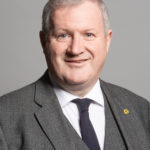
Tag: Ian Blackford

  • Ian Blackford – 2022 Speech on Scottish Independence and the Scottish Economy

    Ian Blackford – 2022 Speech on Scottish Independence and the Scottish Economy

    The speech made by Ian Blackford, the Leader of the SNP at Westminster, in the House of Commons on 2 November 2022.

    I beg to move,

    That this House regrets the economic damage the Government has caused since the mini-budget on 23 September 2022, with the pound hitting a record low against the dollar, mortgage rates at their highest level since the financial crash and inflation at a forty-year high; calls on the Government immediately to reinstate the bankers’ bonus cap, increase benefits in line with inflation and protect the pensions triple lock; considers that Scotland cannot afford to be part of the failing state of the UK and must be independent for economic stability; and welcomes the publication of the Scottish Government’s independence papers series, Building a New Scotland and The Economic Opportunity for Scotland from Renewable and Green Technology by David Skilling.

    Mr Speaker—

    Ian Murray (Edinburgh South) (Lab)

    Too long!

    Ian Blackford

    From a sedentary position, the hon. Gentleman says, “Too long,” and of course he is right—Scotland has been stuck in this Union for too long. I look forward to the opportunity for my colleagues to leave this House for the last time when Scotland becomes an independent country—it has indeed been too long.

    It is fair to say that Westminster has been no stranger to chaos and crisis over the last number of years, but even with that in mind, it has still been hard to take in fully the mayhem and madness in this place in the last few weeks. Another Tory Prime Minister gone. Another Tory Prime Minister imposed in Scotland. The only thing that stays the same is the constant crisis in this place. Even the kangaroo genitalia-eating junket to Australia of the right hon. Member for West Suffolk (Matt Hancock) passes for a normal affair around here these days.

    The core of today’s motion is designed to demonstrate that the permanent political pantomime that Westminster has become is not somehow victimless or benign; it comes with a massive, massive cost. Each and every one of these Westminster crises comes with a consequence, and it is always those who can least afford it who end up paying the price of the failure of Westminster control.

    Let us take the example of the last few months. The UK Government have been so consumed by their own political crisis that they have ignored the economic crisis they caused with their mini-Budget on 23 September. Indeed, they are not just ignoring it; they are completely blind to the mess they have made. In the last 10 days, it has been hard not to notice that Tory Members are in a state of excited relief at the fact that they have got rid of a Prime Minister who managed to crash the UK economy in the space of 44 days. In their great relief, they seem to have magically forgotten that they were the ones who put her in place. They were the ones who were cheering on her libertarian joyride—until the very moment that she crashed the economy. They may have gotten rid of the Prime Minister they put in place, but for ordinary people the damage is already done.

    Alex Cunningham (Stockton North) (Lab)

    I get extremely anxious about my homeland splitting from my now home country, particularly as Scotland has no credible fiscal plan. As I see child poverty increase, the once leading education system trashed and the NHS left to deteriorate, I wonder who is at fault. Does the right hon. Member accept that while the Tory Government have let Scotland down—

    Mr Speaker

    Order. This is meant to be an intervention, not a speech about all your issues. I am more than happy to put you on the speaking list.

    Ian Blackford

    Mr Speaker, if anybody is letting themselves down, it is the hon. Gentleman, because the Scottish Parliament has done its best to mitigate the effects of Tory austerity, thank goodness. We can applaud what the Scottish Government have done with child payments—introduced at £10, increased to £20 and now up at £25—but we cannot stop the damaging effect of austerity on our country, because the bulk of economic power lies in Westminster. The hon. Gentleman and his Labour colleagues may indeed support the Scottish Parliament—our Parliament—which does its best to protect the people from what happens in this place in Westminster and, of course, from the damaging effects of Brexit that mean our businesses cannot fulfil their potential. The hon. Gentleman ought to look in the mirror.

    Angus Brendan MacNeil (Na h-Eileanan an Iar) (SNP)

    The reality is that the split in terms of values is between the red Tories and the blue Tories here. The hon. Member for Stockton North (Alex Cunningham) should be aware that in Ireland, which became independent, the poorest 5% are 63% richer than the poorest 5% in the UK. If ever there was a lesson about being independent, that is it.

    Ian Blackford

    My hon. Friend is quite correct. When we look around the world, we see small countries thriving. Small countries tend to do better than larger ones. There are no economies of scale for large countries, and it is Westminster, the UK, that is holding Scotland back.

    Let me return to the economic situation we face today: the pound is still down against the dollar and euro, mortgage rates are at their highest since the financial crash, and inflation is still at a 40-year high. History shows that those in the Tory party always act fast to rid themselves of their own political problems, but they always fail to take responsibility for the crises they create. They are failing to take responsibility for the cost of living crisis they created and the failing UK state they have presided over for the past 12 years.

    It would be wrong to believe that the events causing deep damage over the last few weeks are somewhat isolated incidents. It does not take a genius to know that the timeline for every bit of turmoil in this place over the last few years stems from one place and one place only: the utter disaster of Brexit. Six years on, it has been a disaster by every significant measure. Brexit broke Britain.

    Only yesterday, Scotland’s The Herald newspaper revealed that the value of Scottish exports has dropped by more than 13% in two years, costing £2.2 billion, with Brexit entirely to blame. That is what Brexit has done to the Scottish economy and Scottish trade. That has been the impact of what the Tories have brought to us. However, faced with these Brexit facts, it is a disgrace that Westminster’s only response is to say one of two things: “Suck it up,” or, “Shut up.” I assure the Brexit fanatics that we intend to do neither.

    The reality of Brexit is biting everywhere. Last week I visited the Nevis Bakery in my constituency. The owner, Archie Paterson, explained to me that they currently employ 30 people, and that they could easily double that tomorrow, expanding their production line, expanding their premises and growing the local economy. But just one thing is stopping them, and it is Brexit. Brexit means they have no access to labour. The balance of workers used to be 80% EU skilled bakers, and that has declined to only 20%. They cannot get the staff, so they cannot expand. It is the same story for businesses across the highlands and right across Scotland: denied economic opportunity; denied the opportunity to grow our economy; denied the opportunity to prosper and deliver the taxation receipts. All that has been delivered by the Brexit Scotland never voted for.

    Mr Toby Perkins (Chesterfield) (Lab)

    I agree with much of what the right hon. Gentleman is saying about the incompetence of the Conservative Government. On Brexit, however, an important fact is being missed. During the referendum, when many of us fought very hard to make sure the UK stayed within the EU, the Scottish National party spent just £91,000 on its campaign—13% of what it could have spent. It spent less on that campaign than on a Shetland by-election. It spent less than 7% of what it spent on trying to take Scotland out of the UK. Will he take this opportunity to apologise to everyone who voted remain for the fact that the SNP went missing from the pitch during that campaign?

    Ian Blackford

    My goodness, Mr Speaker, I hate to point out to the hon. Gentleman that 62% of those who voted in Scotland voted to stay in the European Union. I am proud to say that my right hon. and hon. Friends and I were up and down Scotland during the Brexit campaign, leading the people of Scotland and making the case for Scotland to stay in Europe.

    Christine Jardine (Edinburgh West) (LD)

    On that point, will the leader of the SNP please explain to us why his party spent less on the EU referendum than on a Scottish parliamentary by-election on Shetland?

    Ian Blackford

    This would be funny if it was not so tragic. It used to be the case—[Interruption.] We have many hours of debate, and if Labour and Liberal Democrat Members calm down, I am sure that they will get the opportunity to speak. Maybe I should point out to the hon. Lady that the Liberal Democrats used to proclaim staying in Europe—

    Christine Jardine

    And still do.

    Ian Blackford

    No, you don’t. If the Liberal Democrats wanted to stay in Europe, as the hon. Lady suggests, they would have that in their manifesto. The Labour party and the Liberal Democrats have run away from Europe, just as they have run away from their responsibilities to the people of Scotland.

    Drew Hendry (Inverness, Nairn, Badenoch and Strathspey) (SNP)

    Is it not the case—just to educate the hon. Member for Chesterfield (Mr Perkins)—that not only did we carry the argument in Scotland, winning 62% of the vote for remain, but we carried that argument successfully in all 32 council areas in Scotland?

    Ian Blackford

    My hon. Friend is quite correct that every local authority area in Scotland voted to remain. Not only did people across Scotland vote to remain, but that demand to stay in Europe has increased over the past few years. In fact, recent polling shows as many as 72% of Scots wish to remain in Europe. I say to those watching in our own country that there is a clear way to achieve this. If Scotland has its right to determine its own future, and if our Parliament, which has an independence majority, can enact the referendum that our people voted for, then Scotland’s journey to independence and back into the European union will be complete.

    Kirsten Oswald (East Renfrewshire) (SNP)

    I am grateful to my right hon. Friend for giving way—[Interruption.]

    Ian Blackford

    On a point of order, Mr Speaker. I have just been called a liar.

    Mr Speaker

    I did not hear what was said—

    Steven Bonnar (Coatbridge, Chryston and Bellshill) (SNP)

    Ask him!

    Mr Speaker

    Do you want to go out early for a cup of tea? Because you are on my speaking list. Let me deal with it. Mr Bonnar, I need no help, thank you. If somebody said that, I expect them to withdraw it, because we do not use that term in this Chamber.

    Mr Perkins

    Further to that point of order, Mr Speaker. I certainly withdraw any implication that the right hon. Gentleman is a liar. I did not say he was a liar, but I did say that what he said was untrue. I withdraw that out of respect to you, Mr Speaker.

    Kirsten Oswald rose—

    Mr Speaker

    I call Ian Blackford. We are moving on. We have dealt with it.

    Ian Blackford

    I give way to my hon. Friend.

    Kirsten Oswald

    I am grateful to my right hon. Friend for giving way. Does he not think that people at home will be looking askance at Labour Members? First, they were apologists for the chaos that the Conservatives have inflicted on Scotland’s economy. Now, they are some kind of supporters of Brexit, which has caused so much harm to Scotland. It is inexplicable how any Opposition Member could take such a position, as we all heard them do.

    Ian Blackford

    My hon. Friend is correct. It is 1.10 pm; we have until 7 o’clock to debate the issue. To hon. Members in other parties on both sides of the House, I promise that we will respect the importance of the subject, because this is about Scotland’s future. To friends and colleagues—Conservative, Labour and Lib Dem Members—I say, let us have that debate about Scotland’s future and let us respectfully disagree on what we see the future as. We will put the case for Scotland to be an independent country; they should come and engage with us, and put the case for Scotland to stay in the Union. I have to say that when we have these debates, I do not hear that case for Scotland to stay in the Union.

    The evidence of the damage done by Brexit is mounting by the day. From those who forced it on Scotland, however, not one word of contrition or apology has ever been offered for that massive act of economic self-harm. I am tempted to say that when it comes to Brexit and Westminster, there are really none so blind as those who will not see—my goodness, that has been shown today. In many respects, however, the truth is even worse.

    Alun Cairns (Vale of Glamorgan) (Con)

    I welcome the right hon. Gentleman saying that he wants a serious debate about the status of Scotland in the Union and the benefits of Scotland being in it. In his arguments so far, however, he has blamed everything from rising energy costs to global supply chain challenges on Brexit. Does he not recognise that we have been facing a tumultuous global situation? If he acknowledged that, we could at least start to have a sensible debate.

    Ian Blackford

    I thank the right hon. Gentleman. I think he is genuinely trying to be helpful, so I will respond in kind. We are suffering from an enormous increase in energy costs. I applaud the fact that we have the energy cap, but let us remember the harsh reality that for people up and down these islands, energy costs have doubled in the last year. People will face genuine hardship. [Interruption.] I can see him shaking his head, but the harsh reality is that our energy market is determined by the wholesale gas price. For those of us in Scotland, 14% of our electricity consumption comes from gas and we actually produce six times as much gas as we consume. We are being affected largely by the failures of UK energy policy and, yes, by global issues as well, but the fact that energy costs are so high in energy rich Scotland is an absolute disgrace.

    Mhairi Black (Paisley and Renfrewshire South) (SNP)

    On the intervention of the right hon. Member for Vale of Glamorgan (Alun Cairns), of course the last few years have shown how unpredictable the world can be and how many unexpected challenges we can face, but does that not just hammer home how important it is for Scotland in particular to get the Governments it votes for? Given that Scotland has not voted for a Conservative Government since 1955, does my right hon. Friend not agree that by far and away the best way to protect ourselves against the unpredictable is to be independent and in control of our resources?

    Ian Blackford

    My hon. Friend is correct. Not since 1955 has Scotland voted for a Conservative Government, yet we face Conservative Government after Conservative Government. The difference between me and the hon. Member for Edinburgh South (Ian Murray) on the Labour Front Bench is that I would rather have an independent Labour Government in Scotland than a Tory Government in London who demonstrate their contempt for the people of Scotland through their policies. That is the reality. Unfortunately, he would rather have a Tory Government in London than an independent Scottish Government over whom he may have influence.

    Alan Brown (Kilmarnock and Loudoun) (SNP)

    Again on the intervention of the right hon. Member for Vale of Glamorgan (Alun Cairns), is it not the case that, although there are high global oil and gas prices, Norway has a sovereign wealth fund of $1 trillion—the biggest in the world—that can be used to support its citizens, whereas Westminster has squandered our oil and gas revenues all these years? Even then, the McCrone report from the ’70s, which was buried for 30 years, showed the wealth that would have accumulated to Scotland had it been independent. Both Labour and the Conservatives held that information from the Scottish population.

    Ian Blackford

    My hon. Friend is correct. I think the taxation receipts for North sea oil over the period that he is talking about have been north of £350 billion. What a missed opportunity to ensure that we could invest for future generations, eradicate the poverty that has been talked about and deliver hope for future generations. I will come on to the opportunities from green energy. My message to him and other hon. Members on both sides of the House is that a green industrial revolution could come to Scotland, so we need to create the jobs that will drive up productivity and investment and give people hope—but we are not going to do that while we are part of Westminster.

    There are plenty of intelligent people in this place—I am especially looking at Labour Members—and we can see the damage that Brexit has done. They see it, but they will not say it. The reason they will not say it is that they are frightened that they will lose votes in the north of England, and to hell with the consequences in Scotland and everywhere else. I am sorry to say that that is one of the most shameful examples of politics replacing principles that this place has ever witnessed—that is really saying something in Westminster.

    Dr Luke Evans (Bosworth) (Con)

    One of the reasons that the UK voted for Brexit was that the EU stands for ever-closer union, which means joining the euro. The right hon. Gentleman has talked about independence, so will he be joining the euro? Will he not then accede some of the control over the fiscal situation that he wants to deal with?

    Ian Blackford

    I am grateful to the hon. Gentleman, but let me return to 2014. At the time of the Scottish referendum, we were told that, if we stayed in the United Kingdom, two things would happen: first, we would stay in Europe and secondly, we would lead the UK in a voluntary Union of equals. None of that has happened, however, because of his example of being taken out of the European Union against our will. The key difference is that Europe is a partnership of equals.

    Since the hon. Gentleman asked about currency, I will answer head on. When Scotland becomes independent, as it will, we will retain the pound. [Laughter.] It is funny, is it? We are talking about people’s futures and we are trying to deal with a serious matter. We will keep the pound until such time that a number of economic tests are met that will allow us to have a Scottish pound. That is what will happen.

    Dr Luke Evans

    I am grateful that the right hon. Gentleman has been clear and direct in saying that Scotland will have the pound. If he joins the EU, however, is the plan not to join the euro? He will have to concede, therefore, that Scotland will have to do that. By what mechanism would he therefore keep the pound, or the Scottish pound, or refute having the euro?

    Ian Blackford

    I respectfully say to the hon. Gentleman that he should go away and read the treaties, because they are very clear; we are all aware of what is contained in them. Crucially, to join the euro, countries have to join the exchange rate mechanism for two years, which is voluntary. Countries cannot be forced into the euro. Our position is clear: we will deliver a fiscal programme that will deliver jobs for Scotland, create the circumstances for investment and drive up living standards—that is what we want with independence. We will make sure that we have the answer to the currency situation that delivers for our people.

    Angus Brendan MacNeil

    Perhaps the hon. Member for Bosworth (Dr Evans) is misled by headlines in The Times newspaper and should apprise himself better of what is actually happening in Europe. On 1 July 2013, Croatia joined the European Union and Croatia is not in the euro. There are about six or seven other countries in the European Union that are not in the euro. A country can join the euro if it wants over its own timescale—it can be hundreds of years if it wants—but it does what it wants and what it thinks is sensible for itself, and that is why it has independence.

    Ian Blackford

    I am very grateful to my hon. Friend for revealing—

    Ian Murray

    No, he’s wrong.

    Ian Blackford

    My hon. Friend is not wrong, if the hon. Member reads the treaties. I have pointed out that joining the ERM is a step that has to be taken before anyone is able to join.

    Several hon. Members rose—

    Ian Blackford

    I am going to make some progress, and I will allow interventions later.

    Ian Murray rose—

    Ian Blackford

    I give way.

    Ian Murray

    I am very grateful to the right hon. Gentleman for allowing me to intervene because this is a crucial point that people need to understand. The current position of the Scottish National party is to stick with the pound for an undefined period, then to set up her own currency. As Nicola Sturgeon said herself when she launched the economic paper, she will not commit to joining the euro. That does one of two things: it either denies EU membership, or it means an independent Scotland would have a separate currency from both the EU and its bigger trading partner, the rest of the UK. Is that not correct?

    Ian Blackford

    The hon. Gentleman is wrong. I have pointed out that in order to join the euro—[Interruption.] I have already laid out that we will retain the pound sterling immediately on attaining independence, and when the time is right and a number of economic tests are met, we will have the Scottish pound. There are six tests, and I will be—

    Dr Luke Evans

    Will the right hon. Gentleman give way?

    Ian Blackford

    I am now going to make some progress.

    Dr Evans

    Will the right hon. Gentleman give way?

    Ian Blackford

    I have already given way twice to the hon. Member, and I think I have been very gracious with my time.

    As I said at the start, all the Westminster-imposed chaos comes with real consequences because the cost of the last six weeks, and the consequences of the last six years of constant crisis mean that the Tories are right back where they originally started—implementing austerity. This week, we have been deliberately bombarded by Treasury briefing about the “difficult decisions” that need to be made in order to fill the economic hole that the Tories dug themselves, but the return of austerity, if it ever truly went away, is not a so-called difficult decision. It is instead what it has always been—a Tory political choice to hit the poorest hardest.

    No one should be fooled into thinking that there are not other choices. In the week that BP announced a quarterly profit of £7.1 billion, why not take the easy decision to bring in a proper windfall tax on excess profits? Why not take the easy decision to end non-dom tax avoidance? Why not take the easy decision to reinstate the cap on bankers’ bonuses? With all that new revenue, why not take the easiest decision of all, and protect those most at risk by uprating benefits and pensions in line with inflation? That, after all, was the promise the Prime Minister made when he was Chancellor back in May.

    Until each and every one of those easy and essential decisions are taken, the Tories should not dare talk about the difficult decisions they are having to take. I fear, though, that the Tories and their new Prime Minister have already made their choice: they are gearing up to take a wrecking ball to public services and double down on austerity. That is exactly why we are now at such a critical juncture. It is clearer by the day that austerity 2.0 is the future awaiting the Scottish people unless we escape Westminster control for good. That is why independence is not just desirable; it is essential.

    There is no better example of that necessity than the energy issue. The motion refers to the detailed and evidenced-based report by David Skilling, who has laid out the facts on the sheer scale of the energy opportunity awaiting an independent Scotland. I encourage hon. Members across the House to read that report. We have the potential to generate around 10% of Europe’s wave power and possess 25% of the potential European offshore wind and tidal resource. Let us not forget that it is Westminster that is holding back our tidal potential with its refusal to fund it to the rate that will be necessary to generate up to 11.5 GW of tidal energy by 2050.

    David Duguid (Banff and Buchan) (Con)

    I am not sure if I picked the right hon. Gentleman up right, but is he accusing the UK Government of not funding tidal energy, when in fact £20 million of contracts for difference were committed, as ringfenced, specifically for tidal stream energy?

    Ian Blackford

    I am delighted that the hon. Gentleman raises that because it takes us back to the discussions we had last year. The Royal Society report published just before COP26—a peer-reviewed report—indicated the potential to get to 11.5 GW of electricity from tidal. Incidentally, that would be 15% of the UK’s electricity production, which is the amount that nuclear contributes today, and by 2030 tidal would be cheaper than nuclear. We do not need nuclear to provide our baseload electricity because tidal does it. The fact remains that that £20 million, welcome as it is, does not go far enough for that industry to develop its potential. When we look at the programmes that are already live around these shores, about 70% of the value added from tidal comes from Scotland and about 80% comes from the UK. It is a domestically grown industry.

    We heard earlier from my hon. Friend the Member for Kilmarnock and Loudoun (Alan Brown) about the contrast with the oil industry in Norway, but one of the key lessons from that is to make sure not just that we have the energy production, but that we control the supply chain. This is exactly an industry where we do control the supply chain. I say to the hon. Member for Banff and Buchan (David Duguid) that he should join me in pressing the Treasury to make sure we get the £50 million-a-year ringfenced pot—that is what would allow us to fulfil our potential—and at the same time to make sure that we get carbon capture and storage for Peterhead. Those two clear examples are direct demonstrations of how Scotland has been held back—held back on its ability to deliver green energy and on its desire to get to net zero in 2045. That is the cost of Westminster control for Scotland.

    Jamie Stone (Caithness, Sutherland and Easter Ross) (LD)

    I may be corrected, but I fancy I am the only person in this place who has worked in an oil fabrication yard; it was at Nigg. When I worked there, 5,000 people were employed—vital jobs in the highlands. We have the skills still, but they are ageing skills and the skills are going. If we miss the opportunity to build offshore floating wind structures in Scotland, we will be failing the Scottish people. What is the difference between us and Norway? Norway does build; we do not, and we should do something about it.

    Ian Blackford

    I thank the hon. Member for that remark. He is right to talk about what happened in Nigg back in the day. But it was not just in Nigg, as he will recall; it also happened in the west of the highlands—in Kishorn in my own constituency and Ardersier. If you would allow, Mr Deputy Speaker, we could sing the song of the Kishorn Commandos, but maybe we will save that for another day.

    Jamie Stone

    I was a Kishorn Commando.

    Ian Blackford

    And there is many a tale to be told about what happened in Kishorn back in the day, but this is a serious point about the opportunity to industrialise the highlands and the opportunity to create jobs for generations, create wealth and create prosperity. I congratulate the hon. Member because we have worked together on making sure that we are pushing for the opportunities in Cromarty, but these are decisions that we should be taking in Scotland to make sure that we deliver on that promise.

    We cannot mention often enough the potential we have in green energy. Scotland is energy rich, and we simply should not be facing an energy emergency. We should not have cold homes and soaring bills. Even before this crisis—as the hon. Member would acknowledge, we already had the situation before this crisis—40% of pensioners in the highlands lived in fuel poverty. What a disgrace that we allow that happen.

    Dave Doogan (Angus) (SNP)

    My right hon. Friend is making a powerful speech. Does he agree with me, and do his constituents share my concerns, that people look out at these wind installations—such as Seagreen off the Angus coast, two revolutions of which can power a home for an entire year—yet at the same time they cannot pay their electricity bill, thanks to the UK’s energy market? Is that not in itself a reason to decouple ourselves from this broken Union?

    Ian Blackford

    Indeed, because I think it fair to say that we are being ripped off. We are being ripped off by transmission charges. I am grateful to my hon. Friend the Member for Aberdeen South (Stephen Flynn, because he took me to see an offshore wind farm in Kincardine a few weeks ago—what a demonstration of the opportunity we have from the North sea. The fundamental point is that we should not have cold homes and soaring bills. We produce six times more gas than we consume, and nearly 100% of the equivalent of our electricity consumption already comes from renewables—[Interruption.] I have said equivalent on many occasions.

    Ian Murray

    We’ll check Hansard.

    Ian Blackford

    I did ask for respect and honesty in this debate, and I think that if the hon. Gentleman checks Hansard, he will find that I have said that on a number of occasions.

    This is Scotland’s energy and it should serve Scotland’s people. The Skilling report shows that Scotland has the potential to boost our output by more than five times, increasing from 12 GW of installed renewable capacity to over 80 GW by 2050. Just think about that—80 GW of electricity by 2050. That is as much as four times the energy Scotland needs. It will provide the cheap, green energy that will allow us to have a new industrial revolution, and to see jobs come to the eastern highlands, the western highlands, the lowlands and the south of Scotland as a consequence of the economic opportunity that will be created. By expanding Scotland’s renewable capacity and becoming a green hydrogen exporter, we have the chance to pump as much as £34 billion into Scotland’s economy every year—an investment that would sustain up to 385,000 jobs, dwarfing the jobs that we have in oil in gas today. That is a real energy transition.

    This is a plan for growth—green, sustainable growth for the long term, not the fantasy growth that we had from the Truss Government and the absence of any plan from the existing Government. Driving better productivity, driving an industrial green society, and driving our economy into the future—that is the plan on which an independent Scotland can and will be built. Apparently, the only UK Government response to that energy plan is the bizarre argument that we should ignore the vast renewable energy potential and instead turn to nuclear. Well, let us be very clear: we do not need nuclear in Scotland, we do not want nuclear power, and we will not be having nuclear power. We want the powers of independence so that Scotland’s energy can finally serve the needs of the Scottish people.

    In the latest Scottish Government paper on independence, our First Minister set out all the economic opportunities that independence will unleash. Instead of Westminster anti-trade union laws, we could ensure fairer work with European-style labour market policies. Instead of an economic race to the bottom, we could build an economy based on human wellbeing, lifting people up so that they can contribute fully, not waiting for wealth to trickle down while the inequality gap grows. Instead of Brexit, we would be an EU member state in our own right and we would, for the first time, be in a position not just to benefit from EU trade deals, but to help shape them. Instead of a hostile environment and the disgrace of a Home Secretary who talks about “invasions”, we would have a humane immigration policy tailored to our needs.

    David Duguid rose—

    Ian Blackford

    I will happily give way to the hon. Gentleman if he will join me and ask the Home Secretary to apologise for the outrageous language that she used in this Chamber on Monday.

    David Duguid

    I genuinely thank the right hon. Gentleman for allowing me to intervene on the point he was making about an independent Scotland being in the EU—a point he made previously. Does he agree with his leader in Holyrood, First Minister Nicola Sturgeon, when she admitted that there could be hard borders and passport controls between Scotland and the rest of the United Kingdom?

    Ian Blackford

    Here we go: “Project Fear” all over again. Let me give the hon. Gentleman and the House the example of Ireland. Way back in the 1940s, close to 90% of Ireland’s exports were to the rest of the United Kingdom. Today that figure is less than 10%, but the value of Irish exports to the UK actually increased every single year, irrespective of the economic cycle. An independent Ireland was able to pursue policies that delivered growth and resulted in investment and trade opportunities. That is the opportunity for an independent Scotland.

    Robin Millar (Aberconwy) (Con)

    I would not want us to move too far beyond the point about humane treatment. Is it the case that Ukrainian refugees in Scotland currently have to be housed in temporary accommodation on ships, in which the space they must occupy is less than is legally required for prisoners in Scottish prisons?

    Ian Blackford

    I should not be surprised by some of the things we get from the Tories in this House, but has the hon. Gentleman any sense of listening to what has been happening this week in Kent, when he comes and accuses the Scottish Government regarding those seeking refuge on our soil? We can be proud of what the Scottish Government have delivered, led by our former colleague Neil Gray. Around 20% of Ukrainian migrants who have come are in Scotland living in our country. We have opened our doors and welcomed them, and by goodness that is something we should be proud of.

    Several hon. Members rose—

    Ian Blackford

    I will make some progress as I am conscious of the time.

    Instead of Westminster control, we would always have the stability of knowing that the Governments who shape our economy have been elected by us—a simple democratic principle.

    The great American writer Maya Angelou once said:

    “When people show you who they are, believe them the first time.”

    Well, people in Scotland have had more than enough of Westminster control. We know who the Tories are, we know what this place is, and we know the deep damage it has done. We believed them the first time. That is why Scotland has not voted for the Tories since 1955. Westminster has made its choice and chosen its future. It is a present and a future of constant crisis—a Brexit-backing, failing UK state. It is time that Scotland left those choices and that future behind us for good. We do not have to believe in Westminster control anymore; we have only to believe in ourselves. It is now time for Scotland to build its own future—an independent future in Europe.
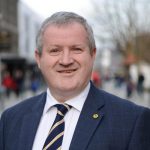
  • Ian Blackford – 2022 Comments on Austerity in Scotland

    Ian Blackford – 2022 Comments on Austerity in Scotland

    The comments made by Ian Blackford, the Leader of the SNP in Westminster, on Twitter on 1 November 2022.

    Rishi Sunak has no mandate to impose devastating Tory austerity cuts – or, indeed, any mandate at all.

    With the Tories and Labour Party imposing Brexit and cuts, independence is the only way to keep Scotland safe and get back on the path to prosperity.

  • Ian Blackford – 2022 Comments on Boris Johnson Being on Holiday

    Ian Blackford – 2022 Comments on Boris Johnson Being on Holiday

    The comments made by Ian Blackford, the SNP Leader at Westminster, on Twitter on 22 October 2022.

    So this is Boris Johnson coming back from holiday two weeks after Parliament has returned. MPs are entitled to a break but during recess. His constituents have not been represented in Parliament over the last two weeks. This is who he is. It is about him, not about public service.

  • Ian Blackford – 2022 Comments on the Resignation of Liz Truss

    Ian Blackford – 2022 Comments on the Resignation of Liz Truss

    The comments made by Ian Blackford, the SNP leader at Westminster, on Twitter on 20 October 2022.

    It was inevitable Liz Truss would have to go after all the damage she’s inflicted – but merely swapping leaders of a broken and chaotic Tory government is not enough.

    There must now be a general election. People will accept nothing less.

  • Ian Blackford – 2022 Comments on the State of the Government

    Ian Blackford – 2022 Comments on the State of the Government

    The comments made by Ian Blackford, the SNP leader in Westminster, on Twitter on 19 October 2022.

    Liz Truss needs to go – and she needs to go now.

    This utter chaos can’t continue any longer. If she had an ounce of decency, or any self-respect, she’d put her resignation in before she’s inevitably forced from office.

  • Ian Blackford – 2022 Comments on the Dismissal of Kwasi Kwarteng

    Ian Blackford – 2022 Comments on the Dismissal of Kwasi Kwarteng

    The comments made by Ian Blackford, the SNP leader in Westminster, on Twitter on 14 October 2022.

    If her Chancellor is gone, what is the justification for Liz Truss remaining in post?

    These were her disastrous policies. She trashed the economy – and she’s to blame for the damage to mortgages, pensions and incomes.

    How can anyone have any confidence in her failed leadership?

  • Ian Blackford – 2022 Speech to SNP Conference

    Ian Blackford – 2022 Speech to SNP Conference

    The speech made by Ian Blackford, the SNP leader at Westminster, on 8 October 2022.

    Before I start, I just want to pay tribute to the courage of Lesia Vasylenko who we all had the privilege of hearing from earlier.

    A remarkable ambassador for her country and someone who gives us all a real sense of the unshakeable spirit of the Ukrainian people.

    Today we renew our support for her, for her country and we also renew our opposition to the Russian aggression, occupation, and Illegal annexation of their country.

    Today, tomorrow and every day in the future – Scotland stands with the people of Ukraine. And let’s make another thing clear. The international community must not rest until the war criminal Putin is put in front of the Hague where he belongs.

    Friends,

    I have to say – it really is a joy to be back again at conference.

    It feels all the better because this is the first time we have been able to gather together in person since the pandemic changed all of our lives.

    And without giving away my age – for old veterans like me, who first joined this party decades ago when we needed far smaller venues to meet – it always remains a sight to behold when we gather in such numbers.

    And with that in mind, it is maybe worth taking a moment to remember that since we last met at conference, that strength and support for our party has grown even further.

    Let’s remember that in the 2019 Westminster election we secured over 80% of the seats here in Scotland.

    In May of this year at the council elections we increased our share of the vote, increased our number of councillors, and became the largest party in even more councils. And friends – most important of all – we won a landslide at last year’s Holyrood election.

    Together we secured an independence majority – and with it – the democratic right for the Scottish people to choose our own future.

    That record, those results and that success is only possible because of each and every one of you – our activists who bring our vision and our values to every corner of this country.

    And we know too, that story of success wouldn’t be possible without the character, the competence and the calm of our party leader, Scotland’s First Minister.

    I’m very tempted to call it ‘strong and stable’ leadership.

    At a time of such challenge and crisis – let me tell you friends – we are very lucky to have that leadership. We are all lucky to have her.

    Because conference, trust me on this – you don’t have to spend too long in Westminster these days to realise what happens when that kind of solid leadership that we have in Scotland in government is literally nowhere to be found in government in Westminster.

    My job as your Westminster leader is to stand up here and give you all an update on events in London.

    Now in fairness, that’s a hard enough job at the best of times. But honestly this year – especially with the chaos of the last few weeks – I barely know where to start. They say that first impressions are important in any new job.

    Well – only a matter of weeks into their new roles, the disastrous duet of Liz Truss and Kwasi Kwarteng have crashed the economy, sent the pound plummeting, put pension funds at risk and caused mayhem for mortgage holders.

    The Bank of England are having to spend up to £65 billion to prop up the gilt market, to stop pension funds from folding and all because of the chaos caused by Truss and Kwarteng

    The truth is – the new Prime Minister and her new Chancellor have made worst first impression in the history of British politics.

    Because the inequality and incompetence of that budget will go down as one of the worst financial interventions in modern history.

    By the way – don’t simply take my word for it – just ask the mini-budget’s very newest critic – Douglas Ross.

    Ask him quick though – because no doubt he’ll change his mind again before very long. There was at least one Tory who had the inside track on the disarray what would unfold in the last few weeks.

    Now this is the first and definitely the last time I will ever quote Rishi Sunak at an SNP conference – but credit where credit is due.

    He was right when he warned that the Liz Truss plans were ‘fairytale economics’. But what was once ‘fairytale economics’ to bribe votes from Tory members in the summer has become everyone else’s nightmare this autumn and winter.

    Because these aren’t distant decisions on financial markets – the chaos of their choices will impact directly and painfully on ordinary households.

    Higher interest rates mean higher mortgage costs, a weaker pound means food and fuel prices will go up even further, and the blinding incompetence of it all will mean a longer and deeper recession.

    This Tory incompetence comes with a massive price. And it will be paid for the only way the Tories know how – by cutting public services and pushing more people into poverty.

    Already they are gearing up to make real terms cuts to benefits in the middle of this cost-of-living emergency.

    And on the very same morning that they finally u-turned on their tax cut for the super-rich, the Tories slipped out the real announcement that they would be slashing public services by £18 billion every year.

    The last decade of Tory austerity was only the start.

    The Resolution Foundation have predicted that the Chancellor’s choices could mean cuts of £47 billion by the middle of the decade – cuts at least as big as those by the original austerity Chancellor, George Osborne.

    It turns out the new Tory plan is the same as the old Tory plan – Austerity 2.0.

    So conference, here’s a test for the new Conservative rebels who are magically multiplying by the day.

    If they have any sense of morality – if they have any backbone – they will join with us in stopping any real terms cuts to benefits and any return to austerity.

    Because their Chancellor – clearly in the depths of denial – even had the cheek to say that the immorality at the heart of his budget was only a ‘distraction’.

    But the Scottish people aren’t distracted one little bit – we’ve got the message loud and clear during the shambles of the last few weeks.

    As our own Alison Thewliss described it – the Tories are the sole architects of this broke, broken Britain.

    Your homes, your pensions, your incomes are not safe under Westminster control.

    It is a cost, a risk, a price that Scotland can’t afford to pay any longer.

    Because Conference, the reality is that the chaos of the last number of weeks is no exception, it has become the new normal of British politics.

    A pattern of constant crisis now defines Westminster. It all started when they boarded that big red Brexit bus in 2016 – and they have been driving towards disaster ever since.

    We all thought it would be Boris Johnson who would eventually drive it over the cliff – and in fairness to him, he came pretty close.

    But it turns out he has left it to Liz Truss and Kwasi Kwarteng to drive the UK economy over the edge. And the sheer stupidity of their grand plan is becoming clearer – exit the EU only to fall into the arms of the IMF.

    Who can forget that these are the same people. who once promised to ‘take back control’.

    Well – the last few weeks are the clearest evidence as to just how dangerously they have lost control.

    We are now left with the remaining rump of a desperate Tory party – reckless, right-wing, wreckers who should never be allowed anywhere near the privilege of power ever, ever again.

    So, let’s make a promise of our own.

    Let’s never allow them control over our lives and our future ever again. Not for one term, not even for a decade.

    Let’s make sure we win our independence and finally, finally get rid of Tory governments for good.

    And conference, when we do finally get rid of them, we know the scale of opportunities that independence will offer. We only have to look at the current context.

    Scotland is energy rich – we simply shouldn’t be facing an energy emergency, we shouldn’t have cold homes and soaring bills.

    We produce 6 times more gas than we consume and almost 100% of our entire electricity consumption comes from renewables.

    This is Scotland’s energy, and it that should serve Scotland’s people. Instead, we are locked into a UK energy market that means the wholesale price of our energy is linked to gas. That needs to change but it will only change with independence.

    We need to take the Westminster handbrake off Scotland’s green energy potential.

    Yesterday, the Westminster group launched a new report worked on by myself, Stephen Flynn and Alan Brown – mapping out the road ahead and the opportunity before us.

    From offshore and onshore wind, hydrogen, solar, tidal and carbon capture, we have a golden opportunity to lead an energy transition that secures net zero, enhances energy security and lowers energy costs for consumers.

    By 2050 – through expanding Scotland’s renewable capacity as well as becoming a green hydrogen exporter – we have the chance to pump £34 billion into Scotland’s economy every single year – an investment that will sustain 385 thousand jobs.

    This is the new, green revolution that independence offers – it is what Scotland’s future will be built on.

    And not just a green energy revolution but the power to build a new green industrial strategy, driving investment and creating jobs.

    Delivering that greener, prosperous, fairer Scotland that we all strive for.

    But conference, that future is only possible if we choose a different path from Westminster. Because if we don’t – we will be dragged even further in the wrong direction.

    There is no better example of that than the B word that barely gets a mention anymore –

    And I don’t mean Boris – I mean Brexit.

    The vow of silence – the omerta of daring to speak Brexit’s name – needs to finally end.

    We need to name it and shame it for the disaster it has been. A disaster for our farmer’s, for our fishing communities, for our young people.

    The damage of Brexit will keep on biting unless our country finds its way back into our rightful home in the European Union

    And Conference, when it comes to Brexit, I’m afraid I can only think of one sentence more ridiculous than the Tory’s ‘Get Brexit Done’. And that’s Labour’s new slogan – Make Brexit Work.

    Never before have so few words made so little sense. The complete conversion of the Labour Party to the Tory hard Brexit party is a betrayal of working people in Scotland and across the UK.

    And of course, that’s not all.

    As well as pledging their support Brexit, Labour’s other big pledge is never to work with us in the SNP.

    The very same Labour party who only a few months ago made a string of backroom deals with the Tories.

    But just think about that for a second.

    A Labour party happy and hungry to do backroom deals with the Tories but who say they could never work with us.
    And why?

    Because we happen to believe in our nation’s independence, we happen to believe that our people have the right to choose our own future.

    Labour’s position is not just an insult to all of us, it is as much an insult to the many Scottish Labour voters who also believe in independence.

    Labour are now a Brexit backing, democracy denying, Tory enabling party. As Keir Starmer himself said at his conference – ‘Don’t forget, don’t forgive.’

    Well Keir, I’m very confident the Scottish people never will.

    Conference, that newly formed Brexit Together coalition of Labour and Tories carries another major risk.

    Just like Internal Market Bill before it, the newly published and so-called ‘Brexit Freedoms’ Bill is another blatant attempt at a power-grab on Scotland’s Parliament.

    Time and time again, Brexit is being used as a blunt Westminster tool to systematically pick apart our Parliament’s powers.

    Because all of these trojan horse Brexit bills ride roughshod over the devolution settlement. They give UK ministers the power to act within devolved areas without consent from the Scottish Government.

    This new power grab also carries the real risk that laws protecting rights and standards – such as holiday pay, parental leave, and the 48-hour work week, as well as good air and water quality – will fall away and disappear.

    And all because the Tories are hell bent on getting rid of any law, any right, any protection that have the words European Union in it.

    Well in Scotland, we value those laws, those rights and those protections.

    We value the European Union. And we will find our path back to where we belong – in Europe – when we achieve our independence.

    Friends, getting back to where we belong feels like an appropriate theme this weekend. Because as we gather here, we remember and celebrate the remarkable life of Ian Hamilton – the man who liberated the Scotland’s stone of destiny and brought it home to where it rightfully belongs.

    Ian’s life is a rich reminder of those who came before us, those who first blazed the trail for our country’s independence.

    His was a life of commitment and full of political purpose.

    A life and a vision that stands in such stark contrast to what passes for politics in Whitehall these days.

    Because in many ways the constant crisis at Westminster in the last few weeks and over the last number of years stems from the truth that it has no clear path and no clear purpose.

    They are leaderless and they are lost. But thankfully for Scotland we no longer have to be bound by their choices and their control.

    We now have the chance of a different choice, the choice of a different future. Because we can’t and won’t be shackled to the shambles that Westminster has become.

    With independence- we have that clear purpose and a clear path.

    The independence papers show the way, they show the opportunity and the future we can build together.

    So friends – for Ian Hamilton and for all those who have gone before us, for those of us in Scotland today – and most of all – for future generations.

    Let’s finish the job, finish the journey and finally put a finish to Westminster control for good.

    Let’s build that greener, wealthier, fairer future.

    Let’s build a new Scotland – an independent Scotland.

  • Ian Blackford – 2022 Tribute to HM Queen Elizabeth II

    Ian Blackford – 2022 Tribute to HM Queen Elizabeth II

    The tribute made by Ian Blackford, the leader of the SNP at Westminster, on 9 September 2022.

    It is of course with great sadness that we unite to offer our prayers, focus our sorrow and gather our collective thoughts on the passing of Her Majesty the Queen. On behalf of the Scottish National party, I offer my condolences as we hold the Queen and her family in our thoughts and prayers at this difficult time. The grief and mourning that reverberates around the Chamber and across the world will be all the more acute for the King and members of the royal family. Only they can understand their deep, personal loss of a close family member. People across society who have similarly lost loved ones will understand the pain that they must feel, as we ensure our heartfelt condolences are with them today.

    Over the coming days, people up and down these islands will seek to come to terms, in their own private way, with the loss of one of the true constants in all our lives. In that regard, my thoughts are also with the Prime Minister, who is just days into her term in office, and having to come to terms with the enormousness of the loss of the Head of State, and show the leadership that is now required in her position. We cannot help but dwell on the late Queen, who, right to the end, fulfilled her duties by appointing the new Prime Minister.

    Many will feel this as a deeply personal loss, for the Queen’s continuous and abiding presence, and the leadership that she has shown over seven decades, will be the enduring marker of her remarkable tenure as our Head of State. Her Majesty the Queen was Head of State for longer than most of us have been alive, and the majority of us have never known public life without the Queen at the helm. For many, she has been a steady hand guiding the ship, and a perpetual symbol of stability. Fifteen Prime Ministers and five First Ministers of Scotland have benefited from her institutional knowledge and, of course, her wise counsel. As the figurehead of the Commonwealth, she was a unifying force, recognised the world over. She visited at least 117 countries, and was committed to celebrating diverse values and cultures around the globe. That was all born out of a duty to serve.

    During the Queen’s reign, the world changed immeasurably. Through the good times and the bad times, through war and peace, through boom and bust, through advances in technology and communication and the dawn of the internet age, to many she was a guiding light, ever present, and she bore witness to the evolution of these islands into the modern era. She was a thread of continuity running through the fabric of the Commonwealth, at once tying societies to our shared histories and making new histories.

    Like many others in the Chamber, I was fortunate enough to meet the Queen on a number of occasions and was always struck by the strength, the intellect, the modesty, the humility and often the humour with which she approached her royal duties. While I always met her in a professional context as monarch, I am struck by just how many people across Scotland, and indeed across the United Kingdom, had a first-hand encounter with the Queen. Whether they had been invited to her Holyrood garden parties or had the pleasure to meet her in the many hundreds of events, walkabouts or official openings, including that at our Scottish Parliament, or whether she had taken them wholly by surprise with chance encounters in the countryside or villages near Balmoral, people the length and breadth of Scotland have their own tales of their individual meetings with the Queen. She was a monarch who reigned with compassion and integrity, and established a deep connection with the public.

    The affection the Queen had for Scotland and that Scotland had for the Queen cannot be underestimated. On the Queen’s first visit to Scotland following her coronation, the Moderator of the General Assembly of the Church of Scotland said to her:

    “Today you and I are Scotland, greeting with all that we have to offer of love and duty our gracious young Queen.”

    We can today look back on those words and say that for as long as Her Majesty reigned, both she and Scotland held true to those values of love and duty for one another. Speaking when she reconvened our Scottish Parliament in 1999, Her Majesty set out the obligation on Members to

    “set lasting standards; of vision and purpose, of debate and discussion, not just for our own generation but for future generations”.

    It is clear that Members across the Scottish Parliament, and I trust in this place, from all walks of political life have moved forward with that sense of vision and purpose in mind.

    There is a deeply held sense of responsibility across political parties to govern for the betterment of future generations, in our case to uphold the values of the Scottish Parliament which are inscribed on the ceremonial mace—wisdom, justice, compassion and integrity—the values that set the aspirations for a modern Scotland, the values that were so often embodied by Her Majesty herself. In what was, sadly, her final ever address to the Scottish Parliament, her love of Scotland and its people was clear when she said:

    “It is the people that make a place and there are few places where this is truer than it is in Scotland”.

    The relationship between Scotland and the Queen was one of shared admiration. Indeed, while she was everyone’s Queen, for many in Scotland she was Elizabeth Queen of Scots. Her Majesty’s roots in Scotland run deep. She was descended from the royal house of Stewart on both sides of her family and, of course, her mother was from Glamis in Angus. It is clear that these family ties gave way to a great and enduring affection. Scotland was a place that was truly held dear to her not only in an official capacity but in a private capacity as well.

    It is well known that Balmoral, with its beautiful and atmospheric scenery, was the Queen’s favourite home. Balmoral was a place where she was able to enjoy freedom, peace and the ability to indulge her love of the great outdoors, whether that was walking with her dogs, riding with horses, hosting picnics and barbecues, or from behind the wheel of her Land Rover. It is clear that Balmoral has been a place of peace and sanctuary for her throughout her whole life, and perhaps particularly so following the death of her husband, life companion and love, His Royal Highness Prince Philip Duke of Edinburgh. It is therefore perhaps fitting that she has met her final peace at Balmoral, a place where she found such enjoyment and comfort. As someone of demonstrably strong faith, she will now have enduring peace with herself and, of course, to be reunited with Prince Philip.

    Her Majesty’s was a life of grace and wisdom defined by its service to the public and by the lives that she touched. Her legacy and her enduring presence will live on. God bless the Queen; may she rest in peace. God bless the King.

  • Ian Blackford – 2022 Speech on Energy Price Capping

    Ian Blackford – 2022 Speech on Energy Price Capping

    The speech made by Ian Blackford, the Leader of the SNP at Westminster, in the House of Commons on 8 September 2022.

    It is a pleasure to follow the former Prime Minister, the right hon. Member for Maidenhead (Mrs May). If I may briefly reflect back on the way she behaved when she was Prime Minister, I have to say that she showed courtesy to Opposition leaders, whether it was the then leader of the Labour party or ourselves as the third party. If I may gently say so to the Prime Minister, some of the protocols to make sure that we have advance sight of statements, and indeed are aware of when the Prime Minister will be coming to the Chamber to speak, are important—I do not know whether she was listening to any of that, but it would be helpful if it could be passed on.

    At the start of the year we were faced with an energy crisis. By the summer it was an emergency. Right now, today, we are at the precipice of a humanitarian disaster, because it is no longer a question of whether to heat or eat when many households can no longer afford to do either.

    Patricia Gibson

    Will my right hon. Friend give way?

    Ian Blackford

    Let me make some progress and then I will.

    This cost crisis puts livelihoods and lives at risk. All the while, as this disaster deepened, all summer the Tories spent all their time desperately fighting among themselves, and the public were left desperately waiting for a real cost of living plan. We finally—finally—have a plan today, but I fear that when the public absorb the details, it will fall far short of the help we need.

    We have heard today that the green levies are being scrapped. That is of deep concern to those of us on these Benches, particularly given that the green levies fund the warm home discount scheme and, of course, energy-efficiency measures for low-income households. I ask the Government to make sure that that support will remain in place for those who need it. But the sheer scale of the soaring energy bills meant that there was never any question but that households and businesses would not be able to pay the cost of energy bills. They were, and they are, unaffordable. If these prices were not frozen, the bills simply could not have been paid, so freezing prices was not really a choice. It is the only political option.

    When the current price cap stands at £2,000, with a 54% increase since spring, and when many people are already unable to pay, setting the cap at £2,500 is not an actual freeze. We know, too, that businesses, especially SMEs, are facing even sharper cost increases than households, and an avalanche of insolvencies and redundancies is forecast. Many businesses simply could not have afforded to stay open.

    Jamie Stone (Caithness, Sutherland and Easter Ross) (LD)

    I thank the right hon. Gentleman for giving way. Reids bakery in my constituency, which supplies biscuits to the four corners of the world, is in danger of going bust by Christmas. May I appeal to the Government, in a spirit of inclusivity, to please look at the letter that I have been sent by Reids bakery and see what could be tailored to help a vital business in a remote part of the UK?

    Ian Blackford

    I agree with my hon. Friend and neighbouring MP. Indeed, over the course of the last few weeks I have visited businesses in Ayrshire with my hon. Friend the Member for Kilmarnock and Loudoun (Alan Brown). We visited another bakery, Brownings, and met with the industry body. It is clear that bakers in particular are facing real struggles with the rise of energy and other costs. It is critical that the Government give the details of what they are intending in order to support businesses.

    Steve McCabe (Birmingham, Selly Oak) (Lab) rose—

    Ian Blackford

    I will take one more intervention.

    Steve McCabe

    I am grateful to the right hon. Gentleman. On the question of the cap, the Prime Minister indicated that one of her reviews will be of regulation. Does the right hon. Gentleman think it is time to take a serious look at the operations of Ofgem and how much support it is giving as a regulator to consumers, whether domestic consumers or businesses?

    Ian Blackford

    I think it is fair to say that the current regime is not fit for purpose, which is why we are in this situation today, so an urgent review of that is absolutely required.

    Let me make some progress. Good, profitable businesses seeing a tsunami of cost increases, with energy costs at its core, are quite simply facing a fight for survival. It is clear that today’s plan does not go nearly far enough to mitigate the expected cost increase facing employers. The UK Government need to grasp the scale of this emergency.

    Mr Speaker

    Order. I wish to say something about the announcement that has just been made about Her Majesty. I know that I speak on behalf of the entire House when I say that we send our best wishes to Her Majesty the Queen, and that she and the royal family are in our thoughts and prayers at this moment. I am not going to take any contributions on this now; if there is anything else, we will update the House accordingly.

    Ian Blackford

    Thank you, Mr Speaker. Let me say, I am sure on behalf of all colleagues, that we are saddened to hear the announcement that has been made. The thoughts and prayers of us all will be with Her Majesty the Queen and indeed with the royal family.

    In reality, the one big political question—the real question—was how today’s plan would be paid for and who would pay for it. Ever since the new Prime Minister took office, we have been waiting for these answers, but after all the waiting it could not be any clearer. She set it out very brazenly: the Prime Minister’s plan means that the public pay. She has made the political choice to tax families instead of companies—to put profit over people. Instead of a windfall tax, she has chosen a new Tory tax: the Truss tax—the Truss tax that means that, in the months and years ahead, households and businesses will be punished with higher bills, higher interest rates and higher mortgage costs. A Truss tax means cuts to the vital public services that people rely on and that are used to support the most vulnerable. A Truss tax means a threat to the Scottish budget, which the Scottish Government are using to protect our population and shield workers and public services as best they can.

    Jacob Young

    I am grateful to the right hon. Gentleman for giving way. He seems to be making an argument for a windfall tax on the oil and gas companies. They already pay 65% on their profits. Given that the Leader of the Opposition was not able to answer this question, what would he rather see that tax set at?

    Ian Blackford

    I am grateful for that intervention. If the hon. Member just bears with me, I will come to that specific point, but the issue of who pays is important, because there is no—[Interruption.] Well, actually I will do, and the right hon. and learned Member for North East Hertfordshire (Sir Oliver Heald) might actually show some respect, if he does not mind. At the end of the day, oil and gas producers are making windfall profits. Our constituents, and his constituents, are suffering. It is right that we look at the contribution that those making windfall profits will make, and I will come to that.

    Barry Gardiner rose—

    Chris Law (Dundee West) (SNP) rose—

    Ian Blackford

    I am going to make a little progress, because I am conscious that others want to get in.

    The frightening thing is that the new Prime Minister made that choice on day one in the job. On day one, we saw the pound slip to a low not seen since the Thatcher years, knocked by the UK’s worsening economic outlook. Her first major decision as Prime Minister will prioritise big business profits over family budgets, and we can already predict that the Truss tax, which will be paid for by households for years to come, will be her enduring legacy. It will eat away at household budgets long after she and her party have been voted out of office. If day one was that bad, we cannot blame people for fearing that the worst is yet to come.

    The decision not to bring in an additional windfall tax is the biggest and worst political choice in the plan. Let us look at Shell and BP as an example. I want corporates to be profitable and to be able to invest to create jobs and to finance a green transition, but there is a difference between a fair profit and an excess windfall or excess profit. Shell’s first half profits were up by 177% to $25.2 billion. It made excess profits to such an extent that it bought back shares worth $8.5 billion and declared that it would buy back a further $6 billion of shares between July and September. If we want an example of where excess profit is, it is there. In total, that means that $14.5 billion of excess profits will not be invested in green energy projects—money that has been generated from the high energy prices that our constituents and our businesses have to pay. That is the reality.

    BP’s quarter 2 profits were up from $3.1 billion to $9.2 billion, and there is a share buyback for this quarter of $3.5 billion. It will frankly disgust our constituents that that money is being given back to shareholders when people simply cannot afford to put their heating on. They are global corporates, but we can and should fairly tax their UK activities, so why on earth is the Prime Minister failing to bring in a fair windfall tax? Why will ordinary people across these islands ultimately have to foot these bills? Why does her plan not address that real issue?

    This energy plan is defined not only by the choice to make the public pay, instead of the excess profits of massive corporations, but by its glaring omissions. There is no proper plan to help those who are already struggling. Support needs to be targeted to low-income households and those negatively affected by spiralling costs, such as unpaid carers, larger households and disabled people.

    In Scotland, we are already prioritising support to the most vulnerable. The Scottish Government are doing what they can by freezing rents, banning evictions, freezing train fares and expanding free school meals to primary 6 and primary 7. That is a Government acting with compassion.

    Chris Law

    I thank my right hon. Friend for making the most valid point that for generations to come, working people across these islands will be paying for this borrowing for excess greed. The UN Secretary General has described it as utterly “grotesque” and “immoral” to be making excess profits on the back of fossil fuels. What I have heard from the Government is more of the same. My question is whether the Government have, despite their ideology that profits must be made regardless, put any conditions on those excess profits and on what those companies will do to invest in a rapid transition to save future generations from the climate catastrophe.

    Ian Blackford

    My hon. Friend is absolutely right. In that context, we are doing what we can with the devolved powers that we have.

    I say to the Government that one thing we have done is to introduce the game-changing Scottish child payment, which will increase to £25 a week and lift 50,000 children in Scotland out of poverty.

    Several hon. Members rose—

    Ian Blackford

    I need to make progress.

    We are all too aware, however, that that is nowhere near enough to mitigate the effects of the crisis, because most of the key economic levers lie here in Westminster. If the new Prime Minister is serious about helping everyone through the winter, she should at least lift universal credit by £25 a week. Although I welcome her remarks about those who are off grid, we must be given clarity about support for those across swathes of rural Scotland who rely on oil heating and are not subject to the price cap.

    Clarity is also needed for those who have accepted fixed-term contracts at a higher rate in a bid to weather the storm. They must be allowed to switch to benefit from the support that has been put in place. Crucially, vital support for the most vulnerable must go hand in hand with the UK Government increasing the budgets of the devolved Administrations, or granting them greater powers to borrow, so that they can do more to help all public service workers and the most vulnerable.

    Barry Gardiner

    I am grateful to the right hon. Gentleman, who is making a broad and apposite speech. He was challenged on the rate of tax that he believes is appropriate, but he will know that prior to the introduction of the windfall tax, the UK had the lowest tax rate of any oil and gas producer in the world. He was challenged on 65%, which is actually 6% below the average of all producers in the world. If he were prepared to go to the global average, it would still mean that relief could be given to taxpayers in this country.

    Ian Blackford

    The hon. Gentleman’s intervention makes an awful lot of sense. We should reflect on the fact that oil and gas companies are making additional profits not because they are improving their businesses or investing, but simply because oil and gas prices are higher. It is right in that context that our consumers and businesses are compensated. Why on earth are we sitting back and allowing the oil and gas companies to engage in billions and billions of dollars of share buybacks?

    Several hon. Members rose—

    Ian Blackford

    I will make progress, because I am conscious of time and those who want to speak.

    I will briefly deal with another prominent point in the Prime Minister’s speech. She blames the cost of living crisis on the war in Ukraine and I believe that that is worth expanding on. Of course, there is no doubt that what has happened in Ukraine has played a major role in spiralling wholesale prices, and we have rightly come together across the Chamber in condemnation of Putin’s horrific war and his actions to thwart European energy supplies. I look forward to continuing to work with the new Government in a spirit of consensus on this issue. We all stand together against Putin’s horrible actions and the war in Ukraine.

    As we have rightly helped Ukraine, however, we must also help citizens at home. Indeed, we owe it to them to do so; I hope that the Prime Minister will reach consensus with me on that point. Where we divide is my belief that we must recognise that other countries in Europe, which are far more reliant on Russian gas than the UK, have weathered the economic storm far better than the United Kingdom. We must therefore recognise the UK Government’s role in creating the circumstances for the crisis. Shameful mismanagement by successive Tory Governments, topped by a Tory Brexit, means that the UK has the highest inflation in the G7 and the lowest growth in the G20, and that we are marching headlong into a recession. UK household electricity prices have surged ahead of those of our European peers, and the UK is now in a deeper state of crisis than most, because of the damaging choices that have been made.

    Patricia Gibson

    For my constituents in North Ayrshire and Arran, who live in difficulty, the most important aspect of today’s announcement is that they were waiting to hear of help with their fuel bills, but they were instead told that their fuel bills will rise. They will be bitterly disappointed by that. Nothing has been offered to them today. Does my right hon. Friend agree with their disappointment?

    Ian Blackford

    Yes, I do. We need to reflect that energy bills are rising in an energy-rich Scotland. The damage done by the UK Government’s choices—choices that have been imposed on us—make the choice about Scotland’s future ever clearer. Scotland is energy rich, so we simply should not be facing an energy emergency. It may surprise some in this House, but Scotland produces six times more gas than we consume and almost 100% of our entire electricity production comes from renewables. That is not attention-seeking, I would say to the Prime Minister; these are the facts. Scotland has the energy, but we just simply do not have the powers. We are stuck in a UK market that prices our electricity on the basis of the price of wholesale gas, and the power to change the system lies with Westminster.

    Carol Monaghan

    My right hon. Friend will also know that, although we are producing almost 100% of our energy from renewable sources, the grid connection charge—£7.36 per megawatt-hour compared with 40p per megawatt-hour in England—does not help further investment. We need these grid connection charges to be reduced, because my constituents want to know, when they can see wind turbines outside their windows, why their prices are going up.

    Ian Blackford

    Again, my hon. Friend makes a very important point. We are being ripped off on Scotland’s ability to deliver green renewable energy, but it is even worse than that. For those of us who live in the north of Scotland, because we have a regional distribution market, we pay a premium for the electricity that is sent south and then have to pay the highest prices to get it back. That is the cost to people in Scotland of Westminster’s control of our energy market.

    What is needed—this is most crucial of all, and it is glaringly lacking in this energy plan—is a fundamental overhaul of the energy market to break the link between the cost of gas and the price of renewable and low-carbon electricity. The reality is that an independent and energy-rich Scotland with the normal powers to act in our own interests could have cushioned our economy from this cost of living crisis. Through independence, Scotland could use our energy well for the benefit of our people, so for households and businesses in Scotland the cost of living crisis is literally the cost of living with Westminster. It is a cost we can no longer afford and it is a price we are no longer willing to pay. It is why Scotland’s people will choose independence.

  • Ian Blackford – 2022 Speech in the No Confidence in the Government Motion

    Ian Blackford – 2022 Speech in the No Confidence in the Government Motion

    The speech made by Ian Blackford, the SNP MP for Ross, Skye and Lochaber, in the House of Commons on 18 July 2022.

    I see that the Prime Minister is leaving the Chamber. In this particular case, Prime Minister, leave means leave.

    We all know that the Government have spent the past week trying to delay, reword, and, ultimately, avoid this debate, but, as is the way these days, the herd has moved. Today, we finally have a chance to cast our verdict on a failed Prime Minister and a Conservative party that is collapsing before our very eyes. I know the Government want to use this debate as some kind of dignified—although I have not seen any dignity from the Prime Minister this afternoon—obituary for the political legacy of the leader that they buried last week. If the Government are determined to debate the legacy of the Prime Minister, let us allow ourselves the opportunity to be that one thing that he singularly failed to be: let us be very, very honest.

    Let us reflect on a man who should never have been put in office in the first place—a man who simply should not be here for a minute longer, because he has demonstrated no dignity in office in the highest office in the land, and he has shown no dignity today in departing. Every single Member of this House needs to ask themselves a very simple question: why on earth does the Prime Minister deserve the dignity of a long goodbye and a seven-week chance to rewrite his own legacy? Apparently, the one and only reason being offered up by Tory MPs to justify keeping him in place is that that is the precedent—that is the way that it works down here. It is the Westminster way. But those citing any kind of precedent have clearly forgotten the exact reason we have been brought to this point, which is that the behaviour of this Prime Minister has no precedent.

    Mr Barry Sheerman (Huddersfield) (Lab/Co-op)

    I am relieved that we can hear the right hon. Gentleman’s speech, and that we no longer have the Prime Minister bawling at those who are speaking as he leaves the Chamber. Does the right hon. Gentleman agree that what we want over this period of change is dignity? We want dignity in the House and dignity in the country, and we did not see that from the Prime Minister in his behaviour on the Front Bench today.

    Mr Speaker

    Order. I think I make that decision, and I do not need any recommendations. The behaviour on both sides has not been exceptional today. Come on, Ian.

    Ian Blackford

    Thank you, Mr Speaker, although I have to say that I agree with the hon. Gentleman. This is important. These are matters that are of interest to the public, and we need to treat each other with a degree of respect and dignity.

    Let us come back to the Prime Minister. He broke his own laws in office and he broke international law, but the thing that ultimately brought him down was the fact that he could never, ever be trusted with the truth. That is the record, and that is now the Prime Minister’s legacy. He should not be allowed any room to rewrite that record and that legacy—even for seven weeks. It has not escaped anyone’s notice that this Prime Minister has lived his life thinking that the world owes him a living. He has not had the grace to stay today to hear the opening speeches in this debate. That tells us everything that we need to know.

    Imran Hussain (Bradford East) (Lab)

    The right hon. Member is making an excellent speech. The Prime Minister today spoke for 30 minutes, and not once in what could be his last speech did he make reference to the real fact that because of the political decisions that he has made, children are living in poverty, working families are using food banks and our communities have been devastated. Does the right hon. Member agree that, in his last speech, the Prime Minister should at least have had the dignity to apologise to the children in our country?

    Ian Blackford

    I agree with the hon. Member, and I commend him for the passion that he brings to this topic. The fact that so many people in this country are struggling, and that so many people will be struggling over the cost of living crisis, should concern us all.

    Jamie Stone (Caithness, Sutherland and Easter Ross) (LD)

    Will the right hon. Member give way on that point?

    Ian Blackford

    I will give way one more time.

    Jamie Stone

    I do thank the right hon. Member for giving way. We talk about food banks and we talk about poverty, but it is a fact that many households—the Prime Minister referred to them as some of the poorest in the land—including those in my constituency, have no alternative but to use fuel oil, because they are off grid. When I asked the Minister of State for Energy in March whether a cap could be placed on the price, he said no, because there had been some survey in 2011. Today is a very hot day, but winter is coming and it will be cold. May I suggest to the right hon. Member that it is the mark of a civilised and caring Government that these people are helped and that a price cap is put on the cost of fuel oil—domestic heating oil?

    Ian Blackford

    I agree with the hon. Member. We both represent highland constituencies. They are beautiful constituencies, but they are constituencies where the rain falls on a regular basis and the wind howls through the windows and the walls of the houses. Indeed there should be equity and fairness for everyone, regardless of where they live. We talk about the heatwave that people are suffering from today in many parts of the United Kingdom, but when I looked at the weather in my own constituency in the Isle of Skye this morning, the temperature was 14°C. People in parts of Scotland will still have their heating on. The fact is that people are being penalised and not being looked after as they should be, for the very simple reason that they have to rely on off-grid heating oil.

    Sir Robert Goodwill (Scarborough and Whitby) (Con)

    Will the right hon. Gentleman give way?

    Ian Blackford

    I will give way one last time, and then I must make progress.

    Sir Robert Goodwill

    I am sure the right hon. Gentleman appreciates that the Chancellor provided assistance on electricity bills and not gas bills because people may use fuel oil or other types of fuel, but almost everyone in the country is on the electricity grid.

    Ian Blackford

    My goodness! The right hon. Gentleman knows that I have respect for him, but there for all to see is the lack of compassion, decency, humanity or recognition that people in highland constituencies are not getting the benefits that other people are getting. That is what happens with this Conservative Government.

    Let us come back to the Prime Minister and his sense of entitlement—that he deserved to be Prime Minister, that he deserved to be above the rules and that he deserves the dignity of staying in office over the summer. But this place and the public owe him nothing. Only this weekend, he again showed why he is unfit for office by skipping Cobra meetings to do his favourite thing: attend yet another party. Another party! That is one thing that we might have thought he would learn. After being caught breaking his own laws and being fined by the Metropolitan police—the only Prime Minister in history to be fined in office—he turns his back on his obligations at a time of emergency over the effect of global warming, and he attends parties. That tells us everything that we need to know about the priorities of this Prime Minister. People have suffered enough under this most careless, casual and reckless inhabitant ever to have been entrusted with the office of Prime Minister. He does not deserve another day, never mind another seven weeks.

    As well as casting verdict on the Prime Minister, today is also the chance to hold to account those who propped up his Government for so long. With every new candidate and every new campaign video for the Tory leadership, we are bombarded with talk of fresh starts and of hitting the reset button. I hate to break it to those candidates, but it is not lost on any of us that most of that talk is coming from the same people who backed this Prime Minister from day one and sat around his Cabinet table until the very end. Try as they might, they cannot hide the uncomfortable truth that they want us all to magically forget—that their party has been in power for 12 deeply damaging years. Fresh starts, new starts or clean starts simply do not exist after 12 years of the chaos that now defines their time in charge, and definitely not when they have already failed to get rid of the Prime Minister they put in power.

    The herd might have moved last week, but it has very quickly fallen back in line and reverted to Tory type, as we have seen this afternoon. The Tories have stayed with this Prime Minister until the bitterest of ends, and today proves that they are staying with him still. Their failure to get rid of him means that we now finally need get rid of the lot of them, because today proves another thing: the only fresh start that will work is a general election—an election that will offer the Scottish people the chance and the choice of an independent future. On these Benches, we relish that campaign and the choice that is coming.

    The need to put an end to this Tory Government is underlined by the terrifying spectacle of the leadership race under way throughout this building. No sooner had the race begun than it became clear that it was not just a race to get into Downing Street; it was a race to the toxic right. The policy proposals so far have amounted to tax cuts for the rich at the same time as millions of families are struggling to put food on the table, to watering down our climate targets when we can literally feel temperatures soaring, particularly in this place, and to doubling down on the hostile environment when the Rwanda policy has already gone beyond the point of morality.

    The new Tory vision of these candidates is every bit as disturbing as the old one. While they are tearing lumps out of each other in this contest, they are ignoring the very thing that they are all responsible for: the Tory cost of living crisis ripping through every household on these islands. The contest has also exposed that they are completely out of credibility. Never again can those on the Conservative Benches claim economic literacy. During this leadership campaign, the Tory candidates have not just discovered a magic money tree; they have apparently found a magic money forest. The billions in tax breaks for the rich that they are bidding over always come at a price for the poor.

    One of the most telling insights of the contest came from the current Chancellor, whose policy is to cut 20% from all public spending. That means 20% cuts to the NHS, to welfare and to our Scottish Parliament. The Tories imposed one decade of devastating austerity, and now it seems the new Tory vision is gearing up to inflict another. If ever there was a reason to vote no confidence today, surely that is it.

    Of course, we on the SNP Benches are now well used to our country’s constitutional future being discussed and dictated by Tory politicians and Governments, who Scotland has not voted for or had any confidence in since 1955. The last number of weeks have been no different. It turns out that democracy denial was not just an attitude of the Prime Minister; it is now official Tory policy. The idea of a voluntary union of nations was clearly dead and buried long ago according to the Tory party, because every single candidate for the Tory leadership has fallen over themselves to tell us just how they are going to deny Scottish democracy—and we know why. They have long since run out of ideas and run of road in defending the Union, so now they are running scared of democracy.

    I am genuinely sorry to say that the Labour party has now joined in that too. In the space of the last week, the leader of Labour party told us he was ruling out two things. The first was an independence referendum that—let us not forget—the Scottish people have voted for. The second was a return to the European single market and freedom of movement. He did not rule that out for now; he ruled it out forever. So not only will this place and these parties try to deny our right to a democratic vote on our future, but they will forever deny our return to the European Union.

    If ever there were two motivating arguments to secure our independence, surely there they are. If that is really the Better Together strategy, it is in worse trouble than I even thought. The crucial point that those reunited Better Together parties need to understand fully is this: not only does Scotland have no confidence in this Tory Government, we have no confidence in Westminster control over our country. The parties here might not like it, they might try to deny it, but that is democracy—and them’s the breaks.

    We want a different future—a future where we get Governments we vote for, where our democratically elected Parliament cannot be overridden and undermined, and where we have a secure foundation on which to build the economic and social future that we want. We want a new Scotland at the heart of the European Union. That is the future we can have confidence in. We have lost control in this place; we have lost confidence in Westminster.