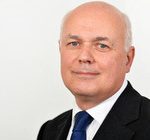
Tag: Iain Duncan Smith

  • Iain Duncan Smith – 2002 Speech to Students at Westminster Central Hall

    Iain Duncan Smith – 2002 Speech to Students at Westminster Central Hall

    The speech made by Iain Duncan Smith, the then Leader of the Opposition, in London on 5 February 2002.

    It is a great pleasure for me to speak at the Westminster Day 2002 today and I am very grateful to you for inviting me. I know that my predecessor, William Hague, very much enjoyed coming to the Westminster Day and I look forward to doing what I can to support it in the future.

    One of the reasons for that is the importance that I attach to encouraging people from all walks of life, whatever their background, to take an interest in politics and what their political leaders are actually doing. That applies just as much to people of my own generation as it does to people of your generation. It is important because the decisions that are made here in Westminster can have a huge impact on all our lives.

    Questions about the future of our health service, about our education system, about the actions we will take to protect the state of the environment and to help those in our world less fortunate than ourselves, all of these will be decided through our political process.

    Our world is moving at a bewildering pace. It is important that democratic institutions guarantee our security at such a time, while leaving us free to take advantage of the opportunities that change presents us.

    But you cannot understand the power of politics without recognising first its place in modern life. At the very time when people are looking to politics for more and more answers, there has never been a more glaring disconnection between politicians and the people whom they are elected to represent.

    Active participation in politics is now very much a minority pastime. General apathy with politics is now leading to dangerously low levels of participation in the democratic process itself.

    Huge numbers of people cannot be bothered to vote. For them politics is just one big turn off.

    That was demonstrated clearly at the General Election last year. At just 59 per cent we had the lowest turnout of voters at any Election since 1918 – and even then there were exceptional circumstances at work. Alarmingly for the state of our politics, more people stayed at home and didn’t vote on polling day than actually went out and voted for the party that won.

    Among younger people the situation was more shocking. Just before the election an opinion poll for the BBC showed just 38 per cent of 18-24 year olds intending to vote, while among 25-34 year olds the figure was still only 45 per cent.

    This isn’t a partisan point at all but there is a strong argument for saying that the real winner at the Election was apathy.

    As a candidate, I met countless numbers of people who said to me that there was simply no point in voting. “They’re all the same – after your vote and then do nothing when they get in”. “Voting never changes anything. “It makes no difference to me”. They’re just in it for themselves”.

    So it almost goes without saying that the image of politics and politicians, especially among younger people, is not a good one. It is borne out in opinion polls that regularly place politicians among the least trustworthy members of society.

    There are numerous reasons for this. I don’t doubt that the various scandals that have hit all parties in recent years have tarnished the general image of politicians.

    There is a widespread feeling that Parliament no longer matters – that it is marginal to events and not a place where people can get things done.

    The language of politics is so often not the language of people and the priorities of politicians sometimes don’t appear to be the people’s priorities. As a result, political leaders seem to be remote arguing about obscure matters that have little or no relevance to people’s day-to-day experiences.

    There is the growth of single-issue pressure groups that channel people’s energies and act as an outlet for their political grievances rather than political parties.

    And, of course, there is the perfectly understandable fact that most people don’t sit around agonising about the day’s events at Westminster but simply want to get on with their lives.

    These, then, are the problems. What are the solutions?

    The first is that both politicians and voters must rise above the ritual cynicism that has become too ingrained in the conduct of politics.

    Britain does not need to be a nation of full time political junkies. But we should recognise that among all the freedoms we have in the country the democratic right to vote in, and to throw out, the Government of the day is perhaps the most priceless.

    Look at what is happening in places like Zimbabwe today, where free and fair elections are in peril. 20 years ago I served with the Army in Zimbabwe as we helped to help transform that country from white minority rule into a multiracial, multiparty state. Now, step-by-step it is becoming a dictatorship, unless we do something to stop it. That’s why democracy matters.

    Think of the first fully democratic elections in South Africa after the end of apartheid, when people from the black townships got up at dawn, walked for miles and then queued for hours simply in order to exercise their new-found freedom to vote after years of political struggle and oppression. That’s why democracy matters.

    When you see in Afghanistan today, women free to walk the streets by themselves, free to go to school and free to teach in those same schools because we lifted that country from the tyranny of the Taliban. That’s why democracy matters.

    If we pretend otherwise, if we allow our own cynicism to obscure what a precious and hard-earned thing democracy is, then we cheapen not only ourselves we cheapen those who have lived without it for far too long.

    We only have to look at our own country to see the power of democracy. Britain has become a very different place in the last 20 years in part because of the electoral successes of Margaret Thatcher, whether your parents agreed with her or voted for her.

    The second thing we can do to revive our democratic culture, is to engineer an outbreak of honesty. You might think this a particularly difficult thing for a politician to achieve!

    After all we live in an age of spin, soundbites and media manipulation, partly because we are led to believe that what looks and sounds good is more important than what is good.

    This not only insults you as future voters, it does politicians a disservice too. I became involved in politics because I believed in certain things:

    – that the more choice and more freedom people have the better their lives are;
    – that the traditional rights and laws which shape the way we live our lives in Britain should be preserved for future generations;
    – that governments don’t have all the answers and are at their worst when they pretend that they do.

    These beliefs haven’t changed. If you ask me what it is that politicians do, I would say we are in the business of ‘practical idealism’. Politics is at its best and its most honest when it is driven by values, when the political debate is between the policies which flow from different principles.

    These principles will differ from party to party. For the Conservatives it is about putting more trust in people and taking the world as we find it, rather than the way we would like it to be. That is where we start from when we seek to improve things.

    Some of these improvements will be modest. It doesn’t make them any less worthwhile. Today my colleague Caroline Spelman is announcing an appeal launched with Islamic Relief to raise money for a mobile ambulance that will help treat landmine victims in Afghanistan. It is a practical step that will help thousands of victims. It is the sort of initiative that is replicated by countless thousands of people in this country up and down our country every day.

    Trusting people means trusting their instincts, their desire to improve their neighbourhoods, to help out in their communities, to lend a hand to people on the other side of the world.

    In our public services, it means giving more power to doctors and nurses and to teachers so that they can offer the quality of health care or education that they joined their respective professions to give. It is a simple vision rather than a grand design, but putting it into practice is far from easy. It means looking again at the way we run our hospitals and schools.

    It is one of the reasons why my Conservative colleagues have spent so much time looking at the way other countries run their public services in France, Germany and Sweden to see what we can learn, to see what might be made to work here.

    It means breaking away from old thinking, from the dogma and ideology that has characterised too much of our political debate on these issues for too long.

    What really matters is that people are treated more quickly and to a higher standard in our hospitals; that more pupils have the chance to achieve the same qualifications and learn the same respect for themselves and for others that many of you here today take for granted.

    This is the sharp end of politics. The democratic debate over the future of our hospitals and schools will shape the health care your parents and grandparents receive, it will also shape the education your children and grandchildren get when you are their age.

    It is nothing less than a debate about the future direction of this country, about the future direction of your lives. If you want to be involved in that debate, now is the time.

  • Iain Duncan Smith – 2022 Speech on Overseas Chinese Police Stations in UK

    Iain Duncan Smith – 2022 Speech on Overseas Chinese Police Stations in UK

    The speech made by Iain Duncan Smith, the Conservative MP for Chingford and Woodford Green, in the House of Commons on 1 November 2022.

    I am grateful to Mr Speaker for granting the urgent question and I congratulate my hon. Friend the Member for Rutland and Melton (Alicia Kearns) on securing it.

    I am pleased to see my right hon. Friend at the Dispatch Box; he should duck his shoulders, because he is responsible for none of what I am about to say. May I simply say that we are seeing a litany of general excuses from the Government, albeit not from him directly? A week ago, they had to be dragged to the House twice to talk about the punishment beating that was meted out in Manchester—no statement was offered—and now we have another UQ.

    This business about these police stations has been well known and well documented for ages. Every other country that has them is now investigating with a view to getting rid of them—Canada, Chile, Germany, Ireland, Portugal, Spain, Sweden, the Netherlands and the USA are all about to kick them out—but we have still not undertaken a full investigation. Even in Scotland, the First Minister has decided to investigate the Glasgow site; we have done nothing about the two sites here in England.

    I simply say to my right hon. Friend—with the best intentions, because he is sanctioned, like I am, by this brutal regime—that we have testimony from endless people, we have a Chinese Government who have set up these police stations, we have Confucius Institutes bullying Chinese students here, we have seen them beaten up on the streets in the UK, and we wonder very much whether they feel safe. Will he therefore take back to the Government, and to the Foreign Office, the message that it is high time they showed some strength and acted immediately to get rid of the diplomats responsible in Manchester, to investigate these police stations and kick them out, and to do the same with the Confucius Institutes? Otherwise, we look like we are dragging our feet compared with our neighbours.

    Tom Tugendhat

    I welcome the words of my fellow sanctionee. That is one of the few foreign accolades of which I think we are equally proud.

    Let me make a few points. First, there is no delay in investigation in this country. I can assure my right hon. Friend that the assessment will be coming forward urgently. As he will well understand, I will be extremely keen to hear the result. May I also remind him of the Prime Minister’s pledge during the leadership race only a few months ago that Confucius Institutes pose a threat to civil liberties in many universities in the United Kingdom and he will be looking to close them?

    I thank my right hon. Friend for his words about the Foreign, Commonwealth and Development Office. I am sure that Ministers from that Department will seek to make a statement, but I am sure they will be waiting for the reports that will be provided to them. He is absolutely right that there is no place for those who abuse their diplomatic privilege or the liberties of this country in order to oppress citizens here.

  • Iain Duncan Smith – 2022 Comments on Conservative Party Unity

    Iain Duncan Smith – 2022 Comments on Conservative Party Unity

    The comments made by Iain Duncan Smith, the Conservative MP for Chingford, on Twitter on 21 October 2022.

    If we don’t stop fighting, it will be game over for my regicidal party.

    The Conservatives need to relearn the virtues of unity. Without it, the next Prime Minister will soon be in familiar trouble.

  • Iain Duncan Smith – 2022 Speech on the Role of the Chinese Consul General

    Iain Duncan Smith – 2022 Speech on the Role of the Chinese Consul General

    The speech made by Iain Duncan Smith, the Conservative MP for Chingford and Woodfood Green, in the House of Commons on 20 October 2022.

    Mr Speaker, I am grateful to you for granting this urgent question, which follows Tuesday’s urgent question secured by my hon. Friend the Member for Rutland and Melton (Alicia Kearns).

    It is worth reminding the House of what happened in the Chinese consulate’s grounds on Sunday, where there was an appalling attack on a peaceful protester. We saw appalling videos of Bob Chan being dragged into the consulate’s grounds and seriously abused, and it now appears that the consul general played a part in that physical attack.

    Mr Chan is a Hong Kong refugee whom we have welcomed over here. I and others on both sides of the House are working together to help people get out of Hong Kong, and that community now feels very frightened by what the Chinese Government’s representatives are doing in the UK. Mr Chan gave a statement to the media for the first time yesterday. His wife and child were in the room, and it was a very moving statement. He spoke of how badly bruised and damaged he is, and how frightened he is. I thought it was very brave of him, because he now fears being targeted by the Chinese Communist party here in the United Kingdom.

    Overnight, we discovered that the consul general has admitted that not only did he take part in the attack but that he was responsible for, in his own words, pulling Mr Chan’s hair and tearing his scalp. That is the consul general, let alone the others who were there.

    I have worked with the Inter-Parliamentary Alliance on China and others in this House to help Hong Kong refugees, and I credit the Government for their work to get those with British national overseas passports over here. I now urge the Government to be much clearer than just using diplomatic language; I urge them to make it clear, in the light of this new evidence, that it is not just unacceptable that any consular individual should have taken part in anything like this, but that any consular individual who is proved to have been a perpetrator of this outrageous and violent attack on Mr Chan will immediately be made persona non grata and sent back to China. The Government have the diplomatic power to dismiss them. Whether or not there are criminal proceedings, the fact is we do not want them here in the UK and they must go.

    I urge my right hon. Friend the Foreign Secretary to come to the Dispatch Box and show the resolution that is necessary to send that message to China. He should ignore what other people and officials might say about being careful of tit for tat, get to the Dispatch Box and simply say, “They will leave the United Kingdom. Anyone involved in that attack is not welcome, and the ambassador will be informed of that forthwith.”

  • Iain Duncan Smith – 2022 Speech on Ukraine

    Iain Duncan Smith – 2022 Speech on Ukraine

    The speech made by Iain Duncan Smith, the Conservative MP for Chingford and Woodford Green, in the House of Commons on 22 September 2022.

    I recognise that others want to speak, and I will try to be as brief as possible. In a way, this debate is simple, because it is ultimately about the sovereignty, independence and self-determination of the Ukrainian people. All else is but a support to that simple position, and everything we do must be about securing that.

    Back in the 19th century, Gladstone made a very simple statement, which should underwrite all that we do on the matter. When he spoke about the attack of the then Turkish empire on Moldavia and Wallachia, he said that there was no greater bulwark for freedom than the breasts of free men and women. That is the truth of where we are today, and that is what we see happening in Ukraine—free men and women fighting in their homeland for the defence of their families and of that freedom that we take for granted.

    That freedom is not free; it comes at a huge price, and not only in the violence and the desperate depredations of the war brought about by the despot Putin. We need to readjust our thinking about defence spending to ensure we have the right equipment to support those who face something similar in future. This comes at a big price for us as we go into the winter months. As has been said, President Putin faces disaster, and yet his actions show that he still believes he has one card up his sleeve: the ability to split the alliance as we get towards winter.

    It is interesting that, even though India is moving away from Putin, China is indifferent, in a way, to where he is, and there was condemnation at the UN General Assembly the other day, he still thinks that if he puts the pressure on, the west will begin to break. There is some indication of politicians in the west feeding that. The other day, senior politicians in Italy were talking about why we should reduce the sanctions, because they were hurting us more than they were hurting him. As has been mentioned, there has also been talk in some other eastern European countries. He thinks it is working and he wants to double down.

    I will make one small criticism. In her remarks, the US ambassador to the UN, Linda Thomas-Greenfield, still talked about getting to a point where there can be negotiation and a negotiated settlement. I think that is quite wrong, because any talk about negotiation feeds Putin’s view that he will split the alliance. I would like to hear from the Government that we categorically believe that the only person who should ever be capable of talking about negotiation is Volodymyr Zelensky—not anyone in any country in the alliance, because all we do is help Putin. That is key to all that we do at the moment.

    To get through and make sure that we are stronger, all of us in the west, united, should surely talk to our public about the difficulties that they will face as a result of the war in Ukraine and of our need to support it despite those difficulties—the cost of living that we are trying to intervene on at the moment; the problems with energy costs and spikes; and the difficulties that they may see with higher food prices. We need to be honest with them.

    I say to the Minister that we need a second bit of honesty too. I intervened earlier about recognising that Russia sees tactical nuclear weapons as war-fighting weapons, which my right hon. Friend the Member for North Somerset (Dr Fox) also mentioned. That has always been part of Russia’s principal view. Instead of dancing around that sometimes and saying, “Well, we’re not going to be scared by rhetoric,” we should recognise that it is not rhetoric; they believe that to be the case. The question is whether they will decide to do it and whether the military will do it.

    Our answer to that must be to say, united, that if Putin ever does that, we will continue to bear down on him regardless and to give Ukraine the equipment and tools it deserves. If we are clear about that and about the possibilities, the public will be with us. It is when we surprise them by trying to say that there is no threat, when there is a major threat, that it is critical. We should be honest about that.

    Finally, China is watching. China invaded the South China sea and not a single thing was done about it. It has militarised it and very little was done about it. It is brutal to its own people at home and we have done very little about it. I simply say that the rules and lessons that we learn from Ukraine should have been learned in the 1930s. If we appease dictators who are hellbent on invasion and destruction, we lose the freedoms that we fought for. That is what this is all about.

  • Iain Duncan Smith – 2022 Tribute to HM Queen Elizabeth II

    Iain Duncan Smith – 2022 Tribute to HM Queen Elizabeth II

    The tribute made by Iain Duncan Smith, the Conservative MP for Chingford and Woodford Green, in the House of Commons on 9 September 2022.

    So much has already been said and I do not intend to repeat it much, but I do want to say that it is a sad day for all of us. It is tragic news, bringing to an end a remarkable career spanning 70 years, endless Prime Ministers and endless Leaders of the Opposition, too.

    For those 70 years, Her Majesty carried out her duties with charm, humility—not often mentioned, but real humility—and also endless humour. She was quite remarkable in a way. She learned that from someone whom we have not mentioned today, her father, who in his own way was someone who never expected to be the monarch and who suffered a very significant problem, a speech impediment, yet showed her that it was possible to rise above the challenge and to deliver one’s service to one’s country at an incredible time. There is no question but that she learned that service and duty at the knees of her father as he overcame his own difficulties and put his country and their service first. That is something that is quite often forgotten.

    A couple of things come to mind. So often, we have taken Her Majesty for granted. We expect her to be there. In the same way, whenever anything good or bad happens in our country, the crowds gather at Buckingham Palace. Whether she was there or not, they gathered; it was almost as though they could touch the railings and draw from them some sort of succour, support or mystical help. There they were again, last night, in pouring rain outside Buckingham Palace.

    In all of that, we often forgot that she was also a human being with her own family issues and problems. I remember particularly that period when two of her sons faced marriage break-ups that were widely reported in the newspapers and the media, with everybody speculating in public about all that was going on. I wonder how many in this House could ever have borne something like that—such a tragedy for their mother—in such a public domain. Then, to top it all, Windsor Castle burned down, a place she loved deeply and felt responsible for. In a way, nobody seemed to take her into consideration until, approaching a speech—with a cold, interestingly—she said that that year had been her annus horribilis. I think that the public stopped. We all paused and realised that we had forgotten that we actually owed her as much duty and service as she had shown us without complaint. I thought that that was a remarkable moment, when the country came back from where it was to recognise that duty and service.

    The other moment was when Diana, Princess of Wales, tragically died in that terrible car accident. Again, everybody gathered outside Buckingham Palace and demanded that the Queen should come. It got more and more shrill, with the newspapers banging on about how she had to come back. But there she was in Balmoral, trying to do what almost any grandmother would want to do—to put her arms around her grandchildren, comfort them and protect them from what she knew was going to descend upon them. Finally, when she came down, I came to the realisation that, actually, it was not that the British public were angry that she was not there; it was that they needed her there to be able to show their own emotion, because she was the focus for all of that. When she came, everybody cheered and applauded—she was there, and they could now grieve properly, because she was the focus for that grief.

    Of course, we all have anecdotes. When I ceased being leader of the Conservative party—it happens quite a lot, so I think the Queen was pretty used to it—she kindly asked me to take leave of her officially. I thought that was pretty kind—nobody else wanted me to, so it was decent of her to do that. When I came to the palace, and I was ushered into her small personal sitting room, I was struck by two or three things. One was the two-bar electric fire, which had around it a very strange piece of cardboard in the shape of flames and coloured with yellow and red crayons—I suspect by some somebody in the palace. It surrounded the fire, and I thought that was peculiarly dangerous; notwithstanding that, I am sure it had a purpose. The other thing was the Tupperware radio sitting next to her. I had not seen one since my parents smashed their last one. She very sweetly asked me how I was, being clearly sympathetic about what had happened. I just shrugged and said, “Well, ma’am, nobody died and I’m still here,” whereupon she roared with laughter. The funny thing was that she then paused and looked at me, not sure whether I had actually made a joke. I laughed too, and then she laughed again—whether at me or with me, I could not figure out. That was something to relish.

    The other anecdote I want to share with the House is slightly different. I was in a Privy Council meeting, and for some reason we were offered drinks at the end. It did not happen very often, so I took full advantage and ordered a whisky. The Queen came round to talk to us, and when she came to me, I, like everybody else, was as nervous as anything, but I stumbled through. Then I said, “I’ve just been reading some stuff about one of Churchill’s speeches”—I had suddenly recalled something he had said in 1941. President Roosevelt had sent a note over with the person he had just defeated in his third election, and Churchill said that, in it, he had written in his own hand a verse from Longfellow. Now, remember that in 1941 we did not know whether we would survive. Churchill had read the verse out, and I started to speak it. As I did, she started speaking it as well. I just want to share it with the House:

    “sail on, O Ship of State!

    Sail on, O Union, strong and great!

    Humanity with all its fears,

    With all the hopes of future years,

    Is hanging breathless on thy fate!”

    She said it perfectly. She then smiled slightly, and I detected a little dampness in her eye. Then she moved on. It suddenly struck me that that was exactly her. She was the ship of state. We looked to her for everything good, and in difficult times. She loved the Union with a passion, and she loved Scotland, I think, probably most of all. That is who she was—she was that ship of state, and somehow too often we took her for granted, but she never complained, and she always gave us service.

    Now, for that union of hearts, if the House will indulge me, I want to quote WH Auden with a few changes:

    “Stop all the clocks, cut off the telephone,

    Prevent the dog from barking with a juicy bone,

    Silence the pianos and with muffled drums

    Bring out the coffin, let the mourners come.”

    She was our North, our South, our East and West,

    Our working week and our Sunday rest,

    Our noon, our midnight, our talk, our song.

    We thought that love would last forever: we were wrong.

    May God bless her and keep her, and hold her in our hands, and may we bless the royal family. God save the King.

  • Iain Duncan Smith – 2002 Speech in Bradford Launching the Local Election Campaign

    Iain Duncan Smith – 2002 Speech in Bradford Launching the Local Election Campaign

    The speech made by Iain Duncan Smith, the then Leader of the Opposition, on 15 April 2002.

    We know about the national problems of crime, health and education.

    But ultimately all of these are local problems.

    It may be your street that is no longer safe to walk down, your local hospital where an elderly relative was stuck on a trolley for hours in A&E;, your local school where teacher shortages mean your child’s class has been cancelled.

    It’s one thing to read about the state of our public services in the press, it is quite another to be confronted with them on your own doorstep.

    To deal with the day-to-day impact of failing public services, we need to move decision-making closer to the people they affect; the personal level, the family level, the community level.

    If we are to make life better particularly for the most vulnerable in our society, it is at the local level that we will need to deliver lasting improvements. That means restoring local government to its rightful place in the community.

    It means turning local government into community government, where you spend more time pursuing the paramount interests of the residents you serve and less time implementing the wishes of a distant and disdainful centralised bureaucracy.

    Trust the people

    I would be the first to acknowledge that previous Conservative Governments have at times over-centralised but I believe that this Government has centralised more than any other.

    We cannot afford to repeat that mistake if we are to deliver genuine improvements in our public services and to our quality of life.

    We have to be prepared to believe in local government as a principal strand of Party policy.

    We have to trust the people.

    Trust the public servants and small businessmen, instead of tying them up in red tape.

    Trust people with their own money, instead of clobbering them with ever higher council tax bills.

    Trust people to get on with their own lives instead of running their community from Whitehall.

    Trust local people to build communities.

    Trust the local councillors who represent those communities.

    Conservatives delivering better communities

    And the basis of that trust will lie in the results that Conservative Councils are already achieving.

    For all the red tape, Conservative councils are innovating in the best interests of their community and providing inspiring examples of how to enrich the local quality of life.

    Here in Bradford, Conservatives have shifted the emphasis on new development from building on greenfields to redeveloping brownfield sites.

    The Council stopped plans to turn school playing fields into a housing estate, and it is now bringing in millions of pounds of new investment by transferring council housing to not-for-profit landlords in the voluntary sector.

    Conservatives delivering value for money

    If you are going to trust councillors with more power, you also have to be able to trust them with the peoples’ money.

    Again, it is Conservative councils who are leading the way.

    This year, an average household in a Conservative council will pay £135 a year less on a Band D council tax bill than a Labour council and £159 a year than in a LibDem council.

    Labour and Liberal Democrat councils have the highest council taxes in England – a reflection of years of financial mismanagement. Fourteen of the councils with the top twenty highest council taxes in England are Labour-controlled. None are Conservative.

    But Conservative councils are not just delivering lower council taxes, but delivering better value for money for every penny raised. They collect more council tax and more council rents.

    They have fewer empty council houses and cleaner streets.

    The best rates of recycling are in Conservative controlled authorities.

    The worst schools are in Labour and Liberal Democrat councils.

    And it is those who rely on local services, the vulnerable, who are affected the most by the quality of the services they receive.

    The number of homeless has risen by 12,000 since 1997-98 and the numbers of people in temporary Bed & Breakfast accommodation has trebled. More available affordable housing is crucial to these people.

    It is Conservative councils have less empty council housing, and re-let vacant housing more quickly.

    And it is the social services departments of Conservative councils who are among the most innovative in protecting the vulnerable and giving the disadvantaged a better chance in life.

    Neighbourhood policing

    But if there is one thing that hits the vulnerable hardest, it is surely crime.

    In Britain today there is an imbalance of fear. People fear crime and disorder far more than our criminals fear authority.

    Crime is afflicting every neighbourhood, and we need to fight back.

    But we will not do so while policing is run from Whitehall with nothing but targets and more red tape, forcing our constables to retreat from the streets.

    We need a different approach.

    Officers need to know their neighbourhoods.

    And neighbourhood yobs need to know their police officers.

    That is what they have done in New York. The NYPD are no more than two minutes away from any crime that is reported.

    As a result they massively reduced robbery, burglary, car and violent crime.

    So we will deliver neighbourhood policing.

    Why am I so confident that we will do this?

    Because Conservative councils are already delivering it.

    Conservative-run Bexley in London have put extra money into youth services, to increase social and recreational activities for young people, and backed that up with an integrated council-police team, based at a local police station, to tackle youth disorder.

    Conservative Kent County Council have pioneered a community wardens scheme, supporting the police and providing a reassuring presence in rural areas.

    This is a genuine innovation aimed at making communities safer, something which this Labour Government has failed to do, and other Conservative councils such as Kensington and Chelsea are introducing similar ideas.

    Our councils didn’t wait for a central directive. They understood that their community wanted greater security, and they responded.

    Conclusion

    Delivery. That is the key to reviving public interest in local politics.

    Turnout in local elections has fallen to alarmingly low levels, down from 45% in London and other areas in the late 80s and early 90s to barely a quarter today.

    The Government’s solution is to suggest text messaging voting and other e-strategies to boost turnout. This misses the point.

    The problem is not that voting is too difficult, but that abstaining is too easy. Put simply, not enough is at stake.

    Where local residents can see a direct link between the way they vote and the quality of services they get, they are more likely to exercise their right to vote.

    And the truth is, it does matter how you vote in local elections, because Conservative councils can make your life better.

    We know that local residents’ daily lives are marred by problems like crime, vandalism, lack of discipline in our schools and a failing transport system.

    But Conservative councillors are working to tackle these problems.

    Conservative councils are delivering practical improvements to our streets and our public services, in rural, urban and suburban communities.

    We have a strong record of delivery; we have a strong vision of genuine community government.

    Let’s get out there and give more people the chance to enjoy the benefits of a Conservative council delivering for the local community.

  • Iain Duncan Smith – 2002 Speech to the West Midlands Institute of Directors

    Iain Duncan Smith – 2002 Speech to the West Midlands Institute of Directors

    The speech made by Iain Duncan Smith, the then Leader of the Opposition, at Villa Park on 16 May 2002.

    Speaking as I am in Aston Villa territory, I am conscious that some of you will have viewed the recent play-off success of Birmingham City with mixed emotions.

    What I found heart-warming were the headlines plastered all over the newspapers: ‘Blues on the way up’.

    Even West Brom have got in on the act. Not only have they won automatic promotion this season, their supporters topped the BBC’s recent ‘Test the Nation’ IQ quiz.

    At an average of 138, their score was thirty points higher than the English national average.

    Figures were unavailable for politicians and I resist the temptation to speculate.

    Having three sides in the Premiership will provide a multi-million pound boost to the local economy. It is also another sign of this area’s predominance.

    Birmingham is the 12th largest wealth-producing district in Europe. It is a great commercial city, vital not just to the West Midlands but to the whole UK economy.

    And the West Midlands Institute of Directors has an extremely important position.

    I welcome your long-standing efforts to advance the argument for competitive enterprise as the essential building block of lasting prosperity.

    The IoD has a motto: ‘enterprise with integrity’.

    Britain badly needs a Government that practices what you preach.

    When politicians talk about integrity, you probably start counting the spoons.

    But it cannot be right for a Cabinet Minister to be given red carpet treatment when he has lied on national television.

    And it cannot be right that the same Minister misleads Parliament and then refuses even to apologise for it.

    There are few enough opportunities for the public through their MPs to hold the Government accountable in the first place.

    Whatever our political disagreements, if the Government of the day isn’t straight and seen to be so, it is public confidence in our democracy and business confidence that will suffer.

    Integrity matters. And so does an understanding of enterprise.

    This Government talks relentlessly about ‘enterprise’.

    The title of the Budget Red Book was ‘Investing in an enterprising, fairer Britain’.

    ‘Enterprise and fairness’ is one of the Chancellor’s favourite phrases. But what exactly does Labour mean by ‘enterprise’?

    As far as I can see, they mean companies. The private sector. Business, commerce and industry.

    For me enterprise is a much broader concept. It is a culture, a way of doing things. It is about thinking creatively in order to make better products or deliver better services.

    As Bob Michaelson said, what you have in this region is the spirit that created the industrial revolution. This is the spirit of enterprise, and it was no different when it was about 19th century technology than today, when it is about the hi-tech industries of computing and telecommunications.

    Yes, enterprise is about making profits, but it is also about making peoples’ lives better. It should be as much a feature of the public sector as it is of the private sector.

    It’s just as much about building new ways of delivering better public services as it is about building new structures for business.

    This is the real difference between Conservatives and Labour today.

    We are prepared to be enterprising. We are prepared to think differently and creatively to make peoples’ lives better.

    This means holding our hands up and recognising that Britain does not have a monopoly on good ideas in the delivery of public services.

    On the contrary, in the research we have undertaken so far in our policy review, we have found that many other countries have better methods for delivering core public services, particularly healthcare.

    Germany has no national waiting lists.

    Denmark gives people a legal right to treatment within four weeks of seeing their GP.

    Stockholm gives patients the choice of doctor and the hospital they go to. No one can do that in the UK without going private.

    Of course, if Britain could boast similar achievements, we might be justified in ignoring the record of other countries and simply carrying on with what we’ve got, without meaningful reform.

    But the reality is that the quality of the service the public actually receives has deteriorated.

    The NHS has more managers than beds.

    Accident and Emergency waits have grown longer.

    The number of operations is at a standstill.

    We are now confronted with a two-tier Health Service where record numbers of people – a quarter of a million last year – are paying for their own operations, not through insurance but out of their own pockets.

    And all despite this Government increasing NHS spending by nearly a third in real terms.

    Any businessman or woman would question the underlying soundness of an enterprise that produced these sorts of returns on that scale of investment since Labour came to power.

    If you had experienced no appreciable rise in output, and a marked decline in customer satisfaction you would surely look at the underlying approach of your business before committing more investment?

    And if there was clear evidence that your overseas competitors were getting better results, you would surely swallow your pride and have a look at how they did things in other countries.

    Sadly, the Government has done none of these things.

    The result is as depressing as it is unoriginal: a return to tax and spend.

    The Chancellor has embarked on a great experiment to prove that the only thing lacking in the NHS is money.

    And yet we already know that this isn’t true. The evidence is on our own doorstep.

    Taxes will increase by around £8 billion pounds next year with no hint of any real change in the way the Health Service is run.

    Over the next five years Gordon Brown plans to bring average UK health spending into line with what Wales and Northern Ireland spend now. This is the same as France, more than Denmark and Sweden and slightly less than Germany.

    But the treatment of patients is nowhere near as good. Indeed, in Wales and Northern Ireland waiting lists are worse than in England.

    The Chancellor’s only recipe is to spend more generously and police more rigorously the centralised NHS we already have.

    In contrast, Conservatives are prepared to take the genuinely enterprising approach, opening our minds to alternative ideas for reform, looking abroad at examples of where other countries and other systems produce better results.

    The key is to push power down and to place more trust in the people on the frontline.

    If we are to renew the promise of an NHS that delivers the best quality of care to people regardless of their ability to pay, need should be determined by patients working with doctors, not by politicians and civil servants.

    That means decentralising power and making the Health Service genuinely accountable.

    Creating modern public services is a priority for the people who rely on them – particularly the most vulnerable in our society – but it should be a priority for business as well.

    It is certainly a priority for the Institute of Directors. In your Budget submission, the IoD made a range of arguments about the Government’s record on health with which I would strongly concur. In particular, you highlight the galling inconsistency of the Government’s decision to raise employers’ National Insurance.

    As your Budget submission says:

    “Both the Prime Minister and Chancellor have criticised European social insurance schemes for health, on the grounds that they would impose significant extra costs on business. They have then proceeded to introduce an extra tax on business – of just under 0.5% of GDP per annum – in order to pump money into the state run NHS.”

    On countless occasions in the Commons in the months leading up to the Budget, senior Labour Ministers taunted us for even daring to look at other health systems on the continent. They told us that most European health systems relied on some form of social insurance which was ‘a tax on jobs’.

    So what is the £4bn tax on employers’ National Insurance if it isn’t a tax on jobs? Moreover, it is a tax on wealth creation. It says a great deal about what the Government really thinks about enterprise.

    Most importantly, this is the price you pay for a Government that refuses even to countenance other ways of delivering public services.

    That is why genuine health reform is ultimately so important for business, because only fundamental reform offers a way out of the endless cycle where businesses are taxed more to pay more for sclerotic public services.

    And it is an endless cycle.

    This Budget was not the first time Labour have increased taxes on business. They’ve done it every single year since 1997 without fail, it’s just that previously they did it by stealth.

    Almost as soon as Tony Blair first got into office, his Government introduced a £5bn windfall tax on the utility companies, undermining massive investment programmes for some of the most vital infrastructure in the country.

    In their first year, Labour also introduced the tax which Bob Michaelson referred to, the £5bn abolition of dividend credits on pension funds.

    Bob is not alone in criticising this particular tax change. There is currently an Early Day Motion circulating in Parliament criticising the pension stealth tax, stating that it has cut the dividend income on dockers’ pension funds by 33 per cent. The signatories include: Peter Kilfoyle, Jeremy Corbyn and Dennis Skinner.

    Clearly, MPs of all persuasions recognise the harm that this measure has caused.

    As the last Parliament got into full swing, fuel duty soared to record levels, hitting businesses just as hard as everyday motorists.

    Contractors were hit with IR35; National Insurance was levied on benefits-in-kind, and the Climate Change Levy provided extra costs at the worst possible time for energy-intensive industry.

    But it’s not just taxation.

    A recent IoD survey in the West Midlands found red tape to be the greatest obstacle to enterprise in the region.

    The Government’s own ‘Red tape Czar’ shares this view. The Financial Times recently carried an article by David Arculus, the new chairman of the Better Regulation Task Force. He warns of Whitehall ‘drowning companies in a sea of red tape’.

    He recounts his experience of asking one Government department if it could consider giving advice on employment regulation to employers. Incredibly, the department replied that ‘it could not possibly know everything there was to know about employment regulations’.

    But as Mr Arculus says, ‘this is exactly what the government expects of employers’.

    What I find so staggering about this article is that, after five years of Tony Blair saying he would cut red tape, the Government’s own agency for dealing with the problem is absolutely damning in its assessment of Labour’s achievements.

    Quite simply, since May 1997, you have been subject to an unprecedented tide of both red tape and taxation. In that period, business has been burdened with £11bn of new taxes and regulations every single year. Struggling manufacturers, new hi-tech start-ups, care homes for the vulnerable; small, medium and large businesses; they have all been hit.

    Nothing more starkly highlights this Government’s complete failure to understand the nature of enterprise than this unremitting burden on the freedom of business to create wealth.

    As Conservatives we remain committed to free enterprise, where the burdens on business are minimised instead of ramped up at every opportunity.

    But we also know that we have to get the other fundamentals right: sound infrastructure, reliable transport, stable monetary policy and an education system that gives our people the skills to meet the challenges of today’s competitive workplace.

    On all these areas we are making progress in developing policy as part of the review I set up on becoming leader.

    On education, Damian Green has started to reveal our plans for addressing the failings of our worst schools by offering greater opportunities for vocational training.

    On the pressing issue of health reform, we are visiting other countries to see how they provide better services.

    Michael Howard has confirmed our support for an independent Bank of England.

    And I want to reaffirm our commitment to keeping the Pound.

    The Prime Minister has hinted at a referendum on the single currency next year. I gather this afternoon he sent Stephen Byers to brief journalists that he would start the referendum process this autumn. When that news broke the Prime Minster panicked and denied all knowledge. What a way to run a Government, more spin becomes more chaos.

    At a time when everyone is concerned about the state of their schools and hospitals, when we feel threatened by the rise in violent crime, he should focus on these issues and stop playing games over the Euro.

    If the Prime Minister wants Britain to adopt the single currency, he should say so and name a date for the people to decide.

    We will campaign vigorously for a ‘no’ vote because replacing the Pound means giving control of British interest rates, taxes, and public spending to politicians and bureaucrats in Brussels and Frankfurt.

    It would cost us in higher unemployment and lower living standards, and it would mean boom and bust for the British economy and businesses.

    It also means British people giving away control over politicians. Now, people can kick us out if they don’t like us. Inside the euro, it wouldn’t matter how people voted.

    These are the arguments that I believe will prevail.

    We can then get back to the urgent task of making this country fit for the century we are living in.

    The bottom line is that we are opening our minds to new ways of doing things in order to make peoples’ lives better.

    All Labour have done is opened your wallets.

    Britain deserves better.

    It is the business of the Conservative Party to make sure it gets it.

  • Iain Duncan Smith – 2002 Speech to Scottish Conservative Conference

    Iain Duncan Smith – 2002 Speech to Scottish Conservative Conference

    The speech made by Iain Duncan Smith, the then Leader of the Opposition, on 18 May 2002.

    Next year a new Scottish Parliament will be elected. Elections that will be a referendum, not just on the performance of the first Scottish Executive, but also on the performance of the Scottish Parliament itself.

    Three years ago, 129 MSPs were elected with the goodwill and enthusiasm of the Scottish people. And together they carried the high hopes of a proud nation into Holyrood.

    But three years of bickering, pettiness and politically correct trivia have dashed those hopes. Nothing illustrates this better than the way Tony Blair seeks to play games over the European issue. To have Stephen Byers brief the press that they are going to hold a referendum and then to deny it is cynical politics of the worst kind. Instead of trying to jump on the Euro issue he should be spending his time sorting out our failing health service, the rising levels of violent crime and the poor quality of our schools.

    Scotland, like Britain as a whole, faces deep-seated social problems and failing public services.

    The Scottish people looked to the Scottish Parliament for solutions but they have looked in vain.

    The Labour-Liberal Democrat Executive does not share the Scottish people’s priorities.

    As drugs continue to claim the lives of our young people, the only smack that the Scottish Executive seek to protect children from is the discipline of their parents.

    As rising crime drives decent people from the streets, the Scottish Executive seem more interested in making the fields safe for foxes.

    And as vulnerable people in our hard-pressed communities cry out for decent housing, Labour and Liberal Democrat politicians are spending £300m on a monument to their egos.

    For those of us that opposed the Scottish Parliament, the temptation is to say ‘I told you so’.

    But that is a temptation we must resist.

    In the overwhelming result of the 1997 referendum, the settled will of the Scottish people was made clear. And despite all the disappointments of the last few years, that will remains unchanged.

    The Conservative task is to make the Scottish Parliament work by ensuring that it rises to the challenge of serving every person and every community in Scotland.

    The Scottish parliament needs more MSPs with new ideas on how to improve our schools and cut hospital waiting times.

    The Scottish Parliament needs more Conservative MSPs who want to spend money on fighting crime rather than on expensive pet-projects.

    The Scottish Parliament needs more Conservative MSPs who will deliver effective help for the vulnerable.

    The Scottish Parliament needs more Conservative MSPs who will speak up for rural Scotland as well as urban Scotland.

    The Scottish Parliament needs more Conservative MSPs who aren’t going to spend all of their time campaigning for independence.

    It needs more Conservative MSPs to join a team so ably led by David McLetchie.

    Last week David set out the five key themes that will guide the Scottish Conservative Party as it prepares for next year’s Parliamentary Elections: economic security; safe streets; first class public services for all; support for stronger families and communities; and a real safety-net for the vulnerable.

    I spoke about helping the vulnerable during last summer’s Conservative Party leadership election. I spoke of “the caring hearts and practical agendas of men such as Wilberforce and Shaftesbury”.

    Wilberforce and Shaftesbury embody the Conservative approach to vulnerability: blending compassion with practical effectiveness.

    They championed great causes: freedom for the slave, help for the mentally ill, and education for all.

    And today is a time for championing great causes, too.

    People are switched off by politicians who would rather get a good newspaper headline than get something done.

    But they respond to people who hold strong beliefs that are matched by effective policies.

    The Labour and Liberal Democrat Scottish Executive is beginning to lose the battle of newspaper headlines but it has already lost the battle on public services and it has failed to help the vulnerable.

    Nearly three months ago David McLetchie and I visited the Easterhouse estate in Glasgow. Today I visited there again to learn about how beyond the reach of Government they are able to help those in difficulty and need.

    These visits are part of a number of visits that I and other Conservatives have been making to poverty-fighting projects all over Britain. But Easterhouse summed up the challenge that vulnerable people and vulnerable neighbourhoods face.

    All of the major signs of vulnerability were present: crime; drugs; inadequate housing; failing public services; too many people without rewarding work; and too many children who never see their fathers.

    But there were sources of hope, too: neighbours helping each other out; single mothers dedicating their lives to their children; and community and churchleaders providing constant care and support.

    People in Easterhouse have been failed by politicians. But they don’t want government to give up and run away – they want government to do things differently.

    I believe in a government that devolves power and responsibility to local communities. While Labour trusts the state, Conservatives trust people.

    When Labour thinks of community – it thinks of politicians, committees and taskforces. When Conservatives think of community we think of the family, local schools, charities, and places of worship. These are the people-sized institutions that operate on a human scale. In them we find friendship, identity and belonging. They are the building blocks of a neighbourly society.

    Government cannot solve every social challenge but government can support these institutions and the values that energise them.

    That is why the Conservative manifesto for the next Scottish Parliamentary elections will contain practical ideas to support families, charities, social entrepreneurs and other people in the frontline against poverty.

    The manifesto will also focus on schools, hospitals and crime-fighting. When I talk about failing schools, patients on waiting lists and street crime Tony Blair says that I’m exaggerating.

    When I read the relentlessly optimistic spinning put out by the present government, I am tempted to quote Groucho Marx: “What are you going to believe? Me? Or your own eyes?”

    For whatever Labour might want us to think, you do not need me to tell you that our schools and hospitals are getting worse. Our great public services desperately need reform.

    But not Labour’s kind of reform. Suffocating schools and hospitals under even more layers of bureaucracy, while leaving the underlying problems untouched.

    No, that kind of reform is all about helping Labour throw a cloak of lies over the evidence of their failure.

    It’s the sort of sleight of hand that keeps Tony Blair out of trouble, but leaves vulnerable people more exposed than ever.

    And it costs. Hard working families pay more in tax to fund these fake reforms. But as we know in Scotland, Labour can raise spending on schools and hospitals and still fail pupils and patients, teachers and nurses.

    Labour tax more and deliver less. The burden grows on rich and poor alike. But, the rich at least have a choice. They can pay again. They can buy their way out of the public sector and into private schools and hospitals.

    Most people don’t have that choice. Most people have nowhere else to go. Labour’s failure to reform the public services makes millions of people vulnerable – when illness strikes, when classrooms are disrupted, when crime brings fear to the streets.

    Labour’s fake reforms increase vulnerability. Conservatives are committed to real reforms that increase security.

    Conservative reforms that are straightforward and easy to understand. Conservative reforms that are built around familiar and trusted institutions and values.

    Conservative reforms that respect the public service professionals and strengthen the neighbourly society. What does that mean for the National Health Service?

    Its means an NHS that is responsive to local needs, local patients and local GPs. It means giving patients and their doctors a choice over their hospital treatment. It means freeing our hospitals from bureaucratic control and political interference. Hospitals will be part of the communities they serve.

    The same is true of our schools – which we will re-establish as local institutions. I want to stop that pitiless rain of central directives and clear the way for the leadership of head teachers and school governors.

    I am determined that teachers and school boards will have the respect not just of government, but, even more importantly, of their pupils too.

    We will not allow the disruptive few to damage the education of the many, we will give heads the authority to restore discipline in schools.

    And discipline will be the strength of schools that prepare their pupil not just for work, but also for life in all its fullness.

    Young people are under pressure as never before and parents want schools that help them to build character in their children, the strength to resist self-destructive behaviour and to achieve their hopes and dreams.

    We have failed our children for too long. And the evidence for that can be seen on the streets where young people are the victims of a culture of drugs and crime.

    We look to the police for protection and to the courts to stop the spiral of decline in both individuals and communities.

    But here too, the fake reformers are at work. Bureaucracy takes the place of action, central control the place of local accountability, political correctness the place of genuine care.

    Our police are pulled back from the fight against social disorder: and out of the petty crimes of vandalism, drug dealing and intimidation comes the threat and reality of mugging, rape and murder. None of us are completely safe, but again it is the vulnerable that suffer most of all.

    There is something seriously wrong with a society that leaves the poor, the young and the old unprotected on the frontline against fear. Conservatives will bring about real reform. We will put police back on the streets.

    Neighbourhood police officers that everyone knows – especially the local yobs.

    We will back them up with the powers that brought security back to the streets of American cities like New York.

    We won’t just hold the line against fear, we will take back the ground lost to forces of disorder and hand it back to the vulnerable.

    I want Conservatives to be the party most associated with new thinking on the real problems facing people and their communities.

    Conservatives will put forward real solutions to the problems of poverty, crime, hospital waiting times and poor discipline in schools.

    Only by focusing on real issues and effective solutions will politics be rescued from its current unpopularity.

    But politicians must also set a better example.

    Last week another terrible tragedy occurred on the railways. Every person who uses the railways sought reassurance that the government was serious about understanding what went wrong and that everything was being done to put things right for the future.

    Frankly, Stephen Byers was in no position to offer that reassurance.

    I simply do not understand why the Prime Minister keeps him in his Cabinet.

    Mr Byers is not only doing damage to the reputation of the Labour Party – my concern is that he is doing much greater damage to the whole reputation of politics and public life.

    People watch a Cabinet minister who lies and misleads but is never punished or rebuked.

    Mr Byers has demeaned Parliament and the office he holds. The longer he stays the deeper the taint in Tony Blair’s government.

    Politics will never be free from the kinds of people who make mistakes or behave badly. That is sadly the reality of human conduct in every walk of life.

    But politics needs leaders who will not excuse misconduct.

    I will not tolerate unacceptable attitudes or dishonesty from any Conservative politician.

    It is time that Tony Blair ended his weakness over his Transport Secretary.

    Mr Byers should go and he should go now.

    Labour in Scotland have had their own share of problems.

    David McLetchie properly exposed the office expenses scandal when the SNP opposition was either asleep or, perhaps, planning a photo opportunity at a TV studio.

    But the scandal of Scottish politics is as much about its scale as it is about its nature.

    There are simply too many politicians in Scotland.

    I began my speech by urging Scotland to elect more Conservative MSPs.

    But the Scottish Parliament needs fewer MSPs overall.

    Money being spent on extra politicians and their accommodation, spindoctors and bureaucracy can be much better used by the Scottish people themselves or by Scotland’s public services.

    Scotland’s voters reject the SNP because the SNP only have the one big, bad idea of smashing the United Kingdom.

    Scotland’s voters reject the Liberal Democrats because they surrendered their principles in return for a little power and must now share the blame for Labour’s terrible record on schools, hospitals and crime.

    For a long time Conservatives have been on the back foot in Scotland.

    In recent times there has been strong evidence that the tide is turning.

    For a start, there are more elected Conservatives across Scotland and for that I pay tribute to all of your hard work and to the leadership of Jacqui Lait and David McLetchie’s team.

    But even more significantly Scotland’s Conservatives are the party of new ideas. The party with the determination to find new solutions to the problems facing our schools, hospitals and other public services.

    In the 1980s and 1990s Conservatives focused upon the economy and by releasing the creativity of the British people the country was saved from economic meltdown.

    But we were not rejected without reason in 1997.

    People had not only become bored with us. Scotland’s people, in particular, felt we didn’t share their concerns and their values.

    The introduction of the poll tax in Scotland – one year ahead of the rest of Britain – encapsulated the problem.

    Things are changing.

    A difficult chapter of the recent Conservative Party history may be most associated with Scotland but it is a closed chapter.

    I urge Scotland’s people to look forward because the renewal of the Conservative vision was declared in Easterhouse and my commitment to helping the vulnerable is not a passing phase.

    We will deliver on the Conservative commitment to fight crime and improve Scotland’s schools and hospitals. No stone is being left unturned as we search for practical solutions in America, France, Sweden, Holland and Germany to improve peoples lives.

    Next year’s local and Parliamentary elections are vital for Scotland.

    Scotland’s voters will have a chance to endorse the terrible record of Labour and the Liberal Democrats or they can vote for real change.

    The SNP will never deliver real change because they never have any new ideas.
    David McLetchie and I are united as Conservatives but we are also united in our love for this country.
    Scottish Conservatives are from Scotland, of Scotland and for Scotland. We are the only alternative to the socialists, the separatists and the cynical Liberal Democrats.

    Only Scotland’s Conservatives will deliver action against crime. Action to improve our schools and cut waiting times. Action to cut the cost of politics – real solutions to the problems of vulnerable communities.

    Now is our opportunity to show the Scottish people that the Conservative and Unionist party deserves their trust again. It is a challenge for all of us and a challenge we must rise to.

  • Iain Duncan Smith – 2002 Speech at Hackney Community College

    Iain Duncan Smith – 2002 Speech at Hackney Community College

    The speech made by Iain Duncan Smith, the then Leader of the Opposition, on 21 May 2002.

    I am delighted to be here at the Hackney Community College. Your mission statement talks of ‘working in partnership, widening participation, raising standards and achievement, to meet the needs of the communities we serve’. The hard work of students and staff here have made that statement a reality. Today I want to talk about how that reality can be spread to other inner city areas up and down the country.

    Three months ago I visited Glasgow’s Easterhouse estate.

    This weekend I went back and spent some more time with the residents there who help their own neighbours.

    A breakfast club run by church volunteers provides more than nourishment before school. One of the children who uses the club never knows if his mum or dad are even going to be at home.

    But in a life where nothing else is reliable he does know that every morning the same person who provides him with breakfast will also listen to his worries and encourage him.

    A positive role model has entered his life for the first time and has offered him the hope of escape from a life of deprivation.

    Yet he is not a target that someone was asked to hit nor is he a statistic that will show up in an Annual Report.

    He is just one child among many who someone took responsibility for and made a difference.

    That is why at Harrogate I rededicated my party to look more deeply into the social challenges facing our country’s most vulnerable communities and particularly the young in those communities.

    How can we involve more fathers in the lives of their children?

    How can we crack down on youth crime and the problems of drugs, to salvage young lives and to improve the communities they live in?

    And most of all, how can we create schools that teach basic standards, and respect for themselves and for other people?

    I remember when I finally decided I wanted to enter politics. I was on active service overseeing Rhodesia’s transition to a democracy.

    We visited a village after the guerrilla fighters had been brought in from the bush.

    A little boy was digging a hole in the riverbed looking for water to wash in. His friends were laughing and playing nearby.

    Their future was about to change for the better.

    It struck me that these simple things that gave those children such pleasure had been impossible during the war.

    Politicians gave them new opportunities, but twenty years later under a corrupt political process their country had slipped back into chaos.

    To understand the power of politics, you also have to understand its limitations.

    I entered politics to help make a difference, but that difference cannot be left in the hands of politicians alone.

    I joined the Conservative Party precisely because it understands these things.

    We have always worked to help people take back control of their own lives, we don’t try and live their lives for them.

    Because of that people too often think the Conservative Party only believes in money; that we are content for the most vulnerable in our society to sink or swim.

    That must change. And under my leadership the Conservative Party is changing.

    Learning from the voluntary sector

    To truly help the vulnerable, we must learn the lessons from those who are already doing the most to help them.

    They work in areas and with people who have been forgotten. Their local roots and independence allow them to get results that governments cannot even imagine.

    Because of the depth of their personal commitment they have the authority to help people who want to change, they don’t simply help people and hope they’ll change.

    You can call it ‘tough love’, but these groups are agents of change, not just another agency of the state.

    And often as not they are provoked into action by the failure of the state.

    I visited Faversham a couple of months ago and met two mothers who had set up a drug rehabilitation centre. One of them had turned her own son into the Police.

    He had become a one-man crime wave, stealing from her and her neighbours and dealing to other children to feed his own addiction.

    These two women had overcome the indifference of the police and the hostility of local officials to take control of their own situation.

    How can politics help people like this without undermining what they do?

    Voluntary groups want to be free to respond to the personal needs of local people rather than become enslaved by the artificial requirements of politicians.

    This Government offered the voluntary sector a partnership, but that partnership has turned into a takeover.

    Instead of forcing the voluntary sector to think and act like the state, politicians should have the humility to learn from what these groups do best.

    They help the vulnerable with care, commitment and innovation, virtues which we must allow to flourish in our public services too.

    The status quo

    The way we organise our public services belongs to a bygone era.

    In the 21st Century we are still running our public services and trying to make them accountable in the same ways we did after the Second World War.

    But since then we have lived through the Cold War, the development of nuclear weapons and the information revolution, the fall of the Berlin Wall and the rise of the internet.

    Imagine what our living standards would be like today if we still ran our economy the way Clement Attlee did?

    Now imagine how much better our quality of life could be if we no longer ran our public services the way Clement Attlee did.

    At the beginning of a new century, no other major country runs their schools or their hospitals the way we do. That is why the quality of our public services is failing to keep pace with rising expectations and living standards.

    For the past five years Labour has spent its time centralising our public services with targets and ten-year plans. It has drowned individual initiative in directives and dogma.

    But central control is delivering neither fairness nor efficiency.

    It is going to fall to the Conservatives to address these issues. We will have to re-examine the entire relationship between central government and the people it is supposed to represent.

    We will have to challenge every principle except one: that people should be helped according to their needs.

    We should challenge the idea that uniformity is more important than quality. That nobody minds receiving a poor service as long as nobody else is getting a better one.

    But poor public services are not fair. They hit the vulnerable the hardest.

    A Health Service in crisis affects the elderly disproportionately.

    A society that turns a blind eye to violent crime and the drug culture condemns many council estates to fear and despair.

    Bad schools keep poor families poor.

    In some of our inner cities, as many as one in ten pupils leave schools without a single GCSE and truancy is rocketing. Compare this with places like Redbridge or Buckinghamshire where more than 90% of children gain five or more GCSEs.

    As our country grows richer those who can, seek to buy their way out of failure, but they cannot avoid the consequences of failure for those who are left behind.

    For generations too many experts have told us all it is unfair to expect children from inner cities to strive for the same standards as everybody else. I say it is unfair to expect anything less.

    The most important thing to me personally, my mission for the Conservative Party, is to provide equal opportunity in our schools for all children – particularly the most vulnerable – wherever they live, however much their parents earn.

    There is nothing compassionate about leaving the most vulnerable in our society to suffer simply because we decree that everybody should be treated the same regardless of their needs.

    Uniformity doesn’t lead to social cohesion it only breeds social division.

    When systems become more important than people and theory matters more than results, this country has lost its way.

    Everywhere else around us services are tailored to our individual needs. We have more choice and more access to information, we are used to our views being taken seriously.

    This is almost impossible in today’s public services.

    The second thing we need to challenge is the idea that centralised politics and centralised public services are what hold our nation together.

    In fact they are in danger of tearing it apart.

    Take the case of Rose Addis, the 94 year old mother of my constituent, who was left unattended in her local Accident and Emergency ward.

    All the family wanted was an apology. The hospital authorities dismissed their concerns. The family went to the press. The Health Secretary rubbished their story on national radio. The family came to me in despair and I raised the case in Prime Minister’s Questions.

    What followed was a 72-hour political row that dominated the national news. The entire political and NHS establishment came crashing down on Mrs Addis. She was even accused of being a racist all because she wanted a simple apology.

    This one case encapsulates most of what is wrong with the post-War welfare state.

    A vulnerable lady did not get the quality of care she deserved. The hospital was too rigid even to offer an apology.

    The lines of political accountability were so centralised that the Health Secretary, the Leader of the Opposition and the Prime Minister became involved to try and resolve a single case.

    Ultimately this degree of centralisation diminishes our democracy.

    Because Central Government is responsible for everything, it tries to run everything, and because it tries to run everything it ends up running most things badly.

    So it relies on spin to pretend that things are better than they are.

    Detailed target setting, leads to failure, this leads to lies and the setting of new detailed targets. The vicious circle is complete.

    As a result our political culture becomes debased and our public services become demoralised.

    People are crying out to be heard. They want to have a say in the direction their communities take, they want more control over their own lives.

    We must listen to them and we must learn to trust them by placing responsibility for results back where it belongs.

    Better schools and hospitals, more responsive local government, means giving teachers, doctors, nurses and councillors the power to do their jobs and making them accountable for what they do.

    That is what happens in every other walk of life, it is also what happens in every other country whose standards of public services exceed our own.

    Rudolph Giuliani turned crime around in New York because he had the authority to do so, because that is what the voters elected him as Mayor to do, and because he knew that that was how he would ultimately be judged.

    In Stockholm, the county government introduced a choice of family doctor and a choice of hospital for its citizens because Sweden gives different parts of the country the right to run healthcare differently.

    In Holland it takes as few as 50 parents to set up a new independent school, where the Government pays for children to be taught within a slimmed down national curriculum.

    Trusting people is the modern way, followed by countries across the world including those who are considered more egalitarian than Britain.

    What all these nations have in common is that they have put quality before uniformity, people before ideology. It is time for us to do the same.

    Conservatives are rightly suspicious of blueprints. It is that kind of approach that has taken so much power away from people in the past.

    The Government’s plans for regional assemblies will not drive power down from Whitehall they will strip power from local communities. They mean more centralisation, not less.

    And yet I have been struck by the diversity of solutions on offer as I and my Shadow Cabinet colleagues have travelled around Britain and Europe.

    Kent County Council is running a scheme it has initiated with the Treasury, where it is taking responsibility for getting people off welfare and back into work in return for a share of the benefit savings.

    We need to look at our benefit system as a whole. The entire impetus for welfare reform in the United States came from individual states and cities taking charge of welfare programmes from the Federal Government.

    People say that Britain is too small to have the laboratories of democracy that the United States has. But it isn’t a question of size, it is a matter of identity. Switzerland is a very small country. Yet it retains a vibrant and vital local tradition through its cantons.

    People who want a European superstate say that Britain is too small to be a country. With the fourth largest economy in the world, British people are entitled to treat this with derision.

    There will be areas where we want to decentralise directly to people who receive services and other areas where we want to make services more locally accountable. The two need not be incompatible.

    In the end if you want to spread best practice, you have to be prepared to allow best practice by encouraging people to do different things in different places in order to learn what works.

    Parties say they want to decentralise in Opposition, but too often they change their tune in Government. The present administration is more guilty of this than nearly all of its predecessors.

    That is because the way we conduct politics in this country has remained unchanged for more than fifty years. The buck always stops with central government.

    But central government is not delivering the goods any more, nor are nationalised, uniform public services. People in this country know that and we have to be honest enough to say it.

    Our nation is the natural level of allegiance, that is why we believe that control over our armed forces and the power to control our economy.

    But that does not mean the most appropriate level for organising and holding to account every last public service is national.

    If we are to strengthen our nation and our society we have to learn from the modern world and recognise that it is organisations operating on a human scale that succeed.

    The way to revive our politics, the way to improve our schools and hospitals, the way to make our streets safer is to trust the people who can really make a difference.

    It is not just about helping people and hoping they will change; it is about helping people who want to change.

    It is about supporting people who are trying to assert some control over their own lives, seeking help because they want a better life for themselves and their families.

    Education is the key to that opportunity.

    We want future generations to believe in our laws, we want them to contribute to our prosperity and to play their full part in our country’s future.

    But they need something from us: a passion and a commitment to equal opportunity in our schools for all our children.

    The path back to a stronger, more decent society begins in the classroom. It begins in places like this.

    In your example lies our nation’s future.