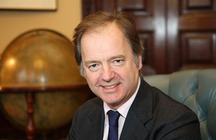
Tag: Hugo Swire

  • Hugo Swire – 2014 Speech in Kathmandu

    hugoswire

    Below is the text of the speech made by Huge Swire, the Minister of State at the Foreign and Commonwealth Office, in Kathmandu on 3rd June 2014.

    Sabailai namaste. Aunubhaekoma dhanyabad. Which I am told means “welcome and thank you for coming”. I would also like to welcome listeners to Capital FM 92.4 in Kathmandu and Radio Sarangi 101.3 in Biratnagar and Pokhara.

    Introduction

    As British Foreign Office Minister with responsibility for South Asia, I am delighted to be here, on my first ever visit to Nepal.

    It is a real honour to be asked to speak at the iconic Tri Chandra College. Countless important and influential figures from Nepalese culture, science and politics have preceded you through this hallowed institution.

    Indeed, the college is renowned for being at the heart of Nepal’s vibrant student political scene, so it is no surprise that it counts a former Prime Minister and several serving Constituent Assembly members among its eminent alumni – some of whom are here today.

    Each of them began as you are – students. And so I am particularly pleased to have the opportunity to talk to you- the next generation of Nepal’s business and political leaders. Your futures, and the fate of your nation, are in your hands.

    Everyone I have spoken to has told me that Nepal is a land of exceptional beauty – which I saw for myself earlier at Pokhara with its views of the Annapurna range. That it is a land rich in history and culture. But also one blessed with great potential.

    I urge you to seize that potential – as well as fulfilling your own – and the unique opportunities open to you as Nepal moves out of the shadow of conflict towards a lasting constitutional settlement, and lays the foundations for peace, prosperity and political stability.

    And, as you do so, you will continue to find in Britain the staunchest of allies.

    Bicentenary of UK-Nepal relations: the history

    It is no coincidence that my visit comes on the cusp of two very significant bicentennial anniversaries in UK-Nepalese relations. Both of these matter immensely to the UK and its people. Taken together, they form the heart of our bilateral ties.

    The first anniversary will be next year’s bicentenary of recruitment to the Brigade of Gurkhas. There is no finer or more feared unit of soldiers anywhere in the world – or better ambassadors for the values held by the Nepalese people. And this year we commemorate the start of the First World War, a conflict during which two Gurkhas were awarded the Victoria Cross – Britain’s highest award for gallantry in the face of the enemy.

    Indeed, their service continues to be admired, valued and respected in equal measure, across the UK, to this day. Their sacrifices are remembered as one of our own – as befits one of the most heavily decorated regiments in the British army. I was therefore pleased to be able to see firsthand the outstanding work of the Gurkha Welfare Scheme – which ensures dignity in old age and a better quality of life for the Gurkhas’, their dependants and their communities.

    I say this not just as a former soldier – but also the son-in-law of a Gurkha officer. That certainly gave me an early appreciation for the might of the Gurkhas. It is nerve-wracking enough meeting your girlfriend’s parents for the first time, without knowing that her father has 30 Gurkhas under his command!

    March 2016 will mark the second important anniversary in our bilateral relations: the bicentenary of the Treaty of Sugauli which saw the first permanent diplomatic mission established in Kathmandu, by Britain of course. And right up to 1951, we were the only foreign country represented here. If that does not count as a special relationship, then I am not sure what does.

    The world has changed beyond all recognition since these events 200 years ago. So why should you, the future of Nepal care? Why should they still matter today? And why do we still value them as highly as we do?

    Because the difference between what we can do alone and what we are capable of when we work together is immense. Our solutions to the challenges we face, not the problems themselves, should shape our futures and make a difference to the world- whether in security, peace and prosperity, tackling climate change or ensuring that people everywhere have a voice and a vote.

    Building a safer future

    With peace at home, Nepal is working with the UK to build a safer future for the world. Nepal has the distinction of having moved from being an “importer” of security during the conflict to an “exporter” of security today.

    Across Nepal young people know all too well the cost of war, and are working for peace and stability in some of the world’s toughest environments.

    Nepal’s contributions to UN Peacekeeping Missions worldwide do your country enormous credit – and Britain knows from experience that Nepalese Army personnel currently wearing blue helmets are regarded as some of the most reliable and effective operators in the field.

    Without you, the world – and by extension the British people – would be less safe, and less prosperous.

    Building growth and prosperity

    Once peace is assured, people’s thoughts naturally turn to the universal goal of securing a better life for themselves and their children.

    The question on everybody’s mind becomes “how can we get our economy growing, create jobs and opportunity for all?”

    It’s a question that has been central to meetings throughout my visit. Nepal has a proud recent record in reducing poverty- supported by the international community- led by the UK: Nepal’s largest bilateral aid donor.

    But students, like you, the world over, ask the same questions: how will I get a job and make use of the qualifications for which I have worked so hard?

    Ultimately no one else can make growth happen for you. The answer has to come from Nepal – and from each of you. Innovate, be creative, take risks, find the gap in the market and when you have a good idea, don’t stop until it becomes a reality.

    And it is also your role to hold Government to account and ensure it delivers on its promises to create a thriving and open business environment.

    And I am pleased to be here at the head of a delegation of British companies looking to do business with Nepal and deepen our bilateral trade and investment links.

    Green economy and Climate Change opportunities

    One area that is especially interesting for me – and the biggest potential I see personally for Nepal’s future prosperity – is the scope for Nepal to pioneer a truly green economy.

    The UK has shown its commitment to greening its own economy, pushing for a 30% reduction in carbon emissions by 2020 and establishing an International Climate Fund of 3.9 billion pounds to help climate vulnerable developing countries like Nepal. We congratulate the Government of Nepal for the leadership it has shown on climate change – keeping climate change on the national agenda, and leading the LDC nations in climate talks.

    Everyone I have spoken to talks of the energy crisis here and climate change is already having a real impact. Clearly this needs to be fixed, otherwise economic growth and investment will be held back, and health and livelihoods will be damaged.

    But Nepal, a negligible carbon emitter, is in the enviable position of having the potential to supply all its energy needs in sustainable, low carbon ways. We are helping Nepal move in this direction, supporting work in climate adaptation, disaster risk reduction, forestry and hydropower.

    By 2015, the UK will have spent 45 million pounds from the International Climate Fund on community forestry activities, and to support remote communities to adapt to climate change through micro-hydro schemes, solar home systems and biomass gas converters.

    Hydropower is central to Nepal’s economic growth, and we are working to help Nepal deliver on this potential – tapping the energy of the fast flowing Himalayan rivers will be a major part of the solution, both here and in your wider region.

    But I am also struck by the potential for other sources of renewable energy, from solar, water and forest resources. Taken together, Nepal really is a land of incredible potential, and I have met people in my last day here who are already making concrete progress towards turning that potential into reality.

    Through innovation and hard work entrepreneurs are already building the future right here in Kathmandu – households and businesses are already installing low carbon and resource efficient technologies to cut their bills and improve their lives.

    Imagine a future – a not too distant future – in which the flat roofs of the Kathmandu valley generate energy from solar panels, or are used to produce food. A future in which new jobs and opportunities are created in sectors that at the moment are either just emerging or simply do not exist – everything from the design and installation of smart energy grids, to measuring and managing water consumption; designing efficient public transport; to improving logistics that reduce waste and improve productivity.

    These may seem distant dreams to someone in living in rural Nepal. But, as the science students here will know, Nepal is in a position to leapfrog old technologies and to build a low carbon and resource efficient economy that will deliver sustained and sustainable growth for both yourselves and future generations. All it needs is vision, energy and a willingness to work together, and in the UK you have a partner with world-class centres of excellence in science and engineering that can help Nepal make effective use of its resources whilst preserving its breathtaking environment.

    So it is in these fields – the green economy and managing climate change – that I see scope for increased commercial, personal and academic links between the UK and Nepal.

    It is at institutions like this one – with talented and enterprising students – where I see those new green energy jobs being created. This is the place where academic research will be translated into practical action and lay the foundations of both the UK and Nepal’s future prosperity.

    Which is why I am pleased to announce today a tripling of Chevening Scholarships, to encourage more students from Nepal to study at the UK’s world-leading universities and join the long tradition of educational and academic exchange between our two countries.

    The peace process and democracy underpin growth

    There is a Nepalese proverb that I am sure you know well: “Opportunities come but do not linger.”

    Today, in all these areas, there are opportunities for Nepal to seize. But to make the most of them, the time has come for its leaders to complete the peace process, agree a new Constitution and hold local elections. Only these can bring the political stability and greater democratic accountability needed to help Nepal unlock its economic potential.

    From my discussions with them, the leaders of this incredible country understand that. I assured them, and I assure all of you here now, that the UK will remain committed to helping Nepal realise that vision, in any way we can.

    Conclusion

    Our countries have been united in a unique friendship for almost two hundred years.

    And if cooperation between the UK and Nepal can conquer the world’s highest mountain, as happened 61 years ago, there is surely no limit to the heights we can reach. Those famous, oft-quoted words of Sir Ralph Turner from almost 90 years ago, remain as true today as the day they were written: “the bravest of the brave, most generous of the generous, never had country more faithful friends than you.”

    By working together to solve the challenges of the present we will lay the foundations of a further 200 years of UK-Nepal friendship. We want to hear and see more of you –your diplomats, soldiers and students. Your voice is respected, and your views welcome.

    The world faces many new challenges, but brings huge opportunities too. We must seize them together. Because they may not linger.

  • Hugo Swire – 2014 Speech in Central America

    hugoswire

    Below is the text of the speech made by Hugo Swire, the Minister of State at the Foreign and Commonwealth Office, on 5th March 2014.

    Supporting British business – large and small – and building prosperity for the United Kingdom is at the heart of what we do at the Foreign and Commonwealth Office. And Central America is an important region for us in that effort.

    So I am delighted to open this conference and to speak about the British Government’s work to deepen ties and to help British business explore the exciting opportunities in the SICA countries of Central America and the Dominican Republic.

    I would like to thank Hugo Martinez, Secretary General of SICA, for honouring us with his presence today. I first met him in El Salvador, back when he was Foreign Minister and am delighted that he is here today in his new role. I also wish to thank Luis Ramon Rodriguez, the Dominican Republic Minister of Agriculture who is here representing the Dominican Republic’s Presidency of SICA

    And Baroness Hooper, Chair of the Latin America All Party Parliamentary Group – a very helpful ally on Central American issues. And of course our sponsors who have contributed to making this Conference happen. A sign of the growing commercial interest in the region.

    Canning Agenda

    Many will be familiar with the Canning speech Foreign Secretary William Hague gave in 2010. Where we set out Britain’s most ambitious effort to reinvigorate relations with Latin America in decades.

    I have often spoken about increased resources we have put into Latin America, trade envoys, new embassies opened – and the relationships developed through our increased ministerial visits to the region – over 25 last year alone. The message is: Britain is back in Latin America.

    That is definitely true of Central America and SICA countries, a region which I had the pleasure of first visiting twice already and I look forward to returning later this year.

    My first visit back in 2012, when I met with the Secretary General, Hugo Martinez, was in part to open our new Embassy in El Salvador. Our Embassy there has 6 staff. That is compared to the 600 staff at the American Embassy. So by my reckoning, one British diplomat is worth 100 American…

    So, I am pleased that British interests in the region are strong and growing. We are fostering closer political relationships and people to people links: taking advantage of our thriving diaspora communities; through tourism; through educational exchanges, such as the Foreign and Commonwealth Office’s own Chevening Scholarship scheme; and, of course, through greater trade and investment – the focus of today’s conference.

    Good conditions for trade in Central America

    Our trade links are flourishing because the conditions in Central America are increasingly conducive to doing business.

    Taken together, the SICA countries represent a combined market of some 52 million people and a combined GDP of £257 billion.

    They form a region that has seen solid growth that Western economies would love to see themselves – approximately 4% GDP per annum over the past ten years.

    A number of countries in the region have moved up the World Bank’s ease of doing business ranking and are taking real steps to improve their regulatory and competitive environment.

    Central America, of course, benefits from a natural geographic advantage – a bridge between the two subcontinents and a natural hub for trade, tourism and transport.

    There are proposed new inter-oceanic infrastructure projects in both Guatemala and Nicaragua, which offer exciting opportunities, should they go ahead. El Salvador is planning major airport expansion. Belize and Honduras have spectacular coast lines and tourism opportunities. Costa Rica is an increasing exporter of high-value goods, such as medical devices.

    Panama offers many opportunities. Growth is an astounding 9% – and it is developing as a regional finance and distribution hub. It is unsurprising therefore, that the UK is already the largest foreign investor there.

    But it is not only thanks to these factors that our trade and investment links are improving so rapidly. It is also, as I mentioned earlier, the renewed effort the British Government is putting into strengthening ties with Central America and supporting business.

    HMG action to support trade links

    Trade Missions like those organised by the Central American Business Council, often with the close involvement of UK Trade and Investment and our embassies in the countries concerned, are an excellent way of making direct connections between British business and the untapped commercial potential of the region. The Council has already organised highly successful energy-focused missions and will be organising a retail trade mission to San Salvador and Panama City shortly.

    Just last month, after a year and a half of intensive work at the highest Government levels, I am delighted that the British Embassy in Santo Domingo has been able to open the Dominican market to British meat exports. I would like to thank the Dominican Minister of Agriculture for his co-operation in achieving that success.

    And the Government is working with SICA – having become an extra-regional observer last year – to identify a number of areas where British expertise could help make a difference throughout the region – particularly in the security and justice sectors.

    So, these are just a few examples of the work we have been doing to develop trade links with Central America.

    British business in Central America

    But I am delighted that a number of British companies are already soundly established in Central American markets, enjoying solid commercial partnerships. Covering a wide range of sectors. For example, London and Regional are working on a major development of the ‘Panama Pacifico’ business and residential community in Panama; bridge construction specialists Mabey Bridge are exploring infrastructure opportunities; and a number of British energy companies are involved in a mix of energy projects, both on and off-shore.

    Retail is another strong and growing sector and I am delighted to see the popularity of British brands across fashion, homewares and food and drink – Top Shop, Dyson and Waitrose to mention just a few examples – making the most of the growing opportunities for expansion in the region.

    Central American business in UK

    And Central American exports are gaining recognition here in the UK. British consumers are increasingly aware of the provenance of goods and the quality of the coffee, cocoa and rum produced in the region, to name but a few.

    I consider coffee to be a fundamental part of my life-support system, and having sampled a wide range of the excellent coffee from the region I would be hard pressed to pick a favourite. But I will just point out that the rum supplied at this evening’s reception comes courtesy of our friends in the Dominican Republic. That is not to put off our whisky exporters in the UK of course, who I know have the region firmly in their sights. I am sure there must be a recipe for a good cocktail combining those two spirits….

    I recognise – despite all the success I have mentioned – there are undoubtedly still some challenges for British companies wishing to do business in Central America: the same is true for any region. But I am confident that these issues will continue to be addressed, both at a national level and through SICA, under the able direction of Hugo Martinez.

    Look ahead

    And looking forward, I can already see we have another busy year ahead of us.

    The ever popular Latin America Investment Forum will be back in London in May and I know the SICA Embassies will once again play a very active role.

    I hope to return to Central America later this year and see more of the region.

    We hope to continue working with the region on projects to promote harmonisation of rules and regulations and to increase transparency. All of which should help improve the general business environment and increase investor confidence.

    And I am confident that the EU-Central America Association Agreement, that we hope to ratify in Parliament later this year, will also make a significant difference to prosperity in both regions.

    The Agreement will strengthen political dialogue and cooperation and allow Central American countries to consolidate and improve their access to EU markets.

    2014 is, of course, the centenary of the Panama Canal, and September will see a UK trade delegation visit to explore the opportunities for British expertise to contribute to the Canal expansion project.

    Conclusion

    So, there should be no doubt of the energy, commitment and activity being devoted to the region, by the British Government or by British business.

    There is a huge amount for us to do in 2014 – but our hard work will pay dividends- both in the UK and in the SICA countries of Central America and the Dominican Republic.

    Thank you.

  • Hugo Swire – 2014 Speech at World Wildlife Day

    hugoswire

    Below is the text of the speech made by Hugo Swire at the UK Mission to the UN at Geneva on 3rd March 2014.

    Ladies and gentlemen, it is an honour to be here, and I am grateful to the Good Planet Foundation for the wonderful prints they have provided today.

    I want to say a few words about the importance the United Kingdom attaches to ending the illegal wildlife trade.

    It is not just an environmental crisis. It is a global criminal industry that drives corruption, insecurity and undermines efforts to cut poverty and promote sustainable development. There is even anecdotal evidence that terrorism could benefit from it. Tackling it would build growth, rule of law, stability and good governance.

    That is why the UK supports the vital work of CITES under the admirable leadership of John Scanlon

    That is why we applaud Thailand and CITES’ initiative to establish World Wildlife Day,

    And that is why the British Foreign Secretary, William Hague, hosted the London Conference on the Illegal Wildlife Trade two weeks ago, in the presence of their Royal Highnesses the Prince of Wales, the Duke of Cambridge and Prince Harry.

    I am delighted the conference was such a success. It agreed ambitious measures, showed new political commitment and marked a turning point in the effort to halt, and reverse, the current poaching crisis.

    For the first time, governments committed to renouncing the use of products from animals threatened with extinction.

    They agreed to support the current CITES commercial prohibition on the international ivory trade until the survival of elephants in the wild is no longer threatened

    And they agreed to treat poaching and wildlife trafficking as serious organised crime – like trafficking in drugs, arms and people.

    After the conference, the work continues. Chad burned its 1.1 ton ivory stockpile. Vietnam strengthened its protection of endangered species. The UK added Anguilla to the list of UK Overseas Territories covered by CITES. And we welcome Botswana’s offer to host a follow conference next year.

    But there is much more to do. And we strongly encourage countries that were not present at the Conference to associate themselves with the London Declaration.

    So my message is simple: the illegal wildlife trade must stop now.

    Together, the international community can stop it. And if we act on the London Conference commitment, I believe we will.

  • Hugo Swire – 2014 Speech on Human Rights

    hugoswire

    Below is the text of the speech made by Hugo Swire on 3rd March 2014.

    Madam Vice President, Madam Deputy High Commissioner, Excellencies, it is an honour to be here today to address the Human Rights Council in this distinguished company.

    The United Kingdom is committed to strengthening the work of this vital forum; to supporting countries in improving their human rights records; and to holding to account those who commit serious and systematic violations of their citizen’s rights.

    People around the world look to this Council to defend their fundamental rights, freedoms and dignity. I am delighted that the United Kingdom has once again been afforded the opportunity to contribute to this vital work. I would like to thank all those who supported our candidacy and I look forward to working with other members of the Council, and the wider international community, in protecting the most vulnerable and championing global causes including ending sexual violence in conflict, the need for the full participation of women in peace-building, and the universal right to freedom of expression and freedom of religion or belief.

    Without action – if we let human rights abuses go unchecked and ignored – we sow the seeds of future instability, conflict and humanitarian crisis. That is why the Secretary General’s “Rights up Front” Initiative to strengthen the UN’s ability to tackle human rights abuses early and effectively is so important and why this Council must be at the forefront of that effort.

    When countries show they are willing to engage seriously with the Human Rights Council, we can and should work with them in a spirit of partnership and collaboration. This can produce real change, as we know from working with Somalia. The United Kingdom has played a leading role in mobilising international support for Somalia. The London Conference we co-hosted in 2013 recognised the immense importance of human rights in the peace process and in September we co-sponsored, with the Somali government, a resolution of this Council, calling for increased UN support to help end human rights abuses and combat impunity.

    In many other countries too, concrete and positive change is underway and I pay tribute to all those who make this progress possible. I thank the High Commissioner for Human Rights for her leadership and the valuable work of her Office; the Treaty Bodies, the Special Rapporteurs and Commissions of Inquiry for providing us with crucial information on human rights situations across the world. I thank all those dedicated men and women in the field working to help states and civil society to strengthen protection for human rights. Through the Universal Periodic Review, our countries also have a valuable opportunity to learn from each other and discuss together the human rights challenges we face.

    But while we strive for partnership and collaboration, we cannot stay silent if countries fail to live up to their human rights obligations.

    A year ago, this Council asked the High Commissioner to report on the human rights situation in Sri Lanka. That report, received by members of this Council in recent days, is unambiguous. The Government of Sri Lanka has failed to ensure independent and credible investigations into alleged violations and abuses committed by both parties during the conflict in Sri Lanka. The majority of recommendations from successive Human Rights Council resolutions remain unimplemented, nor has the Sri Lankan Government accepted offers of technical assistance from the UN. The time has now clearly come for international action with regard to Sri Lanka. This Council has a duty to act on the findings of the report we collectively commissioned and to establish the truth. If we fail to do so, where does that leave us? I hope the Human Rights Council can unite to support the call for an independent investigation into alleged human rights violations and abuses on both sides. This will help pave the way for lasting reconciliation.

    I believe that the support and technical assistance of the Office of the High Commissioner and the collective concern expressed in the resolutions of this Council have a valuable role to play in ensuring progress towards lasting peace and reconciliation in Sri Lanka.

    The Commission of Inquiry on Syria has collected vital evidence on the worsening human rights situation. We condemn all violations and abuses, regardless of who commits them. But I want to be clear. States have a primary duty to protect their populations, but instead the Syrian government terrorises its people with barbaric attacks, besiegement, rape, torture, systematic executions and disappearances.

    Here in the Human Rights Council we should confront the appalling human rights situation in Syria and agree a resolution. To ensure our credibility, this Council must show the Syrian people that their suffering will not be ignored, and we must renew the mandate of the Commission of Inquiry. We need to be clear that those who commit horrendous and appalling crimes will be brought to justice, and we must ensure that the Commission of Inquiry has full access inside Syria, because the Assad government cannot be allowed to hide its crimes.

    Two weeks ago, this Council received the report of the Commission of Inquiry on Human Rights in the Democratic People’s Republic of Korea (DPRK). Their findings indicate widespread, state sanctioned, horrific violations. They include: torture; rape; summary executions; disappearances; and using starvation as a means of control and punishment. The UK strongly believes there should be no impunity for human rights violators. The DPRK has for too long refused to comply with its international obligations or engage properly with this Council or its mechanisms. We must take action. We cannot stand by.

    Elsewhere, the UK is extremely concerned by events in Ukraine. Just last night the British Foreign Secretary visited Kyiv and called on Russia to respect the sovereignty, independence and territorial integrity of Ukraine. He also spoke to the UN Secretary General to encourage international efforts to de-escalate tensions in the region. The UK supports Ukraine’s new government and calls on all parties to ensure that the rights of all Ukraine’s citizens, including from minority groups, are respected.

    Mr President, we believe that the international community must address all forms of discrimination, not least on the basis of sexual orientation and gender identity, and we must also promote respect for diversity. We must work through the UN to address discriminatory laws which criminalise the LGBT community.

    Sexual violence has marked every conflict in our lifetime and shattered the lives of women, girls, men and boys on every continent. For too long, these crimes have been treated as secondary issues, as inevitable consequences of war, and only a tiny number of perpetrators have ever been held to account.

    This is unacceptable. Ending these horrors is a moral cause for our generation. All of us, Governments, civil society and the UN must work together to shed light on these crimes, to shatter the culture of impunity, and support, protect and reintegrate survivors.

    140 countries have now signed the historic declaration of commitment to end sexual violence in conflict which we launched at the General Assembly in September last year. But that is only the beginning. We must now turn those commitments into lasting practical action, raise awareness and build partnerships worldwide. That is why the Foreign Secretary has convened a global summit in London in June this year, the largest ever on this issue, which he will co-host with the Special Envoy of the UN High Commissioner for Refugees, Angelina Jolie.

    They will bring together governments, their militaries, law enforcement agencies, legal experts, international organisations and civil society to agree the necessary steps that will put an end to sexual violence in conflict. I hope that all the countries in this room today will join us in this effort to remove these abhorrent crimes from the world’s arsenal of cruelty. In the 21st century, the world will not understand why countries cannot support such an initiative.

    Mr President, together we can make an enormous contribution. We should not underestimate the impact we can have if we work collectively. So, I hope that we can work closely in the Human Rights Council to improve respect and protection for human rights worldwide, to respond quickly and robustly to serious violations and to create lasting change in support of international peace and security. And eradicate injustices that affect people – often the most vulnerable – in the world.

  • Hugo Swire – 2014 Speech at British Council in Rangoon

    hugoswire

    Below is the text of the speech made by Hugo Swire, the Minister of State at the Foreign and Commonwealth Office, in Rangoon on 30th January 2014.

    Introduction

    This is my second visit to your fascinating and beautiful country as a Foreign Office Minister. I first visited just over one year ago, shortly after I took up my current ministerial post. I am delighted to be back, and grateful to all those who have welcomed me so warmly throughout my travels this week.

    Over the last three years, the world has watched with admiration and, frankly, surprise, the remarkable changes that have taken place here.

    Over one thousand political prisoners released. A thriving and active new Parliament. An end to fighting across much of the country. A human rights commission established. Trades unions formed. Emerging economic liberalisation. Freedom of the press. These are just some of the most obvious examples.

    I am proud that the British Government has been swift to welcome these reforms, and to recognise the courage and leadership of those who have made those changes happen.

    In 2012, Prime Minister David Cameron was the first western leader to visit here since the reforms began, and during his visit he paid tribute to the leadership of President Thein Sein and Daw Aung San Suu Kyi. In 2013 the UK played a central role in moving the EU’s relationship with this country beyond sanctions. This year, we have increased our development aid to around $100m per year. We have also opened a trade and investment office, and are actively encouraging responsible investment from British companies.

    It is no exaggeration to say that the relationship between our two countries is being transformed. We are re-building a friendship based on mutual respect, founded in our deep and enduring shared history and in the long-standing support of the British people for your struggle for democracy.

    The two key challenges

    It is therefore as a friend – a frank and constructive, but critical friend- that I speak to you today at the start of a decisive year for this country’s future.

    You face many challenges on the path of reform, but there are two areas in particular where you have arrived at a critical juncture: democratic reform, and the peace process.

    On both fronts, further progress will require extraordinary courage. But success will create a legacy lasting for generations, and form the bedrock for Burma’s future stability and prosperity.

    Democratic reform

    Let me speak first of democratic reform. Put bluntly, continued democratic reform in this country requires constitutional change. Constitutional change is important for two main reasons: to ensure that this country’s political system moves fully into line with democratic standards, and to ensure that this political system reflects the aspirations of the people.

    This week, all eyes here are on the Constitutional Review Committee, which should submit its report to Parliament tomorrow.

    Speaking to people throughout my visit, it has been absolutely clear to me that there is overwhelming support amongst ordinary people for constitutional change. Change that brings the constitution in line with international democratic standards. Change that delivers greater devolution of powers to states and divisions through a strengthened federal system. Change that cements the independence of the judiciary. Change that removes the military’s veto over democratic reform and gives citizens greater control over their own destinies.

    Many of these reforms are complex, and will require careful consideration. For now, I would like to highlight one amendment that is very simple, and very important. I refer to ‘59f’- the Presidency clause.

    Central to any modern democracy is the principle that citizens should have the right to choose who governs them. Yet under this country’s present constitution, Daw Aung San Suu Kyi, the leader of the main opposition party, is blocked from becoming President, even if her party wins a majority of seats in the 2015 elections. Why? Because her two adult sons have British citizenship.

    The 2008 Constitution is perhaps unique. I can think of no other constitution that makes an individual citizen’s eligibility to become President conditional on the nationality of their adult children. This unreasonable restriction was not included in Burma’s previous constitutions, in 1947 and 1974. I can only assume that the restriction was written into the 2008 constitution in order to prevent one particular individual from ever becoming President. This is surely no way to write a constitution.

    As Prime Minister David Cameron has made clear, it is time for this restriction to be removed. It is a hangover from a very different era. It is fundamentally undemocratic. And it is fundamentally wrong. Without amendments to allow all citizens to contest the Presidency, the 2015 general elections cannot and will not be fair elections. And without fair elections, the credibility of Burma’s democratic reforms will be cast into doubt.

    I welcome President Thein Sein’s recent comment that all citizens should have the right to run for President- but I urge him to follow this up with active support to make this a reality.

    The two major groups in Parliament clearly also have a central responsibility for determining whether constitutional amendments can happen. I refer to the MPs of the USDP party, and the Tatmadaw. And the moment has arrived when both of these groups must clearly set out their stance.

    As leader of the USDP party, Thura U Shwe Mann has stated his personal support for amending the presidency clause. His stance is admirable, and reflects a strong sense of fair play.

    But I am concerned by the recent suggestions of some USDP members that Daw Suu’s eligibility should be conditional on her adult sons renouncing their existing citizenship. As far as I am aware, there is simply no other modern constitution in the world that makes such demands of the adult children of political leaders. I urge all USDP MPs to take the honourable approach, and be prepared to compete on a level and democratic playing field in 2015, through serious amendments to 59f.

    The second key group within Parliament is of course the military MPs. The 2008 Constitution can be amended only with the support of the Tatmadaw. This gives the Tatmadaw leadership a unique power, and a unique responsibility.

    But it also places the Tatmadaw’s stance under heavy scrutiny, including in the UK, where our military engagement in your country is subject to intense interest. A constructive approach by the Tatmadaw to constitutional reform will send the strongest possible message of commitment to change and help to convince the sceptics that our engagement is right. It will be recognised and welcomed both inside this country and in the wider international community. Senior General Min Aung Hlaing today has the opportunity to secure a unique legacy: to be the Commander-in-Chief whose courage enabled his army to break free of the shackles of the past.

    Longer term, I and many others hope that this country will follow the example of other states in the region, where the military has progressively moved out of the legislature, and taken its proper place as a professional modern institution under the control of the civilian government. As Daw Aung San Suu Kyi herself noted when she visited Sandhurst Military Academy in the UK last year, the strongest and most respected militaries are found in the most robust democracies.

    The peace process

    This brings me to the second great challenge facing this country in 2014: the peace process.

    For over sixty years since independence, this country has seen terrible internal conflicts. Millions of people, particularly in the ethnic minority border areas, have suffered unimaginable traumas. But in a sense, everyone here has been a victim, having lived under the shadow of a military dictatorship that justified its very existence on the grounds that the country risked breaking apart without it.

    Yesterday I visited Kachin State, the first visit by an international minister since the latest outbreak of conflict three years ago. I held discussions with the State Government, representatives from the Kachin Independence Organisation, and religious leaders. I was also humbled to meet veterans of World War Two, and I was proud to recognise their magnificent contribution.

    I visited camps near Myitkyina, where I spoke to families who had lost everything: their homes, their farms, and, in some cases, their friends and relatives. Most had been living in temporary shelters for almost three years. Their message was consistent: they wanted a sustainable and just peace, so that they could return in confidence to their homes, and rebuild their lives.

    The international community today fully recognises the importance of the peace process, and its centrality to this country’s future. Without a fair and equitable peace settlement that reflects the aspirations of its diverse communities, the potential to become a prosperous, stable and democratic country will never be realised.

    That is why the UK firmly supports the efforts of the government, political parties and armed groups to reach a nationwide ceasefire and establish an inclusive nationwide political dialogue. The precise shape of this dialogue, and its outcomes will be determined by the parties involved. But the broad guiding principle seems clear: that Burma must evolve towards a political system that truly enshrines equality and greater self-determination for its many minority ethnicities.

    We are under no illusions as to the scale of the challenge. Before I became a Foreign Office Minister, I was Minister for Northern Ireland. And long before that, I served as a British Army officer. I know from personal experience the difficulties of resolving a long-running conflict. But as our own Northern Ireland experience has shown, real progress can be made even in the most apparently-intractable conflicts. Ultimately, it takes a combination of extraordinary hard work, and courageous leadership.

    In this respect, your country has been very fortunate indeed. Today ceasefires are in place across most of the country. A nationwide ceasefire is within reach. This stage could never have been reached without the remarkable courage and perseverance of leaders on all sides. It is an extraordinary collective achievement.

    It is, of course, only a first step. But it is an essential first step towards building trust and creating conditions for the political dialogue that must follow.

    The UK will do our part to support this process in whatever way we can. On the diplomatic front, we will continue to engage with all parties. This week I have discussed with government, Tatmadaw, and ethnic leaders the British Government’s readiness to play a helpful role at future rounds of peace talks, subject to agreement by all sides.

    At the same time, I am pleased that we have been able to share our own experiences from the Northern Ireland peace process. Over the last year, Daw Aung San Suu Kyi, Minister U Aung Min, the United Nationalities Federation Council, the Karen National Union, and the 88 Generation have all visited London and Belfast, drawing lessons from what we did right, and what we got wrong. We have also been running workshops for ethnic armed groups focused on security sector reform. And we stand ready to provide further technical support and funding for the political dialogue itself.

    We also remain firmly committed to supporting the victims of conflict. The British Government has been the largest bilateral donor of humanitarian aid in Kachin State, committing $20m over a two-year period. Our support to refugees on the Thai border continues. And we will expand our health, education and livelihoods programmes into ceasefire areas, bringing tangible benefits to villagers who have lived in dire insecurity and without access to basic services.

    We will also remain unceasing in our efforts to address human rights violations in conflict and post-conflict areas. I have been particularly concerned by reports of ongoing sexual violence by Tatmadaw soldiers against women and girls in ethnic minority areas. The British Government, led by our Foreign Secretary, has established the Preventing Sexual Violence Initiative. In Naypyidaw this week, in meetings with government and the Commander-in-Chief, I have lobbied for this country to join 138 others, including six of its ASEAN partners, in endorsing the Declaration launched at the UN General Assembly. This year we are funding projects worth nearly half a million dollars focused on Preventing Sexual Violence here, including training women in basic legal skills and counselling.

    The military

    In discussing both constitutional change and the peace process, I have already touched on the critical role of the Tatmadaw, and I want to briefly expand on this. In 2012, the British Government took the decision to re-establish relations between our two countries’ militaries. Last year, we appointed a Defence Attaché for the first time in twenty years. We made these moves after consultation with opposition, ethnic and civil society leaders, the vast majority of whom firmly supported cautious and calibrated engagement.

    Earlier this month, the UK’s Defence Academy delivered a classroom-based course to the Tatmadaw for the first time, covering topics including the role of the military in a democracy, security sector reform, governance, accountability, and the rule of law. It did not enhance the Tatmadaw’s military capacity or capabilities. The training aimed to expose future senior officers to new thinking, and encourage the Tatmadaw to prepare for a new role. I very much welcome that this course, dealing with such challenging subjects, was able to take place and that those attending engaged frankly and openly. The fact that senior officers attended the opening and closing ceremonies clearly demonstrated the value they attached to it, and I welcome their willingness to have a dialogue over issues like human rights and humanitarian law. I was also pleased that Daw Aung San Suu Kyi could be there in person at the closing reception.

    The fact that we are engaging with the Tatmadaw does not mean we will shy away from raising very real and continued concerns. Sexual violence and humanitarian access are two concerns I have already mentioned. Child soldiers is a further example: I welcome the recent release of 96 child soldiers, but I have made clear that there is an urgent need for the existing Joint Action Plan with the UN to be extended, to address a problem that, despite encouraging progress, remains far from resolved.

    But let me be clear; I am convinced that cautious engagement with the Tatmadaw is the right thing to be doing, and that now is the right time to be doing it.

    Rakhine State and Anti-Muslim Violence

    Every democratic transition has its challenges- some common, some unique. Here, the constitution and the peace process are rightly seen as the biggest of those challenges. But it is also essential, at a time of change, to stay alert to the wider risks and threats. We must, for example, ensure that the new space for media freedoms is firmly protected, that the right to peaceful protest is consistently defended, that land rights are addressed fairly and transparently.

    Yet there are two areas of concern that I wish to highlight in particular, as I believe that they risk gravely undermining the wider reform process. I refer to the situation in Rakhine State, and the violence targeted towards the wider Muslim community.

    One year ago I visited Rakhine State. I was the first European Minister to do so. I heard directly the grievances, fears and concerns of both the Muslim and the Buddhist communities. I went to a mosque as well as to a Buddhist monastery. I saw the terrible conditions of the Muslim camps. Twelve months on from my visit, there has been little progress in addressing either the humanitarian situation or underlying intercommunal relations. I have been appalled to hear of further tragic deaths this month in Northern Rakhine, and we have called for a credible investigation into these allegations.

    On the humanitarian front, the rise in intimidation and threats towards UN and international staff attempting to deliver life-saving food and medical supplies to vulnerable displaced communities is utterly unacceptable, and actually quite shocking. I urge Rakhine community leaders to tackle this trend urgently, as a matter of conscience. I also reiterate the responsibility of the authorities, both at state and Union level, to facilitate full and unimpeded humanitarian access to those in need, and to address robustly any efforts to block such access.

    To the Union government, I further urge rapid action to address the citizenship status and basic rights of the Rohingya. The government has committed to running a full citizenship verification exercise, and this should be conducted without further delay. The continuation of the status quo is unacceptable, and presents growing risks to the country’s long-term stability.

    I recognize the desperate poverty that afflicts all communities in Rakhine State, the result of many decades of chronic underinvestment in the country’s second-poorest region. The international community must be committed to poverty alleviation programmes in every township in Rakhine state. And on the part of the government, the state’s rich natural resources revenues must be shared equitably, including with the local population.

    Beyond Rakhine State, over the last 12 months attacks against Muslim communities in Meiktila and elsewhere have also been of deep concern across the world. The violent actions and aggressive rhetoric of a small minority of extremists is harming the reputation of this country, and raising serious questions about religious tolerance and rule of law.

    Rule of law is clearly the responsibility of the government, judiciary and security forces, and I welcome the swifter and more balanced actions taken in response to the latest outbreaks of violence. Those carrying out violence, and those inciting it, must be held accountable, in line with the government’s pledge for ‘zero tolerance’. Police must also learn how to respond effectively, and I am pleased that British police officers have played a central role in the EU’s police training programme over recent months, aimed at improving the handling of relations with communities.

    Religious tolerance is a responsibility for everyone in this room, but I am heartened by the united call from major religious leaders for dialogue, understanding and empathy. All too often around the world we have seen fragile new freedoms tragically shattered by divisive ideologies that prey on fear and rumour. It is my fervent hope that your country does not suffer this fate, and that the voices of moderation and wisdom prevail, such that you can realize your vast potential as a peaceful democratic and diverse country.

    UK support to Burma’s development, including Rangoon General Hospital, and our trade relationship

    It is on this note that I want to end. Your country is at a crossroads, so inevitably my speech today has focused on the very real challenges ahead. Yet if those political challenges can be overcome- and I do believe that they can- then this is a country of vast potential. With a large young population, plentiful natural resources, and a strategic location between some of the world’s biggest markets, your economic prospects ought to be bright. And don’t underestimate the international community’s goodwill towards you.

    The British government’s policy is clear. We are encouraging responsible investment, and we are encouraging trade relations. We believe that British investment can bring benefits to all parties- through sharing of knowledge and technical expertise, through job creation and vocational training, and through improving labour standards. British businesses are interested. We are already seeing some early success stories: for example, JCB selling over 50 machines in their first year of operations here, and Aggreko delivering their first power supply project for the Ministry of Energy, on budget and ahead of time.

    At the same time, we are working with the government to help create the right conditions for investment that benefits all, not least the poorest. Above all, this means strong rule of law and transparency, and that is why the UK is supporting government and civil society in signing up to the Extractive Industries Transparency Initiative and the Open Government Partnership, and working with ministries on improving public financial management.

    At the same time, British aid is improving the health and education of this country’s poorest people. This year we are further increasing our annual aid budget for Burma to $100m. We are funding the treatment of diseases like malaria and tuberculosis, providing life-saving healthcare for mothers and their babies, and supporting improvements to the standards of basic education. UK-funded livelihoods programmes are helping rural farmers to increase agricultural production, and giving villagers access to credit. And we are supporting the regeneration of the historic Rangoon General Hospital, which has for many decades played a central role in the healthcare system.

    Conclusion

    Through development, through trade, and through ever-closer links between our two peoples, we want to be an active partner working with you over the years ahead to realise your country’s undoubted potential. But ultimately the effectiveness of development aid, the eradication of poverty, the boosting of trade and investment – all of this rests on political foundations. And in the year ahead you have the opportunity, through leadership and through dialogue, to set the political foundations for a stable and prosperous future.

    This is a moment that calls for courage and for vision. But the progress that your country has already made over the last three years has surely shown that it is the bravest actions that reap the greatest rewards. Today, Burma can take great strides forward on the path of peace and on the path of reconciliation. And there can be no going back from the path on which you are embarked. Thank you.

  • Hugo Swire – 2013 Speech to Commonwealth Business Forum

    hugoswire

    Below is the text of the speech made by Hugo Swire to the 2013 Commonwealth Business Forum on 13th November 2013.

    I am delighted to speak to you all today and I am grateful to Governor Cabraal for giving me the opportunity to speak at this lunch.

    Forums like this are vital for increasing trade between Commonwealth countries and promoting the fundamental values that I believe are crucial for emerging economies to fulfil their potential.

    Capitalising on the networks and relationships at our disposal in this globalised, competitive world will help us all to promote prosperity, stability and security. And the Commonwealth is a long-standing network of old friends which lends itself perfectly to this ambition. Indeed, with 53 members, representing a third of the world’s population and over 1 billion citizens under the age of 25, the Commonwealth itself numbers some of the world’s fastest growing economies: exporting over £2 trillion of goods and services year. 20 percent of export trade within the Commonwealth is, I am told, British. I am particularly pleased that there are more companies here from the United Kingdom that any other Commonwealth country, apart from, of course, our hosts here in Sri Lanka.

    For the UK, we have strengthened our commercial capacity in our High Commissions in Commonwealth countries in Canada, Sierra Leone, South Africa, Mozambique, Ghana, Kenya, Cameroon, Papua New Guinea and Guyana. UK Trade and Investment helps British companies of all sizes do business across the Commonwealth providing the assistance required to expand the already deep business links between us all. We have redoubled our efforts to get small and medium sized enterprises in the UK to boost exports and rediscover the buccaneering spirit that I know will see British businesses undertake new venture and forge new markets across the globe.

    The Commonwealth provides its members with a solid platform for trade and investment. Our shared language, similar legal systems and our founding principles of democracy, the rule of law and good governance set the parameters for trusting, financially beneficial partnerships.

    This networking lunch is an opportunity to broaden, strengthen and deepen relationships between us all.

    We believe that sustainable prosperity and development is not possible without good governance, rule of law, property rights, effective public services, strong civil institutions, free and fair trade, and open markets.

    This applies not just to countries struggling to rise out of poverty, but also to those – like Sri Lanka – which have recently achieved middle income status, and which aspire to make the transition to high growth and high per capita wealth. And also to established economies like the UK, where we have shaken up the public sector and put a renewed emphasis behind private sector growth.

    This approach is at the core of what my Prime Minister, David Cameron, has called the ‘golden thread’ of development, as he said: we should not “just ask whether countries are getting richer; we [should] ask whether they are getting freer, getting fairer and becoming more open too.” And it has been central to the UK’s efforts through the G8 on tax, trade and transparency.

    The Commonwealth is perfectly placed to support development in this way. It does not focus exclusively on helping its member states to become richer. It also focuses on helping its member countries to develop their democratic credentials; to foster the rule of law; to have open, strong and transparent institutions; and to adhere to the Commonwealth’s political values and principles.

    Good governance, like good corporate behaviour, helps create jobs; contributes to market sustainability; reassures shareholders; attracts investors; improves reputation and has potential to generate long-term growth. Investors are understandably more cautious about doing business in unstable, repressive states.

    In Sri Lanka corporate governance and the general business environment has been improving since the end of the conflict. But it is not perfect and there is room for improvement. This means increased transparency, simpler regulation and faster procedures, good governance and respect for the rule of law. These are the factors, Golden Thread factors, that can provide the certainties and assurances that UK companies require if they are to continue to invest here.

    UK companies already have a significant foot-print in Sri Lanka. There are over 100 UK companies operating here, including some of you who are represented today, HSBC, Standard Chartered, and others such GSK, Unilever and Rolls Royce. The UK is Sri Lanka’s 2nd largest trading partner in terms of volume and we are a top 5 investor. And earlier this year the largest ever bilateral trade contract was signed allowing Airbus and Rolls Royce to provide Sri Lankan Airlines with a new fleet of aircraft and engines.

    Over the coming years, and if the Golden Thread factors develop positively, I would expect the number of UK companies to increase further and to expand into other sectors where the UK is home to world class expertise.

    One area where the UK has unrivalled expertise is Financial Services. The UK is the world’s pre-eminent centre for financial services, creating the best environment for businesses and their employees, customers and communities to prosper.

    In addition, Britain is the leading exporter of financial and professional services across the world and a thriving and rapidly expanding hub for Islamic Finance. We have a huge amount to offer Commonwealth nations – not least with Scotland hosting next year’s Commonwealth Games in Glasgow when that great historic trading and manufacturing city will host the Commonwealth Games Business Conference, to which you are all invited, in July.

    The Commonwealth’s strength is in its diversity, and that is as true for trade and business as anything else.

    So, I hope that you will all seize this opportunity to make new contacts and forge new business links from across the Commonwealth Family. My Government is determined to reinvigorate the Commonwealth, both as an international organisation and a natural place to do business. The Commonwealth ‘effect’ – our shared principles of democracy, rule of law, good governance and similar legal systems provide solid foundations for doing business and a platform for trade, investment, development and in turn prosperity – and, some studies say, can bring a trade advantage of up to 50 percent.

    Let’s make the most of it!

  • Hugo Swire – 2013 Speech on the UK and Korea

    hugoswire

    Below is the text of the speech made by the Foreign Office Minister, Hugo Swire on the UK and Korea. The speech was made at Edgbaston Cricket Ground in Birmingham on 5th February 2013.

    Thank you to our sponsors, British Airways, who have re-opened a direct route to South Korea – which makes a big difference. And thanks also to our colleagues from PwC and KOTRA.

    Good morning and welcome to ‘Opportunity Korea week’. It is a real pleasure to be here at Edgbaston, one of England’s most famous cricket grounds.

    As my colleague the Business Secretary, Vince Cable, outlined at the opening of ‘Opportunity Korea’ week last night in London, Korea is a country that is full of opportunities.

    I saw these opportunities for myself when I visited Korea last October – my first visit to Asia as a Foreign and Commonwealth Office Minister. I saw the country’s dynamism and creativity; a Korea whose ingenuity and sheer energy has propelled it to become the 12th largest economy in the world.

    Scott Wightman, our Ambassador in Seoul, had just taken up his post. The fact that I had made a dedicated visit and was not travelling on to anywhere else showed how important South Korea is to us.

    If we are to get ahead of our competitors and meet the Chancellor’s ambitious target to increase the value of our annual exports to £1 trillion by 2020, then British companies have to look to countries like Korea – which is a truly remarkable example of a sustainable and knowledge-based economy.

    Our trade with Korea is already growing, so we have a strong basis for further growth. British non-oil-related exports to Korea were up 16 percent in January to November 2012, compared to the year before. That is not altogether surprising – more and more British companies are choosing to enter the market and I met a number of their representatives during my visit.

    But I am convinced we are not yet taking full advantage of the opportunities on offer. I believe more of our fantastic SMEs could be exploiting the benefits of the EU-Korea Free Trade Agreement, which is eliminating tariffs on 97 percent of all goods by July 2014. This represents a huge market for you. I want to see more British companies building on the success of firms like Delcam and MIRA here in the West Midlands; or firms like Bonnie Baby, Harris Tweed and Lye Cross Farm, a West Country cheese maker which has increased its sales to Korea by 50 percent in the last year with help from UKTI and our Embassy in Seoul.

    You are all here because you are either already active in Korea or because you want to learn more about the opportunities. I hope that after this week of events there will be enough of you to go on a trade mission. I hope that those of you with experience in the market will share what you’ve learned with the newcomers. For my part, some of the points I find particularly striking are:

    Korean consumers like British brands and love British design;

    Secondly, the EU’s Free Trade Agreement with Korea is the most ambitious of its kind to date, and could be worth over £500 million per year to the UK economy if British companies take full advantage of it;

    Thirdly, Korea has established global brands – there is probably not a household in the UK without a Korean product in it – and if UK companies work with these brands, through them they will be able to gain access to other significant markets;

    And last but not least, Korea wants to do business with us; they hold British brands, products and expertise in high regard.

    Diplomatic relations build trade – the more you understand each other, the easier it is to do business. This year is the 130th anniversary of diplomatic relations between the United Kingdom and Korea. To mark the occasion, we are working to establish a Joint Economic and Trade Committee, or JETCO, with our Korean partners. The Committee will look at tackling market access issues and creating mutual business opportunities. This is but one of the areas the Government is prioritising, which reflects the importance we place on doing more business with Korea.

    Today is the second of five days of events across the UK as part of Opportunity Korea week. But Opportunity Korea doesn’t end on Friday. All of you will have the chance to join an outward trade mission to Korea during the next 12 months when UKTI Seoul will be able to put together a tailored programme of visits with Korean buyers, distributors and agents to help you break into or develop your position in the Korean market.

    Some of the great global brands were set up by British businesses going to the four corners of the globe. Some bigger companies think they can do this themselves, but I still think it is wise to use the expertise of UKTI.

    I hope that you will get a lot out of today’s event. Please take the time to talk with the Scott and his team. Take advantage of the presence here today of Gary Harte and Steve Duckworth, both of them working for successful British businesses in Korea and able to tell you about the intricacies of doing business. Talk to Henry An from PwC Korea who can offer expert advice on the legal and regulatory environment. And if you’re considering investing in Korea, make sure you talk to one of the representatives from KOTRA.

    I have responsibility for a large part of the world in the Foreign and Commonwealth Office; and I don’t know if it is because I visited Seoul first, but I was struck by the opportunities.

  • Hugo Swire – 2012 Speech on Global Economic Growth

    hugoswire

    The below speech was made by the Foreign Office Minister, Hugo Swire, on 6th November 2012 at Wilton Park.

    This is my first visit to Wilton Park, and I am particularly pleased to have been asked to open discussions on such an important subject: how international rules and standards can help to stimulate global economic growth.

    It is the first time we have tackled this issue in this forum. And with such a distinguished group of people here, I am confident that discussions over the next day and a half will be productive.

    I am sure we are all agreed that we are sailing in unchartered economic waters. Few would have predicted at the onset of the global economic crisis in 2008 the long-term impact it would have on the global economy. How we navigate our way out of the current difficulties remains open to debate.

    That said, we do know that increased and freer trade plays a major part in driving global growth. But to be sustainable and responsive to the interests of even the most vulnerable, this must respect the core values that underpin prosperity.

    Over the next few minutes I will argue that a shared set of rules and standards governing the global economy is crucial to achieving this.

    The situation we face is, in many respects, daunting. Economic uncertainty is eroding business confidence and dampening growth prospects, particularly in the Eurozone.

    Businesses, SMEs in particular, are finding it harder to access finance. Confidence in the banking sector has ebbed. The Doha global trade deal has stalled, and many countries are struggling to reduce their deficits. Growing protectionism and falling demand are impacting on business.

    There is no easy solution. Different countries will – rightly – adopt different approaches, recognising the differences in our economies. But as these problems have global implications, we should all be concerned about how we respond.

    The IMF recently announced that growth in the volume of world trade was projected to slow this year to 3.2 percent, driven by lower demand, especially in the Eurozone. GDP growth expectations for advanced economies were downgraded from 1.6 to 1.3 percent. Last month Eurozone business activity contracted at its fastest pace for almost three and a half years due to austerity measures and continued uncertainty. Vulnerable Eurozone economies are at a critical stage: Greece’s growth this year is projected to slump to minus 6.1 percent.

    Christine Lagarde has referred to the “ripple” effect that the crisis is having on the wider economy. It stands to reason that when growth in the world’s largest economic bloc – the European Union – is faltering, it will have a knock-on effect elsewhere. Indeed, this is one of the reasons why faster-growing developing economies are also predicted to slow this year.

    The big markets of China, India, Russia, and Brazil are all experiencing slower growth. In the second quarter of 2012 China’s growth hit a three-year low.

    And although the IMF projections are weak, the reality could be even weaker.

    What happens on one side of the world should matter to the other. When demand weakens in one part of the chain, it is felt elsewhere. In that sense, economic uncertainty is contagious, and as we have seen through the latest growth projections, no-one is immune.

    I am not saying that we do not all have our own individual challenges to overcome. For many countries the biggest challenge is reducing harmful deficits. For others it is rapid population shifts, high food and energy prices, or slowing export demand. These will inevitably require their own unique solutions.

    But one thing is clear: the choices we make individually in response to these economic challenges will, in one way or another, impact on others. So we also need a co-ordinated international response.

    But what kind of response? We recently asked businesses in the UK what they saw as the greatest challenges facing them in the global market place. Their answer was unequivocal: protectionism and corruption.

    Britain, with its history of mercantile adventurism, has long been a strong advocate of free trade – and we have had to learn lessons along the way.

    We all know that at times of economic difficulty, it can be tempting to close ranks and protect domestic industries and markets. It is only natural for countries to want to secure jobs and livelihoods for their own people. So we should not be surprised to have seen a rise in protectionism in recent months. Between November 2011 and June 2012, at least 110 protectionist measures were implemented globally – 89 of which came from G20 members themselves.

    Be in no doubt: protectionism is a short-term response that has long-term and often unintended consequences. The current impasse in the Doha trade round is thought to be costing the world around $180 billion a year. And protectionism can often lead to tit-for-tat measures that result in an inevitable race to the bottom.

    If we really want to support our domestic industries, we need to make them more efficient and more competitive, rather than choosing to build a protectionist wall which will ultimately undermine competitiveness. Securing international trade agreements that open access for our businesses is the way forward – and it is a sad fact that protectionism tends to make these harder to attain.

    I also believe that corruption remains a scourge on the global economy. It is a corrosive element with long-term economic, social and political consequences. And by adding as much as 10 percent to the total cost of doing business globally, and up to 25 percent of the cost of procurement contracts in developing countries, it inflicts damage on the most vulnerable in society.

    I know this is a difficult subject. Some continue to downplay its potential to damage the global economy, classing it as a necessary evil in normal business behaviour.

    But we should not fall into this trap. Make no mistake: corruption is global. In Europe, we have had to take tough measures to deter it. In developing economies, domestic concern about corruption is also rising, as a growing private sector tries to compete with state-run and protected assets. And in some of the world’s poorest countries, the lack of strong, transparent and accountable institutions means that citizens remain unable to share in the benefits of growth.

    A recent report by the International Chamber of Commerce, Transparency International, the UN Global Compact and the World Economic Forum provides a stark reminder of the costs of corruption to business. The report states that corruption is the biggest single obstacle to economic and social development around the world. It put the price tag at around $2.6 trillion, or 5 percent of global GDP, each year. And it is not just a question of the direct cost: corruption damages business confidence, deters investment and distorts the market.

    I see the domestic and international application of rules and standards as an essential part of building the confidence the market needs. Corruption is exactly the sort of threat they can help to address.

    And on this the UK is showing global leadership. Our Bribery Act, which sets out a framework for dealing with corrupt business practices, has been a brave step to take. Indeed, it was initially met with nervousness in some quarters. But a year on, British companies are telling us that they see it as a real reputational asset in securing trade.

    As the Prime Minister, David Cameron, made clear in an article in the Wall Street Journal recently, if we are to successfully tackle global poverty we need a radical new approach, supporting what he calls the “the golden thread” of conditions that enable open economies and open societies to thrive: the rule of law, the absence of conflict and corruption, and the presence of property rights and strong institutions. He will make this a key focus of his role as co-chair of the UN’s High Level Panel of Eminent Persons on the Post-2015 Development Agenda, as well as for the UK’s G8 Presidency.

    Responding to these two challenges – protectionism and corruption – is therefore crucial. And I think this is where the subject of this conference comes in.

    The current framework of global economic rules and standards covers a broad range of activity, from corporate governance, anti-corruption to competition law and rules governing trade. But the coverage, breadth and depth of these rules is patchy. Crucially, most were drawn up at a different time, when there was a different global economic dynamic.

    The global economy is even more interconnected today that it was 50 years ago, with a range of new and influential economic actors. So there needs to be an architecture within which we can maximise the benefits of trade – one in which everyone sees the imperative to engage. This was a clear recommendation of the Prime Minister’s report to the G20 last year on global governance.

    After all, if we all played a game according to different rules, it would not be much of a game. Business needs the assurance of a level playing field, underpinned by basic rules, to have the confidence to engage and export – no matter where in the world you are operating.

    These rules are not about constraining business, and we would not back them if they were. They are about ensuring that businesses remain flexible and responsive, yet resilient enough to build a solid foundation for future global trade and economic engagement.

    We need to show countries that are currently hesitant that these rules are relevant, and ensure that the process through which new and existing standards are updated and developed is transparent and open to all. The architecture needs to be fit for purpose. And it will be important for key players such as the OECD to continue adapting to the changing global dynamic, while recognising that different countries are at different stages of economic development.

    But we should also recognise that if we disagree we risk the system breaking down, with partners reneging on their commitments and others free-riding from the sidelines. During this period of global economic stagnation, we should all be pushing for partners to implement existing commitments. At the same time, we should encourage new partners to join the fold.

    The economic challenges we face today are complex and multifaceted. They will require individual solutions, but – I hope I have shown this afternoon – within a collective framework.

    We are beyond the point where we can credibly argue that economic progress can be best served through isolation and protectionist policies; globalisation remains our only option. Of course, we should recognise that there is no magic bullet, and I would certainly not argue that the current rules and standards are a perfect model.

    But one thing I am sure about is that economies across the world need to complement each other if we are to meet our common objective of sustained, long-term growth, in which our businesses and peoples can thrive.

    So I want to finish today by posing some practical questions. Of the global rules and standards that already exist, which need fixing most urgently, and how? What more can we do to improve enforcement? Are there areas of economic activity that fall outside the current architecture, and if so, should – and how – do we bring these in? Are there rules that are out of date and no longer applicable?

    I do not expect you to find concrete answers to these questions in the next day and a half. But I hope that in your discussions you will be able to explore comprehensively the rationale behind the rules-based economic system and how it can contribute to the global recovery.

    I look forward to seeing the report Wilton Park will produce after the conference. We will study it carefully as we review our responses to these challenges.

  • Hugo Swire – 2012 Speech on Human Trafficking

    hugoswire

    Below is the text of a speech made by the Foreign Office Minister, Hugo Swire, on 24th October 2012 at the Foreign Office in London.

    Thank you Susannah for your kind introduction, and indeed to your whole team for organising this important event with the Home Office.  The problem of human trafficking is fresh in our minds following Anti-Slavery Day last week.

    And it is an area on which I have been engaged for some time.  In my previous job in the Northern Ireland Office, I was proud to work with my old friends, Anthony Steen and Baroness Butler-Sloss, to promote the good work of the Human Trafficking Foundation on both sides of the Irish border.

    Of course, my new home – the Foreign and Commonwealth Office – has a rich history of fighting slavery, human trafficking and other international violations of basic human rights – the legacy of William Wilberforce and his brave colleagues.

    And it would be remiss of me to pass up the opportunity to earn some ‘brownie points’ with my new boss, the Foreign Secretary, by drawing your attention to his excellent, well-researched and fascinating book – ‘William Wilberforce’ by William Hague – still available in all good bookstores!

    So I am delighted that we have such a wide range of distinguished participants here this evening to discuss how we can all work more closely on combating this particularly pernicious crime.

    In my brief remarks, I want to focus on the big picture: the global nature of human trafficking and how the international community needs to work together to combat it.

    I will then hand over to my colleague, Mark Harper to concentrate on this government’s strategy to tackle the problem and how it is being implemented here in Britain.

    It is difficult to know precisely how many people directly suffer from human trafficking.  However, according to some estimates, at any given time as many as 27 million men, women and children are captive to human traffickers.

    To put the scale of this problem in its historical context: today more people are trafficked each year than the total number of those trafficked in the 350 years of the transatlantic slave trade.

    People talk about the abolition of slavery.  But slavery has not been abolished.  It continues on an unprecedented scale and with unparalleled barbarity.  Today, human trafficking involves not only slavery, but blackmail, kidnap, rape and murder.

    So the fact that slavery is universally illegal is no reason for complacency.  Human trafficking is the second most lucrative organised criminal activity in the world, worth around $36 billion annually.

    It is a phenomenon that is not restricted to any particular country, region or continent, and it is certainly not restricted by national boundaries.  Many victims find themselves in countries foreign to them where they are particularly vulnerable – they may not speak the language, may have no contact with any family or friends, and may fear the authorities.

    Why we need to act

    So there are two fundamental reasons why governments should take action, and take action together.  The first is that this crime is particularly abhorrent.  It ranks among the worst forms of human rights abuse.  There is surely nothing more degrading, demeaning or dehumanising than being sold into the sex trade or being forced into manual labour and criminal activity.

    Some people are trafficked for spare parts – organs that extracted by their purchaser.  Many of the victims are children, abducted from their families to fight in wars, to suffer sexual abuse, and to have their chances of a normal life robbed of them.  I believe we have a moral duty to take action.

    The second reason for governments to work together to fight this scourge is that it does not only affect the direct victims.  Human trafficking is the lifeblood of many organised criminal groups.  The $36 billion that it generates could well feed terrorism and trade in drugs and arms.

    So the effects of human trafficking are broadly felt across societies.  As governments, we have a duty to protect our citizens from these threats.

    But we cannot effectively tackle the problem in isolation.  It is a transnational crime, and it requires a transnational response.  That is why this we are here this evening in the Locarno Room of the Foreign and Commonwealth Office.  Because while the Prime Minister has made clear that fighting human trafficking is a “Coalition priority”, in order to be effective, we need to be able to work closely with other countries.

    In particular, we want to focus on how we can break each and every link in the human trafficking chain. Let me take you through each in turn.

    Prevention

    The first link in the chain is the targeting of potential victims.  To break this link, we have to reduce the vulnerability of people to human traffickers.  I am sure that Mark will go into detail about the victims that we find here in the United Kingdom.  But the vast majority of those victims originate from outside Britain.  So we want to work with governments to prevent their citizens from falling prey to traffickers in the first place.

    At a very basic level, this involves alleviating the conditions of vulnerability – such as poverty, lack of education, and lack of employment opportunities – that lead people into the arms of traffickers.  This is central to much of the work of our Department for International Development.  But it also runs specific programmes in South Asia and West Africa which target communities in which human trafficking is particularly prevalent.

    Prevention also requires educating potential victims about the threat of human trafficking.  I understand that the vast majority of victims are deceived into captivity, being unaware of the dangers inherent in migrating to find work.  So part of our preventative work is focussed on raising awareness among vulnerable groups.

    Embassies and High Commissions across our network have partnered with local NGOs to this end.  For example, our embassy in Prague has launched a project with La Strada and Diaconia, both local charities, which raises awareness of human trafficking in socially excluded groups across the Czech Republic.

    Transit

    The next link in the chain which needs to be broken is the transit of victims across borders.  For those unfortunate enough to fall prey to human traffickers, it is important that police and border officials are able to work together to prevent victims from being removed from their own countries.

    The Metropolitan Police run joint operations with their counterparts across Europe and beyond.  And we are eager to expand cooperation with other law enforcement agencies across the world.  Assistant Chief Constable Olivia Pinkney and Detective Chief Inspector Nick Sumner will tell you shortly more about this good work.

    Further cooperation will also help to break the next chain-link: identifying trafficked individuals and their captors, rescuing the former and prosecuting the latter.  Intelligence sharing is needed to capture and convict trans-national criminals.  So we are particularly proud of the Arrest Referral Programmes that we have developed with the State Police forces in India and hope that we can set up similar programmes with other partners.

    Repatriation and reintegration

    But liberating the victims and apprehending the perpetrators is by no means ‘job done’.  I am horrified by some of the bureaucracy required for victims to be able to travel home after the terrible ordeals that they have endured.  It can take many months to obtain the requisite travel documentation, which seems like pouring salt into the wound.  I sincerely hope that we can find a way of expediting the safe return of victims desperate to get home to their families.

    The final link in the chain that needs to be broken is the one connecting rescued victims with the risk of further human trafficking.  Because those returned to their communities following captivity or forced labour are especially vulnerable.  We are therefore keen to work with governments and organisations in helping to protect victims from ever being subject to human trafficking again.  That is why we are funding a reintegration centre in Lao Cai, Vietnam, to support girls rescued from trafficking.

    Conclusion

    This government cares deeply about human trafficking.  It has been highlighted as a Coalition Priority, the Prime Minister is personally engaged on the issue, and last week the Foreign Secretary spoke about his commitment to tackling the problem.

    At the heart of this commitment is an acknowledgement that that human trafficking is a transnational threat that requires a transnational response.  As the Foreign Secretary said, it is a threat ‘that we cannot inure ourselves against through unilateral action alone’. I will hand over to Mark to go through our own government strategy and where we require international coordination.

    We have invited you here this evening because we want to work with you – NGOs, charities, representatives of other governments.  We want to explore where we can deepen our cooperation and collaboration.  Human trafficking is a plague that affects all of our countries – it fuels organised crime, it exacerbates the drugs trade, and it endangers our citizens.  But worst of all, it destroys the lives of some of the world’s most vulnerable people, stripping them of their freedom, their dignity, and their humanity.

    In the 19th century, Great Britain was at the forefront of efforts to abolish the slave trade.  With courage commitment and tenacity, it was able to change global norms and have the practice universally repudiated.  Now in the 21st Century, slavery is less visible than it was then, but we do not kid ourselves that it has gone away.  We realise that we must work together with the same courage, commitment and tenacity to ensure that we finish the work that we began to eradicate this hideous crime in all of its forms.