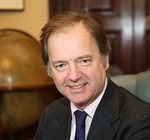
Tag: Hugo Swire

  • Hugo Swire – 2023 Speech on the Australia/New Zealand Trade Bill and Maiden Speech in the House of Lords (Baron Swire)

    Hugo Swire – 2023 Speech on the Australia/New Zealand Trade Bill and Maiden Speech in the House of Lords (Baron Swire)

    The maiden speech made by Hugo Swire, Baron Swire, in the House of Lords on 9 January 2023.

    My Lords, over the recent Christmas Recess, I spent some time—not all the time—reading some maiden speeches made by those coming into this place. It strikes me that there is an accepted formula in being uncontroversial while paying tribute to the friendliness, efficiency and tolerance exhibited by all the staff in this place, from the Lord Speaker and his office to Black Rod and her office, the clerks, the Vote Office and the doorkeepers, who are of course the people who run this place. I had thought that the kindness exhibited to me was exceptional but, clearly, it is a common experience; none the less, I wish to add my gratitude to them.

    Having spent almost two decades in the other place, I am acutely aware that nothing must be more irksome to your Lordships than somebody coming here from there and thinking that they know everything. This place is different and all the better for it. I am therefore hugely indebted to my noble friend Lord Lindsay for helping me to avoid the many potholes and pitfalls. I am also indebted to my noble friends Lord Strathclyde and Lord Marland, of Odstock, who were kind enough to be my supporters and guided me what looked to be so effortlessly into place—no mean achievement as I am not very good at these things. I think I am the only living former Guards officer who went the wrong way in the Changing of the Guard on the forecourt of Buckingham Palace some 40 years ago, to the consternation and delight of hundreds of Japanese tourists.

    It was never really my intention to make my maiden speech so soon, having come into this House only recently. I am still reminded of my maiden speech in the other place in July 2001, which, while perfectly workable, is never likely to be studied or quoted from. I remember on that occasion having to follow on, in a not ideal fashion, from the then new Member of Parliament for Henley, one Boris Johnson. While no such threat confronts me this afternoon, following on from not one but two former high commissioners to Australia, a PUS at the Foreign Office and the Government’s main trade negotiator presents challenges to me in themselves.

    Having thought about this, I feel that I can no longer continue with my role as a Trappist monk, since there are so many issues before us that I wish to share my views on and hopefully contribute something useful to. Having served as a Minister of State at the Northern Ireland Office, I maintain a deep appreciation and understanding for Northern Ireland and the problems that it has confronted, and which confront it at the moment, not least with the protocol. I very much welcome the recent noise coming from Dublin, given the utterances from Leo Varadkar the new Taoiseach—obviously, he was Taoiseach before and is Taoiseach once more—which will hopefully go some way towards resolving what has become a stalemate.

    Also, having spent almost four years as a Minister of State in the Foreign and Commonwealth Office, with responsibility for the Commonwealth as an institution but also with responsibility for Asia as part of my portfolio, I wanted to take part in this debate, since this trade deal is of great interest to me. In that role, I had the opportunity of visiting both Australia and New Zealand, and I am very grateful to my noble friend Lord Goodlad for his kind remarks about that.

    As we have heard, the devil of these trade agreements is in the detail, and I have no doubt that there will be plenty of conflicting views about this one. It is of course right that we should debate it thoroughly and scrutinise it in detail, but for my part I very much welcome this trade deal. I am not quite 74, which is what my introductory biography in this place said—that was amazing, and there was a certain amount of squinting at me on my first day. However, I am old enough to remember the sense of abandonment that our cousins in Australia and New Zealand felt when the United Kingdom joined the EEC in 1973. Their consensus was that this represented imperial preference in reverse and threatened particularly their exports of beef and lamb. Therefore, it is somewhat ironic that one of the criticisms levelled at this deal is that it will disadvantage our own agriculture sector, particularly in beef and lamb, although this ignores the fact that Australia and New Zealand’s main export markets are now heavily weighted towards Asia. The sense of betrayal at the time was understandable, so I am pleased that half a century later, we can put this to rest and look forwards, not back. Australia and New Zealand are, and have always been, more than just allies and friends. We have so much in common, and no one should underestimate the importance of the Five Eyes agreement and the AUKUS partnership, not least at a time of rising belligerence and influence in the region from China.

    I also applaud this Bill because it is the first post-Brexit trade deal to have been negotiated from scratch and, moreover, it is with two fellow members of the Commonwealth. I should at this point draw your Lordships’ attention to the register of interests and my role as deputy chairman of the Commonwealth Enterprise and Investment Council, a not-for-profit organisation revitalised and chaired so dynamically by my noble friend Lord Marland, which promotes intra-Commonwealth trade.

    For too long, we have behaved as if the Commonwealth is an embarrassment and not an asset. During my time in government, it sometimes felt as if I was pushing water uphill whenever there was anything to do relating to the Commonwealth. Here I pay tribute to my noble friend Lord Howell of Guildford and the now retired Lord Luce, who at times appeared to be the only two parliamentarians keeping the Commonwealth flame alive. I intend to join them and all those who feel similarly in promoting the Commonwealth, which provides a unique and ready market for British business.

    In a recent, not uncontroversial Netflix documentary, which some of us may just have seen—and others may not admit to having seen—one of the contributors labelled the Commonwealth “Empire 2.0”. Either this was deliberate mischief-making, or it displayed astonishing ignorance; perhaps it was both. What it was not was in any way an accurate description of what today’s Commonwealth is: a voluntary grouping of now 56 countries, some of which, not least the two most recent countries to join, namely, Togo and Gabon, owe nothing in their history to the United Kingdom, having fallen historically within the francophone sphere of influence. Of course, your Lordships will remember that the last Commonwealth Heads of Government Meeting in June was held in Rwanda, another country with nothing to do with the British Empire or colonialism historically.

    This afternoon, we heard a call for the Government to come up with a comprehensive trade strategy, which I would welcome. If the Government do that, I would remind them that the modern Commonwealth is one such opportunity—a Commonwealth that has a population of 2.5 billion people, 60% of whom, critically, are under the age of 30. It represents a third of the world’s population—a billion middle-class consumers. The combined GDP of Commonwealth countries is estimated to reach $19.5 trillion in 2027, almost doubling in 10 years from $10.4 trillion in 2017. It also represents 40% of the global workforce and half of the top 20 global emerging cities. I am sure we will hear from other speakers about the Commonwealth advantage, whereby it is cheaper for one company in a Commonwealth country to trade with another company in another Commonwealth country, with a saving of 21%, based on a common language and legal system.

    The opportunities for trade with Australia, New Zealand and the wider Commonwealth are clear. I welcome this trade agreement, which will increase the United Kingdom’s chances of joining the trans-pacific partnership, which is the bigger goal. I hope that the new Minister, my noble friend Lord Johnson of Lainston, will take this opportunity to reaffirm this Government’s commitment to the Commonwealth and everything it represents, and that we can rely on him to be a passionate advocate for it.

  • Hugo Swire – 2016 Parliamentary Question to the Department for Transport

    Hugo Swire – 2016 Parliamentary Question to the Department for Transport

    The below Parliamentary question was asked by Hugo Swire on 2016-07-20.

    To ask the Secretary of State for Transport, whether the average accident rate is higher on dual carriageways than on three lane roads.

    Andrew Jones

    The Department does not hold any information on the number of lanes in either the road accident data supplied by police forces or road traffic estimates. Therefore it is not possible to provide a comparison between dual carriageway roads and single carriage roads with three lanes.

    However, the Department does record the number of carriageways at the scene of accidents as well as the length of ‘A’ roads by number of carriageways. As a guide, in 2015 for Great Britain there were 380 reported personal-injury accidents per billion vehicle miles on single carriageway ‘A’ roads and 140 accidents per billion vehicle miles on dual carriageway ‘A’ roads.

  • Hugo Swire – 2016 Parliamentary Question to the Foreign and Commonwealth Office

    Hugo Swire – 2016 Parliamentary Question to the Foreign and Commonwealth Office

    The below Parliamentary question was asked by Hugo Swire on 2016-09-15.

    To ask the Secretary of State for Foreign and Commonwealth Affairs, whether he plans to discuss the situation in the Maldives with John Kerry.

    Alok Sharma

    The Secretary of State for Foreign & Commonwealth Affairs, my Rt Hon. Friend the Member for Uxbridge and South Ruislip (Mr Johnson), has no plans to discuss the situation in the Maldives with John Kerry.

  • Hugo Swire – 2016 Parliamentary Question to the Department for Transport

    Hugo Swire – 2016 Parliamentary Question to the Department for Transport

    The below Parliamentary question was asked by Hugo Swire on 2016-07-20.

    To ask the Secretary of State for Transport, whether dual carriageways are more expensive to build than three lane roads.

    Mr John Hayes

    Although a two lane dual carriageway might be expected to cost more to build than a three lane single carriageway, simply because it is wider, the costs involved in building new carriageways are influenced by a wide range of considerations specific to the particular location, such as topography, cost of acquiring land etc.

  • Hugo Swire – 2016 Parliamentary Question to the Department of Health

    Hugo Swire – 2016 Parliamentary Question to the Department of Health

    The below Parliamentary question was asked by Hugo Swire on 2016-10-07.

    To ask the Secretary of State for Health, what steps he is taking to increase the number of (a) doctors and (b) nurses recruited by the NHS.

    Mr Philip Dunne

    The responsibility for recruitment and staffing rests with National Health Service organisations as they are best placed to ensure they have the right staff, in the right place, at the right time to provide safe and effective care for their patients.

    On 4 October 2016 the Secretary of State for Health announced that from September 2018, the Government will fund up to 1,500 additional undergraduate medical places through university medical schools each year.

    In November 2015 reforms to nursing, midwifery and allied health pre-registration training was announced, the reforms aim to increase the number of training places by up to 10,000 by the end of the Parliament.

    As outlined in its Workforce Plan for 2016-17, Health Education England has increased the overall volume of education and training with, in excess of, 38,000 new training places in 2016-17 for nurses, scientists, and therapists, and there are now over 50,000 doctors and dentists currently in training.

    The latest workforce statistics published by NHS Digital for June 2016 show that since May 2010, there are now almost 22,700 more professionally qualified clinical staff working in NHS trusts and clinical commissioning groups, including over 8,500 more doctors and 4,600 more nurses and midwives.

  • Hugo Swire – 2016 Parliamentary Question to the Department for Transport

    Hugo Swire – 2016 Parliamentary Question to the Department for Transport

    The below Parliamentary question was asked by Hugo Swire on 2016-07-20.

    To ask the Secretary of State for Transport, if he will re-evaluate the dualling of the entire A303/A30 corridor.

    Mr John Hayes

    The Government is committed to upgrading all single carriageway sections of the A303 and A358 between the M3 and M5 to dual carriageway standard. In respect of the A303/A30 between Southfields and Honiton, Highways England will assess the options for improvements, including dualling, as part of its South West Peninsula route strategy, for which evidence gathering is underway. All interested parties are encouraged to submit evidence on the performance of this route through the tool at: www.highways.gov.uk/route-strategies.

  • Hugo Swire – 2016 Parliamentary Question to the Department for Transport

    Hugo Swire – 2016 Parliamentary Question to the Department for Transport

    The below Parliamentary question was asked by Hugo Swire on 2016-10-07.

    To ask the Secretary of State for Transport, what discussions he has had with (a) Great Western Railway and (b) South West Trains on the provision of wifi services on those trains.

    Paul Maynard

    The Secretary of State has not met with Great Western Railway or South West Trains on the provision of Wi-Fi services.

    On all Department for Transport-controlled rail franchises, in England and Wales, free Wi-Fi is being introduced. All train operators bidding for new franchises and direct award agreements will have to present a phased implementation plan for free Wi-Fi.

    As of July 2016, 25% of passenger journeys operating within the DfT controlled franchises have Wi-Fi available. We forecast 90% of passenger journeys will benefit from free Wi-Fi by the end of 2018.

  • Hugo Swire – 2016 Parliamentary Question to the Department for Transport

    Hugo Swire – 2016 Parliamentary Question to the Department for Transport

    The below Parliamentary question was asked by Hugo Swire on 2016-07-20.

    To ask the Secretary of State for Transport, whether his Department will (a) approve and (b) fund the upgrade of the A303/A30 between Southfields and Honiton.

    Mr John Hayes

    The Road Investment Strategy, covering the period 2015 to 2020, commits funding for small-scale improvements to the A303/A30 between Southfields and Honiton to improve safety and journey quality, alongside a £2bn commitment to upgrade the A303 as a strategic corridor to the South-West. The Department and Highways England are gathering evidence to inform plans for investment in the Strategic Road Network post-2020, and decisions about further investment in this route will be made as part of this process.

  • Hugo Swire – 2016 Parliamentary Question to the HM Treasury

    Hugo Swire – 2016 Parliamentary Question to the HM Treasury

    The below Parliamentary question was asked by Hugo Swire on 2016-10-07.

    To ask Mr Chancellor of the Exchequer, whether he is taking steps to encourage banks to reduce interest rates inline with base rate reductions.

    Simon Kirby

    Alongside the Monetary Policy Committee’s decision to cut Bank Rate to 0.25%, the Chancellor on 4 August authorised the introduction of a new Term Funding Scheme.

    The Term Funding Scheme will lend central bank reserves to banks and building societies for an extended period at rates close to Bank Rate, in order to ensure the low level of Bank Rate is passed onto borrowing rates faced by households and businesses.

  • Hugo Swire – 2016 Parliamentary Question to the Department for Work and Pensions

    Hugo Swire – 2016 Parliamentary Question to the Department for Work and Pensions

    The below Parliamentary question was asked by Hugo Swire on 2016-09-02.

    To ask the Secretary of State for Work and Pensions, what steps he is taking to ensure that people affected by severe mental illness are able to live as independently as possible.

    Penny Mordaunt

    In January 2016 the Government announced almost £1 billion of additional investment for mental health which included over £400 million to enable round-the-clock treatment in communities as a safe and effective alternative to hospital.

    The Work and Health Unit is testing a range of interventions to support people with mental illness to obtain and stay in work.

    NHS England is also working to ensure that by 2020/21 all areas are providing crisis resolution and home treatment teams that are resourced to operate in line with recognised best practice – delivering a round-the-clock, community-based crisis response and intensive home treatment as an alternative to acute inpatient admissions.