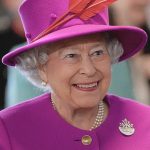
Tag: HM Queen Elizabeth II

  • Queen Elizabeth II – 1992 Christmas Broadcast

    Queen Elizabeth II – 1992 Christmas Broadcast

    The Christmas Broadcast made by HM Queen Elizabeth II on 25 December 1992.

    This year, I am speaking to you not from Buckingham Palace, but from Sandringham, where my family gathers every year for Christmas.

    My great-grandfather, King Edward VII, made Sandringham his country home in 1862, and it was from this house that my grandfather, King George V, and my father, used to speak over the radio – originally to the Empire and then to the Commonwealth – on Christmas Day all those years ago.

    It was from here that I made my first Christmas Broadcast forty years ago, and this year I am very glad to be able to speak to you again from this family home.

    I first came here for Christmas as a grandchild. Nowadays, my grandchildren come here for the same family festival. To me, this continuity is a great source of comfort in a world of change, tension and violence.

    The peace and tranquillity of the Norfolk countryside make me realise how fortunate we are, and all the more conscious of the trials and sorrows that so many people are suffering both in this country and around the world. My heart goes out to those whose lives have been blighted by war, terrorism, famine, natural disaster or economic hardship.

    Like many other families, we have lived through some difficult days this year. The prayers, understanding and sympathy given to us by so many of you, in good times and bad, have lent us great support and encouragement. It has touched me deeply that much of this has come from those of you who have troubles of your own.

    As some of you may have heard me observe, it has, indeed, been a sombre year. But Christmas is surely the right moment to try to put it behind us and to find a moment to pray for those, wherever they are, who are doing their best in all sorts of ways to make things better in 1993.

    I am thinking especially of the Servicemen and women, and the aid workers with them, trying to keep the peace in countries riven by strife, and to bring food to the weak and innocent victims. They do not have an easy task and they need all the moral and practical support that we can give them.

    Curiously enough, it was a sad event which did as much as anything in 1992 to help me put my own worries into perspective. Just before he died, Leonard Cheshire came to see us with his fellow members of the Order of Merit.

    By then, he was suffering from a long drawn-out and terminal illness. He bore this with all the fortitude and cheerfulness to be expected of a holder of the Victoria Cross. However, what struck me more forcibly than his physical courage was the fact that he made no reference to his own illness, but only to his hopes and plans to make life better for others.

    He embodied the message in those well-known lines: “Kindness in another’s trouble, courage in one’s own”.

    One of his Cheshire Homes for people with disabilities is not far from this house. I have visited others all over the Commonwealth and I have seen at first hand the remarkable results of his, and his wife’s, determination to put Christ’s teaching to practical effect.

    Perhaps this shining example of what a human being can achieve in a lifetime of dedication can inspire in the rest of us a belief in our own capacity to help others.

    Such talents and indomitable spirit are not given to all of us. But if we can sometimes lift our eyes from our own problems, and focus on those of others, it will be at least a step in the right direction, and Christmas is a good time to take it. I hope that his example will continue to inspire us all in the years ahead.

    1993 will certainly bring new challenges, but let us resolve to meet it with fresh hope in our hearts. There is no magic formula that will transform sorrow into happiness, intolerance into compassion or war into peace, but inspiration can change human behaviour.

    Those, like Leonard Cheshire, who devote their lives to others, have that inspiration and they know, and we know, where to look for help in finding it. That help can be readily given if we only have the faith to ask.

    I and my family, as we approach a new year, will draw strength from this faith in our commitment to your service in the coming years.

    I pray that each and every one of you has a happy Christmas and that we can all try to bring that happiness to others. God bless you all.

  • Queen Elizabeth II – 1993 Christmas Broadcast

    Queen Elizabeth II – 1993 Christmas Broadcast

    The Christmas Broadcast made by HM Queen Elizabeth II on 25 December 1993.

    I am speaking to you from the Library at Sandringham.

    Four generations of my family have enjoyed the quiet and solitude of this library. It is still a haven of peace even if my grandchildren do their best over Christmas to make it rather more lively!

    Most of the books on the shelves date from my great-grandfather’s time, and their titles reflect the life and events of those days.

    Books are one of the ways in which each generation can communicate its history, values and culture to the next. There are books here about statesmen, explorers, warriors and saints; there are many about war, especially the First World War which ended seventy-five years ago.

    Families and loved ones of those who fought in it knew little of the horrors of the trenches, other than from artists’ drawings or photographs – often published days or weeks after the event. Nowadays stories and pictures from all over the world can be gathered up and appear in print within hours.

    We have indeed become a global village. It is no longer possible to plead ignorance about what is going on in far-off parts of the world. Switch on the television or radio, and the graphic details of distant events are instantly available to us.

    Not all the pictures bring gloomy news. This year has seen significant progress made towards solving some of the world’s most difficult problems – the Middle East, for instance, the democratic future of South Africa and, most recently, Northern Ireland.

    All too often, though, we find ourselves watching or listening to the sort of news which, as a daily diet, can be almost overwhelming. It makes us yearn for some good news.

    If we can look on the bright side, so much the better, but that does not mean we should shield ourselves from the truth, even if it is unwelcome. I believe that we should be aware of events which, in the old days, might have passed us by. But that means facing up to the question of what we can do to use that awareness for the greater good.

    The simple answer is, of course, all too little. But there is another answer. It is that the more we know, the more we feel responsible, and the more we want to help.

    Those involved in international charity work confirm that modern communications have helped to bring them public support and made them more effective. People are not shunning the added responsibility, but shouldering it.

    All of us owe a debt to those volunteers who are out there in the front line, putting our donations to use by looking after the wounded, the hungry and the oppressed. Much of their work never reaches the headlines or television screens, but their example should inspire us all the same.

    We cannot all follow them the whole way, but we can do something to help within our own community – particularly at Christmas, when those without work, or the company of family or friends, feel especially left out.

    I am always moved by those words in St. John’s Gospel which we hear on Christmas Day – “He was in the world, and the world was made by him, and the world knew him not”.

    We have only to listen to the news to know the truth of that. But the Gospel goes on – “But as many as received him, to them gave he power to become the sons of God”.

    For all the inhumanity around us, let us be grateful for those who have received him and who go about quietly doing their work and His will without thought of reward or recognition.

    They know that there is an eternal truth of much greater significance than our own triumphs and tragedies, and it is embodied by the Child in the Manger. That is their message of hope.

    We can all try to reflect that message of hope in our own lives, in our actions and in our prayers. If we do, the reflection may light the way for others and help them to read the message too. We live in the global village, but villages are made up of families.

    We, the peoples of the fifty nations of the Commonwealth – more than a quarter of the world’s population – have, as members of one of the largest families, a great responsibility. By working together, we can help the rest of the world become a more humane and happier place.

    I hope you all enjoy your Christmas. I pray, with you, for a happy and peaceful New Year.

  • Queen Elizabeth II – 1994 Christmas Broadcast

    Queen Elizabeth II – 1994 Christmas Broadcast

    The Christmas Broadcast made by HM Queen Elizabeth II on 25 December 1994.

    I shall never forget the events in Normandy last June, when the representatives of the wartime allies commemorated the fiftieth anniversary of the D-Day landings.

    We who were there, and millions of others through television and radio, paid fitting tribute to the courage of those who took part in that epic campaign.

    As Prince Philip and I stood watching the British veterans march past on the beach at Arromanches, my own memories of 1944 were stirred – of how it was to wait anxiously for news of friends and relations engaged in that massive and hazardous operation; of the subsequent ebb and flow of the battles in France and then in Germany itself; and of the gradual realisation that the war really was at least coming to an end.

    Since those D-Day commemorations, Prince Philip and I have been to Russia. While we were in St. Petersburg, we had the opportunity to honour the millions of patriotic Russians who died fighting the common enemy.

    To see British and Russian veterans standing together, in memory of the sacrifices of their comrades-in-arms, was a moving experience.

    I never thought it would be possible in my lifetime to join with the Patriarch of Moscow and his congregation in a service in that wonderful cathedral in the heart of the Moscow Kremlin.

    This Christmas, as we pray for peace at home and abroad – not least in Russia itself – we can also give thanks that such cathedrals and churches will be full and that the great bells, which greeted us, will be ringing out to celebrate our Saviour’s birth.

    We are frequently reminded, of course, that violence and hatred are still all too much in evidence. We can take some comfort, however, from the fact that more people throughout the world, year by year, have real hope of their children growing up in peace and free from fear.

    Last Christmas we were witnessing the signs of a new dawn after the long bitterness, and this year these signs have become steadily stronger. If that new dawn is to be a real and not a false one, courage, patience and faith will be sorely needed – those same qualities which kept the flame of hope alive in the war-torn countries of Europe and the Far East in the dark days of the last war.

    Christ taught us to love our enemies and to do good to them that hate us. It is a hard lesson to learn, but this year we have seen shining examples of that generosity of spirit which alone can banish division and prejudice.

    In Northern Ireland, peace is gradually taking root; a fully democratic South Africa has been welcomed back into the Commonwealth; and, in the Middle East, long-standing enmities are healing.

    What is it that makes people turn from violence, and try to bring peace to their community? Most of all, I believe, it is their determination to bring reality to their hopes of a better world for their children.

    The sight of the happy faces of children and young people in Russia, in South Africa, where so much has changed with such extraordinary speed in the last year, and in Northern Ireland, where there is real hope of a permanent end to the bitterness of recent years, should be enough to convince even the most hard-hearted that peace is worth striving for.

    Next year, we shall commemorate the fiftieth anniversary of the end of the Second World War. The celebrations will no doubt be spectacular, and I hope we all enjoy them. But we can also, each in our own way, ensure that they leave a lasting mark in history.

    If we resolve to be considerate and to help our neighbours; to make friends with people of different races and religions; and, as our Lord said, to look to our own faults before we criticise others, we will be keeping faith with those who landed in Normandy and fought so doggedly for their belief in freedom, peace and human decency.

    The poet Siegfried Sassoon, amidst all the horrors of war, still found himself able to write these words:-

    “Everyone’s voice was suddenly lifted
    And beauty came like the setting sun.”

    If he could see the beauty from the trenches of Flanders surely we can look for it in our own lives, this Christmas and in the coming year.

    Happy Christmas and God bless you.


  • Queen Elizabeth II – 1995 Christmas Broadcast

    Queen Elizabeth II – 1995 Christmas Broadcast

    The Christmas Broadcast made by HM Queen Elizabeth II on 25 December 1995.

    During a year of wartime commemorations which has seen Commonwealth countries honouring their past, it has sometimes been tempting to let nostalgia lend a rosy glow to memories of war, and to forget the benefits of the relatively peaceful years bought for us by the heroism and sacrifice to which we have been paying tribute.

    Those who suffered the horrors of warfare, in whatever guise, will not have been prey to this temptation. For them, war was not a “Boys’ Own” tale of comradeship and good cheer, but one of hard slog, danger, suffering and exhaustion.

    Those songs we sang during the VE Day commemorations did much to brighten the days of war, and they certainly cheered us last May. But, as any veteran will tell you, there was a lot more to the war years than dreaming of the White Cliffs of Dover.

    In talking to the veterans, I was forcibly reminded of the detachment with which those personally unaffected by violence can view its effect on others.

    This seems particularly true of Northern Ireland, where the present peace of a year and more has been welcomed by all right-thinking people here and abroad. Now, however, the ‘process’ is at something of a crossroads as we speculate about what happens next.

    But it seems to me that much of the expert analysis of the manoeuvring and negotiating is somewhat detached from the reality as seen by those whom I meet who live and work in Northern Ireland.

    They, who for 25 years have lived their lives in the dark and relentless shadow of the gun and the bomb, do not seem to have as much time for past history and prejudice as do those who commentate and pronounce on the situation, often from afar.

    For those who have seen family, friends and neighbours die by violence, the bomb and the gun are the weapons of hatred which have blighted their lives for at least a quarter of a century: surely, they say, now is the time to lay them down: surely there can be discussion of a peaceful and prosperous future conducted without the threat of a return to the old evil ways.

    I echo those sentiments today. I pray that those who can exercise that threat, whoever and wherever they may be, will be persuaded that the old way was the wrong way, and that to revert to it is unthinkable.

    We heard much, in May and August this year, of how the future of the free world was saved by the ordinary men and women who did their bit for the victory of 1945.

    It is the ordinary men and women who, so often, have done more than anyone else to bring peace to troubled lands. It is they who suffer most, and it is up to others to see that their courage and common sense are rewarded. It should not be too much to ask.

    During my visit to South Africa last March, I was able to see, in a township, how the energy and inspiration of one person could benefit thousands of others. And that one person would lay no claim to be anything other than ordinary – whatever you or I might think of her!

    I have of course used the Christmas story before in this context. But I cannot think of any Christmas of my reign when the message of the angels has been more apt.

    Think, for instance, of all the children round the world suffering from the effects of war and the unscrupulous use of power. Some of them are growing up in countries of the Commonwealth, an organisation which is proud of its devotion to the principle of good government.

    Those children will, however, be less impressed by communiqués and good intentions than by seeing democratically elected governments governing with justice and with honour.

    “Blessed be the peacemakers,” Christ said, “for they shall be called the children of God.” It is especially to those of you, often peacemakers without knowing it, who are fearful of a troubled and uncertain future, that I bid a Happy Christmas.

    It is your good sense and good will which have achieved so much. It must not and will not go to waste. May there be still happier Christmases to come, for you and your children. You deserve the best of them.

    Happy Christmas and God bless you all.

  • Queen Elizabeth II – 1996 Christmas Broadcast

    Queen Elizabeth II – 1996 Christmas Broadcast

    The Christmas Broadcast made by HM Queen Elizabeth II on 25 December 1996.

    To look back is not necessarily to be nostalgic. When I come to Sandringham each year, I like to reflect on what Christmas must have been like when King Eward VII, my great-grandfather, and Queen Alexandra first came here as young parents.

    I remember my own childhood Christmases here, with my father and mother, and a great family gathering, and now I delight in seeing my children and grandchildren enjoying the same traditions.

    Christmas is the celebration of the birth of the founder of the Christian faith, an event which took place almost 2000 years ago; every year, at this time, we are asked to look back at that extraordinary story and remind ourselves of the message which inspired Christ’s followers then, and which is just as relevant today.

    At Christmas I enjoy looking back on some of the events of the year. Many have their roots in history but still have a real point for us today. I recall, especially, a dazzling spring day in Norwich when I attended the Maundy Service, the Cathedral providing a spectacular setting.

    The lovely service is always a reminder of Christ’s words to his disciples: “Love one another; as I have loved you”. It sounds so simple yet it proves so hard to obey.

    In June came the Trooping the Colour, a vivid reminder of this country’s proud military tradition, and of the discipline and dedication which our servicemen and women show in their taxing tasks of peace-keeping in many distant parts of the world.

    Then, in October, I opened Parliament. This is not just a State occasion, but also a symbol of the process of parliamentary democracy which we enjoy here in Britain, and in so many countries of the Commonwealth. It is a process which seeks to express the ideal of the equality of all citizens under the law.

    So, the past, with its traditions, has its lessons for us in 1996. And this year, in our travels, Prince Philip and I have also been looking to the future. I and all my family have always felt that one of our most important duties is to express, in our visits overseas, the goodwill of our country towards friends abroad, near and far.

    So, last spring, we visited Poland and the Czech Republic, where we saw the development of democracy and prosperity in countries which only recently were communist-governed. And everywhere we received the best of welcomes. In the autumn we went to Thailand, where we renewed old friendships and witnessed the blending of tradition with a dynamic commercial spirit.

    There was also a happy visit to this country by the President of France. And I shall never forget the State Visit of President Mandela. The most gracious of men has shown us all how to accept the facts of the past without bitterness, how to see new opportunities as more important than old disputes and how to look forward with courage and optimism.

    His example is a continuing inspiration to the whole Commonwealth and to all those everywhere who work for peace and reconciliation.

    This, I know, has been a difficult year for many families. Discord, sickness, bereavement, even tragedy have touched all too many lives. We recall, with sadness and bewilderment, the horror of Dunblane and Port Arthur. We watch anxiously as violence threatens again to disrupt the lives of the people of Northern Ireland.

    In difficult times, it is tempting for all of us, especially those who suffer, to look back and say “if only”. But to look back in that way is to look down a blind alley. Better to look forward and say “if only”.

    If only we can live up to the example of the child who was born at Christmas with a love that came to embrace the whole world. If only we can let him recapture for us that time when we faced the future with childhood’s unbounded faith.

    Armed with that faith, the New Year, with all its challenges and chances, should hold no terrors for us, and we should be able to embark upon it undaunted.

    My family joins me in wishing each one of you a very Happy Christmas.

  • Queen Elizabeth II – 1997 Christmas Broadcast

    Queen Elizabeth II – 1997 Christmas Broadcast

    The Christmas Broadcast made by HM Queen Elizabeth II on 25 December 1997.

    At the Christian heart of this United Kingdom stands Westminster Abbey, and it was right that it provided the setting for two events this year – one of them almost unbearably sad, and one, for Prince Philip and me, tremendously happy.

    Joy and sadness are part of all our lives. Indeed, the poet William Blake tells us that:

    “Joy and woe are woven fine,
    A clothing for the soul divine,
    Under every grief and pine
    Runs a joy with silken twine.”

    This interweaving of joy and woe has been very much brought home to me and my family during the last months. We all felt the shock and sorrow of Diana’s death.

    Thousands upon thousands of you expressed your grief most poignantly in the wonderful flowers and messages left in tribute to her. That was a great comfort to all those close to her, while people all around the world joined us here in Britain for that service in Westminster Abbey.

    But Prince Philip and I also knew the joy of our Golden Wedding. We were glad to be able to share this joy at Buckingham Palace with many other couples, who are celebrating their 50th anniversary this year.

    Then, on our own anniversary day, came a very different service at Westminster Abbey, this time the “silken twine”, a service of thanksgiving for our 50 happy years together. After that service we had a chance to meet and chat to so many different people.

    I will never forget that day, nor a day five years ago when Windsor Castle suffered a terrible fire. More than a hundred rooms were badly damaged. But out of the disaster came opportunities for all sorts of people to display their range of skills, their love of history, and their faith in the future.

    Last month the restoration of the Castle was completed and it is shortly to be open again for all to see. It is a mixture of the original with later additions and alterations – and, the result, a vigorous blend of the old and the new.

    And so it has been in the Commonwealth. Prince Philip and I were touched by the way the Canadian people welcomed us again to Canada. We were delighted to be invited to Pakistan and India on the 50th anniversary of their Independence, and to celebrate their achievements since 1947.

    The Prince of Wales represented Britain when the people of Hong Kong marked their return to China – in spectacular fashion. Many of you might have felt a twinge of sadness as we in Britain bade them farewell, but we should be proud of the success of our partnership in Hong Kong and in how peacefully the old Empire has been laid to rest.

    Out of the old Empire sprang the Commonwealth family of nations that we know today, and that, too, has grown and changed over the years.

    In October, 51 representatives of Commonwealth governments met in Edinburgh, very much in the spirit of a family gathering. We all enjoy meeting old friends and making new ones, but there was also important business to be done. The world saw that the Commonwealth can make a major contribution to international relations and prosperity.

    The meeting also showed that unity and diversity can go hand in hand. Recent developments at home, which have allowed Scotland and Wales greater say in the way they are governed, should be seen in that light and as proof that the kingdom can still enjoy all the benefits of remaining united.

    Being united – that is, feeling a unity of purpose – is the glue that bonds together the members of a family, a country, a Commonwealth. Without it, the parts are only fragments of a whole; with it, we can be much more than the sum of those fragments.

    For most of us this is a happy family day. But I am well aware that there are many of you who are alone, bereaved, or suffering. My heart goes out to you, and I pray that we, the more fortunate ones, can unite to lend a helping hand whenever it is needed, and not ‘pass by on the other side’.

    St Paul spoke of the first Christmas as the kindness of God dawning upon the world. The world needs that kindness now more than ever – the kindness and consideration for others that disarms malice and allows us to get on with one another with respect and affection.

    Christmas reassures us that God is with us today. But, as I have discovered afresh for myself this year, he is always present in the kindness shown by our neighbours and the love of our friends and family.

    God bless you all and Happy Christmas.

  • Queen Elizabeth II – 1998 Christmas Broadcast

    Queen Elizabeth II – 1998 Christmas Broadcast

    The Christmas Broadcast made by HM Queen Elizabeth II on 25 December 1998.

    Christmas is a time for reflection and renewal. For Christians the year’s end has a special and familiar significance, but all faiths have their calendars, their sign-posts, which ask us to pause from time to time and think further than the hectic daily round. We do that as individuals, with our families, and as members of our local communities.

    It is not always easy for those in their teens or twenties to believe that someone of my age – of the older generation – might have something useful to say to them. But I would say that my mother has much to say to me.

    Indeed, her vigour and enjoyment of life is a great example of how to close the so-called generation gap. She has an extraordinary capacity to bring happiness into other people’s lives. And her own vitality and warmth is returned to her by those whom she meets.

    But there are many of my mother’s generation still with us. They can remember the First World War. Prince Philip and I can recall only the Second.

    I know that those memories of ours define us as old, but they are shared with millions of others, in Britain and the Commonwealth, people who often feel forgotten by the march of time. They remember struggles unknown to young people today, and which they will not forget. Nor should their countries forget them.

    Memories such as these are a consequence of age, and not a virtue in themselves. But with age does come experience and that can be a virtue if it is sensibly used. Though we each lead different lives, the experience of growing older, and the joys and emotions which it brings, are familiar to us all.

    It is hard to believe that a half century has passed since our son Charles was christened, and now, last month, he has celebrated his fiftieth birthday. It was a moment of great happiness and pride on our part in all he has achieved during the last three decades.

    As a daughter, a mother and a grandmother, I often find myself seeking advice, or being asked for it, in all three capacities. No age group has a monopoly of wisdom, and indeed I think the young can sometimes be wiser than us. But the older I get, the more conscious I become of the difficulties young people have to face as they learn to live in the modern world.

    We parents and grandparents must learn to trust our children and grandchildren as they seize their opportunities, but we can, at the same time, caution and comfort if things go wrong, or guide and explain if we are needed.

    My own grandchildren and their generation have a remarkable grasp of modern technology. They are lucky to have the freedom to travel and learn about foreign cultures at an age when the appetite for learning is keen. I see them pushing out the boundaries of science, sport and music, of drama and discovery.

    Last June Prince Philip and I gave a party for 900 of Britain’s Young Achievers. Buckingham Palace was brimming with young people who, in their short lives, have already set an example to us all: they are living proof that the timeless virtues of honesty, integrity, initiative and compassion are just as important today as they have ever been.

    We hear much of ‘public life’ – the hurly-burly of Parliament, the media, big business, city life. But for most people their contribution, at whatever age, is made quietly through their local communities just like so many of those Young Achievers. To most of them, service is its own reward. Their ‘public life’ is their church, their school, their sports club, their local council.

    My work, and the work of my family, takes us every week into that quiet sort of ‘public life’, where millions of people give their time, unpaid and usually unsung, to the community, and indeed to those most at risk of exclusion from it.

    We see these volunteers at work in organisations such as the Scouts and Guides, the Cadet Force, the Red Cross and St. John’s, The Duke of Edinburgh’s Award Scheme and The Prince’s Trust.

    These organisations, and those who serve them so selflessly, provide the bridges across which the generations travel, meet and learn from one another. They give us, with our families, our sense of belonging.

    It is they that help define our sense of duty. It is they that can make us strong as individuals, and keep the nation’s heartbeat strong and steady too. Christmas is a good time for us to recognise all that they do for us and to say a heartfelt thank you to each and every one of them.

    Happy Christmas to you all.

  • Queen Elizabeth II – 1999 Christmas Broadcast

    Queen Elizabeth II – 1999 Christmas Broadcast

    The Christmas Broadcast made by HM Queen Elizabeth II on 25 December 1999.

    A very Happy Christmas to you all. Listening to the choir from St. George’s Chapel, Windsor, reminds me that this season of carols and Christmas trees is a time to take stock; a time to reflect on the events of the past year and to make resolutions for the new year ahead.

    This December we are looking back not just on one year, but on a hundred years and a thousand years. History is measured in centuries. More than ever we are aware of being a tiny part of the infinite sweep of time when we move from one century and one millennium to another.

    And as I look to the future I have no doubt at all that the one certainty is change – and the pace of that change will only seem to increase.

    This is true for all of us – young and old. On my mother’s ninety-ninth birthday last August I was struck by how the inevitability of change affects us all, and how different were my mother’s early years compared with those of my grandchildren.

    For many of their generation the future is a source of excitement, hope and challenge.

    For others however the future is a cause of understandable anxiety. There are many, for example, of my age or amongst the more vulnerable in society who worry that they will be left behind. The sheer rate of change seems to be sweeping away so much that is familiar and comforting.

    But I do not think that we should be over-anxious. We can make sense of the future – if we understand the lessons of the past. Winston Churchill, my first Prime Minister, said that “the further backward you look, the further forward you can see”.

    It was this importance of history which was much on my mind when I opened the new Scottish Parliament in July this year. Devolution in Scotland and Wales, and more recently the very welcome progress in Northern Ireland, are responses to today’s changed circumstances, but they need to be seen in their historical contexts.

    History and a common past have also played an important part in bringing together so many different nations into the modern Commonwealth.

    This was a frequent theme last month at the Commonwealth conference in South Africa.

    At that meeting many of us highlighted the way in which the varied strands of our shared history have been woven together so that we can more effectively address the challenges and opportunities ahead.

    The Commonwealth, as with the process of devolution in the United Kingdom, reminds us of the importance of bringing the lessons of the past to bear on the aspirations for a better future.

    To do this we need to draw from our history those constant and unchanging values which have stood the test of time and experience. Fairness and compassion, justice and tolerance; these are the landmarks from the past which can guide us through the years ahead.

    These timeless values tell us above all about the way we should relate to people rather than to things; thinking of others, not just of ourselves.

    Earlier this autumn in Manchester I visited some of the emergency services, whose responsibilities day in and day out are based on concern for others. As always they are on duty over these Christmas and New Year holidays.

    Up and down the country people like those firemen, nurses and ambulancemen I met are working tirelessly to help others. They remind us of the responsibility of each and every one of us to show concern for our neighbours and those less fortunate than ourselves. I believe that this provides us with the direction and resolve required for the years ahead.

    The future is not only about new gadgets, modern technology or the latest fashion, important as these may be. At the centre of our lives – today and tomorrow – must be the message of caring for others, the message at the heart of Christianity and of all the great religions.

    This message – love thy neighbour as thyself – may be for Christians 2,000 years old. But it is as relevant today as it ever was. I believe it gives us the guidance and the reassurance we need as we step over the threshold into the twenty-first century.

    And I for one am looking forward to this new Millennium.

    May I wish you all a Merry Christmas and, in this year of all years, a very Happy New Year.

  • Queen Elizabeth II – 2000 Christmas Broadcast

    Queen Elizabeth II – 2000 Christmas Broadcast

    The Christmas Broadcast made by HM Queen Elizabeth II on 25 December 2000.

    By any measure this Millennium year has been an unforgettable one.

    Since the turn of the year it has been celebrated and marked in this country and throughout the Commonwealth, and it has been a particular pleasure for me to visit Millennium projects large and small which will be reminders for generations to come of the time when the twenty-first century began.

    But as this year draws to a close I would like to reflect more directly and more personally on what lies behind all the celebrations of these past twelve months.

    Christmas is the traditional, if not the actual, birthday of a man who was destined to change the course of our history. And today we are celebrating the fact that Jesus Christ was born two thousand years ago; this is the true Millennium anniversary.

    The simple facts of Jesus’ life give us little clue as to the influence he was to have on the world. As a boy he learnt his father’s trade as a carpenter. He then became a preacher, recruiting twelve supporters to help him.

    But his ministry only lasted a few years and he himself never wrote anything down. In his early thirties he was arrested, tortured and crucified with two criminals. His death might have been the end of the story, but then came the resurrection and with it the foundation of the Christian faith.

    Even in our very material age the impact of Christ’s life is all around us. If you want to see an expression of Christian faith you have only to look at our awe-inspiring cathedrals and abbeys, listen to their music, or look at their stained glass windows, their books and their pictures.

    But the true measure of Christ’s influence is not only in the lives of the saints but also in the good works quietly done by millions of men and women day in and day out throughout the centuries.

    Many will have been inspired by Jesus’ simple but powerful teaching: love God and love thy neighbour as thyself – in other words, treat others as you would like them to treat you. His great emphasis was to give spirituality a practical purpose.

    Whether we believe in God or not, I think most of us have a sense of the spiritual, that recognition of a deeper meaning and purpose in our lives, and I believe that this sense flourishes despite the pressures of our world.

    This spirituality can be seen in the teachings of other great faiths. Of course religion can be divisive, but the Bible, the Koran and the sacred texts of the Jews and Hindus, Buddhists and Sikhs, are all sources of divine inspiration and practical guidance passed down through the generations.

    To many of us our beliefs are of fundamental importance. For me the teachings of Christ and my own personal accountability before God provide a framework in which I try to lead my life. I, like so many of you, have drawn great comfort in difficult times from Christ’s words and example.

    I believe that the Christian message, in the words of a familiar blessing, remains profoundly important to us all:

    “Go forth into the world in peace,
    be of good courage,
    hold fast that which is good,
    render to no man evil for evil,
    strengthen the faint-hearted,
    support the weak,
    help the afflicted,
    honour all men.”

    It is a simple message of compassion… and yet as powerful as ever today, two thousand years after Christ’s birth.

    I hope this day will be as special for you as it is for me. May I wish you all a very Happy Christmas.

  • Queen Elizabeth II – 2001 Christmas Broadcast

    Queen Elizabeth II – 2001 Christmas Broadcast

    The Christmas Broadcast made by HM Queen Elizabeth II on 25 December 2001.

    The year 2001 saw large-scale terrorist attacks on New York and Washington, killing around 3,000 people, the outbreak of foot-and-mouth disease in the UK’s farming community, and famine in Sudan. The Queen’s Christmas Broadcast for that year stressed the importance of communities working to respond to problems and disasters together.

    For many people all over the world, the year 2001 seems to have brought them more than their fair share of trials and disasters.

    There have been storms and droughts as well as epidemics and famine. And this country has not been spared, with the floods this time last year, and Foot and Mouth, which has had such devastating consequences for our farmers and rural communities.

    They and others whose livelihoods have been affected continue to suffer hardship and anxiety long after the newspaper headlines have moved on.

    But whilst many of these events were of natural origin, it was the human conflicts and the wanton acts of crime and terror against fellow human beings which have so appalled us all.

    The terrorist outrages in the United States last September brought home to us the pain and grief of ordinary people the world over who find themselves innocently caught up in such evil.

    During the following days we struggled to find ways of expressing our horror at what had happened. As so often in our lives at times of tragedy – just as on occasions of celebration and thanksgiving – we look to the Church to bring us together as a nation or as a community in commemoration and tribute.

    It is to the Church that we turn to give meaning to these moments of intense human experience through prayer, symbol and ceremony.

    In these circumstances so many of us, whatever our religion, need our faith more than ever to sustain and guide us. Every one of us needs to believe in the value of all that is good and honest; we need to let this belief drive and influence our actions.

    All the major faiths tell us to give support and hope to others in distress. We in this country have tried to bring comfort to all those who were bereaved, or who suffered loss or injury in September’s tragic events through those moving services at St Paul’s and more recently at Westminster Abbey.

    On these occasions and during the countless other acts of worship during this past year, we came together as a community – of relations, friends and neighbours – to draw strength in troubled times from those around us.

    I believe that strong and open communities matter both in good times as well as bad. Certainly they provide a way of helping one another. I would like to pay tribute to so many of you who work selflessly for others in your neighbourhood needing care and support.

    Communities also give us an important sense of belonging, which is a compelling need in all of us. We all enjoy moments of great happiness and suffer times of profound sadness; the happiness is heightened, the sadness softened when it is shared.

    But there is more than that. A sense of belonging to a group, which has in common the same desire for a fair and ordered society, helps to overcome differences and misunderstanding by reducing prejudice, ignorance and fear.

    We all have something to learn from one another, whatever our faith – be it Christian or Jewish, Muslim, Buddhist, Hindu or Sikh – whatever our background, whether we be young or old, from town or countryside.

    This is an important lesson for us all during this festive season. For Christmas marks a moment to pause, to reflect and believe in the possibilities of rebirth and renewal.

    Christ’s birth in Bethlehem so long ago remains a powerful symbol of hope for a better future. After all the tribulations of this year, this is surely more relevant than ever.

    As we come together amongst family and friends and look forward to the coming year, I hope that in the months to come we shall be able to find ways of strengthening our own communities as a sure support and comfort to us all – whatever may lie ahead.

    May I, in this my fiftieth Christmas message to you, once again wish every one of you a very happy Christmas.