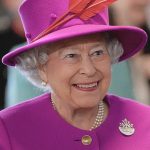
Tag: HM Queen Elizabeth II

  • Queen Elizabeth II – 1980 Christmas Broadcast

    Queen Elizabeth II – 1980 Christmas Broadcast

    The Christmas Broadcast made by HM Queen Elizabeth on 25 December 1980.

    I was glad that the celebrations of my mother’s 80th birthday last summer gave so much pleasure. I wonder whether you remember, during the Thanksgiving Service in St. Paul’s, the congregation singing that wonderful hymn “Immortal, Invisible, God only wise”.

    “Now give us we pray thee the Spirit of love,
    The gift of true wisdom that comes from above,
    The spirit of service that has naught of pride,
    The gift of true courage, and thee as our guide.”

    Did you catch the words of that hymn?

    “The spirit of service that has naught of pride,
    The gift of true courage, and thee as our guide.”

    The loyalty and affection, which so many people showed to my mother, reflected a feeling, expressed in many different ways, that she is a person who has given selfless service to the people of this country and of the Commonwealth.

    As I go about the country and abroad I meet many people who, all in their own ways, are making a real contribution to their community. I come across examples of unselfish service in all walks of life and in many unexpected places.

    Some people choose their occupation so that they can spend their lives in the service of their fellow citizens.

    We see doctors, nurses and hospital staff caring for the sick; those in the churches and religious communities; in central and local Government; in the armed services; in the police and in the courts and prisons; in industry and commerce.

    It is the same urge to make a contribution which drives those seeking the highest standards in education or art, in music or architecture.

    Others find ways to give service in their spare time, through voluntary organisations or simply on their own individual initiative contributing in a thousand ways to all that is best in our society.

    It may be providing company for the old and housebound; help for the disabled; care for the deprived and those in trouble; concern for neighbours or encouragement for the young.

    To all of you on this Christmas Day, whatever your conditions of work and life, easy or difficult; whether you feel that you are achieving something or whether you feel frustrated; I want to say a word of thanks.

    And I include all those who don’t realise that they deserve thanks and are content that what they do is unseen and unrewarded. The very act of living a decent and upright life is in itself a positive factor in maintaining civilised standards.

    We face grave problems in the life of our country, but our predecessors, and many alive today, have faced far greater difficulties, both in peace and war, and have overcome them by courage and calm determination. They never lost hope and they never lacked confidence in themselves or in their children.

    In difficult times we may be tempted to find excuses for self-indulgence and to wash our hands of responsibility. Christmas stands for the opposite. The Wise Men and the Shepherds remind us that it is not enough simply to do our jobs; we need to go out and look for opportunities to help those less fortunate than ourselves, even if that service demands sacrifice.

    It was their belief and confidence in God which inspired them to visit the stable and it is this unselfish will to serve that will see us through the difficulties we face.

    We know that the world can never be free from conflict and pain, but Christmas also draws our attention to all that is hopeful and good in this changing world; it speaks of values and qualities that are true and permanent and it reminds us that the world we would like to see can only come from the goodness of the heart.

    When you hear the bells ringing at Christmas, think of the lines written by Tennyson:

    “Ring out false pride in place and blood,
    The civic slander and the spite;
    Ring in the love of truth and right,
    Ring in the common love of good …

    Ring in the valiant man and free,
    The larger heart, the kindlier hand,
    Ring out the darkness of the land,
    Ring in the Christ that is to be.”

    To all of you, wherever you may be, I wish happiness this Christmas.

  • Queen Elizabeth II – 1981 Christmas Broadcast

    Queen Elizabeth II – 1981 Christmas Broadcast

    The Christmas Broadcast made HM Queen Elizabeth II on 25 December 1981.

    Last July we had the joy of seeing our eldest son married amid scenes of great happiness, which made 1981 a very special year for us. The wonderful response the wedding evoked was very moving.

    Just before that there had been a very different scene here in the garden at Buckingham Palace when three and a half thousand disabled people, with their families, came to tea with us.

    And, with members of my family, I have just met some more disabled people who came here to receive special cars which will give them the mobility they so desperately need. We handed over the keys of the new cars and also talked to handicapped people who have had their cars for some time.

    The International Year of Disabled People has performed a very real service by focusing our attention on their problems. We have all become more aware of them and I’m sure that many of you, like myself, have been impressed by the courage they show.

    There are, of course, many aspects of courage. There is the physical courage shown in war. Chesterton described it as “almost a contradiction in terms ….. a strong desire to live taking the form of a readiness to die”. It is sobering and inspiring to remember what man will do for an ideal in which he believes.

    Bravery of this kind is shown in peace as well as in war. The armed forces and the police are showing it every day. So are the fire services, ambulance drivers, members of the public and even children – and the courage of the bomb disposal experts fills us with awe. All around us we see these acts of selflessness, people putting the life of someone else before their own.

    Then there is perseverance, sticking to the job. This is how the disabled have learnt to cope with life, becoming better people in the process. Their courage in handling their difficulties and in many cases living an almost normal life, or making abnormal life normal, shows our own problems to be insignificant in comparison.

    It is not only the disabled who are showing day-to-day perseverance and courage. This Christmas we should remember especially: the people of Northern Ireland who are attempting to live ordinary lives in times of strain and conflict; the unemployed who are trying to maintain their self-respect without work and to care for their families; and those from other parts of the Commonwealth who have come to Britain to make new lives but have not yet found themselves fully accepted.

    Perhaps the greatest contribution of the disabled is to give the inspiration and incentive to do more to help others. From this we can gain the strength to try to do that little bit extra, as individuals, as members of our families and as nations.

    We have seen in 1981 how many individuals have devoted themselves to trying to make life more tolerable for handicapped people, by giving loving care and by providing money and effort to improve facilities and to hasten research.

    There are 450 million disabled people in the world, but wonderful work is being done in the prevention and cure of disablement. Diseases like polio and measles can be controlled by a very cheap multiple vaccine. In the last twelve years the Royal Commonwealth Society for the Blind has restored sight to over one million Commonwealth citizens.

    But throughout this century there have been great advances in the awakening of conscience and concern for our fellow human beings. Governments now regard it as their duty to try to protect their people, through social services, from the worst effects of illness, bereavement, joblessness and disability.

    We are also trying to reach beyond a nation’s responsibility for its own citizens. There is a wide disparity between the wealth of nations and I have found that there is a spirit of eagerness to redress this throughout the world.

    I have spoken of courage in its different forms and of the effect a display of courage can have on the world in which we live. Ultimately, however, we accept in our hearts that most important of all is moral courage.

    As human beings we generally know what is right and how we should act and speak. But we are also very aware of how difficult it is to have the courage of our convictions.

    Our Christian faith helps us to sustain those convictions. Christ not only revealed to us the truth in his teachings. He lived by what he believed and gave us the strength to try to do the same – and, finally, on the cross, he showed the supreme example of physical and moral courage.

    That sacrifice was the dawn of Christianity and this is why at Christmas time we are inspired by the example of Christ as we celebrate his birth.

    A few weeks ago I was sent this poem:

    “When all your world is torn with grief and strife
    Think yet – when there seems nothing left to mend
    The frail and time-worn fabric of your life,
    The golden thread of courage has no end.”

    So to you all I say – God bless you, and a very happy Christmas.

  • Queen Elizabeth II – 1982 Christmas Broadcast

    Queen Elizabeth II – 1982 Christmas Broadcast

    The Christmas Broadcast made by HM Queen Elizabeth II on 25 December 1982.

    It is fifty years since the BBC External Service was started and my grandfather King George V made the first Christmas Broadcast from Sandringham.

    Today I am speaking to you from the Library at Windsor Castle, in a room which was once occupied by Queen Elizabeth I. This is my home, where for many years now my family and I have celebrated Christmas.

    Within a few feet of where I am standing is the cliff, with its wonderful commanding view over the Thames, which led William the Conqueror to build a castle on this ideal defensive position – a castle which has to this day been the home of Kings and Queens.

    In October I was in Brisbane for the Commonwealth Games and then went by sea in BRITANNIA to visit a number of those beautiful Commonwealth island countries in the Pacific.

    At first sight, there does not appear to be much connection between a Norman castle, this Elizabethan gallery, the Commonwealth Games and the Pacific Islands. But in fact they are all linked by the sea.

    William became the Conqueror after invading England by sea. It was the voyages of discovery by the great seamen of Queen Elizabeth’s day which laid the foundations of modern trade; and to this day 90 per cent of it still goes by sea. Discovery and trade in their turn laid the foundations of the present-day Commonwealth. It was the development of ocean-going passenger vessels that allowed the peoples of the world to move about and to get to know each other.

    Such names as Drake, Anson, Frobisher, Cook, Vancouver and Phillip are familiar to people in widely different parts of the Commonwealth – while in Britain we owe our independence to the seamen who fought the Armada nearly 400 years ago and to Nelson and his band of brothers who destroyed Napoleon’s dreams of invasion.

    Nor could the great battles for peace and freedom in the first half of the twentieth century have been won without control of the seas.

    Earlier this year in the South Atlantic the Royal Navy and the Merchant Navy enabled our sailors, soldiers and airmen to go to the rescue of the Falkland Islanders 8,000 miles across the ocean; and to reveal the professional skills and courage that could be called on in defence of basic freedoms.

    Throughout history, seamen all over the world have shared a common experience and there is a special sense of brotherhood between merchant and naval seamen, fishermen, lifeboatmen and, more recently, yachtsmen.

    The navigators from the Pacific Islands, the fishermen of the Indian Ocean and China seas, and the men who man the oil rig supply ships in the North Atlantic have all learnt to come to terms with the varying moods of the seas and oceans.

    In much the same way, the members of the Commonwealth, which evolved from Britain’s seafaring history, have acquired an affinity through sharing a common philosophy of individual freedom, democratic government and the rule of law.

    It may not sound very substantial but when measured against the number and variety of inter-Commonwealth organisations and the multitude of commercial, medical, legal and sporting connections, it becomes clear that this common philosophy has had a very powerful influence for unity.

    Nothing could have demonstrated this unity more vividly than the immensely reassuring support given to Britain by the Commonwealth during the Falkland Islands crisis.

    But the Commonwealth reveals its strength in many different ways. Any of you who attended or watched the events at the Commonwealth Games at Brisbane cannot have failed to notice the unique atmosphere of friendly rivalry and the generous applause for all the competitors.

    In a world more concerned with argument, disagreement and violence, the Games stand out as a demonstration of the better side of human nature and of the great value of the Commonwealth as an association of free and independent nations.

    The Games also illustrated the consequences of the movement of peoples within the Commonwealth. Colour is no longer an indication of national origin. Until this century most racial and religious groups remained concentrated in their homelands but today almost every country of the Commonwealth has become multi-racial and multi-religious.

    This change has not been without its difficulties, but I believe that for those with a sense of tolerance the arrival and proximity of different races and religions have provided a much better chance for each to appreciate the value of the others.

    At this time of the year, Christians celebrate the birth of their Saviour, but no longer in an exclusive way. We hope that our greetings at Christmas to all people of religious conviction and goodwill will be received with the same understanding that we try to show in receiving the greetings of other religious groups at their special seasons.

    The poet John Donne said: “No man is an island, entire of itself; every man is a piece of the continent, a part of the main.” That is the message of the Commonwealth and it is also the Christian message.

    Christ attached supreme importance to the individual and he amazed the world in which he lived by making it clear that the unfortunate and the underprivileged had an equal place in the Kingdom of Heaven with the rich and powerful. But he also taught that man must do his best to live in harmony with man and to love his neighbours.

    In the Commonwealth, we are all neighbours and it is with this thought in mind that I wish you all, wherever you may be, the blessings of a happy and peaceful Christmas.

  • Queen Elizabeth II – 1983 Christmas Broadcast

    Queen Elizabeth II – 1983 Christmas Broadcast

    The Christmas Broadcast made by HM Queen Elizabeth II on 25 December 1983.

    In the year I was born, radio communication was barely out of its infancy; there was no television; civil aviation had hardly started and space satellites were still in the realm of science fiction. When my Grandfather visited India in 1911, it took three weeks by sea to get there.

    Last month I flew back from Delhi to London in a matter of hours. It took King George V three months to make the round trip. In two-thirds of that time Prince Philip and I were able to visit Jamaica, Mexico, the United States and Canada in the winter, followed by Sweden in the summer, and ending up in the autumn with Kenya, Bangladesh and finally India for the Commonwealth Heads of Government Meeting in New Delhi.

    Travel and communication have entered a completely new dimension. In Los Angeles I went to see the Space-shuttle which is playing such an important part in providing more and better international telecommunications.

    One of the tasks of that Space-shuttle was to launch an Indian telecommunications and weather satellite and last month I was able to see how this operated during our visit to an Earth Station in New Delhi.

    All this astonishing and very rapid development has changed the lives of almost everyone. Leaders and specialists can meet and discuss political and technical problems; news travels faster and there is more of it; new opportunities for world trade and commerce have been opened up by this communication revolution; perhaps more important, modern technology has touched most aspects of life throughout the world.

    We saw this in dramatic form in India. Twenty-two years ago I had seen something of the problems facing this vast country, but since then the population has grown from 440 million to over 700 million. Yet India has managed to become one of the ten or so leading industrial nations in the world and has become self-sufficient in food.

    But in spite of all the progress that has been made the greatest problem in the world today remains the gap between rich and poor countries and we shall not begin to close this gap until we hear less about nationalism and more about interdependence.

    One of the main aims of the Commonwealth is to make an effective contribution towards redressing the economic balance between nations.

    What we want to see is still more modern technology being used by poorer countries to provide employment and to produce primary products and components, which will be bought in turn by the richer countries at competitive prices.

    I have therefore been heartened by the real progress that is being made through the Commonwealth Technical Cooperation Fund and various exchange schemes. Britain and other richer Commonwealth countries run aid schemes and these are very important, but the key word for the Commonwealth is cooperation.

    There is a flow of experts in all directions, with Canadians helping in the Caribbean, Indians in Africa, New Zealanders in India, Australians in Papua New Guinea, British in Kenya. The list is endless. The web of contacts provided by the Commonwealth is an intricate pattern based on self help and cooperation.

    Yet in spite of these advances the age old problems of human communication are still with us. We have the means of sending and receiving messages, we can travel to meetings in distant parts of the world, we can exchange experts; but we still have difficulty in finding the right messages to send, we can still ignore the messages we don’t like to hear and we can still talk in riddles and listen without trying to comprehend.

    Perhaps even more serious is the risk that this mastery of technology may blind us to the more fundamental needs of people. Electronics cannot create comradeship; computers cannot generate compassion; satellites cannot transmit tolerance.

    And no amount of technology could have engineered the spirit of the Commonwealth that was so evident in Delhi or the frank, friendly and understanding communication that such a spirit makes possible.

    I hope that Christmas will remind us all that it is not how we communicate but what we communicate with each other that really matters.

    We in the Commonwealth are fortunate enough to belong to a world wide comradeship. Let us make the most of it; let us all resolve to communicate as friends in tolerance and understanding. Only then can we make the message of the angels come true: ‘Peace on earth, goodwill towards men’.

    I always look forward to being able to talk to everyone at Christmas time and at the end of another year I again send you all my warmest greetings.

  • Queen Elizabeth II – 1984 Christmas Broadcast

    Queen Elizabeth II – 1984 Christmas Broadcast

    The Christmas Broadcast made by HM Queen Elizabeth II on 25 December 1984.

    Last June, we celebrated the 40th anniversary of D-Day. That occasion in Normandy was a memorable one for all of us who were able to be there. It was partly a day of sadness, as we paid our respects to those who died for us, but it was also a day full of comradeship and hope.

    For me, perhaps the most lasting impression was one of thankfulness that the forty intervening years have been ones of comparative peace.

    The families of those who died in battle, and the veterans who fought beside them in their youth, can take comfort from the fact that the great nations of the world have contrived, sometimes precariously maybe, to live together without major conflict. The grim lessons of two world wars have not gone completely unheeded.

    I feel that in the world today there is too much concentration on the gloomy side of life, so that we tend to underestimate our blessings. But I think we can at least feel thankful that, in spite of everything, our children and grandchildren are growing up in a more or less peaceful world.

    The happy arrival of our fourth grandchild gave great cause for family celebrations. But for parents and grandparents, a birth is also a time for reflection on what the future holds for the baby and how they can best ensure its safety and happiness.

    To do that, I believe we must be prepared to learn as much from them as they do from us. We could use some of that sturdy confidence and devastating honesty with which children rescue us from self-doubts and self-delusions. We could borrow that unstinting trust of the child in its parents for our dealings with each other.

    Above all, we must retain the child’s readiness to forgive, with which we are all born and which it is all too easy to lose as we grow older. Without it, divisions between families, communities and nations remain unbridgeable. We owe it to our children and grandchildren to live up to the standards of behaviour and tolerance which we are so eager to teach them.

    One of the more encouraging developments since the war has been the birth of the Commonwealth. Like a child, it has grown, matured and strengthened, until today the vision of its future is one of increasing understanding and co-operation between its members.

    Notwithstanding the strains and stresses of nationalism, different cultures and religions and its growing membership, the Commonwealth family has still managed to hold together and to make a real contribution to the prevention of violence and discord.

    And it is not only in the Commonwealth that progress has been made towards a better understanding between nations. The enemies of 1944, against whom so many of our countrymen fought and died on those beaches in Normandy, are now our steadfast friends and allies.

    But friendship, whether we are talking of continents or next door neighbours, should not need strife as its forerunner.

    It is particularly at Christmas, which marks the birth of the Prince of Peace, that we should work to heal old wounds and to abandon prejudice and suspicion.

    What better way of making a start than by remembering what Christ said – “Except ye become as little children, ye shall not enter into the Kingdom of Heaven”.

    God bless you and a very happy Christmas to you all.

  • Queen Elizabeth II – 1985 Christmas Broadcast

    Queen Elizabeth II – 1985 Christmas Broadcast

    The Christmas Broadcast made by HM Queen Elizabeth II on 25 December 1985.

    Looking at the morning newspapers, listening to the radio and watching television, it is only too easy to conclude that nothing is going right in the world.

    All this year we seem to have had nothing but bad news with a constant stream of reports of plane crashes, earthquakes, volcanic eruptions and famine – and as if natural disasters were not enough, we hear of riots, wars, acts of terrorism and generally of man’s inhumanity to man.

    It used to be said that “no news is good news” but today you might well think that “good news is no news”.

    Yet there is a lot of good news and some wonderful things are going on in spite of the frightening headlines. Just think of the quiet courage and dedication of the peace-keepers and the rescue workers and all those who work so hard to restore shattered lives and disrupted communities.

    I am in the fortunate position of being able to meet many of these people, for every year some two thousand come to Investitures at Buckingham Palace to be honoured for acts of bravery or to be recognised for service to their fellow citizens.

    They come from all walks of life and they don’t blow their own trumpets; so unless, like me, you are able to read the citations describing what they have done, you could not begin to guess at some of the remarkable stories that lie behind their visits to the Palace.

    Among them there may be a really outstanding doctor who has worked for many years in a deprived area.

    Or a voluntary worker who has given nearly forty years of his life to campaigning for the disabled.

    Or a nurse, whose care for patients over thirty years is a splendid example of the work done by members of a dedicated profession.

    Or another volunteer, who has devoted a large part of her life to others in the service of the WRVS.

    Then there are those who have shown quite remarkable courage and devotion to duty. Only a few days ago I was talking to two firemen who had been called to deal with a blazing ship.

    They knew there were casualties below decks and despite the fact that both men were injured themselves, they risked the flames and smoke and further explosions and went below several times to bring the casualties to safety.

    These are not exceptional cases. Every Investiture brings stories of bravery and self-sacrifice, like the members of bomb-disposal teams whose cool courage saves so many lives.

    Naturally I see more such people in Britain, but as I often hold Investitures in other Commonwealth countries, I know that there are people making the same sort of good news all over the world.

    But while bravery and service to the community are recognised by honours and awards, there are many ways in which people can make good news. Success in industry and commerce, for instance, creates the wealth that provides so many of the things that make life happier and more comfortable.

    It is not just the big companies with household names; quite small companies with only a few members can make a very significant contribution to the prosperity of their communities.

    The people in Britain who have helped their companies to success also come to the Palace as winners of The Queen’s Awards for Export and Technology.

    For example, last year there was a firm with only five employees, who make darts and export them to no less than forty countries! They were so enterprising that they introduced the game of darts into places where it had never been played.

    Then there were the consulting engineers who won their Award for technological achievement for their ingenious work on the Thames Flood Barrier.

    A small Scottish firm with eighteen employees make a product so good that they have sold their heating systems even in the United States and West Germany.

    Another firm has scored a rare double with their magnets for medical scanners, winning both the Awards – for Export and for Technology.

    There are masses more, and it is encouraging to know that again next year there will be a new group coming to receive their awards, whose achievements will be just as ingenious and just as exciting. There are similar examples throughout the Commonwealth.

    These success stories are often pushed into the background but they are the guarantee of our future.

    Christmas is a time of good news. I believe it is a time to look at the good things in life and to remember that there are a great many people trying to make the world a better place, even though their efforts may go unrecognised.

    There is a lesson in this for us all and we should never forget our obligation to make our own individual contributions, however small, towards the sum of human goodness.

    The story of the Good Samaritan reminds us of our duty to our neighbour. We should try to follow Christ’s clear instruction at the end of that story: “Go and do thou likewise”.

    I wish you all a very happy Christmas and I hope that we shall all try to make some good news in the coming year.

  • Queen Elizabeth II – 1986 Christmas Broadcast

    Queen Elizabeth II – 1986 Christmas Broadcast

    The Christmas Broadcast made by HM Queen Elizabeth II on 25 December 1986.

    Every year a Christmas party is held for the children of the people living in the Mews of Buckingham Palace. Everyone seems to enjoy it. Father Christmas arrives and there is the usual build up of excitement and expectation among the children to see what he has brought with him in his sack.

    Even the horses in their stables are serenaded by the carol singers and seem to be aware that something quite special is happening – as they were on that happy day back in July when my son and daughter-in-law were married, and they drew the carriages through the cheerful crowds thronging the London streets.

    For the children at our Christmas party, the meeting with Father Christmas, and a ride in his sleigh, are perhaps the most exciting part of the evening.

    But I hope that a visit to the stables also helps to bring the traditional story alive for them. I hope it also helps them to realise how fortunate they are to have comfortable homes and warm beds to go to, unlike the Holy Family, who had to share with the animals because there was no room at the Inn.

    Christmas is a festival for all Christians, but it is particularly a festival for children. As we all know, it commemorates the birth of a child, who was born to ordinary people, and who grew up very simply in his own small home town and was trained to be a carpenter.

    His life thus began in humble surroundings, in fact in a stable, but he was to have a profound influence on the course of history, and on the lives of generations of his followers. You don’t have to be rich or powerful in order to change things for the better and each of us in our own way can make a contribution.

    The infant Jesus was fortunate in one very important respect. His parents were loving and considerate. They did their utmost to protect him from harm. They left their own home and became refugees, to save him from King Herod, and they brought him up according to the traditions of their faith.

    On this Birthday festival, which we try to make an occasion of happiness, we must not forget that there are some children who are victims of ill treatment and neglect.

    It is no easy task to care for and bring up children, whatever your circumstances – whether you are famous or quite unknown. But we could all help by letting the spirit of Christmas fill our homes with love and care and by heeding Our Lord’s injunction to treat others as you would like them to treat you.

    When, as the Bible says, Christ grew in wisdom and understanding, he began his task of explaining and teaching just what it is that God wants from us.

    The two lessons that he had for us, which he underlined in everything he said and did, are the messages of God’s love and how essential it is that we, too, should love other people.

    There are many serious and threatening problems in this country and in the world but they will never be solved until there is peace in our homes and love in our hearts.

    The message which God sent us by Christ’s life and example is a very simple one, even though it seems so difficult to put into practice.

    To all of you, of every faith and race, I send you my best wishes for a time of peace and tranquillity with your families at this Festival of Christmas. A very Happy Christmas to you all.

  • Queen Elizabeth II – 1987 Christmas Broadcast

    Queen Elizabeth II – 1987 Christmas Broadcast

    The Christmas Broadcast made by HM Queen Elizabeth II on 25 December 1987.

    Sooner or later we all become aware of the passing of the years, but every now and then we get a sharp reminder that time is moving on rather quicker than we expected.

    This happened to me last month when we celebrated our 40th wedding anniversary. I was very touched that so many of you were kind enough to send messages of good wishes.

    There is no point in regretting the passage of time. Growing older is one of the facts of life, and it has its own compensations. Experience should help us to take a more balanced view of events and to be more understanding about the foibles of human nature.

    Like everyone else, I learn about what is going on in the world from the media, but I am fortunate to have another source of information. Every day hundreds of letters come to my desk, and I make a point of reading as many of them as I possibly can.

    The vast majority are a pleasure to read. There are also sad ones from people who want help, there are interesting ones from people who want to tell me what they think abut current issues, or who have suggestions to make about changing the way things are done. Others are full of frank advice for me and my family and some of them do not hesitate to be critical.

    I value all these letters for keeping me in touch with your views and opinions, but there are a few letters which reflect the darker side of human nature.

    It is only too easy for passionate loyalty to one’s own country, race or religion, or even to one’s favourite football club, to be corroded into intolerance, bigotry and ultimately into violence.

    We have witnessed some frightening examples of this in recent years. All too often intolerance creates the resentment and anger which fill the headlines and divide communities and nations and even families.

    From time to time we also see some inspiring examples of tolerance. Mr Gordon Wilson, whose daughter Marie lost her life in the horrifying explosion at Enniskillen on Remembrance Sunday, impressed the whole world by the depth of his forgiveness.

    His strength, and that of his wife, and the courage of their daughter, came from their Christian conviction. All of us will echo their prayer that out of the personal tragedies of Enniskillen may come a reconciliation between the communities.

    There are striking illustrations of the way in which the many different religions can come together in peaceful harmony. Each year I try to attend the Commonwealth Day inter-faith Observance at Westminster Abbey. At that service all are united in their willingness to pray for the common good.

    This is a symbol of mutual tolerance and I find it most encouraging. Of course it is right that people should hold their beliefs and their faiths strongly and sincerely, but perhaps we should also have the humility to accept that, while we each have a right to our own convictions, others have a right to theirs too.

    I am afraid that the Christmas message of goodwill has usually evaporated by the time Boxing Day is over. This year I hope we will continue to remember the many innocent victims of violence and intolerance and the suffering of their families. Christians are taught to love their neighbours, not just at Christmas, but all the year round.

    I hope we will all help each other to have a happy Christmas and, when the New Year comes, resolve to work for tolerance and understanding between all people.

    Happy Christmas to you all.

  • Queen Elizabeth II – 1988 Christmas Broadcast

    Queen Elizabeth II – 1988 Christmas Broadcast

    The Christmas Broadcast made by HM Queen Elizabeth II on 25 December 1988.

    In the year just past, Prince Philip and I have joined in the celebration of some notable anniversaries. The events which they marked were hundreds of years apart, but each was important enough to get much attention in 1988.

    The earliest event which we remembered was the encounter with the Spanish Armada in 1588. The 400th anniversary fell in the same year in which we were able to mark the happy relations between Britain and Spain which now exist, by our State Visit to Madrid.

    Four hundred years after ‘the winds blew’ and the Spanish ships were scattered, the events were remembered, without animosity, in both countries.

    These prints from the Royal Library at Windsor illustrate the battles and some of the great fleet which gathered. This year, the present King of Spain showed me the rooms in the Escorial, where his predecessor, Philip the Second, planned the campaign. Had the fortunes of war gone against us, how very differently events in Britain and Europe would have unfolded.

    Earlier in the year, we marked another event of the first importance in our history – the 300th anniversary of what is popularly known as the Glorious Revolution.

    The invitation to King William and Queen Mary to accept the thrones of England and Scotland finally laid to rest the ‘enterprise of England’ which Philip of Spain set in hand.

    It thus gave the particular direction to our history which was to lead to the development of parliamentary democracy and the tradition of political and religious toleration which Britain enjoys today.

    It was a great pleasure for us to celebrate that event in the company of the Crown Prince of the Netherlands. Together we visited Torbay – which was where King William landed in 1688.

    It was shrouded with fog when we were there, but we did manage to see through the mist some of the hundreds of British and Dutch yachts that had assembled there.

    Three hundred years may seem a long time ago, but there are still some objects here in Buckingham Palace which bring to life William and Mary as people – and one which I particularly treasure is this little patch box that belonged to The Queen and which caries her monogram entwined with William’s on the lid.

    The 1988 anniversary season opened in Australia – with a grand party on Australia Day to mark the country’s 200th birthday. It was a party which went on for most of the year, but Prince Philip and I joined in the festivities in April and May.

    Like so many visitors in Bicentennial year, we brought home some souvenirs of our visit. In our case it was some delightful early prints of Sydney, which served to remind us of the extraordinary developments which have taken place in Australia in the short space of two hundred years.

    Contrast this scene of Sydney Harbour with the pictures we all saw of the crowded waters around the Opera House and the famous bridge in January this year.

    Centenaries may seem rather arbitrary occasions, but they nonetheless prompt us to look back into the past. When we do so, we can draw hope from seeing how ancient enmities have vanished; and how new nations have grown and established themselves in vigour and wisdom.

    Equally, they make us reflect on injustices and tragedies and inspire us to do our best to learn from these as well.

    To do that, we surely should draw inspiration from one other anniversary – the one we celebrate every year at this time, the birth of Christ.

    There are many grand and splendid pictures in the Royal Collection that illustrate this event, but one which gives me particular pleasure is this precious, almost jewel-like book.

    It is a ‘Book of Hours’, full of prayers and devotional readings. It’s in Latin, but it contains the most exquisite illuminations and it is these that speak to us most movingly.

    The anonymous person who drew the pictures nearly five hundred years ago has included all the familiar elements of the Christmas story which we hear with such pleasure every year.

    Here are the angels, bringing the glad tidings to the shepherds, who listen attentively. Down here, where baby Jesus lies in the stall, you can see Mary and Joseph, watching over him, quite unmoved, it seems, by the man playing the bagpipes overhead.

    The star over the stable has lit the way for all of us ever since, and there should be no one who feels shut out from that welcoming and guiding light. The legends of Christmas about the ox and the ass suggest that even the animals are not outside that loving care.

    Recently, many of you will have set up and decorated a Christmas tree in your homes. Often these are put by a window and the bright and shining tree is there for every passer-by to see and share. I like to think that if someone who feels lonely and unloved should see such a tree, that person might feel: ‘It was meant for me’.

    May the Christmas story encourage you, for it is a message of hope every year, not for a few, but for all.

    So in sending you my Christmas greeting, I pray that God may bless you – every one.

    As you probably all know, my Christmas Broadcast has to be recorded well before Christmas Day so that it can be made available to radio and television stations throughout the Commonwealth.

    Since I made that recording this year, we have all been shocked and distressed by a series of major disasters: here in Britain, the worst air crash in our history at Lockerbie and a serious train accident at Clapham; and in Armenia, a terrible earthquake.

    All three came with great suddenness and destroyed the lives of many people who were looking forward to celebrating Christmas with their families and friends. So there are many homes today where the joy of Christmas has been darkened by a cloud of sadness and grief.

    Our hearts and prayers go out to those who have been injured or bereaved, and it is my hope that the eternal message of Christmas will bring some comfort in the hour of sadness.

  • Queen Elizabeth II – 1989 Christmas Broadcast

    Queen Elizabeth II – 1989 Christmas Broadcast

    The Christmas Broadcast made by HM Queen Elizabeth II on 25 December 1989.

    I usually make my Christmas Broadcast to the Commonwealth from Windsor or Buckingham Palace.

    This year I thought I would use the presence of two thousand children at this occasion organised by Save the Children Fund in the Albert Hall, here in the heart of London, to send this special message to the children of the Commonwealth.

    Those of you present are the immediate audience for my broadcast, but I am also speaking by radio and television to people throughout the world.

    All parents would like their children to grow up in peace and tranquillity, but for most of this century the people of this world have had to live through bewildering changes and upheavals. Some of the changes have been for the better, but others might even threaten the world we live in.

    There are some children who are much less fortunate than others, for they come from countries where nature makes life very hard, with floods and droughts and other disasters destroying crops, making it very difficult to find enough for everyone to eat. Quite a lot of you have written to me during the last year or so, saying how worried you are about the future of our planet.

    Many of you will have heard of the greenhouse effect, and perhaps you’ve heard too about even more urgent problems caused by the pollution of our rivers and seas and the cutting down of the great forests. These problems don’t affect just the countries where they are happening and they make neighbourly co-operation throughout the world a pressing necessity.

    With all your lives before you, I am sure that you take an optimistic view of the future. But it is already too late to prevent all forms of damage to the natural world. Some species of wild plants and animals are, sadly, bound to become extinct. But the great thing to remember is that it is not too late to reduce the damage if we change attitudes and behaviour.

    You’ve all seen pictures of the earth taken from space. Unlike all the other planets in the solar system, earth shimmers green and blue in the sunlight and looks a very pleasant place to live.

    These pictures should remind us that the future of all life on earth depends on how we behave towards one another, and how we treat the plants and the animals that share our world with us.

    Men and women have shown themselves to be very clever at inventing things, right back to the time when they found out how much easier it was to move things about on wheels, up to the present time when rockets and computers make it possible for people to travel away from our world into the mystery of space.

    But these technical skills are not enough by themselves. They can only come to the rescue of the planet if we also learn to live by the golden rule which Jesus Christ taught us – “love thy neighbour as thyself”.

    Many of you will have heard the story of the Good Samaritan, and of how Christ answered the question (from a clever lawyer who was trying to catch him out) “who is my neighbour?”.

    Jesus told of the traveller who was mugged and left injured on the roadside where several important people saw him, and passed by without stopping to help.

    His neighbour was the man who did stop, cared for him, and made sure he was being well looked after before he resumed his own journey.

    It’s not very difficult to apply that story to our own times and to work out that our neighbours are those of our friends, or complete strangers, who need a helping hand. Do you think they might also be some of the living species threatened by spoiled rivers, or some of the children in places like Ethiopia and Sudan who don’t have enough to eat?

    The exciting news of the last few months has been the way in which people in both East and West Europe have begun to think about the future in a less unfriendly way – more as neighbours.

    It’s still hard for us to be sure what is going to happen as a result of these great events, but it would be splendid to think that in the last years of the twentieth century Christ’s message about loving our neighbours as ourselves might at last be heeded.

    If it is, they’ll be good years for you to grow up in. If we can reduce selfishness and jealousy, dishonesty and injustice, the nineties can become a time of peace and tranquillity for children and grown-ups, and a time for working together for the benefit of our planet as a whole.

    You children have something to give us which is priceless. You can still look at the world with a sense of wonder and remind us grown-ups that life is wonderful and precious. Often a child’s helplessness and vulnerability bring out the best in us.

    Part of that ‘best in us’ could be a particular tenderness towards this earth which we share as human beings, all of us, and, together, as the nations of the world, will leave to our children and our children’s children. We must be kind to it for their sake.

    In the hope that we will be kind and loving to one another, not just on Christmas Day, but throughout the year, I wish you all a very Happy Christmas. God bless you.