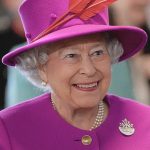
Tag: HM Queen Elizabeth II

  • Queen Elizabeth II – 1970 Christmas Broadcast

    Queen Elizabeth II – 1970 Christmas Broadcast

    The Christmas Broadcast made by HM Queen Elizabeth II on 25 December 1970.

    Every year we are reminded that Christmas is a family festival; a time for reunion and a meeting point for the generations.

    This year I am thinking of rather a special family – a family of nations – as I recall fascinating journeys to opposite ends of the world.

    During the course of these visits we met and talked with a great number of people in every sort of occupation, and living in every kind of community and climate. Yet in all this diversity they had one thing in common: they were all members of the Commonwealth family.

    Early this year we went to Fiji, Tonga, New Zealand and Australia in Britannia. We were following the path taken in 1770 by that great English discoverer, Captain Cook.

    A little later in the year we were in Canada, still in the Commonwealth, visiting the North-west Territories and Manitoba for their centenaries.

    Among people who are so essentially New Zealanders, Canadians or Australians, it struck me again that so many of them still have affectionate and personal links with the British Isles.

    Wherever I went among people living in the busy industrial towns or on the stations and farms of the far outback, I met newcomers who reminded me that these links between our countries are renewed every year.

    In Canada we met some of the older inhabitants – Indians – people whose ancestors were there for generations before the Europeans came. And further north still live the Eskimos, some of the most interesting people that we met during our travels this year. They too belong to the Commonwealth family, this remarkable collection of friendly people of so many races.

    Later in the year, representatives from 42 different parts of the world gathered to attend the Commonwealth Games. There are many unpublicised meetings, but it is not often that the Commonwealth is able to get together for a great public ceremony.

    On this occasion it was sport that brought them to Scotland, and they came to compete and to enjoy themselves. We entertained them all in the garden of our home in Edinburgh, and I was very conscious that each of the athletes I met represented a country as different and interesting as those I had been able to visit during the year.

    Never before has there been a group of independent nations linked in this way by their common history and continuing affection.

    Too often we hear about the Commonwealth only when there is bad news about one of its members, or when its usefulness or its very existence is questioned. Britain and other members responded generously after the terrible disaster in East Pakistan, but the fellowship of the Commonwealth does not exist only at such unhappy times.

    Many of us here in Britain have relatives living in other Commonwealth countries, and there are many who were born overseas living here. Because it is Christmas we are probably thinking of them now. It is these personal contacts which mean so much.

    The strength of the Commonwealth lies in its history and the way people feel about it. All those years through which we have lived together have given us an exchange of people and ideas which ensures that there is a continuing concern for each other.

    That, very simply, is the message of Christmas – learning to be concerned about one another; to treat your neighbour as you would like him to treat you; and to care about the future of all life on earth.

    These matters of the spirit are more important and more lasting than simple material development. It is a hard lesson, but I think that we in the Commonwealth have perhaps begun to understand it.

    I wish you all a merry Christmas. God bless you all.

  • Queen Elizabeth II – 1971 Christmas Broadcast

    Queen Elizabeth II – 1971 Christmas Broadcast

    The Christmas Broadcast made by HM Queen Elizabeth II on 25 December 1971.

    Christmas is the time for families and for children, and it’s also a time when we realise that another year is coming to an end.

    As the familiar pattern of Christmas and the New Year repeats itself, we may sometimes forget how much the world about us has been changing.

    It was 39 years ago that my grandfather, King George V, gave the first of his Christmas Broadcasts. He spoke about a future which is now the past. Today it is our turn to think about the future.

    Many of you who are listening are able, like me, to enjoy this Christmas with your families, and your children can enjoy the day as all children should. But tragically, there are many millions of others for whom this cannot be the same. Our thoughts and prayers should be for them.

    Our children will be living in a world which our work and deeds have shaped for them. We cannot possibly tell what changes the next 40 years will bring. We do know that we are passing on to our children the power to change their whole environment.

    But we also leave them with a set of values which they take from our lives and from our example. The decisions they take and the sort of world they pass on to their children could be just as much affected by those values as by all the technological wonders of the age.

    The Christmas message is really one for all seasons and not just for one day of the year. If we can show this by our lives and by our example, then our contribution as parents will be just as important as any made by scientists and engineers.

    Perhaps we can then look for the real peace on earth, and the powers which men have harnessed will be used for the benefit of our fellow men.

    I hope this Christmas Day is bringing to many of you peace and happiness, and for everyone the hope of this to come. May God bless you all.

  • Queen Elizabeth II – 1972 Christmas Broadcast

    Queen Elizabeth II – 1972 Christmas Broadcast

    The Christmas Broadcast made by HM Queen Elizabeth II on 25 December 1972.

    My whole family has been deeply touched by the affection you have shown to us when we celebrated our Silver Wedding, and we are especially grateful to the many thousands who have written to us and sent us messages and presents.

    One of the great Christian ideals is a happy and lasting marriage between man and wife, but no marriage can hope to succeed without a deliberate effort to be tolerant and understanding. This doesn’t come easily to individuals and it certainly doesn’t come naturally to communities or nations.

    We know only too well that a selfish insistence upon our rights and our own point of view leads to disaster. We all ought to know by now that a civilised and peaceful existence is only possible when people make the effort to understand each other.

    Looking at the world, one might be forgiven for believing that many people have never heard of this simple idea. Every day there are reports of violence, lawlessness, and the disregard for human life.

    Most of this is excused on purely selfish grounds. I know there are millions of kindly people throughout the world who are saddened with me for all those who suffer from these outrages.

    In the United Kingdom we have our own particular sorrows in Northern Ireland and I want to send a special message of sympathy to all those men, women and children who have suffered and endured so much.

    But there is a light in this tragic situation. The people are steadfastly carrying on their ordinary business in their factories and places of work.

    Voluntary workers, both in and out of uniform, have struggled to keep humanity and commonsense alive. The social services have done their job magnificently. The forces of law and order continue their thankless task with the utmost fortitude in the face of appalling provocation.

    We must admire them greatly for their patience and restraint.

    I ask you all to join me in praying that the hearts and minds of everyone in that troubled Province may be touched with the spirit of Christmas and the message of brotherhood, peace and goodwill. May tolerance and understanding release the people from terror and put gladness in the place of fear.

    But I am speaking today to all the peoples of the Commonwealth. In this unique organisation, we are fortunate in having endless opportunities for co-operation.

    Through its informal structure we have created a web of relationships between peoples of many races and creeds and now between a great number of sovereign independent states.

    I have visited almost all of the 32 independent Commonwealth countries, and we are looking forward to going back to Canada and Australia next year. I know from this personal experience how much the Commonwealth is valued by its members.

    Britain is about to join her neighbours in the European Community and you may well ask how this will affect the Commonwealth.

    The new links with Europe will not replace those with the Commonwealth. They cannot alter our historical and personal attachments with kinsmen and friends overseas. Old friends will not be lost; Britain will take her Commonwealth links into Europe with her.

    Britain and these other European countries see in the Community a new opportunity for the future. They believe that the things they have in common are more important than the things which divide them, and that if they work together not only they, but the whole world will benefit.

    We are trying to create a wider family of Nations and it is particularly at Christmas that this family should feel closest together.

    Christmas is above all a time of new life. A time to look hopefully ahead to a future when the problems which face the world today will be seen in their true perspective.

    I leave with you the old message, “On earth peace; goodwill toward men”. No one has ever offered a better formula and I hope that its simple truth may yet take hold of the imagination of all mankind.

    God bless you and a happy Christmas to you all.

  • Queen Elizabeth II – 1973 Christmas Broadcast

    Queen Elizabeth II – 1973 Christmas Broadcast

    The Christmas Broadcast made by HM Queen Elizabeth II on 25 December 1973.

    It is now 21 years since I first broadcast a Christmas Message to the Commonwealth. Then our two elder children were only four and two.

    Now, our daughter joins us for Christmas with her husband and we are celebrating the festival this year with the memories of their wedding very much in our minds.

    We are constantly being told that we live in a changing world and that we need to adapt to changing conditions. But this is only part of the truth and I am sure that all parents seeing their children getting married are reminded of the continuity of human life.

    That is why, I think, that at weddings all friends and relations, and even complete strangers, can stop worrying for a moment and share in the happiness of the couple who are getting married.

    I am glad that my daughter’s wedding gave such pleasure to so many people just at a time when the world was facing very serious problems.

    People all over the world watched the wedding on television, but there were still many in London on the day, and their warmth and enthusiasm ensured it was an occasion my family will never forget.

    Earlier this year, I went to Canada for a different sort of ‘family occasion’. This was the meeting of Commonwealth Heads of Government, and here, I was reminded of the importance of human relationships in world affairs, and how membership of the Commonwealth has a subtle influence on the relationships between its leaders.

    I was impressed by the spirit which brought together so many leaders from such different countries, and enabled them to discuss constructively matters which concern us all as friends.

    Those of you who are surrounded by friends – or, of course, who are members of a happy family – know this makes life much easier.

    Everything – the good and the bad – can be shared, but it is too easy for us to forget those who are not so fortunate.

    However, there are many people of all ages who go out to help the old and the lonely, the sick and the handicapped. I am sure that, in so doing, they find the real happiness that comes from serving and thinking of others.

    I believe that Christmas should remind us that the qualities of the human spirit are more important than material gain. Christ taught love and charity and that we should show humanity and compassion at all times and in all situations.

    A lack of humanity and compassion can be very destructive – how easily this causes diversions within nations and between nations. We should remember instead how much we have in common and resolve to give expression to the best of our human qualities, not only at Christmas, but right through the year.

    In this Christmas spirit let us greet all our fellow men and join together in this festival of tolerance and companionship.

    I wish you all a very happy Christmas.

  • Queen Elizabeth II – 1974 Christmas Broadcast

    Queen Elizabeth II – 1974 Christmas Broadcast

    The Christmas Broadcast made by HM Queen Elizabeth II on 25 December 1974.

    There can be few people in any country of the Commonwealth who are not anxious about what is happening in their own countries or in the rest of the world at this time.

    We have never been short of problems, but in the last year everything seems to have happened at once. There have been floods and drought and famine: there have been outbreaks of senseless violence. And on top of it all the cost of living continues to rise – everywhere.

    Here in Britain, from where so many people of the Commonwealth came, we hear a great deal about our troubles, about discord and dissension and about the uncertainty of our future.

    Perhaps we make too much of what is wrong and too little of what is right. The trouble with gloom is that it feeds upon itself and depression causes more depression.

    There are indeed real dangers and there are real fears and we will never overcome them if we turn against each other with angry accusations.

    We may hold different points of view but it is in times of stress and difficulty that we most need to remember that we have much more in common than there is dividing us.

    We have the lessons of history to show that the British people have survived many a desperate situation when they acted together.

    People in a crowd may seem oblivious of each other. Yet if you look at your neighbours you will see other people with worries and difficulties probably greater than your own. It is time to recognise that in the end we all depend upon each other and that we are therefore responsible for each other.

    Fortunately over the centuries we have devised a way of sharing this responsibility, a uniquely effective system for bringing progress out of conflict.

    We have developed Parliamentary Government by which the rights and freedom of the people are maintained. It allows change to take place temperately and without violence. And when time demands, it can reflect and give a voice to the determination and resolve of the Nation.

    This system, this product of British genius, has been successfully exported to the world wide Commonwealth.

    This year I have opened Parliament four times: in New Zealand, in Australia, and twice the Mother of Parliaments in Westminster. I suspect this may be a record, but what impressed me was that the system itself flourishes thousands of miles away and this alone should give us confidence.

    You may be asking what can we do personally to make things better?

    I believe the Christmas message provides the best clue. Goodwill is better than resentment, tolerance is better than revenge, compassion is better than anger, above all a lively concern for the interests of others as well as our own.

    In times of doubt and anxiety the attitudes people show in their daily lives, in their homes, and in their work, are of supreme importance.

    It is by acting in this spirit that every man, woman and child can help and ‘make a difference’.

    In Britain I am sure it could make all the difference. We are an inventive and tenacious people and the comradeship of adversity brings out the best in us. And we have great resources, not just those of character but in our industry and trade, in our farms and in the seas around our shores.

    My message today is one of encouragement and hope.

    Christmas on this side of the equator comes at the darkest time of the year: but we can look forward hopefully to lengthening days and the returning sun.

    The first Christmas came at a time that was dark and threatening, but from it came the light of the world.

    I wish you all a happy Christmas.

  • Queen Elizabeth II – 1975 Christmas Broadcast

    Queen Elizabeth II – 1975 Christmas Broadcast

    The Christmas Broadcast made by HM Queen Elizabeth II on 25 December 1975.

    Every year I have this special opportunity of wishing you a happy Christmas. I like to think I am speaking to each child who can see or hear me, each woman, each man in every country of the Commonwealth.

    Christmas is a festival which brings us together in small groups, a family group if we are lucky. Today we are not just nameless people in a crowd. We meet as friends who are glad to be together and who care about each other’s happiness.

    Nowadays this is a precious experience. So much of the time we feel that our lives are dominated by great impersonal forces beyond our control, the scale of things and organisations seems to get bigger and more inhuman.

    We are horrified by brutal and senseless violence, and above all the whole fabric of our lives is threatened by inflation, the frightening sickness of the world today.

    Then Christmas comes, and once again we are reminded that people matter, and it is our relationship with one another that is most important.

    For most of us – I wish it could be for everyone – this is a holiday, and I think it’s worth reminding ourselves why. We are celebrating a birthday – the birthday of a child born nearly 2,000 years ago, who grew up and lived for only about 30 years.

    That one person, by his example and by his revelation of the good which is in us all, has made an enormous difference to the lives of people who have come to understand his teaching. His simple message of love has been turning the world upside down ever since. He showed that what people are and what they do, does matter and does make all the difference.

    He commanded us to love our neighbours as we love ourselves, but what exactly is meant by ‘loving ourselves’? I believe it means trying to make the most of the abilities we have been given, it means caring for our talents.

    It is a matter of making the best of ourselves, not just doing the best for ourselves.

    We are all different, but each of us has his own best to offer. The responsibility for the way we live life with all its challenges, sadness and joy is ours alone. If we do this well, it will also be good for our neighbours.

    If you throw a stone into a pool, the ripples go on spreading outwards. A big stone can cause waves, but even the smallest pebble changes the whole pattern of the water. Our daily actions are like those ripples, each one makes a difference, even the smallest.

    It does matter therefore what each individual does each day. Kindness, sympathy, resolution, and courteous behaviour are infectious. Acts of courage and self-sacrifice, like those of the people who refuse to be terrorised by kidnappers or hijackers, or who defuse bombs, are an inspiration to others.

    And the combined effect can be enormous. If enough grains of sand are dropped into one side of a pair of scales they will, in the end, tip it against a lump of lead.

    We may feel powerless alone but the joint efforts of individuals can defeat the evils of our time. Together they can create a stable, free and considerate society.

    Like those grains of sand, they can tip the balance. So take heart from the Christmas message and be happy.

    God bless you all.

  • Queen Elizabeth II – 1976 Christmas Broadcast

    Queen Elizabeth II – 1976 Christmas Broadcast

    The Christmas Broadcast made by HM Queen Elizabeth II on 25 December 1976.

    Christmas is a time for reconciliation. A time not only for families and friends to come together but also for differences to be forgotten.

    In 1976 I was reminded of the good that can flow from a friendship that is mended. Two hundred years ago the representatives of the thirteen British Colonies in North America signed the Declaration of Independence in Philadelphia.

    This year we went to America to join in their Bicentennial celebrations. Who would have thought 200 years ago that a descendent of King George III could have taken part in these celebrations? Yet that same King was among the first to recognise that old scores must be settled and differences reconciled, and the first United States Ambassador to Britain declared that he wanted “the old good nature and the old good humour restored”.

    And restored they were. The United States was born in bitter conflict with Britain but we didn’t remain enemies for long. From our reconciliation came incalculable benefits to mankind and a partnership which, together with many countries of the Commonwealth, was proved in two world wars and ensured that the light of liberty was not extinguished.

    King George III never saw the Colonies he lost. My father, King George VI, was the first British Sovereign to see the famous skyline of Manhattan and to visit the rich and vibrant country that lies beyond it.

    Wherever we went the welcome was the same, all the way to Boston, where the first shots in the war between Britain and America were fired.

    Reconciliation, like the one that followed the American War of Independence, is the product of reason, tolerance and love, and I think that Christmas is a good time to reflect on it.

    It is easy enough to see where reconciliation is needed and where it would heal and purify, obviously in national and international affairs, but also in homes and families.

    It is not something that is easy to achieve. But things that are worthwhile seldom are, so it is encouraging to know that there are many people trying to achieve it.

    A few weeks ago, for instance, I met in my home a group of people who are working for better understanding between people of different colour, different faiths and different philosophies – and who are trying to solve the very real problems of community relations.

    Another shining example is the peace movement in Northern Ireland. Here Roman Catholics and Protestants have joined together in a crusade of reconciliation to bring peace to the Province.

    Next year is a rather special one for me and I would like my Silver Jubilee year also to become a special one for people who find themselves the victims of human conflict.

    The gift I would most value next year is that reconciliation should be found wherever it is needed. A reconciliation which would bring peace and security to families and neighbours at present suffering and torn apart.

    Remember that good spreads outwards and every little does help. Mighty things from small beginnings grow as indeed they grew from the small child of Bethlehem.

    I believe there is another thought from which we can draw encouragement. If there is reconciliation – if we can get the climate right – the good effects will flow much more quickly than most people would believe possible.

    Those who know the desert know also how quickly it can flower when the rains come. But who in Britain who saw the parched earth and empty reservoirs last summer would have believed that the grass would grow so strong, so green and so soon when the drought ended? When the conflict stops, peace can blossom just as quickly.

    I wish you all a very happy Christmas and may the New Year bring reconciliation between all people.

  • Queen Elizabeth II – 1977 Christmas Broadcast

    Queen Elizabeth II – 1977 Christmas Broadcast

    The Christmas Broadcast made by HM Queen Elizabeth II on 25 December 1977.

    I shall never forget the scene outside Buckingham Palace on Jubilee Day. The cheerful crowd was symbolic of the hundreds of thousands of people who greeted us wherever we went in this Jubilee Year – in twelve Commonwealth countries and thirty-six counties in the United Kingdom.

    But I believe it also revealed to the world that we can be a united people. It showed that all the artificial barriers which divide man from man and family from family can be broken down.

    The street parties and village fêtes, the presents, the flowers from the children, the mile upon mile of decorated streets and houses; these things suggest that the real value and pleasure of the celebration was that we all shared in it together.

    Last Christmas I said that my wish for 1977 was that it should be a year of reconciliation. You have shown by the way in which you have celebrated the Jubilee that this was not an impossible dream. Thank you all for your response.

    Nowhere is reconciliation more desperately needed than in Northern Ireland. That is why I was particularly pleased to go there. No one dared to promise an early end to the troubles but there is no doubt that people of goodwill in Northern Ireland were greatly heartened by the chance they had to share the celebrations with the rest of the nation and Commonwealth.

    Many people in all parts of the world have demonstrated this goodwill in a practical way by giving to the Silver Jubilee Appeal. The results of their kindness will be appreciated by young people – and by those they are able to help – for many years to come.

    The great resurgence of community spirit which has marked the celebrations has shown the value of the Christian ideal of loving our neighbours. If we can keep this spirit alive, life will become better for all of us.

    The Jubilee celebrations in London started with a Service of Thanksgiving in St. Paul’s Cathedral. To me this was a thanksgiving for all the good things for which our Commonwealth stands – the comradeship and co-operation it inspires and the friendship and tolerance it encourages. These are the qualities needed by all mankind.

    The evening before the Service I lit one small flame at Windsor and a chain of bonfires spread throughout Britain and on across the world to New Zealand and Australia.

    My hope this Christmas is that the Christian spirit of reconciliation may burn as strongly in our hearts during the coming year.

    God bless you and a very happy Christmas to you all.

  • Queen Elizabeth II – 1978 Christmas Broadcast

    Queen Elizabeth II – 1978 Christmas Broadcast

    The Christmas Broadcast made by HM Queen Elizabeth II on 25 December 1978.

    At Christmas, we look back nearly 2000 years to an event which was to bring new hope and new confidence to all subsequent generations.

    The birth of Christ gave us faith in the future and as I read through some earlier Christmas Broadcasts, I was struck by the way that this same idea – faith in the future – kept recurring.

    My grandfather, King George V, started the tradition of the Christmas Day Broadcasts back in 1932. As he spoke from his study at Sandringham, the ‘wireless’ – as we used to call it – made it possible for millions of people throughout the world to hear the voice of the Sovereign for the first time. And in that first broadcast, they heard him talk about the future – as he saw in 1932.

    Voice of King George V (1932)
    It may be that our future will lay upon us more than one stern test. Our past will have taught us how to meet it unshaken. For the present, the work to which we are all equally bound is to arrive at a reasoned tranquillity within our borders; to regain prosperity without self-seeking; and to carry with us those whom the burden of past years has disheartened or overborne.

    My father, King George VI, developed this theme of optimism and hope, even during the most difficult years of his reign.

    On Christmas Day 1939, just after the outbreak of the Second World War, he spoke the words that many of you listening today will remember well.

    Voice of King George VI (1939)
    I feel that we may all find a message of encouragement in the lines which, in my closing words, I would like to say to you:- “I said to the man who stood at the Gate of the Year, ‘Give me a light that I may tread safely into the unknown’. And he replied, ‘Go out into the darkness and put your hand into the Hand of God. That shall be to you better than light and safer than a known way.’”

    At the end of the war in Europe, there was rejoicing everywhere, although beneath it all the problems of the world were only too evident. But on Christmas Day 1945, my father expressed undiminished hope and trust in the future.

    Voice of King George VI (1945)
    Have faith in life at its best and bring to it your courage, your hopes and your sense of humour. For merriment is the birthright of the young. But we can all keep it in our hearts as life goes on, if we hold fast by the spirit that refuses to admit defeat; by the faith that never falters; by the hope that cannot be quenched. Let us have no fear of the future but think of it as opportunity and adventure.

    The optimism of that Christmas message is timeless. When it first fell to me to carry on the tradition that my grandfather and father had developed, I reaffirmed what I knew had been their deeply held beliefs in the future, beliefs which I myself share. This is what I said on Christmas Day 1952.

    The Queen’s voice (1952)
    Many grave problems and difficulties confront us all, but with a new faith in the old and splendid beliefs given us by our forefathers and the strength to venture beyond the safeties of the past, I know we shall be worthy of our duty.

    By 1957 television was a feature of most homes and for the first time the broadcast was televised. That year I spoke on Christmas Day of the qualities needed to sustain our faith in the future.

    The Queen’s voice (1957)
    Today we need a special kind of courage but not the kind needed in battle but a kind which makes us stand up for everything that we know is right, everything that is true and honest. We need the kind of courage that can withstand the subtle corruption of the cynics so that we can show the world that we are not afraid of the future.

    You have heard three generations talking about the future. My grandfather couldn’t have known what was in store for his grandchildren; yet his faith in the future gave him a quiet confidence that the stern tests would be overcome.

    And so it has proved. My father watched his grandchildren take their first steps and he knew that all the sacrifices and anxiety of the dark days of the War had been worthwhile.

    Now it is our turn to work for a future which our grandchildren will step into one day. We cannot be certain what lies ahead for them but we should know enough to put them on the right path.

    We can do this if we have the good sense to learn from the experience of those who have gone before us and to hold on to all the good that has been handed down to us in trust.

    Look around at your families as you are gathered together for Christmas. Look at the younger ones – they are the future and just as we were helped to understand and to appreciate the values of a civilised community, it is now our responsibility to help them to do the same.

    We must not let the difficulties of the present or the uncertainties of the future cause us to lose faith. You remember the saying “the optimist proclaims that we live in the best of all possible worlds, and the pessimist fears that this is true”.

    It is far from easy to be cheerful and constructive when things around us suggest the opposite; but to give up the effort would mean, as it were, to switch off hope for a better tomorrow.

    Even if the problems seem overwhelming, there is always room for optimism. Every problem presents us with the opportunity both to find an answer for ourselves and to help others.

    The context of the lives of the next generation is being set, here and now, not so much by the legacy of science or wealth or political structure that we shall leave behind us, but by the example of our attitudes and behaviour to one another and by trying to show unselfish, loving and creative concern for those less fortunate than ourselves.

    Christians have the compelling example of the life and teaching of Christ and, for myself, I would like nothing more than that my grandchildren should hold dear his ideals which have helped and inspired so many previous generations.

    I wish you all, together with your children and grandchildren, a very happy Christmas.

  • Queen Elizabeth II – 1979 Christmas Broadcast

    Queen Elizabeth II – 1979 Christmas Broadcast

    The Christmas Broadcast made by HM Queen Elizabeth II on 25 December 1979.

    Every two years the Heads of Government of the Commonwealth countries meet together to discuss matters of mutual interest.

    This year they met in Africa and once again the meeting demonstrated the great value of personal contact and the desire of all the leaders to settle their differences in the friendly spirit of a family gathering.

    All 39 full members of the Commonwealth were represented there and, as always on these occasions, I greatly valued the opportunity of talks with them.

    One of the main objectives of Heads of Government is to make the world a better place for the next generation. 1979 has been the International Year of the Child and the Commonwealth has always stressed the importance of our young people: but this year people all over the world have been asked to give particular thought to the special needs of sick and handicapped children, to the hungry and homeless and to those in trouble or distress wherever they may be found.

    It is an unhappy coincidence that political and economic forces have made this an exceptionally difficult and tragic year for many families and children in several parts of the world – but particularly in South East Asia.

    The situation has created a desperately serious challenge and I am glad to know that so many people of the Commonwealth have responded with wonderful generosity and kindness. It seems that the greater the needs of children, the more people everywhere rise to the occasion.

    My daughter, as President of the Save the Children Fund, saw some of these volunteers looking after refugee children in the Far East. Nowhere is the voluntary effort more active than in charities and organisations devoted to helping children to survive the hazards to which they have been subjected.

    The Year of the Child has emphasised the value of this work, but we must not forget that every generation has to face the problems of childhood and the stresses of growing up, and, in due course, the responsibilities of parents and adults. If they are handicapped in themselves, or by their family or community, their problems are all the more difficult.

    Children are born with a mixed package of emotions, talents and handicaps, but without knowledge or experience. As they grow up they have to learn to live with their parents and families; and they have to adjust to school, including the discovery of leisure activities and learning to handle their relationships with their contemporaries and with strangers.

    Schools, charities and voluntary organisations and institutions can do a great deal to help, and I have admired their work in many parts of the world; but in the end each one of us has a primary and personal responsibility for our own children, for children entrusted to our care and for all the children in our own communities.

    At Christmas we give presents to each other. Let us also stop to think whether we are making enough effort to pass on our experience of life to our children. Today we celebrate the birth of the child who transformed history and gave us a great faith. Jesus said:

    “Suffer the little children to come unto me and forbid them not, for of such is the kingdom of God”.

    I wish you all a very happy Christmas.