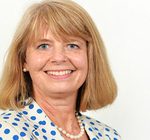
Tag: Harriett Baldwin

  • Harriett Baldwin – 2024 Speech on the Economy, Welfare and Public Services

    Harriett Baldwin – 2024 Speech on the Economy, Welfare and Public Services

    The speech made by Harriett Baldwin, the Conservative MP for West Worcestershire, in the House of Commons on 22 July 2024.

    May I start by adding my congratulations to the Chancellor on being the first woman to hold that office in the history of our country? At this rate, the Labour party might even have a female Prime Minister some time this century. I also thank the shadow Chancellor, my right hon. Friend the Member for Godalming and Ash (Jeremy Hunt) for everything he did while in office. In particular, I thank the voters of West Worcestershire for returning me here for the fifth time.

    I was one of those who was here in 2010. It is ironic that I should be following the right hon. Member for Birmingham Hodge Hill and Solihull North (Liam Byrne), because he was the one who left that famous note, “I’m sorry: there is no money left.” If people want to know what a bad economic legacy looks like, I was here in 2010 when we received one from the Labour party. The deficit was over 10% and rising and unemployment was over 8%. Inflation was nearly twice its target, and the banking system had just collapsed and had to be bailed out by taxpayers. We can contrast that with the economic legacy of 2024 that the new Government inherit.

    Despite the economic costs of the pandemic and the energy crisis, the UK is enjoying the fastest growth in the G7. Unemployment is now half the rate it was in 2010. Inflation is back on target. We have a well-capitalised banking system, almost completely out of taxpayers’ hands. Wages are now rising faster than inflation. We are the fourth-largest exporter in the world. Members do not have to take my word for it; they can take the words of the International Monetary Fund, which in a recently published report said that

    “the UK economy is approaching a soft landing”,

    with

    “growth recovering faster than expected…inflation has fallen faster than was envisaged…The banking system remains healthy”.

    So I approach the economic measures in the King’s Speech with a degree of trepidation, because they come at a time when the economy was back on track. While I agree that “securing economic growth” is a fundamental mission of government, I would add the word “non-inflationary”. I have looked and looked through this King’s Speech, and I cannot see any measures that magic up economic growth. Growth does not just happen because it is written into the King’s Speech.

    In my time as Chair of the Treasury Committee, we had the opportunity to have a private session with the IMF. It is interesting to observe that many of the measures put forward by the Government in the King’s Speech were in the IMF’s prescription for the UK economy. Reforming planning and building on our beloved green belt were from the IMF, as was strengthening the role of the Office for Budget Responsibility and crowding in private capital on net zero projects via a national wealth fund.

    What else does the IMF want? Well, colleagues may not be surprised to learn that it also wants to see more taxes. It does not quite say it like that—it calls it “closing tax loopholes” or “mobilising additional revenues”. Some of the measures we heard about in our private session with the IMF were as follows. The first was setting capital gains tax rates in line with income tax rates. I hope that Ministers will rule that one out. The second was subjecting the sale of primary residences to capital gains tax. I hope that Ministers will rule that one out. The third was ending inheritance tax loopholes for pensions, family businesses and farms. I hope that Ministers will rule that one out. The fourth was revaluing all of England’s homes for council tax, and especially those over £320,000 in value. I hope that Ministers will rule that one out. The IMF also liked the idea of road pricing; I hope that Ministers will rule that one out. It also wants to bring forward considerably the date at which the state pension age increases.

    Given that those are all tax measures that the IMF recommends, I am sure that the Chancellor is beginning to contemplate them. When the Government respond to today’s debate, I hope that they will specifically rule those things out, because the tax rises that the Government admit to already—the pensioner tax, the tax on education, and regulatory costs galore—are bad enough. Let us hear some specific denials on those other taxes.
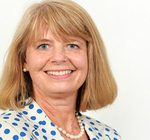
  • Harriett Baldwin – 2023 Speech on the International Day of Education

    Harriett Baldwin – 2023 Speech on the International Day of Education

    The speech made by Harriett Baldwin, the Conservative MP for West Worcestershire, in Westminster Hall, the House of Commons, on 26 January 2023.

    It is a pleasure to serve under your chairmanship, Mr Sharma. I congratulate my right hon. Friend the Member for Chelmsford (Vicky Ford) on securing the debate. I thank her for making it possible for hon. Members who are passionate about this issue to make the case for every child in the world to have 12 years of quality education. Nothing could be more important, and nothing is less politically controversial, but because we all agree how important it is, it does not get enough debate in this place. That is why I am so sincere in my congratulations to my right hon. Friend.

    Over the last few years, I have had the privilege of chairing the all-party parliamentary group on global education—more recently, I have been co-chairing it— and I was also a co-founding chair of the International Parliamentary Network for Education. Regrettably, I had to hand on those responsibilities when I was given the honour of chairing the Treasury Committee. I am delighted that my right hon. Friend has embraced the opportunity that those marvellous groups offer to champion this important cause.

    In my right hon. Friend’s powerful opening speech, we heard about the important ways in which enabling every child in the world to get a quality education could make our future so much brighter. Growing the world’s economies, making sure we are all healthier, and helping to tackle climate change are all powerful and provable implications of ensuring that every child gets a good education.

    I will focus on those—particularly refugee children—whose education suffers because they have to flee conflict. I thank all the families in Worcestershire who have been so good about welcoming refugees from Ukraine into their homes. We are proud to have welcomed 1,000 Ukrainians into Worcestershire, and half of them are children who are being educated in our local schools. I thank the families, but I also thank the schools and teachers for welcoming those children into our educational settings.

    I have a point for the Minister to take back to her colleagues at the Department for Levelling Up, Housing and Communities. There is rightly a payment to the school when it takes in a Ukrainian refugee child. If the child moves to another school after a short period of weeks, that payment does not follow them, and that has led to a few problems. The up-front lump sum gets paid to the school that receives the child, but if they are there for only a little while, the money does not go any further. The Minister will probably not be able to respond today, but will she commit to write to me about how that could be better tackled in the system?

    I endorse the points that were made about those poor girls in Afghanistan. There is not a day when I do not think about how terribly they are suffering from not being allowed to go to school. The medieval cruelty of the Taliban regime in preventing their daughters from being educated is appalling. We must speak out about it whenever we can, because it is only by keeping that focus that we can ever hope for the situation to change.

    It is not just girls in Afghanistan, but millions of children in countries all around the world—including our own—who are missing out on education. It is particularly difficult to educate children in refugee settings, which is why I commend the work I saw at first hand when I was the Minister responsible for that budget in the international sphere.

    The work done to help children get an education is often delivered very rapidly by Education Cannot Wait, and I want to highlight the opportunity for the UK to continue to show its global leadership in this area with the upcoming replenishment of the Education Cannot Wait budget. I am sure the Minister and her officials will be carefully studying the results that Education Cannot Wait has delivered in settings around the world. I hope that the data still show the good impact and powerful value for money that that funding produces, and that the UK can therefore lead on that important work and crowd in other countries to contribute to it.

    To conclude my brief remarks on this incredibly important subject, I again thank my right hon. Friend for securing the debate. On behalf of my constituents, I also thank the Minister for the work the UK does to make the world a safer, healthier and more prosperous place by investing in education—not just in this country, but in countries that cannot afford to educate all their children. I urge the Minister to look particularly favourably on the work that is done for children in refugee situations by Education Cannot Wait.

  • Harriett Baldwin – 2023 Speech on the Procurement Bill

    Harriett Baldwin – 2023 Speech on the Procurement Bill

    The speech made by Harriett Baldwin, the Conservative MP for West Worcestershire, in the House of Commons on 9 January 2023.

    It is an absolute honour to follow such an assured maiden speech from the hon. Member for City of Chester (Samantha Dixon). She spoke with great confidence and great experience of the subject at hand. She painted a beautiful picture of her city, and I am sure that that was the first of many excellent contributions that she will make to our debates.

    I put my name down to speak in the debate because it struck me that procurement is so tied to what is our biggest economic problem: the cost of living and the rate of inflation. The questions that I want the Minister to respond to in his closing remarks are about that rate of inflation and how the transparency and openness of the new procurement system can help by bringing down the price that the Government pay at all levels for the contracts they award.

    I draw the Minister’s attention to the situation in Ukraine—no, not the one that occupies the headlines, but a little-noticed development in 2016 that was very much supported at the time by the UK, along with Transparency International: the development of its procurement system, known as ProZorro. It is quite a remarkable platform. It is open source and shows every opportunity that exists in Ukraine to bid on contracts. It is completely open to citizens and civil society to look at all of the data on what is being tendered for and at what price companies are successful in bidding for those contracts. It is an extraordinary example of how public procurement can be transformed by openness and technology. If he has not done so already, I urge him to ask his officials if they could give him the opportunity to look through the ProZorro system used in Ukraine. It has done an enormous amount to reduce the cost of procurement over the years and to increase transparency for citizens.

    The second public economic priority that the Bill helps to support so much is innovation. The openness and transparency of the procurement system will give small businesses—this has been mentioned a few times in today’s debate—much more of an opportunity to see what there is in the pipeline of public procurement. Again, I wonder whether I can ask the Minister to reply on this point in his closing remarks. In terms of innovation, one of the factors that small businesses often cite to me—and to other colleagues, I am sure—is that when they put their tender in for a public procurement, very often they are required to provide at least three full years of financial records. That can act as a very insidious way of reducing the ability of newer businesses and more innovative businesses, and perhaps nimbler and less expensive businesses, to participate in public procurement. I urge him to think about how the qualification process might enable some of the start-ups we really want to succeed to get into the pipeline of public procurement as easily as possible.

    My finally question echoes some of the excellent points made by my right hon. Friend the Member for Rayleigh and Wickford (Mr Francois) on the importance of defence. I want to ask about the single-source procurement regulations, with which I know the Minister will be intimately familiar, and recognise the fact that in those procurements the Government are, obviously, dealing with one supplier. What thought has he given to then requiring the single-source supplier to procure more in a more innovative way from down the supply chain, and in a way that would not compromise national security, which of course has to be paramount?

    With those short remarks, may I say once again what an honour it has been to be in the Chamber for the maiden speech of the hon. Member for City of Chester?

  • Harriett Baldwin – 2023 Speech on Energy Support Package for Businesses

    Harriett Baldwin – 2023 Speech on Energy Support Package for Businesses

    The speech made by Harriett Baldwin, the Chair of the Treasury Select Committee and the Conservative MP for West Worcestershire, in the House of Commons on 9 January 2023.

    Harriett Baldwin (West Worcestershire) (Con)

    I welcome the Minister’s announcement. He rightly points out that President Putin has, by illegally invading Ukraine, effectively weaponised the cost of energy against western economies, and he is right to highlight that we have been able to withstand that attack with £18 billion of support over this six-month period.

    We now have a gas price close to where it stood before the invasion of Ukraine, and businesses across the country have realised the big risk they face in terms of their energy costs. Will the Minister encourage them not to pass on the cost of higher energy through inflation to their customers, and instead call for the wholesale price of energy to feed through more swiftly to the retail price our businesses pay?

    James Cartlidge

    I think this is the first time I have taken a question from my hon. Friend since her appointment to the chairmanship of the Treasury Committee and I congratulate her belatedly on her success. She makes the good point that wholesale prices have fallen significantly. The gas price is back to where it was before the invasion. Of course, we should be clear that before the invasion it was still elevated in relative terms historically, not least because there was an increase in energy prices following the reopening of the economy after the pandemic. Of course, we do not want prices to be passed on to customers in terms of inflation—that is the last thing we want to see—but I should stress that one reason why we are giving extra support to energy and trade-intensive sectors is that, because they tend to trade internationally, they are particularly exposed to those price pressures and find it harder than other companies that are energy intensive but not trade exposed to pass on those high prices.

  • Harriett Baldwin – 2022 Comments on Jeremy Hunt’s Financial Statement

    Harriett Baldwin – 2022 Comments on Jeremy Hunt’s Financial Statement

    The comments made by Harriett Baldwin, the Conservative MP for West Worcestershire, in the House of Commons on 17 November 2022.

    Harriett Baldwin (West Worcestershire) (Con)

    It is good to see the return of the forecast from the official Office for Budget Responsibility. We all remember why a Conservative Government had to set it up. We will have the OBR in front of our Committee next Tuesday, when we can question the underlying assumptions of the forecast.

    I welcome the fact that the Chancellor confirmed today that his announcements go with the grain of what the Bank of England is trying to do in bringing down inflation. That surely is the most important economic challenge for our country at the moment. But can he elaborate a bit more on his thinking? He has tasked the Secretary of State for Work and Pensions with helping back into work those who have left the workforce and he has announced welcome support for those on the welfare system of £900 next year. Can he talk us through his thinking on some of those cliff edges and incentives to work?

    Jeremy Hunt

    I welcome my hon. Friend to her chairmanship of the Select Committee; I know she will do a brilliant job. She makes an important point. It is essential that we work hand in glove with the Bank of England to bring down inflation. Today, the OBR confirmed that inflation is lower because of the decisions we take. She is right to focus on the worrying increase in the economically inactive, which is not just causing supply chain problems for businesses, but driving inflation. That is why we are lucky to have an excellent Work and Pensions Secretary who will make this his top priority in the work he is doing for the Prime Minister and who will bring his conclusions to this House as soon as possible.

  • Harriett Baldwin – 2022 Parliamentary Question on Education Cannot Wait

    Harriett Baldwin – 2022 Parliamentary Question on Education Cannot Wait

    The parliamentary question asked by Harriett Baldwin, the Conservative MP for West Worcestershire, in the House of Commons on 16 November 2022.

    Harriett Baldwin (West Worcestershire) (Con)

    All our constituents want to see an end to the dangerous and illegal channel crossings. One of the best ways to do that is to make sure that services are delivered in the first safe place to which refugees flee. In that context, will the Deputy Prime Minister, as a former Foreign Secretary and Development Minister, commit to backing the work of Education Cannot Wait, which delivers education in refugee camps?

    The Deputy Prime Minister (Dominic Raab)

    My hon. Friend is absolutely right about the brilliant work that Education Cannot Wait does. She will know the importance of the campaign for girls’ education under both the previous Prime Minister and the current Prime Minister. We will certainly look at what more we can do to support that brilliant work, particularly for children growing up in refugee camps.

  • Harriett Baldwin – 2022 Comments on Penny Mordaunt Becoming Prime Minister

    Harriett Baldwin – 2022 Comments on Penny Mordaunt Becoming Prime Minister

    The comments made by Harriett Baldwin, the Conservative MP for West Worcestershire, on Twitter on 22 October 2022.

    She’s calm, compassionate and capable. That’s why I’m backing Penny Mordaunt.

  • Harriett Baldwin – 2022 Tribute to HM Queen Elizabeth II

    Harriett Baldwin – 2022 Tribute to HM Queen Elizabeth II

    The tribute made by Harriett Baldwin, the Conservative MP for West Worcestershire, in the House of Commons on 10 September 2022.

    It is with great humility and sadness that I rise to pay tribute to Her late Majesty the Queen on behalf of my constituents in West Worcestershire. When we think of the sadness that we are feeling, we can only imagine how much grief her family members must be feeling, and we send them our heartfelt condolences. I think so many of us had hoped that Her late Majesty would reach her 100th birthday, like her mother, and that she would have to decide whether to send herself a telegram.

    During her reign, Her late Majesty made four official visits to Worcestershire, most recently during her diamond jubilee tour, when she opened her faithful city of Worcester’s new library, The Hive. It was an honour to meet her on that occasion. On her first visit to Worcestershire as Queen, in 1957, she came to Malvern to see the Royal Radar Establishment and Malvern College. Radar was invented in Malvern and it played such an important role in our winning the second world war.

    As many colleagues have said, Her late Majesty took a particular interest in our work here in Parliament. She invited all new MPs to meet her after the election in 2010. It was on that occasion that I learned of her fondness for Malvern water.

    It was on that occasion that I learned of her fondness for Malvern water. Since then, many of us have always thought that it was perhaps Malvern water that had given Her Majesty her wonderful complexion and helped her enjoy such a long life.

    Many tributes have made it clear how close the Queen’s relationship has been with this Parliament, but as Chair of the British group in the Inter-Parliamentary Union, I wish to highlight her role in supporting international parliamentary democracy, human rights and the rule of law around the world. The Inter-Parliamentary Union brings together almost the whole of the world’s parliamentarians, and as our Head of State, the Queen opened three of the organisation’s conferences in London—those in 1957 and 1975 and, notably, the centenary conference of the IPU in 1989. As she addressed those hundreds of parliamentarians from around the world, she underlined the core values of multilateralism and the importance of bringing parliamentarians together to find peaceful methods of solving disputes and to understand each other. In this time of grieving, let us reinforce that wisdom that lasting peace must come through words.

    Our late Queen is now at peace and, in the words of our daily prayer in this Chamber, may she attain everlasting joy and felicity. God save the King.

  • Harriett Baldwin – 2022 Speech on a Strategy for International Development

    Harriett Baldwin – 2022 Speech on a Strategy for International Development

    The speech made by Harriett Baldwin, the Conservative MP for West Worcestershire, in the House of Commons on 6 July 2022.

    I congratulate the hon. Member for Rotherham (Sarah Champion), the Chair of the International Development Committee, on securing this important debate. It is an honour to follow the right hon. Member for Birmingham, Hodge Hill (Liam Byrne). He discussed a lot of wise history and important points, and I hope we will hear an answer on them when the Minister gets to the Dispatch Box. I wish to commend her and say how incredibly energetically she works on this agenda. I salute her indefatigability and the results she has delivered. In addition, let me point out that I, too, am one of those who regrets that we reduced our promise from 0.7% to 0.5%; I was one of the 26 rebels who voted against that. However, I am going to try in this speech not to dwell on the past, particularly since my right hon. Friend the Member for Sutton Coldfield (Mr Mitchell) and the right hon. Member for Leeds Central (Hilary Benn) covered that matter so well.

    I want instead to talk more positively about the strategy the Foreign Secretary has set out. I welcome the fact that it continues to include an emphasis on girls’ education and educating every child with 12 years of quality education. That is incredibly powerful in terms of international development, and I want to dwell in particular on soft power. We must raise our game on soft power from its already high level because we are at a pivotal time in history. On 24 February, when Putin began the evil invasion of Ukraine, we shifted into a new and historic era with the forces of evil and authoritarianism on the advance against the forces of liberal democracy, which we have for too long taken for granted. We now realise that we have to stand up for our freedoms; freedoms are not free, and we need to think about how we can best make the case for those freedoms.

    I have the privilege of chairing the British group in the Inter-Parliamentary Union. In that role I was leading the delegation to the assembly in Indonesia in March and we wanted to put out a strong statement condemning Russia’s invasion of Ukraine. We might think that that would be relatively uncontroversial, particularly since the UN had carried the motion so strongly, but in fact it is proving to be quite a battle: it is a battle for ideas and for soft power.

    Soft power is an area where the UK has great assets and strengths, and we must increase our emphasis on that and the energy we put into those strengths. The BBC is one of those soft power assets and we spend a lot of our official development assistance budget on making sure we communicate in languages like Yoruba and Tigrinya that are widely heard around the world. That plays an important part in getting accurate information to countries that are being fed disinformation from Russia, particularly disinformation about the battlefront that that we have heard about today: energy, the price of energy and the price of food. Given the stresses that that is putting on our economy, we can imagine how much stress it is putting on some of the very poorest countries in the world. As we heard last week when Ukrainian MPs visited us here in Parliament, that is being weaponised by Russia to attack Ukraine. In some of the poorest countries the message is going around that their energy and food prices have gone up so much because of the Ukrainians. We must up our game in counteracting that messaging by having a strong communications strategy and making sure we are using the incredible soft power we have through the BBC.

    The British Council is another soft power asset. Next week I am leading a delegation to Kosovo, a country which, because it is in the Balkans, is on the soft power frontline. I learned to my dismay yesterday that the British Council is thinking of closing its office in Pristina and moving the delivery of its important courses to Belgrade in Serbia. I urge the Minister to ask her officials to look into that for her because we must ensure that our valuable soft power tools such as the British Council and the BBC—in so many foreign languages—are able to counteract some of the terrible messaging we are hearing in what is now a war between the good of liberal democracy and the evil of authoritarianism.

    On this point about the soft power battle, may I particularly highlight for praise the decision that the Foreign Secretary took to rename the Commonwealth Development Corporation, one of Britain’s greatest hidden soft power assets, as British International Investment? I say three cheers for that decision. British International Investment does what it says on the tin. It is a much better name than the CDC, which, frankly, even sounds Chinese. British International Investment has that UK branding, and I urge the Minister to look further at branding everything that we do through this budget as coming from the UK. The former Secretary of State stamped a Union Jack on our food aid with the words, “Gift of the British people” in countries where, perhaps, the level of literacy in English is not particularly high. I like the way that the Australians stamp a kangaroo on all of their food aid. Can we do more to show that this aid is coming from us? We are in an information versus disinformation battleground at the moment. As others have said so eloquently, we are going into a period where food insecurity—famine—is on the march again, particularly across the Horn of Africa.

    The UK can also play an important role in using our hard power to get the grain out of Odesa. But let us make sure that, when that grain arrives and when we are able to give food aid, it is clear that this is coming from the western nations.

    May I digress slightly to ask the Minister to update me on where we have got with clean cookstoves? Many women in poor countries spend much of the day going out to cut down trees to make it into charcoal only to go home and poison themselves and their family cooking with this very carbon-intensive fuel. I know that the UK is leading the world in research into clean cookstoves.

    I shall conclude my brief remarks by highlighting some of the excellent things that British International Investment has been doing to lift countries out of poverty through long-term private sector development. No country has ever left a dependency without a thriving private sector. Companies that have been invested in by British International Investment employ nearly 1 million people in around 64 of the world’s poorest countries. That is the kind of practical and sensible intervention that really makes a difference. I am so glad that it is now labelled, “from the British Government”.

    I am so pleased that £479 million of investment has gone into climate finance. There is so much more that can be done on this. Countries with very little electricity distribution can benefit from clean energy and clean energy investment, which will make so much more sense economically than other sources of energy.

    Let me reiterate the key point of my speech: from here, how do we make the best of what we have, and how do we make the best of our international strategy to maximise the UK’s soft power assets? Let us keep doing the good things that we are doing, and let us move towards 0.7% as quickly and as judicially as we can. In the meantime, three cheers for the rebranding of the CDC.

  • Harriett Baldwin – 2022 Speech on Achieving Economic Growth

    Harriett Baldwin – 2022 Speech on Achieving Economic Growth

    The speech made by Harriett Baldwin, the Conservative MP for West Worcestershire, in the House of Commons on 18 May 2022.

    It was interesting to listen to the hon. Member for Rhondda (Chris Bryant). Although I will not be joining him in the Lobby this evening to vote down the entirety of the Queen’s Speech, including the economic crime and corporate transparency Bill, which is what he is choosing to do, I will say that he made his points forcefully and well. However, I endorse the Chief Secretary’s comments when he ran through the range of important Bills that are included in the Queen’s Speech.

    We were all shocked and taken aback today by the headline rate of inflation reaching 9%. It is a sobering moment, which many hon. Members have noted, so I start by saying that I think our Chancellor has been an unlucky Chancellor. He has had to face a pandemic, he has had to face war, and now, due to the consequences of that evil war, he has to face the inflation that is harming everyone in the United Kingdom in their pocket. None the less, I believe I am right in saying that my constituents feel very lucky that they have had this Chancellor throughout these difficult challenges, because he was so quick to provide help during the pandemic. The furlough scheme, the small business income support scheme and the culture recovery fund, to name just three, were gratefully received by constituents during the pandemic, and it is thanks to his plan for jobs that yesterday we saw the foundation of what we all want to achieve through economic growth: quite remarkably low unemployment in this country—the lowest since 1974.

    There were other remarkable things in yesterday’s jobs announcements, such as a record high number of vacancies. I think I am right in saying that it is the first time the number of vacancies has exceeded the number of jobseekers in this country. The plan for jobs has worked well, as has the help the Chancellor gave throughout the pandemic, so today, as we face this high inflation rate, we are in a position to say that we have a strong job market.

    It is also worth noting that this month marks the 25th anniversary of the independence of the Bank of England. I will strike a consensual note by saying that that was a really good policy decision. We must all reiterate the importance not only of the Bank of England’s independence, but of its achieving the 2% inflation mandate. It is incredibly important to our constituents that we have low inflation to form the foundation for achieving economic growth.

    It might surprise Opposition Members to hear this, but I think a windfall tax—

    Stephen Kinnock (Aberavon) (Lab)

    Is a great idea.

    Harriett Baldwin

    Well, I think a windfall tax that helps the lowest-income households is the right approach, and that is the approach that the Government are already following. There is already a windfall tax on the oil and gas sector: whereas most corporations in this country pay 19% corporation tax, those in the oil and gas sector pay 30% corporation tax and 10% windfall tax on top of that. There has been a windfall to the Chancellor from the price of oil and gas having risen so much, and he has rightly spent that windfall on people in the lowest-income households. Just this week, people in council tax bands A to D in my constituency will receive a £150 cash grant in their bank accounts. In a couple of months’ time, in July, there will be a hike in the national insurance threshold that will put a further £330 a year into the pockets of those who pay national insurance. We have also heard about the £200 to smooth the impact on household bills.

    I would urge every pensioner in this country on a low income to check whether they are entitled to pension credit. There are 850,000 pensioners in this country who are not claiming the pension credit they are entitled to. Can we all agree that we should encourage our constituents to claim that? It not only gives them extra cash, but means they get other benefits. There is the household support fund, which has been doubled to £1 billion. I would direct any of my constituents struggling with bills who reach out to me to ask about that fund. There is also the warm home discount, which has been increased and its eligibility has been widened. These measures are important and targeted at the lowest-income households, unlike a 5% across-the-board cut in VAT on fuel bills that would most benefit those who live in the biggest houses.

    In conclusion, it does not matter how much bad luck the world has thrown at us—I think the Chancellor has been unlucky—because by doing the right thing, we can make the luck that will be a strong foundation for achieving economic growth.