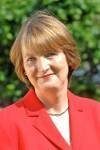
The speech made by Harriet Harman, the Labour MP for Camberwell and Peckham, in the House of Commons on 10 July 2023.
I thank the Leader of the House for tabling the motion, which arises out of the special report of the Privileges Committee.
When it approved with an emphatic majority the report of our inquiry into Boris Johnson, the House made it clear beyond doubt that honesty in our Parliament matters, that Ministers are required to be truthful and that there will be consequences for any Minister who is not. The House was endorsing the outcome of the Committee that it had mandated to undertake that inquiry.
The present motion asks the House to give its approval to our special report, because we want to make sure, if the House ever again mandates the Privileges Committee to undertake an inquiry into a Member, that there will be Members who are willing to serve on the Committee, and that the Committee and its processes are protected while an inquiry is under way so that the Committee is able to undertake its work in the way that the House wants. The motion makes it clear that when a Privileges Committee inquiry is ongoing, Members should not lobby, intimidate or attack the integrity of the Committee. They should not try to influence the outcome of the inquiry or undermine the standing of the Committee, because that undermines the proceedings of the House.
No Member needs to feel disempowered by this. On the contrary, Members own the entire process. Any Member can object to a Member being appointed to the Privileges Committee. Any Member can speak and vote against any reference to the Privileges Committee or the terms of any reference. Any Member can give evidence to the Committee. Any Member can debate and vote on the report of any inquiry.
This is not a process imposed on the House by the Privileges Committee. The opposite is the case: it is the House that imposes this responsibility on the Privileges Committee. It is the House that chooses the members of the Committee; it is the House that decides on an inquiry and its terms of reference; and it is the House, by its Standing Orders and precedents, that lays down the processes that will apply.
Our special report makes it clear that it is not acceptable for Members, fearing an outcome that they do not want, to level criticisms at the Committee so that in the event that the conclusion is the one that they do not want, they will have undermined the inquiry’s outcome by undermining confidence in the Committee.
Mark Jenkinson (Workington) (Con)
As the right hon. and learned Lady knows from our exchange of letters in recent days, I was named in the annex to the report for a tweet that did not refer to the Committee. The context of the Twitter thread is clear. She talks about hon. Members being able to give evidence to the Committee, but we had no prior notification that we might be named. I was alerted to my presence in the report by the press. I just wonder how she considers that Members like me might be able to seek redress in such circumstances.
Ms Harman
The hon. Gentleman named himself on Twitter by calling the Committee a “witch hunt”, and that was in the public domain. The thread ahead of his tweet was quite clear, so we simply put it in our report. We took what was in the public domain and put it in our report.
Our special report makes it clear that it is not acceptable for a Member of this House who does not want a particular outcome to seek, by pressure or lobbying, to influence the Committee’s decision.
Mark Jenkinson
On a point of order, Madam Deputy Speaker. I fear that the right hon. and learned Lady may have just inadvertently misled the House by suggesting that I called the Committee a “witch hunt”. There was no reference to the Committee, and the four-part Twitter thread is quite clear that it was not in relation to the Committee or its investigations. I wonder how I might seek redress on this matter.
Madam Deputy Speaker (Dame Rosie Winterton)
I thank the hon. Gentleman for that point of order. I do not know whether he was here at the beginning but, if he was and if he wishes to speak later, he can catch my eye. He has already made his point, and I think the right hon. and learned Member is addressing that point.
Ms Harman
Thank you, Madam Deputy Speaker. If the hon. Member for Workington (Mark Jenkinson) is saying that he does not believe the Privileges Committee’s inquiry into Boris Johnson was a witch hunt, I warmly welcome the fact that he has said so. I thank him for putting it on the record that he does not believe our inquiry was a witch hunt.
Michael Fabricant
Does the right hon. and learned Lady not think it would have been courteous of the Committee to warn those listed in the annex that they were going to be listed? If a mistake had been made, it would have given those people an opportunity to make their point before the Committee’s report was published. Would that not have been fairer?
Ms Harman
The points and issues that we included in the annex to our report were put in the public domain on Twitter. Indeed, the hon. Gentleman himself put into the public domain that, in relation to the Committee, there was a question of “malice and prejudice”. He felt it was important to put that on to the public record.
Michael Fabricant
Will the right hon. and learned Lady give way?
Ms Harman
I think the hon. Gentleman will be making a speech.
Michael Fabricant
On a point of order, Madam Deputy Speaker. It is totally—
Madam Deputy Speaker (Dame Rosie Winterton)
Order. I have not called the hon. Gentleman to make a point of order. If the right hon. and learned Member does not want to give way, which is her right, it is detrimental to the debate if Members who cannot get their own way then make a point of order.
Michael Fabricant
But I am making a point of order.
Madam Deputy Speaker
Make your point of order.
Michael Fabricant
My point of order is that it is also discourteous to partly quote something, actually. And what it clearly—
Madam Deputy Speaker
Order. The hon. Gentleman must resume his seat. That is not a point of order. He is addressing it directly to the right hon. and learned Lady, not to me. No more of that, thank you.
Ms Harman
Thank you, Madam Deputy Speaker. If the hon. Member for Lichfield (Michael Fabricant) wants to say that he does not believe the Committee was motivated by malice and prejudice, we would warmly welcome that correction.
Our special report makes it clear that it is not acceptable for a Member of this House who does not want a particular outcome to seek, by pressure or lobbying, to influence the Committee’s decision. The House, by supporting this motion tonight, will be making it clear that, in such an inquiry, the Committee’s responsibility is to gather the evidence, and that it is the evidence that must prevail. That is the only basis on which a decision should be made. Members must not try to wreck the process by pressing Committee members to resign.
If members of the Committee are not prepared to undertake such inquiries, the House would have no protection from those who mislead it. I have nothing but admiration for my colleagues on the Privileges Committee, particularly the Conservative Members. Despite the pressure they were subjected to, they were unflinching. They came to each of our more than 30 meetings and persisted to the conclusion of the inquiry with a complete and total focus, which was a credit to the House. They gathered the evidence, analysed it and based their decision on it, exactly in the way that the House requires them to. That was then put to the House.
By supporting this motion tonight, the House will be making it clear that when it appoints members to the Committee, those members will have the support of the House to carry out their work. They are doing a worthy thing by serving on the Privileges Committee.
Brendan Clarke-Smith (Bassetlaw) (Con)
I appreciate what a difficult job the Committee has—I fully respect that—and, of course, the original Chair did recuse himself from the inquiry. When the original report was put before the House, the right hon. and learned Lady stated that she had received assurances from the Government that she would remain in that position, but she did not elaborate on that at the time. Will she therefore use today as an opportunity to inform the House as to what assurances she had been given and by whom?
Ms Harman
Is the hon. Gentleman, in what he has said, withdrawing what he said on Twitter, which was that the Committee was a
“witch-hunt which would put a banana republic to shame”?
That is what he actually said.
Committee members are entitled to the support of the House, because it is the House that has asked them to undertake this work.
Dame Andrea Leadsom (South Northamptonshire) (Con)
As a former Leader of the House, and having both spoken for and voted for the report by the Privileges Committee, which the House did commission, I am afraid that I do not accept the premise that the right hon. and learned Lady, for whom I have a great deal of time and respect, is putting forward today, which is that the Committee, as a result of being asked by the House to look into the behaviour by one of its Members, should therefore be absolutely immune from any form of free speech whatsoever. I cannot agree with her on that basis and will not be supporting the Committee’s report today.
Ms Harman
Perhaps I may reiterate that we are not saying that the Committee is immune. We are saying that it is evident that any Member of the House can challenge the appointment to the Committee of any member of the Committee, which frequently happens; that any Member of the House can challenge a reference to the Privileges Committee, and that, too, does happen; and that Members can challenge the terms of reference to the Committee and raise concerns about the procedure. But what Members cannot do is say that something is a witch hunt and a kangaroo court, and that there is collusion; impugn the integrity of the individual members of the Committee; and also undermine the standing of the Committee, because that is undermining the proceedings of the House. If hon. Members are not sure what “impugn” means, they can look at “Erskine May”, which goes into it in great detail—
Sir Jeremy Wright (Kenilworth and Southam) (Con)
I am sorry that the right hon. and learned Lady is being continually interrupted, but may I ask her for some clarity on the point she is making? She has mentioned impugning the integrity of members of the Committee in part of the motion, with which I have considerable sympathy. I just want to understand this point. I do not suggest that this has happened here or at any time in the past, but she will recognise that it is conceivable that it would be right to impugn the integrity of a member of the Committee, or of more than one of its members, if there were evidence to do so. May I just be clear that what this motion should be taken to mean is that someone should not impugn the integrity of members of the Committee while an inquiry is ongoing? If there is evidence to do so later, there are mechanisms by which we can do so. We should be clear, should we not, that what this motion means is that while an inquiry is ongoing, it is wrong to impugn the integrity of any member of the Committee?
Ms Harman
That is absolutely right, and that is so that the Committee can do its business properly, as mandated by the House, as is the case with the Standards Committee. We cannot have a situation where Members are reluctant to serve on the Committee because, as soon as they undertake an inquiry, it is open season on them. We cannot have a situation where the outcome is based on pressure and lobbying, rather than the gathering and consideration of the evidence.
The motion does not create any new categories of contempt, nor does it extend what can be regarded as contempt. It simply makes it explicit that the focused, time-limited protection that the House has already made explicit for standards cases is the same for privilege cases.
Dame Angela Eagle
Does my right hon. and learned Friend agree that if the motion were not to go through, and it was to be open season on all future members of the Privileges Committee during inquiries, the only recourse for this House to ensure that it was not lied to in future would be to have an outside system to assess that, which would be constitutionally novel and—I think—highly dangerous?
Ms Harman
My hon. Friend makes an extremely important point. If this work of the Privileges Committee is to be done in-house by Members of this House, this House must support them in that work. If the House is not prepared to do that, and it is open season on Members who are put forward for the Committee, we would very quickly find ourselves with an independent, outside process. Most Members of the House want us to keep the process in-house, but to do that we must all respect it.
Lia Nici
The right hon. and learned Lady talks about collusion and lobbying. Can she explain how it was that Guardian reporters were briefed before Privileges Committee reports were published for us in this place, and, if she knows who had sight of those reports, who was doing the collusion with those journalists?
Ms Harman
Again, this is very unfortunate. I say to the hon. Lady that hon. Members are given a task to do on behalf of the House. They do it to the best of their ability, with integrity, and they should be supported in doing that. Although the hon. Lady was very much against the outcome, which came about on the basis of the evidence, it is not acceptable then to criticise the process, except through the channels and in the ways that I have set out.
Our special report draws upon “Erskine May”. I invite hon. and right hon. Members to read paragraphs 15.14 and 15.16 of “Erskine May”, which make it crystal clear that it is not acceptable for a Member of this House to seek, by lobbying or arousing public hostility, to influence the decision of members of the Committee, or to undermine the Committee’s credibility and authority. All this is about protecting the House from being misled, by ensuring that there is a strong and fair Committee that will, on behalf of the House, undertake an inquiry, and that there are Members prepared to serve on the Committee and able to do that work without interference.
Mr Rob Roberts (Delyn) (Ind)
We heard his name mentioned earlier, in respect of the previous report, but will the right hon. and learned Lady confirm that Sir Ernest Ryder was still in place for the preparation of this special report, that he agreed with the findings of the Committee, and that he found that there was nothing improper about the work of the Committee in this report?
Ms Harman
Yes, Sir Ernest Ryder, who provided us with advice for the fifth report, which was the substantive report into Boris Johnson, also provided us with advice for this special report, for which we are grateful. We also had expert advice from the Clerks, including at the most senior level, so that we could be absolutely certain that we were complying with all the rules and processes laid down by the House.
The objective here is not to protect members of the Privileges Committee. It is even more important and fundamental than that. The objective is to protect this House and thereby to protect our democracy, so I commend this motion to the House.
Sir Charles Walker (Broxbourne) (Con)
The motion before the House is proportionate: it seeks only to provide the Privileges Committee, once it is established and sitting, with the same protections enjoyed by the Standards Committee. That is all it does. All colleagues respect the Standards Committee when it is sitting. I hope that we can extend that respect to the Privileges Committee and that the motion is carried.
I was struck by what the Leader of the House said in her speech. I wrote three or four speeches for this afternoon’s debate—some reflective, some angry and some defensive—but I have put them all aside.
You will know, Madam Deputy Speaker, that my right hon. Friend the Member for Maidenhead (Mrs May), the former Prime Minister, was a great friend of mine—one of my greatest friends in politics. I fought tooth and nail, with every fibre in my body, to keep her in No. 10. I turned up whenever I was needed, to do whatever needed to be done, but we lost—that battle was lost.
I see my hon. Friend the Member for Altrincham and Sale West (Sir Graham Brady), the chair of the 1922 committee, in the Chamber. Very quickly, the late Dame Cheryl Gillan and I were thrust into being acting chairs of the 1922 committee, and we oversaw the contest for the new leader of the party. The former Member for Uxbridge and South Ruislip (Boris Johnson) was successful; I was one of five people, including my hon. Friend the Member for Altrincham and Sale West, present when, de facto, he became leader of our party and, de facto, the following day, Prime Minister. That was 24 July 2019.
That day, or shortly afterwards, I was in the Tea Room having supper with my right hon. Friend the Member for Maidenhead, the former Prime Minister, when in bounced the then Secretary of State for Transport, my constituency neighbour, my right hon. Friend the Member for Welwyn Hatfield (Grant Shapps). He has been my political neighbour for 18 and a half years. Sometimes we are the best of friends; sometimes we are the best of enemies. When we fall out, we normally find an accommodation that allows us to become friends again.
You may recall, Madam Deputy Speaker, that in 2018, my right hon. Friend the Member for Welwyn Hatfield was the first to call for the then Prime Minister, my right hon. Friend the Member for Maidenhead, to stand down. So when he bounced into the Tea Room, the day she ceased to be Prime Minister, or a few days later, and sat down with his supper, I thought, “Oh my word. This is going to be pretty tasty”—not the supper, the conversation. I thought there would be fireworks, because my right hon. Friend the Member for Maidenhead, unencumbered by the office of Prime Minister, could really have a go at my right hon. Friend the Member for Welwyn Hatfield, my next door neighbour in Hertfordshire. The former Prime Minister fixed him with a steely eye and said, “Now, Mr Shapps, I have a small station in my constituency that needs some investment. What are you going to do for me?”
In this place, we are judged not by how we handle our successes, but by how we cope with our disappointments. In that Tea Room exchange, I learned so much about character, courage, humility and dignity. To return to the motion, I hope that it is passed tonight. There is a lot of upset and grievance on the Government side of the House, but eventually we have to cast that to one side and move forward.
