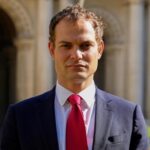
The statement made by Hamish Falconer, the Parliamentary Under-Secretary of State for Foreign, Commonwealth and Development Affairs, in the House of Commons on 5 January 2026.
Madam Deputy Speaker, there have been a number of developments in the middle east that I would like to update the House on, including in Gaza, Iran, Yemen and Syria. I would also like to take the opportunity to provide an update on the case of Alaa Abd el-Fattah, which has been a subject of debate during the parliamentary recess.
To begin with Gaza, the humanitarian situation there remains desperate. Even with the ceasefire, half a million people are struggling to find enough food, and 100,000 people are in catastrophic conditions. The peace plan was clear: the Israeli Government agreed to let aid in, without interference, through the UN and other international organisations. At the same time, Hamas must disarm, their weapons must be decommissioned, and they must allow a path to lasting security for Palestinians. More trucks are entering Gaza, which is very welcome, but right now key crossings remain closed, convoys are being turned back, medical and shelter supplies are blocked, and non-governmental organisations are being banned. Over the recess, we joined nine other countries in stating that this is not acceptable. The peace plan cannot work if NGOs are shut out, and Israel’s decision to ban 37 of them is unjustifiable.
Furthermore, many trucks entering Gaza carry commercial goods, which face fewer barriers than humanitarian aid. This means that, perversely, it is currently easier to get cigarettes and luxury goods into Gaza than the basic medicines and shelter that people so desperately need. Too much aid is still stuck at Gaza’s borders—thousands of tents and shelter supplies, funded by the UK, are waiting to get in. Families are sheltering from winter floods and storms under rubble, and are suffering from hypothermia and sewage running in the streets. This is unforgivable.
We have not wavered in our commitment to help. This financial year, we are providing £116 million for humanitarian and other aid, including healthcare, food, clean water and sanitation. That includes treatment for 800,000 Palestinians through UK-Med. The UK formally recognised Palestine last autumn to protect the viability of a two-state solution and to create a path towards lasting peace for the Israeli and Palestinian people. We welcome the establishment of full diplomatic relations with the state of Palestine, and I can confirm the establishment of a Palestinian embassy in London today.
Let me turn to Iran, where we have seen protests enter a ninth day following the rapid depreciation of the currency. We are disturbed by reports of violence against those who are courageously exercising their right to peaceful protest. We are monitoring developments closely, and we urge Iran to protect fundamental freedoms, including access to information and communications. The UK was integral to delivery of the Iran human rights resolution adopted by the UN Third Committee in November. It called on Iran to halt its human rights violations, including in relation to women and girls and ethnic and religious minorities, and to stop the use of the death penalty. We will continue to work with partners to hold Iran to account for its rights record.
I know that many in the House will be thinking about Craig and Lindsay Foreman, who spent Christmas in detention in Iran. We are deeply concerned that they have been charged with espionage. We are focused on supporting them and their family and we remain in regular contact with the Iranian authorities. The Foreign Secretary raised their case with the Iranian Foreign Minister on 19 December.
I wish to provide the House with an update on another consular case that has been in the spotlight for many years: Alaa Abd el-Fattah. Supporting British nationals overseas is at the heart of the work of the Foreign Office, and the provision of that consular support is based on the circumstances of the case. Following Mr el-Fattah’s registration as a British citizen in 2021, successive Governments gave him consular support and made it a priority to argue for his release. That is why it was welcomed by Ministers across the Government, and many others in this House, when he was released from detention in September and reunited with his family in the UK on Boxing day. However, we recognise and share the deep concern felt across the country following the subsequent emergence of extremely disturbing historical social media posts by Mr el-Fattah. Let me emphasise once again that the historical posts were abhorrent, and I join my colleagues in condemning them wholeheartedly. It is right that Mr el-Fattah has apologised.
I fully recognise the profound distress that the posts have caused, in particular to the Jewish community in this country, and especially in the context of rising antisemitism and recent horrific attacks against Jewish people in this country and around the world, and I very much regret that. The Prime Minister, the Deputy Prime Minister, the Foreign Secretary and I were all unaware of those historical posts, as were the civil servants working on the case. The Foreign Secretary has therefore asked the permanent under-secretary to urgently review the Department’s systems for conducting due diligence on high-profile consular and human rights cases to ensure that all necessary lessons are learned. The Foreign Secretary has undertaken to update the Foreign Affairs Committee on the changes that the Department will put in place.
I turn now to the dramatic developments in Yemen, which we are monitoring closely. I welcome calls by Yemen’s President for dialogue in the south. I also welcome Saudi Arabia’s offer to host a conference and the United Arab Emirates’ calls for de-escalation. A swift diplomatic resolution will best serve the Yemeni people. The United Kingdom remains committed to supporting Yemen’s unity, including the Yemeni Presidential Leadership Council and the Government of Yemen, as we set out in the recent UK-led UN Security Council statement. I, the Foreign Secretary and the National Security Adviser have all been in regular contact with our partners in Yemen, the Kingdom of Saudi Arabia and the United Arab Emirates about the situation, and we will continue to work closely with them.
We must not forget that Yemen already faces one of the world’s worst humanitarian crises: 18.1 million people face acute food insecurity, as I saw for myself in November when I visited a clinic supported by the UK in Aden. Responding to this crisis is a priority for the UK. We are the largest donor to the Yemen humanitarian needs and response plan, maintaining our commitment to provide £139 million in humanitarian aid in the current financial year.
In Syria, the past year has seen remarkable change. The Syrian Government have shown commitment to tackling security threats, joining the Global Coalition Against Daesh and committing themselves to dismantling Assad’s chemical weapons stockpiles. In my engagements with the Syrian Government, I have heard directly a commitment to build a Syria for all Syrians. Despite that progress, the challenges remain immense. There have been outbreaks of sectarian violence in the last year, most recently in Latakia at the end of December. The recent attack on US soldiers in Palmyra is a reminder of the enduring Daesh threat.
A stable Syria is firmly in the UK’s interest, as it reduces the risk of irregular migration, terrorism and other threats to our national security. That is why we have stepped up our engagement and our support for Syria over the last year. The UK remains an active partner in the Global Coalition Against Daesh, and on 3 January the Royal Air Force conducted a joint strike with France on an underground Daesh facility north of Palmyra. The UK will continue to do what is necessary to prevent a Daesh resurgence, support Syria’s stability and protect UK national security.
I hope that that update on the developments that have taken place in the middle east over the recess has been helpful to the House. His Majesty’s Government remain committed to playing their full role in the region.