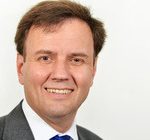
Tag: Greg Hands

  • Greg Hands – 2023 Speech at Conservative Party Conference

    Greg Hands – 2023 Speech at Conservative Party Conference

    The speech made by Greg Hands, the Conservative Party Chairman, in Manchester on 1 October 2023.

    Ladies and gentlemen, after a unique introduction it gives me great pleasure to welcome you to Conservative Party Conference 2023, here in the dynamic city of Manchester.

    When the Prime Minister asked me to take on this role – as your Party Chairman – I couldn’t have been more excited.

    Having been a member for 37 years and a representative at every level – Chairman of my university Conservatives, an elected student union officer, a ward chairman, a councillor, a Group Leader, an MP, a government Whip and a Cabinet Minister, I can truly say there is no greater privilege than to lead our great party into the next General Election, alongside our Prime Minister, Rishi Sunak.

    But we cannot do this alone and I am incredibly lucky to have a fantastic team of Conservatives who work tirelessly behind the scenes, and whom I’d like to thank personally for their dedication to our Party:

    Right here in the front row – Peter Booth, Chairman of the National Convention.

    Pete Smallwood, the Chairman of this years Conservative Party Conference, who you’ve just met.

    Stephen Massey, CCHQ’s Chief Executive Officer, who has helped to transform the Party’s finances since a year ago.

    Douglas Ross and Andrew RT Davies, you’ll hear from them shortly for their outstanding work in exposing the hypocrisy of what life is like under the SNP in Scotland, and Labour in Wales.

    And finally, my fantastic team of Deputy and Vice Chairmen;

    Nickie Aiken, Luke Hall, Lee Anderson, Jack Lopresti, Matthew Vickers, Craig Tracey, Saqib Bhatti, Mo Ali, and PPS Dr Ben Spencer.

    So, ladies and gentlemen – we are one big Conservative family – whether you have been a member for 50 years, like Edna from Brecon and Radnorshire.

    Or a member for a little over 12 months, like Leo from Bristol.

    As Chairman, I’ve had the great pleasure of campaigning in over 50 constituencies, and if I haven’t got to you yet, you can expect a visit very soon.

    And we have seen what happens when you do great campaigning.

    Look at Uxbridge: The week before, Labour was 25-1 on favourite – think about that, if you put £100 pounds on Labour winning, you’d only get £4 back – but we had strong policies, a superb turnout at all levels of the Party, and a first-class candidate in Steve Tuckwell…

    Please stand up. Steve Tuckwell MP! And he’s already getting stuck in at the House of Commons – a fantastic Parliamentary voice for the people of Uxbridge and South Ruislip. And proof that we can come from behind to win, as we have done so often before.

    I would ask that everyone takes the energy which went into winning in Uxbridge and gets out to support our fantastic current by-election candidates in Tamworth and Mid Bedfordshire, Andy Cooper and Festus Akinbusoye.

    By-elections aside…

    We will, of course, have several elections next year.

    A full set of local elections in May, with our Conservative councillors and council candidates, battling to control town halls, and run them better than Labour or the Lib Dems.

    Police and Crime Commissioner elections, led by our fantastic group leader, Katy Bourne, where we’ll be taking our message to voters, across the country that you are safer with a Conservative PCC.

    We also have our fantastic Mayors and candidates across the country standing for election next year; in the West Midlands, we have Andy Street, the East Midlands Ben Bradley, Tees Valley Ben Houchen, North Yorkshire Keane Duncan.

    And in London, GLA and Mayoral elections, as Pete has already said, a chance to throw out a Labour Mayor who’s been an unmitigated disaster for our great capital city:

    Proof that when Labour run things, they run them badly.

    But Londoners are starting to see through it, and we have a brilliant candidate, in Susan Hall, who will, on 2nd May, prove to Sadiq Khan, that, actually, Sadiq Khan’t.

    And we will – I don’t think I’m breaking any state secrets here – also have a general election, too.

    This is likely to be a general election, that the Conservatives enter as the underdogs.

    And I know in recent years, you will have had difficult conversations with voters: I certainly have.

    But I would say three things about those conversations:

    First, every single conversation I have had on the doorstep has been improved by the mention of Rishi Sunak and the job that he does as our Prime Minister

    Second, there is no enthusiasm for Keir Starmer, and even less trust in him

    Third, wherever Labour run something in the country, they run it badly

    Let me tell you first about our great Prime Minister.

    And the message coming across, loud and clear, from the doorstep, is that people can see we’re moving in the right direction,

    that the Conservatives are getting on with the job,

    and that Rishi Sunak, is the right man to steer this country through extremely challenging times.

    They understand, also, the tough choices, and trade-offs, that true leadership entails.

    They look at our Prime Minister, and see someone, who is prepared to make the tough, long-term, decisions to get the country, on the right path for our future. Someone who is not afraid to challenge the old style Westminster politics of short-termism that we have seen so much of in the past.

    That earns respect. It wins trust. And it will be, by continuing to win that trust and respect, that we will also win nationally, next year.

    Which takes me to my second point – that there is no liking for Sir Keir. And no trust.

    Who is the real Sir Keir Starmer?

    The friend and supporter of Jeremy Corbyn? The puppet of Tony Blair? Or the mouthpiece of Just Stop Oil?

    All we do know is that he has broken every single leadership pledge and flip-flopped almost sixty times in just three years. This is a man who will literally say anything that suits him at the time.

    I always thought that the best leaders wake up each morning, and ask themselves ‘What am I going to do today?’.

    Some leaders ask themselves ‘What am I going to say today?’

    Sir Keir wakes up and asks ‘What am I going to believe today?’

    Ladies and Gentlemen, can I let you into a secret – if anyone likes the association of Sir Keir with flip flops, I have these: available for just £16.99 here at the Conservative Party shop and also online at Conservatives.com, your own pair of Sir Keir Starmer flip flops and I’d warmly recommend them to you.

    But, not once, has there been any clear plan for Britain from Sir Keir. He is not honest with people about the challenges the country faces – he has no new ideas, criticises from the side-lines, calling for yet more money to be magicked up.

    Here’s another thing we know.

    That wherever Labour run something, they run it badly.

    I’ve already mentioned London. Look at Wales. We’re going to hear from Andrew RT Davies later this afternoon and David TC Davies, the Secretary of State for Wales. Patients almost twice as likely to be on the NHS waiting list as they are in England. But, according to Sir Keir, Labour in Wales is a “blueprint for what they would do in Westminster”.

    That’s not a blue print, Ladies and Gentlemen – it’s a red flag, and it’s running Wales to a standstill.

    Look at Labour-run Birmingham City Council. Its leader handpicked by Sir Keir and his union paymasters to sort out the finances. Praised by Sir Keir just a few months ago.

    So what did they do? They voted unanimously to bump up their own pay-packets, blow millions on consultants, all paid for by hiking council tax for hard-working local people by the maximum amount – this is Europe’s largest local authority.

    …before being hit by a £760 million legal bill for – and here’s the irony – equal pay claims. £760 million for one local authority.

    A Labour council that spent more time thinking up – you might remember this from the height of the pandemic – woke street names than looking after the finances. Birmingham City Council really did have a Diversity Grove, they had Inspire Avenue. And now they’re up Bankruptcy Avenue.

    And from what we do know of Labour’s plans for the UK, the entire country would go the same way.

    Labour’s plan for energy, lovingly crafted by Just Stop Oil, would leave us gasping for energy imports from unfriendly foreign powers.

    Their plan for immigration would see the numbers coming into this country decided not by us, but by Brussels.

    And their plan for the economy has already signed the UK up to £90 billion of uncosted funding commitments.

    Because putting money on the credit card didn’t work out so well for them so well last time…

    You can probably work out where this is going!

    ‘Dear Chief Secretary. No money left’

    That reminder is why we must work to stop Labour getting back in. We cannot let them do the UK what they have done in Wales, what they have done to London and what they have done to Birmingham.

    There is a sure-fire way to stop them in their tracks. It’s through effective campaigning, ladies and gentlemen, and winning next year at all levels.

    Let me tell you something about someone who knew a thing or two about campaigning…

    … a much-loved member of our Conservative family who represented his constituents with the utmost dedication.

    Sir David Amess, Member of Parliament first for Basildon and then for Southend West.

    Many of us will remember his campaigns on issues including the honouring of Raoul Wallenberg for his amazing humanitarian works in WW2, support for those suffering from endometriosis, and of course the awarding of city status to his beloved Southend-on-Sea.

    And I know many of us remember well – I’ll never forget the day – the deeply shocking circumstances of his murder in the course of duty.

    Today, in his memory, I am proud to launch the Sir David Amess Fund, to support more dedicated local campaigning.

    The Sir David Amess Fund will be available to all Members of Parliament to apply for.

    The fund will be focused on supporting local campaigns which transcend party politics, such as campaigning to secure city status for your town.

    There will be two successful applicants each year, with funding made available to support them campaign on and better promote their local worthy cause.

    And I’m delighted to confirm that Anna Firth MP, Sir David’s successor in Southend West who’s watching this now on the train up to Manchester, will work with me to pick those successful applicants.

    So today I make one other announcement: to help get local campaigns up and running.

    As Chairman, I know the value of being well organised locally and the importance of CCHQ having a strong network of Campaign Managers has in helping make that happen.

    That is why since the start of the year we have more than doubled the number of Campaign Managers that CCHQ employs.

    And for the first time ever, we have also started to hire Digital Campaign Managers aswell.

    They are helping to build our social media presence, collecting more emails and filming engaging local content.

    We saw just how important our Digital Campaign Managers were in Uxbridge where we campaigned relentlessly on social media and email against the ULEZ.

    And Conference: I want to ensure you know; we will be expanding the number of Campaign Managers we have in advance of the General Election to support you on the ground.

    Whilst we will be growing the number in the period up to the next General Election, I have also challenged my colleagues in CCHQ to find sensible and creative solutions for the long-term, to ensure the feast and famine of Campaign Managers we’ve seen in recent years ends.

    I want to ensure that we are looking forward and growing a sustainable, well trained, and experienced campaigning organisation.

    Conference, I will leave you with one final thought.

    As we go out and campaign…

    As we make our arguments…

    We shouldn’t be apologetic about what a Conservative government led by Rishi Sunak means. It means strong and decisive long-term action on the things that matter most to people, action that the country needs to put us on the best footing for the future.

    When I look back at the achievements of this country under the Conservatives, I take great pride. I have been a Minister in this government almost continually for 12 years.

    Pride that, back in 2010, we made the tough choices to get the country’s finances back under control. That has made us more able to withstand the headwinds that have come our way since.

    Pride that we kept our great Union together in 2014 – and thank you, Nicola, for your help cementing that this year as well.

    Pride that when the British people asked us to deliver on the result of the EU Referendum, we kept true to our word and got it done.

    Pride that we used those new freedoms to deliver a world-leading vaccination programme and help beat Coronavirus, and provide the financial support that British families and businesses needed.

    And pride that, just a year and a half ago, it was the UK that stood tall, and galvanised the rest of the world in support of Ukraine.

    So, Ladies and Gentlemen, conference, the United Kingdom is a great country.

    It faces profound and complex challenges like the whole of the Western world world.

    But our best days in Britain are still to come.

    This country is best served by strong decisive leadership that is focused on delivering a brighter future for everyone.

    The leadership of our Prime Minister Rishi Sunak and this great Conservative Party,

    And by working together, as a great Conservative family, we can ensure victory in 2024, economic renewal, and a stronger, happier United Kingdom.

    Thank you very much.
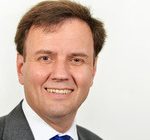
  • Greg Hands – 2005 Maiden Speech in the House of Commons

    Greg Hands – 2005 Maiden Speech in the House of Commons

    The maiden speech made by Greg Hands, the then Conservative MP for Hammersmith and Fulham, in the House of Commons on 26 May 2005.

    I want to speak about the threat to our local hospital in Hammersmith and Fulham: the Charing Cross. First, however, I congratulate my hon. Friends who have made their maiden speeches during this debate: my hon. Friends the Members for Broxbourne (Mr. Walker), for Welwyn Hatfield (Grant Shapps) and for The Wrekin (Mark Pritchard). I am also known as something of a polyglot, so I shall try to offer my congratulations to the hon. Members for Na h-Eileanan an Iar (Mr. MacNeil) and for Taunton (Jeremy Browne).

    I want to say a few words about my predecessor as Member of Parliament for Hammersmith and Fulham, Iain Coleman. It would be fair to say that Mr. Coleman made most of his impact in the constituency. In fact, his surgeries became something of a legend locally as he seemed to spend his entire time in an almost perpetual surgery at all times and for all hours—except during Arsenal games. Mr. Coleman has not been well for a year and I am sure that hon. Members on both sides of the House will join me in wishing him a full recovery and a return to politics as soon as possible. His predecessor as MP for the Fulham part of the constituency was Matthew Carrington, who was a popular, respected and effective MP for 10 years. He was enormously supportive and helpful in my efforts to win back the seat on 5 May.

    It was rather more difficult to find out about the previous Conservative MP for Hammersmith, as distinct from Fulham, because I am the first Conservative MP for Hammersmith since 1964. Probably the most famous previous Hammersmith MP was one William Bull. Mr. Bull represented the area for 37 years between 1892 and 1929. He had the unusual and tragic misfortune to lose his wife to pneumonia after she had been out canvassing for him. For someone who died of pneumonia, Mrs. Bull is ironically commemorated with a sundial in Ravenscourt park in my constituency.

    Mr. Bull won his first election by only 19 votes. While he was an MP he became a senior partner of his law firm. That is an impressive sounding achievement, until one discovers that the firm was called Bull and Bull. He was a man ahead of his time as he was in favour of votes for women and the Channel tunnel, although these days I expect that the latter is more controversial than the former. Most bizarrely, my predecessor was ordered out of the House by Mr. Speaker’s predecessor for calling the then Prime Minister a traitor—which these days is perhaps more in tune with east London than west London politics.

    In truth, the constituency of Hammersmith and Fulham is more famous for its elections than its MPs. I cite the East Fulham by-election of 1933, the battles of Barons Court of the 1960s and the Fulham by-election of 1986. All those have the common characteristic of being won by the Labour party. However, I believe that one of the most significant Hammersmith and Fulham election results was the one just a couple of weeks ago on 5 May. The recorded swing of almost 7.5 per cent. was one of the highest in the UK. The seat was the Conservatives’ No. 1 inner-city target, and a new 5,000 majority has been created. Together with the impressive results achieved in London by my hon. Friends the Members for Enfield, Southgate (Mr. Burrowes), for Wimbledon (Stephen Hammond), for Putney (Justine Greening), for Bexleyheath and Crayford (Mr. Evennett), for Croydon, Central (Mr. Pelling), for Hornchurch (James Brokenshire) and for Ilford, North (Mr. Scott), my result shows that we as a party are making great progress in London again.

    The Labour party barely got started in the campaign. It was barely seen, barely heard and had little positive to say about its eight years in government. Meanwhile, the Lib Dems ran a candidate from Tunbridge Wells under the slogan, “Give Peace a Chance.” Perhaps they were more the surreal alternative.

    Hammersmith and Fulham is one of the smallest constituencies in Britain, but it is none the less one of the most diverse. It is also one of the closest to Parliament. As my hon. Friend the Member for Welwyn Hatfield mentioned, it is quite possible to get back to Hammersmith and Fulham from the House at the end of each evening. In fact, I am probably one of the few Members with a direct door-to-door bus route from just outside Big Ben to just outside his house. That sounds fantastic, until one considers that given traffic in London, it can take up to two hours to complete the journey.

    Prior to 5 May, some newspapers made great play of the fact that no premiership football ground was located in a Conservative seat. Some claimed that that showed that the Conservative party was not represented in the inner cities. All that has now changed, for I represent a constituency in which not just one, but two premiership clubs are located: Fulham and Chelsea. Notwithstanding the heroic events in Istanbul last night, I was delighted to see the streets of my constituency decked out in blue last Sunday to welcome their new champion. I refer of course to Chelsea football club, but “blue is the colour” is surely the future there politically as well, even if I say that as a Fulham fan.

    Hammersmith and Fulham is also distinctive for having more tube users than any other borough in Britain and the greatest number of single women compared with single men in the United Kingdom. It is also the home of the Olympia exhibition centre and part of Earls Court. Its largest employer is the BBC, and it is the home of what is reputed to be Europe’s busiest road interchange at Hammersmith Broadway. It is also the London home to dozens of hon. Members, which can make canvassing in certain streets straightforward. Many hon. Members from both major parties have cut their teeth in local Hammersmith and Fulham politics.

    The election in Hammersmith and Fulham was all about the dreaded congestion charge extension, the fact that eight out of nine muggers in my constituency go unpunished, the fact that a quarter of the borough’s secondary schools are on special measures, the appalling state of the District line and high council tax.

    Perhaps the greatest concern, however, and why I wanted to speak in the debate, is the threat to the Charing Cross hospital. On the very day that the election was supposed to be called—a good day to bury bad news, one might say—on 4 April 2005, an announcement was made at a meeting with the chief executive of the NHS hospitals trust that the world famous Charing Cross hospital would either be demolished or possibly have its specialised services moved to the Hammersmith hospital on the Wormwood Scrubs site. That would be a crazy move, and it is one that I have been elected in part to prevent.

    Charing Cross is a marvellous facility—the centrepiece of a three star-rated hospital trust. It is a global leader in cancer care, vascular surgery, neurosurgery, plastic surgery and much else. It is the trauma centre for the whole of west London and is ideally situated just off the A4 for any major incident at Heathrow. Most of all, it is also a local hospital, serving the needs not only of Hammersmith and Fulham, but of other parts of west London, and is easily accessible by tube, bus or car, which Hammersmith hospital is not.

    The proposal suits nobody other than the management of the trust, who are in turn driven only by meeting Government targets, which have led to huge deficits in both the local primary care trust and the hospitals trust. In classic new Labour fashion, spin doctors were deployed to deny the initial press reports in The Observer that the Charing Cross site would be sold off. Interestingly, however, there was no denial of the plans to move all or most of the specialised services to the Hammersmith site. I expect that more will be heard on the topic in the House, and I look forward to winning the battle with the Government to leave Charing Cross services on their current site.

    In conclusion, many people have asked me and others why the Conservatives did so well in Hammersmith and Fulham and elsewhere in London. The answer is that people in London are overtaxed and face declining public services. I predict major changes in the control of London boroughs in next May’s election.

    I am delighted to become the first Conservative MP for Hammersmith since 1964 and the first-ever Conservative MP for the combined seat of Hammersmith and Fulham.

  • Greg Hands – 2023 Comments on Becoming Conservative Party Chairman

    Greg Hands – 2023 Comments on Becoming Conservative Party Chairman

    The comments made by Greg Hands, the Conservative MP for Chelsea and Fulham, on Twitter on 7 February 2023.

    I am excited to be asked by Rishi Sunak to be Chairman of the Conservative Party. I joined the Party in 1986 – a ward chairman in 1992, a councillor in 1998, a Group Leader in 1999, an MP in 2005, a Minister in 2011 – an honour to chair it in 2023!

    The work starts right away.

  • Greg Hands – 2022 Speech on the UK Trade Deals with Australia and New Zealand

    Greg Hands – 2022 Speech on the UK Trade Deals with Australia and New Zealand

    The speech made by Greg Hands, the Minister for Trade Policy, in the House of Commons on 14 November 2022.

    I beg to move,

    That this House has considered the Australia and New Zealand Trade deals.

    The Australia and New Zealand free trade agreements are deals that will deliver for people, businesses and our economy. These are our first “from scratch” free trade agreements since we left the European Union, and they are deals of which this country can be proud. They demonstrate our ambition as an independent trading nation. They secure commitments that, in places, go above and beyond international best practice, and put us at the forefront of international trade policy.

    I was here in June 2018 when we were finalising the call for input, and I was here again as the Minister in June 2020 when the negotiations were launched. It is great to be back at the Department to see the deal having been done, and I look forward to many similar deals as the Minister responsible for trade policy. I am delighted that the Leader of the House, who was recently in this role, was sitting next to me earlier and discussing the important part played by both herself and the present Minister of State, Foreign, Commonwealth and Development Office, my right hon. Friend the Member for Berwick-upon-Tweed (Anne-Marie Trevelyan), over the past year. I should also pay tribute to my right hon. Friend the Member for South West Norfolk (Elizabeth Truss), formerly the Prime Minister, and the International Trade Secretary throughout a large part of this process.

    We negotiated these ambitious deals with like-minded partners apace but with diligence, going further and faster than, for example, the European Union has been able to. The EU has yet to get a deal with Australia over the line, and only recently concluded talks with New Zealand, after four years. The deals represent a deepening of our relationship with close allies, fellow members of the Five Eyes intelligence partnership and like-minded democracies which share our beliefs in fairness, free enterprise, high standards and the rule of law.

    Last year, our bilateral trading relationship with Australia was worth £14.4 billion, and exports to Australia supported more than 100,000 UK jobs in 2016. Exports to New Zealand supported more than 16,000 UK jobs in that year. These deals will strengthen those links, supporting increased volumes of trade, jobs and wages and bringing more choice for the UK consumer.

    Hilary Benn (Leeds Central) (Lab)

    The Minister will be aware that the Australia deal in particular has created quite a lot of concern among Britain’s farmers. For example, Jilly Greed of the Suckler Beef Producers Association has said:

    “This is an absolute betrayal…this is Christmas all over for Australia”.

    The former chief economist of the National Farmers Union has said:

    “Agriculture will bear a disproportionate cost. So desperate are the Government to do deals, they are preparing to slim down agriculture”.

    How would the Minister respond to those allegations?

    Greg Hands

    I am delighted to respond, because I have had extensive interaction with all the five nations’ NFUs during this process. We have delivered a deal that phases in the changes. The right hon. Gentleman might reference the fact that the trade deal we have with the European Union, which he supported, gives the EU comprehensive access from day one. This deal phases in access for Australia and New Zealand for a period of up to 15, and in some cases 20, years. I think that is worth consideration, as is the extensive interaction we have had with the NFU and with farmers. I have met MPs and their constituency farmers at some length and we will continue to interact with the NFU and the NFUs in all the nations to ensure that we are in full listening mode when it comes to Britain’s essential farming community.

    Jonathan Edwards (Carmarthen East and Dinefwr) (Ind)

    Further to the intervention from the right hon. Member for Leeds Central (Hilary Benn), I have here a copy of “Y Tir”, the monthly publication of the Farmers Union of Wales, which states:

    “There will always be winners and losers when it comes to negotiating liberalised free trade agreements, and it is clear from the UK Government’s impact assessments that UK agriculture will be one of the losers if these deals are ratified”.

    Does the Minister acknowledge the widespread concern among our agricultural communities that the British Government are selling them down the river?

    Greg Hands

    I disagree with that. I am just checking my records and I have had extensive interactions with representatives of NFU Cymru during the negotiation process. I met them on 19 May 2021—I met the Farmers Union of Wales on 19 May as well—and on 26 May, 16 June and 13 September. It was important for us to get the confidence of the farming community in Wales and I also did various Zoom calls at the time—this was during one of the lockdowns—with MPs and their constituent farmers. The protections we have in the deal are very considerable. For example, the tariff rate quotas carry on for 10 years in some cases, and there are product-specific measures to protect sensitive agriculture produce from years 10 to 15 as well as bilateral safeguard mechanisms. There are a lot of protections there.

    Ben Lake (Ceredigion) (PC)

    Will the Minister give way?

    Greg Hands

    I will give way in just a moment, but perhaps the hon. Gentleman will explain what his position might be and whether his party will ever support a single trade deal that has been proposed either by the European Union or by the UK Government. Will he tell us that?

    Ben Lake

    It is not often that I get the opportunity to do so, and I am happy to say that when there is a good trade deal for Welsh farmers, I will be very happy to support it. Further to the Minister’s point about NFU Cymru, that union and the Farmers Union of Wales have both expressed concerns about the cumulative impact of the various trade deals. Has that featured in any assessments the Department has made, and if so, can he share with us what he makes of Welsh farmers’ concerns about this cumulative impact?

    Greg Hands

    I welcome the hon. Gentleman’s support for trade deals and I look forward to him voting for one of them one day. In terms of the impact on Welsh farmers, I must point out some of the market access that we have recently gained—for example, Welsh lamb is now able to enter the US market for the first time in many decades due to the United States removing the small ruminants rule, and I was in Taiwan only last week are trying to negotiate access for Welsh lamb to the Taiwan market. When it comes to accumulation, he ought to think about the fact that there is tariff-free, quota-free access for the European Union for the UK at the moment. That has been the case from day one of the trade and co-operation agreement.

    John Spellar (Warley) (Lab)

    Surely one of the points we ought to be considering is the fact that about a third of the beef consumed in the UK is already imported. Some of it is imported from Brazil, where there are concerns about deforestation, and a big amount is imported from the EU, primarily from Ireland. We might not see fresh competition from Australian beef, but import substitution might be part of the equation.

    Greg Hands

    The right hon. Gentleman makes a strong point. We are all in favour of competition, and of consumers being able to make their choice, but I would add that meat exports from Australia and New Zealand are much more likely to go to the far eastern markets. A big percentage of the exports from Australia and New Zealand currently go to those far eastern markets that, frankly, we would like to access by joining the CPTPP trade agreement. We want to have a piece of that action. He is right that it is more likely that exports from Australia and New Zealand will displace those from the EU, giving choice to consumers.

    These are more than just deals with like-minded and long-standing partners; they are part of the UK’s new strategic approach.

    Sir Paul Beresford (Mole Valley) (Con)

    Before we entered the common market, the Australia-New Zealand agricultural juggernaut centred on this country for its trade. As my right hon. Friend said, that trade is now going to 100 or more countries, so it has spread. Our farmers survived and did not complain before the common market, and that will continue.

    Greg Hands

    My hon. Friend is an expert on the connections between the United Kingdom and the continent of Australasia. He makes a good point about restoring trading connections that existed prior to this country’s membership of the European Union. We should treat these two trade deals as an opportunity not a threat, which is a point he makes well.

    These deals are a key part of our Indo-Pacific tilt. The Indo-Pacific region matters to the UK, as it is critical to our economy, our security and our global ambition to support open societies. Rapid economic growth in the Indo-Pacific region is shifting the world’s centre of economic gravity eastwards. In the first two decades of this century, the Indo-Pacific region accounted for 50% of global economic growth in real terms; by 2050 that is expected to be 56%. The Indo-Pacific is home to half the world’s people, and there are significant economic opportunities for the UK in trading with the region. These deals are just the start.

    These two agreements are a significant step towards our accession to the CPTPP, membership of which will further open up 11 Pacific markets across four continents worth £9 trillion of GDP in 2021. Joining the CPTPP will put the UK at the heart of a dynamic group of growing nations. We negotiate deals that are tailored to the UK’s strengths, such as our world-class service industries that employ 82% of our workforce and account for 80% of our economy. These deals will unlock new markets, create jobs and drive the growth that the UK, like many other countries, needs right now. They will provide real outcomes for real businesses.

    Margaret Ferrier (Rutherglen and Hamilton West) (Ind)

    What does the Minister make of the International Trade Committee’s finding that more export opportunities and greater safeguards for the food industry could have been negotiated? How are the Government implementing the lessons learned for future deals?

    Greg Hands

    I thank the International Trade Committee for its various reports on both deals, and I look forward to engaging with its Chair, the hon. Member for Na h-Eileanan an Iar (Angus Brendan MacNeil), and indeed the whole Committee.

    It can be said of any negotiated deal that something might have been better, as that is an inevitable consequence of negotiation. There is a bit of give and take. The safeguards for UK agriculture build in a very considerable length of time, of 15 or, in some cases, 20 years, for people to adjust. I contrast that with the European Union deal—the hon. Member for Rutherglen and Hamilton West (Margaret Ferrier) voted to have no deal with the European Union—which gave instant access.

    Today, I will explain to the House how these important deals will help firms in every part of the country to flourish and grow. First, these agreements will remove 100% of tariffs on all goods, most of which will come into effect as soon as the agreements are in force—that is particularly with reference to UK exports. They will reduce red tape on British goods sold to Australian and New Zealand markets, making our exports even more competitive. Our automotive sector is among the many UK industries that will reap the rewards. For example, McLaren says that these tariff reductions

    “will support and facilitate customer and network growth across Australia in the coming years.”

    Nissan says that removing the 5% duty on car exports will help further exports to Australian customers of the Leaf, Qashqai and Juke cars it makes at its Sunderland plant. The removal of tariffs of up to 10% on car parts and on some vehicles sold to New Zealand is good news for other vehicle manufacturers across the UK.

    A range of other industries will also benefit. For example, Nairn’s, the Edinburgh-based oatcake manufacturer, says savings from removing 5% tariffs under our New Zealand deal will help offset the increased costs that have affected businesses following covid-19 and Russia’s invasion of Ukraine. The Food and Drink Federation believes the removal of a range of tariffs will help to give UK businesses significant growth opportunities and make them more competitive in the New Zealand market.

    UK investors will benefit from more access than ever before to opportunities in Australia and New Zealand, with guaranteed rights to invest across the economy. We are maximising opportunities for British companies to invest and grow their businesses in Australia. It will be easier for UK businesses to expand into both Australia and New Zealand, because we have increased the screening thresholds in both deals, meaning that fewer UK investments will be subject to review.

    We also secured outcomes that encourage further inward investment into the nations and regions across the UK. In 2020, the UK was the second most popular destination for Australian foreign direct investment, and Australia is a big global investor. In 2019, there were more than 2,000 Australian-owned local business units in the UK, employing more than 71,000 people, and in 2020 we were the fourth largest destination for foreign direct investment from New Zealand.

    Our Australia and New Zealand trade deals will also give our service industries a competitive edge on data and digital. Some 80% of our economy is in services. Scotland’s financial services industry and engineering services firms in the west midlands will benefit, and new opportunities will be provided for Welsh fintech firms in Cardiff. Our Australia deal allows professionals in areas such as engineering, accountancy and architecture to get visas to work. The law firm Herbert Smith Freehills says that these measures will make it easier for its staff to work across the UK and Australia. We also have access to the £10 billion Government procurement market in Australia, putting our firms on an equal footing with Australian firms. Just last month, I visited Informed Solutions, which is headquartered in Altrincham, and its management told me how much they were looking forward to the ratification of the upcoming free trade agreements to assist their business as well.

    We have world-leading digital chapters, opportunities in cyber-security trade and so on. We also have a small and medium-sized enterprises chapter, which is very important for helping these companies navigate a free trade agreement. My Department is working hard at spelling out our many advantages, to businesses large and small. The national chairman of the Federation of Small Businesses, Mike Cherry, has said that our trade deal with Australia was great news for many of its members, as the small business chapter will ensure that the needs of smaller businesses are fully catered for in the years to come. My right hon. Friend the Secretary of State for International Trade often likens trade agreements to new motorways: they are at their most useful when they are well used by cars. That is why my team is meeting companies around the country to explain how they can make full use of our deals. Of course, businesses that want to trade with Australia and New Zealand and need more personalised help can turn to our network of trade advisers.

    I have reflected on the many economic advantages offered by our free trade agreements, but these deals are not just about commerce. They are also about creating deeper international partnerships that will benefit both our citizens and the wider world, as well as our wider strategic objectives.

    Stephen Kinnock (Aberavon) (Lab)

    We are discussing making sure that these deals are about not just economic benefits, but the social partnership and ensuring that workers’ hard-won rights are not undermined by doing a trade deal that could lead to a race to the bottom. Will the Minister explain therefore why the deals do not contain any commitment to the International Labour Organisation core conventions?

    Greg Hands

    I thank the hon. Member for his intervention. I know that he takes a strong, keen and constant interest in these issues. Let me say to him that the UK’s commitment to human rights, workers’ rights and various social justices are not always best pursued through trade agreements; we do pursue them bilaterally as well. I do not believe that there are any widespread concerns in relation to Australia and New Zealand, but I am happy for him to write to me if he has concerns about workers’ rights in those two countries. However, it is not obvious to me how a trade deal will necessarily be the best way to pursue those objectives in any case.

    Together our nations can use trade to address contemporary challenges such as economic degradation, health pandemics and threats to global security. Both of these deals support that endeavour, including the provisions that uphold high standards and foster co-operation on shared challenges. With world-leading chapters on trade and gender equality, the deals demonstrate our commitment to break down barriers that exist for women in trade, whether as workers, business owners or entrepreneurs.

    The UK-Australia agreement contains an innovation chapter, which is the first of its kind in any FTA between two partners in the world. This will ensure that our trading relationship remains at the forefront of emerging technologies. I might just add that the Confederation of British Industry said that our deal with New Zealand puts us at the fore of the green trade revolution and showcases to the world that trade and climate change can go hand in hand.

    Tony Lloyd (Rochdale) (Lab)

    The Minister talked earlier about allowing the British public the chance to purchase in a competitive environment, but competition requires information. If there is no adequate chapter in the Australia agreement about environmental standards and the use of coal, for example, can he tell the House how it is possible for an educated consumer to buy in the way that he suggests?

    Greg Hands

    The hon. Member raises a very good point. The UK-Australia deal is the first Australia trade deal that has a dedicated chapter on the environment. I recommend that he looks at the deal to see what it does for the environment, which is something we take very seriously indeed. We did it in the run-up to COP, so it is very topical as well.

    Tim Farron (Westmorland and Lonsdale) (LD) rose—

    Greg Hands

    I will not give way, as I am about to finish.

    The country’s departure from the European Union opened up new possibilities for us to enhance our relationships with the rest of the world. Our deals with Australia and New Zealand show that we are seizing this opportunity. These deals can increase annual trade between the UK and Australia and the UK and New Zealand by £12.1 billion.

    I look forward to hearing the contributions from the official Opposition, who I think abstained on Second Reading of the Trade (Australia and New Zealand) Bill, and also from the Liberal Democrats and the SNP, which I think opposed the Bill on Second Reading.

    Tim Farron rose—

    Greg Hands

    Perhaps the former leader of the Liberal Democrats can explain why he was so opposed to the deal.

    Tim Farron

    I am extremely grateful to the Minister for giving way to me, however he chooses to do so. We are very strongly in favour of free trade, but we also believe that free trade has to be fair. Let me take him back to his earlier comments about the strategic value of this. Does he understand that trade deals must have strategic value when it comes to protecting our ability to feed ourselves as a country? Does he understand why those of us who represent rural communities are deeply concerned about the imbalance that exists between farm standards on this side of the world and those in New Zealand and Australia on the other? We think that might undermine our ability to feed ourselves because it will put British farmers out of business.

    Greg Hands

    I look forward to the hon. Member actually supporting one of these trade deals. I have already pointed out the safeguards that exist in both deals: the long transition period and the substantial tariff-rate quotas. I am talking about all of the protections and safeguards that are in those deals for British farmers—the non-regression clauses on animal welfare, for example, which will prevent Australia or any other country from seeking to gain a trade advantage if they were to weaken their animal welfare rules. I will be frank, though; I have seen no evidence that Australia will be looking to do that, but the deal does have protection for our farmers and our consumers.

    Our free trade agreements reflect the needs of modern business and play to this country’s strengths. They will create deeper friendships between our citizens and they will begin a new era of free trade between our nations. In short, these are free trade agreements for the 21st century and I commend them to the House.

  • Greg Hands – 2022 Speech at the Chatham House Global Trade Conference

    Greg Hands – 2022 Speech at the Chatham House Global Trade Conference

    The speech made by Greg Hands, the Secretary of State for International Trade, on 3 November 2022.

    Thank you Alan, many thanks for that kind introduction.

    I’d like to thank Chatham House for inviting me here to discuss the future of global trade and the pivotal role the United Kingdom can play in helping to shape it.

    Great to see our former Permanent Secretary John Alty in the audience.

    I was here at the inception of the Department in the summer of 2016, and returned again in the lead up to the Trade Cooperation Agreement and leaving the end of the transition period 2020-21, and returned again as I see you today.

    Actually the last time I was here, I did so in my former role as energy minister. And one has certainly needed energy to keep up with events in Westminster over recent weeks, as you may have noticed!

    Last time I was here, there was actually a demo about energy – just sometimes thinking that the world of trade is sometimes more erudite than you might get in the world of energy.

    But what has remained unwavering throughout is this government’s fierce commitment to free trade and open markets as the key to unlocking the UK’s economic potential and kickstarting growth.

    And this is a cause I have championed during my three stints as Minister of State for Trade, during which I have witnessed the transformative power of global commerce at first hand.

    This is a commitment to trade that our new Prime Minister shares. I’ve had quite a few discussions with him over the summer recently about trade and so it’s a cause that I know is close to Rishi Sunak’s heart, as it is to mine.

    Because trade is the most powerful force for human progress we have at our disposal.

    A force that has lifted hundreds of millions of people out of poverty since the turn of the century.

    And that will drive the engine of global growth over the next decade too.

    Delivering enormous benefits for the United Kingdom and the global community alike, creating new jobs, fostering innovation and delivering prosperity worldwide.

    But trade as we know, is a truly global endeavour.

    And to deliver the greatest benefits it must be free and fair for all.

    That is why we are working with our global partners in Europe, Africa, Asia and the Americas to put in place the building blocks of this freer, fairer future.

    Calling out nations that don’t play by the rules and helping to build a global free trading coalition with Britain at its heart.

    I mentioned my recent return to the department, so if I had to outline my three immediate priorities I’ve identified in my work in trade policy (it’s not the whole of the department, we also have ministers for exports, investment and so on).

    But my three main priorities:

    The first is making sure the UK joins the CPTPP trading area as soon as possible. The Comprehensive and Progressive Agreement for Trans-Pacific Partnership. 11 countries around the Pacific Rim, four continents, 5 million people, a GDP of around 9tn pound sterling.

    It’s a perfect deal, a great match for the UK. With really modern rules of origin, digital trade. I was interested to see a really good session earlier on digital trade. And it will help to set new rules and standards for trade across the world, encompassing many of the world’s great progressive nations, Japan, Australia, Canada, New Zealand, Singapore. These are the countries that in my view are leading the debate on trade policy, and it’s a free trade area without a political union. It is in many ways everything that the UK has always wanted to join in my opinion.

    The second area is India, just the size and the prospect of India alone as a market is too impossible to ignore. And I think the UK’s traditional links and connections there are incredible, it’s not just the trade relationship but the investment we have with India, means that it’s an immediate priority for us to potentially be the first G7 country to do a trade deal with India.

    And the third area is to focus on the nitty gritty of trade work, the trade barriers, making sure we are focusing on removing trade barriers around the world, I’m talking anything from lot codes on Scotch whisky bottles to Taiwan through to German labour market rules, discriminatory Spanish customs practices – a whole host of different issues out there that prevent UK goods and services being sold and prevent them coming the other way.

    So those are my three priorities. And I’m going to return to each of those three throughout the course of this speech.

    So, first and foremost, we must work with our international partners to navigate a path through the economic storm unleashed by Russia’s illegal invasion of Ukraine…

    … which has of course sent shockwaves through the world’s financial system, unleashing rising prices for energy and commodities…

    …Bringing about let’s be frank about it scenes of destruction – and I studied history as an undergraduate at university, and my main focus was 20th century Central and Eastern European history, and that is a period of an enormous amount of human and material destruction. And I think the sort of scenes that we’ve seen throughout the course of this year have been all too reminiscent of the first half of the 20th century. Something which is happening here in the first half of 21st century.

    But Britain is helping lead the West’s response to this crisis by supplying military assistance to Ukraine.

    And we are using the power of trade to support Ukraine in its struggle for freedom economically too.

    By removing tariffs on all goods from that nation under the UK-Ukraine Free Trade agreement.

    And providing other economic support – including £1bn in loan guarantees.

    While working with our allies around the world to impose unprecedented trade sanctions on Russia.

    But we know that our work is far from done.

    The invasion has revealed the fragility of global peace and security. And there was a fascinating session you’ve just had on supply chains which after pandemic has revealed lots of global vulnerabilities which many of us thought or suspected were there but have been brought into sharp focus this year.

    A line has been drawn in the sand between liberty and tyranny.

    And as we look to the future we must ask ourselves what kind of country we wish to be.

    A nation that looks outwards to the world? An open, interconnected, truly global Britain that builds new bridges of trade and investment?

    Or a country that battens down the hatches and hides behind protectionist trade barriers?

    And we must decide what kind of world we wish to build.

    A world in which liberty, democracy and security are the norm – and in which free, fair, rules-based trade can come to the fore.

    I’m very much in that camp and this government is as well.

    Or a world in which authoritarianism, protectionism and corruption hold sway?

    It is clear to this government which path the United Kingdom must take.

    We must work with our democratic allies to help shape the international order of the future. With free trade forged at its heart.

    Britain and our allies must push hard for reform of the World Trade Organisation for example so that the rules underpinning global trade are fit for purpose.

    Strengthening the dispute resolution mechanism and holding states that break the rules to account.

    Standing with our partners to confront shared challenges.

    As we did earlier this year at the 12th Ministerial WTO Conference in Geneva – our first as a renewed independent member of the WTO…

    …Where we signed a joint declaration on trade’s key role in underpinning global food security.

    Strengthening our multilateral partnerships will be more important now than ever before as the global economic axis shifts eastwards.

    China’s increasing international assertiveness and the growing importance of the Indo-Pacific will be among the most significant geopolitical and geo-economic shifts this decade.

    And our response will help define our relationship with the world that emerges in the decades ahead.

    The UK’s future prosperity is dependent on deepening our economic relationships with countries in the Indo-pacific region in particular.

    Which is why we are concentrating on building new bonds of trade and investment with nations across this region.

    Opening up fresh opportunities for British business in the cutting-edge industries that are shaping the world of tomorrow.

    Crucial to that is the UK’s accession to CPTPP – and another of my highest priorities is agreeing a deal with India which promises to be a game-changer for Britain’s economic ties with the world’s largest democracy and fifth largest economy.

    India is set to become the world’s third largest economy by 2030, and we are committed to building upon the living bridge of people, businesses and culture that bind our nations together.

    A shared commitment with India that Prime Minister Modi underlined when he welcomed the appointment of Rishi Sunak as our new Prime Minister.

    And our governments are making good progress in negotiating an ambitious FTA which could boost trade between us by as much as £28 billion.

    Setting British and Indian businesses free to trade and invest in each other’s markets.

    An FTA with India is a key plank of our work to position the United Kingdom at the centre of a network of free trade agreements across the globe.

    We have signed deals with 71 countries plus the EU so far, accounting for over £800bn-worth of trade last year.

    Including far reaching and innovative agreements with countries such as Japan, Australia and New Zealand that go further in cutting edge sectors such as digital and data.

    And we are working alongside our biggest single bilateral trade partner and closest ally the United States at both federal and state level to remove barriers to business… again with a very strong focus on services and digital trade.

    …Strengthening a trade and investment relationship worth more than £230bn.

    Beyond these deals we are making it easier for British firms to sell their goods and services overseas in other ways… my third priority

    …by tackling often complex trade rules and practical obstacles that block their path to growth

    Over the past two years, my department has removed over 400 such barriers to business – we have a database of trade barriers that we are seeking to remove… opening the door to global markets for British exports of all kinds.

    Successes so far include:

    Opening the way for first shipment of Welsh lamb exported to the US in more than 20 years…

    second…Tackling banking restrictions for British firms in Colombia, worth an estimated £55 million over 5 years…

    …And lifting restrictions that enable British apples, pears, quince to be exported to India for the first time.

    A broad cross section of goods and services.

    And we are going further and faster by using intelligence gathered from industry to target a “most wanted” list of obstacles standing in the way of British exporters.

    Unlocking a potential £20 billion-worth of new opportunities for our economy.

    And as we look ahead at the opportunities emerging worldwide, we are determined to strengthen our ties in our own neighbourhood too.

    Building on our trade and investment relationships with our allies across Europe – which still accounts for around half [around – 45%] of our total global trade.

    These are relationships that I am leading the way in strengthening in my role at DIT – as I travel across the continent to meet with politicians and businesses to help smooth the path for British trade and investment.

    Inevitably Britain leaving the European Union has changed that relationship, we are outside the single market, outside the customs union. But we have the most comprehensive Free Tree Agreement between the UK and EU, so we need to continue to make sure it works well for British businesses and British exporters.

    Whether by addressing French customs procedures, Spanish labour laws or German business regulations. Flavour of the work we’re doing there.

    And this government is committed to using the power of trade to support global development too.

    Helping open the door to trade-led growth for nations across the developing world.

    This isn’t just right morally, it makes sense economically too.

    Because trade not aid is the path to long-term prosperity.

    And, if demography is destiny, then the future of the global economy surely lies in the developing world.

    Where the youngest, most dynamic and most rapidly diversifying economies are emerging.

    With developing nations offering the greatest trade potential on the planet.

    By the middle of this century alone, Africa is set to account for one in four of the world’s consumers.

    Which is why the UK has made tearing down barriers to business with developing nations central to our global trade policy.

    We’ve agreed Economic Partnerships with 33 African, Caribbean and Pacific countries so far, covering more than £20 billion-worth of trade.

    And we have removed almost all tariffs on goods from 65 nations through our Developing Countries Trading Scheme. Building on the situation we inherited from the EU but making sure we greened our tariff, lowered our tariff, simplified our tariffs to really benefit developing world.

    While using our position as a global finance hub to provide the investment developing nations need to build their critical infrastructure.

    We are making progress towards our goal of building a freer, fairer future for global trade with UK right at the centre of it as one of the most progressive trade policy countries in the world.

    A future that will develop for the UK but also for our friends and allies around the world.

    But we know there are many hard miles yet to travel on this journey – the department is six and a half years into its existence – and we’ve achieved an enormous amount in that time but there’s still a huge amount for us to do.

    The big decisions on trade we take today will help define the world of tomorrow.

    And we must have the courage to stand by our conviction that free trade and open markets hold the key to prosperity.

    So that millions more people worldwide can be set free to realise their economic potential.

    And embrace the bright future that lies ahead. That is the UK ambition, both for our own trade policy and for that globally.

  • Greg Hands – 2022 Statement on the UK-India Trade Deal

    Greg Hands – 2022 Statement on the UK-India Trade Deal

    The statement made by Greg Hands, the Minister for Trade Policy, in the House of Commons on 26 October 2022.

    First, let me say that it is good to be back at the Department for International Trade.

    India is, of course, an economic superpower, projected to be the world’s third largest economy by 2050. Improving access to this dynamic market will provide huge opportunities for UK business, building on a trading relationship worth more than £24 billion in 2021. That is why we are negotiating an ambitious free trade agreement that works for both countries. We have already closed the majority of chapters and look forward to the next round of talks shortly.

    A strong free trade agreement can strengthen the economic links between the UK and India, boosting the UK economy by more than £3 billion by 2035, helping families and communities. An FTA can cut red tape, making it cheaper for UK companies to sell into India’s dynamic market, helping drive growth and support jobs across every nation and region of the UK. Greater access could help UK businesses reach more than a billion more consumers, including India’s growing middle class, which is estimated to reach a quarter of a billion by 2050, and give them a competitive edge over other countries that do not have a deal with India. An FTA with India supports the Government’s growth strategy, by taking advantage of the UK’s status as an independent trading nation championing free trade that benefits the whole of the UK. We remain clear that we are working towards the best deal for both sides and will not sign until we have a deal that is fair, reciprocal and, ultimately, in the best interests of the British people and the UK economy.

  • Greg Hands – 2022 Tribute to HM Queen Elizabeth II

    Greg Hands – 2022 Tribute to HM Queen Elizabeth II

    The tribute made by Greg Hands, the Conservative MP for Chelsea and Fulham, in the House of Commons on 9 September 2022.

    I rise to add my tribute to Her late Majesty Queen Elizabeth II on behalf of my Chelsea and Fulham constituents at a time of great sadness for the whole country. She was much loved in the Royal Borough of Kensington and Chelsea and among my Fulham constituents. She came at least once a year to my constituency, to the Chelsea flower show.

    Indeed, it was at the Chelsea flower show that I personally met the Queen for the first time, in 2010, and the last time, just three months ago. The Chelsea flower show was one of her absolute favourite events. She rarely, if ever, missed it. She may have been to it more than 70 times. But in 2010 it was my first Chelsea flower show. I was third in the royal receiving line and exceptionally nervous. This was not helped by the receiving line taking around two hours, as almost the entire royal family came, at 10-minute intervals, starting with Princess Alexandra. Eventually the Queen arrived and all passed well. I had bowed in the right place and extended her my hand at the right time. We had a brief, charming and pleasant conversation. I could relax—except that I had forgotten one thing: she was not the last of the royal family to come. There was still, moments later, the Duke of Edinburgh. I realised my mistake and almost fell over, having messed up my bow and called him “Your Majesty”, to which the Duke smiled and said, “Are you new?” I pay tribute to him today as well: the late Duke of Edinburgh, the Queen’s beloved husband.

    The last time I saw Her Majesty was at this year’s Chelsea flower show, which she toured with great enthusiasm in a golf cart. She was radiant and, as ever, fascinated by the displays. It was simply amazing to see her at the age of 96.

    The Queen was much loved by my Fulham constituents as well. Indeed, one of the iconic pieces of video footage from the 1977 silver jubilee is a clip of a group of women on Kingwood Road in Fulham, arm in arm, wearing jubilee hats and singing, all together, “Maybe it’s because I’m a Londoner”. She will be grieved and warmly remembered the length of King’s Road and, appropriately, along New King’s Road as well.

    I also met Her Majesty in my role as the Government’s Deputy Chief Whip. Many in this House will know that the Deputy Chief Whip is also the honorific Treasurer of Her Majesty’s Household. The role comes with a wand of office, which looks like a long billiard cue and unscrews in the middle. My right hon. Friend the Member for Pendle (Andrew Stephenson) referred to it earlier. The day came in October 2013 for the transfer of the wand of office from my predecessor, Sir John Randall—now Lord Randall—to me in a ceremony at the palace. I was once again nervous, but once again it all started well. Sir John handed the Queen the wand of office, which she then handed to me. But I started fidgeting with it—I found it a fascinating article—as Sir John carried on speaking with Her Majesty. I started absentmindedly to unscrew the wand of office. I got an alarmed look from Her Majesty and an alarmed look from Sir John Randall, who told me, “Stop it!” I was told afterwards that if I had unscrewed entirely the wand of office, that would have meant rejecting the office and that Sir John would have had to come back here as the Government’s Deputy Chief Whip.

    But that was not the worst thing. A minute or two later, the Queen suddenly said to me and Sir John—bear in mind that this was in 2013, at around the time of growing European rebellion in the Conservative party— “I do think Mr Baron has a point”, referring to my hon. Friend the Member for Basildon and Billericay (Mr Baron). By now I was a total wreck. The Queen was seemingly pronouncing on the greatest political issue of the time, and I had to give her an answer of behalf of the Government. Fortunately, she saw my difficulty and clarified that it was in reference to one of my hon. Friend’s many other rebellions—regimental mergers—and was nothing to do with Brexit at all.

    The Queen’s historic significance, the length of her reign, everything that she had seen, the fact that she met every US president during her reign except one, the fact that her first Prime Minister was Sir Winston Churchill, who was born more than 100 years before my right hon. Friend the Member for South West Norfolk (Elizabeth Truss), and the fact that Josef Stalin was still in the Kremlin when she came to the throne, show her historical significance. On behalf of my Chelsea and Fulham constituents, I pay tribute to the Queen and wish King Charles III a happy reign of many years.

  • Greg Clark – 2022 Comments on Slough Council

    Greg Clark – 2022 Comments on Slough Council

    The comments made by Greg Hands, the Levelling Up Secretary, on 28 July 2022.

    The commissioners’ report has assured me that the current intervention measures remain necessary in Slough. Councils must deliver for the people they serve – which is why I am minded to expand these measures to deliver swift and long-lasting improvements.

    Whilst this decision is not taken lightly, difficult decisions must be taken to protect hardworking taxpayers.

    I am confident that Slough Borough Council will continue to work closely with commissioners to address their challenges and I hope to see more progress imminently.

  • Greg Hands – 2022 Statement on the Net Zero High Court Ruling

    Greg Hands – 2022 Statement on the Net Zero High Court Ruling

    The statement made by Greg Hands, the Minister for Energy, Clean Growth and Climate Change, in the House of Commons on 21 July 2022.

    Over the past three decades, the UK has driven down emissions by more than 45%— the fastest reduction of any G7 country. We have one of the most ambitious carbon-reduction plans in the world, pledging to reduce emissions by at least 68% by 2030 and by 77% by 2035, compared with 1990 levels, before of course reaching net zero by 2050. Our track record speaks for itself: the UK overachieved against the first carbon budget and exceeded the second by nearly 14%. The latest projections show that we are on track to meet the third carbon budget as well.

    In its judgment on the judicial review of the net zero strategy, the High Court found that Government had not complied with Climate Change Act 2008 in relation to some specific procedural issues and the level of analysis published as part of the 164-page net zero strategy. I stress that the judge has made no criticism about the substance of our plans to meet net zero, which are well on track. Indeed, even the claimants in the case described the net zero strategy as “laudable”. The independent Climate Change Committee described the net zero strategy as

    “an ambitious and comprehensive strategy that marks a significant step forward for UK climate policy”

    and as

    “the world’s most comprehensive plan to reach Net Zero”.

    We are now considering the implications of the Court judgment and deciding whether to appeal. As we do this, our focus will remain resolutely on supporting people in the face of globally high energy prices and on boosting our energy security. Our recent British energy security strategy—launched by the Prime Minister—which puts Great Britain at the leading edge of the global energy revolution, will deliver a more independent, more secure energy system and support consumers to manage their energy bills.

    Kerry McCarthy

    Let us be clear: we are here because the High Court has ruled that the Government’s net zero strategy is unlawful and is in breach of the Climate Change Act. The Climate Change Committee, which the Minister cites, said only a few weeks ago that the Government

    “will not deliver Net Zero”

    on current projections. Not only have the Government failed to set out the detail of how they will reach net zero, but Ministers cannot even do basic maths, because, as the High Court made clear, adding up the emissions cuts in the strategy will leave a 5% shortfall. How embarrassing that his Department must be dragged to court to hear what we have known for months—that the numbers simply do not stack up.

    This week has made it clear why we have to act now. The country has suffered through a sweltering heatwave causing fires across the country and infrastructure failure. But at a crucial time, this Government are directionless and collapsing in on themselves. The High Court has ordered that a revised strategy must be presented by next March. That will be under a new Prime Minister. Yet the current candidates have made their views on net zero clear. One has spent two years in the Treasury blocking climate action that might have saved the Government this embarrassment; the other wants to scrap green levies.

    So forgive me if I have little faith that the situation is set to improve—but it has to. We need to insulate millions of homes to slash emissions and bring down bills. We need a green sprint for renewable energy to wean ourselves off expensive fossil fuels. Labour will deliver that, and more, with our £28 billion climate investment pledge. That is what the public want and what the planet needs, so will the Government get their act together, meet their legal obligations, and finally deliver the green future that we need?

    Greg Hands

    I thank the hon. Lady for that set of questions. Let me first stress that the net zero strategy—I have it here—is a very comprehensive document with pages and pages of annexes as well. It would be well worth all Members re-reading it today. It is a comprehensive plan for meeting our climate targets, outlining measures to move to a green and sustainable future. The Court found that we had not complied with the Climate Change Act only in relation to specific procedural issues and the level of analysis published as part of the strategy. The judge agreed that it did not need to contain measures with quantifiable effects to enable the full 100% emissions reductions required. [Interruption.] We are talking here about a strategy for the next 28 years. Inevitably, there will be some evolution in the strategy, and inevitably there will need to be some flexibility in a strategy with a 28-year timeframe.

    The hon. Lady asked about the Conservative leadership candidates. In all the hustings that I have been to—and I think I have been to almost all of them—all the candidates made strong commitments to meet net zero, including at the hustings chaired by her near neighbour, my right hon. Friend the Member for Kingswood (Chris Skidmore).

    When it comes to net zero and climate change, I am not going to take any lessons from Labour, which is the party that said in 1997:

    “We see no economic case for…new nuclear power stations.”

    That has set us back decades. There is a reason why 11 of our 12 power stations are coming off-stream before the end of this decade: the decisions, or non-decisions, by the last Labour Government, who increased our dependence on gas from 32% to 46% of our electricity generation—which could only have cheered Vladimir Putin. On energy efficiency, we inherited a position where 14% of properties in this country were rated A to C. We have increased that to 46%. When we took office, renewables made up only 7% of our electricity generation mix. That is now at 43%. So I am going to take no lessons from Labour. It is this Government who are taking the tough decisions, including on Sizewell yesterday, and moving forward on renewable energy and nuclear—not any of the Opposition parties.

    Mr Speaker

    We now come to SNP spokesperson Deidre Brock. [Interruption.] I am sorry. I did not think anybody was standing. I call David Duguid.

    David Duguid (Banff and Buchan) (Con)

    Thank you, Mr Speaker. I did wonder if I had managed to catch your eye.

    Will my right hon. Friend confirm that this Government, whoever leads them after the summer, will remain committed to the net zero by 2050 target, given that, as he rightly said, in successive hustings, all candidates confirmed their commitment to maintaining that target? Will he also confirm that the UK oil and gas companies are at the forefront of driving forward the energy transition through so many different initiatives, such as carbon capture and storage, which will be so important to the St Fergus gas terminal in my constituency?

    Greg Hands

    My hon. Friend is correct. He is always a strong voice for all the industries in his constituency, whether they be traditional oil and gas or those making the transition to carbon capture, utilisation and storage, hydrogen and so on. All these technologies will be crucial. The Climate Change Committee itself has said that carbon capture, utilisation and storage is “essential” to the achievement of our net zero goals. We remain on course to reach net zero by 2050 as a world leader, particularly under the COP presidency of my right hon. Friend the Member for Reading West (Alok Sharma).

  • Greg Hands – 2022 Statement on Energy Efficiency

    Greg Hands – 2022 Statement on Energy Efficiency

    The statement made by Greg Hands, the Minister for Energy, Clean Growth and Climate Change, in the House of Commons on 22 June 2022.

    Upgrading our homes to be more energy efficient is the best long-term solution for reducing our energy costs, keeping ourselves warm and healthy in winter and tackling fuel poverty. It is also essential for our transition to net zero and in supporting local jobs and growth. This is why the Energy Company Obligation scheme remains a key policy in supporting low income and vulnerable households to upgrade their homes with energy efficiency and heating measures.

    Making homes more energy efficient reduces heating costs permanently, mitigating the impacts of current and future price rises. There are wider benefits; energy efficient homes are more comfortable to live in, with consequent improvements to householder’s health and wellbeing.

    The Energy Company Obligation has a good track record of delivering such upgrades to homes. Since 2013, it has installed around 3.5 million energy efficiency measures in 2.4 million homes across Great Britain.

    In April, we published the response to the consultation on the future of the Energy Company Obligation across Great Britain, committing to an expansion of the scheme from £640 million to £1 billion a year and extending it by four years to 2026. Today the Government have laid the regulations for the scheme.

    The last iteration of the Energy Company Obligation scheme, EC03, came to an end on 31 March 2022 and since 1 April 2022, EC03 measures could continue to be delivered to previous scheme rules—subject to some exceptions—until 30 June 2022. Similarly, suppliers have had the option to deliver to the new scheme, EC04, rules from 1 April 2022.

    EC04 will be focused on low-income and vulnerable households in Energy Performance Certificate (EPC) Band D-G homes. The scheme will bring positive value to society, with estimated installations of around 800,000 measures in around 450,000 homes. Households could save on average £290 annually off their energy bills over the lifetime, or up to £1,600 in the least energy efficient homes. However, those savings could average £600 next winter. 360,000 homes will be upgraded to EPC Band C, helping more households out of fuel poverty.

    Government will mandate minimum energy efficiency improvements requiring Energy Performance Certificate (EPC) Band F and G homes to be improved to a minimum Band D and Band D and E homes to be improved to a minimum Band C, contributing to our statutory fuel poverty target and interim milestone.

    To make greater progress on upgrading the least energy efficient homes, there is a minimum target of upgrading 150,000 Energy Performance Certificate (EPC) Band E, F and G private tenure homes. This will ensure the least energy efficient homes are not left behind. Furthermore, a minimum target of 90,000 solid wall insulation measures is introduced to maintain the focus on insulating harder to treat homes, while supporting the solid wall insulation industry.

    Under the scheme, support for repairs and replacements of broken gas and electric storage heating systems will be limited to 5,000 homes per year and the repair of inefficient oil and liquefied petroleum gas (LPG) systems will be permitted as a last resort where renewable heating cannot be installed. This will ensure measures installed under EC04 align with the Government’s Heat and Buildings Strategy and net zero targets.

    Homes in off-gas rural areas will be incentivised in Scotland and Wales, to ensure homes that may be harder to reach and more expensive to deliver are not left behind. EC04 has been designed to complement the Home Upgrade Grant in off-gas homes in England, social housing funding and the private rented sector regulations. It will continue to work alongside existing energy efficiency and fuel poverty policies in Scotland and Wales.

    Up to 50% of a supplier’s obligation may be delivered under the reformed Flexible Eligibility mechanism (EC04 Flex), an increase from 25% under the previous scheme. EC04 Flex enables local authorities, the Scottish and Welsh Governments and energy suppliers to target and refer other low-income households who may not be in receipt of means tested benefits.

    A new scoring methodology will be introduced, providing greater support to the worst performing homes. Support will continue for new and innovative installation methods and measures via a reformed innovation measure mechanism. Only fully tested measures with adequate consumer protection will be eligible.

    This expansion of the scheme forms part of the wider support package to help households with rising energy bills.

    In May, in recognition of increased cost of living and continued rising energy costs, a package of support worth £37 billion was announced, which includes the Energy Bills Support Scheme. Most vulnerable households will receive at least £1,200 of support this year and, all households will receive a £400 grant as a credit from energy suppliers from October 2022 onwards, which does not need to be repaid.