
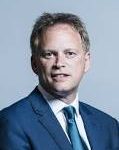
Tag: Grant Shapps

  • Grant Shapps – 2023 Speech at the Davos World Economic Forum Annual Meeting

    Grant Shapps – 2023 Speech at the Davos World Economic Forum Annual Meeting

    The speech made by Grant Shapps, the Secretary of State for Business, Energy and Industrial Strategy, in Davos, Switzerland on 19 January 2023.

    Introduction / 50 years of Davos

    Good afternoon everyone.

    It is 52 years since Professor Klaus Schwab founded the World Economic Forum……

    And chose Davos as the location for its annual meetings…… a place described as the perfect sanctuary to escape the outside world.

    And there was no shortage of problems for those first delegates to escape in the early ‘70s…..

    A looming oil crisis.

    Cold War tension with Russia.

    Industrial unrest.

    And soaring inflation…..

    To name just a few….

    Looking back over half a century later, it doesn’t take too much imagination to see parallels with today’s world.

    Countries experiencing a wave of distinctly old-fashioned economic shocks…..

    From an energy crisis, and war in Ukraine…… to strikes and the rising cost of living……

    All things we hoped had disappeared along with bell bottomed jeans in the 1970s….. but have regrettably flared up again.

    However, unlike those first visitors to Davos five decades ago……

    We are not here this week to escape the problems of the outside world.

    We’re here – Government and industry – to fix them.

    Prime Minister / Growth

    We’ve now got a government which is making the right decisions for Britain, and for our economy.

    A fortnight ago, in his New Year speech……

    As well as pledging to halve inflation this year, and make sure national debt is falling……

    The Prime Minister was unequivocal in his commitment to ‘growth’.

    Now for this Government, ‘growth’ isn’t a goal…. a target….. or a destination.

    It’s the cornerstone of everything we are doing.

    And that’s because it’s the single biggest enabler of everything we want to deliver.

    How do we fix the NHS? Growth.

    How do we tackle the cost of living? Growth.

    How do we level up our country and make it fairer for all? Growth.

    Nothing will deflect us from this most urgent of priorities.

    Innovation

    But how do we achieve it?

    If we analyse Britain’s economic growth since the first Davos five decades ago…….

    Roughly half of our productivity increase has come from innovation.

    Half of the progress we’ve made as a country, is thanks to entrepreneurs….. disruptors….. risk takers….. and innovators…..

    People and businesses daring to think differently.

    And the exciting thing is, the change we’ve seen over the past 50 years will pale in comparison when compared with the next 50.

    We are truly on the cusp of a new Industrial Revolution.

    A revolution in how we do business.

    How we communicate.

    How we travel.

    How we feed a growing global population.

    How we power our homes and industries……

    A revolution in how we live our lives.

    And we have a choice.

    Either we sit back as a nation, waiting for change to happen…… and lose our position as one of the world’s leading economies……

    Or we propel ourselves forward……

    Using the unique combination of assets and talents which Britain possesses to shape the future.

    And my overwhelming focus as Business Secretary will be the latter path……

    To help businesses grasp the opportunities that lay ahead.

    To inspire and support the entrepreneurs of tomorrow.

    So Britain can create its own success.

    And the key challenge is this:

    We have never lacked great inventors, clever ideas, or promising start-ups.

    Last year, the UK was ranked among the five most innovative nations on earth by the World Intellectual Property Office……

    Ahead of South Korea, Germany, China and Singapore.

    So that’s not our issue.

    However, we must do better is convert start-ups to scale-ups.

    So I want to inspire ‘Scale-up Britain’.

    Building businesses that don’t just develop in the UK…..

    But stay to grow and mature into world-leaders.

    And that’s what I’d like to talk to you about today.

    Raising ambitions

    The first step to a ‘Scale-up’ nation is to ‘scale-up’ our ambitions.

    I want to make Britain the most dynamic place in the world to launch, grow and do business.

    A high-skills, high-wage economy, with a business-friendly culture, where creative enterprise is encouraged and rewarded.

    At difficult times like this, our instinct could be to turn inwards, think smaller, hedge our bets, and protect domestic industry by closing ourselves off.

    But that’s precisely the opposite of what’s needed right now,

    Rather, we must open up more.

    We must think bigger, take strategic risks.

    We must target high-growth sectors with long-term potential.

    We must form new global partnerships….. inviting the world to come and invest in Britain.

    And we must build a business ecosystem that harnesses our incredible potential to be a leader in the fourth Industrial Revolution, just as we were in the first.

    Tech

    We know that emerging technology is a market we want to lead.

    And we already have the largest tech sector in Europe….. worth over $1 trillion in 2021……

    Making us only the third country in the world to ever reach this historic landmark.

    So we’re well placed, but how do we scale-up innovators into global leaders?

    We must face facts.

    We have failed so far to develop any home-grown tech giants that can compete with the biggest global players.

    Granted…… that blessed with the world’s finest universities and most enquiring minds, we have produced more billion-dollar unicorn start-ups than France, Germany and the Netherlands put together…..

    But why do so many companies move abroad after being nurtured in the UK?

    And why doesn’t Britain produce a Google, Amazon or Apple?

    After all, it was a Brit who invented the World Wide Web….

    I think we can learn a lot from Silicon Valley’s ambition……

    And its record creating global tech brands……

    But we can also learn from the mistakes it has made.

    Its unicorns have sometimes prioritised shareholder value above all else.

    Its culture sometimes falls short of the standards we expect from modern employers.

    And whilst it has made a few people unimaginably rich, the wealth isn’t shared by everyone…… with homelessness in nearby San Francisco a visible sign of this inequality.

    So what I want to create is a Silicon Valley with a British edge.

    A scale-up Britain with global ambitions to lead the tech market and improve the world.

    UK strengths

    So how do we get there?

    Well, as Business Secretary, I recognise we have an extraordinary mix of assets in this country to help businesses on this mission.

    We host 4 of the world’s top 10 universities .

    We have a research-friendly regulatory environment now capable of greater speed and flexibility, in part due to Brexit.

    The international language of business is our mother tongue.

    We’ve announced the largest R&D budget in our history to become a science superpower.

    And the ONS recently revealed that the UK is investing close to 3% of GDP in research and development – significantly higher than previously thought.

    When it comes to scale-up finance, we are home to one of the world’s two biggest financial centres.

    We’re releasing £100 billion more through the Solvency II reforms that will be used for investment.

    We are number two in the world for business start-ups.

    And we are number one in Europe for venture capital investment.

    Put simply: no-one else has such a unique blend of advantages.

    But we have to bring them together to become more than the sum of those parts, to truly harness all our powers – if we’re to scale-up Britain and achieve our potential.

    Brexit

    Now, I know that some thought the UK’s vote to leave the European Union was a signal of global retreat.

    And I won’t deny that Brexit has brought significant challenges.

    I personally voted remain, not through any love of the European Union, but largely because of the huge hassle of leaving.

    But here’s the thing……. I was a minister both before and after Brexit.

    And now we’ve gone through the process of leaving the EU, I can see how we reap the benefits……

    With new trade deals, and new regulatory freedoms.

    For example, we got back powers that are already attracting new investment to Britain.

    As PricewaterhouseCoopers’ annual survey found this week, the UK is now a top 3 global investment market.

    We’re removing years of burdensome EU regulations in favour of a more agile, forward-looking approach.

    Just recently, for example, I visited Teesside to see the site for a new lithium refinery built by a company called Green Lithium.

    The plant will supply battery grade materials for use in gigafactories for electric vehicles, as well as renewable energy and consumer technology.

    This is not just levelling-up in action….. helped by Government funding…..

    It’s Europe’s first large scale lithium refinery….. securing critical minerals at a volatile time for global markets and supply chains.

    It will provide 8% of Europe’s refined lithium……mainly for cars…..and was made possible by Brexit freedoms….. because we could change how the mineral is classified and that nimble work unlocked investment.

    By being more agile, we can adapt to changing circumstances.

    And here’s another productivity example…..

    When I was Transport Secretary, we faced a global shortage of lorry drivers.

    You probably remember the tanker driver shortages which led to petrol queues in 2021.

    Well, I announced a large package of measures to help secure fuel deliveries to petrol stations…… many of which again, were helped by Brexit freedoms.

    For example, I was able to change the law to streamline driving tests …… something I could not have done if we’d still been a member of the European Union.

    And of course, we showed how agile regulation can deliver fast, effective results when Britain led the world in approving COVID vaccines, both delivering the jabs and coming out of lockdown first.

    Leadership

    All these benefits give us incredible scope for the future.

    Not just to compete. But to drive the tech revolution ourselves.

    The market is changing, and there’s a clear space for leadership.

    But we are.

    A British version of Silicon Valley specialising in digital technologies and deep tech .

    We are pioneering so many breakthrough technologies…… from clean and secure energy to life sciences and transport.

    We are investing in our world class Catapult Network to explore how technologies can be further applied to industry.

    And through initiatives like the Digital Regulation Cooperation Forum, we will continue setting the pace.

    We can lead a new wave of digitalisation too….. by developing the Metaverse, Digital Twins and new AI enabled robotic systems .

    This wave will be driven by open ecosystems of start-ups and scale-ups, with major players collaborating across borders…..

    And like-minded countries developing world-leading standards.

    The UK will play a key role in this – for example through the OECD’s recently-announced Global Technology Forum.

    We will work with partners to become the global hub for a responsible cyber-physical future.

    Our futures will be defined by not just one tech, but many.

    Artificial intelligence….. advanced communication networks….. robotics….. augmented reality and immersive technologies….. quantum and blockchain…… all potentially game-changers.

    And the UK has strengths in not just one of these technologies – but all of them.

    The potential they offer together is greater than the sum of their parts……

    With the power to transform whole industries around the world.

    Summary

    So – to recap – we have a unique opportunity here……

    Unprecedented in our lifetimes……

    To re-equip and re-boot British industry….. for a rapidly changing world.

    We have a government committed to growth.

    We have expertise in a wide mix of cutting edge technologies.

    We have the right environment to nurture business.

    We have already launched more than four and a half thousand startups and scaleups working in advanced digital technologies in the UK.

    So, with the largest tech sector in Europe, we’re already well on the way to becoming a British Silicon Valley.

    Scale-up Summit

    But to help us raise our game, we need to listen to a wider variety of entrepreneurs currently driving change.

    So I will launch a Scale-up Summit to bring together key frontier tech, development and finance figures who have accelerated tech businesses from start-ups to scale-ups……

    Who have worked around the world, from California to Tallinn…..

    And who can help us replicate their success in the UK, from Catford to Teeside.

    In particular, we want to hear from those who have achieved high growth, unicorn status…… and experienced multiple exits.

    We will use the Summit to build networks and share expertise.

    And establish how best we can use our skills and strengths to spark the growth of tomorrow.

    Conclusion

    So, despite the prevailing economic news right now……

    The difficult challenges that almost every government and business is grappling with……

    This is no time to sit back and escape the problems of the outside world, as those first Davos visitors did half a century ago…..

    It’s time to confront them.

    And the best way to do that is to get our economy growing.

    We in government know that this country can’t thrive unless its businesses are fit and flourishing too.

    That’s why the Prime Minister, the Chancellor and I are working flat out to not only recover from the toughest period in recent economic history…… but also to prepare for the next 50 years of British innovation…..

    Using the unique assets Britain has at its disposal……

    Building resilient businesses with global reach…..

    And leading in emerging markets that will deliver in the long-term.

    That’s how we’ll scale-up our ambitions.

    And that’s how we will shape the future.

    Thank you.

  • Grant Shapps – 2023 Statement on Spaceport Cornwall and the First Launch of Satellites

    Grant Shapps – 2023 Statement on Spaceport Cornwall and the First Launch of Satellites

    The statement made by Grant Shapps, the Secretary of State for Business, Energy and Industrial Strategy, in the House of Commons on 10 January 2023.

    Last night, Virgin Orbit attempted the first orbital launch from Spaceport Cornwall. Unfortunately, the launch was unsuccessful. We will work closely with Virgin Orbit as they investigate what caused the failure in the coming days and weeks. While a failed launch is disappointing, launching a spacecraft always carries significant risks. Despite this, the project has succeeded in creating a horizontal launch capability at Spaceport Cornwall, and we remain committed to becoming the leading provider of commercial small satellite launch in Europe by 2030, with vertical launches planned from Scotland in the next year.

  • Grant Shapps – 2023 Statement on Industrial Action and Minimum Service Levels

    Grant Shapps – 2023 Statement on Industrial Action and Minimum Service Levels

    The statement made by Grant Shapps, the Secretary of State for Business, Energy and Industrial Strategy, in the House of Commons on 10 January 2023.

    With permission, Mr Speaker, I would like to make a statement on industrial action and minimum service levels.

    Nurses, paramedics and transport workers are called key workers for a reason. They truly are the lifeblood of this country; every person sitting in this Chamber is grateful for the work they do and I know everyone will agree that we cannot do without them. The Government will always defend their ability to withdraw their labour.

    However, we also recognise the pressures faced by those working in the public sector. Yesterday I invited union leaders in for talks across Government, and I am pleased to say we have seen some progress. We want to resolve disputes where possible, while also delivering what is fair and reasonable to the taxpayer. At the moment, all households are struggling with the repercussions of high inflation caused by covid and Putin’s barbaric invasion of Ukraine, and the Government are absolutely focused on tackling that.

    Granting inflation-busting pay deals that step outside of the independent pay review settlement process is not the sensible way to proceed and will not provide a fair outcome. We will instead continue to consult to find meaningful ways forward for the unions, and work with employers to improve the process and discuss the evidence that we have now submitted. In the meantime, the Government also have a duty to protect the public’s access to essential public services. Although we absolutely believe in the right to strike, we are duty-bound to protect the lives and livelihoods of the British people.

    The British people need to know that when they have a heart attack, a stroke or a serious injury, an ambulance will turn up, and that if they need hospital care, they have access to it. They need to know not only that those services are available, but that they can get trains or buses—particularly people who are most likely to be the least well-off in society.

    I thank those at the Royal College of Nursing, who, during their last strike, worked with health officials at a national level to ensure that safe levels of cover were in place when they took industrial action. They kept services such as emergency and acute care running. They may have disagreed, but they showed that they could do their protest and withdraw their labour in a reasonable and mature way. As ever, they put the public first, and we need all our public services to do the same.

    A lack of timely co-operation from the ambulance unions meant that employers could not reach agreement nationally for minimum safety levels during recent strikes. Health officials were left guessing the likely minimum coverage, making contingency planning almost impossible and putting all our constituents’ lives at risk. The ambulance strikes planned for tomorrow still do not have minimum safety levels in place. That will result in patchy emergency care for British people. This cannot continue.

    It is for moments such as this that we are introducing legislation focusing on blue-light emergency services and on delivering on our manifesto commitment to secure minimum service on the railways. I am introducing a Bill that will give the Government the power to ensure that vital public services will have to maintain a basic function, by delivering minimum safety levels to ensure that lives and livelihoods are not lost. We are looking at six key areas, each of which is critical to keeping the British people safe and society functioning: health, education, fire and rescue, transport, border security and nuclear decommissioning. We do not want to use this legislation, but we must ensure the safety of the British public. During the passage of the Bill, we intend to consult on what an adequate level of coverage looks like in fire, ambulance, and rail services. For the other sectors covered in the Bill, we hope to reach minimum service agreements so that we do not have to use the powers—sectors will be able to come to that position, just as the nurses have done in recent strikes.

    That is a common-sense approach, and we are not the first to follow it. The legislation will bring us in line with other modern European countries such as France, Spain, Italy and Germany, all of which already have these types of rules in place. Even the International Labour Organisation—the guardian of workers’ rights around the world to which the TUC itself subscribes—says that minimum service levels are a proportionate way of balancing the right to strike with the need to protect the wider public. The first job of any Government is to keep the public safe, and unlike other countries, we are not proposing to ban strikes, but we do need to know that unions will be held to account.

    Opposition Members who object to minimum safety levels will need to explain to their constituents why, if they had a heart attack, stroke, or life-threatening illness on a strike day, there were no minimum safety standards in place—[Interruption.] I can see that they do not want to hear it, but they will also need to explain why their leader, the right hon. and learned Member for Holborn and St Pancras (Keir Starmer), has already promised—without hearing any of these details—to stand in the way of this legislation and to repeal minimum safety levels, which are in the interests of their constituents, are in place in every other mature European democracy and neighbouring country, and would protect lives and livelihoods in this country. That is the difference between a Conservative Government who take difficult decisions to protect the welfare of our nation, and the Opposition, who too often appear to be in the pay of their union paymasters. I commend this statement to the House.

  • Grant Shapps – 2023 Speech to the Atlantic Council at its Global Energy Forum

    Grant Shapps – 2023 Speech to the Atlantic Council at its Global Energy Forum

    The speech made by Grant Shapps, the Secretary of State for Business, Energy and Industrial Strategy, in Abu Dhabi on 14 January 2023.

    The UAE seems to be playing some part in my fate.

    Last year, I found myself just 100 kilometres away from here.

    But, far from the beaches and the skyscrapers of Abu Dhabi and Dubai, it felt like a different world.

    There, in the middle of the desert, I saw a sparkling sea of a different kind.

    The deep blue shine of millions of photovoltaic panels in the sun, generating hundreds of megawatts of renewable electricity.

    Panels which will eventually become part of one of the largest solar plants in the world.

    I had little idea then that fate would return me here only a year later as the Minister responsible for energy.

    Today, some things remain the same; the UAE is still right at the cutting edge in generating low-cost solar power on a frankly stunning scale. Right here in Abu Dhabi, they’re breaking fresh records in solar technology at Al Dhafra and Shams.

    But much has changed, and not just for me.

    In many ways, we find ourselves in a different world.

    The last time this forum convened, Putin’s barbaric invasion of Ukraine was just beginning.

    Now, we face a winter which, for many in Europe, is overshadowed by concern about falling energy supplies and rising prices…

    …a winter when households have had to think twice before turning up the thermostat…

    …when factories have been forced to pause production…

    …when inflation has rocketed…

    and growth has slowed.

    It is also a winter that comes at the end of a year that saw flooding in Pakistan…

    …heatwaves in the UK…

    …and bomb cyclones in the US.

    A year when we began to feel the likely impacts of climate change in earnest.

    There is much about the last twelve months that I could not have foreseen back then.

    And looking forward to 2023, the future is far from clear; I certainly wouldn’t want to make too many predictions.

    But – putting matters of predestination aside – there’s one thing we can be sure of: energy matters now more than ever.

    So where do we go from here?

    Perhaps we are best off starting with the ways that world has changed for the better in 2022.

    Off our Eastern coast, we completed Hornsea Two – the world’s largest offshore wind farm.

    There, you will find over a hundred turbines.

    At their very highest point, they are a dizzying 200m above the stormy seas below.

    For those of you who have visited the Zayed Sports City Stadium, that’s almost the height of two football pitches stacked on top of each other.

    Just a single rotation of one of these turbines generates enough electricity to power a home for 24 hours.

    But Hornsea Two is far from our first success – because we’re home to the world’s second, third, and fourth largest wind farms, too.

    Today, all of them are capturing the high winds of the North Sea, in a year when we beat our record for wind power generation three times.

    And across the Atlantic in California, we’ve witnessed another extraordinary achievement.

    Just a month ago, scientists at the Laurence Livermore National Laboratory announced one of the most significant energy breakthroughs in living memory.

    Aiming 192 high-powered lasers at a tiny spherical capsule just 2mm wide, they were able to harness the same reactions that power the sun and stars to demonstrate fusion ignition, proving what until now had only existed in theory and paving the way towards what could be one day a near-limitless source of energy for the future. And back in the UK, we’re taking leaps of our own.

    We’re not just developing our very own fusion power plant, a ‘spherical tokamak’ on the site of an old coal power station in the Midlands. We are also operating the Joint Energy Torus, the most powerful fusion facility in the world and taking the lead in regulating and commercialising fusion technology, working out the best way to get it out of the lab and into the real market place, and into the world.

    These are stories of entrepreneurs and innovators, working together to deliver clean, secure energy for millions, and jobs for thousands more.

    Stories that tell us that the fates of energy security, net zero, and the economic growth are inseparably intertwined.

    Dependable supplies of fossil fuels, particularly natural gas, have a crucial role to play in easing the energy transition, which we just heard about in the discussion on stage.

    But it is only by harnessing the power of transformative green technologies that we can build a global energy system that is fit for the future.

    Whether that’s in the UK, where we’re developing small modular reactors which promise to make nuclear easier, faster, and cheaper… and we have been running them in the sea for the last six days.

    …or here in Abu Dhabi, where operations have begun at the Barakah nuclear power plant, the first nuclear power plant not just in the UAE but in the whole Arab world, expected to deliver up to a quarter of the nation’s electricity needs when fully up and running…

    …and where, last week, ADNOC announced $15bn to accelerate its decarbonisation strategy, investing in everything from energy efficiency and electrification to carbon capture.

    Now yesterday, I signed a Clean Energy Memorandum between the UK and the UAE to promote energy security and investment between our two nations.

    Agreements like this matter. Because when it comes to climate change, the whole world has a stake. And none of us should have to settle for less.

    So working together really matters…

    …to deliver a low-carbon future that isn’t just more secure and more prosperous…

    …but a future that is fairer is a future I think that is worth fighting for.

    Our International Climate Finance has already provided an astonishing 58 million people with improved access to clean energy since 2011.

    But we are delivering on our pledge to double it up to at least £11.6bn from 2021, reaching tens of millions more.

    Because the Green Industrial Revolution must not leave anyone behind.

    After all, you can’t just shut down your power stations and be done with it, leaving millions without energy or employment.

    That’s where Just Energy Transition Partnerships come in. They are mobilising billions to support the transition from coal power to clean growth in key economies like South Africa and Indonesia.

    And, by investing in new green energy supplies, electric vehicles, and hydrogen, they are providing security and opportunity for communities across these countries.

    Ladies and gentlemen, I have to say it is fitting that we are here in the UAE, 2023’s COP28 President elect Sultan Al Jaber and his great leadership and speech this morning. Because it is here that we are seeing and building on the extraordinary progress that has been made since Glasgow, built on in Egypt, but this year we will have to see those real developments, in this stocktake COP taking place in November and December.

    We face challenges the likes of which no generation has ever faced before.

    Let me just take you briefly back to that solar sea in the desert that I talked about visiting last year.

    Today, they’re building the tallest solar tower in the entire world.

    Concentrating the heat reflected by tens of thousands of moving mirrors onto a single point, it will be a shining a beacon hundreds of meters above the ground – and a lighthouse above the blue beneath.

    Innovations like these -creating powers in new ways –  must  be an inspiration for us all, guiding us towards a better energy technology of tomorrow.

    But none of this can be done alone. None of it can be done alone.

    I have talked today about fate, not just my fate but also your fate – or our joint fates.

    And I said before that we could only be certain of one thing: energy matters more today than it ever has done in the history of humanity.

    In the face of great challenges, we have no oracles to turn to…

    …nor do I have any Delphic maxims to offer.

    But, without climbing the steps of Mount Parnassus, or any other high mountain, I think there is one thing that we can be absolutely sure of…we will succeed as humanity in doing this.

    One thing I can’t be certain of is my fate, other than to say, I know the UAE will continue to be a big part of it and I can predict with absolute confidence that I will be back here in December. I look forward to seeing you all at COP28. Thank you very much.

  • Grant Shapps – 2016 Parliamentary Question to the Department of Health

    Grant Shapps – 2016 Parliamentary Question to the Department of Health

    The below Parliamentary question was asked by Grant Shapps on 2016-03-24.

    To ask the Secretary of State for Health, what steps the Government is taking to ensure all frontline NHS staff are trained in suicide prevention; and whether such training will be compulsory.

    Ben Gummer

    It is the responsibility of the professional regulators to set the standards and outcomes for education and training and approve training curricula to ensure newly qualified healthcare professionals are equipped with the knowledge, skills and attitudes to provide high quality patient care. It is the responsibility of employers to ensure staff receive appropriate training to deliver high quality healthcare. This includes training in suicide prevention. There are no plans to make it compulsory.

  • Grant Shapps – 2016 Parliamentary Question to the Department for Transport

    Grant Shapps – 2016 Parliamentary Question to the Department for Transport

    The below Parliamentary question was asked by Grant Shapps on 2016-09-15.

    To ask the Secretary of State for Transport, whether his Department plans to fund transport infrastructure projects that are completely or partly funded by EU programmes after the UK leaves the EU.

    Andrew Jones

    The Department for Transport has responsibility for UK involvement in the transport element of the Connecting Europe Facility (CEF) and the Trans European Transport Network programme (TEN-T). These schemes have provided co-funding for a number of public and private sector transport infrastructure projects.

    On 13th August my Right Honourable Friend, the Chancellor of the Exchequer made an announcement[1], outlining the Government position on EU funding schemes, which included a commitment to provide continuity of funding for UK participants in EU programmes.

    In line with that announcement, my Department will work closely with HM Treasury and concerned stakeholders to review EU funding schemes in the round, to ensure that any ongoing funding commitments best serve the UK’s national interest, while ensuring appropriate investor certainty.

    [1] The following is a link to the announcement:
    https://www.gov.uk/government/news/chancellor-philip-hammond-guarantees-eu-funding-beyond-date-uk-leaves-the-eu

  • Grant Shapps – 2016 Parliamentary Question to the Department for Transport

    Grant Shapps – 2016 Parliamentary Question to the Department for Transport

    The below Parliamentary question was asked by Grant Shapps on 2016-10-17.

    To ask the Secretary of State for Transport, how much private funding has been secured for the High Speed 2 project from major corporate beneficiaries to date.

    Andrew Jones

    No private funding contributions have been secured for HS2 to date.

  • Grant Shapps – 2016 Parliamentary Question to the Ministry of Defence

    Grant Shapps – 2016 Parliamentary Question to the Ministry of Defence

    The below Parliamentary question was asked by Grant Shapps on 2016-10-14.

    To ask the Secretary of State for Defence, how much his Department has spent from the public purse on modifications and adapted housing in each year from 2000 to date; and whether data on such spend is available before 2000 and to what date.

    Mark Lancaster

    I refer the hon. Member to the answer I gave him on 15 September 2016 to Questions 45414 and 45461.

  • Grant Shapps – 2016 Parliamentary Question to the HM Treasury

    Grant Shapps – 2016 Parliamentary Question to the HM Treasury

    The below Parliamentary question was asked by Grant Shapps on 2016-10-20.

    To ask Mr Chancellor of the Exchequer, whether any proportion of Air Passenger Duty revenue is used to fund the UK’s commitment to Unitaid.

    Jane Ellison

    The government does not hypothecate revenue collected from Air Passenger Duty.

  • Grant Shapps – 2016 Parliamentary Question to the Department of Health

    Grant Shapps – 2016 Parliamentary Question to the Department of Health

    The below Parliamentary question was asked by Grant Shapps on 2016-03-24.

    To ask the Secretary of State for Health, what steps his Department plans to take to support recommendation 17 of the Mental Health Taskforce report of February 2016, on 24/7 access to mental health services by 2020-21.

    Alistair Burt

    The Department welcomed the publication of the independent Mental Health Taskforce report and we are working with our delivery partners to develop a programme of work to embed its recommendations in our policies. We will provide further details in the summer.

    To support this programme, we announced in January that an additional £1 billion investment will help to transform mental health services by 2020. This investment includes over £400 million for crisis resolution and home treatment teams to deliver 24/7 treatment in communities and homes as a safe and effective alternative to hospitals and £247 million for liaison mental health services in every hospital emergency department.