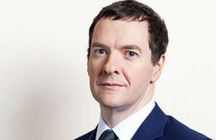
Tag: George Osborne

  • George Osborne – 2008 Speech to the Annual CPS Lecture

    gosborne

    I’d like to thank Jill Kirby and the Centre for Policy Studies for inviting me here today to give this Annual Lecture.

    The CPS helped to lay the intellectual foundations for the arrival of a transforming Conservative Government in 1979.

    I hope that you can do the same for us today.

    After all, many of the immediate problems we face are eerily reminiscent of the late 1970s.

    Rising inflation – which hit an eleven year high today – rising oil prices, and a deteriorating fiscal position, to take just three examples.

    David Cameron this morning set out the Conservative Economic Recovery Plan that we have developed to address the immediate challenges of the economic slowdown and the credit crunch.

    This evening I want to talk about our long term economic goals.

    I want to argue that fixing our broken society is integral to building a strong economy.

    Listen to our Prime Minister and you get the impression that social problems and economic problems are entirely separate.

    One day the Government is talking about knife crime – the next it’s about the banking system.

    One Minister delivers a speech about school discipline – another has an announcement about the housing market.

    We need to bring these different threads together.

    Labour came to power promising to deliver both social justice and economic efficiency.

    After 11 years, the evidence shows that they have fundamentally failed to deliver on either.

    We Conservatives understand that they are really two sides of the same coin.

    Of course we know that you cannot improve social conditions without economic success.

    But the crucial insight for modern Conservatives is that in the new global economy you cannot have economic success without social success.

    The formula for economic success in this new global economy is no mystery.

    Low tax rates and a simple tax system to attract and retain mobile capital and talent – an area where Britain used to be strong but is losing ground fast.

    Light touch regulation to keep down costs and avoid stifling innovation.

    A flexible labour market that allows employers to respond to fast changing market conditions.

    Reliable and cost effective energy and transport infrastructure.

    An efficient system of government support for investment in science and technology.

    And, probably most important of all, a motivated and educated workforce that can adapt to new technologies and working practices.

    But while other countries have used the last decade of global economic growth to improve their competitiveness, our Government failed to use the good times to prepare us for tougher times ahead.

    Where they have cut their tax rates, improved their fiscal positions and reformed their public services, our corporate tax rate has fallen from 4th lowest in the EU to 19th lowest, our budget deficit is the largest of any major economy, and Gordon Brown has blocked the necessary reform of our public services.

    So it will fall to the next Government to restore our competitiveness.

    Some of the necessary reforms can be implemented immediately – and we are doing the hard work now on building a simpler tax system, reducing regulation, reforming our public services and improving our infrastructure in the broadest sense.

    But some of the most important changes will require us to tackle the deep rooted social problems that are holding us back.

    So we know that we have to improve the quality of Britain’s education.

    Because educational failure doesn’t just hold back the potential of millions of our children, it also undermines our country’s ability to compete in the age of the knowledge economy.

    We understand that it’s our job to bring about a revolution in our welfare system.

    Because not only do persistent worklessness and the poverty it brings blight too many people and too many of our communities, they also deprive us of the motivated workforce that our companies need in order to compete. In a global economy that puts a premium on the highly skilled, Britain cannot afford to be held back by the drag anchor of millions of people who lack skills or aspirations.

    And we recognise that we have to mend Britain’s broken society.

    Not just because social breakdown causes misery for millions of families, but because we will never achieve the low tax economy that international competitiveness demands unless we reduce the long term demands on the state.

    We have pledged to share the proceeds of growth, so that government grows more slowly than the trend rate of the economy over the cycle.

    That means that government spending will fall as a proportion of GDP.

    That’s the only way to restore our public finances to health and build the headroom for sustainably lower taxes.

    Of course we can make Whitehall more efficient and streamlined, and we must.

    But to get government to live within its means we have to tackle the real drivers of the growing state at source.

    So those who say that the Conservatives spend too much time talking about society and not enough time talking about the economy don’t understand that this is a false choice.

    Reducing educational failure, tackling worklessness and poverty, mending our broken society – these are all progressive social goals that we have rightly put at the very centre of our agenda.

    And the failures of the last decade to achieve these goals give us the opportunity to demonstrate that they can only be achieved through Conservative means.

    But they are also essential economic goals.

    And so achieving these progressive goals through Conservative means will be at the heart of our long term economic strategy.

    Let me explain how.

    First, the progressive goal of reducing educational failure.

    The last eleven years have been a huge missed opportunity in our schools.

    Despite big increases in spending, this country has one of the highest levels of educational inequality in the Western world.

    The attainment of our lowest achievers has not improved significantly since 1998.

    And educational inequality is getting worse – the proportion of pupils in the most deprived areas gaining five good GCSEs fell from 28% in 2005 to 25% in 2007, while the proportion in the least deprived areas increased from 56% to 68%.

    What’s progressive about that?

    If we are really serious about ending child poverty and reducing inequality we have to end the educational poverty trap that is deeply embedded in some of our poorest areas.

    But educational failure is also holding back our economy.

    All the academic evidence tells us that skills are one of the most important drivers of economic growth in the global economy.

    Of course that means more scientists, more engineers and more world class universities are crucial.

    We are constantly told about the hundreds of thousands of scientists and engineers being trained each year in China and India, even if some of the qualifications they are getting are of questionable quality.

    The numbers sound overwhelming, but as any economist will tell you, it’s not quantities on their own that matter, it’s prices. And in this case that means wages.

    The really important implication of globalisation for our education system is that the returns to education and skills are rising, as is the penalty for educational failure.

    It’s those with a good education and the right skills who are best placed to share in the rewards of the new global economy, while those with low skills face an increasingly uncertain future of falling relative wages and competition from the developing world.

    Yet international comparisons show that where Britain lags furthest behind our competitors is in a long tail of educational underachievement and low skills.

    The proportion of adults in the UK without the equivalent of a basic school-leaving qualification is double that of Germany and almost three times that of the United States.

    Children leaving school without a good grasp of basic literacy and mathematics are increasingly ill-equipped to succeed in the new global economy.

    Our school system is still producing too many of them.

    For all their fine sounding rhetoric, Labour’s top-down approach has failed.

    Increased spending has not produced results and too many parents are still denied a real choice of schools.

    So how will we use conservative means to achieve the progressive goal of reducing educational failure?

    By focusing on standards – with synthetic phonics to eradicate reading failure.

    By getting a grip on school discipline and focusing more on what goes on inside the classroom.

    And crucially, by breaking open the state’s monopoly on the provision of state education to create more good school places.

    The Green Paper published by Michael Gove has set out detailed proposals to create over 220,000 good school places in new Academies run by educational charities, companies, philanthropists, teachers and parents.

    These will be targeted at the poorest pupils, with more money made available for children from the poorest background through a ‘pupil premium’, which will make sure that extra funds follow those pupils to the school that educates them.

    That means schools will be actively incentivised to seek out and accept pupils from more challenging backgrounds.

    This completely turns the current situation on its head.

    Under our system, schools will be competing for the most disadvantaged pupils, not trying to keep them out.

    What’s more, any maintained schools that are deemed to be persistently failing will be taken out of local authority control and handed over to an independent, voluntary or co-operative provider.

    As we’ve seen from Sweden, empowering parents in this way can have a huge impact when it comes to raising standards and tackling inequality.

    This is the perfect example of how to achieve progressive goals by conservative means – not the dead hand of government control, but breaking open state monopolies and allowing innovation to flourish.

    It’s what we mean by the post-bureaucratic age – not top-down but bottom-up.

    The second progressive goal I want to discuss is reducing worklessness.

    We should never forget that getting people off state benefits and into work is a fundamentally progressive goal.

    The evidence is now overwhelming that worklessness and benefit dependency are at the very core of the cycle of poverty that blights so many of our communities.

    No wonder idleness was one of the five evils that William Beveridge spelled out in his defining work on the case for a welfare state.

    And Beveridge himself made it clear that he did not see state handouts as the answer.

    As he put it: “Idleness is not the same as want, but a separate evil, which men do not escape by having an income.”

    These words are just as relevant today as they were sixty years ago.

    Yet Britain has a higher proportion of its children living in workless households than any other EU country.

    One in five grow up in households dependent on out of work benefits

    And as the OECD confirmed last week, youth unemployment is higher than in 1997.

    Let’s just focus on this stunning fact – after all Gordon Brown’s boasts about the New Deal and his pledges on youth unemployment, the unemployment rate for 16 to 24 year olds in Britain is now above the OECD average, having been well below it in 1997.

    Know that one fact and you know why Labour has failed.

    The same is true for the proportion of the age group who are not in education, employment or training – the NEETs.

    What’s more, as the independent Institute for Fiscal Studies has found, the indirect effect of Gordon Brown’s reliance on means-tested benefits to tackle poverty “might be to increase poverty through weakening incentives for parents to work.”

    There’s nothing progressive about that.

    But this social failure is also an economic failure.

    Of course worklessness is a huge burden on the public finances.

    David Freud’s excellent report on welfare reform calculated that every person who moves off benefits and into work saves the exchequer more than £5,000 a year, and that’s even before taking into account the taxes they will pay on their income.

    But worklessness is also a huge waste of economic potential.

    It robs individuals of their chance to participate in the global economy, and it robs employers of the motivated workforce that they need in order to compete.

    It is, frankly, just not good enough that after fifteen years of global economic growth almost five million people are on out-of-work benefits – more than 15% of the labour force.

    That’s why the radical plans for welfare reform that Chris Grayling has set out are both a social and an economic imperative.

    We will mobilise the energies of civil society by paying competing private and voluntary providers according to the results they achieve.

    Instead of relying on the old-fashioned mechanisms of bureaucratic top-down state intervention, we will back the modern mechanisms of civil society: the social entrepreneurs, the community organisations and the responsible businesses that will drive social progress in the post-bureaucratic age.

    We have seen how this radical approach has proven so effective in countries like Australia and the United States.

    Because providers will be paid not only for finding people work, but keeping them in jobs, they will be incentivised to offer proper training to claimants, giving them skills that will not only help them to get a job, but also to stay in that job and progress in the labour market.

    And because we will not prescribe exactly what support the providers must provide, they will have the freedom to offer innovative and individualised services.

    If you look at Australia and the United States, you find providers offering mock interviews, personalised advice and work experience schemes.

    And of course, all this goes hand in hand with a focus on full-time activity for those potentially able to work and much tougher sanctions for those who are not willing to participate in the return to work process.

    Introduced in Britain, these changes would constitute the biggest change to the modern welfare state since its creation.

    They will provide ladders of opportunity to millions of people, and combined with our commitment to use the savings to end the couple penalty in the tax credit system we believe they will directly lift almost half a million children out of poverty.

    At the same time they will start to reduce the burden of worklessness on the public finances and help to provide the workforce that businesses need to compete in the global economy.

    Combined with the ideas on reforming our insolvency regime that David Cameron set out this morning, this system will also provide us with a strategy to deal with any increases in unemployment over the coming months and years.

    The third goal I want to discuss is the most ambitious – mending our broken society.

    There’s no doubt that this is a progressive goal.

    Because the link between family breakdown and the risk of poverty is well established, yet Britain has one of the highest rates of family breakdown in Europe.

    Because alcohol and drug abuse destroy lives and families, yet alcohol consumption by children has doubled in the last fifteen years, and we have the highest level of problem drug use in Europe.

    And because families in poverty often suffer the most from Labour’s failure to tackle crime, especially violent crime.

    But mending our broken society is also an economic imperative, because we will never achieve the low tax economy that international competitiveness demands unless we reduce the long term demands on the state.

    Of course we can make Whitehall more efficient and streamlined, and we are developing the plans to do exactly that.

    But that won’t be enough – the long term public finance projections published at the last Budget show that on the basis of current policies, government spending is forecast to grow by almost 5% of GDP over the next fifty years.

    That’s £70 billion in current prices, or 14 pence on the basic rate of income tax – when what our economy needs in the face of fierce global competition is lower taxes not higher.

    To get government to live within its means we have to tackle the real drivers of the growing state at source.

    But make no mistake, reducing the long-term demands on the state will not happen overnight.

    There are no shortcuts.

    Our welfare and education reforms will obviously play an integral role.

    By tackling worklessness and giving people the opportunities and skills they need to succeed, they will help us tackle the long-term causes of dependence and poverty.

    Our rehabilitation revolution in prisons will use the same Conservative means to tackle the cycle of re-offending – not top-down control from the centre, but giving private companies and charities the freedom to innovate and paying them by the results they achieve.

    But we won’t make a lasting difference unless we also make Britain more family friendly.

    Iain Duncan Smith’s Social Justice Policy Group estimated that the cost of family breakdown is now well over £20 billion a year.

    In fact, I genuinely don’t think we’ll ever get to the heart of the big problems we face, from crime and anti-social behaviour to welfare dependency and educational failure, from debt and drug addiction to entrenched poverty and stalled social mobility, if we don’t do everything we can to support Britain’s families.

    Of course, every family is different, and every family has different needs and different pressures at different times.

    So we need a sensible, practical range of family centric policies.

    For a start, we need to sweep away Labour’s policies that actually make it pay for families to break up.

    That is why we will end Labour’s couple penalty in the tax credits system, giving 1.8 million couples up to £1,800 more a year.

    This will be delivered as savings are generated through our radical programme of welfare reform.

    And we are committed to introducing a recognition of marriage into the tax system.

    But of course, there’s more to families than money.

    It’s a startling fact that parents are more likely to split up in the first year after their child’s birth than at any other time.

    So we need to provide targeted support to help families cope with the unique stresses and strains of parenthood.

    We’ve already set out our plans to offer all parents flexible working.

    And we’ve announced that we will use savings from existing budgets to provide a universal health visiting service, with the health visitor acting as the trusted gateway to other services that a family might need – including relationship support.

    Supporting families, then, is another Conservative approach that will help us achieve progressive goals where Labour has so clearly failed.

    So this is our strategy for building a strong economy.

    In the short term we must tackle the immediate problems that rising inflation and the credit crunch are causing families and businesses, as David Cameron set out this morning.

    And in the long term we must restore our flagging competitiveness.

    That means a simpler tax system, lower regulation and rebuilding our infrastructure.

    But it also means tackling the deep social problems that are holding us back.

    So, a schools revolution to reduce educational failure and equip our children with the skills they need in the knowledge economy.

    A welfare revolution to reduce persistent worklessness and provide our businesses with the motivated workforce they need to compete.

    And mending our broken society so that we can tackle the drivers of state spending at source.

    In each case using Conservative means to achieve progressive ends.

    And in each case by achieving these progressive ends we will help to create the strong economy on which we all depend.

  • George Osborne – 2001 Maiden Speech in the House of Commons

    gosborne

    Below is the text of the maiden speech made in the House of Commons by George Osborne on 3rd July 2001.

    I congratulate my hon. Friends on their maiden speeches. They have a great advantage over me: they have completed this ordeal, which is still ahead of me.

    I should like to begin by paying tribute to my predecessor, Mr. Martin Bell. He was the first Independent Member elected to the House for 50 years. He tells the story of how, shortly after his election, he was invited to tea by Barbara Castle. Over tea and biscuits in the House of Lords, she summed up her advice, drawn from her 60-year career in politics. She said to him, “Young man”—which, he confesses, completely won him over—”whatever else you do, you must never be afraid to stand alone.” Of all people, this former war reporter probably needed that advice the least.

    Martin Bell had stood alone courageously in the Balkans when he reported the wars in that region in all their brutality. In the House, too, he stood alone. He stood alone when he forced the Government to find time to ratify the Ottawa convention on land mines. He stood alone when he controversially spoke out against the air strikes against Iraq. He also stood alone when he campaigned to overturn 50 years of Whitehall stonewalling on the question of far east prisoners of war.

    Be it Serbia, NATO or the Ministry of Defence, Martin Bell took on powerful opponents and won. However, two opponents in the end defeated him. The first, I am happy to say, was my hon. Friend the Member for Brentwood and Ongar (Mr. Pickles) who defeated him in the general election. The second was the Speaker’s Chair, because he campaigned long and hard for the Cross Benches below the Bar of the House to be recognised as part of the Chamber, but he failed miserably. That is a good lesson to all new Members on the power of the Speaker’s Chair in such matters.

    Many people come to the House as idealists and leave it as cynics. I have got to know Martin Bell quite well in the past couple of years, and it strikes me that he came to the House as a cynic and left as an idealist. The man in the white suit will be as missed in the corridors of the Palace of Westminster as he will be by people on the streets of the Tatton constituency, whose interests he represented so well. I am greatly honoured to take his place in the House.

    The very name of the Cheshire constituency that I now represent is a clue to the fact that it is not a single community, but a collection of communities. Tatton is not a town or a village. In fact, no one lives in Tatton—or not any more. Tatton is a building. I believe that I am one of only two Members whose constituency is named after a building. If hon. Members are trying to remember who the other one is, I shall put them out of their misery—it is the hon. Member for Brighton, Pavilion (Mr. Lepper).

    Unlike the Brighton Pavilion, Tatton Park is the rather austere, imposing ancestral home of the Lords Egerton, who are now deceased. It is now the National Trust’s most visited property, and home to many popular exhibitions and concerts in my constituency. On Tatton Park’s doorstep is the beautiful and historic market town of Knutsford. Once a major stop for travellers on the road to Manchester, it has long been replaced in that function by the less historic and frankly less beautiful M6 Knutsford service station. Thankfully, the coaching inns on King street remain, and more leisurely tourists still visit in large numbers.

    Knutsford got its name from the place where the Danish King, King Canute, forded the River Lily—hence Canute’s ford. I can report to the House that the majority of the residents in Knutsford, like me, take what could be called a Danish view of the Government’s plan to join the single currency. Knutsford may be steeped in history but it has its modern problems, such as the constant pressure of development and traffic and the fear of crime. I shall seek to overturn the recent decision of Home Office Ministers—the Financial Secretary to the Treasury is a former Home Office Minister—to deny us funding for closed circuit television. There is also the noise and pollution from Manchester airport’s second runway. One of my priorities will be to try to change the law to allow airports to fine planes that deviate unnecessarily from agreed flight routes and noise limits.

    Around Knutsford stretches the fertile Cheshire plain, in which lie the beautiful rural villages of Mobberley, Pickmere, Plumley, Allostock, Byley, Whitley, Comberbach and Lower Peover—I have left out half of them. Lower Peover is an idyllic village with a fantastic local pub called “The Bells of Peover”, in which General Eisenhower and General Patton once planned the D-day landings. These days drinkers plan who will buy the next round.

    All those villages have suffered from the collapse of rural services, the deep recession in agriculture and the disaster of foot and mouth disease, to which my hon. Friend the Member for Leominster (Mr. Wiggin) eloquently referred. Farmers in Crowley, who are now struggling with a recent outbreak, or employees at the Chelford market who have seen their jobs disappear, do not agree with the Prime Minister that we are on the home stretch in tackling the consequences of this disease. I shall do everything that I can to ensure that Cheshire’s rural communities get the support they need.

    On the western edge of the constituency are Barnton, Rudheath and Anderton—three suburbs of the old ICI salt town of Northwich—which have often been neglected in the politics of the constituency. I am determined that that will end. At the other end of the constituency lie the former cotton towns of Wilmslow and Handforth, and the famous village of Alderley Edge, which is known to locals for its infamous traffic problems. Together they make up a wonderful residential area that is also home to many successful companies, including the research laboratories of Astra Zeneca, where world-leading research is carried out into cancer and heart disease.

    Wilmslow is famous across Britain as the home of football players, “Coronation Street” stars and pop singers. However, the town’s most famous celebrity is known simply as Pete. He was an unfortunate man who was found garrotted, beaten and stabbed on Lindow common. Wilmslow is not a violent place, so that discovery came as a bit of a shock. The local police launched a murder investigation. Inquiries were made and suspects were interviewed, but even the excellent detective work of the Cheshire police could not solve this murder, for it turned out that Pete had been dead for 2,000 years, preserved in the peat bog that gave him his name. He now lives in the much safer surroundings of the British museum.

    Another famous Wilmslow resident was the code breaker and computer pioneer, Alan Turing. It is a sad irony that the man who did more than almost anyone else to defeat the Nazi tyranny by breaking the Enigma code was persecuted in Britain for his homosexuality, and committed suicide. It is a welcome sign of a more understanding age that a statue of Turing has just been unveiled in Manchester.

    Although much of the Tatton constituency is prosperous—not for nothing is it the place where Mr. Rolls met Sir Henry Royce—there are pockets of deprivation on the Longridge, Spath Lane and Colshaw Farm housing estates, and in many of the rural areas. I shall do everything that I can to help those communities.

    I am delighted to have been elected to represent such a tine constituency, but it deeply concerns me that so many fewer of my constituents chose to participate in the election. Our turnout, like that of many constituencies, fell by more than 10 per cent. Some people argue that that is nothing to worry about, as it is a sign of a contented population who are happy with the present state of affairs. I believe that that is a dangerous and mistaken understanding of what is happening out there in the country.

    My constituents are not content with the state of the national health service, the education system or the transport system. They are not happy to go on paying ever more taxes, or that their streets are not safe. Far from it—they are deeply angry about all those things, and they feel that we, their politicians, are not listening to them. The people of Cheshire feel remote from what is going on in Westminster. They see our debates and watch Ministers on television, but they do not hear much that relates to their daily lives. They feel even remoter from what is going on in the institutions of the European Union, whose financing we are discussing.

    New directives emerge from the bureaucratic ether, and no one bothers to explain to the people and the companies affected where they came from or why they are needed. Billions of pounds of taxpayers’ money is spent on hugely wasteful EU projects, such as the aid budget or the common agricultural policy. Everyone throws up their hands and says, “We know it’s a waste of money, but there’s nothing we can do about it.”

    The politicians of Europe, including our own British Government, proceed down the path of ever closer European integration, drawing up plans for European armies, European constitutions and European taxes. No one stops to ask the people of Europe whether this is actually the direction in which they want to travel. It is striking that the only two countries that have asked their peoples, in the last year, whether they are happy with the direction that Europe is taking have received a resounding no as an answer. But the reaction of European politicians to the results of the Irish and Danish referendums has been to bury their heads in the sand and pretend that they did not happen.

    This Bill and the Bill that we shall debate tomorrow are supposed to pave the way for the enlargement of the European Union. No one is more passionate about enlargement than I am; no one is more anxious than I am to see the countries of central and eastern Europe brought in from the cold, and welcomed fully into the concert of democratic European nations. Let me declare an interest: I am part-Hungarian. My grandmother’s family fled to Britain from Budapest just after the war because they had lived through the devastation of the Nazi tyranny, and wanted to escape the tyranny of Soviet rule. In 1956, their house in London became a home for refugees from the Hungarian uprising.

    The lessons that I learn from my family’s past are these: one must not impose political systems on peoples who are unwilling to accept them; one should not allow a gap to open up between the governed and the governing; and one cannot afford to stop listening. The situations are of course very different, but the lessons are ones that we in Westminster, and those who are shaping the future of the European Union, would do well to remember.

    I thank the people of Tatton for sending me to this House.

  • George Osborne – 2015 Spending Review and Autumn Statement

    gosborne

    Below is the text of the speech made by the Chancellor of the Exchequer, George Osborne, to the House of Commons on 25 November 2015.

    Mr Speaker, this Spending Review delivers on the commitment we made to the British people that we would put security first.

    To protect our economic security, by taking the difficult decisions to live within our means and bring down our debt.

    To protect our national security, by defending our country’s interests abroad and keeping our citizens safe at home.

    Economic and national security provide the foundations for everything we want to support. Opportunity for all.

    The aspirations of families.

    The strong country we want to build.

    Five years ago, when I presented our first Spending Review, our economy was in crisis and there was no money left.

    We were borrowing one pound in every four we spent. Our job then was to rescue Britain.

    Today, as we present this Spending Review, our job is to rebuild Britain. Build our finances. Build our defences. Build our society.

    So that Britain becomes the most prosperous and secure of all the major nations of the world.

    And so we leave to the next generation a stronger country than the one we inherited. That is what the government was elected to do – and today we set out the plan to deliver on that commitment.

    Mr Speaker, we have committed to running a surplus.

    Today, I can confirm that the four year public spending plans that I set out are forecast to deliver that surplus, so we don’t borrow forever and are ready for whatever storms lie ahead.

    We promised to bring our debts down.

    Today, the forecast I present shows that after the longest period of rising debt in our modern history – this year our debt will fall and keep falling in every year that follows. We promised to move Britain from being a high welfare, low wage economy to a lower welfare, higher wage economy.

    Today, I can tell the House that the £12 billion of welfare savings we committed to at the election, will be delivered in full – and delivered in a way that helps families as we make the transition to our new National Living Wage. We promised that we would strengthen our national defences, take the fight to our nation’s enemies and project our country’s influence abroad.

    Today, this Spending Review delivers the resources to ensure that Britain, unique in the world, will meet its twin obligations to spend 0.7% of its income on development and 2% on the defence of the realm.

    But this Spending Review not only ensures the economic and national security of our country, it builds on it.

    It sets out far-reaching changes to what the state does and how it does it; it reforms our public services so we truly extend opportunity to all;

    Whether it’s the way we educate our children;

    train our workforce;

    rehabilitate our prisoners;

    provide homes for our families;

    deliver care for our elderly and sick;

    or the way we hand back power to local communities.

    This is a big Spending Review by a government that does big things. It’s a long-term economic plan for our country’s future.

    Mr Speaker, nothing is possible without the foundations of a strong economy.

    So let me turn to the new forecasts provided by the independent Office for Budget Responsibility, and let me thank Robert Chote and his team for their work.

    Since the summer Budget new economic data has been published which confirm this: Since 2010, no economy in the G7 has grown faster than Britain.

    We’ve grown almost three times faster than Japan, twice as fast as France, faster than Germany and at the same rate as the United States.

    And that growth has not been fuelled by an irresponsible banking boom, like in the last decade.

    Business investment has grown more than twice as fast as consumption; exports have grown faster than imports and the North has grown faster than the South.

    For we’re determined that this will be an economic recovery for all, felt in all parts of our nation. That is already happening.

    In which areas of the country are we seeing the strongest jobs growth? Not just in our capital city. The Midlands is creating jobs three times faster than London and the South East.

    In the past year we have seen more people in work in the Northern Powerhouse than ever before.

    And where do we have the highest employment rate of any part of our country? In the South West.

    Our long term economic plan is working.

    But the OBR reminds us today of the huge challenges we still face at home and abroad. Our debts are too high and our deficit remains.

    Productivity is growing, but we still lag behind most of our competitors.

    And I can tell the House that in today’s forecast, the expectations for world growth and world trade have been revised down again.

    The weakness of the Eurozone remains a persistent problem; there are rising concerns about debt in emerging economies.

    These are yet more reasons why we are determined to take the necessary steps to protect our economic security.

    That brings me to the forecasts for our own GDP.

    Even with the weaker global picture, our economy this year is predicted to grow by 2.4%, growth is then revised up from the Budget forecast in the next two years, to 2.4% in 2016 and 2.5% in 2017.

    It then starts to return to its long term trend, with growth of 2.4% in 2018 and 2.3% in 2019 and 2020.

    And that growth, Mr Speaker, is more balanced than in the past; whole economy investment is set to grow faster in Britain than in any other major advanced economy – this year, the next year, and the year after that.

    Mr Speaker, when I presented my first Spending Review in 2010 and set this country on the path of living within its means, our opponents claimed that growth would be choked off, a million jobs would be lost and that inequality would rise.

    Every single one of those predictions have proved to be completely wrong.

    So too did the claim that Britain had to choose between sound public finances and great public services.

    It’s a false choice; if you are bold with your reforms you can have both.

    That’s why, while we’ve been reducing government spending, crime has fallen, a million more children are being educated in good and outstanding schools, and public satisfaction with our local government services has risen.

    That is the exact opposite of what our critics predicted.

    And yet now, the same people are making similar claims about this Spending Review, as we seek to move Britain out of deficit into surplus.

    And they are completely wrong again.

    The OBR has seen our public expenditure plans and analysed their effect on our economy. Their forecast today is that the economy will grow robustly every year, living standards will rise every year, and more than a million extra jobs will be created over the next five years.

    That’s because sound public finances are not the enemy of sustained growth – they are its precondition.

    Our economic plan puts the security of working people first, so we’re prepared for the inevitable storms that lie ahead.

    That’s why our Charter for Budget Responsibility commits us to reducing the debt to GDP ratio in each and every year of this parliament, reaching a surplus in the year 2019-20 – and keeping that surplus in normal times.

    I can confirm that the OBR has today certified that the economic plan we present delivers on our commitment.

    Mr Speaker, that brings me to the forecasts for debt and deficit.

    As usual, the OBR has had access to both published and unpublished data, and has made its own assessment of our public finances.

    Since the Summer Budget, housing associations in England have been reclassified by our independent Office for National Statistics and their borrowing and debts been brought onto the public balance sheet – and that change will be backdated to 2008.

    This is a statistical change and therefore the OBR has re-calculated its previous Budget forecast to include housing associations, so we can compare like with like.

    On that new measure, debt was forecast in July to be 83.6% of national income this year. Now, today, in this Autumn Statement, they forecast debt this year to be lower at 82.5%. It then falls every year, down to 81.7% next year, down to 79.9% in 2017-18, then down again to 77.3% and then 74.3%, reaching 71.3% in 2020-21.

    In every single year, the national debt as a share of national income is lower than when I presented the Budget four months ago.

    This improvement in the nation’s finances is due to two things.

    First, the OBR expects tax receipts to be stronger. A sign that our economy is healthier than thought.

    Second, debt interest payments are expected to be lower – reflecting the further fall in the rates we pay to our creditors.

    Combine the effects of better tax receipts and lower debt interest, and overall the OBR calculate it means a £27 billion improvement in our public finances over the forecast period, compared to where we were at the Budget.

    Mr Speaker, this improvement in the nation’s finances allows me to do the following.

    First, we will borrow £8 billion less than we forecast – making faster progress towards eliminating the deficit and paying down our debt. Fixing the roof when the sun is shining.

    Second, we will spend £12 billion more on capital investments – making faster progress to building the infrastructure our country needs.

    And third, the improved public finances allow us to reach the same goal of a surplus while cutting less in the early years. We can smooth the path to the same destination.

    And that means we can help on tax credits.

    I’ve been asked to help in the transition as Britain moves to the higher wage, lower welfare, lower tax society the country wants to see.

    I’ve had representations that these changes to tax credits should be phased in. I’ve listened to the concerns. I hear and understand them.

    And because I’ve been able to announce today an improvement in the public finances, the simplest thing to do is not to phase these changes in, but to avoid them altogether.

    Tax credits are being phased out anyway as we introduce universal credit.

    What that means is that the tax credit taper rate and thresholds remain unchanged.

    The disregard will be £2,500. I propose no further changes to the universal credit taper, or to the work allowances beyond those that passed through Parliament last week.

    The minimum income floor in Universal Credit will rise with the National Living Wage I set a lower welfare cap at the Budget.

    The House should know that helping with the transition obviously means that we will not be within that lower welfare cap in the first years.

    But the House should also know that thanks to our welfare reforms, we meet the cap in the later part of the Parliament.

    Indeed, on the figures published today, we will still achieve the £12bn per year of welfare savings we promised.

    That’s because of the permanent savings we have already made and further long term reforms we announce today.

    The rate of Housing Benefit in the social sector will be capped at the relevant local housing allowance – in other words, the same rate paid to those in the private rented sector who receive the same benefit.

    This will apply to new tenancies only.

    We’ll also stop paying housing benefit and pension credit payments to people who’ve left the country for more than a month.

    The welfare system should be fair to those who need it and fair to those who pay for it too. So improved public finances, and our continued commitment to reform, mean that we continue to be on target for a surplus.

    The House will want to know the level of that surplus. So let me give the OBR forecasts for the deficit and for borrowing.

    In 2010, the deficit we inherited was estimated to be 11.1% of national income.

    This year it is set to be almost a third of that, 3.9%.

    Next year it falls to less than a quarter of what we inherited, 2.5%.

    Then the deficit is down again to 1.2% in 2017-18, down to just 0.2% the year after that, before moving into a surplus of 0.5% of national income in 2019-20, rising to 0.6% the following year.

    Let me turn to the cash borrowing figures.

    With housing associations included, the OBR predicted at the time of the Budget that Britain would borrow £74.1 billion this year.

    Instead, they now forecast we will borrow less than that at £73.5 billion.

    Borrowing then falls to £49.9 billion next year.

    Borrowing then continues to fall, and falls to lower than was forecast at the Budget in every single year after that.

    To £24.8 billion in 2017-18; down to just £4.6 billion in 2018-19.

    In 2019-20, we reach a surplus.

    A surplus of £10.1 billion. That’s higher than was forecast at the Budget. Britain out of the red and into the black.

    In 2020-21 the surplus rises to £14.7 billion the year after that.

    So Mr Speaker, The deficit falls every year.

    The debt share is lower in every year than previously forecast.

    We’re borrowing £8 billion less than we expected overall.

    And we reach a bigger surplus.

    We’ve achieved this while at the same time helping working families as we move to the lower welfare, higher wage economy.

    And we have the economic security of knowing our country is paying its way in the world. Mr Speaker, that brings me to our plans for public expenditure and taxation.

    I want to thank my Right Honourable Friend the Chief Secretary, our Ministerial colleagues, and the brilliant officials who’ve assisted us, for the long hours and hard work they have put into developing these plans.

    We said £5 billion would come from the measures on tax avoidance, evasion and imbalances.

    Those measures were announced at the Budget.

    Today we go further with new penalties for the General Anti-Abuse Rule we introduced, action on disguised remuneration schemes and stamp duty avoidance, and we will stop abuse of the intangible fixed assets regime and capital allowances.

    We will also exclude energy generation from the venture capital schemes, to ensure that they remain well targeted at higher risk companies.

    HMRC is making savings of 18% in its own budget through efficiencies – in the digital age, we don’t need taxpayers to pay for paper processing, or 170 separate tax offices around the country.

    Instead, we’re reinvesting some of those savings with an extra £800 million in the fight against tax evasion – an investment with a return of almost ten times in additional tax collected.

    We’re going to build one of the most digitally advanced tax administrations in the world. So that every individual and every small business will have their own digital tax account by the end of the decade, in order to manage their tax online.

    From 2019, once those accounts are up and running, we’ll require capital gains tax to be paid within 30 days of completion of any disposal of residential property.

    Together these form part of the digital revolution we’re bringing to Whitehall with this Spending Review.

    The Government Digital Service will receive an additional £450m, but the core Cabinet Office budget will be cut by 26%, matching a 24% cut in the budget of the Treasury. And the cost of all Whitehall administration will be cut by £1.9bn.

    These form part of the £12bn of savings to government departments I am announcing today.

    In 2010, government spending took up 45% of national income.

    This was a figure we couldn’t sustain, because it was neither practical nor sensible to raise taxes high enough to pay for that, and we ended up with a massive structural deficit.

    Today the state accounts for just under 40% of national income, and it is set to reach 36.5% by the end of the Spending Review.

    The structural spending that this represents is at a level that a competitive, modern, developed economy can sustain.

    And it’s a level the British people are prepared to pay their taxes for.

    It is precisely because this Government believes in decent public services and a properly funded welfare state that we are insistent that they are sustainable and affordable.

    To simply argue all the time that public spending must always go up and never be cut is irresponsible, and lets down the people who rely on public services most.

    Equally, to fund the things we want the government to provide in the modern world, we have to be prepared to provide the resources.

    So Mr Speaker, I am setting the limits for total managed expenditure as follows. This year public spending will be £756bn.

    Then £773bn next year, £787bn the year after, then £801bn, before reaching £821bn in 2019-20, the year we’re forecast to eliminate the deficit and achieve the surplus.

    After that the forecast public spending rises broadly in line with the growth of the economy, and will be £857bn in 2020-21.

    Mr Speaker, the figures from the OBR show that over the next five years, welfare spending falls as a percentage of national income, while departmental capital investment is maintained and is higher at the end of the period.

    That is precisely the right switch for a country that is serious about investing in its long term economic success.

    Mr Speaker, people will want to know what the levels of public spending mean in practice, and the scale of the cuts we’re asking government departments to undertake.

    Over this Spending Review the day–to-day spending of government departments is set to fall by an average of 0.8% a year in real terms.

    That compares to an average fall of 2% over the last five years.

    So the savings we need are considerably smaller.

    This reflects the improvement in the public finances and the progress we’ve already made – indeed, the overall rate of annual cuts I set out in today’s Spending Review are less than half of those delivered over the last five years.

    So Britain spending a lower proportion of its money on welfare and a higher proportion on infrastructure.

    The Budget balanced, with cuts half what they were in the last Parliament.

    Making the savings we need – no less and no more.

    And providing the economic security to working people of a country with a surplus that lives within its means.

    This does not, of course, mean the decisions required to deliver these savings are easy. But nor should we lose sight of the fact that this Spending Review commits £4 trillion over the next five years.

    It’s a huge commitment of the hard-earned cash of British taxpayers, and all those who dedicate their lives to public service will want to make sure it is well spent. Our approach is not simply retrenchment, it is to reform and rebuild.

    These reforms will support our objectives for our country.

    First – to develop a modern, integrated, health and social care system that supports people at every stage of their lives.

    Second – to spread economic power and wealth through a devolution revolution and invest in our long term infrastructure.

    Third – to extend opportunity by tackling the big social failures that for too long have held people back in our country.

    Fourth – to reinforce our national security with the resources to protect us at home and project our values abroad.

    The resources allocated by this Spending Review are driven by these four goals.

    The first priority of this government is the first priority of the British people – our National Health Service.

    Health spending was cut in Wales. But we have been increasing spending on the NHS in England.

    In this Spending Review, we do so again.

    We will work with our health professionals to deliver the very best value for that money. That means £22 billion of efficiency savings across the service.

    It means a 25% cut in the Whitehall budget of the Department for Health.

    It means modernising the way we fund students of healthcare.

    Today there is a cap on student nurses; over half of all applicants are turned away, and it leaves hospitals relying on agencies and overseas staff.

    So we’ll replace direct funding with loans for new students – so we can abolish this self-defeating cap and create up to 10,000 new training places in this Parliament.

    Alongside these reforms we will give the NHS the money it needs.

    We made a commitment to a £10bn real increase in the health service budget.

    And we fully deliver that today, with the first £6bn delivered up-front next year.

    This fully funds the Five Year Forward View that the NHS itself put forward as the plan for its future.

    As the Chief Executive of NHS England, Simon Stevens, said: “the NHS has been heard and actively supported”.

    Let me explain what that means in cash.

    The NHS budget will rise from £101 billion today to £120bn by 2020-21.

    This is a half a trillion pound commitment to the NHS over this Parliament – the largest investment in the health service since its creation.

    So we have a clear plan for improving the NHS. We’ve fully funded it. And in return patients will see more than £5 billion of health research, in everything from genomes to anti-microbial resistance to a new Dementia Institute and a new, world class public health facility in Harlow, and more:

    800,000 more elective hospital admissions, 5 million more outpatient appointments, 2 million more diagnostic tests.

    New hospitals funded in Cambridge, in Sandwell and in Brighton.

    Cancer testing within four weeks.

    And a brilliant NHS available seven days a week.

    There is one part of our NHS that has been neglected for too long – and that’s mental health.

    I want to thank the All Party Group, led by my Right Honourable Friend for Sutton Coldfield, the Right Honourable Friend for North Norfolk and Alistair Campbell, for their work in this vital area.

    In the last Parliament we made a start by laying the foundations for equality of treatment, with the first ever waiting time standards for mental health.

    Today, we build on that with £600m additional funding – meaning that by 2020 significantly more people will have access to talking therapies, perinatal mental health services, and crisis care.

    All possible because we made a promise to the British people to give our NHS the funding it needed – and in this Spending Review we have delivered.

    Mr Speaker, the health service cannot function effectively without good social care.

    The truth we need to confront is this: many local authorities are not going to be able to meet growing social care needs unless they have new sources of funding.

    That, in the end, comes from the taxpayer.

    So in future those local authorities who are responsible for social care will be able to levy a new social care precept of up to 2% on council tax.

    The money raised will have to be spent exclusively on adult social care – and if all authorities make full use of it, it will bring almost £2 billion more into the care system.

    It’s part of the major reform we’re undertaking to integrate health and social care by the end of this decade.

    To help achieve that I am today increasing the Better Care Fund to support that integration, with local authorities able to access an extra £1.5bn by 2019-20.

    The steps taken in this Spending Review mean that by the end of the Parliament, social care spending will have risen in real terms.

    Mr Speaker, a civilised and prosperous society like ours should support its most vulnerable and elderly citizens.

    That includes a decent income in retirement. Over 5 million people have already been auto-enrolled into a pension thanks to our reforms in the last parliament.

    To help businesses with the administration of this important boost to our nation’s savings, we’ll align the next two phases of contribution rate increases with the tax years.

    The best way to afford generous pensioner benefits is to raise the pension age in line with life expectancy, as we are already set to do in this parliament.

    That allows us to maintain a triple lock on the value of the state pension, so never again do Britain’s pensioners receive a derisory increase of 75 pence.

    As a result of our commitment to those who’ve worked hard all their lives and contributed to our society, I can confirm that next year the basic State Pension will rise by £3.35 to £119.30 a week.

    That’s the biggest real terms increase to the basic State Pension in 15 years.

    Taking all of our increases together, over the last 5 years, pensioners will be £1,125 better off a year than they were when we came to office.

    We’re also undertaking the biggest change in the state pension for forty years to make it simpler and fairer, by introducing the new single tier pension for new pensioners from April next year.

    I am today setting the full rate for our new state pension at £155.65.

    That’s higher than the current means-tested benefit for the lowest income pensioners in our society – and another example of progressive government in action.

    And instead of cutting the Savings Credit, as in previous fiscal events, it will be instead frozen at its current level where income is unchanged.

    So the first objective of this Spending Review is to give unprecedented support to health, social care and our pensioners.

    The second is to spread economic power and wealth across our nation.

    In recent weeks, great metropolitan areas like Sheffield, Liverpool, the Tees Valley, the North East and the West Midlands have joined Greater Manchester in agreeing to create elected mayors in return for far-reaching new powers over transport, skills and the local economy.

    It is the most determined effort to change the geographical imbalance that has bedevilled the British economy for half a century.

    We are also today setting aside the £12 billion we promised for our Local Growth Fund and I am announcing the creation of 26 new or extended Enterprise Zones, including 15 zones in towns and rural areas from Carlisle to Dorset to Ipswich.

    But if we really want to shift power in our country, we have to give all local councils the tools to drive the growth of business in their area – and rewards that come when you do so. So I can confirm today that, as we set out last month, we will abolish the uniform business rate.

    By the end of the parliament local government will keep all of the revenue from business rates.

    We’ll give councils the power to cut rates and make their area more attractive to business.

    And elected mayors will be able to raise rates, provided they’re used to fund specific infrastructure projects supported by the local business community.

    Because the amount we raise in business rates is in total much greater than the amount we give to local councils through the local government grant, we will phase that grant out entirely over this Parliament.

    And we will also devolve additional responsibilities.

    The Temporary Accommodation Management Fee will no longer be paid through the benefits system – instead, councils will receive £10m a year more, upfront, so they can provide more help to homeless people.

    Alongside savings in the public health grant we’ll consult on transferring new powers and the responsibility for its funding, and elements of the administration of housing benefit. Local government is sitting on property worth quarter of a trillion pounds.

    So we’re going to let councils spend 100% of the receipts from the assets they sell to improve their local services.

    Councils increased their reserves by nearly £10 billion over the last Parliament. We’ll encourage them to draw on these reserves as they undertake reforms.

    Mr Speaker, this amounts to a big package of new powers, but also new responsibilities for local councils.

    It’s a revolution in the way we govern this country.

    And if you take into account both the fall in grant and the rise in council incomes, it means that by the end of this Parliament local government will be spending the same in cash terms as it does today.

    Mr Speaker, the devolved administrations of the United Kingdom will also have available to them unprecedented new powers to drive their economies.

    The conclusion last week of the political talks in Northern Ireland means additional spending power for the Executive to support the full implementation of the Stormont House Agreement.

    That opens the door to the devolution of corporation tax – which the parties have now confirmed they wish to set at the rate of 12.5%.

    That’s a huge prize for business in Northern Ireland and the onus is now on the Northern Ireland Executive to play their part and deliver sustainable budgets to allow us to move forward.

    So Northern Ireland’s block grant will be over £11 billion by 2019-20 – and funding for capital investment in new infrastructure will rise by over £600m over 5 years, ensuring Northern Ireland can invest in its long term future.

    For years Wales has asked for a funding floor to protect public spending there. Now, within months of coming to office, this Conservative Government is answering that call and providing that historic funding guarantee for Wales.

    I can announce today that we will introduce the new funding floor – and set it for this Parliament, at 115%. My Right Honourable Friend the Welsh Secretary and I also confirm that we will legislate so that the devolution of income tax can take place without a referendum.

    We’ll also help fund a new Cardiff City deal.

    So the Welsh block grant will reach almost £15 billion by 2019-20 – while the capital spending will rise by over £900m over 5 years.

    As Lord Smith confirmed earlier this month, the Scotland Bill meets the vow made by the parties of the union when the people of Scotland voted to remain in the United Kingdom.

    It must be underpinned by a fiscal framework that is fair to all taxpayers and we are ready now to reach an agreement – the ball is in the Scottish Government’s court.

    Let’s have a deal that’s fair to Scotland, fair to the UK and that’s built to last. We’re implementing the city deal with Glasgow, and negotiating deals for Aberdeen and Inverness too.

    Of course, if Scotland had voted for independence, they would have had their own Spending Review this autumn. With world oil prices falling, and revenues from the North Sea forecast by the OBR to be down 94%, we would have seen catastrophic cuts to Scottish public services.

    Thankfully, Scotland remains a strong part of a stronger United Kingdom. So the Scottish block grant will be over £30 billion in 2019-20 – while capital spending available will rise by £1.9 billion through to 2021.

    UK Government giving Scotland the resources to invest in its long term future. For the UK Government, the funding of the Scotland, Wales and Northern Ireland Offices will all be protected in real terms.

    Mr Speaker, we’re devolving power across our country, and we’re also spending on the economic infrastructure that connects our nation.

    That’s something Britain hasn’t done enough of for a generation. Now, by making the difficult decisions to save on day to day costs in departments, we can invest in the new roads, railways, science, flood defences and energy Britain needs.

    We made a start in the last Parliament – and in the last week Britain topped the league table of the best places in the world to invest in infrastructure.

    In this Spending Review we go much further.

    The Department for Transport’s operational budget will fall by 37%.

    But transport capital spending will increase by 50% to a total of £61 billion – the biggest increase in a generation. That funds the largest road investment programme since the 1970s. For we are the builders.

    It means the construction of HS2 to link the Northern Powerhouse to the South can begin. The electrification of lines like the Trans-Pennine, Midland Main Line and Great Western can go ahead.

    We’ll fund our new Transport for the North to get it up and running.

    London will get an £11 billion investment in its transport infrastructure.

    And having met with my Honourable Friend for Folkestone and other Kent MPs, I will relieve the pressure on roads in Kent from Operation Stack with a new quarter of a billion pound investment in facilities there.

    We’re making the £300 million commitment to cycling we promised.

    And we will be spending over £5 billion on roads maintenance this Parliament, and thanks to the incessant lobbying of my Honourable Friend for Northampton North, Britain now has a permanent pothole fund.

    We’re investing in the transport we need; and in the flood defences too.

    DEFRA’s day to day budget falls by 15% in this Spending Review, but we’re committing over £2 billion to protect 300,000 homes from flooding.

    Our commitment to farming and the countryside is reflected in the protection of funding for our national parks and for our forests.

    We’re not making that mistake again and I can tell the House that in recognition of the higher costs they face, we will continue to provide £50 off the water bills of South West Water customers, for the rest of this Parliament.

    A promise made to the South West – and a promise kept.

    Investing in the long term economic infrastructure of our country is a goal of this Spending Review, and there is no more important infrastructure than energy.

    So we’re doubling our spending on energy research with a major commitment to small modular nuclear reactors.

    We’re also supporting the creation of the shale gas industry by ensuring that communities benefit from a Shale Wealth Fund, which could be worth up to £1bn.

    Support for low-carbon electricity and renewables will more than double.

    The development and sale of Ultra Low Emission Vehicles will continue to be supported – but in light of the slower than expected introduction of more rigorous EU emissions testing, we will delay the removal of the diesel supplement from company cars until 2021.

    We support the international efforts to tackle Climate Change, and to show our commitment to the Paris talks next week, we are increasing our support for climate finance by 50% over the next five years.

    DECC’s day to day resource budget will fall by 22%.

    We will reform the Renewable Heat Incentive to save £700 million.

    We’re going to permanently exempt our Energy Intensive Industries like steel and chemicals from the cost of environmental tariffs, so we keep their bills down, keep them competitive and keep them here.

    I can announce we’re introducing a cheaper domestic energy efficiency scheme that replaces ECO.

    Britain’s new energy scheme will save an average of £30 a year from the energy bills of 24 million households.

    Because the Government believes that going green should not cost the earth and we’re cutting other bills too. We’re going to bring forward reforms to the compensation culture around minor motor accident injuries.

    This will remove over £1bn from the cost of providing motor insurance. We expect the industry to pass on this saving, so motorists see an average saving of £40-50 per year off their insurance bills.

    Mr Speaker, this is a Government that backs all our businesses, large and small. We understand there is no growth and no jobs without a vibrant private sector and successful entrepreneurs. So this spending review delivers what businesses need.

    Businesses need competitive taxes.

    I’ve already announced a reduction in our corporation tax rate to 18%.

    Our overall review of business rates will report at the Budget, but I am today helping 600,000 of our smallest businesses by extending our small business rate relief scheme for another year.

    Businesses also need an active and sustained industrial strategy. That strategy launched in the last parliament continues in this one.

    We commit to the same level of support for our aerospace and automotive industries. Not just for the next five years but for the next decade.

    Spending on our new catapult centres will increase.

    And we’ll protect the cash support we give through Innovate UK – something we can afford to do by offering £165 million of new loans to companies instead of grants, as France has successfully done for years.

    It’s one of the savings that helps us reduce the BIS budget by 17%.

    In the modern world one of the best ways you can back business is by backing science. That’s why in the last Parliament, I protected the resource budget for science in cash terms. In this Parliament I’m protecting it in real terms so it rises to £4.7bn.

    That’s £500 million more by the end of the decade. Alongside £6.9bn in the capital budget too.

    We’re funding the new Royce Institute in Manchester, and new agri-tech centres in Shropshire, York, Bedfordshire and Edinburgh.

    And we’re going to commit £75 million to a transformation of the famous Cavendish laboratories in Cambridge, where Crick and Rutherford expanded our knowledge of the universe.

    To make sure we get the most from our investment in science, I’ve asked another of our Nobel Laureates Paul Nurse to conduct a review of the research councils.

    I want to thank him for the excellent report he has published this week – and we will implement its recommendations.

    Britain’s not just brilliant at science. It’s brilliant at culture too.

    One of the best investments we can make as a nation is in our extraordinary arts, museums, heritage, media and sport.

    £1 billion a year in grants adds a quarter of a trillion pounds to our economy – not a bad return. So deep cuts in the small budget of the Department of Culture, Media and Sport are a false economy.

    Its core administration budget will fall by 20%, but I am increasing the cash that will go to the Arts Council, our national museums and galleries.

    We’ll keep free museum entry – and look at a new tax credit to support their exhibitions and I will help UK Sport, which has been living on diminishing reserves, with a 29% increase in their budget – we’re going for gold in Rio and Tokyo.

    The Right Honourable Member for Hull West and Hessle has personally asked me to support his city’s year of culture – and I am happy to do so.

    The money for Hull is all part of a package for the Northern Powerhouse which includes funding the iconic new Factory Manchester and the Great Exhibition of the North. In Scotland, we will support the world famous Burrell Collection.

    While here in London we’ll help the British Museum, the Science Museum, and the V&A move their collections out of storage and on display.

    And we will fund the exciting plans for a major new home for the Royal College of Arts in Battersea.

    And we’re increasing the funding for the BBC World Service, so British values of freedom and free expression are heard around the world.

    And all of this can be achieved without raiding the Big Lottery Fund as some feared. It will continue to support the work of hundreds of small charities across Britain.

    So too will our £20 million a year of new support for social impact bonds.

    There are many great charities that work to support vulnerable women.

    And my Honourable Friend, the new Member for Colchester, has proposed to me a brilliant way to give them more help.

    300,000 people have signed a petition arguing that no VAT should be charged on sanitary products. We already charge the lowest 5% rate allowable under European law and we’re committed to getting the EU rules changed.

    Until that happens, I’m going to use the £15 million a year raised from the Tampon Tax to fund women’s health and support charities. The first £5 million will be distributed between the Eve Appeal, SafeLives and Women’s Aid, and The Haven – and I invite bids from other such good causes.

    It’s similar to the way we use LIBOR fines – and today I make further awards from them too. We’ll support a host of military charities, from Guide Dogs for Military Veterans to Care After Combat.

    We’ll renovate our military museums – from the Royal Marines and D-Day Museums in Portsmouth, to the National Army Museum, to Hooton Park aerodrome, and the former HQ of RAF Fighter Command at Bentley Priory.

    In the Budget I funded one campaign bunker, since then more have emerged and at the suggestion of my Right Honourable Friend for Mid Sussex, we support the fellowships awarded in the name of his grandfather by funding the Winston Churchill Memorial Trust.

    We will fund the brilliant Commonwealth War Graves Commission – so it can tend to over 6,000 graves of those who died fighting for our country since the Second World War and we’ll contribute to a memorial to those victims of terrorism who died on the bus in Tavistock Square ten years ago.

    It’s a reminder that we’ve always faced threats to our way of life, and have never allowed them to defeat us.

    We deliver security so we can spread opportunity, and that, Mr Speaker, is the third objective that drives this Spending Review.

    We showed in the last five years that sound public finances and bold public service reform can help the most disadvantaged in our society.

    That’s why inequality is down.

    Child poverty is down.

    The gender pay gap is at a record low.

    And the richest fifth now pay more in taxes than the rest of the country put together.

    Mr Speaker, in the next five years we will be even bolder in our social reform. It starts with education because that is the door to opportunity in our society.

    This Spending Review commits us to a comprehensive reform of the way it’s provided, from childcare to college.

    We start with the largest ever investment in free childcare – so working families get the help they need.

    From 2017, we will fund 30 hours of free childcare for working families with 3 and 4 year olds.

    We’ll support £10,000 of childcare costs tax-free.

    To make this affordable this extra support will now only be available to parents working more than 16 hours a week and with incomes of less than £100,000.

    We will maintain the free childcare we offer to the most disadvantaged 2 year olds. And to support nurseries delivering more free places for parents, we’ll increase the funding for the sector by £300 million.

    Taken together that’s a £6 billion childcare commitment to the working families of Britain. Next, schools.

    We build on our far-reaching reforms of the last Parliament that have seen school standards rise even as exams become more rigorous.

    We will maintain funding for free infant school meals, protect rates for the pupil premium, and increase the cash in the dedicated schools grant.

    We will maintain the current national base rate of funding for our 16-19 year old students for the whole Parliament.

    We’re going to open 500 new Free Schools and University Technical Colleges.

    Invest £23 billion in school buildings and 600,000 new school places.

    And to help all our children make the transition to adulthood – and learn about their responsibilities to society and not just their rights – we will expand the National Citizen Service.

    Today, 80,000 students go on National Citizen Service. By the end of the decade we will fund places for 300,000 students on this life-changing programme pioneered by my Right Honourable Friend the Prime Minister.

    Five years ago 200 schools were Academies. Today 5,000 schools are.

    Our goal is to complete this schools revolution – and help every secondary school become an Academy.

    And I can announce that we will let Sixth Form Colleges become Academies too – so they no longer have to pay VAT.

    We will make local authorities running schools a thing of the past. This will help save around £600m on the Education Services Grant.

    Mr Speaker, I can tell the House that as a result of this Spending Review, not only is the schools budget protected in real terms, but the total financial support for education, including childcare and our extended further and higher education loans, will increase by £10 billion.

    And that’s a real terms increase for education too.

    There is something else I can tell the House.

    We will phase out the arbitrary and unfair school funding system that has systematically underfunded schools in whole swathes of the country.

    Under the current arrangements, a child from a disadvantaged background in one school can receive half as much funding as a child in identical circumstances in another school.

    In its place, we will introduce a new national funding formula. I commend the many MPs from all parties who have campaigned for many years to see this day come.

    The formula will be start to be introduced from 2017 – and my Right Honourable Friend the Education Secretary will consult in the new year.

    Education continues in our further education colleges and universities and so do our reforms.

    We will not, as many predicted, cut core adult skills funding for FE colleges – we will instead protect it in cash terms.

    In the Budget I announced that we would replace unaffordable student maintenance grants with larger student loans.

    That saves us over £2bn a year in this Spending Review.

    And it means we can extend support to students who’ve never before had government help.

    Today I can announce that part-time students will be able to receive maintenance loans – helping some of our poorer students.

    We’ll also, for the first time, provide tuition fee loans for those studying higher skills in FE – and extend loans to all postgraduates too.

    Almost 250,000 extra students will benefit from all this new support I am announcing today and then there’s our apprenticeship programme – the flagship of our commitment to skills. In the last Parliament, we more than doubled the number of apprentices to 2 million.

    By 2020, we want to see 3 million apprentices.

    And to make sure they are high quality apprenticeships, we’ll increase the funding per place – and my Right Honourable Friend the Business Secretary will create a new business-led body to set standards.

    As a result, we will be spending twice as much on apprenticeships by 2020 compared to when we came to office.

    To ensure large businesses share the cost of training the workforce, I announced at the Budget that we will introduce a new apprenticeship levy from April 2017.

    Today I am setting the rate at 0.5% of an employer’s paybill.

    Every employer will receive a £15,000 allowance to offset against the levy – which means over 98% of all employers – and all businesses with paybills of less than £3 million – will pay no levy at all.

    Britain’s apprenticeship levy will raise £3bn a year. It will fund 3 million apprenticeships. With those paying it able to get out more than they put in.

    It’s a huge reform to raise the skills of the nation and address one of the enduring weaknesses of the British economy.

    Mr Speaker, education and skills are the foundation of opportunity in our country. Next we need to help people find work.

    The number claiming unemployment benefits has fallen to just 2.3%, the lowest rate since 1975.

    But we’re not satisfied that the job is done. We want to see full employment.

    So today we confirm we’ll extend the same support and conditionality we currently expect of those on JSA to over 1 million more benefit claimants.

    Those signing on will have to attend the job centre every week for the first three months. And we’ll increase in real terms the help we provide to people with disabilities to get into work.

    This can all be delivered within the 14% savings we make to the resource budget of the Department for Work and Pensions, including by reducing the size of their estate and co-locating job centres with local authority buildings.

    It’s the way to save money while improving the frontline service we offer people – and providing more support for those who are most vulnerable and in need of our help.

    Mr Speaker, you can’t say you’re fearlessly tackling the most difficult social problems if you turn a blind eye to what goes on in our prisons and criminal justice system.

    My Right Honourable Friend the Lord Chancellor has worked with the Lord Chief Justice and others to put forward a typically bold and radical plan to transform our courts so they are fit for the modern age.

    Under-used courts will be closed, and I can announce today the money saved will be used to fund a £700 million investment in new technology that will bring further and permanent long-term savings, and speed up the process of justice.

    Old Victorian prisons in our cities that are not suitable for rehabilitating prisoners will be sold.

    This will also bring long term savings and means we can spend over a billion pounds in this Parliament building 9 new modern prisons.

    Today, the transformation gets underway with the announcement the Justice Secretary has just made.

    I can tell the House that Holloway Prison – the biggest women’s jail in Western Europe – will close.

    In the future, women prisoners will serve their sentences in more humane conditions better designed to keep them away from crime.

    Mr Speaker, by selling these old prisons we will create more space for housing in our inner-cities. For another of the great social failures of our age has been the failure to build enough houses.

    In the end Spending Reviews like this come down to choices about what your priorities are.

    And I am clear: in this Spending Review, we choose to build.

    Above all, we choose to build the homes that people can buy. For there is a growing crisis of home ownership in our country. 15 years ago, around 60% of people under 35 owned their own home, next year it’s set to be just half of that.

    We made a start on tackling this in the last Parliament, and with schemes like our Help to Buy the number of first time buyers rose by nearly 60%. But we haven’t done nearly enough yet.

    So it’s time to do much more.

    Today, we set out our bold plan to back families who aspire to buy their own home.

    First, I am doubling the housing budget. Yes, doubling it to over £2 billion per year. We will deliver, with government help, 400,000 affordable new homes by the end of the decade.

    And affordable means not just affordable to rent, but affordable to buy.

    That’s the biggest house building programme by any government since the 1970s. Almost half of them will be our Starter Homes, sold at 20% off market value to young first time buyers.

    135,000 will be our brand new Help to Buy: Shared Ownership which we announce today. We’ll remove many of the restrictions on shared ownership – who can buy them, who can build them and who they can be sold on to.

    The second part of our housing plan delivers on our manifesto commitment to extend the Right to Buy to housing association tenants.

    I can tell the House this starts with a new pilot.

    From midnight tonight, tenants of 5 housing associations will be able to start the process of buying their own home.

    The third element of the plan involves accelerating housing supply.

    We are announcing further reforms to our planning system so it delivers more homes more quickly.

    We’re releasing public land suitable for 160,000 homes and re-designating unused commercial land for Starter Homes.

    We’ll extend loans for small builders, regenerate more run-down estates and invest over £300 million in delivering at Ebbsfleet the first garden city in nearly a century.

    Fourth, the government will help address the housing crisis in our capital city with a new scheme – London Help to Buy.

    Londoners with a 5% deposit will be able to get an interest-free loan worth up to 40% of the value of a newly-built home.

    My Honourable Friend for Richmond Park has been campaigning on affordable home ownership in London. Today we back him all the way.

    And the fifth part of our housing plan addresses the fact that more and more homes are being bought as buy-to-lets or second homes.

    Many of them are cash purchases that aren’t affected by the restrictions I introduced in the Budget on mortgage interest relief; and many of them are bought by those who aren’t resident in this country.

    Frankly, people buying a home to let should not be squeezing out families who can’t afford a home to buy.

    So I am introducing new rates of Stamp Duty that will be 3 per cent higher on the purchase of additional properties like buy-to-lets and second homes.

    It will be introduced from April next year and we’ll consult on the details so that corporate property development isn’t affected.

    This extra stamp duty raises almost a billion pounds by 2021 – and we’ll reinvest some of that money in local communities in London and places like Cornwall which are being priced out of home ownership.

    The funds we raise will help building the new homes. So this Spending Review delivers:

    A doubling of the housing budget.

    400,000 new homes; with extra support for London.

    Estates regenerated.

    Right to Buy rolled-out.

    Paid for by a tax on buy-to-lets and second homes.

    Delivered by a government committed to helping working people who want to buy their own home.

    For we are the builders.

    The fourth and final objective of this spending review is national security. On Monday, the Prime Minister set out to the House the Strategic Defence and Security Review.

    It commits Britain to spending 2% of our income on defence.

    And it details how these resources will be used to provide new equipment for our war-fighting military, new capabilities for our special forces, new defences for our cyberspace, and new investments in our remarkable intelligence agencies.

    By 2020-21 the Single Intelligence Account will rise from £2.1 billion to reach £2.8 billion, and the Defence budget will rise from £34bn today to £40bn.

    Britain also commits to spend 0.7% of our national income on overseas development – and we will re-orientate that budget, so we both meet our moral obligation to the world’s poorest and help those in the fragile and failing states on Europe’s borders.

    It is overwhelmingly in our national interest that we do so. So our total overseas aid budget will increase to £16.3 billion by 2020.

    Britain is unique in the world in making these twin commitments to funding both the hard power of military might and the soft power of international development.

    It enables us to protect ourselves, project our influence and promote our prosperity and we do so ably supported by my Right Honourable Friend the Foreign Secretary and our outstanding diplomatic service.

    To support them in their vital work, I am today protecting in real terms the budget of the Foreign and Commonwealth Office. But security starts at home.

    Mr Speaker, our police are on the front line of the fight to keep us safe.

    In the last Parliament, we made savings in police budgets – but thanks to the reforms of my Right Honourable Friend the Home Secretary and the hard work of police officers, crime fell and the number of neighbourhood officers increased.

    That reform must continue in this Parliament.

    We need to invest in new state-of-the-art mobile communications for our emergency services, and introduce new technology at our borders and increase the counter-terrorism budget by 30%.

    We should allow elected Police and Crime Commissioners greater flexibility in raising local precepts in areas where they have been historically low.

    And further savings can be made in the police as different forces merge their back offices and share expertise. We will provide a new fund to help with this reform.

    Mr Speaker, I’ve had representations police budgets should be cut by up to 10%. But now is not the time for further police cuts.

    Now is the time to back our police and give them the tools do the job.

    I am today announcing there will be no cuts in the police budget at all. There will be real terms protection for police funding. The police protect us, and we’re going to protect the police.

    Five years ago, when I presented my first Spending Review, the country was on the brink of bankruptcy and our economy was in crisis.

    We took the difficult decisions then.

    And five years later I report on an economy growing faster than its competitors and public finances set to reach a surplus of £10 billion. Today we have set out the further decisions necessary to build this country’s future.

    Sometimes difficult, yes, but decisions that:

    Build the great public services families rely on.

    Build the infrastructure and the homes people need.

    Build stronger defences against those who threaten our way of life.

    And build the strong public finances on which all of these things depend.

    We were elected as a one nation government. Today we deliver the Spending Review of a one nation government:

    The guardians of economic security.

    The protectors of national security.

    The builders of our better future.

    The government; the mainstream representatives of the working people of Britain.


  • George Osborne – 2015 Budget Speech

    gosborne

    Below is the text of the 2015 Budget Speech made by George Osborne, the Chancellor of the Exchequer, on 18 March 2015 in the House of Commons.


    Mr Deputy Speaker,

    Today, I report on a Britain that is growing, creating jobs and paying its way.

    We took difficult decisions in the teeth of opposition and it worked – Britain is walking tall again.

    Five years ago, our economy had suffered a collapse greater than almost any country.

    Today, I can confirm: in the last year we have grown faster than any other major advanced economy in the world.

    Five years ago, millions of people could not find work.

    Today, I can report: more people have jobs in Britain than ever before.

    Five years ago, living standards were set back years by the Great Recession.

    Today, the latest projections show that living standards will be higher than when we came to office.

    Five years ago, the deficit was out of control.

    Today, as a share of national income it is down by more than a half.

    Five years ago, we were bailing out the banks.

    Today, I can tell the House: we’re selling more bank shares and getting taxpayers’ money back.

    We set out a plan. That plan is working. Britain is walking tall again.

    So Mr Deputy Speaker, the critical choice facing the country now is this: do we return to the chaos of the past?

    Or do we say to the British people, let’s go on working through the plan that is delivering for you?

    Today we make that critical choice: we choose the future.

    We choose, as the central judgement of this Budget, to use whatever additional resources we have to get the deficit and the debt falling.

    No unfunded spending.

    No irresponsible extra borrowing.

    For no short term giveaway can ever begin to help people as much as the long term benefits of a recovering national economy.

    In the Emergency Budget I presented to this House 5 years ago I said we would turn Britain around – and in this last Budget of the Parliament we will not waiver from that task.

    For we choose the future.

    Our goal is for Britain to become the most prosperous major economy in the world, with that prosperity widely shared.

    So we choose economic security.

    This Budget commits us to the difficult decisions to eliminate our deficit and get our national debt share falling.

    We choose jobs.

    This Budget does more to back business and make work pay, so we create full employment.

    We choose the whole nation.

    The Budget makes new investments in manufacturing and science and the northern powerhouse for a truly national recovery.

    We choose responsibility.

    This Budget takes further action to support savers and pensioners.

    We choose aspiration.

    This Budget backs the self-employed, the small business-owner and the homebuyer.

    We choose families.

    This Budget helps hard-working people keep more of the money they have earned.

    This is a Budget that takes Britain one more big step on the road from austerity to prosperity.

    We have a plan that is working – and this is a Budget that works for you.

    Economic forecasts

    Mr Deputy Speaker, the British economy is fundamentally stronger than it was five years ago – and that is reflected in the latest forecasts from the Office for Budget Responsibility.

    Today, figures are produced with independence and integrity by Robert Chote and his team, and I thank them for their work.

    The OBR confirm today that at 2.6%, Britain grew faster than any other major advanced economy in the world last year.

    That is fifty per cent faster than Germany, three times faster than the euro-zone – and seven times faster than France.

    There are some who advise us to abandon our plan and pursue the French approach.

    I prefer to follow the advice the Secretary General of the OECD gave us all last month: “Britain has a long term economic plan – and it needs to stick with it”

    “A long term economic plan” – now there’s someone with a way with words.

    We need to stick with that plan at a time when global economic risks are rising.

    The biggest development since the Autumn Statement has been the further sharp fall in the world oil price.

    This is positive news for the global economy. But the overall boost this provides has not yet offset the rising geo-political uncertainty it causes.

    And the Eurozone continues to stagnate.

    So at this Budget, the OBR have once again revised down the growth of the world economy, revised down the growth of world trade and revised down the prospects for the Eurozone.

    And they warn us that the current stand-off with Greece could be very damaging to the British economy.

    I agree with that assessment.

    A disorderly Greek exit from the euro remains the greatest threat to Europe’s economic stability. It would be a serious mistake to underestimate its impact on the UK, and we urge our Eurozone colleagues to resolve the growing crisis.

    The problems in Europe remind us why Britain needs to expand our links with the faster growing parts of the world.

    We’ve made major progress this Parliament. I can report that the trade deficit figures published last week are the best for 15 years.

    And we will do even more – so today I am again increasing UKTI’s resources to double the support for British exporters to China.

    We have also decided to become the first major western nation to be a prospective founding member of the new Asian Infrastructure Investment Bank, because we think you should be present at the creation of these new international institutions.

    Mr Deputy Speaker, you would expect weaker world growth, weaker world trade and weaker European growth to lead to weaker growth here in the UK.

    However, the OBR haven’t revised down Britain’s economic forecasts – they have revised them up.

    A year ago, they forecast growth in 2015 at 2.3%.

    In the Autumn Statement that was revised up to 2.4%.

    Today, I can confirm GDP growth this year is forecast to be higher still, at 2.5%.

    It is also revised up next year, to 2.3%.

    That is where it remains for the following two years, before reaching 2.4% in 2019.

    So the OBR report growth revised up – and their numbers confirm that growth is broadly based.

    For we are replacing the disastrous economic model we inherited.

    Between 1997 and 2010, investment accounted for less than one fifth of Britain’s economic growth – four fifths came from debt-fuelled household consumption.

    Meanwhile manufacturing halved as a share of our national economy, and the gap between the North and South grew ever larger.

    I can report since 2010:

    Business investment has grown four times faster than household consumption.

    Britain’s manufacturing output has grown more than four and a half times faster than it did in the entire decade before the crisis.

    And over the last year, the North grew faster than the South.

    We are seeing a truly national recovery.

    Employment

    Mr Deputy Speaker let me turn now to the rest of the forecasts.

    This morning we saw the latest jobs numbers.

    It is a massive moment. Britain has the highest rate of employment in its history.

    A record number of people in work.

    More women in work than ever before.

    And the claimant count rate is at its lowest since 1975.

    For years governments have talked about full employment – the government is moving towards achieving it.

    Unemployment today has fallen by another 100,000.

    And compared to the Autumn Statement, the OBR now expect unemployment this year to be even lower.

    It is set to fall to 5.3% – down almost a whole 3 percentage points from 2010.

    When we set out our plan, people predicted that a million jobs would be lost.

    Instead, over 1.9 million new jobs have been gained.

    Because our long term plan is based on the premise that if you provide economic stability, if you reform welfare and make work pay, and if you back business, then you will create jobs too.

    Today’s figures show that since 2010, 1000 more jobs have been created every single day.

    The evidence is plain to see – Britain is working.

    And Mr Deputy Speaker, what about those who say “the jobs aren’t real jobs; they’re all part time; they’re all in London.”

    Nonsense.

    How many of the jobs are full time? 80%

    How many of the jobs are in skilled occupations? 80%

    And where is employment growing fastest? The North West.

    Where is a job being created every ten minutes? The Midlands.

    And which county has created more jobs than the whole of France? The great county of Yorkshire

    We are getting the whole of Britain back to work with a truly national recovery.

    Living standards

    Mr Deputy Speaker, it is only by growing our economy, dealing with our debts and creating jobs, that we can raise living standards.

    To the question of whether people are better off at the end of this Parliament than they were five years ago we can give the resounding answer “yes”

    You can measure it by GDP per capita, and the answer is yes – up by 5%

    Or you can use the most up-to-date and comprehensive measure of living standards which is Real Household Disposable Income per capita.

    In other words, how much money families have to spend after inflation and tax.

    It is the living standards measure used by the Office for National Statistics and by the OECD.

    On that measure I can confirm, on the latest OBR data today, living standards will be higher in 2015 than in 2010.

    And it confirms they are set to grow strongly every year for the rest of the decade.

    The British people for years paid the heavy price of the great recession.

    Now, the facts show households on average will be around £900 better off in 2015 than they were in 2010 – and immeasurably more secure for living in a country whose economy is not in crisis anymore, but is instead growing and creating jobs.

    Mr Deputy Speaker because we have strong growth and a strong economy we can also afford real increases in the National Minimum Wage.

    This week we accept the recommendations of the Low Pay Commission that the National Minimum Wage should rise to £6.70 this autumn, on course for a minimum wage that will be over £8 by the end of the decade.

    And we’ve agreed the biggest increase ever in the apprentice rate.

    It’s the oldest rule of economic policy. It’s the lowest paid who suffer most when the economy fails and it’s the lowest paid who benefit when you turn that economy around.

    Inflation

    Mr Deputy Speaker household incomes also go further because we now have the lowest inflation on record.

    The OBR today revise down their forecast for inflation this year to just 0.2%, and revise it down for the following three years.

    It is driven by falling world oil and food prices. Not by the kind of stagnation we have seen on the continent.

    But we will remain vigilant.

    I am today confirming that the remit for the Monetary Policy Committee for the coming year remains the 2% symmetric CPI inflation target.

    And I am also confirming the remit for our new Financial Policy Committee too, so that this time we spot the financial risks in advance.

    The fall in food prices is good for families; but it reminds us of the challenge our farmers face from volatile markets.

    The National Farmers Union have long argued they should be allowed to average their incomes for tax purposes over five years; I agree and in this Budget we will make that change.

    We will also use this opportunity to lock in the historically low interest rates for the long term.

    I can tell the House that we will increase the number of long-dated gilts that we sell.

    We’ll also redeem the last remaining undated British Government bonds in circulation.

    We’ll have paid off the debts incurred in the South Sea Bubble, the First World War, the debt issued by Henry Pelham, George Goschen and William Gladstone.

    And Mr Deputy Speaker, since the pound goes further these days, now is a good time to confirm the design of the new one pound coin.

    Based on the brilliant drawing submitted by 15 year old David Pearce, a school pupil from Walsall, the new 12 sided pound coin will incorporate emblems from all four nations – for we are all part of one United Kingdom.

    Banks and debt

    Mr Deputy Speaker, I now turn to the national debt.

    Lower unemployment means less welfare.

    Compared to the Autumn Statement, welfare bills are set to be an average of £3 billion a year lower.

    Lower inflation means lower interest charges on government gilts; those interest charges are now expected to be almost £35 billion lower than just a few months ago.

    Rising unemployment, and compounding debt interest, contributed to our national debt problem.

    But they weren’t the only cause.

    It sent the national debt rocketing up by a third.

    We have already sold the branches of Northern Rock; and raised £9 billion from Lloyds shares. Now we go further.

    Today I can announce that we are launching a sale of £13 billion of the mortgage assets we still hold from the bailouts of Northern Rock and of Bradford and Bingley.

    Lloyds bank has returned to profit and is paying a dividend – so we can continue our exit from that bailout too.

    We will sell at least a further £9 billion of Lloyds shares in the coming year.

    The bank sales, lower debt interest and lower welfare bills presents us with a choice.

    We could treat it as a windfall, even though we know the public finances need further repair.

    And with an election looming, some of my immediate predecessors may have been tempted to do this.

    But that would be deeply irresponsible.

    We’d be spending money we didn’t really have.

    Racking up borrowing our country couldn’t afford.

    We’d be repeating all the mistakes the last government made – instead of fixing those mistakes.

    So today, the central judgement of this Budget is this: we will use the resources from the bank sales and the lower interest payments and the lower welfare bills to pay down the national debt.

    We put economic security first.

    For higher national debt leaves our nation exposed, harms potential growth and costs taxpayers billions of pounds in debt interest.

    That would be throwing away billions of pounds we should be using to fund our public services and lower taxes.

    Five years ago, national debt was soaring.

    That’s why in my first Budget I set a target that we would have national debt falling as a share of GDP by 2015-16, the last year of this Parliament.

    The Eurozone crisis made that task here at home all the more difficult, and for much of the last five years it looked like we might fall short.

    I can announce this to the House:

    The hard work and sacrifice of the British people has paid off.

    The original debt target I set out in my first Budget has been met.

    We will end this Parliament with Britain’s national debt share falling

    The sun is starting to shine – and we are fixing the roof.

    So the OBR report today that debt as a share of GDP falls from 80.4% in 2014-15; to 80.2% in the year 2015-16.

    And it keeps falling to 79.8% in 2016-17; then down to 77.8% the following year, to 74.8% in 2018-19 before it reaches 71.6% in 2019-20.

    Mr Deputy Speaker, national debt as a share of our national income has been increasing every single year since 2001.

    Those thirteen years amount to the longest year-on-year rise in our national debt since the end of the seventeenth century.

    Today we bring that record to an end.

    And there’s a consequence for our fiscal plans.

    Because the national debt share is falling a year earlier than forecast at the Autumn Statement – the squeeze on public spending ends a year earlier too.

    In the final year of this decade, 2019-20, public spending will grow in line with the growth of the economy.

    We can do that while still running a healthy surplus to bear down on our debt.

    A state neither smaller than we need; nor bigger than we can afford.

    For those interested in the history of these things, that will mean state spending as a share of our national income the same size as Britain had in the year 2000.

    That’s the year before spending got out of control and the national debt started its inexorable rise.

    Deficit

    Mr Deputy Speaker, when we came to office, the deficit stood at more than ten per cent of our national income – one of the highest of any major advanced economy and the largest in our peacetime history.

    The IMF says we’ve achieved the largest, most sustained reduction in our structural deficit of any major economy.

    Today, the OBR confirm that it now stands at less than half of the deficit we inherited.

    But at 5% this year, it’s still far too high – and it must come down.

    With our plan it does.

    The deficit falls to 4% in 2015-16; then down to 2% the following year; and down again to 0.6% the year after that.

    The deficit is lower in every year than at the Autumn Statement.

    In 2018-19, Britain will have a budget surplus of 0.2%; followed by a forecast surplus of 0.3% in 2019-20.

    We will also comfortably meet our fiscal mandate and Britain will be running a surplus for the first time in 18 years.

    That leads to borrowing. Every one of the borrowing numbers is lower than at the Autumn Statement too.

    We inherited annual borrowing of over £150 billion from the last government.

    This year borrowing is set to fall to £90.2 billion; a billion lower than expected at the Autumn Statement.

    It falls again in 2015-16 to £75.3 billion; then £39.4 billion the year after that, before falling to £12.8 billion – in total that’s £5 billion less borrowing than we forecast just three months ago.

    In 2018-19, we reach an overall surplus of £5.2 billion – a £1 billion improvement compared to December.

    In 2019-20 we are forecast to run a surplus of £7 billion. So growth is up.

    Unemployment is down.

    Borrowing is down in every year of the forecast.

    We reach a surplus.

    All contributing to a national debt now falling as a share of national income. Out of the red and into the black – Britain is back paying its way in the world.

    Spending

    Mr Deputy Speaker, lower borrowing and falling debt as a share of GDP will only continue with a credible plan to control public spending and welfare.

    As we end the Parliament, we can measure the scale of the achievement.

    The administrative costs of central government will be down by 40%.

    We have legislated for welfare savings of over £21 billion a year.

    And because savings have been driven by efficiency and reform, the quality of public services has not gone down – it’s gone up.

    Satisfaction with the NHS is rising year on year.

    Crime is down 20%.

    One million more children attend good or outstanding schools.

    But the job of repairing our public finances is not done.

    And here’s a very important point the country needs to understand.

    National debt as a share of GDP is now falling.

    We’ll only keep it falling if we commit to the fiscal path set out in this Budget.

    If we deviate from this path, if we go slower or borrow more, the national debt share will not keep falling – it will start rising again.

    After all the hard work of the British people over the last 5 years to reach this point, that reversal would be a tragedy.

    Britain is on the right track; we mustn’t turn back

    And in order to deliver that falling debt share we need to achieve the £30 billion further savings that are necessary by 2017-18.

    I am clear exactly how that £30 billion can be achieved.

    £13 billion from government departments.

    £12 billion from welfare savings.

    £5 billion from tax avoidance, evasion and aggressive tax planning.

    We have done it in this Parliament; we can do it in the next.

    Fairness

    The distributional analysis we publish today confirms that that the decisions since 2010 mean the rich are making the biggest contribution to deficit reduction.

    I said we would all be in this together and here is the proof.

    Compared to five years ago:

    Inequality is lower.

    Child poverty is down.

    Youth unemployment is down.

    Pensioner poverty is at its lowest level ever.

    The gender pay gap has never been smaller.

    Payday loans are capped.

    And zero hours contracts regulated.

    Even more than this, opportunity has increased; the number of university students from disadvantaged backgrounds is at a record high, apprenticeships have doubled and there are fewer workless households than ever before.

    And in this Budget we are providing funding for a major expansion of mental health services for children and those suffering from maternal mental illness.

    Those who suffer from these illnesses have been forgotten for too long.

    Not anymore.

    We stand for opportunity for all.

    And we have created a fairer tax system. Further proof we are all in this together.

    The share of income tax paid by the top 1% of taxpayers is projected to rise from 25% in 2010 to over 27% this year – that is higher than any one of the thirteen years of the last government.

    We’re getting more money from the people paying the top rate of tax.

    Because we understand that if you back enterprise, you raise more revenue.

    And the House will also want to know this – the lower paid 50% of taxpayers now pay a smaller proportion of income tax than at any time under the previous government.

    We are delivering a truly national recovery.

    Tax avoidance

    Mr Deputy Speaker in this Budget everything we spend will be paid for and this requires the following decisions.

    We have already taken steps to curb the size of the very largest pension pots.

    But the gross cost of tax relief has continued to rise through this Parliament, up almost £4 billion. That is not sustainable.

    So from next year, we will further reduce the Lifetime Allowance from £1.25 million to £1 million.

    This will save around £600 million a year.

    Fewer than 4% of pension savers currently approaching retirement will be affected.

    However, I want to ensure those still building up their pension pots are protected from inflation, so from 2018 we will index the Lifetime Allowance.

    We have had representations that we should also restrict the Annual Allowance for pensions and use the money to cut tuition fees.

    I have examined this proposal.

    It involves penalising moderately-paid, long-serving public servants, including police officers, teachers and nurses, and instead rewarding higher paid graduates.

    In 2010, city bankers boasted of paying lower tax rates than their cleaners; the rich routinely avoided stamp duty; and foreigners paid no capital gains tax.

    We’ve changed all that – and it was this Prime Minister who put tackling international tax evasion at the top of the agenda at the G8.

    We will now legislate for the new Common Reporting Standard we have got agreed around the world.

    Our new Diverted Profits Tax is aimed at large multinationals who artificially shift their profits offshore.

    I can confirm that we will legislate for it next week and bring it into effect at the start of next month.

    I am also today amending corporation tax rules to prevent contrived loss arrangements.

    And we’ll no longer allow businesses to take account of foreign branches when reclaiming VAT on overheads – making the system simpler and fairer.

    We will close loopholes to make sure Entrepreneurs Relief is only available to those selling genuine stakes in businesses.

    We will issue more accelerated payments notices to those who hold out from paying the tax that is owed.

    And we will stop employment intermediaries exploiting the tax system to reduce their own costs by clamping down on the agencies and umbrella companies who abuse tax reliefs on travel and subsistence – while we protect those genuinely self-employed.

    Taken together, all the new measures against tax avoidance and evasion will raise £3.1 billion over the forecast period.

    I can also tell the House that we will conduct a review on the avoidance of inheritance tax through the use of deeds of variation. It will report by the autumn.

    We will seek a wide range of views.

    Mr Deputy Speaker, my RHF the Chief Secretary will tomorrow publish further details of our comprehensive plans for new criminal offences for tax evasion and new penalties for those professionals who assist them.

    Let the message go out: this country’s tolerance for those who will not pay their fair share of taxes has come to an end.

    Banks

    Because we seek a truly national recovery, today I also ask our banking sector to contribute more.

    Financial services are one of Britain’s most important and successful industries, employing people in every corner of the country.

    We take steps to promote competition, back FinTech and encourage new business like global reinsurance.

    But as our banking sector becomes more profitable again, I believe they can make a bigger contribution to the repair of our public finances.

    I am today raising the rate of the bank levy to 0.21 per cent. This will raise an additional £900 million a year.

    We will also stop banks from deducting from corporation tax the compensation they make to customers for products they have been mis-sold, like PPI. Taken together these new banking taxes will raise £5.3 billion across the forecast.

    The banks got support going into the crisis; now they must support the whole country as we recover from the crisis.

    Libor and charities

    Mr Deputy Speaker, in each Budget we have used the LIBOR fines paid by those who demonstrated the very worst values to support those who represent the very best of British values.

    Today I can announce a further £75 million of help.

    Last week’s service of commemoration reminded us all of the debt we owe to those brave British servicemen and women who served in Afghanistan.

    We will provide funds to the regimental charities of every regiment that fought in that conflict; and we will contribute funding to the permanent memorial to those who died there and in Iraq.

    And in the 75th anniversary year of the Battle of Britain we will help to renovate the RAF museum at Hendon, the Stow Maries Airfield and the Biggin Hill Chapel Memorial so future generations are reminded of the sacrifice of our airmen in all conflicts.

    We will provide £25 million to help our eldest veterans, including nuclear test veterans.

    Many members on this side have also written to me asking for support for their local air ambulances.

    We’ve backed brilliant local charities in the past, and we do so again today – with funds for new helicopters for the Essex & Herts, East Anglian, Welsh and Scottish air ambulances, and for the Lucy Air Ambulance that transports children requiring urgent care.

    Our blood bike charities also do an incredible job. I am today responding to the public campaign and refunding their VAT.

    We’ll also set aside £1 million to help buy defibrillators for public places, including schools, and support training in their use to save more lives.

    Talking about people who save lives, and who sometimes sacrifice their own life to do so, we will also correct the historic injustice to spouses of police officers, firefighters, and members of the intelligence services who lose their lives on duty.

    And there’s additional money today to support the fight against terrorism.

    The £15 million Church Roof Fund I set aside at the Autumn Statement to support church roof appeals has been heavily oversubscribed – so I am today more than trebling it.

    Apparently, we’re not the only people who want to fix the roof when the sun is shining.

    Every weekend thousands of people go out and raise sums for their local charities across Britain through sponsored events and high-street collections.

    I am significantly extending the scheme I introduced that allows charities to claim automatic gift-aid on those donations – increasing it from the first £5,000 they raise to £8,000.

    That will benefit over 6,500 small charities.

    And, Mr Deputy Speaker, we could not let the 600th anniversary of Agincourt pass without commemoration.

    The battle of Agincourt is, of course, celebrated by Shakespeare as a victory secured by a “band of brothers” It is also when a strong leader defeated an ill-judged alliance between the champion of a united Europe and a renegade force of Scottish nationalists.

    So it is well worth the £1 million we will provide to celebrate it.

    National recovery

    Mr Deputy Speaker

    Our country does not rest on its past glories.

    Within just fifteen years we have the potential to overtake Germany and have the largest economy in Europe.

    Five years ago, that would have seemed hopelessly unrealistic; economic rescue was the limit of our horizons.

    Today, our goal is for Britain to become the most prosperous of any major economy in the world in the coming generation, with that prosperity widely shared across our country.

    London is the global capital of the world, and we want it to grow stronger still.

    Today we confirm: new investment in transport; regeneration from Brent Cross to Croydon; new powers for the Mayor over skills and planning; and new funding for the London Land Commission to help address the acute housing shortage in the capital.

    For we don’t pull the rest of the country up, by pulling London down.

    Instead we will build on London’s success by building the Northern Powerhouse.

    Working across party lines, and in partnership with the councils of the north, we are this week publishing a comprehensive Transport Strategy for the North.

    We are funding the Health North initiative from the great teaching hospitals and universities there.

    We are promoting industries from chemicals in the North East to Tech in the North West

    And I can today confirm agreement with the West Yorkshire Combined Authority for a new city deal.

    Our agreement with Greater Manchester on an elected mayor is the most exciting development in civic leadership for a generation – with the devolution of power over skills, transport and now health budgets.

    I can announce today that we have now reached provisional agreement to allow Greater Manchester to keep 100% of the additional growth in local business rates as we build up the Northern Powerhouse.

    For where cities grow their economies through local initiatives, let me be clear: we will support and reward them.

    We will also offer the same business rates deal to Cambridge and the surrounding councils, and my door is open to other areas too.

    For our ambition for a truly national recovery is not limited to building a Northern Powerhouse. We back in full the long term economic plans we have for every region.

    The Midlands is an engine of manufacturing growth. So we are today giving the go-ahead to a £60 million investment in the new Energy Research Accelerator and confirming the new national energy catapult will be in Birmingham.

    And we’re going to back our brilliant automotive industry by investing £100 million to stay ahead in the race to driverless technology.

    And to encourage a new generation of low emission vehicles we will increase their company car tax more slowly than previously planned, while increasing other rates by 3% in 2019-20.

    We’re also connecting up the South West, with over £7 billion of transport investment, better roads, support for air links, and – I can confirm today – a new rail franchise which will bring new intercity express trains and greatly improved rail services.

    We are confirming the introduction of the first 20 Housing Zones that will keep Britain building, along with the extension of 8 enterprise zones across Britain, with new zones in Plymouth and Blackpool too.

    We’re giving more power to Wales. We’re working on a Cardiff city deal and we are opening negotiations on the Swansea Bay Tidal Lagoon.

    The Severn Crossings are a vital link for Wales. I can tell the House we will reduce the toll rates from 2018, and abolish the higher band for small vans and buses.

    It’s a boost for the drivers of white vans. The legislation devolving corporation tax to Northern Ireland passed the House of Lords yesterday. We now urge all parties to commit to the Stormont House agreement, of which it was part.

    In Scotland, we will continue working on the historic devolution agreement, implement the Glasgow City Deal, and open negotiations on new city deals for Aberdeen and Inverness.

    While the falling oil price is good news for families across the country, it brings with it challenges for hundreds of thousands whose jobs depend on the North Sea.

    Thanks to the field allowances we’ve introduced we saw a record £15 billion of capital investment last year in the North Sea.

    But it’s clear to me that the fall in the oil price poses a pressing danger to the future of our North Sea industry – unless we take bold and immediate action.

    I take that action today.

    First, I am introducing from the start of next month a single, simple and generous tax allowance to stimulate investment at all stages of the industry.

    Second, the government will invest in new seismic surveys in under-explored areas of the UK Continental Shelf.

    Third, from next year, the Petroleum Revenue Tax will be cut from 50% to 35% to support continued production in older fields.

    Fourth, I am with immediate effect cutting the Supplementary Charge from 30% to 20%, and backdating it to the beginning of January.

    It amounts to £1.3 billion of support for the industry.

    And the OBR assesses that it will boost expected North Sea oil production by 15% by the end of the decade.

    Mr Deputy Speaker, it goes without saying that an independent Scotland would never have been able to afford such a package of support.

    But it is one of the great strengths of our three-hundred year old union that just as we pool our resources, so too we share our challenges and find solutions together.

    For we are one United Kingdom.

    Science and innovation

    Mr Deputy Speaker, we back oil and gas and we back our heavy industry too, like steel and paper mills.

    I’ve listened to the Engineering Employers, and I will bring forward to this autumn part of our compensation for energy intensive plants.

    But since we aim to be the most prosperous major economy in the coming generation, then we must support the latest insurgent industries too.

    So we take steps to put Britain at the forefront of the on-line sharing economy.

    Our creative industries are already a huge contributor to the British economy – and today we make our TV and film tax credits more generous, expand our support for the video games industry and we launch our new tax credit for orchestras.

    Britain is a cultural centre of the world – and with these tax changes I’m determined we will stay in front.

    And in the week after Cheltenham, we support the British racing industry by introducing a new horse race betting right.

    Local newspapers are a vital part of community life – but they’ve had a tough time in recent years – so today we announce a consultation on how we can provide them with tax support too.

    Future economic success depends on future scientific success. So we’ll add to the financial support I announced at the Autumn Statement for postgraduates, with new support for PhDs and research-based masters degrees.

    We’re also committing almost £140 million to world class research across the UK into the infrastructure and cities of the future, and giving our national research institutes new budget freedoms.

    And we’ll invest in what is known as the Internet of Things. This is the next stage of the information revolution, connecting up everything from urban transport to medical devices to household appliances.

    So should – to use a ridiculous example – someone have two kitchens, they will be able to control both fridges from the same mobile phone.

    All these industries depend on fast broadband.

    We’ve transformed the digital infrastructure of Britain over the last five years.

    Over 80% of the population have access to superfast broadband and there are 6 million customers of 4G that our auction made possible.

    Today we set out a comprehensive strategy so we stay ahead.

    We’ll use up to £600 million to clear new spectrum bands for further auction, so we improve mobile networks.

    We’ll test the latest satellite technology so we reach the remotest communities.

    We’ll provide funding for Wi-Fi in our public libraries, and expand broadband vouchers to many more cities, so no-one is excluded.

    And we’re committing to a new national ambition to bring ultrafast broadband of at least 100 megabits per second to nearly all homes in the country, so Britain is out in front

    Small business

    Mr Deputy Speaker,

    You can’t create jobs without successful business. As well as the right infrastructure, businesses also need low, competitive taxes.

    In two weeks’ time, we will cut corporation tax to 20%, one of the lowest rates of any major economy in the world.

    There are those here who are committed to putting the rate of corporation tax up.

    They should know that this would be the first increase in this tax rate since 1973, and a job-destroying and retrograde step for this country to take.

    And rather than increasing the jobs tax as some propose, we’re going to go on cutting it.

    This April we will abolish National Insurance for employing under 21s;

    Next April we will abolish it for employing a young apprentice;

    And I can confirm today that 1 million small businesses have now claimed our new Employment Allowance.

    From this April we’re also extending our small business rate relief and our help for the high street.

    But in my view the current system of Business Rates has not kept pace with the needs of a modern economy and changes to our town centres, and needs far-reaching reform.

    Businesses large and small have asked for a major review of this tax – and this week that’s what we’ve agreed to do.

    The boost I provided to the Annual Investment Allowance comes to an end at the end of the year.

    A better time to address this is in the Autumn Statement.

    However, I am clear from my conversations with business groups that a reduction to £25,000 would not be remotely acceptable – and so it will be set at a much more generous rate.

    Today I’m announcing changes to the Enterprise Investment Schemes and Venture Capital Trusts to ensure they are compliant with the latest state aid rules and increasing support to high growth companies.

    Mr Deputy Speaker, businesses, like people, want their taxes to be low. They also want them to be simple to pay.

    We set up the Office of Tax Simplification at the start of this Parliament and I want to thank Michael Jack and John Whiting for the fantastic work they have done.

    To support five million people who are self-employed, and to make their tax affairs simpler, in the next Parliament we will abolish Class 2 National Insurance contributions for the self-employed entirely.

    And today we can bring simpler taxes to many more.

    12 million people and small businesses are forced to complete a self-assessment tax return every year. It is complex, costly and time-consuming.

    So, today I am announcing this.

    We will abolish the annual tax return altogether.

    Millions of individuals will have the information the Revenue needs automatically uploaded into new digital tax accounts.

    A minority with the most complex tax affairs will be able to manage their account on-line.

    Businesses will feel like they are paying a simple, single business tax – and again, for most, the information needed will be automatically received.

    A revolutionary simplification of tax collection. Starting next year.

    Because we believe people should be working for themselves, not working for the tax man.

    Tax really doesn’t have to be taxing, and this spells the death of the annual tax return.

    Duties

    Mr Deputy Speaker, we want to help families with simpler taxes – and with lower taxes too.

    So let me turn now to duties.

    I have no changes to make to the duties on tobacco and gaming already announced.

    Last year, I cut beer duty for the second year in a row and the industry estimates that helped create 16,000 jobs.

    Today I am cutting beer duty for the third year in a row – taking another penny off a pint.

    I am cutting cider duty by 2% – to support our producers in the West Country and elsewhere.

    And to back one of the UK’s biggest exports, the duty on Scotch whisky and other spirits will be cut by 2% as well.

    Wine duty will be frozen.

    More pubs saved, jobs created, families supported – and a penny off a pint for the third year in a row.

    Fuel

    Mr Deputy Speaker,

    I also want to help families with the cost of filling up a car.

    It’s a cost that bears heavily on small businesses too.

    The last government’s plans for a fuel duty escalator meant taxes would rise above inflation every year.

    But I want to make sure that the falling oil price is passed on at the pumps.

    So I am today cancelling the fuel duty increase scheduled for September.

    Petrol frozen again. It’s the longest duty freeze in over twenty years.

    It saves a family around £10 every time they fill up their car

    Personal Allowance

    Mr Deputy Speaker.

    We believe that work should pay – and families should keep more of the money they earn.

    When we came to office, the personal tax-free allowance stood at just £6,500.

    We set ourselves the goal – even in difficult times – of raising that allowance to £10,000 by the end of the parliament

    We have more than delivered on that promise.

    In two weeks’ time it will reach £10,600

    That’s a huge boost to the incomes of working people and one of the reasons we have a record number of people in work.

    Today I can announce that we go further.

    The personal tax-free allowance will rise to £10,800 next year – and then to £11,000 the year after.

    That’s £11,000 you can earn before paying any income tax at all.

    It means the typical working taxpayer will be over £900 a year better off.

    It’s a tax cut for 27 million people and means we’ve taken almost 4 million of the lowest paid out of income tax altogether.

    Because we pass on the full gains of this policy, I can make this announcement today

    For the first time in 7 years, the threshold at which people pay the higher tax rate will rise not just with inflation – but above inflation.

    It will rise from £42,385 this year to £43,300 by 2017-18.

    So an £11,000 personal allowance.

    An above inflation increase in the higher rate.

    A down-payment on our commitment to raise the personal allowance to £12,500 and raise the Higher Rate threshold to £50,000.

    An economic plan working for you.

    And in this Budget the rate of the new transferable tax allowance for married couples will rise to £1,100 too.

    That’s the allowance coming in just two weeks’ time to help over 4 million couples – help that they would take away, but we on this side are proud to provide.

    Savings

    Mr Deputy Speaker,

    This Budget takes another step to move Britain from a country built on debt, to a country built on savings and investment.

    Last year I unlocked pensions with freedom for millions of savers.

    But there is more to do to create a savings culture.

    Today I announce four major new steps in our savings revolution.

    They are based on the principles that cutting taxes increases the return on savings, and that people should have freedom to choose how they use those savings.

    First, we will give five million pensioners access to their annuity.

    For many an annuity is the right product, but for some it makes sense to access their annuity now.

    So we’re changing the law to make that possible.

    From next year the punitive tax charge of at least 55% will be abolished. Tax will be applied only at the marginal rate.

    And we’ll consult to ensure pensioners get the right guidance and advice.

    So freedom for five million people with an annuity.

    Second, we will introduce a radically more Flexible ISA.

    In 2 weeks’ time the changes I’ve already made mean people will be able to put £15,240 into an ISA.

    But if you take that money out – you lose your tax free entitlement, and so can’t put it back in.

    This restricts what people can do with their own savings – but I believe people should be trusted with their hard earned money.

    With the fully Flexible ISA people will have complete freedom to take money out, and put it back in later in the year, without losing any of their tax-free entitlement

    It will be available from this autumn and we will also expand the range of investments that are eligible.

    Third, we’re going to take two of our most successful policies and combine them to create a brand new Help to Buy ISA.

    And we do it to tackle two of the biggest challenges facing first time buyers – the low interest rates when you build up your savings, and the high deposits required by the banks.

    The Help to Buy ISA for first time buyers works like this.

    For every £200 you save for your deposit, the Government will top it up with £50 more.

    It’s as simple as this – we’ll work hand in hand to help you buy your first home.

    This is a Budget that works for you.

    A 10% deposit on the average first home costs £15,000, so if you put in up to £12,000 – we’ll put in up to £3,000 more.

    A 25% top-up is equivalent to saving for a deposit from your pre-tax income – it’s effectively a tax cut for first time buyers.

    We’ll work with industry so it’s ready for this autumn and we’ll make sure you can start saving for it right now.

    So Mr Deputy Speaker:

    Access for pensioners to their annuities.

    A new Flexible ISA.

    Backing home ownership with a first time buyer bonus.

    And one other reform.

    Today I introduce a new Personal Savings Allowance that will take 95% of taxpayers out of savings tax altogether.

    From April next year the first £1,000 of the interest you earn on all of your savings will be completely tax-free.

    To ensure higher rate taxpayers enjoy the same benefits, but no more, their allowance will be set at £500.

    People have already paid tax once on their money when they earn it. They shouldn’t have to pay tax a second time when they save it.

    With our new Personal Savings Allowance, 17 million people will see the tax on their savings not just cut, but abolished.

    An entire system of tax collection can be scrapped.

    At a stroke we create tax free banking for almost the entire population.

    And build the economy on savings not debt.

    Conclusion

    Mr Deputy Speaker, five years ago I had to present to this House an Emergency Budget.

    Today I present the Budget of an economy stronger in every way from the one we inherited.

    The Budget of an economy taking another big step from austerity to prosperity.

    We cut the deficit – and confidence is returning.

    We limited spending, made work pay, backed business – and growth is returning.

    We gave people control over their savings and helped people own their own homes – and optimism is returning.

    We have provided clear decisive economic leadership – and from the depths Britain is returning.

    The share of national income taken up by debt – falling.

    The deficit down.

    Growth up.

    Jobs up.

    Living standards on the rise.

    Britain on the rise.

    This is the Budget for Britain.

    The Comeback Country.