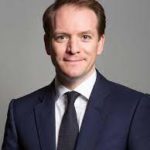
Tag: Gareth Davies

  • Gareth Davies – 2023 Statement on the South Yorkshire Advanced Manufacturing Investment Zone

    Gareth Davies – 2023 Statement on the South Yorkshire Advanced Manufacturing Investment Zone

    The statement made by Gareth Davies, the Exchequer Secretary to the Treasury, in the House of Commons on 17 July 2023.

    On Friday, the Government and the South Yorkshire Mayoral Combined Authority announced the creation of a new South Yorkshire investment zone focused on advanced manufacturing, building on the region’s long-standing research strengths and existing commercial operations in the area. Local communities and businesses across South Yorkshire, including in the Sheffield-Rotherham corridor, Barnsley and Doncaster, will benefit.

    The Government also announced that Boeing, Spirit AeroSystems, Loop Technologies and the University of Sheffield Advanced Manufacturing Research Centre (AMRC) have partnered to support the first investment within the zone, leading a portfolio of major new R&D projects into the future of aerospace. This investment will be worth over £80 million partially funded from the joint public-private sector Aerospace Technology Institute programme.

    The South Yorkshire investment zone will be co-designed with the University of Sheffield and Sheffield Hallam University. By harnessing the region’s local sector strengths, significant innovation assets and existing talent, the Investment Zone will catalyse further investment to boost productivity and deliver sustainable growth that benefits local communities. The investment zone will increase commercial opportunities in areas that have historically under-performed economically through a total funding envelope of £80 million over 5 years. It is expected that the investment zone will support more than £1.2 billion of private investment and the creation of more than 8,000 jobs by 2030.

    The Government will continue to work with the South Yorkshire Mayoral Combined Authority, the University of Sheffield, Sheffield Hallam University and other local partners to co-develop the plans for their advanced manufacturing investment zone, including agreeing priority sites and specific interventions to drive cluster growth, over the summer ahead of final confirmation of plans.

  • Gareth Davies – 2022 Speech on the Supported Housing Bill

    Gareth Davies – 2022 Speech on the Supported Housing Bill

    The speech made by Gareth Davies, the Conservative MP for Grantham and Stamford, in the House of Commons on 18 November 2022.

    It is a pleasure to follow the excellent and thoughtful speech by my hon. Friend the Member for Milton Keynes North (Ben Everitt). Along with all my colleagues, I congratulate my hon. Friend the Member for Harrow East (Bob Blackman) on bringing this Bill to the House and on all the work he has done. I recognise the work of the Select Committee and express gratitude for being part of this important debate.

    It is also a particular pleasure to follow my hon. Friend the Member for Truro and Falmouth (Cherilyn Mackrory), who captured the mood of this debate when she said that debates and subjects such as this show that all of us across the House care about how we can support those in most need and how we can all make a positive difference to vulnerable people in our constituencies. She was absolutely right about that.

    There are big questions to answer about how we can best support those who may have made mistakes or suffered misfortune in their lives, but, at a very simple level, how can we possibly expect anybody to rebuild their life without the basic requirement of adequate shelter? I welcome this Bill, because it will improve the quality of supported housing and improve governance at both local and national level. It will also ultimately improve taxpayer efficiency, by providing the means for people to live more independently of the state.

    No matter what a person’s background, condition or circumstances, we in this place have a duty to ensure that quality accommodation and care is the baseline. We should acknowledge, as my hon. Friend the Member for Keighley (Robbie Moore) rightly did, the Government’s work to date in this area. I acknowledge the national statement of expectations in 2020, which set out minimum standards guidance for supported housing. It set out, for example, that housing should be accessible and be assessed by local council commissioners and that housing staff should be trained. The National Housing Federation endorsed and supported that guidance, but the Bill clearly builds significantly on that work to date, and quite right too.

    In the many excellent speeches today we have heard examples of terrible things happening in this area. Landlords are still providing unacceptable housing. New residents are still being placed with unsuitable co-residents, as my hon. Friend the Member for Harrow East pointed out, and some accommodation is not fire safe, frankly. I warmly welcome this Bill and, in particular, three measures: the introduction of a supported housing advisory panel makes a ton of sense; the requirement for local authorities to review exempt accommodation and publish a supporting housing strategy is something we all completely agree with; and then we have the powers given to the Secretary of State to make licensing regulations for exempt housing.

    This is an excellent Bill. I am not surprised that it will go through today with cross-party support. I warmly congratulate my hon. Friend. If I can build on the praise that my hon. Friend the Member for Ipswich (Tom Hunt) set out, my hon. Friend the Member for Harrow East has shown that if a Member acts with strong purpose in this job, they can, with the right energy, drive real change. He showed it in 2017 with his Homelessness Reduction Act. He has shown it through his tremendous work to build relations between the UK and India, for which he has received one of India’s highest civilian honours. He is the only person I know with a Padma Shri. I am also very familiar with his campaigning for a smoke-free England. I am greatly proud to share these Benches with him.

  • Gareth Davies – 2022 Speech on Iran’s Nuclear Programme

    Gareth Davies – 2022 Speech on Iran’s Nuclear Programme

    The speech made by Gareth Davies, the Conservative MP for Grantham and Stamford, in the House of Commons on 30 June 2022.

    Thank you, Madam Deputy Speaker. Let me quickly congratulate my right hon. Friend the Member for Newark (Robert Jenrick) on an excellent speech and on securing the debate. It is important that we have the debate at this time.

    If we look around the world today, we see that we live in extraordinarily dangerous times. We see the threat of terrorism at home and abroad and democracies being invaded. We have an increasingly emboldened China on the rise, and ever sophisticated cyber-threats from highly trained state operatives. But of all the threats that we face, a nuclear weapon in the wrong hands represents one of the gravest. As US President Obama once said, our scientific advances have enabled us

    “to communicate across the seas and fly above the clouds,”

    but they have also unleashed some of the most destructive and deadly weaponry imaginable. We must understand that threat and face it rather than shy away from the difficult decisions needed to keep us safe.

    Close observers of the recent talks will tell us that negotiations have not exactly been going smoothly, but, as my right hon. Friend said, it is important that we have the opportunity to talk in this House about the threats that we feel Iran poses and why some of us are cautious about a deal, and to offer a view on what terms such a deal should take, if indeed we are to have one. Let me do that.

    A nuclear Iran is a clear threat to peace and the world order. Iran has made clear its views on Israel’s mere existence and, obviously, a direct nuclear attack on Israel would become a real possibility. A nuclear-armed Iran would also be emboldened to increase its support for terrorist groups such as Hezbollah and Hamas. Regardless of how Iran may behave as a nuclear power, it could spur other regional rivals to seek out a bomb in response. The Government are right, therefore, always to be looking to prevent further development of Iran’s nuclear capability. However, there is clearly concern that, compared with 2015, Iran’s programme is more advanced and its leadership and priorities are different.

    Sanctions do work, and they do hurt—Iran has about 40% inflation and millions live below the poverty line—but, as my right hon. Friend pointed out, Iran has done tremendously well out of oil sales. The Iranian central bank estimates that those were worth $18 billion in just the first half of the Persian year. Its economic motivations are therefore perhaps not as strong as they were previously, and that is why we should proceed cautiously with new talks.

    For any agreement, you need trust, and lately Iran’s actions seem to demonstrate a lack of interest in building trust. It says that its nuclear ambitions and intentions are entirely for civilian purposes, as my right hon. Friend the Member for Clwyd West (Mr Jones) said in his excellent speech. So why has it enriched to 60%? Why has it turned off 27 surveillance cameras? Why has it developed uranium metal, which has no civilian use but lots of use in developing nuclear weapons? All the while, as my hon. Friend the Member for Harrow East (Bob Blackman) said, it has developed a significant ballistic missile programme, and it has had the gall to call for the Iranian Revolutionary Guard to be declassified as a terrorist organisation. Those are not the actions of a state willing to engage in peace talks or one that seeks to build trust with anyone.

    Of course, I understand the motivations to engage with Iran, and we should try everything that we can to limit its ambitions. Put simply, we need greater restrictions if we are to have an agreement. We need a commitment from it to cease the production and installation of advanced centrifuges and the removal of enriched uranium as well as non-nuclear commitments that the so-called comprehensive agreement did not cover to end its ballistic missile programme and to cease funding terrorist organisations. Otherwise, we face bolstering Iran at a time when we should be restricting it.

    Let it be said that I have put my views and concerns on the record. I genuinely wish the Government and the ministerial team well in tackling this great issue.

    Let me conclude philosophically by saying that it is a great pleasure to be talking about this and Britain’s role in it at a time when people question Britain’s place in the world. We should never forget that this country represents just 0.8% of the global population, yet we have a seat at all the major international, multinational and security tables, including the G7, the International Monetary Fund, the JCPOA and the United Nations Security Council. We are one of the few nuclear powers in the world. So let it be said that we have a role to play in ensuring the security of our world and our people. I hope that the Government will take that responsibility as it relates to Iran very seriously.