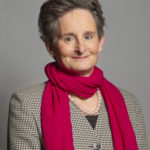
Tag: Flick Drummond

  • Flick Drummond – 2022 Speech on Levelling Up Rural Britain

    Flick Drummond – 2022 Speech on Levelling Up Rural Britain

    The speech made by Flick Drummond, the Conservative MP for Meon Valley, in the House of Commons on 9 November 2022.

    I congratulate my hon. Friend the Member for North Devon (Selaine Saxby) on securing this debate. I know that much of what she spoke about is common in rural areas around the country, so I urge everybody to read her contribution in the first place. It is a pleasure to speak on a matter that is very important to many residents in Meon Valley. It is a constituency fringed on three sides by dense urban areas, but a lot of it is deeply rural. Because we are limited on time, I will focus on just two levelling-up issues.

    The Minister will not be surprised that the first issue is public transport. Bus services in rural communities have proven very vulnerable to commercial pressures in the wake of covid. There are issues with higher business costs, and difficulties with recruiting and retaining drivers. Additionally, Hampshire County Council is facing enormous financial challenges, and this is affecting its ability to support the services that vulnerable people depend on. As others have mentioned, there is a lack of transport particularly for young people getting to school, but also getting to their Saturday jobs. For instance, going from Bishop’s Waltham to Whiteley in my constituency is proving incredibly difficult. May I ask the Minister to look urgently at the support for transport authorities such as Hampshire? Hampshire County Council is already doing as much as it can, but budgets have steadily reduced, and there is no more fat to trim or salami to slice.

    The second priority, as others have mentioned, is broadband and telephone. I was pleased that the Department for Digital, Culture, Media and Sport intervened over the plans to cut off the existing public switched telephone network as part of the digital switchover, because like many of my constituents, I was concerned about proper safeguards for isolated households in the event of a power cut. May we ensure that we have a proper solution to these issues? I would like to give an assurance to my constituents well before any further move is made to switch off the PSTN.

    However, I fully understand that the future is digital and wireless. I was delighted that the gigabit broadband scheme is enabling places such as Owslebury in my constituency to get up to speed. I know there is work going on with a scheme in Cheriton and a few other villages to help the residents there, too. It is another area where Hampshire County Council has provided brilliant support for residents through its broadband voucher scheme. However, there are still some remaining pockets of very slow speed in Meon Valley, and I hope the procurement that DCMS is engaged in at present can quickly bring all the benefits of better broadband to them.

    I welcome everything that has been done so far. However, we are going to need to fill the gaps in 4G mobile phone coverage, as well as to roll out 5G as far as possible into rural areas such as mine. We must support our rural communities, especially our farms. Farming is increasingly a high-tech, data-driven business, and farms need better broadband connections and good mobile coverage to make the most of such opportunities. There are also small businesses, some of which in my constituency are world class, that are dotted around the constituency, and they would benefit from fast broadband. I hope the Minister will prioritise those as well.

    If we are truly to level up those who live in rural areas, we need to make sure that they have access to transport and broadband technology. If we do not, we run the risk that these areas will be left behind. As others have said, many people think of the countryside as an idyll, but there are pockets of deprivation that are just as serious as those in inner cities. As my hon. Friend the Member for North Dorset (Simon Hoare) mentioned, they are just not as obvious or as big. Any Government policy regarding levelling up in rural areas must have this reality front and centre if it is to be successful.

  • Flick Drummond – 2022 Speech on the Yemen Peace Process

    Flick Drummond – 2022 Speech on the Yemen Peace Process

    The speech made by Flick Drummond, the Conservative MP for Meon Valley, in Westminster Hall on 3 November 2022.

    I beg to move,

    That this House has considered the peace process in Yemen.

    It is a pleasure to serve under your chairmanship, Mr Davies. I thank the Backbench Business Committee for granting this important and timely debate.

    Just over 60 years ago, I was born in Steamer Point Hospital in Aden, and I began a long fascination with Yemen in its various guises. I was born with British citizenship as my father was serving in the British Arab army, and we left when I was three. Ever since then, I have tracked how things have changed over the years as I have written down the changing names of my country of birth. I have not been back since but I dream to, much like the right hon. Member for Walsall South (Valerie Vaz) and her brother, the former Member for Leicester East, who were also born in Yemen.

    Over the last 60 years, Yemen has been divided and come back together again, and it has now become a long-forgotten war for many. Why is Yemen important to us? The UK has a historic interest in Yemen through the existence of the Aden colony from 1839 to 1967. More importantly, today we are the UN penholder. The Government must continue to play their leading role in promoting peace. I pay tribute to the UN special envoy, Hans Grundberg, and his predecessor, Martin Griffiths, for all their work.

    Today I will set the scene, as I know others will want to talk about different aspects. I thought it would be good to remind people about the complexity of the war and our role. That is not to say that we should impose a western-centric, top-down structure of government for Yemen. That has been disastrous in places such as Iraq. Like other middle eastern countries, Yemen is made up of different communities, and there is currently little feeling of a whole national identity. The war is not as clear as some may wish it to be. Often, there is too much focus on Saudi Arabia and the Iranian involvement, but it is an internal civil war, not a surrogate or proxy war. Although outside countries are involved, either by backing the Houthi rebels or supporting the Yemeni Government, they do not necessarily control them politically.

    Yemen has had a history of civil wars for centuries, and a continual battle along the Saudi Arabian border—a border that has cut through some of the historical Yemen. It is a country divided by tribal and religious loyalties. The Houthis are more doctrinally close to the Sunnis than the Iranian Shi’ite regime with which they are often linked by the outside world. The Houthis are also more conservative than the southern tribes in their Sunni doctrine.

    John Spellar (Warley) (Lab)

    The hon. Lady seems to be implying that there are only allegations of Iranian involvement with the Houthis, whereas the Iranian regime is absolutely up to its neck in this, stimulating and providing massive amounts of material. Frankly, the Houthi attacks would not be successful without the destructive and disruptive behaviour of the Iranian regime.

    Mrs Drummond

    If the right hon. Gentlemen was listening carefully, I said that although other countries are involved, they are not politically involved. They may be supported militarily, but the Houthis are thinking for themselves rather than being dictated to by the Iranian Government. That is the point that I was trying to make.

    The sectarian divide in Yemen is not clearcut, as tribal loyalties cut across religious beliefs, making it a confusing and shifting picture, particularly for those looking from the west. Unification in 1990 was to bring forward a representative Government, with elections every seven years. However, it was fragile because of the problems with power sharing that we see elsewhere, including closer to home.

    The origins of the present war lie in the political and economic marginalisation of northern Yemen by the former President Saleh. Many of the 301 members of the Yemeni Parliament, who were elected under universal suffrage, felt disenfranchised and unable to effect change. That was a missed opportunity to show that democracy works, in a part of the world surrounded by authoritarian regimes.

    The war is a result of decades of exclusion of different parts of the population around the country. Yemen has been run by elites who have concentrated power with their own allies and disenfranchised large parts of the population, even when elections were held. With that in mind, we need to look at how that impacts the peace process and the route to lasting peace.

    On 2 April, Yemen’s warring parties began a two-month nationwide peace brokered by the UN. That was extended until October, but it has not been extended again, although the fighting has not resumed at the same intensity as before. On 7 April, President Hadi transferred his powers to a new eight-person Presidential Leadership Council, and the new President is Rashad al-Alimi, a politician with long experience and a diplomatic background.

    The six-month ceasefire has been the nearest thing to a reprieve since civil war broke out eight years ago. Casualties have come down countrywide, there has been an increase in fuel deliveries, and international commercial flights to and from Sanaa have recommenced for the first time in six years. However, the latest proposal put forward by the special envoy has not been accepted by the Houthis. The proposal is wide ranging and includes the payment of civil servants’ salaries and pensions, the opening of specific roads in Taiz—the second most populous city—a commitment to release detainees urgently, and the strengthening of the de-escalation mechanism through the military co-ordination committee. The main obstacle is that the Houthis want their security forces to be included in the salary payments to civil servants, which the Government could not accept. This is really disappointing.

    Taiz has been in a state of a partial siege since the beginning of the war, and life has been tough, with a war economy inflating prices and insecurity. It was not until 2021, when Hans Grundberg became the first diplomat to visit Taiz since the start of the war, that the profile of the city and its plight were raised. Improving communications with and around Taiz must be central to negotiations, and this is one of the areas where the UK Government can help by working with the special envoy to call on the Houthis to show flexibility.

    The outside world must remind the Houthis that all citizens have benefitted from the peace over the past year. Any attempt to prevent oil and goods from arriving at the port of Hodeidah impacts on the already difficult humanitarian crisis. Food is becoming more expensive as it becomes even more scarce, and there is not enough equipment to keep hospitals and schools functioning. Only 48% of the aid needed through the 2022 Yemen humanitarian response plan has been funded so far. The Houthis must realise that working towards a long-term peace process will help that and is in everybody’s interest.

    Politically, the Presidential Leadership Council under President al-Alimi has unified the resistance to the Houthis. The Southern Transitional Council is the most well-known group, so we should recognise the role of Mr al-Zubaidi and, just as importantly, the other members —Tareq Saleh, Abdullah al-Alimi Bawazeer, Sultan al-Arada from Marib, General al-Bahsani, Othman Majali and Abu Zara’a al-Muharrami for their contribution to leading the council. However, the situation with the PLC is delicate, and support from the international community is vital to maintain its credibility.

    John Spellar

    The hon. Lady mentioned the Southern Transitional Council. She may be about to come on to this, but what consideration should be given in the discussions to the desire for self-determination in south Yemen?

    Mrs Drummond

    I do not think it is for us to determine the future of Yemen. It is up to the people to decide what they would like to do through the negotiations, so I would not dream of putting what I think on to what they are going to decide. That is very important, as I mentioned at the beginning. We cannot apply our western-centric views to what is going on in Yemen. If the people decide that they want to divide as they used to be, that is fair enough, but I do not think we should be talking about that at the moment—

    John Spellar

    Does the hon. Lady recognise that there is considerable demand in southern Yemen for a degree of self-determination, if not independence, and that that is very much recognised by the south Yemeni diaspora here in the UK? This is not about us pressing for that as colonialists; it is very much a local demand.

    Geraint Davies (in the Chair)

    Order. When someone intervenes, the speaker needs to accept the intervention before the other person starts speaking.

    Mrs Drummond

    Thank you, Mr Davies.

    It is all very well for people in the UK to say that that is what should happen, but the country has been divided before. It came back together and started to have a Government who, unfortunately, were not run properly. Unifying the country could happen again, but if it is the will of the people of Yemen to divide again, we must accept that. It is up to the people of Yemen who are living there and those who are running the Government, who are beginning to run it with a lot of credibility. We have to wait for that to settle down.

    The special envoy and other allies must also make clear that help and aid will come if the Government of Yemen take the opportunity to move on from their former position under President Hadi. Any weakness will be exploited by the Houthis and delay any future peace process. The UN special envoy has been tireless in his diplomatic efforts, and has been asking for a new six-month truce to allow time for negotiations for a formal ceasefire, the resumption of an inclusive political process, and talks on wider economic issues. We must help to make those things happen. On the humanitarian angle, Joyce Cleopa Msuya, the UN Assistant Secretary-General for Humanitarian Affairs, has spent time in Yemen, helping the 4.3 million people who have been internally displaced since the start of the war in 2015. Her role can also help to encourage negotiations, showing that peace brings dividends. Mine clearance needs to be a priority, as mines are presently being washed into farm fields.

    Before the civil war, 45% of the population of Yemen lived below the poverty line; that figure is now around 90%. Today, 24 million people are in danger of famine, of whom 14 million are at acute risk, and 2 million children are at risk of starvation. Huge parts of the population are being sustained by relief efforts. The UK has always been one of the leading donors supporting Yemen, providing more than £1 billion of aid during the conflict, and many British non-governmental organisations have been doing fantastic work. However, we must recognise that the Yemeni economy will need considerable help and support even after a return to peace.

    Yemen is facing huge challenges from climate change, with near-constant drought and desertification of agricultural areas. Since the start of the war, the population of Yemen has doubled, but GDP per head has more than halved. There is a need to rebuild Yemeni society on an equal and fair basis, which includes the promotion of women’s rights. Lastly, there is the threat of an environmental disaster from the oil tanker FSO Safer, moored off the coast of Hodeidah. I have been raising awareness in Parliament about that potential catastrophe for many years. I am pleased that the UN has now raised enough money to start transferring the oil to a temporary vessel, but I have an immediate ask of the Government: that they work with our partners to make sure that transfer is completed as soon as possible, and to secure a safe disposal of the Safer. If that is not done, there is a risk of environmental damage to the whole of the Red sea for decades.

    This war has gone on for too long, and too many people have died or been displaced. I urge the UK Government to work tirelessly with all parties and bring peace to a region that deserves it. The British Council is already working in the north and the south; there is a huge demand for English teaching and transferrable skills in Yemen. Our soft power influences can be a big help to Yemen in its post-war reconstruction and rehabilitation. That is important, because there is a compelling geopolitical reason why the west must help the people of Yemen: China or Russia, for example, could fill the vacuum, which could be disastrous for the region’s security. Our support for people in crisis in the world, helping them to build stable and fair regimes, is an investment in our own security as well as theirs. If we can achieve that, then perhaps I, the right hon. Member for Walsall South, and many Yemenis displaced around the world can one day safely return.
  • Flick Drummond – 2022 Tribute to HM Queen Elizabeth II

    Flick Drummond – 2022 Tribute to HM Queen Elizabeth II

    The tribute made by Flick Drummond, the Conservative MP for Meon Valley, in the House of Commons on 9 September 2022.

    Thank you, Mr Deputy Speaker, for this opportunity to pay tribute, on my behalf and on behalf of my constituents in Meon Valley, to Her Majesty Queen Elizabeth, and to pass on our condolences to the King, the Queen Consort and all the royal family.

    This is one of the saddest times this country has faced. We have lost our guide, and we feel a strange sensation of being adrift; that something is not quite right in the world; that our anchor has been swept away. It is an unease that will fade as life goes on, and I know that Her Majesty would want it that way. She was a woman without pretension, solely dedicated to her country and the Commonwealth through her unstinting service up to her final days, as we saw. How we will miss her smile and her continuity. We knew this time would come, but it was a shock none the less.

    I thank Her Majesty for her 70 years of service. She will remain an example for everyone—in particular, she is an example for those in public service of how we should serve. Hers was a leadership that so many of us would like to emulate. The tributes from across the world show what an inspiration she has been, and they must be a comfort to her family and to the country as we come to terms with our collective loss.

    I was born 10 years after the Queen came to the throne; like many here, I have known only one monarch. The monarchy has been part of our island’s fabric for more than 1,000 years. It has been left in good shape and with an able successor at its helm. I will be proud to serve His Majesty King Charles III as a Member of Parliament and as a British subject. God save the King.

  • Flick Drummond – 2022 Speech on the 40th Anniversary of the Falklands War

    Flick Drummond – 2022 Speech on the 40th Anniversary of the Falklands War

    The speech made by Flick Drummond, the Conservative MP for Meon Valley, in the House of Commons on 13 June 2022.

    I congratulate the hon. and gallant Member for Barnsley Central (Dan Jarvis) on securing this debate and his excellent exposition of the conflict.

    The Falklands war touched every part of the UK, including people in my Meon Valley constituency. I was a student during the Falklands conflict and followed it closely, not least because several of my parents’ friends, whom I had known for most of my childhood, were deeply involved. Sir Robin Fearn was head of the South American desk at the Foreign and Commonwealth Office; General Sir Richard Trant was land deputy commander, and Captain Lyn Middleton was captain of the HMS Hermes.

    Meon Valley, with its closeness to Portsmouth, has many connections to the Royal Navy. Two of my constituents, Captain David Hart Dyke and Ian Young, served on HMS Coventry; many will remember hearing of its attack and sinking. Another friend, John Troy, was in his first year in the Royal Navy, and was also on HMS Coventry. It was hit by two bombs and rapidly flooded, capsizing within half an hour with the loss of 19 lives. What they saw must have affected them for the rest of their lives but, typically, they rarely talk about it. Some 22 ships were hit, with 82 lives lost and many more physically affected.

    I have since met many others, such as Chris Purcell and his wife Louise, who do so much for other Falklands veterans and raise huge amounts for the Poppy Appeal. They also raise awareness of the mental health of many of those returning. So many young men returned with physical scars, but also mental ones.

    I was privileged to know Lieutenant Commander Brian Dutton, who died a few years ago. |He was a Royal Navy diver, who defused many mines and bombs, including one 1,000 pound bomb on HMS Argonaut. Another friend, who has sadly died of ovarian cancer, was Vikki. She was married to John Hamilton, who got the Military Cross and died in a firefight on West Falklands, allowing his troop to escape. Recently, his extraordinary part in the war as part of the special services has been released.

    There are many more heroes whom I have not met, but my trip to the Falklands as part of the Armed Forces Parliamentary Scheme helped me to understand what it must have been like on the ground, and those names that we were to hear many times in 1982, such as Goose Green, Bluff Cove, Mount Tumbledown and Stanley, became real.

    I pay tribute to the sacrifices of our service personnel and their families. Even 40 years after the events, I understand the pain and grief that the relatives of those who lost their lives must feel, but I have also seen the deep gratitude of the people who live there, who have been honouring our forces and those who worked with them.

    We must not allow unprovoked aggression to pay, and the Falklands conflict should be a lesson to anyone who tries. We will not forget.

  • Flick Drummond – 2022 Speech on Educational Assessments

    Flick Drummond – 2022 Speech on Educational Assessments

    The speech made by Flick Drummond, the Conservative MP for Meon Valley, in the House of Commons on 17 March 2022.

    I thank Mr Speaker for allowing me to bring this important debate to the Chamber, and I thank the Minister for being here, particularly much later than expected, to respond.

    The Minister will be aware that I have been working on this important issue for some time. It is something that I am passionate about and wrote about in my One Nation paper in summer 2020. It is not just me: we now have five commissions reporting on the reform of educational assessment, so this is a good moment to debate the merits of reforming our present system.

    Even before covid, 21st century society was rapidly changing, but our education is still stuck in the 20th century. Even its original architect, Lord Baker, argues that it is due an overhaul. Covid has given us the chance to re-look at various policies, not least how we assess our children. We need to grasp that chance.

    As Professor Bill Lucas, co-founder of Rethinking Assessment, states:

    “Across the world assessment is not working. We are not evidencing the kinds of dispositions and capabilities that society increasingly wants. Educational jurisdictions are placing too much reliance on high-stakes, standardised testing. They are testing the wrong things in the wrong ways. High-stakes assessment is having a damaging impact on the health and wellbeing of students and it is not giving universities, colleges or employers the kind of information they want.”

    Let us unpick those words. What does society want from education? Our assessment system currently dominates our entire schooling, influencing what is taught and how it is taught. As Professor Lucas says, we have a system focused on performance in a narrow range of high-stakes academic standardised testing.

    It is important that I say that standards are vital, but increasingly employers do not understand the myriad qualifications and whether they are gold standard or not, especially when GCSEs are reduced to a milepost in a young person’s journey to 18, when they leave for university or work. The House of Lords’ Youth Unemployment Committee states:

    “Skills gaps and shortages are clearly a major driver of youth unemployment and damage labour market productivity”.

    The Times Education Commission’s interim report has been very focused on asking employers what they are looking for, and they agree that young people are not coming out with the life skills that would help in the workplace.

    We have a knowledge-based curriculum, but we also need to build skills into the curriculum. It does not have to be a binary choice of knowledge versus skills; we need to marry powerful knowledge with the skills and attributes needed to apply them to real life. Are we testing the wrong things in the wrong ways? The figures seem to show that we are. A third of all students every year do not get grade 4 and above, which is considered a pass. As 613,000 young people took GCSEs last year, a third of that means that some 200,000 young people did not make the grade—a huge number. They are leaving education without substantive qualifications because our system fails those learners, who are better served by practical, technical and vocational ways of learning and assessment.

    The Department for Education says that exams are the fairest way of everyone being tested the same. Really? Is that why girls do so much better? In 2019, 72% of girls received grade 4 or above GCSEs and only 63% of boys—a 9% difference that has not changed over a number of years. Are we saying that girls are much cleverer than boys, or is the reality that this is not a fair way of assessing everyone? We know that girls and boys learn differently.

    I became increasingly concerned about the failure of our assessment system when I was the MP for Portsmouth South. I heard how many young people at college were taking their maths and English GCSEs over and over again. That seems ridiculous. Surely there is a better way of engaging pupils in maths and English that makes sense to them and enables them to achieve a certain level, not necessarily through an exam—I stress that I am not against exams, but against what I consider to be unnecessary exams at 16 that are narrowly focused when we are expecting young people to stay in education or training until they are 18. It would make far more sense to assess young people at 18, especially when there is ample evidence that assessment at 16 does not work and is harming our children. Professor Lucas says exams at 16 cause

    “a damaging impact on the health and well-being of students”.

    Professor Sarah-Jayne Blakemore, professor of psychology and cognitive neuroscience at Cambridge University, has done a huge amount of research into how teenage brains develop. She spoke to us at a fringe event at the Conservative party conference in 2021. She says that high-stakes exams put huge pressure and stress on teenagers, reducing motivation during a critical time during their development. The yearly Children’s Society’s “Good Childhood Report” raises young people’s mental health as an issue. In 2018, children aged 15 in the UK had the greatest fear of failure and the lowest life satisfaction in school of children across 24 European countries. The 2021 report found that school, followed by friendships and appearance, continue to cause the greatest dissatisfaction in adolescence. In the Children’s Commissioner’s Big Ask survey, young people highlighted that stress related to high-stakes exams or assessment remains a significant concern to them.

    Not just young people but parents and teachers are concerned. Of course, we all have to cope with stress and deal with it throughout our lives, but not when it is going to have a big impact on the future of a young person. For the record, I do not accept that the term “snowflake” is fair in any way for this generation. It is simplistic and lazy, and makes no allowance for the complexity that young people face today.

    The last point in the quote is about education and employers not receiving the kind of information that they want. A YouGov poll commissioned by the Edge Foundation in 2020 found that 92% of teachers agree that the assessment system needs to recognise the full range of a young person’s strengths and skills through more than just written exams, especially as they place an emphasis on rote learning to the detriment of developing the skills and attitudes needed for work.

    The Times Education Commission has been very clear that employers would like to see skills as well as knowledge. We are talking about skills of how to tackle and deal with any challenges during a lifetime, as well as other softer skills, including the value of oracy and team work. For example, disadvantaged children’s spoken language development is significantly lower than that of their more advantaged peers, although spoken language is one of the strongest predictors of a child’s future. However, the concentration and time spent on written exams does not allow for this development. That cannot be right or fair. Employers say that personality is more important than qualifications, and those of us whose exams were a long time ago know there is absolute truth in that, so why is it designed out of our present assessment system?

    We are not just talking about exams at 16—it starts much younger in primary schools. SATs dominate year 6, and I am afraid there is teaching to the test to the exclusion of a wider curriculum. Pupils are reassessed when they get to secondary schools in any case. People say that SATs are needed as a measure of school accountability—really? We have Ofsted, and there are many ways of judging schools, such as quality of teaching and professional development of teachers for starters.

    Parents do not look primarily at results when they are choosing a school—in fact, that is at the bottom of their list. They want a school where their child will be happy, achieve their potential and enjoy learning at the same time, alongside a wide range of activities. That is why so many people decide to pay to send their children to independent schools when they can afford it, but this is ridiculous as it is possible for every state school to do all of this. That is important because the Government’s Industrial Strategy Council highlighted that, by 2030, 7 million additional workers could be under-skilled for their job requirements. The skills gap is costing UK companies £6.6 billion a year.

    Some people feel that education should be about inspiring young people through a knowledge-based curriculum only, or, as I would put it, learning information that they may never look at again. That is one argument, but it should be mixed with learning how to learn, learning skills that will make our children lifelong learners because it makes sense, learning because it interests and engages them and learning for the love of learning, rather than for a narrow set of exams. The Department for Education’s employer skills survey and findings from the CBI and other organisations, such as the World Economic Forum, all point to employers looking for skills such as problem solving, communication, self-management, team working, creativity, numeracy and digital skills. Those are not soft skills that come at the expense of knowledge. Knowledge is only useful where individuals have the skills to interpret and communicate it.

    So what is the answer? I know this is not going to happen overnight—certainly not under this Government, although we will hear what the Minister says—but we will need to move gradually to a new system to give teachers, parents, young people and employers confidence in the changes. I am not calling for some radical seismic shift, but we must recognise that there is substantial evidence that there is a better alternative and work towards it—one that is multi-disciplined, offers a broad and balanced portfolio of assessment and blends the best of knowledge and skills.

    The OECD and the programme for international student assessment, or PISA, are currently developing assessments to be used across the world, for example, in collaborative problem solving and creative thinking. The international baccalaureate model is used in 5,000 schools in more than 150 countries. There is good practice and systems out there that we can look at to design our own assessment at 18. We should have a 14-to-18 curriculum without a break for GCSEs which, as I have said, are no longer fit for purpose. We should have a broad and varied curriculum that enables young people to find their own path, whether that is academic or vocational with exams and/or assessment, be that a final assessment or continual assessment throughout those four years.

    We should have a portfolio of achievement that includes English and maths in a format that is relevant to what that student wants to do; taking part in the National Citizen Service or Duke of Edinburgh award scheme and other organisations that bring character and skills; and a transcript that shows what a young person is really like, not just their ability to pass or fail national exams. That is particularly important in terms of equality. Young people from deprived and lower-income backgrounds often require more time and resources to realise their potential, and a more diverse and expansive range of subjects than the narrow curriculum we impose at present. An extended school day would help with that, too.

    University technical colleges are already following the 14-to-18 model. They have been remarkably successful in identifying how an education can inspire and engage young people. I visited the Portsmouth UTC, which has been going for five years. Entry is by ballot and it has three applicants for every place. It gives young people the skills for the world of work, and those who do not go to university mostly go straight into higher-level apprenticeships. Time and again, it is a success story for those young people and it is in operation right now in this country.

    A good education has the power to change lives and open doors to greater employment and lifelong learning. It leads to better health choices and active citizenship. Good teaching inspires and, crucially, assessment reform must give power back to teachers so that they can do what they were trained to do—impart a love for their subject to the next generation, rather than teaching to the test. If we do not change, we will continue to fail millions of young people in this country, including many from disadvantaged backgrounds. We will continue to struggle against our international competitors because we will lack the 21st-century skills that we need to be global Britain.

    With the right focus and commitment, young people from all backgrounds, who are engaged and who know that the point of their assessment is to realise their ambitions, will flourish, but they need time to study the subjects in which they are interested—academic or vocational—in depth, over four years. That would set up many more of our children for a lifetime of work and learning. We need to start working on a system that works for them as we enter the second quarter of the 21st century and as young people face all the challenges of this complex world.