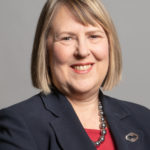
Tag: Fiona Bruce

  • Fiona Bruce – 2023 Speech on Holocaust Memorial Day

    Fiona Bruce – 2023 Speech on Holocaust Memorial Day

    The speech made by Fiona Bruce, the Conservative MP for Congleton, in the House of Commons on 26 January 2023.

    This week, holocaust survivor Manfred Goldberg spoke movingly in the Foreign, Commonwealth and Development Office about the “hell on earth” he experienced under the Nazis. The tragedy is that there have been a catalogue of horrors since the Nazis perpetrated their genocidal acts. In the ’70s there was Pol Pot’s terror in Cambodia. In the ’80s there was Saddam Hussein’s desecration of Kurds in Iraq. In the ’90s there were attempts to systematically exterminate Tutsis in Rwanda, while Bosnian non-Serbs suffered a similar fate.

    There have been atrocities inflicted across the world, including in Asia, the middle east, Africa and Europe, and on victims from a range of religions and races—Muslim, Buddhist, Jewish, Christian and others. Still, in the 21st century, we see further atrocities where elements of the definition of genocide are present, including targeting of the Rohingya Muslims in Myanmar, of the Uyghur Muslims in Xinjiang, and of the Hazaras in Afghanistan. In my work as the Prime Minister’s special envoy for freedom of religion or belief, I have heard many survivors speak of unspeakable suffering. They relay the same message as survivors of the holocaust: we must not only call out evil, but act to prevent it from happening again.

    One way we can act is by formally recognising the genocide against the Yazidis and Christians in Iraq and Syria by Daesh, as the lower house in Germany did just last week. Recognition of genocide is one of the most significant things we can do as part of the UK’s atrocity prevention strategy. Another is to identify where there is risk of genocide. We must equip our diplomatic teams across the world to spot the early warning signs where a nation is at risk of genocide. The UK can be a leader among our allies and partners in setting up early warning mechanisms, and in using our diplomatic reach—a reach that is still much regarded internationally, as I know from my work as the Prime Minister’s special envoy—to resolve disputes and tensions where we are able to do so.

    The International Development Committee’s recent report, “From Srebrenica to a safer tomorrow: Preventing future mass atrocities around the world” sets out a road map for the Government to follow. I welcome the Government’s positive response, not least the development of the mass atrocity prevention hub, and look forward to further progress to fulfil our manifesto commitment to implement the Truro review fully, including recommendation 7, which states:

    “Ensure that there are mechanisms in place to facilitate an immediate response to atrocity crimes, including genocide, through activities such as setting up early warning mechanisms to identify countries at risk of atrocities, diplomacy to help de-escalate tensions and resolve disputes, and developing support to help with upstream prevention work.”

    I highlight Nigeria as one country with close links to the UK where I fear the risk of genocide is growing. Around 90 hon. Members attended the Open Doors 2023 world watch list launch here last week and heard how Nigeria is now the sixth highest country for persecution of Christians; indeed, it would be top if the list were based just on the number of recorded deaths. We must condemn in the strongest possible terms the ongoing attacks against Christians and moderate Muslims by Islamic extremists in that country, and call out the Nigerian Government’s repeated denial of any such targeted religious persecution and their failure to act adequately to address it and protect the targeted.

    Finally, we must do more work on educating the next generation about the importance of freedom of religion or belief, so that “never again” becomes a reality for their generation in a way that, sadly, as I have said, it has not for ours. This is the ultimate upstream prevention work, and it is vital. One of the main takeaways from last year’s ministerial conference on freedom of religion or belief, which I was privileged to co-host, was the inspiration of the development of education toolkits for teachers to use in primary schools, to give even the youngest children an understanding of freedom of religion or belief and of the vital importance—

    John Cryer (Leyton and Wanstead) (Lab)

    Will the hon. Member give way?

    Fiona Bruce

    Certainly.

    John Cryer

    In the context of what the hon. Member is saying about education, will she join me in congratulating the HET, the CST and other organisations on educating people and also on combating antisemitism, including, sadly, in my own party and in other institutions?

    Fiona Bruce

    I thank the hon. Member for his intervention. I will indeed congratulate the Holocaust Educational Trust later in my speech.

    It is vital that we teach even the youngest children about the importance of not discriminating against others on account of their beliefs, just as they understand so well the importance of not discriminating against others on account of disability.

    I have the privilege of chairing the International Religious Freedom or Belief Alliance, a growing group of 42 countries whose Governments, like ours, have formally committed to protecting and promoting freedom of religion or belief around the world. It is our aspiration to see the toolkit that I mentioned, when it is developed, used in schools across our 42 countries. I am proud that the toolkit is currently being piloted in the UK, including in a school in my constituency.

    As the years go by and our brave, inspirational holocaust survivors, with their testimonies, diminish in number, we must ensure that their voice is sustained, not least with young ambassadors. I pay tribute to the Holocaust Educational Trust for the excellent work that it does in that regard.

    The alliance I chair is promoting the connection of young freedom of religion or belief ambassadors around the world. We are working towards a 2023 virtual global conference engaging young FORB ambassadors, and we want to involve three groups of young people: first, young people from democratic societies like our own who have not personally experienced persecution but care about the issue and want to do more; secondly, young people in the diaspora here in the UK with ties in countries such as Nigeria and direct concerns to relay; and, thirdly and critically, young people who live in countries where there is persecution and are experiencing it themselves—places such as Myanmar, where there is already strong interest from young people, and Hong Kong, where oppression on account of religion is an increasing concern.

    As we plan this virtual global conference, I would welcome contacts from colleagues, all-party parliamentary group country chairs and others with young people from across the world who may be interested in engaging with the event late in 2023. This is a way in which we here can act. Indeed, we can all do something to make “never again” a reality for the next generation, and it is so heartening that, in this Parliament, elected Members right across the political spectrum are determined to do so.

  • Fiona Bruce – 2015 Parliamentary Question to the Department for Transport

    Fiona Bruce – 2015 Parliamentary Question to the Department for Transport

    The below Parliamentary question was asked by Fiona Bruce on 2015-11-04.

    To ask the Secretary of State for Transport, when he plans to announce the finalised route phase two of the High Speed 2 rail line; and if he will make a statement.

    Mr Robert Goodwill

    We have committed to setting out the Government’s plan for the HS2 Phase Two route in an update to the House before the end of this year.

  • Fiona Bruce – 2015 Parliamentary Question to the Attorney General

    Fiona Bruce – 2015 Parliamentary Question to the Attorney General

    The below Parliamentary question was asked by Fiona Bruce on 2015-11-23.

    To ask the Attorney General, what steps he has taken to promote pro bono work amongst members of the legal profession in the last 12 months.

    Robert Buckland

    The Attorney General and I chair two co-ordinating committees that bring together leading organisations dedicated to promoting the delivery of pro bono legal services by members of the legal profession, in conjunction with the voluntary sector in England and Wales and internationally.

    Earlier this month, we took part in a range of events during National Pro Bono week, which is now regarded as an important annual national event and is supported by the legal professions, voluntary sector and law schools.

    Over the past 12 months, we have supported a number of projects borne out of the co-ordinating committees, that we believe reinforce how important the pro bono movement is – not just domestically, but internationally as well.

  • Fiona Bruce – 2016 Parliamentary Question to the Department for Culture, Media and Sport

    Fiona Bruce – 2016 Parliamentary Question to the Department for Culture, Media and Sport

    The below Parliamentary question was asked by Fiona Bruce on 2016-01-07.

    To ask the Secretary of State for Culture, Media and Sport, after how long it is his policy to take action when a local planning authority has not produced a playing pitch strategy; and what powers his Department has to taken such action after that period.

    Tracey Crouch

    Sport England, which helps local authorities develop and implement Playing Pitch Strategies to protect existing playing fields as well as meet future demand, recommends that the strategy should be updated every three years. In its role as statutory consultee, Sport England also monitors the number of planning applications that have an impact on playing fields and objects where it believes local sports provision could be harmed. As set out in our sports strategy, published last month, this Government is committed to improving the quality of community sports facilities.

  • Fiona Bruce – 2016 Parliamentary Question to the Department for Business, Innovation and Skills

    Fiona Bruce – 2016 Parliamentary Question to the Department for Business, Innovation and Skills

    The below Parliamentary question was asked by Fiona Bruce on 2016-02-09.

    To ask the Secretary of State for Business, Innovation and Skills, whether his Department has undertaken impact assessments for different regions of the UK on developing Sunday trading regulations; and what assessment his Department has made of any particular effects of such devolving of regulations on rural and semi-rural areas.

    Anna Soubry

    My Department has carried out an assessment of the impacts of devolving the power to extend Sunday trading hours.

  • Fiona Bruce – 2016 Parliamentary Question to the Department of Health

    Fiona Bruce – 2016 Parliamentary Question to the Department of Health

    The below Parliamentary question was asked by Fiona Bruce on 2016-03-21.

    To ask the Secretary of State for Health, if he will take steps to ensure that all applications to the Human Fertilisation and Embryology Authority (HFEA) for a licence to carry out research using human admixed embryos are published on the HFEA website with a description of the research proposed.

    Jane Ellison

    It is for the Human Fertilisation and Embryology Authority (HFEA) to decide what information it places on its website. The HFEA has advised that it is reviewing its publication policy in readiness for the launch of its new website in summer 2016.

  • Fiona Bruce – 2016 Parliamentary Question to the Department of Health

    Fiona Bruce – 2016 Parliamentary Question to the Department of Health

    The below Parliamentary question was asked by Fiona Bruce on 2016-05-23.

    To ask the Secretary of State for Health, with reference to the Answer of 11 March 2016 to Question 29747, whether wider disclosure of the content of the personal email exchange between Professor Grifo and a member of the expert panel convened by the Human Fertilisation and Embryology Authority would breach patient confidentiality.

    Jane Ellison

    The Human Fertilisation and Embryology Authority (HFEA) has advised that wider disclosure of the content of the personal email exchange between Professor Grifo and a member of the expert panel convened by the Authority would not breach patient confidentiality. The HFEA has previously advised that the relevant expert panel member contacted Professor Grifo in a personal capacity following the third Scientific Review of the safety and efficacy of methods to avoid mitochondrial disease in 2014.

    The HFEA has also advised that the information in question was provided in confidence to the expert panel convened by the Authority. Members of the HFEA Executive who provided administrative support to the work of the panel have seen this information.

  • Fiona Bruce – 2016 Parliamentary Question to the Ministry of Justice

    Fiona Bruce – 2016 Parliamentary Question to the Ministry of Justice

    The below Parliamentary question was asked by Fiona Bruce on 2016-06-07.

    To ask the Secretary of State for Justice, how many people have been convicted of offences under section 58 of the Offences Against the Person Act 1861 for performing abortions on themselves or causing their own miscarriage in each year since 1986; and what each such case was.

    Caroline Dinenage

    The number of offenders found guilty at all courts in England and Wales, from 1986 to 2015, can be viewed in the table. The figures from 2005 onwards are a further breakdown of data published in the outcomes by offences data tool in the annual Criminal Justice Statistics publication, at: https://www.gov.uk/government/statistics/criminal-justice-system-statistics-quarterly-december-2015

    Information as to whether each case referred to abortion or miscarriage Is not available.

  • Fiona Bruce – 2015 Parliamentary Question to the Foreign and Commonwealth Office

    Fiona Bruce – 2015 Parliamentary Question to the Foreign and Commonwealth Office

    The below Parliamentary question was asked by Fiona Bruce on 2015-11-03.

    To ask the Secretary of State for Foreign and Commonwealth Affairs, how many Democratic People’s Republic of Korea officials the British Embassy in Pyonyang has met in the last year; and how many such officials were women.

    Mr Hugo Swire

    The British Embassy in Pyongyang met a range of officials from the Democratic People’s Republic of Korea (DPRK) over the past year in support of UK policy objectives. This contact enables our Embassy to deliver our policy of “critical engagement” with the DPRK, and helps inform our diplomatic reporting and analysis. However, given the breadth of contact, it is not practical for the Embassy to maintain a list of all individual meetings.

  • Fiona Bruce – 2015 Parliamentary Question to the Cabinet Office

    Fiona Bruce – 2015 Parliamentary Question to the Cabinet Office

    The below Parliamentary question was asked by Fiona Bruce on 2015-11-23.

    To ask the Minister for the Cabinet Office, how many North Korean owned or financed businesses operate in the UK.

    Mr Rob Wilson

    The information requested falls within the responsibility of the UK Statistics Authority. I have asked the Authority to reply.