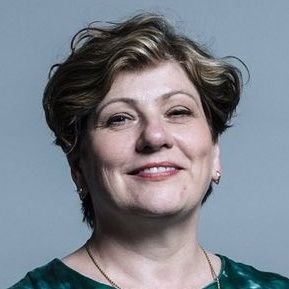
Tag: Emily Thornberry

  • Emily Thornberry – 2020 Speech on Britain in the World

    Emily Thornberry – 2020 Speech on Britain in the World

    Below is the text of the speech made by Emily Thornberry, the Shadow Foreign Secretary, in the House of Commons on 13 January 2020.

    I start by welcoming my new Front-Bench colleagues, my hon. Friend the Member for Manchester, Gorton (Afzal Khan), who brings a wealth of experience and passion on foreign policy issues, and my hon. Friend the Member for Brighton, Kemptown (Lloyd Russell-Moyle), who has been a thorn in the side of the Government over unlawful arms sales. He is now even closer to the Mace—should the urge ever take him again.

    I am, however, deeply sorry to lose from the Front Bench and our Parliament our good friends Helen Goodman and Liz McInnes. They were both fabulous constituency MPs and very well liked Members of the House, and their contributions on foreign policy from this Dispatch Box and in Westminster Hall were always constructive but forceful. Whether it was Helen’s brilliant work in forcing the Government to introduce the Magnitsky sanctions or her campaigning for the Uighurs in China or Liz’s passionate efforts to draw attention to the plight of civilians being attacked by their own Governments in Cameroon and Sudan, they both made a great contribution to the public discourse and will be sadly missed from those debates.

    On a personal note, may I also say how delighted I am to be facing the Foreign Secretary today? In the national hunt season, it is apt to say that both of us got away quickly in our respective party leadership stakes. I joined him in making it over the first fence. I hope that, unlike him, I do not fall at the second, but I do hope that whoever wins, the outcome on our side will be better for the country than the outcome on his. I found myself at the weekend looking through some of my old exchanges with the Prime Minister at this Dispatch Box when he was Foreign Secretary and thinking about the chance of taking him on in the future. I want to read to the House one of the responses he gave to me in March 2017 when I asked our future Prime Minister about the Trump Administration’s reported desire to withdraw from the Paris climate agreement. I say this just to reassure every Member, especially the newer ones on both sides, that our country is in the safest of hands and in the care of the most insightful of minds. This is what he said in response to my concerns about Donald Trump, the Paris agreement and other issues:

    “With great respect, I must say that I think the right hon. Lady is again being far too pessimistic…. We were told that the JCPOA”—

    the nuclear deal with Iran—

    “was going to be junked; it is now pretty clear that America supports it.”—

    supports it!—

    “We were told that there was going to be a great love-in between the new US Administration and Russia; they are now very much…in line. As for climate change, I think the right hon. Lady is once again being too pessimistic. Let us wait and see. We have heard the mutterings of the right hon. Lady; let us see what the American Administration actually do. I think she will be pleasantly surprised, as she has been, if she were remotely intellectually honest, in all other respects.”—[Official Report, 28 March 2017; Vol. 624, c. 116.]

    That was the strategic genius who is now in charge of our country, the intellectually honest politician, who, to be honest, clearly has no intellect. After all, as I have just recounted, in the space of just one answer to one question from me, he made four catastrophic and careless misjudgments on foreign policy issues—and that is before we get started on the hopeless faith in Trump’s son-in-law to negotiate a middle east peace deal, his horribly reckless treatment of Nazanin Zaghari-Ratcliffe, his craven attempts to champion monsters such as Crown Prince Salman and President Sisi, his disgraceful jokes about clearing dead bodies to make way for golf courses in Libya, his leading role in the unlawful sale of arms for use in Yemen and his shameful inaction in holding Myanmar to account for its genocidal treatment of the Rohingya.

    So we now have a Prime Minister in place for the next five years with no heart when it comes to human rights and civilian deaths, no brain when it comes to Donald Trump and the fate of jailed Britons and no courage when it comes to taking on tyrants overseas. When it comes to foreign policy, he is the Tin Man, the Scarecrow and the Cowardly Lion rolled into one, and he hasn’t got Dorothy to help him; he just has a pair of Dominics.

    Mr Vara

    As the right hon. Lady is in full flow in criticising colleagues, will she take this opportunity to criticise the present leader of the Labour party for his antisemitism and for presiding over a party that has done very little to rectify the issue? Will she also criticise her leader for his friendship with Hamas and other terrorists who have been directly involved in attacking British citizens?

    Emily Thornberry

    I have made it perfectly clear that it is my belief that our party has not dealt with antisemitism in the way that it should have, but I know my right hon. Friend the Member for Islington North (Jeremy Corbyn) and he is not antisemitic. I have nothing—[Interruption.] If the hon. Gentleman will stop heckling me, I will move on to the second half of—

    Mr Vara rose—

    Emily Thornberry

    I am not giving way to the hon. Gentleman again, so he can sit down.

    James Gray

    On a point of order, Madam Deputy Speaker. I am a little unclear about the precise ruling on this matter, but a moment or two ago, the right hon. Lady, who speaks from the Front Bench for the Labour party, described the Prime Minister as a cowardly liar. Is that really within the highest standards that we use this House?

    Madam Deputy Speaker (Dame Eleanor Laing)

    I am sure that the right hon. Member for Islington South and Finsbury (Emily Thornberry) will know that I was listening very carefully and my interpretation was that, had she said that any Member of this House was a cowardly lion, or words to that effect, I would have stopped her. I have given her the benefit of the doubt, in that she was drawing an allegory from a well-known work of fiction, but it is marginal, and I think she knows that.

    Emily Thornberry

    I was talking about a pair of Dominics, which explains why we are having today’s debate on the international aspects of the Queen’s Speech, which, Brexit and extradition policy aside, has absolutely nothing new to say on foreign policy, defence or international development, at a time when the world is crying out for new initiatives and global leadership on these issues. At a time when Her Majesty has got quite enough on her plate, I ask all her supporters in the House whether it was really necessary to waste her time asking her to read out the following lines, drafted by Downing Street:

    “My Government will honour the Armed Forces Covenant…and the NATO commitment to spend at least two per cent of national income on defence.”

    Nothing new, no substance behind it—that is a statement that sounds all too hollow to our armed forces families living on substandard salaries in substandard accommodation.

    Let me continue:

    “As the United Kingdom leaves the European Union, my Government will ensure that it continues to play a leading role in global affairs, defending its interests and promoting its values.”

    Nothing new, no substance behind it, and it bears no relation to reality when it comes to our role in the world under this Government. Let me continue:

    “My Government will be at the forefront of efforts to solve the…complex international security issues.”

    Nothing new, no substance behind it, and it is at odds with a Government who cannot even explain the strategy for Syria, Libya or Yemen, Iran, Israel or Palestine, let alone the ongoing crisis with Iran.

    There is more:

    “My Government…will champion global free trade and work alongside international partners to solve the most pressing global challenges.”

    Waffle, waffle, waffle—nothing new, no substance behind it—[Interruption.] Unfortunately, I am quoting Her Majesty, who had those words written for her by the people at No. 10—nothing new, no substance behind any of it, and an insult, when we consider how this Prime Minister actively acquiesced when his friend and hero, Donald Trump, started ducking all those global challenges and actively making them all worse, and told me that I was being pessimistic for warning as much.

    Among all those vacuous, meaningless lines that Her Majesty was forced to read out, there is one of greater interest in the foreign policy section of the speech, which I would like to highlight:

    “My Government will take steps to protect the integrity of democracy and the electoral system in the United Kingdom.”

    Let us bear in mind that those words were drafted by Downing Street for our sovereign to read out in front of Parliament. That was a solemn promise from the Government, in Her Majesty’s name, to protect the integrity of democracy here in Britain. Yet here we are, still waiting—still waiting!—for the Government to publish the Intelligence and Security Committee’s report on Russian interference with our democracy.

    Shortly before the election, the Foreign Secretary stood at the Dispatch Box and told us that the delay was perfectly normal because it usually took six weeks for ISC reports to be published, although this report had already been cleared in full by the Committee and the intelligence services, and just needed to be signed off by Downing Street. Most important, of course, it needed to be signed off by the two architects of the leave campaign and renowned friends of Russian oligarchs, the Prime Minister and Dominic Cummings.

    Six weeks, the Foreign Secretary told us, but how long has Downing Street now been sitting on the report? I will tell you how long: 12 weeks and five days. Now we are told that it has been cleared for publication, but that can only happen when the new Intelligence and Security Committee is convened. On behalf of the former Chair of the ISC, Dominic Grieve, who is sadly no longer in the House, let me read on to the record his reaction to that news. He said:

    “The fact that he”

    —the Prime Minister—

    “has been able to sanction its publication now shows that in fact it was perfectly possible to sanction its publication before parliament was dissolved…The reasons he gave at the time for non-publication were bogus.”

    So there we have it: bogus arguments, bogus timetables, bogus excuses, and still no sign of the ISC report. Yet this Government have the barefaced cheek to ask Her Majesty to announce that they are protecting the integrity of our democracy.

    In the absence of anything else of substance on foreign affairs in the Queen’s Speech, let me raise some of the other issues that were not mentioned, and ask the Minister who winds up the debate to address them. First, may I ask what on earth has happened to the Trump Administration’s so-called middle east plan? Has the Foreign Office still not had any sight of that plan? Is there even a plan to look at? Now that he is in a place of greater influence, perhaps the Prime Minister will press ahead with the international summit that he promised to convene as Foreign Secretary, so that we, and our fellow allies with an interest in the middle east, can spell out our red lines on the American plan. Or will he go one better, and use such a summit to demand that if the Trump Administration keep prevaricating, we and others will resume the role of honest broker between Israel and Palestinian that Donald Trump is clearly incapable of fulfilling?

    Secondly, talking of honest brokers, may I ask—for what is now the fourth year running since I became shadow Defence Secretary—why the Government are still refusing to use the power vested in them by the United Nations to draft a Security Council resolution demanding an immediate and comprehensive ceasefire in Yemen, to be observed by all parties? Yemen has just started its second year at the top of the International Rescue Committee’s rankings for the world’s worst humanitarian crisis. How many more years do its people need to suffer before the Government finally pull their finger out and do their job at the United Nations?

    Thirdly—this is a related matter—it is now more than 15 months since the murder of Jamal Khashoggi. Last month, we saw the horrific spectacle in Riyadh of four junior Saudi operatives being sentenced to execution while all Bin Salman’s most senior aides were cleared of all charges. The Government have consistently asked us to have confidence that justice will be done by the Saudi authorities. Well, that was not justice. So I ask the Government, yet again, when they will publish their own assessment of who was responsible for ordering and carrying out the murder of Jamal Khashoggi, and when they will deliver the “serious consequences” that were promised from the Dispatch Box

    Fourthly, it was distressing last week to read the report of the Independent Commission for Aid Impact into the Foreign Office’s prevention of sexual violence initiative, which was intended to tackle the global use of rape as a weapon of war. We welcomed that initiative at the time, but we now read in the commission’s report that “ministerial interest waned” after William Hague left the Foreign Office—[Interruption.] That is a quote from the report, which goes on to say that

    “staffing and funding levels dropped precipitously”.

    The commitment to the campaign in London fell and a budget of £15 million and 34 staff in 2014 has fallen to £2 million and four workers, including the intern.

    Catherine West

    First, I congratulate my right hon. Friend on the progress that she made earlier today. Does my right hon. Friend agree that we cannot just talk the talk? This is about matching the resource to the priority, and sadly, violence against women and girls in areas of conflict does appear to have dropped down the agenda under this Government.

    Emily Thornberry

    My hon. Friend makes a powerful point, and the report confirms that. The budget has been cut, and the group of experts who are supposed to lead overseas support to the victims of sexual violence in war zones has been cut from 70 to 40. This is a damning indictment of a Government who have steadily deprioritised the importance of human rights since the departure of William Hague and who now treat them as an afterthought next to the vital importance of doing trade deals with human rights abusers. [Interruption.] If Foreign Office Ministers reject that charge, let them stand up and explain themselves over the downgrading of sexual violence as a priority.

    Dominic Raab

    Wrong.

    Emily Thornberry

    The right hon. Gentleman says that that is wrong. If he would like to get up and explain how it is that the budget has fallen to that extent and how that is not evidence that this is no longer being prioritised, he is welcome to intervene on me right now.

    Dominic Raab

    It is not true. We take issue with the report. There have been a whole series of initiatives to take this forward, and it remains a key priority and agenda item for the Government. We do not accept this, based on either the figures that the right hon. Lady has provided or the level of diplomatic work that has gone in. We will ensure that there is a fuller account, and I can write to her if that would be useful.

    Emily Thornberry

    I am grateful to the right hon. Gentleman. I would like to know whether it is right that, for example, the number of experts has dropped from 70 to 40. Could he perhaps tell us that? Is it right that the budget has fallen from £15 million to £2 million and that, instead of there being 34 staff, there are only four including an intern? What conclusions we can draw from that? Perhaps we can particularly focus on that, because it seems to be a damning indictment of this Government.

    Dominic Raab

    We have committed £46 million since 2012. Our upcoming international conference in November will bring together countries from around the world to focus on justice and accountability. On that basis alone, to say that this has dropped off the radar is clearly nonsense. We hosted the global summit to end sexual violence in conflict in June 2014. We are the only Government in the world to have a special representative for taking that forward, and the only Government in the world to have a dedicated team and funding focused on tackling conflict-related sexual violence. And because actions matter more than words, our team has completed more than 90 deployments to places from Libya to northern Iraq and the Syrian borders, and we look forward to continuing that crucial work. So I am afraid that the right hon. Lady has again got her facts wrong.

    Emily Thornberry

    It is interesting that, in answering my question, the right hon. Gentleman relies on spending that has happened since 2012. I accept that in 2014 the budget was £15 million and there were 34 staff. My point is that now, in 2020, under this Government, the budget is £2 million and there are four workers, one of whom is an intern. That is the point. We cannot just keep rolling back to previous things. My point is that this started well, but is now trailing off and is no longer a priority. That is an indictment of the current Government. This is what being held to account looks like—[Interruption.] The point is what they are doing now, today; that is what is important. They cannot rely on what happened eight years ago.

    If I might move on, I have a fifth point, which is on Iran. I echo everything my hon. Friend the Member for Leeds North East (Fabian Hamilton) said in response to the urgent question earlier. As he rightly said, the rest of the world cannot sit back and wait and see what happens. As we saw with the disgraceful shooting down of the Ukrainian airliner, we are now only one misdirected missile away from not just further appalling loss of life, but an escalation of violence and brinkmanship that could finally topple all of us into war with a country that is five times the size of Iraq and nine times the size of Syria and that has a population of 83 million people. That cannot be allowed to happen.

    Hard as it is, I believe that the UN and the EU need to go back to the drawing board, get all the parties around the table, and discuss how we can revive the process of engagement, starting with getting the nuclear deal back on track. What actions are the Government taking to that end?

    In closing—I will not take any further interventions—I said at the outset that I have been looking at my past debates with the current Prime Minister, and I note that he is to the art of prescience in foreign policy what Basil Fawlty was to customer service. I looked back at our Queen’s Speech debate in 2017—I believe it was the only one in which he took part as Foreign Secretary—and what is so depressing is that, just like today, I had to point out that there were no new policy initiatives to discuss: a total vacuum where British global leadership should be; no solutions on Iran, Yemen, Syria, North Korea or Libya; silence on Russia, China, Iraq, Afghanistan and the middle east; and a pathetic paucity of action on climate change.

    I closed my speech two and half years ago with words that I will repeat now. Unlike the current Prime Minister, every word I said has been proven utterly true and is just as depressingly relevant today. I said:

    “Why is…this Tory Queen’s Speech such a blank space with regard to foreign policy?…their sole foreign policy ambition is to stay in lockstep with Donald Trump, whatever hill he chooses to march us up next. That means we are left with a Government who no longer know their own mind on foreign policy because they are beholden to a President who keeps changing his…we could have a Britain that actually has a foreign policy of its own—a Britain ready once again to be a beacon of strength and security, prosperity and values for every country around the world. This Queen’s Speech does nothing to advance that. This Government are doing nothing to advance that.—[Official Report, 26 June 2017; Vol. 626, cc. 424-25.]

    Two and a half years later, as someone once said, absolutely nothing has changed.

  • Emily Thornberry – 2019 Speech on Iran

    Below is the text of the speech made by Emily Thornberry, the Shadow Foreign Secretary, in the House of Commons on 25 September 2019.

    I thank the Foreign Secretary for advance sight of his statement.

    We have been summoned back here due to the unlawful actions of the Prime Minister, attempting to avoid debate on one vital issue, but it is important that we debate other vital issues, including the threat of war with Iran. First, Mr Speaker, may I take the opportunity of this discussion of vital issues in the middle east to apologise publicly to my Liberal Democrat colleagues for my crass throwaway “Taliban” remark in an interview last week? I am sorry for what I said. I believe that our politics is better when we are honest and apologise for our mistakes—a lesson that our country’s Prime Minister, Her Majesty’s Prime Minister, would be well placed to learn.

    I do not have a scintilla of doubt that Iran was responsible for the drone attacks in Saudi Arabia and the attacks on oil tankers in Hormuz. I totally agree with the Foreign Secretary that Iran’s actions are utterly unacceptable and must be condemned by all sides. Sadly, this was all too predictable, because just like during the tanker wars in the 1980s, there is a reckless and ruthless logic being applied by the Iranian hard-line theocrats who are now in the ascendancy in Iran, and it is this: “If you stop our oil supplies, we’re going to stop yours.”

    That development has been inevitable since the United States reimposed sanctions on Iran. There are absolutely no excuses for what Iran has done, but there is also no excuse for the Trump Administration wilfully wrecking the nuclear deal, destroying the chances of progress on other issues, and handing power back to the Khamenei hard-liners, who have always wanted to reverse the Rouhani Government’s attempt to engage with the west. What are we left with now? With a Trump Administration agitating for war and Iranian hard-liners actively trying to provoke it—war with a country that is nine times the size of Syria and has three times Syria’s pre-war population. That leaves us with a choice to make as a world and, even more important, a choice to make as a country and as a Parliament.

    In an era when we can no longer rely on the United States to provide any global leadership on matters of peace and war, or anything to do with the middle east, we need the EU and the UN to step up, to do our job and to demand that, after working so hard to negotiate the nuclear deal, we will not let it be thrown away and allow the spiral into war to continue. As the Leader of the Opposition said yesterday, real security does not come from belligerent posturing or reckless military interventions; it comes from international co-operation and diplomacy. Let me add that it does not come from what successive Governments have done by committing to military intervention with no planning for what comes next, creating chaos in the aftermath and opening up ungoverned spaces in which the evil of jihadist death cults thrives.

    If war with Iran is where the world is headed and we cannot stop it, we have a choice to make as a country, and we should have a choice to make in this Parliament. That choice is whether our country is involved and the lives of our servicepeople are put at risk as a result of a power struggle between Tehran and Riyadh, as a result of a power struggle between Khamenei and Rouhani, and as a result of a power-crazed president in the White House who wants to start wars rather than end them. In that climate, there is only one thing we should be doing now, and that is working to de-escalate the tension with Iran, getting the nuclear deal back on track, and using that as the foundation, which it promised to be, of addressing all the other concerns that we have about Iran, not least its continued detention of Nazanin and other dual British nationals.

    Instead, at this crucial moment, we have a Prime Minister openly talking about sending troops to Saudi Arabia, in an apparent bid to please Donald Trump. As the Leader of the Opposition said yesterday, have we learned nothing? On a day when we are also rightly focused on the powers of Parliament and the abuse of power by the Government, let me close by asking the Foreign Secretary one simple but vital question. Will he guarantee that, before any decision to join Donald Trump in military action against Iran and to put British servicepeople in harm’s way, this House will be asked to approve that action and given the chance to save our country from the disaster that war with Iran would be?

  • Emily Thornberry – 2019 Speech on Sri Lanka

    Below is the text of the speech made by Emily Thornberry, the Shadow Secretary of State for Foreign Affairs, in the House of Commons on 23 April 2019.

    I thank the Foreign Secretary for advance sight of his statement and for the tone of his words, with which ​I wholeheartedly agree. I join him in commending the work of the British high commission in Colombo. Once again, it has demonstrated that in the very worst of circumstances for British nationals abroad, our consular services offer the very best of support. I am sure the high commission will continue to ensure that the families of the British nationals who have so tragically been killed in the attacks get all the support they need at this time of unbearable shock and sadness.

    I have full confidence in what the Foreign Secretary has said about the assistance that the Government are ready to offer to the Sri Lankan authorities, whether in relation to security and intelligence, or in relation to help for the forensic services. He has our support and our thanks for that.

    I know that there are many questions to be asked about who was responsible for the attacks and what could have been done to prevent them, but today is not a time for those questions. On this day of national mourning in Sri Lanka, as the first of those who were killed are buried and as the death toll continues to mount, it is simply a time for this House and this country to stand with the people of Sri Lanka, with the British families and with those from around the world who have lost loved ones and to express our shared solidarity and grief at the devastation that they have suffered. It is a time to stand in admiration at the way in which the Sri Lankan people and their Government have responded to this attempt to divide them by instead coming together in peace and calling for the unity of all communities. We in the west must do our part to help Sri Lanka to recover from this horror by continuing to visit that beautiful country and showing the terrorists they will not win.

    It is sadly apt that on St George’s day, when we mark both the birth and the death of Shakespeare, we are confronted with the latest example of what he once called “mountainish inhumanity”. That is the unspeakable inhumanity and evil of men who would walk into a group of peaceful Christian worshippers at prayer or happy foreign tourists having breakfast and blow these innocent people up, killing at least 320 people, including 45 children and an eight-year-old cousin of our good friend the Member for Hampstead and Kilburn (Tulip Siddiq). Dozens are still fighting for their lives in hospital and hundreds more have received life-changing injuries.

    When we ask how anyone’s mind could become so warped and depraved as to commit such an act, just as we did about the attack on Muslims in Christchurch last month and on Jews in Pittsburgh last October, we must not make the mistake of blaming religion. There is no religion on this earth that teaches that the way to salvation is blowing up innocent children or shooting people at prayer. We must also not make the mistake of saying that one act of evil begets another, that somehow this atrocity happened because of the atrocity in Christchurch. I believe that that is an entirely false narrative, one that excuses terrorism. We should never indulge it. Instead, we should call it out for what it is: an act born of pure, vicious mind-polluting hatred perpetuated by sickening, despicable individuals who do not worship God but death; whose only religion is hate and whose fellow believers in hatred and in death must be wiped from the face of our earth.

    But in these dark and terrible moments, I see one shred of light and one piece of definite proof that the narrative that says that evil begets evil and we reap what ​we sow is indeed a false one. That was the deeply moving statement made by Ben Nicholson, confirming the loss of his wife and two children in the blast at the Shangri-La hotel. I do not think there is any one of us who could understand what that grief would feel like. We would all have understood if Mr Nicholson’s reaction had been one of anger and hatred towards the people who had destroyed his family, but instead his response was filled with love for his wife and for his beautiful children. He rejected hatred, the hatred that had killed his family, and he responded to it with mountainish humanity: a humanity that no act of evil could corrupt, because, as Shakespeare also wrote:

    “unkindness may defeat my life, But never taint my love.”

  • Emily Thornberry – 2018 Speech at the International Parliamentary Conference

    Below is the text of the speech made by Emily Thornberry, the Shadow Foreign Secretary, at the International Parliamentary Conference held in Paris on 8 November 2018.

    Thank you, your excellencies, ladies and gentleman. It is a very great privilege to stand before you today representing Jeremy Corbyn, the leader of the United Kingdom’s official opposition, and to say without equivocation – to Keith Vaz, to Kamal Jendoubi, and to all of the Parliamentarians and NGOs here today – that we not only agree with every word of the pledge you will agree today, but that a future Labour government in Britain will commit to implement every word of that pledge from the first day we are in power.

    I want to thank Kamal Jendoubi, and the panel of UN experts he has chaired, for blowing through the smoke which so often clouds these discussions, and making clear that every single day which passes in Yemen is another day when blatant crimes against humanity are allowed to continue, and are going uninvestigated and unpunished.

    I want to thank all the NGOs gathered here today for the tireless, dangerous and all too thankless work you do to help the innocent victims of this war, especially the nine million adults and five million children not just facing starvation, but before the eyes of the world, now dying of starvation.

    And I want to thank all the Parliamentarians here today, who for the last three years have been trying to turn the heads of the world and the heads of their governments towards this brutal, awful war, and saying: “Do not look away, stop ignoring this war, stop allowing this war, and stop arming this war”.

    But I make no apologies for singling out one man, one son of Yemen, who has led that effort in my own country, who I know has inspired others across Europe and around the globe, and who is responsible for gathering us all here today. I want to thank Keith Vaz, who has done so much to drag the crisis in Yemen from two column inches on Page 26 onto the front pages of newspapers all across our world.

    But Keith would be the first to admit one thing. The eyes of the world would not be so much on this conference, and the pledge that will be agreed today, if it were not for the murder of Jamal Khashoggi, and the spotlight that murder has shone on the current government of Saudi Arabia and its total disregard for human rights, the rule of law, and the sanctity of human life.

    And this is something that many have been willing to comment on and express outrage about in the last few weeks, but which so many of us in this room have been warning was happening not just once or twice, not just a hundred times over, or a thousand, but millions of times over, during the blockade and assault on Yemen.

    And that is why, amid all the acres of news coverage, all the commentary and quotes, that have followed the murder of Jamal Khashoggi, there is one sentence that I cannot erase from my mind. It was spoken to reporters from The New York Times, by Dr Mekkia Mahdi, who works in a health clinic in Northern Yemen crammed with malnourished children escaping the bombardment of Hodeidah. A doctor with dozens of children starving and dying all around her every day as a result of this brutal war and the criminal closure of the supply routes from Hodeidah.

    And Dr Mahdi said this: “We’re surprised the Khashoggi case is getting so much attention, while millions of Yemeni children are suffering and nobody gives a damn about them.” And as she said those very words, she sat by the bed of a 7-year old girl – a girl named Amal Hussain – and according to the New York Times reporters who brought the images of Amal’s suffering to the world, Dr Mahdi stroked Amal’s hair, but also tugged at the skin covering her emaciated body and said to the reporters: “Look, no meat. Only bones.”

    As many of you will know, Amal Hussain, that 7-year old girl, died last weekend and her mother Mariam said it was not just that her heart was broken by losing Amal but she now had to worry about her other children suffering the same fate.

    And yes, we can feel deep sorrow for Amal and her mother just as we did for the parents of the 40 children killed by a Saudi air-strike on their school bus in August, but I have to tell you this: I am sick and tired of sorrow. I am exhausted by crying over what happens one month only to see even worse happen the next.

    And when it comes to Parliamentarians and NGOs like us, the children of Yemen have a right to demand more than sorrow and sympathy and tears. They are calling out for action. And we must listen to those voices. We must demand action.

    And we must all stand up and condemn governments like Britain’s, governments all around the world, and the UN Security Council as a group, for not listening to the Expert Panel, for not taking action immediately, for not doing everything they can – for not even trying! – to bring this war to an end, and get relief to the children who need it.

    Because wherever we are in the world, for all of us who have been involved in these debates for the last three years, the true questions we must all start to ask are these: how bad do things need to get before our governments will take action? And what does the Saudi coalition need to do before our governments will say ‘Enough’.

    Because we cannot continue with the same debates that we have been having for the last three years and hearing exactly the same answers, seeing the carnage and the famine get ever worse, and seeing more and more children die, whether from air strikes, from the fighting in their streets, or from starvation.

    But that is why today’s gathering matters so much. Because when facing situations like this, it is very easy to become jaded in our horror at what is happening and become pessimistic that it will ever change, pessimism that eventually leads to inaction, and inaction that eventually gives way to inattention.

    And yes, the essential role that we must all play: Keith and Kamal, all the Parliamentarians and NGOs, and the journalists who are here today, is to stop our governments, and our parliaments from ever simply turning away. But we must also continually confront our governments and the UN Security Council with the individual faces and stories of the children whose blood will be on their hands if they delay action any longer.

    Amal Hussain’s face will live long in my mind but I am also haunted by the story of an 8 year old called Imad interviewed by PBS in America a few months ago. He was just five years old when a missile hit his home and took both his legs above the knee. A year later, he was given prosthetic legs but he finds them too heavy and painful to wear so, he has had to learn to walk on his hands instead.

    And PBS talked as well to young girls like 14 year old Gamaa, who had to leave school last year after her father died, and left the family without support. “I loved everything about school,” she said, “but teachers asked for money that I didn’t have. So I had to drop out.”

    To try and help her family, she married a 16 year old boy. “I thought that, if I left, maybe it will help.”, she said, “but then I discovered that my husband doesn’t have a job.” Her new husband is kind to her, she says, but his family is just as poor as hers. A 14-year old girl.

    And we all know that for every Imad and Gamaa, there are millions more children with stories just like theirs and thousands of others whose stories ended when the air strikes came, or they picked up a cluster bomb, or when the Houthis put a rifle in their hands, or like Amal Hussain, when the deprivation of food became too much.

    And when we say there is no military solution to this crisis, let’s be clear what we mean. Because I sometimes say that to people: “There is no military solution”, and they say “Well actually, look at the Saudi advances”. But what we really mean is there is no possible military solution without unthinkable human costs for Yemen’s civilians, the innocent people who ask no more than to be allowed to live their lives.

    So, we desperately need an alternative. We desperately need a political solution. And that is why the pledge we will make today is so important. And this is no counsel of despair. This is no retreat into pessimism. If anything, it is the exact opposite. Because the pledge we can agree on today and carry back to all our parliaments and governments is a blueprint for effective action to stop the humanitarian crisis, to achieve a lasting ceasefire, and to enable a long-term political solution: six clear, pragmatic, achievable steps.

    And of all the countries represented here today, there is a special responsibility on the United Kingdom as the pen-holder on Yemen at the Security Council, as the country that has had a draft resolution along exactly these lines sitting on ice for the last two years, to immediately stop ducking that responsibility and bring forward that resolution.

    So Keith and I will continue to make demands inside the UK Parliament for our government to do its job, and bring that resolution to the table, and I hope you will support us in that.

    Because frankly, if we do not, if we do not act on this pledge as a world, then I am afraid we face the prospect of being gathered here again in another year, when tragically it may all be too late, and what Keith has always warned about will have come to pass: Yemen will have been allowed to bleed to death. That is a prospect, which – to me and to all of you – is I believe not just unthinkable, but utterly unacceptable.

    The pledge we will sign today sets out the alternative, and it is one we must all embrace together.

  • Emily Thornberry – 2018 Speech at Labour Party Conference

    Below is the text of the speech made by Emily Thornberry, the Shadow Foreign Secretary, at the Labour Party’s conference in Liverpool on 25 September 2018.

    Chair, Conference, it’s a privilege to be opening this debate on behalf of my good friends Nia Griffith and Kate Osamor, their shadow teams, including Liverpool’s own Dan Carden, and my own superb ministerial team: Liz McInnes, Khalid Mahmood, Fabian Hamilton, Helen Goodman, Ray Collins, and my PPS Danielle Rowley.

    And it’s wonderful to be back in Liverpool: a city we really thought couldn’t get any more Labour, but where last year, we won 37,000 more votes than in 2015, our biggest ever vote in this city. And next time round, under the inspirational leadership of Jeremy Corbyn and John McDonnell, we’ll go one better.

    It’s been 35 years since we kicked the last Tory MP out of Liverpool. And next time round, we’ll win Southport as well, and kick the Tories out of Merseyside for good.

    ———–

    Conference, as we all know, this is a year of important anniversaries in the history of the socialist movement – a movement always based on the unstoppable momentum of the masses, the incredible inspiration of courageous individuals and a core belief that injustice done to any of us is injustice done to all of us wherever we are in the world.

    And in this year of anniversaries, we start by celebrating 150 years of the TUC: 150 years spent fighting for workers, not just in Britain but all across the globe, and stronger than ever today thanks to the leadership of Frances O’Grady, and thanks to a Labour leadership which now respects the representatives of our workers, rather than treating them with deliberate contempt.

    And in this year of anniversaries, Conference, let’s recall it’s 130 years since a thin, humble, bearded socialist – it’s funny how those men can change the world – a Frenchman called Pierre De Geyter sat down and wrote a new melody for some old lyrics, and created the song we know as ‘The Internationale’, which inspired the working class of Europe and shook the ruling class, because it rejected war, rejected exploitation, and urged the human race to unite.

    And of course, conference, it’s 100 years since the first women in our country won the right to vote and won the right to stand for Parliament. And don’t let anyone ever say that we were ‘given’ those rights, because the women who came before us weren’t given anything! They fought for those rights, they suffered for those rights, and some died for those rights. And everything we now enjoy was won for us by those brave, brilliant women.

    But it’s also 100 years, Conference, since a young woman who never got the right to vote gave birth to her only son: a son who was refused permission to attend her funeral 50 years later because he was in a prison cell on Robben Island. Nosekeni Mandela never got to see her son freed. She never got to see him change his country and inspire the world. But he called her “the centre of his universe” so we owe it to her that he did.

    And Conference, we also this year celebrate the anniversaries of some of Labour’s greatest achievements: 70 years since the Attlee Government created the NHS; 50 years since the Wilson Government helped create the Nuclear Non-Proliferation Treaty; and 20 years, Conference, since Gordon Brown brought in the Tax Credits which the Tories are trying to dismantle; 20 years since Tony Blair secured the Good Friday Agreement which the Tories are trying to jeopardise; and 20 years since a Labour government started the Devolution Revolution which the Tories are trying to ignore as they hurtle towards a false choice between the ‘Chequers Deal’ and ‘No Deal’, either one of which will kill jobs and growth all across our country, and neither one of which we will accept.

    ————-

    But Conference, it is also a year of solemn anniversaries.

    100 years since the end of the First World War, when young men from every corner of the human race united across Europe, Africa, The Middle East and Asia, not in the spirit of The Internationale, but – in the words of Keir Hardie – “to fill the horrid graves of war” in the name “of selfish and incompetent statesmen” who had failed to preserve peace.

    And it is 70 years too Conference, since the assassination of Gandhi and 50 years since Martin Luther King and Robert Kennedy: three men of peace, three men of hope, all shot dead because they believed in an alternative to violence and hatred and war.

    And there is a final anniversary we must pause and remember today. Because Conference, it was 80 years ago this very week that the International Brigades were disbanded after their brave struggle against fascism in Spain, and their heroic final stand at The Ebro. And we pay tribute today to those brave men and women, including one of this city’s greatest sons, the legendary Jack Jones, who were prepared to sacrifice their youth, their futures and their lives to try and stop the rise of fascism in Europe.

    And we need that same spirit today, Conference, because make no mistake, those dangerous forces are on the rise again in our world on a pace and scale not seen since the days of the International Brigades.

    And it is not just the scenes from Charlottesville to Stockholm of masked thugs marching under Neo-Nazi Banners. It is also – far more dangerously – the rise of leaders projecting a form of nationalism not defined by love of one’s country and one’s people, but by hatred towards everyone else; by the erosion of democracy and free speech; and by the demonisation of any minority, any religion, and indeed any media outlet deemed to be ‘the enemy’.

    And everywhere we see those governments today, we know they are contributing to the creation of a world which is the opposite of The Internationale’: a world where the human race is more divided, more drowning in hatred than at any time since the 1930s. And a world which is therefore utterly unable to deal with the problems that we all collectively face.

    That is why our world leaders shrug their shoulders as the Climate Change crisis reaches the point of no return. That is why governments like ours continue to sell arms to Saudi Arabia even when it is proven that those weapons are being used to murder innocent children in Yemen. That is why the war in Syria too remains so intractable and destructive, with the dozen major countries involved not striving to stop it, but playing their own lethal power games with other peoples’ lives.

    That is why North Korea can happily continue developing their bomb; Iran can keep Nazanin jailed for a third year; Myanmar and Cameroon can slaughter their own citizens at will; Russia can act with impunity not just in Syria but in Salisbury; and Donald Trump can tear up treaties it took other leaders years to agree.

    All because Conference, the world order has been turned into a global free-for-all, and the leadership to fix it is simply not there. But Conference, it’s here in this hall, it’s here on this stage, it’s here in Jeremy Corbyn. And we as the Labour Party in government must strive to lead the world in a different direction.

    So with Nia Griffith’s leadership, we will support our forces, maintain 2 per cent spending on defence, invest more in peacekeeping, respect our international treaties, and never hesitate to defend ourselves, our allies, and our citizens abroad. But equally, we will never as a party go back to supporting illegal, aggressive wars of intervention with no plans for the aftermath, and no thought for the consequences, whether in terms of the innocent lives lost or the ungoverned spaces created within which terrorist groups can thrive.

    And with Kate Osamor’s leadership, we will also rise to the challenge that Nelson Mandela set this Conference eighteen years ago when he told us that “one of Labour’s major political and moral tasks in the 21st century” was to “become once more the keepers of our brothers and sisters [all around] the world.”

    And with Jeremy Corbyn’s leadership, we must and will lead the world in promoting human rights, in reforming the arms trade, in pursuing an end to conflict, in supporting not demonising refugees, and in turning the promise of a nuclear-free world from an impossible dream to a concrete goal.

    And with the leadership of every single one of us, Conference, we must also honour the memory of the International Brigades, and lead the fight against the forces of fascism, of racism, and prejudice, and anti-semitism. Because that is what we have always done both at home and abroad, and that is what we must always do.

    ————–

    We were there in Spain fighting Franco in 1936. We were there in Cable Street that same year fighting alongside the Jewish community to stop the Blackshirts. We were here in Liverpool a year later, when Oswald Mosley tried to speak in this great city and was forced out without saying a word. And we were there in the 1980s – I was there myself – when we marched against the National Front.

    And let’s remember Conference, we won all those battles! We beat the Blackshirts, and the NF, and the BNP, and the EDL, and whatever they call themselves today, however they dress up their racial hatred, we are there in the same streets telling the fascists: ‘No Pasaran’.

    And when we look back on all those battles, stretching back 80 years, I make a simple point, it hasn’t been thousands of Tories assembling in the streets to fight the forces of fascism. It’s been the men and women in this room. It’s been Jack Jones and Jeremy’s parents. It’s been Jon Lansman and Len McCluskey, Diane Abbott and Dawn Butler, Jeremy Corbyn and John McDonnell. So while I make a point of never disagreeing with John on anything, I disagree with him on this: we don’t need a new Anti-Nazi League, because the Anti-Nazi League is in this hall and on this stage.

    ————

    But Conference, let me speak to you from the depths of my heart and my soul and say something I never thought I’d have to say in my lifetime as a Labour member and activist, and it is simply this: that if we want to root out fascism and racism and hatred from our world, and from our country, then we must start, we must start, with rooting it out of our own party.

    We all support the Palestinian cause, we are all committed to recognise the Palestinian State, and I stand here with no hesitation when I condemn the Netanyahu government for its racist policies and its criminal actions against the Palestinian people.

    But I know as well, and we must all acknowledge, that there are sickening individuals on the fringes of our movement, who use our legitimate support for Palestine as a cloak and a cover for their despicable hatred of Jewish people, and their desire to see Israel destroyed. Those people stand for everything that we have always stood against and they must be kicked out of our party the same way Oswald Mosley was kicked out of Liverpool.

    —————

    And Conference, there is something more. Because if we truly want to realise the dream of The Internationale to unite the human race, and re-unite our country, then again we must start with uniting our own party, and ending the pointless conflicts which divide our movement, which poison our online debate, and which distract us from fighting the Tories.

    Because as Gandhi said: “We but mirror the world so if we could change ourselves, the world would also change.” But if we can’t show the strength to change ourselves to change the way we behave to each other, how can we ever hope to change the country, and aspire to change the world?

    But if we can do all that, just think what we’re capable of. Think what history we can create in government. Think what we can achieve that future Labour Conferences will remember as great anniversaries.

    ————–

    And I want to close with a story told by Dolores Gomez about the siege of Madrid in 1936, when every day she and her fellow citizens expected their streets to fall to the fascist forces surrounding the city. And sure enough, one day, they heard a huge army on the march

    “Iron clad boots”, she said, “Men marching silent, severe, with rifles on their shoulders and bayonets fixed, making the earth tremble under their feet.” She and others crouched on balconies overlooking the street, rifles cocked and grenades ready to be thrown, just waiting for the order to attack.

    But then she said, the army began to sing. “A thrill goes down the spines of the people, `Is this a dream?’ ask the women, sobbing.” But no, it was not. The men marching down the street had begun singing ‘The Internationale’, each in their own language – French, Italian, German, and English – the men of The International Brigades, all singing different words, but all with the same meaning, that when any of us is under attack from the forces of hatred, prejudice and exploitation, we are all under attack and we must unite and fight back together.

    And if we can show that same unity today in our party, if we can root out prejudice and end division in our own ranks, then we can heal our divided country, we can unite our fractured world, and we can show that the greatest achievements of our socialist movement lie not in our past, but in our future. That is the kind of government we need for our country and that is the kind of Britain we need for our world.